Showing posts with label strength. Show all posts

Saturday, June 01, 2013

Ursolic Acid for Cancer Prevention and Treatment

There is a new natural substance (well, not really new) that has been getting serious attention from the cancer research world. Ursolic Acid has been around for more than a decade, but it the last few years its prominence as a chemopreventive agent has increased considerably.

Via Wikipedia (follow the links for citation information):
Ursolic acid (sometimes referred to as 3-beta-3-hydroxy-urs-12-ene-28-oic-acid or 3-β-hydroxy-urs-12-en-28-oic acid) is a pentacyclic triterpene acid capable of inhibiting various cancer cell types by inhibiting the STAT3 activation pathway,[2][3] one of which includes human fibrosarcoma by reducing expression of matrix metalloproteinase-9 via glucocorticoid receptors. It may also decrease proliferation of cancer cells and induce apoptosis.[4] Ursolic acid has also been shown to inhibit JNK expression and IL-2 activation of JURKAT leukemic T Cells leading to the reduction in proliferation and T cell activation.[5] Ursolic acid is present in many plants, including apples, basil, bilberry, cranberries, elder flower, peppermint, rosemary, lavender, oregano, thyme, hawthorn, and prunes. Apple peels contain large quantities of ursolic acid and related compounds.[6]

Ursolic acid can serve as a starting material for synthesis of more potent bioactive derivatives, such as antitumor agents.[7] It has been found to reduce muscle atrophy and to stimulate muscle growth in mice.[8][9] Ursolic acid has potential use as a cardioprotective compound.[10]

Ursolic acid was found to be a weak aromatase inhibitor (IC50 = 32 μM).[11]

Ursolic acid has been shown to increase the amount of muscle and brown fat and decrease white fat obesity and associated conditions when added to diets fed to mice.[12]
If you look for this in health food stores, most of the supplements you'll find are from apple skins or from basil and rosemary. The problem with these supplements is that ursolic acid content is relatively low. For example, NOW Foods Holy Basil Extract (2% standardized) only offers 10 mg per 500 mg capsule; Nature's Way Holy Basil Extract (2.5% standardized) only offers 11.25 mg per 450 mg capsule.

However, in the sports supplement world, this substance has been known for a while as a potential aromatase inhibitor (aromatase converts testosterone to estrogen, especially when T levels are too high) and as a possible "nutrient partitioning" agent (switches metabolism from fat storage to muscle building in the presence of weight training and excess calories). Supplements in this area are dosed much higher: Urso-X contains 600 mg of rosemary leaf per two-capsule dose, being 25% ursolic acid, or 150 mg of ursolic acid per two-capsules; Ursolix is dosed at 225 mg of ursolic acid per 3 capsules (Holy Basil extract, 25% standardized).

Cancer Research


Over the last ten or so years, there has been an increasing amount of research into the use of ursolic acid (or modified pharmaceutical versions of the molecule) in treating and preventing cancer. It turns out that ursoic acid has potent chemopreventive properties.

A study last year (March, 2012) showed that ursolic acid inhibits the initiation and progression of Prostate Cancer by modulating pro-Inflammatory pathways. This puts ursolic acid in the same top tier category as curcumin and resveratrol (the two best researched and validated natural chemopreventive supplements for prostate cancer.

A more recent article (May, 2013) showed that ursolic acid simultaneously targets multiple signaling pathways to suppress proliferation and induce apoptosis (programmed cell death) in colon cancer cells.

Finally, a study from June, 2012, looked at how ursolic acid increases skeletal muscle and brown fat and decreases diet-induced obesity, glucose intolerance, and fatty liver disease in mice fed a high-fat diet with ursolic acid. The results were striking:
[U]rsolic acid increased skeletal muscle mass, fast and slow muscle fiber size, grip strength and exercise capacity. Interestingly, ursolic acid also increased brown fat, a tissue that shares developmental origins with skeletal muscle. Consistent with increased skeletal muscle and brown fat, ursolic acid increased energy expenditure, leading to reduced obesity, improved glucose tolerance and decreased hepatic steatosis.
First up, the two cancer articles, then last the article the ergogenic and metabolic effects of ursolic acid. All of these articles are Open Access via PLoS ONE.

Ursolic Acid Inhibits the Initiation, Progression of Prostate Cancer and Prolongs the Survival of TRAMP Mice by Modulating Pro-Inflammatory Pathways


Muthu K. Shanmugam, Tina H. Ong, Alan Prem Kumar, Chang K. Lun, Paul C. Ho, Peter T. H. Wong, Kam M. Hui, Gautam Sethi


Abstract


Prostate cancer is one of the leading causes of cancer death among men worldwide. In this study, using transgenic adenocarcinoma of mouse prostate (TRAMP) mice, the effect of diet enriched with 1% w/w ursolic acid (UA) was investigated to evaluate the stage specific chemopreventive activity against prostate cancer. We found that TRAMP mice fed with UA diet for 8 weeks (weeks 4 to 12) delayed formation of prostate intraepithelial neoplasia (PIN). Similarly, mice fed with UA diet for 6 weeks (weeks 12 to 18) inhibited progression of PIN to adenocarcinoma as determined by hematoxylin and eosin staining. Finally, TRAMP mice fed with UA diet for 12 weeks (weeks 24 to 36) demonstrated markedly reduced tumor growth without any significant effects on total body weight and prolonged overall survival. With respect to the molecular mechanism, we found that UA down-regulated activation of various pro-inflammatory mediators including, NF-κB, STAT3, AKT and IKKα/β phosphorylation in the dorsolateral prostate (DLP) tissues that correlated with the reduction in serum levels of TNF-α and IL-6. In addition, UA significantly down-regulated the expression levels of cyclin D1 and COX-2 but up-regulated the levels of caspase-3 as revealed by immunohistochemical analysis of tumor tissue sections. Finally, UA was detected in serum samples obtained from various mice groups fed with enriched diet in nanogram quantity indicating that it is well absorbed in the GI tract. Overall, our findings provide strong evidence that UA can be an excellent agent for both the prevention and treatment of prostate cancer.

Full Citation: 
Shanmugam MK, Ong TH, Kumar AP, Lun CK, Ho PC, et al. (2012). Ursolic Acid Inhibits the Initiation, Progression of Prostate Cancer and Prolongs the Survival of TRAMP Mice by Modulating Pro-Inflammatory Pathways. PLoS ONE 7(3): e32476. doi:10.1371/journal.pone.0032476

* * * * * * *

Ursolic Acid Simultaneously Targets Multiple Signaling Pathways to Suppress Proliferation and Induce Apoptosis in Colon Cancer Cells


Jingshu Wang, Liqun Liu, Huijuan Qiu, Xiaohong Zhang, Wei Guo, Wangbing Chen, Yun Tian, Lingyi Fu, Dingbo Shi, Jianding Chengl, Wenlin Huang, Wuguo Deng


Abstract


Ursolic acid (UA), a natural pentacyclic triterpenoid carboxylic acid distributed in medical herbs, exerts antitumor effects and is emerging as a promising compound for cancer prevention and therapy, but its excise mechanisms of action in colon cancer cells remains largely unknown. Here, we identified the molecular mechanisms by which UA inhibited cell proliferation and induced apoptosis in human colon cancer SW480 and LoVo cells. Treatment with UA led to significant inhibitions in cell viability and clone formation and changes in cell morphology and spreading. UA also suppressed colon cancer cell migration by inhibiting MMP9 and upregulating CDH1 expression. Further studies showed that UA inhibited the phosphorylation of Akt and ERK proteins. Pretreatment with an Akt or ERK-specific inhibitor considerably abrogated the proliferation inhibition by UA. UA also significantly inhibited colon cancer cell COX-2 expression and PGE2 production. Pretreatment with a COX-2 inhibitor (celecoxib) abrogated the UA-induced cell proliferation. Moreover, we found that UA effectively promoted NF-κB and p300 translocation from cell nuclei to cytoplasm, and attenuated the p300-mediated acetylation of NF-κB and CREB2. Pretreatment with a p300 inhibitor (roscovitine) abrogated the UA-induced cell proliferation, which is reversed by p300 overexpression. Furthermore, UA treatment induced colon cancer cell apoptosis, increased the cleavage of PARP, caspase-3 and 9, and trigged the release of cytochrome c from mitochondrial inter-membrane space into cytosol. These results indicate that UA inhibits cell proliferation and induces apoptosis in colon cancer cells through simultaneous modulation of the multiple signaling pathways such as MMP9/CDH1, Akt/ERK, COX-2/PGE2, p300/NF-κB/CREB2, and cytochrome c/caspase pathways.

Full Citation: 
Wang J, Liu L, Qiu H, Zhang X, Guo W, et al. (2013) Ursolic Acid Simultaneously Targets Multiple Signaling Pathways to Suppress Proliferation and Induce Apoptosis in Colon Cancer Cells. PLoS ONE 8(5): e63872. doi:10.1371/journal.pone.0063872

* * * * * * *

Ursolic Acid Increases Skeletal Muscle and Brown Fat and Decreases Diet-Induced Obesity, Glucose Intolerance and Fatty Liver Disease 

Steven D. Kunkel, Christopher J. Elmore, Kale S. Bongers, Scott M. Ebert, Daniel K. Fox, Michael C. Dyle, Steven A. Bullard, Christopher M. Adams

Abstract

Skeletal muscle Akt activity stimulates muscle growth and imparts resistance to obesity, glucose intolerance and fatty liver disease. We recently found that ursolic acid increases skeletal muscle Akt activity and stimulates muscle growth in non-obese mice. Here, we tested the hypothesis that ursolic acid might increase skeletal muscle Akt activity in a mouse model of diet-induced obesity. We studied mice that consumed a high fat diet lacking or containing ursolic acid. In skeletal muscle, ursolic acid increased Akt activity, as well as downstream mRNAs that promote glucose utilization (hexokinase-II), blood vessel recruitment (Vegfa) and autocrine/paracrine IGF-I signaling (Igf1). As a result, ursolic acid increased skeletal muscle mass, fast and slow muscle fiber size, grip strength and exercise capacity. Interestingly, ursolic acid also increased brown fat, a tissue that shares developmental origins with skeletal muscle. Consistent with increased skeletal muscle and brown fat, ursolic acid increased energy expenditure, leading to reduced obesity, improved glucose tolerance and decreased hepatic steatosis. These data support a model in which ursolic acid reduces obesity, glucose intolerance and fatty liver disease by increasing skeletal muscle and brown fat, and suggest ursolic acid as a potential therapeutic approach for obesity and obesity-related illness.

Full Citation: 
Kunkel SD, Elmore CJ, Bongers KS, Ebert SM, Fox DK, et al. (2012) Ursolic Acid Increases Skeletal Muscle and Brown Fat and Decreases Diet-Induced Obesity, Glucose Intolerance and Fatty Liver Disease. PLoS ONE 7(6): e39332. doi:10.1371/journal.pone.0039332

Friday, March 16, 2012

TED Talk - Brené Brown: Listening to Shame and a Q & A Session


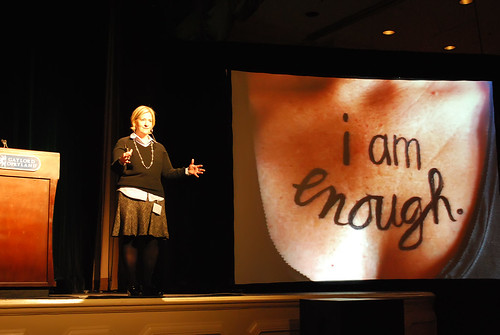
Since her first TED Talk more than a year (at TEDxHouston near the end of 2010), The Power of Vulnerability (this video has more then 3.5 million views), Brené Brown has become a favorite of the TED crowd. For TED 2012, she was invited to speak again, this time her subject is Listening to Shame.

One of her lessons that came up after her first TED talk, when she felt so vulnerable that scared her, is that vulnerability is NOT weakness. She asks the crowd how many of them feel that being vulnerable is being weak, and most raised their hands. She ten asked how many of them saw vulnerability on stage at the TED conference as pure courage, and most of them did. The lesson is that we see vulnerability in others as strength or courage, but as weakness in ourselves.

I see this in my clients every day.

Brené Brown: Listening to Shame 
Shame is an unspoken epidemic, the secret behind many forms of broken behavior. Brené Brown, whose earlier talk on vulnerability became a viral hit, explores what can happen when people confront their shame head-on. Her own humor, humanity and vulnerability shine through every word.

Brené Brown is a research professor at the University of Houston Graduate College of Social Work. She has spent the past ten years studying vulnerability, courage, authenticity, and shame. She spent the first five years of her decade-long study focusing on shame and empathy, and is now using that work to explore a concept that she calls Wholeheartedness. She poses the questions:
  • How do we learn to embrace our vulnerabilities and imperfections so that we can engage in our lives from a place of authenticity and worthiness? 
  • How do we cultivate the courage, compassion, and connection that we need to recognize that we are enough – that we are worthy of love, belonging, and joy?


The TED Blog also posted a question and answer session with Brown.

Being vulnerable about vulnerability: Q&A with Brené Brown


At the end of 2010, a reseacher named Brené Brown gave a talk at her local TEDx event, TEDxHouston. That talk, “The Power of Vulnerability,” has since become a web-video phenomenon — viewed and shared by millions of people, who write us to say that her words — on shame, vulnerability and honesty — moved them, inspired them, helped them make change in their own lives. (It has also inspired at least two tattoos.) When we invited Dr. Brown to speak at TED2012, she shared the impact her new fame has had on her own life and how putting her words on this big stage has caused her to reexamine what she knows about vulnerability. Before she spoke, our own Roxanne Hai sat down with Dr. Brown to ask her a few questions about the nature of vulnerability.

What’s the greatest lesson you have learned in your own life?

When you get to a place where you understand that love and belonging, your worthiness, is a birthright and not something you have to earn, anything is possible. Keep worthiness off the table. Your raise can be on the table, your promotion can be on the table, your title can be on the table, your grades can be on the table. But keep your worthiness for love and belonging off the table. And then ironically everything else just takes care of itself.

How has your own journey in vulnerability and authenticity changed as you’ve become more well known and your work has become more well known?

Oh, it’s been hard. I call 2010 the year of the vulnerability talk and 2011 the year of walking the talk, because I was very unprepared. I so believe everything I said, and I really am trying to live that way, but I’ve become very clear in the last year that it is more complicated and more difficult than I thought.

One of the things I did when I discovered this huge importance of being vulnerable is very happily moved away from the shame research, because that’s such a downer, and people hate that topic. It’s not that vulnerability is the upside, but it’s better than shame, I guess. And what I realized over the last year is, if you don’t understand shame and you don’t have some shame resilience and awareness, then you cannot be vulnerable.

How did you come to realize that you needed to understand shame to be vulnerable?

It has been a great year, tons of support, tons of people saying, “God, I’m with you, thank you,” and then also really hardcore mean-spirited, cruel attacks. Which are just part of the process, right? And I think the reason I’m still standing is not because the word got out there that I was vulnerable, but I’m still standing because I understand shame.

I was very careful not to attach my worthiness to how well that talk did, because when you do that, then those comments are devastating. It’s not that they’re not devastating anyway — they hurt your feelings. I would argue more than ever that vulnerability is still just absolutely essential. That we can’t know things like love and belonging and creativity and joy without vulnerability, but in this culture of reflexive cynicism you better also really have an understanding of shame if you’re going to put yourself out there.

You mentioned you have received attacks and negative feedback from your vulnerability work. Can you talk about those?

I got a lot of feedback that was constructive and hard to hear, things like: “You shouldn’t be talking about vulnerability unless you’re going to talk about the construct of trust, and what do you think about trust?” And the truth is, I don’t understand it well enough to talk about it yet. I’m really still researching. And “What about this image that you used, I think it was hurtful.” It’s been a great debate. And I’m not afraid of that. You’ve been a faculty person for thirteen years, you’re used to some horrendous discussion and debate. I love that.

But the stuff which was really the most hurtful was just the mean-spirited stuff like, “If I looked like you, I would embrace imperfection too.” Or “Good mothers don’t unravel, and I feel sorry for your kids.” Just really mean-spirited cruelty, which is rampant and is really a part of our culture right now.
One of the things that I’ve learned, that I didn’t know before that [TEDxHouston] talk exploded, is how hard I’d been working to keep my career small. And that was a little bit heartbreaking for me, because I usually thought of myself as being pissed off because I couldn’t get my work out there enough. But really I think I was engineering that, because I was afraid of these things that actually happened, like the personal attacks.

For people to look at other folks who are trying to come up and share their work with the world, or their art, their ideas, their writing, their poetry, whatever, and say “You can’t care what other people think” is bullshit. When you lose your capacity to care what other people think, you’ve lost your ability to connect. But when you’re defined by it, you’ve lost your ability to be vulnerable. That tightrope is what my talk is about, and I think that balance bar we carry is shame resilience. I think it’s the thing that keeps us steady. If we can understand that: I’m not the best comment, I’m not the best accolade I’ve received, and I’m not the worst. This is my work.

What have you learned from the critics?

One thing that they’ve taught me, that I’m grateful for, is that at the end of every day, and at the end of every week, and at the end of my life, I want to be able to say I contributed more than I criticized. So they’ve taught me that I’m still standing.

What’s the one thing you really want to share, that didn’t make it into your talk?

I wish I could talk more about what I see going on in schools and corporations and families and churches and organizations. I wish I could talk more about why and how we’re losing people. The whole measurement idea of good parenting versus bad parenting, good employees versus bad employees — I don’t think it’s helpful and I don’t think it’s illuminating. I think the best way to look at things is: Are people engaged? Are people engaged parents, engaged employees, engaged leaders?

And I don’t think engagement can happen without vulnerability, and I definitely don’t think it can happen in the midst of shame. If you think dealing with issues like worthiness and authenticity and vulnerability are not worthwhile because there are more pressing issues, like the bottom line or attendance or standardized test scores, you are sadly, sadly mistaken. It underpins everything.

There’s not a talk that I’ve seen since I’ve been here — and I’ve been in all the sessions, and I saw the TED Fellows talks — there’s not a talk I’ve seen where people really touch lives and made a huge difference where they were not excruciatingly vulnerable. The results that we see at TED, and the innovation, and the incredible music and the art is an expected outcome, in my opinion, of human potential when people are willing to be brave and vulnerable. The reason why this is so rare is not because of the human potential that’s here. It’s because of the willingness of the people who are here to be brave and vulnerable. We all have this capacity; it’s a bravery conference. There’s no one who’s up there, including myself, who hasn’t failed. And I seriously doubt there’s many people up there who haven’t been the subject of major, heartbreaking criticism.

What group of people do you feel has been most impacted by your talk?

Across the board, I would say. If you want to ask me who needs it the most, I think we all need it. But the people who are really grappling with it the most are in the corporate sector. Veterans are a population that I’m really interested in, and police officers and firefighters, and people who we basically pay to be invulnerable. Then, when they return back to their lives, whether it’s at night when they come home or when they come back from a tour, they have no capacity for vulnerability and their lives are falling apart. We’ve seen a lot of research showing that for the veterans coming back from the Middle East right now, they’re more likely to die when they get home than over there, because of drugs, alcohol and violence. So I think all of us need this lesson, and all of us need this work. It’s not easy for any of us.

I asked my girlfriends (who are also big fans of your work) what they would ask you if they had the chance, and they all came back with this: What advice would you give to someone who feels like they are not [blank] enough to go about living more authentically and vulnerably?

Well, the idea of “I’m never enough” — beautiful enough, successful enough, thin enough, popular enough, loved enough, worthy enough — that’s shame and scarcity, and I’ve seen people overcome that every single day. I’ve gone through the process myself. I’ve interviewed people over the course of four years who’ve done a lot of this work. You have to understand shame. You have to understand where the message comes from, what drove it, how has it protected you in the past, and are you willing to look it in the eye and say, “Thanks, I appreciate it, but I’m not subscribing anymore. I’ve got a new way of doing things, and maybe you kept me safe and small in the past, but I’m not doing that.” The answer is absolutely that I’m not enough. You can overcome that, but you can’t overcome it without an understanding of shame. If you are not willing to have that conversation, there’s no way to the other side of it. You have to know what shame is.

How has understanding shame and vulnerability changed you as a parent?

Oh, it’s changed everything. My husband’s a pediatrician, so he and I talk about parenting all the time. You can’t raise children who have more shame resilience than you do. Because even if you don’t shame them, and even if you are actively trying to raise them feeling good about who they are, they’re never going to treat themselves better than you treat yourself. So that’s the bad news and the good news, but mostly the sucky news. If you want to raise a daughter with a really healthy body image, you better love your body as a mother, because that counts way more than looking at your daughter and saying “You’re beautiful and your body is beautiful.” All that matters to her is how she sees you acting with your own body. Which sucks. We can’t give children what we don’t have. We just have to be the adults we hope they grow up to be.

Friday, May 07, 2010

Pre-Workout Nitric Oxide Supplements Are Worthless

http://www.muscle-shop.co.uk/images/products/ms-600/eas/nitric-oxide-booster.jpg
A lot of guys in the gym have bought the hype that nitric oxide supplements do more than just give them a good "pump" - they think they get stronger, leaner, or whatever else the ads tell them.

Suckers.

Just so you know, the three supps tested against GlycoCarn were SP250, NO Xplod, and Nano Vapor.

I've been telling the guys who ask me to save their money. Now the research confirms what I have been preaching for a couple of years. And they used men who were already trained to eliminate the "newbie" response - very cool.

Comparison of pre-workout nitric oxide stimulating dietary supplements on skeletal muscle oxygen saturation, blood nitrate/nitrite, lipid peroxidation, and upper body exercise performance in resistance trained men

Richard J Bloomer email, Tyler M Farney email, John F Trepanowski email, Cameron G McCarthy email, Robert E Canale email and Brian K Schilling email

Journal of the International Society of Sports Nutrition 2010, 7:16doi:10.1186/1550-2783-7-16

Published 6 May 2010

Abstract (provisional)

Background

We compared Glycine Propionyl-L-Carnitine (GlycoCarn(R)) and three different pre-workout nutritional supplements on measures of skeletal muscle oxygen saturation (StO2), blood nitrate/nitrite (NOx), lactate (HLa), malondialdehyde (MDA), and exercise performance in men.

Methods: Using a randomized, double-blind, cross-over design, 19 resistance trained men performed tests of muscular power (bench press throws) and endurance (10 sets of bench press to muscular failure). A placebo, GlycoCarn(R), or one of three dietary supplements (SUPP1, SUPP2, SUPP3) was consumed prior to exercise, with one week separating conditions. Blood was collected before receiving the condition and immediately after exercise. StO2 was measured during the endurance test using Near Infrared Spectroscopy. Heart rate (HR) and rating of perceived exertion (RPE) were determined at the end of each set.

Results: A condition effect was noted for StO2 at the start of exercise (p=0.02), with GlycoCarn(R) higher than SUPP2. A condition effect was also noted for StO2 at the end of exercise (p=0.003), with SUPP1 lower than all other conditions. No statistically significant interaction, condition, or time effects were noted for NOx or MDA (p>0.05); however, MDA decreased 13.7% with GlycoCarn(R) and increased in all other conditions. Only a time effect was noted for HLa (p<0.0001),>0.05); however, GlycoCarn(R) resulted in a statistically insignificant greater total volume load compared to the placebo (3.3%), SUPP1 (4.2%), SUPP2 (2.5%), and SUPP3 (4.6%).

Conclusion: None of the products tested resulted in favorable changes in our chosen outcome measures, with the exception of GlycoCarn(R) in terms of higher StO2 at the start of exercise. GlycoCarn(R) resulted in a 13.7% decrease in MDA from pre- to post-exercise and yielded a non-significant but greater total volume load compared to all other conditions. These data indicate that 1) a single ingredient (GlycoCarn(R)) can provide similar practical benefit than finished products containing multiple ingredients, and 2) while we do not have data in relation to post-exercise recovery parameters, the tested products are ineffective in terms of increasing blood flow and improving acute upper body exercise performance.

The complete article is available as a provisional PDF. The fully formatted PDF and HTML versions are in production.

Take home: Malondialdehyde is a marker for lipid peroxidation, a process by which polyunsaturated fats become oxidated, resulting in oxidative stress. The GlycoCarn(R) supplement reduced MDA by 13.7%, which is significant. The NOx supplements actually caused a slight increase in malondialdehyde.

On the other hand, the makers of GPLC-GlycoCarn funded the study. This is their description of the product:
GlycoCarn® (GPLC) is glycine propionyl-L-carnitine hcl, USP a propionyl ester of carnitine that includes an additional glycine component. Compared with other forms of carnitine, GlycoCarn® exhibits a special affinity for muscle tissues, such as the heart, is a powerful scavenger against superoxide radicals and it protects against lipid peroxidation.
They provide a lot of apparent support for their product:

GlycoCarn®, (Sigma-tau HealthScience brand of glycine propionyl-L-carnitine hcl, USP (GPLC), is a next generation member of the L-Carnitine family, with a particular focus on skeletal muscle, cardiac tissue, and the vascular system. Carnitine in general is known to be involved in fatty acid metabolism, and GlycoCarn® is a patented compound that has been shown to result in an increase in blood levels of nitric oxide (NO), as well as delivering potent antioxidant properties. Ongoing research also indicates that this compound may be associated with improved high intensity exercise performance. The performance effects of GPLC may be a result of both the nitric oxide stimulating and antioxidant activity, ultimately leading to increased blood flow and enhanced ATP energy production.

The applications for GlycoCarn® continue to be revealed, as funded research with this compound is presently ongoing at universities within the United States.


Glycine propionyl-L-carnitine produces enhanced anaerobic work capacity with reduced lactate accumulation in resistance trained males

Recent research has indicated that short term administration of glycine propionyl-L-carnitine(GPLC) significantly elevates levels of nitric oxide metabolites at rest and in response to reactive hyperaemia. However, no scientific evidence exists that suggests such supplementation enhances exercise performance in healthy, trained individuals. The purpose of this study was to examine the effects of GPLC on the performance of repeated high intensity stationary cycle sprints with limited recovery periods in resistance trained male subjects... (read more)


Glycine Propionyl-L-Carnitine Increases Plasma Nitrate/Nitrite in Resistance Trained Men

We have recently demonstrated that oral intake of glycine propionyl-L-carnitine (GPLC) increases plasma nitrate/nitrite (NOx), a surrogate measure of nitric oxide production. However, these findings were observed at rest, and in previously sedentary subjects... (read more)


GPLC Performance-Recovery Study

Recent research has indicated that short term administration of glycine propionyl-Lcarnitine (GPLC) significantly elevates levels of nitric oxide metabolites at rest and in response to reactive hyperaemia. However, no scientific evidence exists that suggests such supplementation enhances exercise performance in healthy, trained individuals. The purpose of this study was to examine the effects of GPLC on the performance of repeated high intensity stationary cycle sprints with limited recovery periods in resistance trained male subjects... (read more)


The Efficacy of Dietary Supplementation for Enhanced Nitric Oxide Synthesis: The Scientific Evidence

Approximately twenty years ago, it was discovered that a particular factor produced within endothelial tissue specifically relaxes the adjacent smooth muscle of blood vessels thereby allowing vasodilation and increased blood flow to various tissues including skeletal muscle. This factor was initially referred to as endothelium-derived relaxing factor but is now known as nitric oxide... (read more)

Based on everything I have read, the benefits of this supplement have nothing to do with NOx production, but they market it that way to tap into the ignorant supplement users who buy into the NOx propaganda.

The smarter, and less profitable, approach would be to tell the truth about its lipid peroxidation protection. In fact, it this product does target muscle tissue directly, it might be a useful supplement for treating fat deposits in diabetics, which decreases insulin sensitivity significantly.

Oh yeah, vitamin C and vitamin E have the same benefits in terms of reducing oxidative stress, but they do not target muscle tissue so precisely.

Anyway, now you know.


Tuesday, February 23, 2010

5 Things That Will Make You Happier - Clara Moskowitz

http://www.whatismykarma.com/entrance/images/happiness.jpg

Interesting that none of them involve spending money or any other form of culturally sanctioned nonsense. Gratitude, optimism, counting our blessings, playing to our strengths, and being kind. I would add that treating ourselves and others with compassion is a great way to feed our personal happiness.

5 Things That Will Make You Happier

By Clara Moskowitz, LiveScience Senior Writer

posted: 22 February 2010 07:54 am ET

SAN DIEGO – The pursuit of happiness is sometimes easier said than done.

Some scientists have argued that happiness is largely determined by genetics, health and other factors mostly outside of our control. But recent research suggests people actually can take charge of their own happiness and boost it through certain practices.

"The billion-dollar question is, is it possible to become happier?" said psychologist Sonja Lyubomirsky of the University of California, Riverside. "Despite the finding that happiness is partially genetically determined, and despite the finding that life situations have a smaller influence on our happiness than we think they do, we argue that still a large portion of happiness is in our power to change."

Lyubomirsky spoke here Saturday at the annual meeting of the American Association for the Advancement of Science. She and colleagues last year reviewed 51 studies that tested attempts to increase happiness through different types of positive thinking, and found that these practices can significantly enhance well-being. The results were published in the Journal of Clinical Psychology.

Here are five things that research has shown can improve happiness:

1. Be grateful – Some study participants were asked to write letters of gratitude to people who had helped them in some way. The study found that these people reported a lasting increase in happiness – over weeks and even months – after implementing the habit. What's even more surprising: Sending the letter is not necessary. Even when people wrote letters but never delivered them to the addressee, they still reported feeling better afterwards.

2. Be optimistic – Another practice that seems to help is optimistic thinking. Study participants were asked to visualize an ideal future – for example, living with a loving and supportive partner, or finding a job that was fulfilling – and describe the image in a journal entry. After doing this for a few weeks, these people too reported increased feelings of well-being.

3. Count your blessings – People who practice writing down three good things that have happened to them every week show significant boosts in happiness, studies have found. It seems the act of focusing on the positive helps people remember reasons to be glad.

4. Use your strengths – Another study asked people to identify their greatest strengths, and then to try to use these strengths in new ways. For example, someone who says they have a good sense of humor could try telling jokes to lighten up business meetings or cheer up sad friends. This habit, too, seems to heighten happiness.

5. Commit acts of kindness – It turns out helping others also helps ourselves. People who donate time or money to charity, or who altruistically assist people in need, report improvements in their own happiness.

Lyubomirsky has also created a free iPhone application, called Live Happy, to help people boost their well-being.

Tags: , , , , , , , , ,

Wednesday, February 10, 2010

Sucker Punch: (an interview with) Paul Chek by Bryan Krahn

Sucker Punch: Paul Chek
Functional, gimmicky, who cares?
160 pounds is still a shit load of weight to hoist up one-handed

Paul Chek is brilliant, controversial, and convincing. This is an interesting interview with him posted at T-Muscle. He is never short on an opinion, which resulted in part of the interview being removed from the main page.

They included this little blurb at the end of the article:

A large section of this interview was edited out because it had to do with religion and, frankly, we don't feel like seeing the article discussion generate an Internet version of a bar room (or church hall) brawl. However, out of courtesy to Paul, the removed section will be posted in the Politics and World Issues forum.

Not surprised about the religion stuff (really, it's more spirituality than religion) in his talk - he goes there, often. He tends not to see heath, training, and spirituality as separate, but rather, interconnected. Not too many fitness coaches can quote Maslow or talk about Jungian Projection. Or talk about quantum physics.

If there is another integral oriented strength/fitness coach besides Shawn Phillips or Rob McNamara, it's Paul Check. Big props to T-Muscle for posting another interview with Chek.

[For what little it's worth, I disagree with him about not eating nuts. But almost everyone will disagree with him about something.]

Oh yeah, he practices what he preaches:

Sucker Punch: Paul Chek
Paul is no stranger to heavy, basic training.

Sucker Punch: Paul Chek

Many have adopted the expression "turn disaster into opportunity" during the latest economic recession.

After my recent interview with educator, author, speaker, and exercise expert Paul Chek, I had the opportunity to find out exactly what that expression meant.

My one-hour conversation with Paul Chek was just coming to a close when I suddenly realized that my voice recorder wasn't, well, recording voices.

Fortunately, I'd taken notes; 20 feverish pages of them, in fact. But Paul Chek, one of the most controversial, outspoken figures in the industry today, isn't exactly known for speaking in short, MTV-friendly sound bites.

Paul Chek is a man on a mission and when he speaks, his words reflect that. He is unapologetic in his belief that many "modern" approaches to health care are either misguided, flat-out wrong, or agenda-driven practices designed solely to pump up the bank accounts of the big pharmaceutical machine.

Because of his hard line approach, Paul has alienated a lot of his peers who would normally be praising him as a visionary who's revolutionized the field of corrective exercise. Instead, they question his practices, his criticism of the scientific method, and his holistic approach to health and wellness. Some say he's simply an excellent therapist that's gone too far, others say he's flat-out crazy.

The criticisms only make Paul talk louder.

As a result of my technical mishap, I had to think a lot about what Paul had said. I had to look at my short hand scribblings and ask myself if that was what he really said, or if I'd somehow misinterpreted the message? I had to cross-reference what I thought I heard with other work he's published, and finally trade emails with Paul just to make sure I wasn't subconsciously hearing things that I wanted to hear, or inserting my "programming" when I should have been listening to his voice.

In the end, I'm glad I took the time to seek out the voice behind his message and I encourage you to try to do the same.

Remember, it's easy (and lazy) to dismiss the things that challenge your beliefs; it takes effort and maturity to let down your defenses and try to understand them. Cause you never know where an opportunity may be waiting for you.

So without further ado, meet Paul Chek.


TMUSCLE:
Paul, you've been the force behind many training concepts that are now considered staples, like Swiss ball work, heavy ab training ...

TM: I assume that must piss you off.

TM: You mentioned spirituality. Why do you consider spirituality to be such an integral part of strength training?

TM: That sounds like Maslow.

TM: Paul, a lot of lifters tune out when the subject turns to God and spirituality. You've been in the lifting game longer than many people, so you must understand that lifters are very skeptical of anything that isn't easily measurable or observable. How do you get lifters to buy in to these abstract concepts?

TM: I don't know. I would say a spiritual person is someone who tries to live their life in a way that acknowledges that they are a part of something bigger.

TM: Sure, I remember that from university. That's the Freudian idea of projecting your ideas onto others rather than considering what they're really thinking.

TM: So you can honestly connect the dots from spiritual development and real world physical development or healing?

TM: A popular criticism of you is that it appears you give far too little credit to the basics (clean diet, consistent, heavy weight training) and give far too much credit to the mysticism.

TM: Can you explain how you would approach working with a professional athlete?

TM: Absolutely. And steps three and four?

TM: Ok, I can imagine that a lot of readers might be rolling their eyes right now or scrolling down to see today's Powerful Image, but I think that if you framed this a bit differently it would sound quite similar to what other coaches have put forth. Specifically, setting goals, establishing priorities, emphasizing rest and nutrition, the importance of mental clarity and sound choices. But you say words like dreams...

TM: Sure do. Your method of analysis has been criticized as observing things in "the real world" and then seek research that supports your observations. Is this true? Is that not backwards science?

Look at Einstein. He was famous for doing experiments in his bathtub. He said once that you couldn't solve a problem with the same science that created it. You're subconsciously limited by their viewpoints, their bias. In fact, I'd argue that there could be no objectivity in science if the researcher has any attachment to the outcome whatsoever. This fact is objectively borne out in Schrödinger's cat experiment, the Heisenberg Uncertainty Principle, and The Copenhagen Interpretation in quantum physics, all of which imply that "consciousness directed at any given result influences outcome."
Read the rest of this intriguing interview.


Wednesday, August 26, 2009

Screw Cardio! Four Complexes for a Shredded Physique by Chris Shugart

I hate cardio - so when I want to do "energy work," my term for cardiovascular training, I do lighter weights with very little rest and compound movements. I generally think of it as general physical preparedness (GPP), but sure, it's a form of cardio that preserves muscle and burns fat like a furnace.

Screw Cardio! Four Complexes for a Shredded Physique


My lungs screamed, my muscles burned, and I was, quite literally, seeing black spots dance before my eyes like some lame Windows screensaver from 1998.

I glanced at the clock.

No. Fucking. Way. Ninety seconds had passed by already?

It was time for another set.

I grabbed the bar for set number four, dug deep mentally, and pushed through another round. About a minute later my "off-day" cardio was done. It had only taken around nine minutes total, yet I was wiped out. I actually looked forward to some foam rolling because it meant I got to lie down on the floor.

I glanced over at the cardio area. I saw three beer-bellied men pounding away on the treadmills. I could practically hear their knees and ankles barking with the abuse.

Two women were behind them on the ellipticals. They were talking and laughing and had probably burned more body fat getting out of their minivans than they had while lollygagging on the hamster machines.

Finally I looked over at the stairmill. That's a torture device of a cardio machine, no doubt, and the guy on it was sweating through his shirt. He'd been up there a while, so he was clearly "good" at the stairmill... all 150 emaciated pounds of him. No thanks.

Now, let's compare that to my recent "cardio" workouts, if you could technically even call them that. Depending on the load, in about ten minutes I could...

I could also...

So what the hell was I doing? Something that's been around a long time and that's gone by a lot of names in the past. Today we simply call them complexes.

Complexes: Not So Complex

Quick review: A complex is where you pick up a barbell, perform several reps of an exercise with it, then move right into another exercise, then another, and another, and maybe one or two more. Then you see black spots, get all ripped 'n shit, and bang swimsuit models.

Okay, okay, Coach Dan John has a much better definition: "A complex is a series of lifts performed back to back where you finish the reps of one lift before moving on to the next lift. The bar only leaves your hands or touches the floor after all of the lifts are completed."

Alwyn Cosgrove is even more concise: "A complex is a circuit using one piece of equipment, one load, and one space."

So maybe you perform front squats for 8 reps, then push presses for 8 reps, then bent-over rows for 8, and finally back squats for 8 — all without putting the damn bar down.

It's brutal. Better still, it's brutally effective for fat loss and improving all the physical qualities I listed in my snazzy intro.

But the best thing? You can't do it while talking on the fucking cell phone or otherwise "going through the motions." It requires focus, discipline, hard work, and quite possibly a touch of insanity.

Make no mistake, if anyone says this is easy you can bet they've never actually tried it.

So When Do You Use Complexes?

Here's my personal favorite split using complexes:

Monday:
Tuesday:
Wednesday:
Thursday:
Friday:
Saturday:
Sunday:

Complex training sounds almost like one of those infomercials that run at 3AM: "In only 10 minutes twice per week you can build that toned body you've always wanted! But wait, there's more!"

But of course it takes more than twenty minutes a week to get "toned," and complexes don't fold up and store neatly under your bed, or sell for only three easy payments of $19.95. But when added to your favorite bodybuilding program they can really take you to the next level of physique development.

So let's learn a few, shall we?

4 Killer Komplexes

Ready to add complexes to your program? Here are four good ones to get you started. And by "good" I mean you're going to cry for mama. I've also tossed in some words of wisdom from our coaches who've used complexes successfully with their clients and physique athletes.

Cosgrove's Evil 8

"Complexes elevate metabolism beyond anything you've ever experienced before," says Alwyn Cosgrove.

Sounds good to us, but how much weight do you use? "Just remember," says Cosgrove, "it's a metabolic stimulus, not a strength or hypertrophy stimulus, so be conservative. MMA pro David Loiseau uses only 85-95 pounds when doing the complexes I prescribe for him."

That said, don't go too light, either. A good "Cosgrove rule of thumb" is that if you're not questioning why in the hell you're doing these exercises, or convincing yourself that two circuits is enough, you're not going heavy enough.

The basic rule is to use the heaviest weight you can on the weakest movement in the complex. For example, if the complex contains an overhead press and a back squat, you'd use the weight you can handle on the overhead press, not the squat. Otherwise you'd get crushed, and girls would laugh.

But honestly, loading doesn't matter much. If you're de-conditioned or you fall into that dreaded category of "big 'n strong but outta shape," then you'll be tortured with a naked Olympic bar... and maybe even a broomstick. You'll figure out loading anyway during your first complex workout, so don't think about it so damn much and just go do it.

Crazy idea, I know.

Here's one of the most effective Cosgrovian complexes:

On round one, perform 6 reps of each exercise, moving from one exercise to the next, never letting go of the bar, never resting. Remember, you'll finish all six reps of each exercise before moving to the next one.

Rest 90 seconds after the first circuit, then perform 5 reps of each in the next circuit; rest 90 seconds, 4 reps of each; rest 90 seconds, 3 reps of each; rest 90 seconds, 2 reps of each; rest 90 seconds, and then do 1 rep of each.

Cosgrove says that the entire workout should take about 12 minutes, not counting the time you spend sobbing like a little girl in a purdy pink dress.

Tumminello's Weight Plate Metabolic Circuit

I learned this one from Coach Nick Tumminello. I like it because it uses a single Olympic weight plate. Buy a rusty one at a garage sale, throw it into your back yard, and you can have a killer workout anytime you want.

Tumminello uses this complex when he trains Baltimore Ravens TE, Quinn Sypniewski. Think you can hang with big Quinn? Then perform the complex below five times through with only 90 seconds between each round.

Overhead Squat
Swings (like kettlebell swings)
Bentover Row
Reverse Lunge and Twist
Diagonal Chops

Note: If you missed it, check out our full review of Coach Tumminello's DVD on complexes HERE.

Waterbury's Submission Complex

Last time I went to California to visit Chad Waterbury I watched him submit an MMA champion in record time. No, it wasn't an armbar; it was a complex that make this well-conditioned athlete tap out.

Waterbury loves complexes. He notes: "If you're ever short on time, use complexes. If you ever want to burn a little extra fat by boosting your excess post-exercise oxygen consumption (EPOC), use complexes. Or if you want to enhance your anaerobic endurance, use complexes. They can also be used as general physical preparedness (GPP) boosters after your workouts or for additional training sessions each week. I'm a big advocate of complexes, and you should be too!"

Here's one of Chad's favorites. I like this one because, unlike most complexes, it uses dumbbells instead of a barbell, adding some cool variety.

Reverse Lunges,
Romanian Deadlift,
Good Morning,
Front Squat,
Military Press,
Bentover Row,
Floor Press,

Rest 60 seconds and repeat 2-4 more times depending on your testicular fortitude.

Ferruggia's Timed Complex

"For those of you who've never done complexes, get ready for a whole new in-the-gym experience!" says Jason Ferruggia.

The goal of this complex is speed. Start a timer and perform it once through, 6 reps for every movement. The next time you perform it, try to beat that time.

Start with a 45-pound bar for this one. After a few workouts and improved times, add load.

Once you master the empty Olympic bar, how much weight should you add? Ferruggia says, "Ninety-five fucking pounds will be absolute fucking hell for even the strongest and most-well conditioned fucking warriors!"

Note: "Fucking" added because that's the way Jason actually talks. No fucking kidding.

Final Tips & Wrap-Up

Here's a good tip from Dan John: Print out the complexes in large type, then stick it to the wall in front of you or place it on the floor. That way you won't forget a movement in a longer complex series.

And by "forget" I mean skip it because you're being a weenie and/or your heart is about to burst from your chest, skip across the floor, and scare the shit out of the gay guys in the Zumba class.

Now, can you make up your own complexes? You bet. Just try to pick exercises that flow smoothly into one another. But truthfully, just about any combo works. As Waterbury notes, you're only limited by your imagination.

Try two of these complexes this week. Just add them to your "off" days or cardio-only days. The hamsters on the treadmills will elevate their metabolisms just watching you do them!

Go check out the site for videos on how to do some of this crazy stuff.