Showing posts with label labor. Show all posts

Monday, September 03, 2012

Labor Day - Organized Labor Has Seen Much Better Days

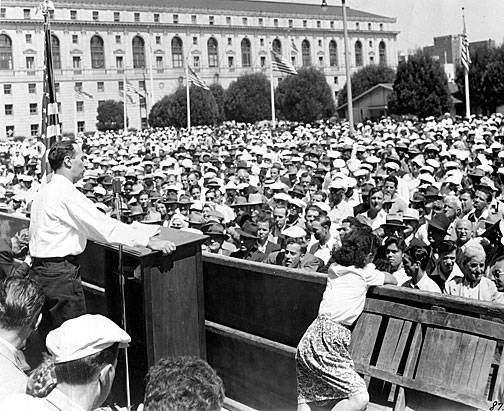
Labor Day Celebration, 1947, San Francisco

Happy Labor Day. To me this holiday seems little more than a historical anachronism - organized labor is blamed for corruption and demanding higher wages and more benefits than employers can afford. Workers are no longer praised or honored for their achievements in being the foundation of the nation's success. We ship jobs to nations with lower worker pay, little or no regulation, and do little to help the workers, mostly blue color, who are out of work.

We are no longer a nation of factories and mills - we are technological society and these jobs either require no skills (data entry), resulting in low pay, or they require advanced education, resulting in higher pay. Organized labor got fair pay for factory workers and skilled craftsmen (construction, electricians, plumbers, etc) but unions have been effectively banned from the technology world.
First Labor Day parade, 1882, New York City

While I am a supporter of organized labor (my father was a union member), I am also aware that labor leaders frequently have been corrupt, and sometimes have been unwilling to adapt their demands to realities of the workplace. I would hope to see labor make a comeback in this country, but more and more conservative states are making union organizing nearly impossible (including Arizona, where I live).

In honor of the holiday, Good Magazine takes a look at organized labor in the United States - we've seen better days.

State of the Unions: Organized Labor Has Seen Much Better Days

  • September 2, 2012

Lest we forget why we've got a three-day weekend, Labor Day is a recognition of American workers and what they've done for the country. Minyanville writes that the labor movement has seen significant decline in recent years, and checks in on a few specific labor unions. Here's an excerpt from the section on public sector workers: 
Last year the state of Wisconsin was ground zero for what many believe was the decline of American labor unions. The battle over collective bargaining between Wisconsin public sector workers and Governor Scott Walker that resulted in the passage of his anti-union “Wisconsin budget repair bill” last March didn’t just hit national headlines, it took the conversation of collective bargaining to the national stage and climaxed in the June 5 failed recall election of the governor.
The failed recall was seen by many as the beginning of the end for labor unions. On the same day, pension reforms for public sector workers were overwhelmingly favored in elections in San Jose and San Diego, supporting evidence from polls showing that public approval of unions was dropping. A 2009 Gallup poll found that only 48% of the public supported unions compared to 72% of Americans approving of unions in a 1936 Gallup poll.
Earlier this week, Business Insider's Henry Blodget posted this timely column titled "Dear American Companies: Here's How To Fix The Economy:"
In short, instead of viewing "shareholders" and "customers" as the only two corporate constituencies that matter, Ford introduced the idea that great companies should also serve a third constituency:
Employees.
And because one company's employees are another company's customers, Ford's decision (to dramatically increase wages) helped spread the country's wealth to more citizens and expand the purchasing power of the country as a whole. And, in so doing, it helped the overall economy.
So hey, while you're enjoying the weekend, remember that what you're celebrating is a major economic engine in the country, both past and present, and one that is facing quite a bit of tumult. Here's a brief primer on the history of Labor Day itself. Got any favorite labor-related reading? Share some recommendations in the comments—a few of us might celebrate by reading under a tree on Monday.

Photo, "Glass Works. Midnight," via Library of Congress.

Thursday, November 17, 2011

Changesurfer Radio - The Future of Democratic Equality

This is an interesting 2-part podcast from the folks at Institute for Ethics and Emerging Technologies (IEET). The host of Changesurfer Radio, Dr. James J. Hughes, speaks with Joseph Schwartz, author of The Future of Democratic Equality: Reconstructing Social Solidarity in a Fragmented United States. Yes, Schwartz is a Democratic Socialist - who knew such folks still existed in this jingoistic culture?


The Future of Democratic Equality pt1


Joseph Schwartz

Changesurfer Radio

Posted: Nov 15, 2011


Dr. J. chats with Joseph Schwartz, Professor of Political Science at Temple University and author of The Future of Democratic Equality: Reconstructing Social Solidarity in a Fragmented United States. Prof. Schwartz is a long-time leader in the Democratic Socialists of America, the largest American socialist organization. Part 1 of 2.


* * * * * * *

The Future of Democratic Equality pt2


Joseph Schwartz

Changesurfer Radio

Posted: Nov 15, 2011

Dr. J. chats with Joseph Schwartz, Professor of Political Science at Temple University and author of The Future of Democratic Equality: Reconstructing Social Solidarity in a Fragmented United States. Prof. Schwartz is a long-time leader in the Democratic Socialists of America, the largest American socialist organization. Part 2 of 2.

Wednesday, September 28, 2011

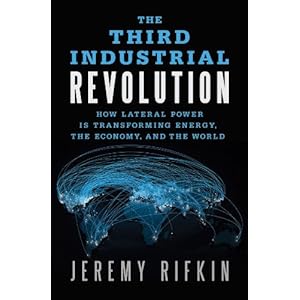
Jeremy Rifkin: "The Third Industrial Revolution"

The Third Industrial Revolution: How Lateral Power Is Transforming Energy, the Economy, and the World

This was a cool segment from the Diane Rehm Show - featuring new research from a new book by Jeremy Rifkin - The The Third Industrial Revolution: How Lateral Power Is Transforming Energy, the Economy, and the World.

Jeremy Rifkin: "The Third Industrial Revolution"


U.S. economist Jeremy Rifkin the founder and president of the Foundation on Economic Trends (FOET) speaks during the 23rd congress of the Socialist International at the Lagonissi Grand Resort, about 40 kilometers (25miles) south of Athens on Monday, June 30, 2008. Close to 700 participants from 150 political parties and organisations from 120 countries will attend the Congress of the Socialist International from June 30 to July 2.  - (AP Photo/Thanassis Stavrakis)
U.S. economist Jeremy Rifkin the founder and president of the Foundation on Economic Trends (FOET) speaks during the 23rd congress of the Socialist International at the Lagonissi Grand Resort, about 40 kilometers (25miles) south of Athens on Monday, June 30, 2008. Close to 700 participants from 150 political parties and organisations from 120 countries will attend the Congress of the Socialist International from June 30 to July 2.


Guests: Jeremy Rifkin - President of the Foundation on Economic Trends, adviser to the European Union and author of "The Hydrogen Economy," "The Biotech Century," and "The End of Work."

An economist explains how internet technology and renewable energy are merging to change the way we live and work.

Author Extra: Jeremy Rifkin Answers Audience Questions

Q: The book title refers to "lateral power." What does this mean?
A: Lateral power means side-to-side power. On the Internet, millions of people share information in vast social networks, and the power of coming together side by side dwarfs the kind of centralized, top-down power that’s traditional. Converging the internet with renewable energies will allow millions of people to generate their own green electricity in their homes offices and factories and then share it across a vast energy internet, just like they now create their own information and share it online with millions of others.
Q: How could this third industrial revolution transform labor and politics?
A: Because the third industrial revolution is about lateral power, it favors small and medium-sized businesses coming together in networks to create new economic opportunities. The third industrial revolution will create thousands of new businesses and millions of new jobs. Manufacturing renewable energies, converting buildings to micro power plants, storing renewable energies in the form of hydrogen across the infrastructure, transforming the electricity grid and power and transmission lines into an energy internet, and revolutionizing the transport and logistics sector.
Q: While I'm a long-time fan of Mr. Rifkin's, he's mistaken about the feed-in tariff. The power generated by these qualified PV systems does not belong to the building/roof owner. One hundred percent of the power goes directly onto the grid. That power becomes a commodity to sell on the open market. The system may be owned by third parties that lease the factory roof; the electric power has long-term value because the cost to generate that power does not increase. Utility power does. This allows long-term investments in distributed generated power to increase in value, exactly what investors are seeking. - From Jim
A: PV systems can be owned by the local owner, which is often the case. Local owners of buildings can also lease out their infrastructure to third parties, as well. Increasingly, small and medium businesses and home owners in Europe are choosing the former course, and pooling their interests by creating producer and consumer green electricity cooperatives, in order to advance early adoption with significant scale up. In countries where there are feed-in tariffs, banks are not advancing green loans so that home owners and businesses can convert their buildings to micro power-plants. The savings in electricity is used to pay back the loans. After the loan is paid back, the electricity is virtually free for the owner.
Q: In Europe there is a larger tradition of government leadership in public investment. Here in the USA, in tradition and more particularly with the current political/budget climate, government-led solutions are problematic. We favor private-sector solutions. How are we going to lead from the private sector? Where are the niches where these technologies will develop on their own, without government subsidies or other intervention? Where are the opportunities for entrepreneurs and investors in the USA who believe in your thesis? - From Charles
A: Both the first and second industrial revolution in the U.S. required an ongoing relationship between local state and federal government, industry, and communities. It’s impossible to lay down a five- pillar infrastructure for a new industrial revolution without this kind of partnership because the five-pillar infrastructure requires comprehensive planning, which brings into the picture local governments as well as local businesses and communities.