Showing posts with label interoception. Show all posts

Sunday, March 09, 2014

Alejandra Sel - Predictive Codes of Interoception, Emotion, and the Self - A Commentary on Anil K. Seth


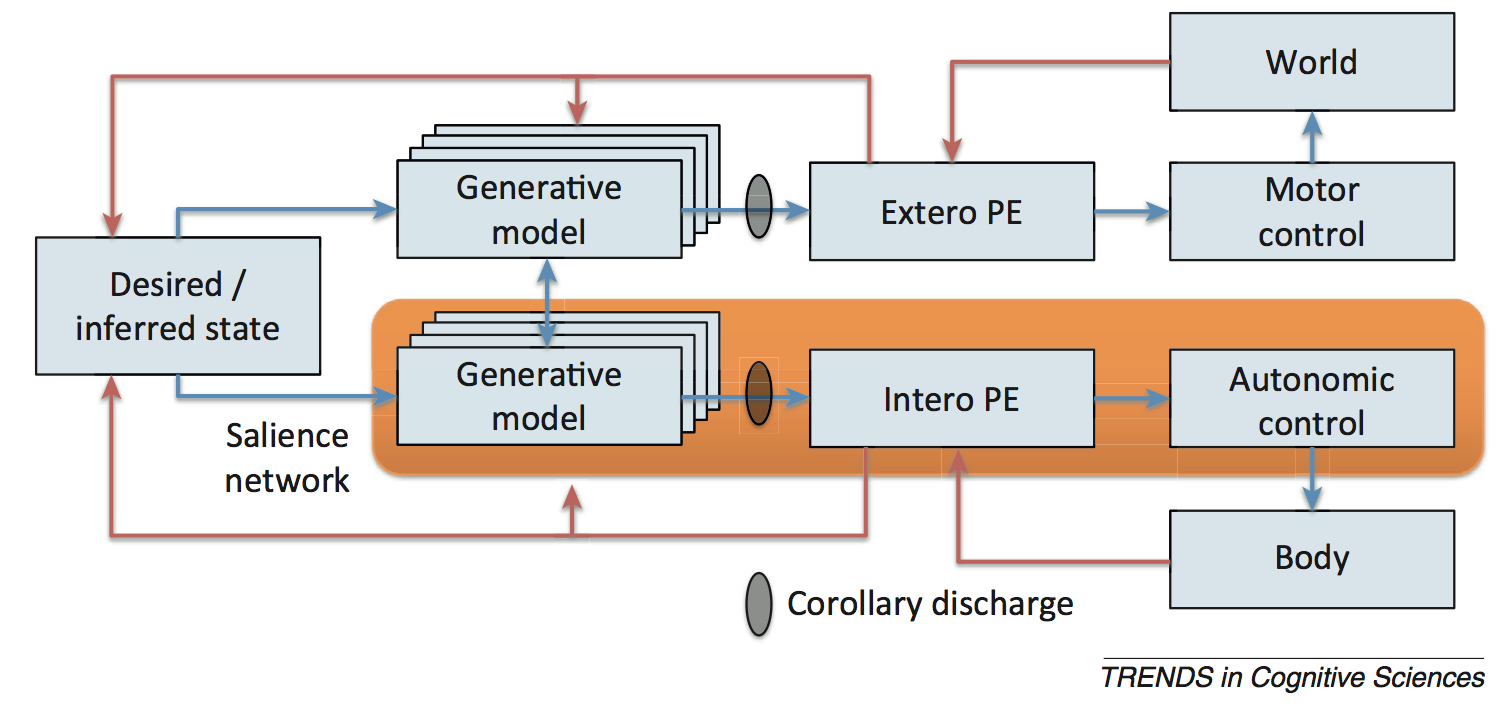
This is an interesting discussion between Anil K Seth and Alejandra Sel on Seth's recent paper in Trends in Cognitive Science (pdf). Here is a brief summary of Seth's position, as understood by Sel:
Seth's proposal that sensory processing involves predictions is nothing new. What is new in Seth's model is that perception of internal body signals (interoception), paralleling the perception of external signals, relies on top-down predictions of the causes of the sensory input, rather than being a passive, bottom-up process.
While Sel agrees in principle with Seth's position, there remain four points [assumptions] that Sel feels the need to address before launching any studies to validate Seth's model.
1. [E]motions are defined as affective states relying on interactions between top-down interoceptive predictions and bottom-up interoceptive prediction errors.

2. Seth's model refers to the anterior insular cortex [AIC] as the key structure that generates, compares, and updates interoceptive predictions. Empirical evidence has shown that AIC houses a secondary associative area where interoceptive, exteroceptive, and motivational signals converge (Seth and Critchley, 2013).

3. [A]lthough a free-energy model of self has been proposed (Apps and Tsakiris, in press), as yet there is no evidence to suggest that self-processing follows the principles of predictive coding [PC], [as implied by Seth's model].

4. An individual's attention to the body can be significantly enhanced by the practice of Mindfulness (Farb et al., 2013), which also has the effect of enhancing both cortical responses of interoceptive attention and self-reported interoceptive awareness (Mehling et al., 2013). Within Seth's model this might increase the accuracy of interoceptive inference, emotions, and self-awareness.
The original article in only 9 pages including references, and the commentary below is brief. It's cool to see ideas proposed and addressed in an open forum.

Full Citation: 
Sel A. (2014, Mar 4). Predictive codes of interoception, emotion, and the self. Frontiers in Psychology: Cognitive Science; 5:189. doi: 10.3389/fpsyg.2014.00189

Glossary (from Seth)

  • Active inference: an extension of PC (and part of the free energy principle), which says that agents can suppress prediction errors by performing actions to bring about sensory states in line with predictions. 
  • Augmented reality: a technique in which virtual images can be combined with real-world real-time visual input to create hybrid perceptual scenes that are usually presented to a subject via a head-mounted display. 
  • Appraisal theories of emotion: a long-standing tradition, dating back to James (but not Lange), according to which emotions depend on cognitive interpretations of physiological changes. 
  • Emotion: an affective state with psychological, experiential, behavioral, and visceral components. Emotional awareness refers to conscious awareness of an emotional state. 
  • Experience of body ownership (EBO): the experience of certain parts of the world as belonging to one’s body. EBO can be distinguished into that related to body parts (e.g., a hand) and a global sense of identification with a whole body. 
  • Free energy principle: a generalization of PC according to which organisms minimize an upper bound on the entropy of sensory signals (the free energy). Under specific assumptions, free energy translates to prediction error. 
  • Generative model: a probabilistic model that links (hidden) causes and data, usually specified in terms of likelihoods (of observing some data given their causes) and priors (on these causes). Generative models can be used to generate inputs in the absence of external stimulation. 
  • Interoception: the sense of the internal physiological condition of the body. 
  • Interoceptive sensitivity: a characterological trait that reflects individual sensitivity to interoceptive signals, usually operationalized via heartbeat detection tasks. 
  • Predictive coding (PC): a data processing strategy whereby signals are represented by generative models. PC is typically implemented by functional architectures in which top-down signals convey predictions and bottom-up signals convey prediction errors. 
  • Rubber hand illusion (RHI): a classic experiment in which the experience of body ownership is manipulated via perceptual correlations such that a fake (i.e., rubber) hand is experienced as part of a subject’s body. 
  • Selfhood: the experience of being a distinct, holistic entity, capable of global self-control and attention, possessing a body and a location in space and time [64]. Selfhood operates on multiple levels – from basic physiological representations to metacognitive and narrative aspects.
  • Subjective feeling states: consciously experienced emotional states that underlie emotional awareness. 
  • Von Economo neurons (VENs): long-range projection neurons found selectively in hominid primates and certain other species. VENs are found preferentially in the AIC and ACC. 
* * * * *

    Predictive codes of interoception, emotion, and the self

    Alejandra Sel
    • Department of Psychology, Royal Holloway University of London, Egham, Surrey, UK
    A commentary on:
    Interoceptive inference, emotion, and the embodied self, by Seth, A. K. (2013). Trends Cogn. Sci. 17, 565–573. doi: 10.1016/j.tics.2013.09.007

    Interoception is the ability to perceive and integrate physiological signals from within the body. It is closely related to the autonomic system and is a key component in the generation of affective states and abstract representations of the self (Critchley et al., 2004; Ainley and Tsakiris, 2013). Seth proposes a predictive coding (PC) model of interoception that involves a free-energy based explanation of emotion awareness and selfhood. In this model, emotions, and in turn the sense of self, rely on predictions of the causes of interoceptive signals. Within this framework, the interoceptive system minimizes free-energy, or the discrepancy between predictions and interoceptive signals. Free-energy can be minimized either by updating predictions about the causes of the sensory signals (perceptual updating), or by acting to change autonomic states such that bodily states are more predictable (active inference).

    The free-energy principle is currently in vogue in neuroscience. We are no longer strangers to the idea that perception is an active iterative process between abstract representations (predictions) and sensory feedback (prediction errors) (Clark, 2013). The basic idea of PC in the cognitive sciences began with the notion of neural energy (Helmholtz, 1860) and it has been present since in the form of theoretical proposals and empirical findings, especially in the visual domain (Lee and Mumford, 2003). Therefore Seth's proposal that sensory processing involves predictions is nothing new. What is new in Seth's model is that perception of internal body signals (interoception), paralleling the perception of external signals, relies on top-down predictions of the causes of the sensory input, rather than being a passive, bottom-up process.

    Is then Seth's interoceptive inference model an interesting proposal to explain emotion awareness and selfhood? My opinion is yes and that it is worth investigating. However, there are some aspects to consider before designing studies to empirically test Seth's model.

    Seth's model builds on three main assumptions. First, emotions are defined as affective states relying on interactions between top-down interoceptive predictions and bottom-up interoceptive prediction errors. Following the principles of PC, there is a constant attempt to minimize the discrepancy between the predicted and the actual sensory events, either through updating perceptual expectations or through active inference (Friston et al., 2010). As Seth nicely explains, active inference in interoception occurs when predictions are transcribed into reference points that trigger autonomic homeostatic regulation, occurring when the weight of the error is low and attention to errors is attenuated (Gu et al., 2013).

    Fortunately, advances on biomedical tools allow us to experimentally monitor the body's physiological signals. Although, some methodological challenges still remain when investigating interoception. This general issue may also impact on PC studies of interoception. However, applying PC to interoception, as proposed in Seth's model, may allow us to overcome these challenges. The main argument of PC is that all sensory systems are linked by working under identical code schemes (Friston and Kiebel, 2009). Therefore, Seth's PC model allows us to apply knowledge from visual and other domains to investigate brain and behavioral mechanisms of interoception. Neuroimaging studies have demonstrated direct evidence of PC in visual brain areas (Egner et al., 2010; Wyart et al., 2012). Likewise, Seth's anatomical predictions (i.e., anterior insular cortex -AIC) can be tested by using multivoxel pattern analysis approaches, in combination with orthogonal experimental designs where the stimulus presentation probability is held constant in all conditions (Egner et al., 2010).

    The second assumption in Seth's model refers to the AIC as the key structure that generates, compares, and updates interoceptive predictions. Empirical evidence has shown that AIC houses a secondary associative area where interoceptive, exteroceptive, and motivational signals converge (Seth and Critchley, 2013). An important principle of PC explains that the surprisal generated in one unimodal system can be explained away by inferences in other system via high-order neural areas (Apps and Tsakiris, in press). Considering the multimodal nature of the AIC, one could suggest that the errors in the interoceptive signal can be explained by exteroceptive inferences (or vice versa) and that the interoceptive generative models are only a part of the way the system explains errors. Whether the AIC exclusively codes the surprisal evoked by interoceptive signals or, alternatively, if the AIC is involved in top-down general predictions directed to a more specialized interoceptive circuit, still remain open questions.

    The third crucial aspect of Seth's model is the concept of selfhood. Seth has employed the idea that selfhood is formed by the integration of predictive interoceptive and exteroceptive signals (Tajadura-Jimenez and Tsakiris, in press). Individual differences in the accuracy of interoceptive awareness influence integration of interoceptive and exteroceptive information, as shown by studies in body illusions (Tsakiris et al., 2011). Individuals with low accuracy show more susceptibility to body illusions, which Seth interprets as lower precision-weighting of interoceptive prediction errors. However, although a free-energy model of self has been proposed (Apps and Tsakiris, in press), as yet there is no evidence to suggest that self-processing follows the principles of PC.

    Another crucial factor that may influence interoceptive awareness, and therefore self-awareness, is attention. In PC, attention is considered to be a mechanism that optimizes the precision of prediction errors during hierarchical inference (Feldman and Friston, 2010). For example, studies in vision have demonstrated that attention enhances the neural specificity for expected vs. unexpected stimuli in visual cortex (Jiang et al., 2013). Similarly, directing attention toward internal body signals might increase the precision of interoceptive prediction errors and therefore improve interoceptive awareness. An individual's attention to the body can be significantly enhanced by the practice of Mindfulness (Farb et al., 2013), which also has the effect of enhancing both cortical responses of interoceptive attention and self-reported interoceptive awareness (Mehling et al., 2013). Within Seth's model this might increase the accuracy of interoceptive inference, emotions, and self-awareness.

    Therefore, I agree with Seth's proposal that the brain is a prediction machine that integrates interoceptive and exteroceptive information in a Bayesian way. However, future research is needed to elucidate the internal properties of the interoceptive inference.

    Acknowledgments

    This work was supported by the European Research Council Starting Investigator Grant (ERC-2010-StG-262853). I would like to thank Manos Tsakiris and the reviewer for their insightful comments and Lara Maister and Vivien Ainley for their help with manuscript editing.


    References


    Ainley, V., and Tsakiris, M. (2013). Body conscious? Interoceptive awareness, measured by heartbeat perception, is negatively correlated with self-objectification. PLoS ONE 8:e55568. doi: 10.1371/journal.pone.0055568 Pubmed Abstract | Pubmed Full Text | CrossRef Full Text

    Apps, M., and Tsakiris, M. (in press). The free-energy self: a predictive coding account of self-recognition. Neurosci. Biobehav. Rev. doi: 10.1016/j.neubiorev.2013.01.029 Pubmed Abstract | Pubmed Full Text | CrossRef Full Text

    Clark, A. (2013). Whatever next? Predictive brains, situated agents, and the future of cognitive science. Behav. Brain Sci. 36, 181–204. doi: 10.1017/S0140525X12000477 Pubmed Abstract | Pubmed Full Text | CrossRef Full Text

    Critchley, H. D., Wiens, S., Rotshtein, P., Ohman, A., and Dolan, R. J. (2004). Neural systems supporting interoceptive awareness. Nat. Neurosci. 7, 189–195. doi: 10.1038/nn1176 Pubmed Abstract | Pubmed Full Text | CrossRef Full Text

    Egner, T., Monti, J. M., and Summerfield, C. (2010). Expectation and surprise determine neural population responses in the ventral visual stream. J. Neurosci. 30, 16601–16608. doi: 10.1523/jneurosci.2770-10.2010 Pubmed Abstract | Pubmed Full Text | CrossRef Full Text

    Farb, N. A. S., Segal, Z. V., and Anderson, A. K. (2013). Mindfulness meditation training alters cortical representations of interoceptive attention. Soc. Cogn. Affect. Neurosci. 8, 15–26. doi: 10.1093/scan/nss066 Pubmed Abstract | Pubmed Full Text | CrossRef Full Text

    Feldman, H., and Friston, K. J. (2010). Attention, uncertainty, and free-energy. Front. Hum. Neurosci. 4:215. doi: 10.3389/fnhum.2010.00215 Pubmed Abstract | Pubmed Full Text | CrossRef Full Text

    Friston, K., and Kiebel, S. (2009). Predictive coding under the free-energy principle. Philos. Trans. R. Soc. B Biol. Sci. 364, 1211–1221. doi: 10.1098/rstb.2008.0300 Pubmed Abstract | Pubmed Full Text | CrossRef Full Text

    Friston, K. J., Daunizeau, J., Kilner, J., and Kiebel, S. J. (2010). Action and behavior: a free-energy formulation. Biol. Cybern. 102, 227–260. doi: 10.1007/s00422-010-0364-z Pubmed Abstract | Pubmed Full Text | CrossRef Full Text

    Gu, X., Hof, P. R., Friston, K. J., and Fan, J. (2013). Anterior insular cortex and emotional awareness. J. Comp. Neurol. 521, 3371–3388. doi: 10.1002/cne.23368 Pubmed Abstract | Pubmed Full Text | CrossRef Full Text

    Helmholtz, L. F. V. (1860). Handbuch der Physiologischen Optik [Handbook of Physiological Pptics]. Leipzig: Voss.

    Jiang, J., Summerfield, C., and Egner, T. (2013). Attention sharpens the distinction between expected and unexpected percepts in the visual brain. J. Neurosci. 33. 18438–18447. doi: 10.1523/jneurosci.3308-13.2013 Pubmed Abstract | Pubmed Full Text | CrossRef Full Text

    Lee, T. S., and Mumford, D. (2003). Hierarchical Bayesian inference in the visual cortex. J. Opt. Soc. Am. A Opt. Image Sci. Vis. 20, 1434–1448. doi: 10.1364/JOSAA.20.001434 Pubmed Abstract | Pubmed Full Text | CrossRef Full Text

    Mehling, W. E., Daubenmier, J., Price, C. J., Acree, M., Bartmess, E., and Stewart, A. L. (2013). Self-reported interoceptive awareness in primary care patients with past or current low back pain. J. Pain Res. 6, 403–418. doi: 10.2147/JPR.S42418 Pubmed Abstract | Pubmed Full Text | CrossRef Full Text

    Seth, A. K., and Critchley, H. D. (2013). Extending predictive processing to the body: emotion as interoceptive inference. Behav. Brain Sci. 36, 227–228. doi: 10.1017/S0140525X12002270 Pubmed Abstract | Pubmed Full Text | CrossRef Full Text

    Tajadura-Jimenez, A., and Tsakiris, M. (in press). Balancing the “Inner” and the “Outer” self: interoceptive sensitivity modulates self-other boundaries. J. Exp. Psychol. Gen. doi: 10.1037/a0033171 Pubmed Abstract | Pubmed Full Text | CrossRef Full Text

    Tsakiris, M., Tajadura-Jiménez, A., and Costantini, M. (2011). Just a heartbeat away from one's body: interoceptive sensitivity predicts malleability of body-representations. Proc. Biol. Sci. 278, 2470–2476. doi: 10.1098/rspb.2010.2547 Pubmed Abstract | Pubmed Full Text | CrossRef Full Text

    Wyart, V., Nobre, A. C., and Summerfield, C. (2012). Dissociable prior influences of signal probability and relevance on visual contrast sensitivity. Proc. Natl. Acad. Sci. U.S.A. 109, 3593–3598. doi: 10.1073/pnas.1120118109 Pubmed Abstract | Pubmed Full Text | CrossRef Full Text

    Sunday, January 05, 2014

    Preliminary Evidence About the Effects of Meditation on Interoceptive Sensitivity and Social Cognition


    In comparing long-term meditators, short-term meditators, and a control group, the researchers found no difference in the groups on a measure of interoception sensitivity (heartbeat detection). This might be equivalent to asking a plumber to find electrical current leakage in your house - wrong person for the job.

    On the other hand, if they had taken experienced practitioners and asked them to be mindful of heartbeat for a period of weeks, had as a second group professional cyclists, and a third control group, there might be an interesting study. Cyclists are intensely aware of heart rate - if mindful awareness of heart rate can be increased with practice, or not, then we would have a useful result.


    Full Citation:
    Melloni, M, et al. (2013, Dec). Preliminary evidence about the effects of meditation on interoceptive sensitivity and social cognition. Behavioral and Brain Functions, 9:47. doi: 10.1186/1744-9081-9-47 


    Preliminary evidence about the effects of meditation on interoceptive sensitivity and social cognition

    Margherita Melloni, Lucas Sedeño, Blas Couto, Martin Reynoso, Carlos Gelormini, Roberto Favaloro, Andrés Canales-Johnson, Mariano Sigman, Facundo Manes, and Agustin Ibanez
    This is an open access article distributed under the terms of the Creative Commons Attribution License (http://creativecommons.org/licenses/by/2.0), which permits unrestricted use, distribution, and reproduction in any medium, provided the original work is properly cited.

    Abstract
    Background: Interoception refers to the conscious perception of body signals. Mindfulness is a meditation practice that encourages individuals to focus on their internal experiences such as bodily sensations, thoughts, and emotions. In this study, we selected a behavioral measure of interoceptive sensitivity (heartbeat detection task, HBD) to compare the effect of meditation practice on interoceptive sensitivity among long term practitioners (LTP), short term meditators (STM, subjects that completed a Mindfulness-Based Stress Reduction (MBSR) program) and controls (non-meditators). All participants were examined with a battery of different tasks including mood state, executive function, and social cognition tests (emotion recognition, empathy, and theory of mind).


    Findings: Compared to controls, both meditators’ groups showed lower levels of anxiety and depression, but no improvement in executive function or social cognition performance was observed (except for lower scores compared to controls only in the personal distress dimension of empathy). More importantly, meditators’ performance did not differ from that of nonmeditators regarding cardiac interoceptive sensitivity.


    Conclusion: Results suggest no influence of meditation practice in cardiac interoception and in most related social cognition measures. These negative results could be partially due to the fact that awareness of heartbeat sensations is not emphasized during mindfulness/vipassana meditation and may not be the best index of the awareness supported by the practice of meditation.
     

    Background


    Interoception involves the conscious perception of feelings from inside the body [1-3]. Interoception has been proposed to modulate social cognition processes such as motivational behavior [2], empathy [4], and theory of mind (ToM), which have been suggested to be supported by emotional and body feedback information [4].

    Meditation is a form of mental training [5] encouraging individuals to focus on their internal experiences, such as bodily sensations, thoughts, and emotions [6]. One component of meditation involves the development of interoceptive attention to visceral sensations [7]. Additionally, meditation practice promotes the development of prosocial behavior [8].

    Previous findings reported no difference in interoception accuracy between meditators and nonmeditators [5,9]. In these studies, a heartbeat discrimination paradigm was selected: participants had to discriminate whether their heartbeats synchronized with either auditory or visual cues [10]. Consequently, subjects had to attend at the same time to their cardiac sensation and to external stimuli which have been shown to affect interoceptive performance [11]. We selected a different heartbeat detection paradigm [12] to avoid the possible interference of external stimuli. Moreover, given the relationship between interoception and social cognition [2,4,13,14], we included tasks of emotion recognition, empathy and ToM to test the association among bodily perception, social cognition and meditation practice. Moreover, considering the interaction between executive functions (EF) and social cognition domains (emotional processing [15], ToM [16] and empathy [17]), EF abilities were also evaluated.

    Our aim was to compare the effect of meditation practice on interoceptive sensitivity and related measures among long term practitioners (LTP), subjects that completed a Mindfulness-Based Stress Reduction (MBSR) program (short term meditators, STM) and controls (nonmeditators). We predicted that long term practitioners would show enhanced interoceptive sensitivity, reflected in a better performance in heartbeat detection and related domains of social cognition.
     

    Methods

    Subjects


    Ten nonmeditators, 9 short-term meditators and 10 long-term practitioners participated. The LTP group’s mean was 4.35 (SD = 2.17) years of continued practice and the STM completed an 8-week Mindfulness-Based Stress Reduction (MBSR) program (see criteria in the Additional file 1: Table S1). Controls had never attended a yoga or meditation course. Groups were age, gender and education matched. We controlled body mass index because it influences the interoceptive performance [18]. Participants had no history of drug abuse, neurological or psychiatric conditions. Participants provided an informed consent in accordance with the Declaration of Helsinki and the study was approved by the institutional ethics committee.


    Additional file 1. Methods. In this Additional file 1 we provide a supplementary and detailed description of the materials and methods used in the study
    Format: DOCX Size: 30KB Download file

    Neuropsychological and clinical evaluation


    Participants completed the Beck’s Depression Inventory (BDI) and the State Trait Anxiety Inventory (STAI) to evaluate mood and affective state, respectively. EF were assessed with the INECO Frontal Screening (IFS) [19] indexing 8 EF (see Additional file 1: Table S1) and the Stroop test.
    Social cognition tasks

    A description of social cognition tasks (empathy, theory of mind and emotion recognition) is provided in Table 1 (see also Additional file 1: Table S1 for a detailed explanation of the materials and methods).

    Table 1. Interoception and social cognition domain assessed and tasks employed

    Additional file 2. HBD additional results. In this Additional file 2 we provide a supplementary description of others interoceptive results.
    Format: DOCX Size: 42KB Download file

    Interoception
     

    Heartbeat detection task (HBD)


    The HBD is a motor tracking test that assesses interoception sensitivity [12]. Participants had to tap a key on a keyboard along with their heartbeat in different conditions (see Table 1 and the Additional file 1: Table S1 data for a more detailed explanation).
     

    Data analysis


    Demographic, neuropsychological, and experimental data were compared among groups using ANOVA and Tukey’s HSD post-hoc tests. For categorical variables (e.g., gender), Kruskal-Wallis tests were applied. Mixed repeated measured ANOVA was performed for HBD, with a within-subject factor (the four conditions) and a between-subject factor (group).
     

    Results

    Demographic and neuropsychological results


    No differences were found in gender [H = 4.90, p = 0.86], age [F (2, 25) = 0.95, p = 0.39, ηp2 0.07], formal education [F (2, 25) = 2.13, p = 0.13, ηp2 = 0.14] or body mass index [F (2, 21) = 1.47, p = 0.25, ηp2 =0.12] among groups.

    Groups showed similar EF performance measured by the IFS [F (2, 25) = 1.50, p = 0.24, ηp2 =0.10]. There were no differences in the three condition of the Stroop task, word [F (2, 23) = 0.20, p = 0.81, ηp2 =0.01], color [F (2, 23) = 1.40, p = 0.26, ηp2 =0.10] and incongruent color-word [F (2, 23) = 0.35, p = 0.70, ηp2 =0.03]. No interference effect was found [F (2, 23) = 1.88, p = 0.17, ηp2 =0.14] (See Table 2).

    Table 2. Demographic, neuropsychological and clinical results


    Clinical evaluation


    We observed a significant difference for BDI score among groups [F (2, 25) = 4.12, p < 0.05,, ηp2 = 0.24]. Post-hoc comparisons (Tukey HSD test, MS = 34.97; df = 25.00) revealed higher scores of depressive symptoms in controls compared to STM (p < 0.05). We did not observe between group differences for STAI-State subscale [F (2, 25) = 1.87, p = 0.17, ηp2 = 0.13]. However, significant differences for STAI-Trait subscale [F (2, 25) = 3.74, p < 0.05, ηp2 = 0.23] were observed; post hoc comparisons (Tukey test, HSD, MS = 69.98; df = 25.00) showed controls had significantly higher anxiety scores (p < 0.05) than LTM.


    Social cognition measures


    Emotion recognition: No differences were observed regarding total accuracy [F (2, 25) = 2.49, p = 0.10, ηp2 = 0.16]. However, per category analysis showed significant differences in disgust recognition among groups [F (2, 25) = 4.1, p < 0.05, ηp2 = 0.24]. A post-hoc comparison (Tukey HSD test, MS = 0.01; df = 25.00) revealed lower accuracy performance in LTM group (p < 0.05) than controls (see Figure 1a). Groups did not differ regarding RTs of average emotions recognition [F (2, 25) = 1.84, p = 0.17, ηp2 = 0.12]. Conversely, significant differences among groups were observed for disgust recognition [F (2, 25) = 3.97, p < 0.05, ηp2 = 0.24]. Post-hoc comparisons showed significantly slower RT for controls than STM group (p < 0.5). No other differences were observed (see Figure 1b).

    Figure 1. Social cognition. Emorphing. Percent of accuracy (a) and reaction times in seconds (b) are depicted for every basic emotion and for average scores. Interpersonal reactivity index (IRI). Raw scores of each subscales are presented (c). Reading the mind in the eyes (ToM) Total scores (d). *indicates significant differences.
    Empathy: Group differences were found in Personal distress subscale [F (2, 25) = 7.88, p < 0.01, ηp2 = 0.38]. A post-hoc comparison (Tuckey HSD, MS = 13.53; df = 25.00) showed that both LTM and STM groups scored lower than controls (p < 0.01, for both). No other difference was observed (see Figure 1c).

    Theory of mind (ToM): No group differences were observed [F (2, 25) = 1.10, p = 0.34, ηp2 = 0.08] (see Figure 1d).


    Interoception


    No group effects [F (2,25) = 0.57, p = 0.57, ηp2 = 0.04] or condition × group interaction [F (6, 75) = 0.59, p = 0.72, ηp2 = 0.04] were observed. Thus, there were no significant differences in the ability to track their heartbeats (interoceptive conditions) or an external cued heartbeat (motor and feedback conditions), in any of the four conditions (See Figure 2). Only an expected [12] and irrelevant effect of condition was observed (see Additional file 2: Table S2).

    Figure 2. Heartbeat detection task (HBD). The Accuracy Index can vary between 0 and 1, with higher scores indicating better accuracy. No differences were found among groups in any condition. Vertical bars indicate standard deviation.


    Discussion


    This is the first study assessing the influence of meditation practice both in cardiac interoception and in social cognition using a range of tasks. We selected a HBD task that avoids the possible interference of external stimuli [11] previously reported [5,9].

    No differences in EF or demographic variables were observed. Related to mood and affective scales, controls showed higher STM (depression) and LTM (anxiety-trait) scores. These results might reflect the possible influence of skills acquired during meditation practice (without considering its length), such as stress coping and emotional regulation abilities, which could help to deal with anxiety and depression situations. These skills might modulate mood perception as more euthymic and positive [20].

    Regarding interoception, we replicated negative results previously reported [5,9]. Body awareness includes one internal (viscera and blood composition) and one external stream (taste, smell, pressure sensations and pain [21]). Consequently, cardiac sensations might be considered as a basic modality of visceral perception that relies mostly on internal drive (the heart being an internal organ), which is why it would be more difficult to gain conscious inspection. Respiration is unique among interoceptive signals as it involves external pressure information from the nose and chest, and it is susceptible of voluntary control and straightforward conscious perception. During meditation, attention is commonly directed towards breathing [5], where more consistent results have been shown [2,7]. These findings suggest that cardiac perception might not be the most suitable index to reflect meditation influence on interoception.

    Few group differences were observed in social cognition domains. The lower accuracy in disgust recognition found in LTM compared to controls might be related to their lower cardiac interoceptive sensitivity (given the common insular involvement for interoception and disgust recognition [22]). However, this is speculative because interoceptive differences were not significant among groups.

    Both meditators’ groups showed significantly lower empathy scores compared to controls only in the personal distress subscale, an index of emotional contagion by others’ distress [23]. This is unsurprising since one of the aims of meditation is the regulation of responsiveness to stressors [24]. Finally, no difference in ToM was observed. Overall, despite the few differences reported, groups have similar social cognition performance suggesting that meditation practice in this study may not impact on these abilities.

    Our study suffers from important limitations. First, the sample size should be increased to allow more informative analysis (i.e. correlations, multiple regressions) about the association among meditation, interoception and social cognition. However, it is worth highlighting that we reported preliminary data about interoception sensitivity measure with a novel method, and that previous research has employed similar sample size [9]. Second, further studies should cover a multidimensional interoceptive assessment (not only cardiac but also breathing, cardiac, visceral, etc.) and including both awareness and sensibility dimensions. Finally, groups’ homogeneity should be guaranteed by measuring variables that might bias visceral perception such as physical state, volume stroke, blood pressure and contractibility (Additional file 2: Table S2).
     

    Conclusion


    In conclusion, no influence of meditation practice in cardiac interoception and related social cognition measures was observed. Based on the existence of diverse interoceptive signals, a more extensive assessment of each visceral source (other than cardiac one) may be necessary to disentangle the influence of meditation on interoceptive sensitivity.
     

    Abbreviations
    HBD: Heartbeat detection task; LTP: Long term practitioners; STM: Short term meditators; MBSR: Mindfulness-based stress reduction; ToM: Theory of mind; EF: Executive functions; BDI: Beck’s depression inventory; STAI: State trait anxiety inventory; IFS: INECO frontal screening; IRI: Interpersonal reactivity index.
     

    Competing interests

    All the authors declare that they have no competing interests with respect to this study or its publication.


    Authors’ contributions

    MM and LS collected the data, statistically analyzed the data and wrote the first draft of the manuscript. BC was involved in the study conception and design, writing the protocol and contributed to the drafting of the manuscript. MR contributed in collecting the data and revising the final version of the manuscript. CG contributed to writing the final version of the manuscript. ACJ and MS contributed to revising the final version of the manuscript. FM contributed to revising the final version of the manuscript. AI is the head of our laboratory, was involved in the study conception and design and contributed to writing the final version of the manuscript. All authors read and approved the final manuscript.
     

    Authors’ information
    Margherita Melloni, Lucas Sedeño as the first author.
     

    Acknowledgements

    We thank the “Asociación Mindfulness Argentina” for providing the experimental subjects and the place for examination made on this work. Specifically, we are grateful for Mrs Clara Badino and Mr Julio Laurindo predisposition to participate and advice on meditator’s sample selection. We also thank all participants of this study. This research was partially supported by CONICET, INECO Foundation, CONICYT/FONDECYT Regular (1130920), FONCyT- PICT 2012–0412, FONCyT- PICT 2012–1309, and James McDonnell Foundation Grants. Any opinions, findings, and conclusions or recommendations expressed in this material are those of the authors and do not necessarily reflect the views of those grants.

    References


    1. Cameron OG: Interoception: the inside story–a model for psychosomatic processes.
      Psychosom Med 2001, 63:697-710. PubMed Abstract | Publisher Full Text OpenURL
    2. Craig A: How do you feel? Interoception: the sense of the physiological condition of the body.
      Nat Rev Neurosci 2002, 3:655-666. PubMed Abstract | Publisher Full Text OpenURL
    3. Barrett LF, Quigley KS, Bliss-Moreau E, Aronson KR: Interoceptive sensitivity and self-reports of emotional experience.
      Journal Personality Social Psychology 2004, 87:684-697. OpenURL
    4. Lamm C, Singer T: The role of anterior insular cortex in social emotions.
      Brain Struct Funct 2010, 214:579-591. PubMed Abstract | Publisher Full Text OpenURL
    5. Khalsa SS, Rudrauf D, Damasio AR, Davidson RJ, Lutz A, Tranel D: Interoceptive awareness in experienced meditators.
      Psychophysiology 2008, 45:671-677. PubMed Abstract | Publisher Full Text | PubMed Central Full Text OpenURL
    6. Hölzel B, Lazar S, Gard T, Schuman-Olivier Z, Vago D, Ott U: How Does Mindfulness Meditation Work? Proposing Mechanisms of Action From a Conceptual and Neural Perspective.
      Perspect Psychol Sci 2011, 6:537-559. Publisher Full Text OpenURL
    7. Farb NA, Segal ZV, Anderson AK: Mindfulness meditation training alters cortical representations of interoceptive attention.
      Social Cognitive and Affective Neurosci 2013, 8:15-26. Publisher Full Text OpenURL
    8. Vago DR, Silbersweig DA: Self-awareness, self-regulation, and self-transcendence (S-ART): a framework for understanding the neurobiological mechanisms of mindfulness.
      Front Hum Neurosci 2012, 6:296. PubMed Abstract | Publisher Full Text | PubMed Central Full Text OpenURL
    9. Nielsen L, Kaszniak AW: Awareness of subtle emotional feelings: a comparison of long-term meditators and nonmeditators.
      Emotion 2006, 6:392-405. PubMed Abstract | Publisher Full Text OpenURL
    10. Whitehead WE, Drescher V, Heiman P: Relation of heart rate control to heartbeat perception.
      Biofeedback Self Regul 1977, 2:371-392. Publisher Full Text OpenURL
    11. Pennebaker JW: The psycholgy of phisical symptoms. New York: Springer; 1982. OpenURL
    12. Couto B, Salles A, Sedeño L, Peradejordi M, Barttfeld P, Canales-Johnson A, Dos Santos YV, Huepe D, Bekinschtein T, Sigman M, et al.: The man who feels two hearts: the different pathways of interoception. Social Cognitive and Affective Neurosci 2013.published on line.OpenURL
    13. Brass M, Haggard P: The hidden side of intentional action: the role of the anterior insular cortex.
      Brain Struct Funct 2010, 214:603-610. PubMed Abstract | Publisher Full Text OpenURL
    14. Dunn BD, Galton HC, Morgan R, Evans D, Oliver C, Meyer M, Cusack R, Lawrence AD, Dalgleish T: Listening to your heart. How interoception shapes emotion experience and intuitive decision making.
      Psychol Sci 2010, 21:1835-1844. PubMed Abstract | Publisher Full Text OpenURL
    15. Pessoa L: On the relationship between emotion and cognition.
      Nat Rev Neurosci 2008, 9:148-158. PubMed Abstract | Publisher Full Text OpenURL
    16. Ahmed FS, Stephen Miller L: Executive function mechanisms of theory of mind.
      J Autism and Developmental Disorders 2011, 41:667-678. Publisher Full Text OpenURL
    17. Singer T, Lamm C: The social neuroscience of empathy.
      Ann N Y Acad Sci 2009, 1156:81-96. PubMed Abstract | Publisher Full Text OpenURL
    18. Rouse CH, Jones GE, Jones KR: The effect of body composition and gender on cardiac awareness.
      Psychophysiology 1988, 25:400-407. PubMed Abstract | Publisher Full Text OpenURL
    19. Torralva T, Roca M, Gleichgerrcht E, Lopez P, Manes F: INECO Frontal Screening (IFS): a brief, sensitive, and specific tool to assess executive functions in dementia.
      J The International Neuropsychological Society: JINS 2009, 15:777-786. Publisher Full Text OpenURL
    20. Britton WB, Shahar B, Szepsenwol O, Jacobs WJ: Mindfulness-based cognitive therapy improves emotional reactivity to social stress: results from a randomized controlled trial.
      Behav Ther 2012, 43:365-380. PubMed Abstract | Publisher Full Text | PubMed Central Full Text OpenURL
    21. Cameron OG: Visceral Sensory Neuroscience: Interoception. New York: Oxford University Press; 2002. OpenURL
    22. Wicker B, Keysers C, Plailly J, Royet JP, Gallese V, Rizzolatti G: Both of us disgusted in My insula: the common neural basis of seeing and feeling disgust.
      Neuron 2003, 40:655-664. PubMed Abstract | Publisher Full Text OpenURL
    23. Davis M: Measuring individual differences in empathy: evidence for a multidimensional approach.
      J Personality and Social Psychology 1983, 44:113-126. OpenURL
    24. Kabat-Zinn J, Nhat Hanh T: Full Catastrophe Living: Using the Wisdom of Your Body and Mind to Face Stress, Pain, and Illness. New York: Bantam Dell; 1990. OpenURL

    Saturday, December 14, 2013

    Dr. Dan Siegel - Wheel of Awareness Meditations


    Below are various versions of the Wheel of Awareness meditation Dr. Siegel has developed, from easier (beginner) to more complex and expanded (advance). He led us through this process (about 20 minutes) yesterday at the Evolution of Psychotherapy Conference - great experience, and there is clinical evidence that some of the more advanced processes are profoundly effective at improving the quality of life of the practitioner, IF the practice is done daily.

    His new diagram is a quadrant model: UR = 5 Senses, which is where he begins the meditation, UL = Interoception (internal physical states) [6th sense], LL = Mental/Cognitive content, including emotions [7th sense], LR = Interconnections, connections to others, inclusive [8th sense].

    The audio can be downloaded at the links below - or you can listen to them at Dr. Siegel's page (linked to below).

    Wheel of Awareness

    Wheel of Awareness - Introduction

    October 14, 2013

    In this 8 minute wheel of awareness introduction, you can hear a description of the metaphor of the wheel to illuminate the nature of consciousness and its differentiated parts including the hub of knowing, the rim of the known, and the spoke of attention.


    download mp3 >> (right click on link to save file)


    Wheel of Awareness - Basic


    October 14, 2013
    In this 25 minute wheel of awareness practice, each of the segments of the rim are explored and the practice ends with the fourth segment of our sense of connection to others.

    download mp3 >> (right click on link to save file)


    Wheel of Awareness - Expanded

    October 14, 2013

    In this 29 minute expanded wheel of awareness practice, the basic elements are included and in addition to expanded reflective elements are added: 1) Awareness of awareness with the bending of the spoke of attention back towards the hub of knowing; 2) During the fourth segment focus on our sense of connectedness, the research-proven statements of positive intentions and kindness are offered to promote self- and other-directed compassion.
     

    download mp3 >> (right click on link to save file) 


    Wheel of Awareness - Consolidated

    October 14, 2013

    This is a practice that should only be done after mastering the basic and expanded practices. This is offered by popular request for those familiar with the wheel to have a more expedited experience available for their busy lives! At least it is comprehensive and over the minimum dozen minutes some suggest is necessary for daily practice! In this 15 minute wheel of awareness practice, the breath becomes a pacer for the movement of the spoke of attention around the rim. Some people find it helpful when on the third segment of the rim to count the number of breaths by pressing on the fingers of one hand to reach five for each of the first parts of that segment, and to a count of ten for the "awareness of awareness" portion as well. When this becomes familiar to you, you can use your own timing to allow this consolidated practice without listening to an external voice.


    download mp3 >> (right click on link to save file)