Showing posts with label instincts. Show all posts

Sunday, May 04, 2014

Documentary - The Human Brain (HD)


This is a nice documentary that serves as an introduction to the brain for non-specialists. They cover a lot of ground, so there is not much depth.

The Human Brain (HD full documentary)

Published on Dec 8, 2013


Using simple analogies, real-life case studies, and state-of-the-art CGI, this special shows how the brain works, explains the frequent battle between instinct and reason, and unravels the mysteries of memory and decision-making. It takes us inside the mind of a soldier under fire to see how decisions are made in extreme situations, examines how an autistic person like Rain Man develops remarkable skills, and takes on the age-old question of what makes one person good and another evil. Research is rushing forward. We've learned more about the workings of the brain in the last five years than in the previous one hundred.

Tuesday, March 18, 2014

Steven Pinker, Rebecca Newberger Goldstein: The Long Reach of Reason

The Long Reach of Reason - Steven Pinker, Rebecca Newberger Goldstein


Here's a TED first: an animated Socratic dialog! In a time when irrationality seems to rule both politics and culture, has reasoned thinking finally lost its power? Watch as psychologist Steven Pinker is gradually, brilliantly persuaded by philosopher Rebecca Newberger Goldstein that reason is actually the key driver of human moral progress, even if its effect sometimes takes generations to unfold. The dialog was recorded live at TED, and animated, in incredible, often hilarious, detail by Cognitive.

This talk was presented at an official TED Conference. TED's editors featured it among our daily selections on the home page.


Steven Pinker - Linguist
Linguist Steven Pinker questions the very nature of our thoughts — the way we use words, how we learn, and how we relate to others. In his best-selling books, he has brought sophisticated language analysis to bear on topics of wide general interest. Full bio


Rebecca Newberger Goldstein - Philosopher and writer
Rebecca Newberger Goldstein writes novels and nonfiction that explore questions of philosophy, morality and being. Full bio
* * * * *

Why this might just be the most persuasive TED Talk ever posted


Posted by: Chris Anderson
March 17, 2014


In today’s talk, “The Long Reach of Reason,” Steven Pinker and Rebecca Newberger Goldstein have been animated by RSA.
I want to give you the back story behind today’s TED Talk and make the case that it’s one of the most significant we’ve ever posted. And I’m not just talking about its incredible animation. I’m talking about its core idea.

Two years ago the psychologist Steven Pinker and the philosopher Rebecca Newberger Goldstein, who are married, came to TED to take part in a form of Socratic dialog.

She sought to argue that Reason was a much more powerful force in history than it’s normally given credit for. He initially defended the modern consensus among psychologists and neurologists, that most human behavior is best explained through other means: unconscious instincts of various kinds. But over the course of the dialog, he is persuaded by her, and together they look back through history and see how reasoned arguments ended up having massive impacts, even if those impacts sometimes took centuries to unfold.

The script was clever, the argument powerful. However on the day, they bombed. And I’m mainly to blame.

You see, we gambled that year on seeking to expand our repertoire of presentation formats. Their dialog appeared in a session we called “The Dinner Party.” The idea was that all the speakers at the session would be seated around a table. They would individually give their talks, then come sit back down with the others to debate the talk, and everyone would end up the wiser. Seemed like an interesting idea at the time. But it didn’t work. Somehow the chemistry of the dinner guests never ignited. And perhaps the biggest reason for that was that I, as head of the table trying to moderate the conversation, had my back to the audience. The audience disengaged, the evening fell flat, and Steve and Rebecca’s dialog, which also suffered from some audio issues, was rated too low for us to consider posting it online.


At TED2012, Steven Pinker and Rebecca Newberger Goldstein explored how reason shaped human history. We’ve animated the talk to bring new life to this important idea. Photo: James Duncan Davidson
That would normally have been the end of it. Except that a strange thing happened. I could not get their core idea out of my head. The more I thought about it, the more I realized that TED’s entire mission rested on the premise that ideas really matter. And unless reasoned argument is the prime tool shaping those ideas, they can warp into pretty much anything, good or bad.

And so I tried to figure if there was a way to rescue the talk. And it turned out that there was. It came in the shape of Andrew Park, who, in my humble-but-true opinion is the world’s greatest animator of concepts. His RSA Animate series has notched up millions of views for sometimes difficult topics, and we have worked with him before to animate talks from Denis Dutton and some of our TED-Ed lessons (including one from yours truly on Questions No One Knows the Answer To.) If he could make me interesting, he sure as hell could do so for Pinker and Goldstein.

And so it turned out. Andrew and his amazing team at Cognitive fixed the audio issue and turned the entire talk into an animated movie of such imagination, humor and, most of all, explanatory power, it took my breath away.

And so here it is. The Long Reach of Reason. A talk in animated dialog form, arguing that Reason is capable of extending its influence across centuries, making it the single most powerful driver of long-term change. Please watch it. A) you’ll be blown away by how it’s animated. B) it may change forever how you think about Reason. And that’s a good thing.

It is a delicious example in favor of the talk’s conclusions that it was the power of its own arguments that kept it alive and turned it into a animation capable of far greater reach than the original.

For me, the argument in this talk is ultimately a profoundly optimistic one. If it turns out to be valid, then there really can be such a thing in the world as moral progress. People are genuinely capable of arguing each other into new beliefs, new mindsets that ultimately will benefit humanity. If you think that’s unlikely, watch the talk. You might just find yourself reasoned to a different opinion.


An experiment I will never try again: hosting a session with my back to the audience. Photo: James Duncan Davidson

Monday, November 05, 2012

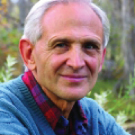
Peter Levine: Healing Trauma (from Sounds True)

This is a nice selection from Sounds True's Wise Words weekly post. For those who work in the trauma field, Levine has probably been a profound influence in one way or another. His Somatic Experiencing approach to trauma work, which focuses on regulating arousal and affect through the body, is one of the dominant models in integral treatment systems.

Sounds True has a great selection of his teachings in both book and audio formats (more from Peter A Levine), but he also have some very good books, including In an Unspoken Voice: How the Body Releases Trauma and Restores Goodness (2010), Waking the Tiger: Healing Trauma: The Innate Capacity to Transform Overwhelming Experiences (1997), and Trauma Through a Child's Eyes: Awakening the Ordinary Miracle of Healing (206), among many others.
Peter Levine: Healing Trauma

peter-levine.jpg

According to several Buddhist and Taoist traditions, sex, meditation, death, and trauma share a common potential. These are the great portals—catalysts for profound surrender and awakening. Unfortunately, most of us are not prepared to take the opportunities offered by these powerful teachers.

Let’s take a look at sex first. Though many of us have experienced glimpses of sexual ecstasy, the focus on titillation, seduction, and performance in post-Viagra America often obscure the possibility for deep emotional and spiritual surrender that sex can offer.

Meditation is another avenue to awakening, but because of the years of dedication required to achieve what many of the great traditions refer to as “ego-death” through meditative practice, very few people have succeeded using this method.

The process of dying, a final chance to make peace with ourselves, has been given over largely to doctors, drugs, and machines. Even in supportive and conscious settings, what should be a spiritual act of surrender at the time of death is too often overshadowed by the sad remorse that the surrender did not occur earlier in life.

Trauma is the fourth pathway to awakening. In transforming and releasing ourselves from trauma, we must face, as does the newborn child, an uncertain world. It is a world stripped of the illusion of safety, and it obliges us to learn an entirely new way of being. When we enter it, we soon discover that our instinctive energies are not limited to acts of flight or uncontrolled violence. They are our heroic energies. And they can be harnessed! The energies that are released when we heal from trauma are the wellspring of our creative, artistic, and poetic sensibilities, and they can be summoned to propel us into the wholeness of our intelligence.

Trauma is about thwarted instincts. Instincts, by definition, are always in the present. When we allow them their rightful domain, we surrender to the “eternal now.” With the full presence of mind and body, we can gain access to the source of our own energy and enthusiasm. Consider for a moment the word enthusiasm. It comes from the Greek words en, meaning within, and Theos, meaning God. When we reclaim our enthusiasm for life, we are drawing closer to God, becoming more spiritual.

As we resolve our traumas, we discover missing parts of our beings, those that make us feel whole and complete. Our instincts house the simple but vital knowledge that “I am I” and “I am here.”

Without this sense of belonging in the world, we are lost, disconnected from life. If we learn how to surrender to our inborn knowledge, it can lead us on a healing journey that will bring us face to face with our natural spirituality, our God-given connection to life.

The process of healing trauma can drop us into virtual birth canals of consciousness. From these vantage points, we can position ourselves to be propelled fully into the stream of life. Healing from trauma can be that final instinctive push, that inner shaking and trembling, “the kick” that can awaken us and lead us on a journey home.