Showing posts with label humans. Show all posts

Wednesday, December 07, 2011

UCTV - Uniquely-Human Features of the Brain: Plasticity Social Nature Unified Mind

Who says school is boring? This lecture comes form UCTV, from the UC San Diego Center for Academic Research and Training in Anthropogeny (CARTA).


Uniquely-Human Features of the Brain: Plasticity Social Nature Unified Mind

Leading brain researchers Todd Preuss, MIke Gazzaniga and Katerina Semendeferi explore unique specialization in the human brain that may be keys to the brain's plasticity, our social nature, and the coordination of the functions in both sides of our brains.

Thursday, June 16, 2011

Liz Else - Thoughts within thoughts make us human

http://www.kurzweilai.net/images/recursivemind.png

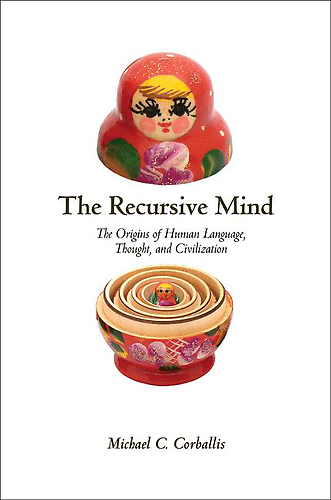
This is an interesting article from the New Scientist Culture Lab blog. As is often the case these days, the article is based on a new book, The Recursive Mind: The origins of human language, thought, and civilization by Michael Corballis.

Corballis is trying to change the way we think about language and thought in human development and evolution. Rather than language making possible thought (the Chomsky view), this book suggests that the ability to think about the past and envision the future made possible our language, and more importantly our consciusness.

Liz Else, associate editor

recursivemind.jpg

(Image: Ivo Berg (Crazy-Ivory)/Flickr/Getty)

Cogito ergo sum - I think, therefore I am - was coined by René Descartes in 1637. He was struggling to find a solid philosophical basis for how we know about reality and truth.

This is also turns out to be of the most famous examples of recursion, the process of embedding ideas within ideas that humans seem to do so effortlessly. So effortlessly and so skilfully, in fact, that it's beginning to look like the one true dividing line between animals and humans that may hold up to close scrutiny.

That's the hope of Michael Corballis, professor emeritus of psychology at the University of Auckland, New Zealand. His new book, The Recursive Mind: The origins of human language, thought, and civilization, is a fascinating and well-grounded exposition of the nature and power of recursion.

In its ultra-reasonable way, this is quite a revolutionary book because it attacks key notions about language and thought. Most notably, it disputes the idea, argued especially by linguist Noam Chomsky, that thought is fundamentally linguistic - in other words, you need language before you can have thoughts.

k9424.jpg

Chomsky's influential theory of universal grammar has been modified considerably since its origins in the 1960s, but it is still supported by many linguists. Its key idea is that the human mind has evolved an innate capacity for language and that all languages share some universal forms, constrained by the way we think. Corballis reckons instead that the thought processes that made language possible were non-linguistic, but had recursive properties to which language adapted: "Where Chomsky views thought through the lens of language, I prefer to view language though the lens of thought." From this, says Corballis, follows a better understanding of how humans actually think - and a very different perspective on language and its evolution.

So how did recursion help ancient humans pull themselves up by their cognitive bootstraps? It allowed us to engage in mental time travel, says Corballis, the recursive operation whereby we recall past episodes into present consciousness and imagine future ones, and sometimes even insert fictions into reality.

We are on our own with this degree of recursion. Chimps, bonobos and orangutans just don't tell stories, paint pictures, write music or make films - there are no great ape equivalents of Hamlet or Inception. Similarly, theory of mind is uniquely highly developed in humans: I may know not only what you are thinking, says Corballis, but also that you know what I am thinking. Most - but not all - language depends on this capability.

If he's right, Corballis's theories also help make sense of apparent anomalies such as linguist and anthropologist Daniel's Everett's work on the Pirahã, an Amazonian people who hit the headlines because of debates over whether their language has any words for colours, and, crucially, numbers. Corballis now thinks that the Pirahã language may not be that unusual, and cites the example of other languages from oral cultures, such as the Iatmul language of New Guinea, which is also said to lack recursion.

The emerging point is that recursion developed in the mind and need not be expressed in a language. But, as Corballis is at pains to point out, although recursion was critical to the evolution of the human mind, it is not one of those "modules" much beloved of evolutionary psychologists, many of which are said to have evolved in the Pleistocene. Nor did it depend on some genetic mutation or the emergence of some new neuron or brain structure. Instead, he suggests it came of progressive increases in short-term memory and capacity for hierarchical organisation - all dependent in turn on incremental increases in brain size.

But as Corballis admits, this brain size increase was especially rapid in the Pleistocene. These incremental changes can lead to sudden more substantial jumps - think water boiling or balloons popping. In mathematics these shifts are called catastrophes. So, notes Corballis, wryly, "we may perhaps conclude that the emergence of the human mind was catastrophic".

Let's hope that's not too prescient.

Book information
The Recursive Mind: The origins of human language, thought, and civilization by Michael Corballis
Princeton University Press
$29.95/£20.95

Monday, June 13, 2011

Annalee Newitz - Are Humans on the Verge of Evolving into Another Species

This is an interesting article - a look at the process of speciation. The implication seems to be that those species with brains that rapidly adapt by increasing sensory processing are more likely to evolve into new species. Is social networking - and the supposed ADD that results - spurring potential human evolution? Maybe. Probably not soon, though.

The first sign that humans are on the verge of evolving into another species

— A scientist who studies the small, silver elephantfish may have stumbled on the key to speciation, the process that allows one species to evolve into two or more. And it's all about developing new sensory perceptions.

The elephantfish, like a few other creatures who live in cloudy water, communicates via weak electrical signals. Using a special organ that sends and receives the signals, the fish are able to navigate and find each other even when there is zero visibility. Washington University biologist Bruce Carlson has studied roughly 200 species of these fish for many years, and wanted to find out if there was any connection between the structure of the fishes' brains and their rapid speciation. What he found was that brain complexity seemed to cause fish to evolve and diversify quickly. And the brain complexity came directly from the fishes' sensory processing power.

According to a release about the study:

Living in clouded, muddy environments requires the fish to recognize the electrical signals of their own species and ignore signals from other species. With that in mind, the researchers looked at a region of the midbrain that is devoted to analyzing such signals, known as the exterolateral nucleus or EL, in 26 different species of elephant fishes. They found that EL development led to improved signal detection and rapid speciation in one lineage of Mormyrids, while a sister lineage that diverged prior to EL development had reduced signal detection abilities and has not diversified.

The fish that were better able to recognize different kinds of electrical discharges and pulses, as well as the timing of pulses, had far more complex sensory systems than the ones that didn't.

The first sign that humans are on the verge of evolving into another species

At left, you can see an illustration of the different species. Carlson and his colleagues write today in Science:

In the top group of fishes, species in the genus Paramoryrops that has the complex signal-processing brain, discharges have changed quickly, resulting in dramatically different pulses among closely related species. In the bottom group of fishes, species in the genus Petrocephalus whose midbrain is more simply structured, all of the species have similar pulses. The difference arises because the top group has the anatomical features needed to exploit the signal space — such as the anatomy needed to make different pulses and the sensory and analytical ability to perceive small differences in pulse shape.

Said Carlson:

It's always difficult with evolutionary studies to say that any one trait is the cause or the trigger for another. But in this case we were able to show that the complex signal-processing brain evolved before a burst of speciation, that signal variation was higher among fishes with that brain, and that these fishes could distinguish among subtly different pulses, whereas others could not. Together it adds up to a strong case for brain evolution triggering increased diversification.

What Carlson's work suggests is that species whose brains are evolving fairly rapidly - hello, Homo sapiens - are likely candidates for speciation under the right circumstances. The key with the elephantfish seemed to be rapid evolution in the brain's ability to sort out sensory inputs.

Does that mean that as humans deal with more sensory bombardment from our mediascape that we'll start evolving into multiple species? Perhaps humans who live in low-sensory bombardment areas in rural regions will remain Homo sapiens while the rest of us become weird new creatures who are able to navigate narrow streets covered in augmented reality overlays? Let the rank speculation begin.

Read the full scientific paper via Science.

Illustration by imredesiuk/Shutterstock

The full paper is pay-walled, so here is the abstract:

Brain Evolution Triggers Increased Diversification of Electric Fishes

  1. Bruce A. Carlson1,*,
  2. Saad M. Hasan1,
  3. Michael Hollmann1,
  4. Derek B. Miller1,
  5. Luke J. Harmon2, and
  6. Matthew E. Arnegard3

+ Author Affiliations

  1. 1Department of Biology, Washington University in St. Louis, St. Louis, MO 63130, USA.
  2. 2Department of Biological Sciences, University of Idaho, Moscow, ID 83844, USA.
  3. 3Human Biology Division, Fred Hutchinson Cancer Research Center, Seattle, WA 98109, USA.
  1. *↵To whom correspondence should be addressed. E-mail: carlson.bruce@wustl.edu

Abstract

Communication can contribute to the evolution of biodiversity by promoting speciation and reinforcing reproductive isolation between existing species. The evolution of species-specific signals depends on the ability of individuals to detect signal variation, which in turn relies on the capability of the brain to process signal information. Here, we show that evolutionary change in a region of the brain devoted to the analysis of communication signals in mormyrid electric fishes improved detection of subtle signal variation and resulted in enhanced rates of signal evolution and species diversification. These results show that neural innovations can drive the diversification of signals and promote speciation.


Thursday, March 03, 2011

FORA.tv - Robert Sapolsky: Are Humans Just Another Primate?

http://psyc.queensu.ca/ccbr/Vol2/Figures/Locurto/Locurto4.jpg

Excellent talk - Dr. Robert Sapolsky is a professor of Biology and Neurology at Stanford University. He is a research associate at the National Museums of Kenya. Dr. Sapolsky is the author of several works of nonfiction, including A Primate's Memoir: A Neuroscientist's Unconventional Life Among the Baboons, The Trouble with Testosterone, Why Zebras Don't Get Ulcers and Monkeyluv: And Other Essays on Our Lives as Animals.

Summary: Are Humans Just Another Primate?
Dr. Robert Sapolsky discusses his work as professor of biology and neurology at Stanford University and as a research associate with the Institute of Primate Research at the National Museum of Kenya. His enviable gift for storytelling led the New York Times to print, "If you crossed Jane Goodall with a borscht-belt comedian, she might have written a book like A Primate's Memoir." Dr. Sapolsky's account of his early years as a field biologist. He is sure to dazzle and delight with tales of what it means to be human.


Tags: , , , , , , , , , , ,