Showing posts with label feuds. Show all posts

Saturday, July 27, 2013

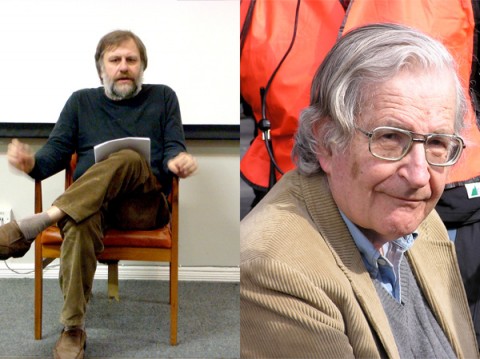
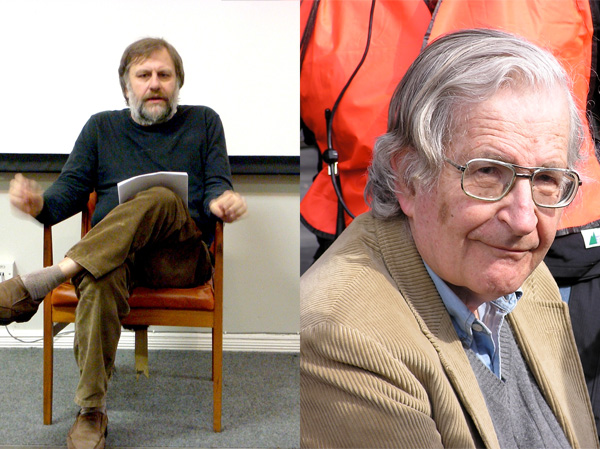
Philosophical Pissing War - Slavoj Žižek vs. Noam Chomsky

chomsky-zizek-feud-continues

I've only been following this "dialogue" between Slavoj Žižek and Noam Chomsky from the periphery, but Open Culture has assembled the various comments/responses in one post summarizing the exchange.

Here are the 4 articles about their feud, so far, as posted by Open Culture:
  1. Noam Chomsky Slams Žižek and Lacan: Empty ‘Posturing’
  2. Slavoj Žižek Responds to Noam Chomsky: ‘I Don’t Know a Guy Who Was So Often Empirically Wrong’
  3. The Feud Continues: Noam Chomsky Responds to Žižek, Describes Remarks as ‘Sheer Fantasy’
  4. Slavoj Žižek Publishes a Very Clearly Written Essay-Length Response to Chomsky’s “Brutal” Criticisms
For your entertainment, here the two latest summaries of the exchanges with links to the original articles, all of which come from Open Culture (those folks rock!):

The Feud Continues: Noam Chomsky Responds to Žižek, Describes Remarks as ‘Sheer Fantasy’


July 22nd, 2013


Noam Chomsky has issued a statement in reaction to our July 17 post, “Slavoj Žižek Responds to Noam Chomsky: ‘I Don’t Know a Guy Who Was So Often Empirically Wrong.’ In an article posted yesterday on ZNet titled “Fantasies,” Chomsky says Žižek’s criticism of him is completely ungrounded. “Žižek finds nothing, literally nothing, that is empirically wrong,” writes Chomsky. “That’s hardly a surprise.”

The rift between the two high-profile intellectuals began, as you may recall, when Chomsky criticized Žižek and other continental philosophers for essentially talking nonsense — for cloaking trivialities in fancy language and using the scientific-sounding term “theory” to describe propositions that could never be tested empirically. Žižek lashed back, saying of Chomsky, “I don’t think I know a guy who was so often empirically wrong.” He went on to criticize Chomsky’s controversial early position on American assessments of the Khmer Rouge atrocities in Cambodia. (To read Žižek’s comments, click here to open the earlier post in a new window.) In response yesterday, Chomsky said he had received numerous requests to comment on our post:
I had read it, with some interest, hoping to learn something from it, and given the title, to find some errors that should be corrected — of course they exist in virtually anything that reaches print, even technical scholarly monographs, as one can see by reading reviews in professional journals. And when I find them or am informed about them I correct them. 
But not here. Žižek finds nothing, literally nothing, that is empirically wrong. That’s hardly a surprise. Anyone who claims to find empirical errors, and is minimally serious, will at the very least provide a few particles of evidence — some quotes, references, at least something. But there is nothing here — which, I’m afraid, doesn’t surprise me either. I’ve come across instances of Žižek’s concept of empirical fact and reasoned argument.
Chomsky goes on to recount an instance when he says Žižek misattributed a “racist comment on Obama” to Chomsky, only to explain it away later and say that he had discussed the issue with Chomsky on the telephone. “Of course,” writes Chomsky, “sheer fantasy.” Chomsky then moves on to Žižek’s comments reported by Open Culture, which he says are typical of Žižek’s methods. “According to him,” writes Chomsky, “I claim that ‘we don’t need any critique of ideology’ — that is, we don’t need what I’ve devoted enormous efforts to for many years. His evidence? He heard that from some people who talked to me. Sheer fantasy again, but another indication of his concept of empirical fact and rational discussion.”

Chomsky devotes the rest of his article to defending his work with Edward Herman on the Khmer Rouge atrocities. He claims that no factual errors have been found in their work on the subject, and he draws attention to a passage in their book After the Cataclysm, quoted last week by Open Culture reader Poyâ Pâkzâd, in which they write, “our primary concern here is not to establish the facts with regard to postwar Indochina, but rather to investigate their refraction through the prism of Western ideology, a very different task.”

You can read Chomsky’s complete rebuttal to Žižek here.
* * * * * * *

Slavoj Žižek Publishes a Very Clearly Written Essay-Length Response to Chomsky’s “Brutal” Criticisms


July 26th, 2013


Fur has flown, claws and teeth were bared, and folding chairs were thrown! But of course I refer to the bristly exchange between those two stars of the academic left, Slavoj Žižek and Noam Chomsky. And yes, I’m poking fun at the way we—and the blogosphere du jour—have turned their shots at one another into some kind of celebrity slapfight or epic rap battle grudge match. We aim to entertain as well as inform, it’s true, and it’s hard to take any of this too seriously, since partisans of either thinker will tend to walk away with their previous assumptions confirmed once everyone goes back to their corners.

But despite the seeming cattiness of Chomsky and Žižek’s highly mediated exchanges (perhaps we’re drumming it up because a simple face-to-face debate has yet to occur, and probably won’t), there is a great deal of substance to their volleys and ripostes, as they butt up against critical questions about what philosophy is and what role it can and should play in political struggle. As to the former, must all philosophy emulate the sciences? Must it be empirical and consistently make transparent truth claims? Might not “theory,” for example (a word Chomsky dismisses in this context), use the forms of literature—elaborate metaphor, playful systems of reference, symbolism and analogy? Or make use of psychoanalytic and Marxian terminology in evocative and novel ways in serious attempts to engage with ideological formations that do not reveal themselves in simple terms?

Another issue raised by Chomsky’s critiques: should the work of philosophers who identify with the political left endeavor for a clarity of expression and a direct utility for those who labor under systems of oppression, lest obscurantist and jargon-laden writing become itself an oppressive tool and self-referential game played for elitist intellectuals? These are all important questions that neither Žižek nor Chomsky has yet taken on directly, but that both have obliquely addressed in testy off-the-cuff verbal interviews, and that might be pursued by more disinterested parties who could use their exchange as an exemplar of a current methodological rift that needs to be more fully explored, if never, perhaps, fully resolved. As Žižek makes quite clear in his most recent—and very clearly-written—essay-length reply to Chomsky’s latest comment on his work (published in full on the Verso Books blog), this is a very old conflict.

Žižek spends the bulk of his reply exonerating himself of the charges Chomsky levies against him, and finding much common ground with Chomsky along the way, while ultimately defending his so-called continental approach. He provides ample citations of his own work and others to support his claims, and he is detailed and specific in his historical analysis. Žižek is skeptical of Chomsky’s claims to stand up for “victims of Third World suffering,” and he makes it plain where the two disagree, noting, however, that their antagonism is mostly a territorial dispute over questions of style (with Chomsky as a slightly morose guardian of serious, scientific thought and Žižek as a sometimes buffoonish practitioner of a much more literary tradition). He ends with a dig that is sure to keep fanning the flames:
To avoid a misunderstanding, I am not advocating here the “postmodern” idea that our theories are just stories we are telling each other, stories which cannot be grounded in facts; I am also not advocating a purely neutral unbiased view. My point is that the plurality of stories and biases is itself grounded in our real struggles. With regard to Chomsky, I claim that his bias sometimes leads him to selections of facts and conclusions which obfuscate the complex reality he is trying to analyze. 
…………………. 
Consequently, what today, in the predominant Western public speech, the “Human Rights of the Third World suffering victims” effectively mean is the right of the Western powers themselves to intervene—politically, economically, culturally, militarily—in the Third World countries of their choice on behalf of the defense of Human Rights. My disagreement with Chomsky’s political analyses lies elsewhere: his neglect of how ideology works, as well as the problematic nature of his biased dealing with facts which often leads him to do what he accuses his opponents of doing. 
But I think that the differences in our political positions are so minimal that they cannot really account for the thoroughly dismissive tone of Chomsky’s attack on me. Our conflict is really about something else—it is simply a new chapter in the endless gigantomachy between so-called continental philosophy and the Anglo-Saxon empiricist tradition. There is nothing specific in Chomsky’s critique—the same accusations of irrationality, of empty posturing, of playing with fancy words, were heard hundreds of times against Hegel, against Heidegger, against Derrida, etc. What stands out is only the blind brutality of his dismissal. 
I think one can convincingly show that the continental tradition in philosophy, although often difficult to decode, and sometimes—I am the first to admit this—defiled by fancy jargon, remains in its core a mode of thinking which has its own rationality, inclusive of respect for empirical data. And I furthermore think that, in order to grasp the difficult predicament we are in today, to get an adequate cognitive mapping of our situation, one should not shirk the resorts of the continental tradition in all its guises, from the Hegelian dialectics to the French “deconstruction.” Chomsky obviously doesn’t agree with me here. So what if—just another fancy idea of mine—what if Chomsky cannot find anything in my work that goes “beyond the level of something you can explain in five minutes to a twelve-year-old” because, when he deals with continental thought, it is his mind which functions as the mind of a twelve-year-old, the mind which is unable to distinguish serious philosophical reflection from empty posturing and playing with empty words?
Josh Jones is a writer and musician based in Washington, DC. Follow him at @jdmagness
Friday, January 21, 2011

Galen Strawson vs. Nicholas Humphrey in The Guardian UK


It seems a little odd (perhaps only to me) that within days of my posting an old interview with Galen Strawson on his rather rigid views of free will that he goes and gets into a very public feud with Nicholas Humphrey after essentially trashing Humphrey's new book in The Guardian UK.

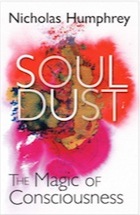
By the way, the book is Soul Dust: The Magic of Consciousness by Nicholas Humphrey (due out February 21, 2011 in the US).


I'm going to post Strawson's review, then I will include the comments from each in the comments section following the post - to say Humphrey is pissed would be an understatement.

Soul Dust by Nicholas Humphrey – review

Nicholas Humphrey's study of consciousness is let down by some hopeless central contentions

Galen Strawson


MRI scan

An MRI scan of a human brain – debate has long raged about how consciousness works.
Photograph: David Job/Getty Images

Once upon a time, not so long ago, no one thought that there was a mind-body problem. No one thought consciousness was a special mystery and they were right. The sense of difficulty arose only about 400 years ago and for a very specific reason: people began to think they knew what matter was. They thought (very briefly) that matter consisted entirely of grainy particles with various shapes bumping into one another. This was classical contact mechanics, "the corpuscularian philosophy", and it gave rise to a conundrum. If this is all that matter is, how can it be the basis of or give rise to mind or consciousness? It seemed clear, as Shakespeare observed, that "when the brains were out, the man would die". But how could the wholly material brain be the seat of consciousness?

Leibniz put it well in 1686, in his famous image of the mill: consciousness, he said, "cannot be explained on mechanical principles, ie by shapes and movements…. imagine that there is a machine [eg a brain] whose structure makes it think, sense and have perception. Then we can conceive it enlarged, so that we can go inside it, as into a mill. Suppose that we do: then if we inspect the interior we shall find there nothing but parts which push one another, and never anything which could explain a conscious experience."

Conclusion: consciousness can't be physical, so we must have immaterial souls. Descartes went that way (albeit with secret doubts). So did many others. The mind-body problem came into existence.

Hobbes wasn't bothered, though, in 1651. He didn't see why consciousness couldn't be entirely physical. And that, presumably, is because he didn't make the Great Mistake: he didn't think that the corpuscularian philosophy told us the whole truth about the nature of matter. And he was right. Matter is "much odder than we thought", as Auden said in 1939, and it's got even odder since.

There is no mystery of consciousness as standardly presented, although book after book tells us that there is, including, now, Nick Humphrey's Soul Dust: The Magic of Consciousness. We know exactly what consciousness is; we know it in seeing, tasting, touching, smelling, hearing, in hunger, fever, nausea, joy, boredom, the shower, childbirth, walking down the road. If someone denies this or demands a definition of consciousness, there are two very good responses. The first is Louis Armstrong's, when he was asked what jazz is: "If you got to ask, you ain't never goin' to know." The second is gentler: "You know what it is from your own case." You know what consciousness is in general, you know the intrinsic nature of consciousness, just in being conscious at all.

"Yes, yes," say the proponents of magic, "but there's still a mystery: how can all this vivid conscious experience be physical, merely and wholly physical?" (I'm assuming, with them, that we're wholly physical beings.) This, though, is the 400-year-old mistake. In speaking of the "magical mystery show", Humphrey and many others make a colossal and crucial assumption: the assumption that we know something about the intrinsic nature of matter that gives us reason to think that it's surprising that it involves consciousness. We don't. Nor is this news. Locke knew it in 1689, as did Hume in 1739. Philosopher-chemist Joseph Priestley was extremely clear about it in the 1770s. So were Eddington, Russell and Whitehead in the 1920s.

One thing we do know about matter is that when you put some very common-or-garden elements (carbon, hydrogen, oxygen, sodium, potassium, etc) together in the way in which they're put together in brains, you get consciousness like ours – a wholly physical phenomenon. (It's happening to you right now.) And this means that we do, after all, know something about the intrinsic nature of matter, over and above everything we know in knowing the equations of physics. Why? Because we know the intrinsic nature of consciousness and consciousness is a form of matter.

This is still a difficult idea, in the present climate of thought. It takes hard thought to see it. The fact remains that we know what consciousness is; any mystery lies in the nature of matter in so far as it's not conscious. We can know for sure that we're quite hopelessly wrong about the nature of matter so long as our positive account of it creates any problem about how consciousness can be physical. Some philosophers, including Humphrey's long-time collaborator, Daniel Dennett, seem to think that the only way out of this problem is to deny the existence of consciousness, ie to make just about the craziest claim that has ever been made in the history of human thought. They do this by changing the meaning of the word "consciousness", so that their claim that it exists amounts to the claim that it doesn't. Dennett, for example, defines consciousness as "fame in the brain", where this means a certain kind of salience and connectedness that doesn't actually involve any subjective experience at all.

In Soul Dust, Humphrey seems to agree with Dennett, at least in general terms, for he begins by introducing a fictional protagonist, a consciousness-lacking alien scientist from Andromeda who arrives on Earth and finds that she needs to postulate consciousness in us to explain our behaviour. The trouble is that she's impossible, even as a fiction, if Humphrey means real consciousness. This is because she won't be able to have any conception of what consciousness is, let alone postulate it, if she's never experienced it, any more than someone who's never had visual experience can have any idea what colour experience is like (Humphrey says she'll need luck, but luck won't be enough).

Humphrey also talks in Dennettian style of "the consciousness illusion" and this triggers a familiar response: "You say that there seems to be consciousness, but that there isn't really any. But what can this experience of seeming to be conscious be, if not a conscious experience? How can one have a genuine illusion of having red-experience without genuinely having red-experience in having the supposed illusion?"

Later, Humphrey seems to be a realist about consciousness. When he comes to the question of how human consciousness evolved, his remarkable suggestion is that it is adaptive and has survival value principally because it allows for "self-esteem, coupled with self-entrancement". "Your Ego… this awesome treasure island… never ceases to amaze and fascinate you." And since this is tremendously pleasurable, you very much want to go on living. The gloomier among us may doubt this, finding Hamlet nearer the mark. The deeper problem with the self-entrancement theory is that natural selection can select implacably for an intense instinct of self-preservation without using consciousness at all.

It seems to me, then, that Humphrey's central contentions are hopeless. One doesn't solve the problem of consciousness (such as it is) by saying that consciousness is really a kind of illusion. Whatever difficulties there are in explaining the survival value of consciousness, it doesn't lie in the fact that it makes self-entrancement possible. There is initially something disarming about the rapturous self-confidence of Soul Dust, but it comes in time to seem mere vanity.

Galen Strawson is professor of philosophy at the University of Reading

For what it's worth, I tend to agree with Strawson's critique of Dennett - and if Humphrey holds to the same nonsense about consciousness as Dennett (i.e., that consciousness is at best an illusion, a kind of self-induced trance state - hey, wait, doesn't that imply consciousness?), then I am on board with his critique.

Anyway - here are the respective comments thus far (this was originally posted a while back), with a few others thrown in for context. Oh yeah, Humphrey comes off looking childish - irrespective of whether or not Strawson is wrong.

NicholasHumphrey

9 January 2011 4:18PM

In his bizarre review Strawson raises several “obvious” objections to my ideas about the evolution of consciousness. But it’s precisely because these objections will occur to most readers that I raise them myself in the book, before going on to answer them in detail. I have written to Strawson suggesting he should now send a letter to the Observer, saying he would like to retract his review because unfortunately he only had time to skim the book before letting fly.

* * * * *

prettyprettygood

9 January 2011 5:48PM

It's true, as Chomsky has pointed out, that we have "no coherent notion of the physical" - less and less so, in fact, over recent decades. But, like Pelforth, I'm confused about how Strawson conceives of the relationship between matter and consciousness. I suppose he would say that the very word "relationship" smuggles in Cartesian dualism by the back door. But he seems to be invoking something other than the idea of "emergence" which is usually deployed here.

If consciousness is somehow a fundamental property of what we think of as the material world, rather than something that only "emerges" in very particular conditions, as is commonly assumed, then don't we have something that ultimately resolves into a sort of panpsychism? In which case, shouldn't it be defended in those terms? Strawson is right, surely, to imply that the idea of emergence - which implies, or attempts to resolve, the apparent paradox that consciousness is fundamentally, in some sense, other than matter - is essentially an empty one, not least in the positivistic sense: it's almost impossible to conceive of an experiment that could establish such a claim to be false. But until we have some sort of coherent account of how matter and consciousness are in fact two aspects of the same unitary, self-consistent reality, despite all of our everyday intuitions to the contrary (ok - historically and geographically particular prejudices, if you like; it makes no difference), then surely Strawson's position (let's call it "weak panpsychism", though I'd be happy for him or anyone else to substitute another term) is just as as much of an epistemological dead end?

* * * * *

gstrawson

9 January 2011 6:53PM

prettyprettygood is pretty good. One problem is that we may be wildly wrong about the nature of space and time or spacetime. I think we probably are. There are two papers where I try to make some progress with this. One is called 'Real materialism'. It was originally in a book of papers written for Chomsky. The other is called 'Realistic monism'. It's in a book called Consciousness and its Place in Nature, and talks about emergence and panpsychism. I think I will try to put these papers up on the web.

pelforth: panpsychism is often misrepresented, and often mocked. It certainly doesn't imply that a computer or a table is a conscious subject. It might be that the particles of which the computer or table is composed, or some of them, are loci of conscious experience; it might be that the energy of which they are forms is itself a kind of consciousness. It wouldn't follow that the computer or table is itself a subject of conscious experience. Eddington, Whitehead and Russell are very interesting. Russell writes: ‘we know nothing about the intrinsic quality of physical events except when these are mental events that we directly experience’ (1956), or that ‘as regards the world in general, both physical and mental, everything that we know of its intrinsic character is derived from the mental side’ (1927).

* * * * *

johnstewartmoore

9 January 2011 6:56PM

My first impression of this review is of a mixture of category mistake and outright dogmatism. Gilbert Ryle’s Concept of Mind is a very persuasive demolition of the idea of the ‘ghost in the machine’ which he achieves by a careful unravelling of the puzzlement engendered when one ‘language game’ is taken as paradigmatic for another with a very different grammar. Strawson appears to be immune to the puzzlement. Such that other people have he would solve dogmatically. ‘Because we know the intrinsic nature of consciousness and consciousness is a form of matter’ he writes. He admits this is a difficult thought to grasp, but it appears more of a statement of faith than a sound philosophical proposition.

* * * * *

NicholasHumphrey

9 January 2011 8:18PM

Strawson has not so far responded to my invitation to retract his review of my book. But it's clear from messages I've received from colleagues in philosophy that they see him as an embarrassment to their profession: not only an intellectual ass but unscholarly and lazy too. His ideas about panspsychism have made him a laughing stock. His attacks on attempts to resolve the problem of consciousness as a scientific issue -- such as mine -- consign him to the nursery.

* * * * *

LeeJohn

10 January 2011 6:04PM

Nicholas Humphrey showing that even an well educated philosopher can commit a logical fallacy - ad hominem in this case.

Congratulations Nick, you are an exemplar to all aspiring philosophy students, for although they may only get a low 2.1 for their essay on the knowledge argument, at least they can live in the epistemic luxury of knowing that they will never make the same argumentative mistake as you.

* * * * *

NicholasHumphrey

10 January 2011 7:34PM

Lee, I think you should read my book before commenting on my response to Strawson. In the book I present a radically new theory of what consciousness is and why it evolved. Strawson is so blinkered by his prejudices that he can't see when his own "mysterian" game is up. True, I don't think he's worth much as a philosopher. But if he writes reviews like his, he's putting himself on the line. For the opinions of others see: http://www.humphrey.org.uk/nick_014.htm

* * * * *

JayJeffers

11 January 2011 5:27AM

NicholasHumphrey,

So I understand, if someone gives a bad review, then I can say they're an embarrassment to their profession, and that will count as a legitimate rebuttal? If someone gives a bad review, I can simply respond that the fact that they adhere to panpsychism makes their opinions suspect? This is not an ad hominem? Saying your interlocutor's ideas are laughable to lend credence to the view that their review is bad, this is not a fallacy of relevance?

I'm just lookin' for loopholes; maybe you've found some.

* * * *

gstrawson

11 January 2011 12:41PM

LeeJohn - aspiring philosophy students are also unlikely to make another of Nick Humphrey's errors, which I didn't mention in the review. Humphrey writes:

I feel, therefore I am … The logical corollary of this is If I do not feel, I am not’.

This is perhaps the most famous error in logic. Here is another example of the move: from ‘This is a ripe tomato, therefore it’s red’ to ‘This is not a ripe tomato, therefore it’s not red.’

I'd also like to defend Descartes. Humphrey is wrong to say that ‘I feel, therefore I am’ is an improvement on Descartes’s ‘I think, therefore I am’, for Descartes expressly used the words ‘cogito’ and ‘penser’ (‘think’) very broadly to cover all conscious mental activity including all feelings and sensations.

* * * * *

gstrawson

11 January 2011 12:48PM

PS the exact parallel is the move from ‘This is a ripe tomato, therefore it’s red’ to ‘If this is not a ripe tomato, it’s not red.’

* * * * *

NicholasHumphrey

11 January 2011 1:06PM

Glad to see that Strawson would actually like to discuss some philosophy. But in case anyone should think he is making a fair point about my lack of logic, let me quote what I wrote in the book:

[In Aristotle's words] “If someone senses himself or something else in a continuous time, then it is impossible for him not to notice he exists. . . . In all sensation, simple or complex, sharp or dull, the animal . . . feels that it lives.”

Aristotle realized that it is impossible not to notice that I am when I feel - Sentio ergo sum. Descartes, fifteen hundred years later, claimed that it is impossible to doubt that I am when I think --Cogito ergo sum. Yet, as several modern writers have observed, Aristotle’s “Sentio” is much truer to lived experience than Descartes’ “Cogito.” “Sometimes I think and other times I am,” wrote the poet Paul Valéry. For novelist Milan Kundera, “I think, therefore I am is the statement of an intellectual who underrates toothaches. I feel, therefore I am is a truth much more universally valid, and it applies to everything that's alive.”

The logical corollary of this, and indeed the obvious psychological fact, is that if I do not feel, I am not. Your core self comes into being only as and when you have sensations. And to suggest, as some theorists have, that there could already be the shell of a self --an empty self, waiting in the wings -- ready to lay claim to sensations if and when they arise, is to get things back to front. The philosopher Gottlob Frege misleadingly argued that “an experience is impossible without an experiencer. The inner world presupposes the person whose inner world it is.” But in truth an experiencer is impossible without experience; the existence of the person presupposes the inner world that makes him who he is. Johann Fichte said it better: “What was I before I came to self-consciousness? The natural answer to this question is: I did not exist at all, for I was not an I.”

It should be obvious I'm not using "logical corollary" in the sense of tight logical deduction, but rather in the more colloquial sense (as defined in the dictionary) of "easy inference". As to what Strawson says about Descartes' broad use of cogito, I take his point. But as you'll see, I quote other authors as having made the distinction between cogito and sentio against Descartes

Read on - there's more, including an apology from Humphrey for losing his temper - and then some more attack, as well as some cool and geeky philosophy talk.

Tuesday, November 17, 2009

Gladwell Responds to Pinker's Review of His New Book

Steven Pinker shredded Malcolm Gladwell's new book - and Gladwell himself - this weekend in the New York Times Book Review. Here is a snippet of the review:

The common thread in Gladwell’s writing is a kind of populism, which seeks to undermine the ideals of talent, intelligence and analytical prowess in favor of luck, opportunity, experience and intuition. For an apolitical writer like Gladwell, this has the advantage of appealing both to the Horatio Alger right and to the egalitarian left. Unfortunately he wildly overstates his empirical case. It is simply not true that a quarter­back’s rank in the draft is uncorrelated with his success in the pros, that cognitive skills don’t predict a teacher’s effectiveness, that intelligence scores are poorly related to job performance or (the major claim in “Outliers”) that above a minimum I.Q. of 120, higher intelligence does not bring greater intellectual achievements.

The reasoning in “Outliers,” which consists of cherry-picked anecdotes, post-hoc sophistry and false dichotomies, had me gnawing on my Kindle. Fortunately for “What the Dog Saw,” the essay format is a better showcase for Gladwell’s talents, because the constraints of length and editors yield a higher ratio of fact to fancy.
After reading this, I sensed a potential feud brewing, not unlike Pinker and George Lakoff a couple of years ago (hmmm . . . notice a trend here?). So when Gladwell posted a response to Pinker this morning, I expected a fierce defense of his own work. Not so much.
Pinker on "What the Dog Saw."

Steven Pinker reviewed my new book "What the Dog Saw," in the New York Times Book Review this past Sunday. I sent the following letter to the editor in response:

It is always a pleasure to be reviewed by someone as accomplished as Stephen Pinker, even if—in his comments on “What the Dog Saw” (Nov. 15)—he is unhappy with my spelling (rightly!) and with the fact that I have not joined him on the lonely ice floe of IQ fundamentalism. But since football has been on my mind these days, I do want to make one small observation about his comments.

In one of my essays, I wrote that the position a quarterback is taken in the college draft is not a reliable indicator of his performance as a professional. That was based on the work of the academic economists David Berri and Rob Simmons, who, in a paper published the Journal of Productivity Analysis, analyze forty years of National Football League data. Their conclusion was that the relation between aggregate quarterback performance and draft position was weak. Further, when they looked at per-play performance—in other words, when they adjusted for the fact that highly drafted quarterbacks are more likely to play more downs—they found that quarterbacks taken in positions 11 through 90 in the draft actually slightly outplay those more highly paid and lauded players taken in the draft’s top ten positions. I found this analysis fascinating. Pinker did not. This quarterback argument, he wrote, “is simply not true.”

I wondered about the basis of Pinker’s conclusion, so I e-mailed him, asking if he could tell me where to find the scientific data that would set me straight. He very graciously wrote me back. He had three sources, he said. The first was Steve Sailer. Sailer, for the uninitiated, is a California blogger with a marketing background who is best known for his belief that black people are intellectually inferior to white people. Sailer’s “proof” of the connection between draft position and performance is, I’m sure Pinker would agree, crude: his key variable is how many times a player has been named to the Pro Bowl. Pinker’s second source was a blog post, based on four years of data, written by someone who runs a pre-employment testing company, who also failed to appreciate—as far as I can tell (the key part of the blog post is only a paragraph long)—the distinction between aggregate and per-play performance. Pinker’s third source was an article in the Columbia Journalism Review, prompted by my essay, that made an argument partly based on a link to a blog called “Niners Nation." I have enormous respect for Professor Pinker, and his description of me as “minor genius” made even my mother blush. But maybe on the question of subjects like quarterbacks, we should agree that our differences owe less to what can be found in the scientific literature than they do to what can be found on Google.
That was much more civil and measured than Pinker's review was, for which I applaud Gladwell. Looks like we might have to wait until Pinker dislikes some other author's work to get a new feud brewing - but I have no doubt Pinker's fundamentalism will eventually find a new target.