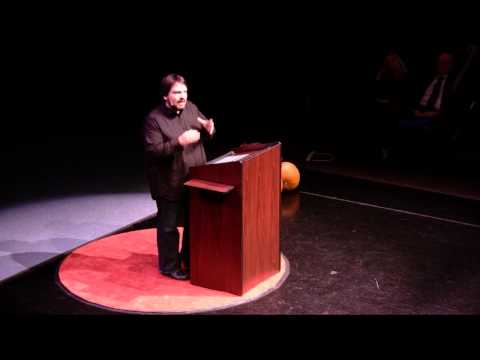
For those who enjoy philosophy,
Larval Subjects is a very cool blog. Here is a slightly adapted version of his own statement from his blog.
Larval Subjects is the blog of Levi R. Bryant, author of Difference and Givenness: Deleuze’s Transcendental Empiricism and the Ontology of Immanence, co-editor of the forthcoming The Speculative Turn with Nick Srnicek and Graham Harman, and author of a number of articles on Deleuze, Badiou, Zizek, Lacan, and political theory. He is currently developing his own ontology to be released in a book tentatively entitled Being and Difference: An Essay on Realist Ontology. In a former incarnation he was a Lacanian psychoanalyst, and he is now a professor of philosophy at Collin College.
All that is simply to introduce this cool post he recently put up on the concept of distinctions proposed by
G. Spencer-Brown. This is a topic I have not seen before, but it makes incredible intuitive sense. As Bryant summarizes Brown's ideas:
every distinction cleaves a space (whether conceptual or otherwise), the unmarked space of the distinction is what becomes invisible when the distinction is drawn ...
With a distinction, a boundary is drawn, but that which lies on the other side of the boundary disappears. However, on the other hand, the distinction itself disappears when drawing a distinction.
This feels like something we need to consider in integral theory, which is founded on distinctions as much as is on inclusion. We are always drawing distinctions from the moment we sense the self/other divide - even nondual is a distinction from dual (although I think this may be a both/and thing, perhaps the only space that is not either/or). Or not . . . just thinking out loud.
Here is the beginning of the post:

For some time now I’ve been tormented by G. Spencer-Brown’s theory of distinctions. Anyone who has attempted to read his Laws of Form will know what I’m talking about. Spencer-Brown’s thesis is that in order to indicate anything we must first draw a distinction (depicted to the right above). The bar that cleaves the space is the distinction. The unity of marked and unmarked space with respect to a distinction is what Spencer-Brown calls a distinction. What falls under the bar is what can be indicated once the distinction is drawn. Insofar as every distinction cleaves a space (whether conceptual or otherwise), the unmarked space of the distinction is what becomes invisible when the distinction is drawn. Every distinction thus has two blind spots. On the one hand, every distinction contains the unmarked space that disappears when the distinction is drawn. With a distinction, a boundary is drawn, but that which lies on the other side of the boundary disappears. However, on the other hand, the distinction itself disappears when drawing a distinction. When a distinction is drawn what comes to the fore is the marked space or what is indicated, not the distinction itself. The distinction, as it were, withdraws into the background.

In light of the foregoing, we can thus call distinction the transcendental and what is indicated under a distinction the empirical. If distinction is the transcendental, then this is because no indication can be made without a prior distinction. Distinction is the condition under which indication is possible. Indication, of course, can be anything. It can be what we refer to in the world, how we sort things, what we choose to investigate, etc. In order to indicate or refer to any of these things, I must first draw a distinction. As a consequence, the distinction is prior to whatever happens to be indicated. For example, if I wish to investigate the pathological, I must cleave a space (conceptual or otherwise) that brings the pathological into the marked space of the distinction. It is only on the basis of this distinction that I will be able to indicate the pathological. Part of what is interesting in all of this is that the marked space of the distinction– and recall it’s always withdrawn from any and every indication such that it’s invisible –is like a Mobius strip, attached to its unmarked space in much the same way that the front of a page implies its back. The pathological never innocently indicates the pathological, but rather presupposes an unmarked space of the “normal” that structures and organizes the pathological. In other words, the conditions under which any observations are possible are those of a prior distinction.
Read the whole article.
Tags:
Philosophy, distinctions, perspectives, deconstruction, Levi R. Bryant, Larval Subjects, Distinction, On Deconstruction, G. Spencer-Brown, Laws of Form, either or, both and, integral theory, boundaries