Showing posts with label daily life. Show all posts

Saturday, June 29, 2013

The Loving Brain - Tools for Real Issues (Free Telecourse Hosted by Rick Hanson, PhD)

Rick Hanson, PhD, is hosting another free telecourse, this time through en*theos, the latest and continuously expanding project of Brian Johnson (founder of the now-defunct social-networking site, Zaadz [purchased then shut down by Gaiam]).

This particular course is called The Loving Brain: Tools for Real Issues. Rick will be speaking with Harville Hendrix and Helen LaKelly Hunt, Tara Brach, Paul Gilbert, Geneen Roth, Paul Zak, Sara Gottfried, MD, Christine Carter, and Rick Hanson.


July 15 - September 2, 2013

Join neuropsychologist Rick Hanson and 7 top-tier academics, clinicians, and teachers as they apply new research, ancient wisdom, and powerful clinical insights to the messy, high stakes issues many people face in their work, family, friendship, and romantic relationships.

Mouse over the images to learn more about each speaker and their session! (at the site, not here)

Harville Hendrix and Helen LaKelly Hunt
Tara Brach
Tara Brach
Paul Gilbert
Paul Gilbert
Geneen Roth
Geneen Roth
Paul Zak
Paul Zak
Sara Gottfried, MD
Sara Gottfried, MD
Christine Carter
Christine Carter
Rick Hanson
Rick Hanson

YOUR HOST


Rick Hanson, Ph.D., is a neuropsychologist and author of Hardwiring Happiness: The New Brain Science of Contentment, Calm, and Confidence (coming in October 2013), Buddha’s Brain: The Practical Neuroscience of Happiness, Love, and Wisdom, and Just One Thing: Developing a Buddha Brain One Simple Practice at a Time. Founder of the Wellspring Institute for Neuroscience and Contemplative Wisdom and Affiliate of the Greater Good Science Center at UC Berkeley, he’s been an invited speaker at Oxford, Stanford, and Harvard, and taught in meditation centers worldwide.

An authority on self-directed neuroplasticity, Dr. Hanson’s work has been featured on the BBC, NPR, Fox Business, Consumer Reports Health, U.S. News and World Report, and O Magazine. He edits the Wise Brain Bulletin, and his weekly e-newsletter – Just One Thing – has over 73,000 subscribers, and also appears on Huffington Post, Psychology Today, and other major websites. He has several audio programs with Sounds True, and his first book was Mother Nurture: A Mother’s Guide to Health in Body, Mind, and Intimate Relationships.

A summa cum laude graduate of UCLA, Dr. Hanson is a trustee of Saybrook University. He also served on the board of Spirit Rock Meditation Center for nine years, and was President of the Board of Family Works, a community agency. He began meditating in 1974, trained in several traditions, and leads a weekly meditation gathering in San Rafael, CA. He enjoys rock-climbing and taking a break from emails. He and his wife have two adult children.

For more information about Rick, please go to www.RickHanson.net


Saturday, November 17, 2012

Tami Simon with Jeff Foster - The Deepest Acceptance


Sounds True founder and CEO spoke with Jeff Foster in this recent podcast about his new book and audio course, The Deepest Acceptance: Radical Awakening in Ordinary Life. For those not familiar with Foster, here is a little background from his own website:
Jeff Foster studied Astrophysics at Cambridge University. In his mid-twenties, after a long period of depression and illness, he became addicted to the idea of ‘spiritual enlightenment’ and embarked on an intensive spiritual quest for the ultimate truth of existence.

The spiritual search came crashing down with the clear recognition of the non-dual nature of everything, and the discovery of the extraordinary in the ordinary. In the clarity of this seeing, life became what it always was: intimate, open, loving and spontaneous, and Jeff was left with a deep understanding of the root illusion behind all human suffering, and a love of the present moment.
Enjoy the podcast.

The Deepest Acceptance

Tuesday, November 6, 2012

Tami Simon speaks with Jeff Foster, voted in 2012 by The Watkins Review as one of the world’s 100 most spiritually influential people living today. With Sounds True, Jeff has released a new book, The Deepest Acceptance: Radical Awakening in Ordinary Life, and an accompanying audio program inviting us to discover the ocean of who we are: an awareness that has already allowed every wave of emotion and experience to arrive. In this episode, Jeff explains that we are acceptance, how to work with practical concerns such as financial fears, and the power of being with someone who is suffering—with an absolutely open embrace. Jeff also talks about his own path of awakening, including deep depression and some of his most important discoveries. (90 minutes)

Play

Friday, November 16, 2012

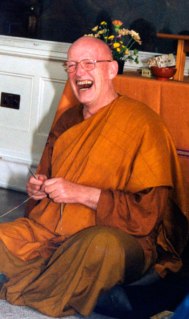
Ajahn Sumedho - Developing an Attitude Towards Meditation

This nice article by Ajahn Sumedho comes from Buddhism Now. When we sit down to meditate with an intention - to attain a certain form of awareness, or to have a blissful peak experience, or even to change our emotional state - then we are doing meditation as work. Sumedho suggests that the goal of Buddhist meditation is to see things as they are, with an awakened attention.

Developing an attitude towards meditation, by Ajahn Sumedho

When one composes one’s mind and looks inwards, there is a sense of coming to one point. If we are not caught in the thinking process, we can be aware of the here and now, the body, the breath, mental states, moods; we can allow everything to be what it is.


Ajahn Sumedho Buddhist Summer School 2001.

The attitude of many people in meditation is that there is always a need to change something. There might be an attempt to attain a particular state or some kind of blissful experience they have had before, or even if they haven’t had anything like that, they might hope that if they continue to practise, they will. When we practise meditation with this idea of getting something, then even the idea of practice, even the word ‘meditation’, can bring up this conditioned reaction of: ‘There’s something I’ve got to do. If I’m in a bad mood I should get rid of that mood. I’ve got to concentrate my mind.’ If the mind’s scattered and we’re all over the place, ‘I should make it one-pointed; I’ve got to concentrate.’ And so we make meditation into hard work and there is a great deal of failure in it because we’re trying to control everything through these ideas. But this is an impossibility.

The idea of going off to a cave somewhere to meditate, or of being alone, is very attractive because as you settle into solitude, you do experience a level of tranquillity through lack of sensory stimulation. It is a kind of sensory deprivation. But that kind of tranquillity is easily disturbed. When the sensory impingements start pounding away at you again, you can get into, ‘Let me go to my cave.’ You can begin to hate people. You see them always as a threat. ‘Here they come again. They’re going to disrupt my samadhi.’ So, this couldn’t possibly be the way to liberation.

The other extreme is to think that you should not go off to the cave and should not practise meditation. Sometimes you hear people say that one need only be natural and let everything happen. This is true if you can do it, but if you don’t even know what is natural yet, it’s difficult to trust yourself.

The word ‘meditation’ covers many different kinds of mental experiences. The goal of Buddhist meditation is to see things as they are; it is a state of awakened attention. This is a very simple thing to do; it isn’t complicated or difficult or something that takes years to achieve. It is so easy that you don’t even notice it. When you say, ‘You’ve got to practise meditation,’ you conceive it as something you have to attain—you have to subdue your defilements, control your emotions and develop virtues in order to attain some kind of ideal state of mind. It sounds very remote and far from what we can expect in our lives as human beings.

Then you might have these images of what meditators do. Perhaps you think of yogis sitting in remote places, on mountain tops or in caves. Even the Buddha-image can convey this sense of remoteness and separation if you don’t understand how to use that particular icon.

So, in developing an attitude towards meditation, towards formal practice or daily life practice, we might separate the two. In formal practice or controlled retreats everything is organised, we all go by the routine, by the structure. Then, when we get up from that, we might feel that that is not meditation, and we leave it. Then we can refer to ‘daily life meditation’, and that seems hopeless. If we compare daily life with a very controlled meditation retreat they are very different. You can’t however live your life in that controlled structure as an ongoing experience. Geshe Tashi [Tsering] made the point very well in his talk last night that this is a real challenge. How do you develop this attention, this awakened-ness in the flow of life? That doesn’t remove the option of going on retreat or diminish the value of retreats in any way, but it is a way of looking at meditation as awakened-ness and awareness, mindfulness, so that it actually is something you develop throughout your daily life in whatever way you have to live it, in whatever conditions. There is a sense of allowing things to be. In this present moment you can allow your body to be in whatever way it is right now, as well as your emotional state or mental state. You can be just the observer. Right now the mood is like this, I feel like this. Just observe it; just be aware of it. Is there confusion, indifference, happiness, sadness, doubt or uncertainty? Whatever is present, allow it to be what it is.


Dartington, Totnes, 2012 

Try looking inwards with this attitude of observing whatever is present. It can be something very precise, like anger, or something very sharp. A lot of our emotions, however, are nebulous, kind of amorphous, wandering things. So now put yourself in this position of the Buddha, Buddho, the knower—not the judge—and just look. Just notice what kind of mood or feeling you are in.

When we start really noticing, really listening or paying attention, sustaining an awareness on just this mood or mental state (and we’re not used to doing this), then we may become aware of bodily tensions or feelings of bewilderment, of not knowing quite what we’re supposed to be doing, what we’re supposed to find. Now, be aware of this as a mental object. What we are doing is putting ourselves increasingly in this position of Buddha, the Buddho. Then your emotional state is seen in an objective way; it is like this. ‘What am I supposed to be doing?’—This can be seen as a mental object.

Another suggestion is to relax into the present. You have this idea of what you have to do, and you put yourself into a state of tension through too much effort. It’s not a matter of trying too hard or not trying at all, but of just the right amount of attention needed to just listen, to just be open to this present moment in a relaxed way. If we force it, if we try too hard, then we tend to contract; we don’t relax. Then again, if I say ‘relax’, you might take that as meaning ‘lax’, so then you just fall asleep—those who are sitting on the floor decide to lie down, then they go to sleep. Or one could take ‘relax’ as an attitude of just letting go, an attitude of not having to do anything or get anything. This is not a kind of ­gaining situation. You are not here to get something or achieve something, so it’s not like a worldly thing. You are not here to get your samadhi or prove something. What accompanies that might well be the fear that you won’t be able to do it, ‘Maybe I’m one of those people that will never get enlightened.’ Another one we all sometimes revert to is, ‘I don’t expect to get enlightened in this lifetime. I just don’t have what it takes.’ Well, don’t believe that one either.

Ajahn Chah used to call meditation a holiday for the heart. We have a tendency to think that meditation is something we’ve got to achieve, another thing we‘ve got to do and get, but Ajahn Chah would put it in terms of a holiday. Try that, try seeing meditation in that way.


More articles by Ajahn Sumedho here 

[The above is from a talk given by him on 31 July 2001 at the Buddhist Publishing Group, Buddhist Summer School, England.]