Showing posts with label Jaak Panksepp. Show all posts

Saturday, December 27, 2014

Check Out "The Couch," A New Blog on Mental Health and Addiction

My partner (read: girlfriend) has started a new blog called The Couch. Jami Parrish, LPC, CSAT, CMC, is a therapist and coach whose aim is to help others live fully and authentically. She's also really smart.

She practices in Tucson, AZ.

Here is the beginning of a recent post:

Affective Neurobiology and Sex Addiction

12/26/2014

“I hate feeling this way.”  She said,  “…it is like I am wired to feel like this.”

I have heard variations of this sentiment many, many times. (Each time I am reminded, Yes! Yes you are wired to feel like this.)  We as mammals ARE wired to feel like this, but that doesn’t mean it is never ending, that there is no hope.  I then explain the process that occurs deep in our brain and she expresses a sense of relief. “THAT makes sense!” she exclaims.   Understanding the underlying neurobiology to our processes helps us not just understand but regulate our nervous systems and those of our clients.  Dan Siegel’s Interpersonal Neurobiology uses this principal as the basis for conceptualization and treatment (Badenbock, 2008)

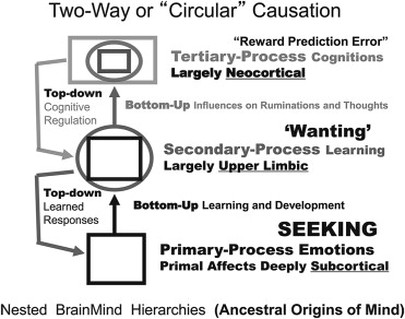
According to Jaak Panksepp, PhD, ALL mammals have seven primary affective (emotional) neurocircuits deep in the brain.  They are adaptive, essential to our survival, and part of our basic brain structure. (Panksepp, 2014)  While it is relatively well known now that the emotional center of the brain is in the limbic system, what Panksepp has found is that emotions are much more primitive, and hence much more powerful.  The emotional pathways extend far beyond the limbic system into the upper and middle brain stem. (Panksepp, personal communication, 2014)  These circuits reside in “ancient parts of the brain;” they are unconscious, hence the term primary. (Panksepp, 2014; Panksepp, 2012; Panksepp, 2010a)    “All aspects of mental life can be influenced by our primary-process feelings and the overall affective spectrum of the lower MindBrain is foundational for higher mental health issues” (Panksepp, 2012, p. xii). Emotions do not originate by a cognitive process. They begin in basic biological experiences deep in our brains and the subtleties (determining if we are feeling shame or guilt, anxiety or excitement) are then determined by our life experiences and our interpretations (secondary and tertiary processes, respectively, which I will explain below). The term MindBrain or BrainMind is Panksepp’s acknowledgment that we can not separate mind from brain and body. His theory is controversial in the field of affective neurobiology, but his decades of research supports his proposals.  This model will make sense to those who feel their emotions take over and to those therapists working with trauma and addiction.  It also helps to explain the power of sex addiction and other process addictions.
Picture

Sunday, September 28, 2014

The Science of Emotions: Jaak Panksepp at TEDxRainier

http://ecx.images-amazon.com/images/I/41TIr4mBuJL._SY344_BO1,204,203,200_.jpg

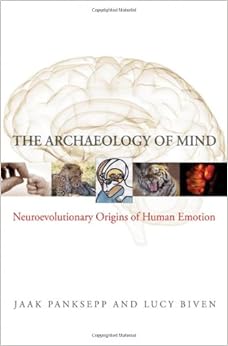
Awesome - Jaak Panksepp is one of the founders of affective neuroscience, and author of Affective Neuroscience: The Foundations of Human and Animal Emotions (2004) and The Archaeology of Mind: Neuroevolutionary Origins of Human Emotions (2012).

The Science of Emotions: Jaak Panksepp at TEDxRainier

Published on Jan 13, 2014


Given an inherent subjective nature, emotions have long been a nearly impenetrable topic for scientific research. Affective neuroscientist Jaak Panksepp explains a modern approach to emotions, and how taking seriously the emotions of other animals might soon improve the lives of millions.

Jaak Panksepp introduced the concept of Affective Neuroscience in 1990, consisting of an overarching vision of how mammalian brains generate experienced affective states in animals, as effective models for fathoming the primal evolutionary sources of emotional feelings in human beings. This work has implications for further developments in Biological Psychiatry, ranging from an understanding of the underlying brain disorders, to new therapeutic strategies. Panksepp is a Ph.D. Professor and Baily Endowed Chair of Animal Well-Being Science, College of Veterinary Medicine, Washington State University. His scientific contributions include more than 400 papers devoted to the study of basic emotional and motivational processes of the mammalian brain. He has conducted extensive research on brain and bodily mechanisms of feeding and energy-balance regulation, sleep physiology, and most importantly the study of emotional processes, including associated feelings states, in other animals.

This talk was given November 9, 2013 in Seattle at TEDxRainier, a local TEDx event, produced independently of the TED Conferences.
* * * * *

Jaak Panksepp - Animal Emotion Researcher and Neuroscientist


Speaker Bio 

Given an inherent subjective nature, emotions have long been a nearly impenetrable topic for scientific research. Affective neuroscientist Jaak Panksepp explains a modern approach to emotions, and how taking seriously the emotions of other animals might soon improve the lives of millions.

Jaak Panksepp, Ph.D. Professor and Baily Endowed Chair of Animal Well-Being Science, College of Veterinary Medicine, Washington State University. His scientific contributions include more than 400 papers devoted to the study of basic emotional and motivational processes of the mammalian brain. He has conducted extensive research on brain and bodily mechanisms of feeding and energy-balance regulation, sleep physiology, and most importantly the study of emotional processes, including associated feelings states, in other animals. He introduced the concept of Affective Neuroscience in 1990, consisting of an overarching vision of how mammalian brains generate experienced affective states in animals, as effective models for fathoming the primal evolutionary sources of emotional feelings in human beings. This work has implications for further developments in Biological Psychiatry, ranging from an understanding of the underlying brain disorders, to new therapeutic strategies.

His recent work has focused primarily on the subcortical brain mechanisms of sadness (brain PANIC or separation distress circuitry) and joy (brain PLAY and animal laughter circuitry), work that has implications for the treatment of autism, ADHD, and depression. His work is informed by exploring the consequences of basic knowledge about emotional endophenotypes (natural brain states) for better understanding of human mental health. His monograph Affective Neuroscience (Oxford, 1998) outlined ways to understand brain affective processes neuroscientifically; his Textbook of Biological Psychiatry (Wiley, 2004) focused on how elucidation of emotional processes can facilitate psychiatric practice; and Archaeology of Mind (Norton, 2012) summarized how such knowledge can inform psychotherapeutic practice.

This work has led to three novel antidepressant concepts that are currently being evaluated in human. But perhaps equally importantly, this work provides a novel vision for how consciousness emerged in human brains, which can only be clarified through the scientific study of the phenomenal-experiential-emotional capacities of that exist in the brains/minds of other animals.