Thursday, October 07, 2010

The Varsity - Is this a neuro revolution?

Cool article from a week or so ago. Neuroscience pretends to have the answers to everything, but there are some serious issues with its new favorite tool, the fMRI (not to mention the SPECT scan). Let's start with this:
A typical brain contains 100 billion neurons, each of which makes electrical connections, or synapses, with up to 10,000 other neurons. That means a quadrillion synapses to keep track of at any given time — about the number of stars in the visible universe or the number of people on 150,000 Earths.
When we see an fMRI what we see is a pattern of oxygenated blood flow in the brain in general regions of the brain. We do not really see what is happening at the level of the neurons - fMRI's are the view from 25,000 feet, where we really need is the ground level view or we will never be able to say anything specific about brain function.

Don't take my word for it, though, read Jonah Lehrer and the Language Log for a whole different take on why neuroscience is WAAAAAAY overblown at this point.

Which is not to say I will not continue to post new research. :)

Is this a neuro revolution?

They say a revolution is brewing.

We won’t see it in the streets and people won’t be talking about it on the daily news. Instead, it will happen in dimly lit laboratories, where human subjects lie with their heads in white tubular machines. In fact, it’s happening right now — as figures in lab coats crowd around a computer monitor, watching smudges of colour populate the screen. They are observing what’s happening inside a living human brain.

Neuroscience, the study of how the brain works, has become one of the fastest-growing fields in science, and has managed to infiltrate even the most unlikely areas of knowledge. 10 years ago, there was no such thing as neuromarketing, neuroliterature, or neuropolitics — and yet today it seems every discipline is competing for the coveted “neuro” suffix to add to its resume.

The recent explosion of brain science across so many domains of knowledge has led to forecasts of an impending “neuro revolution.” Some even believe it has already begun.

alt text

Zack Lynch, author of The Neuro Revolution and co-founder of the neurotechnology market research firm, NeuroInsights, describes the neuro revolution as an upheaval of the social, economic, and political planes of our lives, leading to what he calls the neurosociety. He explains that these changes are driven by neurotechnology, the tools used to understand and influence the brain.

“My thought on the neurosociety is that it really begins this year, quite frankly,” says Lynch. “The neurosociety begins to emerge in 2010 and takes us through 2060.”

“What we’re already beginning to see,” adds Lynch, “is that neuroscience and neurotechnology are beginning to infiltrate multiple aspects of our daily lives.”

Take, for instance, the field of neuromarketing. In recent years, a whole host of companies have sprung up, promising their big-business clients — corporations like Google, Hyundai, and Microsoft — a window into the consumer’s psyche.

Neuromarketing is based on the principle that consumers don’t generally know why they make certain choices about products: we don’t know why we like what we do. So while focus groups might lead to a fraction of that answer, technologies that allow companies to see the brain’s physical response to advertising materials seem to offer an even deeper insight into the consumer’s subconscious needs and preferences — the ones that marketers target in order to sell a product.

It’s this rationale that neuromarketers have used to ply their wares, and so far, they haven’t been hard to sell. The website of neuromarketing company Mindlab International opens with a video intro of faceless crowds walking up and down the street: “Wouldn’t you like to know what’s going on in their minds?”

Yes, we would.

And how about neuroaesthetics, the field that studies our brain’s reactions to different works of art? Or neurotheology, the science of neural processes underlying our beliefs in god? What about neuroeconomics, neurowarfare, and neuropolitics? We’d like to know what’s going on in our minds there too.

Perhaps the most notable application of neuroscience has been in courts of law. The field of neurolaw is responsible for bringing brain imaging into the courtroom for applications like brain-based lie detection. By monitoring activity in the brain regions associated with memory, researchers believe they can detect whether the accused was involved in the crime if corresponding memory areas light up when he is shown the evidence. Because let’s face it — we’d really like to know what’s going on in the mind of the accused.

alt text

In a heavily publicized case in 2008, a court in India convicted a 24-year-old woman of murder, based on the results of a brain scan. While these methods may appear tried and true in scientific literature, it is still unclear whether the results translate outside a lab setting.

“fMRI-based lie detection, for example, can do as well as 80-90 per cent correct in simple laboratory simulations where college students commit mock crimes and then lie or tell the truth, as instructed,” says Martha Farah, director of the University of Pennsylvania’s Center for Cognitive Neuroscience and Center for Neuroscience and Society.

Read the whole article.

John Hagel - Reviewing "The Social Network" - Constructing Grand Narrative

http://www.onlinemovieshut.com/wp-content/uploads/2010/09/watch-the-social-network-online.jpg

At his Edge Perspectives blog, John Hagel takes a look at the new Aaron Sorkin/ David Fincher (they are among my favorite writers/directors) movie about Mark Zuckerberg and the birth of Facebook. Hagel believes the film has a social agenda in its narrative more than the desire to tell Zuckerberg's story:
Here is Peter Travers: “Fincher and Sorkin . . . define the dark irony of the past decade. The final image of solitary Mark at his computer has to resonate for a generation of users (the drug term seems apt) sitting in front of a glowing screen pretending not to be alone.” A key part of the grand narrative is to explain the large and growing following of social networks in terms of addiction. In fact, one of the characters in the movie, observing the rapid adoption of Facebook exclaims: "1,000 people overnight? If I was a drug dealer I couldn't give away drugs to that many people!"

Or, here is David Denby: “ After all, Facebook, like Zuckerberg, is a paradox: a Web site that celebrates the aura of intimacy while providing the relief of distance, substituting bodiless sharing and the thrills of self-created celebrityhood for close encounters of the first kind.”

An historical tragedy of epic proportions

This is the image many people have social network users and programmers - isolated, socially inept, and pathetic. With a half a billion users on Facebook now, as well as the proliferation of so many other social networking sites, this image is no longer as accurate as it was in the late 80s and 1990s.

In my experience (and certainly there are exceptions), social networking sites are technological extensions of our "meat space" lives into a global community. I have "friends" all over the world who I would not know if not for the internet and global cafes like Facebook.

All of which is to say that I (not having yet seen the film) agree with Hagel.

Reviewing "The Social Network" - Constructing Grand Narrative

The debate has begun. Many who know Mark Zuckerberg and his company are upset about the inaccuracies in The Social Network. Movie critics on the other hand love the movie. Few, though, are reflecting on what these two sets of reactions tell us about the moment we are living in.

We live in the midst of a social revolution and this movie represents the effort of mass media to make sense of the changes going on around them. Facts are not important. It is about symbols, metaphors and mythologies. It is about constructing grand narratives to shape our understanding of why things are happening.

And in this corner of the ring . . .

Let’s start by addressing at face value the two sides. The Social Network is full of inaccuracies according to those who are close to the personalities and the companies. David Kirkpatrick, author of the now definitive book on Zuckerberg’s company, does a great job of summarizing the major inaccuracies that underlie the entire film in his commentary here.

The response of the movie creators is that this is not a documentary and not meant to be accurate in all dimensions. Entertainment must be served first and foremost. This strikes me as a bit disingenuous, although all too common of Hollywood, given that the movie purports to be about real people and real historical events, down to the final trailers telling us what happened to each of the major characters. In fact, none of the key players in the making of this film has ever met Mark Zuckerberg, the subject of the movie. And neither the Director nor the scriptwriter has ever participated in his online social network. As we will see, though, the core inaccuracy of the film is key to supporting the mainstream media view of what is going on.

On the other side of the fence, we have the movie reviewers in the mainstream media who have, almost without exception, been ecstatic about the movie. In fact, the website Metacritic indicates that the movie now has a metascore of 97, based on 40 movie reviewers, the highest score of any movie currently showing. In fact, this metascore puts it into the top 20 of movies of all time, along with The Godfather and Lawrence of Arabia.

Roger Ebert calls it “the film of the year...so far” and gives an ecstatic review here. David Denby calls it “brilliantly entertaining.” Peter Travers gushes “The Social Network lights up a dim movie sky with flares of startling brilliance” and “it gets you drunk on movies again.”

Now, admittedly, this is a very good movie. It is well acted, the dialogue is wonderful and fast-paced, visually it captures and holds the attention, the music score reinforces the dramatic arc – all in all, it is well constructed and deeply entertaining. Everyone should see the movie as a compelling and beautiful example of story- telling. But is it really up there with The Godfather and Lawrence of Arabia?

Who's got status?

Read the whole post.


Alison Gopnik - 'Empathic Civilization': Amazing Empathic Babies

Mother Holding Baby, 1986
Keith Haring

Cool article - this is older (from the beginning of the year), but any time you combine Alison Gopnik with Jeremy Rifkin, I'll read it. This article was part of a series of pieces Huff Post did to promote Rifkin's The Empathic Civilization.

Below this piece, I'd like to suggest another related article very worth your time to read.

'Empathic Civilization': Amazing Empathic Babies

Alison Gopnik

Posted: February 24, 2010

One of the best ways of understanding human nature is to study children. After all, if we want understand who we are, we should find out how we got to be that way. Until recently most philosophers and psychologists thought that babies and young children were profoundly amoral creatures. They also thought that children were irrational and egocentric -- unable to think logically or take the perspective of others. Jean Piaget and later Lawrence Kohlberg, the founders of the study of moral development, argued that children did not have truly moral concepts until adolescence. Instead, children simply thought that whatever other people told them to do was right.

In the last thirty years scientists have completely overturned this view. Even the youngest babies imitate the facial expressions of other people and take on their emotions -- a kind of empathy. This ability is NOT just the result of the much-hyped "mirror neurons" since, for one thing, mirror neurons have been found in monkeys who rarely imitate others. But it does show that human babies, in particular, are tuned in to other people in an especially close way.

By 18 months, babies have gone beyond empathy to genuine altruism, After all empathy just means I feel your pain, altruism means I try to make you feel better even when I don't feel that way myself. Betty Repacholi and I did an experiment with 14 and 18-month-olds. We showed them two bowls of food, one of raw broccoli and one of goldfish crackers. All the babies, even in Berkeley, like the crackers and don't like the broccoli. Then the experimenter ate some food from each bowl. Half the time she acted as if she felt the same way as the babies. But for half the babies she acted as if she was disgusted by the crackers and loved the broccoli, just the opposite of the way the babies felt themselves. Then she gave the babies the two bowls, held out her hand and said "Could I have some?" The 14-month-olds gave her the crackers no matter what she did. But the 18-month-olds actually went beyond immediate empathy to something more like genuine altruism. They gave her the crackers of she liked he crackers and the broccoli if she preferred the broccoli, They understood that the other person might want something different from what they wanted themselves, and they acted to make her happy. Other experiments suggest the same thing. Felix Warneken and Mike Tomasello found that 18-month-olds will crawl across a set of cushions to get a pen for a an experimenter who drops it out of reach -- and strains to get it back. But they won't do that if he purposely throws the pen to the ground.

By the time they are three children have taken these basic impulses towards altruism and empathy and turned them into a deeper and more genuinely moral kind of understanding. Judith Smetana and her colleagues asked children as young as two and a half about two kinds of rules in the daycare -- a rule about not dropping your clothes on the floor and a rule about not hitting other kids. Children said that breaking both kinds of rules would be bad. But they also said that the teachers could simply decide to change the first rule. They could declare that a messy room was OK and then it would be OK. In contrast, even the youngest children thought that it would NEVER be OK to harm another child, no matter what the teachers said.

If children are so good, if empathy and altruism are such a deeply-rooted part of human nature, then why are adults so bad? The impulse to evil seems to be as deeply rooted as the will to do good. Early empathy and altruism emerge in the close face-to-face intimate encounters between babies and their caregivers -- the most intimate relationships we ever have. But for genuine global morality we need to extend those feelings beyond our intimates to the six billion other human beings out there.

In fact, some studies suggest that by the time they are four, children already discriminate their own group from that of others, even when the groups are as arbitrary as Hutu and Tutsi or Serb and Croat. Children who are given a blue t-shirt rather than a red one to wear will then say that that they prefer to play with other children with a blue shirt. The human impulse to depersonalize "the others" seems as deep as the impulse to care about the people closest to you. Reestablishing that sense of personal intimacy with the "others" may be one of the best ways of bringing about global moral change.

Try this one, too.

How to Raise a Moral and Compassionate Child

One theory is to parent more like our distant ancestors did.

Monday, September 27, 2010

Darcia Narvaez is a professor of psychology at the University of Notre Dame who specializes in moral and character development in children. She looked closely at how we're raising our children these days and found that we've stopped doing a lot of the things our ancestors in foraging hunter-gatherer societies did, and it's changing our kids for the worse.

According to Narvaez, our distant ancestors raised their babies with lots of positive touch (constant carrying, cuddling, and holding); breastfeeding for two to five years; and warm and prompt responses to cries and fussing, which “keeps the infant’s brain calm in the years it is forming its personality and response to the world,” she says. They also raised their children among other adult caregivers and let their kids play more with other children. All of this, she says, resulted in children who had better mental health, greater empathy, and higher intelligence than kids do now. "The way we raise our children today in this country," she argues in a write-up of her research, "is increasingly depriving them of the practices that lead to well-being and a moral sense."

Read the whole article.


Big Think - How Meditation Reshapes Your Brain

No new information here, but a nice collection and summary of the research. Big Think is rapidly becoming one of my favorite sites.

How Meditation Reshapes Your Brain

Meditation_pic

In 2006, filmmaker David Lynch—a poet of the sublimely bizarre and the surreally normal—wrote a book on transcendental meditation. Describing his experience, he writes: "It takes you to an ocean of pure consciousness, pure knowingness. But it's familiar; it's you. And right away a sense of happiness emerges—not a goofball happiness, but a thick beauty."

Coming from the man behind disturbing mindbenders like "Eraserhead" and "Blue Velvet," it's hard to take this statement seriously. But Lynch is indeed being sincere; he has reportedly meditated for 20 minutes twice a day since the 1970s. And his belief in the power of this age-old practice is shared with an estimated 20 million people in the United States alone who engage some form of meditation.

Sharon Gannon, the co-founder of Jivamukti Yoga, the largest yoga center in the U.S., tells Big Think that meditation is all about ignoring stimuli. "We're so habituated to reacting to every stimulus," she says. If the phone rings, we answer it; if someone knocks at the door, we open it. But meditation is a space where we don't react to the stimuli that constantly bombard us; it is about letting go, and it paradoxically makes us better able to engage. "Without taking the time every day to let things come and let things go without acting upon it, you won't have clarity of mind," she says.

Watch a short video of Sharon Gannon.

But what is actually happening in the brain as we seek nirvana? Meditators have long described their experiences as transformative states that are markedly different from normal consciousness, but only recently have researchers found the evidence to back this up.

Richard Davidson is one of the foremost researchers of meditation's effects on the brain. A Harvard Ph.D graduate and a friend of the Dalai Lama, he was chided early in his career for wanting to study something as unscientific as meditation. But in 2004 he became an overnight scientific celebrity for discovering that Buddhist monks exhibit vastly different brainwaves during meditation than normal people. Brainwaves are produced as the billions of neurons in our brains transmit action potentials down their axons to the synapses where they trigger the release of neurotransmitters. These action potentials are essentially electrical charges that are passed from neuron to neuron. By placing sensors on the scalp, researchers can detect not the individual firings of neurons—they are far too small and numerous to differentiate—but the sum total of this electrical activity, dubbed brainwaves for their cyclical nature.

Types of Brain Waves

The frequency of brainwaves varies among different mental states, indicating the amount of neuronal activity in the brain. Delta waves (below 4 Hz) are the longest waves and occur mostly during deep sleep. Theta waves (5-8 Hz) are seen most commonly in young children and in drowsy adults, often as an entree to sleep. Alpha waves (8-12 Hz) are the waves of an relaxed, non-aroused mind. Beta waves (12-30 Hz) are fast and low amplitude and are characteristics of an engaged mind. And finally gamma waves (30-100 Hz) are the highest in frequency and are thought to represent the synchronization of different brain areas as they carry out certain cognitive or motor functions. It is important to realize that the brain never produces just one type of these brain waves; they all occur simultaneously, but their ratios will change depending on one's mental state.

Using this electroencephalograph technology, Davidson asked his monks, each with 10,000 to 50,000 hours of meditation practice over their lifetimes, to concentrate on "unconditional loving-kindness and compassion." A group of inexperienced meditators were also trained for one-week and then instructed to do the same. The results were dramatic, revealing two important things: first, the monks exhibited a higher ratio of high frequency gamma brainwaves to slower alpha and beta waves during their resting baseline before the experiment began; and when the monks engaged in meditation, this ratio skyrocketed—up to 30 times stronger than that of the non-meditators. In fact, the gamma activity measured in some of the practitioners was the highest ever reported in a non-pathological context. Not only did this suggest that long-term mental training could alter brain activity, it also suggested that compassion might be something that could be cultivated.

New neurobiological research bolsters the idea that meditation effects a permanent restructuring of the brain. In 2008 a team of researchers from UCLA led by Eileen Luders compared the brains of long-term meditators with those of control subjects. In the brains of the meditators, they found larger volumes of gray matter in the right orbito-frontal cortex and the right hippocampus, areas thought to be implicated in emotion and response control. "It is likely that the observed larger hippocampal volumes may account for meditators' singular abilities and habits to cultivate positive emotions, retain emotional stability, and engage in mindful behavior," Luders writes. They also discovered a marked increase of gray matter in the thalamus, which is thought to act as the brain's switchboard, relaying information between the cerebral cortex and subcortical areas. The change in size might allow for the meditators' enhanced sense of focus during their practice.

And it turns out, you don't have to be a yogi to reap the benefits of meditation. Even those who participate in short-term training courses can alter their brains, according to research published this summer: In a collaborative study between the University of Oregon and the Dalian University of Technology in China, neuroscientists discovered that a Chinese meditation technique called integrative body-mind training (IBMT) could alter the connectivity in the brain after just 11 hours of practice. Using a type of magnetic resonance called "diffusion tensor imaging," the researchers examined the white matter fibers connecting different brain regions before and after training. The changes were most dramatic in the anterior cingulate, an area implicated in emotion control.

Takeaway

Far from being simply a relaxed state, meditation is a period of heightened activity in the brain—one that can actually reshape your brain. People as diverse as David Lynch and the Dalai Lama have touted the benefits of meditation, claiming that it can increase attention, combat stress, foster compassion, and boost health. And in the past two decades, neuroscientists have begun to understand the biological substrates of these claims. Research suggests that long-term meditation increases the orbitofrontal cortex, the hippocampus, and the thalamus, potentially increasing one's capacity for attention as well as compassion.

More Resources

—"Mental Training Enhances Attentional Stability: Neural and Behavioral Evidence," (2009) published by Antoine Lutz in The Journal of Neuroscience [PDF]

—"Short-term meditation training improves attention and self-regulation," (2007) published by Michael Posner in the journal PNAS

David Lynch on meditation [VIDEO]


Wednesday, October 06, 2010

John McMurtry: Reclaiming Rationality and Scientific Method - The Life-Coherence Principle as Global System Imperative

McMurtry's conclusions are exactly correct, in my opinion - the "how" of correcting the problems is the big picture piece I am not seeing yet. Here is the main issue that I agree with:
What has been excluded must be included - the universal life support systems whose preconditions must be taken into account for full coherence of any claim to truth. There are three general criteria of truth versus falsehood and ignorance. The first two are known, but the third has been missing. There is (1) consistency of assertions with established evidence, what scientific method has mastered. There is (2) consistency of inferences with premises, what philosophical logic and analytic philosophy have mastered. And there is (3) consistency of objectives and conclusions with life support systems which have been recognized by neither. There is no full coherence without consistency of all three. One cannot deny any of these three requirements of reason without absurdity. It cannot be rational or scientific to ignore or flout empirical evidence, to be inconsistent in claim, or to violate the requirements of universal life support systems. The most primary consistency – that without which life capacity is always reduced or destroyed – is now due.
Sounds right to me. Here is the beginning of the rather long article posted at Global Research: Center for Research on Globalization. I could be optimistic, but
McMurtry seems to be arguing for a worldcentric values system in the global economy.
The Life-Coherence Principle as Global System Imperative


Global Research, October 5, 2010

Summary

This paper explains what has long been missing across domains and levels of analysis: (1) the life-blind inner logic regulating the dominant paradigms of “rationality” and “scientific method”; (2) the reasons why it selects for unforeseen consequences of ecological, social and economic collapse; and (3) the life-coherence principle which identifies and corrects the derangement.

Contents

12.1. The Nature of the Rising Global Crisis and Why It Cannot Be Seen

12.2. Recognizing the Connected Disasters and Their System Causal Mechanism

12.3. The Ultimate Decider: Society’s Rule System Decides Life as Better or Worse

12.4. The Driver of the Ruling System: Self-Maximizing Rationality with No Life Ground

12.5. The Regulating Sequence of System Rationality and Its Alternative Step By Step

12.6. The Hidden Mechanism: Private Financial Subjugation of Society and the Academy

12.7. Prisoner’s Dilemma and Game Theory: The Paradigm of Scientific Rationality

12.8. The Underlying Incapacity of Critical Responses to the World Disorder

12.9. The Failure of Rational and Scientific Method to Understand Global Collapse

12.10. The Unexamined Problem of System-Cooked Science

12.11. The Life Coherence Principle: The Missing Ground of Scientific Rationality

12.1. The Nature of the Rising Global Crisis and Why It Cannot Be Seen?

Humanity’s governing rule system has generated a fatal contradiction. There is a deep-structural contradiction between its life-means support-system requirements, on the one hand, and the global system of private money-sequence and commodity growth, on the other. It is not, as Marx taught, a contradiction between productive force development and capitalist relations because both grow in technological tandem while the world burns. It is a deeper contradiction of the ruling system with life and life support systems themselves. The meaning of this crisis has been tracked throughout this study from 1.12. The Life-Blind Nature of Modern Economic Rationality and 1.14. The Axiological Sequences of Money Capital and Life Capital through 9.10. Above Public and Market Rules: The Money-Sequence System Disorder to 11.5. The Unseen War: Goods for Corporate Persons Are Bads For Human Persons and 11.12. Absolutization of the Ruling Rights System Overrides Life and Life Support Systems.

The reigning system is governed by private money-sequence growth as determining goal, and more priced-commodity yield growth is its justifying performance. Yet both of these ruling principles of value gain cumulatively violate life requirements at organic, civil and ecological levels. Although calls for a steady-state or no-growth system increase as the negative externalities of system growth destabilize the life of the planet, these rising calls usually remain stuck within the old concept of growth. Unlimited consumerism and inequality are rightly rejected, but no yardstick of life needs and capacity realization steers conception instead. To speak of “a fuller, greater, or better kind of development”, as Herman Daly, the most grounded of contemporary critical economists does in his Ecological Economics and the Ecology of Economics , is not made criterially clear by defining it as “qualitative improvement in the composition of the physical stocks of wealth that result from greater knowledge of technique and purpose”. How does one tell “better” from worse, or “qualitative improvement” from not? The problem here is one of repeating pro-value terms without principled meaning. This is a common problem, as we have seen, even with advanced theorists who know something has gone badly wrong. Life-value analysis meets such problems by its primary axiom and measure, explained in Chapter 6 on and systematically addressed ahead as “the life-coherence principle”.

The more prevalent problem is that system irrationality cannot be seen at all by its agents because they presuppose it as necessary and/or good a-priori. Critical philosophers too lack this grounding principle, as 5.15. The Imperative of a Higher Value Standard to Judge Practices and Traditions and10.11. Justice Theory Without Life-Ground, Life Plans without Life have explained at the most general normative-analysis level.

12.1.1. The Idea of an Invisible Hand Regulating Competition to an Optimal Result

The idea of an ‘invisible hand’ adjusting supply of private commodities to private money demand by self-maximizing competition among atomic agents is the theodicy of a ruling system which can see nothing else. There has been much said and unsaid about this logic of “the free market”, but the concept of “free market” itself has remained confused. The free market of local and independent artisans not affecting supply or demand explained by Adam Smith has almost nothing in common with the transnational-corporate oligopolist system regulating the world today. At the same time, the universal human life needs and the life support systems which lie at the base of the economic enterprise are blinkered out. If the economics is critical rather than propagandist, the generic life-standard regulators required to govern at the system level are lost in local examples without a principled ground of alternative.
Read the whole article.

Authors@Google: Robert Sutton on Corporate Leadership

Interesting discussion, especially since leadership identification and training is on my radar these days - as something I need to know more about. The talk is in support of Dr. Sutton's new book, Good Boss, Bad Boss.
Authors@Google: Robert Sutton

If you are a boss who wants to do great work, what can you do about it? Good Boss, Bad Boss is devoted to answering that question. Stanford Professor Robert Sutton weaves together the best psychological and management research with compelling stories and cases to reveal the mindset and moves of the best (and worst) bosses. This book was inspired by the deluge of emails, research, phone calls, and conversations that Dr. Sutton experienced after publishing his blockbuster bestseller The No Asshole Rule. He realized that most of these stories and studies swirled around a central figure in every workplace: THE BOSS. Sutton discovered that most bosses -- and their followers -- wanted a lot more than just a jerk-free workplace. They aspired to become (or work for) an all-around great boss, with the skill and grit to inspire great work, commitment, and dignity among their charges.


Embodied Cognition (A New Book and Some Background)

Embodied cognition is the future of consciousness research and conceptualization. Our self and mind are not simple by-products of brain activity - our bodies are major contributors to cognition and awareness. Our mental states arise from the our physical interaction with the world, a domain George Lakoff has explored with his embodied metaphor work (most of our metaphors are based in our physicality, or bodies, not in abstractions).

In fact, I contend, along with the constructionist approach perspective, that mind and cognition extends into social/cultural contexts (social constructionism), as well as into technology and environment (extended mind). We are integrally embedded beings.

This new book looks good - below the book blurb, I'll post some information on just what embodied cognition looks like in psychology and philosophy.

Embodied Cognition


By Lawrence Shapiro.

Series: New Problems of Philosophy.

Amazon: $28.04 paperback (Also available for the Kindle or as a $140 hardcover)

Embodied cognition often challenges standard cognitive science. In this outstanding introduction, Lawrence Shapiro sets out the central themes and debates surrounding embodied cognition, explaining and assessing the work of many of the key figures in the field, including George Lakoff, Alva Noë, Andy Clark, and Arthur Glenberg.

Beginning with an outline of the theoretical and methodological commitments of standard cognitive science, Shapiro then examines philosophical and empirical arguments surrounding the traditional perspective. He introduces topics such as dynamic systems theory, ecological psychology, robotics, and connectionism, before addressing core issues in philosophy of mind such as mental representation and extended cognition.

Including helpful chapter summaries and annotated further reading at the end of each chapter, Embodied Cognition is essential reading for all students of philosophy of mind, psychology, and cognitive science.

Table of Contents

Introduction Chapter 1. Standard cognitive science Chapter 2. Challenging standard cognitive science Chapter 3. Conceptions of embodiment Chapter 4. Embodied cognition: the conceptualization hypothesis Chapter 5. Embodied cognition: the replacement hypothesis Chapter 6. Embodied cognition: the constitution hypothesis Chapter 7. Concluding thoughts Glossary Notes Bibliography Index

Reviews

'Embodied Cognition is sweeping the planet and Larry Shapiro has just written the first comprehensive treatment of this exciting and new research program. This book is now and for years to come will be unquestionably the best way for students and researchers alike, to gain access to and learn to evaluate this exciting, new research paradigm in cognitive science.' – Fred Adams, University of Delaware, USA

'A must read for those who support the embodied program, those who question it, and those who are just trying to figure out what the heck it is. It's definitely on the reading list for my course in embodied cognition.' Arthur Glenberg, Arizona State University, USA

Embodied Cognition provides a balanced and comprehensive introduction to the embodied cognition movement, but also much more. Shapiro is careful to sift empirical results from broader philosophical claims, and the concise, simple arguments for cognition's embodiment that he articulates will help advanced students and researchers assess the diverse literature on this hot topic in cognitive science.’ – Robert A. Wilson, University of Alberta, Canada

Embodied Cognition is the first of its kind - a beautifully lucid and even-handed introduction to the many questions and issues that define the field of embodied cognition. Psychologists, neuroscientists, computer scientists, and philosophers should jump on this book. It promises to set the terms of debate in this exciting new enterprise for years to come.’ – Elliott Sober, University of Wisconsin Madison, USA

Embodied Cognition is an outstanding introduction to this increasingly important topic in cognitive science. Written in a clear and lively style, with a critical approach, it is a strong contender for the most useful introductory text on any topic in all of cognitive science, and a genuine contribution to the scientific and philosophical literature on embodied cognition.’ – Kenneth Aizawa, Centenary College of Louisiana, USA

Author Biography

Lawrence Shapiro is Professor in the Department of Philosophy at the University of Wisconsin—Madison, USA. His research currently focuses on the issues and debates around embodied cognition. He is editor (with Brie Gertler) of Arguing About the Mind (2007), also available from Routledge.

For those who want a little more background on what this model of cognition offers, here are a couple of good articles. The first one is a general overview from the Internet Encyclopedia of Philosophy, which is peer-reviewed, and the second article is from a recent Scientific American.

Embodied Cognition

Embodied Cognition is a growing research program in cognitive science that emphasizes the formative role the environment plays in the development of cognitive processes. The general theory contends that cognitive processes develop when a tightly coupled system emerges from real-time, goal-directed interactions between organisms and their environment; the nature of these interactions influences the formation and further specifies the nature of the developing cognitive capacities. Since embodied accounts of cognition have been formulated in a variety of different ways in each of the sub-fields comprising cognitive science (that is, developmental psychology, artificial life/robotics, linguistics, and philosophy of mind), a rich interdisciplinary research program continues to emerge. Yet, all of these different conceptions do maintain that one necessary condition for cognition is embodiment, where the basic notion of embodiment is broadly understood as the unique way an organism’s sensorimotor capacities enable it to successfully interact with its environmental niche. In addition, all of the different formulations of the general embodied cognition thesis share a common goal of developing cognitive explanations that capture the manner in which mind, body, and world mutually interact and influence one another to promote an organism’s adaptive success.

Table of Contents

  1. Motivation for the Movement
  2. General Characteristics of Embodied Cognition
    1. Primacy of Goal-Directed Actions Occurring In Real-Time
      1. Developmental Psychology
      2. Robotics/Artificial Life
    2. Form of Embodiment Constrains Kinds of Cognitive Processes
    3. Cognition is Constructive
  3. Embodied Cognition vs. Classicism/Cognitivism
  4. Philosophical Implications of the Embodied Cognition Research Program
    1. The Compatibilist Approach
    2. The Purist Approach
  5. References and Further Reading

1. Motivation for the Movement

Although ideas applied in the embodied cognition research program can be traced back to the seminal works of Heidegger, Piaget, Vygotsky, Merleau-Ponty, and Dewey, the current thesis can be seen as a direct response and, in some cases, a proposed alternative to the cognitivist/classicist view of the mind, which conceptualizes cognitive functions in terms of a computer metaphor. The cognitivist/classicist research program can be defined as a rule-based, information-processing model of cognition that 1) characterizes problem-solving in terms of inputs and outputs, 2) assumes the existence of symbolic, encoded representations which enable the system to devise a solution by means of computation, and 3) maintains that cognition can be understood by focusing primarily on an organism’s internal cognitive processes (that is, specifically those involving computation and representation). Although this research program is still prevalent, a number of problems have been raised about its viability, including the symbol-grounding problem (Searle 1980, Harnad 1990), the frame problem, the common-sense problem (Horgan and Tienson 1989), and the rule-described/expertise problem (Dreyfus 1992).

Embodied cognition theorists view cognitivist/classicist accounts as problematic for many reasons, but they are especially concerned that these accounts result in an isolationist assumption that attempts to understand cognition by focusing almost exclusively on an organism’s internal cognitive processes. Specifically, the concern is that if an isolationist assumption rests at the heart of the cognitivist/classicist research program, then the resulting explanations are inaccurate because they either underplay or completely overlook environmental factors that are essential to the formation of an accurate explanation of cognitive development. Consequently, this isolationist assumption is perceived to result in decreased explanatory power since it de-emphasizes two crucial factors that are needed to understand cognitive development: 1) the exact way organisms are embodied, and 2) the manner in which this embodied form simultaneously constrains and prescribes certain interactions within the environment. In its place, embodied cognition theorists favor a relational analysis that views the organism, the action it performs, and the environment in which it performs it as inextricably linked. Yet, before one can fully appreciate why embodied cognition theorists favor a relational over an isolationist analysis, it is necessary to discuss the theoretical assumptions that comprise the general embodied cognition framework.

2. General Characteristics of Embodied Cognition

Since the present embodied cognition research program is in its early stages, the general approach does not yet have hard and fast tenets that are agreed upon by all embodied cognition theorists. Consequently, this program is rather fluid, in that even the central researchers are striving to understand further exactly what is meant by embodied cognition. Yet, this should not prevent the characterization of the common assumptions found in most embodied cognition theories. The goal of this section is to highlight some of the most common theoretical assumptions shared by embodied accounts of cognition. The viewing of these assumptions together will provide a clearer picture of what embodied cognition roughly entails as a research program.

Once again, the central claim of embodied cognition is that an organism’s sensorimotor capacities, body and environment not only play an important role in cognition, but the manner in which these elements interact enables particular cognitive capacities to develop and determines the precise nature of those capacities. Developmental psychologist Esther Thelen (2001) further clarifies the central claim of this research program in the following passage:

To say that cognition is embodied means that it arises from bodily interactions with the world. From this point of view, cognition depends on the kinds of experiences that come from having a body with particular perceptual and motor capacities that are inseparably linked and that together form the matrix within which memory, emotion, language, and all other aspects of life are meshed. The contemporary notion of embodied cognition stands in contrast to the prevailing cognitivist stance which sees the mind as a device to manipulate symbols and is thus concerned with the formal rules and processes by which the symbols appropriately represent the world (xx).

Although embodied cognition accounts vary significantly across disciplines in terms of the specific ways in which they attempt to apply the general theory, a few common theoretical assumptions can be found in just about any embodied view one examines. These further theoretical assumptions help to flesh out the central thesis, and include 1) the primacy of goal-directed actions occurring in real-time; 2) the belief that the form of embodiment determines the type of cognition; and 3) the view that cognition is constructive. Each theoretical assumption will be explained by considering the work of a theorist whose research exemplifies the particular theoretical assumption under investigation. The first theoretical assumption, the primacy of goal-directed actions occurring in real time, is explained by considering research in robotics/artificial life and developmental psychology.

a. Primacy of Goal-Directed Actions Occurring In Real-Time

Embodied cognition theorists contend that thought results from an organism’s ability to act in its environment. More precisely, what this means is that as an organism learns to control its own movements and perform certain actions, it develops an understanding of its own basic perceptual and motor-based abilities, which serve as an essential first step toward acquiring more complex cognitive processes, such as language. Thus, goal-directed actions are described as primary for embodied theorists because these theorists argue that thought and language would not occur without the initial performance of these actions. In essence these low-level actions and movements are viewed as necessary for higher cognitive capacities to develop. In order to consider evidence in support of this initial theoretical assumption, one need only turn to the research of developmental psychologists Esther Thelen and Linda Smith (Thelen and Smith 1994, Thelen 1995). By briefly summarizing one of their numerous experiments on infant development, we can consider why many embodied cognition theorists characterize Thelen and Smith’s research as some of the most influential and convincing developmental evidence in support of this assumption that “thought grows from action and that activity is the engine of change” (Thelen 1995: 69). This discussion will highlight why the primacy of actions unfolding in real time is one of the defining theoretical assumptions of embodied accounts of cognition.

Read the whole entry.

And this one is also useful - a look at specifically the heart and how it impacts cognition and consciousness.

Psychology beyond the Brain

What scientists are discovering by measuring the beating of the heart


Image: David Marchal

The brain has long enjoyed a privileged status as psychology’s favorite body organ. This is, of course, unsurprising given that the brain instantiates virtually all mental operations, from understanding language, to learning that fire is dangerous, to recalling the name of one’s kindergarten teacher, to categorizing fruits and vegetables, to predicting the future. Arguing for the importance of the brain in psychology is like arguing for the importance of money in economics.

More surprising, however, is the role of the entire body in psychology and the capacity for body parts inside and out to influence and regulate the most intimate operations of emotional and social life. The stomach’s gastric activity , for example, corresponds to how intensely people experience feelings such as happiness and disgust. The hands’ manipulation of objects that vary in temperature and texture influences judgments of how “warm” or “rough” people are. And the ovaries and testes’ production of progesterone and testosterone shapes behavior ranging from financial risk-taking to shopping preferences.

Psychology’s recognition of the body’s influence on the mind coincides with a recent focus on the role of the heart in our social psychology. It turns out that the heart is not only critical for survival, but also for how people related to one another. In particular, heart rate variability (HRV), variation in the heart’s beat-to-beat interval, plays a key role in social behaviors ranging from decision-making, regulating one’s emotions, coping with stress, and even academic engagement. Decreased HRV appears to be related to depression and autism and may be linked to thinking about information deliberately. Increased HRV, on the other hand, is associated with greater social skills such as recognizing other people’s emotions and helps people cope with socially stressful situations, such as thinking about giving a public speech or being evaluated by someone of another race. This diverse array of findings reflects a burgeoning interest across clinical psychology, neuroscience, social psychology, and developmental psychology in studying the role of the heart in social life.

A key moment for the field came in 1995, when Stephen Porges, currently a professor of psychiatry at the University of Illinois at Chicago, put forth Polyvagal Theory, a theory that emphasized the role of the heart in social behavior. The theory states that the vagus nerve, a nerve likely found only in mammals, provides input to the heart to guide behavior as complex as forming relationships with other people as well as disengaging from others. A distinguishing feature of Polyvagal theory is that it places importance not on heart rate per se, but rather on the variability of the heart rate, previously thought to be an uninteresting variable or mere noise.

Since 1995, a broad spectrum of research emerged in support of Polyvagal theory and has demonstrated the importance of the heart in social functioning. In 2001, Porges and his colleagues monitored infants when they engaged in a social interaction with the experimenter (cooing, talking, and smiling at them) and when they encountered the experimenter simply making a still face—a frozen expression—toward them. Infants’ HRV not only increased during the social interaction, but also increases in HRV predicted positive engagement (greater attention and active participation by the infants) during this interaction. In adults as well, HRV appears to be associated with success in regulating one’s emotions during social interaction, extraversion, and general positive mood.

A number of recent findings converge on the role of heart rate variability in adaptive social functioning as well. One study by Bethany Kok and Barbara Frederickson, psychologists at the University of North Carolina, asked 52 adults to report how often they experienced positive emotions like happiness, awe, and gratitude and how socially connected they felt in their social interactions every day for a period of nine weeks. The researchers also measured the HRV of each individual at the beginning and end of the study by measuring heart rate during a two-minute session of normal breathing. HRV at the beginning of the study predicted how quickly people developed positive feelings and experiences of social connectedness throughout the nine-week period. In addition, experiences of social connectedness predicted increases in HRV at the end of the study, demonstrating a reciprocal relationship between heart rate and having satisfying social experiences.

Although high heart rate variability seems to have largely positive effects on people’s emotional state and their ability to adapt to their social environment, the story may soon become more complicated. For example, in unpublished research, Katrina Koslov and Wendy Berry Mendes at Harvard University have recently found that people’s capacity to alter—and in a sense regulate—HRV predicts theirsocial skills. In three studies, Koslov and Mendes measured this capacity to alter HRV during a task involving tracking the location of shapes on a computer screen (completely unrelated to anything social), and demonstrated that people’s capacity to alter HRV during this task subsequently predicted both their ability to judge others’ emotions accurately and their sensitivity to social feedback (how much they responded positively to positive feedback and negatively to negative feedback). These findings suggest that although high HRV at rest may be adaptive for social engagement, the capacity to modulate HRV also promotes social sensitivity.

Writers from Ovid to Stevie Wonder have used the heart as a convenient metaphor to convey emotional responses toward others. Emerging research suggests, however, that this metaphor is an oversimplification. The heart has complex interactions with how we treat and evaluate others, how we cope with social stress, and how we manage our emotions, and research has only begun to explore the relationship between cardiovascular processes and social life. Although philosopher Blaise Pascal noted, “The heart has reasons that reason cannot know,” it is clear that psychological research is beginning to illuminate this mystery.


Upaya Dharma Podcasts - Wisdom & Time Series: All 10 Parts

Join the Wisdom & Time Faculty - Al Kaszniak, David Chernikoff, Jane Fonda, Malka Druker, Mary Catherine Bateson, Roshi Joan Halifax - for a discussion of wisdom and aging.

Wisdom & Time Series: All 10 Parts

Recorded: Tuesday Sep 28, 2010

The 10 part Wisdom & Time series is now published. You can access the desired part of the series by clicking on its link below:

Wisdom & Time: Part 1 of 10

Wisdom & Time: Part 2 of 10

Wisdom & Time: Part 3 of 10

Wisdom & Time: Part 4 of 10

Wisdom & Time: Part 5 of 10

Wisdom & Time: Part 6 of 10

Wisdom & Time: Part 7 of 10

Wisdom & Time: Part 8 of 10

Wisdom & Time: Part 9 of 10

Wisdom & Time: Part 10 of 10


Tuesday, October 05, 2010

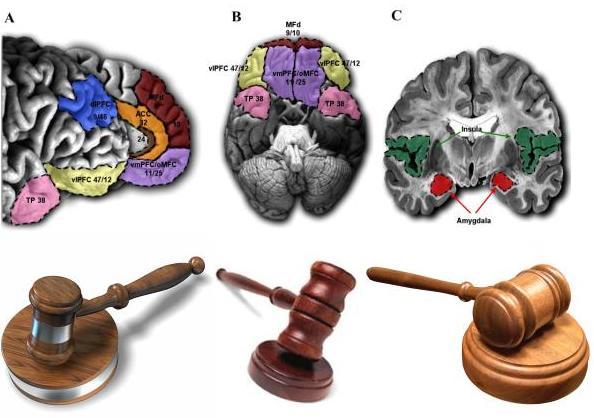
Big Think - How Neuroscience Is Changing the Law

http://thesituationist.files.wordpress.com/2007/05/law-brain-image.jpg
Image from The Situationist

How timely - I am presenting on this topic in class this week, specifically about neuro-assesment tools for lie detectors, mental status, and so on. bringing neuroscience into the courtroom raises some serious issues - the biggest one will be claiming lack of free will as a result of neurological patterns.

How Neuroscience Is Changing the Law

Law

As leading-edge neuroimaging labs use scanners to reveal more and more details about how the brain works, their findings are increasingly affecting other fields as well. The legal system, in particular, is now being forced to assess the potential implications of new information about how issues relating to crime and punishment are processed in the brain.

In 2007, a $10 million grant from the MacArthur Foundation created the Law and Neuroscience Project, a multi-university consortium. Vanderbilt University professor Owen Jones, a leading neurolaw scholar and director of this MacArthur Foundation project spoke with Big Think about the implications of putting the brain on the stand.

“Things are very actively in flux,” says Jones. "Neuroscience is an area of really rapid growth in not only the ability of images, but also in the methodological techniques for extracting relevant information from all this data. ... The legal system will inevitably lag behind. And in fact often we want that to be the case. The question is how far behind and with what consequences.”

Culling from research and court cases, Jones shared six ways neuroscience is shaping the law:

Third-Party Judging: Researchers are interested in which neural structures and synapses help us decide to dole out punishment or clemency. "How do people actually go about deciding what’s wrong, why is it wrong, who should be punished, and how much they should be punished," asks Jones. Determining this could have implications that would inform jury selection and perhaps explain punishment biases in sentencing.

Jones and his colleagues conducted a 2008 study that scanned participants with fMRI while they determined the appropriate punishment for crimes that varied in responsibility and severity. The researchers found that activity in the amygdala and areas of the medial cortex predicted the magnitude of punishment while brain activity in the right side of the prefrontal cortex was at work in distinguishing among scenarios of criminal responsibility.

Neural Lie Detection: The 2010 court case U.S. v. Semrau was the first time in federal court an opinion was rendered on whether fMRI-based lie detection could be considered by a jury during a criminal trial. While the court ruled that it wasn’t suitable for introduction in that case, the issue is far from settled, according to Jones: “Lie detection is likely to be something pressing on the edges of the court system, in part because that particular ruling had no precedential value anywhere," he says. "It is sort of an entry-level trial court on the federal side, so it doesn’t bind any other federal courts. It also doesn’t have any binding value over any of the state courts, where most criminal trials are held.”

As well, this isn't simply a matter of courts adopting available technology. Looking for lies in the neural architecture remains an imperfect science. Promising findings that blood oxygenation level-dependent fMRI scans might reveal a lie instead seem to be sensitive to difference between a lie and a truth—a distinction of little help without being able to distinguish which is the lie and which is the truth.

The larger issue, Jones says, is “what would it take, what threshold should one establish ahead of time as here is what it would need to be, here are the features it would need to have, before we would consider it admissible.”

Mental States: “Are some groups—like addicts, like children—more likely when they engage in prohibitive behavior to be in one mental state instead of another compared to the average population?” asks Jones, echoing the underlying question driving research that seeks markers in the brain that could signal specific mental states.

"Often in trial what matters is the jury deciding what mental state the defendant is in," says Jones. "There are typically four sort of rough mental states: purposefulness, knowing that’s not purposeful, recklessness, and then negligence. So it’s possible that addicts, for example, may be more likely than the average population to be in one mental state or another.” Brain-based markers that point toward disposition for one mental state over another might eventually inform how a jury determines the defendant's mental state in the midst of their crime.

Memory: The accuracy of memories is central to legal process in both civil and criminal courts. When the witness is asked,“Have you seen this face before?,” so much depends on he or she being both confident and accurate in what was seen. By studying the brain's reaction and retention of images, says Jones, researchers are building a better understanding of what makes memories more or less accurate and detailed.

Neuroscience is also revealing the effect of memory reconsolidation on the accuracy of memory. “Every time we call up a memory, and think about it, we now have a memory of thinking about that memory. And over time those memories can change,” say Jones. In this way, neuroscientists are learning about formation and reformation of neural pathways as memories are recalled again and again, syncing a memory not to a specific time but rather to the intervening period of recall.

The Adolescent Brain: Researchers are also interested in the development of the adolescent brain, says Jones: “How does the adolescent brain sync to behavior the law cares about, things like the ability to reflect on wrongfulness, the capacity to actually choose one course of action over another?"

Such research is directly tied to capacity. The question, Jones says, is whether or not there are ways in which we can use neuroscientific techniques to "meaningfully distinguish those who have a lot of capacity to control their behavior from those who have less".

The Brain-Based Appeal: On the criminal side, says Jones, brain scans are routinely being introduced in death penalty appeals. This trend has led to interest in applying what we know about the brain in an eventful moment (such as during a crime) to our knowledge of how the brain changes over time. Unlike DNA or fingerprints, the brain can change—and change greatly—as neural pathways strengthen or atrophy with age.

“It is really important to distinguish the brain of somebody who has been on death row for fifteen years from someone who committed the act that put them on death row,” says Jones. “Even if you found a brain abnormality, was that why the person committed the crime or was that the effect of being incarcerated on death row?”

Takeaway

As more and more is learned about the brain, many are wondering whether neuroscience will upset the legal system by fixing blame in neuron clusters while excusing the individual.

“I think that is an exaggeration,” says Jones. “Brain scans provide information about the mechanisms that affect human behavior. We already know there are a lot of mechanisms that affect human behavior," he says, citing genes, childhood rearing and injuries to the head, among others. "It is only in rare circumstances that we say that the existence of one particular feature or another automatically yields some legal conclusion in the culpability domain. ... Those pieces of information may be things that we weigh in the balance, but it is the rare case in which they are likely to be dispositive all by themselves."

More Resources

— Langleben, D., "Detection of deception with fMRI: Are we there yet?"

— Jones, O. et al. "The Neural Correlates of Third-Party Punishment."

— Jones, O. et al., Rene, “Brain Imaging for Legal Thinkers: A Guide for the Perplexed.”

MacArthur Foundation Law & Neuroscience Project


Buddhist Geeks #190: Living in Buddha Standard Time (Lama Surya Das)

Here is part two of Vince's discussion with Lama Surya Das. Good stuff.

Buddhist Geeks #190: Living in Buddha Standard Time

BG 190: Living in Buddha Standard Time

04. Oct, 2010 by Lama Surya Das

Episode Description:

We speak with Lama Surya Das this week about what it takes to integrate spiritual understanding into our lives as 21st century citizens. He explores the question of whether our sense of time has sped up in the “over-information age,” and how we can change our relationship to time. He also shares the outlines of what he calls the Six Building Blocks of a Spiritual Life—a post-traditional model aimed at integrating the inner and outer dimensions of life.

We conclude our discussion by looking at what he calls, “Positive Buddhism.” Positive Buddhism is a formulation of the Buddhist teachings that emphasize some of the more life-affirming aspects of the awakened life, instead of some of the more life-denying aspects, such as suffering, renunciation, and non-attachment.

This is part 2 of a two-part series. Listen to part 1, The Tao of Twitter.

Episode Links:

Transcript