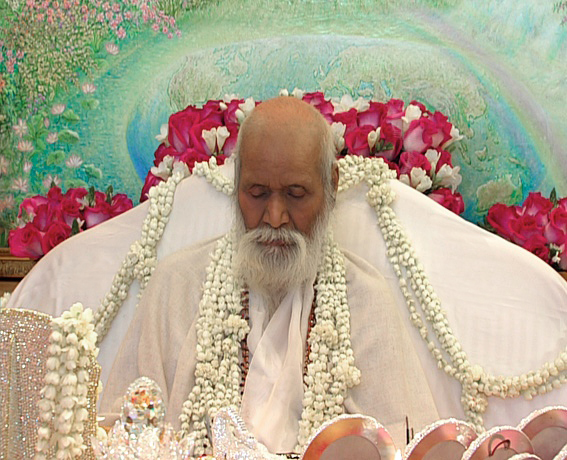
I've never really gotten into Transcendental Meditation, for a variety of reasons, but certainly one of them is the money. In my mind, I can learn any Buddhist meditation for free, so why pay $1,500?
Here is a little on the pricing issue from Wikipedia:
As of 1967-1968, fees for instruction in TM in the UK, the US and Australia were variable and equal to either one-week's salary or a flat $35 for students.[51][52][53] By 1975, fees in the US were fixed at $125 for adults, but with discounted rates for students or families.[54] At the time, author John White wrote that fees were "becoming exorbitant", that TM instruction should be free, or at least much cheaper, and that a lot of people question paying $125 for six hours of instruction.[55] Fees rose in steps over time, to $400 for adults and $135 for students in the US and Canada by 1993, and then were increased to $1,000 for adults and $600 for students in 1994.[56][57] In Britain, TM cost £490 (£290 for students) in 1995.[58] By 2003, fees in the US were $2,500.[59] In Bermuda, where fees had been kept below the international average for many years, a 2003 directive from TM Movement headquarters to increase prices from $385 to $2,000 was partly responsible for the suspension of TM instruction there. A former instructor was critical of the fees for excluding ordinary people and making TM something exclusively for the wealthy.[60] In January 2009, The Guardian reported that the expensive fees for TM instruction had "risked it being priced into oblivion" until David Lynch convinced the Maharishi to "radically reduce" fees so as to permit more young people to learn TM.[61] In 2009 fees in the US were reduced for a one-hour-a-day, four-day course to $1,500 for the general public and $750 for college students.[62][63] Fees in the UK were also reduced, and a tiered fee structure introduced, ranging from £290 to £590 for adults, and £190 to £290 for students, depending on income.[64] The Maharishi was criticized by other Yogis and stricter Hindus for charging fees for instruction in TM, who contended that it was unethical, amounting to the selling of "commercial mantras".[65][66][67]The commodification to me is questionable. Stuff like this makes me a little skeptical as well:
Prior meta-studies (2007) have suggested that TM's claims are poorly supported by bad research. This summary is found here:In the mid-1970s, the Transcendental Meditation program was expanded to include an "advanced form", TM-Sidhi, that the movement said could give practitioners supernormal powers, including levitation, and could generate a peace-inducing field.[7][23] Transcendental Meditation was held to be a religion by three different US courts in two separate cases: Malnak v Yogi (1977 and 1979) and Hendel v World Plan Executive Council (1996).
The Maharishi created a system for understanding the underlying theoretical principles of his meditation technique that he termed the Science of Creative Intelligence (SCI). SCI has been called a pseudoscience by Carl Sagan and crackpot science by James Randi.[24][25]
- Ospina MB, Bond TK, Karkhaneh M, Tjosvold L, Vandermeer B, Liang Y, Bialy L, Hooton N, Buscemi N, Dryden DM, Klassen TP. (June 2007.). Meditation Practices for Health: State of the Research. Agency for Healthcare Research and Quality. http://www.ahrq.gov/downloads/pub/evidence/pdf/meditation/medit.pdf.
- Ospina MB, Bond K, Karkhaneh M, et al. (June 2007). "Meditation practices for health: state of the research". Evid Rep Technol Assess (Full Rep) (155): 1–263. PMID 17764203.
New studies show reduced depression with Transcendental Meditation

IMAGE: This graph shows the reduced symptoms of depression through Transcendental Meditation in older adults at risk for CVD. Combined Study #1 and #2. N=112.
Click here for more information. The Transcendental Meditation® technique may be an effective approach to reduce symptoms of depression, according to two new studies to be presented at the 31st Annual Meeting of the Society of Behavioral Medicine in Seattle, Washington April 9th, 2010.
The studies, conducted at Charles Drew University in Los Angeles and University of Hawaii in Kohala included African Americans and Native Hawaiians, 55 years and older, who were at risk for cardiovascular disease. Participants were randomly allocated to the Transcendental Meditation program or health education control group, and assessed with a standard test for depression—the Center for Epidemiological Studies-Depression (CES-D) inventory over 9-12 months.
"Clinically meaningful reductions in depressive symptoms were associated with practice of the Transcendental Meditation program," said Sanford Nidich, EdD, lead author and senior researcher at the Institute for Natural Medicine and Prevention at Maharishi University of Management. "The findings of these studies have important implications for improving mental health and reducing the risk of cardiovascular morbidity and mortality," said Dr. Nidich.
Participants in both studies who practiced the Transcendental Meditation program showed significant reductions in depressive symptoms compared to health education controls. The largest decreases were found in those participants who had indications of clinically significant depression, with those practicing Transcendental Meditation showing an average reduction in depressive symptoms of 48%.

Click here for more information. "These results are encouraging and provide support for testing the efficacy of Transcendental Meditation as a therapeutic adjunct in the treatment of clinical depression," said Hector Myers, PhD, study co-author and professor and director of Clinical Training in the Department of Psychology at U.C.L.A.
The results of these studies are timely. For older Americans, depression is a particularly debilitating disease, with approximately 20% suffering from some form of depression. Overall, 18 million men and women suffer from depression in the United States. Depression is a major risk factor for cardiovascular disease, with even a moderate level of depressive symptoms associated with increased cardiac events.
"The clinically significant reductions in depression without drugs or psychotherapy in these studies suggest the Transcendental Meditation program may improve mental and associated physical health in older high risk subjects," said Robert Schneider MD FACC, director of MUM's Institute for Natural Medicine and Prevention.
"The importance of reducing depression in the elderly at risk for heart disease cannot be overestimated," said Gary P. Kaplan MD PhD, Clinical Associate Professor of Neurology NYU School of Medicine. "Any technique not involving extra medication in this population is a welcome addition. I look forward to further research on the Transcendental Meditation technique and prevention of depression in other at-risk elderly populations, including those with stroke and other chronic diseases."
###The studies were funded by grants from the National Institutes of Health - National Heart Lung and Blood Institute and National Center for Complementary and Alternative Medicine.
Facts on Study Design
- The first study was conducted in collaboration with Dr. Hector Myers at the Charles R. Drew University of Medicine and Science in Los Angeles. It included a subgroup of 59 African American men and women, 55 years and older, with a minimum carotid artery wall thickness of 0.65 for women and 0.72 for men.
- The second study was conducted in collaboration with Dr. Andrew Grandinetti at the University of Hawaii. Data was collected on 53 Native Hawaiian men in Kohala, Hawaii, 55 years and older, who had at least one additional major risk factor for cardiovascular disease.
- Measurements with the Center for Epidemiological Studies Depression (CES-D) Rating Scale were taken at baseline, 3-month posttest, and 9-12 month posttest, comparing Transcendental Meditation to health education controls.
- Both African Americans and Native Hawaiians suffer from higher rates of cardiovascular disease compared to whites. African Americans have approximately 1.5 times the rate of cardiovascular morbidity and mortality and Native Hawaiians have 2 to 4 times the rate of cardiovascular disease compared to the whites.
Facts on Depression
- 12.4 million women and 6.4 million men in the U.S. suffer from depression.
- Approximately 20% of the elderly suffers from some form of depression according the National Institutes of Health.
- Depression is an important risk factor for the development and progression of cardiovascular disease (CVD). Research has found that a dose-response effect exists whereby the level of depressive symptoms is linearly associated with the prevalence of cardiac events. Even a moderate level of depressive symptoms increases the risk for cardiac events.
- The Medical Outcomes Study determined that depression was more impairing in terms of patient functioning and well being than arthritis, diabetes mellitus, and hypertension, among others, and is more disruptive for social functioning than all of the chronic medical conditions.
- Research has shown that approximately 50% of patients suffering from major depression can be left undiagnosed by general practitioners.
- Depression accounts for $83.1 billion in medical care and workplace costs.


4 comments:
Hi Bill,
Way back some 15 years ago or so, I got into TM, but didn't stick with it for pretty much the same reasons as you have for doubting it. That whole "yogic flying" thing especially left me more than a little perplexed.
The money plus the "secret" mantras also had a bit of a "culty" feel to it that I didn't like, but oddly enough I still use my TM mantra from time to time. Ethics of the thing aside, I do think that paying the money and having a ritualistic "secret" mantra can at least help with the motivational side of meditating.
At the end of the day, though, the technique itself is no different from many other forms of meditation. Centering Prayer, in particular (or what I know of it, which isn't a lot), seems very similar, with short sessions and loosely holding onto the mantra, letting thoughts come and go as they will.
I also appreciated the research and education side of the organization behind TM (which also somewhat justified the money they charge to teach the method), but seeing as how their research techniques may be seriously flawed, that throws a monkey wrench in that.
Oh well. At the end of the day, I personally am grateful to my brief foray into TM, since it started me off along a more focused spiritual practice. Don't think I'd recommend it specifically to my friends, though. ;)
Cheers,
~Grey
I appreciate you discussion of TM. As a TM teacher I offer the following thoughts: First, Wikipedia may not be the most reliable source for accurate information about ANYTHING—especially a subject as subtle and revolutionary as TM, about which there is such a wide range of opinions. The TM WIkipedia page has been hijacked by fanatical anti-TM crusaders—just read the discussion pages.
Your question, why pay for TM when there are Buddhist meditations for free? Obviously, if all meditations were the same or TM was no different from Buddhist meditation or mindfulness, there would be no reason to pay the course fee or for the TM organization to exist.
The emerging paradigm in science is that all meditation practices are not the same. People who are experts in meditation, Zen Buddhists, qualified Yoga teachers, certified TM teachers, etc., have always known this. The various practices engage the mind in different ways and produce different results. The latest brain research makes this very clear (see the recent issue of Cognitive Processing, devoted to independent studies on various meditation techniques, which shows that brain patterns during TM are completely different from mindfulness and other practices). There are also differences in levels of rest, effects on anxiety and self-realization.
The research shows that TM is not like other practices, as far as its holistic range of benefits.
If you consider the actual mechanics of the practice, it is also evident that TM is unlike other practices. It is not just "mantra" meditation, but a unique way of meditating.
Maharishi revived this ancient technique of "effortless transcending," which for 2500 years had been lost to Indian society, and he restored its original effectiveness. He systematized the practice into a seven-step course to preserve it, so that teachers could be trained to teach it in every language and the technique would give consistent, all-positive results for people everywhere—for this and future generations.
Consider Maharishi's success as a meditation teacher: Never before in recorded history, going back as far as the birth of Buddhism and beyond, has any meditation teacher's technique been learned by so many people (6 million) during the teacher's lifetime, and with such demonstrable results. TM has spread by word of mouth. This could only happen if the technique was uniquely effective.
So why pay a tuition to take the TM course? That's up to you.
The standard tuition for TM is $1500, but there are special rates for anyone who can't afford the tuition. The non-profit TM org offers grants and scholarships for people in need. But there has to be a course fee to make the organization sustainable. And there has to be an educational organization to make the practice available and offer the lifetime follow-up and support—which is free for everyone. Otherwise the delicate technique of effortless, spontaneous transcending would soon get lost again.
Best wishes,
www.MeditationAsheville.org
Transcendental Meditation is also the better way of treatment of Depression.
We face many ups and downs from time to time in our life. However, we can’t tag them as depression; it is a normal part of life. But if the state of worthlessness or despair becomes a part and parcel of life, it might be appropriately called as depression. As someone has rightly said “…Depression is not sobbing and crying and giving vent, it is plain and simple reduction of feeling…People who keep stiff upper lips find that it’s damn hard to smile.” Even the state of depression has very correctly penned down by Elizabeth Wurtzel “That’s the thing about depression: A human being can survive almost anything, as long as she sees the end in sight. But depression is so insidious, and it compounds daily, that it’s impossible to ever see the end. The fog is like a cage without a key.”
Everyone is very well aware of these emotional signs and symptoms of depression, however not many would be familiar that depression has linkage with many physical symptoms, too. Coping the problematic physical symptoms could be possible only if we are acquainted with its signs and symptoms of depression . If we are enlightened with these facts, then we can expedite over the path of healing. Just remember the quote cited by Albert Ellis “You largely constructed your depression. It wasn’t given to you. Therefore, you can deconstruct it.” So let’s get going with a positive quote.
Most people who face depression suffer chronic pains and other physical symptoms, let’s move on and check out the signs and symptoms of depression.
Headaches
BTW, it turns out that ALL meditation technique research has been evaluated as "really bad" by the various studies that you cite.
Post a Comment