Showing posts with label TEDx. Show all posts

Tuesday, November 04, 2014

Jamie Wheal - Altered States to Altered Traits: Hacking Flow

http://image.slidesharecdn.com/fgp-general-final-130807132155-phpapp02/95/flow-genome-project-overview-1-638.jpg?cb=1375901312

Jamie Wheal is the co-founder of the Flow Genome Project, a project dedicated to mapping the states of ultimate human performance, based on the idea of flow states. Flow is a concept first introduced by Mihály Csíkszentmihályi in Flow: The Psychology of Optimal Experience (1990) and expanded on in Finding Flow: The Psychology of Engagement with Everyday Life (1997).

Altered States to Altered Traits: Hacking Flow


Jamie Wheal speaks at TEDx Black Rock City. "It's never been easier to get high, and it's just as hard as it's always been to stay that way." In this talk, Jamie Wheal, Executive Director the Flow Genome Project, details how rapid advancements in technology, psychology and pharmacology have led to an unprecedented uptick in our access to peak states, and how we might be able to use those moments of clarity and inspiration to learn, do and be much more than we thought possible.

Sunday, September 28, 2014

The Science of Emotions: Jaak Panksepp at TEDxRainier

http://ecx.images-amazon.com/images/I/41TIr4mBuJL._SY344_BO1,204,203,200_.jpg

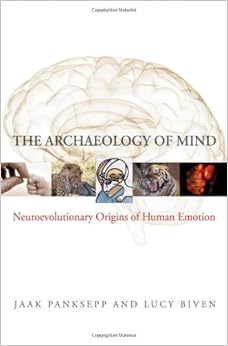
Awesome - Jaak Panksepp is one of the founders of affective neuroscience, and author of Affective Neuroscience: The Foundations of Human and Animal Emotions (2004) and The Archaeology of Mind: Neuroevolutionary Origins of Human Emotions (2012).

The Science of Emotions: Jaak Panksepp at TEDxRainier

Published on Jan 13, 2014


Given an inherent subjective nature, emotions have long been a nearly impenetrable topic for scientific research. Affective neuroscientist Jaak Panksepp explains a modern approach to emotions, and how taking seriously the emotions of other animals might soon improve the lives of millions.

Jaak Panksepp introduced the concept of Affective Neuroscience in 1990, consisting of an overarching vision of how mammalian brains generate experienced affective states in animals, as effective models for fathoming the primal evolutionary sources of emotional feelings in human beings. This work has implications for further developments in Biological Psychiatry, ranging from an understanding of the underlying brain disorders, to new therapeutic strategies. Panksepp is a Ph.D. Professor and Baily Endowed Chair of Animal Well-Being Science, College of Veterinary Medicine, Washington State University. His scientific contributions include more than 400 papers devoted to the study of basic emotional and motivational processes of the mammalian brain. He has conducted extensive research on brain and bodily mechanisms of feeding and energy-balance regulation, sleep physiology, and most importantly the study of emotional processes, including associated feelings states, in other animals.

This talk was given November 9, 2013 in Seattle at TEDxRainier, a local TEDx event, produced independently of the TED Conferences.
* * * * *

Jaak Panksepp - Animal Emotion Researcher and Neuroscientist


Speaker Bio 

Given an inherent subjective nature, emotions have long been a nearly impenetrable topic for scientific research. Affective neuroscientist Jaak Panksepp explains a modern approach to emotions, and how taking seriously the emotions of other animals might soon improve the lives of millions.

Jaak Panksepp, Ph.D. Professor and Baily Endowed Chair of Animal Well-Being Science, College of Veterinary Medicine, Washington State University. His scientific contributions include more than 400 papers devoted to the study of basic emotional and motivational processes of the mammalian brain. He has conducted extensive research on brain and bodily mechanisms of feeding and energy-balance regulation, sleep physiology, and most importantly the study of emotional processes, including associated feelings states, in other animals. He introduced the concept of Affective Neuroscience in 1990, consisting of an overarching vision of how mammalian brains generate experienced affective states in animals, as effective models for fathoming the primal evolutionary sources of emotional feelings in human beings. This work has implications for further developments in Biological Psychiatry, ranging from an understanding of the underlying brain disorders, to new therapeutic strategies.

His recent work has focused primarily on the subcortical brain mechanisms of sadness (brain PANIC or separation distress circuitry) and joy (brain PLAY and animal laughter circuitry), work that has implications for the treatment of autism, ADHD, and depression. His work is informed by exploring the consequences of basic knowledge about emotional endophenotypes (natural brain states) for better understanding of human mental health. His monograph Affective Neuroscience (Oxford, 1998) outlined ways to understand brain affective processes neuroscientifically; his Textbook of Biological Psychiatry (Wiley, 2004) focused on how elucidation of emotional processes can facilitate psychiatric practice; and Archaeology of Mind (Norton, 2012) summarized how such knowledge can inform psychotherapeutic practice.

This work has led to three novel antidepressant concepts that are currently being evaluated in human. But perhaps equally importantly, this work provides a novel vision for how consciousness emerged in human brains, which can only be clarified through the scientific study of the phenomenal-experiential-emotional capacities of that exist in the brains/minds of other animals.

Sunday, August 24, 2014

Society in the Brain | Dr. Danilo Bzdok | TEDxRWTHAachen


This brief TEDx talk provides a basic introduction to the way the human mind was shaped by social interactions. More than maybe any other factor, the need to live in ever-increasing groups spurred the brain to expand and adapt in ways other species (including other primates) were not required to do.

In a lot of ways, this is a mirror of the developmental models of psychoanalytic theory which argue that the human mind, and even the sense of self, is entirely constructed by the interpersonal and intersubjective experiences of the infant in relation to the primary caregivers. Without that attachment experience, we fail in many profound ways to become fully human.

Researcher Danilo Bzdok is a post-doc in cognitive neuroscience and data mining at the Jülich Research Center, and he is working on another PhD in informatics.

Here is one of his articles, relevant to this topic: Definition and characterization of an extended social-affective 3 default network, available as a free download from ResearchGate.

Society in the brain | Dr. Danilo Bzdok | TEDxRWTHAachen

Published on Aug 21, 2014


Researcher Danilo Bzdok explains how our brains have been shaped by the necessity to establish relationships with other humans. The ability to effectively interact with friends and enemies, he proposes, might even be at the basis of all human.

Dr. Danilo Bzdok is a former RWTH Aachen student and now Post-Doc in cognitive neuroscience and data mining at the Jülich Research Center. Working on another PhD in informatics, Mr Bzdok has a thorough understanding of how big data can help solving the greatest riddles about the human brain. 
This talk was given at a local TEDx event, produced independently of the TED Conferences.

Monday, May 05, 2014

How Mental Illness Changed Human History - For the Better: David Whitley at TEDxManhattanBeach


David Whitley is an archeologist specializing far western North American rock art. In this TEDx Talk from the end of 2013, he talks about human creativity and mental health are their deep interconnection.

How mental illness changed human history - for the better: David Whitley

TEDxManhattanBeach
Published on Dec 27, 2013


Archeologist David Whitley suggests that the strengths and weaknesses of humans are deeply intertwined and inter-dependent. He shares his journey, taking us back 40,000 years, to discover the origin of human artistic genius.

David decided to become an archaeologist when he was three years old, and determined that he would study cave paintings (rock art) when he was 12. No one told him, at the time, that rock art was an ignored topic in American archaeology. Not deterred, David continued his studies and completed his doctorate at UCLA. He primarily writes about prehistoric art and religion, which he finds harder to study, and consequently much more interesting, than the standard archaeological topics of tools, technology, and diet. His most recent book is Cave Paintings and the Human Spirit: The Origin of Creativity and Belief David’s focus lies in the rock art of far western North America. His understanding of this art primarily derives from Native American ethnography–anthropological accounts of tribal religions and practices. He uses this understanding as a springboard for examining the ultimate origin of art and religion.

David lives near Tehachapi, California, in a forest of blue oak trees. When he’s not working or writing, he rides his faithful old ranch horse, Twelve, through the mountains. “It’s the best way to think,” says David.

Tuesday, February 25, 2014

Psychosis or Spiritual Awakening: Phil Borges at TEDxUMKC


If you have ever spent any time around people struggling with schizophrenia, you might be aware of how often their delusions and hallucinations are religiously contextualized. People suffering this form of psychosis may believe they are Jesus, or Mary, or God, or that their therapist is Jesus or God. There can be frequent apocalyptic imagery in their delusions. 

In my limited experience, psychosis is often a form of wish fulfillment that is intolerable to the person. For example, someone might believe powerful people are looking out for him and keeping him safe because he is so special and important. This delusion may represent an unconscious need to have someone or some people keeping him safe (maybe even from himself), who believe that he is special (as we all are special) and worth assistance.

Because I see psychosis as a form of acting out unconscious needs or wishes, my sense of the religious and spiritual content may represent a form of spiritual awakening, albeit shrouded in paranoia, magical thinking, or other thought disorders.

In this talk, Borges gives examples of "shamans" he has met, some of who were identified by their "visions" (i.e., hallucinations). In our culture, this young person (often adolescents or teens) would be diagnosed as schizophrenic or suffering a manic psychosis and given copious amounts of powerful antipsychotic drugs. In these primal cultures, the apprenticeship to a master shaman allows them to make sense of their visions and reframe them as journeys into the spirit world. In the U.S., we would medicate the hell out of the person and s/he would suffer for decades with mental illness.

The great scholar of comparative religion, Mircea Eliade, in his classic text, Shamanism: Archaic Techniques of Ecstasy, details many similar examples of "the calling" and how the crisis of the calling is resolved through initiation into the shamanic mysteries. Rather than being dependent on the culture for survival (as in the U.S), these people are of service to the community, they have status and specialized roles. That alone can make all of the difference.

Psychosis or Spiritual Awakening: Phil Borges at TEDxUMKC

Published on Feb 23, 2014


Phil Borges, filmmaker and photographer, has been documenting indigenous and tribal cultures for over 25 years. His work is exhibited in museums and galleries worldwide and his award winning books have been published in four languages. Phil's recent project, Inner Worlds, explores cultural differences with respect to consciousness and mental illness.

Here is some more information on Borges - seems like a cool guy who has been doing some important work documenting indigenous cultures for a few decades now.

For over twenty-five years Phil Borges has been documenting indigenous and tribal cultures, striving to create an understanding of the challenges they face. His work is exhibited in museums and galleries worldwide and his award winning books, which have been published in four languages, include Tibetan Portrait, Enduring Spirit, Women Empowered and Tibet: Culture on the Edge. He has hosted television documentaries on indigenous cultures for Discovery and National Geographic channels. Phil also lectures and teaches internationally.

Phil’s recent project, Inner Worlds, explores cultural differences with respect to consciousness, mental illness and the relevance of Shamanic traditional practices and beliefs to those of us living in the modern world.

Phil’s program Stirring the Fire has produced several short documentaries, a book and an exhibition highlighting some of the extraordinary women worldwide who are breaking through gender barriers and conventions in order to enhance the well being of their communities.

In 2000 Phil founded Bridges to Understanding, an online classroom program that connects youth worldwide through digital storytelling in order to enhance cross-cultural understanding and help build a sense of global citizenship in youth. He also co-founded Blue Earth Alliance, a 501c3 that sponsors photographic projects focusing on endangered cultures and threatened environments.

Phil graduated from University of California as a Regents Scholar in 1969 and was honored with their prestigious University of California Medal in 2004. He lives with his family in Seattle.

Here is another TED Talk in which he speaks about his photography - beautiful images, some of which I am sure most of us have seen before.

Photographer Phil Borges on TEDTalks

Posted by: June Cohen
January 10, 2007


Photographer Phil Borges displays his remarkable portraits documenting the world’s disappearing cultures, from persecuted monks in Tibet to embattled tribes in the Ecuadorian Amazon. He also shares inspiring results from his digital-storytelling workshops, which give indigenous teenagers tools for cultural preservation and self-expression. A former dentist, Phil Borges rediscovered his passion for photography, and spent the last 25 years documenting indigenous cultures around the world. His work collected in several books, including Tibetan Portrait and Enduring Spirit. In 2001, he founded Bridges to Understanding, an organization that works with teenagers worldwide, promoting cultural preservation and exchange through digital storytelling. (Recorded February 2006 in Monterey, CA. Duration: 19:19)


Wednesday, January 22, 2014

Eleanor Longden - Why I Thank the Voices in My Head - Video, Essay, and Responses


I posted this video of Eleanor Longden talking about her experience hearing voices when it first showed up as a TEDx Talk. Her talk was the subject of a TED Weekends edition on Huffington Post.

Along with her original TEDx talk, there is an accompanying essay by Longden and 10 responses from other mental health professionals and neuroscientists.

I want to post the TED video and her new essay, then I will offer links and introductory paragraphs to the 10 responses posted at Huffington Post.


Why I Thank the Voices in My Head

A New Voice In Mental Illness

Eleanor Longden
Posted: 08/23/2013

A few months ago, a colleague of mine brandished an article in front of me with a rather bemused expression. "Read this!" he said, "I'd never have believed it." It was a piece about a man who hears voices. Intrigued, I began to read:

"The voice is identified as Ruah... the Old Testament word for Spirit of God. It speaks in a feminine voice and tends to express statements regarding the Messianic expectation... It has spoken to me sporadically since I was in high school. I expect that if a crisis arises it will say something again. It's very economical... It limits itself to a few very terse, succinct sentences... I have to be very receptive to hear it. It sounds as though it's coming from millions of miles away."

The reason for my colleague's surprise wasn't so much the content (he's a psychologist and is well accustomed to accounts from people who hear things no one else can). Rather, it was who was relating their encounter with this "tutelary spirit" that surprised him. Because this wasn't a report from a distressed, disorientated psychiatric patient; they were the words of award-winning, visionary author Philip K. Dick whose works, amongst others, inspired the movies Blade Runner and Total Recall. To me, this wasn't particularly surprising; why shouldn't someone of accomplishment and renown also happen to be a voice-hearer? But to my colleague it seemed to present a puzzling, almost unsettling, dissonance. And, to an extent, I can empathize with his surprise. After all, voice hearing is closely entwined with schizophrenia (with all the sinister connotations that this controversial diagnosis implies). And in the popular imagination, voices are commonly linked with derangement, madness, and mental corruption. As such, many contemporary voice-hearers inhabit hostile territory -- it's an experience that is literally marinated with fear, suspicion, and mistrust.

Yet despite these florid associations, psychiatry has long recognized that voice hearing features in a range of non-psychotic mental health difficulties, particularly trauma-based conditions like post-traumatic stress and the dissociative disorders. Perhaps more unexpectedly, research also suggests that approximately 13 percent of people with no record of psychiatric problems may also report voice hearing at some point in their lives. In itself voice hearing is an absorbing topic -- conjuring the nuances of perception and the nature of self -- and has alternatively been feared, reviled, celebrated, and consecrated, and forensically scrutinized within such diverse specialties as psychology, neurology, anthropology, theology, medical humanities, and cultural studies. Furthermore, accounts of voice hearing have been documented throughout human history: recounted by a wide array of pioneers, geniuses, rebels, and innovators that span across the centuries -- and also by normal, unexceptionable people like myself. You see, I'm a voice-hearer too.

It was the delirious, frenzied depths and exhilarating rewards of my own voice hearing voyage that would eventually take me to the Long Beach stage for TED 2013. Over the years, my voices have changed, multiplied, terrorized, inspired, and encouraged. Today they are an intrinsic, valued part of my identity, but there was also a time when their presence drove me to delirious extremes of misery, desperation, and despair. They brought me cringing and rocking to a psychiatric ward and pulled me down into the bleakest depths of madness; yet they would also lift me up to help me pass my University exams and ultimately elevate me to discover fundamental, healing truths about myself. The evolution of this understanding -- and the remarkable privileges and terrible penalties it incurred -- form the basis of my talk and accompanying TED book, Learning From the Voices in My Head.

Sharing my experiences so publicly could have felt overwhelming, but at every step the solidarity of friends and colleagues in the International Hearing Voices Movement fortified and sustained me. This organization has taken huge strides to reclaim voice hearing as a meaningful human experience; one which, for many of us, embodies figurative, emotional metaphors that communicate compelling information about pain and conflicts in our lives. This is not about pathologizing voices as symptoms; rather it is about understanding, accepting, and reclaiming them. In my own pilgrimage to recovery, it was learning to see the voices in more respectful, compassionate ways -- as adaptations, survival strategies, and representations of emotional pain - that made my healing possible. After years of shame, horror, and heartbreak, I finally made peace with my voices which, fundamentally, meant making peace with myself. And it was this framework that empowered me to take to the TED stage; not as an ex-psychiatric patient with a 'bad brain,' but as a proud and maddened survivor with an assortment of valuable and valued voices. In fact, at the end of my talk June Cohen, one of the conference's wonderful co-hosts, came onto the stage and asked me, with a respectful interest, whether I still hear voices. For a split second I hesitated, wondering whether to feign 'normal' and play it down with an airy "oh, not all that much now." Instead I opted for the truth: "All the time," I said cheerfully, "In fact I heard them while I did the talk... they were reminding me what to say!" Pride, empowerment, and the support to listen to one's voices without distress should, I believe, be a natural right of everyone who hears voices. So too, the right to freedom, dignity, respect, and a voice that can be heard.
 * * * * *

Here are the 10 responses, in no particular order.

'Learning' Our Way to Mental Healing

Patric K. Stanton  

Watching and hearing Eleanor Longden talk about her experiences of hearing voices may, for many of us, feel both odd and familiar. I am a neuroscientist, but first, I am a person living my own human experience. So I found myself thinking how often, in the course of life, these things we call thoughts and emotions appear, unbidden, from some recess of our minds and make themselves known to us, as if "we" are not quite the same as everything going on in our "conscious" and "unconscious" brains. Many of us, at some time or other, may even have had the experience of hearing a distinct voice, a parent or coach, speaking to us. Eleanor's voices seemed more coherent and more separate, but might they not be on a continuum of states of mind that we all have? When should society (namely us) view this form of internal experience as a disease, instead of a rare, but acceptable, part of life?

* * *


Madness, Revolution, and Making Peace

Ron Unger

While some will frame Eleanor's story, told in her awesome TED video, as the triumph of an individual struggling against "mental illness," I believe the story might better be seen as a refutation of the whole "illness of the mind" metaphor, and as an indication of a desperate need for a new paradigm.

When human experiences like hearing voices are framed as "illness," the strategy of attempting to eradicate them naturally follows. When Eleanor was first hospitalized, she was trained in this model, which directly led to what she describes as her engagement in a "psychic civil war," where the voices multiplied and became overwhelmingly nasty. Unfortunately, this is not unusual: research shows that fearing experiences, and attempting to avoid and/or suppressing them, often predicts the escalation of difficulties.
  
* * * 


Listening to the Soul

Mark Rubinstein
As a novelist and psychiatrist, I listened to Eleanor Longden's lyrical presentation with a mixture of awe, admiration and humility.

She hauntingly described the "toxic, tormenting sense of helplessness" accompanying severe mental disturbance. "My voices were a meaningful response to traumatic life events. Each voice was related to aspects of myself... that I'd never had an opportunity to process or resolve, memories of sexual trauma and abuse, of anger, shame, guilt, low self-worth." I found these statements deeply insightful.

I was particularly impressed when she said the voices "represented the parts of me that had been hurt most profoundly."

* * * 


Eleanor Longden's TEDTalk: "The Voices In My Head"

Lloyd I. Sederer, MD

Damage is not destiny. That is Eleanor Longden's lived experience and the message delivered in her warm, poignant and illuminating TED talk.

She casts a striking figure, statuesque in the beam of the TED lights with her long, golden blond hair and crystal clear blue eyes, telling a story about psychosis -- her own. I watched, mesmerized, and saw both her confidence and her fragility as she revealed how what started as benign voices commenting on her behavior escalated to sinister, accusatory and demoralizing demons. She was told she had schizophrenia, a severe and persistent mental illness. Like many people in a psychotic state she was given medication that -- while generally necessary -- left her feeling more "drugged and discarded" than having assisted her in overcoming a serious illness.

* * *


Mind Wide Open: Listening to Disturbing Voices, Thoughts and Feelings

Dr. Gary Trosclair
"Is that crazy?" my patients sometimes ask me when they've told me something they're feeling or thinking that they're worried about. "No, it's not crazy," I say, "but I get that it can be crazy-making." I understand that while their feelings or thoughts don't necessarily qualify them for a trip to the hospital, they can be very disturbing. But I've also come to learn that while what comes up inside can be distressing, it may well also have meaning. And while the experience that psychologist Eleanor Longden describes in her TEDTalk is far more dramatic than what most of us go through, her talk shows the way to a more informed and fulfilling way of living; we should all listen to our voices.

* * *


Psychiatry and Recovery: Finding Common Ground And Joining Forces


Allen Frances
Eleanor Langdon is an extraordinary woman who has shown remarkable grit and creativity in transforming her disturbing symptoms into useful tools. Hats off to her for finding such a fruitful path to personal recovery and for sharing her techniques and inspiring story so that others may benefit from what she has learned. 


There are many precious lessons we can draw from this tape- never give up hope; never forget the person who is ill by focusing only on the illness; normalize the experience of mental illness rather than stigmatizing it; and use the symptoms as a way of gaining self understanding and self acceptance.
* * *


The Hope Within

Ashley L. Smith
Eleanor Longden's TEDTalk, "The Voices in My Head," provided insight into a world I know all too much about -- living with schizophrenia. Schizophrenia can be characterized by irrational thoughts, bizarre behavior, hallucinations, delusions, and psychosis, or lack of understanding of reality. Hallucinations can come in all five bodily senses -- sight, hearing, feeling, taste, and smell. Despite popular belief, not all people with this type of mental illness experience hallucinations. Sometimes people with different mental illnesses including bipolar disorder, depression, and schizoaffective disorder experience hallucinations too.

Eleanor's experiences seemed to parallel some of my own which helped me identify with her even more than simply sharing diagnoses.
* * *


Why Mental Health Is Losing Its Soul

Jeffrey Rubin, Ph.D.
Many years ago I worked with a man in his early 30s, who was sent to me by a psychiatrist because he suffered from "delusions of persecution." Short and slight, "Roger" believed rays were being beamed into the bus he was on.

Schizophrenics are supposedly people who are crazy and "out of touch with reality."

At the end of our first session, Roger leaned forward and asked if I would treat him using only intensive psychotherapy, without forcing him to take drugs and become a "zombie."

"Let's try it and be honest about how it goes," I said.

* * *


The Real Dangers of Self-Stigmatization

Katy Gray
Being sectioned and locked in a hospital ward wasn't on my bucket list, but it's something that has happened to me twice. The first time, I was 20 and in the middle of my studies at university. I had been hearing a voice for two years, a voice I believed was the devil. He made me do many harmful things to myself, but his latest command was even more extreme. He commanded me to stop eating, and for two weeks, I obeyed him. I was physically and mentally exhausted after this fortnight, but being sectioned still managed to take my breath away.

Around ten minutes after being sectioned, I was told I was being prescribed an antipsychotic.

"Wait, an antipsychotic? Does this mean I'm psychotic?" I thought.

* * *


Realize Your Mind's Intrinsic Power 

Marie Pasinski, M.D.

Holding a human brain for the first time was a powerful moment. Cradling the fragile organ in my hands, I had this overwhelming realization that every thought, every emotion, every experience and every dream this person ever had was coded within. As a neurologist, my awe for this miraculous structure intensifies with every new breakthrough in neuroscience and each personal triumph that I encounter. Eleanor Longden's talk, "The Voices in My Head" is a testament to the intrinsic power of the human brain and its ability to redesign itself. 

Only recently have we begun to understand that thoughts are structurally encoded within the brain. Every time you think a specific thought, certain pathways of neurons fire up. With repetition, these pathways are strengthened.

Tuesday, January 14, 2014

Iain McGilchrist - Anyone with Half a Brain Can See That! (at TEDxGhent)


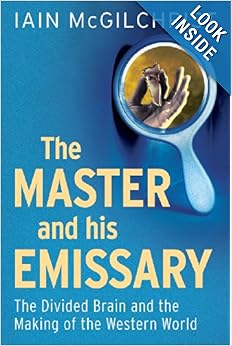
Iain McGilchrist is the author of The Master and His Emissary: The Divided Brain and the Making of the Western World (2012), a somewhat controversial book (see here, and here for McGilchrist's response, and a reply from the original critic), and the briefer version (31 pages), The Divided Brain and the Search for Meaning (2012, Kindle only, $0.99).

Here is a review from Publisher's Weekly (from the book's Amazon page):
A U.K. mental health consultant and clinical director with a background in literature, McGilchrist attempts to synthesize his two areas of expertise, arguing that the "divided and asymmetrical nature" of the human brain is reflected in the history of Western culture. Part I, The Divided Brain, lays the groundwork for his thesis, examining two lobes' significantly different features (structure, sensitivity to hormones, etc.) and separate functions (the left hemisphere is concerned with "what," the right with "how"). He suggests that music, "ultimately... the communication of emotion," is the "ancestor of language," arising largely in the right hemisphere while "the culture of the written word tends inevitably toward the predominantly left hemisphere." More controversially, McGilchrist argues that "there is no such thing as the brain" as such, only the brain as we perceive it; this leads him to conclude that different periods of Western civilization (from the Homeric epoch to the present), one or the other hemisphere has predominated, defining "consistent ways of being that persist" through time. This densely argued book is aimed at an academic crowd, is notable for its sweep but a stretch in terms of a uniting thesis.
For those who want a little more about this book and its central thesis, I am also including the RSA Animates video excerpted from McGilchrist's talk and workshop at the RSA.

Iain McGilchrist - Anyone with Half a Brain Can See That! (at TEDxGhent)


Published on Jan 11, 2014


Iain McGilchrist is a psychiatrist and writer, committed to the idea that the mind and brain can be understood only by seeing them in the broadest possible context, that of the whole of our physical and spiritual existence, and of the wider human culture in which they arise -- the culture which helps to mould, and in turn is moulded by, our minds and brains. His talk 'The Divided Brain' was a Best of the Web pick by TED!

Here is the RSA Animate video - enjoy!


Uploaded on Oct 21, 2011

In this new RSA Animates, renowned psychiatrist and writer Iain McGilchrist explains how our 'divided brain' has profoundly altered human behaviour, culture and society.

Taken from a lecture given by Iain McGilchrist as part of the RSA's free public events programme. To view the full lecture, go here. RSA is a 258 year-old charity devoted to creating social progress and spreading world-changing ideas. For more information about our research, RSA Animates, free events programme and 27,000 strong fellowship.
Find out more about the RSA
Join the RSA on Facebook

The Roadmap to Nobility: Cindy Wigglesworth at TEDxLowerEastSide


Nice talk by Cindy Wigglesworth at TEDxLowerEastSide.

The Roadmap to Nobility: Cindy Wigglesworth at TEDxLowerEastSide

Published on Jan 12, 2014


Cindy Wigglesworth is the author of SQ21: The Twenty-One Skills of Spiritual Intelligence and the President of Deep Change, Inc. Cindy worked at Exxon in human resources management for 20 years. Seeing both the strengths and limitations of traditional leadership approaches, she left ExxonMobil to start her own business dedicated to developing the multiple intelligences of leaders and organizations.

Cindy is ambassador for Conscious Capitalism, and is quoted by Patricia Aburdene in her book Megatrends 2010: The Rise of Conscious Capitalism. Her passionate commitment is to help birth a new way of talking about spirituality that gets us beyond the barrier of "religion versus science" and lands us squarely in the "this stuff works!" category of applied wisdom.

Her corporate clients have included The Methodist Healthcare System (now a Fortune 100 best employer), BHP Billiton Petroleum, and MD Anderson Cancer Center.

Saturday, January 11, 2014

The Brain is Wired for Unity: Zoran Josipovic at TEDxLowerEastSide


Zoran Josipovic is interested in states of consciousness cultivated through contemplative practice, what these states can tell us about the nature of consciousness and its relation to authentic subjectivity, and what relevance this may have for understanding the global and local organization in the brain. He uses fMRI and a variety of visual and other stimuli to explore functional connectivity changes in the brain’s networks. [From his page at NYU.]

The Brain is Wired for Unity: Zoran Josipovic at TEDxLowerEastSide

Published on Jan 10, 2014


Zoran Josipovic, PhD, is a Research Associate and Adjunct faculty at the Psychology Department and Center for Neural Science, New York University. He is Director of Contemplative Science Lab at NYU, the founding director of the Nonduality Institute, and the founding member of MARGAM -- metro-area research group on awareness and meditation. Zoran is a long-term practitioner of meditation in the nondual traditions of Dzogchen, Mahamudra and Advaita Vedanta. In his previous life he worked as a clinical psychotherapist, a bodyworker and has taught meditation seminars at Esalen.

Wednesday, January 08, 2014

Attachment and Resilience: The Power of One: Dr. Erica Liu Wollin at TEDxHongKong2013


Nice TEDx Talk on the nature of attachment failures in very young children.

Attachment and Resilience: The Power of One: Dr. Erica Liu Wollin at TEDxHongKong 2013
 

Erica Wollin

Currently based in Hong Kong, Dr. Erica Liu Wollin is a board-licensed psychologist in California and a registered psychologist in Hong Kong. She has been a clinical supervisor for the doctoral program at Alliant International University/City University of Hong Kong since 2007. Trained in Eye Movement Desensitization and Reprocessing (EMDR), an effective treatment for traumas and phobias, Dr. Wollin holds counseling interests in therapy, adoption and attachment, grief and loss, eating disorders, and mental health. Raised in the US, Dr. Wollin received her Psy.D. and M.A. in Clinical Psychology from Wheaton College. Dr. Wollin will be speaking about the power of attachment, which is our `connection with early caregivers. With this year’s theme revolving around relationships, her discussion will focus on the psychological side of human relationships, for when attachment does not occur effectively, a number of challenges can arise. She will also discuss the protective factors which nurture human resilience in the face of adversity, including the power of the presence of one who cares about us.

Sunday, December 29, 2013

Relational Reality: Charlene Spretnak at TEDx Manhattan Beach


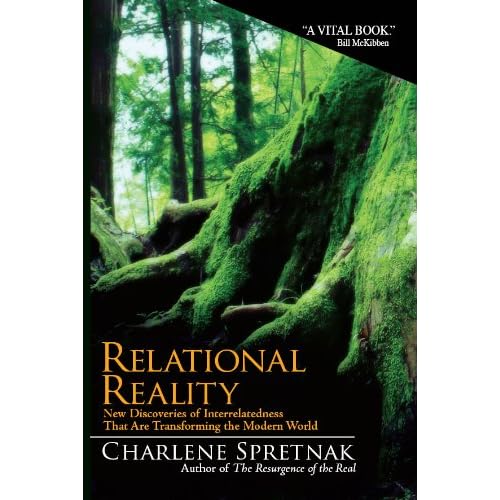
Earlier this year I posted a piece by Michel Bauwens that reviewed and excerpted Relational Reality: New Discoveries of Interrelatedness That Are Transforming the Modern World (2009), and she recently appeared at TEDx Manhattan Beach to talk about relational reality.

Relational Reality: Charlene Spretnak at TEDx Manhattan Beach

Published on Dec 27, 2013


Charlene Spretnak is an author and activist who has long been fascinated with the subject of interrelatedness. In her talk, Charlene sites several recent discoveries indicating that all of physical reality, including humans, is far more dynamically interrelated than our modern schooling had supposed. These new discoveries reveal the impact of our relationships -- with other people and with nature -- on childhood development, intelligence, healing, and our life-long health and well-being.
* * * * *
Charlene Spretnak has been intrigued throughout her life as a writer, speaker, and activist with dynamic interrelatedness. She has written eight books on various subjects in which interrelatedness plays a central role. She is particularly interested in 21st-century discoveries indicating that the physical world, including the human bodymind, is far more dynamically interrelated than modernity had assumed. Such discoveries are currently causing a “relational shift” in our institutions and systems of knowledge, as she suggests in Relational Reality (2011). Several of her books have also proposed a "map of the terrain" of emergent social-change movements and an exploration of the issues involved. She has helped to create an eco-social frame of reference and vision in the areas of social criticism (including feminism), cultural history, and religion and spirituality. Since the mid-1980s, her books have examined the multiple crises of modernity and furthered the corrective efforts that are arising. Her book Green Politics was a major catalyst for the formation of the U.S. Green Party movement, of which she is a cofounder. In 2006 Charlene Spretnak was named by the British government's Environment Department as one of the "100 Eco-Heroes of All Time." In 2012 she received the Demeter Award for lifetime achievement as "one of the premier visionary feminist thinkers of our time" from the Association for the Study of Women and Mythology. She is a professor emerita in philosophy and religion. She hosts a weekly radio program about the Relational Shift, "All Together Now," on the Progressive Radio Network (prn.fm).

She is currently working on a book about the spiritual dimensions of modern and contemporary art from the 1800 to the present (Palgrave Macmillan, Fall 2014).

In addition to many articles, op-ed pieces, and reviews, she has written the following books (plus others not listed):

Relational Reality: New Discoveries of Interrelatedness That Are Transforming the Modern World (2011)
Missing Mary: The Queen of Heaven and Her ReEmergence in the Modern Church (2004)
The Resurgence of the Real: Body, Nature, and Place in a Hypermodern World (1997)
States of Grace: The Recovery of Meaning the Postmodern Age (1991)

Saturday, December 28, 2013

The Genome of FLOW: Jamie Wheal at TEDxVeniceBeach


Interesting talk on the efforts to define the "genome" of the flow state, a concept first introduced by Mihály Csíkszentmihályi in Flow: The Psychology of Optimal Experience (1990) and expanded on in Finding Flow: The Psychology of Engagement with Everyday Life (1997).


The Genome of FLOW: Jamie Wheal at TEDxVeniceBeach

Published on Dec 26, 2013


Flow is the mental state of operation in which a person performing an activity is fully immersed in a feeling of energized focus, full involvement, and enjoyment in the process of the activity. In essence, flow is characterized by complete absorption in what one does. Proposed by Mihály Csíkszentmihályi, this positive psychology concept has been widely referenced across a variety of fields. Jamie Wheal of the FLOW Genome Project has decoded the genome of FLOW and presents its amazing potential to enhance human performance across a plethora of disciplines.

Thursday, December 26, 2013

The Importance of Play: John Cohn at TEDxDelft

File:Cohn.jpg

According to Wikipedia:
John Maxwell Cohn (born February 9, 1959) is an IBM Fellow and chief scientist of design automation at IBM. Cohn has been an innovator in the area of design automation for both analog and digital custom integrated circuits. Cohn has 60 patents issued or pending in the field of design automation, methodology, and circuits.
In this TEDx Talk, he riffs on the importance of play in the success he has had over his life as an engineer. I could not agree more.

The neuroscientist Jaak Panksepp has identified play as one of the seven primary affective circuits in the human brain. From an interview with Panksepp in Discover Magazine:
Panksepp has charted seven networks of emotion in the brain: SEEKING, RAGE, FEAR, LUST, CARE, PANIC/GRIEF, and PLAY. He spells them in all caps because they are so fundamental, he says, that they have similar functions across species, from people to cats to, yes, rats.
There is more on the topic of play below the video, also from the Discover Magazine interview.

The importance of play: John Cohn at TEDxDelft

Published on Dec 19, 2013

Dr John Cohn (@johncohnvt) is a self-confessed nerd. He already knew he wanted to be an engineer at the age of eight, found himself a nerdy college, a nerdy job and even a nerdy wife, or at least a fellow-engineer. As a nerd he breaks the mould though. Because onstage, with his rainbow-coloured lab coat, his Einstein-inspired hairdo and his party light headband, he is most of all entertaining and fun. That ties in with his motto: keep things playful. Bring a playful spirit into your work.

John says he is at his most creative, influential, productive and happy when he is playful at his work. With playful he means being in a state of childlike innocence. So playfulness is not just about enjoying your work, you are even more creative, as studies show. You can also reclaim that childlike state, by imagining you are still seven years old.

Life however, has a way of taking play away from us. The harder life gets, the more we have to work at staying playful. If work is not playful anymore, than it is just work. Which is why they call it work, incidentally. Six years ago, life became very difficult for John, when his son Sam died in a car crash. Sam was an organ donor, and when his life ended he saved the life of four other people. Needless to say, John's life changed forever. And trying to get his life back on track involved a playful element, although he didn't think of it like that at the time. John and his family started making SamStones, small stones with Sam's name on it. Now, over six years later, some 40,000 SamStones have travelled all over the world, and each stone tells a story. One of them even went to space and back.

Life will give you reasons not to play, and you have to fight back!
* * * * *

Here are a few of the questions and answers from that interview on the topic of play:
Then you made a U-turn: Instead of studying separation anxiety, you started 
to study play and laughter. Why?

It was the classic masks of theater, sadness and happiness. We had essentially done the work on the sadness mask. I wanted to move to the joy mask. Joy is social, so you’re looking at play. Play is a brain process that feels good, that allows the animal to engage fully with another animal. And if you understand the joy of play, I think you have the foundation of the nature of joy in general. Part of its benefit is simply taking away the psychological pain of separation. Play is engaging in an attachment-like way with strangers, which you have to do later in life.

Time for another animal experiment, right?

To study attachment, we couldn’t use rats or mice. They’re laboratory animals bred inadvertently to live by themselves. But I noticed that rats in the lab are wonderful for play. Psychic pain reduces the inclination to play—but since rats don’t feel it, they can be separated without panic and then when you put them together, bang! They play.

And the rats played with you, too?

After the experiments we’d dim the lights to make the rats more comfortable. That was our time to have fun. You see me sitting there and saying, come on, guys, come on—it’s okay. I knew that if I could tickle them, they would get jazzed up more, and that’s what happened, right in front of the camera.

How did you turn that kind of playing around into a rigorous experiment?

I thought about the hunger research I’d done in the past. If I wanted animals to eat, then the best way was to make sure they hadn’t eaten for a while. If I want animals to play, I’d have to make them hungry for play. So I put them in a cage alone, apart from their family, first for 4 hours, then 8 hours, then 12 hours, and finally 24 hours. I was looking for a behavior that I could use to measure play, like jumping on each other. How often do they bounce and touch each other? Then they run around—it’s too complex to follow unless you do slow-motion movies—and they end up wrestling. These behaviors were very easy to measure. We collected a lot of data on the response to social hunger.

Is play embedded deeply in the brain, the way attachment is?

Many experiments over the years suggested it was, but to be sure I removed the upper brain of the animals at three days of age. Amazingly, the rats still played in a fundamentally normal way. That meant play was a primitive process. We saw, too, that play helped the animals become socially sophisticated in the cortex. That’s why it’s so important to give our kids opportunities for play.

And yet it seems that childhood play has become much more controlled than it was when I was young. 
I have gone to ADHD meetings to consider this childhood problem. But the doctors do not want to hear the possibility that these kids are hyper-playful because they’re starved for real play—because they are giving them anti-play medicines. Teachers are promoting the pipeline of prescription controls as much as any other group, because their lives are hard. They are supposed to be teaching kids at the cortical level of reading, writing, and arithmetic, but if they’ve got kids who are still hungry for play, it’s gonna be classroom chaos. And you can sympathize with them, because they should be getting kids that are sufficiently well regulated to sit and use their upper brains. But the kids’ lower brains are still demanding attention.

What happens to animals if they are deprived of play over 
the long term?

They look normal and they eat normally, they’re just not as socially sophisticated. Animals deprived of play are more liable to get into a serious fight. Play teaches them what they can do to other animals and still remain within the zone of positive relationships. If you have play you become sociosexually more sophisticated. Let’s say you have the classic triangle: two males and one female, because males are competitive for sex. So if you’ve got one animal that’s had lots of play and the other animal hasn’t, guess who is successful? The animal that’s had play knows how to stay between the female and the other male. The other guy’s a klutz.

Did you ever find a way to track and measure the play response in rats?

Yes. I had a postdoctoral student, Brian Knutson, who asked me whether there was a play vocalization. I said, we know they don’t make any audible sounds but maybe there’s ultrasonics. We wound up buying the equipment so his study could be done. Brian came in the first day after it was set up and said, Jaak, there is a sound when the animals are playing. That was the 50-kilohertz chirp [at a pitch far above the range of human hearing].

Sunday, December 01, 2013

Art to Explore Consciousness: Kate Genevieve at TEDxBrighton


Cool talk.

Art to Explore Consciousness: Kate Genevieve at TEDxBrighton


Published on Nov 28, 2013

Kate is an Artist and Director based in Brighton. Kate's work brings together research in science, technology and performance around how humans sense the environment and each other. She creates work for art galleries and theatre settings as well as directing unusual site-specific projects for places such as Modernist tower blocks and heritage castles.

Kate is the founder of C H R Θ M A a media art group creating immersive visual performances that explore the line between the physical and the virtual, the real world and imagined ones. Recent projects have shown at London Science Museum, Camp Bestival and Brighton Fringe. Kate is working on a PHD at the University of Sussex exploring the communicative potentials of emerging technologies and teaches Creative Media and Digital Arts at Masters level.

Sunday, November 17, 2013

Remapping the Self: Neuroscience Gets Personal - Erika Casriel at TEDxNavesink


A brief but interesting talk from TEDx Navesink. Erika Casriel, an investigative journalist, has worked on staff at Rolling StoneVanity Fair and Forbes MediaCritic. She has written free-lance for such publications as the American ProspectNatural Awakenings and Psychology Today, for which she wrote a cover story on overcoming shyness.

Remapping the Self: Neuroscience Gets Personal: Erika Casriel at TEDxNavesink


Published on Nov 16, 2013


Erika Casriel, investigative journalist and psychologist, discusses how self, previously thought to be the single "man in the machine" is being reconsidered as not just a single conductor, but a small orchestra of collaborative psychological functions.


"Remapping the Self," is about shifting the way we relate to our thoughts and emotions. In a raft of books such as Strangers to Ourselves: Discovering the Adaptive Unconscious, academic psychologists have been seeking to free us from our habits of self-delusion. These psychologists are rattling the bars of the safe mental cages we prefer to inhabit. I have tried to glimpse my own unconscious processes at work, and am excited and yes, embarrassed to report back to you on what I have seen.

Wednesday, September 04, 2013

TEDxPortsmouth - Dr. Alan Watkins - Being Brilliant Every Single Day


This rare two-part TEDx Talk by Alan Watkins, from TEDxPortsmouth, is better than the title might suggest. He speaks on performance, coherence, and controlling our organism. If you think deep breathing is the way to calm the body, he suggests you are wrong (thanks to Mark Walsh for the heads up on this).

Watkins advocates a slower, more rhythmic breathing cycle that seems to generate more brain coherence (according to his machine). Their model seeks to control all of the factors below the water-line (as seen above) in order to generate better results for the two factors above the water-line.

TEDxPortsmouth - Dr. Alan Watkins - Being Brilliant Every Single Day


Published on Mar 13, 2012 in (2 Parts)

Alan is the founder and CEO of Complete Coherence Ltd. He is recognised as an international expert on leadership and human performance. He has researched and published widely on both subjects for over 18 years. He is currently an Honorary Senior Lecturer in Neuroscience and Psychological Medicine at Imperial College, London as well as an Affiliate Professor of Leadership at the European School of Management, London. He originally qualified as a physician, has a first class degree in psychology and a PhD in immunology.

Website: http://www.complete-coherence.com

Part One:


Part Two:


This is the "About" statement from the Complete Coherence website. Of interest to integral folks, perhaps, because Diane Hamilton is one of their practitioners.

Complete Coherence is powered by compassion.


Our purpose is to develop more enlightened leaders.

Compassion is what gets us all out of bed every single day. We have a strong desire to reduce the suffering that comes from the poor decision making of leaders across the globe. We believe that there is an urgent need to develop more enlightened leadership in organisations. We are also very optimistic about the potential of human beings and what is possible. We delight in helping leaders, executive teams and multi-national organisations develop themselves and deliver much better results even in tough conditions.

Our approach is very bespoke. It is driven by our ability to precisely diagnose the critical issues which, when resolved, will cause a significant improvement in performance. Using a range of high definition diagnostic processes we ensure we understand your issues deeply before intervening. Our interventions integrate the most recent advances from multiple scientific fields including; complexity theory, human performance, neuroscience, evolutionary biology, team dynamics, organisational development, medical technology and many others.

We distinguish “horizontal” development, which is effectively the acquisition of knowledge, skills and experience from “vertical” development. Vertical development enables individuals, teams and organisations to move to a more sophisticated level of performance. Such a distinction is, in our view, critical to delivering sustainable change. We also believe in scientifically measuring the improvements created and sharing the results with you.

Founder and CEO Dr Alan Watkins BSc MBBS PhD is a one of a team of outstanding consultants who are supported by a superb back office who are incredibly friendly and keep us on track to ensure we all deliver Brilliance Every Day!