Showing posts with label visions. Show all posts

Tuesday, February 25, 2014

Psychosis or Spiritual Awakening: Phil Borges at TEDxUMKC


If you have ever spent any time around people struggling with schizophrenia, you might be aware of how often their delusions and hallucinations are religiously contextualized. People suffering this form of psychosis may believe they are Jesus, or Mary, or God, or that their therapist is Jesus or God. There can be frequent apocalyptic imagery in their delusions. 

In my limited experience, psychosis is often a form of wish fulfillment that is intolerable to the person. For example, someone might believe powerful people are looking out for him and keeping him safe because he is so special and important. This delusion may represent an unconscious need to have someone or some people keeping him safe (maybe even from himself), who believe that he is special (as we all are special) and worth assistance.

Because I see psychosis as a form of acting out unconscious needs or wishes, my sense of the religious and spiritual content may represent a form of spiritual awakening, albeit shrouded in paranoia, magical thinking, or other thought disorders.

In this talk, Borges gives examples of "shamans" he has met, some of who were identified by their "visions" (i.e., hallucinations). In our culture, this young person (often adolescents or teens) would be diagnosed as schizophrenic or suffering a manic psychosis and given copious amounts of powerful antipsychotic drugs. In these primal cultures, the apprenticeship to a master shaman allows them to make sense of their visions and reframe them as journeys into the spirit world. In the U.S., we would medicate the hell out of the person and s/he would suffer for decades with mental illness.

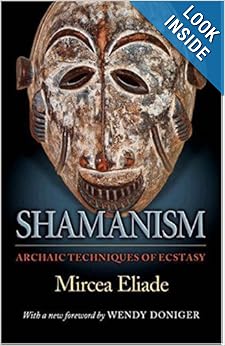
The great scholar of comparative religion, Mircea Eliade, in his classic text, Shamanism: Archaic Techniques of Ecstasy, details many similar examples of "the calling" and how the crisis of the calling is resolved through initiation into the shamanic mysteries. Rather than being dependent on the culture for survival (as in the U.S), these people are of service to the community, they have status and specialized roles. That alone can make all of the difference.

Psychosis or Spiritual Awakening: Phil Borges at TEDxUMKC

Published on Feb 23, 2014


Phil Borges, filmmaker and photographer, has been documenting indigenous and tribal cultures for over 25 years. His work is exhibited in museums and galleries worldwide and his award winning books have been published in four languages. Phil's recent project, Inner Worlds, explores cultural differences with respect to consciousness and mental illness.

Here is some more information on Borges - seems like a cool guy who has been doing some important work documenting indigenous cultures for a few decades now.

For over twenty-five years Phil Borges has been documenting indigenous and tribal cultures, striving to create an understanding of the challenges they face. His work is exhibited in museums and galleries worldwide and his award winning books, which have been published in four languages, include Tibetan Portrait, Enduring Spirit, Women Empowered and Tibet: Culture on the Edge. He has hosted television documentaries on indigenous cultures for Discovery and National Geographic channels. Phil also lectures and teaches internationally.

Phil’s recent project, Inner Worlds, explores cultural differences with respect to consciousness, mental illness and the relevance of Shamanic traditional practices and beliefs to those of us living in the modern world.

Phil’s program Stirring the Fire has produced several short documentaries, a book and an exhibition highlighting some of the extraordinary women worldwide who are breaking through gender barriers and conventions in order to enhance the well being of their communities.

In 2000 Phil founded Bridges to Understanding, an online classroom program that connects youth worldwide through digital storytelling in order to enhance cross-cultural understanding and help build a sense of global citizenship in youth. He also co-founded Blue Earth Alliance, a 501c3 that sponsors photographic projects focusing on endangered cultures and threatened environments.

Phil graduated from University of California as a Regents Scholar in 1969 and was honored with their prestigious University of California Medal in 2004. He lives with his family in Seattle.

Here is another TED Talk in which he speaks about his photography - beautiful images, some of which I am sure most of us have seen before.

Photographer Phil Borges on TEDTalks

Posted by: June Cohen
January 10, 2007


Photographer Phil Borges displays his remarkable portraits documenting the world’s disappearing cultures, from persecuted monks in Tibet to embattled tribes in the Ecuadorian Amazon. He also shares inspiring results from his digital-storytelling workshops, which give indigenous teenagers tools for cultural preservation and self-expression. A former dentist, Phil Borges rediscovered his passion for photography, and spent the last 25 years documenting indigenous cultures around the world. His work collected in several books, including Tibetan Portrait and Enduring Spirit. In 2001, he founded Bridges to Understanding, an organization that works with teenagers worldwide, promoting cultural preservation and exchange through digital storytelling. (Recorded February 2006 in Monterey, CA. Duration: 19:19)


Saturday, March 17, 2012

The Social Construction of Hallucinations and Their Meaning


Cris Campbell is the blogger behind the interesting Genealogy of Religion blog. In a recent post he looked at the cultural construction of hallucinations - Encultured Hallucinations - what they are and that they mean. He notes that in American culture, we only acknowledge two forms of hallucinations, "the psychotropic fun kind and the psychotic horrifying kind." His post was riffing on a 2011 article:
Work under review:
Luhrmann, T. (2011, Jun 14). Hallucinations and Sensory Overrides. Annual Review of Anthropology, 40, 71-85. doi: 10.1146/annurev-anthro-081309-145819
Campbell looks at the work of Stanford professor Tanya Luhrmann (2011; cited above) whose research seeks to identify and understand "the social construction of sensory experiences in general and 'non-rational' hallucinations in particular." She looks to the anthropological literature to understand what so many cultures do not see "visions" as pathological but as possibly divinely inspired.
I argue that the ethnographic literature suggests that the local theory of mind—the features of perception, intention, and inference that the community treats as important—and local practices of mental cultivation will affect both the kinds of unusual sensory experiences that individuals report and the frequency of those experiences. Hallucinations feel unwilled. They are experienced as spontaneous and uncontrolled. But hallucinations are not the meaningless biological phenomena they are understood to be in much of the psychiatric literature. They are shaped by explicit and implicit learning around the ways that people pay attention with their senses. This is an important anthropological finding because it demonstrates that cultural ideas and practices can affect mental experience so deeply that they lead to the override of ordinary sense perception. That is a powerful impact.  
Luhrmann identifies three types of hallucinations:
  • Sensory Override: "[P]eople experience a sensation in the absence of a source to be sensed.” The classic example is hearing voices.
  • Psychosis: This "pattern is associated with psychosis, the psychiatric condition in which someone has an impaired ability to distinguish between the real and the unreal." We tend to think of these when we think of hallucinations.
  • Joan of Arc: Some people experience "unusual sensory experiences as often as do people who can be diagnosed with schizophrenia, yet without the intense distress psychosis carries in its wake or without any of its other symptoms—delusions, cognitive difficulties, emotional flatness." Campbell suggests that this category might be more aptly called Prophet
More interesting to me than the kinds of hallucinations, although these are relevant, are how they are deemed pathological or scared, prophetic or debilitating. Luhrmann makes a good case for how these are socially and culturally constructed.
Within these bodily or temperamental constraints, what we can call the “cultural invitation” shapes a good deal about whether people experience hallucinations and the way they experience them. We have known for a long time that the conditions under which someone is expected to experience a vision are socially specific: fasting versus not fasting, prior to the hunt or after the hunt, and so forth. Among Plains Indians, the expected conditions varied from group to group (Benedict 1922).

And . . .
More generally, the religious system in which people are embedded will shape what is possible in their experience (see Morgan 2010). One of the bluntest examples of this phenomenon is that unusual sensory experience is more common in shamanism than in possession. Indeed, in some basic sense, unusual sensory experience is basic to shamanism: The shaman leaves his or her body to experience other worlds, and the sensory experience of those other worlds proves the realness of those worlds every time he travels. By contrast, those who are possessed by spirits cede their bodies to other agents. They themselves do not so much experience as perform, and they generally do not see or hear the supernatural on a regular basis (Bourguignon 1970, p. 185).

She continues through developing her idea that "the particular dimensions of the way mind is imagined in any society—what one might call that society’s 'theory of mind'—will shape the incidence and modality of sensory overrides and psychotic hallucinations."

The Single-Dimensional View of Hallucinations in Modern Psychiatry

All of this brings me to the real issue for me as a counselor: I have heard of several clients diagnosed with "pathological hallucinations" who, according to their therapists were not psychotic but experiencing some form of "Joan of Arc" experience (although the terminology used by the counselors ranged from psychic visions to shamanic experiences). Their voices were benevolent, positive, and tended to be a positive influence in their lives.

There was no paranoia, no command hallucinations (toward self-harm or otherwise), and no substance abuse. In each case the therapist was over-ruled by the psychiatrists who put these folks on hard-core atypical anti-psychotics (usually Risperidone and Quetiapine or something equally powerful), which made them obese, lethargic, and mentally dull/slow.

From my perspective, this is a serious problem. I know perfectly healthy people who sometimes hear a voice (or voices) that provides insight, or new information, or an image that reveals information not otherwise available. Are these people psychotic, or are they experiencing a benign or even a helpful hallucination?

We need a model like the one Luhrmann proposes - a model that can distinguish between pathological hallucinations and helpful or benevolent hallucinations. The single-dimensional model we currently suffer with is detrimental to clients and philosophically flawed.

I hope that papers like this one can cause a shift in the current state of psychiatry.