Showing posts with label adaptation. Show all posts

Sunday, August 24, 2014

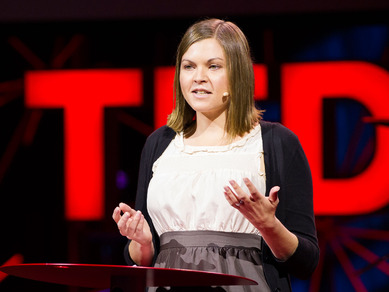
Society in the Brain | Dr. Danilo Bzdok | TEDxRWTHAachen


This brief TEDx talk provides a basic introduction to the way the human mind was shaped by social interactions. More than maybe any other factor, the need to live in ever-increasing groups spurred the brain to expand and adapt in ways other species (including other primates) were not required to do.

In a lot of ways, this is a mirror of the developmental models of psychoanalytic theory which argue that the human mind, and even the sense of self, is entirely constructed by the interpersonal and intersubjective experiences of the infant in relation to the primary caregivers. Without that attachment experience, we fail in many profound ways to become fully human.

Researcher Danilo Bzdok is a post-doc in cognitive neuroscience and data mining at the Jülich Research Center, and he is working on another PhD in informatics.

Here is one of his articles, relevant to this topic: Definition and characterization of an extended social-affective 3 default network, available as a free download from ResearchGate.

Society in the brain | Dr. Danilo Bzdok | TEDxRWTHAachen

Published on Aug 21, 2014


Researcher Danilo Bzdok explains how our brains have been shaped by the necessity to establish relationships with other humans. The ability to effectively interact with friends and enemies, he proposes, might even be at the basis of all human.

Dr. Danilo Bzdok is a former RWTH Aachen student and now Post-Doc in cognitive neuroscience and data mining at the Jülich Research Center. Working on another PhD in informatics, Mr Bzdok has a thorough understanding of how big data can help solving the greatest riddles about the human brain. 
This talk was given at a local TEDx event, produced independently of the TED Conferences.

Monday, December 23, 2013

Racing Minds - Adult ADHD


I undoubtedly had ADHD as a child, but it was not diagnosed until I was 40 years old and going back to school for a second masters degree. While ADHD is still listed as a disorder, and treated with meds (which have helped for me), I prefer to see my fast brain as a developmental adaptation to a FAST world (see here, here, and here). Neurodiversity, eh?!

This is from Australia's ABC Radio National program, All in the Mind, with Lynne Malcolm.

Racing Minds


Hosted by Lynne Malcolm
Sunday 22 December 2013


Impulsive, impatient, easily bored, chaotic and need to multi-task? Attention deficit /hyperactivity disorder is a neurodevelopmental condition which begins in childhood but three to five per cent of adults continue to have the symptoms. Many don’t even realise they have the condition until they encounter life’s challenges as an adult, away from the supervision of parents and teachers. Jess tells of her life with a fast mind and we hear about effective management and treatment strategies.

Guests 
  • Jessica Morrison, Experiences ADHD as an adult 
  • Dr Craig Surman, Assistant Professor of Psychiatry, Harvard Medical School; Scientific coordinator for the Adult ADHD Research Program, Massachusetts General Hospital 
  • Dr Caroline Stevenson, Clinical Psychologist, NSW Institute of Psychiatry; Addults with ADHD (NSW) Inc, A non-funded voluntary organisation for Adults with ADHD
  • PO Box 22
    Epping NSW 1710
    Ph: 02 - 9806 9960
    fax: 02 9806 9940
    email: info@add.org.au

Publications

Fast Minds - How to thrive if you have ADHD (or think you might have) - Craig Surman, Tim Bilkey, with Karen Weintraub 

Further Information

Sunday, May 19, 2013

A Shift to Humility: Andrew Zolli on Resilience and Expanding the Edge of Change


Andrew Zolli is curator and executive director of PopTech. He's the co-author of Resilience: Why Things Bounce Back (2012). Here is a brief description of the book (the basis for his appearance here on On Being) from the publisher:
IN THIS TIME OF TURBULENCE, scientists, economists, social innovators, corporate and civic leaders, and citizens alike are asking the same basic questions: What causes one system to break down and another to rebound? Are we merely subject to the whim of forces beyond our control? Or, in the face of constant disruption, can we build better shock absorbers—for ourselves, our communities, our economies, and for the planet as a whole?

The answers to these vital questions are shaping a new field of inquiry, and a new agenda, focused on resilience: the ability of people, communities, and systems to maintain their core purpose and integrity amid unforeseen shocks and surprises. By encouraging adaptation, agility, and cooperation, this new approach can not only help us weather disruptions, but also bring us to a different way of being in and engaging with the world.

Reporting firsthand from the coral reefs of Palau to the back streets of Palestine, Andrew Zolli and Ann Marie Healy relate breakthrough scientific discoveries, pioneering social and ecological innovations, and important new approaches to constructing a more resilient world. Along the way, they share insights to bolster our own psychological resilience, foster greater stability within our communities, and establish leadership imperatives for more resilient organizations. Zolli and Healy show how this new concept of resilience is a powerful lens through which we can assess major issues afresh: from business planning to social development, from urban planning to national energy security—circumstances that affect us all.

Provocative, optimistic, and eye-opening, Resilience sheds light on why some systems, people, and communities fall apart in the face of disruption and, ultimately, how they can learn to bounce back.
Enjoy the show.

A SHIFT TO HUMILITY: ANDREW ZOLLI ON RESILIENCE AND EXPANDING THE EDGE OF CHANGE


May 15, 2013

Disruption is around every corner by way of globally connected economies, inevitable superstorms, and technology’s endless reinvention. But most of us were born into a culture which aspired to solve all problems. How do we support people and create systems that know how to recover, persist, and even thrive in the face of change? Andrew Zolli introduces "resilience thinking," a new generation’s wisdom for a world of constant change.

Listen


Voices on the Radio


Follow Andrew Zolli on Twitter at @AndrewZolli.

Learn

Books + Music

Pertinent Posts from the On Being Blog


Andrew Zolli on Resilience and Jesuit Jedi Knights: A Twitterscript
Catch highlights of Krista's interview with Andrew Zolli about taking on society’s toughest problems and making ourselves more resilient. Also read his take on where you can find God.


Between Order and Mystery
Our Sound-Seen slideshow of James Prosek's paintings of birds and fish, coupled with his words about the myth of order.


"How Not to Help the Poor"
When do charity and aid help, and when are they counterproductive? A video from one group's perspective.

Six Americas
A Yale study identified "six Americas" when it comes to climate change. Where are you on the spectrum?


Is “Sustainability” Sustainable?
Krista reflects on the listener response and skepticism following the 2008 rebroadcast of the Barbara Kingsolver interview.


Beyond Rio and Halki: Climate Change May Rest in Engaging Hearts and Organizing Hands
The lessons from the Green Patriarch's environmental summit in Turkey may not rest in facts and data, but in our religious traditions' knowledge that inspiring people to do what's best for the good of the whole.

The Echoing Silence of Your Mind
Just a lovely pairing of poetic prose + lyrical photos to ease into the day. Take a few minutes for yourself and reflect with this contemplative piece.

Saturday, March 16, 2013

Eric Storm and Beth Meredith - Beyond Complexity (Integral Leadership Review)


There is a new issue of the Integral Leadership Review online - free as always - and this was the first article that struck me in the table of contents. This is a very introductory level introduction to the integral approach to coping with complexity - the need to develop "transrational capabilities" and "become fluent in a number of relevant processes and frameworks."

To do this, they advocate building a "foundation of diverse competences and a transpersonal perspective" so that "we can open up to reality and engage in transrational ways of knowing that take us beyond complexity."

I would argue - and perhaps I will do so more completely in a future article - that we cannot go beyond complexity. Rather, we need to develop the skills to approach complexity with a multiperspectival awareness and learn to meet complexity on its own terms.

When we begin to grasp complex situations, we discover that complexity is not chaos, but has its own internal organizational structures that can be apprehended and worked with directly.

Beyond Complexity

Download article as PDF

Eric Storm and Beth Meredith


It is common wisdom that leaders today must grapple with increasing amounts of complexity. This seems inevitable given our access to ever more information and our expanding awareness of and the connections between psychological, social, organizational, and technological factors. This is particularly true for integral leaders who are actively developing their mental models and related practices. As our cognitive complexity develops so too does our ability to perceive greater complexity. In other words our complexity is becoming ever more complex.

To address this phenomenon, integral theorists have stretched for increasingly sophisticated meta-frameworks in order to capture additional layers of reality. This approach has led to many insights and contributed to our expanding awareness. However this type of extensive analysis requires significant time and effort to produce, and often requires equally demanding resources to apply. This level of investigation also runs the risk of increasing the complexity such that it is no longer clarifying but is at times overwhelming, inhibiting our ability to perceive, analyze, and act.

What is an integral leader to do when faced with a complicated decision but limited time and resources for thorough study? How does an integral consultant help a client avoid the overwhelm of complex analysis? One common strategy for dealing with complexity is to simplify. We squint our eyes and select what we perceive as the critical factors from the heaps of data. By choosing to emphasize some parts we can then set aside others, prioritizing for manageability. The disadvantages of this type of reduction are obvious: there is a risk of loosing important information and understandings, and reducing the quality of the outcome in the process.

While simplifying is often a practical necessity, ideally we want a way to consider all of the significant information and benefit from the richness of complexity while overcoming the time and resource burdens of detailed analysis. Fortunately it appears there is a third way of grappling with masses of information, a way that goesbeyond complexity. This third way comes about through a transcend and include process by which we can incorporate the complexity through both rational and intuitive means and arrive at a new level of understanding without the mental effort of consciously juggling a million data points simultaneously. In this paper we will describe what we see as the precursors and transpersonal foundation for this process, and our own experience working this way.

Many theorists have described transpersonal levels of awareness in their models of consciousness development. Jean Gebser, Jane Loevinger, William Torbert, Robert Kegan, Susanne Cook-Greuter, Clare Graves, Don Beck, Chris Cowan, and Ken Wilber varyingly describe these transpersonal stages as Magician, Alchemist, Synergist, second tier, yellow, teal, and integral. These theorists and others have also identified transrational ways of knowing that are accessible at transpersonal stages of development. These involve a very conscious use of intuitive modalities interwoven with rational thinking and frameworks.

In his thesis on sustainability leaders who hold post-conventional consciousness Barrett Brown identifies fifteen competencies “to help cultivate leaders who can handle complex global issues” (209). One such competency is “ways of knowing other than rational analysis to harvest profound insights and make rapid decisions” (Brown 212). Similarly, in their book on leadership skills for dealing with change, Bill Joiner and Stephen Josephs describe the benefits of developing “synergistic intuitions” to “resolve apparently irreconcilable conflicts” (243).

We can find the precursors to these transrational ways of knowing in things we all do every day. These alternative ways of knowing are familiar to many of us and help us handle complexity more effectively. For example most of us have had the experience of suddenly noticing that we have driven for miles with no memory of having navigated the intricacies of the road. What had once required a lot of conscious effort checking mirrors, speed, and traffic over time has become a largely unconscious process. This ability to relinquish our awareness of some things, like the mechanics of driving, to our unconscious allows us to manage even greater complexity, like listening to the radio or talking with someone – up to a point!

At other times we may choose for our awareness of the complexity to remain conscious and to inform our decision making. Such is the case when we are in a flow stateand are fully present and positively engaged on a deep level with the task at hand. Yet we manage to do this without much effort and our actions feel automatic and appropriate. We are able to enter the zone and feel the ease of being at one with events as they unfold.

Another common experience of functioning outside of rational analysis is the aha experience when we suddenly have an insight or realize the solution to a problem while doing something unrelated such as taking a shower or waking from sleep. These flashes of understanding arise after we have spent time with the complexity of the issue but are currently not making an effort or focused on it. The aha experience arises from and reflects our understanding of the intricacies of an issue, but in a way that offers a newly crystallized comprehension.

Finally, there is what is known as soft focus or soft eyes, when we are able to better perceive the whole by being generally aware and not too keenly focused on any one thing. This enables us to perceive a situation on many levels simultaneously including noticing things that might initially appear as anomalies or insignificant. With a soft focus we are able to perceive the whole in all its complexity, and as necessary shift focus to elements we deem significant.

The examples above are alternative ways of knowing that are commonly, if not frequently, experienced. At transpersonal stages of development we can build upon these capacities along with our rational understandings to arrive at transrational capacities to go beyond complexity. Through this transcend and include process we become able to engage with complexity with the efficiency described in the driving example, the power and consciousness of a flow state, the quick synthesis of the aha experience, and the awareness of the whole of soft focus.

In their respective dissertations, both Barrett Brown and Jonathan Reams posit that it is possible to cultivate these transrational capacities in leaders to go beyond complexity. In fact, one purpose of Reams’ study was “to develop a curriculum to facilitate the development of these qualities and characteristics” (8).

To build the foundation for these transrational capabilities it is important to first become fluent in a number of relevant processes and frameworks. As in the driving example, we first need to know how to change lanes, pass another vehicle, and judge merging speeds. This type of knowledge and skill building expands our ability to perceive and process information. We need this level of fluency in order to comprehend what we perceive through transrational processes and to rationally evaluate and discuss these new understandings with others.

Our foundation is further strengthened as we make the subject-object shift from identifying with our personality to observing it. As we are able to see our selves and to see all of our assumptions, values, shadows, blind spots, etc., we take a significant step into the transpersonal realm. In our position as observer we begin to have more control over our reactions and behavior. When we no longer identify with our mental models, we can shift from our own perspective to comprehending the world from a variety of other lenses. We become capable of stepping outside ourselves and inhabiting a kind of openness that is essential for transrational ways of knowing.

In his book Power vs Force, David Hawkins observes, “A mind which is being watched becomes more humble and begins to relinquish its claims to omniscience … and increasingly [we are] less the victim of the mind and more its master. From thinking that we ‘are’ our minds, we begin to see that we have minds … Eventually we may arrive at the insight that all our thoughts are merely borrowed from the great database of consciousness and were never really our own”(205).

Once we have this foundation of diverse competences and a transpersonal perspective we can open up to reality and engage in transrational ways of knowing that take us beyond complexity.

Lately we, the authors, have been exploring the edges beyond complexity in our work helping our clients address their problems. Increasingly we use transrational methods to search for the underlying sources of the issue, to determine if there is permission and support for change, and to identify the most effective levers for moving forward.

When we consider why our work has evolved in a transrational direction there seem to be several factors. We have worked together for over ten years and now share a wide range of mental models and tools as well as experience applying them. It happens that one of us is more analytical and the other more empathetic by nature. Our differing styles together give us a stereoscopic view of our clients and their issues. We have come to value each other’s perceptions and to trust each other in the moment, not unlike improvisation where we build upon what the other puts forward. In the moment we often feel in touch with something that is beyond either one of us.

The more analytical of us has reached a point of being able to accumulate way more information, perspectives, and processes than he can reasonably apply at any given moment. Out of necessity, and now preference, he has found himself increasingly relying on transrational ways of knowing. A combination of exposure to somatic and intuitive practices and a growing body of personal experiences in which he had to respond to clients in a matter of minutes has led to his growing comfort with his transrational process. While he does at times revisit the issue through the lens of various models to glean additional insights, he now finds using transrational ways of perceiving and knowing easier and more effective in many situations.

The more empathetic of us developed her intuition early in life as a way to navigate complexity and to focus on what is most critical and relevant. She has learned to analyze her perceptions retroactively in order to communicate in information-based contexts and as a way to hone the accuracy of her perceptions. The more she has access to a transpersonal perspective, the clearer her perceptions have become, less clouded by personal agenda or blind spots.

In practice we begin by quieting our minds, becoming present and open to what is happening. Our intent is to be in service to what wants to emerge, and we try to hold no agenda beyond that – even to the point of not needing to fix things or find an answer. We begin by asking the client a general question such as “What’s going on?” or “What’s working and what’s not?”

As the client begins speaking we shift into soft focus. We let the data wash over and we seek to attune with the client and the moment, seeing through their eyes as well as sensing shifts in their body language and emotions.

Almost immediately we are also informed by our mental models including our personal judgments, preferences, etc. We seek to hold all of these as so many lenses of perception. We may temporarily adopt a hypotheses or framework and check to see if it opens up some additional information or thoughts. We shift somewhat effortlessly between our theories, our personal thoughts and reactions, and our observations of what is happening. It is very important that at the center of all this we hold a place of not-knowing. From here we can return to a state of soft focus, blurring the boundaries between subject and object, and staying open to what is, our intuition, and emerging understandings.

Joiner and Josephs describe a similar process of “surrendering to a direct experience of the impasse, the ‘not-knowing,’ where feelings oppose each other and nothing seems possible. Attending to this experience in a conscious, patient, and caring way liberates energy and opens the way for new, synergistic possibilities” (Joiner, Josephs 185).

We have realized that the more we trust our process the better it works. Eventually something begins to take shape out of our conversation with the client. It may emerge as a whole, or it may take shape more slowly revealing itself in bits and pieces. In some cases what emerges is very familiar to us, and in others it is a notion outside our usual understanding. It may arise as a general concept, or as a series of quite specific and detailed thoughts. In any case, we recognize it because it resonates with a solidity and firmness we associate with truth and as something that is relevant, a priority, or a useful entry or leverage point. We test out our perceptions and refine our sense of this truth with one another and the client through a series of questions and statements.

Through out this process the client is a co-creator in the experience, though with varying degrees of awareness about the mechanics of what is happening. For the most part it appears to them as if we are having a conversation, a conversation in which they are initially doing a lot of the talking. Eventually as we get clearer on what is emerging, the conversation begins to turn. Sometimes this occurs as a shift and other times as a leap. What is still surprising to us is how easily this occurs with no overt discussion or agreement by any of us. We may voice an insight or simply allow it to inform what we say. The more we are able to align our comments and actions with what is emerging and where the client is in the moment, the more they are able to share the new insights and understanding. Often it feels like our collective understanding is opening a flow of energy like a tiny acupuncture needle in just the right place.

This is the place we call beyond complexity.

Later if the situation allows, we may engage with our client or ourselves in a more rational and thorough analysis. However we do so from the perspective of knowing what lies beyond the complexity which makes the task much easier as we come from a place of knowing. This after-the-fact checking also helps us to hone our process and reflect on our role in it. What we are finding is that the process works best the more self aware we are of our own assumptions, preferences, and expectations and the more open we are to what emerges.

Learning to work this way has greatly helped us with our clients who are frequently organizational, business, and community leaders facing the typical issues of overwhelm and analysis paralysis. Even though intuitive processes are frequently dismissed in conventional settings as woo-woo, we find the outwardly unremarkable nature of this practice along with its relative speed and effectiveness help to side step most objections. Also while a transpersonal foundation seems to be necessary to consciously use transrational processes, our experience is that the fruits of this process appear to be meaningful and useful when shared with people at varying levels of awareness.

We believe these transrational ways of knowing will become increasingly common as a natural outgrowth of transpersonal consciousness. We can imagine these transrational processes beginning to take their place along side financial statements, organizational charts, and other tools of leadership, decision making, and organizational development. There is much to be explored and documented in terms of how to develop these abilities, how to apply them, and what their limitations are. We are excited by the possibilities and the potential as integral leaders and practioners share their insights and understandings of going beyond complexity.

References

Brown, Barrett (2011), Conscious Leadership For Sustainability: How Leaders with a Late-Stage Action-Logic Design and Engage in Sustainability Initiatives, Doctoral Dissertation, Fielding Graduate University, Retrieved January 12, 2013, http://integralthinkers.com/wp-content/uploads/Brown_2011_Conscious-leadership-for-sustainability_Full-dissertation_v491.pdf.

Hawkins, David (1995), Power vs. Force: The Hidden Determinants of Human Behavior, Sedona: Veritas. Retrieved January 12, 2013,http://images.1radine.multiply.multiplycontent.com/attachment/0/R@xIYAoKCC4AADe4IL41/David%20R%20Hawkins%20-%20Power%20vs%20Force.pdf?nmid=88358873.

Joiner, Bill & Josephs, Stephen (2007), Leadership Agility: Five Levels of Mastery for Anticipating and Initiating Change, San Francisco: Jossey-Bass.

Reams, Jonathan (2002), The Consciousness of Transpersonal Leadership, Doctoral Dissertation, Gonzaga University, Retrieved January 12, 2013,http://jonathanreams.squarespace.com/downloads/articles/The%20Consciousness%20of%20Transpersonal%20Leadership.pdf.

About the Authors

Eric Storm and Beth Meredith run Create The Good Life which promotes personal and organizational change through building awareness, designing for well being, and creating sustainable practices. Eric has a background in fine art, education, sustainability, and green building. He has worked in Japan and in the U.S. leading cross-cultural education programs. Beth’s background is in social psychology, art, architecture and design. She also has an M.A. is Policy Studies from the Monterey Institute of International Studies and has designed and led educational programs internationally and in the U.S. In addition they have trained in Permaculture Design, home energy modeling, mediation, the Enneagram, and Systemic Constellation. Beth and Eric now live slowly in Petaluma, California, where they create the good life for themselves and others. Email: info@Create-The-Good-Life.com.


Saturday, March 02, 2013

Peter Fryer - A Brief Description of Complex Adaptive Systems and Complexity Theory


I found this brief article at a site called Trojan Mice, which was linked to in a PLoS ONE article on the insane costs of cancer treatment.

One of the issues Fryer touches on near the end of this article is that complex adaptive systems theory is a model through which to view the world (one of many such models), but it was never designed to be predictive (which is what chaos theory tried to do with it). There are still a lot of people trying to use it to model outcomes instead of using it to understand how complex systems change and adapt.

This model is useful in more ways than I can offer, but I find it particularly relevant in conceptualizing abusive families, brain adaptations to trauma, the etiology of many "mental illnesses," and so on. No matter how dysfunctional the system at which we are looking, at some point its patterns were the best (or only) adaptation available given the environmental surround (people, objects, systems that are in place in a given environment, all of which impact the agents in that surround).

Anyway, this is one of the most concise overviews I have seen - and Fryer offers a great list of properties for complex adaptive systems.

A brief description of Complex Adaptive Systems and Complexity Theory

By Peter Fryer

Cause and Effect

For many years scientists saw the universe as a linear place. One where simple rules of cause and effect apply. They viewed the universe as big machine and thought that if they took the machine apart and understood the parts, then they would understand the whole. They also thought that the universe's components could be viewed as machines, believing that if we worked on the parts of these machines and made each part work better, then the whole would work better. Scientists believed the universe and everything in it could be predicted and controlled.

However hard they tried to find the missing components to complete the picture they failed. Despite using the most powerful computers in the world the weather remained unpredictable, despite intensive study and analysis ecosystems and immune systems did not behave as expected. But it was in the world of quantum physics that the strangest discoveries were being made and it was apparent that the very smallest sub nuclear particles were behaving according to a very different set of rules to cause and effect.

Complexity Theory

Gradually as scientists of all disciplines explored these phenomena a new theory emerged - complexity theory, A theory based on relationships, emergence, patterns and iterations. A theory that maintains that the universe is full of systems, weather systems, immune systems, social systems etc and that these systems are complex and constantly adapting to their environment. Hence complex adaptive systems.

Complex Adaptive Systems

These can be illustrated as in the following diagram.


The agents in the system are all the components of that system. For example the air and water molecules in a weather system, and flora and fauna in an ecosystem. These agents interact and connect with each other in unpredictable and unplanned ways. But from this mass of interactions regularities emerge and start to form a pattern which feeds back on the system and informs the interactions of the agents. For example in an ecosystem if a virus starts to deplete one species this results in a greater or lesser food supply for others in the system which affects their behaviour and their numbers. A period of flux occurs in all the populations in the system until a new balance is established.

For clarity, in the diagram above the regularities, pattern and feedback are shown outside the system but in reality they are all intrinsic parts of the system.

Properties

Complex adaptive systems have many properties and the most important are,

· Emergence: Rather than being planned or controlled the agents in the system interact in apparently random ways. From all these interactions patterns emerge which informs the behaviour of the agents within the system and the behaviour of the system itself. For example a termite hill is a wondrous piece of architecture with a maze of interconnecting passages, large caverns, ventilation tunnels and much more. Yet there is no grand plan, the hill just emerges as a result of the termites following a few simple local rules.

· Co-evolution: All systems exist within their own environment and they are also part of that environment. Therefore, as their environment changes they need to change to ensure best fit. But because they are part of their environment, when they change, they change their environment, and as it has changed they need to change again, and so it goes on as a constant process. ( Perhaps it should have been Darwin's "Theory of Co-evolution". )

Some people draw a distinction between complex adaptive systems and complex evolving systems. Where the former continuously adapt to the changes around them but do not learn from the process. And where the latter learn and evolve from each change enabling them to influence their environment, better predict likely changes in the future, and prepare for them accordingly.

· Sub optimal: A complex adaptive systems does not have to be perfect in order for it to thrive within its environment. It only has to be slightly better than its competitors and any energy used on being better than that is wasted energy. A complex adaptive systems once it has reached the state of being good enough will trade off increased efficiency every time in favour of greater effectiveness.

· Requisite Variety: The greater the variety within the system the stronger it is. In fact ambiguity and paradox abound in complex adaptive systems which use contradictions to create new possibilities to co-evolve with their environment. Democracy is a good example in that its strength is derived from its tolerance and even insistence in a variety of political perspectives.

· Connectivity: The ways in which the agents in a system connect and relate to one another is critical to the survival of the system, because it is from these connections that the patterns are formed and the feedback disseminated. The relationships between the agents are generally more important than the agents themselves.

· Simple Rules: Complex adaptive systems are not complicated. The emerging patterns may have a rich variety, but like a kaleidoscope the rules governing the function of the system are quite simple. A classic example is that all the water systems in the world, all the streams, rivers, lakes, oceans, waterfalls etc with their infinite beauty, power and variety are governed by the simple principle that water finds its own level.

· Iteration: Small changes in the initial conditions of the system can have significant effects after they have passed through the emergence - feedback loop a few times (often referred to as the butterfly effect). A rolling snowball for example gains on each roll much more snow than it did on the previous roll and very soon a fist sized snowball becomes a giant one.

· Self Organising: There is no hierarchy of command and control in a complex adaptive system. There is no planning or managing, but there is a constant re-organising to find the best fit with the environment. A classic example is that if one were to take any western town and add up all the food in the shops and divide by the number of people in the town there will be near enough two weeks supply of food, but there is no food plan, food manager or any other formal controlling process. The system is continually self organising through the process of emergence and feedback.

· Edge of Chaos: Complexity theory is not the same as chaos theory, which is derived from mathematics. But chaos does have a place in complexity theory in that systems exist on a spectrum ranging from equilibrium to chaos. A system in equilibrium does not have the internal dynamics to enable it to respond to its environment and will slowly (or quickly) die. A system in chaos ceases to function as a system. The most productive state to be in is at the edge of chaos where there is maximum variety and creativity, leading to new possibilities.

· Nested Systems: Most systems are nested within other systems and many systems are systems of smaller systems. If we take the example in self organising above and consider a food shop. The shop is itself a system with its staff, customers, suppliers, and neighbours. It also belongs the food system of that town and the larger food system of that country. It belongs to the retail system locally and nationally and the economy system locally and nationally, and probably many more. Therefore it is part of many different systems most of which are themselves part of other systems.

Complex adaptive systems are all around us. Most things we take for granted are complex adaptive systems, and the agents in every system exist and behave in total ignorance of the concept but that does not impede their contribution to the system. Complex Adaptive Systems are a model for thinking about the world around us not a model for predicting what will happen. I have found that in nearly all situations I can view what is happening in Complex Adaptive Systems terms and that this opens up a variety of new options which give me more choice and more freedom.

Friday, January 04, 2013

Karen Thompson Walker: What Fear Can Teach Us


From TED Talks, this is an interesting talk on how fear can generate creativity and engage the imagination in solving problems or imagining different outcomes.


Karen Thompson Walker: What Fear Can Teach Us

Imagine you're a shipwrecked sailor adrift in the enormous Pacific. You can choose one of three directions and save yourself and your shipmates -- but each choice comes with a fearful consequence too. How do you choose? In telling the story of the whaleship Essex, novelist Karen Thompson Walker shows how fear propels imagination, as it forces us to imagine the possible futures and how to cope with them.

Fiction writer Karen Thompson Walker explores the connection between fear and the imagination.

Tuesday, January 01, 2013

Nadia Rosenthal: How Will Our Bodies Keep Up With Technology? And What Will that Mean for Society?


In this talk at the Creative Innovation 2012 conference, Professor Nadia Rosenthal discusses the impact of modern technology and environmental stresses on human biology. Nadia Rosenthal obtained her PhD in 1981 from Harvard Medical School and trained as a postdoctoral fellow at NIH, then directed a biomedical research laboratory at Harvard Medical School, and served for a decade at the New England Journal of Medicine as editor of the Molecular Medicine series. Rosenthal is currently serving as Director of the Australian Regenerative Medicine Institute, based at Monash University.

Professor Rosenthal’s research focuses on muscle and cardiac developmental genetics and the role of growth factors and stem cells in tissue regeneration, with over 160 primary research articles and prominent reviews in high impact international journals, including general reviews for Scientific American. She has attracted sponsored research funding from major pharmaceutical companies including Amgen, Genzyme and Novartis for her translational studies.

November 2012.

Nadia Rosenthal - How Will Our Bodies Keep Up With Technology?

Monday, November 12, 2012

Is There an Evolutionary Advantage to Depression?

From The Atlantic, Brian Gabriel reports on a new study from Dr. Andrew Miller and Dr. Charles Raison, physicians at Emory University and the University of Arizona, respectively - a paper titled, The evolutionary significance of depression in pathogen host defense. They examine the link between genes that influence susceptibility to depression and are also involved in strengthening the immune system.

The Evolutionary Advantage of Depression

By Brian Gabriel

Genes influencing depression also bolstered our ancestors' immune systems -- an understanding that's informing experimental therapies. 

vangoghdep615.jpg
Van Gogh, At Eternity's Gate (Wikipedia)


More people die from suicide than from murder and war combined, throughout the world, every year. In the United States, suicide recently surpassed automobile accidents as the leading cause of violence-related death, according to a study appearing in the American Journal of Public Health.
The majority of individuals who commit suicide suffer from depression or another mood disorder. Depression is a devastating illness characterized by persistent sadness and myriad well-known symptoms. Increasingly, researchers are identifying how genes contribute to depression. As we learn more about the human genome, scientists are finding evidence that while depression seems incredibly maladaptive, it was actually adaptive (helpful) to our ancestors.

Recently Dr. Andrew Miller and Dr. Charles Raison, physicians at Emory University and the University of Arizona, respectively, authored a paper "The evolutionary significance of depression in pathogen host defense" in which they proposed that some of the alleles (forms of genes) that increase one's risk for depression also enhance immune responses to infections.
 
Commenting on their hypothesis, Dr. Miller noted, "Most of the genetic variations that have been linked to depression turn out to affect the function of the immune system." Dr. Charles Raison of the University of Arizona added, "The basic idea is that depression and the genes that promote it were very adaptive for helping people -- especially young children -- not die of infection in the ancestral environment."

As recently as 1900, the top 3 causes of death in the U.S. were via infectious agents: pneumonia, tuberculosis, and diarrhea. Infants and young children were especially susceptible as 30.4% of all deaths occurred before the age of 5 years.
Depressive symptoms like social withdrawal, lack of energy, and a loss of interest in once enjoyable activities were actually advantageous to our ancestors.
Thanks to improvements in public health and medicine (improvements like antibiotics), not a single one of the previous 3 leading causes of death are among the top 5 killers in the U.S today. Over the past century, infant mortality has dropped substantially, so that by 1997 only 1.4% of all deaths occurred before the age of 5 years. Although infection is no longer a top killer, infection was the primary cause of death for many of our ancestors.

Today, certain mutated versions of a gene called "NPY" are associated with increased inflammation (an immune process helpful in fighting off infections). Mutated NPY genes likely allowed our ancestors to better fight off infections (especially in childhood), and individuals with the mutated NPY gene were more likely to pass along the mutated NPY gene to offspring.

Interestingly, researchers at the University of Michigan's Molecular and Behavioral Neuroscience Institute discovered that individuals with major depressive disorder were more likely to have the mutated NPY gene. The normal NPY gene codes for higher levels of a neurotransmitter known as Neuropeptide Y, which appears to help ward off depression by increasing one's tolerance of stress. So the same mutated NPY gene that likely protected our ancestors against pathogens also increases our chance of developing depression.

Drs. Miller and Raison believe that acute (or severe but short-term) stress can not only lead to depression, but also jump-start the immune system. The physicians note that in the environments in which our ancestors lived, acute stress was often associated with the threat of physical harm or physical wounds. And unlike today, wounds readily led to infection and death. Therefore, Drs. Miller and Raison believe that evolution favored individuals whose immune systems operated under a "smoke-detector principle."

Although smoke detectors often react to false alarms (for me, burnt toast), if you removed the detector's battery and a real fire occurred, the consequences could be severe. Similarly, immune responses to acute stress are typically not necessary -- not every stressful situation results in a wound and infection. However, if our ancestors became wounded even a single time and didn't experience a piqued immune response, they might die from an infection.

It turns out that depression may not be a mere trade-off for a vigorous immune response. Dr. Miller suggests that depressive symptoms like social withdrawal, lack of energy, and a loss of interest in once enjoyable activities were actually advantageous to our ancestors. For example, a loss of energy might ensure that the body can leverage all of its energy to fight an infection. Also, social withdrawal minimizes the likelihood of being exposed to additional infectious agents. In this way, Drs. Miller and Raison note that "depressive symptoms are inextricably intertwined with -- and generated by -- physiological responses to infection that, on average, have been selected as a result of reducing infectious mortality across mammalian evolution."

Recently Dr. Miller and Dr. Raison completed a separate study in which they attempted to treat patients with "difficult to treat" depression with a novel drug infliximab. Infliximab works by disrupting communication between immune cells and consequently reduce inflammation.

While infliximab did not significantly improve depression symptoms in the group being studied as a whole, it did reduce depression symptoms among a subset of study participants who showed elevated levels of inflammation. Inflammation was measured using blood tests for "C-reactive protein" (CRP). The higher the participants' level of CRP, the more likely the participant was to respond positively to infliximab.

As Drs. Miller and Raison suggest, the theory that depression evolved to better resist infectious agents could lead to improvements within the field of immunology and novel treatments for depression. The physicians also suggest that in the future, we may be able to utilize simple biomarkers (like CRP) to predict which individuals will best respond depression treatments that modulate our immune systems (like infliximab).

Drs. Miller and Raison concede that chronic stress has been shown to impair the immune system. However, evolutionary processes may still allow for improved infection responses to acute (or short-term) stressors.


The physicians also noted that inflammatory biomarkers are not elevated in all individuals with depression. Individuals with major depressive disorder and elevated levels of inflammation may represent a unique subset of individuals with depression. Therefore, while immune-modulating therapies may be effective in treating some cases of depression, these therapies may not be effective against all types of depression.

Sunday, September 16, 2012

Charles Perreault - The Pace of Cultural Evolution

Charles Perreault is the Omidyar Fellow at the Santa Fe Institute. He holds a Ph.D. in anthropology from UCLA and a master’s in anthropology from the Université de Montréal.
SFI provided him with the opportunity to collaborate with colleagues from many disciplines, he says, and to incorporate methods and ideas into his work that “are not typically available in the standard social science environment.

While at SFI he will pursue a deeper understanding of cultural evolution through the use of theoretical models and cross-cultural comparisons. As part of this work, he will compare the changes brought by evolutionary forces on both cultural and biological phenomenon.
In this analysis, Perreault shows that cultural evolution is faster than biological evolution, that this is true even when the "generation time of species is controlled for," and that culture allows us to evolve over short time scales. Cool paper - humans are definitely a complex adaptive system.

The Pace of Cultural Evolution

Charles Perreaul
Santa Fe Institute, Santa Fe, New Mexico, United States of America

Abstract 

Today, humans inhabit most of the world’s terrestrial habitats. This observation has been explained by the fact that we possess a secondary inheritance mechanism, culture, in addition to a genetic system. Because it is assumed that cultural evolution occurs faster than biological evolution, humans can adapt to new ecosystems more rapidly than other animals. This assumption, however, has never been tested empirically. Here, I compare rates of change in human technologies to rates of change in animal morphologies. I find that rates of cultural evolution are inversely correlated with the time interval over which they are measured, which is similar to what is known for biological rates. This correlation explains why the pace of cultural evolution appears faster when measured over recent time periods, where time intervals are often shorter. Controlling for the correlation between rates and time intervals, I show that (1) cultural evolution is faster than biological evolution; (2) this effect holds true even when the generation time of species is controlled for; and (3) culture allows us to evolve over short time scales, which are normally accessible only to short-lived species, while at the same time allowing for us to enjoy the benefits of having a long life history.

Full Citation: Perreault C. (2012, Sep 14). The Pace of Cultural Evolution. PLoS ONE 7(9): e45150. doi:10.1371/journal.pone.0045150

Here is a little bit of the introduction:

Introduction

Humans dominate the earth’s ecosystems [1]. Today, our uncommonly large range encompasses most of the world’s terrestrial habitats, and human populations thrive in environments as diverse as the Amazonian jungle and the Arctic desert. This adaptive radiation has been explained by our capacity to socially learn information (culture) [2][4]. Culture is an inheritance system that parallels and interacts with the genetic system [5][8]. Cultural variation and innovations accumulate in a population throughout time, allowing for complex cultural adaptations to evolve [9][13]. Because it is assumed that cultural evolution occurs faster than biological evolution on average, humans can adapt to new ecosystems more rapidly than other animals [4]. Yet, the evidence for the hypothesis that cultural evolution is faster than biological evolution is anecdotal [3], [14] and there are no systematic comparisons of cultural and biological rates of change. Moreover, we do not know how much faster, if at all, culture can change compared to biological phenotypes.

Cultural evolution is expected to be faster than biological evolution because of its Lamarckian nature, and because cultural information is transmitted through different routes than genetic information. While variation in biological evolution arises from random mutations, Lamarckian-like guided variation, which occurs through modifications to knowledge, skills and technologies made by an individual that are subsequently transmitted to other individuals, is a potent source of cultural variation [3], [5], [7], [15], [16]. Thus, in contrast to biological evolution, which is blind, cultural evolution can be a directed and consequently faster process. The pace of biological evolution is also constrained by the generation time of the species, since genetic information is transmitted vertically through sexual reproduction. While cultural information can be transmitted from parents to offspring, it is also transmitted obliquely, between non-parents from a previous generation, and horizontally, between contemporaries. This transmission mode gives cultural evolution the potential to spread rapidly in a population, much like an epidemic disease [3], [5], [7], [15], [17].

However, it is not entirely obvious that cultural evolution is faster than biological evolution. On the one hand, the archaeological record is full of instances where traditions have remained remarkably stable over hundreds of years. Microlithic tools, for example, appeared in Northern Asia around 17–18,000 Before Present (BP), and remained part of the hunter-gatherers toolkit until after 14,000 BP [18]. In addition, the Japanese sword, which is a much more complex technology, has been fabricated following essentially the same steps for nearly 700 years [19], [20]. On the other hand, biologists regularly observe evolutionary change over much smaller time scales. Darwin’s Finches, a group of bird species inhabiting the Galapagos Islands, undergo morphological change on a yearly scale in what has become a textbook, classic example of biological evolution [21]. These examples indicate that the distributions of biological and cultural rates of change are, at the very least, overlapping ones. Culture might be less constrained than biology and have the potential to change instantaneously. However, much of what we know from anthropological and psychological research tells us that culture will rarely change instantly. Deviation from a group’s social norms can be costly, and can result in punishment [22][25], while social and psychological mechanisms, such as the ones that lead individuals to mark their ethnic identity [26] or conformism [27], will also tend to act against rapid change in an individual’s behavior. Thus, given these forces that can act against cultural change, one can ask what is the characteristic pace of cultural evolution, and how does it compare to the pace of biological evolution? In this study, I try to answer these questions by comparing the rates of change in technologies, as observed in the historical and archaeological record to the rates of morphological change, as seen in contemporary and fossil animal populations.

Saturday, August 18, 2012

Geoffrey Hinton - Brains, Sex, and Machine Learning


This Google Tech Talk features University of Toronto psychologist and AI expert Geoffrey Hinton speaking on Brains, Sex, and Machine Learning. He highlights the use of computer modeling to help us understands why the brain functions as it does (why cortical neurons send single, randomly timed spikes for signal processing rather than sending precise, rhythmic spikes). This talk demonstrates some of the ways the brain operates as a complex adaptive system - and, for me at least, how difficult it is to create AI systems that can even approximate the function of the brain.


Brains, Sex, and Machine Learning
Geoffrey Hinton, University of Toronto

Abstract:
Recent advances in machine learning cast new light on two puzzling biological phenomena. Neurons can use the precise time of a spike to communicate a real value very accurately, but it appears that cortical neurons do not do this. Instead they send single, randomly timed spikes. This seems like a clumsy way to perform signal processing, but a recent advance in machine learning shows that sending stochastic spikes actually works better than sending precise real numbers for the kind of signal processing that the brain needs to do. A closely related advance in machine learning provides strong support for a recently proposed theory of the function of sexual reproduction. Sexual reproduction breaks up large sets of co-adapted genes and this seems like a bad way to improve fitness. However, it is a very good way to make organisms robust to changes in their environment because it forces important functions to be achieved redundantly by multiple small sets of genes and some of these sets may still work when the environment changes. For artificial neural networks, complex co-adaptations between learned feature detectors give good performance on training data but not on new test data. Complex co-adaptations can be reduced by randomly omitting each feature detector with a probability of a half for each training case. This random "dropout" makes the network perform worse on the training data but the number of errors on the test data is typically decreased by about 10%. Nitish Srivastava, Alex Krizhevsky, Ilya Sutskever and Ruslan Salakhutdinov have shown that this leads to large improvements in speech recognition and object recognition.

Bio:
Geoffrey Hinton received his BA in experimental psychology from Cambridge in 1970 and his PhD in Artificial Intelligence from Edinburgh in 1978. He spent five years as a faculty member in the Computer Science Department at Carnegie-Mellon University then moved to the Department of Computer Science at the University of Toronto where he is the director of the program on Neural Computation and Adaptive Perception which is funded by the Canadian Institute for Advanced Research. He has been awarded the David E. Rumelhart prize, the IJCAI award for research excellence, the Killam prize for Engineering and the NSERC Herzberg Gold Medal which is Canada's top award in Science and Engineering.

Geoffrey Hinton designs machine learning algorithms. His aim is to discover a learning procedure that is efficient at finding complex structure in large, high-dimensional datasets and to show that this is how the brain learns to see. He was one of the researchers who introduced the back-propagation algorithm that has been widely used for practical applications. His other contributions to neural network research include Boltzmann machines, distributed representations, time-delay neural nets, mixtures of experts, variational learning, products of experts, deep belief nets and dropout.

Friday, June 29, 2012

Why We are Always Learning to Move: The Science and Engineering of Adaptive Brains


This is some geeky neuroscience stuff, but it is geared toward the general public, so I hope it feels accessible and not too esoteric - it's really interesting stuff, especially for people interested in embodiment. The perspective here, which is implicit in this video, is a good example of human beings as complex adaptive systems.


Why We are Always Learning to Move: The Science and Engineering of Adaptive Brains
The ability to flexibly and adaptively integrate information from a variety of sources is a fundamental feature of brain function, from higher cognition to sensory and motor processing. Philip N. Sabes, UCSF Associate Professor of Physiology, explores what the underlying neural mechanisms are for movement.

Series: "UCSF Osher Mini Medical School for the Public" [6/2012]

Sunday, June 24, 2012

What I'm Reading, Part One: Complex Adaptive Systems Theory


An article was posted recently on the Social Science Research Network that employed a theoretical model with which I was totally unfamiliar - Complex Adaptive Systems Theory. Many of the leading theorists of this model are out of the Sante Fe Institute, including Fabrizio Lillo, Murray Gell-Mann, Mark Pagel, and John Holland (who coined the term). At the bottom of the page I have included a list of other centers and institutes that are related to this work - many of them offer open-access papers.

The article that sparked my interested is called "What Can Neuroscience Tell Us About Religious Consciousness? A Complex Adaptive Systems Framework for Understanding the Religious Brain," by Aaron Burgess.

So I looked it up in Google and found this resource: the Complex Adaptive Systems Group. From there I downloaded some working papers from the Sante Fe Institute, some more papers from Google Scholar, and then began to read (still only scratching the surface, I got distracted with another theory - see Part Two of this post).

From the CAS-wiki:
A Complex Adaptive System (CAS) is a special case of a complex system which is also adaptive, i.e. it has the ability to change and adapt itself to the environment. Typically it consists of a large number of interacting adaptive agents. CASs are used to understand events, objects, and processes in their relationship with each other. They are 'complex' - they are diverse and made up of multiple interconnected elements - and 'adaptive' - they have the capacity to change and learn from experience. They are systems where a lot of individual adaptive agents interact and communicate with each other: complex MAS with adaptive agents. The agents of a CAS learn and change as they interact with each other. The name complex adaptive systems has been coined at the interdisciplinary Santa Fe Institute (SFI), by John H. Holland, Murray Gell-Mann and others. John H. Holland is one of the inventors of evolutionary computation and genetic algorithms, Nobel Prize laureate Murray Gell-Mann discovered quarks.
I think you can see why someone interested in integral theory might also be interested in this approach to systems (which also includes, as a tangent of sorts, emergence theory). One of the cool things about this model is that it is very scalable, so that it is useful at the molecular levels of disease (for example), the neural level of brain circuits, the etiology of mental illness, the societal level of politics or economics, and the macro level of weather and ecosystems.

When we add in various forms of emergence theory, especially when it's informed by causal pluralism (more on this in another post), the possibilities are vast. This is my kind of rabbit hole.

Also from the wiki, here is a little more on the properties of CAS:
Properties

As Robert Eisenstein, the former president of the SFI said in the SFI Bulletin from Winter 2004 Vol. 19 No. 1, "despite differences in substrate, there are common principles and mechanisms that underlie the processes by which nature organizes complex systems and how they behave. In other words, there is often simplicity within complexity." These common principles are for example universal scaling laws, similar underlying small-world or scale-free networks in complex networks, or similar forms of emergence, co-evolution and self-organization.

Simon A. Levin (2002) mentions diversity, localization and autonomy as the essential properties of a CAS:
  • diversity and individuality of components,
  • localized interactions among those components, and
  • an autonomous process that uses the outcomes of those interactions to select a subset of those components for replication or enhancement.
According to Stephanie Forrest (1994), the term CAS refers to a system with the following properties:
  • Multi-Agent System A collection of primitive components, called "agents"
  • INTERACTION Interactions among agents and between agents and their environments
  • Emergence Unanticipated global properties often result from the interactions
  • Adaptation Agents adapt their behavior to other agents and environmental constraints
  • Evolution As a consequence, system behavior evolves over time
The essential property that distinguishes a complex adaptive system from a merely complex one is certainly adaptation. Adaptive means agents or populations of agents are able to learn. Either individual agents learn or the population learns, i.e. the population is subject to a process of mutation and competitive selection. In any case, learning agents are able to modify their rules according to their previous success in reacting to the environment. The more successful rules are selected, whereas the less successful rules are deleted.
Wikipedia also has an entry on this model - it offers the following general properties and sets of characteristics from two different versions of the model:

General properties

What distinguishes a CAS from a pure multi-agent system (MAS) is the focus on top-level properties and features like self-similarity, complexity, emergence and self-organization. A MAS is simply defined as a system composed of multiple interacting agents. In CASs, the agents as well as the system are adaptive: the system is self-similar. A CAS is a complex, self-similar collectivity of interacting adaptive agents. Complex Adaptive Systems are characterised by a high degree of adaptive capacity, giving them resilience in the face of perturbation.
Other important properties are adaptation (or homeostasis), communication, cooperation, specialization, spatial and temporal organization, and of course reproduction. They can be found on all levels: cells specialize, adapt and reproduce themselves just like larger organisms do. Communication and cooperation take place on all levels, from the agent to the system level. The forces driving co-operation between agents in such a system can, in some cases be analysed with game theory.

Characteristics

Complex adaptive systems are characterized as follows[3] and the most important are:
  • The number of elements is sufficiently large that conventional descriptions (e.g. a system of differential equations) are not only impractical, but cease to assist in understanding the system, the elements also have to interact and the interaction must be dynamic. Interactions can be physical or involve the exchange of information.
  • Such interactions are rich, i.e. any element in the system is affected by and affects several other systems.
  • The interactions are non-linear which means that small causes can have large results.
  • Interactions are primarily but not exclusively with immediate neighbours and the nature of the influence is modulated.
  • Any interaction can feed back onto itself directly or after a number of intervening stages, such feedback can vary in quality. This is known as recurrency.
  • Such systems are open and it may be difficult or impossible to define system boundaries
  • Complex systems operate under far from equilibrium conditions, there has to be a constant flow of energy to maintain the organization of the system
  • All complex systems have a history, they evolve and their past is co-responsible for their present behaviour
  • Elements in the system are ignorant of the behaviour of the system as a whole, responding only to what is available to it locally
Axelrod & Cohen[4] identify a series of key terms from a modeling perspective:
  • Strategy, a conditional action pattern that indicates what to do in which circumstances
  • Artifact, a material resource that has definite location and can respond to the action of agents
  • Agent, a collection of properties, strategies & capabilities for interacting with artifacts & other agents
  • Population, a collection of agents, or, in some situations, collections of strategies
  • System, a larger collection, including one or more populations of agents and possibly also artifacts.
  • Type, all the agents (or strategies) in a population that have some characteristic in common
  • Variety, the diversity of types within a population or system
  • Interaction pattern, the recurring regularities of contact among types within a system
  • Space (physical), location in geographical space & time of agents and artifacts
  • Space (conceptual), “location” in a set of categories structured so that “nearby” agents will tend to interact
  • Selection, processes that lead to an increase or decrease in the frequency of various types of agent or strategies
  • Success criteria or performance measures, a “score” used by an agent or designer in attributing credit in the selection of relatively successful (or unsuccessful) strategies or agents.
Looks cool, eh?

Here are some of the articles I was able to find on this model (or related to it) that are freely available online (in no particular order):

Related Papers:
Groups and Institutes. International research groups and institutes exploring complex systems:
  • SFI Santa Fe Institute
  • CSCS Center for the Study of Complex Systems
  • CCSR Center for Complex Systems Research
  • CASOS Center for Comp. Analysis of Social and Org. Systems
  • ICES Institute for Complex Engineered Systems
  • NECSI New England Complex Systems Institute
  • NICO Northwestern Institute on Complex Systems
  • ECCO Evolution, Complexity and Cognition group