Showing posts with label archeology. Show all posts

Friday, October 03, 2014

Maya Archaeology and Its Relevance to the Modern World (Santa Fe Institute)

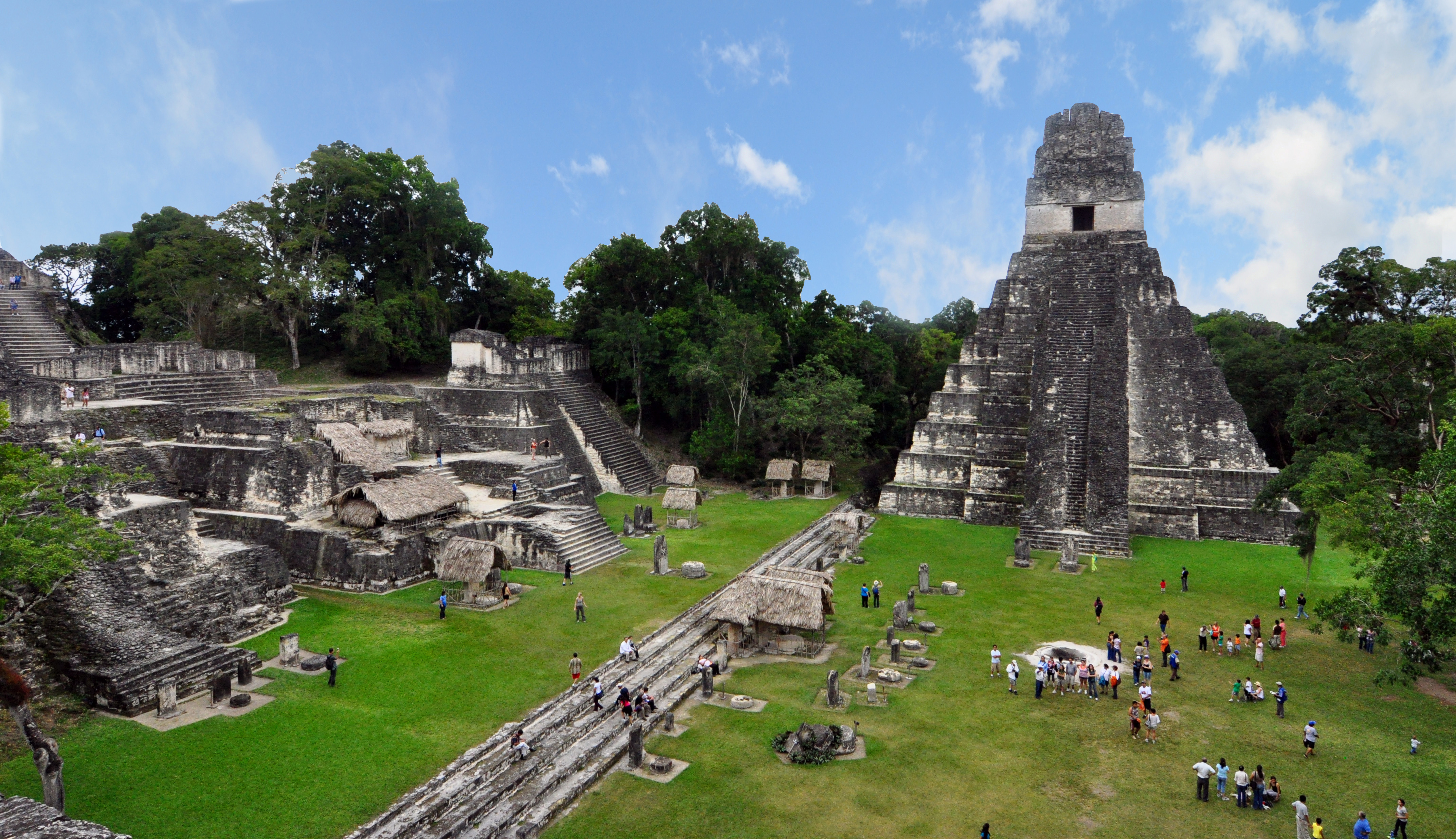
http://upload.wikimedia.org/wikipedia/commons/e/e7/Tikal_mayan_ruins_2009.jpg

Here are two interesting lectures from Santa Fe Institute President Jeremy Sabloff on the topic of archeology and its importance to how we understand our world and how it might help us shape our future.

How Insights from Archaeology Might Help Shape Our Future

Published on Sep 28, 2014


Jeremy Sabloff, President, Santa Fe Institute
September 9, 2014

Stanislaw Ulam Lecture Series: Seeing the Future in Our Past: Why Archaeology Matters

Despite its popularity, archaeology’s public perception is not as accurate as it could be. Archaeologists do not have their collective heads immersed in the past, as is often supposed, but are very much concerned with both the present and future, too. SFI President Jerry Sabloff explores how, even in the face of overwhelming data recovery and interpretive hurdles, archaeologists have developed a host of approaches that can provide new perspectives on modern problems and concerns.

* * * * *

Maya Archaeology and Its Relevance to the Modern World

Published on Sept 28, 2014


Jeremy Sabloff, President, Santa Fe Institute
September 10, 2014

Stanislaw Ulam Lecture Series: Seeing the Future in Our Past: Why Archaeology Matters

While the great architectural, artistic, and intellectual achievements of Pre-Columbian Maya peoples continue to bedazzle us for their richness, an understanding of the arc of ancient Maya civilization has relevance to problems facing the world today. SFI President Jerry Sabloff focuses on lessons about sustainability and societal resilience gleaned from new evidence relating to the decline of many major cities in the southern Maya Lowlands in the ninth century CE. He also explores heritage education and tourism in today’s Maya world, among other topics.

Monday, July 07, 2014

Ability to Adapt Gave Early Humans the Edge Over Other Hominins (Smithsonian)

Looking at the evolution of the homo genus, it may be that the whole lineage is renamed homo adaptus, in that our own defining characteristic seems to be our ability to adapt to our environment. This article from the Smithsonian magazine looks at this adaptive quality in the homo genus.

Ability to Adapt Gave Early Humans the Edge Over Other Hominins

Features thought to be characteristic of early Homo lineages actually evolved before Homo arose. Rather, our flexible nature defines us

By Mohi Kumar
smithsonian.com | July 4, 2014

Skulls of the genus Homo, including two from Homo erectus on the right (Chip Clark, Smithsonian Human Origins Program/Guram Bumbiashvili, Georgian National Museum)
From the cold Arctic to the sweltering Sahara, from the high Himalayas to the deep reaches of the Amazon, humans are everywhere. Our ability to adapt and even thrive in a variety of environments is one of the hallmarks of our species.

In fact, adaptability might be THE defining characteristic of our broader genus, Homo. According to new research published in Science, the ability of early humans to adjust to wild climate fluctuations likely enabled them to diversify, differentiate, and spread out of Africa 1.85 million years ago.

Before this study, prevailing scientific thought generally held that several traits—large brains, long legs, the ability to make tools, a prolonged time before juveniles mature into adults—all evolved together as a package between 2.4 and 1.8 million years ago. This collection of traits, scientists thought, separated the Homo genus from other hominins, such as Australopithecus or Ardipithecus, and arose when the Earth’s climate became cooler and drier and the African grasslands expanded in range.

However, a close examination of how early hominin fossils correlate with the emergence of certain behaviors seems to show otherwise. Many of the traits thought to make up this Homo package evolved independently, and some not even in Homo species at all. For example, “the origin of stone tool making doesn’t correlate to anything regarding the origins of the genus Homo,” says coauthor Richard Potts, a paleoanthropologist and director of Smithsonian’s Human Origins Program.

Further, some features once considered characteristic to members of early Homo lineages, such as long hind limbs, can be found in Australopithecus species—hominins that existed before the earliest Homo walked the earth. Australopithecus died out around 2 million years ago.

Hominin evolution from 3.0 million to 1.5 million years ago. Green: Australopithecus, Yellow: Paranthropus, Red: Homo. The icons indicate from the bottom the first appearance of stone tools at ~2.6 million years ago, the dispersal of Homo to Eurasia at ~1.85 million years ago, and the appearance of stone axes at ~1.76 million years ago. The cultural milestones do not correlate with the known first appearances of any of the currently recognized Homo specimens. (Courtesy of Antón, Potts and Aiello/Science)
Tracking the origins of Homo's supposedly defining traits involved a thorough review of fossils from three hominin groups—Paranthropus, Australopithecus, and Homo. Researchers paid careful attention to when these groups and the species within them emerged and died out.

Scientists can tell different species apart “based on differences in the shape of their skulls, especially their face and jaws,” explains Susan Antón, a professor of anthropology at New York University and the paper’s lead author. These differences persist over hundreds of thousands of years in the fossil record, defining distinct species.

With the fossil record for hominins divvied up into genera and species, the next step was to date when the species had lived. In the East African Rift Valley, determining the age of a fossil can be done rather reliably. Sediments surrounding fossil finds contain ash and pumice from volcanic eruptions—minerals in this ash and pumice can be dated using radioisotopes.

With the dates of the fossils established, what’s left was to pinpoint the age of the emergence of different behaviors. Figuring out when Homo migrated out of Africa is easy enough and can be done by dating fossils found in Eurasia. Early stone tools and hand axes found in East Africa can also be dated according to the minerals in the sediments that surround them.

Some traits, however, are more difficult to date. The ability to walk upright over long distances required the scientists to look at the fossils themselves. “We know where the muscles attached based on fossil bones; we can measure the cross-sectional area of the thigh bones and look at the mechanical properties of the pelvises that occur in the fossil records,” Potts explains.

Matching those findings to the fact that, as Potts notes, “animals that have elongated legs have greater strides and greater efficiency in locomotion,” allowed the scientists to estimate when long-distance walking emerged.

What results from these analyses is the realization that there is no simple, clear picture; no obvious mechanism as to why the genus we know as Homo came to arise and dominate. What we've long thought of as a coherent picture—the package of traits that make Homo species special—actually formed slowly over time. Stone tools first started appearing around 2.6 million years ago. Homo species left Africa 1.85 million years ago. Stone axes started to be used around 1.76 million years ago. And by at least 3 million years ago, Australopithecus developed elongated limbs and the ability to traverse long distances.

In fact, a similarly close look at other traits thought to be associated with the origin of Homo shows that they are similarly scattered through time, and not necessarily unique to early humans.


Evolutionary timeline of important anatomical, behavioral and life history characteristics that were once thought to be associated with the origin of the genus Homo or earliest H. erectus. (Antón et al., Science/AAAS 2014)

So what could have propelled our earliest ancestors to change? According to a detailed climate model of the past that was refined by the authors, the Homo lineage did not originate during a calm, cool, stable climate period as previously thought. Rather, East Africa at the time was dynamic, with “fluctuating moisture and aridity, [and] shifting resource regimes,” the authors write.

That early Homo species would have had to cope with this constantly-changing climate fits with the idea that it was not our hands, nor our gait, nor our tools that made us special. Rather, it was our adaptability.

Unstable climate conditions not only “favored the evolution of the roots of human flexibility in our ancestors,” explains Potts. “The origin of our human genus is characterized by early forms of adaptability. There’s a phasing of evolutionary innovations over time, and many evolved traits are not unique to the genus Homo even if the entire package is unique to Homo sapiens.”

Related Content

Monday, May 05, 2014

How Mental Illness Changed Human History - For the Better: David Whitley at TEDxManhattanBeach


David Whitley is an archeologist specializing far western North American rock art. In this TEDx Talk from the end of 2013, he talks about human creativity and mental health are their deep interconnection.

How mental illness changed human history - for the better: David Whitley

TEDxManhattanBeach
Published on Dec 27, 2013


Archeologist David Whitley suggests that the strengths and weaknesses of humans are deeply intertwined and inter-dependent. He shares his journey, taking us back 40,000 years, to discover the origin of human artistic genius.

David decided to become an archaeologist when he was three years old, and determined that he would study cave paintings (rock art) when he was 12. No one told him, at the time, that rock art was an ignored topic in American archaeology. Not deterred, David continued his studies and completed his doctorate at UCLA. He primarily writes about prehistoric art and religion, which he finds harder to study, and consequently much more interesting, than the standard archaeological topics of tools, technology, and diet. His most recent book is Cave Paintings and the Human Spirit: The Origin of Creativity and Belief David’s focus lies in the rock art of far western North America. His understanding of this art primarily derives from Native American ethnography–anthropological accounts of tribal religions and practices. He uses this understanding as a springboard for examining the ultimate origin of art and religion.

David lives near Tehachapi, California, in a forest of blue oak trees. When he’s not working or writing, he rides his faithful old ranch horse, Twelve, through the mountains. “It’s the best way to think,” says David.

Thursday, June 28, 2012

Documentary - Our World: Bone Diggers - The Lost Predator


This is more entertaining than anything else, but it's cool enough to share. I did not know there had been predatory marsupials - it's hard to image a kangaroo hunting me down. This film changes my understanding.


Our World : Bone Diggers - The Lost Predator

Australia is known for its cute marsupials, the koala, the kangaroo and the wombat among others. Very few people are aware that there was once a marsupial that was a deadly "creep up and get ya" predator that was more ferocious than a sabre tooth tiger. It was Thylacoleo Carnifex -- the Marsupial Lion Australia's lost predator.

The Nullarbor Plain is a remote treeless desert resting between the Great Australian Bight and the Great Sandy Desert. It is hard, stony country...flat and featureless.

In May of 2002 an group of cavers, in an Indiana Jones style operation, discovered three caves, which had never been entered by man. The entrance to one of the caves was mere shoulder-width, vertical tube that rapidly expanded to cathedral proportions. In the first cave their head torches illuminated a sight that caused scientific wonderment and a world-wide media frenzy.

At the far end of a side tunnel the cavers discovered the pristine and complete skeleton of the fabled marsupial lion, Thylacoleo. It lay there as if it had died only a year ago. The skeleton was bleach white against the red earth and not a speck of dust on it. Their immediate reaction was to take a photo and get out - their main concern was to preserve the site for scientific analysis.

The photo of Thylacoleo and the cave coordinates ended up on the desk of Dr John Long, vertebrate palaeontologist a world renowned Bone Digger with the Western Australian Museum. Within a matter of weeks funding and an expedition to recover the remains had been arranged. It would prove a journey full of surprises both during the expedition and later as the remains were studied. The first surprise to take John and his team by surprise was the age of the remains. He was sure the skeleton could only be about 40,000 years old -- several dating techniques later and a shattering date of at least 500,000 years suddenly propelled the find into mega-star status.

Bone Diggers - Mystery of a Lost Predator is the amazing story of the dangerous recovery mission and how the remains of the marsupial lion allowed science a unique opportunity to reconstruct the beast and it's behaviour.

From recreating its brain to morphological analysis, the life and form of Thylacoleo began to take shape - this is science at its best!

A co-production between Storyteller Media and the Western Australian Museum

Saturday, April 14, 2012

Bookforum Omnivore - How We View Human Evolution

Bookforum's Omnivore posted a nice collection of links on human evolution and how we assemble the family tree of our ancestors. Enjoy!


Sunday, November 27, 2011

Documentary - The Bible Unearthed


This is an interesting documentary for anyone curious about the true nature of the Bible and its human authors, based on the book, The Bible Unearthed: Archaeology's New Vision of Ancient Israel and the Origin of Its Sacred Texts, By Israel Finkelstein and Neil Asher Silberman. You can read an excerpt from the book, as well as a glowing review, from the New York Times: 
Finkelstein and Silberman have themselves written a provocative book that bears the marks of a detective story. In juxtaposing the biblical record and archaeological data, they work with tantalizing fragments of a distant past. Assembling clues to argue their thesis requires bold imagination and disciplined research. ''The Bible Unearthed'' exhibits both in abundance.
Here is the film, in several embedded parts.

The Bible Unearthed
The Bible is both a religious and historical work, but how much is myth and how much is history? When and why was the Old Testament written, and by whom? What do contemporary archaeologists know about the Patriarchs? The Exodus?
The Conquest of Canaan? Kings David and Solomon? Where do the people of Israel originally come from? Why were the historical accounts of the Bible written down?
A masterful archaeological and biblical investigation, The Bible Unearthed visits digs in Egypt, Jordan and Israel – including Megiddo, the cradle of biblical archeology, where 7,000 years of history have been excavated.
This far-ranging exploration of biblical history also makes use of archival footage of previous archaeological excavations, maps, biblical illustrations and computer animation, revealing ancient architecture, cuneiform tablets and other rare artifacts.
Based on the best-selling book of the same name, this enthralling documentary features interviews with archaeological specialists and biblical scholars from all over the world, including experts from the Louvre, the Museum of Cairo, the Museum of Jerusalem, and the British Museum.
The Bible Unearthed does something which has never been done before: it reveals a still-unraveling revolution of what we know of the society, the history, and the men who wrote the Bible.
Watch the full documentary now (playlist – 3 hours, 27 minutes)

Thursday, October 27, 2011

Easter Island Statue Project - Excavation Season IV July-August 2011

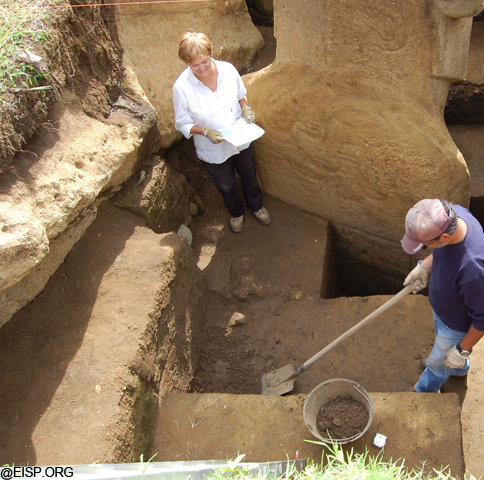
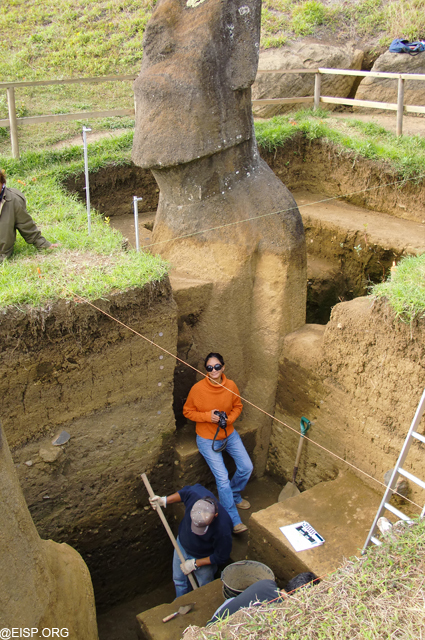
Wow - amazing pictures from this project. The degree to which these statues are embedded in the ground is something I have not seen before. Incredible. It boggles the mind that any primal culture could have done this without some kind of advanced technology.

You can read their brief summary of this season's work at the link below - there are also more pictures.


Excavation Season IV July-August 2011


Sunday, January 30, 2011

FORA.tv - Dr. Jean-Jacques Hublin: Neanderthals Deciphered

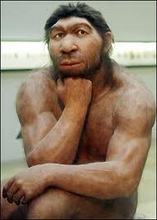
http://msnbcmedia3.msn.com/i/MSNBC/Components/Photo/_new/Neanderthals.bmp

Cool video, via FORA.tv. We have not only had to rethink our relationship to our neanderthal cousins (apparently kissing cousins and a whole lot more), but we have also had to rethink who they were as a people - and they were people, complete with compassion.

Neanderthals are often depicted as brutish club wielders, but a new book suggests Neanderthals had a sensitive side, displaying "a deep seated sense of compassion."

The findings, also published in the journal Time & Mind, are part of a larger study charting how empathy and other related feelings evolved in early humans.

Researchers Penny Spikins, Andy Needham and Holly Rutherford from the University of York Archaeology Department examined archaeological evidence for the way emotions began to emerge in our ancestors six million years ago and then developed through more recent times.

Based on fossils, artifacts and other evidence, the scientists propose a four stage model for the development of human compassion.... (MSNBC)

Between 1-4% of modern human DNA comes from neanderthal DNA, so understanding them and their lives is part of understanding ourselves.

Jean-Jacques Hublin: Neanderthals Deciphered

Neandertals were the first fossil hominins discovered and, since then, have been the most studied. However, it is only in the last two decades that entirely new techniques have made new and fascinating insights into their biology and behavior possible.

Beyond their odd anatomy, we are now able to explore the mechanisms of their birth and growth, the way their brains developed, and the chemical signals left in their bones from their diet. The decoding of their genome has opened a new era in paleoanthropology.

Ultimately, understanding the rise and the fall of the Neandertals will help us to elucidate the unrivaled evolutionary success of our own species.

Jean-Jacques Hublin

Jean-Jacques Hublin, Ph.D., is currently a Professor at the Max Planck Institute for Evolutionary Anthropology in Leipzig (Germany), where he serves as the Director of the Department of Human Evolution. He has also been an honorary Professor at the University of Leipzig since 2004. Initially his research focused on the origin and evolution of Neanderthals and he has proposed an accretion model for the emergence of the Neandertal lineage that roots it in time in the middle of the middle Pleistocene.

He also worked on the processes associated with the emergence of Homo sapiens and on the interactions between Neanderthals and anatomically modern humans in Europe. He developed the use of medical and virtual imaging in the reconstruction and study of fossil hominids and paid attention to growth and development issues. He has led field operations in North Africa, Spain and France.

In addition to his scientific papers, he has regularly published popular books (with translations in English, Italian, Spanish, and Chinese) and articles on the subjects of Neanderthal and early modern human evolution.


Thursday, October 01, 2009

National Geographic - Oldest "Human" Skeleton Found--Disproves "Missing Link"

Wow! This is a HUGE find - and adds incredible new understanding to our evolution as a species. Human ancestors have been bipedal for longer than any had imagined.


Oldest "Human" Skeleton Found--Disproves "Missing Link"

Jamie Shreeve
Science editor, National Geographic magazine
October 1, 2009

Move over, Lucy. And kiss the missing link goodbye.

Scientists today announced the discovery of the oldest fossil skeleton of a human ancestor. The find reveals that our forebears underwent a previously unknown stage of evolution more than a million years before Lucy, the iconic early human ancestor specimen that walked the Earth 3.2 million years ago.

The centerpiece of a treasure trove of new fossils, the skeleton—assigned to a species called Ardipithecus ramidus—belonged to a small-brained, 110-pound (50-kilogram) female nicknamed "Ardi." (See pictures of Ardipithecus ramidus.)

The fossil puts to rest the notion, popular since Darwin's time, that a chimpanzee-like missing link—resembling something between humans and today's apes—would eventually be found at the root of the human family tree. Indeed, the new evidence suggests that the study of chimpanzee anatomy and behavior—long used to infer the nature of the earliest human ancestors—is largely irrelevant to understanding our beginnings.

Ardi instead shows an unexpected mix of advanced characteristics and of primitive traits seen in much older apes that were unlike chimps or gorillas (interactive: Ardi's key features). As such, the skeleton offers a window on what the last common ancestor of humans and living apes might have been like.

Announced at joint press conferences in Washington, D.C., and Addis Ababa, Ethiopia, the analysis of the Ardipithecus ramidus bones will be published in a collection of papers tomorrow in a special edition of the journal Science, along with an avalanche of supporting materials published online.

"This find is far more important than Lucy," said Alan Walker, a paleontologist from Pennsylvania State University who was not part of the research. "It shows that the last common ancestor with chimps didn't look like a chimp, or a human, or some funny thing in between." (Related: "Oldest Homo Sapiens Fossils Found, Experts Say" [June 11, 2003].)

Ardi Surrounded by Family

The Ardipithecus ramidus fossils were discovered in Ethiopia's harsh Afar desert at a site called Aramis in the Middle Awash region, just 46 miles (74 kilometers) from where Lucy's species, Australopithecus afarensis, was found in 1974. Radiometric dating of two layers of volcanic ash that tightly sandwiched the fossil deposits revealed that Ardi lived 4.4 million years ago.

Older hominid fossils have been uncovered, including a skull from Chad at least six million years old and some more fragmentary, slightly younger remains from Kenya and nearby in the Middle Awash.

While important, however, none of those earlier fossils are nearly as revealing as the newly announced remains, which in addition to Ardi's partial skeleton include bones representing at least 36 other individuals.

"All of a sudden you've got fingers and toes and arms and legs and heads and teeth," said Tim White of the University of California, Berkeley, who co-directed the work with Berhane Asfaw, a paleoanthropologist and former director of the National Museum of Ethiopia, and Giday WoldeGabriel, a geologist at Los Alamos National Laboratory in New Mexico.

"That allows you to do something you can't do with isolated specimens," White said. "It allows you to do biology."

(Related: Rediscover the original Ardipithecus.)

Ardi's Weird Way of Moving

The biggest surprise about Ardipithecus's biology is its bizarre means of moving about.

All previously known hominids—members of our ancestral lineage—walked upright on two legs, like us. But Ardi's feet, pelvis, legs, and hands suggest she was a biped on the ground but a quadruped when moving about in the trees.

Her big toe, for instance, splays out from her foot like an ape's, the better to grasp tree limbs. Unlike a chimpanzee foot, however, Ardipithecus's contains a special small bone inside a tendon, passed down from more primitive ancestors, that keeps the divergent toe more rigid. Combined with modifications to the other toes, the bone would have helped Ardi walk bipedally on the ground, though less efficiently than later hominids like Lucy. The bone was lost in the lineages of chimps and gorillas.

According to the researchers, the pelvis shows a similar mosaic of traits. The large flaring bones of the upper pelvis were positioned so that Ardi could walk on two legs without lurching from side to side like a chimp. But the lower pelvis was built like an ape's, to accommodate huge hind limb muscles used in climbing.

Even in the trees, Ardi was nothing like a modern ape, the researchers say.

Modern chimps and gorillas have evolved limb anatomy specialized to climbing vertically up tree trunks, hanging and swinging from branches, and knuckle-walking on the ground.

While these behaviors require very rigid wrist bones, for instance, the wrists and finger joints of Ardipithecus were highly flexible. As a result Ardi would have walked on her palms as she moved about in the trees—more like some primitive fossil apes than like chimps and gorillas.

"What Ardi tells us is there was this vast intermediate stage in our evolution that nobody knew about," said Owen Lovejoy, an anatomist at Kent State University in Ohio, who analyzed Ardi's bones below the neck. "It changes everything."

Against All Odds, Ardi Emerges

The first, fragmentary specimens of Ardipithecus were found at Aramis in 1992 and published in 1994. The skeleton announced today was discovered that same year and excavated with the bones of the other individuals over the next three field seasons. But it took 15 years before the research team could fully analyze and publish the skeleton, because the fossils were in such bad shape.

After Ardi died, her remains apparently were trampled down into mud by hippos and other passing herbivores. Millions of years later, erosion brought the badly crushed and distorted bones back to the surface.

They were so fragile they would turn to dust at a touch. To save the precious fragments, White and colleagues removed the fossils along with their surrounding rock. Then, in a lab in Addis, the researchers carefully tweaked out the bones from the rocky matrix using a needle under a microscope, proceeding "millimeter by submillimeter," as the team puts it in Science. This process alone took several years.

Pieces of the crushed skull were then CT-scanned and digitally fit back together by Gen Suwa, a paleoanthropologist at the University of Tokyo.

In the end, the research team recovered more than 125 pieces of the skeleton, including much of the feet and virtually all of the hands—an extreme rarity among hominid fossils of any age, let alone one so very ancient.

"Finding this skeleton was more than luck," said White. "It was against all odds."

Ardi's World

The team also found some 6,000 animal fossils and other specimens that offer a picture of the world Ardi inhabited: a moist woodland very different from the region's current, parched landscape. In addition to antelope and monkey species associated with forests, the deposits contained forest-dwelling birds and seeds from fig and palm trees.

Wear patterns and isotopes in the hominid teeth suggest a diet that included fruits, nuts, and other forest foods.

If White and his team are right that Ardi walked upright as well as climbed trees, the environmental evidence would seem to strike the death knell for the "savanna hypothesis"—a long-standing notion that our ancestors first stood up in response to their move onto an open grassland environment.

Sex for Food

Some researchers, however, are unconvinced that Ardipithecus was quite so versatile.

"This is a fascinating skeleton, but based on what they present, the evidence for bipedality is limited at best," said William Jungers, an anatomist at Stony Brook University in New York State.

"Divergent big toes are associated with grasping, and this has one of the most divergent big toes you can imagine," Jungers said. "Why would an animal fully adapted to support its weight on its forelimbs in the trees elect to walk bipedally on the ground?"

One provocative answer to that question—originally proposed by Lovejoy in the early 1980s and refined now in light of the Ardipithecus discoveries—attributes the origin of bipedality to another trademark of humankind: monogamous sex.

Virtually all apes and monkeys, especially males, have long upper canine teeth—formidable weapons in fights for mating opportunities.

But Ardipithecus appears to have already embarked on a uniquely human evolutionary path, with canines reduced in size and dramatically "feminized" to a stubby, diamond shape, according to the researchers. Males and female specimens are also close to each other in body size.

Lovejoy sees these changes as part of an epochal shift in social behavior: Instead of fighting for access to females, a male Ardipithecus would supply a "targeted female" and her offspring with gathered foods and gain her sexual loyalty in return.

To keep up his end of the deal, a male needed to have his hands free to carry home the food. Bipedalism may have been a poor way for Ardipithecus to get around, but through its contribution to the "sex for food" contract, it would have been an excellent way to bear more offspring. And in evolution, of course, more offspring is the name of the game (more: "Did Early Humans Start Walking for Sex?").

Two hundred thousand years after Ardipithecus, another species called Australopithecus anamensis appeared in the region. By most accounts, that species soon evolved into Australopithecus afarensis, with a slightly larger brain and a full commitment to a bipedal way of life. Then came early Homo, with its even bigger brain and budding tool use.

Did primitive Ardipithecus undergo some accelerated change in the 200,000 years between it and Australopithecus—and emerge as the ancestor of all later hominids? Or was Ardipithecus a relict species, carrying its quaint mosaic of primitive and advanced traits with it into extinction?

Study co-leader White sees nothing about the skeleton "that would exclude it from ancestral status." But he said more fossils would be needed to fully resolve the issue.

Stony Brook's Jungers added, "These finds are incredibly important, and given the state of preservation of the bones, what they did was nothing short of heroic.

But this is just the beginning of the story."

Look for comprehensive coverage of Ardipithecus ramidus in a future issue of National Geographic magazine.

Saturday, May 02, 2009

NYT - A Tiny Hominid With No Place on the Family Tree

I just watched a show on the History Channel about this fossil discovery - so this article was a welcome addition to what we think we know about the strangest set of human fossils so far discovered.

A Tiny Hominid With No Place on the Family Tree


Published: April 27, 2009

STONY BROOK, N.Y. — Six years after their discovery, the extinct little people nicknamed hobbits who once occupied the Indonesian island of Flores remain mystifying anomalies in human evolution, out of place in time and geography, their ancestry unknown. Recent research has only widened their challenge to conventional thinking about the origins, transformations and migrations of the early human family.

Indeed, the more scientists study the specimens and their implications, the more they are drawn to heretical speculation.

*Were these primitive survivors of even earlier hominid migrations out of Africa, before Homo erectus migrated about 1.8 million years ago? Could some of the earliest African toolmakers, around 2.5 million years ago, have made their way across Asia?

*Did some of these migrants evolve into new species in Asia, which moved back to Africa? Two-way traffic is not unheard of in other mammals.

*Or could the hobbits be an example of reverse evolution? That would seem even more bizarre; there are no known cases in primate evolution of a wholesale reversion to some ancestor in its lineage.

The possibilities get curiouser and curiouser, said William L. Jungers of Stony Brook University, making hobbits “the black swan of paleontology — totally unpredicted and inexplicable.”

Everything about them seems incredible. They were very small, not much more than three feet tall, yet do not resemble any modern pygmies. They walked upright on short legs, but might have had a peculiar gait obviating long-distance running. The single skull that has been found is no bigger than a grapefruit, suggesting a brain less than one-third the size of a human’s, yet they made stone tools similar to those produced by other hominids with larger brains. They appeared to live isolated on an island as recently as 17,000 years ago, well after humans had made it to Australia.

Although the immediate ancestor of modern humans, Homo erectus, lived in Asia and the islands for hundreds of thousands of years, the hobbits were not simply scaled-down erectus. In fact, erectus and Homo sapiens appear to be more closely related to each other than either is to the hobbit, scientists have determined.

It is no wonder, then, that the announcement describing the skull and the several skeletons as remains of a previously unknown hominid species, Homo floresiensis, prompted heated debate. Critics contended that these were merely modern human dwarfs afflicted with genetic or pathological disorders.

Scientists who reviewed hobbit research at a symposium here last week said that a consensus had emerged among experts in support of the initial interpretation that H. floresiensis is a distinct hominid species much more primitive than H. sapiens. On display for the first time at the meeting was a cast of the skull and bones of a H. floresiensis, probably an adult female.

Several researchers showed images of hobbit brain casts in comparison with those of deformed human brains. They said this refuted what they called the “sick hobbit hypothesis.” They also reported telling shoulder and wrist differences between humans and the island inhabitants.

Even so, skeptics have not capitulated. They note that most of the participants at the symposium had worked closely with the Australian and Indonesian scientists who made the discovery in 2003 and complain that their objections have been largely ignored by the news media and organizations financing research on the hobbits.

Some prominent paleoanthropologists are reserving judgment, among them Richard Leakey, the noted hominid fossil hunter who is chairman of the Turkana Basin Institute at Stony Brook University. Like other undecided scientists, he cited the need to find more skeletons at other sites, especially a few more skulls.

Mr. Leakey conceded, however, that the recent research “greatly strengthened the possibility” that the Flores specimens represented a new species.

At the symposium, Michael J. Morwood, an archaeologist at the University of Wollongong in Australia who was one of the discoverers, said that further investigations of stone tools had determined that hominids arrived at Flores as early as 880,000 years ago and “it is reasonable to assume that those were ancestors of the hobbits.” But none of their bones have been uncovered, so they remain unidentified, and no modern human remains have been found there earlier than 11,000 years ago.

Excavations are continuing at Liang Bua, a wide-mouth cave in a hillside where the hobbit bones were found in deep sediments, but no more skulls or skeletons have turned up. Dr. Morwood said the search would be extended to other Flores sites and nearby islands.

Peter Brown, a paleontologist at the University of New England in Australia, said that his examination of the premolars and lower jaws of the specimens made it almost immediately “very, very clear that this was a hominid in the wrong place at the wrong time.” The first premolars in particular, he said, were larger than a human’s and had a crown and roots unlike those of H. sapiens or H. erectus.

Dr. Brown, a co-author of the original discovery report, said that no known disease or abnormality in humans could have “replicated this condition.”

At first, Dr. Brown and colleagues hypothesized that the hobbits were descendants of H. erectus that populated the region and had evolved their small stature because they lived in isolation on an island. Island dwarfing is a recognized phenomenon in which larger species diminish in size over time in response to limited resources.

The scientists soon backed off from that hypothesis. For one thing, dwarfing reduces stature, but not brain size. Moreover, researchers said, the hobbit bore little resemblance to an erectus.

In an analysis of the hobbit’s wrist bones, Matthew W. Tocheri of the Smithsonian Institution found that certain bones were wedge-shaped, similar to those in apes, and not squared-off, as in humans and Neanderthals. This suggested that its species diverged from the human lineage at least one million to two million years ago.
Read the whole article.


Saturday, March 21, 2009

Druids Committed Human Sacrifice, Cannibalism?

Contrary to our popular image of early peoples, many were not so peaceful and in-tune with their world as anthropologists might have us believe. Many were violent and warring people, not simply singing odes to the beauty of nature.

The lastest myth to fall is that of the nature-loving, peaceful Druids, who also seemed to love a little human flesh.

Druids Committed Human Sacrifice, Cannibalism?

James Owen in London
for National Geographic News
March 20, 2009

ON TV Secrets of the Druids airs Sunday, March 22, at 10 p.m. ET/PT on the National Geographic Channel. Details >>

Recent evidence that Druids possibly committed cannibalism and ritual human sacrifice—perhaps on a massive scale—add weight to ancient Roman accounts of Druidic savagery, archaeologists say.

After a first century B.C. visit to Britain, the Romans came back with horrific stories about these high-ranking priests of the Celts, who had spread throughout much of Europe over a roughly 2,000-year period.

Julius Caesar, who led the first Roman landing in 55 B.C., said the native Celts "believe that the gods delight in the slaughter of prisoners and criminals, and when the supply of captives runs short, they sacrifice even the innocent."

First-century historian Pliny the Elder went further, suggesting the Celts practiced ritual cannibalism, eating their enemies' flesh as a source of spiritual and physical strength.

But with only the Romans' word to go on—the ancient Celts left no written record of their own—it's been easy for historians to dismiss such tales as wartime propaganda.

Until now, that is.

Gruesome Druid Discoveries

Recent gruesome finds appear to confirm the Romans' accounts, according to Secrets of the Druids, a new documentary airing Sunday on the U.S. National Geographic Channel.

VIDEO: Caesar Meets the Druids (Dramatization)


Perhaps the most incriminating evidence is the 2,000-year-old, bog-mummified body of Lindow Man, discovered in England in the 1980s. Lindow Man's manicured fingernails and finely trimmed hair and beard suggest that he may have been of high status—possibly even a Druid himself.

At least one thing appears nearly certain about the ancient twentysomething: He was the victim of a carefully staged sacrifice. Recent studies have revealed that Lindow Man's head had been violently smashed and his neck had been strangled and slashed.

Druid Fountain of Blood

"You've got a rope tightened round his neck, and at the moment where the neck was constricted, the throat was cut, which would cause an enormous fountain of blood to rise up," said archaeologist Miranda Aldhouse-Green, an archaeologist at Cardiff University in Wales and an expert on the Druids.

Another clue lay inside the body's well-preserved gut: pollen grains from mistletoe, a plant that was sacred to the Druids. (Romans wrote that Druids cut mistletoe from trees with golden sickles.)

Lindow Man's death is dated to around A.D. 60, when the Romans launched a new offensive in the island of Great Britain, currently part of the United Kingdom.

He may have been sacrificed to persuade the Celtic gods to halt the Roman advance, Aldhouse-Green said.

"Something had to be done to stop them in their tracks," she said in the documentary. "And what better way than sacrificing a high-status nobleman?"

The idea jibes with something Julius Caesar wrote: In times of danger, the Celts believed that "unless the life of a man be offered, the mind of immortal gods will not favor them."

VIDEO: Lindow Man, Druid Sacrifice? (With Dramatizations)


Mass Druid Sacrifice?

Other grisly clues come from a cave in Alveston, England.

Skeletons belonging to as many as 150 people and dating back to about the time of the Roman conquest were discovered in 2000.

Druids may have killed the victims—who show evidence of skull-splitting blows—in a single event. It may have been the Roman invasion itself that escalated the Druids' ritualized slaughter, researchers say.

Mark Horton, an archaeologist at the University of Bristol, thinks the pile of bodies suggests savage resistance to the Romans, either on the battlefield or through deadly ritual.

"Maybe the whole thing is a gigantic sacrifice ... an appeasement to the gods in order that they will get ultimate victory against the Romans," Horton said.

The Alveston cave bones hint at something even more sinister—cannibalism.

A human thighbone in the cave had been broken open in exactly the same method people use to get at the nutritious bone marrow of nonhuman animals.

But if the bone is proof of Celtic cannibalism, the practice was probably extremely rare, Horton said. It may be evidence of increasing hunger and desperation as Roman invaders closed in, he added.

"Least Bad Evidence"

Researchers have struggled in the past to link any archaeological evidence to the Druids, let alone signs of human sacrifice or cannibalism, said archaeologist Simon James of the University of Leicester, U.K.

"There has always been a suspicion that what the Romans were saying was atrocity propaganda. But some recent finds like Lindow Man suggest that there were dark and bloody goings-on," said James, who was not involved in the new documentary.

The mistletoe pollen from Lindow Man is the "least bad archaeological evidence we've got that fits in with these stories about the Druids," he added.

"Maybe mistletoe plants had been dusted on his food ritually, a bit like spraying holy water around, or dunked in his drink," James said.

If Lindow Man and others were in fact sacrificed in a bid to stop the Romans, their lives were lost in vain.

By the early centuries of the first millennium A.D., the Celts' defeat and absorption into the Roman Empire was nearly complete across Europe.

Today, their once wide-ranging culture lives on mainly in the traditional languages of Ireland, Wales, and Brittany, France.

(Read "The Celtic Realm" from National Geographic magazine.)


Thursday, January 22, 2009

"Hobbit" Skull Study: Species Not Human

It's now mostly confirmed that the "hobbit" skeleton found a few years back in Indonesia is a unique species.
"Hobbit" Skull Study: Species Not Human

Newswise — In a an analysis of the size, shape and asymmetry of the cranium of Homo floresiensis, Karen Baab, Ph.D., a researcher in the Department of Anatomical Scienes at Stony Brook University, and colleagues conclude that the fossil, found in Indonesia in 2003 and known as the “Hobbit,” is not human. They used 3-D shape analysis to study the LB1 skull of the hobbit and found the shape of the skull to be consistent with a scaled down human ancestor but not modern humans. Their findings, reported in the current online edition of the Journal of Human Evolution, add to the evidence that the hobbit is a new species.

The question as to whether the hobbit was human or another species remains controversial. Some scientists claim the hobbit was a diminutive human that suffered from some type of disease that causes microcephaly, which results in abnormal growth of the brain and causes the cranium to be much smaller than the normal human cranium. But Dr. Baab and co-author Kieran McNulty, Professor of Anthropology at the University of Minnesota, believe their findings counter the microcephaly theory.

“A skull can provide researchers with a lot of important information about a fossil species, particularly regarding their evolutionary relationships to other fossil species,” explains Dr. Baab. “The overall shape of the LB1 skull, particularly the part that surrounds the brain (neurocranium) looks similar to fossils more than 1.5 million years older from Africa and Eurasia, rather than modern humans, even though Homo floresiensis is documented from 17,000 to 95,000 years ago.”

To carry out the study, Dr. Baab and colleagues collected 3D landmark data on the LB1 skull and a large sample of fossils representing other extinct hominin species, as well as a comparative sample of modern humans and apes. They performed several analyses of different regions of the skulls. Taken together, these analyses indicated that the LB1 skull shape is that of a scaled down Homo fossil not a scaled down modern human.

The results of the analysis of the asymmetry of the skulls, which refers to differences between the right and left sides of the skull, refutes the suggestion that the LB1 skull was that of a modern human with a diagnosis of microcephaly. In modern humans, a high degree of asymmetry may indicate that the individual was diseased. At least one scientific study on the asymmetry of LB1 supported the argument that this individual had microcephaly. Conversely, Dr. Baab and colleagues found the degree of asymmetry of the LB1 skull was not unexpectedly high and therefore not supportive of the diagnosis of microcephaly.

“The degree of asymmetry in LB1 was within the range of apes and was very similar to that seen in other fossil skulls,” says Dr. Baab. “We suggest that the degree of asymmetry is within expectations for this population of hominins, particular given that the conditions of the cave in Indonesia in which the skull was preserved may have contributed to asymmetry.”

Dr. Baab recognizes that the controversy as to the evolutionary origins of Homo floresiensis will continue, perhaps without an answer. However, all the evidence that she and colleagues illustrate in their article “Size, shape, and asymmetry in fossil hominins: The status of the LB1cranium based on 3D morphometric analyses,” suggest that Homo floresiensis was most likely the diminutive descendant of a species of archaic Homo.

The results of this study are also in line with what other researchers in the Department of Anatomical Sciences at Stony Brook University have found regarding the rest of the hobbit skeleton. Drs. William Jungers and Susan Larson have documented a range of primitive features in both the upper and lower limbs of Homo floresiensis, highlighting the many ways that these hominins were unlike modern humans.