Showing posts with label money. Show all posts

Thursday, October 23, 2014

Morgan Spurlock, Werner Herzog & Other Stars Explain Economic Theory in 20 Short Films

https://fbcdn-sphotos-c-a.akamaihd.net/hphotos-ak-xpa1/v/t1.0-9/p320x320/10404495_1566111530277337_88273539409310642_n.jpg?oh=ef8bc09aa0232eaa09db475bbcd0187c&oe=54BBE446&__gda__=1422164369_c5114e4779105d7937dbd66c92f138a5

Via Open Culture, of course.

Episodes 1 and 4 are posted below, but here are some others now available (there are more):
These are good.


Morgan Spurlock, Werner Herzog & Other Stars Explain Economic Theory in 20 Short Films


October 23rd, 2014


Morgan Spurlock is a filmmaker who has long found catchy ways of getting his point across. For his breakout movie, Super Size Me (available on Hulu), he sought to illustrate just how truly awful fast food is for you by subsisting solely on McDonald’s for a month. His diet literally almost killed him. Not long after the movie came out, McDonald’s started adding more healthy options to its menu. In POM Wonderful Presents: The Greatest Movie Ever Sold, Spurlock looked to make a documentary about product placement in movies by financing the doc entirely through product placement. (That movie gets pretty meta fast.) And most recently, Spurlock has launched We The Economy: 20 Short Films You Can’t Afford To Miss. As you might surmise, the series tries to explain economics to the masses by releasing 20 short films made by a host of different stars and filmmakers, including Amy Poehler, Tony Hale, Sarah Silverman and Maya. The whole project will be released in theaters and on VOD but the shorts have also been released in advance on Youtube. You can watch Spurlock’s segment, called “Cave-o-nomics,” above. Seeking to answer the question “What is an economy?” Spurlock dresses up as a caveman struggling to increase his material wealth by swapping spears for meat.


The clear stand out of the bunch, however, is Ramin Bahrani’s “Lemonade War.” Bahami tackles the potentially dreary issue of business regulation by telling a tale of two rival lemonade stands. One is run by a corrupt slob – played by Patton Oswalt — and the other is run by a whip smart ten-year-old girl. Though the girl doesn’t have the money or connections that her rival has, she more than makes up for it with moxie and business acumen. This, sadly, proves to be not enough. When she calls the government regulator about some of her rival’s truly unhygienic practices, she discovers the regulator is in her competition’s pocket and soon she’s driven out of business. Things look hopeless for her until a neighborhood hero, played by none other than Werner Herzog (!), comes to her rescue. With the little girl in tow, he confronts the slob and regulator with his trademark malevolent Teutonic lilt. “If Mr. Smith could go to Washington today,” he declares, “he would filibuster you back into your big bang wormhole you have slithered out of.” The two simply cower in the face of Herzog’s Old Testament wrath. If only Herzog could deliver similar fusillades against the board of Goldman Sachs.

You can watch more segments of We The Economy here — or find them in our collection, 700 Free Movies Online: Great Classics, Indies, Noir, Westerns, etc..

Related Content:

Jonathan Crow is a Los Angeles-based writer and filmmaker whose work has appeared in Yahoo!, The Hollywood Reporter, and other publications. You can follow him at @jonccrow. And check out his blog Veeptopus, featuring lots of pictures of vice presidents with octopuses on their heads. The Veeptopus store is here.

Tuesday, January 21, 2014

Sam Polk - For the Love of Money (Wealth Addiction)

This is an excellent first-person account of one man's struggle with addictions, first drugs and the wealth and power on Wall Street. This comes from the New York Times Sunday Review.

For the Love of Money

By SAM POLKJAN. 18, 2014

Launch media viewer Owen Freeman

IN my last year on Wall Street my bonus was $3.6 million — and I was angry because it wasn’t big enough. I was 30 years old, had no children to raise, no debts to pay, no philanthropic goal in mind. I wanted more money for exactly the same reason an alcoholic needs another drink: I was addicted.

Eight years earlier, I’d walked onto the trading floor at Credit Suisse First Boston to begin my summer internship. I already knew I wanted to be rich, but when I started out I had a different idea about what wealth meant. I’d come to Wall Street after reading in the book “Liar’s Poker” how Michael Lewis earned a $225,000 bonus after just two years of work on a trading floor. That seemed like a fortune. Every January and February, I think about that time, because these are the months when bonuses are decided and distributed, when fortunes are made.

I’d learned about the importance of being rich from my dad. He was a modern-day Willy Loman, a salesman with huge dreams that never seemed to materialize. “Imagine what life will be like,” he’d say, “when I make a million dollars.” While he dreamed of selling a screenplay, in reality he sold kitchen cabinets. And not that well. We sometimes lived paycheck to paycheck off my mom’s nurse-practitioner salary.

Dad believed money would solve all his problems. At 22, so did I. When I walked onto that trading floor for the first time and saw the glowing flat-screen TVs, high-tech computer monitors and phone turrets with enough dials, knobs and buttons to make it seem like the cockpit of a fighter plane, I knew exactly what I wanted to do with the rest of my life. It looked as if the traders were playing a video game inside a spaceship; if you won this video game, you became what I most wanted to be — rich.

IT was a miracle I’d made it to Wall Street at all. While I was competitive and ambitious — a wrestler at Columbia University — I was also a daily drinker and pot smoker and a regular user of cocaine, Ritalin and ecstasy. I had a propensity for self-destruction that had resulted in my getting suspended from Columbia for burglary, arrested twice and fired from an Internet company for fistfighting. I learned about rage from my dad, too. I can still see his red, contorted face as he charged toward me. I’d lied my way into the C.S.F.B. internship by omitting my transgressions from my résumé and was determined not to blow what seemed a final chance. The only thing as important to me as that internship was my girlfriend, a starter on the Columbia volleyball team. But even though I was in love with her, when I got drunk I’d sometimes end up with other women.

Three weeks into my internship she wisely dumped me. I don’t like who you’ve become, she said. I couldn’t blame her, but I was so devastated that I couldn’t get out of bed. In desperation, I called a counselor whom I had reluctantly seen a few times before and asked for help.

She helped me see that I was using alcohol and drugs to blunt the powerlessness I felt as a kid and suggested I give them up. That began some of the hardest months of my life. Without the alcohol and drugs in my system, I felt like my chest had been cracked open, exposing my heart to air. The counselor said that my abuse of drugs and alcohol was a symptom of an underlying problem — a “spiritual malady,” she called it. C.S.F.B. didn’t offer me a full-time job, and I returned, distraught, to Columbia for senior year.

After graduation, I got a job at Bank of America, by the grace of a managing director willing to take a chance on a kid who had called him every day for three weeks. With a year of sobriety under my belt, I was sharp, cleareyed and hard-working. At the end of my first year I was thrilled to receive a $40,000 bonus. For the first time in my life, I didn’t have to check my balance before I withdrew money. But a week later, a trader who was only four years my senior got hired away by C.S.F.B. for $900,000. After my initial envious shock — his haul was 22 times the size of my bonus — I grew excited at how much money was available.

Over the next few years I worked like a maniac and began to move up the Wall Street ladder. I became a bond and credit default swap trader, one of the more lucrative roles in the business. Just four years after I started at Bank of America, Citibank offered me a “1.75 by 2” which means $1.75 million per year for two years, and I used it to get a promotion. I started dating a pretty blonde and rented a loft apartment on Bond Street for $6,000 a month.

I felt so important. At 25, I could go to any restaurant in Manhattan — Per Se, Le Bernardin — just by picking up the phone and calling one of my brokers, who ingratiate themselves to traders by entertaining with unlimited expense accounts. I could be second row at the Knicks-Lakers game just by hinting to a broker I might be interested in going. The satisfaction wasn’t just about the money. It was about the power. Because of how smart and successful I was, it was someone else’s job to make me happy.

Still, I was nagged by envy. On a trading desk everyone sits together, from interns to managing directors. When the guy next to you makes $10 million, $1 million or $2 million doesn’t look so sweet. Nonetheless, I was thrilled with my progress.

My counselor didn’t share my elation. She said I might be using money the same way I’d used drugs and alcohol — to make myself feel powerful — and that maybe it would benefit me to stop focusing on accumulating more and instead focus on healing my inner wound. “Inner wound”? I thought that was going a little far and went to work for a hedge fund.

Now, working elbow to elbow with billionaires, I was a giant fireball of greed. I’d think about how my colleagues could buy Micronesia if they wanted to, or become mayor of New York City. They didn’t just have money; they had power — power beyond getting a table at Le Bernardin. Senators came to their offices. They were royalty.

I wanted a billion dollars. It’s staggering to think that in the course of five years, I’d gone from being thrilled at my first bonus — $40,000 — to being disappointed when, my second year at the hedge fund, I was paid “only” $1.5 million.


Launch media viewer Owen Freeman

But in the end, it was actually my absurdly wealthy bosses who helped me see the limitations of unlimited wealth. I was in a meeting with one of them, and a few other traders, and they were talking about the new hedge-fund regulations. Most everyone on Wall Street thought they were a bad idea. “But isn’t it better for the system as a whole?” I asked. The room went quiet, and my boss shot me a withering look. I remember his saying, “I don’t have the brain capacity to think about the system as a whole. All I’m concerned with is how this affects our company.”

I felt as if I’d been punched in the gut. He was afraid of losing money, despite all that he had.

From that moment on, I started to see Wall Street with new eyes. I noticed the vitriol that traders directed at the government for limiting bonuses after the crash. I heard the fury in their voices at the mention of higher taxes. These traders despised anything or anyone that threatened their bonuses. Ever see what a drug addict is like when he’s used up his junk? He’ll do anything — walk 20 miles in the snow, rob a grandma — to get a fix. Wall Street was like that. In the months before bonuses were handed out, the trading floor started to feel like a neighborhood in “The Wire” when the heroin runs out.

I’d always looked enviously at the people who earned more than I did; now, for the first time, I was embarrassed for them, and for me. I made in a single year more than my mom made her whole life. I knew that wasn’t fair; that wasn’t right. Yes, I was sharp, good with numbers. I had marketable talents. But in the end I didn’t really do anything. I was a derivatives trader, and it occurred to me the world would hardly change at all if credit derivatives ceased to exist. Not so nurse practitioners. What had seemed normal now seemed deeply distorted.

I had recently finished Taylor Branch’s three-volume series on the Rev. Dr. Martin Luther King Jr. and the civil rights movement, and the image of the Freedom Riders stepping out of their bus into an infuriated mob had seared itself into my mind. I’d told myself that if I’d been alive in the ‘60s, I would have been on that bus.

But I was lying to myself. There were plenty of injustices out there — rampant poverty, swelling prison populations, a sexual-assault epidemic, an obesity crisis. Not only was I not helping to fix any problems in the world, but I was profiting from them. During the market crash in 2008, I’d made a ton of money by shorting the derivatives of risky companies. As the world crumbled, I profited. I’d seen the crash coming, but instead of trying to help the people it would hurt the most — people who didn’t have a million dollars in the bank — I’d made money off it. I don’t like who you’ve become, my girlfriend had said years earlier. She was right then, and she was still right. Only now, I didn’t like who I’d become either.

Wealth addiction was described by the late sociologist and playwright Philip Slater in a 1980 book, but addiction researchers have paid the concept little attention. Like alcoholics driving drunk, wealth addiction imperils everyone. Wealth addicts are, more than anybody, specifically responsible for the ever widening rift that is tearing apart our once great country. Wealth addicts are responsible for the vast and toxic disparity between the rich and the poor and the annihilation of the middle class. Only a wealth addict would feel justified in receiving $14 million in compensation — including an $8.5 million bonus — as the McDonald’s C.E.O., Don Thompson, did in 2012, while his company then published a brochure for its work force on how to survive on their low wages. Only a wealth addict would earn hundreds of millions as a hedge-fund manager, and then lobby to maintain a tax loophole that gave him a lower tax rate than his secretary.

DESPITE my realizations, it was incredibly difficult to leave. I was terrified of running out of money and of forgoing future bonuses. More than anything, I was afraid that five or 10 years down the road, I’d feel like an idiot for walking away from my one chance to be really important. What made it harder was that people thought I was crazy for thinking about leaving. In 2010, in a final paroxysm of my withering addiction, I demanded $8 million instead of $3.6 million. My bosses said they’d raise my bonus if I agreed to stay several more years. Instead, I walked away.

The first year was really hard. I went through what I can only describe as withdrawal — waking up at nights panicked about running out of money, scouring the headlines to see which of my old co-workers had gotten promoted. Over time it got easier — I started to realize that I had enough money, and if I needed to make more, I could. But my wealth addiction still hasn’t gone completely away. Sometimes I still buy lottery tickets.

In the three years since I left, I’ve married, spoken in jails and juvenile detention centers about getting sober, taught a writing class to girls in the foster system, and started a nonprofit called Groceryships to help poor families struggling with obesity and food addiction. I am much happier. I feel as if I’m making a real contribution. And as time passes, the distortion lessens. I see Wall Street’s mantra — “We’re smarter and work harder than everyone else, so we deserve all this money” — for what it is: the rationalization of addicts. From a distance I can see what I couldn’t see then — that Wall Street is a toxic culture that encourages the grandiosity of people who are desperately trying to feel powerful.

I was lucky. My experience with drugs and alcohol allowed me to recognize my pursuit of wealth as an addiction. The years of work I did with my counselor helped me heal the parts of myself that felt damaged and inadequate, so that I had enough of a core sense of self to walk away.

Dozens of different types of 12-step support groups — including Clutterers Anonymous and On-Line Gamers Anonymous — exist to help addicts of various types, yet there is no Wealth Addicts Anonymous. Why not? Because our culture supports and even lauds the addiction. Look at the magazine covers in any newsstand, plastered with the faces of celebrities and C.E.O.'s; the superrich are our cultural gods. I hope we all confront our part in enabling wealth addicts to exert so much influence over our country.

I generally think that if one is rich and believes they have “enough,” they are not a wealth addict. On Wall Street, in my experience, that sense of “enough” is rare. The money guy doing a job he complains about for yet another year so he can add $2 million to his $20 million bank account seems like an addict.

I recently got an email from a hedge-fund trader who said that though he was making millions every year, he felt trapped and empty, but couldn’t summon the courage to leave. I believe there are others out there. Maybe we can form a group and confront our addiction together. And if you identify with what I’ve written, but are reticent to leave, then take a small step in the right direction. Let’s create a fund, where everyone agrees to put, say, 25 percent of their annual bonuses into it, and we’ll use that to help some of the people who actually need the money that we’ve been so rabidly chasing. Together, maybe we can make a real contribution to the world.


~ Sam Polk is a former hedge-fund trader and the founder of the nonprofit Groceryships. A version of this op-ed appears in print on January 19, 2014, on page SR1 of the New York edition with the headline: For the Love of Money.

Wednesday, October 30, 2013

"Dollarocracy" - US Elections Are Controlled, Predictable Enterprises - John Nichols & Robert W. McChesney | Authors at Google


Political journalist John Nichols and media critic Robert W. McChesney are the authors of Dollarocracy: How the Money and Media Election Complex is Destroying America, a book that outlines the many and varied ways that unregulated spending on elections are the end of democracy.
The unprecedented tidal wave of unaccountable money flooding the electoral system makes a mockery of political equality in the voting booth. The determination of media companies to cash in on that mockery, especially by selling ad time at a premium to the campaigns—when they should instead be exposing and opposing it—completes a vicious circle. What has emerged, argue Nichols and McChesney, is a “money-and-media election complex.” This complex is built on a set of commercial and institutional relationships connecting wealthy donors, corporations, lobbyists, politicians, coin-operated “think tanks,” beltway pundits, and now super-PACS. These relationships are not just eviscerating democratic elections, they are benefitting by that evisceration.

With groundbreaking new research and reporting, Dollarocracy concludes that the money-and-media election complex does not just endanger electoral politics; it poses a challenge to the DNA of American democracy itself.
Sadly true . . . and not likely to change any time soon.

"Dollarocracy" - John Nichols & Robert W. McChesney | Authors at Google


Published on Oct 29, 2013


Fresh from the first $10 billion election campaign, two award-winning authors show how unbridled campaign spending defines our politics and, failing a dramatic intervention, signals the end of our democracy.

Blending vivid reporting from the 2012 campaign trail and deep perspective from decades covering American and international media and politics, political journalist John Nichols and media critic Robert W. McChesney explain how US elections are becoming controlled, predictable enterprises that are managed by a new class of consultants who wield millions of dollars and define our politics as never before. As the money gets bigger—especially after the Citizens United ruling—and journalism, a core check and balance on the government, declines, American citizens are in danger of becoming less informed and more open to manipulation. With groundbreaking behind-the-scenes reporting and staggering new research on "the money power," Dollarocracy shows that this new power does not just endanger electoral politics; it is a challenge to the DNA of American democracy itself.
 View full size

Wednesday, January 23, 2013

Jonathan Rowson - Who owns information: The defining battle of our time?


I am HUGE proponent of open access/Creative Commons publishing, especially for news and research (in all fields). If we are ever to have a true cultural commons, then we should have access to the information for which (many times) our tax dollars pays.

As the quote from Alan Swartz (below) makes clear, knowledge is power, but it is only power by keeping access controlled tightly so that others cannot have that same knowledge, thereby neutralizing the power.

This excellent article comes from Jonathan Rowson at The RSA.

Who owns information: The defining battle of our time?
January 22, 2013 by Jonathan Rowson
If you have an apple and I have an apple and we exchange these apples then you and I will still each have one apple. But if you have an idea and I have an idea and we exchange these ideas, then each of us will have two ideas. - George Bernard Shaw
Could our major problems have a discernible ‘form’ that is somehow more fundamental than their content? If there is some sort of pattern, wouldn’t it make sense to target the pattern as a whole, rather than individual issues piecemeal? Marxists might say that Capitalism as such is the underlying problem, but I don’t think we have to endorse that view to look for what Bateson once called “the pattern that connects“.

We will shortly be publishing a report examining Iain McGilchrist’s work that argues there is a discernible pattern relating to the distinctive phenomenologies of the two brain hemispheres. The claim is that many of our major problems relate to the fact that the ‘inferior’ (though definitely important) left hemisphere is slowly usurping the (wiser but more tentative) right hemisphere at a cultural level, with the consequence that we live increasingly virtual and instrumental lives, and may not even realise what we are losing. The details of that discussion are coming soon to a screen near you, but there are other ways to conceive the form of the problem.

Who controls information?
“Information is power. But like all power, there are those who want to keep it for themselves.” – Alan Swartz.
When you start to think deeply about our major challenges – including climate change – you quickly run into various vested interests that get in the way of solutions, and many such vested interests are preserved through unequal access to information – academic, technological, legal, environmental, political, financial and so forth. Information should be a public good, and benefits larger numbers when it is shared, but perhaps the main way that vested interests perpetuate their power is through the control and protection of information. For instance what do Shell tell us about their research into drilling in the Arctic, and how can we know it represents full disclosure? What if a doctor prescribes you medicine and you can’t access the relevant primary research because you run into a pay wall? What if the most promising components needed for a technological breakthrough on clean energy are patented by a small group, and therefore thousands of scientists can’t follow that path of inquiry?

“(American) politics is filled with easy cases that we get wrong. The scientific consensus on global warming is overwhelming, but we abandon the Kyoto Protocol. Nutritionists are clear that sugar is unhealthy, but the sugar lobby gets it into dietary recommendations. Retroactive copyright extensions do nothing for society, but Congress passes them over and over.Such control of information is deeply related to financial dependency. Those who control information are supported in their control by law and lawyers. An excerpt from a talk by Harvard academic and activist Lawrence Lessig captures the centrality of this point.

Similar errors are made in other fields that have the public trust. Studies of new drugs are biased towards the drug companies. Law professors and other scholars write papers biased towards the clients they consult for.

Why? Because the trusted people in each case are acting as dependants. The politicians are dependent on fundraising money. They are good people, but they need to spend a quarter of their time making fundraising calls. So most of the people they speak to our lobbyists and they never even hear from the other side. If they were freed from this dependence they would gladly do the right thing.

The scientists get paid to sign on to studies done by the drug companies. The law professors get paid to consult.

How do we solve it? We need to free people from dependency. But this is too hard. We should fight for it, but politicians will never endorse a system of public funding of campaigns when they have so much invested in the current system. Instead, we need norms of independence. People need to start saying that independence is important to them and that they won’t support respected figures who act as dependants. And we can use the Internet to figure out who’s acting as dependants.”

At the risk of simplification, the underlying problem is that the inequality in power is perpetuated by the unequal access to information, and this is a self-perpetuating problem because those with power based on information use it to create dependants, and these dependants thereby develop a vested interest in protecting the information that forms their livelihood.

Why did nobody tell me about Aaron Swartz?

I started to think about this when I realised, sadly, that I never knew the pioneering cyber activist Alan Swartz while he was alive. He recently ended his own life at the age of 26 under enormous legal and political pressure, but is viewed by many as a hero of our times who was driven over the edge by an excessively zealous witch hunt. He was known for being prodigious and hyper-intelligent, but is perhaps best known and admired for the way he swiftly conjured enormous political capital to prevent the SOPA (Stop online piracy act) law in the US which he speaks about so clearly and compellingly here (highly recommended viewing). In essence he prevented the passing of a law that would have radically undermined people’s capacity to connect and share information online, and the way he did so is inspiring, because it looked like he was facing impossible odds.


A friend and former RSA colleague Jamie Young remarked that if I was going to write about Alan Swartz, I should also mention the UK’s Chris Lightfoot who was a similar character fighting a similar kind of battle – a broadly political fight about who rightfully controls information- and also took his life at a young age. The RSA has raised similar questions before, for instance by hosting Evgeny Mozorov who’s talk on why Dictators love the internet was turned into an RSAnimate.

What follows?

What all these thinkers share is a belief that the access to information has much wider implications that people typically realise. As Professor Shamad Basheer puts it in the Spicy IP Blog We live in “a world where the powers that be conspire time and again to reassert hegemony and re-establish control in a digital world whose essential DNA is one of openness and sharing.”

The main take-home point for me lies in the gap between the social norms of sharing and openness online, with the economic and legal norms relating to the perpetuation of property rights and power that have been formed before the digital age. In Aaron Swartz’s case, this battle unfolded in his heart and mind to a tragic extent, but the more I think about it, the more it seems like an enormously important battle between the public good and private ownership that will be defined largely by the political will of the relevant institutions – which in turn is shaped by us (that’s what Lessig was getting at above about the need to shape social norms).

It may not make sense to ‘take sides’ as such, and there are certainly ways to protect intellectual property that are more canny and proportionate. (As an author of three books, all of which have been PDFed and sold cheaply by Xerox merchants online, I am also a kind of ‘dependant’ with a vested interest here).

Whatever you think, I would ask you to reflect on the opening quotation by George Bernard Shaw. Ideas need each other to flourish, but they can’t meet when they are help in captivity, and they will ultimately need some form of power to free them.

Friday, November 30, 2012

Z Communications - Who Rules America?


From Z Communications, a great place to generally find more in-depth and (liberal) coverage of government, politics, and society. Press TV's documentary program 'Who Rules America?' provides a comprehensive look at the so-called democratic governing system of the United States of America and reveals the actual powers who are ruling the nation.

Who Rules America? (I)

Sunday, November 25, 2012
By Danny Schechter
Source: Press TV
Danny Schechter's ZSpace Page
Join ZSpace

Who Rules America? (I)


Press TV's documentary program 'Who Rules America?' provides a comprehensive look at the so called democratic governing system of the United States of America and reveals the actual powers who are ruling the nation.

* * * * * *

Who Rules America? (II)

Wednesday, November 28, 2012
By Danny Schechter
Source: Press TV
Danny Schechter's ZSpace Page
Join ZSpace

Who Owns America (II)


Press TV's documentary program 'Who Rules America?' provides a comprehensive look at the so called democratic governing system of the United States of America and reveals the actual powers who are ruling the nation.

Monday, September 10, 2012

Charles Eisenstein: Sacred Economics - Authors at Google


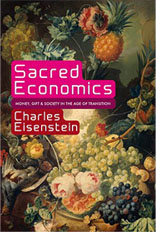
Charles Eisenstein spoke at Google on August 16, 2012 about his recent book, Sacred Economics: Money, Gift, and Society in the Age of Transition. You can read the book for free online, or for a gift of whatever amount you feel is appropriate.
Sacred Economics traces the history of money from ancient gift economies to modern capitalism, revealing how the money system has contributed to alienation, competition, and scarcity, destroyed community, and necessitated endless growth. Today, these trends have reached their extreme - but in the wake of their collapse, we may find great opportunity to transition to a more connected, ecological, and sustainable way of being.
There is a short film (12 mins.) by Ian MacKenzie that explores the ideas from the book - It's posted below the Google talk.


Charles Eisenstein: Sacred Economics - Authors at Google


Charles Eisenstein is a visionary scholar who maps economics, science, philosophy, psychology, and the history of civilization onto our daily activities, with inquiries like, 'How should we live?' 'What's really important?' 'How can our relationship to money be transformed?' He is the author of "The Yoga of Eating," "Ascent of Humanity," and "Sacred Economics."

Sacred Economics is Eisenstein's exploration of the history of money from ancient gift economies to modern capitalism, where he reveals how the money system has contributed to alienation, competition, and scarcity, destroyed community, and necessitated endless growth. Sacred Economics explores avant-garde concepts of the New Economics, including negative-interest currencies, local currencies, resource-based economics, gift economies, and the restoration of the commons. Author Charles Eisenstein also considers the personal dimensions of this transition, speaking to those concerned with "right livelihood" and how to live according to their ideals in a world seemingly ruled by money. Tapping into a rich lineage of conventional and unconventional economic thought, Sacred Economics presents a vision that is original yet commonsense, radical yet gentle, and increasingly relevant as the crises of our civilization deepen and we move into a new age, a new way of being with each other and our planet.

Eisenstein graduated from Yale University in 1989 with a degree in Mathematics and Philosophy, and spent the next ten years as a Chinese-English translator. He currently lives in Harrisburg, Pennsylvania and serves on the faculty of Goddard College. His writings on the web magazine "Reality Sandwich" have generated a vast online following.

True to his word, he lives in a gift economy and has made available both "Ascent of Humanity" and "Sacred Economics" to read online for free!
Director's Statement:
"After reading Charles Eisenstein's book Sacred Economics, which speaks eloquently about the return of the "gift economy", I felt compelled to gift back. The best way I knew how was to use my filmmaking skills to share Charles' work, and spread it to communities around the globe.

His vision of "the more beautiful world our hearts tell us is possible" is the salve that so many of us need at this time, in the age of great transition. My hope is this film catalyzes those who work with passion and dedication to live this world right now." - Ian MacKenzie, Director

Tuesday, April 03, 2012

TED - “What Isn’t for Sale?” New essay from Michael Sandel

TED presented a lecture from philosopher Michael Sandel on the art of civilized debate (filmed in Feb 2010) - and linked to a recent article of his in The Atlantic on our devolution from having a market economy to being a market society. He is the author of What Money Can’t Buy: The Moral Limits of Markets (April 24 released date).

Here is the quote they used to highlight the article:
Without quite realizing it — without ever deciding to do so — we drifted from having a market economy to being a market society.

The difference is this: A market economy is a tool — a valuable and effective tool — for organizing productive activity. A market society is a way of life in which market values seep into every aspect of human endeavor. It’s a place where social relations are made over in the image of the market.

… [To] decide where the market belongs, and where it should be kept at a distance, we have to decide how to value the goods in question — health, education, family life, nature, art, civic duties, and so on. These are moral and political questions, not merely economic ones. To resolve them, we have to debate, case by case, the moral meaning of these goods, and the proper way of valuing them.

Below is his TED Talk and the article from The Atlantic - definitely worth the read.

“What Isn’t for Sale?” New essay from Michael Sandel


Michael Sandel (who re-introduced TEDsters to the art of civilized debate in the talk above) makes a provocative argument in this month’s Atlantic: What Isn't for Sale?

What Isn’t for Sale?

Market thinking so permeates our lives that we barely notice it anymore. A leading philosopher sums up the hidden costs of a price-tag society.


By Michael J. Sandel


There are some things money can’t buy—but these days, not many. Almost everything is up for sale. For example:
A prison-cell upgrade: $90 a night. In Santa Ana, California, and some other cities, nonviolent offenders can pay for a clean, quiet jail cell, without any non-paying prisoners to disturb them.
Access to the carpool lane while driving solo: $8. Minneapolis, San Diego, Houston, Seattle, and other cities have sought to ease traffic congestion by letting solo drivers pay to drive in carpool lanes, at rates that vary according to traffic.
The services of an Indian surrogate mother: $8,000. Western couples seeking surrogates increasingly outsource the job to India, and the price is less than one-third the going rate in the United States.
The right to shoot an endangered black rhino: $250,000. South Africa has begun letting some ranchers sell hunters the right to kill a limited number of rhinos, to give the ranchers an incentive to raise and protect the endangered species.
Your doctor’s cellphone number: $1,500 and up per year. A growing number of “concierge” doctors offer cellphone access and same-day appointments for patients willing to pay annual fees ranging from $1,500 to $25,000.
The right to emit a metric ton of carbon dioxide into the atmosphere: $10.50. The European Union runs a carbon-dioxide-emissions market that enables companies to buy and sell the right to pollute.
The right to immigrate to the United States: $500,000. Foreigners who invest $500,000 and create at least 10 full-time jobs in an area of high unemployment are eligible for a green card that entitles them to permanent residency.
Not everyone can afford to buy these things. But today there are lots of new ways to make money. If you need to earn some extra cash, here are some novel possibilities:
Sell space on your forehead to display commercial advertising: $10,000. A single mother in Utah who needed money for her son’s education was paid $10,000 by an online casino to install a permanent tattoo of the casino’s Web address on her forehead. Temporary tattoo ads earn less.
Serve as a human guinea pig in a drug-safety trial for a pharmaceutical company: $7,500. The pay can be higher or lower, depending on the invasiveness of the procedure used to test the drug’s effect and the discomfort involved.
Fight in Somalia or Afghanistan for a private military contractor: up to $1,000 a day. The pay varies according to qualifications, experience, and nationality.
Stand in line overnight on Capitol Hill to hold a place for a lobbyist who wants to attend a congressional hearing: $15–$20 an hour. Lobbyists pay line-standing companies, who hire homeless people and others to queue up.
If you are a second-grader in an underachieving Dallas school, read a book: $2. To encourage reading, schools pay kids for each book they read. 
We live in a time when almost everything can be bought and sold. Over the past three decades, markets—and market values—have come to govern our lives as never before. We did not arrive at this condition through any deliberate choice. It is almost as if it came upon us.

As the Cold War ended, markets and market thinking enjoyed unrivaled prestige, and understandably so. No other mechanism for organizing the production and distribution of goods had proved as successful at generating affluence and prosperity. And yet even as growing numbers of countries around the world embraced market mechanisms in the operation of their economies, something else was happening. Market values were coming to play a greater and greater role in social life. Economics was becoming an imperial domain. Today, the logic of buying and selling no longer applies to material goods alone. It increasingly governs the whole of life.

The years leading up to the financial crisis of 2008 were a heady time of market faith and deregulation—an era of market triumphalism. The era began in the early 1980s, when Ronald Reagan and Margaret Thatcher proclaimed their conviction that markets, not government, held the key to prosperity and freedom. And it continued into the 1990s with the market-friendly liberalism of Bill Clinton and Tony Blair, who moderated but consolidated the faith that markets are the primary means for achieving the public good.

Today, that faith is in question. The financial crisis did more than cast doubt on the ability of markets to allocate risk efficiently. It also prompted a widespread sense that markets have become detached from morals, and that we need to somehow reconnect the two. But it’s not obvious what this would mean, or how we should go about it.

Some say the moral failing at the heart of market triumphalism was greed, which led to irresponsible risk-taking. The solution, according to this view, is to rein in greed, insist on greater integrity and responsibility among bankers and Wall Street executives, and enact sensible regulations to prevent a similar crisis from happening again.

This is, at best, a partial diagnosis. While it is certainly true that greed played a role in the financial crisis, something bigger was and is at stake. The most fateful change that unfolded during the past three decades was not an increase in greed. It was the reach of markets, and of market values, into spheres of life traditionally governed by nonmarket norms. To contend with this condition, we need to do more than inveigh against greed; we need to have a public debate about where markets belong—and where they don’t.

Consider, for example, the proliferation of for-profit schools, hospitals, and prisons, and the outsourcing of war to private military contractors. (In Iraq and Afghanistan, private contractors have actually outnumbered U.S. military troops.) Consider the eclipse of public police forces by private security firms—especially in the U.S. and the U.K., where the number of private guards is almost twice the number of public police officers.

Or consider the pharmaceutical companies’ aggressive marketing of prescription drugs directly to consumers, a practice now prevalent in the U.S. but prohibited in most other countries. (If you’ve ever seen the television commercials on the evening news, you could be forgiven for thinking that the greatest health crisis in the world is not malaria or river blindness or sleeping sickness but an epidemic of erectile dysfunction.)

Consider too the reach of commercial advertising into public schools, from buses to corridors to cafeterias; the sale of “naming rights” to parks and civic spaces; the blurred boundaries, within journalism, between news and advertising, likely to blur further as newspapers and magazines struggle to survive; the marketing of “designer” eggs and sperm for assisted reproduction; the buying and selling, by companies and countries, of the right to pollute; a system of campaign finance in the U.S. that comes close to permitting the buying and selling of elections.

These uses of markets to allocate health, education, public safety, national security, criminal justice, environmental protection, recreation, procreation, and other social goods were for the most part unheard-of 30 years ago. Today, we take them largely for granted.

Why worry that we are moving toward a society in which everything is up for sale?

For two reasons. One is about inequality, the other about corruption. First, consider inequality. In a society where everything is for sale, life is harder for those of modest means. The more money can buy, the more affluence—or the lack of it—matters. If the only advantage of affluence were the ability to afford yachts, sports cars, and fancy vacations, inequalities of income and wealth would matter less than they do today. But as money comes to buy more and more, the distribution of income and wealth looms larger.

The second reason we should hesitate to put everything up for sale is more difficult to describe. It is not about inequality and fairness but about the corrosive tendency of markets. Putting a price on the good things in life can corrupt them. That’s because markets don’t only allocate goods; they express and promote certain attitudes toward the goods being exchanged. Paying kids to read books might get them to read more, but might also teach them to regard reading as a chore rather than a source of intrinsic satisfaction. Hiring foreign mercenaries to fight our wars might spare the lives of our citizens, but might also corrupt the meaning of citizenship.

Economists often assume that markets are inert, that they do not affect the goods being exchanged. But this is untrue. Markets leave their mark. Sometimes, market values crowd out nonmarket values worth caring about.

When we decide that certain goods may be bought and sold, we decide, at least implicitly, that it is appropriate to treat them as commodities, as instruments of profit and use. But not all goods are properly valued in this way. The most obvious example is human beings. Slavery was appalling because it treated human beings as a commodity, to be bought and sold at auction. Such treatment fails to value human beings as persons, worthy of dignity and respect; it sees them as instruments of gain and objects of use.

Something similar can be said of other cherished goods and practices. We don’t allow children to be bought and sold, no matter how difficult the process of adoption can be or how willing impatient prospective parents might be. Even if the prospective buyers would treat the child responsibly, we worry that a market in children would express and promote the wrong way of valuing them. Children are properly regarded not as consumer goods but as beings worthy of love and care. Or consider the rights and obligations of citizenship. If you are called to jury duty, you can’t hire a substitute to take your place. Nor do we allow citizens to sell their votes, even though others might be eager to buy them. Why not? Because we believe that civic duties are not private property but public responsibilities. To outsource them is to demean them, to value them in the wrong way.

These examples illustrate a broader point: some of the good things in life are degraded if turned into commodities. So to decide where the market belongs, and where it should be kept at a distance, we have to decide how to value the goods in question—health, education, family life, nature, art, civic duties, and so on. These are moral and political questions, not merely economic ones. To resolve them, we have to debate, case by case, the moral meaning of these goods, and the proper way of valuing them.

This is a debate we didn’t have during the era of market triumphalism. As a result, without quite realizing it—without ever deciding to do so—we drifted from having a market economy to being a market society.

The difference is this: A market economy is a tool—a valuable and effective tool—for organizing productive activity. A market society is a way of life in which market values seep into every aspect of human endeavor. It’s a place where social relations are made over in the image of the market.
The great missing debate in contemporary politics is about the role and reach of markets. Do we want a market economy, or a market society? What role should markets play in public life and personal relations? How can we decide which goods should be bought and sold, and which should be governed by nonmarket values? Where should money’s writ not run?

Even if you agree that we need to grapple with big questions about the morality of markets, you might doubt that our public discourse is up to the task. It’s a legitimate worry. At a time when political argument consists mainly of shouting matches on cable television, partisan vitriol on talk radio, and ideological food fights on the floor of Congress, it’s hard to imagine a reasoned public debate about such controversial moral questions as the right way to value procreation, children, education, health, the environment, citizenship, and other goods. I believe such a debate is possible, but only if we are willing to broaden the terms of our public discourse and grapple more explicitly with competing notions of the good life.

In hopes of avoiding sectarian strife, we often insist that citizens leave their moral and spiritual convictions behind when they enter the public square. But the reluctance to admit arguments about the good life into politics has had an unanticipated consequence. It has helped prepare the way for market triumphalism, and for the continuing hold of market reasoning.

In its own way, market reasoning also empties public life of moral argument. Part of the appeal of markets is that they don’t pass judgment on the preferences they satisfy. They don’t ask whether some ways of valuing goods are higher, or worthier, than others. If someone is willing to pay for sex, or a kidney, and a consenting adult is willing to sell, the only question the economist asks is “How much?” Markets don’t wag fingers. They don’t discriminate between worthy preferences and unworthy ones. Each party to a deal decides for him- or herself what value to place on the things being exchanged.

This nonjudgmental stance toward values lies at the heart of market reasoning, and explains much of its appeal. But our reluctance to engage in moral and spiritual argument, together with our embrace of markets, has exacted a heavy price: it has drained public discourse of moral and civic energy, and contributed to the technocratic, managerial politics afflicting many societies today.

A debate about the moral limits of markets would enable us to decide, as a society, where markets serve the public good and where they do not belong. Thinking through the appropriate place of markets requires that we reason together, in public, about the right way to value the social goods we prize. It would be folly to expect that a more morally robust public discourse, even at its best, would lead to agreement on every contested question. But it would make for a healthier public life. And it would make us more aware of the price we pay for living in a society where everything is up for sale.
~ Michael J. Sandel, a political philosopher at Harvard, is the author of What Money Can’t Buy: The Moral Limits of Markets, from which this article is adapted.

Monday, November 28, 2011

RSA - The Future of Money (with digital money expert Dave Birch)


Very interesting talk. I'm not sure how I feel about the digitalization of money. Much like my distaste for electronic voting, I like to have a hard version of money. It's easy enough to overspend when money has been reduced to plastic cards, so what happens when even the cards are gone?

The Future of Money

24th Nov 2011

Listen to the audio (full recording including audience Q&A)
Please right-click link and choose "Save Link As..." to download audio file onto your computer.

RSA Thursday


Until a couple of years ago, most people would have thought that cash was vanishing, albeit slowly, because of cheques and plastic cards, internet banking and PayPal. But we now know that the technology that will consign cash to the empty jar of history is not any of those, but the mobile phone. Around the world from Kenya to the Philippines, from California to the UK (where Orange has just launched its first Oyster-style tap-and-go phone with Barclaycard) the evidence is compelling.

If we do away with notes and coins as the means of exchange then the cost of transacting in alternative currencies falls. If your currency choice is just a menu on your mobile phone, then why would you choose to get paid in Sterling, or Euros, or gold, or BA Miles or Tesco Clubcard Points?

Join digital money expert Dave Birch at the RSA as he explores the implications of a cashless future.

Speaker: Dave Birch, specialist consultant and media commentator on electronic business issues, and director, Consult Hyperion.

Chair: Diane Coyle, vice-chair, BBC Trust and managing director, Enlightenment Economics.