Showing posts with label books. Show all posts

Thursday, February 04, 2016

Martha Stout's Thirteen Rules for Dealing with Sociopaths in Everyday Life


The following is from Martha Stout, Ph.D., in her book, The Sociopath Next Door (pages 156-162). These are good guidelines for anyone who knows, works with/for, or have been involved with a sociopath. As Stout points out, sociopaths are not rare--we all are likely to encounter one (or more) at some point in our lives.

Considering that this blog has been very focused on unmasking Marc Gafni as the sociopath he is, this seems like a fitting part of that process.

THIRTEEN RULES FOR DEALING WITH SOCIOPATHS IN EVERYDAY LIFE

1. The first rule involve the bitter pill of accepting at some people literally have no conscience.

These people do not often look like Charles Manson or a Ferengi bartender. They look like us. 

2. In a contest between your instincts and what is implied by the role a person has taken' on--educator, doctor, leader, animal lover, humanist, parent--go with your instinct.

Whether you want to be or not, you are a constant observer of human behavior, and your unfiltered impressions, though alarming and seemingly outlandish, may well help you out if you will let them. Your best self understands, without being told, that impressive and moral-sounding labels do not bestow conscience on anyone who did not have it to begin with.

3. When considering a new relationship of any kind, practice the Rule of Threes regarding the claims and promises a person makes, and the responsibilities he or she has. Make the Rule of Threes your personal policy.
One lie, one broken promise, or a single neglected responsibility may be a misunderstanding instead. Two may involve a serious mistake. But three lies says you're dealing with a liar, and deceit is the linchpin of conscienceless behavior. Cut your losses and get out as soon as you can. Leaving, though it may be hard, will be easier .now than later, and less costly. 


Do not give your money, your work, your secrets, or your affection to a three-timer. Your valuable gifts will be wasted.

4. Question authority.

Once again--trust your own instincts and anxieties, especially those concerning people who claim that dominating others, violence, war, or some other violation or your conscience is the grand solution to some problem. Do this even when, or especially when, everyone around you has completely stopped questioning authority.  Recite to yourself what Stanley Milgram taught us about obedience: At least six out of ten people will blindly obey to the bitter end an official-looking authority in their midst. 

The good news is that having social support makes people somewhat more likely to challenge authority. Encourage those around you to question, too.

5. Suspect flattery.
Compliments are lovely, especially when they are sincere. In contrast, flattery is extreme and appeals to our egos in unrealistic ways. It is the material of counterfeit charm, and nearly always involves an intent to manipulate. Manipulation through flattery is sometimes innocuous and sometimes sinister. Peek over your massaged ego and remember to suspect flattery.


This "flattery rule" applies on an individual basis, and also at ' the level of groups and even whole nations. Throughout all of human history and to the present, the call to war has included the flattering claim that one's own forces are about to accomplish a victory that will change the world for the better, a triumph that is morally laudable, justified by its humane outcome, unique in human endeavor, righteous, and worthy of enormous gratitude. Since we began to record the human story, all of our major wars have been framed in this way, on all sides of the conflict, and in all languages the adjective most often applied to the word war is holy. An argument can easily be made that humanity will have peace when nations of people are at last able to see through this masterful flattery. Just as an individual pumped up on the flattery of a manipulator is likely to behave in foolish ways, exaggerated patriotism that is flattery-fueled is a dangerous thing.
 

6. If necessary, redefine your concept of respect.
Too often, we mistake fear for respect, and the more fearful we are of someone, the more we view him or her as deserving of our respect. 


I have a spotted Bengal cat who was named Muscle Man by my daughter when she was a toddler, because even as a kitten he looked like a professional wrestler. Grown now, he is much larger than most other domestic cats. His formidable claws resemble those of his Asian leopard-cat ancestors, but by temperament, he is gentle and peace-loving. My neighbor has a little calico who visits. Evidently, the calico's predatory charisma is huge, and she is brilliant at directing the evil eye at other cats. Whenever she is within fifty feet, Muscle Man, all fifteen pounds of him to her seven, cringes and crouches in fear and feline deference.

Muscle Man is a splendid cat. He is warm and loving, and he is close to my heart. Nonetheless, I would like to believe that some of his reactions are more primitive than mine. I hope I do not mistake fear for respect, because to do so would be to ensure my own victimization. Let us use our big human brains to overpower our animal tendency to bow to predators, so we can disentangle the reflexive confusion of anxiety and awe. In a perfect world, human respect would be an automatic reaction only to those who are strong, kind, and morally courageous. The person who profits from frightening you is not likely to be any of these.


The resolve to keep respect separate from fear is even more critical for groups and nations. The politician, small or lofty, who menaces the people with frequent reminders of the possibility of crime, violence, or terrorism, and who then uses their magnified fear to gain allegiance, is more likely to be a successful con artist than a legitimate leader. This too has been true throughout human history.

7. Do not join the game.
Intrigue is a sociopath's tool. Resist the temptation to compete with a seductive sociopath, to outsmart him, psychoanalyze, or even banter with him. In addition to reducing yourself to his level, you would be distracting yourself from what is really important, which is to protect yourself. 


8. The best way to protect yourself from a sociopath is to avoid him, to refuse any kind of contact or communication.
Psychologists do not usually like to recommend avoidance, but in this case, I make a very deliberate exception. The only truly effective method for dealing with a sociopath you have identified is to disallow him or her from your life altogether. Sociopaths live completely outside of the social contract, and therefore to include them in relationships or other social arrangements is perilous. Begin this exclusion of them in the context of your relationships and social life. You will not hurt anyone's feelings. Strange as it seems, and though they might try to pretend otherwise, sociopaths do not have any such feelings to hurt. 


You may never be able to make your family and friends understand why you are avoiding a particular individual. Sociopathy is surprisingly difficult to see, and even harder to explain. Avoid him anyway.

If total avoidance is impossible, make plans to come as close as you can to the goal of total avoidance.
 

9. Question your tendency to pity too easily.
Respect should be reserved for the kind and the morally courageous. Pity is another socially valuable response, and it should be reserved for innocent people who are in genuine pain or who have fallen on misfortune. If, instead, you find yourself pitying someone who consistently hurts you or other people, and who actively campaigns for your sympathy, the chances are close to 100 percent that you are dealing with a sociopath,


Related to this--I recommend that you severely challenge your need to be polite in absolutely all situations. For normal adults in our culture, being what we think of as "civilized" is like a reflex, and often we find ourselves being automatically decorous even when someone has enraged us, repeatedly lied to us, or figuratively stabbed us in the back. Sociopaths take huge advantage of this automatic courtesy in exploitative situations. 

Do not be afraid to be unsmiling and calmly to the point.
 

10. Do not try to redeem the unredeemable.
Second (third, fourth, and fifth) chances are for people who possess conscience. If you are dealing with a person who has no conscience, know how to swallow hard and cut your losses.


At some point, most of us need to learn the important, if disappointing, life lesson that, no matter how good our intentions, we cannot control the behavior--let alone the character structures--of other people. Learn this fact of human life, and avoid the irony getting caught up in the same ambition he has--to control.


If you do not desire control, but instead want to help people, then help only those who want to be helped. I think you will find this does not include the person who has no conscience.


The sociopath's behavior is not your fault, not in any way whatsoever. It is also not your mission. Your mission is your own life.  


11. Never agree, out of pity or for any other reason, to help a sociopath conceal his or her true character.
"Please don't tell," often spoken tearfully and with great gnashing of teeth, is the trademark plea of thieves, child abusers--and sociopaths. Do not listen to this siren song. Other people deserve to be warned more than sociopaths deserve to have you keep their secrets.

If someone without conscience insists that you "owe" him or her, recall what you are about to read here: "You owe me" has been the standard line of sociopaths for thousands of years, quite literally, and is still so. It is what Rasputin told the empress of Russia. 


We tend to experience "You owe me" as a compelling claim, but it is simply not true. Do not listen. Also ignore the one that goes, "You are just like me." You are not.
 

12. Defend your psyche.
Do not allow someone without conscience, or even a string of such people, to convince you that humanity is a failure. Most human beings do possess conscience. Most human beings are able to love.
 

13. Living well is the best revenge.

Sunday, September 13, 2015

Loch Kelly - Shift into Freedom: The Science and Practice of Open-Hearted Awareness

Below is a promo from Sounds True for the new book from Loch Kelly - Shift into Freedom: The Science and Practice of Open-Hearted Awareness (links to Sounds True page for the book - here is an Amazon link). There is also a CD available with 20 of the meditations from the book (There are CEUs available as well - 3.5).
Join this innovative teacher to explore more than 20 meditations including:
• Awareness Yoga—a foundational practice in moving awareness
• Embodied Presence—a practice for deeply feeling unity and acceptance
• Unhook, Drop, Open, See, Include, Know, Let Be—a way to shift levels of mind that culminates in living from open-hearted awareness  
“The goal of these meditations is not to transcend the human condition,” explains Loch Kelly, “but to discover how to live a fully intimate human life.” Shift into Freedom gives you the tools to navigate your life with clarity and unconditional love.
Interestingly, I spoke with Loch when he was beginning work on this book. More than a year later he contacted me again about doing some editing, but by then I was very busy with my editing work at the University of Arizona Cancer Center.

Recently, I heard from Loch again - the book was done and hitting the market. He had Sounds True send me a review copy, which I am reading right now. I will be posting my review in the coming weeks. I must that, so far, I am finding this an excellent book, and one I will be using with some therapy clients.

Shift into Freedom

This is the email Sounds True sent out (with a brief bio from the Sounds True website):
Loch Kelly, MDiv, LCSW, is a teacher, consultant, and leader in the field of meditation and psychotherapy who was asked to teach by Mingyur Rinpoche and Adyashanti. The founder of the Open-Hearted Awareness Institute, he is an emerging voice in modernizing meditation, social engagement, and collaborating with neuroscientists to study how awareness training can enhance compassion and well-being.

Dear Sounds True friends,

I am delighted to share my new book and audio meditation program with you, Shift Into Freedom: The Science and Practice of Open-Hearted Awareness. I’m grateful to all of my teachers, students, and friends for their support in helping me bring this book and audio into form, and to Adyashanti for his inspiring foreword.

I was fortunate to stumble upon meditation early in my life after a series of losses. Meditation was a great help to me because it revealed the inner foundation of a naturally spacious and loving awareness. My heart’s curiosity then led me to graduate school and to India, Nepal, and Sri Lanka, where I met many renowned meditation teachers who generously shared their lives and practices with me. The particular approach I was drawn to is one where we discover the solution to suffering by directly shifting into our awake nature that is already here. Then through the practice of “small glimpses, many times,” we can experience freedom from fear, shame, and worry, and live an embodied, open-hearted life. My life’s work and love has been to discover the essence of these advanced practices and bring them to you in contemporary and accessible form.

The book and audio provide a how-to guide for awakening. I have been refining these unique teachings and practices for many years, and have had wonderful results in sharing them with students.

This book presents a distinct and clear definition of awakening. My goal is to bring the process of awakening into the mainstream of our culture in the same way that mindfulness meditation is now embraced, studied, and valued by Western medicine and psychology. Shift Into Freedom offers unique and helpful pointers from developmental psychology, neuroscience, psychotherapy, and comparative contemplative traditions.

The audio program is a powerful series of short guided meditations, pointers, and “glimpses” designed to help you recognize and live from open-hearted awareness. While these practices are written in the book, I highly recommend that you listen to the audio. The audio meditations will make it easier to experience what is being pointed to within you. Experiencing the glimpses is what will transform you.

Awakening can be understood and learned—often through much unlearning and letting go. I am convinced that awakening is the next stage of our human development. You are more capable of discovering this potential than you may believe. Our mutual awakening is essential for our planet today.

I hope you enjoy this heartfelt offering!

With Love and Gratitude,

Open-Hearted Awareness Institute
New York City

This nondual way of “small glimpses, many times” takes basic mindfulness to the next level by introducing us to effortless mindfulness and heart mindfulness.
September 2015

Listen to my Insights at the Edge Podcast »


Monday, August 17, 2015

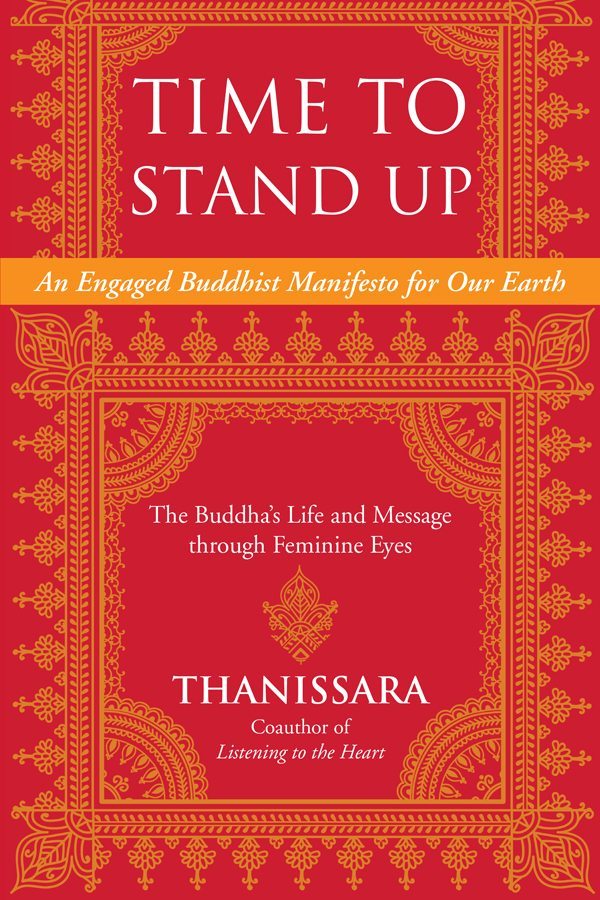
Thanissara - Time to Stand Up: An Engaged Buddhist Manifesto for Our Earth (A Review)

https://www.northatlanticbooks.com/wp-content/uploads/2015/08/TimeToStandUp_cover.jpg

Thanissara - Time to Stand Up: An Engaged Buddhist Manifesto for Our Earth -- The Buddha's Life and Message through Feminine Eyes

(To be published on August 18, 2015 - Pre-order at the Amazon link above for $7.47)

About the Author
Thanissara and her husband Kittisaro (Harry Randolph Weinberg) are the founders of Dharmagiri Hermitage in South Africa, from where they support several HIV/AIDS Outreach Programs and help guide and fund-raise for Kulungile Care Center for orphaned and vulnerable children and teenagers.  Thanisarra and Kittisaro are authors of Listening to the Heart: A Contemplative Journey to Engaged Buddhism (2014).

Thanissara grew up in an extended Anglo-Irish family in London, attending Southampton College of Art and traveling extensively in Asia in the 1970s. Also inspired by Ajahn Chah, she spent 12 years as a Buddhist nun in Thailand. She holds an MA in Mindfulness-Based Psychotherapy Practice from Middlesex University and the Karuna Institute in the U.K. and co-facilitates the Community Dharma Leader Program at Spirit Rock Meditation Center in California.
[NOTE: This book was sent to me by the publisher (free) with the hope that I would review it, favorably. I never make any promises in that regard. When I do review a book sent to me, it's because I think it is a good book.]

The life of the Buddha has been told so many times by so many people, and in so many different ways, from mythic and magical versions to a very secular version (from Stephen Batchelor), but never has it been told in the context of environmental change and from a feminine perspective.

In the Buddha's time, women were included among his followers and students, but in the following centuries, women were often excluded from those schools erected to perpetuate the Buddha's teachings.

From the Introduction:
This is a book I would have preferred not to write. I would have liked to write something lighter, happier, and more innocent. I would have liked to walk you through a serene wooded landscape, but instead I ask you to look with me at a burnt and tortured Earth and its polluted rivers, dying oceans, razed forests, devastated wastelands, and its litany of extinct species.
This is a book about awakening to the reality of the planet we live on, the pain, the suffering, the devastation, and not blinking, not looking away, not putting it off for the next generation to deal with. It is a book about reality.
The journey of awakening is not an incense-scented walk through a bed of roses--it wasn't for the Buddha, and it's not for us. It's a demanding look at reality. The reality we now face is climate chaos and devastation, an edge that is increasingly hard to move back from. (p. 45)
Buddhism has long had a reputation of being little more than navel gazing. Perhaps that has been fair, perhaps it has not been fully accurate. After all, the Bodhisattva Vow promises to save all beings.
Beings are numberless, I vow to save them
Desires are inexhaustible, I vow to end them
Dharma gates are boundless, I vow to enter them
Buddha's way is unsurpassable, I vow to become it.
In our time, we know that animals are also sentient beings, however great or small. For this reason, most Buddhists are vegetarian. In Seven Years in Tibet, we see Tibetan Buddhist Monks breaking ground for a building and they worry about harming the worms. They too are beings.

An engaged Buddhist approach to saving our planet may rightfully claim that vegetarianism is a necessary part of that agenda. Approximately 36 football fields worth of forest is cut down every minute, and we have lost 17% of the Amazonian Rainforest over the last 50 years, primarily to convert the land to cattle farming.

The meat industry, according to a 2006 report by the United Nations Food and Agriculture Organization (FAO), causes more greenhouse gases - carbon dioxide (CO2), methane, nitrous oxide, and the like - to spew into the atmosphere than either transportation or industry. According to the Environmental Protection Agency (EPA),
livestock burping, flatulence and manure was the source of more than 13 million tons of methane gas in 2004, compared with the EPA’s estimate of 9.7 million tons, according to a study published last month in the Journal of Geophysical Research: Atmospheres. 

SCIMACHY measurements showed oil and gas industries released 7 million tons of methane gas into the atmosphere, compared to the EPA’s estimate of 9.9 million tons.
Methane gas is the second most common gas that is associated with global warming, after CO2.

Not only does the meat industry destroy our environment but, as mentioned above, animals are sentient creatures. Buddhists vow to cause no suffering and, in fact, to alleviate suffering as much as we are able.
The most painful, the very worst of our madness, is the utterly sadistic and callous treatment of billions of animals and sea creatures caught in our consumer machinery. Animals are sentient, feeling beings with family structures, intelligence, emotions, memories, and needs, just like us. (p. 122)
I eat meat. I have struggle from time to time with this practice, but I have rationalized it in light of humans being omnivores. I have also rationalized it in terms of my protein needs as an active male who lifts weights seriously and often. I have tried to switch to grass-fed, organically raised, and locally sourced meat, in an effort to limit the damage my diet produces.

However, having read this book, and in light of who I feel I am becoming in my life, I am seriously questioning my lifestyle. Meat is a lifestyle choice, since there are many ways to get adequate protein without eating meat.

But, then, do I give up cottage cheese, Greek yogurt, eggs, and whey protein? Do I stop consuming all products sourced from animals? This is a much harder choice, but maybe it is the only moral choice.

To be fair, this is a First World problem, in as much as so many others in this world barely get enough food, let alone protein, to survive. It's easy to be blind to our own privilege. 
As practitioners and Sanghas following the great inclusiveness at the heart of the Buddha's Sangha, we must understand, particularly in the U.S. and Europe, how our colonial histories have set the stage for white privilege and class entitlement to permeate our communities and permit us to develop many blind spots. In making the invisible, visible, we can learn how we subtly perpetuate a dynamic that excludes or diminishes participation of people of color and those who are economically marginalized. (p. 156)
Thanisarra outlines four domains in which we must work together as one people to save our planet: (1) Keep carbon in the ground, (2) Sequester the remaining carbon in favor of alternative energy sources, (3) Massive investment in and education about renewable energy sources, and (4) Move toward a plant-based diet (p. 158-159).
We now need a collaborative global movement on a scale never before seen in the history of humankind to ensure these outcomes. We are not only advocating climate action, but also recognizing that this is the moment to actualize a truly more equitable and just society. ... The intensity of our times invites us to shift our way of thinking, the choices we make as "consumers," and the awareness we bring to each part of our personal lives. 
___

The Buddhist way isn't to tell people what they should do, but to lead by example. (p. 159)
This is a book that forced me to look at my choices, and quite possibly to make profound changes in my life. Perhaps it will do the same for you.

About the Book (from the publisher)

Time to Stand Up retells the story of the historical Buddha, one of the greatest sacred activists of all time, as a practical human being whose teachings of freedom from suffering are more relevant than ever in this time of global peril. Evolving onward from the patriarchal template of spiritual warriors and their quests, former nun Thanissara explores awakening from within a feminine view where the archetypes of lover and nurturer are placed as central and essential for a sustainable world.

Vital is an investigation into the pinnacle of Buddhist practice, the realization of the "liberated heart." Thanissara questions the narrative of "transcendence" and invites us into the lived reality of our deepest heart as it guides our journey of healing, reclamation, and redemption. As the book unfolds, the author examines traditional Buddhism--often fraught with gender discrimination--and asks the important question, "Can Buddhist schools, overly attached to hierarchal power structures, and often divorced from the radical and free inquiry exemplified by the Buddha, truly offer the ground for maturing awakening without undertaking a fundamental review of their own shadows?"

Chapter by chapter, the book relates Siddhartha Gautama's awakening to the sea-change occurring on Earth in present time as we as a civilization become aware of the ethical bankruptcy of the nuclear and fossil fuel industry and the psychopathic corporate and military abuse of power currently terrorizing our planet. Thanissara relates the Buddha's story to real-life individuals who are living through these transitional times, such as Iraq war veterans, First Nation People, and the Dalai Lama. Time to Stand Up gives examples of the Buddha's activism, such as challenging a racist caste system and violence against animals, stopping war, transforming a serial killer, and laying down a nonhierarchical structure of community governance, actions that would seem radical even today.

Thanissara explores ways forward, deepening our understanding of meditation and mindfulness, probing its use to pacify ourselves as the cogs in the corporate world by helping people be more functional in a dysfunctional systems--and shows how these core Buddhist practices can inspire a wake-up call for action for our sick and suffering planet Earth.
This book is part of the Scared Activism series from North Atlantic Books.

Sunday, January 04, 2015

Evan Thompson - Defining Consciousness from "Waking, Dreaming, Being"

http://evanthompsondotme.files.wordpress.com/2012/11/waking-dreaming-being.jpg

Evan Thompson's new book is Waking, Dreaming, Being: Self and Consciousness in Neuroscience, Meditation, and Philosophy (2014). I'm only about 4 chapters into it at this point, but I find myself agreeing with Thompson's model of consciousness to a degree I did not anticipate. His "embodied, embedded, and relational" understanding of how consciousness functions is very similar to my own sense of consciousness.

Here are a couple of excerpts.
Moreover, the brain is always embodied, and its functioning as a support for consciousness can’t be understood apart from its place in a relational system involving the rest of the body and the environment. The physical substrate of mind is this embodied, embedded, and relational network, not the brain as an isolated system.[37]

At the same time, we can’t infer from the existential or epistemological primacy of consciousness that consciousness has ontological primacy in the sense of being the primary reality out of which everything is composed or the ground from which everything is generated. One reason we can’t jump to this conclusion is that it doesn’t logically follow. That the world as we know it is always a world for consciousness doesn’t logically entail that the world is made out of consciousness. Another reason is that thinking that consciousness has ontological primacy goes against the testimony of direct experience, which speaks to the contingency of our consciousness on the world, specifically on our living body and environment. (p. 102)
I also support his rejection of the premise that "consciousness has ontological primacy," an idea I see presented in Buddhist authors such as B Alan Wallace, Ken Wilber's integral theory, and most New Age misunderstandings of quantum mechanics (see Deepak Chopra and others of his ilk).

Over the last several years, I have become enamored of the theory of consciousness as an emergent property of matter.
The term “emergence” comes from the Latin verb emergo which means to arise, to rise up, to come up or to come forth. The term was coined by G. H. Lewes in Problems of Life and Mind (1875) who drew the distinction between emergent and resultant effects.
 ___
If we were pressed to give a definition of emergence, we could say that a property is emergent if it is a novel property of a system or an entity that arises when that system or entity has reached a certain level of complexity and that, even though it exists only insofar as the system or entity exists, it is distinct from the properties of the parts of the system from which it emerges. 
Thompson shares the emergentist position, with qualifications.
Is the view I’m presenting a version of “emergentism,” according to which consciousness is a higher-level property of living beings that emerges from lower-level biological and physical processes?[39] And if so, am I supposing that consciousness is scientifically explainable or presenting a version of “mysterianism,” the doctrine that says that the human mind is incapable of understanding how consciousness fits into the natural world?[40]
 

My view can be described as an emergentist one, in the following sense. I hold that consciousness is a natural phenomenon and that the cognitive complexity of consciousness increases as a function of the increasing complexity of living beings. Consciousness depends on physical or biological processes, but it also influences the physical or biological processes on which it depends. I also think the human
mind is capable of understanding how consciousness arises as a natural phenomenon, so I’m not a mysterian.


Nevertheless, my view differs from emergentism in its standard form, according to which physical nature, in itself, is fundamentally nonmental, yet when it’s organized in the right way, consciousness emerges. This view works with a concept of physical being that inherently excludes mental or experiential being, and then tries to show how consciousness could arise as a higher-level property of physical being so conceived. In my view, however, no concept of nature or physical being that by design excludes mental or experiential being will work to account for consciousness and its place in nature. (p. 103)
In the following passage, Thompson dismisses both the dualism of Dharmakriti and the notion of interiority of particles, a premise of Wilber's AQAL model.
Recall that Dharmakīrti reasoned in the following way: matter and consciousness have totally different natures; an effect must be of the same nature as its cause; therefore, consciousness cannot arise from or be produced by matter. This argument rejects emergentism in its standard form, for it denies that physical nature, understood as being fundamentally or essentially nonmental, is suffcient to produce or give rise to consciousness. This aspect of Dharmakīrti’s argument is hardly antiquated, for a similar and very forceful argument against standard emergentism has recently been given by the philosopher Galen Strawson.[41] In both cases, the crucial insight is that the emergence of experiental being from physical being is unintelligible, given a concept of physical phenomena as fundamentally or essentially excluding anything mental or experiential.

Whereas Dharmakīrti used his argument to support a version of mind-body dualism, Strawson uses his argument to support “panpsychism.” Dualism says that matter and consciousness have totally different natures; panpsychism says that every physical phenomenon possesses some measure of experience as part of its intrinsic nature. Neither position is attractive to me. Dharmakīrti’s dualism, which allows for modes of consciousness not dependent on the brain, doesn’t sit well with the scientific evidence, as we’ve seen. Neither does Strawson’s panpsychism. This position attributes “micro-experiences” to microphysical phenomena, despite there being no evidence for protons or electrons having any experiences of their own. Not only does ascribing “micro-experiences” to physical particles seem ad hoc, but also it gives rise to the so-called “combination problem” of how it’s possible for “micro-experiences” to coexist or combine coherently in a human or other kind of animal subject. (p. 104-105)
Thompson's point in Chapter Four, from which all of these quotes are taken, is to move the reader toward his primary philosophical position on consciousness, neurophenomenology.
Where does this leave us with regard to the project of relating consciousness to the brain, and more comprehensively, to our bodily being? Since we can’t step outside of consciousness or our embodiment, we need to work within them carefully and precisely. Instead of focusing mainly on the outward behavioral and physiological expressions of consciousness, we need to give equal attention to cultivating our experience from within. Concretely, this means we need to work with contemplative forms of mental training and embed them within a larger framework that also includes the experimental sciences of mind and life. Such a framework, in which both contemplative practice and scientific observation and measurement are seen as grounded in direct experience, is precisely what Francisco Varela had in mind when he introduced his research program of “neurophenomenology.”[43]

Neurophenomenology provides the framework for the rest of this book. (p. 105-106)
Thompson, along with by Francisco J. Varela and Eleanor Rosch first laid out a definition of neurophenomenology in their seminal book, The Embodied Mind: Cognitive Science and Human Experience (1991).

The following is an excerpt from Thompson's 2010 book, Mind in Life: Biology, Phenomenology, and the Sciences of Mind.
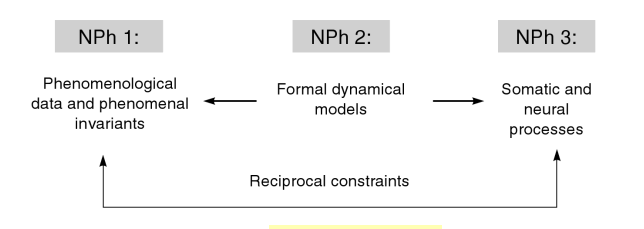
Varela formulates the “working hypothesis” of neurophenomenology in the following way: “Phenomenological accounts of the structure of experience and their counterparts in cognitive science relate to each other through reciprocal constraints” (1996. p. 343). By “reciprocal constraints” he means that phenomenological analyses can help guide and shape the scientific investigation of consciousness, and that scientific findings can in turn help guide and shape the phenomenological investigations. A crucial feature of this approach is that dynamic systems theory is supposed to mediate between phenomenology and neuroscience. Neurophenomenology thus comprises three main elements (see Figure 11.2): (1) phenomenological accounts of the structure of experience; (2) formal dynamical models of these structural invariants; and (3) realizations of these models in biological systems. Given that time-consciousness is supposed to be an acid test of the neurophenomenological enterprise, we need to see whether phenomenological accounts of the structure of time-consciousness and neurodynamical accounts of the brain processes relevant to consciousness can be related to each other in a mutually illuminating way. This task is precisely the one Varela undertakes in his neurophenomenology of time-consciousness and in his experimental research on the neurodynamics of consciousness.

Varela’s strategy is to find a common structural level of description that captures the dynamics of both the impressional-retentional-protentional flow of time-consciousness and the large-scale neural processes thought to be associated with consciousness. We have already seen how the flow of time-consciousness is self-constituting. What we now need to examine is how this self-constituting flow is supposed to be structurally mirrored at the biological level by the self-organizing dynamics of large-scale neural activity.


Figure 11.2-Neurophenomenology
Figure 11.2- Neurophenomenology

There is now little doubt in cognitive science that cognitive acts, such as the visual recognition of a face, require the rapid and transient coordination of many functionally distinct and widely distributed brain regions. Neuroscientists also increasingly believe that moment-to moment, transitive (object-directed) consciousness is associated with dynamic, large-scale neural activity rather than any single brain region or structure (Cosmelli, Lachaux, and Thompson, 2007). Hence, any model of the neural basis of mental activity, including consciousness, must account for how large-scale neural activities can operate in an integrated or coherent way from moment to moment.

This problem is known as the large-scale integration problem (Varela et al. 2001). According to dynamical neuroscience, the key variable for understanding large-scale integration is not so much the activity of the individual neural components, but rather the nature of the dynamic links among them. The neural counterparts of mental activity are thus investigated at the level of collective variables that describe emergent and changing patterns of large-scale integration. One recent approach to defining these collective variables is to measure transient patterns of synchronous oscillations between different populations of neurons (Engel, Fries, and Singer 2001; Varela et al. 2001). According to Varela (1995, 1999), these synchrony patterns define a temporal frame of momentary and transient neural integration that corresponds to the duration of the present moment of experience.
I highly recommend all three of Thompson's books that are referenced here - he is one of the leading philosophers of mind working today.

Thursday, January 01, 2015

Shrink Rap Radio #436 – Brain, Mind, and Body in The Healing of Trauma with Bessel van der Kolk MD

http://ecx.images-amazon.com/images/I/41o4bDfHj9L._SY344_BO1,204,203,200_.jpg

Dr. Bessel van der Kolk is not only one of the main figures in the treatment of trauma and traumatic stress, he was one of the architects of the post-traumatic stress disorder (PTSD) diagnosis. Before the return of soldiers from the Vietnam War, PTSD was often seen as cowardice, battle fatigue, or shell shock.

When the then young Dr. van der Kolk began treating returning soldiers at a VA hospital with pharmacological interventions, he quickly realized these drugs - as powerful as they were - could not touch the trauma these men (and some women) were experiencing.

For nearly a decade (late 1970s and into the 1980s), PTSD was seen primarily as a battle related disorder (a fact that allowed the military, until quite recently, to discharge the victims of sexual assault within the ranks with a diagnosis of a personality disorder). However, due to Dr. van der Kolk, Dr, Judith Herman, and others, the diagnosis began to be applied to ANY form of trauma that presents the survivor with witnessing or experiencing a threat of severe bodily harm and/or death.

If it were not for Dr. van der Kolk and others in his generation of psychiatrists and psychologists, there would not be a sexual trauma field and I would not be doing the work I am doing.

Shrink Rap Radio #436 – Brain, Mind, and Body in The Healing of Trauma with Bessel van der Kolk MD

A psychology podcast by David Van Nuys, Ph.D.
copyright 2014: David Van Nuys, Ph.D.

Bessel van der Kolk

Bessel van der Kolk, MD is a world renowned researcher and clinician in the field of traumatic stress. His innovative work to integrate mind, brain, body, and social connections in the healing of trauma has had a profound impact on the care and treatment of trauma victims all over the world. Dr. van der Kolk’s research includes brain imaging studies on trauma’s impact on childhood development and the effects of therapies such as yoga, neurofeedback, EMDR, theater and movement on traumatic stress. Dr. van der Kolk, a professor in the department of psychiatry at Boston University Medical School, is the founder and medical director of the Trauma Center in Boston and the director of the National Child Traumatic Stress Network (NCTSN), established by Congress to raise the standard of care and improve access to services for traumatized children, their families and communities. Dr. van der Kolk’s newest book, The Body Keeps The Score: Brain, Mind and Body in the Healing of Trauma (Viking, 2014)—a New York Times Best Seller—offers a sweeping and revolutionary new understanding of the causes and consequences of trauma and how to heal the traumatized brain.

Check out the following Psychology CE Courses based on listening to Shrink Rap Radio interviews:

Monday, December 08, 2014

Best Philosophy, Mind, and Consciousness Books of 2014 (according to me)

http://evanthompsondotme.files.wordpress.com/2012/11/waking-dreaming-being.jpg

Here are some of the best books I have been exposed to this year. Obviously, I cannot read everything, so this is a partial list at best. They are listed in alphabetical order. Descriptive text is from the publisher's blurb on Amazon.

A few of these books warrant the RECOMMENDED READ classification.


Consciousness: Theories in Neuroscience and Philosophy of Mind
Andrea Eugenio Cavanna and Andrea Nani
This book reviews some of the most important scientific and philosophical theories concerning the nature of mind and consciousness. Current theories on the mind-body problem and the neural correlates of consciousness are presented through a series of biographical sketches of the most influential thinkers across the fields of philosophy of mind, psychology and neuroscience. The book is divided into two parts: the first is dedicated to philosophers of mind and the second, to neuroscientists/experimental psychologists. Each part comprises twenty short chapters, with each chapter being dedicated to one author. A brief introduction is given on his or her life and most important works and influences. The most influential theory/ies developed by each author are then carefully explained and examined with the aim of scrutinizing the strengths and weaknesses of the different approaches to the nature of consciousness.


Enactive Cognition at the Edge of Sense-Making: Making Sense of Non-Sense
Massimiliano Cappuccio and Tom Froese, Editors
The enactive approach is a growing movement in cognitive science that replaces the classical computer metaphor of the mind with an emphasis on biological embodiment and social interaction as the sources of our goals and concerns. Mind is viewed as an activity of making sense in embodied interaction with our world. However, if mind is essentially a concrete activity of sense-making, how do we account for the more typically human forms of cognition, including those involving the abstract and the patently nonsensical? To address this crucial challenge, this collection brings together new contributions from the sciences of the mind that draw on a wide variety of disciplines, including psychopathology, phenomenology, primatology, gender studies, quantum physics, immune biology, anthropology, philosophy of mind, and linguistics. This book is required reading for anyone who is interested in how the latest scientific insights are changing how we think about the human mind and its limits.


The Escape of the Mind
Howard Rachlin
The Escape of the Mind is part of a current movement in psychology and philosophy of mind that calls into question what is perhaps our most basic, most cherished, and universally accepted belief--that our minds are inside of our bodies. Howard Rachlin adopts the counterintuitive position that our minds, conscious and unconscious, lie not where our firmest (yet unsupported) introspections tell us they are, but in how we actually behave over the long run. Perhaps paradoxically, the book argues that our introspections, no matter how positive we are about them, tell us absolutely nothing about our minds. The name of the present version of this approach to the mind is "teleological behaviorism."

The approaches of teleological behaviorism will be useful in the science of individual behavior for developing methods of self-control and in the science of social behavior for developing social cooperation. Without in any way denigrating the many contributions of neuroscience to human welfare, The Escape of the Mind argues that neuroscience, like introspection, is not a royal road to the understanding of the mind. Where then should we look to explain a present act that is clearly caused by the mind? Teleological behaviorism says to look not in the spatial recesses of the nervous system (not to the mechanism underlying the act) but in the temporal recesses of past and future overt behavior (to the pattern of which the act is a part).
 
But scientific usefulness is not the only reason for adopting teleological behaviorism. The final two chapters on IBM's computer, Watson (how it deviates from humanity and how it would have to be altered to make it human), and on shaping a coherent self, provide a framework for a secular morality based on teleological behaviorism.


The Hidden Agenda of the Political Mind: How Self- Interest Shapes Our Opinions and Why We Won’t Admit It
Jason Weeden and Robert Kurzban
When it comes to politics, we often perceive our own beliefs as fair and socially beneficial, while seeing opposing views as merely self-serving. But in fact most political views are governed by self-interest, even if we usually don't realize it. Challenging our fiercely held notions about what motivates us politically, this book explores how self-interest divides the public on a host of hot-button issues, from abortion and the legalization of marijuana to same-sex marriage, immigration, affirmative action, and income redistribution.

Expanding the notion of interests beyond simple economics, Jason Weeden and Robert Kurzban look at how people's interests clash when it comes to their sex lives, social status, family, and friends. Drawing on a wealth of data, they demonstrate how different groups form distinctive bundles of political positions that often stray far from what we typically think of as liberal or conservative. They show how we engage in unconscious rationalization to justify our political positions, portraying our own views as wise, benevolent, and principled while casting our opponents' views as thoughtless and greedy.

While many books on politics seek to provide partisans with new ways to feel good about their own side, The Hidden Agenda of the Political Mind illuminates the hidden drivers of our politics, even if it's a picture neither side will find flattering.


Interdisciplinary Perspectives on Consciousness and the Self
Sangeetha Menon, Anindya Sinha, B.V. Sreekantan, Editors
This volume is a collection of 23 essays that contribute to the emerging discipline of consciousness studies with particular focus on the concept of the self. The essays together argue that to understand consciousness is to understand the self that beholds consciousness. Two broad issues are addressed in the volume: the place of the self in the lives of humans and nonhuman primates; and the interrelations between the self and consciousness, which contribute to the understanding of cognitive functions, awareness, free will, nature of reality, and the complex experiential and behavioural attributes of consciousness. The book presents cutting-edge and original work from well-known authors and scholars of philosophy, psychiatry, behavioural sciences and physics. This is a pioneering attempt to present to the reader multiple ways of conceptualizing and thus understanding the relation between consciousness and self in a nuanced manner.


Living with a Wild God: A Nonbeliever's Search for the Truth about Everything
Barbara Ehrenreich 

RECOMMENDED READ.
From the New York Times bestselling author of Nickel and Dimed comes a brave, frank, and exquisitely written memoir that will change the way you see the world.

Barbara Ehrenreich is one of the most important thinkers of our time. Educated as a scientist, she is an author, journalist, activist, and advocate for social justice. In LIVING WITH A WILD GOD, she recounts her quest-beginning in childhood-to find "the Truth" about the universe and everything else: What's really going on? Why are we here? In middle age, she rediscovered the journal she had kept during her tumultuous adolescence, which records an event so strange, so cataclysmic, that she had never, in all the intervening years, written or spoken about it to anyone. It was the kind of event that people call a "mystical experience"-and, to a steadfast atheist and rationalist, nothing less than shattering.

In LIVING WITH A WILD GOD, Ehrenreich reconstructs her childhood mission, bringing an older woman's wry and erudite perspective to a young girl's impassioned obsession with the questions that, at one point or another, torment us all. The result is both deeply personal and cosmically sweeping-a searing memoir and a profound reflection on science, religion, and the human condition. With her signature combination of intellectual rigor and uninhibited imagination, Ehrenreich offers a true literary achievement-a work that has the power not only to entertain but amaze.


Macrocognition: A Theory of Distributed Minds and Collective Intentionality
Bryce Huebner
We live in an age of scientific collaboration, popular uprisings, failing political parties, and increasing corporate power. Many of these kinds of collective action derive from the decisions of intelligent and powerful leaders, and many others emerge as a result of the aggregation of individual interests. But genuinely collective mentality remains a seductive possibility.

This book develops a novel approach to distributed cognition and collective intentionality. It argues that genuine cognition requires the capacity to engage in flexible goal-directed behavior, and that this requires specialized representational systems that are integrated in a way that yields fluid and skillful coping with environmental contingencies. In line with this argument, the book claims that collective mentality should be posited where and only where specialized subroutines are integrated to yields goal-directed behavior that is sensitive to the concerns that are relevant to a group as such. Unlike traditional claims about collective intentionality, this approach reveals that there are many kinds of collective minds: some groups have cognitive capacities that are more like those that we find in honeybees or cats than they are like those that we find in people. Indeed, groups are unlikely to be "believers" in the fullest sense of the term, and understanding why this is the case sheds new light on questions about collective intentionality and collective responsibility.


Making Minds: How Theory of Mind Develops
Henry M. Wellman
Developmental psychologists coined the term "theory of mind" to describe how we understand our shifting mental states in daily life. Over the past twenty years researchers have provided rich, provocative data showing that from an early age, children develop a sophisticated and consistent "theory of mind" by attributing their desires, beliefs, and emotions to themselves and to others. Remarkably, infants barely a few months old are able to attend closely to other humans; two-year-olds can articulate the desires and feelings of others and comfort those in distress; and three- and four-year-olds can talk about thoughts abstractly and engage in lies and trickery.

This book provides a deeper examination of how "theory of mind" develops. Building on his pioneering research in The Child's Theory of Mind (1990), Henry M. Wellman reports on all that we have learned in the past twenty years with chapters on evolution and the brain bases of theory of mind, and updated explanations of theory theory and later theoretical developments, including how children conceive of extraordinary minds such as those belonging to superheroes or supernatural beings. Engaging and accessibly written, Wellman's work will appeal especially to scholars and students working in psychology, philosophy, cultural studies, and social cognition.


Mind, Language, and Subjectivity: Minimal Content and the Theory of Thought
Nicholas Georgalis
In this monograph Nicholas Georgalis further develops his important work on minimal content, recasting and providing novel solutions to several of the fundamental problems faced by philosophers of language. His theory defends and explicates the importance of ‘thought-tokens’ and minimal content and their many-to-one relation to linguistic meaning, challenging both ‘externalist’ accounts of thought and the solutions to philosophical problems of language they inspire. The concepts of idiolect, use, and statement made are critically discussed, and a classification of kinds of utterances is developed to facilitate the latter. This is an important text for those interested in current theories and debates on philosophy of mind, philosophy of language, and their points of intersection.


Perspectives on Social Ontology and Social Cognition
Mattia Gallotti and John Michael, Editors
Perspectives on Social Ontology and Social Cognition brings together contributions discussing issues arising from theoretical and empirical research on social ontology and social cognition. It is the first comprehensive interdisciplinary collection in this rapidly expanding area. The contributors draw upon their diverse backgrounds in philosophy, cognitive science, behavioral economics, sociology of science and anthropology.

Based largely on contributions to the first Aarhus-Paris conference held at the University of Aarhus in June 2012, the book addresses such questions as: If the reference of concepts like money is fixed by collective acceptance, does it depend on mechanisms that are distinct from those which contribute to understanding the reference of concepts of other kinds of entity? What psychological and neural mechanisms, if any, are involved in the constitution, persistence and recognition of social facts?

The editors’ introduction considers strands of research that have gained increasing importance in explaining the cognitive foundations of acts of sociality, for example, the theory that humans are predisposed and motivated to engage in joint action with con-specifics thanks to mechanisms that enable them to share others’ mental states. The book also presents a commentary written by John Searle for this volume and an interview in which the editors invite Searle to respond to the various questions raised in the introduction and by the other contributors.


The Routledge Handbook of Embodied Cognition
Lawrence Shapiro, Editor
Embodied cognition is one of the foremost areas of study and research in philosophy of mind, philosophy of psychology and cognitive science. The Routledge Handbook of Embodied Cognition is an outstanding guide and reference source to the key topics and debates in this exciting subject and essential reading for any student and scholar of philosophy of mind and cognitive science.
Comprising over thirty chapters by a team of international contributors, the Handbook is divided into six parts:
  • Historical underpinnings
  • Perspectives on embodied cognition
  • Applied embodied cognition: perception, language, and reasoning
  • Applied embodied cognition: social and moral cognition and emotion
  • Applied embodied cognition: memory, attention, and group cognition
  • Meta-topics.
The early chapters of the Handbook cover empirical and philosophical foundations of embodied cognition, focusing on Gibsonian and phenomenological approaches. Subsequent chapters cover additional, important themes common to work in embodied cognition, including embedded, extended and enactive cognition as well as chapters on empirical research in perception, language, reasoning, social and moral cognition, emotion, consciousness, memory, and learning and development.


Self and Other: Exploring Subjectivity, Empathy, and Shame
Dan Zahavi

RECOMMENDED READ - I recommend this book even though I disagree with Zahavi's basic understanding of consciousness and selfhood. My sense is that his philosophy lacks an adequate grounding in attachment theory and relational neuroscience (specifically, interpersonal neurobiology).
Can you be a self on your own or only together with others? Is selfhood a built-in feature of experience or rather socially constructed? How do we at all come to understand others? Does empathy amount to and allow for a distinct experiential acquaintance with others, and if so, what does that tell us about the nature of selfhood and social cognition? Does a strong emphasis on the first-personal character of consciousness prohibit a satisfactory account of intersubjectivity or is the former rather a necessary requirement for the latter?

Engaging with debates and findings in classical phenomenology, in philosophy of mind and in various empirical disciplines, Dan Zahavi's new book Self and Other offers answers to these questions. Discussing such diverse topics as self-consciousness, phenomenal externalism, mindless coping, mirror self-recognition, autism, theory of mind, embodied simulation, joint attention, shame, time-consciousness, embodiment, narrativity, self-disorders, expressivity and Buddhist no-self accounts, Zahavi argues that any theory of consciousness that wishes to take the subjective dimension of our experiential life serious must endorse a minimalist notion of self. At the same time, however, he also contends that an adequate account of the self has to recognize its multifaceted character, and that various complementary accounts must be integrated, if we are to do justice to its complexity. Thus, while arguing that the most fundamental level of selfhood is not socially constructed and not constitutively dependent upon others, Zahavi also acknowledges that there are dimensions of the self and types of self-experience that are other-mediated. The final part of the book exemplifies this claim through a close analysis of shame.


Speculative Realism: Problems and Prospects
Peter Gratton
Speculative realism is one of the most talked-about movements in recent Continental philosophy. It has been discussed widely amongst the younger generation of Continental philosophers seeking new philosophical approaches and promises to form the cornerstone of future debates in the field.

This book introduces the contexts out of which speculative realism has emerged and provides an overview of the major contributors and latest developments. It guides the reader through the important questions asked by realism (what can I know? what is reality?), examining philosophy's perennial questions in new ways. The book begins with the speculative realist's critique of 'correlationism', the view that we can never reach what is real beneath our language systems, our means for perception, or our finite manner of being-in-the-world. It goes on to critically review the work of the movement's most important thinkers, including Quentin Meillassoux, Ray Brassier, and Graham Harman, but also other important writers such as Jane Bennett and Catherine Malabou whose writings delineate alternative approaches to the real. It interrogates the crucial questions these thinkers have raised and concludes with a look toward the future of speculative realism, especially as it relates to the reality of time.


Waking, Dreaming, Being: New Light on the Self and Consciousness from Neuroscience, Meditation, and Philosophy
Evan Thompson

RECOMMENDED READ - I am not in complete agreement with some of Thompson's views, but his position on consciousness as enactive and embodied is, in my mind, spot on, as is his position on self as a verb (process) not a noun (thing).
A renowned philosopher of the mind, also known for his groundbreaking work on Buddhism and cognitive science, Evan Thompson combines the latest neuroscience research on sleep, dreaming, and meditation with Indian and Western philosophy of the mind, casting new light on the self and its relation to the brain. 

Thompson shows how the self is a changing process, not a static thing. When we are awake we identify with our body, but if we let our mind wander or daydream, we project a mentally imagined self into the remembered past or anticipated future. As we fall asleep, the impression of being a bounded self distinct from the world dissolves, but the self reappears in the dream state. If we have a lucid dream, we no longer identify only with the self within the dream. Our sense of self now includes our dreaming self, the "I" as dreamer. Finally, as we meditate--either in the waking state or in a lucid dream--we can observe whatever images or thoughts arise and how we tend to identify with them as "me." We can also experience sheer awareness itself, distinct from the changing contents that make up our image of the self. 

Contemplative traditions say that we can learn to let go of the self, so that when we die we can witness the dissolution of the self with equanimity. Thompson weaves together neuroscience, philosophy, and personal narrative to depict these transformations, adding uncommon depth to life's profound questions. Contemplative experience comes to illuminate scientific findings, and scientific evidence enriches the vast knowledge acquired by contemplatives.

Sunday, December 07, 2014

Best Psychology & Neuroscience Books of 2014 (according to me)

Here are some of the best books I have been exposed to this year. Obviously, I cannot read everything, so this is a partial list at best. They are listed in alphabetical order. Descriptive text is from the publisher's blurb on Amazon.

A few of these books warrant the RECOMMENDED READ classification.


Adult Attachment Patterns in a Treatment Context: Relationship and Narrative
Sarah Daniel
Attachment theory posits that the need for attachment is a life-long phenomenon that becomes especially relevant in times of crisis or trauma. When adults experience illness, accidents, assaults, psychological difficulties or losses, their attachment-behavioural systems are activated, motivating them to seek help and support from family and friends and/or from helping professionals. However, the resulting request for help is affected and shaped by earlier experiences regarding the support and trustworthiness of attachment figures. Can others be trusted? Is it safe to show vulnerability? How should one behave to increase the likelihood of receiving the help needed? 

Adult Attachment Patterns in a Treatment Context provides an integrated introduction to the subject of adult attachment. Research into adult attachment patterns offers professional helpers a theoretically sound insight into the dynamics underlying a range of client behaviours, including some of the more puzzling and frustrating behaviours such as denying obvious pain or continually pushing the professional for more personal involvement. Sarah Daniel shows how applying knowledge of attachment patterns to treatment settings will improve the way in which professionals engage with clients and the organization of treatments. This book will be relevant to a range of helping professionals such as psychotherapists, psychologists and social workers, both in practice and in training.


Affect Regulation Training: A Practitioners' Manual
Matthias Berking and Brian Whitley 
Emotion Regulation is currently one of the most popular topics in clinical psychology. Numerous studies demonstrate that deficits in emotion regulation skills are likely to help maintain various forms of psychological disorders. Thus, enhancing emotion regulation has become a major target in psychotherapeutic treatments. For this purpose, a number of therapeutic strategies have been developed and shown to be effective. However, for practitioners it is often difficult to decide which of these strategies they should use or how they can effectively combine empirically-validated strategies. Thus, the authors developed the Affect Regulation Training as a transdiagnostic intervention which systematically integrates strategies from cognitive behavior therapy, mindfulness-based interventions, emotion-focused therapy, and dialectical behavioral therapy. The effectiveness of ART has been demonstrated in several high-quality studies. 


Attachment and Interaction: From Bowlby to Current Clinical Theory and Practice
Mario Marrone
Attachment and Interaction is an accessible introduction to the history and evolution of attachment theory, which traces the early roots of attachment theory from the work of its creator John Bowlby through to the most recent theoretical developments and their clinical applications. Mario Marrone explores how attachment theory can inform how therapists work with their patients, and what the practical implications are of using such an approach. By mixing personal anecdotes from his own experiences as Bowlby's supervisee with clear explanations of Bowlby's ideas and how they have evolved, Marrone creates a memorable and engaging account of attachment theory. This new, updated edition includes new material on bereavement, sexuality and the application of attachment-based principles to individual, family and group psychotherapy. This clear exposition of attachment theory is relevant and valuable reading for trainee and practising individual and group psychotherapists, family therapists and mental health professionals - as well as anyone with an interest in John Bowlby and the evolution of psychotherapy.


The Body Keeps the Score: Brain, Mind, and Body in the Healing of Trauma
Bessel A. van der Kolk 

RECOMMENDED READ.
A pioneering researcher and one of the world’s foremost experts on traumatic stress offers a bold new paradigm for healing

Trauma is a fact of life. Veterans and their families deal with the painful aftermath of combat; one in five Americans has been molested; one in four grew up with alcoholics; one in three couples have engaged in physical violence. Such experiences inevitably leave traces on minds, emotions, and even on biology. Sadly, trauma sufferers frequently pass on their stress to their partners and children.

Renowned trauma expert Bessel van der Kolk has spent over three decades working with survivors. In The Body Keeps the Score, he transforms our understanding of traumatic stress, revealing how it literally rearranges the brain’s wiring—specifically areas dedicated to pleasure, engagement, control, and trust. He shows how these areas can be reactivated through innovative treatments including neurofeedback, mindfulness techniques, play, yoga, and other therapies. Based on Dr. van der Kolk’s own research and that of other leading specialists, The Body Keeps the Score offers proven alternatives to drugs and talk therapy—and a way to reclaim lives.


Brain, Mind, and Consciousness in the History of Neuroscience
C.U.M. Smith and Harry Whitaker, Editors
This volume of essays examines the problem of mind, looking at how the problem has appeared to neuroscientists (in the widest sense) from classical antiquity through to contemporary times. Beginning with a look at ventricular neuropsychology in antiquity, this book goes on to look at Spinozan ideas on the links between mind and body, Thomas Willis and the foundation of Neurology, Hooke’s mechanical model of the mind and Joseph Priestley’s approach to the mind-body problem.

The volume offers a chapter on the 19th century Ottoman perspective on western thinking. Further chapters trace the work of nineteenth century scholars including George Henry Lewes, Herbert Spencer and Emil du Bois-Reymond. The book covers significant work from the twentieth century, including an examination of Alfred North Whitehead and the history of consciousness, and particular attention is given to the development of quantum consciousness. Chapters on slavery and the self and the development of an understanding of Dualism bring this examination up to date on the latest 21st century work in the field.

At the heart of this book is the matter of how we define the problem of consciousness itself: has there been any progress in our understanding of the working of mind and brain? This work at the interface between science and the humanities will appeal to experts from across many fields who wish to develop their understanding of the problem of consciousness, including scholars of Neuroscience, Behavioural Science and the History of Science.


Cyclical Psychodynamics and the Contextual Self: The Inner World, the Intimate World, and the World of Culture and Society
Paul L. Wachtel
Cyclical Psychodynamics and the Contextual Self articulates in new ways the essential features and most recent extensions of Paul Wachtel's powerfully integrative theory of cyclical psychodynamics. Wachtel is widely regarded as the leading advocate for integrative thinking in personality theory and the theory and practice of psychotherapy. He is a contributor to cutting edge thought in the realm of relational psychoanalysis and to highlighting the ways in which the relational point of view provides especially fertile ground for integrating psychoanalytic insights with the ideas and methods of other theoretical and therapeutic orientations. 

In this book, Wachtel extends his integration of psychoanalytic, cognitive-behavioral, systemic, and experiential viewpoints to examine closely the nature of the inner world of subjectivity, its relation to the transactional world of daily life experiences, and the impact on both the larger social and cultural forces that both shape and are shaped by individual experience. Here, he discusses in a uniquely comprehensive fashioning the subtleties of the clinical interaction, the findings of systematic research, and the role of social, economic, and historical forces in our lives. The chapters in this book help to transcend the tunnel vision that can lead therapists of different orientations to ignore the important discoveries and innovations from competing approaches. 

Explicating the pervasive role of vicious circles and self-fulfilling prophecies in our lives, Cyclical Psychodynamics and the Contextual Self shows how deeply intertwined the subjective, the intersubjective, and the cultural realms are, and points to new pathways to therapeutic and social change. Both a theoretical tour de force and an immensely practical guide to clinical practice, this book will be essential reading for psychoanalysts, psychotherapists and students of human behavior of all backgrounds and theoretical orientations.


The Future of the Brain: Essays by the World's Leading Neuroscientists
Gary Marcus and Jeremy Freeman, Editors
Including a chapter by 2014 Nobel laureates May-Britt Moser and Edvard Moser 

An unprecedented look at the quest to unravel the mysteries of the human brain, The Future of the Brain takes readers to the absolute frontiers of science. Original essays by leading researchers such as Christof Koch, George Church, Olaf Sporns, and May-Britt and Edvard Moser describe the spectacular technological advances that will enable us to map the more than eighty-five billion neurons in the brain, as well as the challenges that lie ahead in understanding the anticipated deluge of data and the prospects for building working simulations of the human brain. A must-read for anyone trying to understand ambitious new research programs such as the Obama administration's BRAIN Initiative and the European Union's Human Brain Project, The Future of the Brain sheds light on the breathtaking implications of brain science for medicine, psychiatry, and even human consciousness itself.

Contributors include: Misha Ahrens, Ned Block, Matteo Carandini, George Church, John Donoghue, Chris Eliasmith, Simon Fisher, Mike Hawrylycz, Sean Hill, Christof Koch, Leah Krubitzer, Michel Maharbiz, Kevin Mitchell, Edvard Moser, May-Britt Moser, David Poeppel, Krishna Shenoy, Olaf Sporns, Anthony Zador.


The Future of the Mind: The Scientific Quest to Understand, Enhance, and Empower the Mind
Michio Kaku 

I included this book because it is representative of the state of the science in (mis)understanding the mind. I disagree with several of the basic (reductionist) premises Kaku takes as givens.
The New York Times best-selling author of PHYSICS OF THE IMPOSSIBLE, PHYSICS OF THE FUTURE and HYPERSPACE tackles the most fascinating and complex object in the known universe: the human brain.
For the first time in history, the secrets of the living brain are being revealed by a battery of high tech brain scans devised by physicists. Now what was once solely the province of science fiction has become a startling reality. Recording memories, telepathy, videotaping our dreams, mind control, avatars, and telekinesis are not only possible; they already exist.
THE FUTURE OF THE MIND gives us an authoritative and compelling look at the astonishing research being done in top laboratories around the world—all based on the latest advancements in neuroscience and physics.  One day we might have a "smart pill" that can enhance our cognition; be able to upload our brain to a computer, neuron for neuron; send thoughts and emotions around the world on a "brain-net"; control computers and robots with our mind; push the very limits of immortality; and perhaps even send our consciousness across the universe.

Dr. Kaku takes us on a grand tour of what the future might hold, giving us not only a solid sense of how the brain functions but also how these technologies will change our daily lives. He even presents a radically new way to think about "consciousness" and applies it to provide fresh insight into mental illness, artificial intelligence and alien consciousness. 

With Dr. Kaku's deep understanding of modern science and keen eye for future developments, THE FUTURE OF THE MIND is a scientific tour de force--an extraordinary, mind-boggling exploration of the frontiers of neuroscience.


Manifesting minds: A Review of Psychedelics in Science, Medicine, Sex, and Spirituality
Rick Doblin, PhD, and Brad Burge, Editors
Featuring essays and interviews with Timothy Leary, Aldous Huxley, Ram Dass, Albert Hofmann, Alexander (Sasha) Shulgin, Daniel Pinchbeck, Tim Robbins, Arne Naess, and electronic musician Simon Posford, as well as groundbreaking research and personal accounts, this one-of-a-kind anthology is a "best of" collection of articles and essays published by the Multidisciplinary Association for Psychedelic Studies (MAPS). Topics include the healing use of marijuana and psychedelics--including MDMA, ibogaine, LSD, and ayahuasca--for PTSD, anxiety, depression, and drug addiction, as well as positive effects of these substances in the realm of the arts, family, spirituality, ecology, and technology.

Among many other thought-provoking and mind-opening pieces are the following:
• "On Leary and Drugs at the End," by Carol Rosen and Vicki Marshall
• "Psychedelic Rites of Passage," by Ram Dass
• "To Be Read at the Funeral," by Albert Hofmann
• "Another Green World: Psychedelics and Ecology," by Daniel Pinchbeck
• "Psychedelics and Species Connectedness," by Stanley Krippner, PhD
• "Huxley on Drugs and Creativity," by Aldous Huxley
• "Psychedelics and the Deep Ecology Movement: A Conversation with Arne Naess," by Mark A. Schroll, PhD, and David Rothenberg
• "Psychedelic Sensibility," by Tom Robbins
• "Electronic Music and Psychedelics: An Interview with Simon Posford of Shpongle," by David Jay Brown
• "How Psychedelics Informed My Sex Life and Sex Work," by Annie Sprinkle
• "Consideration of Ayahuasca for the Treatment of Posttraumatic Stress Disorder," by Jessica Nielson, PhD, and Julie Megler, MSN, NP-BC
• "Psychedelics and Extreme Sports," by James Oroc
• "Youth and Entheogens: A Modern Rite of Passage?," by Andrei Foldes with Amba, Eric Johnson, et al.
• "Diary of an MDMA Subject," by Anonymous
• "Dimethyltryptamine: Possible Endogenous Ligand of the Sigma-1 Receptor?," by Adam L. Halberstadt
• "Lessons from Psychedelic Therapy," by Richard Yensen, PhD
• "Psychosomatic Medicine, Psychoneuroimmunology, and Psychedelics," by Ana Maqueda
• "Talking with Ann and Sasha Shulgin about the Existence of God and the Pleasures of Sex and Drugs," by Jon Hanna and Silvia Thyssen


Memory Development from Early Childhood Through Emerging Adulthood
Wolfgang Schneider
Based on decades of established research findings in cognitive and developmental psychology, this volume explores and integrates the leading scientific advances into infancy and brain-memory linkages as well as autobiographical and strategic memory. In addition, given that the predominantly classic research on memory development has recently been complemented by more cutting-edge applied research (e.g., eyewitness memory, memory development in educational contexts) in recent years, this volume also provides in-depth and up-to-date coverage of these emerging areas of study.


Metacognition: Fundaments, Applications, and Trends - A Profile of the Current State-Of-The-Art
Alejandro Peña-Ayala, Editor
This book is devoted to the Metacognition arena. It highlights works that show relevant analysis, reviews, theoretical, and methodological proposals, as well as studies, approaches, applications, and tools that shape current state, define trends and inspire future research. As a result of the revision process fourteen manuscripts were accepted and organized into five parts as follows:

· Conceptual: contains conceptual works oriented to: (1) review models of strategy instruction and tailor a hybrid strategy; (2) unveil second-order judgments and define a method to assess metacognitive judgments; (3) introduces a conceptual model to describe the metacognitive activity as an autopoietic system.

· Framework: offers three works concerned with: (4) stimulate metacognitive skills and self-regulatory functions; (5) evaluate metacognitive skills and self-regulated learning at problem solving; (6) deal with executive management metacognition and strategic knowledge metacognition.

· Studies: reports research related to: (7) uncover how metacognitive awareness of listening strategies bias listening proficiency; (8) unveil how metacognitive skills and motivation are achieved in science informal learning; (9) tackle stress at learning by means of coping strategies.

· Approaches: focus on the following targets: (10) social metacognition to support collaborative problem solving; (11) metacognitive skills to be stimulated in computer supported collaborative learning; (12) metacognitive knowledge and metacognitive experiences are essential for teaching practices. 

· Tools: promotes the use of intelligent tutoring systems such as: (13) BioWorld allows learners to practice medical diagnostic by providing virtual patient cases; (14) MetaHistoReasoning provides examples to learners and inquiries about the causes of historical events.

This volume will be a source of interest for researchers, practitioners, professors, and postgraduate students aimed at updating their knowledge and finding targets for future work in the metacognition arena.


The Myth of Mirror Neurons: The Real Neuroscience of Communication and Cognition
Gregory Hickok, PhD

RECOMMENDED READ.
An essential reconsideration of one of the most far-reaching theories in modern neuroscience and psychology.

In 1992, a group of neuroscientists from Parma, Italy, reported a new class of brain cells discovered in the motor cortex of the macaque monkey. These cells, later dubbed mirror neurons, responded equally well during the monkey’s own motor actions, such as grabbing an object, and while the monkey watched someone else perform similar motor actions. Researchers speculated that the neurons allowed the monkey to understand others by simulating their actions in its own brain. 
Mirror neurons soon jumped species and took human neuroscience and psychology by storm. In the late 1990s theorists showed how the cells provided an elegantly simple new way to explain the evolution of language, the development of human empathy, and the neural foundation of autism. In the years that followed, a stream of scientific studies implicated mirror neurons in everything from schizophrenia and drug abuse to sexual orientation and contagious yawning.

In The Myth of Mirror Neurons, neuroscientist Gregory Hickok reexamines the mirror neuron story and finds that it is built on a tenuous foundation—a pair of codependent assumptions about mirror neuron activity and human understanding. Drawing on a broad range of observations from work on animal behavior, modern neuroimaging, neurological disorders, and more, Hickok argues that the foundational assumptions fall flat in light of the facts. He then explores alternative explanations of mirror neuron function while illuminating crucial questions about human cognition and brain function: Why do humans imitate so prodigiously? How different are the left and right hemispheres of the brain? Why do we have two visual systems? Do we need to be able to talk to understand speech? What’s going wrong in autism? Can humans read minds?

The Myth of Mirror Neurons not only delivers an instructive tale about the course of scientific progress—from discovery to theory to revision—but also provides deep insights into the organization and function of the human brain and the nature of communication and cognition.


Neuronal Dynamics: From Single Neurons to Networks and Models of Cognition
Wulfram Gerstner, Werner M . Kistler, Richard Naud, Liam Paninski
What happens in our brain when we make a decision? What triggers a neuron to send out a signal? What is the neural code? This textbook for advanced undergraduate and beginning graduate students provides a thorough and up-to-date introduction to the fields of computational and theoretical neuroscience. It covers classical topics, including the Hodgkin-Huxley equations and Hopfield model, as well as modern developments in the field such as Generalized Linear Models and decision theory. Concepts are introduced using clear step-by-step explanations suitable for readers with only a basic knowledge of differential equations and probabilities, and are richly illustrated by figures and worked-out examples. End-of-chapter summaries and classroom-tested exercises make the book ideal for courses or for self-study. The authors also give pointers to the literature and an extensive bibliography, which will prove invaluable to readers interested in further study.


The Feeling Body: Affective Science Meets the Enactive Mind
Giovanna Colombetti

RECOMMENDED READ.
In The Feeling Body, Giovanna Colombetti takes ideas from the enactive approach developed over the last twenty years in cognitive science and philosophy of mind and applies them for the first time to affective science -- the study of emotions, moods, and feelings. She argues that enactivism entails a view of cognition as not just embodied but also intrinsically affective, and she elaborates on the implications of this claim for the study of emotion in psychology and neuroscience. 

In the course of her discussion, Colombetti focuses on long-debated issues in affective science, including the notion of basic emotions, the nature of appraisal and its relationship to bodily arousal, the place of bodily feelings in emotion experience, the neurophysiological study of emotion experience, and the bodily nature of our encounters with others. Drawing on enactivist tools such as dynamical systems theory, the notion of the lived body, neurophenomenology, and phenomenological accounts of empathy, Colombetti advances a novel approach to these traditional issues that does justice to their complexity. Doing so, she also expands the enactive approach into a further domain of inquiry, one that has more generally been neglected by the embodied-embedded approach in the philosophy of cognitive science.


The Origins of Attachment: Infant Research and Adult Treatment
Beatrice Beebe and Frank M. Lachmann

Technically, this book came out at the end of 2013, but I am including it anyway because it is a RECOMMENDED READ, especially for therapists (according to me).
The Origins of Attachment: Infant Research and Adult Treatment addresses the origins of attachment in mother-infant face-to-face communication. New patterns of relational disturbance in infancy are described. These aspects of communication are out of conscious awareness. They provide clinicians with new ways of thinking about infancy, and about nonverbal communication in adult treatment.
Utilizing an extraordinarily detailed microanalysis of videotaped mother-infant interactions at 4 months, Beatrice Beebe, Frank Lachmann, and their research collaborators provide a more fine-grained and precise description of the process of attachment transmission. Second-by-second microanalysis operates like a social microscope and reveals more than can be grasped with the naked eye.

The book explores how, alongside linguistic content, the bodily aspect of communication is an essential component of the capacity to communicate and understand emotion. The moment-to-moment self- and interactive processes of relatedness documented in infant research form the bedrock of adult face-to-face communication and provide the background fabric for the verbal narrative in the foreground.


The Origins of Attachment is illustrated throughout with several case vignettes of adult treatment. Discussions by Carolyn Clement, Malcolm Slavin and E. Joyce Klein, Estelle Shane, Alexandra Harrison and Stephen Seligman show how the research can be used by practicing clinicians. This book details aspects of bodily communication between mothers and infants that will provide useful analogies for therapists of adults. It will be essential reading for psychoanalysts, psychotherapists and graduate students.

Collaborators Joseph Jaffe, Sara Markese, Karen A. Buck, Henian Chen, Patricia Cohen, Lorraine Bahrick, Howard Andrews, Stanley Feldstein

Discussants Carolyn Clement, Malcolm Slavin, E. Joyce Klein, Estelle Shane, Alexandra Harrison, Stephen Seligman


The Therapeutic Use of Ayahuasca
Beatriz Caiuby Labate and Clancy Cavnar, Editors

This book also came out at the end of 2013, but it is an important collection of articles on a topic that has been taboo in academic circles for far too long.
This book presents a series of perspectives on the therapeutic potential of the ritual and clinical use of the Amazonian hallucinogenic brew ayahuasca in the treatment and management of various diseases and ailments, especially its role in psychological well-being and substance dependence. Biomedical and anthropological data on the use of ayahuasca for treating depression, PTSD, and substance dependence in different settings, such as indigenous contexts, neo-shamanic rituals, contemporary therapeutic circles, and in ayahuasca religions, in both South and North America, are presented and critiqued. Though multiple anecdotal reports on the therapeutic use of ayahuasca exist, there has been no systematic and dense reflection on the topic thus far. The book brings the therapeutic use of ayahuasca to a new level of public examination and academic debate. The texts in this volume stimulate discussion on methodological, ethical, and political aspects of research and will enhance the development of this emergent field of studies.

Understanding Psychosis and Schizophrenia: Why People Sometimes Hear Voices, Believe Things that Others Find Strange, or Appear Out of Touch with Reality, and What Can Help
Edited by Anne Cooke
A report by the Division of Clinical Psychology (BPS)


RECOMMENDED READ. This is an important new book in that the authors have taken a client-centered, relational perspective on psychosis, one of the most misunderstood and stigmatized psychological adaptations to trauma. And it's FREE to download.
Understanding Psychosis and Schizophrenia: Why people sometimes hear voices, believe things that others find strange, or appear out of touch with reality, and what can help has been written by a group of eminent clinical psychologists drawn from eight universities and six NHS trusts, together with people who have themselves experienced psychosis. 

It provides an accessible overview of the current state of knowledge, and its conclusions have profound implications both for the way we understand ‘mental illness’ and for the future of mental health services. 

Many people believe that schizophrenia is a frightening brain disease that makes people unpredictable and potentially violent, and can only be controlled by medication.  However research conducted over the last 20 years and brought together in this report reveals that this view is false. Rather:
  • The problems we think of as ‘psychosis’ – hearing voices, believing things that others find strange, or appearing out of touch with reality – can be understood in the same way as other psychological problems such as anxiety or shyness.
  • They are often a reaction to trauma or adversity of some kind which impacts on the way we experience and interpret the world.
  • They rarely lead to violence.
  • No one can tell for sure what has caused a particular person’s problems. The only way is to sit down with them and try and work it out.
  • Services should not insist that people see themselves as ill.  Some prefer to think of their problems as, for example, an aspect of their personality which sometimes gets them into trouble but which they would not want to be without.
  • We need to invest much more in prevention by attending to inequality and child maltreatment.  Concentrating resources only on treating existing problems is like mopping the floor while the tap is still running.