Showing posts with label films. Show all posts

Thursday, October 23, 2014

Morgan Spurlock, Werner Herzog & Other Stars Explain Economic Theory in 20 Short Films

https://fbcdn-sphotos-c-a.akamaihd.net/hphotos-ak-xpa1/v/t1.0-9/p320x320/10404495_1566111530277337_88273539409310642_n.jpg?oh=ef8bc09aa0232eaa09db475bbcd0187c&oe=54BBE446&__gda__=1422164369_c5114e4779105d7937dbd66c92f138a5

Via Open Culture, of course.

Episodes 1 and 4 are posted below, but here are some others now available (there are more):
These are good.


Morgan Spurlock, Werner Herzog & Other Stars Explain Economic Theory in 20 Short Films


October 23rd, 2014


Morgan Spurlock is a filmmaker who has long found catchy ways of getting his point across. For his breakout movie, Super Size Me (available on Hulu), he sought to illustrate just how truly awful fast food is for you by subsisting solely on McDonald’s for a month. His diet literally almost killed him. Not long after the movie came out, McDonald’s started adding more healthy options to its menu. In POM Wonderful Presents: The Greatest Movie Ever Sold, Spurlock looked to make a documentary about product placement in movies by financing the doc entirely through product placement. (That movie gets pretty meta fast.) And most recently, Spurlock has launched We The Economy: 20 Short Films You Can’t Afford To Miss. As you might surmise, the series tries to explain economics to the masses by releasing 20 short films made by a host of different stars and filmmakers, including Amy Poehler, Tony Hale, Sarah Silverman and Maya. The whole project will be released in theaters and on VOD but the shorts have also been released in advance on Youtube. You can watch Spurlock’s segment, called “Cave-o-nomics,” above. Seeking to answer the question “What is an economy?” Spurlock dresses up as a caveman struggling to increase his material wealth by swapping spears for meat.


The clear stand out of the bunch, however, is Ramin Bahrani’s “Lemonade War.” Bahami tackles the potentially dreary issue of business regulation by telling a tale of two rival lemonade stands. One is run by a corrupt slob – played by Patton Oswalt — and the other is run by a whip smart ten-year-old girl. Though the girl doesn’t have the money or connections that her rival has, she more than makes up for it with moxie and business acumen. This, sadly, proves to be not enough. When she calls the government regulator about some of her rival’s truly unhygienic practices, she discovers the regulator is in her competition’s pocket and soon she’s driven out of business. Things look hopeless for her until a neighborhood hero, played by none other than Werner Herzog (!), comes to her rescue. With the little girl in tow, he confronts the slob and regulator with his trademark malevolent Teutonic lilt. “If Mr. Smith could go to Washington today,” he declares, “he would filibuster you back into your big bang wormhole you have slithered out of.” The two simply cower in the face of Herzog’s Old Testament wrath. If only Herzog could deliver similar fusillades against the board of Goldman Sachs.

You can watch more segments of We The Economy here — or find them in our collection, 700 Free Movies Online: Great Classics, Indies, Noir, Westerns, etc..

Related Content:

Jonathan Crow is a Los Angeles-based writer and filmmaker whose work has appeared in Yahoo!, The Hollywood Reporter, and other publications. You can follow him at @jonccrow. And check out his blog Veeptopus, featuring lots of pictures of vice presidents with octopuses on their heads. The Veeptopus store is here.

Friday, September 26, 2014

Julie Sedivy - The Unusual Language That Linguists Thought Couldn’t Exist (via Nautilus)

http://www2.kent.edu/contentadmin/lightbox/images/kent_poster.jpg

This is a very interesting article from Julie Sedivy at Nautilus that riffs on another article from Nautilus, by Elizabeth Svoboda, The Family That Couldn’t Say Hippopotamus. The latter article presents recent genetic research that weakens (at best) or refutes (at worst) Noam Chomsky's universal grammar hypothesis (which, aside from Geoffrey Sampson, George Lakoff, and Daniel Everett, among some others, is nearly universally accepted).

[As an aside, feral children also stand as refutation of this theory - if they are not found early enough, they seem to never fully grasp human language.]

The article below looks at one specific language that defies much of our thinking about language and linguistics.
Al-Sayyid Bedouin Sign Language (ABSL) is a new sign language emerging in a village with high rates of inherited deafness in Israel’s Negev Desert. According to a report led by Wendy Sandler of the University of Haifa, words in this language correspond to holistic gestures, much like the imaginary sound-based language described above, even though ABSL has a sizable vocabulary.

. . . ABSL contrasts sharply with other sign languages like American Sign Language (ASL), which creates words by re-combining a small collection of gestural elements such as hand shapes, movements, and hand positions.
Very interesting, and equally very cool to see a new language developing with its own internal logic and which makes us question what we know about how language forms and operates.

The Unusual Language That Linguists Thought Couldn’t Exist

Posted By Julie Sedivy on Sept 22, 2014

 
In most languages, sounds can be re-arranged into any number of combinations. Not so in Al-Sayyid Bedouin Sign Language. Brian Goodman via Shutterstock 

Languages, like human bodies, come in a variety of shapes—but only to a point. Just as people don’t sprout multiple heads, languages tend to veer away from certain forms that might spring from an imaginative mind. For example, one core property of human languages is known as duality of patterning: meaningful linguistic units (such as words) break down into smaller meaningless units (sounds), so that the words sap, pass, and asp involve different combinations of the same sounds, even though their meanings are completely unrelated.

It’s not hard to imagine that things could have been otherwise. In principle, we could have a language in which sounds relate holistically to their meanings—a high-pitched yowl might mean “finger,” a guttural purr might mean “dark,” a yodel might mean “broccoli,” and so on. But there are stark advantages to duality of patterning. Try inventing a lexicon of tens of thousands of distinct noises, all of which are easily distinguished, and you will probably find yourself wishing you could simply re-use a few snippets of sound in varying arrangements.

As noted by Elizabeth Svoboda in the current issue of Nautilus, the dominant thinking until fairly recently was that universal linguistic properties reflect genetic predispositions. Under this view, duality of patterning is much like an opposable thumb: It evolved within our species because it was advantageous, and now exists as part of our genetic heritage. We are born expecting language to have duality of patterning.

What to make, then, of the recent discovery of a language whose words are not made from smaller, meaningless units? Al-Sayyid Bedouin Sign Language (ABSL) is a new sign language emerging in a village with high rates of inherited deafness in Israel’s Negev Desert. According to a report led by Wendy Sandler of the University of Haifa, words in this language correspond to holistic gestures, much like the imaginary sound-based language described above, even though ABSL has a sizable vocabulary.

To linguists, this is akin to finding a planet on which matter is made up of molecules that don’t decompose into atoms. ABSL contrasts sharply with other sign languages like American Sign Language (ASL), which creates words by re-combining a small collection of gestural elements such as hand shapes, movements, and hand positions.

The documentary Voices From El-Sayed considered what would happen to the village when children living there started receiving cochlear implants.

ABSL provides fodder for researchers who reject the idea that there’s a genetic basis for the similarities found across languages. Instead, they argue, languages share certain properties because they all have to solve similar problems of communication under similar pressures, pressures that reflect the limits of human abilities to learn, remember, produce, and perceive information. The challenge, then, is to explain why ABSL is an outlier—if duality of patterning is the optimal solution to the problem of creating a large but manageable collection of words, why hasn’t ABSL made use of it?

One possible explanation is that the vocabulary of ABSL hasn’t yet reached a critical mass that would force it into a more combinatorial system for word-creation. This doesn’t look like the full story though. In a study by Tessa Verhoef of the University of Amsterdam, people tried to reproduce a mere 12 sounds of a “language” produced on a slide whistle. Each person’s attempts to replicate the language served as the new version of the language to be learned by the next subject, so that each new learner represented a “generation” in the life of the language. Over just 10 “generations,” learners began to change the original sounds to involve combined sequences of smaller sound patterns. The later iterations of the language were easier to learn than the original holistic sounds, suggesting there’s a learning advantage to breaking down even a very small number of complex sounds into smaller ingredients. In some cases, at least, duality of patterning kicks in at a surprisingly small number of “words.”

The signs of ABSL, though, may be easier to learn because many of them are concretely related to the things they symbolize—for example, the sign for “lemon” resembles the motion of squeezing a lemon. Another lab study led by Gareth Roberts of Yeshiva University found that both large vocabularies and abstract (as opposed to concrete) symbols encouraged the birth of duality of patterning in artificial languages. Concreteness may be easier to achieve in a gestural language than an auditory one, simply because you can illustrate more ideas using your hands than by making sounds with your mouth.

Researchers don’t yet have a clear answer for why ABSL looks as it does, but systematic lab studies may help solve this puzzle, as may the evolution of ABSL itself; Sandler and her colleagues see hints that ABSL is on the cusp of evolving a more combinatorial system. This intriguing language and the research it inspires may eventually tell us something profound about how languages emerge from the human mind, and why so many of them share some important similarities.

~ Julie Sedivy teaches at the University of Calgary. She is the author of Language in Mind: An Introduction to Psycholinguistics and the co-author of Sold on Language: How Advertisers Talk to You and What This Says About You.

Wednesday, September 17, 2014

Terry Gilliam Talks About The Message Of Zero Theorem: "Wake Up!"

I always look forward to a new Terry Gilliam film, and this new one sounds very cool. The Zero Theorem will be in U.S. theaters this Friday.

In this interview posted at Space io9,  Gilliam talks about the new film, films that shaped him, and what he things about 12 Monkeys becoming a television series, among other topics.

Terry Gilliam Talks About The Message Of Zero Theorem: "Wake Up!"


Mika McKinnon

We caught up with Terry Gilliam recently to talk about his new film, Zero Theorem, a one size fits all, full gate, semi-vinyl motion picture on searching for the meaning in the face of impotence. He also told us which films left shrapnel in his soul, and why you should be fucking honest and cut the end off your story.


I was braced to forcefully interject questions in a mob of loud, rude journalists, but instead we were so dazed in our pre-coffee state that Gilliam teased that our gathering was a pajama party without the pajamas, all of us sleepy, quiet, and far too polite. He waded into the scrum of journalists with good humour, poking fun at himself, the world around him, and all of us huddled indoors so early on a Saturday morning while everyone else was outside gawking at Dragon Con's costume parade. We in offered him rambling, unfocused questions that have been paraphrased for clarity in this transcription, while keeping his sharply clever responses intact verbatim.


What is Zero Theorem about?
I never define depression, clinical or otherwise. It's the basis of most life. It seems to be the modern world: we all are depressed.

In a sense, [the movie is about] a guy who felt if only he had meaning for his life, it'd be okay. He's so busy waiting for someone to tell him rather than finding it himself or living it. I find the character [of Qohen] interesting because he's been so damaged by life in advance of the time we get to know him. To me, the real heart [of the movie] was him trying to reclaim his humanity, his ability to care, to love, and actually get outside of himself.

The world around it is my invention. That's just fun; it's a beautiful place.

The most important decision to me, and the most dooming thing, is when Bainsley says "Come away with me," and he can't do it! And yet, even after that the boy brings some paternal instinct out. He cares about him. And even that's taken away. Impotence is the heart of it.

Those of us who pay attention to the world [we live in], who read the news, feel we can do something about it. Then you realize how impotent you are to change things. And that's the sad thing. I talk about all these other things, but that's the heart of [the movie]. I created the world around him, but that's not really the movie, that's the stuff around it.

Some people get it immediately: some people identify or feel something for Qohen, understand where he is. Other people are just confused by it. [When looking at ratings for the film], fives are great and zeros are great, the middle is very vague and I like that because I know [they're] experiencing something. That's all I've tried to do — leave bits of shrapnel in them like I've had bits of shrapnel left in me from other films. We entertain as best we can, but we also try to reach people.


What is it about the meeting of reality and fantasy that fascinates you, and how does it play out in Zero Theorem?

Reality and fantasy — we need both of those to survive. If we don't have fantasy and dreams and all of those things, what's the point of carrying on? You need to watch out for reality because a buses come when you cross the street; be careful!

All those things are necessary, and I find so often they're split into two different categories. "Oh, we're doing a fantasy film. Oh, we're doing a realistic film." I try to mix the two because I find the battle or the bounds between the two aspects is what makes life interesting.

I never thought necessarily that I do fantasy because I always thought I'm actually dealing l with reality, it just happens to be through the eyes of a cartoonist. I'm a cartoonist; that's what I am at heart. In cartoons, you take reality and deform it, you make it grotesque, you make it funny. You alter it, but it works because it's based upon reality. That's what I try to do.

Zero Theorem is really a kind of satirical version of the world we're living in. It's just a little aspect of the world that has to do with the connected world we live in, or those who chose not to be connected to that world.

[We were in] this beautiful Georgian house, all designed to be almost in the 18th century. It was quiet, it was peaceful. We'd been there for a few hours, and we opened the door and outside was light and noise! In Zero Theorem, it's the shock of the world if you allow yourself to disconnect, and to forget it's out there, how noisy it is, how busy it is, how invasive it is. I was playing with all those things and basically the fact that I've been intrigued for so long about trying to disconnect from the connected world.

Within the movie, why do people want to solve the Zero Theorem?

People do. It's why people want to understand the meaning of life, or in the case of Mancon, if you can prove that everything is nothing, that's really important information! That's what advertising feeds on. Advertising feeds on your incomplete life, your frustrations, your dreams are never fulfilled! The more incomplete you are, the more things we can get you to buy! It's just good business. I don't really know what Mancon's up to except, "Get a lot of information together, and then we can start controlling people."

It's an interesting thing: when we first started showing the film, people would call it a dystopia. I don't think it's a dystopia. I think it's the world that's out there in colourful clothes having a good time shopping! Com'on, let's go! There's only one miserable guy in the whole thing, everyone else is having a fine time out there in a utopia!

They thought it was about big government again, about power of the state, is what Mancon was. No, it's not about governments anymore, it's about corporations! That's why it's "Corporations Sans Frontières." Who's really running the world, folks? Wake up! The government is just doing the show. You think that living in a democracy means that we have control. It's a corporate world we're living in, folks! Lack of control. I love my iPhone!


The format of the film is unusual in size and with rounded corners. Why?

That's why we call it a one size fits all, full gate, semi-vinyl motion picture. (Please write that down!)

In my perverseness, we shot it [so] the proportions are 16:9, not 1.85:1, or 2.39:1. It's what you see on your television screen now, and so it's "one size fits all." I thought since people are going to watch it anyway on their phones and their iPads and all, I want them to see exactly the same thing as you see in the cinema. So that's it. No cropping when you get to the tv format or anything.

"Full gate" is because it is. What you see is the full gate in the camera, and it has the little rounded edges because that's what is! Within most films — all films — there's a safety area inside which how normally you see the whole film. We went for the whole thing, so you see the full gate. If there were hairs in the gate, you would see them. There are hairs in the gate, and a little funny scratch down one side! The last time people had seen that was in silent movies, because subsequently we don't show that. So, I thought that was more fun as well.

It's "vinyl" because [the movie is] analogue and shot on film. However, there were 216 digital effects shots, so I couldn't lie and say it was "full" vinyl. So, it's semi-vinyl.

It was interesting — the rounded corners [caused] huge problems because the producers and even some of the quality-control guys for the distributers were saying, "No, we won't accept this. This is wrong! It's rounded corners!" What happens in 16:9 is little black strips down the sides because we don't go full width. But how many times have you gone to the cinema and seen the side curtains pulled, and half the film on the side curtains? It doesn't matter!

But there were all these people who were frightened by this new idea, and were resisting it! So I had to write a letter saying, "This is my creative choice. It was a creative decision, and blah blah blah." [Now the film is released], no one has ever complained, but you had to go through this gauntlet of people who are hired to make sure that no one complains!

Which films have left bits of shrapnel in you?

I remember as a kid, Thief of Bagdad, the great Korda and Powell film, the scene where the kid is in the big spiderweb and the spider is coming out... That I used to wake up in the middle of the night trapped in that spiderweb, all my bedclothes wrapped around me, strangling me. That's a kind of shrapnel.

The one that sort of woke me up to the power of movie-making and ideas is Paths of Glory. I'd never seen such injustice on the big film. It was the first time I was aware of the camera, the tracking shots shooting the trenches. It woke me up.

That's the kind of thing I'm talking about: things that stick with me, and inform the way I see the world.

There was a lawyer who saw Brazil. He didn't know what happened. He went back to his office, and locked himself in for three days. There is this publicist from Universal. She said when she saw the film, she went back home, and was taking a shower, and just started weeping and couldn't stop. Dave Crosby, of Crosby, Stills, and Nash, he had been in an accident the year before, and his wife died. He couldn't come to terms with it. He saw The Fisher King, and like Robin [Williams], at the end there's a catharsis, and said he could live again. Now, that's interesting, when a film does that for someone. There's a woman who saw the film lived in New York, and afterwards, walked home 20 blocks, then realized she'd walked 20 blocks in the wrong direction.

That's what so many films have done for me, and that's what I am trying to do. When that works, you feel you pulled something off here that's worth it. Hopefully it's attitudes or ideas or views of the world that are different than the straight, mainstream road.

What have you watched recently that you really like?

Not much.


If Brazil, Twelve Monkeys, and Zero Theorem are a triptych of dystopia, are you finished exploring that type of world?

I'm not the one that said that!

I don't even think I'm dealing with dystopias. It's just versions of what I see the world is now. Brazil was about then; it just happens to be that now is even more like Brazil than the world was then! I do take full responsibility for the creation of Homeland Security.

[Zero Theorem] is really about now. Because the film takes place almost entirely inside this church, my only moment to deal with what I thought was now was out on the streets the few times we get out there. Just the overload of images and stuff is out there! It's my chance to nail advertisers. We turn Occupy Wall Street into Occupy Mall Street: Shoppers of the world unite! That's the side I get to be more satirical, then inside is this other story that's hopefully interesting.

How do you feel Twelve Monkeys will translate into a television series?

I no idea! I don't have a fucking clue! No one even contacted me. My producer never even contacted me to say we're going to do this. I never heard anything other than what I read in the press. But I do think Jeffrey — Brad Pitt's character — being a woman is such a major breakthrough that I think that's why it's going to work.

...I have no idea. What they've got is basically a time-travel movie. It won't have much to do with the film. But my ex-agent was quite impressed by the lack of decency or politeness on the part of those who are going to make money off it.

How do you interpret Chrétien de Troyes' Perceval myth, the basis of The Fisher King?

The chief thing with Perceval is that here is this young, bright guy. He actually gets to where he's supposed to go, but doesn't ask the right question. He then spends the rest of his life trying to get to where he already had got to. It's asking questions rather than accepting things. In Perceval's case, he's polite. That's his great sin: he's polite and doesn't ask the right question! Don't be polite!

Right now, we live in a world where everyone is terrified of offending. Fuck that! Offence is important, folks! I mean, if we'd have behaved like that, there wouldn't have been Monty Python. We went out of our way to offend and to shock people. It's not to offend in a cheap way. Don't do cheap racial jokes or ethnic jokes. Some are really funny, but just too many are just too easy. But a good one? Wow, that's good! It's like when we were in college, we did practical jokes. The joker had to put more effort in than what the jokee had to go through. It's about that, and trying to get people to think.

That's all I'm really saying. Some of that is shocking them, saying rude things. When my daughter says, "That's rude!" [I say,] "I am? Am I causing harm, or am I doing or saying something someone might react to and start thinking about things?" I think that's it. I'm don't know if that's exactly the way Chrétien de Troyes meant his Perceval, but that's my translation!

But I do think we're frightened of saying things: it might be the wrong thing and cause offence. Enough people aren't being honest. They're not speaking honestly. They're speaking with all sorts of self-censorship going on. Writers will be self-censoring before it even gets to studio executives, because they know a film won't get through that gauntlet. Because they want to get their films made, they censor it.

When I first read Richard [LaGravenese]'s script [for The Fisher King], I thought it was fantastic, except there were certain elements in there that I just didn't buy. They were stupid. I started talking to him, and he said well, he's under pressure from producers to do these things so it's more likely the film gets financed. And I said, "Rich, let me see your first script." We went basically from that because it was there, it was pure, it was honest.

To bring Perceval into the Zero Theorem, the ending of Zero Theorem was not in the script. There were three scenes that follow that moment. The ending that was in the script was a crap Hollywood ending. It just violated the world we created, but it was there because obviously the producers thought we'd get it funded more easily. Now, when I cut the film together, I just couldn't stand that. I just [went] chop, chop, chop off, and left it where it was. Pat Rushin, who wrote it, said, "Thank you for that."

Again, it's how you want to succeed, you want to achieve and get your work done, and you make these little compromises all the way. By the end, you've violated what you set out to do. It's a very hard balance, how to play this game and get films made because they're expensive. With most of the work, it's is self-censorship by the writer is where the problem begins. I wish... I don't know how to get around it, frankly, besides do what we did: film a happy ending, but cut it off.


The Zero Theorem will be in U.S. theaters this Friday.

Tuesday, August 12, 2014

Hallucinating in the Deep Waters of Consciousness

http://ulule.me/presales/2/8/5/6582/poster_narcse02_md-2_jpg_640x860_q85.jpg

Cool video, posted at Mind Hacks (Creative Commons Attribution-NonCommercial-ShareAlike 3.0 Unported License). About the film:
Info: facebook.com/narcosebluenery
Deep water freediving exposes its practitioners to a form of narcosis, which induces several symptoms, among which a feeling of euphoria and levity that earned this phenomenon its nickname of “raptures of the deep”. The short film relates the interior journey of Guillaume Néry, the apnea world champion, during one of his deep water dives. It draws its inspiration from his physical experience and the narrative of his hallucinations.
Beautiful imagery.

Hallucinating in the Deep Waters of Consciousness

Posted by Vaughan Bell | August 4, 2014

On Saturday I curated a series of short films about other inner worlds, altered states and the extremes of mental health at London’s Shuffle Festival. I discovered one of the films literally a couple of days before the event, and it completely blew me away.

Narcose is a French documentary about a dive by world champion free diver Guillaume Néry. It documents, in real time, a five minute dive from a single breath and the hallucinations he experiences due to carbon dioxide narcosis.


Firstly, the film is visually stunning. A masterpiece of composition, light and framing.

Secondly, it’s technically brilliant. The director presumably thought ‘what can we do when we have access to a community of free divers, who can hold their breath under water for minutes at a time?’ It turns out, you can create stunning underwater scenes with a cast of apparently water-dwelling humans.

But most importantly it is a sublime depiction of Néry’s enchanted world where the boundaries between inner and outer perception become entirely porous. It is perhaps the greatest depiction of hallucinations I’ve seen on film.

Darken the room, watch it on as big a screen as possible and immerse yourself.

~ Link to Narcose on Vimeo.

Sunday, June 08, 2014

Alva Noë - 'Rosemary's Baby' Thrills With Unfathomable Mystery


This is a very cool article in which philosopher Alva Noë looks at one of my favorite films through a perspective I  have never taken or even considered - the film is about the act of coming to realize that something is wrong. It's clear something is wrong long before Rosemary is able to accept that the people she trusts are not who they say they are.

And that realization brings in the more important theme of "can we ever truly know another person?" In essence, this is about theory of mind. Except that here, as in reality, we know that others have an interior world to which we are not privy, we "can't get inside their heads to learn what they really think and feel. We are always at a remove from the other."

This article comes from NPR's 13.7 Cosmos and Culture blog.

'Rosemary's Baby' Thrills With Unfathomable Mystery

by ALVA NOË | June 07, 2014

I watched Rosemary's Baby, by Roman Polanksi, again last night. It is a monster movie. And like the best movies in this genre, you could call it a skepticism movie. It is philosophical. And, remarkably, it is terrifying because it is philosophical.


Mia Farrow in Rosemary's Baby. The Kobal Collection/Paramount

Things aren't going right with young Rosemary. Her husband is distant, removed, self-centered; he is unkind and even brutal with her; he spends his free time with their new neighbors, an odd, elderly couple next door. Rosemary's pregnancy is difficult; she has pains continually and is losing weight; neither her doctor nor her husband seem to be interested in helping. Rosemary is in a stupor, as if she were under the influence of drugs.

She has their new apartment painted brightly to lighten it up. But this does little to dispel the dark in its halls and rooms. The only bright spot in this dim scenario is that Guy, who is an actor, has had a turn of good luck at work. His rival woke up blind and Guy got the big part. Professional success is around the corner.

Rosemary's Baby is a story about coming to recognize that something is wrong. At first Rosemary resists this conclusion. What could be wrong? Occasionally pregnancies are painful. Husbands get caught up with pressures and demands at work. Life isn't supposed to play out like a fairy tale. She resolves herself to be a better wife, to reach out to Guy and help him be more open in their relationship.

Now the character of the movie's skepticism shifts to one of philosophy's enduring skeptical concerns: the very possibility of knowing other people and what they think and feel.

Philosophers have long noticed that that there is room for doubt in this domain: all we ever really know, when it comes to others, is what they say and do. We can't get inside their heads to learn what they really think and feel. We are always at a remove from the other. It is also clear, to philosophy and to us all, that this intellectual worry can be safely set aside in the course of our ordinary lives. Questions about what those around us are thinking and feeling and doing, let alone questions about whether they have inner lives at all, don't seriously arise. Which itself raises a philosophical question: if the basis of our knowledge is so sleight, why is our confidence in other minds so robust? (I explore this in my book Out of Our Heads: Why You Are Not Your Brain, and Other Lessons from the Biology of Consciousness.)

Sometimes these sorts of theoretical worries achieve practical prominence in the setting of neurological trauma when we are confronted by, for example, persistent vegetative state, and must make decisions about what is going on inside the mind of an badly injured person.

But Rosemary's Baby addresses these questions in, what, if possible, is an even more terrifying way. It gradually becomes clear, to Rosemary, and to us, the audience, that we can no longer trust Guy, or the neighbors, or the doctor, or just about anyone else in Rosemary's life. Skepticism about the thoughts and feelings of those around Rosemary is now a hypothesis that must be taken seriously. Her life, and that of her baby, depends on it. She is the victim, it seems, of an elaborate plot. And (almost everyone), even those most close to her, is in on it.

Is this not madness? It certainly has that look and feel. How could everyone be in on it? This, then, ratchets the movie's skeptical theme up a notch: could it be that she is hallucinating or confabulating the whole thing? Could this be some sort of pre-partem hysteria? Can she, do we, know what is real?

But Rosemary's Baby is not just a psychological thriller. It is a monster movie. And what makes Rosemary's predicament so very difficult is the fact that what is really going on, so we come to believe, what is really driving events in this film, is so unlikely, so impossible, so unthinkable, as to rule out the possibility of anything like a straight forward "figuring out" of what's happening.

Satan himself has come to Earth and raped Rosemary, with the assistance of her husband and almost everyone else she knows. This is too far-fetched to be true. It is too far-fetched to be even thinkable.

The distinctive charms and fascinations of horror films arise at this kind of juncture, according to the noted philosopher of art Noël Carroll. It is the hallmark of all narrative forms they they supply us with cognitive delights. Plot intrigues; we are curious; curiosity motivates us to follow the story, to figure out what's going on, to understand how forces at play in a situation drive the action inexorably forward. Plot is cognitive and the pleasure of story arises from the achievement getting it.

I think Carroll is right about this. The basic idea was anticipated already in Aristotle's treatment of tragedy. Plot, Aristotle argued, is the life and soul of tragedy. And plot is concerned not with mere event, not with one thing happening after another. But with human action. So to tell a good story, or to enjoy one in the audience, you need to be sensitive to what makes an action significant in the setting of a human life. You need to be a student of human nature and experience.

It is because the meaning and importance of a work of dramatic fiction comes in the exploration of ideas about human experience that it is possible to enjoy a play just by reading it. It isn't spectacle that moves us; for Aristotle, it's understanding. Which doesn't mean that one does not also enjoy felt or emotional responses to the story. A tragedy, Aristotle thought, always aims to arouse fear and pity. But it doesn't aim to produce emotion the way a ride on a roller coaster produces a sense of danger. Fear is not merely an effect on us or in us. It is an expression of our sensitivity to what is playing out in the story and so it is itself an achievement of understanding and insight.

Now the distinctive difference between horror and other genres — this is Carroll's argument — is that the heart of the horror genre is a monstrous phenomenon that actually, truly, makes no sense. Monsters are unfathomable. They are unknowable. They are betwixt and between. Neither alive nor dead, neither human or animal, neither natural nor, really, unnatural. They are, as Carroll puts it, interstitial. The point is that there is no understanding of the monstrous. There is no genuine satisfaction of our curiosity.

A good horror movie, I would say, then, is a kind of paradox in itself. It engages you in a mystery whose intrinsic character rules out, or threatens to rule out, its resolution. And it is the distinct feature of art horror — as opposed to what might horrify us in real life — that it affords the opportunity for philosophical engagement with the unresolvable. From this point of view, the fact that we find the monster scary is secondary. We don't like horror movies because we like to feel negative emotions. It is, rather, that the negative emotions are outweighed by the philosophical delights.

I'm not sure whether this account does justice to Rosemary's Baby. Perhaps its real fright stems from its suggestion that the philosopher's unresolved skeptical puzzles about the limits of knowledge of others and the world around us reveal the underlying reality of our condition, the fact of our total, absolute, abject, terrifying isolation. But is that something we take pleasure in discovering?

~ You can keep up with more of what Alva Noë is thinking on Facebook and on Twitter: @alvanoe.

Wednesday, April 02, 2014

Parsing the Ludicrous Details of Noah's Ark


It's amusing that so many modern humans take a story that was likely meant as a parable and try to make it factual. With the release of the new David Aronofsky film, Noah, starring Russell Crowe, the flood myth and the idea of an arc are back in the news.

Even this headline from Live Science is deceptive - of course it's not true. But with a headline like that, you'll get more hits to your site.

The Ark: Could Noah's Tale Be True?

Benjamin Radford, Live Science Contributor | March 28, 2014


Mount Agri (also called Mount Ararat) is the highest mountain in Turkey, and some believe that Noah's Ark is there. Credit: Mount Ararat photo via Shutterstock

The new film "Noah" stars Russell Crowe as the man chosen by God to collect pairs of Earth's animals on a massive ark to save them from a global flood. The film, which opened March 28, is sizing up to be a Biblical blockbuster, replete with star power and stunning special effects. But how realistic is it?

While many people consider the story of Noah's Ark merely an instructive myth or parable about God's punishment for man's wickedness, others believe that the story is historically accurate. To them, Noah's tale describes events that really happened only a few thousand years ago.

A plausible ark?

Henry Morris, author of "The Biblical Basis for Modern Science" (Baker House, 1984), a creationist text, states that "The ark was to be essentially a huge box designed essentially for stability in the waters of the Flood rather than for movement through the waters. ... The ark was taller than a normal three-story building and about one and a half times as long as a football field. The total volumetric capacity was equal to 1,396,000 cubic feet [39,500 cubic meters] ... equivalent to 522 standard railroad stock cars, far more than enough space to carry two of every known kind of animal, living or extinct." 

The flaws in Morris's calculations become evident when you consider that, according to many creationists, Noah's Ark included hundreds of dinosaurs. That would mean, for example, the brachiosaurus (two of them, of course), each of which weighed about 50 tons and reached 85 feet (26 meters) long. Even if two representatives all of Earth's animals could somehow fit on the ark, enough space would be needed for drinking water and food for an entire year.

Furthermore, contrary to many depictions of the ark, God actually asked Noah to collect not one but seven pairs of "clean" animals and one pair of "unclean" animals (Genesis 7:2-3) — resulting, in some cases, in fourteen of many animals. There simply would not be nearly enough space for all of them.

There's also the problem of collecting all those animals in the first place, anthropology professor Ken Feder notes in his book "The Encyclopedia of Dubious Archaeology" (Greenwood, 2010).

"How would koala bears from Australia, llamas from South America and penguins from Antarctica have managed the trip to the ark's location in the Middle East?" Feder writes. "And how would their human caretakers have looked after this vast menagerie of animals? Noah, his wife, and his three sons and their wives (that's only eight people) providing food and water to the animals would have been an impossible task. What (or who) would the carnivores, living in close quarters with all those delicious herbivores, have eaten?"

Since the ark's purpose was merely to float (and not necessarily go anywhere), it would have had no means of propulsion (such as a sail) or even steering. According to Morris, "As far as navigation was concerned, God Himself evidently steered the ship, keeping its occupants reasonably comfortable inside while the storms and waves raged outside."

Of course, this rather begs the question, because if God created the global flood and divinely steered the ark, then presumably He could have done any other miracle to assure the success of Noah's mission, from temporarily shrinking all the animals to the size of rats or even allowing them all to live for a year without food or water. Once a supernatural miracle is invoked to explain one thing, it can be used to explain everything.

A closer look

Another problem with the Ark story arises because there is no evidence for a global flood. Creation stories from many different religions and cultures include flood stories, and Feder notes that if a worldwide flood had occurred, "The archaeological record of 5,000 years ago would be replete with Pompeii-style ruins — the remains of thousands of towns, villages and cities, all wiped out by flood waters, simultaneously. ... It would appear that the near annihilation of the human race, if it happened, left no imprint on the archaeological record anywhere."

The lack of physical evidence of the great flood hasn't stopped modern believers from searching for Noah's Ark itself. But the boat is conspicuously missing. It has never been found despite repeated claims to the contrary. Forty years ago, Violet M. Cummings, author of "Noah's Ark: Fable or Fact?" (Creation-Science Research Center, 1973) claimed that the Ark had been found on Mount Ararat in Turkey, exactly as described in Genesis 8:4, which states, "and on the 17th day of the seventh month the ark came to rest on the mountains of Ararat."

In February 1993, CBS aired a two-hour prime-time special titled, "The Incredible Discovery of Noah's Ark." It included the riveting testimony of a man who claimed not only to have personally seen the Ark on Ararat, but also to have recovered a piece of it. The claims were later revealed to be a hoax. In March 2006, researchers found a rock formation on Mount Ararat that resembled a huge ark, but nothing came of that claim.

A few months later, a team of archaeologists from a Christian organization found yet another rock formation that might be Noah's Ark — not on Mt. Ararat but instead in the Elburz Mountains of Iran. That sensational discovery fizzled out, too. In 2012, "Baywatch" actress Donna D'Errico was injured on Mount Ararat while on a quest to find Noah's Ark. She said she had been inspired to search for the Ark ever since she saw a movie about it as a child.

The fact that Noah's Ark has been "discovered" so many times yet remains lost is something of a mystery in itself. Whether "Noah" floats or sinks at the box office this weekend, it notably doesn't include the tagline "Based on a true story."

Editor's Recommendations

Thursday, January 30, 2014

David Cronenberg's Introduction to Kafka's Metamorphosis

Who could possibly be better to write an introduction to a new edition of Franz Kafka's classic novella, Metamorphosis than David Cronenberg? No one, that's who.

From The Paris Review:

The Beetle and the Fly


January 17, 2014 | by David Cronenberg

From the original cover of Kafka’s Die Verwandlung, 1915.

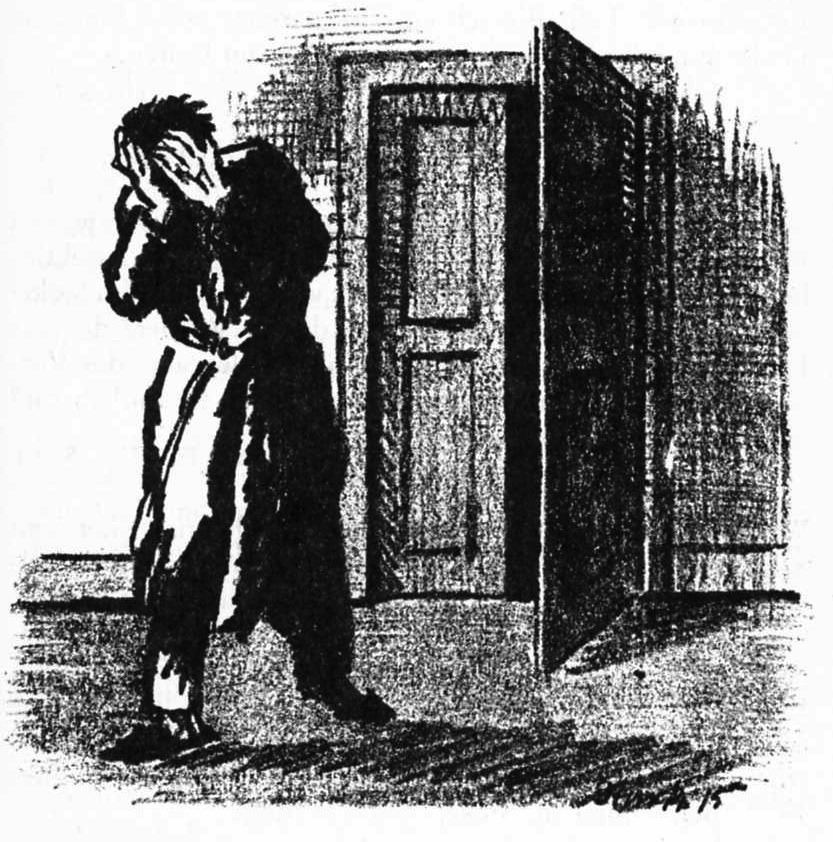
I woke up one morning recently to discover that I was a seventy-year-old man. Is this different from what happens to Gregor Samsa in The Metamorphosis? He wakes up to find that he’s become a near-human-sized beetle (probably of the scarab family, if his household’s charwoman is to be believed), and not a particularly robust specimen at that. Our reactions, mine and Gregor’s, are very similar. We are confused and bemused, and think that it’s a momentary delusion that will soon dissipate, leaving our lives to continue as they were. What could the source of these twin transformations possibly be? Certainly, you can see a birthday coming from many miles away, and it should not be a shock or a surprise when it happens. And as any well-meaning friend will tell you, seventy is just a number. What impact can that number really have on an actual, unique physical human life?

In the case of Gregor, a young traveling salesman spending a night at home in his family’s apartment in Prague, awakening into a strange, human/insect hybrid existence is, to say the obvious, a surprise he did not see coming, and the reaction of his household—mother, father, sister, maid, cook—is to recoil in benumbed horror, as one would expect, and not one member of his family feels compelled to console the creature by, for example, pointing out that a beetle is also a living thing, and turning into one might, for a mediocre human living a humdrum life, be an exhilarating and elevating experience, and so what’s the problem? This imagined consolation could not, in any case, take place within the structure of the story, because Gregor can understand human speech, but cannot be understood when he tries to speak, and so his family never think to approach him as a creature with human intelligence. (It must be noted, though, that in their bourgeois banality, they somehow accept that this creature is, in some unnamable way, their Gregor. It never occurs to them that, for example, a giant beetle has eaten Gregor; they don’t have the imagination, and he very quickly becomes not much more than a housekeeping problem.) His transformation seals him within himself as surely as if he had suffered a total paralysis. These two scenarios, mine and Gregor’s, seem so different, one might ask why I even bother to compare them. The source of the transformations is the same, I argue: we have both awakened to a forced awareness of what we really are, and that awareness is profound and irreversible; in each case, the delusion soon proves to be a new, mandatory reality, and life does not continue as it did.

Is Gregor’s transformation a death sentence or, in some way, a fatal diagnosis? Why does the beetle Gregor not survive? Is it his human brain, depressed and sad and melancholy, that betrays the insect’s basic sturdiness? Is it the brain that defeats the bug’s urge to survive, even to eat? What’s wrong with that beetle? Beetles, the order of insect called Coleoptera, which means “sheathed wing” (though Gregor never seems to discover his own wings, which are presumably hiding under his hard wing casings), are notably hardy and well adapted for survival; there are more species of beetle than any other order on earth. Well, we learn that Gregor has bad lungs they are “none too reliable”—and so the Gregor beetle has bad lungs as well, or at least the insect equivalent, and perhaps that really is his fatal diagnosis; or perhaps it’s his growing inability to eat that kills him, as it did Kafka, who ultimately coughed up blood and died of starvation caused by laryngeal tuberculosis at the age of forty. What about me? Is my seventieth birthday a death sentence? Of course, yes, it is, and in some ways it has sealed me within myself as surely as if I had suffered a total paralysis. And this revelation is the function of the bed, and of dreaming in the bed, the mortar in which the minutiae of everyday life are crushed, ground up, and mixed with memory and desire and dread. Gregor awakes from troubled dreams which are never directly described by Kafka. Did Gregor dream that he was an insect, then awake to find that he was one? “‘What in the world has happened to me?’ he thought.” “It was no dream,” says Kafka, referring to Gregor’s new physical form, but it’s not clear that his troubled dreams were anticipatory insect dreams. In the movie I co-wrote and directed of George Langelaan’s short story The Fly, I have our hero Seth Brundle, played by Jeff Goldblum, say, while deep in the throes of his transformation into a hideous fly/human hybrid, “I’m an insect who dreamt he was a man and loved it. But now the dream is over, and the insect is awake.” He is warning his former lover that he is now a danger to her, a creature with no compassion and no empathy. He has shed his humanity like the shell of a cicada nymph, and what has emerged is no longer human. He is also suggesting that to be a human, a self-aware consciousness, is a dream that cannot last, an illusion. Gregor too has trouble clinging to what is left of his humanity, and as his family begins to feel that this thing in Gregor’s room is no longer Gregor, he begins to feel the same way. But unlike Brundle’s fly self, Gregor’s beetle is no threat to anyone but himself, and starves and fades away like an afterthought as his family revels in their freedom from the shameful, embarrassing burden that he has become.


Jeff Goldblum in Cronenberg’s The Fly, 1986.

When The Fly was released in 1986, there was much conjecture that the disease that Brundle had brought on himself was a metaphor for AIDS. Certainly I understood this—AIDS was on everybody’s mind as the vast scope of the disease was gradually being revealed. But for me, Brundle’s disease was more fundamental: in an artificially accelerated manner, he was aging. He was a consciousness that was aware that it was a body that was mortal, and with acute awareness and humor participated in that inevitable transformation that all of us face, if only we live long enough. Unlike the passive and helpful but anonymous Gregor, Brundle was a star in the firmament of science, and it was a bold and reckless experiment in transmitting matter through space (his DNA mixes with that of an errant fly) that caused his predicament.

Langelaan’s story, first published in Playboy magazine in 1957, falls firmly within the genre of science fiction, with all the mechanics and reasonings of its scientist hero carefully, if fancifully, constructed (two used telephone booths are involved). Kafka’s story, of course, is not science fiction; it does not provoke discussion regarding technology and the hubris of scientific investigation, or the use of scientific research for military purposes. Without sci-fi trappings of any kind, The Metamorphosis forces us to think in terms of analogy, of reflexive interpretation, though it is revealing that none of the characters in the story, including Gregor, ever does think that way. There is no meditation on a family secret or sin that might have induced such a monstrous reprisal by God or the Fates, no search for meaning even on the most basic existential plane. The bizarre event is dealt with in a perfunctory, petty, materialistic way, and it arouses the narrowest range of emotional response imaginable, almost immediately assuming the tone of an unfortunate natural family occurrence with which one must reluctantly contend.

Stories of magical transformations have always been part of humanity’s narrative canon. They articulate that universal sense of empathy for all life forms that we feel; they express that desire for transcendence that every religion also expresses; they prompt us to wonder if transformation into another living creature would be a proof of the possibility of reincarnation and some sort of afterlife and is thus, however hideous or disastrous the narrative, a religious and hopeful concept. Certainly my Brundlefly goes through moments of manic strength and power, convinced that he has combined the best components of human and insect to become a super being, refusing to see his personal evolution as anything but a victory even as he begins to shed his human body parts, which he carefully stores in a medicine cabinet he calls the Brundle Museum of Natural History.

There is none of this in The Metamorphosis. The Samsabeetle is barely aware that he is a hybrid, though he takes small hybrid pleasures where he can find them, whether it’s hanging from the ceiling or scuttling through the mess and dirt of his room (beetle pleasure) or listening to the music that his sister plays on her violin (human pleasure). But the Samsa family is the Samsabeetle’s context and his cage, and his subservience to the needs of his family both before and after his transformation extends, ultimately, to his realization that it would be more convenient for them if he just disappeared, it would be an expression of his love for them, in fact, and so he does just that, by quietly dying. The Samsabeetle’s short life, fantastical though it is, is played out on the level of the resolutely mundane and the functional, and fails to provoke in the story’s characters any hint of philosophy, meditation, or profound reflection. How similar would the story be, then, if on that fateful morning, the Samsa family found in the room of their son not a young, vibrant traveling salesman who is supporting them by his unselfish and endless labor, but a shuffling, half-blind, barely ambulatory eighty-nine-year-old man using insectlike canes, a man who mumbles incoherently and has soiled his trousers and out of the shadowland of his dementia projects anger and induces guilt? If, when Gregor Samsa woke one morning from troubled dreams, he found himself transformed right there in his bed into a demented, disabled, demanding old man? His family is horrified but somehow recognize him as their own Gregor, albeit transformed. Eventually, though, as in the beetle variant of the story, they decide that he is no longer their Gregor, and that it would be a blessing for him to disappear.

When I went on my publicity tour for The Fly, I was often asked what insect I would want to be if I underwent an entomological transformation. My answers varied, depending on my mood, though I had a fondness for the dragonfly, not only for its spectacular flying but also for the novelty of its ferocious underwater nymphal stage with its deadly extendable underslung jaw; I also thought that mating in the air might be pleasant. Would that be your soul, then, this dragonfly, flying heavenward? came one response. Is that not really what you’re looking for? No, not really, I said. I’d just be a simple dragonfly, and then, if I managed to avoid being eaten by a bird or a frog, I would mate, and as summer ended, I would die.

This essay appears as the introduction to Susan Bernofsky’s new translation of The Metamorphosis.

David Cronenberg is a Canadian filmmaker whose career has spanned more than four decades. Cronenberg’s many feature films include Stereo, Crimes of the Future, Fast Company, The Brood, The Dead Zone, The Fly, Naked Lunch, M. Butterfly, Crash, A History of Violence, and A Dangerous Method. His most recent film, Cosmopolis, starred Robert Pattinson and was an adaptation of Don DeLillo’s 2003 novel. Consumed, his first novel, will be published in September.

Tuesday, September 10, 2013

Documentary - Mongolia


Mongolia is one of the most remote, high elevation countries on the planet. Its vastness - a realm between China and Russia - contains some of the most beautiful landscapes and some of the most arid deserts. Below is a documentary about Mongolia, and scattered throughout this post are random images of Mongolia from Google Image.

Mongolia


Mongolia is one of the highest places on Earth, located between Russia and China. It is characterized by seemingly infinite plains and by the nomadic tradition of its peoples who continue to live in tents. They are completely dedicated to their herds as their ancestors were. With a continental climate, temperatures in Mongolia range from 40 degrees Celsius below zero in the winter to 35 degrees in the summer. Since the end of the communist era, visitors have experienced a secure and stable environment making Mongolia paradise both for business and leisure.

A visit to the Gandan Monastery in Ulaanbaatar, the dynamic capital of the country, the mesmerizing natural beauty of the northern regions, even the mythical Gobi Desert where we will encounter huge dunes and the main dinosaur fossil digs in the world and encounters with its welcoming and generous people, will turn this journey into a unique discovery and an unforgettable experience. Here, one can experience the flavor of unknown territory without any preparation, without dressing and with a spontaneity that is certain to leave a lasting impression. On top of their horses, Mongols gave the world the largest empire that had ever known in just 25 years. Larger than the Roman Empire, larger than all territories conquered by Alexander the Great, Mongolia was forged under the leadership of Temujin, known as Genghis Khan – the emperor of all men to his men who venerated him and still venerate him today.

In 1206, Genghis Khan was able to put together the most powerful and disciplined cavalry ever known with warrior horsemen capable of mobilizing for war in an instant. Genghis Khan created the feared flash warfare, a tactic that modern armies still use. This national hero and his successors conquered all of Asia and European Russia and they established armies even in Central Europe and in Southeast Asia without ever abandoning their families that traveled with them in their years. Genghis Khan’s conquest were a major reason for the genetic mix that took place between Mongols and other people. It is said that the greatest treasures for the Mongols were the two key elements for life on the steps, women and horses. It is also said that one out of every 200 people is a descendant of Genghis Khan, although, only Mongol children are born with a blue stain on their back that disappears after their first year.
Along with a tradition of liberty and free movement that characterizes nomads and during a period of time known as Pax Mongolica, the Mongols covered an open and secured territory for commerce and for the free practice of religion that began in the Far East and ended in Europe. An area that voyagers and explores such as Marco Polo took full advantage of. After the death of Genghis Khan and of his eldest son, nothing more was known of his audacious cavalry. The Mongols are still the only people to ride on foot which enables them to cover long distances without tiring out the horses too much. Since the horseman eases each jumps with his knees and also allows them to rotate their torso completely in order to shoot arrows against the enemy in any direction.

Sunday, September 01, 2013

Watch Big Time, the Concert Film Capturing Tom Waits on His Best Tour Ever (1988)

http://1.bp.blogspot.com/--E8p56xWC04/Tc80w-_YUCI/AAAAAAAAq0g/P1rQv2b1Mnk/s1600/tom-waits-big-time-dvd-very-rare-1987-59ff3.jpg

Awesome - happy Sunday! This comes courtesy of Open Culture.

Watch Big Time, the Concert Film Capturing Tom Waits on His Best Tour Ever (1988)

 August 30th, 2013


Here at Open Culture, we’ve often featured the many sides of Tom Waits: actor, poetry reader, favored David Letterman guest. More rarely, we’ve posted material dedicated to showcasing him practicing his primary craft, writing songs and singing them. But when a full-fledged Tom Waits concert does surface here, prepare to settle in for an unrelentingly (and entertainingly) askew musical experience. In March, we posted Burma Shave, an hour-long performance from the late seventies in which Waits took on “the persona of a down-and-out barfly with the soul of a Beat poet.” Today, we fast-forward a decade to Big Time, by which point Waits could express the essences of “avant-garde composer Harry Partch, Howlin’ Wolf, Frank Sinatra, Astor Piazzolla, Irish tenor John McCormack, Kurt Weill, Louis Prima, Mexican norteño bands and Vegas lounge singers.” That evocative quote comes from Big Time‘s own press notes, as excerpted by Dangerous Minds, which calls the viewing experience “like entering a sideshow tent in Tom Waits’s brain.”

Watch the 90-minute concert film in its entirety, though, and you may not find it evocative enough. In 1987, Waits had just put out the album Franks Wild Years, which explores the experience of his alter-ego Frank O’Brien, whom Waits called “a combination of Will Rogers and Mark Twain, playing accordion — but without the wisdom they possessed.” The year before, the singer actually wrote and produced a stage play built around the character, and the Franks Wild Years tour through North America and Europe made thorough use of Waits’ theatrical bent in that era. Its final two shows, at San Francisco’s Warfield Theatre and Los Angeles’ Wiltern Theatre, along with footage from gigs in Dublin, Stockholm and Berlin, make up the bulk of Big Time‘s material. As for its sensibility, well, even Waits fans may feel insecure, and happily so, about quite what to expect. (Fans of The Wire, I should note, will find something familiar indeed in this show’s rendition of “Way Down in the Hole.”)

Related Content:
~ Colin Marshall hosts and produces Notebook on Cities and Culture and writes essays on literature, film, cities, Asia, and aesthetics. He’s at work on a book about Los Angeles, A Los Angeles Primer. Follow him on Twitter at @colinmarshall.

Monday, August 19, 2013

The Horse Boy - Autism, Horses, and Mongolian Shamans


When Rupert Isaacson and Kristin Neff (parents of Rowan) reach their limit in caring for their autistic son, having tried medications, diets, and everything else, they seek a more traditional method of healing - horses and shamans.
They journey to Mongolia with Rowan and seek out various shamans for healing, eventually making their way to the Reindeer People (who ride reindeer), where the possibility of a miracle healing is presented to them.

With commentary along the way from Dr. Temple Grandin and Dr. Simon Baron-Cohen, among others, we also learn what it means to have autism and to be non-neurotypical.


How far would you travel to heal someone you love? An intensely personal yet epic spiritual journey, THE HORSE BOY follows one Texas couple and their autistic son as they trek on horseback through Outer Mongolia, in a desperate attempt to treat his condition with shamanic healing. 
A complex condition that can dramatically affect social interaction and communication skills, autism is the fastest-growing developmental disability today. After two-year-old Rowan Isaacson was diagnosed with autism, he ceased speaking, retreated into himself for hours at a time, and often screamed inconsolably for no apparent reason. Rupert Isaacson, a writer and former horse trainer, and his wife Kristin Neff, a psychology professor, sought the best possible medical care for their son. But traditional therapies had little effect. 
 
Then they discovered that Rowan has a profound affinity for animals, particularly horses. When Rupert began to ride with Rowan every day, Rowan began to talk again and engage with the outside world. Was there a place on the planet that combined horses and healing? There was — Mongolia, the country where the horse was first domesticated, and where shamanism is the state religion. What if we were to take Rowan there, thought Rupert, and ride on horseback from shaman to shaman? What would happen? 
THE HORSE BOY is a magical expedition from the wild open steppe to the sacred Lake Sharga. As the family sets off on a quest for a possible cure, Rupert and Kristin find their son is accepted — even treasured — for his differences. By telling one family’s extraordinary story, the film gives a voice to the thousands of families who are living with autism every day. As Rupert and Kristin struggle to make sense of their child’s autism, and find healing for him and themselves in this unlikeliest of places, Rowan makes dramatic leaps forward, astonishing both his parents and himself.

Thursday, June 20, 2013

Werner Herzog's "Wheel of Time" (Tibetan Buddhism)


Werner Herzog's Wheel of Time, a documentary film ostensibly about the two Kalachakra initiation ceremonies in 2002, has a 94% fresh rating on Rotten Tomatoes, and a 7.1 rating at IMDb . . . with good reason. The film is as quirky as are all of Herzog's documentaries, and beautifully filmed, as is also true of his work over the last 20 years.

Enjoy!

Wheel of Time (2003) - A Film by Werner Herzog


Wheel of Time is a 2003 documentary film by German director Werner Herzog about Tibetan Buddhism. The title refers to the Kalachakra sand mandala that provides a recurring image for the film.
The film documents the two Kalachakra initiations of 2002, presided over by the fourteenth Dalai Lama. The first, in Bodhgaya India, was disrupted by the Dalai Lama’s illness. Later that same year, the event was held again, this time without disruption, in Graz, Austria. The film’s first location is the Bodhgaya, the site of the Mahabodhi Temple and the Bodhi tree. Herzog then turns to the pilgrimage at Mount Kailash, after which the film then focuses on the second gathering in Graz.

Herzog includes a personal interview with the Dalai Lama, as well as Tibetan former political prisoner Takna Jigme Zangpo, who served 37 years in a Chinese prison for his support of the International Tibet Independence Movement.

Wednesday, May 08, 2013

Tarology: The Art of Tarot - A Documentary


Cool . . . Tarot through the eyes of an artist.


Tarology Synopsis


Tarology follows Enrique through the streets of New York City as he shows us how to see the tarot - not superstitiously, but through the eyes of an artist - and how we are surrounded everyday by both the beauty and the symbolism of this ancient and often misunderstood tradition.

Film Credits
  • Director: Chris Deleo
  • Producer: Chris Deleo
  • Writer: Enrique Enriquez
  • Starring: Enrique Enriquez

Monday, April 01, 2013

Classic Film - Fritz Lang's Metropolis


Metropolis is one of the classic silent films, and one of the 100 Best Films of All Time on most of the lists you will find. Fritz Lang creates a dystopian future on a grand scale, and his vision is not too far from where we are now, aside from the forced separation.

Metropolis

(1927) 118 mins


Metropolis Synopsis

It is the future and humans are divided into two groups; the thinkers, who make plans, and the workers, who achieve goals. Completely separate, neither group is complete, but together they make a whole. One man from the "thinkers" dares to visit the underground where the workers toil; and is astonished by what he sees.

Starring: Brigitte Helm, Alfred Abel, Gustav Frohlich
Director: Fritz Lang
Producers: Giorgio Moroder, Erich Pommer
Writers: Thea von Harbou, Fritz Lang