These powerful stories shatter preconceived notions about mental illness, and pose the provocative question: What can the world learn from different kinds of minds?
Playlist (9 talks)

14:52 - Elyn Saks A tale of mental illness -- from the inside
"Is it okay if I totally trash your office?" It's a question Elyn Saks once asked her doctor, and it wasn't a joke. A legal scholar, in 2007 Saks came forward with her own story of schizophrenia, controlled by drugs and therapy but ever-present. In this powerful talk, she asks us to see people with mental illness clearly, honestly and compassionately.
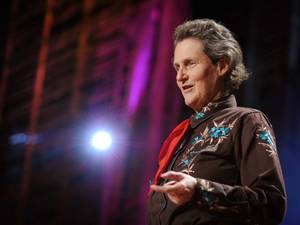
19:43 - Temple Grandin The world needs all kinds of minds
Temple Grandin, diagnosed with autism as a child, talks about how her mind works — sharing her ability to "think in pictures," which helps her solve problems that neurotypical brains might miss. She makes the case that the world needs people on the autism spectrum: visual thinkers, pattern thinkers, verbal thinkers, and all kinds of smart geeky kids.

14:17 - Eleanor Longden The voices in my head
To all appearances, Eleanor Longden was just like every other student, heading to college full of promise and without a care in the world. That was until the voices in her head started talking. Initially innocuous, these internal narrators became increasingly antagonistic and dictatorial, turning her life into a living nightmare. Diagnosed with schizophrenia, hospitalized, drugged, Longden was discarded by a system that didn't know how to help her. Longden tells the moving tale of her years-long journey back to mental health, and makes the case that it was through learning to listen to her voices that she was able to survive.

8:44 - Ruby Wax What's so funny about mental illness?
Diseases of the body garner sympathy, says comedian Ruby Wax — except those of the brain. Why is that? With dazzling energy and humor, Wax, diagnosed a decade ago with clinical depression, urges us to put an end to the stigma of mental illness.

22:18 - Sherwin Nuland How electroshock therapy changed me
Surgeon and author Sherwin Nuland discusses the development of electroshock therapy as a cure for severe, life-threatening depression — including his own. It’s a moving and heartfelt talk about relief, redemption and second chances.
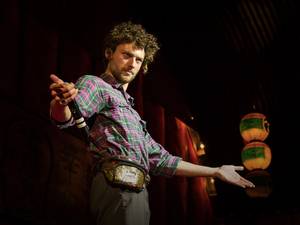
5:51 - Joshua Walters On being just crazy enough
At TED's Full Spectrum Auditions, comedian Joshua Walters, who's bipolar, walks the line between mental illness and mental "skillness." In this funny, thought-provoking talk, he asks: What's the right balance between medicating craziness away and riding the manic edge of creativity and drive?

18:01 - Jon Ronson Strange answers to the psychopath test
Is there a definitive line that divides crazy from sane? With a hair-raising delivery, Jon Ronson, author of The Psychopath Test, illuminates the gray areas between the two. (With live-mixed sound by Julian Treasure and animation by Evan Grant.)
18:48 - Oliver Sacks What hallucination reveals about our minds
Neurologist and author Oliver Sacks brings our attention to Charles Bonnet syndrome — when visually impaired people experience lucid hallucinations. He describes the experiences of his patients in heartwarming detail and walks us through the biology of this under-reported phenomenon.

9:26 - Robert Gupta Music is medicine, music is sanity
Robert Gupta, violinist with the LA Philharmonic, talks about a violin lesson he once gave to a brilliant, schizophrenic musician — and what he learned. Called back onstage later, Gupta plays his own transcription of the prelude from Bach's Cello Suite No. 1.
Showing posts with label TED Talks. Show all posts
Showing posts with label TED Talks. Show all posts
Tuesday, November 11, 2014
TED Talk Playlist: All Kinds of Minds (9 Talks)
This is a cool collection of TED Talks entitled, "All kinds of minds." These nine talks "shatter" common beliefs and stereotypes about mental illness, or more accurately, neurodiversity.


Tuesday, November 04, 2014
Jamie Wheal - Altered States to Altered Traits: Hacking Flow

Jamie Wheal is the co-founder of the Flow Genome Project, a project dedicated to mapping the states of ultimate human performance, based on the idea of flow states. Flow is a concept first introduced by Mihály Csíkszentmihályi in Flow: The Psychology of Optimal Experience (1990) and expanded on in Finding Flow: The Psychology of Engagement with Everyday Life (1997).
Altered States to Altered Traits: Hacking Flow
Jamie Wheal speaks at TEDx Black Rock City. "It's never been easier to get high, and it's just as hard as it's always been to stay that way." In this talk, Jamie Wheal, Executive Director the Flow Genome Project, details how rapid advancements in technology, psychology and pharmacology have led to an unprecedented uptick in our access to peak states, and how we might be able to use those moments of clarity and inspiration to learn, do and be much more than we thought possible.
Sunday, October 26, 2014
Marc Abrahams, "Annals of Improbable Research" - The Ig Noble Awards

Marc Abrahams is the founder of the Annals of Improbable Research (A.I.R.), and the Ig Noble Prize. His new book is This is Improbable Too: Synchronized Cows, Speedy Brain Extractors and More WTF Research. He recently spoke at the TED Convention, and he also stopped by Google tlo talk about his book.
Marc Abrahams: A science award that makes you laugh, then think
Published on Oct 24, 2014
As founder of the Ig Nobel awards, Marc Abrahams explores the world’s most improbable research. In this thought-provoking (and occasionally side-splitting) talk, he tells stories of truly weird science — and makes the case that silliness is critical to boosting public interest in science.
* * * * *Talks at Google: Marc Abrahams, "Annals of Improbable Research"
Published on Oct 23, 2014
Marc Abrahams visited Google's office in Cambridge, MA to discuss his new book This is Improbable Too: Synchronized Cows, Speedy Brain Extractors and More WTF Research and the Ig Nobel Prizes.
He has long collected odd, imaginative, and brilliantly improbable scientific discoveries from around the world. In his new book, he investigates research on the ins and outs of the very improbable evolutionary innovation that is the human body (brain included):
Marc Abrahams is the editor and co-founder of the science humor magazine Annals of Improbable Research, a weekly columnist for the Guardian, and author of This Is Improbable: Cheese String Theory, Magnetic Chickens, and Other WTF Research. He is the founder of the Ig Nobel Prizes ceremony, which are presented annually at Harvard.
- What’s the best way to get a monkey to floss regularly?
- How much dandruff do soldiers in Pakistan’s army have?
- What is the real meaning of the finger?
@MarcAbrahams | www.improbable.com
Monday, September 29, 2014
Neuroscientist Carl Hart: Everything You Think You Know About Drugs and Addiction Is Wrong

Carl Hart grew up in a rough neighborhood in Miami, selling drugs, doing petty crime, and carrying a gun. But he pulled himself out of the "hood" and became a neuroscientist and now teaches psychology and psychiatry at Columbia University.
He is the author of High Price: A Neuroscientist's Journey of Self-Discovery That Challenges Everything You Know About Drugs and Society (2013).
Neuroscientist Carl Hart: Everything You Think You Know About Drugs and Addiction Is Wrong
"The overwhelming majority of drug users don’t have a drug problem.”
September 17, 2014 | By April M. Short
Carl Hart grew up in Miami in what he calls the 'hood, a poor community with high rates of crime and prevalent drug use. He kept a gun in his car, engaged in petty crime and sold drugs. Today Hart is a neuroscientist and associate professor of psychology and psychiatry at Columbia University. He's also an expert on drug addiction. In a TEDMED Talk earlier this month, Hart explained how he went from dealing drugs in the 'hood to studying addiction at one of the world’s top universities. His talk summarizes some of the major themes from his book, High Price: A Neuroscientist's Journey of Self-Discovery That Challenges Everything You Know About Drugs and Society (2013).
Hart said growing up as he did, he came to believe the prevailing assertion that crack cocaine and other drugs were the villains behind crime and poverty. If he could only solve the addiction problem, he thought, he'd be tackling the root of the problem. As Hart came to learn, that is not the reality. Poverty and crime were around long before crack and other drugs appeared on the scene, and the forces at play that keep poor communities poor are insidious and systemic.
“My family, we were poor before drugs entered the picture,” Hart said. “I engaged in petty crime but it had nothing to do with drug addiction. It was about money and status. If you take drugs out of the equation, poverty and crime still exist. It’s not drug addiction causing people to commit crime. It’s other factors.”
One of the biggest factors is the war on drugs and its racist law enforcment policies, which target impoverished, black populations despite the fact that whites and blacks use drugs at similar rates.
“Drug laws are not uniformly enforced across all segments of our society, and this perpetuates the cycle of poverty and crime,” Hart said.
Hart said he first began questioning his thinking when he discovered that drugs like crack and meth are not nearly as addictive as he had been told. He points out in his talk that 80 to 90 percent of people who use illegal drugs are not addicted.
“The overwhelming majority of drug users don’t have a drug problem,” he said.
Hart’s work has revealed some striking truths about drug use and addiction. His research on both crack and meth users have shown that even drug users with serious addictions tend to make surprisingly rational decisions. When given the choice between drugs and money—even a small amount of money such as $5—they will choose the money over the drugs at least half the time. When the sum offered is higher, like $20 to $50, they will almost always choose the money.
As Hart told AlterNet last June, his studies have shown that the pharmacological effects of drugs rarely lead to crime, “but the public conflates these issues regardless.”
“Certainly, we have given thousands of doses of crack cocaine and methamphetamine to people in our lab, and never had any problems with violence or anything like that,” he said. “That tells you it's not the pharmacology of the drug, but some interaction with the environment or environmental conditions, that would probably happen without the drug.”
Hart said his TED Talk was an effort to educate the public about drug myths and bad US drug policy. “Millions of people languish unnecessarily in jails and prisons largely, and still others needlessly die from preventable overdoses, underground market violence and police interactions, due to a misguided approach to drug regulations,” he said. “And no one suffers more than African American men and the poor.”
Watch Hart’s talk below:
April M. Short is an associate editor at AlterNet. Follow her on Twitter @AprilMShort.

Sunday, September 28, 2014
The Science of Emotions: Jaak Panksepp at TEDxRainier

Awesome - Jaak Panksepp is one of the founders of affective neuroscience, and author of Affective Neuroscience: The Foundations of Human and Animal Emotions (2004) and The Archaeology of Mind: Neuroevolutionary Origins of Human Emotions (2012).
The Science of Emotions: Jaak Panksepp at TEDxRainier
Published on Jan 13, 2014
Given an inherent subjective nature, emotions have long been a nearly impenetrable topic for scientific research. Affective neuroscientist Jaak Panksepp explains a modern approach to emotions, and how taking seriously the emotions of other animals might soon improve the lives of millions.
Jaak Panksepp introduced the concept of Affective Neuroscience in 1990, consisting of an overarching vision of how mammalian brains generate experienced affective states in animals, as effective models for fathoming the primal evolutionary sources of emotional feelings in human beings. This work has implications for further developments in Biological Psychiatry, ranging from an understanding of the underlying brain disorders, to new therapeutic strategies. Panksepp is a Ph.D. Professor and Baily Endowed Chair of Animal Well-Being Science, College of Veterinary Medicine, Washington State University. His scientific contributions include more than 400 papers devoted to the study of basic emotional and motivational processes of the mammalian brain. He has conducted extensive research on brain and bodily mechanisms of feeding and energy-balance regulation, sleep physiology, and most importantly the study of emotional processes, including associated feelings states, in other animals.
This talk was given November 9, 2013 in Seattle at TEDxRainier, a local TEDx event, produced independently of the TED Conferences.
* * * * *
Jaak Panksepp - Animal Emotion Researcher and Neuroscientist
Speaker Bio

Given an inherent subjective nature, emotions have long been a nearly impenetrable topic for scientific research. Affective neuroscientist Jaak Panksepp explains a modern approach to emotions, and how taking seriously the emotions of other animals might soon improve the lives of millions.
Jaak Panksepp, Ph.D. Professor and Baily Endowed Chair of Animal Well-Being Science, College of Veterinary Medicine, Washington State University. His scientific contributions include more than 400 papers devoted to the study of basic emotional and motivational processes of the mammalian brain. He has conducted extensive research on brain and bodily mechanisms of feeding and energy-balance regulation, sleep physiology, and most importantly the study of emotional processes, including associated feelings states, in other animals. He introduced the concept of Affective Neuroscience in 1990, consisting of an overarching vision of how mammalian brains generate experienced affective states in animals, as effective models for fathoming the primal evolutionary sources of emotional feelings in human beings. This work has implications for further developments in Biological Psychiatry, ranging from an understanding of the underlying brain disorders, to new therapeutic strategies.
His recent work has focused primarily on the subcortical brain mechanisms of sadness (brain PANIC or separation distress circuitry) and joy (brain PLAY and animal laughter circuitry), work that has implications for the treatment of autism, ADHD, and depression. His work is informed by exploring the consequences of basic knowledge about emotional endophenotypes (natural brain states) for better understanding of human mental health. His monograph Affective Neuroscience (Oxford, 1998) outlined ways to understand brain affective processes neuroscientifically; his Textbook of Biological Psychiatry (Wiley, 2004) focused on how elucidation of emotional processes can facilitate psychiatric practice; and Archaeology of Mind (Norton, 2012) summarized how such knowledge can inform psychotherapeutic practice.
This work has led to three novel antidepressant concepts that are currently being evaluated in human. But perhaps equally importantly, this work provides a novel vision for how consciousness emerged in human brains, which can only be clarified through the scientific study of the phenomenal-experiential-emotional capacities of that exist in the brains/minds of other animals.
Wednesday, September 10, 2014
Frans de Waal - Do Animals Have Morals?
Frans de Waal is one of the foremost researchers in primate emotions, especially prosocial behaviors. He is the author of several books, including Primates and Philosophers: How Morality Evolved (2006), The Age of Empathy: Nature's Lessons for a Kinder Society (2010), and The Bonobo and the Atheist: In Search of Humanism Among the Primates (2014).
In this TED Talk he discusses the morality of animals.
In this TED Talk he discusses the morality of animals.
Do Animals Have Morals?
by NPR/TED Staff
September 05, 2014
Frans de Waal explains his work regarding morality and animals. LeahAndMark.com
About Frans de Waal's TED Talk
Empathy, cooperation and fairness seem like distinctly human traits. But biologist Frans de Waal explains why other animals might share those same qualities.
About Frans de Waal
Dr. Frans de Waal is a biologist and primatologist known for his work on the behavior and social intelligence of primates. His first book, Chimpanzee Politics, compared the schmoozing and scheming of chimps to that of human politicians. He is a professor of psychology at Emory University and director of the Living Links Center at the Yerkes National Primate Center.

Tuesday, September 02, 2014
TED Talk - Jim Holt: Why Does the Universe Exist?

Jim Holt is one of those atheist, elitist, commie pinko scum, you know, a scientist. And in this TED Talk he offers some observations on why the world exists, after dismissing the "God + nothing = the universe" equation. Did God wonder where he came from and why?
Anyway, Holt offers an entertaining talk. He is the author of Why Does the World Exist? An Existential Detective Story (2012).
Jim Holt: Why does the universe exist?
Filmed March 2014 at TED2014
Why is there something instead of nothing? In other words: Why does the universe exist (and why are we in it)? Philosopher and writer Jim Holt follows this question toward three possible answers. Or four. Or none.
In his 2012 book Why Does the World Exist? An Existential Detective Story, Jim Holt creates a narrative out of one of the biggest questions we can ask -- and how modern scientists and philosophers are asking it. Can answers be found in many-worlds theory, in quantum mechanics, in a theology? Traveling around North America and Europe, he talks to physicists, including David Deutsch; philosophers, including Richard Swinburne; and the novelist John Updike. Why? Because as he tells Vanity Fair, "To me it’s the most sublime and awesome question in all of philosophy and all of human inquiry."
A longtime contributor to the New York Times, Slate, and the New Yorker, Holt has written on string theory, time, infinity, numbers, humor, logic, truth and bullshit, among other topics. Holt studied mathematics at the University of Virginia, and was a faculty fellow in the philosophy department at Columbia. He is now at work on a book about free will, weakness of will, self-knowledge and happiness.
Transcript
Sunday, August 24, 2014
Society in the Brain | Dr. Danilo Bzdok | TEDxRWTHAachen

This brief TEDx talk provides a basic introduction to the way the human mind was shaped by social interactions. More than maybe any other factor, the need to live in ever-increasing groups spurred the brain to expand and adapt in ways other species (including other primates) were not required to do.
In a lot of ways, this is a mirror of the developmental models of psychoanalytic theory which argue that the human mind, and even the sense of self, is entirely constructed by the interpersonal and intersubjective experiences of the infant in relation to the primary caregivers. Without that attachment experience, we fail in many profound ways to become fully human.
Researcher Danilo Bzdok is a post-doc in cognitive neuroscience and data mining at the Jülich Research Center, and he is working on another PhD in informatics.
Here is one of his articles, relevant to this topic: Definition and characterization of an extended social-affective 3 default network, available as a free download from ResearchGate.
Society in the brain | Dr. Danilo Bzdok | TEDxRWTHAachen
Published on Aug 21, 2014
Researcher Danilo Bzdok explains how our brains have been shaped by the necessity to establish relationships with other humans. The ability to effectively interact with friends and enemies, he proposes, might even be at the basis of all human.
Dr. Danilo Bzdok is a former RWTH Aachen student and now Post-Doc in cognitive neuroscience and data mining at the Jülich Research Center. Working on another PhD in informatics, Mr Bzdok has a thorough understanding of how big data can help solving the greatest riddles about the human brain.
This talk was given at a local TEDx event, produced independently of the TED Conferences.
Thursday, July 17, 2014
David Chalmers: How Do You Explain Consciousness? (TED2014)

It's weird to see David Chalmers with short hair. For as long as I have been aware of him, he has had long hair that made him look like a member of Whitesnake's reunion tour, not a world renowned philosopher.

Be that as it may, in this TED Talk from TED2014, Chalmers talks about the subject for which he is best known, consciousness.
David Chalmers: How Do You Explain Consciousness?
TED2014 · 18:37 | Filmed Mar 2014
Our consciousness is a fundamental aspect of our existence, says philosopher David Chalmers: “There’s nothing we know about more directly…. but at the same time it’s the most mysterious phenomenon in the universe.” He shares some ways to think about the movie playing in our heads.
Friday, July 04, 2014
Paul Bloom - Can Prejudice Ever Be a Good Thing?

In the TED Talk from the beginning of 2014, Paul Bloom talks about prejudice, based on his then new book, Just Babies: The Origins of Good and Evil (Nov. 2013).

Can prejudice ever be a good thing?
TEDSalon NY2014 · 16:23 · Filmed Jan 2014
We often think of bias and prejudice as rooted in ignorance. But as psychologist Paul Bloom seeks to show, prejudice is often natural, rational ... even moral. The key, says Bloom, is to understand how our own biases work — so we can take control when they go wrong.
* * * * *
Paul Bloom explores some of the most puzzling aspects of human nature, including pleasure, religion, and morality.
Why you should listen
In Paul Bloom’s last book, How Pleasure Works, he explores the often-mysterious enjoyment that people get out of experiences such as sex, food, art, and stories. His latest book, Just Babies, examines the nature and origins of good and evil. How do we decide what's fair and unfair? What is the relationship between emotion and rationality in our judgments of right and wrong? And how much of morality is present at birth? To answer these questions, he and his colleagues at Yale study how babies make moral decisions. (How do you present a moral quandary to a 6-month-old? Through simple, gamelike experiments that yield surprisingly adult-like results.)
Paul Bloom is a passionate teacher of undergraduates, and his popular Introduction to Psychology 110 class has been released to the world through the Open Yale Courses program. He has recently completed a second MOOC, “Moralities of Everyday Life”, that introduced moral psychology to tens of thousands of students. And he also presents his research to a popular audience though articles in The Atlantic, The New Yorker, and The New York Times. Many of the projects he works on are student-initiated, and all of them, he notes, are "strongly interdisciplinary, bringing in theory and research from areas such as cognitive, social, and developmental psychology, evolutionary theory, linguistics, theology and philosophy."
He says: "A growing body of evidence suggests that humans do have a rudimentary moral sense from the very start of life."
What others say
"Bloom is after something deeper than the mere stuff of feeling good. He analyzes how our minds have evolved certain cognitive tricks that help us negotiate the physical and social world." — New York Times
Saturday, June 28, 2014
Dan Gilbert: The Psychology of Your Future Self

This is a relatively short TED Talk, but it's an interesting one.
Dan Gilbert: The psychology of your future self
"Human beings are works in progress that mistakenly think they're finished." Dan Gilbert shares recent research on a phenomenon he calls the "end of history illusion," where we somehow imagine that the person we are right now is the person we'll be for the rest of time. Hint: that's not the case.
pin This talk was presented at an official TED conference, and was featured by our editors on the home page.
Monday, May 05, 2014
How Mental Illness Changed Human History - For the Better: David Whitley at TEDxManhattanBeach

David Whitley is an archeologist specializing far western North American rock art. In this TEDx Talk from the end of 2013, he talks about human creativity and mental health are their deep interconnection.
How mental illness changed human history - for the better: David Whitley
TEDxManhattanBeach
Published on Dec 27, 2013
Archeologist David Whitley suggests that the strengths and weaknesses of humans are deeply intertwined and inter-dependent. He shares his journey, taking us back 40,000 years, to discover the origin of human artistic genius.
David decided to become an archaeologist when he was three years old, and determined that he would study cave paintings (rock art) when he was 12. No one told him, at the time, that rock art was an ignored topic in American archaeology. Not deterred, David continued his studies and completed his doctorate at UCLA. He primarily writes about prehistoric art and religion, which he finds harder to study, and consequently much more interesting, than the standard archaeological topics of tools, technology, and diet. His most recent book is Cave Paintings and the Human Spirit: The Origin of Creativity and Belief David’s focus lies in the rock art of far western North America. His understanding of this art primarily derives from Native American ethnography–anthropological accounts of tribal religions and practices. He uses this understanding as a springboard for examining the ultimate origin of art and religion.
David lives near Tehachapi, California, in a forest of blue oak trees. When he’s not working or writing, he rides his faithful old ranch horse, Twelve, through the mountains. “It’s the best way to think,” says David.
Tuesday, April 08, 2014
Lawrence Lessig - The Unstoppable Walk to Political Reform

I'm not as hopeful as Lessig about the progress of political reform (I suspect hell will freeze over before there is any REAL political reform). But Lessig knows things I don't know - lots of them - and he makes some interesting arguments. I hope he is correct.
Lawrence Lessig: The unstoppable walk to political reform
March 2014
Seven years ago, Internet activist Aaron Swartz convinced Lawrence Lessig to take up the fight for political reform. A year after Swartz's tragic death, Lessig continues his campaign to free US politics from the stranglehold of corruption. In this fiery, deeply personal talk, he calls for all citizens to engage, and offers a heartfelt reminder to never give up hope.
This talk was presented at an official TED Conference. TED's editors featured it among our daily selections on the home page.

Lawrence Lessig - Legal activist Lawrence Lessig has already transformed intellectual-property law with his Creative Commons innovation. Now he's focused on an even bigger problem: The US' broken political system.
Saturday, March 29, 2014
20 Best TED Talks - Readers’ Poll Results (via Vice)
This is awesome . . . especially #s 9, 11, 15, 19, and 20. Thank you Vice.
Enjoy!
Enjoy!
20 Best TED Talks
Readers’ Poll Results
By Sean Tejaratchi | Mar 25 2014
With more than 1,600 online videos that collectively have over a billion views, the world of TED Talks can be overwhelming to the uninitiated. To help, we asked our readers to submit their picks for the 20 most informative, provocative, and inspiring TED Talks in the fields of technology, entertainment, and design. We received more than 12,000 ballots, and now we’re pleased to share the results.
The Future of Sex Zoos: Balancing Fetish, Innovation, and Conservation, Bill Gates
How to Fight a Cow Col. Frank Tuplin
Community-Based Arson Initiatives: Ideas at Work Taureen Helms
What a Courageous Georgia Cat Breeder Can Teach Us About Eugenics Dr. Barbara Mershepp, PhD
Wireless Headset Mics: What We’ve Learned, What’s Still to Come Klefton Marbell
How to Fight a Chimp Col. Frank Tuplin
Love Will Turn You Around: Ten Days to Mind-Blowing Anal Sex Kenny Rogers
How to Dispose of a Chimp’s Body Col. Frank Tuplin
Shitting Underwater Pavel Gibbons
The Secret Language of Scarfs Dr. Beautrice Garmin, MD
Rethinking the Idea of “Rethinking” Sween Griggs
Why Parasites Target Hollywood Royalty Dr. Vikram Parmalat, MD
What Life with a Slightly Larger Head Has Taught Me About Diversity Anacin Shroeper
Raising a Drug-Free Child—the Hamas Way Uffrica Lofgren
Emerging Markets in Suburban Bush Meat Prius Ramsey-Shilling
Milk Trends Brayff Johnson
The Wordless Art of Claw Gestures Nuncy Thamber
WomenTalk: Women Talking to Women About Being Women Umoja Holmo
This World Exists for My Pleasure: The Power of Quantum Affirmations Dr. Dodd Olper, PhD
Rabbits: Nature’s Furry Pieces of Shit Dr. Björn Karensdottir, PhD


Subscribe to:
Posts (Atom)