These powerful stories shatter preconceived notions about mental illness, and pose the provocative question: What can the world learn from different kinds of minds?
Playlist (9 talks)

14:52 - Elyn Saks A tale of mental illness -- from the inside
"Is it okay if I totally trash your office?" It's a question Elyn Saks once asked her doctor, and it wasn't a joke. A legal scholar, in 2007 Saks came forward with her own story of schizophrenia, controlled by drugs and therapy but ever-present. In this powerful talk, she asks us to see people with mental illness clearly, honestly and compassionately.
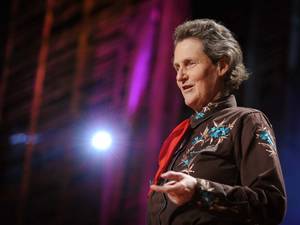
19:43 - Temple Grandin The world needs all kinds of minds
Temple Grandin, diagnosed with autism as a child, talks about how her mind works — sharing her ability to "think in pictures," which helps her solve problems that neurotypical brains might miss. She makes the case that the world needs people on the autism spectrum: visual thinkers, pattern thinkers, verbal thinkers, and all kinds of smart geeky kids.

14:17 - Eleanor Longden The voices in my head
To all appearances, Eleanor Longden was just like every other student, heading to college full of promise and without a care in the world. That was until the voices in her head started talking. Initially innocuous, these internal narrators became increasingly antagonistic and dictatorial, turning her life into a living nightmare. Diagnosed with schizophrenia, hospitalized, drugged, Longden was discarded by a system that didn't know how to help her. Longden tells the moving tale of her years-long journey back to mental health, and makes the case that it was through learning to listen to her voices that she was able to survive.

8:44 - Ruby Wax What's so funny about mental illness?
Diseases of the body garner sympathy, says comedian Ruby Wax — except those of the brain. Why is that? With dazzling energy and humor, Wax, diagnosed a decade ago with clinical depression, urges us to put an end to the stigma of mental illness.

22:18 - Sherwin Nuland How electroshock therapy changed me
Surgeon and author Sherwin Nuland discusses the development of electroshock therapy as a cure for severe, life-threatening depression — including his own. It’s a moving and heartfelt talk about relief, redemption and second chances.

5:51 - Joshua Walters On being just crazy enough
At TED's Full Spectrum Auditions, comedian Joshua Walters, who's bipolar, walks the line between mental illness and mental "skillness." In this funny, thought-provoking talk, he asks: What's the right balance between medicating craziness away and riding the manic edge of creativity and drive?

18:01 - Jon Ronson Strange answers to the psychopath test
Is there a definitive line that divides crazy from sane? With a hair-raising delivery, Jon Ronson, author of The Psychopath Test, illuminates the gray areas between the two. (With live-mixed sound by Julian Treasure and animation by Evan Grant.)
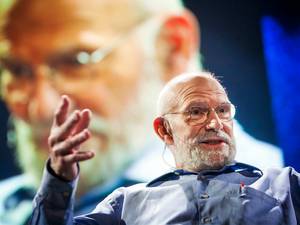
18:48 - Oliver Sacks What hallucination reveals about our minds
Neurologist and author Oliver Sacks brings our attention to Charles Bonnet syndrome — when visually impaired people experience lucid hallucinations. He describes the experiences of his patients in heartwarming detail and walks us through the biology of this under-reported phenomenon.

9:26 - Robert Gupta Music is medicine, music is sanity
Robert Gupta, violinist with the LA Philharmonic, talks about a violin lesson he once gave to a brilliant, schizophrenic musician — and what he learned. Called back onstage later, Gupta plays his own transcription of the prelude from Bach's Cello Suite No. 1.
Showing posts with label humor. Show all posts
Showing posts with label humor. Show all posts
Tuesday, November 11, 2014
TED Talk Playlist: All Kinds of Minds (9 Talks)
This is a cool collection of TED Talks entitled, "All kinds of minds." These nine talks "shatter" common beliefs and stereotypes about mental illness, or more accurately, neurodiversity.


Sunday, October 26, 2014
Marc Abrahams, "Annals of Improbable Research" - The Ig Noble Awards

Marc Abrahams is the founder of the Annals of Improbable Research (A.I.R.), and the Ig Noble Prize. His new book is This is Improbable Too: Synchronized Cows, Speedy Brain Extractors and More WTF Research. He recently spoke at the TED Convention, and he also stopped by Google tlo talk about his book.
Marc Abrahams: A science award that makes you laugh, then think
Published on Oct 24, 2014
As founder of the Ig Nobel awards, Marc Abrahams explores the world’s most improbable research. In this thought-provoking (and occasionally side-splitting) talk, he tells stories of truly weird science — and makes the case that silliness is critical to boosting public interest in science.
* * * * *Talks at Google: Marc Abrahams, "Annals of Improbable Research"
Published on Oct 23, 2014
Marc Abrahams visited Google's office in Cambridge, MA to discuss his new book This is Improbable Too: Synchronized Cows, Speedy Brain Extractors and More WTF Research and the Ig Nobel Prizes.
He has long collected odd, imaginative, and brilliantly improbable scientific discoveries from around the world. In his new book, he investigates research on the ins and outs of the very improbable evolutionary innovation that is the human body (brain included):
Marc Abrahams is the editor and co-founder of the science humor magazine Annals of Improbable Research, a weekly columnist for the Guardian, and author of This Is Improbable: Cheese String Theory, Magnetic Chickens, and Other WTF Research. He is the founder of the Ig Nobel Prizes ceremony, which are presented annually at Harvard.
- What’s the best way to get a monkey to floss regularly?
- How much dandruff do soldiers in Pakistan’s army have?
- What is the real meaning of the finger?
@MarcAbrahams | www.improbable.com
Thursday, October 23, 2014
Morgan Spurlock, Werner Herzog & Other Stars Explain Economic Theory in 20 Short Films

Via Open Culture, of course.
Episodes 1 and 4 are posted below, but here are some others now available (there are more):
- Ep. 2: SUPPLY & DANCE, MAN! | John M. Chu
- Ep. 3: GDP SMACKDOWN | Chris Henchy
- Ep. 5: A BEE'S INVOICE; THE HIDDEN VALUE IN NATURE | Adrian Grenier
- Ep. 6: THAT FILM ABOUT MONEY | James Schamus
- Ep. 7: THE SECOND PART OF THAT FILM ABOUT MONEY | James
Morgan Spurlock, Werner Herzog & Other Stars Explain Economic Theory in 20 Short Films
October 23rd, 2014
Morgan Spurlock is a filmmaker who has long found catchy ways of getting his point across. For his breakout movie, Super Size Me (available on Hulu), he sought to illustrate just how truly awful fast food is for you by subsisting solely on McDonald’s for a month. His diet literally almost killed him. Not long after the movie came out, McDonald’s started adding more healthy options to its menu. In POM Wonderful Presents: The Greatest Movie Ever Sold, Spurlock looked to make a documentary about product placement in movies by financing the doc entirely through product placement. (That movie gets pretty meta fast.) And most recently, Spurlock has launched We The Economy: 20 Short Films You Can’t Afford To Miss. As you might surmise, the series tries to explain economics to the masses by releasing 20 short films made by a host of different stars and filmmakers, including Amy Poehler, Tony Hale, Sarah Silverman and Maya. The whole project will be released in theaters and on VOD but the shorts have also been released in advance on Youtube. You can watch Spurlock’s segment, called “Cave-o-nomics,” above. Seeking to answer the question “What is an economy?” Spurlock dresses up as a caveman struggling to increase his material wealth by swapping spears for meat.
The clear stand out of the bunch, however, is Ramin Bahrani’s “Lemonade War.” Bahami tackles the potentially dreary issue of business regulation by telling a tale of two rival lemonade stands. One is run by a corrupt slob – played by Patton Oswalt — and the other is run by a whip smart ten-year-old girl. Though the girl doesn’t have the money or connections that her rival has, she more than makes up for it with moxie and business acumen. This, sadly, proves to be not enough. When she calls the government regulator about some of her rival’s truly unhygienic practices, she discovers the regulator is in her competition’s pocket and soon she’s driven out of business. Things look hopeless for her until a neighborhood hero, played by none other than Werner Herzog (!), comes to her rescue. With the little girl in tow, he confronts the slob and regulator with his trademark malevolent Teutonic lilt. “If Mr. Smith could go to Washington today,” he declares, “he would filibuster you back into your big bang wormhole you have slithered out of.” The two simply cower in the face of Herzog’s Old Testament wrath. If only Herzog could deliver similar fusillades against the board of Goldman Sachs.
You can watch more segments of We The Economy here — or find them in our collection, 700 Free Movies Online: Great Classics, Indies, Noir, Westerns, etc..
Related Content:
- Watch Morgan Spurlock’s Documentary on the 15-Year-Old Who Invented a New Way to Detect Early Stage Pancreatic Cancer
- Morgan Spurlock: The Greatest TED Talk Ever Sold
- Free Online Economics Courses
- The History of Economics & Economic Theory Explained with Comics, Starting with Adam Smith
Jonathan Crow is a Los Angeles-based writer and filmmaker whose work has appeared in Yahoo!, The Hollywood Reporter, and other publications. You can follow him at @jonccrow. And check out his blog Veeptopus, featuring lots of pictures of vice presidents with octopuses on their heads. The Veeptopus store is here.
Friday, September 19, 2014
Ig Nobel Prizes 2014: From Jesus on Toast to Baby Faeces in Sausages
As I often wonder when I read these "studies," how the hell does anyone think up this stuff?
Via The Conversation:
Via The Conversation:
Ig Nobel prizes 2014: from Jesus on toast to baby faeces in sausage
19 September 2014
Authors

Akshat Rathi - Science and Data Editor at The Conversation

Flora Lisica - Assistant Section Editor at The Conversation
Lord Toast. Catarina Mota, CC BY-NC-SA
The 24th Ig Nobel prizes were announced on September 18. The prizes annually award scientific research that “first makes people laugh and then makes them think."
The ceremony was food-themed including competitions such as Win-a-Date-With-a-Nobel-Laureate Contest. The awards for individual categories were presented at Harvard University by “a group of genuine, genuinely bemused Nobel Laureates.”
And the winners are:
Physics
The prize went to Kiyoshi Mabuchi of Kitasato University for his work “measuring the amount of friction between a shoe and a banana skin, and between a banana skin and the floor, when a person steps on a banana skin that’s on the floor”. Also tested were apple peels and orange skin – found to be less dangerous. Apparently the banana peels form a sugary gel under pressure that makes them more slippery. No humans were injured during the experiment.
Psychology
Creatures of the night are, on average, “more self-admiring, more manipulative and more psychopathic” than people who habitually wake up early in the morning, according to Peter Jonason of the University of Western Sydney and colleagues. More specifically, the team showed that people with the Dark Triad set of personality traits – narcissism, psychopathy, and Machiavellianism – would do well after dark, because people would generally pay less attention to their manipulations.
Public health
Researchers from US, India, Japan and Czech Republic shared the prize “for investigating whether it was mentally hazardous for a human being to own a cat.” Cats rule the internet, but these researchers revealed that owning a pet cat is associated with some personality changes, including lowering intelligence in men and feeling less guilt in women. Two different teams won this prize. One focused on a cat-borne parasite that can infect humans and is known to manipulate the behaviour of its victims; the second looked at whether depression correlated with being bitten by cats.
Neuroscience
Kang Lee at the University of Toronto and colleagues bagged the neuroscience prize “for trying to understand what happens in the brains of people who see the face of Jesus in a piece of toast.” Their results show that this behaviour is quite normal: the human brain is wired to quickly recognise faces in things with slight suggestions of one, no matter whether they are on a dog’s behind or on a naan bread. To find the regions of the brain involved in this, the researchers created a bunch of images of random noise, stuffed participants in an MRI tube, and told them that half of the images contained a face (they did a separate study where they were told they contained a letter). Over a third of the time, the subjects thought they saw a face.
Biology
After more than 5,000 observations, Vlastimil Hart of Czech University of Life Sciences and colleagues found that dogs prefer to align themselves to the Earth’s north-south magnetic field while urinating and defecating. Its nomination in the Ig Nobel’s was probably expected as soon as the paper was published. The researchers concluded that their findings forced “biologists and physicians to seriously reconsider effects magnetic storms might pose on organisms.” And no doubt those who have to clean up after them.
Art
The aesthetics of paintings have been a subject of interest for scholars for hundreds of years. Now Marina de Tommaso of the University of Bari and her colleagues have won the Ig Nobel prize for getting quantitative about it. They prize was given “for measuring the relative pain people suffer while looking at an ugly painting, rather than a pretty painting, while being shot [in the hand] by a powerful laser beam”. They found that the perception of pain can be changed based on the aesthetic content of the painting. Technically, however, they couldn’t tell whether the art was altering the perception of the pain from the laser, or if the pain was an additive effect of looking at a painfully ugly piece of art while the laser was on.
Medicine
Sonal Saraiya of Michigan State University and her colleagues won the Ig Nobel prize in medicine for developing nasal tampons made from bacon. Their use is specifically for Glanzmann Thrombasthenia, a blood disorder which can lead to “uncontrollable nosebleeds.”
Arctic Science
Reindeer aren’t safe in Norway. Eigel Reimers and Sindre Eftestøl of the University of Oslo noticed that polar bears were stalking them. To find out whether the reindeer were able to respond to the threat from bears, Reimers and Eftestøl had people approach the reindeer. To make the experimental and control groups as similar as possible, they got some humans to dress in polar bear costumes. The results showed that reindeers ran twice the distance when they saw a person in a polar bear costume.
Nutrition
When you think of healthy eating, you probably don’t think of sausages. But that may change, thanks to the amazing power of baby poop. With noses held tight, a team of medical researchers obtained bacteria from the faeces of infants, then tested which ones could both help to ferment sausages and also pass through the stomach to take up residence in the guts. Their finding could ultimately lead to probiotic sausages.
While the world loves the Ig Nobels, not all scientists take it in the same spirit. Peter Stahl, from the University of Victoria and a previous prizewinner, said there was a session at the end of the event where researchers are able to discuss the scientific aspects of their work. “But they could do a lot more to give people the context in which the science being mocked was done,” Stahl said.
Harry Flint, from the University of Aberdeen, said a certain amount of negativity was attached to the prize and the hard work by scientists. “Most scientists won’t want to be an award winner of the Ig Nobel Prize,” he said.

Friday, August 01, 2014
BREAKING NEWS: Psychology Comes To Halt As Weary Researchers Say The Mind Cannot Possibly Study Itself
Important breaking news from America's finest news source, The Onion.
Psychology Comes To Halt As Weary Researchers Say The Mind Cannot Possibly Study Itself
ISSUE 50•30 • Jul 31, 2014
NEW YORK—The field of psychology was brought to an immediate halt this week as disillusioned and weary practitioners of the discipline reportedly concluded that the mind could never possibly hope to study itself.
Abandoning more than a century of clinical research, theoretical developments, and observational studies, psychologists worldwide announced that their entire professional lives had been utterly worthless, as the human brain could never comprehend its own workings, let alone understand its own understanding.
“We’ve spent years trying to discern how the mind functions, but today I am forced to admit that this so-called research was nothing more than a fool’s errand—and that we people of learning were the greatest fools of all,” said American Psychological Association president Nadine Kaslow at a press conference Thursday, flanked by leading figures from all major psychology subfields. “Can the eye watch itself? Can a book read its own pages? No. It’s now clear to us that despite all the painstakingly conducted studies and all the data we have meticulously gathered since the late 19th century, we have, in essence, been nothing more than the snake that devours its own tail.”
“All that we thought we understood was merely a mirage crafted by the very unfathomable minds we once so stubbornly insisted we could know,” added Kaslow, before declaring the APA, with its 134,000 members and 54 academic divisions, forever disbanded.
In the wake of the development, sources confirmed that thousands of researchers at top academic institutions had resigned from their posts effective immediately and had been seen packing decades’ worth of academic journals—as well as seminal works such as Sigmund Freud’s The Interpretation Of Dreams, Jean Piaget’s The Psychology Of Intelligence, and Alfred Adler’s Understanding Human Nature—into boxes that will be placed in storage indefinitely or disposed of at nearby landfills.
According to reports from one prominent university, visitors to the psychology department found the chair’s office locked, but with a note on the door that simply read, “It was all an illusion.”
Over the past few days, researchers across the psychology spectrum have reportedly discontinued their experiments and returned their funding to its original sources, stating that further investigations had been rendered irrelevant by the completely unreliable and fatally subjective nature of the human mind.
“If only we could step outside these imperfect intellects for but one moment and observe our mental functions as they truly are,” said clinical psychologist Deborah Yamada, who explained that the discipline was inherently and fatally corrupted by the inescapable reality that the examiner and the examined are one and the same. “And yet, when we honestly appraise the human condition, what can the mind truly know that is not a mere waking dream?”
“And even that dream, can it genuinely be said to exist? For is not the moment I grasp the limits of my consciousness the very moment it becomes unknowable?” Yamada continued. “More to the point: What is this ‘I’ that supposedly speaks in the first place? And why do I—whatever that may be—so childishly cling to it?”
Reached for comment, many from the now-dissolved psychology community told reporters that they hoped to redirect their efforts toward other sciences such as physics, chemistry, and geology, fields they hoped would be untainted by the “inescapable enigma” of consciousness.
“If I can no longer study myself, then so be it: I will pursue that which is concrete and measurable,” said Harvard University experimental psychologist Steven Pinker, holding up a quartz crystal before his eyes. “Look at it: Irrefutable. Solid. So unlike the elusive mind.”
“Only this I can truly know,” Pinker added. “That is, if I can know anything at all.”

Thursday, July 03, 2014
Your Sense of Humor Can Improve Your Health, Get You Pregnant, and Even Save Your Life

I'm good with all of that except the pregnant part - that's not funny. This short article comes from The Atlantic and basically serves as a primer on the health benefits of humor and laughter - including a list of the studies Julie Beck used to write this article.
I am a firm believer in humor's healing power - the only "homework" I give to ALL of my clients is to laugh, somehow, some way, find something that makes you laugh, and laugh a lot.
Funny or Die
How your sense of humor can improve your health, get you pregnant, and even save your life
Julie Beck | May 21 2014
Rami Niemi
Laughter is the best medicine, or so the cliché goes. Actually, given the choice between laughter and, say, penicillin or chemotherapy, you’re probably better off choosing one of the latter. Still, a great deal of research shows that humor is extraordinarily therapeutic, mentally and physically.
Laughing in the face of tragedy seems to shield a person from its effects. A 2013 review of studies found that among elderly patients, laughter significantly alleviated the symptoms of depression [1]. Another study, published early this year, found that firefighters who used humor as a coping strategy were somewhat protected from PTSD [2]. Laughing also seems to ease more-quotidian anxieties. One group of researchers found that watching an episode of Friends (specifically, Season Five’s “The One Where Everybody Finds Out”) was as effective at improving a person’s mood as listening to music or exercising, and more effective than resting [3].
Laughter even seems to have a buffering effect against physical pain. A 2012 study found that subjects who were shown a funny video displayed higher pain thresholds than those who saw a serious documentary [4]. In another study, postsurgical patients requested less pain medication after watching a funny movie of their choosing [5].
Other literature identifies even more specific health benefits: laughing reduced arterial-wall stiffness (which is associated with cardiovascular disease) [6]. Women undergoing in vitro fertilization were 16 percent more likely to get pregnant when entertained by a clown dressed as a chef [7]. And a regular old clown improved lung function in patients with chronic obstructive pulmonary disease [8]. More generally, a mirthful life is likely to be a long one. A study of Norwegians found that having a sense of humor correlated with a high probability of surviving into retirement [9].
Unfortunately, there’s a not-so-funny footnote to all this: the people who are best at telling jokes tend to have more health problems than the people laughing at them. A study of Finnish police officers found that those who were seen as funniest smoked more, weighed more, and were at greater risk of cardiovascular disease than their peers [10]. Entertainers typically die earlier than other famous people [11], and comedians exhibit more “psychotic traits” than others [12]. So just as there’s research to back up the conventional wisdom on laughter’s curative powers, there also seems to be truth to the stereotype that funny people aren’t always having much fun. It might feel good to crack others up now and then, but apparently the audience gets the last laugh.
The Studies:
[1] Shaw, “Does Laughter Therapy Improve Symptoms of Depression Among the Elderly Population?” (PCOM Physician Assistant Studies dissertation, 2013)
[2] Sliter et al., “Is Humor the Best Medicine?” (Journal of Organizational Behavior, Feb. 2014)
[3] Szabo et al., “Experimental Comparison of the Psychological Benefits of Aerobic Exercise, Humor, and Music” (Humor, Sept. 2005)
[4] Dunbar et al., “Social Laughter Is Correlated With an Elevated Pain Threshold” (Proceedings of the Royal Society B, March 2012)
[5] Rotton and Shats, “Effects of State Humor, Expectancies, and Choice on Postsurgical Mood and Self-Medication” (Journal of Applied Social Psychology, Oct. 1996)
[6] Vlachopoulos et al., “Divergent Effects of Laughter and Mental Stress on Arterial Stiffness and Central Hemodynamics” (Psychosomatic Medicine, May 2009)
[7] Friedler et al., “The Effect of Medical Clowning on Pregnancy Rates After In Vitro Fertilization and Embryo Transfer” (Fertility and Sterility, May 2011)
[8] Brutsche et al., “Impact of Laughter on Air Trapping in Severe Chronic Obstructive Lung Disease” (International Journal of Chronic Obstructive Pulmonary Disease, March 2008)
[9] Svebak et al., “A 7-Year Prospective Study of Sense of Humor and Mortality in an Adult County Population” (The International Journal of Psychiatry in Medicine, June 2010)
[10] Kerkkänen et al., “Sense of Humor, Physical Health, and Well-Being at Work” (Humor, March 2004)
[11] Rotton, “Trait Humor and Longevity” (Health Psychology, July 1992)
[12] Ando et al., “Psychotic Traits in Comedians” (The British Journal of Psychiatry, May 2014)

Saturday, March 29, 2014
20 Best TED Talks - Readers’ Poll Results (via Vice)
This is awesome . . . especially #s 9, 11, 15, 19, and 20. Thank you Vice.
Enjoy!
Enjoy!
20 Best TED Talks
Readers’ Poll Results
By Sean Tejaratchi | Mar 25 2014
With more than 1,600 online videos that collectively have over a billion views, the world of TED Talks can be overwhelming to the uninitiated. To help, we asked our readers to submit their picks for the 20 most informative, provocative, and inspiring TED Talks in the fields of technology, entertainment, and design. We received more than 12,000 ballots, and now we’re pleased to share the results.
The Future of Sex Zoos: Balancing Fetish, Innovation, and Conservation, Bill Gates
How to Fight a Cow Col. Frank Tuplin
Community-Based Arson Initiatives: Ideas at Work Taureen Helms
What a Courageous Georgia Cat Breeder Can Teach Us About Eugenics Dr. Barbara Mershepp, PhD
Wireless Headset Mics: What We’ve Learned, What’s Still to Come Klefton Marbell
How to Fight a Chimp Col. Frank Tuplin
Love Will Turn You Around: Ten Days to Mind-Blowing Anal Sex Kenny Rogers
How to Dispose of a Chimp’s Body Col. Frank Tuplin
Shitting Underwater Pavel Gibbons
The Secret Language of Scarfs Dr. Beautrice Garmin, MD
Rethinking the Idea of “Rethinking” Sween Griggs
Why Parasites Target Hollywood Royalty Dr. Vikram Parmalat, MD
What Life with a Slightly Larger Head Has Taught Me About Diversity Anacin Shroeper
Raising a Drug-Free Child—the Hamas Way Uffrica Lofgren
Emerging Markets in Suburban Bush Meat Prius Ramsey-Shilling
Milk Trends Brayff Johnson
The Wordless Art of Claw Gestures Nuncy Thamber
WomenTalk: Women Talking to Women About Being Women Umoja Holmo
This World Exists for My Pleasure: The Power of Quantum Affirmations Dr. Dodd Olper, PhD
Rabbits: Nature’s Furry Pieces of Shit Dr. Björn Karensdottir, PhD


Tuesday, January 21, 2014
Comedians@Google: Eddie Izzard

This is a cool interview with my favorite comedian, Eddie Izzard. It's fun to hear a little of his background with wanting it all right now as a young man, then putting in the work and finding amazing success.
Comedians@Google: Eddie Izzard
Uploaded on Aug 18, 2011
Eddie Izzard stops by Google for a conversation about his life, his influences, and comedy. The interview was conducted by Mark Day.
Friday, October 18, 2013
Verbal Humor in "The Big Bang Theory" Comes from the Contrast Between Maximal Relevance and Optimal Relevance

Huh? Way to take the fun out of the best sit-com in ages. Still, it's cool to see a linguistic philosophical examination of a popular culture artifact.
Full Citation:
HU Shuqin. (2013). A Relevance Theoretic Analysis of Verbal Humor in The Big Bang Theory. Studies in Literature and Language, 7 (1), 10-14. DOI: http://dx.doi.org/10.3968/j.sll.1923156320130701.2549
Abstract
Relevance theory proposes a hypothesis of relevance in human communication. Human communication is an ostensive-inferential process, in which the hearer tries to seek the intended relevance by selecting different context assumptions. It is applicable to humor study. This paper takes the sitcomThe Big Bang Theory as a case study. By analyzing some verbal humor examples within this framework, it proves that humor comes from the contrast between maximal relevance and optimal relevance.
INTRODUCTION
As a special kind of human communication, humor is always welcomed by people. No one can resist its power, because it can bring happiness and pleasant feeling to a person in depression; it can sooth a sad heart and give people a comfortable feeling. In a sense, humor is a way to a happy and colorful life. Since it plays an indispensable role in human communication, humor has been studied from different disciplinary viewpoints including philosophy, psychology, sociology, literature, rhetoric, linguistics and so on. With the development of humor study, the linguistic perspective is becoming the mainstream of thoughts because it is more applicable and more systematic. In this paper, a pragmatic theory, relevance theory will be employed in studying the creation and appreciation of humor. The theory is developed on the basis of communication and cognition. Although Relevance theory is not specially designed to study humor, it has been proved a very efficient framework to study humor, a special kind of communication.
American situation comedy is gaining on popularity in China, especially among young people. The recent hit series The Big Bang Theory will be taken as data source in this humor study.
The study of the verbal humor in sitcoms has both theoretical and practical values. Theoretically, it will enrich humor study, an important aspect of linguistic study. Practically, it will help Chinese people appreciate this form of TV artistic work better and hence enhance cross-cultural communication. At the same time, this kind of study also helps with English teaching in China. This paper will analyze the verbal humor in one of the recently popular sitcom The Big Bang Theory cognitively within the framework of the relevance theory. In the following, a general research history of humor and an introduction of The Big Bang Theory will be given respectively.
Research on Humor
The study of humor can trace back to the time of Aristotle and Freud. A commonly accepted classification divides traditional theories of humor into three groups: the Superiority Theory, the Release Theory, and the Incongruity Theory.
The Superiority Theory is mainly advocated by Aristotle and Hobbes. It holds that humor is an expression of superiority. We laugh at other’s misfortune or shortcoming, which reflect our sense of superiority. It’s characterized by one’s cognitive comparison of self against others on the basis of intelligence, beauty, strength, wealth and in a subsequent personally-experienced elation, triumph or victory as a result of such self-others comparisons.
The Release Theory examines humor from psychological perspectives. It points out that laughter is a means which can be used to release or reduce the strain coming from controlled thought or rationality. Freud is the chief exponent for the release theory.
The Incongruity Theory studies humor cognitively for the first time. In this theory, humor involves some kind of difference between what one expects and what one receives. It’s based on the mismatch between two ideas in the broadest possible sense.As the linguistic research on humor in modern times develops, Semantic-oriented studies on humor prevail in the early year of humor research, among which the Semantic Script Theory of Humor (SSTH), and the General Theory of Verbal Humor (GTVH) are the most influential. However, many recent studies have given attention to the social factors, especially in pragmatic-oriented studies of humor. Pragmatics, with its programmatic lack of boundaries, is becoming the natural place to locate the linguistic side of the interdisciplinary study of humor.
A Short Introduction of The Big Bang Theory
Situation comedy or sitcom is a television program lasting nearly half an hour long with a regular cast and in a regular location such as household or workplace. Humor, especially verbal humor plays a crucial part in creating the entertaining effect of the comedy.
The Big Bang Theory is an American situation comedy created and produced by Warner Bros. Television and Chuck Lorre Productions. It won the best comedy series TCA award in August 2009, and is honored as “the best situation comedy after Friends.
The two main characters in the show are two roommates who work at the California Institute of Technology, one is experimental physicist Leonard Hofstadter and the other is theoretical physicist Sheldon Cooper. They are brilliant physicists with higher than average IQ, but quite awkward in social skills. They have two equally geeky friends and co-workers, Howard Wolowitz, an aerospace engineer, and Rajesh Koothrappali, a particle astrophysicist. Across the hall lives Penny, an attractive blonde waitress and aspiring actress, who later becomes Leonard’s girl friend; the geekiness and intellect of the four guys is contrasted with Penny’s social skills and common sense for comic effect.
Read the Full Text: PDF
References
- Attardo, S. (2001). Humorous text: A semantic and pragmatic analysis. Berlin/New York: Mouton de Gruyter.
- Freud, S. (1976). Jokes and their relation to the unconscious. London: Penguin Books.
- Liao, D. H. (2010). Relevance theory and the interpretation of English humor. Journal of Chongqing College Education.
- Sperber, D., & Wilson, D. (1986/1995). Relevance: Communication and cognition. Oxford Blackwell.
- Thomas, J. (1995). Meaning in interaction: An introduction to pragmatics. London: Longman Group limited.
- Xiong, X. L. (2004). Cognitive pragmatics. Shanghai: Shanghai Foreign Language Education Press.
- Xiong, X. L. (2004). Cognitive pragmatics. Shanghai: Shanghai Foreign Language Education Press.
- Yus, F. (2003). Humor and the search for relevance. Journal of Pragmatics.
Thursday, October 10, 2013
Psychiatrists Deeply Concerned For 5% Of Americans Who Approve Of Congress
From The Onion, America's Finest News Source, it seems America's mental health professionals have taken note of a recent AP-GfK Poll that reveals only 5% of Americans feel that Congress is doing a good job.
It's unclear who these people are in the 5%, but mental health professionals are deeply concerned for their well-being.
It's unclear who these people are in the 5%, but mental health professionals are deeply concerned for their well-being.
Psychiatrists Deeply Concerned For 5% Of Americans Who Approve Of Congress
ISSUE 49•41 • Oct 9, 2013
WASHINGTON—Noting that the individuals in question may be extremely mentally disturbed or suffering from a serious psychological illness, the nation’s psychiatrists announced Wednesday that they are deeply concerned for the estimated 5 percent of Americans who were found in nationwide polls this week to approve of the U.S. Congress. “With numerous members of Congress refusing to negotiate an end to the shutdown in the face of widespread federal furloughs and a looming deadline to avoid defaulting on government debt, we are extremely concerned for the mental health of those Americans who responded, ‘Yes, we think Congress is doing a good job,’” psychiatrist Dr. Donald Levin said in a press conference this morning, telling reporters that the estimated 15.5 million Americans who approve of Congress are likely “very troubled” citizens who may in fact be experiencing psychotic episodes or delusional thoughts. “We’re not entirely sure who these people are or where they come from—perhaps they are psych ward patients, or unstable recluses living in remote huts on the outskirts of society—but what we do know is that they are extremely disconnected from reality and in need of immediate attention if they are not already receiving it. We need to find these people and get them the help they need before their illnesses get worse.” Psychiatrists added that because a number of mental health services are currently furloughed, many respondents would just have to “sit tight and hang in there” until the shutdown is resolved.

Sunday, October 06, 2013
James Lenman: HOW TO WRITE A CRAP PHILOSOPHY ESSAY
Brilliant . . . .
HOW TO WRITE A CRAP PHILOSOPHY ESSAY: A BRIEF GUIDE FOR STUDENTS
James Lenman
(Sheffield University)
Always begin your essay along these lines: “Since the very dawn of time the problem of free will has been considered by many of the greatest and deepest thinkers in history.”
Always end your essay along these lines: “So it can be seen from the above arguments that there are many different points of view about the free will problem.”
Whenever in any doubt as to what to say about X, say, apropos of nothing in particular and without explanation, that X is extremely subjective.
When that gets boring, try saying that X is all very relative. Never say what it is relative to.
Use language with as little precision as possible. Engage heavily in malapropism and category mistakes. Refer to claims as “arguments” and to arguments as “claims”.
Frequently describe sentences as “valid” and arguments as “true”. Use the word “logical” to mean plausible or true. Use “infer” when you mean “imply”. Never use the expression “begging the question” with its correct meaning but use it incorrectly as often as possible.
“Argument” is perhaps the most important word in philosophy. So why not impress the marker by spelling it with two “e”s?
Get into the habit of inserting words like “so” and “therefore” between sentences that are entirely irrelevant to one another. This, all by itself, will bring into being a mutual relevance that previously did not exist.
Be careful always assiduously to avoid answering the question asked. There are so many other more interesting things for you to discuss.
Put “quotation marks” round words “entirely” at random.
Be completely defeated by apostrophes. Systematically confuse “its” and “it’s”.
At some point in every essay, treat the marker to a brief Dr McCoy style sermon about the dangers of being too “logical” when trying to think about the existence of God/moral obligation/free will/the theory of knowledge/any subject matter whatever. To reinforce the point it always helps to point out how once again how very subjective the subject matter in question is.
Avoid clarity at all costs. Remember: nothing that is clear can possibly be really deep. If as a result the marker gives you a third that just shows that your wisdom is going straight over his/her head.
(Don’t, whatever you do, heed the words of Peter Medawar: “No one who has something original or important to say will willingly run the risk of being misunderstood; people who write obscurely are either unskilled in writing or up to mischief.” – What a silly man!)
Remember. Paragraphs are for sissies. So are headings.
Only little people use examples. Avoid them strenuously. If you must insist on using some, be sure to do so with studied irrelevance.
Tuesday, October 01, 2013
What A Government Shutdown Means For You
What A Government Shutdown Means For You

If Congress is unable to pass legislation that will fund the government by midnight tonight, the U.S. government will shut down. Here is what a government shutdown means for you:
- All national parks and zoos will be closed, but animals will be fed and cared for by Sens. Saxby Chambliss (R-GA) and Tom Harkin (D-IA)
- No trash collection in Washington, D.C., which means the only solution is for residents to eat their own garbage
- Those who died and are honored in the Holocaust Museum will become de-memorialized and will no longer be resting in peace
- Old man with giant beard who walks hundreds of steps to light the gas lamp in the Statue of Liberty every night will be unemployed
- You will still be able to send and receive mail, but any attempt to poison government officials will have to be held off until they return to their offices after the shutdown ends
- This probably won’t have any actual effect on your marriage, but it’s better to blame it on this than facing what the real issues are
- Any harm that may occur to you during the shutdown will still affect your body in real life. Essentially, if you die in the shutdown, you die for real.
- Most government workers will be furloughed—a procedure that involves halting their pay, sending them home, and then castrating them with a gelding knife in front of their spouses
- Realistically, you won’t be affected by this very much in your day-to-day life, but you’ll feel the full effects during the 2014 midterm election when you lose your seat in Congress
Friday, September 13, 2013
IgNobels 2013! And the Winners Are…

"The Stinker", the official mascot of the Ig Nobel Prizes
It's that yearly event that many scientists likely dread - the awarding of the IgNoble prizes for improbable research.
The Ig Nobel Prizes honor achievements that first make people laugh, and then make them think. The prizes are intended to celebrate the unusual, honor the imaginative — and spur people's interest in science, medicine, and technology. Every year, in a gala ceremony in Harvard's Sanders Theatre, 1200 splendidly eccentric spectators watch the winners step forward to accept their Prizes. These are physically handed out by genuinely bemused genuine Nobel laureates.
The 23rd First Annual Ig Nobel Prize ceremonyAnd, from The Scicurious Brain at Scientific American, here are the 2013 winners:will happenhappened on Thursday, September 12, 2013. The ceremonywill bewas webcast live. TICKETS for the ceremony are sold out.
IgNobels 2013! And the Winners Are…
September 12, 2013TONIGHT, the 2013 IgNobels Prizes were held in Saunders Theatre at Harvard University! Winners traveled at their own expense, and received the prize from the hands of…real Nobel Prize winners. This year the prizes were accompanied by a new Opera, “The Blonsky Device”.
And the winners are…*drumroll*
MEDICINE PRIZE
“Auditory stimulation of opera music induced prolongation of murine cardiac allograft survival and maintained generation of regulatory CD4+CD25+ cells,” Masateru Uchiyama, Xiangyuan Jin, Qi Zhang, Toshihito Hirai, Atsushi Amano, Hisashi Bashuda and Masanori Niimi, Journal of Cardiothoracic Surgery, vol. 7, no. 26, epub. March 23, 2012.PSYCHOLOGY PRIZE
REFERENCE: “‘Beauty Is in the Eye of the Beer Holder’: People Who Think They Are Drunk Also Think They Are Attractive,” Laurent Bègue, Brad J. Bushman, Oulmann Zerhouni, Baptiste Subra, Medhi Ourabah, British Journal of Psychology, epub May 15, 2012.JOINT PRIZE IN BIOLOGY AND ASTRONOMY
REFERENCE: “Dung Beetles Use the Milky Way for Orientation,” Marie Dacke, Emily Baird, Marcus Byrne, Clarke H. Scholtz, Eric J. Warrant, Current Biology, epub January 24, 2013. The authors, at Lund University, Sweden, the University of Witwatersrand, South Africa, and the University of Pretoria
SAFETY ENGINEERING PRIZE
The late Gustano Pizzo [USA], for inventing an electro-mechanical system to trap airplane hijackers — the system drops a hijacker through trap doors, seals him into a package, then drops the encapsulated hijacker through the airplane’s specially-installed bomb bay doors, whence he parachutes to earth, where police, having been alerted by radio, await his arrival.
US Patent #3811643, Gustano A. Pizzo, “anti hijacking system for aircraft”, May 21, 1972.PHYSICS PRIZE
REFERENCE: “Humans Running in Place on Water at Simulated Reduced Gravity,” Alberto E. Minetti, Yuri P. Ivanenko, Germana Cappellini, Nadia Dominici, Francesco Lacquaniti, PLoS ONE, vol. 7, no. 7, 2012, e37300.CHEMISTRY PRIZE
REFERENCE: “Plant Biochemistry: An Onion Enzyme that Makes the Eyes Water,” S. Imai, N. Tsuge, M. Tomotake, Y. Nagatome, H. Sawada, T. Nagata and H. Kumagai, Nature, vol. 419, no. 6908, October 2002, p. 685.ARCHAEOLOGY PRIZE
REFERENCE: “Human Digestive Effects on a Micromammalian Skeleton,” Peter W. Stahl and Brian D. Crandall, Journal of Archaeological Science, vol. 22, November 1995, pp. 789–97.PEACE PRIZE
Alexander Lukashenko, president of Belarus, for making it illegal to applaud in public, AND to the Belarus State Police, for arresting a one-armed man for applauding.PROBABILITY PRIZE
REFERENCE: “Are Cows More Likely to Lie Down the Longer They Stand?” Bert J. Tolkamp, Marie J. Haskell, Fritha M. Langford, David J. Roberts, Colin A. Morgan, Applied Animal Behaviour Science, vol. 124, nos. 1-2, 2010, pp. 1–10.PUBLIC HEALTH PRIZEIn the words of the wonderful Marc Abrahams, master of ceremonies and editor of “Annals of Improbable Research,” “If you didn’t win an Ig Nobel Prize tonight — and especially if you did — better luck next year.”
REFERENCE: “Surgical Management of an Epidemic of Penile Amputations in Siam,” by Kasian Bhanganada, Tu Chayavatana, Chumporn Pongnumkul, Anunt Tonmukayakul, Piyasakol Sakolsatayadorn, Krit Komaratal, and Henry Wilde, American Journal of Surgery, 1983, no. 146, pp. 376-382.
I will be writing individual posts for all winners over the next few days!! Look forward tomorrow to more from the IgNobel Prizes!!!

About the Author: Scicurious is a PhD in Physiology, and is currently a postdoc in biomedical research. She loves the brain. And so should you. Follow on Twitter @Scicurious.
Saturday, May 25, 2013
I Love ‘The Big Bang Theory.’ And You Should, Too

This article (by Rob Hoerburger at the New York Times) pretty much sums up my affection for The Big Bang Theory, the only network show I have been hooked on in recent years (with the ocassional exception of Criminal Minds - profiling serial killers is so much fun!).
The Big Bang Theory, despite its brilliance in acting and writing (some of the most sophisticated humor I have ever seen on television, which is juxtaposed with some of the base humor one expects for a Chuck Lorre show [he is responsible for Two and Half Men]), has never really been embraced by the society as a whole - not the way have Seinfeld or, currently, Modern Family.
Viewers who love the show, however, spread the word to friends, family, acquaintences who might also like the show. The word-of-mouth approach has moved the show into the top 20 in the ratings wars. Deservedly.
I Love ‘The Big Bang Theory.’ And You Should, Too
Illustration by Tom Gauld
By ROB HOERBURGER
Published: May 24, 2013
There is probably no more grievous transgression in the current culture wars than being a late adopter, missing the boat, signing on to something that the rest of the plugged-in world absorbed, analyzed, digitized and deleted last year, last month, five minutes ago. Even though the avalanche of movies, TV shows, music, e-books, apps, social media, gadgets, etc., has made it impossible for anyone to be a prescient expert on everything — even everything good.
Such a surplus of options can lead to a kind of cultural snobbery, the denigration of an artist or art form simply because you missed it the first time around. More than one prominent music critic, for instance, didn’t anticipate the fireball that was Adele in 2011 and then, several platinum certifications later, wrote begrudging mea culpas that basically said, “I guess she’s O.K.”
I was guilty of this kind of critical elitism. Until a year and a half ago, I had never seen an episode of “The Big Bang Theory.” Yes, that “Big Bang Theory.”
The show, which seemed to be a fairly traditional sitcom about four scientists at a Pasadena university and their quest to navigate the world from a book-smart yet socially addled perspective, with the help of their street-smart waitress-actress neighbor, had been on the air for four years, and my avoidance of it was textbook snob. It was a prime-time network show, and I hadn’t been beholden to anything prime-time and network since “Seinfeld” ended its run in 1998. And “The Big Bang Theory” was on CBS, long seen as “the old-people network.” Moreover, one of its creators was Chuck Lorre, who was partly responsible for another CBS sitcom, “Two and a Half Men,” that seemed one-jokey and never really held my attention for more than two and a half minutes. When “The Big Bang Theory” appeared in 2007 alongside “Two and a Half Men,” I figured it would be a cheap grab at ratings from the undiscerning set.
Even when Jim Parsons, who plays the Nobel-craving, coitus-avoiding, Purell-packing, sarcasm-challenged, boy-man genius Sheldon Cooper, won an Emmy after the third season, the show still wasn’t generating much buzz in any of the oh-so-hip Web forums I visited or at my weekly happy hour, where more than half the discussion is usually about TV. In the back of my mind I was thinking, Eh, it’s O.K., even though I still had not seen a single episode.
Then Parsons won a second Emmy. The ratings steadily ticked up to the Top 20 from No. 68 in the first season. The show was moved to Thursday night, where it proved stiff competition for “American Idol.” Somebody, or rather, lots of somebodies, knew something was going on. In the fall of 2011, with the show now in inescapable syndication, I decided to actually watch an episode.
It took roughly a week of nightly viewing before I realized how impoverished my life had been for the four years that I was oblivious to “The Big Bang Theory.”
The touchstone, the lodestar, the flypaper for me at first was, predictably, Parsons. In his dervishy nerdiness, he seemed to evoke any number of classic TV neurotics or fussbudgets: Paul Lynde, Tony Randall, Pee-wee Herman. Watching Parsons’s every twitch, wiggle, full-body smirk or social paroxysm — his O.C.D. knocking on friends’ doors (three knocks/name, three knocks/name, three knocks/name), his recurring line about “I’m not crazy, my mother had me tested,” his litany of his “61 mortal enemies,” his continued rebuffing of the advances of his girlfriend, Amy Farrah Fowler (Mayim Bialik) — is alone worth any half-hour spent on the show.
But as the weeks went by, the show’s many other virtues unfurled (by the end of 2011, I had seen almost all the older episodes more than once and started collecting the DVDs; some nights I would wake up after midnight just to watch the most recent episode as soon as it became available on demand). Here was a popular prime-time sitcom in which five of the seven main characters were Ph.D.’s and another had “only” a master’s from M.I.T., a hit show that regularly referenced bosons and derivatives and string theory, a show in which there were running gags about Madame Curie and Schrödinger’s cat.
The real behind-the-scenes heroes, though, are not the science advisers but the geek experts. The accuracy of the nerd oeuvre — the obsession with superheroes, “Star Trek” and “Star Wars” (before their umpteenth viewing of the movie, Howard, the M.I.T. engineer, says to Sheldon, “If we don’t start soon, George Lucas is going to change it again”), comic books and video games — is sometimes so eerie that I feel as if I’m watching a high- (or low-) light reel of my own life. In one episode, Sheldon goes to a computer store and is soon being asked for advice from tech-illiterate customers, to the point where he hacks into the store’s mainframe to check on the availability of an item. (“O.K., we don’t have that in stock,” he says to a customer, “but I can special-order it for you.”) He stops only when a real salesclerk reminds him that he doesn’t actually work there. Change the date to 1971, the computer store to a record store and the item in question to Judy Collins’s version of “Amazing Grace,” and that could have been me.
Beyond any navel-gazing thrill for me or other current or former nerds, the masterminds of the show — Lorre, Bill Prady, the showrunner Steven Molaro and others — have dared to produce a TV program that plays not a whit to the aspirations of its audience. You might laugh at the characters, pity them or love them, but you don’t want to be them (especially because you might already be them). There are a good amount of pre- and postcoital scenes, but they’re not especially sexy. These are not especially pretty people. A friend of mine who’s also a recent convert to the show says that she has a problem with Howard (Simon Helberg), the gnomish, dickie-sporting mama’s boy. “I can’t look at him,” she says. Even Penny (Kaley Cuoco), the bombshell across the hall, often appears rumpled or with a bottle of cheap wine hanging from her like an extra limb.
By the end of the sixth season, which wrapped last week, the characters had started to mature, while remaining true to their essence. Howard has been somewhat redeemed by living the ultimate nerd fantasy — becoming an astronaut — but even more by the love of a good woman, Bernadette (Melissa Rauch), whose oft-remarked-upon “ample bosom” is overshadowed by the fact that she’s smarter than he is and makes more money. Raj (Kunal Nayyar) finally seemed on the verge of a real relationship with a new character named Lucy (until she dumped him in the season finale last week), even as his sublimated love for Howard continues to surface in spontaneous belches. (In Raj and Amy, “The Big Bang Theory” could very well have two bona fide bisexuals among its characters.) Sheldon appears headed for some kind of revelation — either a Nobel-worthy discovery, his first real sexual experience or a nervous breakdown. The on-again-off-again (currently on) romance between Penny and Leonard (Johnny Galecki) may reach some resolution, but it almost certainly won’t have the fairy-tale ending of Ross and Rachel on “Friends” or Carrie and Big on “Sex and the City.” If they ever do marry, Leonard will most likely have one hand on his asthma inhaler at the ceremony and Penny will have one hand on a bottle of chardonnay. (Or a basic physics text; one roadblock to their relationship has been her concern that she’s not smart enough for him.)
The main direction that all of these characters continue to head in, though, is toward one another. With their social “shields” down (as one character puts it), they have direct access to their own and one another’s feelings — and buttons, especially when formulating the perfect insult. The intimacy that they achieve, and the chemistry among the actors, is certainly on a par with that of long-running sitcoms like “Cheers” or “Will and Grace” and is approaching the territory of maybe the greatest TV ensemble cast of all time, from the show about the Minneapolis TV-news producer and her coterie of kooky, lovable friends and co-workers, people whom you didn’t necessarily want to be but whom you always wanted to be around.
Unlike “The Mary Tyler Moore Show” (29 Emmys in its seven years on the air), “The Big Bang Theory” is a bit underdecorated. Parsons has his two Emmys, but he should have easily won a third for his work in the fifth season, if for nothing else than playing the bongos and singing about the subjunctive mood. Galecki and Bialik have received single Emmy nominations, but the show has never won for best comedy series, and its writing and directing have never even been nominated, having most recently run up against the awards juggernaut of “Modern Family,” an altogether hipper, sexier (if not necessarily funnier or smarter) show.
And while my own proselytizing about “The Big Bang Theory” has earned it a few new fans, many of my would-be converts remain unconvinced. When at one happy hour I lauded the guest appearances of Christine Baranski as Leonard’s mother, one of my buddies sneered, “She’s too good for that show.” When I praised the show in passing in a previous column, one of my editors strongly urged me to reconsider (“Replace it with anything else,” he said). And this from my haircutter: “But isn’t it about . . . nerds?” (She eventually came around.) So even though the show has lately been earning its highest ratings (20 million viewers for one episode in January) and has been regularly finishing at No. 1 on the Nielsen list, it has remained something of a guilty pleasure, an affection that you don’t broadcast too loudly. It’s still a little lonely at the top.
For me, though, true validation came last summer when I was on vacation, walking up a darkened hill in the kind of resort town where the smart TV talk veers toward shows like “Girls” and “Mad Men.” I was wearing a T-shirt emblazoned with the word “bazinga,” Sheldon’s self-satisfied exclamation whenever he thinks he’s got the better of one of his pals. A car crept toward me, a window rolled down and my shields went up: Uh-oh, I thought, here comes some snarky comment. Instead the driver just said the word, Sheldon-like, quietly but rascally: “ba-ZING-a,” and then moved on. It was an acknowledgment of a shared secret, a coded utterance of the sentence that some people wait a lifetime to hear: How cool are we!
Twenty million nerds can’t be wrong.
A version of this article appeared in print on May 26, 2013, on page MM44 of the Sunday Magazine with the headline: ‘Somebody, or Rather, Lots of Somebodies, Knew Something Was Going On’.

Subscribe to:
Posts (Atom)