Showing posts with label intimacy. Show all posts

Monday, July 01, 2013

Tami Simon w/ Robert Augustus Masters - Emotional Intimacy: A Comprehensive Guide for Connecting with the Power of Your Emotions


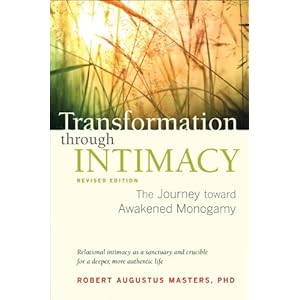
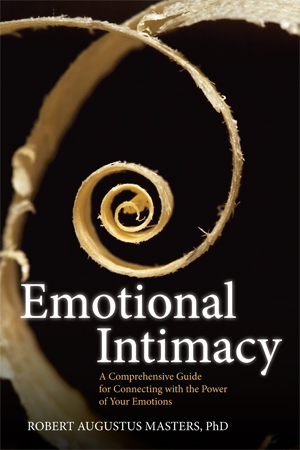
Robert Augustus Masters, author of Spiritual Bypassing: When Spirituality Disconnects Us from What Really Matters (2010), an instant classic, Transformation through Intimacy, Revised Edition: The Journey toward Awakened Monogamy (2012), and many other excellent books, has published his newest book, Emotional Intimacy: A Comprehensive Guide for Connecting with the Power of Your Emotions (2013), with Sounds True, where he also released the excellent Knowing Your Shadow: Becoming Intimate with All That You Are (2013).

Here is the description of the book from Masters' website:
Emotions link our bodies, thoughts, and conditioning at multiple levels. And the capacity to be intimate with our emotions, teaches Robert Augustus Masters, is essential for creating fulfilling relationships, relationships in which awareness, love, passion, and integrity function as one. With Emotional Intimacy, this respected psychospiritual teacher and author invites us to explore: 
• How to deepen our emotional literacy
• Cultivating intimacy with all of our emotions
• The ways that we numb our unwanted feelings, and how to revive them and welcome them back
• How to identify our emotions, fully experience them, and skillfully express them
• Resolving and healing from old emotional wounds
• Gender differences in emotional literacy and expression
• Steps for bringing greater intimacy and depth into our relationships
• In-depth guidance for those facing depression, anxiety, and crippling shame
• Why “blowing off steam” can often make us feel worse, and what constitutes healthy catharsis
• Navigating activity and stimulus overload, a collective emotional pandemic of our times
• Individual chapters for fully engaging with fear, anger, joy, jealousy, shame, grief, guilt, awe, and the full spectrum of our emotions
In the two-part podcast below, Sounds True founder and CEO Tami Simon speaks with Masters about his new book, as well as other topics, including shadow work.

Robert Augustus Masters: Emotional Intimacy, Part 1

Tuesday, May 7, 2013


Robert Augustus Masters is an Integral psychotherapist, relationship expert, and spiritual teacher whose work blends the psychological and physical with the spiritual, emphasizing embodiment, emotional literacy, and the development of relational maturity. Here, Robert and Tami discuss emotional literacy and how it is lacking in our culture today. They consider differences in cultural conditioning between men and women when it comes to expressing emotions and the need to develop a toolkit to identify and work skillfully with anger. (70 minutes)

* * * * * * *

Robert Augustus Masters: Emotional Intimacy, Part 2

Tuesday, May 14, 2013


Tami Simon speaks with Dr. Robert Augustus Masters, an Integral psychotherapist, relationship expert, and spiritual teacher whose work emphasizes embodiment, emotional literacy, and the development of relational maturity. He is the author of 13 books including the new Sounds True book Emotional Intimacy, as well as the audio learning course Knowing Your Shadow. In the second part of their discussion, Tami speaks with Robert about the importance of mutual transparency in relationships, how we can engage in “connected catharsis,” the telltale signs that reveal when we are using spiritual bypassing to avoid emotional experience, and how we can start to identify and work with our own shadow material. (57 minutes)

More from Robert Augustus Masters:


Emotional Intimacy: A Comprehensive Guide for Connecting with the Power of Your Emotions, $12.70 

Knowing Your Shadow: Becoming Intimate with All That You Are, $46.87

Friday, May 25, 2012

Unlimited Realities - "Transformation Through Intimacy" Robert Augustus Masters


This is a nice interview with Robert Augustus Masters about his new book, an updated edition of Transformation through Intimacy, Revised Edition: The Journey toward Awakened Monogamy - the interview was conducted by Lisa Zimmer on her (new-to-me) podcast Unlimited Realities.

"Transformation through Intimacy" Robert Augustus Masters

by Unlimited Realities with Lisa Zimmer


Listen to internet radio with Unlimited Realities with Lisa Zimmer on Blog Talk Radio


Thursday May 25, 2012
Robert Augustus Master, PhD is an integral psychotherapist, trainer of psychotherapists, relationship expert, and spiritual teacher (www.robertmasters.com).

Dr. Masters has written a book  on intimacy, monogomy, and the depth of love in relationships to teach us how to evolve our personal relationships. His wisdom is shown in how well the detailed and easily applied tools he shows us can actually create a deepening within our committed relationships.
The understanding of crucible/sanctuary of our committed unions allows us to evolve those connections easily.

This book is full of Dr. Masters's genius. A must read book for all desiring to feel, have, experience more love in their lives.

Tuesday, March 20, 2012

Social Text - Special Issue on Speculation


Some interesting articles in this new issue of Social Text - all of the articles focused in some way on speculation. Here are links and abstracts for the articles.

Speculative Life: An Introduction

In our dystopian present, the term speculation is associated with an epistemology of greed, a sanctioned terrorism, and a new dimension of imperialism no longer based in production but in abstract futures. But speculation means something else for those who refuse to give its logic over to power and profit. >>
"What will you do when the apocalypse comes??" he asked me urgently. My first reaction was to laugh derisively. But a friend made me think twice. "Who knows, maybe he's right," she said. Then came the Tsunami that devastated South Asia in 2004. And the levees that breached during Hurricane Katrina in 2005. Who's to say what's real?>>
Science fictions never present the future, only "a significant distortion of the present," as Delany wrote in 1984. But they also distort the present of anyone reading at any time, even the text's own future. The contours of Dhalgren's disintegrating city belong to the wake of 1960s countercultures and social movements, to a sexual and racial moment whose history uninformed new generations of readers will learn as they read, even if they fail to recognize it. Sexual pleasure in Delany's work links the past and present and lets a different future feel possible, even when it takes place within structuring limitations. >>
Chinese-Canadian author Larissa Lai imaginatively interrogates the boundaries of the human, alchemizes myths of origin, and embraces the impurity of the cyborg while foregrounding the politics of racialization, animality, and sexuality. Lai builds on the rich tradition of women of color writing in sf/speculative fiction by splicing together cultural theory and current events with a panoply of intertexts. Traversing past, present, and future, Lai maps the permeability of the human through the vectors of animal, creator-goddess, cyborg, and transgenic procreation. Her distinctive métissage of Chinese legend, EuroAmerican culture, Orientalist archetypes, Western popular music, and science fiction disrupts cycles of institutionalized exploitation, corporatized amnesia, and multicultural assimilation.[1] Akin to the work of Octavia Butler, Karen Tei Yamashita, and Nalo Hopkinson, Lai's...>>
China Miéville is the recipient of multiple awards for his speculative/science/weird fiction novels, and the only author ever to win three Arthur C. Clarke Awards.  His most recent novel, Embassytown, came out in May 2011 and has received enthusiastic reviews. As well as writing fiction, Miéville earned his Ph.D. at London School of Economics in International Law and is the author of Between Equal Rights, A Marxist Theory of International Law (2006).      Known for his radical fictive speculation, China Miéville is also fiercely engaged with radical politics--he stood for the House of Commons as candidate for the Socialist Alliance in the 2001 UK general election--and so is often asked about the relationship between his politics and his writing. He...>>

Race for Life

The short film accompanying musician and designer M.I.A.'s (Maya Arulpragasam, who is British of Sri Lankan Tamil descent) song "Born Free" was released in April of 2010 and immediately banned from YouTube. Arulpragasam is no stranger to controversy, since she has drawn attention to the violence perpetrated against the Tamil minority in Sri Lanka, while her music and accompanying visual work is replete with references to different forms of political violence and identification with non-western persecuted populations.One of the few female artists in contemporary popular music that fuse explicit political content with cutting edge sounds, Arulpragasam has often been accused of toying with radical chic and being politically naïve, rather than associated with a long tradition of women of color...>>

So Say We All

Race is an illusion. So say we all! But what do we intend by this saying, this performative? Denise Ferreira da Silva is but the most recent of scholars to note that, in dispelling race from its improper place in the order of the human sciences, casting it into disrespectability along with sorcery, alchemy, and other bait for the credulous, we consolidate that much more firmly the protocols of scientific rationality. But the protocols of science gave us race as an invidious distinction in the first place. Reason giveth, and reason taketh away, seems to be the faith animating the claim "Race is an illusion." But what if were to suspend such faith in the subject of Enlightenment rationality? What...>>
When it comes to dealing with misfortune and injustice, the most effective tool to use if we want to make sure that troubles will persist without relief is a simple sentence: That's water under the bridge. No use crying over spilled milk. The past is over and done with. The goose is cooked. What's done is done.Whenever people have their attention called to injuries that occurred in the past, it is almost certain that someone will pipe up with a demand that everyone cut short the desire to improve the world and, instead, to defer to the water-under-the-bridge school of history.[1]There are is perhaps no better example of the water-under-the-bridge school of thought in the settler-colonial imagination, than Orson Scott...>>
The Natives should have died off by now. To still be alive is a miracle. Can you taste two billion year old air on your breath or the remnants of primordial seas in your sweat? Do you feel e-coli breaking bread in your bowels? Does your heart synch up with these words, these poetic echoes of ancient ancestors? Self and other, simultaneously...>>

Friday, February 17, 2012

Fred Luskin on Overcoming the Pain of Intimacy

A cool post from the GreaterGood blog, created by the good folks at UC Berkeley. Fred Luskin is the author of Forgive for Good (2001) and Forgive for Love: The Missing Ingredient for a Healthy and Lasting Relationship (2009), as well as directing the Stanford University Forgiveness Project.
Fred Luskin on Overcoming the Pain of Intimacy
By Fred Luskin

February 11, 2012 


The director of the Stanford University Forgiveness Projects explores how to cope with the pain of a fight with someone we love.

This month, we feature videos of a Greater Good presentation by Fred Luskin, the director of the Stanford University Forgiveness Projects. In this excerpt from his talk, Dr. Luskin explores how to cope with the pain of a fight, and still see the good in the people we love.

One of the things that made me a forgiveness teacher was this couple that I worked with a long time ago. I remember the wife telling the husband that he had to stop acting a certain way because it reminded her of her father. And she had had a bad relationship with her father.

So she was telling him to stop, because he said something critical of her. And it wasn’t enough for her to just respond to his criticism. She wanted to stop him because it brought up childhood wounding, and she had mentioned to him many times that her father was unkind.

 
 Image: Brian Jackson

Now, what I saw on her part was phenomenal insensitivity. On her part. Not his. Because she was blaming him for her not having healed. From my point of view, she owed him an apology along with the request to stop his criticism. Like, “Honey, I’m really sorry. I had this painful childhood that I haven’t gotten over so I’m extra raw and sensitive, I’m asking for your help.” But she didn’t put it that way. Instead she said, “I’m triggered, and you need to stop.”

Of course, he had a responsibility. He could have been her friend as well, and said, “Hey, I know how hard this is on you.”

But she wasn’t being his friend at all. In our psychotherapeutic world, we tend to see her point of view as more normative than his. But I don’t think it is normative. I think when we carry our wounds with us, and we don’t apologize, or at least make amends for them, we’re committing a form of violence. A very low level violence, but we’re still committing a form of violence.

All of forgiveness work is about us, not them. And all of forgiveness work is to widen our hearts. It’s not to change somebody else. It’s to recognize that part of the problem is that we bring to our relationships a Grinch heart – a heart that’s a couple of sizes too small, that makes us more demanding than is necessary, that makes us insensitive to the flaws of the people we have chosen to love.

What makes an intimate relationship so important and special is that you’re willing to endure their bad qualities too. That’s the space we offer people. It’s not like when you enter into an intimate relationship you’re going to be able to say, “Well, I’ll take this stuff that they bring that’s pleasant but I’m still going to disregard what’s not so pleasant.” That’s not intimacy.

Intimacy does involve taking what’s pleasant, but that’s no big deal. Most of us are willing to take what’s pleasant from people. It’s a rare person who will choose to take what’s unpleasant from another person. It doesn’t mean we have to be abused or mistreated, but in an intimate relationship we’re going to get the full person.


So the question is: Are you willing to put up with your partner’s bad qualities? If you’re not, leave. But the bad qualities are the test of the relationship; your commitment is to their bad qualities. You don’t have to commit to their good stuff. You just do that, that’s pleasant. If somebody wants to cook me dinner, how much of a commitment does it take to show up? Right? Or having my laundry done. I can deal with that. I can show up for that any time you want.

But, if they’re defensive in a fight, for example, that’s when your commitment comes in. That’s where the choice comes in. They’re going to be defensive; that’s who they are. Maybe you can help them, maybe you can’t. They’re going to bring their issues all the time. But are you willing to forgive the fact that they bring these particular issues?

Because one thing is for sure: You are going to be with somebody who brings issues. When you choose a partner, you’re just choosing which issues you’re willing to negotiate with.

That’s a much more mature perspective, one that is grounded in a kind of existential forgiveness: I forgive the fact that my partner is flawed. I forgive the fact that they had childhoods, which wounded them, and I forgive the fact that they had experiences that may require my forbearance to serve them. That’s what a relationship is.
 Read the whole article.


Wednesday, February 15, 2012

Robert Augustus Masters - The Evolution of Intimate Relationship


Integral Life's series called Integral Post features leaders in that community penning an article a month (give or take). One of those leaders is Robert Augustus Masters - and his most recent article is from the Introduction to the reissue of his excellent book, Transformation Through Intimacy: The Journey Toward Awakened Monogamy.

The Evolution of Intimate Relationship


Image: Double Helix by Mark Henson
Robert Augustus Masters shares the introduction to his new book, Transformation Through Intimacy: The Journey Toward Awakened Monogamy, now available for preorder on Amazon.


Intimate relationship has over the last four or five decades evolved so far from its long-established ways—mutating in diverse directions—that its very nature and structuring, once a largely unquestioned given, is clearly up for some deep questioning and reformulating.

Reformulating, revisioning, restructuring, reinventing—how we tend to look at intimate relationship is changing almost as rapidly as intimate relationship itself.

One result of this is that many of us do not have a particularly clear view of intimate relationship and its possibilities. Nonetheless, we have to admit that something is different about intimate relationship now. We look back just two generations, and it seems as if we’re looking back many hundreds of years. Things are shifting that fast.

For a very long time, intimate relationship was viewed and lived, with few exceptions, as an alternative—and not necessarily an equivalent alternative!—to spiritual life. There was the householder, and there was the spiritual seeker, and there wasn’t much overlap between them. As wide as this split was for men, it was even wider for women. Intimate relationship was something you did—or endured—until there was cultural permission to do something “deeper.”

Now there not only is a significant amount of cultural permission—small by conventional standards yet substantial enough to register on societal radar screens—for something “deeper” to happen within intimate relationship, but also an increasing pull toward it. So intimate relationship has, at its leading edge, become less a prelude to spiritual opening and awakening, and more a catalyst or crucible for it.

Read the whole column.

Monday, February 14, 2011

In Defense of Chastity by Emily Baratta

Over at the excellent integral blog, Beams and Struts, Emily Baratta, a recent graduate of the JFKU program in Integral Psychology, has written a defense of chastity - which I read not so much as about chastity as it is about using discriminating awareness in all the realms swirling around sexuality and sexual intimacy.

Favorite line:
Conforming to norms set by self-authoring folks, does not make you self-authoring; it makes you conforming.
Damn straight.

Here are a couple of excerpts, starting at the beginning because (of course) that is where things start.

In Defense of Chastity

Written by Emily Baratta

sexygoddess

I have a great idea for a new series of spiritual practice DVDs. It's called Goddesses Gone Wild.

Nubile coeds exposing their radiance for you, the spiritual practitioner, as you activate your second chakra in ecstatic states of mind/body bliss. You will expand your consciousness in an act of self-love, until rays of cosmic milk spew forth from your rod of creative power, bathing the universe in life force.

I'm kidding, of course, but only about this series being new.
Emily is a fine writer (and I know this because I am currently reading her thesis), and this opening was sure to get people's attention.

But here is where the article gets interesting
Maybe we need to recall that individual development does not always correlate with specific cultural values. In other words, I can be a conformist, blindly following the dogma of political correctness or the free market or sexual empowerment and that conformity is healthy, up to a point. Today the idea that sex is a wonderful part of human expression is not all that edgy in many communities, including ours. What seem to be missing is the big bad voice of traditional values (as opposed to a conformist orientation to those values) and the virtue of chastity with it.
And this:

Values are distinct from levels of individual development. Ascribing to postmodern values, does not necessarily indicate a capacity for self-authorship. It very well might mean that I grew up in a postmodern value sphere and I am a die-hard conformist. Where the dominant cultural message is open sexuality at all costs, chastity is a move away from conformity. Maybe we can call it pre- vs. trans-chastity. Having sex before marriage because everyone else does is not the same thing as really inquiring into what is right for you and then having sex before marriage. Chastity is a prerequisite for mature, responsible sexual expression as well as sexual sin. The Catechism makes clear that you need "full knowledge and complete consent" to be in mortal sin (1860). In other words, you must recognize you are doing the wrong thing and do it anyway. If you can't control yourself, you can't make a choice in either direction.

For those of us who were born into modern and postmodern milieus, a dose of traditionalism may be required to get us to truly self-authoring levels around sex. This is not to say that any tradition is correct in every sexual teaching, but that an unexamined acceptance of sex-positivity is just as immature as an unexamined acceptance of any other ideology. For those of us who are deeply embedded in postmodern sexuality, a virtue like chastity can be the detox agent we need to truly reflect on what is right and wrong regarding sexuality.

For me, these sections get to the heart of the issue. There are a whole lot of people my age or older who are preaching the integral beauty of polyamory, and they base part of their arguments on the need to loosen up and allow people to explore their sexuality in whatever way they please, with as many people as they please.

They also tend to present data from the somewhat sketchy ("dodgy" for my British friends) field of evolutionary psychology that suggests human beings were never meant to be monogamous. Sure, maybe that was true 50,000 years ago. But even that is not known for sure but only speculated - newest thinking by some is that we have been measuring the wrong qualities in early humans and that they were not that different from us.

So let's assume they are correct, and we (men in particular) used to be all about "spreading our seed," I'm willing to wager that if our consciousness has evolved in the last 50,000 years, and if our morality has evolved, and if our intellect has evolved, and if even our emotional intelligence has evolved - if all of that has happened, then I am willing to bet that our capacity for intimate and monogamous relationships has also evolved.

Wouldn't you bet on that, too?

But it could also be that I have done that - and it was not, for me, in any way fulfilling. I'm just telling my story - you need to write your own narrative - be self-authoring, not simply going along with the integral "leadership."