Showing posts with label transformation. Show all posts

Tuesday, May 20, 2014

Daily Om - Moving Through Darkness: The Places We Go


Today's Daily Om looks at the ways we can sometimes find ourselves off track in our lives -- and why that might happen.

Moving through Darkness

The Places We Go

by Madisyn Taylor
May 19, 2014

Often it takes something major to wake us up as we struggle to maintain an illusion of control.

In life, most of us want things to go to the places we have envisioned ourselves going. We have plans and visions, some of them divinely inspired, that we want to see through to completion. We want to be happy, successful, and healthy, all of which are perfectly natural and perfectly human. So when life takes us to places we didn’t consciously want to go, we often feel as if something has gone wrong, or we must have made a mistake somewhere along the line, or any number of other disheartening possibilities. This is just life’s way of taking us to a place we need to go for reasons that go deeper than our own ability to reason. These hard knocks and trials are designed to shed light on our unconscious workings and deepen our experience of reality.

Often it takes something major to wake us up, to shake us loose from our ego’s grip as it struggles to maintain an illusion of control. It is loss of control more than anything else that humbles us and enables us to see the big picture. It reminds us that the key to the universe lies in what we do not know, and what we do know is a small fraction of the great mystery in which we live. This awareness softens and lightens us, as we release our resistance to what is. Another gift gleaned from going to these seemingly undesirable places is that, in our response to difficulty, we can see all the patterns and unresolved emotional baggage that stand in the way of our unconditional joyfulness. Joy exists within us independently of whether things go our way or not. And when we don’t feel it, we can trust that we will find it if we are willing to surrender to the situation, moving through it as we move through our difficult feelings.

We can take our inspiration from any fairy tale that finds its central character lost in a dark wood, frightened and alone. We know that the journey through the wood provides its own kind of beauty and richness. On the other side, we will emerge transformed, lighter and brighter, braver and more confident for having moved through that darkness.
A well-known American poet, Robert Frost, once famously said, "The only way out is through."

Very often, when we find ourselves far from where we wanted to be, either through mistakes we made or the simple ways that life can confound our expectations, there is a reason for the detour.

While we struggle with our loss of control, or self-criticism, we easily lose touch with the big picture. This is when it helps to have friends for support and encouragement, and some form of spiritual practice that can allow us to sit peacefully with our feelings of confusion.

If we do not allow the feelings, we never see the potential for growth that a tough situation provides. In doing so, we only compound the problem and put off dealing with it. The next time it comes up, it will be bigger and more challenging.

Often, if we are willing to listen, there is a quiet voice within us that can help us find our way out of the darkness. But we have to listen.

Monday, February 24, 2014

Zen Brain: Consciousness, Complex Systems, and Transformation (12 Parts)

slidetest1

It's my favorite time of year - the annual Zen Brain Conference at Upaya Zen Center, hosted as always by Roshi Joan Halifax. Among the regular attendees who were there again this year were Richard Davidson, Evan Thompson, Al Kaszniak, and John Dunne.

This year's topic was Consciousness, Complex Systems, and Transformation.
In this intensive program, we explore our lived experience of awareness in relation to our living bodies and brains seen as complex adaptive systems. We focus especially on the themes of “embodied cognition,” “emergent processes,” and “enaction” (cognition as embodied action). Neuroscientists, philosophers, Buddhist scholars, and Zen teachers explore these themes through presentations and discussion interspersed with periods of meditation practice throughout each day.
This is the kind of stuff I get excited about - so I look forward to listening to all of these.

01-30-2014: Zen Brain: Consciousness, Complex Systems, and Transformation (Part 1)

By on February 13, 2014

Speakers: Richard Davidson & Evan Thompson & John Dunne & Neil Theise & Rebecca Todd & Al Kaszniak & Roshi Joan Halifax


Recorded: Thursday Jan 30, 2014

Play

Series Description: Increasingly, cognitive science presents us with a vision of mind as grounded in the complex transformative processes of life, while neuroscience presents us with a vision of the brain as a complex adaptive system that constantly reshapes itself in response to context, experience, and practice. How can this vision of complexity and transformation enrich our understanding of consciousness—the felt experience of awareness across waking, dreaming, sleeping, and dying? In this intensive program, we explore our lived experience of awareness in relation to our living bodies and brains seen as complex adaptive systems. We focus especially on the themes of “embodied cognition,” “emergent processes,” and “enaction” (cognition as embodied action). Neuroscientists, philosophers, Buddhist scholars, and Zen teachers explore these themes through presentations and discussion interspersed with periods of meditation practice throughout each day.
Episode Description: Al Kaszniak kicks off this opening session of Zen Brain: Consciousness, Complex Systems, and Transformation by stating that this program is intended to “push the boundaries” of knowledge and will touch upon “new thinking” in relating complex systems theory to areas of inquiry such as neuroscience, cognitive science, philosophy of mind, and contemplative practice. The Zen Brain faculty then briefly introduce themselves before handing the floor over to Neil Theise. Neil presents a wide-ranging introduction to consciousness and complex systems theory that draws upon ideas in physics, biology, and spirituality. After presenting the basics of complex systems theory, Neil unfolds some very novel thinking on how the emergence of the universe can be viewed in terms of three overlapping processes: complementarity, recursion, and sentience.

BIOs:


Richard Davidson received his Ph.D. in Personality, Psychopathology, and Psychophysiology from Harvard University. He is currently Director for the Laboratory of Affective Neuroscience as well as the Waisman Laboratory for Brain Imaging and Behavior, at the University of Wisconsin-Madison. His research is focused on cortical and subcortical substrates of emotion and affective disorders, including depression and anxiety, using quantitative electrophysiology, positron emission tomography and functional magnetic resonance imaging to make inferences about patterns of regional brain function. A major focus of his current work is on interactions between prefrontal cortex and the amygdala in the regulation of emotion in both normal subjects and patients with affective and anxiety disorders. He has also studied and published several papers on brain physiology in long-term Buddhist meditators, and in persons receiving short-term training in mindfulness meditation. Among his several books is Visions of compassion: Western Scientists and Tibetan Buddhists Examine Human Nature (2002, Oxford University Press), co-edited with Anne Harrington.
Evan Thompson is Professor of Philosophy at the University of Toronto. He received his B.A. from Amherst College in Asian Studies, and his Ph.D. in Philosophy from the University of Toronto. He is the author of Mind in Life: Biology, Phenomenology, and the Sciences of Mind (Harvard University Press, 2007), and the co-editor (with P. Zelazo and M. Moscovitch) of The Cambridge Handbook of Consciousness (Cambridge University Press, 2007) He is also the co-author with F.J. Varela and E. Rosch of The Embodied Mind: Cognitive Science and Human Experience (MIT Press, 1991) and the author of Color Vision: A Study in Cognitive Science and the Philosophy of Perception (Routledge Press, 1995). He is currently working on a new book, titled Waking, Dreaming, Being: New Revelations about the Self from Neuroscience and Meditation. Thompson held a Canada Research Chair at York University (2002-2005), and has also taught at Boston University. He has held visiting positions at the Centre de Récherch en Epistémologie Appliqué (CREA) at the Ecole Polytechnique in Paris and at the University of Colorado at Boulder.
John Dunne is an associate professor in the Department of Religion at Emory University, where he is Co-Director of the Encyclopedia of Contemplative Practices and the Emory Collaborative for Contemplative Studies. He was educated at the Amherst College and Harvard University, where he received his Ph.D. from the Committee on the Study of Religion in 1999. Before joining Emory’s faculty in 2005, he taught at the University of Wisconsin-Madison and held a research position at the University of Lausanne, Switzerland. Support from the American Institute of Indian Studies sustained two years of his doctoral research at the Central Institute for Higher Tibetan Studies in Sarnath, India. 

His work focuses on various aspects of Buddhist philosophy and contemplative practice. In Foundations of Dharmakirti’s Philosophy (2004), he examines the most prominent Buddhist theories of perception, language, inference and justification. His current research includes an inquiry into the notion of “mindfulness” in both classical Buddhist and contemporary contexts, and he is also engaged in a study of Candrakirti’s “Prasannapada”, a major Buddhist philosophical work on the metaphysics of “emptiness” and “selflessness.” His recently published work includes an essay on neuroscience and meditation co-authored with Richard J. Davidson and Antoine Lutz. He frequently serves as a translator for Tibetan scholars, and as a consultant, he appears on the roster of several ongoing scientific studies of Buddhist contemplative practices.
Neil Theise is a diagnostic liver pathologist and adult stem cell researcher in New York City, where he is Professor of Pathology and of Medicine at the Beth Israel Medical Center of the Mount Sinai Health System. He is considered a pioneer of multi-organ adult stem cell plasticity and has published on that topic in Science, Nature, and Cell. Beginning with applications of complexity and emergent self-organization to stem cell behaviors, his work has expanded into include cross-cultural models of biology and medicine, quantum behaviors in biological systems (biological complementarity, uncertainty), and parallels between contemplative insights into reality and contemporary scientific understandings. Most recently, his efforts have focused on the nature of consciousness and the role of sentience to the development and organization of the universe. His teaching efforts regarding all these themes (text and video, for lay and academic audiences) can be found on his blog, neiltheise.wordpress.com. Additional writings can be found at his website at neiltheise.com.
Rebecca Todd focused her doctoral work on mapping neural activation patterns underlying affective processing as well as cognition/emotion interactions associated with individual differences and normative development of self-regulation in childhood. Current research interests include investigating the effects of emotional arousal on the subjective experience of perceptual vividness and its link with memory vividness in healthy young adults and in post-traumatic stress disorder. She is also interested in the influence of emotional state on perceptual processing and higher-order cognitive processes, and the neural mechanisms underlying such influences.
Al Kaszniak received his Ph.D. in clinical and developmental psychology from the University of Illinois in 1976, and completed an internship in clinical neuropsychology at Rush Medical Center in Chicago. He is currently Director of the Arizona Alzheimer’s Consortium Education Core, and a professor in the departments of psychology, neurology, and psychiatry at The University of Arizona (UA. He formerly served as Head of the Psychology Department, and as Director of the UA Center for Consciousness Studies. Al also presently serves as Chief Academic Officer for the Mind and Life Institute, an organization that facilitates collaborative scientific research on contemplative practices and traditions. He is the co-author or editor of seven books, including the three-volume Toward a Science of Consciousness (MIT Press), and Emotions, Qualia, and Consciousness (World Scientific). His research, published in over 150 journal articles and scholarly book chapters, has been supported by grants from the U.S. National Institute on Aging, National Institute of Mental Health, and National Science Foundation, as well as several private foundations. His work has focused on the neuropsychology of Alzheimer’s disease and other age-related neurological disorders, consciousness, memory self-monitoring, emotion, and the psychophysiology of long-term and short-term meditation. Al has served on the editorial boards of several scientific journals, and has been an advisor to the National Institutes of Health and other governmental agencies. He is a Past-President of the Section on Clinical Geropsychology and fellow of the American Psychological Association and a fellow of the Association for Psychological Science. In addition to his academic and administrative roles, he is a lineage holder and teacher (Sensei) in the Soto tradition of Zen Buddhism.
Joan Halifax Roshi is a Buddhist teacher, Zen priest, anthropologist, and author. She is Founder, Abbot, and Head Teacher of Upaya Zen Center, a Buddhist monastery in Santa Fe, New Mexico. She received her Ph.D in medical anthropology in 1973. She has lectured on the subject of death and dying at many academic institutions, including Harvard Divinity School and Harvard Medical School, Georgetown Medical School, University of Virginia Medical School, Duke University Medical School, University of Connecticut Medical School, among many others. She received a National Science Foundation Fellowship in Visual Anthropology, and was an Honorary Research Fellow in Medical Ethnobotany at Harvard University. From 1972-1975, she worked with psychiatrist Stanislav Grof at the Maryland Psychiatric Research Center on pioneering work with dying cancer patients, using LSD as an adjunct to psychotherapy. After the LSD project, she has continued to work with dying people and their families and to teach health care professionals as well as lay individuals on compassionate care of the dying. She is Director of the Project on Being with Dying and Founder and Director of the Upaya Prison Project that develops programs on meditation for prisoners. For the past twenty-five years, she has been active in environmental work. She studied for a decade with Zen Teacher Seung Sahn and was a teacher in the Kwan Um Zen School. She received the Lamp Transmission from Thich Nhat Hanh, and was given Inka by Roshi Bernie Glassman. A Founding Teacher of the Zen Peacemaker Order, her work and practice for more than three decades has focused on applied Buddhism. Her books include: The Human Encounter with Death (with Stanislav Grof); Shamanic Voices; Shaman: The Wounded Healer; The Fruitful Darkness; Simplicity in the Complex: A Buddhist Life in America; Being with Dying; and Wisdom Beyond Wisdom (with Kazuaki Tanashashi).

 
Here are links to the other 11 episodes.
 
01-31-2014: Zen Brain: Consciousness, Complex Systems, and Transformation (Part 2)


Episode Description: In this second session of Zen Brain, Evan Thompson follows on what Neil Theise introduced in the first session (Part 1 of this series), in a wide-ranging exploration of complexity and consciousness. Evan touches upon concepts such as autopoiesis, sense-making, the Buddhist idea of dependent co-arising, enaction, sentience, and the emergence of mind.
 
Podcast: Play in new window | Download


01-31-2014: Zen Brain: Consciousness, Complex Systems, and Transformation (Part 3)


Episode Description: Following Evan Thompson’s talk (Part 2 of this series), the Zen Brain faculty field questions from the program participants.

Podcast: Play in new window | Download 


01-31-2014: Zen Brain: Consciousness, Complex Systems, and Transformation (Part 4)


Episode Description: In this segment of Zen Brain, Rebecca Todd discusses the processes of affect-biased attention and affective enhancement of perception in relation to the complex adaptive system of the human brain. Affect-biased attention refers to how our emotional states bias what we pay attention to in the world before we are even exposed to a stimulus, while affective enhancement refers to how an emotionally-laden perception is made more vivid by our brain. Rebecca discusses these concepts in relation to genetics, epigenetics, and also offers some clinical implications of the data she shares.

Podcast: Play in new window | Download 


01-31-2014: Zen Brain: Consciousness, Complex Systems, and Transformation (Part 5)


Episode Description: Following Rebecca Todd’s talk (Part 4 of this series), the Zen Brain faculty field questions from the program participants.

Podcast: Play in new window | Download 


01-31-2014: Zen Brain: Consciousness, Complex Systems, and Transformation (Part 6)


Episode Description: After a full day of presentations, the Zen Brain faculty address questions submitted by the program participants.

Podcast: Play in new window | Download 


02-01-2014: Zen Brain: Consciousness, Complex Systems, and Transformation (Part 7)


Episode Description: In this segment of Zen Brain, which coincides conceptually with Neil Theise’s talk (Part 1 of this series), John Dunne presents an elegant overview of the evolution of several Buddhist philosophical systems. The goal of all Buddhist systems is the elimination of suffering, suffering which arises due to confusion about the nature of “something.” As we progress from early Buddhism, to the Sautrantika system, to Yogacara, then to Madhyamika, and finally to Mahamudra and Dzogchen, that “something” about which we are confused changes. Each system presents a slightly subtler “cause” for our confusion. Importantly, however, no single system can claim to have the best account of reality. No explanatory system is ultimately true. A system is “better” than another only insofar as it is better at eliminating suffering, at leading us to freedom.

Podcast: Play in new window | Download 


02-01-2014: Zen Brain: Consciousness, Complex Systems, and Transformation (Part 8)


Episode Description: Following John Dunne’s talk (Part 7 of this series), the Zen Brain faculty field questions from the program participants.

Podcast: Play in new window | Download 


02-01-2014: Zen Brain: Consciousness, Complex Systems, and Transformation (Part 9)

Episode Description: In this wide-ranging session of the program, Richie touches upon the topics of complexity and consciousness, gamma oscillations, synchrony, and consciousness, the consequences of unconsciousness, epigenetics, contemplative practice in children, and ends with a beautiful “call for humility” in the face of the extraordinary complexity of the human brain.

Podcast: Play in new window | Download


02-01-2014: Zen Brain: Consciousness, Complex Systems, and Transformation (Part 10)

Episode Description: After a full day of presentations, the Zen Brain faculty address questions submitted by the program participants.

Podcast: Play in new window | Download 


02-02-2014: Zen Brain: Consciousness, Complex Systems, and Transformation (Part 11)


Episode Description: On the final morning of the program, the Zen Brain faculty offer some concluding thoughts before the final Q&A.

Podcast: Play in new window | Download 


02-02-2014: Zen Brain: Consciousness, Complex Systems, and Transformation (Part 12, last part)


Episode Description: In this final session of Zen Brain, the faculty address remaining questions from the program participants.

Podcast: Play in new window | Download

Monday, February 10, 2014

Posttraumatic Growth - When Trauma Leads to Transformation


Post-traumatic growth refers to positive psychological change experienced as a result of the struggle with highly challenging life circumstances. These sets of circumstances represent significant challenges to the adaptive resources of the individual and pose significant challenges to individuals' way of understanding the world and their place in it. Posttraumatic growth is not simply a return to baseline from a period of suffering; instead it is an experience of improvement that for some persons is deeply meaningful. [Wikipedia]

This article from Stephen Joseph's Psychology Today blog, What Doesn't Kill Us, offers a brief overview of posttraumatic growth. I have also included a list of books and papers by the original researchers of this phenomenon, Richard Tedeshi and Lawrence Calhoun.

Posttraumatic Growth

The subversion of suffering

Published on February 8, 2014 by Stephen Joseph, Ph.D. in What Doesn't Kill Us

‘Suffering is universal: you attempt to subvert it so that it does not have a destructive, negative effect. You turn it around so that it becomes a creative, positive force.’ Those are the words of Terry Waite who survived four years in solitary confinement, chained, beaten and subject to mock execution.

Interest in how trauma can be a catalyst for positive changes began to take hold during the mid 1990’s when the term posttraumatic growth was introduced by two pioneering scholars Richard Tedeschi and Lawrence Calhoun.

The term posttraumatic growth proved to be popular and has since developed into one of the flagship topics for positive psychology.
In my book What Doesn't Kill Us: The New Psychology of Posttraumatic Growth (2013), I describe how after experiencing a traumatic event, people often report three ways in which their psychological functioning increases:
1. Relationships are enhanced in some way. For example, people describe that they come to value their friends and family more, feel an increased sense of compassion for others and a longing for more intimate relationships.

2. People change their views of themselves in some way. For example, developing in wisdom, personal strength and gratitude, perhaps coupled with a greater acceptance of their vulnerabilities and limitations.

3. People describe changes in their life philosophy. For example, finding a fresh appreciation for each new day and re-evaluating their understanding of what really matters in life, becoming less materialistic and more able to live in the present.
Importantly, and this just can’t be emphasized enough, this does not mean that trauma is not also destructive and distressing. No one welcomes adversity. But the research evidence shows us that over time people can find benefits in their struggle with adversity. Indeed, across a large number of studies of people who have experienced a wide range of negative events, estimates are that between 30 and 70% typically report some form of positive change

We can all use this knowledge to help us cope when adversity does strike, be it bereavement, accident or illness. We can seek to live more wisely in the aftermath of adversity and as the opening quote says, subvert suffering.

To find out more about my book on posttraumatic growth: http://www.profstephenjoseph.com

For even more information on postttraumatic growth, go to the source,
Richard G. Tedeschi, Ph.D., is professor of psychology at UNC Charlotte and a licensed psychologist. He received his B.A. in psychology from Syracuse University, his Ph.D. in clinical psychology from Ohio University, and completed his clinical psychology internship at the UNC School of Medicine. He is consultant to the American Psychological Association on trauma and resilience, and is a fellow of the division of trauma psychology. He is past president of the North Carolina Psychological Association.

Lawrence G. Calhoun, Ph.D., is professor of psychology at UNC Charlotte and a licensed clinical psychologist. Although his parents were North American, he was born and raised in Brazil. He is one of the pioneers in the study of posttraumatic growth and is author of several books. His most recent book, with Richard Tedeschi, is Posttraumatic Growth in Clinical Practice.

Books:

Papers:

Thursday, January 30, 2014

David Cronenberg's Introduction to Kafka's Metamorphosis

Who could possibly be better to write an introduction to a new edition of Franz Kafka's classic novella, Metamorphosis than David Cronenberg? No one, that's who.

From The Paris Review:

The Beetle and the Fly


January 17, 2014 | by David Cronenberg

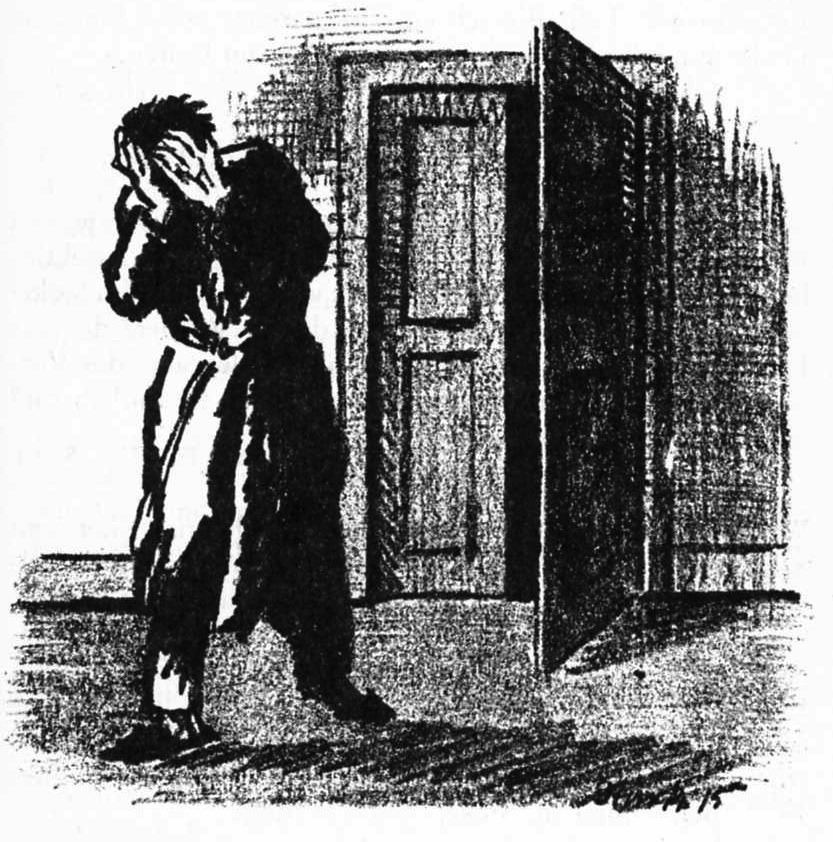
From the original cover of Kafka’s Die Verwandlung, 1915.

I woke up one morning recently to discover that I was a seventy-year-old man. Is this different from what happens to Gregor Samsa in The Metamorphosis? He wakes up to find that he’s become a near-human-sized beetle (probably of the scarab family, if his household’s charwoman is to be believed), and not a particularly robust specimen at that. Our reactions, mine and Gregor’s, are very similar. We are confused and bemused, and think that it’s a momentary delusion that will soon dissipate, leaving our lives to continue as they were. What could the source of these twin transformations possibly be? Certainly, you can see a birthday coming from many miles away, and it should not be a shock or a surprise when it happens. And as any well-meaning friend will tell you, seventy is just a number. What impact can that number really have on an actual, unique physical human life?

In the case of Gregor, a young traveling salesman spending a night at home in his family’s apartment in Prague, awakening into a strange, human/insect hybrid existence is, to say the obvious, a surprise he did not see coming, and the reaction of his household—mother, father, sister, maid, cook—is to recoil in benumbed horror, as one would expect, and not one member of his family feels compelled to console the creature by, for example, pointing out that a beetle is also a living thing, and turning into one might, for a mediocre human living a humdrum life, be an exhilarating and elevating experience, and so what’s the problem? This imagined consolation could not, in any case, take place within the structure of the story, because Gregor can understand human speech, but cannot be understood when he tries to speak, and so his family never think to approach him as a creature with human intelligence. (It must be noted, though, that in their bourgeois banality, they somehow accept that this creature is, in some unnamable way, their Gregor. It never occurs to them that, for example, a giant beetle has eaten Gregor; they don’t have the imagination, and he very quickly becomes not much more than a housekeeping problem.) His transformation seals him within himself as surely as if he had suffered a total paralysis. These two scenarios, mine and Gregor’s, seem so different, one might ask why I even bother to compare them. The source of the transformations is the same, I argue: we have both awakened to a forced awareness of what we really are, and that awareness is profound and irreversible; in each case, the delusion soon proves to be a new, mandatory reality, and life does not continue as it did.

Is Gregor’s transformation a death sentence or, in some way, a fatal diagnosis? Why does the beetle Gregor not survive? Is it his human brain, depressed and sad and melancholy, that betrays the insect’s basic sturdiness? Is it the brain that defeats the bug’s urge to survive, even to eat? What’s wrong with that beetle? Beetles, the order of insect called Coleoptera, which means “sheathed wing” (though Gregor never seems to discover his own wings, which are presumably hiding under his hard wing casings), are notably hardy and well adapted for survival; there are more species of beetle than any other order on earth. Well, we learn that Gregor has bad lungs they are “none too reliable”—and so the Gregor beetle has bad lungs as well, or at least the insect equivalent, and perhaps that really is his fatal diagnosis; or perhaps it’s his growing inability to eat that kills him, as it did Kafka, who ultimately coughed up blood and died of starvation caused by laryngeal tuberculosis at the age of forty. What about me? Is my seventieth birthday a death sentence? Of course, yes, it is, and in some ways it has sealed me within myself as surely as if I had suffered a total paralysis. And this revelation is the function of the bed, and of dreaming in the bed, the mortar in which the minutiae of everyday life are crushed, ground up, and mixed with memory and desire and dread. Gregor awakes from troubled dreams which are never directly described by Kafka. Did Gregor dream that he was an insect, then awake to find that he was one? “‘What in the world has happened to me?’ he thought.” “It was no dream,” says Kafka, referring to Gregor’s new physical form, but it’s not clear that his troubled dreams were anticipatory insect dreams. In the movie I co-wrote and directed of George Langelaan’s short story The Fly, I have our hero Seth Brundle, played by Jeff Goldblum, say, while deep in the throes of his transformation into a hideous fly/human hybrid, “I’m an insect who dreamt he was a man and loved it. But now the dream is over, and the insect is awake.” He is warning his former lover that he is now a danger to her, a creature with no compassion and no empathy. He has shed his humanity like the shell of a cicada nymph, and what has emerged is no longer human. He is also suggesting that to be a human, a self-aware consciousness, is a dream that cannot last, an illusion. Gregor too has trouble clinging to what is left of his humanity, and as his family begins to feel that this thing in Gregor’s room is no longer Gregor, he begins to feel the same way. But unlike Brundle’s fly self, Gregor’s beetle is no threat to anyone but himself, and starves and fades away like an afterthought as his family revels in their freedom from the shameful, embarrassing burden that he has become.


Jeff Goldblum in Cronenberg’s The Fly, 1986.

When The Fly was released in 1986, there was much conjecture that the disease that Brundle had brought on himself was a metaphor for AIDS. Certainly I understood this—AIDS was on everybody’s mind as the vast scope of the disease was gradually being revealed. But for me, Brundle’s disease was more fundamental: in an artificially accelerated manner, he was aging. He was a consciousness that was aware that it was a body that was mortal, and with acute awareness and humor participated in that inevitable transformation that all of us face, if only we live long enough. Unlike the passive and helpful but anonymous Gregor, Brundle was a star in the firmament of science, and it was a bold and reckless experiment in transmitting matter through space (his DNA mixes with that of an errant fly) that caused his predicament.

Langelaan’s story, first published in Playboy magazine in 1957, falls firmly within the genre of science fiction, with all the mechanics and reasonings of its scientist hero carefully, if fancifully, constructed (two used telephone booths are involved). Kafka’s story, of course, is not science fiction; it does not provoke discussion regarding technology and the hubris of scientific investigation, or the use of scientific research for military purposes. Without sci-fi trappings of any kind, The Metamorphosis forces us to think in terms of analogy, of reflexive interpretation, though it is revealing that none of the characters in the story, including Gregor, ever does think that way. There is no meditation on a family secret or sin that might have induced such a monstrous reprisal by God or the Fates, no search for meaning even on the most basic existential plane. The bizarre event is dealt with in a perfunctory, petty, materialistic way, and it arouses the narrowest range of emotional response imaginable, almost immediately assuming the tone of an unfortunate natural family occurrence with which one must reluctantly contend.

Stories of magical transformations have always been part of humanity’s narrative canon. They articulate that universal sense of empathy for all life forms that we feel; they express that desire for transcendence that every religion also expresses; they prompt us to wonder if transformation into another living creature would be a proof of the possibility of reincarnation and some sort of afterlife and is thus, however hideous or disastrous the narrative, a religious and hopeful concept. Certainly my Brundlefly goes through moments of manic strength and power, convinced that he has combined the best components of human and insect to become a super being, refusing to see his personal evolution as anything but a victory even as he begins to shed his human body parts, which he carefully stores in a medicine cabinet he calls the Brundle Museum of Natural History.

There is none of this in The Metamorphosis. The Samsabeetle is barely aware that he is a hybrid, though he takes small hybrid pleasures where he can find them, whether it’s hanging from the ceiling or scuttling through the mess and dirt of his room (beetle pleasure) or listening to the music that his sister plays on her violin (human pleasure). But the Samsa family is the Samsabeetle’s context and his cage, and his subservience to the needs of his family both before and after his transformation extends, ultimately, to his realization that it would be more convenient for them if he just disappeared, it would be an expression of his love for them, in fact, and so he does just that, by quietly dying. The Samsabeetle’s short life, fantastical though it is, is played out on the level of the resolutely mundane and the functional, and fails to provoke in the story’s characters any hint of philosophy, meditation, or profound reflection. How similar would the story be, then, if on that fateful morning, the Samsa family found in the room of their son not a young, vibrant traveling salesman who is supporting them by his unselfish and endless labor, but a shuffling, half-blind, barely ambulatory eighty-nine-year-old man using insectlike canes, a man who mumbles incoherently and has soiled his trousers and out of the shadowland of his dementia projects anger and induces guilt? If, when Gregor Samsa woke one morning from troubled dreams, he found himself transformed right there in his bed into a demented, disabled, demanding old man? His family is horrified but somehow recognize him as their own Gregor, albeit transformed. Eventually, though, as in the beetle variant of the story, they decide that he is no longer their Gregor, and that it would be a blessing for him to disappear.

When I went on my publicity tour for The Fly, I was often asked what insect I would want to be if I underwent an entomological transformation. My answers varied, depending on my mood, though I had a fondness for the dragonfly, not only for its spectacular flying but also for the novelty of its ferocious underwater nymphal stage with its deadly extendable underslung jaw; I also thought that mating in the air might be pleasant. Would that be your soul, then, this dragonfly, flying heavenward? came one response. Is that not really what you’re looking for? No, not really, I said. I’d just be a simple dragonfly, and then, if I managed to avoid being eaten by a bird or a frog, I would mate, and as summer ended, I would die.

This essay appears as the introduction to Susan Bernofsky’s new translation of The Metamorphosis.

David Cronenberg is a Canadian filmmaker whose career has spanned more than four decades. Cronenberg’s many feature films include Stereo, Crimes of the Future, Fast Company, The Brood, The Dead Zone, The Fly, Naked Lunch, M. Butterfly, Crash, A History of Violence, and A Dangerous Method. His most recent film, Cosmopolis, starred Robert Pattinson and was an adaptation of Don DeLillo’s 2003 novel. Consumed, his first novel, will be published in September.

Tuesday, January 21, 2014

Shrink Rap Radio #386 – An Update on Mind-Expanding Substances with Ralph Metzner PhD


Ralph Metzner Ph.D. is an American psychologist, writer, and researcher (born in Germany), who participated in psychedelic research at Harvard University in the early 1960s with Timothy Leary, Richard Alpert (Ram Dass), and Andrew Weil. Dr. Metzner is a psychotherapist and Professor Emeritus of psychology at the California Institute of Integral Studies in San Francisco, where he was formerly the Academic Dean and Academic Vice-president.

Dr. Metzner has been involved in consciousness research, including psychedelics, yoga, meditation, and shamanism for over 45 years. He is a co-founder and President of the Green Earth Foundation, a non-profit educational organization devoted to healing and harmonizing the relationship between humans and the Earth. Metzner was featured in the 2006 film Entheogen: Awakening the Divine Within, a documentary about rediscovering an enchanted cosmos in the modern world.

His books include Green Psychology: Transforming our Relationship to the Earth (1999), Well of Remembrance: Rediscovering the Earth Wisdom Myths of Northern Europe (2001, originally 1994), and The Unfolding Self: Varieties of Transformative Experience (2010), among many others.

He was the guest of Dr. David Van Nuys earlier this week on Shrink Rap Radio.

Shrink Rap Radio #386 – An Update on Mind-Expanding Substances with Ralph Metzner PhD

Ralph Metzner

A psychology podcast by David Van Nuys, Ph.D.
copyright 2014: David Van Nuys, Ph.D.
Posted on January 16, 2014

Ralph Metzner, Ph.D., a graduate of Oxford and Harvard, is a recognized pioneer in psychological, philosophical and cross-cultural studies of consciousness and its transformations. He collaborated with Leary and Alpert in classic studies of psychedelics at Harvard University in the 1960s, co-authored The Psychedelic Experience and was editor of The Psychedelic Review. He is a psychotherapist and Professor Emeritus at the California Institute of Integral Studies, where he was also the Academic Dean for ten years in the 1980s. His books include The Unfolding Self, The Well of Remembrance, Green Psychology, The Expansion of Consciousness, Alchemical Divination, and Mind Space and Time Stream. He is the editor of two collections of essays on the pharmacology, anthropology and phenomenology of ayahuasca and of psilocybin mushrooms. He is also the president and co-founder of the Green Earth Foundation, dedicated to healing and harmonizing the relations between humanity and the Earth.

Play

Wednesday, January 01, 2014

Awakening the Dreamer: Changing the Dream


This is kind of cool - a little inspiration to begin the new year. There is about 90 minutes total in the two parts of the video - the creators designed the series (actually 6 modules) to be viewed all at once.


Awakening the Dreamer: Changing the Dream

Part 1

Part 2

The Awakening the Dreamer Symposium awakens future game changers to the need for, and opportunity of, bringing forth a new future for everyone. The half-day program with skilled facilitators takes place in-person around the United States and in 77 other countries, and is also available via video that can be watched at your convenience. In this workshop, you will have the opportunity to take a stand for the sustainable, just, and fulfilling future you want to see.


Wake up to your own role in creating a new future. This new perspective of the current state of our planet features top scientific, indigenous and activist minds from around the world. Now available for the first-time ever on video, The Awakening the Dreamer, Changing the Dream Symposium empowers participants to respond to the urgency and the opportunity of our times with action and informed, grounded optimism. Taped live, the Symposium features leading-edge information, inspiring multimedia and transformative exercises for an experience like none other. Together, we can change the world.

Worksheets: Personal Plan for Getting Into Action / Declaration Card

Wednesday, December 04, 2013

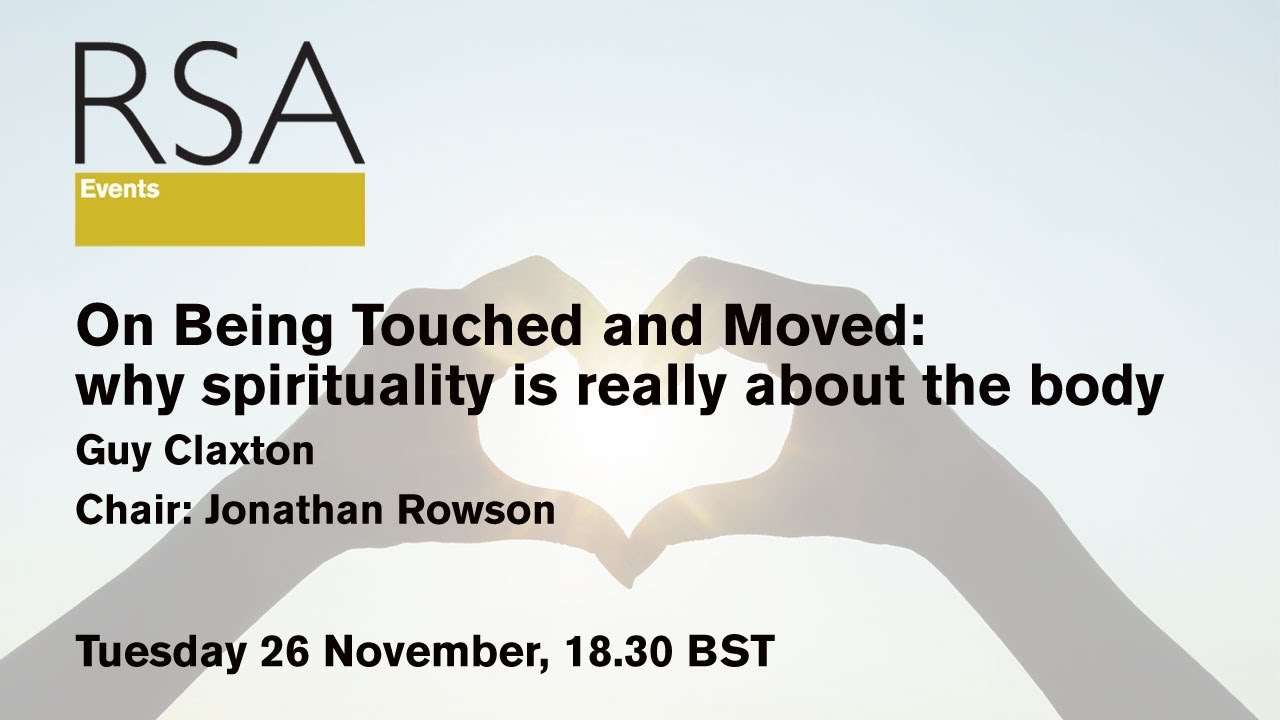
Guy Claxton - On Being Touched and Moved: Why Spirituality Is Really About the Body


This is a cool talk from the RSA on embodiment and spirituality. Guy Claxton is a psychologist and senior lecturer at King's College, London. He is currently teaching at Schumacher College, a new international centre for studies informed by spiritual and ecological values at Dartington, Devon. He is the author of many books on religion, psychology and education, including The Heart of Buddhism: A Simple Introduction to Buddhist Practice (2013, Kindle only in U.S.), The Learning Powered School: Pioneering 21st Century Education (2011), and The Wayward Mind: An Intimate History of the Unconscious (2007).

On Being Touched and Moved: Why Spirituality Is Really About the Body


26th Nov 2013


Listen to the audio
(full recording including audience Q&A)

Watch this event as a RSA Replay (above). RSA Replay is now a featured playlist on our Youtube channel, it is the full recording of the event including audience Q&A. There will an edited high-res video version of the talk available in a couple of weeks time, and if you subscribe to our channel on YouTube - you'll get automatically notified whenever there's a new video.
In the next in our new series of talks and debates opening up a new public conversation about spirituality in the 21st century, Professor Guy Claxton explores spirituality’s embodied nature.

The “felt” experience of spirituality is described in surprisingly common terms by those who undergo it. Though accounts are clad in all kinds of cultural tropes, its essence appears to lie in a spontaneous, and usually fleeting, transformation of bodily awareness; people describe a dissolution of separateness and loss of agitation, and report feeling suffused with energy, brightness and open-hearted concern. In his lecture at the RSA, Professor Claxton shows how new insights from the science of embodied cognition can help to make sense of this perceptual shift. Spirituality as a set of practices can be seen as bound up with people's desire to recapture and stabilise these tantalising glimpses of an inherent, untarnished capacity for physical vitality, peace of mind and loving fondness for the world. Can science also help to structure this quest?

Speaker: Guy Claxton, Co-Director of the Centre for Real-World Learning, and Professor of the Learning Sciences, University of Winchester.

Chair: Jonathan Rowson, Director, Social Brain Centre, RSA

Find out more about the project.

Find out more about the RSA’s Social Brain Centre

Monday, November 25, 2013

Nozomi Hayase - The Crisis of Representation and the Liberation of the Self

From RoarMag.org, Nozomii Hayase has written an excellent and important article on the only real approach to changing our failed political structure. She advocates for, and I agree with her, a change in how we as individuals live in this culture - less mindless consumerism and conformity and more  community and interpersonal connection.

In Constructing the Self, Constructing America, psychoanalyst Phillip Cushman described “the empty self” — “the bounded, masterful self” — and described how this empty self “has specific psychological boundaries, a sense of personal agency that is located within, and a wish to manipulate the external world for its own personal ends.”. It is this empty self that has made consumer culture possible.
Cushman further characterized this empty self as one that “experiences a significant absence of community, tradition and shared meaning — a self that experiences these social absences and their consequences ‘interiorally’ as a lack of personal conviction and worth; a self that embodies the absences, loneliness, and disappointments of life as a chronic, undifferentiated emotional hunger.”
This shift to the empty self following WWII has resulted in a shift in our personal identity from citizen to consumer.

This is good stuff.

The crisis of representation and the liberation of the self


by Nozomi Hayase on October 11, 2013 
 

To overcome the crisis of democracy and reaffirm our autonomy, we first of all need to liberate our empty self from mindless consumerism and conformity.

Half a year into Obama’s second term, it has become clear what has been done under his watch. He brought to the world massive banking fraud, drone attacks, indefinite detention, assassination of US citizens and an unprecedented war on whistleblowers. The rhetoric of hope and change has finally and undeniably revealed its true colors. Prominent dissident intellectual Noam Chomsky has remarked how Obama’s assault on civil liberties has progressed beyond anything he could have imagined. All of these tell-tale signs mark the slippery slide toward totalitarianism that seems to now be escalating.

Edward Snowden’s NSA files unveiled to the world mass global surveillance and the fact that the USA has become the United Stasi of America. The decay of democracy in the United States is now undeniable, as all branches of the federal government have begun to betray the very ideals this country was founded on. The exposed NSA stories have had a serious global impact, challenging the credibility of the US on all levels. Under a relentless secrecy regime, the criminalization of journalism and any true dissent has become the new norm.

In recent months, a pattern of attacks on journalism has unfolded. Examples include the APA scandal of the Department of Justice’s seizure of telephone records, the tapping of Fox News reporter James Rosen’s private emails and the British government’s detention of David Miranda, partner of the Glenn Greenwald, the primary journalist breaking the NSA story. On top of these recent developments, a media shield law has moved forward in Washington. The Senate Judiciary Committee passed a bill that narrowly defines what a journalist can be, thus taking away First Amendment protections from new forms of media. All of this points not only towards deep threats to press freedom, but to a general trend toward excessive state control and a centralization of power.

The American corporate media takes all this in stride with a business-as-usual attitude that carries the meme of “Keep Calm and Carry On”. After the NSA revelations, author Ted Rall posed the question on everyone’s lips: “Why are Americans so passive”? Obama’s blatant violations of the Fourth Amendment have reached far beyond Richard Nixon’s Watergate scandal in 1974 that led him to resign under threat of impeachment. In the midst of Obama’s aggressive persecution of those who shine light on government crimes, where are all the courageous Americans? How have the people allowed such egregious acts by the government against the Constitution?

As scandals of the NSA continue to shed light on a further subversion of basic privacy within the internet, the drumbeat of war — as Obama prepared for an attack on Syria — seemed to be no coincidence. Although Snowden’s revelations began to stir up debate and efforts for reform across the country, compared with mass protests breaking out in countries like Turkey and Brazil, the scale of the response has been relatively small and hasn’t reached the full swing needed for meaningful change. One can ask: do Americans even care or are they so defeated and disempowered by a corporatized war machine they feel there is nothing they can do at all?

The Slowly Boiling Frog and the ‘Good American’

One of the reasons for public passivity is the normalization over time of radical politics. The metaphor of the slowly boiling frog comes to mind. A frog would not jump out of a hot pot if the temperature slowly rises over time. The frog’s instinctual reaction to boiling water can be compared to an innate sense within us that detects dangerous, radical or controlling agendas and blatant unconstitutional and illegal actions of governments or corporations. Our sense to feel the changes of temperature in the habitat of this supposedly democratic society has been rendered dull and has eventually been incapacitated altogether by subversion and perception management.

This control of perception is seen most blatantly in US politics, with the manufactured pendulum between a faux right and left. For instance, the handling of the issue of raising the federal debt ceiling in 2011 illustrates this machination of perception control. Michael Hudson, President of the Institute for the Study of Long-Term Economic Trends, spoke of how the rhetoric of crisis is used to rush through profoundly unpopular and otherwise impossible agendas:

Just like after 9/11, the Pentagon pulled out a plan for Iraq’s oil fields, Wall Street has a plan to really clean up now, to really put the class war back in business … They’re pushing for a crisis to let Mr. Obama rush through the Republican plan. Now, in order for him to do it, the Republicans have to play good cop, bad cop. They have to have the Tea Party move so far to the right, take so crazy a position, that Mr. Obama seems reasonable by comparison. And, of course, he is not reasonable. He’s a Wall Street Democrat, which we used to call Republicans.
The definition of liberal can move as opponents shift views. There is a false partisanship that slowly makes the public feel comfortable with what are actually quite radical and inhumane ideas and actions. This subversive form of perception management appears to have reached its height with the current presidency. This administration, with its crafted image of the ‘progressive Obama’, has successfully co-opted the left and marched it into supporting neoconservative policies that they once claimed to reject.

Glenn Greenwald, for instance, has described Obama as much more effective in institutionalizing abusive and exploitative policies than any Republican president could ever dream of being. He points out, for instance, how “Mitt Romney never would have been able to cut Social Security or target Medicare, because there would have been an enormous eruption of anger and intense, sustained opposition by Democrats and progressives accusing him of all sorts of things.” On the contrary, Greenwald continues, Obama would “bring Democrats and progressives along with him and to lead them to support and get on board with things that they have sworn they would never, ever be able to support.”

In his Death of the Liberal Class, Chris Hedges called the election of Obama a “triumph of illusion over substance”, and “a skillful manipulation and betrayal of the public by a corporate power elite.” Hedges points out how Obama was chosen as the Advertising Age’s marketer of the year in 2008 and that “the goal of a branded Obama, as with all brands, was to make passive consumers mistake a brand for an experience.”

This subversive form of control seems to have evolved beyond the political tactics of the past. During the Bush era, manipulation was much more blunt. Naomi Klein, author of The Shock Doctrine: The Rise of Disaster Capitalism, outlined the state’s use of public disorientation during crises and catastrophes for purposes of manipulation. Klein shows how, from natural disasters to terrorists attacks, the state exploits crises by taking advantage of the public’s psychologically vulnerable state to push through its own radical pro-market agenda.

A prime example of this Shock Doctrine was the lead-up to the invasion of Iraq. After the 9/11 implosions of the Twin Towers, a climate of fear was manufactured using the rhetoric of a “war on terror”, accompanied by the repeated images of those towers collapsing. This, in turn, was followed by Secretary of State Colin Powell’s shameful performance of deceit at the UN Security Council about Iraq’s supposed weapons of mass destruction. Before the public recovered from the horrendous tragedy, the nation was rail-roaded into an illegal war.

Obama’s manufactured brand has until now been quite effective in hiding its real intentions and those of its corporate overlords. The late comedian George Carlin pointed to the emergence of creeping total government control, saying that “when fascism comes to America, it will not be in brown and black shirts. It will not be with Jack-boots. It will be with Nike sneakers and smiley shirts.” Under this guise of a liberal president, a Nobel Peace Prize laureate and constitutional scholar, Obama seems able to get away with policies unheard of since the last attempt at building up an imperial totalitarian state. The pretence of liberalism normalizes the most extreme policies with glib rhetoric of national security, thus neutralizing any oppositional force. In responding to recent NSA leaks, Obama justified the state’s espionage campaign as a vital part of the government’s counter-terrorism efforts, remarking that privacy is a necessary sacrifice for assuring security.

What has unfolded in the US political and social landscape is a kind of numbing of the senses. The machinations of public relations, tawdry distractions and manufactured desires create an artificial social fabric. It is as if a layer of skin has been added around the body that prevents us from having direct contact with the real fabric of our immediate environment. Entertainment and corporate ads desensitize us. They create a lukewarm feel-good political bath replacing authentic human experience with pseudo-reality. This artificially installed skin intermediates our experience of actual events. It misinforms those inside the boiling pan, and prevents them from getting to know the world through direct experience.

Martin Luther King, Jr. once said that “history will have to record that the greatest tragedy of this period of social transition was not the strident clamor of the bad people, but the appalling silence of good people.” History has shown how many people remain silent while witnessing the most egregious crimes against humanity. During the rise of Hitler in Germany, it was the ‘Good Germans’ who became bystanders, supporting by default the horrendous acts of one man and allowing him to dictate life and death within an entire nation.

At the ceremony of the prestigious German whistleblower prize in Germany, the acceptance speech from Edward Snowden was read by security researcher and activist Jacob Appelbaum. Appelbaum spoke to the audience of how he now lives in Berlin because in his home country of the United States, true journalism has become a dangerous trade. He conveyed the importance of not forgetting history and asked all Germans to share with Americans their history and experience with totalitarianism.

Numbed people of nations in the grip of fear easily lose connection with reality. Once we are divorced from our own senses, we come to rely on these signals from outside and regard them as our own. This creates a blind obedience to perceived outside authority, and in face of abuses and injustice it is all too easy to become passive and silent. No one person or nation is immune from this and the American people are far from an exception. As Snowden put it, we now live in a global turnkey tyranny. The key to overt fascism has not yet been turned, but smiley faces are everywhere. In the slowly boiling water of the United States of Amnesia, it may be that many are now becoming the ‘Good Americans’ who won’t speak up before it’s too late.

The Empty Self and Representation As a New Authority

How have the American people lost touch with reality? What made them so vulnerable to manipulation and political and media misinformation? No doubt the corporate media played a large role in the controlling of perception, yet there is something deeper at work. The root causes of the passivity and apathy of the populace can be better understood by looking into a particular configuration of self that has emerged in Western history.

In Constructing the Self, Constructing America, psychoanalyst Phillip Cushman analyzed how in the post-WWII United States, modern industrialization broke down the traditional social bonds and restructured the reality of community. Out of this, he argues, a specific configuration of self emerged. Cushman called it “the empty self” — “the bounded, masterful self” — and described how this empty self “has specific psychological boundaries, a sense of personal agency that is located within, and a wish to manipulate the external world for its own personal ends”. Cushman further characterized this empty self as one that “experiences a significant absence of community, tradition and shared meaning — a self that experiences these social absences and their consequences ‘interiority’ as a lack of personal conviction and worth; a self that embodies the absences, loneliness, and disappointments of life as a chronic, undifferentiated emotional hunger.”

Cushman argued how this new configuration of self and its emotional hunger was indispensable to the development of US consumer culture. Stuart Ewen, in his classic, Captains of Consciousness, explored how modern advertising was used as a direct response to the needs of industrial capitalism through its functioning as an instrument for the “the creation of desires and habits”: “The vision of freedom which was being offered to Americans was one which continually relegated people to consumption, passivity and spectatorship.” Ewen saw this in the economic shift from production to consumption and in the personal identity shift from citizens to consumers.

It did not take long for this covert manipulation of desires to be widely used for advancing certain economic or political agendas. Through unpacking his uncle Freud’s study of the unconscious, the father of modern corporate advertising — Edward Bernays — gained insight into the power of subterranean desires as a tool for manipulation. In Propaganda, Bernays put forth the idea that “the conscious and intelligent manipulation of the organized habits and opinions of the masses is an important element in democratic society. Those who manipulate this unseen mechanism of society constitute an invisible government which is the true ruling power of our country.” This deliberate work of controlling perception came to be understood as propaganda, and has been identified as “the executive arm of the invisible government.”

How does this invisible force of governance work? How is such an effective manipulation of desires on such a mass scale accomplished? It has to do with mechanisms of the unconscious; desires and drives that most people don’t even know exist. Psychoanalyst Carl Jung took Freud’s discovery of the unconscious and examined the phenomena he identified as projection. Jung described how one meets one’s repressed materials in the form of projections outside and that this projecting is carried out unconsciously.

The marketing and PR industries channel our psychological needs, then convert them into specific desires for certain products or political candidates. This manipulation of desires relies on the ability to craft effective images of products that would induce the involuntary process of projection from the individual. Whether it is images of elected officials or celebrities, the latest laundry soap or high definition TV screens, images outside present themselves as something that speaks to internal desires. They quickly appear before us as desirable objects and the representation of unconscious desires. Representation thus becomes simply an externalization of those unconscious and internal desires and emotions that are mostly unknown to us.

The manipulation of desires in a form of representation squashes our capacity to create images. Instead, images are imposed upon us from the outside. We lose connection with our own desires and, not knowing the real roots of our emotions and drives, we are cheated in the act of determining our own actions. Activity of imagining is interrupted and short-circuited to a finished product as multiple ways of manifesting our desires are narrowed down to the simple act of consuming. We become passive and end up carrying out the will of others.

Representation places the source of legitimacy outside of oneself. Whether it is a corporate brand name, political party, an ideology or slogan, one looks for objects of representation through which something inside can be projected out onto the world. A good example is seen in the US political system, in the so-called representative form of government: the system of electing officials to whom power is delegated to enact changes on behalf of the people. Another example can be found in the operation of corporations, where individuals, through the purchase of company stock, become shareholders and supposedly indirectly influence the direction of the corporation. The theory is that the corporation as an entity could represent their economic interests.

Many began to regard these outer forms as possessing intrinsic authority, giving them power to govern and influence their own lives, when in reality what underlies both cases is simply something that represents what lives in us unconsciously. The mechanism of representation harvests a mindset that makes people believe real solutions to problems can only come from somewhere outside, often from those very people who are divorced from and not really affected by any of those problems.

With the advent of consumer culture and the apparatus of image manufacturing that further reinforced the conditions of the empty self, the notion of representation has come to form a new authority. Unlike the traditional authority of churches and the nuclear family, in representation an authority is internalized and its force of control becomes more unrecognizable to those under its governance. Cushman noted that “Tte only way corporate capitalism and the state could influence and control the population was by making their control invisible, that is, by making it appear as though various feelings and opinions originate solely from within the individual.”

This is seen most clearly in electoral politics, where candidates are pre-approved and outcomes are manipulated, yet we are made to believe we are actually making rational, independent and individual decisions about who best represents our common interest — when in reality there is no real choice and we often end up voting against our own self-interest.

Beneath the universally celebrated idea of freedom lies the false freedom of an illusion of choice. We no longer connect with the source of our desires. Our human needs have become intermediated and manipulated by corporate interests. What is engineered in the guise of individualism is actually a new form of conformity. When the forces of control became invisible through the merging with the self, it became much more difficult for us to challenge the legitimacy of unequal power relations, or even to recognize them for what they are.

Crisis of Representation and Autonomy of Self


The centralized control and coercive power of the state and corporations lies in their ability to sustain the image of representation through careful manipulation, by creating a strong emotional bond within individuals. This bond of representation gives those in power access to unconscious desires. Those who control the image of representation can then generate motives and impulses and govern the will of a mass of people seemingly without exercising direct control over them. The media have played a crucial role in the control and distortion of these images of representation, hiding the real actions of those who claim to represent us. TV commercials allure us with images of perfect products and suitable political candidates — products and politicians are sold as a solution to everyday problems.

Yet some signs of deep change are arising. Images of representation are no longer so easily held. Many who use social media and who are used to sharing information are suddenly beginning to challenge the monopolized image and single-message echo chamber of the consolidated media. When one is surrounded by a multiplicity of images that are not produced by or mediated through outside powers, the projection that once mesmerized us can no longer exercise its traditional power. As a result, the legitimacy of these external forms of authority is now being challenged. Waves of whistleblowing have emerged in recent years, from Chelsea Manning to Edward Snowden, combined with the power of social media and courageous journalist like those at WikiLeaks, who continue to counteract the propaganda.

Recent protest movements around the world have been challenging the perception of authority of the nation state and its governance models as well. The year 2011 marked the beginning of worldwide uprisings. Movements from abroad found resonance in North America. Inspired by people’s struggles overseas, the disfranchised American rose up, taking to the streets at the centers of wealth and corruption. Occupy Wall Street, which began in the fall of 2011, captured the imagination of the public. From Brazil to Turkey, Egypt to Bosnia and Bulgaria, new insurgencies are still rolling in, challenging the legitimacy of “representative” governments worldwide. What these movements from below reveal is how in virtually every corner of the globe, democracy — as we have known it so far — is in crisis.

Jerome Roos, a PhD researcher at the European University Institute, synthesized the waves of revolutions since the Arab Spring of 2011 and sees them as a symptom of the global legitimation crisis of representative institutions. Pointing out a number of characteristics commonly shared in those seemingly isolated events — such as disengagement from the existing power structures and the end of political parties — he suggests that “only radical autonomy from the state can take the revolution forward.”

People are moving more and more outside of electoral politics. A call is arising for a new type of governance, for a real democracy where each person participates directly and manifests their own voice. This is a political act, but it is also much more. The current crisis of democracy is a crisis of representation. Images that perpetuate illusions about ourselves can no longer sustain our humanity. From Mubarak to Morsi, from Bush to Obama, the false images and masks of leadership are beginning to fall away as people begin to disengage with the charlatan faces of recycled puppet leaders. The mirror that has for too long reflected back false promises is now being shattered. What happens when people’s faith in institutions crumble? We are seeing chaos and destruction as never before.

In this crisis of representation, for the first time we are left with ourselves, empty and hollow, yet truly with ourselves. In this nakedness lies the possibility for true freedom. Only when our emptiness is fully confronted and accepted can we find our true autonomy. Only with emotions and desires that are truly our own can we guide the world into a future that springs from the depth of our imagination. Who am I? Who are we? What do we want? The rejection of false representation is a rejection of artificially imposed identity. Around the world, the message is loud and clear. People are saying we are no longer to be mere consumers, passively accepting the commercialized visions of a future handed down to us, with corporate values and political candidates sold to us like many brands of toothpaste. This is a voice resonating in all these movements around the world and calling for deep systemic change.

The thirst for real democracy is a thirst to be free. It is the spirit that drives us to find our true aspirations within. Our self is empty. When society loses its grip and leaders become devoid of morals and compassion for humanity, we need to declare autonomy from all those outside who try to allure us and who promise to fulfill our dreams. By connecting back with our own desires and passions we can fulfill the void of the empty self and transform empty slogans into real action. Only then will it be possible for us to become the authors of our own lives, transform history and take charge of our common destiny.

Nozomi Hayase is a contributing writer to Culture Unplugged. She brings out deeper dimensions of socio-cultural events at the intersection between politics and psychology to share insight on future social evolution. Her Twitter is @nozomimagine.