Showing posts with label relationship. Show all posts

Friday, May 25, 2012

Unlimited Realities - "Transformation Through Intimacy" Robert Augustus Masters


This is a nice interview with Robert Augustus Masters about his new book, an updated edition of Transformation through Intimacy, Revised Edition: The Journey toward Awakened Monogamy - the interview was conducted by Lisa Zimmer on her (new-to-me) podcast Unlimited Realities.

"Transformation through Intimacy" Robert Augustus Masters

by Unlimited Realities with Lisa Zimmer


Listen to internet radio with Unlimited Realities with Lisa Zimmer on Blog Talk Radio


Thursday May 25, 2012
Robert Augustus Master, PhD is an integral psychotherapist, trainer of psychotherapists, relationship expert, and spiritual teacher (www.robertmasters.com).

Dr. Masters has written a book  on intimacy, monogomy, and the depth of love in relationships to teach us how to evolve our personal relationships. His wisdom is shown in how well the detailed and easily applied tools he shows us can actually create a deepening within our committed relationships.
The understanding of crucible/sanctuary of our committed unions allows us to evolve those connections easily.

This book is full of Dr. Masters's genius. A must read book for all desiring to feel, have, experience more love in their lives.

Monday, January 23, 2012

BBC Radio 4 - Freud vs Jung


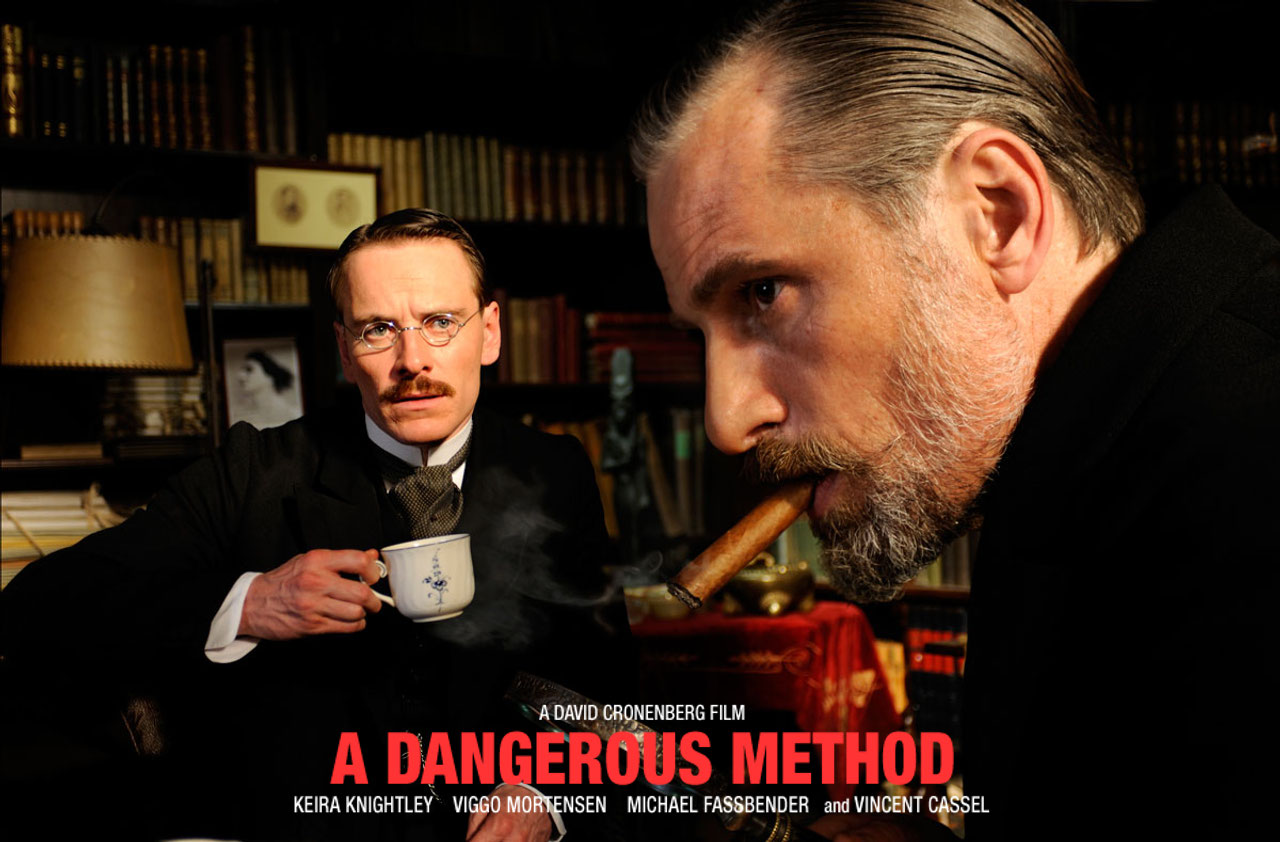
With the most recent David Cronenberg film in theaters now, called A Dangerous Method, being about the relationship between Sigmund Freud and Carl Jung, this BBC Radio 4 episode is highly relevant. Even without the film, it's very interesting.


Freud vs Jung

Sigmund Freud and Carl Jung's names may be linked in the public imagination but the two men were friends and collaborators for only a few short years. In 1912 they had a final, catastrophic split and never worked together again. Lisa Appignanesi tells the story of the titanic struggle which shaped our map of the unconscious. Did the bisected science fail to fulfill its promise and how much can be laid at the door of the primal argument between its dominant father and rebellious son?

Friday, July 01, 2011

Anthony Eldridge-Rogers - The Nature of the Connection

http://www.giacobbeexecutivecoach.com/images/sillouette.jpg

Nice post from Anthony Eldridge-Rogers at RSA. The author is a coach who specializes in recovery - he contends there are three components to human connection: 1) A method or structure of communication; 2) A chosen language (the code); and 3) the nature of the whole connection itself.

The Nature of the Connection

Understanding the nature of connection that lies at the heart of all communication and partnership, takes time and effort. Anthony Eldridge-Rogers FRSA believes that Fellows’ activities would benefit from such an investment.

I was sitting down to write this piece when the phone rang. A gentleman (let’s call him John, and sorry to all the Johns out there), who I think was calling from overseas, tried very hard in the opening 30 seconds of the call, to verify my name, postcode, marital status, and interest me in sorting out the problem he was certain I had with my laptop.

Miracle of miracles, John said they somehow knew that my laptop was in dire need and on the verge of total collapse, complete data loss and endless viral attacks; all of which could be averted by signing up for their amazingly low priced maintenance contract! I kind of nearly shouted something rude down the phone then just said ‘Ciao’ and put the phone down on John. How rude of me. Ruffled I sat down to restart this piece and realised that this was a perfect example of what I am about to write about. Bear with me.

Connection is a buzzword. Get connected! Let’s connect! We connected last night! It is used in all kinds of contexts and covers as many types of situations as can be imagined.

From my perch as a coach there are three components to human connection. First there must be a method or structure of communication; think phone, TV, email, newspaper, blog, mutually agreed appointment to which you both turn up, even carrier pigeon and so on. (John used the landline). Then there is the chosen language, the written or spoken word, the sound, music, the code if you like (John used a base of English with some quirky colloquial bits and pieces). Finally and most importantly there is the nature of the whole connection itself.

This third component is the bedrock of the coaching relationship; underlying each connection are the core beliefs that the parties about to communicate hold about each other. These colour the whole relationship. If you think a person is incompetent then no matter how much you try to mask that belief it percolates as a subtle energy through the relationship, informing the feeling and nature of how you connect with the person. If you hold a person as creative, resourceful and whole (as I do in the coach/client relationship) then this also impacts on the energy of the relationship.

John made many assumptions in his approach to me. That I had spare time. That I had the inclination to speak to him; was stupid, malleable, ignorant about computers, fearful and weak willed. Perhaps most insulting of all, he assumed I was daft enough to not back up my data. Ok I have not done so for a few weeks but all the same… really! These assumptions are a product of what is underneath them: how John was considering me as a fellow human being. Clearly he was not seeing me as creative, resourceful and whole.

So, whether in the doctor’s surgery with the receptionist, at work with your manager or in the corner shop or with the guy who tries to flog you a maintenance contract for your laptop, the nature of the connection is what defines our feelings and responses to all these interactions. This is regardless of the actual ability of the doctor, the skills of your manager or the quality of the goods in the shop (maybe John does offer a good service; we’ll never know).

I attended the RSA Whole Person Recovery project seminar in Peterborough a few weeks ago as I specialise in recovery coaching. In the main those attending were managing, developing and supplying various services to the community focussed around recovery from substance use and addiction. You could say that the focus of the speakers and the break out groups was centred on consideration of the structure and language of the connection to their service users. Important and valuable work. I would have liked to have been able to spend a lot more time exploring the nature of the way all these services and service users were connected, for it is in the nature of the connection where the real power and impact of these services can be accessed for service users.

This is where the real power of understanding and working with the nature of the connection lies. Often we already have valuable and well financed services and resources and this may not be perceived by those who use those services. This perception is fundamentally shaped by the nature of the connection between those responsible for running and delivering those services with each other and then with the community they serve.

The nature of the connection is the foundation on which we build a coaching relationship. Once created it provides a launch pad for real achievement, personal transformation and fulfilment. Given what the RSA stands for, I hope to create a RSA Coaching Network, which lies at the heart of the Fellowship and supports people in the activities they are embarking on. If we give enough time, thought and attention to the nature of how we are connected, I believe this can be the foundation of creativity, resourcefulness and wholeness needed to underpin the greater positive changes we want to make.

I am sorry I have given John such a hard time. My wife says he is just trying to make a living. If he calls back I might just offer him a few coaching sessions!


Anthony Eldridge-Rogers (FRSA) is a coach, (recovery, business, leadership) coach trainer and social entrepreneur. Please connect with www.thecoacheslunch.com or anthony@anthonyeldridgerogers.com


Tuesday, November 02, 2010

Join Terry Patten with Robert Augustus Masters and Diane Bardwell Masters for “Transformation Through Intimacy”

Sounds great - Robert and Diane are awesome: "At essence Robert and Diane’s work is about becoming more intimate with all that we are, in the service of deep healing, awakening , and integration." They offer deep, heart-centered, integrated perspectives on creating and living in authentic relationships.

Here is the official announcement with details on how to join the call or listen online.

Join Us this November 4th for “Transformation Through Intimacy” with Robert Augustus Masters and Diane Bardwell Masters

by The Beyond Awakening Team

Transformation Through Intimacy: Relationship As a Crucible/Sanctuary For Transforming Human Consciousness & Culture

For a very long time, intimate relationship has been viewed and lived, with few exceptions, as an alternative — and not necessarily an equivalent alternative — to spiritual life. Now there is not only a significant opportunity for something profoundly liberating to happen in and through intimate relationship, but also a greatly increasing need for it. So intimate relationship has, at its leading edge, become less a prelude to spiritual opening and awakening, and more a crucible/sanctuary for it, modeling a deeply embodied “we”-space into which human culture needs to transition.

In truly intimate relationship, we learn to find freedom not from limitation, but through limitation. And we also learn to become intimate with all that we are, high and low, dark and light. So no matter how unpleasant or uncomfortable a quality in us may be, we choose to relate to it rather than from it. Such intimacy cuts through the us-versus-them mentality and projections that plague our culture.

Relationship then becomes not something to partially participate in, but rather something to fully embody and live, especially as we realize, right to our core, that everything — everything! — exists through relationship. In the liberating bondage and radical transparency of real intimacy, everything that arises can serve our healing and awakening, both personally and collectively.

And what a wonderfully sobering and illuminating joy it is to enter so deeply into shared living that everything is permitted to awaken us! And to do this not just for ourselves, but for all of us, shifting from “me” to a dynamically inclusive “us” without any homogenizing of our differences…

In this dialogue, with Robert Augustus and Diane Bardwell Masters, we’ll explore the spiritual and cultural relevance of relational intimacy, the stages of relationship, and the need to equally honor the personal, interpersonal, and transpersonal.

BIOS:

Robert Augustus Masters, Ph.D., is the author of 11 books (including Transformation Through Intimacy and Spiritual Bypassing), as well as a teacher of spiritual deepening and a highly experienced psychotherapist and bodyworker (and trainer of psychotherapists) with a doctorate in Psychology. His uniquely integral, intuitive work (developed over the past 32 years) dynamically blends the psychological and physical with the spiritual, emphasizing full-blooded embodiment, authenticity, emotional openness and literacy, deep shadow work, and the development of relational maturity. For more information on his work and writings (and to subscribe to his free newsletter), visit www.RobertMasters.com. For his online work, visit www.MastersCenter.net

Diane Bardwell Masters, Robert’s wife and beloved partner in all things, works side-by-side with him in their sessions, groups, and trainings, contributing deeply to the work being done, being a highly skilled psychotherapist in her own right. She is also an intuitive healer and Reiki master, as well as a professional singer with a special talent for accessing and transmitting heartfelt spirituality through her original music and chants. Her most recent CD is O Breathe Us Deep, with a forthcoming CD featuring music that supports deep healing and awakening. See www.DianeBardwell.net

At essence Robert and Diane’s work is about becoming more intimate with all that we are, in the service of deep healing, awakening , and integration.

Meet Your Host


Terry Patten is a passionate Integral coach, teacher, trainer, consultant, and writer. He is committed to serving the emergence of Integral consciousness—by writing and educating, and by helping conscious individuals and organizations negotiate extraordinary transitions.

HOW TO PARTICIPATE:

Thursday, November 4th @ 5:00pm Pacific,
with Robert Augustus Masters and Diane Bardwell Masters

Transformation Through Intimacy: Relationship As a Crucible/Sanctuary For Transforming Human Consciousness & Culture

Please Note: There will be a limited number of lines available on the live conference call, so we encourage you to listen online if possible. To make sure you can get through by phone, we encourage you to dial in early.

  • To listen live by phone, dial: 216-258-0785 begin_of_the_skype_highlighting 216-258-0785 end_of_the_skype_highlighting, then, enter Access Code: 272072#
  • To listen live online go to: http://AttendThisEvent.com/?eventid=15808116
  • To download the audio after the teleseminar is complete, click here to gain instant access.

Join the Dialogue: About one hour into the dialogue, we’ll open up the lines and you’ll have the opportunity to interact with us directly over the phone or via instant message. Here’s what to do:

  • To interact live by voice, dial into the conference line number and wait until we ask for a question from someone in your region, or
  • Send us your question via instant message in the teleseminar window on your computer
  • Send us your questions and comments before or during the live dialogue by posting them on our Beyond Awakening Community Facebook page

We look forward to your attendance!

Sincerely,
The Beyond Awakening Team


Wednesday, March 24, 2010

Alden Gannon - Illuminating the Edges of Self

Very cool article from the Buddhist Geeks blog.

Illuminating the Edges of Self

19. Mar, 2010 by Alden Gannon

Silent retreat participants often speak of what I call the re-entry problem. During the course of the retreat, the noise of the mind loses some of its grip on us. We often gain access to the silence that forms the ground of all things. What has seemed frustratingly elusive in our busy lives becomes apparent and easily accessed.

But then we go home to traffic jams, clients, bosses, families and friends. The clarity and calm gets lost somewhere in the shuffle, and within a week it seems we’re right back in the mind states that led us to seek retreat in the first place. And when I examined this closely in myself, I discovered that most of the old painful patterns and thought streams that re-emerged after retreat were triggered through close relationships with family and coworkers. And without access to these relationships on retreat, I had escaped those conditions that caused these mind states to arise.

Relationships reveal the edges of ourselves. When friction arises with others, it can expose places within us that remained hidden in the retreat environment. And in the process of awakening, we become conscious of processes and phenomena that were not in our awareness. Friction at the edge of our selves can be a powerful agent for exposing unconscious patterns and beliefs that need to be examined under meditative awareness.

What exactly is this interpersonal conflict that is so common to the human experience? It might be as simple as annoyance at a cell phone user in a restaurant or as complex as the roots of wars or hatred. What does this experience reveal about us? How do we bring meditative awareness into the difficult emotions of our close relationships?

I facilitate a group of meditation practitioners who are exploring these questions. We gather together and practice mindful speaking and listening in a space of meditative awareness. Someone offers a problem they are struggling with, typically within a close relationship. The group practices listening mindfully to both the speaker and their own reactions to the story presented.

The speaker invites an inquiry into the conditions beneath the story. For example, the speaker might tell us about a recurring conflict she has with her partner over housework. Gradually, we move from the narrative into progressively deeper meanings the speaker takes from the events related to us. Little by little, we honor then release the outer levels of the story, seeking their more fundamental forms.

For instance, our example story might start with statements like “he always forgets to take out the trash” or “I hate having to nag.” These emphasize the boundaries between partners and spans the conflict over time (“always forgets”). The speaker is granted complete safety and held within a non-judgmental space to allow the unedited thought stream to emerge. Expressing the story completely begins to release its hold.

But we don’t stop there. We seek the root causes and conditions of the narrative. Beneath the narrative lives fundamental beliefs about ourselves that are at the same time deeply personal and profoundly transpersonal. A more fundamental version of the same story might be “he doesn’t love me.” To the speaker, that is the meaning behind the story and much closer to the actual source of suffering. An even deeper observation might be that the speaker feels undeserving of love. As the inquiry proceeds, it moves towards revealing unseen aspects of the self and away from the events of the narrative. It becomes more personal and directly revealing.

But at the same time, it moves towards the transpersonal. As we gradually release the drama of the story to reveal its roots, we also move closer to the universal human experience and away from our unique experience. We see that all human beings have felt unloved or unheard. Often our group falls into a space of deeper connection where we are no longer sharing personal stories, but the universal experience of the human condition. The truth of suffering and its release through non-attachment is revealed in the moment of seeing through our personal narrative into the experience of all sentient beings.

Behind our group is the deeply shared intuition that the spiritual journey must travel through the personal, not around it. The core of our personal pain needs to be examined and unpacked. The challenge is to hold our stories without either enforcing our belief in them or dismissing them outright. They must be allowed to release themselves, in their own time, under the light of meditative awareness. Outside of the retreat environment where friction and old patterns inevitably arise, we can focus our attention on our own root narratives with the same loving care and persistence we practiced on the breath in the meditation center. And unsurprisingly, reveal the same truths.

Sunday, May 06, 2007