Showing posts with label documentaries. Show all posts

Tuesday, October 28, 2014

Secrets of The Human Brain (Full Documentary)

http://img.clasf.co.ve/2013/05/21/Programacin-Mental-Mega-Alfa-20130521162624.jpg

This is a full 90-minute documentary on the human brain from The History Channel. Like all of their documentaries, there is some stupid sh!t - seems they can't help themselves from pandering to the lowest common denominator.

Secrets of The Human Brain (Full Documentary)


Unlock the secrets of this three-pound organ to reveal the untapped abilities that we all have inside our heads.

Tuesday, August 12, 2014

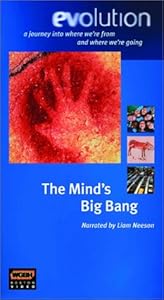
Nova - Evolution: The Minds Big Bang

tree background


This video is Part 6 of a 7-Part NOVA series on evolution, narrated by Liam Neeson. In this episode, they look at the emergence of mind that may have given early homo sapiens the edge over neanderthals.

Evolution: The Minds Big Bang

2001 original air date

Anatomically modern humans existed more than 100,000 years ago, but with crude technology, no art, and primitive social interaction. By 50,000 years ago, something happened which triggered a creative, technological, and social explosion—and humans came to dominate the planet. This was a pivotal point in our evolution, the time when the human mind truly emerged. This program examines forces that may have contributed to the breakthrough, allowing us to prevail over other hominids, the Neanderthals, who co-existed with us for tens of thousands of years. The film then explores where this power of mind may lead us, as the culture we create overtakes our own biological evolution.

Saturday, June 28, 2014

The Archers of Bhutan (Documentary)


Cool film for a Saturday morning.

Enjoy!

The Archers of Bhutan

Released in 2011


Few places on Earth share the beauty and isolation of Bhutan, an autonomous kingdom in the Himalayan Mountains. The eerie spectacle of an almost mystical landscape serves as the lush backdrop for a film detailing fierce competition. Here archery is the nation's game, steeped in honor and meaning, and considered very much an intellectual pursuit.

Entire villages turn out in the small South Asian country for a pastime celebrated there like nowhere else in the world. "The Archers of Bhutan" explores the deep-seeded cultural and historical importance the sport has achieved in that tiny nation, and the ironic and repeated Olympic disappointments it has suffered. For centuries, disputes in Bhutan have been resolved by way of bow and arrow. Like knives or even firearms in other lands, the significance of the weapon became deeply intertwined with identity, respect and pride. It also developed into a social structure of sorts, a ritual around which much of life in Bhutan is centered.

It's that tight focus the filmmakers are most intrigued by, one which has transformed archery for the Bhutanese people beyond just simple competition and into almost a national obsession. Yet despite an unparalleled enthusiasm for the sport, the country has never once even medaled in the Olympics. In fact, until 2012, Bhutan had only ever competed in Olympic Games in that one sport, though national variations to the matches and a seemingly unsporting attitude toward competitors has hampered their odds of success.

The film highlights how distraction is a choice strategy among Bhutan's competitors, continually hurling insults at opposing teams during matches, and making every physical and verbal attempt to throw players off their aim. This approach, though longstanding back home, has not always endeared Bhutan's Olympic archers to their international competitors. Much of the film follows a breakout star in the sport, a female archer who ultimately would become the first woman to represent Bhutan at the Olympics. Her intense devotion to training offers a captivating look at competition, self worth and dignity in the face of defeat.

Continually the film brings its narrative back to how profoundly connected the sport remains to the daily and weekly rituals of the country's proud people. Immense festivities surround the start of competitions, accented by fire, dance and a celebratory meal before even the first arrow is launched. Serving just as effectively as almost a travel documentary, "The Archers of Bhutan" guides a scenic tour through a land shrouded in misty mountaintops, deep heritage and an insatiable hunger for victory.

Watch the full documentary now

Friday, April 25, 2014

Brain: The Last Enigma (Documentary)


From New Atlantis Full Documentaries this is a slightly dated but interesting little documentary on the enigma of the human brain. Among the experts interviewed are brain scientists Steven Rose, Wolf Singer, Carlos Belmonte, and Vilayanur Ramachadran (among others).

The central focus is on the puzzle of how brain creates mind, the well-known "hard problem" of philosophy and neuroscience.

Brain: The Last Enigma (2003)

Top Documentary Films


Man invents faster every day in the pursuit of scientific knowledge. From the beginning of the universe or the birth of a star to the origin of life and genetic inheritance, the enigmas of existence have progressively been figured out. However, the human brain which has allowed the man to achieve this knowledge is still a mystery.

The essence of human intelligence is summarized in music - the perfect combination of reason and emotion. For example, each member of a musical quartet, overflowing with a wind of sensations, uses his memory to remember the piece glancing at the musical score every once in awhile and concentrating to create a virtuoso performance in unison with his companions.

The technique is already subconscious while their attention is aimed at creating the most moving performance. This is the objective, to provoke an emotion that, in this case, the listeners can intimately share and which arouses sensations of pleasure and sometimes rejection in the mind.

In order for this to happen music needs memory, intelligence and will. Where are they and why are they produces? These abilities come from the brain, the corporeal organ where all our thoughts and actions are developed. This is also the place where the mind is found as well as the essence of a person. What she thinks, what she feels and what she imagines. It is the hotbed of sensations and feelings, of images and ideas of each individual human being.

Due to its complexity the brain is one of the territories under scientific investigation with a most mysteries. The basis of its biology is known as well as some models of its functionality, but yet it's not understood why some things are remembered while others are not? Why such a strange mechanism like the human mind worries about itself, about the origin of life, and about the meaning of death?

Watch the full documentary now - 51 min

Sunday, February 09, 2014

Nepal: In the Mountain’s Shadow (Documentary)


Beautiful and occasionally sad documentary.

Nepal: In the Mountain’s Shadow

Published on Feb 5, 2014


"Nepal, in the Mountains Shadow" is a compelling cultural documentary set in the mystic country of Nepal. Guided by child rights activist and orphanage director Visma Raj Paudel, the film explores the growing social disparity that exists throughout the whole of the country, as he struggles to uncover the truth behind the plight of Nepal's most precious resource--its children. The documentary weaves together beautiful imagery and gripping first hand interviews to create a rare look into modern day Nepal.

Produced by: Maria Alexopoulus
2009 © Alexo Films Production
Distributed by High Banks Entertainment Ltd.

Sunday, September 01, 2013

Watch Big Time, the Concert Film Capturing Tom Waits on His Best Tour Ever (1988)

http://1.bp.blogspot.com/--E8p56xWC04/Tc80w-_YUCI/AAAAAAAAq0g/P1rQv2b1Mnk/s1600/tom-waits-big-time-dvd-very-rare-1987-59ff3.jpg

Awesome - happy Sunday! This comes courtesy of Open Culture.

Watch Big Time, the Concert Film Capturing Tom Waits on His Best Tour Ever (1988)

 August 30th, 2013


Here at Open Culture, we’ve often featured the many sides of Tom Waits: actor, poetry reader, favored David Letterman guest. More rarely, we’ve posted material dedicated to showcasing him practicing his primary craft, writing songs and singing them. But when a full-fledged Tom Waits concert does surface here, prepare to settle in for an unrelentingly (and entertainingly) askew musical experience. In March, we posted Burma Shave, an hour-long performance from the late seventies in which Waits took on “the persona of a down-and-out barfly with the soul of a Beat poet.” Today, we fast-forward a decade to Big Time, by which point Waits could express the essences of “avant-garde composer Harry Partch, Howlin’ Wolf, Frank Sinatra, Astor Piazzolla, Irish tenor John McCormack, Kurt Weill, Louis Prima, Mexican norteƱo bands and Vegas lounge singers.” That evocative quote comes from Big Time‘s own press notes, as excerpted by Dangerous Minds, which calls the viewing experience “like entering a sideshow tent in Tom Waits’s brain.”

Watch the 90-minute concert film in its entirety, though, and you may not find it evocative enough. In 1987, Waits had just put out the album Franks Wild Years, which explores the experience of his alter-ego Frank O’Brien, whom Waits called “a combination of Will Rogers and Mark Twain, playing accordion — but without the wisdom they possessed.” The year before, the singer actually wrote and produced a stage play built around the character, and the Franks Wild Years tour through North America and Europe made thorough use of Waits’ theatrical bent in that era. Its final two shows, at San Francisco’s Warfield Theatre and Los Angeles’ Wiltern Theatre, along with footage from gigs in Dublin, Stockholm and Berlin, make up the bulk of Big Time‘s material. As for its sensibility, well, even Waits fans may feel insecure, and happily so, about quite what to expect. (Fans of The Wire, I should note, will find something familiar indeed in this show’s rendition of “Way Down in the Hole.”)

Related Content:
~ Colin Marshall hosts and produces Notebook on Cities and Culture and writes essays on literature, film, cities, Asia, and aesthetics. He’s at work on a book about Los Angeles, A Los Angeles Primer. Follow him on Twitter at @colinmarshall.

Monday, August 26, 2013

Documentary: A Profile of Elon Musk, Founder of Tesla Motors and SpaceX


Elon Musk is the personification of the wunderkind. After completing undergraduate degrees in economic and physics at the University of Pennsylvania, he then moved to the Silicon Valley to pursue a Ph.D. in applied physics and materials science at Stanford.

After only two days he left the program. Drawing inspiration from innovators such as Nikola Tesla, Bill Gates, Steve Jobs, and Walt Disney, Musk then focused his energies on three areas he felt were "important problems that would most affect the future of humanity," the Internet, clean energy, and space.

He co-founded PayPal, co-founded Tesla Motors, and founded SpaceX (the only private space program competitive with NASA), and he is worth $7.7 billion, as of August 2013. Oh yeah, he's only 40 years old.

He estimates he spends 100 hours a week on Tesla and SpaceX, a fact that likely accounts for his two failed marriages.

Elon Musk Profiled


This film profiles Elon Musk, the entrepreneur who helped create PayPal, built America’s first viable fully electric car company, started the nation’s biggest solar energy supplier, and may make commercial space travel a reality in our lifetime. And he’s only 40.

Elson Musk is a lot like the kid in the comic book, whose fantasies turn into reality. But not as a magician, he did as an engineer. Musk’s fantasies and companies have transformed the way we live. He founded his first company at age 23 and sold it a few years later for 300 million dollars. He helped pave the way for online commerce with PayPal. He made solar energy affordable and jump-started the electric car industry. Plus he his competing NASA to outer space.

Tuesday, August 06, 2013

Documentary - Battle of The Brains (on Intelligence)


BBC Horizon created this documentary pitting seven geniuses within their given field against each other to see which one is the most intelligent, except we have many divergent ideas about what constitutes intelligence.

Battle of The Brains


Can you think of 100 different uses for a sock? How would you cope with glasses that turn everything upside down? What’s your emotional intelligence? Can you create a work of art in ten minutes?

Horizon takes seven people who are some of the highest flyers in their field – a musical prodigy, a quantum physicist, an artist, a dramatist, an RAF fighter pilot, a chess grandmaster and a Wall Street trader. Each is put through a series of tests to discover who is the most intelligent?

The principle way that we measure intelligence, the IQ test, remains popular and convenient. Yet most psychologists agree that it only tells half the story… at most. Where they disagree is how to measure intelligence, for the simple reason that the experts still don’t know exactly what it is.

Wednesday, July 31, 2013

Documentary - The Lost Temple of Java


This documentary (found at Snag Films) takes an in-depth look at Borobudur, the "Lost Temple of Java" (Indonesia). Here is some background from Wikipedia, much of which is covered in the nearly 2-hour film:
Borobudur, or Barabudur, is a 9th-century Mahayana Buddhist Temple in Magelang, Central Java, Indonesia. The monument consists of six square platforms topped by three circular platforms, and is decorated with 2,672 relief panels and 504 Buddha statues.[1] A main dome, located at the center of the top platform, is surrounded by 72 Buddha statues seated inside a perforated stupa
 
Built in the 9th century during the reign of the Sailendra Dynasty, the temple's design in Gupta architecture reflects India's influence on the region. It also depicts the gupta style from India and shows influence of Buddhism as well as Hinduism.[2][3] The monument is both a shrine to the Lord Buddha and a place for Buddhist pilgrimage. The journey for pilgrims begins at the base of the monument and follows a path around the monument and ascends to the top through three levels symbolic of Buddhist cosmology: Kāmadhātu (the world of desire), Rupadhatu (the world of forms) and Arupadhatu (the world of formlessness). The monument guides pilgrims through an extensive system of stairways and corridors with 1,460 narrative relief panels on the walls and the balustrades.
Enjoy.

The Lost Temple of Java


Director: Phil Grabsky
 
Borobudur in Central Java is unique. In the shape of a pyramid, with four square terraces leading to three circular ones, this extraordinary building is covered with 3 miles of carvings. Situated on a lush palm-covered volcanic plain, this is a building that deserves the title of 'eighth wonder of the world'. Remarkably, this massive construction lay deserted and obscured by jungle for over 1000 years, only to be to be re-discovered by none other than famous Englishman Sir Thomas Stamford Raffles. Following a recent complete renovation of its 1.6 million blocks of volcanic stone, many questions can only now be answered surrounding this enigmatic temple.

Monday, July 01, 2013

Documentary - Helen: The Woman with 7 Personalities (and more)


This first documentary is a look at the life of Helen, a woman with seven identified parts, or ego states, or alters. She is a woman with dissociative identity disorder (sometimes known as structural dissociation). Her reported history includes satanic and sexual abuse as a child (the only common denominator in most DID diagnoses is severe and on-going childhood abuse and neglect).

Seven parts is a relatively small number for most reported DID cases - many reports have documented more than 10 and as many as 100 (although some of the parts in cases with such high numbers are little more than fragments of emotions belonging to one or more other parts).

Helen: The Woman with 7 Personalities

The Woman With Seven Personalities - Multiple Personality Disorder: Helen and Ruth were best friends at school. Helen, according to Ruth, was one of the prettiest and cleverest girls in the class. Whenever Ruth thinks of school she thinks of the fun times she shared with Helen. Soon after leaving school, however, they lost contact. Fourteen years later Helen and Ruth bumped into each other by chance on a train. As they sat together on the train, Helen told Ruth that she had Multiple Personality Disorder, claimed she had been satanically and sexually abused as a child and had tried to take her own life on a number of occasions. Since that meeting six years ago Ruth and Helen have begun to rekindle their old friendship. Helen wanted to make this documentary to raise awareness of Multiple Personality Disorder, now known as Dissociative Identity Disorder

This film follows Ruth on her journey of discovery into Helen's world. We accompany her as she gets to know her friend again, as she tries to find out what happened to Helen in the fourteen years they were apart and to understand what it means for Helen to live with Multiple Personality Disorder (MPD), which is now known as Dissociative Identity Disorder (DID).

Here is the list of Helen's inner family:
  • Alex, A five year old boy who loves shooting toy guns.
  • William, A six year old boy who loves the Mr. Men.
  • Adam, A lovable ten year old boy who is not allowed to play outside.
  • Brenda, An outspoken, feisty 13 year old girl
  • Karl, A sixteen year old boy with an attitude and a temper.
  • Jamie
  • Elizabeth
Helen will switch from her self personality to one of the alter personalities at a moment’s notice and have no recollection of the time spent in the other personality. Under the personalities of Karl and Brenda, Helen would drink and take drugs. She became an alcoholic and overdosed over 100 times. She has since recovered from the alcoholism and the overdoses, were clearly not fatal.

Ruth was determined to discover what may have caused these personalities to form and was horrified when Helen confided in her that she had been extensively abused as a child and had created the first personalities to distance herself from the horrors. Karl and Brenda provide escape by causing physical pain by means of self-harm to block the emotional trauma, while the younger personalities allow escape to various ages of her childhood.

But wait, there's more . . . if you simply scroll down there is another documentary on dissociative identity disorder (multiple personalities to most folks). This is an old HBO documentary from the 1990s and, while our understanding of DID has increased considering, this one-hour show provides a basic introduction to the experience and development of DID.

Oh, and just in case you think we have moved beyond the idea that dissociative identities are demon possession (an idea raised in the film below), I have worked with people with DID who were told they were possessed by demons by their church pastors, and who tried an exorcism to pray the demons away. Needless to say, it did not work.

Multiple Personalities

Film by: HBO / Michael Mierendorf / Gloria Steinem
Year: 1993
In early times, evil spirits were thought to possess people and make them act in strange and frightening ways. By the 1800’s, the study of this hysteria led some doctors to believe one person could have separately functioning personalities.

In a rare research film from the 1920’s, a woman has different personalities who believes they are separate people. One is a male that is not comfortable in women’s clothes. Another is a small child. The affliction has been known by different names, but recognized for centuries. Today it is called multiple personality disorder.

Why have they become tormented and broken into different personalities? What is the childhood pain that lies buried in the unknown depths of their mind? How can they search for the deadly memories that holds the secrets of their paths and the promise of their healing?

Saturday, June 22, 2013

The Voynich Manuscript - The Book That Can’t Be Read


This 2011 documentary on the mysterious "Voynich Manuscript," named for its discoverer, Wilfrid Voynic, who found it in a trunk owned by Athanasius Kircher, one of the most famous scholars of the 17th century. The book had come to Kircher through Johannes Marcus Marci in the hope of Kircher being able to decipher it.
Much of the manuscript resembles herbal manuscripts of the 1500s, seeming to present illustrations and information about plants and their possible uses for medical purposes. However, most of the plants do not match known species, and the manuscript's script and language remain unknown. Possibly some form of encrypted ciphertext, the Voynich manuscript has been studied by many professional and amateur cryptographers, including American and British codebreakers from both World War I and World War II. It has defied all decipherment attempts, becoming a famous case of historical cryptology. The mystery surrounding it has excited the popular imagination, making the manuscript a subject of both fanciful theories and novels. None of the many speculative solutions proposed over the last hundred years has yet been independently verified.[4]
The documentary comes from National Geographic, so it's not as cheesy as some of the stuff the Discovery Channel runs these days. Be sure to check out the Wikipedia entry as well.

The Book That Can’t Be Read (2011)

The Book That Can't Be Read
Men have always tried to encode secrets, military communication, love letters, forbidden knowledge, and most secret text is eventually decoded, but among all of history’s cryptic writings one stands out. It’s the world’s most mysterious book written by an unknown author in an odd alphabet and brilliantly illustrated with puzzling images. For centuries, it defies all attempts to unveil its secrets. Now, for the first time, experts analyze the ink, pigments and parchments of the Voynich Manuscript.

What secrets are hidden between these lines? Who wrote them and why? At the headquarters of the US Military Intelligence Service, experts succeeded in decoding Japan’s so called Purple Code. William Frederick Friedman, the service’s Director is one of the world’s best cryptographers. For practice between jobs, Friedman and his team decode ancient cryptic texts. One by one, the codes are cracked, but one book, The Voynich Manuscript, stubbornly defies all attempts to decode it. Unnerved, the cryptographers give up. It’s the only code they’re unable to crack.

The roughly 200-page manuscript, with its strange symbols has been a mystery for decades. At the beginning of the 20th century, an antiques dealer from New York visits Villa Mondragone near Rome looking for precious books. His name is Wilfrid Voynich. Villa Mondragone is home to many historical texts from a Jesuit school. Wilfrid Voynich is allowed to inspect a trunk that comes from the estate of Athanasius Kircher, one of the most famous scholars of the 17th century.

Among various manuscripts, the trunk contains an unusual book. Voynich buys the manuscript, and for the rest of his life tries to decipher it. He dies without even coming close to a solution. After Voynich’s death, the manuscript ends up at the Beinecke Rare Book and Manuscript Library at Yale. The library possesses a wealth of literary gems, but probably none as famous as the Voynich Manuscript. Rene Zandbergen is one of the leading experts on the Voynich Manuscript and has been working on it for years.

When Rene first saw an image of the page of the Voynich Manuscript, he immediately had the feeling this is something he can decipher, this is something he can read, but as the years went by, this turned out to be wrong, so he couldn’t read it like so many other people before him.

Watch the full documentary now - 46 min

Thursday, June 20, 2013

Werner Herzog's "Wheel of Time" (Tibetan Buddhism)


Werner Herzog's Wheel of Time, a documentary film ostensibly about the two Kalachakra initiation ceremonies in 2002, has a 94% fresh rating on Rotten Tomatoes, and a 7.1 rating at IMDb . . . with good reason. The film is as quirky as are all of Herzog's documentaries, and beautifully filmed, as is also true of his work over the last 20 years.

Enjoy!

Wheel of Time (2003) - A Film by Werner Herzog


Wheel of Time is a 2003 documentary film by German director Werner Herzog about Tibetan Buddhism. The title refers to the Kalachakra sand mandala that provides a recurring image for the film.
The film documents the two Kalachakra initiations of 2002, presided over by the fourteenth Dalai Lama. The first, in Bodhgaya India, was disrupted by the Dalai Lama’s illness. Later that same year, the event was held again, this time without disruption, in Graz, Austria. The film’s first location is the Bodhgaya, the site of the Mahabodhi Temple and the Bodhi tree. Herzog then turns to the pilgrimage at Mount Kailash, after which the film then focuses on the second gathering in Graz.

Herzog includes a personal interview with the Dalai Lama, as well as Tibetan former political prisoner Takna Jigme Zangpo, who served 37 years in a Chinese prison for his support of the International Tibet Independence Movement.

Wednesday, June 19, 2013

The Art of Punk, MOCA’s Series of Punk Documentaries, Begins with Black Flag


The degree of cool in this post from Open Culture is so beyond cool . . . . If you lived through the punk era or just like the ethos and the music, these short documentaries are awesome. By the way, that's Joe Strummer of The Clash in the image above.

The Art of Punk, MOCA’s Series of Punk Documentaries, Begins with Black Flag


June 18th, 2013

First you set out to smash all institutions, but then you find the institutions have enshrined you. Isn’t that always the way? It certainly seems to have turned out that way for punk rock, in any case, which vowed in the seventies to tear it all up and start over again. Now, in the 2010s, we find tribute paid to not just the music but the aesthetics, lifestyles, and personalities of the punk movement by two separate, and separately well-respected, institutions. We recently featured the Metropolitan Museum of Art’s exhibition Punk: Chaos to Couture. Today, you can start watching The Art of Punk, a series of documentaries from MOCAtv, the video channel of Los Angeles’ Museum of Contemporary Art. Its trailer, which appears at the top of the post, emphasizes its focus on, literally, the visual art of punk: its posters, its album art, its T-shirts, and even — un-punk as this may sound — its logos.
The series opens with the episode just above on Black Flag and Raymond Pettibon, designer of the band’s well-known four-bar icon. It catches up with not just him, but founding singer Keith Morris and bassist Chuck Dukowski, as well as Flea from the Red Hot Chili peppers, who grew up a fan of the greater Los Angeles punk scene from which Black Flag emerged. The episode concludes, needless to say, with Henry Rollins, who, though not an original member of the band and now primarily a spoken word performer, has come to embody their punk ethos in his own highly distinctive way. In the latest episode, just out today, The Art of Punk series takes you inside the world of Crass, the English punk band formed in 1977.

Related Content:
~ Colin Marshall hosts and produces Notebook on Cities and Culture and writes essays on literature, film, cities, Asia, and aesthetics. He’s at work on a book about Los Angeles, A Los Angeles Primer. Follow him on Twitter at @colinmarshall.

Thursday, May 16, 2013

Julian Baggini - I Still Love Kierkegaard

Here's a mini Kierkegaard festival for your reading and viewing entertainment. First up is philosopher Julian Baggini (author of The Ego Trick [2011], What's It All About?: Philosophy and the Meaning of Life [2007] and The Shrink and the Sage[2012, co-authored with Antonia Macaro]) discussing his affection for SĆøren K.

Then, from Open Culture, an episode of a BBC documentary on philosophers (in two parts, both included below):

Marx and Kierkegaard’s many contrasts and contradictions are well represented in Episode 4 of the BBC documentary series Sea of Faith, “Prometheus Unbound”. The 1984 six-part series—named in reference to Matthew Arnold’s famous poem “Dover Beach” and hosted by radical theologian Don Cupitt—examines the ways in which the Copernican and Darwinian scientific revolutions and the work of critics of religious doctrine like Freud, Marx, Nietzsche, Strauss, and Schweitzer shook the foundations of orthodox Christianity.
Also included below is an audio lecture by Walter Kaufmann on Kierkegaard.


I still love Kierkegaard

He is the dramatic, torrential thunderstorm at the heart of philosophy and his provocation is more valuable than ever


by Julian Baggini

Illustration by Stephen Collins
Julian Baggini is a writer and founding editor of The Philosopher’s Magazine. His latest book is The Shrink and the Sage, co-authored with Antonia Macaro.

I fell for SĆøren Kierkegaard as a teenager, and he has accompanied me on my intellectual travels ever since, not so much side by side as always a few steps ahead or lurking out of sight just behind me. Perhaps that’s because he does not mix well with the other companions I’ve kept. I studied in the Anglo-American analytic tradition of philosophy, where the literary flourishes and wilful paradoxes of continental existentialists are viewed with anything from suspicion to outright disdain. In Paris, Roland Barthes might have proclaimed the death of the author, but in London the philosopher had been lifeless for years, as anonymous as possible so that the arguments could speak for themselves.

Discovering that your childhood idols are now virtually ancient is usually a disturbing reminder of your own mortality. But for me, realising that 5th May 2013 marks the 200th anniversary of SĆøren Kierkegaard's birth was more of a reminder of his immortality. It's a strange word to use for a thinker who lived with a presentiment of his own death and didn't reach his 43rd birthday. Kierkegaard was the master of irony and paradox before both became debased by careless overuse. He was an existentialist a century before Jean-Paul Sarte, more rigorously post-modern than postmodernism, and a theist whose attacks on religion bit far deeper than many of those of today’s new atheists. Kierkegaard is not so much a thinker for our time but a timeless thinker, whose work is pertinent for all ages yet destined to be fully attuned to none.

It’s easy enough to see why I fell in love with Kierkegaard. Before years of academic training does its work of desiccation, young men and women are drawn to philosophy and the humanities by the excitement of ideas and new horizons of understanding. This youthful zeal, however, is often slapped down by mature sobriety. I remember dipping into the tiny philosophy section of my school library, for example, and finding Stephan Kƶrner’s 1955 Pelican introduction to Kant. I couldn’t make head nor tail of it. Strangely, this did not put me off philosophy, the idea of which remained more alluring than the little bit of reality I had encountered.

Kierkegaard was not so much an oasis in this desert as a dramatic, torrential thunderstorm at the heart of it. Discovering him as a 17-year-old suddenly made philosophy and religion human and exciting, not arid and abstract. In part that’s because he was a complex personality with a tumultuous biography. Even his name emanates romantic darkness. ‘SĆøren’ is the Danish version of the Latin severus, meaning ‘severe’, ‘serious’ or ‘strict’, while ‘Kierkegaard’ means churchyard, with its traditional associations of the graveyard.

He knew intense love, and was engaged to Regine Olsen, whom he describes in his journals as ‘sovereign queen of my heart’. Yet in 1841, after four years of courtship, he called the engagement off, apparently because he did not believe he could give the marriage the commitment it deserved. He took love, God and philosophy so seriously that he did not see how he could allow himself all three.

He was a romantic iconoclast, who lived fast and died young, but on a rollercoaster of words and ideas rather than sex and booze. During the 1840s, books poured from his pen. In 1843 alone, he published three masterpieces, Either/Or, Fear and Trembling, and Repetition.

All of this, however, was under the shadow of a deep melancholy. Five of his seven siblings died, three in the space of the same two years that claimed his mother. These tragedies fuelled the bleak religiosity of his father, who believed he had been punished for cursing God on a Jutland heath for His apparent indifference to the hard, wretched life of the young sheep farmer. When his father told SĆøren about this, it seems that the son adopted the curse, along with his father’s youthful sins.

Yet alongside this melancholy was a mischievous, satirical wit. Kierkegaard was a scathing critic of the Denmark of his time, and he paid the price when in 1846 The Corsair, a satirical paper, launched a series of character attacks on him, ridiculing his gait (he had a badly curved spine) and his rasping voice. Kierkegaard achieved the necessary condition of any great romantic intellectual figure, which is rejection by his own time and society. His biographer, Walter Lowrie, goes so far as to suggest that he was single-handedly responsible for the decline of SĆøren as a popular first name. Such was the ridicule cast upon him that Danish parents would tell their children ‘don’t be a SĆøren’. Today, Sorensen — son of SĆøren — is still the eighth most common surname in Denmark, while as a first name SĆøren itself doesn’t even make the top 50. It is as though Britain were full of Johnsons but no Johns.

All this was more than enough to draw my open but largely empty 17-year-old mind to him. In the battle for intellectual affections, how could the likes of A J Ayer’s Language, Truth and Logic (1936) or Willard Van Orman Quine’s Word and Object (1960) compete with Kierkegaard’s The Sickness Unto Death (1849) or Stages on Life’s Way (1845)? What is more interesting, however, is why the intellectual affair lasted even as I became a (hopefully) less impressionable, older atheist.

If Kierkegaard is your benchmark, then you judge any philosophy not just on the basis of how cogent its arguments are, but on whether it speaks to the fundamental needs of human beings trying to make sense of the world. Philosophy prides itself on challenging all assumptions but, oddly enough, in the 20th century it forgot to question why it asked the questions it did. Problems were simply inherited from previous generations and treated as puzzles to be solved. Kierkegaard is inoculation against such empty scholasticism. As he put it in his journal in 1835:
What would be the use of discovering so-called objective truth, of working through all the systems of philosophy and of being able, if required, to review them all and show up the inconsistencies within each system ... what good would it do me if truth stood before me, cold and naked, not caring whether I recognised her or not, and producing in me a shudder of fear rather than a trusting devotion?
When, for example, I became fascinated by the philosophical problem of personal identity, I also became dismayed by the unwillingness or inability of many writers on the subject to address the question of just why the problem should concern us at all. Rather than being an existential problem, it often became simply a logical or metaphysical one, a technical exercise in specifying the necessary and sufficient conditions for identifying one person as the same object at two different points in time.

So even as I worked on a PhD on the subject, located within the Anglo-American analytic tradition, I sneaked Kierkegaard in through the back door. For me, Kierkegaard defined the problem more clearly than anyone else. Human beings are caught, he said, between two modes or ‘spheres’ of existence. The ‘aesthetic’ is the world of immediacy, of here and now. The ‘ethical’ is the transcendent, eternal world. We can’t live in both, but neither fulfils all our needs since ‘the self is composed of infinitude and finitude’, a perhaps hyperbolic way of saying that we exist across time, in the past and future, but we are also inescapably trapped in the present moment.

The limitations of the ‘ethical’ are perhaps most obvious to the modern mind. The life of eternity is just an illusion, for we are all-too mortal, flesh-and-blood creatures. To believe we belong there is to live in denial of our animality. So the world has increasingly embraced the ‘aesthetic’. But this fails to satisfy us, too. If the moment is all we have, then all we can do is pursue pleasurable moments, ones that dissolve as swiftly as they appear, leaving us always running on empty, grasping at fleeting experiences that pass. The materialistic world offers innumerable opportunities for instant gratification without enduring satisfaction and so life becomes a series of diversions. No wonder there is still so much vague spiritual yearning in the West: people long for the ethical but cannot see beyond the aesthetic.

In evocative aphorisms, Kierkegaard captured this sense of being lost, whichever world we choose: "Infinitude’s despair is to lack finitude, finitude’s despair is to lack infinitude." Kierkegaard thus defined what I take to be the central puzzle of human existence: how to live in such a way that does justice both to our aesthetic and our ethical natures.

His solution to this paradox was to embrace it — too eagerly in my view. He thought that the figure of Christ — a man-made God, wholly finite and wholly infinite at the same time — was the only way to make sense of the human condition, not because it explains away life’s central paradox but because it embodies it. To become a Christian requires a ‘leap of faith’ without the safety net of reason or evidence.

Kierkegaard’s greatest illustration of this is his retelling of the story of Abraham and Isaac in Fear and Trembling (1843). Abraham is often held up as a paradigm of faith because he trusted God so much he was prepared to sacrifice his only son on his command. Kierkegaard makes us realise that Abraham acted on faith not because he obeyed a difficult order but because lifting the knife over his son defied all morality and reason. No reasonable man would have done what Abraham did. If this was a test, then surely the way to pass was to show God that you would not commit murder on command, even if that risked inviting divine wrath. If you heard God’s voice commanding you to kill, surely it would be more rational to conclude you were insane or tricked by demons than it would to follow the order. So when Abraham took his leap of faith, he took leave of reason and morality.

How insipid the modern version of faith appears in comparison. Religious apologists today might mumble about the power of faith and the limits of reason, yet they are the first to protest when it is suggested that faith and reason might be in tension. Far from seeing religious faith as a special, bold kind of trust, religious apologists are now more likely to see atheism as requiring as much faith as religion. Kierkegaard saw clearly that that faith is not a kind of epistemic Polyfilla that closes the small cracks left by reason, but a mad leap across a chasm devoid of all reason.

That is not because Kierkegaard was guilty of an anarchic irrationalism or relativistic subjectivism. It is only because he was so rigorous with his application of reason that he was able to push it to its limits. He went beyond reason only when reason could go no further, leaving logic behind only when logic refused to go on.

This was powerful stuff for a teenager such as me who was losing his religious belief. What Kierkegaard showed was that the only serious alternative to atheism or agnosticism was not what generally passes for religion but a much deeper commitment that left ordinary standards of proof and evidence completely behind. Perhaps that’s why so many of Kierkegaard’s present-day admirers are atheists. He was a Christian who nonetheless despised ‘Christendom’. To be a Christian was to stake one’s life on the absurdity of the risen Christ, to commit to an ethical standard no human can reach. This is a constant and in some ways hopeless effort at perpetually becoming what you can never fully be. Nothing could be more different from the conventional view of what being a Christian means: being born and baptised into a religion, dutifully going to Church and partaking in the sacraments. Institutionalised Christianity is an oxymoron, given that the Jesus of the Gospels spent so much time criticising the clerics of his day and never established any alternative structures. Kierkegaard showed that taking religion seriously is compatible with being against religion in almost all its actual forms, something that present-day atheists and believers should note.

Kierkegaard would undoubtedly have been both amused and appalled at what passes for debate about religion today. He would see how both sides move in herds, adhering to a collectively formed opinion, unwilling to depart from the local consensus. Too many Christians defend what happens to pass for Christianity in the culture at the time, when they should be far more sceptical that their churches really represent the teachings of their founder. Too many atheists are just as guilty of rallying around totems such as Charles Darwin and the scientific method, as though these were the pillars of the secular outlook rather than merely the current foci of its attention.

Kierkegaard’s views on religion are not the only way in which his critique of ‘the present age’ is strangely timely for us, and likely to be the same for future readers. ‘Our age is essentially one of understanding and reflection, without passion, momentarily bursting into enthusiasm,’ he wrote in 1846, ‘and shrewdly lapsing into repose.’ Passion in this sense is about bringing one’s whole self to what one does, including reasoning. What is much more common today is either a sentimental subjectivity, in which everything becomes about your own feelings or personal story; or a detached objectivity in which the motivations and interests of the researchers are deemed irrelevant. Kierkegaard insisted on going beyond this objective/subjective choice, recognising that honest intellectual work requires a sincere attempt to see things as they are and an authentic recognition of how one’s own nature, beliefs and biases inevitably shape one’s perceptions.

This central insight is nowhere more developed than in his pseudonymous works. Many of Kierkegaard’s most important books do not bear his name. On the Concept of Irony (1841) is written by Johannes Climacus; Fear and Trembling (1843) by Johannes de Silentio; Repetition (1843) by Constantin Constantius; while Either/Or (1843) is edited by Victor Eremita. This is not just some ludic, post-modern jape. What Kierkegaard understood clearly was that there is no neutral ‘objective’ point of view from which alternative ways of living and understanding the world can be judged. Rather, you need to get inside a philosophy to really see its attractions and limitations. So, for example, to see why the everyday ‘aesthetic’ life is not enough to satisfy us, you need to see how unsatisfying it is for those who live it. That’s why Kierkegaard writes from the point of view of people who live for the moment to show how empty that leaves them. Likewise, if you want to understand the impossibility of living on the eternal plane in finite human life, see the world from the point of view of someone trying to live the ethical life.

This approach makes many of Kierkegaard’s books genuine pleasures to read, as literary as they are philosophical. More importantly, the pseudonymous method enables Kierkegaard to achieve a remarkable synthesis of objectivity and subjectivity. We see how things are from a subjective point of view, and because they really are that way, a form of objectivity is achieved. This is a lesson that our present age needs to learn again. The most complete, objective point of view is not one that is abstracted from the subjective: it is one that incorporates as many subjective points of view as are relevant and needed.

This also provides the link between imagination and rationality. A detached reason that cannot enter into the viewpoints of others cannot be fully objective because it cannot access whole areas of the real world of human experience. Kierkegaard taught me the importance of attending to the internal logic of positions, not just how they stand up to outside scrutiny.

This is arguably even more vital today than it was in Kierkegaard’s time. In a pluralist world, there is no hope of understanding people who live according to different values if we only judge them from the outside, from what we imagine to be an objective point of view but is really one infused with our own subjectivity. Atheists need to know what it really means to be religious, not simply to run through arguments against the existence of God that are not the bedrock of belief anyway. No one can hope to understand emerging nations such as China, India or Brazil unless they try to see how the world looks from inside those countries.

But perhaps Kierkegaard’s most provocative message is that both work on the self and on understanding the world requires your whole being and cannot be just a compartmentalised, academic pursuit. His life and work both have a deep ethical seriousness, as well as plenty of playful, ironic elements. This has been lost today, where it seems we are afraid of taking ourselves too seriously. For Kierkegaard, irony was the means by which we could engage in serious self-examination without hubris or arrogance: ‘what doubt is to science, irony is to personal life’. Today, irony is a way of avoiding serious self-examination by believing one is above such things, a form of superiority masquerading as modesty. It might be spotty, angst-filled adolescents who are most attracted to the young Kierkegaard, but it’s us, the supposed adults, who need the 200-year-old version more than ever.

~ Published on 6 May 2013

* * * * * * *

The Philosophy of Kierkegaard, the First Existentialist Philosopher, Revisited in 1984 Documentary


May 7th, 2013


Danish philosopher SĆøren Kierkegaard—often considered the first existentialist—was born 200 years ago this past Sunday in Copenhagen. Writing under pseudonyms like Johannes Climacus and Johannes de Silentio, Kierkegaard attacked both the idealism of contemporary philosophers Hegel and Schelling and the bourgeois complacency of European Christendom. A highly skilled rhetorician, Kierkegaard preferred the indirect approach, deploying irony, ridicule, parody and satire in a paradoxical search for individual authenticity within a European culture he saw as beset by self-important puffery and unthinking mass movements.

While millions of readers have embraced Kierkegaard’s probing method, as many have also rejected his faith-based conclusions. Nevertheless, his strikingly eccentric skewering of the tepidly faithful and overly optimistic breathed light and heat into the nineteenth century debates among modern Christians as they confronted the findings of science and the challenges posed by world religions and materialist philosophers like Karl Marx.


Marx and Kierkegaard’s many contrasts and contradictions are well represented in Episode 4 of the BBC documentary series Sea of Faith, “Prometheus Unbound” (part one at top, part two immediately above). The 1984 six-part series—named in reference to Matthew Arnold’s famous poem “Dover Beach” and hosted by radical theologian Don Cupitt—examines the ways in which the Copernican and Darwinian scientific revolutions and the work of critics of religious doctrine like Freud, Marx, Nietzsche, Strauss, and Schweitzer shook the foundations of orthodox Christianity. Here, Kierkegaard is played in reenactments with appropriate intensity by British actor Colin Jeavons.


You can learn more about the documentary series (and purchase DVDs) here. And for more on Kierkegaard, you would be well-served by listening to Walter Kaufmann’s lecture above. For a lighter-hearted but still rigorous take on the philosopher, be sure to catch the well-read, irreverent gents at the Partially Examined Life podcast in a discussion of Kierkegaard’s earnest and often disturbing defense of existential Christianity, The Sickness Unto Death.

Related Content:
~ Josh Jones is a writer and musician based in Washington, DC. Follow him @jdmagness

Friday, April 12, 2013

Jim & Jamie Dutcher: The Hidden Life of Wolves


Jim And Jamie Dutcher have spent six years of their lives living with and studying wolves. Their book about this incredible adventure is The Hidden Life of Wolves. They were interviewed on the Diane Rehm show earlier this year, which is where I first heard about them.

Now there is also a 30-minute documentary about their lives with the wolves and the work that went into their book. Fascinating stuff.


Jim & Jamie Dutcher: The Hidden Life of Wolves from National Geographic Live on FORA.tv

Jim & Jamie Dutcher: The Hidden Life of Wolves


Partner: National Geographic Live 
Location: National Geographic, Washington, D.C. 
Event Date: 02.08.13 
Speakers: Jim DutcherJamie Dutcher

This husband-and-wife team, Jim and Jamie Dutcher, spent six years living alongside a pack of wolves in order to reveal the majestic, social, and intelligent nature of these long-misunderstood animals.

BIOs

Jim Dutcher  Emmy Award-winning filmmaker and cinematographer Jim Dutcher began producing documentary films in the 1960s. His early adventures with a camera were spent underwater, part of a Florida coast childhood. In 1985, Water, Birth, the Planet Earth, his first television film, initiated a career spent with animals that range from tiny hatching sea turtles to one of the top-ranking predators on the continent, the wolf. Jim's extraordinary camerawork and the trust he gains from his subjects have led audiences into places never before filmed: inside beaver lodges, down burrows to peek at wolf pups, and into the secret life of a mother mountain lion as she cares for her newborn kittens. His work includes the National Geographic special A Rocky Mountain Beaver Pond and ABC World of Discovery's two highest-rated films, Cougar: Ghost of the Rockies and Wolf: Return of a Legend. In 1991 Jim received the extremely prestigious Wrangler Award from the National Cowboy Hall of Fame for his documentary Cougar: Ghost of the Rockies. Jim's intense personal involvement with the details of his subjects' lives and his eye for the beauty of the natural world have placed his work in a category all its own. In 1995, the Governor of Idaho appointed Jim as an ex officio member of the Idaho Wolf Management Committee, a position he served in until 2001.

Jamie Dutcher  Jamie Dutcher, Jim's wife and co-producer, made her mark on the world of film when she won an Emmy Award for sound recording with her carefully collected vocalizations of the Sawtooth wolves. A former employee in the animal hospital of the National Zoo in Washington, D.C., Jamie brought to Jim's projects a knowledge of animal husbandry and medical care. Combined with her gentle instinct, these skills enabled Jamie to quickly gain access to the sensitive and secret inner lives of wolves. Her photographs complement the Dutchers' three books on The Sawtooth Pack. Together, Jim and Jamie Dutcher have been nominated for five Emmy Awards and have won three. Jointly, they created the Discovery Channel's most successful wildlife documentary, Wolves at Our Door, and have been interviewed extensively on numerous television and radio programs and in print articles, in both the United States and Europe. Their most recent film and book, Living with Wolves, continues the story of the Sawtooth wolf pack that became a part of their lives. The Dutchers have brought the story of wolves to hundreds of millions of television viewers, radio listeners and readers in media such as: The Today Show, NBC Good Morning America, ABC Dateline, NBC 48 Hours, CBS National Public Radio BBC People Magazine New York Times San Francisco Chronicle Washington Post and countless others Jim and Jamie live in Ketchum, Idaho, in a log home at the edge of a wild pond with ducks, flying squirrels, elk, deer, owls, coyotes and a mischievous black bear for neighbors.