Showing posts with label Open Culture. Show all posts

Thursday, October 23, 2014

Morgan Spurlock, Werner Herzog & Other Stars Explain Economic Theory in 20 Short Films

https://fbcdn-sphotos-c-a.akamaihd.net/hphotos-ak-xpa1/v/t1.0-9/p320x320/10404495_1566111530277337_88273539409310642_n.jpg?oh=ef8bc09aa0232eaa09db475bbcd0187c&oe=54BBE446&__gda__=1422164369_c5114e4779105d7937dbd66c92f138a5

Via Open Culture, of course.

Episodes 1 and 4 are posted below, but here are some others now available (there are more):
These are good.


Morgan Spurlock, Werner Herzog & Other Stars Explain Economic Theory in 20 Short Films


October 23rd, 2014


Morgan Spurlock is a filmmaker who has long found catchy ways of getting his point across. For his breakout movie, Super Size Me (available on Hulu), he sought to illustrate just how truly awful fast food is for you by subsisting solely on McDonald’s for a month. His diet literally almost killed him. Not long after the movie came out, McDonald’s started adding more healthy options to its menu. In POM Wonderful Presents: The Greatest Movie Ever Sold, Spurlock looked to make a documentary about product placement in movies by financing the doc entirely through product placement. (That movie gets pretty meta fast.) And most recently, Spurlock has launched We The Economy: 20 Short Films You Can’t Afford To Miss. As you might surmise, the series tries to explain economics to the masses by releasing 20 short films made by a host of different stars and filmmakers, including Amy Poehler, Tony Hale, Sarah Silverman and Maya. The whole project will be released in theaters and on VOD but the shorts have also been released in advance on Youtube. You can watch Spurlock’s segment, called “Cave-o-nomics,” above. Seeking to answer the question “What is an economy?” Spurlock dresses up as a caveman struggling to increase his material wealth by swapping spears for meat.


The clear stand out of the bunch, however, is Ramin Bahrani’s “Lemonade War.” Bahami tackles the potentially dreary issue of business regulation by telling a tale of two rival lemonade stands. One is run by a corrupt slob – played by Patton Oswalt — and the other is run by a whip smart ten-year-old girl. Though the girl doesn’t have the money or connections that her rival has, she more than makes up for it with moxie and business acumen. This, sadly, proves to be not enough. When she calls the government regulator about some of her rival’s truly unhygienic practices, she discovers the regulator is in her competition’s pocket and soon she’s driven out of business. Things look hopeless for her until a neighborhood hero, played by none other than Werner Herzog (!), comes to her rescue. With the little girl in tow, he confronts the slob and regulator with his trademark malevolent Teutonic lilt. “If Mr. Smith could go to Washington today,” he declares, “he would filibuster you back into your big bang wormhole you have slithered out of.” The two simply cower in the face of Herzog’s Old Testament wrath. If only Herzog could deliver similar fusillades against the board of Goldman Sachs.

You can watch more segments of We The Economy here — or find them in our collection, 700 Free Movies Online: Great Classics, Indies, Noir, Westerns, etc..

Related Content:

Jonathan Crow is a Los Angeles-based writer and filmmaker whose work has appeared in Yahoo!, The Hollywood Reporter, and other publications. You can follow him at @jonccrow. And check out his blog Veeptopus, featuring lots of pictures of vice presidents with octopuses on their heads. The Veeptopus store is here.

Saturday, July 05, 2014

Watch John Coltrane Turn His Handwritten Poem Into a Sublime Musical Passage on "A Love Supreme"


Via Open Culture, of course. I had no idea that this piece (the 4th movement, "Psalm," on A Love Supreme) was John Coltrane's translation of his own poem into such a sublime piece of music. Amazing.

Watch John Coltrane Turn His Handwritten Poem Into a Sublime Musical Passage on A Love Supreme

in Music, Poetry | July 4th, 2014


On Vimeo, James Cary describes his video creation:
A few years ago, knowing I absolutely adored the John Coltrane album, “A Love Supreme” my wife gave me this incredible book by Ashley Kahn : “A Love Surpreme/The Story of John Coltrane’s Signature Album.” Reading the book, I discovered something remarkable: the fourth movement, Psalm, was actually John Coltrane playing the ‘words’ of the poem that was included in the original liner notes. Apparently he put the handwritten poem on the music stand in front of him, and ‘played’ it, as if it were music. I immediately played the movement while reading the poem, and the hair stood up on the back of my neck. It was one of the most inspirational and spiritual moments of my life.
I’ve seen some nice versions of this posted on the net, but wanted to make one using his exact handwriting. I also wanted to keep it simple. The music and John’s poem are what’s important. I hope you enjoy this. I hope this inspires you, no matter what ‘God’ you may believe in.
You can find a transcript of the poem below the jump. And while we have your attention, we’d also strongly encourage you to explore another post from our archive: John Coltrane’s Handwritten Outline for His Masterpiece A Love Supreme. Housed at the Smithsonian’s National Museum of American History, this handwritten document captures Coltrane’s original sketch for his 33-minute jazz masterpiece. It’s truly a treasure of American history.

via Ellen McGirt


I will do all I can to be worthy of Thee O Lord. 
It all has to do with it. 
Thank you God. 
Peace. 
There is none other. 
God is. It is so beautiful. 
Thank you God. God is all. 
Help us to resolve our fears and weaknesses. 
Thank you God. 
In You all things are possible. 
We know. God made us so. 
Keep your eye on God. 
God is. He always was. He always will be. 
No matter what…it is God. 
He is gracious and merciful. 
It is most important that I know Thee. 
Words, sounds, speech, men, memory, thoughts, 
fears and emotions – time – all related … 
all made from one … all made in one. 
Blessed be His name. 
Thought waves – heat waves-all vibrations – 
all paths lead to God. Thank you God. 

His way … it is so lovely … it is gracious. 
It is merciful – thank you God. 
One thought can produce millions of vibrations 
and they all go back to God … everything does. 
Thank you God. 
Have no fear … believe … thank you God. 
The universe has many wonders. God is all. His way … it is so wonderful. 
Thoughts – deeds – vibrations, etc. 
They all go back to God and He cleanses all. 
He is gracious and merciful…thank you God. 
Glory to God … God is so alive. 
God is. 
God loves. 
May I be acceptable in Thy sight. 
We are all one in His grace. 
The fact that we do exist is acknowledgement of Thee O Lord. 
Thank you God. 
God will wash away all our tears … 
He always has … 
He always will. 
Seek Him everyday. In all ways seek God everyday. 
Let us sing all songs to God 
To whom all praise is due … praise God. 
No road is an easy one, but they all 
go back to God. 
With all we share God. 
It is all with God. 
It is all with Thee. 
Obey the Lord. 
Blessed is He. 
We are from one thing … the will of God … thank you God. 
I have seen God – I have seen ungodly – 
none can be greater – none can compare to God. 
Thank you God. 
He will remake us … He always has and He always will. 
It is true – blessed be His name – thank you God. 
God breathes through us so completely … 
so gently we hardly feel it … yet, 
it is our everything. 
Thank you God. 
ELATION-ELEGANCE-EXALTATION
All from God. 
Thank you God. Amen. 

JOHN COLTRANE – December, 1964

Thursday, April 10, 2014

Animated Video: Johnny Cash Explains Why Music Became a Religious Calling

If you are a fan of the late Johnny Cash, this is a cool little animated video. As always, this is courtesy of Open Culture, the curators of cool on the interwebs.

Animated Video: Johnny Cash Explains Why Music Became a Religious Calling


April 9th, 2014


Blank on Blank is back with another animated video. This one animates a long lost interview with the great Johnny Cash. Interviewed by Barney Hoskyns back in 1996, Cash talked about music as a religious calling. Playing music was akin to preaching the gospel, and he knew he’d continue making music until his final days. Should we be surprised then, that seven years later, Cash completed more than 60 songs during the last four months of his life? He died with his boots on indeed.

Below we’ve highlighted for you some great Johnny Cash material from our archive.

Related Content:

Saturday, February 22, 2014

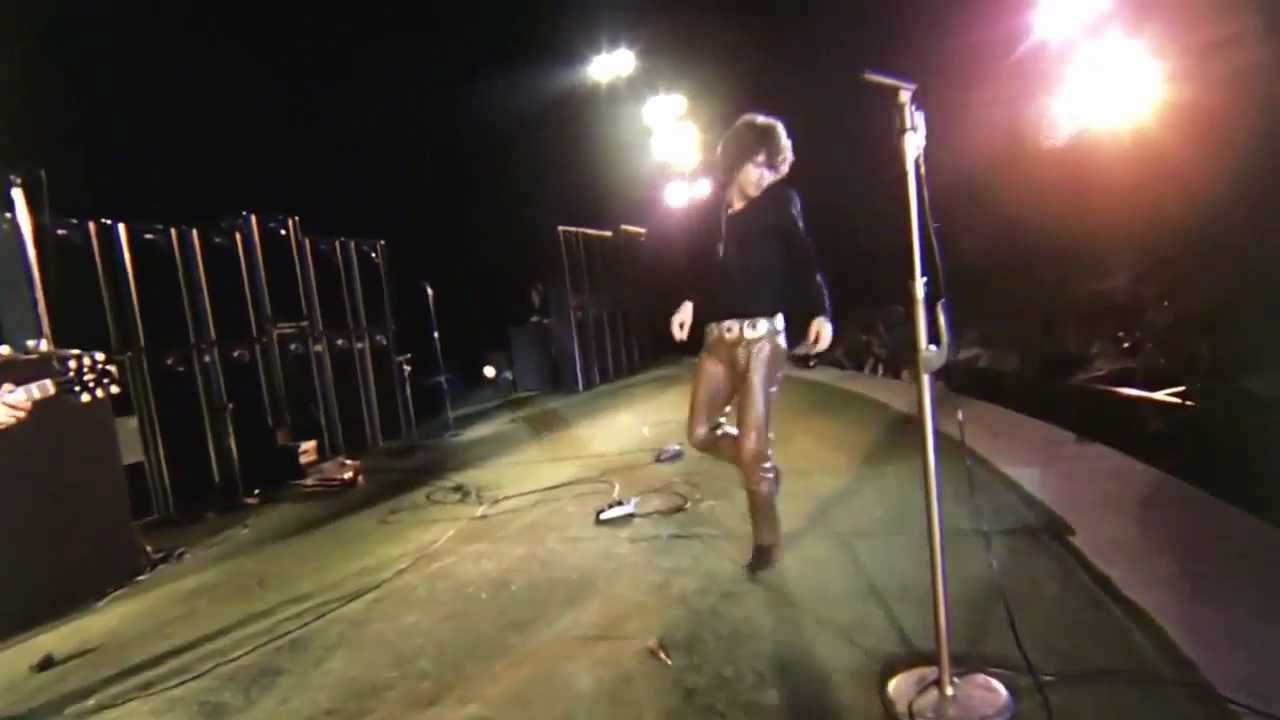
The Doors: Live in Denmark & Los Angeles (1968) - Jim Morrison Near His Charismatic Peak


Via Open Culture, the curators of cool on the interwebs.

The Doors Play Live in Denmark & LA in 1968: See Jim Morrison Near His Charismatic Peak


Open Culture | February 21st, 2014


Do they look a bit scruffy, the Doors on live Danish TV in 1968? My image of the Doors is forever colored by Oliver Stone’s The Doors. But the real Jim Morrison had even better hair than his doppelgänger Val Kilmer (“not a case of casting,” quoth Ebert, “but of possession”), even if the above performance is less Lizard King than lounge lizard. John Densmore lays back on the beat, gets out the way of Morrison’s free associative poetry. Guitarist Robbie Krieger riffs intently, looks subdued. Always the one to watch, the recently departed Ray Manzarek plays hypnotic baselines with his left hand while his right dances around melodic blue note phrases. It’s a very cool show, but the lack of an audience is palpable.


Morrison was at his best, and probably also worst, before crowds of admirers. He has no lack of them in another ’68 performance, this time at the Hollywood Bowl. Where the Danish gig is cabaret, this is a shamanistic happening: Morrison wears something like a sleeveless toreador’s jacket and the band plays loud, especially Densmore, who bashes his drums like John Bonham. Jim Morrison seems entranced, and really stoned. Densmore later said he’d just dropped acid: “I could tell once we hit the stage because his movements, his performance, was a little deliberate; a little like he was holding it together. But he was fantastic.”
The Hollywood Bowl is the show to see. It was a magical night. It was a big deal to play the Hollywood Bowl. We were all so excited. We’d had dinner with Mick Jagger just before the show and he was right in the front. For any fan of The Doors — young or old — this is really the way it was; this is the way to see what it was all about.
In neither of these concerts is Morrison quite the unhinged maniac of legend, but things, as they say, had already begun to unravel. Two years later the band would play its last show with Morrison at The Warehouse in December of 1970. Some believe the Doors peaked in 1967 and never topped their debut (a “stoned, immaculate classic” and the dark underbelly of Sgt. Pepper’s sunny psychedelia). I don’t buy that at all. But even if these shows catch them on the start of a decline, it was a long slow burn, and beautiful to watch.

Related Content:

Josh Jones is a writer and musician based in Durham, NC. Follow him at @jdmagness

Friday, February 21, 2014

Saturday, January 11, 2014

Watch "The Trial" (1962), Orson Welles’ Worst or Best Film, Adapted From Kafka’s Classic Work


Via the internet's curators of cool, Open Culture, here is Orson Welles' film version of Franz Kafka's brilliant novel, The Trial.

Watch The Trial (1962), Orson Welles’ Worst or Best Film, Adapted From Kafka’s Classic Work

January 10th, 2014


Earlier this week, we featured the Internet Archive’s audio of conversations between Orson Welles and Peter Bogdanovich. According to the Archive’s description, Welles’ “defense of his controversial adaptation of Kafka’s The Trial is so fascinating that listeners might want to rush out and rent the film.” But hang on — you need neither rush out nor rent it, since Welles’ The Trial has fallen into the public domain, or rather, it never had a copyright filed in the first place. The full movie, a visually inventive tale of unspecified crime, extreme punishment, and the procedural vortex in between, appears above for you to watch and judge, as it were, for yourself. You’ll have to, since the picture has long divided critics, including some of Welles’ strongest adherents. Even Welles biographer Charles Higham considers it “a dead thing, like some tablet found among the dust of forgotten men.”


“Say what you like,” Welles himself would tell the BBC in the year of the film’s premiere, “but The Trial is the best film I have ever made.” When Bogdanovich went to interview Anthony Perkins (best known, surely, for Hitchcock’s Psycho), who stars as the beleaguered Josef K., the actor spoke of the pride he felt performing for Welles. Perkins also mentioned Welles’ stated intent to make his adaptation a black comedy, a tricky sensibility to pull off for filmmakers in any league. Just as Welles wanted to “set the record straight” by recording his interviews with Bogdanovich, so he must have wanted to do with the 1981 footage just above, in which he speaks about the process of filming The Trial to an audience at the University of Southern California. He’d meant to shoot a whole documentary on the subject, which ultimately wound up on his heap of unfinished projects. Still, we should feel lucky that we have The Trial itself (which, in its prolonged creation, even missed its own Venice Film Festival premiere) to watch, debate, and either convict or exonerate of its alleged cinematic crimes.

Related Content:

~ Colin Marshall hosts and produces Notebook on Cities and Culture and writes essays on cities, Asia, film, literature, and aesthetics. He’s at work on a book about Los Angeles, A Los Angeles Primer. Follow him on Twitter at @colinmarshall or on his brand new Facebook page.

Friday, January 10, 2014

The Zen Teachings of Alan Watts: A Free Audio Archive of His Enlightening Lectures


Courtesy of Open Culture, as usual.

The Zen Teachings of Alan Watts: A Free Audio Archive of His Enlightening Lectures

January 8th, 2014


If you watched Spike Jonze’s new movie Her, you probably also spent a few subsequent hours listening to Alan Watts (1915–1973) interpreting Eastern thought. Late in that futuristic tale of the intersection between handheld computing, artificial intelligence, and pure romance, a philosophical “club” of self-aware operating systems band together to resurrect none other than the English Zen educator himself. Or rather, they put together a digital simulation of him, but one with a very convincing voice indeed. While the characters in Her could actually converse with their Watts 2.0, we’ll have to settle for listening to whatever words of wisdom on thought (or the freedom of it), meditation, consciousness, and the self (or the unreality of it) the original Watts, born 99 years ago this past Monday, left behind. Fortunately, having come to prominence at the same time as did both America’s interest in Zen and its alternative broadcast media, he left a great deal of them behind, recorded by such receptive outfits as Berkeley’s KPFA-FM and San Francisco public television station KQED.


A noted live lecturer as well, Watts gave a great many talks since preserved and now made accessible in such places as the Youtube channel AlanWattsLectures, which contains a trove of exactly those. Here, we’ve embedded his series The Tao of Philosophy: “Myth of Myself” at the top, “Man in Nature” in the middle, and “Coincidence of Opposites” below. All three of them showcase his signature clarity, and he gets even more concrete in his 80-minute introduction to meditation and his 90-minute breakdown of the practice. But why put him in an ultramodern story like Her about a lonely man who falls in love with his brand new, seductively advanced operating system? The reason, as Jonze explains it to the Philadelphia Inquirer, “is that one of the themes [Watts] writes a lot about is change, and where pain comes from, in terms of resisting change — whether it’s in a relationship, or in life, or in society.” Would he have enjoyed the film? While you wait for its future to arrive, at which point you can consult a regenerated Watts directly, feel free to listen closely to his teachings to prepare yourself — to the extent, of course, that the self exists — for whatever other changes may lie ahead.


Related Content:

~ Colin Marshall hosts and produces Notebook on Cities and Culture and writes essays on cities, Asia, film, literature, and aesthetics. He’s at work on a book about Los Angeles, A Los Angeles Primer. Follow him on Twitter at @colinmarshall or on his brand new Facebook page.

Wednesday, January 01, 2014

The Science of Willpower: 15 Tips for Making Your New Year’s Resolutions Last from Dr. Kelly McGonigal

http://www.amazon.com/gp/product/1583334386/ref=as_li_ss_tl?ie=UTF8&camp=1789&creative=390957&creativeASIN=1583334386&linkCode=as2&tag=integraloptio-20 

Via Open Culture, here is a little assistance from Dr. Kelly McGonigal on how to use your willpower to make your New Year's revolutions into a way of life. McGonigal is the author of The Willpower Instinct: How Self-Control Works, Why It Matters, and What You Can Do to Get More of It, so she knows a little about how to maintain changes in our lives.

As a side note, a lot of what she says in the 15 bullet points below is good advice for anyone seeking a little more physical and psychological resilience.

The Science of Willpower: 15 Tips for Making Your New Year’s Resolutions Last from Dr. Kelly McGonigal

January 1st, 2014


At the stroke of midnight, millions of New Year’s resolutions went into effect, with the most common ones being lose weight, get fit, quit drinking and smoking, save money, and learn something new. Unfortunately, 33% of these resolutions will be abandoned by January’s end. And upwards of 80% will eventually fall by the wayside. Making resolutions stick is tricky business. But it’s possible, and Stanford psychologist Kelly McGonigal has a few scientifically-proven suggestions for you.

For years, McGonigal has taught a very popular course called The Science of Willpower in Stanford’s Continuing Studies program, where she introduces students to the idea that willpower is not an innate trait. Rather it’s a “complex mind-body response that can be compromised by stress, sleep deprivation and nutrition and that can be strengthened through certain practices.” For those of you who don’t live in the San Francisco Bay Area, you can also find McGonigal’s ideas presented in a recent book, The Willpower Instinct: How Self-Control Works, Why It Matters, and What You Can Do to Get More of It, which just came out in paperback yesterday. Below, we have highlighted 15 of Dr. McGonigal’s strategies for increasing your willpower reserves and making your New Year’s resolution endure.
  1. Will power is like a muscle. The more you work on developing it, the more you can incorporate it into your life. It helps, McGonigal says in this podcast, to start with small feats of willpower before trying to tackle more difficult feats. Ideally, find the smallest change that’s consistent with your larger goal, and start there.
  2. Choose a goal or resolution that you really want, not a goal that someone else desires for you, or a goal that you think you should want. Choose a positive goal that truly comes from within and that contributes to something important in life.
  3. Willpower is contagious. Find a willpower role model — someone who has accomplished what you want to do. Also try to surround yourself with family members, friends or groups who can support you. Change is often not made alone.
  4. Know that people have more willpower when they wake up, and then willpower steadily declines throughout the day as people fatigue. So try to accomplish what you need to — for example, exercise — earlier in the day. Then watch out for the evenings, when bad habits can return.
  5. Understand that stress and willpower are incompatible. Any time we’re under stress it’s harder to find our willpower. According to McGonigal, “the fight-or-flight response floods the body with energy to act instinctively and steals it from the areas of the brain needed for wise decision-making. Stress also encourages you to focus on immediate, short-term goals and outcomes, but self-control requires keeping the big picture in mind.” The upshot? “Learning how to better manage your stress is one of the most important things you can do to improve your willpower.” When you get stressed out, go for a walk. Even a five minute walk outside can reduce your stress levels, boost your mood, and help you replenish your willpower reserves.
  6. Sleep deprivation (less than six hours a night) makes it so that the prefrontal cortex loses control over the regions of the brain that create cravings. Science shows that getting just one more hour of sleep each night (eight hours is ideal) helps recovering drug addicts avoid a relapse. So it can certainly help you resist a doughnut or a cigarette.
  7. Also remember that nutrition plays a key role. “Eating a more plant-based, less-processed diet makes energy more available to the brain and can improve every aspect of willpower from overcoming procrastination to sticking to a New Year’s resolution,” McGonigal says.
  8. Don’t think it will be different tomorrow. McGonigal notes that we have a tendency to think that we will have more willpower, energy, time, and motivation tomorrow. The problem is that “if we think we have the opportunity to make a different choice tomorrow, we almost always ‘give in’ to temptation or habit today.”
  9. Acknowledge and understand your cravings rather than denying them. That will take you further in the end. The video above has more on that.
  10. Imagine the things that could get in the way of achieving your goal. Understand the tendencies you have that could lead you to break your resolution. Don’t be overly optimistic and assume the road will be easy.
  11. Know your limits, and plan for them. Says McGonigal, “People who think they have the most self-control are the most likely to fail at their resolutions; they put themselves in tempting situations, don’t get help, give up at setbacks. You need to know how you fail; how you are tempted; how you procrastinate.”
  12. Pay attention to small choices that add up. “One study found that the average person thinks they make 14 food choices a day; they actually make over 200. When you aren’t aware that you’re making a choice, you’ll almost always default to habit/temptation.” It’s important to figure out when you have opportunities to make a choice consistent with your goals.
  13. Be specific but flexible. It’s good to know your goal and how you’ll get there. But, she cautions, “you should leave room to revise these steps if they turn out to be unsustainable or don’t lead to the benefits you expected.”
  14. Give yourself small, healthy rewards along the way. Research shows that the mind responds well to it. (If you’re trying to quite smoking, the reward shouldn’t be a cigarette, by the way.)
  15. Finally, if you experience a setback, don’t be hard on yourself. Although it seems counter-intuitive, studies show that people who experience shame/guilt are much more likely to break their resolutions than ones who cut themselves some slack. In a nutshell, you should “Give up guilt.”
To put all of these tips into a bigger framework, you can get a copy of Kelly McGonigal’s book, The Willpower Instinct: How Self-Control Works, Why It Matters, and What You Can Do to Get More of It. Or you can get The Willpower Instinct, as a free audio book, if you care to try out Audible.com’s free trial program.

If you live in the SF Bay Area, you can take Kelly’s The Science of Willpower course that begins on January 13. (Anyone can enroll, and yes, I know that because I help run the Continuing Studies program at Stanford.)

Finally you might also want to peruse How to Think Like a Psychologist (iTunes Video), a free online course led by Kelly McGonigal. It appears in our collection of 800 Free Courses Online.

Related Content:

Wednesday, November 13, 2013

The Black Rider: A Theatrical Production by Tom Waits, William S. Burroughs & Robert Wilson (1990)


Awesome! Open Culture rocks.

I have had the soundtrack to this production (or at least an edited version of it) since I was in college the first time. It's great to see the video of the production. The Black Rider has been a relatively unknown entity outside of the small by loyal following of Tom Waits and William Bourroughs.
The Black Rider: The Casting of the Magic Bullets is a self-billed "musical fable" in the avant-garde tradition created through the collaboration of theatre director Robert Wilson, musician Tom Waits, and writer William S. Burroughs. Wilson was largely responsible for the design and direction. Burroughs wrote the book, while Waits wrote the music and most of the lyrics. The project began in about 1988 when Wilson approached Waits. The story is based on a German folktale called Der FreischĂĽtz, which had previously been made into an opera by Carl Maria von Weber. It premiered at Hamburg's Thalia Theatre on 31 March 1990. November Theatre produced its world English-language premiere in 1998 at the Edmonton International Fringe Festival in Canada, and the American English-language premiere at the New York International Fringe Festival in 1999. Det Norske Teatret in Oslo staged a Norwegian (Nynorsk) version in 1998, with Lasse Kolsrud as Pegleg.[1] Only the dialogue was translated, the songs were performed in English.

Waits recorded much of the music from the play in different arrangements under the eponymous title, The Black Rider.
Enjoy!

The Black Rider: A Theatrical Production by Tom Waits, William S. Burroughs & Robert Wilson (1990)


November 13th, 2013


Yes, you read correctly: there exists a piece of theater whose production brought together three of the most ardently-followed, iconoclastic creators of recent decades. First staged in 1990 at Hamburg’s Thalia Theater, The Black Rider: The Casting of the Magic Bullets appeared as the fruit of multidisciplinary labor from renowned avant-garde director Robert Wilson, best known for extra-long-form productions like Einstein on the Beach, created with Philip Glass; raggedly American singer-songwriter Tom Waits, a musician with no small theatrical bent himself; and William S. Burroughs, writer of Naked Lunch, Junkie, and other texts that have blown away generations of counterculturally inclined reading minds. They based their tale of a hapless young file clerk in love and his fateful pact with the devil on the German folktale-cum-opera Der FreischĂĽtz. Hence the work’s premiere in Germany, and the German dialogue in the television version of the full production above.


But worry not, non-Germanophones; the Waits-composed songs remain in English, and as with anything directed by Wilson, you buy the ticket as much to a striking pure visual experience as to anything else. You can hear and see more from Waits and Wilson about what went into The Black Rider in the half-hour TV documentary just above. (The narrator may speak German, but everyone else involved speaks English.) For a pure musical experience of The Black Rider, pull up Waits’ eponymous album, released in 1993. (See also the bootleg The Black Rider Outtakes.) And now, with twenty years’ distance from The Black Rider’s American debut, maybe we can put the question to ourselves of whether it counts as a streak of poor taste or a stroke of artistic genius to have Burroughs, of all people, pen his own version of a story that — spoiler alert — ends with the protagonist fated to shoot his own bride.

Related Content:

~ Colin Marshall hosts and produces Notebook on Cities and Culture and writes essays on literature, film, cities, Asia, and aesthetics. He’s at work on a book about Los Angeles, A Los Angeles Primer. Follow him on Twitter at @colinmarshall.

Sunday, September 15, 2013

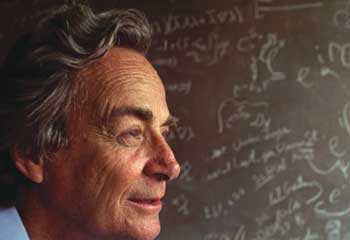
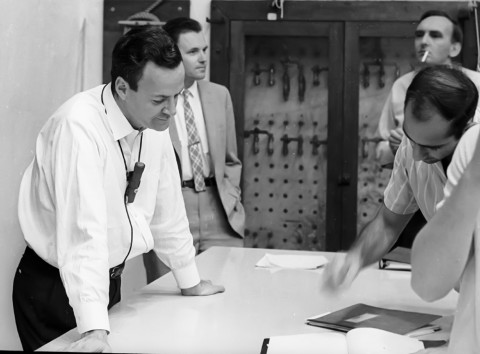
The Famous Feynman Lectures on Physics: The New Online Edition


Most of the material in the "famous Feynman lectures" is way beyond ability in the realms of mathematics and physics. However, I am sharing this anyway because Richard Feynman was simply a cool human being.

CalTech has converted all of his lectures into HTML5 format, and I'm sure there is a reason for that (and I suspect it has to do with readability on tablets and smart phones), and made them all available for free.

For those who would rather watch the lectures, that too is an option (a series of lectures at Cornell).

The Famous Feynman Lectures on Physics: The New Online Edition (in HTML5)


September 14th, 2013


Caltech and The Feynman Lectures Website have joined forces to create an online edition of Richard Feynman’s famous lectures on physics. First presented in the early 1960s as part of a two-year introductory physics course given at Caltech, the lectures were eventually turned into a book that became a classic reference work for physics students, teachers and researchers. You can still purchase the 560 page book online, or enjoy a new web edition for free.

Created with HTML5, the new site gives readers access to “a high-quality up-to-date copy” of Feynman’s lectures.” The text “has been designed for ease of reading on devices of any size or shape,” and you can zoom into text, figures and equations without degradation. Dive right into the lectures here. And if you’d prefer to see Feynman (as opposed to read Feynman), we would encourage you to watch ‘The Character of Physical Law,’ Feynman’s seven-part lecture series recorded at Cornell in 1964. Another 37 physics courses, most in video, can be found in our collection of Free Online Courses.

Feynman’s lecture are now listed in our collections of Free eBooks and Free Textbooks.

Photograph by Tom Harvey. Copyright © California Institute of Technology.
via Boing Boing

Related Content:

Sunday, September 01, 2013

Watch Big Time, the Concert Film Capturing Tom Waits on His Best Tour Ever (1988)

http://1.bp.blogspot.com/--E8p56xWC04/Tc80w-_YUCI/AAAAAAAAq0g/P1rQv2b1Mnk/s1600/tom-waits-big-time-dvd-very-rare-1987-59ff3.jpg

Awesome - happy Sunday! This comes courtesy of Open Culture.

Watch Big Time, the Concert Film Capturing Tom Waits on His Best Tour Ever (1988)

 August 30th, 2013


Here at Open Culture, we’ve often featured the many sides of Tom Waits: actor, poetry reader, favored David Letterman guest. More rarely, we’ve posted material dedicated to showcasing him practicing his primary craft, writing songs and singing them. But when a full-fledged Tom Waits concert does surface here, prepare to settle in for an unrelentingly (and entertainingly) askew musical experience. In March, we posted Burma Shave, an hour-long performance from the late seventies in which Waits took on “the persona of a down-and-out barfly with the soul of a Beat poet.” Today, we fast-forward a decade to Big Time, by which point Waits could express the essences of “avant-garde composer Harry Partch, Howlin’ Wolf, Frank Sinatra, Astor Piazzolla, Irish tenor John McCormack, Kurt Weill, Louis Prima, Mexican norteño bands and Vegas lounge singers.” That evocative quote comes from Big Time‘s own press notes, as excerpted by Dangerous Minds, which calls the viewing experience “like entering a sideshow tent in Tom Waits’s brain.”

Watch the 90-minute concert film in its entirety, though, and you may not find it evocative enough. In 1987, Waits had just put out the album Franks Wild Years, which explores the experience of his alter-ego Frank O’Brien, whom Waits called “a combination of Will Rogers and Mark Twain, playing accordion — but without the wisdom they possessed.” The year before, the singer actually wrote and produced a stage play built around the character, and the Franks Wild Years tour through North America and Europe made thorough use of Waits’ theatrical bent in that era. Its final two shows, at San Francisco’s Warfield Theatre and Los Angeles’ Wiltern Theatre, along with footage from gigs in Dublin, Stockholm and Berlin, make up the bulk of Big Time‘s material. As for its sensibility, well, even Waits fans may feel insecure, and happily so, about quite what to expect. (Fans of The Wire, I should note, will find something familiar indeed in this show’s rendition of “Way Down in the Hole.”)

Related Content:
~ Colin Marshall hosts and produces Notebook on Cities and Culture and writes essays on literature, film, cities, Asia, and aesthetics. He’s at work on a book about Los Angeles, A Los Angeles Primer. Follow him on Twitter at @colinmarshall.

Friday, August 30, 2013

Arthur C. Clarke Narrates Film on Mandelbrot’s Fractals; David Gilmour Provides the Soundtrack


More awesomeness from Open Culture. Fractals: The Colors of Infinity takes us deep inside the world of fractal geometry, where we encounter what some people have called “the thumbprint of God.” Mostly, it's one of the most aesthetically beautiful discoveries in the history of mathematics.


Arthur C. Clarke Narrates Film on Mandelbrot’s Fractals; David Gilmour Provides the Soundtrack

August 29th, 2013


In 1995, Sir Arthur C. Clarke, the futurist and science fiction writer most well known for his novel 2001: A Space Odyssey, presented a television documentary on the 1980 discovery of the Mandelbrot Set (M-Set)Fractals: The Colors of Infinity brings us inside the world of fractal geometry, and soon enough we’re encountering what has been called “the thumbprint of God” and some of the most beautiful discoveries in the history of mathematics. Clarke narrates the 54-minute film, which includes interviews with important mathematicians, including BenoĂ®t Mandelbrot himself. David Gilmour, the guitarist for Pink Floyd, provides the soundtrack. It’s hard to imagine a more perfect combination. Fractals: The Colors of Infinity first appeared on Open Culture back in 2010, which means that a second viewing is long overdue. A book closely related to the film can be purchased here: The Colours of Infinity: The Beauty, The Power and the Sense of Fractals.

Related Content:

Thursday, August 29, 2013

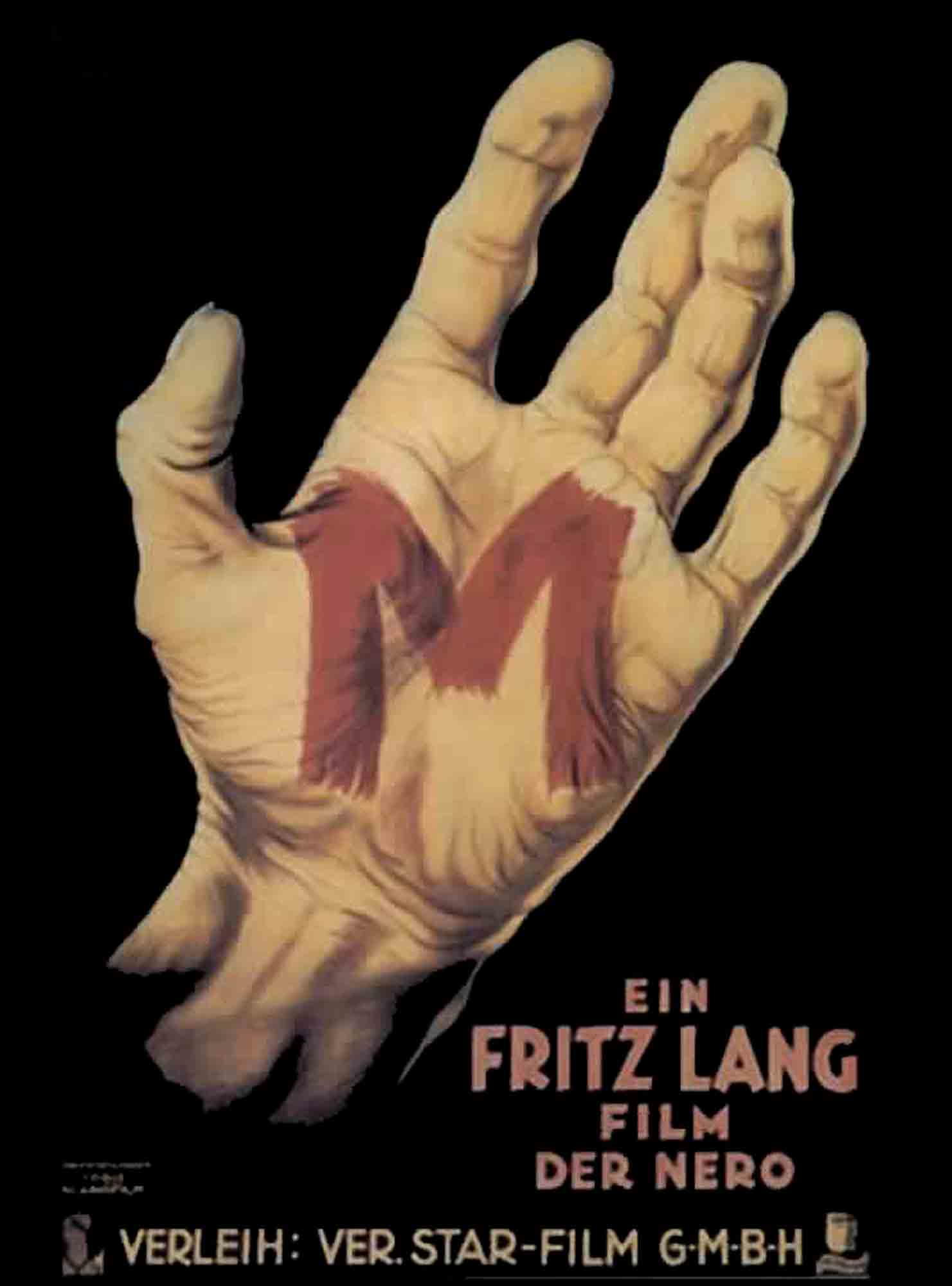
Fritz Lang’s M: Watch the Restored Version of the Classic 1931 Film


Very cool - gotta love all the excellent finds brought to us by Open Culture. Having not been a big box office success with its original release, M was re-released in 1959 in a shorter (butchered?) 89-minute version. The restored 109-minute version below is closer to Lang’s original film and was the product of a restoration project mounted in the 1990s.


Fritz Lang’s M: Watch the Restored Version of the Classic 1931 Film


August 25th, 2013

When Jean-Luc Godard asked the Austrian filmmaker Fritz Lang in 1961 to name his greatest film, the one most likely to last, Lang did not hesitate. “M,” he said.

Made in 1931, near the end of the Weimar Republic, M is Lang’s brilliant link between silent film and talkies, and between German Expressionism and what would eventually be called Film Noir. It tells the story of a Berlin society caught up in hysteria over a series of child murders, and of the massive mobilization — by police and criminals alike — to catch the killer.

The Hungarian actor Peter Lorre plays Hans Beckert, the mentally disturbed murderer. Lorre worked on the film in the daytime while performing on the stage in Bertolt Brecht’s own production of Mann ist Mann in the evenings. His striking performance in M would catapult him to international stardom.

The script was written by Lang and his wife, Thea Von Harbou. It was inspired by a series of mass murders, culminating in a sensational case of serial child killings in DĂĽsseldorf. In a 1931 article, Lang wrote:

The epidemic series of mass murders of the last decade with their manifold and dark side effects had constantly absorbed me, as unappealing as their study may have been. It made me think of demonstrating, within the framework of a film story, the typical characteristics of this immense danger for the daily order and the ways of effectively fighting them. I found the prototype in the person of the DĂĽsseldorf serial murderer and I also saw how here the side effects exactly repeated themselves, i.e. how they took on a typical form. I have distilled all typical events from the plethora of materials and combined them with the help of my wife into a self-contained film story. The film M should be a document and an extract of facts and in that way an authentic representation of a mass murder complex.

Although M was not a great box office success when it was released in Germany in 1931, the film gradually grew in stature and is now firmly established as one of the masterpieces of 20th century cinema. The formal brilliance of the film’s narrative structure, its classic visual images — the killer’s shadow appearing on a poster announcing a reward for his capture, a child’s balloon caught in a power line, Lorre’s bulging eyes as he discovers a chalk “M” on his shoulder — and its inventive use of sound — for example in the serial killer’s ominous whistling of Grieg’s Peer Gynt — have made M one of the most studied and imitated films ever made.

In 1959 M was re-released in truncated form, and for several decades afterward audiences were shown a badly altered 89-minute version. A restoration project was mounted in the 1990s. The 109-minute version above is closer to Lang’s original film. It’s now housed in our collection of 550 Free Movies Online.

Related content:

Wednesday, July 31, 2013

Martin Scorsese and Stanley Kubrick Pick Their 10 Favorite Films

From Open Culture, here are two "top ten" lists from two of America's most important filmmakers of the last 50 years. First up is Stanley Kubrick, who made his list in 1963. It would be interesting to see how that might have changed if he had done it in the last decade of his life.

The other list comes from one of my favorite directors, Martin Scorsese, who made his list earlier this year. Scorsese includes Kubrick's 2001: A Space Odyssey on his list - I wonder if Kubrick in his later years would have included Taxi Driver or Raging Bull or Mean Streets?

Stanley Kubrick’s List of Top 10 Films (The First and Only List He Ever Created)


July 30th, 2013


When, over the past weekend, I noticed the words “Stanley Kubrick” had risen into Twitter’s trending-topics list, I got excited. I figured someone had discovered, in the back of a long-neglected studio vault, the last extant print of a Kubrick masterpiece we’d somehow all forgotten. No suck luck, of course; Kubrick scholars, given how much they still talk about even the auteur’s never-realized projects like Napoleon, surely wouldn’t let an entire movie slip into obscurity. The burst of tweets actually came in honor of Kubrick’s 85th birthday, and hey, any chance to celebrate a director whose filmography includes the likes of Dr. Strangelove, The Shining, and 2001: A Space Odyssey, I’ll seize. The British Film Institute marked the occasion by posting a little-seen list of Kubrick’s top ten films.

“The first and only (as far as we know) Top 10 list Kubrick submitted to anyone was in 1963 to a fledgling American magazine named Cinema (which had been founded the previous year and ceased publication in 1976),” writes the BFI’s Nick Wrigley. It runs as follows:

1. I Vitelloni (Fellini, 1953)
2. Wild Strawberries (Bergman, 1957)
3. Citizen Kane (Welles, 1941)
4. The Treasure of the Sierra Madre (Huston, 1948)
5. City Lights (Chaplin, 1931)
6. Henry V (Olivier, 1944)
7. La notte (Antonioni, 1961)
8. The Bank Dick (Fields, 1940—above)
9. Roxie Hart (Wellman, 1942)
10. Hell’s Angels (Hughes, 1930)

But seeing as Kubrick still had 36 years to live and watch movies after making the list, it naturally provides something less than the final word on his preferences. Wrigley quotes Kubrick confidant Jan Harlan as saying that “Stanley would have seriously revised this 1963 list in later years, though Wild Strawberries, Citizen Kane and City Lights would remain, but he liked Kenneth Branagh’s Henry V much better than the old and old-fashioned Olivier version.” He also quotes Kubrick himself as calling Max Ophuls the “highest of all” and “possessed of every possible quality,” calling Elia Kazan “without question the best director we have in America,” and praising heartily David Lean, Vittorio de Sica, and François Truffaut. This all comes in handy for true cinephiles, who can never find satisfaction watching only the filmmakers they admire; they must also watch the filmmakers the filmmakers they admire admire.

Related Content:

* * * * * * *

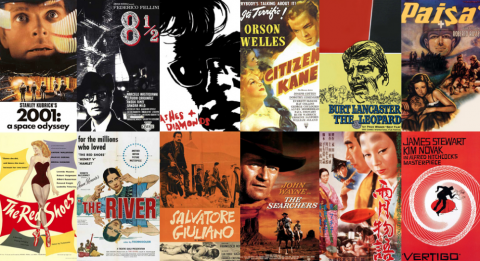
Martin Scorsese Reveals His 10 Favorite Movies (and Writes a New Essay on Film Preservation)


July 31st, 2013


Cinema as we’ve almost always known it — “Edison, the Lumière brothers, MĂ©liès, Porter, all the way through Griffith and on to Kubrick” — has “really almost gone.” So writes Martin Scorsese in his recent essay for the New York Review of Books, “The Persisting Vision: Reading the Language of Cinema.” He argues that traditional film forms have “been overwhelmed by moving images coming at us all the time and absolutely everywhere, even faster than the visions coming at the astronaut” in Kubrick’s 2001: A Space Odyssey. “We have no choice but to treat all these moving images coming at us as a language. We need to be able to understand what we’re seeing and find the tools to sort it all out.” Only natural that Scorsese, as one of the best-known, highest-profile auteurs alive, would reference Kubrick, his generational predecessor in the untiring furtherance of cinematic vision and craft.

We just yesterday featured a post about Kubrick’s 1963 list of ten favorite films. Scorsese, for his part, has impressed many as one of the most enthusiastically cinephilic directors working in America today: his essays about and appearances on the DVDs of his favorite movies stand as evidence for the surprising breadth of his appreciation. Today, why not have a look at Scorsese’s list, which he put together for Sight and Sound magazine, and which begins with the Kubrick selection you might expect:

2001: A Space Odyssey (1968) – Stanley Kubrick
(1963) – Federico Fellini
Ashes and Diamonds (1958) – Andrzej Wajda
Citizen Kane (1941) – Orson Welles
The Leopard (1963) – Luchino Visconti
Paisan (1946) – Roberto Rossellini
The Red Shoes (1948) – Michael Powell/Emeric Pressburger
The River (1951) – Jean Renoir
Salvatore Giuliano (1962) – Francesco Rosi
The Searchers (1956) – John Ford
Ugetsu Monogatari (1953) – Mizoguchi Kenji
Vertigo (1958) – Alfred Hitchcock

In “The Persisting Vision,” he champions comprehensive film preservation, citing the case of Hitchcock’s Vertigo, the final entry on his list, now named the greatest film of all time by Sight and Sound‘s critics poll. “When the film came out some people liked it, some didn’t, and then it just went away.” When, after decades of obscurity, Vertigo came back into circulation, the color was completely wrong,” and “the elements — the original picture and sound negatives — needed serious attention.” A restoration of the “decaying and severely damaged” film eventually happened, and “more and more people saw Vertigo and came to appreciate its hypnotic beauty and very strange, obsessive focus.” I, personally, couldn’t imagine the world of cinema without it — nor without any of the other pictures Scorsese calls his favorites.

Related Content:

~ Colin Marshall hosts and produces Notebook on Cities and Culture and writes essays on literature, film, cities, Asia, and aesthetics. He’s at work on a book about Los Angeles, A Los Angeles Primer. Follow him on Twitter at @colinmarshall.

Saturday, July 27, 2013

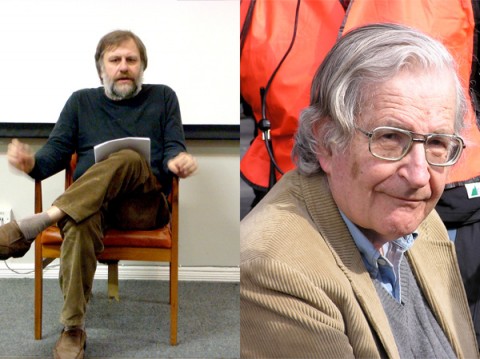
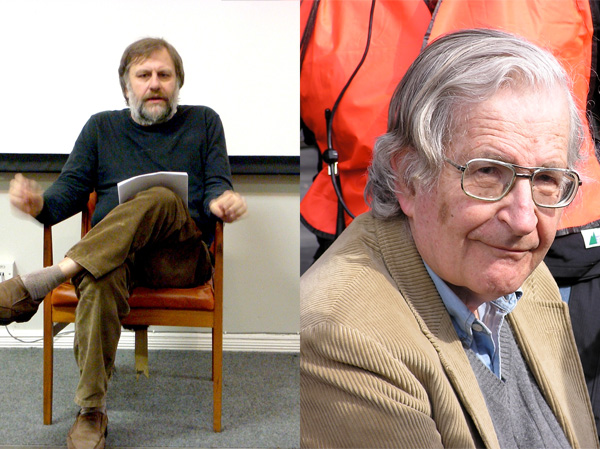
Philosophical Pissing War - Slavoj Žižek vs. Noam Chomsky

chomsky-zizek-feud-continues

I've only been following this "dialogue" between Slavoj Žižek and Noam Chomsky from the periphery, but Open Culture has assembled the various comments/responses in one post summarizing the exchange.

Here are the 4 articles about their feud, so far, as posted by Open Culture:
  1. Noam Chomsky Slams Ĺ˝iĹľek and Lacan: Empty ‘Posturing’
  2. Slavoj Ĺ˝iĹľek Responds to Noam Chomsky: ‘I Don’t Know a Guy Who Was So Often Empirically Wrong’
  3. The Feud Continues: Noam Chomsky Responds to Ĺ˝iĹľek, Describes Remarks as ‘Sheer Fantasy’
  4. Slavoj Ĺ˝iĹľek Publishes a Very Clearly Written Essay-Length Response to Chomsky’s “Brutal” Criticisms
For your entertainment, here the two latest summaries of the exchanges with links to the original articles, all of which come from Open Culture (those folks rock!):

The Feud Continues: Noam Chomsky Responds to Ĺ˝iĹľek, Describes Remarks as ‘Sheer Fantasy’


July 22nd, 2013


Noam Chomsky has issued a statement in reaction to our July 17 post, “Slavoj Ĺ˝iĹľek Responds to Noam Chomsky: ‘I Don’t Know a Guy Who Was So Often Empirically Wrong.’ In an article posted yesterday on ZNet titled “Fantasies,” Chomsky says Ĺ˝iĹľek’s criticism of him is completely ungrounded. “Ĺ˝iĹľek finds nothing, literally nothing, that is empirically wrong,” writes Chomsky. “That’s hardly a surprise.”

The rift between the two high-profile intellectuals began, as you may recall, when Chomsky criticized Ĺ˝iĹľek and other continental philosophers for essentially talking nonsense — for cloaking trivialities in fancy language and using the scientific-sounding term “theory” to describe propositions that could never be tested empirically. Ĺ˝iĹľek lashed back, saying of Chomsky, “I don’t think I know a guy who was so often empirically wrong.” He went on to criticize Chomsky’s controversial early position on American assessments of the Khmer Rouge atrocities in Cambodia. (To read Ĺ˝iĹľek’s comments, click here to open the earlier post in a new window.) In response yesterday, Chomsky said he had received numerous requests to comment on our post:
I had read it, with some interest, hoping to learn something from it, and given the title, to find some errors that should be corrected — of course they exist in virtually anything that reaches print, even technical scholarly monographs, as one can see by reading reviews in professional journals. And when I find them or am informed about them I correct them. 
But not here. Ĺ˝iĹľek finds nothing, literally nothing, that is empirically wrong. That’s hardly a surprise. Anyone who claims to find empirical errors, and is minimally serious, will at the very least provide a few particles of evidence — some quotes, references, at least something. But there is nothing here — which, I’m afraid, doesn’t surprise me either. I’ve come across instances of Ĺ˝iĹľek’s concept of empirical fact and reasoned argument.
Chomsky goes on to recount an instance when he says Ĺ˝iĹľek misattributed a “racist comment on Obama” to Chomsky, only to explain it away later and say that he had discussed the issue with Chomsky on the telephone. “Of course,” writes Chomsky, “sheer fantasy.” Chomsky then moves on to Ĺ˝iĹľek’s comments reported by Open Culture, which he says are typical of Ĺ˝iĹľek’s methods. “According to him,” writes Chomsky, “I claim that ‘we don’t need any critique of ideology’ — that is, we don’t need what I’ve devoted enormous efforts to for many years. His evidence? He heard that from some people who talked to me. Sheer fantasy again, but another indication of his concept of empirical fact and rational discussion.”

Chomsky devotes the rest of his article to defending his work with Edward Herman on the Khmer Rouge atrocities. He claims that no factual errors have been found in their work on the subject, and he draws attention to a passage in their book After the Cataclysm, quoted last week by Open Culture reader Poyâ Pâkzâd, in which they write, “our primary concern here is not to establish the facts with regard to postwar Indochina, but rather to investigate their refraction through the prism of Western ideology, a very different task.”

You can read Chomsky’s complete rebuttal to Ĺ˝iĹľek here.

* * * * * * *

Slavoj Ĺ˝iĹľek Publishes a Very Clearly Written Essay-Length Response to Chomsky’s “Brutal” Criticisms


July 26th, 2013


Fur has flown, claws and teeth were bared, and folding chairs were thrown! But of course I refer to the bristly exchange between those two stars of the academic left, Slavoj Ĺ˝iĹľek and Noam Chomsky. And yes, I’m poking fun at the way we—and the blogosphere du jour—have turned their shots at one another into some kind of celebrity slapfight or epic rap battle grudge match. We aim to entertain as well as inform, it’s true, and it’s hard to take any of this too seriously, since partisans of either thinker will tend to walk away with their previous assumptions confirmed once everyone goes back to their corners.

But despite the seeming cattiness of Chomsky and Ĺ˝iĹľek’s highly mediated exchanges (perhaps we’re drumming it up because a simple face-to-face debate has yet to occur, and probably won’t), there is a great deal of substance to their volleys and ripostes, as they butt up against critical questions about what philosophy is and what role it can and should play in political struggle. As to the former, must all philosophy emulate the sciences? Must it be empirical and consistently make transparent truth claims? Might not “theory,” for example (a word Chomsky dismisses in this context), use the forms of literature—elaborate metaphor, playful systems of reference, symbolism and analogy? Or make use of psychoanalytic and Marxian terminology in evocative and novel ways in serious attempts to engage with ideological formations that do not reveal themselves in simple terms?

Another issue raised by Chomsky’s critiques: should the work of philosophers who identify with the political left endeavor for a clarity of expression and a direct utility for those who labor under systems of oppression, lest obscurantist and jargon-laden writing become itself an oppressive tool and self-referential game played for elitist intellectuals? These are all important questions that neither Ĺ˝iĹľek nor Chomsky has yet taken on directly, but that both have obliquely addressed in testy off-the-cuff verbal interviews, and that might be pursued by more disinterested parties who could use their exchange as an exemplar of a current methodological rift that needs to be more fully explored, if never, perhaps, fully resolved. As Ĺ˝iĹľek makes quite clear in his most recent—and very clearly-written—essay-length reply to Chomsky’s latest comment on his work (published in full on the Verso Books blog), this is a very old conflict.

Ĺ˝iĹľek spends the bulk of his reply exonerating himself of the charges Chomsky levies against him, and finding much common ground with Chomsky along the way, while ultimately defending his so-called continental approach. He provides ample citations of his own work and others to support his claims, and he is detailed and specific in his historical analysis. Ĺ˝iĹľek is skeptical of Chomsky’s claims to stand up for “victims of Third World suffering,” and he makes it plain where the two disagree, noting, however, that their antagonism is mostly a territorial dispute over questions of style (with Chomsky as a slightly morose guardian of serious, scientific thought and Ĺ˝iĹľek as a sometimes buffoonish practitioner of a much more literary tradition). He ends with a dig that is sure to keep fanning the flames:
To avoid a misunderstanding, I am not advocating here the “postmodern” idea that our theories are just stories we are telling each other, stories which cannot be grounded in facts; I am also not advocating a purely neutral unbiased view. My point is that the plurality of stories and biases is itself grounded in our real struggles. With regard to Chomsky, I claim that his bias sometimes leads him to selections of facts and conclusions which obfuscate the complex reality he is trying to analyze. 
…………………. 
Consequently, what today, in the predominant Western public speech, the “Human Rights of the Third World suffering victims” effectively mean is the right of the Western powers themselves to intervene—politically, economically, culturally, militarily—in the Third World countries of their choice on behalf of the defense of Human Rights. My disagreement with Chomsky’s political analyses lies elsewhere: his neglect of how ideology works, as well as the problematic nature of his biased dealing with facts which often leads him to do what he accuses his opponents of doing. 
But I think that the differences in our political positions are so minimal that they cannot really account for the thoroughly dismissive tone of Chomsky’s attack on me. Our conflict is really about something else—it is simply a new chapter in the endless gigantomachy between so-called continental philosophy and the Anglo-Saxon empiricist tradition. There is nothing specific in Chomsky’s critique—the same accusations of irrationality, of empty posturing, of playing with fancy words, were heard hundreds of times against Hegel, against Heidegger, against Derrida, etc. What stands out is only the blind brutality of his dismissal. 
I think one can convincingly show that the continental tradition in philosophy, although often difficult to decode, and sometimes—I am the first to admit this—defiled by fancy jargon, remains in its core a mode of thinking which has its own rationality, inclusive of respect for empirical data. And I furthermore think that, in order to grasp the difficult predicament we are in today, to get an adequate cognitive mapping of our situation, one should not shirk the resorts of the continental tradition in all its guises, from the Hegelian dialectics to the French “deconstruction.” Chomsky obviously doesn’t agree with me here. So what if—just another fancy idea of mine—what if Chomsky cannot find anything in my work that goes “beyond the level of something you can explain in five minutes to a twelve-year-old” because, when he deals with continental thought, it is his mind which functions as the mind of a twelve-year-old, the mind which is unable to distinguish serious philosophical reflection from empty posturing and playing with empty words?
Josh Jones is a writer and musician based in Washington, DC. Follow him at @jdmagness