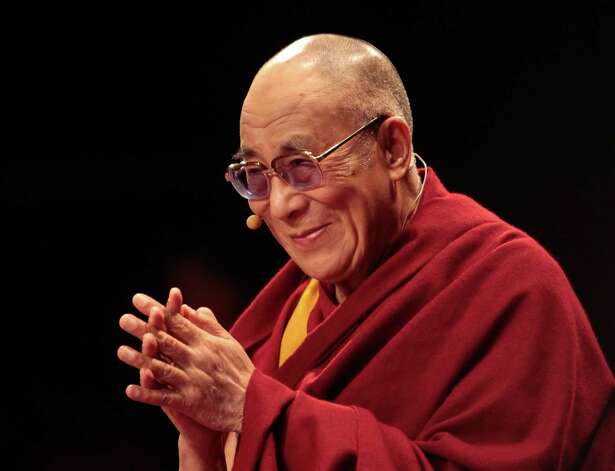
Showing posts with label Dalai Lama. Show all posts

Wednesday, November 06, 2013

The Dalai Lama at Emory University (2013) - Secular Ethics, Transcending Moral Differences, and the Mahamudra


His Holiness the XIV Dalai Lama, Presidential Distinguished Professor at Emory University, returned to Atlanta this past October 8-10, 2013 for a series of public and campus events, including programs on responsible citizenship, ethics and education.

"The Dalai Lama has made invaluable contributions to our understanding of what it means to be an ethical citizen of the world. We are looking forward to the return of Emory's Presidential Distinguished Professor and the opportunities for our faculty and students to engage with him on these vital issues." — James Wagner, president of Emory

The daily gave both public and private talks. Two of the public talks centered on secular ethics and how we can transcend moral differences. A two-part Buddhist teaching focused on the root text of Mahamudra by 1st Panchen Lama, Losang Choekyi Gyaltsen.

The Dalai Lama at Emory University (2013): Secular Ethics 101

Published on Oct 30, 2013


During "The Visit 2013" of His Holiness the XIV Dalai Lama, Emory University Presidential Distinguished Professor, an event was held called "Secular Ethics 101" for students, faculty, and staff at Glenn Memorial Auditorium on the Emory campus. President James W. Wagner, Provost Claire Sterk, and Student Government President Raj Patel offer greetings prior to lecture by His Holiness on Secular Ethics. Following the lecture was a moderated conversation and student Q&A. The event was held on October 9, 2013.

* * * * *

The Dalai Lama at Emory University (2013): Transcending Moral Differences

Published on Oct 30, 2013


During "The Visit 2013" of His Holiness the XIV Dalai Lama, Emory University Presidential Distinguished Professor, an scholarly conversation was held at the Schwartz Center for Performing Arts on the Emory campus on October 9, 2013.

Hosted by the Center for Ethics and the Department of Religion, the event was moderated by Dr. Paul Root Wolpe and featured panelists Dr. Wendy Farley, Dr. Philippe Rochat, and Dr. Edward L. Queen.

* * * * *

The Dalai Lama at Emory University (2013): Buddhist Teaching (Part 1 of 2)

Published on Oct 30, 2013
Part 1 of 2


During "The Visit 2013" of His Holiness the XIV Dalai Lama, Emory University Presidential Distinguished Professor, an traditional Buddhist teaching event was held at Glenn Memorial Auditorium on the Emory campus on October 10, 2013. The teaching was on the root text of Mahamudra by 1st Panchen Lama, Losang Choekyi Gyaltsen, and was presented by invitation of Drepung Loseling Monastery - Atlanta.
[Continued below.]

* * * * *

The Dalai Lama at Emory University (2013): Buddhist Teaching (Part 2 of 2)

Published on Oct 30, 2013
Part 2 of 2


Monday, November 04, 2013

Mind and Life XXVII - Craving, Desire and Addiction: Into the World (Day 5)


It's time for another of the always fabulous Mind and Life Conferences, this one on Craving, Desire, and Addiction.

MIND AND LIFE 2013 – XXVII: CRAVING, DESIRE, AND ADDICTION

with His Holiness the Dalai Lama
Dharamsala, Himachal Pradesh, India – October 28 – November 1, 2013
The conference focuses its attention on craving, desire, and addiction, as these are among the most pressing causes of human suffering. By bringing contemplative practitioners and scholars from Buddhist and Christian traditions together with a broad array of scientific researchers in the fields of desire and addiction, hopefully new understandings will arise that may ultimately lead to improved treatment of the root causes of craving and its many manifestations.
Here are the list and associations of this year's participants:
  • TENZIN GYATSO, His Holiness the 14th Dalai Lama
  • KENT BERRIDGE, PHD, James Olds Collegiate Professor of Psychology and Neuroscience, Department of Psychology, University of Michigan
  • SARAH BOWEN, PHD, Acting Assistant Professor, Department of Psychiatry and Behavioral Sciences, University of Washington
  • RICHARD J. DAVIDSON, PHD, William James and Vilas Professor of Psychology and Psychiatry, Director, Laboratory of Affective Neuroscience University of Wisconsin–Madison
  • WENDY FARLEY, PHD, Professor, Department of Religion, Emory University
  • VIBEKE ASMUSSEN FRANK, PHD, Deputy Director and Associate Professor, Centre for Alcohol and Drug Research, Aarhus University, Denmark
  • ROSHI JOAN HALIFAX, PHD, Founder, Abbot, and Head Teacher, Upaya Zen Center
  • THUPTEN JINPA, PHD, Adjunct Professor, McGill University, Chairman Mind & Life Institute
  • MARC LEWIS, PHD, Professor, Behavioural Science Institute,Radboud University Nijmegen, Netherlands
  • MATTHIEU RICARD, PHD, Buddhist Monk, Shechen Monastery
  • NORA VOLKOW, MD, Director, National Institute on Drug Abuse, National Institutes of Health
  • DIANA CHAPMAN WALSH, PHD, President Emerita, Wellesley College, Governing Board Member, The Broad Institute of Harvard and MIT
  • ARTHUR ZAJONC, PHD, Professor Emeritus of Physics, Amherst College, President Mind & Life Institute
Here are the two videos of the morning and afternoon sessions from day 5, focused on "Into the World." These are the final installments of the conference.


Morning Session: Application of Contemplative Practices in Treatment of Addiction


Afternoon Session: Concluding Remarks

Sunday, November 03, 2013

Mind and Life XXVII - Craving, Desire and Addiction: Contemplative Perspectives (Day 4)


It's time for another of the always fabulous Mind and Life Conferences, this one on Craving, Desire, and Addiction.

MIND AND LIFE 2013 – XXVII: CRAVING, DESIRE, AND ADDICTION

with His Holiness the Dalai Lama
Dharamsala, Himachal Pradesh, India – October 28 – November 1, 2013
The conference focuses its attention on craving, desire, and addiction, as these are among the most pressing causes of human suffering. By bringing contemplative practitioners and scholars from Buddhist and Christian traditions together with a broad array of scientific researchers in the fields of desire and addiction, hopefully new understandings will arise that may ultimately lead to improved treatment of the root causes of craving and its many manifestations.
Here are the list and associations of this year's participants:
  • TENZIN GYATSO, His Holiness the 14th Dalai Lama
  • KENT BERRIDGE, PHD, James Olds Collegiate Professor of Psychology and Neuroscience, Department of Psychology, University of Michigan
  • SARAH BOWEN, PHD, Acting Assistant Professor, Department of Psychiatry and Behavioral Sciences, University of Washington
  • RICHARD J. DAVIDSON, PHD, William James and Vilas Professor of Psychology and Psychiatry, Director, Laboratory of Affective Neuroscience University of Wisconsin–Madison
  • WENDY FARLEY, PHD, Professor, Department of Religion, Emory University
  • VIBEKE ASMUSSEN FRANK, PHD, Deputy Director and Associate Professor, Centre for Alcohol and Drug Research, Aarhus University, Denmark
  • ROSHI JOAN HALIFAX, PHD, Founder, Abbot, and Head Teacher, Upaya Zen Center
  • THUPTEN JINPA, PHD, Adjunct Professor, McGill University, Chairman Mind & Life Institute
  • MARC LEWIS, PHD, Professor, Behavioural Science Institute,Radboud University Nijmegen, Netherlands
  • MATTHIEU RICARD, PHD, Buddhist Monk, Shechen Monastery
  • NORA VOLKOW, MD, Director, National Institute on Drug Abuse, National Institutes of Health
  • DIANA CHAPMAN WALSH, PHD, President Emerita, Wellesley College, Governing Board Member, The Broad Institute of Harvard and MIT
  • ARTHUR ZAJONC, PHD, Professor Emeritus of Physics, Amherst College, President Mind & Life Institute
Here are the two videos of the morning and afternoon sessions from day 4, focused on "Contemplative Perspectives."


Morning Session: From Craving to Freedom and Flourishing: Buddhist Perspectives on Desire


Afternoon Session: Contemplative Christianity, Desire, and Addiction

Friday, November 01, 2013

Mind & LIfe XXVII - Craving, Desire, and Addiction: Cognitive and Buddhist Theory (Day 2)


It's time for another of the always fabulous Mind and Life Conferences, this one on Craving, Desire, and Addiction.

MIND AND LIFE 2013 – XXVII: CRAVING, DESIRE, AND ADDICTION

with His Holiness the Dalai Lama
Dharamsala, Himachal Pradesh, India – October 28 – November 1, 2013
The conference focuses its attention on craving, desire, and addiction, as these are among the most pressing causes of human suffering. By bringing contemplative practitioners and scholars from Buddhist and Christian traditions together with a broad array of scientific researchers in the fields of desire and addiction, hopefully new understandings will arise that may ultimately lead to improved treatment of the root causes of craving and its many manifestations.

Here are the list and associations of this year's participants:
  • TENZIN GYATSO, His Holiness the 14th Dalai Lama
  • KENT BERRIDGE, PHD, James Olds Collegiate Professor of Psychology and Neuroscience, Department of Psychology, University of Michigan
  • SARAH BOWEN, PHD, Acting Assistant Professor, Department of Psychiatry and Behavioral Sciences, University of Washington
  • RICHARD J. DAVIDSON, PHD, William James and Vilas Professor of Psychology and Psychiatry, Director, Laboratory of Affective Neuroscience University of Wisconsin–Madison
  • WENDY FARLEY, PHD, Professor, Department of Religion, Emory University
  • VIBEKE ASMUSSEN FRANK, PHD, Deputy Director and Associate Professor, Centre for Alcohol and Drug Research, Aarhus University, Denmark
  • ROSHI JOAN HALIFAX, PHD, Founder, Abbot, and Head Teacher, Upaya Zen Center
  • THUPTEN JINPA, PHD, Adjunct Professor, McGill University, Chairman Mind & Life Institute
  • MARC LEWIS, PHD, Professor, Behavioural Science Institute,Radboud University Nijmegen, Netherlands
  • MATTHIEU RICARD, PHD, Buddhist Monk, Shechen Monastery
  • NORA VOLKOW, MD, Director, National Institute on Drug Abuse, National Institutes of Health
  • DIANA CHAPMAN WALSH, PHD, President Emerita, Wellesley College, Governing Board Member, The Broad Institute of Harvard and MIT
  • ARTHUR ZAJONC, PHD, Professor Emeritus of Physics, Amherst College, President Mind & Life Institute

Here are the two videos of the morning and afternoon sessions from day 2, focused on "Cognitive and Buddhist Theory."

A.M. Session: Brain Generators of Intense Wanting and Liking


P.M. Session: Psychology of Desire, Craving, and Action: A Buddhist Perspective

Thursday, October 31, 2013

Mind & LIfe XXVII - Craving, Desire, and Addiction - The Role of Craving in the Cycle of Addictive Behavior (Day 1, PM)


It's time for another of the always fabulous Mind and Life Conferences, this one on Craving Desire, and Addiction.

MIND AND LIFE 2013 – XXVII: CRAVING, DESIRE, AND ADDICTION

with His Holiness the Dalai Lama
Dharamsala, Himachal Pradesh, India – October 28 – November 1, 2013
Here is the list and associations of this year's participants:
  • TENZIN GYATSO, His Holiness the 14th Dalai Lama
  • KENT BERRIDGE, PHD, James Olds Collegiate Professor of Psychology and Neuroscience, Department of Psychology, University of Michigan
  • SARAH BOWEN, PHD, Acting Assistant Professor, Department of Psychiatry and Behavioral Sciences, University of Washington
  • RICHARD J. DAVIDSON, PHD, William James and Vilas Professor of Psychology and Psychiatry, Director, Laboratory of Affective Neuroscience University of Wisconsin–Madison
  • WENDY FARLEY, PHD, Professor, Department of Religion, Emory University
  • VIBEKE ASMUSSEN FRANK, PHD, Deputy Director and Associate Professor, Centre for Alcohol and Drug Research, Aarhus University, Denmark
  • ROSHI JOAN HALIFAX, PHD, Founder, Abbot, and Head Teacher, Upaya Zen Center
  • THUPTEN JINPA, PHD, Adjunct Professor, McGill University, Chairman Mind & Life Institute
  • MARC LEWIS, PHD, Professor, Behavioural Science Institute,Radboud University Nijmegen, Netherlands
  • MATTHIEU RICARD, PHD, Buddhist Monk, Shechen Monastery
  • NORA VOLKOW, MD, Director, National Institute on Drug Abuse, National Institutes of Health
  • DIANA CHAPMAN WALSH, PHD, President Emerita, Wellesley College, Governing Board Member, The Broad Institute of Harvard and MIT
  • ARTHUR ZAJONC, PHD, Professor Emeritus of Physics, Amherst College, President Mind & Life Institute

Mind and LIfe XXVII - Craving, Desire, and Addiction- Day 1, PM


Published on Oct 29, 2013


Mind and Life XXVII - Craving, Desire, and Addiction from Dharamsala, India on October 28 - November 1, 2013.

The conference focuses its attention on craving, desire, and addiction, as these are among the most pressing causes of human suffering. By bringing contemplative practitioners and scholars from Buddhist and Christian traditions together with a broad array of scientific researchers in the fields of desire and addiction, hopefully new understandings will arise that may ultimately lead to improved treatment of the root causes of craving and its many manifestations.

Day One - October 28: The Problem of Craving and Addiction
Morning Session: Introductory remarks
Afternoon sessions: The Role of Craving in the Cycle of Addictive Behavior

Day Two - October 29: Cognitive and Buddhist Theory
Morning session: Brain Generators of Intense Wanting and Liking
Afternoon session: Psychology of Desire, Craving, and Action: A Buddhist Perspective

Day Three - October 30: Biological and Cultural Views
Morning Session: The Role of Dopamine in the Addicted Human Brain
Afternoon Session: Beyond the Individual - The Role of Society and Culture in Addiction

Day Four - October 31: Contemplative Perspectives
Morning Session: From Craving to Freedom and Flourishing: Buddhist Perspectives on Desire
Afternoon Session: Contemplative Christianity, Desire, and Addiction

Day Five - November 1: Into the World
Morning Session: Application of Contemplative Practices in Treatment of Addiction
Afternoon Session: Concluding Remarks

Thursday, September 05, 2013

The Dalai Lama - Stages of the Path to Enlightenment & An Overview of Tantra

Tibetan spiritual leader the Dalai Lama gestures as he gives a teaching at Tsuglakhang temple in McLeod Ganj, India, on 25 August 2013.

This is a 3-part series of lectures from the Dalai Lama on the Stages of the Path to Enlightenment and an Overview of Tantra, both of which are based on texts by Tsongkhapa (ce: 1357–1419). Tsongkhapa is one of the primary philosophers of Buddhist Mahāyāna, and there is a meta-Buddhist aspect to his teachings, as reflected in this section from the Stanford Encyclopedia of Philosophy:
Tsongkhapa's particular hermeneutics, the primary means he employs to lead readers to his philosophical insight, allows him to characterize particular, authentic, Buddhist philosophies as wrong (because they are wrong from a Prāsaṅgika perspective), yet right from the perspective of those particular systems. They are right because the philosophies have particular roles to play in a larger, grander scheme. This scheme is part of the larger philosophy of a perfect person whose views are in perfect accord (Sk. tathāgata) with the way things are, i.e., dependent origination, and whose statements are motivated solely by the benefit they have to those who hear them.

In this way, Tsongkhapa's hermeneutics lead to, or incorporate, a second principle, namely, bodhicitta (Sk.). The word bodhicitta has at least six different, but interrelated meanings in different contexts (Wangchuk 2007). In his philosophical works Tsongkhapa uses it to mean a universal, altruistic principle (not unlike the logos) that explains, primarily, the genesis of the Buddha's diverse statements, i.e., explains why a person with perfect intellect and powers of expression would make statements that seem to contain contradictions.

This principle plays a central role in Tsongkhapa's assertion that all authentic attainments, without distinction, are based on an authentic insight into emptiness (the seventh of the eight difficult points listed above), and it leads him to assert that the “origin” of the Mahāyāna is located in bodhicitta, and bodhicitta alone.
Anyway, apparently in the days and weeks leading up to this August event, there had been "serial bomb blasts in Bodhgaya and terrorists' threat to liberate Tibetan monasteries."
"As a result of new security measures, no outside electronic gadgets, including FM radios, will be allowed in the temple premises. We apologize for the inconvenience and ask for your understanding while we work out a new method for translation services for future teachings," it said. 
Dalai Lama will give teachings on Tsongkhapa's Concise Treatises on the stages of the path to enlightenment and an overview of Tantra from Tsongkhapa's stages of the path of Mantrayana at the request of a group of Koreans at Tsuglagkhang from August 25-27. His office said it would provide English translation for participants who can understand the language in a designated area.

Here is the promotion for the teachings:
His Holiness will give a two and a half-day teaching on Tsongkhapa’s Concise Treatises on the Stages of the Path to Enlightenment (lamrim dudon) and "An Overview of Tantra" from Tsongkhapa’s Stages of the Path of Mantrayana (ngakrim chenmo chishe) at the request of a group of Koreans at the Main Tibetan Temple.
Enjoy!

Day One:

Published on Aug 25, 2013

The first day of His Holiness the Dalai Lama's three day teaching on Tsongkhapa's "Concise Treatises on the Stages of the Path to Enlightenment" and An Overview of Tantra from Tsongkhapa's "Stages of the Path of Mantrayana" at the request of a group of Koreans at the Main Tibetan Temple in Dharamsala, India on August 25-27, 2013. His Holinesss speaks in Tibetan followed by an English translation.

Day Two:

Published on Aug 27, 2013

The second day of His Holiness the Dalai Lama's three day teaching on Tsongkhapa's "Concise Treatises on the Stages of the Path to Enlightenment" and An Overview of Tantra from Tsongkhapa's "Stages of the Path of Mantrayana" at the request of a group of Koreans at the Main Tibetan Temple in Dharamsala, India on August 25-27, 2013. His Holinesss speaks in Tibetan followed by an English translation.

Day Three:

Published on Aug 28, 2013

The third day of His Holiness the Dalai Lama's three day teaching on Tsongkhapa's "Concise Treatises on the Stages of the Path to Enlightenment" and An Overview of Tantra from Tsongkhapa's "Stages of the Path of Mantrayana" at the request of a group of Koreans at the Main Tibetan Temple in Dharamsala, India on August 25-27, 2013. His Holinesss speaks in Tibetan followed by an English translation.

Monday, August 05, 2013

Christof Koch - Neuroscientists and the Dalai Lama Swap Insights on Meditation

Christof Koch is an American neuroscientist best known for his work on the neural bases of consciousness. As such, it feels strange to read him discussing meditation, Buddhism, and the Dalai Lama considering that he is the co-author of the Scholarpedia entry on Neural correlates of consciousness. Koch generally believes that there is a neural basis for consciousness, that mind is the brain.

As you all know, I disagree with the reductionist, mind = brain model (see this post for a better explanation than I can articulate).

Koch is the author most recently of Consciousness: Confessions of a Romantic Reductionist (2012). He has also written The Quest for Consciousness: A Neurobiological Approach (2004) and Biophysics of Computation: Information Processing in Single Neurons (2004).

Neuroscientists and the Dalai Lama Swap Insights on Meditation


An encounter with His Holiness the Dalai Lama and the scientific study of meditation


By Christof Koch | Tuesday, July 30, 2013


His Holiness the Dalai Lama listens to the author talking about the brain basis of consciousness during a six-day encounter between Tibetan Buddhism and science.Image: Courtesy of MIND AND LIFE INSTITUTE 

Knowledge can be communicated, but not wisdom. One can find it, live it, do wonders through it, but one cannot communicate and teach it.


This line from Herman Hesse's 1922 novel Siddhartha came unbidden to me during a recent week-long visit to Drepung Monastery in southern India. His Holiness the Dalai Lama had invited the U.S.-based Mind and Life Institute to familiarize the Tibetan Buddhist monastic community living in exile in India with modern science. About a dozen of us—physicists, psychologists, brain scientists and clinicians, leavened by a French philosopher—introduced quantum mechanics, neuroscience, consciousness and various clinical aspects of meditative practices to a few thousand Buddhist monks and nuns. As we lectured, we were quizzed, probed and gently made fun of by His Holiness, who sat beside us [see photograph above]. We learned as much from him and his inner circle—such as from his translator, Tibetan Jinpa Thupten, who has a doctorate in philosophy from the University of Cambridge, and from the French monk Matthieu Ricard, who holds a Ph.D. in molecular biology from the Pasteur Institute in Paris—as they and their brethren from us.

What passed between these representatives of two distinct intellectual modes of thinking about the world were facts, data—knowledge. That is, knowledge about the more than two-millennia-old Eastern tradition of investigating the mind from the inside, from an interior, subjective point of view, and the much more recent insights provided by empirical Western ways to probe the brain and its behavior using a third-person, reductionist framework. What the former brings to the table are scores of meditation techniques to develop mindfulness, concentration, insight, serenity, wisdom and, it is hoped, in the end, enlightenment. These revolve around a daily practice of quiet yet alert sitting and letting the mind settle before embarking on a specific program, such as “focused attention” or the objectless practice of generating a state of “unconditional loving-kindness and compassion.” After years of daily contemplative exercise—nothing comes easily in meditation—practitioners can achieve considerable control over their mind.

Twelve years of schooling, four years of college and an even longer time spent in advanced graduate training fail to familiarize our future doctors, soldiers, engineers, scientists, accountants and politicians with such techniques. Western universities do not teach methods to enable the developing or the mature mind to become quiet and to focus its considerable powers on a single object, event or train of thought. There is no introductory class on “Focusing the Mind.” And this is to our loss!

From introspection, we are all familiar with the mental clutter, the chatter that makes up our daily life. It is a rapid fire of free associations, of jumping from one image, speech fragment or memory to the next. Late-night lucubrations are particularly prone to such erratic zigzagging. Focusing on a single line of argument or thought requires deliberate, laborious and conscious effort from which we flee. We prefer to be distracted by external stimuli, conversations, radio, television or newspapers. Desperate not to be left alone within our mind, to avoid having to think, we turn to our constant electronic companions to check for incoming messages.

Yet here we had His Holiness, a 77-year-old man, who sat during six days, ramrod straight for hours on end, his legs tucked under his body, attentively following our arcane scholarly arguments. I have never experienced a single man, and an entire community, who appeared so open, so content, so happy, constantly smiling, yet so humble, as these monks who, by First World standards, live a life of poverty, deprived of most of the things we believe are necessary to live a fully realized life. Their secret appears to be mind control.

Among the more extreme cases of mind control is the self-immolation of the Vietnamese Buddhist monk Thich Quang Duc in 1963 to protest the repressive regime in South Vietnam. What was so singular about this event, captured in haunting photographs that are among the most readily recognized images of the 20th century, was the calm and deliberate nature of his heroic act. While burning to death, Duc remained throughout in the meditative lotus position. He never moved a muscle or uttered a sound, as the flames consumed him and his corpse finally toppled over.

I am filled with utter bewilderment in the face of this singular event and would have found it difficult to accept as real, were it not captured in the testimony of hundreds of onlookers, including jaundiced journalists with their cameras.

Brain Basis of Mind Control

A step toward a brain-based explanation of this extraordinary phenomenon comes from a recent scanning experiment by Fadel Zeidan, Robert C. Coghill and their colleagues at the Wake Forest School of Medicine. Fifteen volunteers were recruited to lie in a scanner while a small metal plate was attached to their right calf. As its temperature varied from pleasant (near body temperature) to painful (49 degrees Celsius), subjects had to rate both pain intensity and pain unpleasantness of the noxious stimulus. Predictably, the hot probe triggered increased hemodynamic activity in structures that are known to be involved in pain processing, such as the primary and secondary somatosensory cortices that represent the leg, as well as more frontal structures, the anterior cingulate cortex and the insula. Subsequently, the volunteers underwent four days of 20 minutes' daily practice of mindfulness meditation involving focused attention or the Buddhist mind-calming practice called shamatha. In the latter, the practitioner focuses attention on the changing sensations of her breath, noting thoughts, pictures and memories as they arise from their inner source, but without any emotional engagement. This exercise frees her to quickly disengage from them to return attention to monitoring her breathing.

Practicing mindfulness during the noxious stimulation reduced the unpleasantness of the pain by a whopping 57 percent and its intensity by 40 percent. And this after only minimal training (four times the 20 minutes). Of course, it is a far cry from attenuating the unthinkable agony of burning to death, but still. Mindfulness exerts its effect by promoting a sense of detachment and by reducing the subjectively experienced saliency of the heated metal plate. Yet how does it work in the brain?

Pain-related activity in the primary and secondary somatosensory cortices was reduced by the meditation. Those subjects who experienced the greatest reduction in the intensity of their pain had the largest increase of activity in their right insula and both sides of their anterior cingulate cortices. Subjects with the greatest reduction of the unpleasantness of the pain—which is what most people care about—exhibited the greatest activation of regions in the orbitofrontal cortex and the largest reduction in the thalamus (gating the incoming sensory information).

Think of mindfulness, think of all meditations, as mental skills to control emotions and to shape the impact that external events, such as sight, sound or heat, have on the sensory brain. Select prefrontal regions in the practitioner's brain reach all the way down to the thalamus to reduce the flood of incoming information from the periphery, leading to a lessening of the pain. These skills to steer the mind are not magical, otherworldly or transcendental. They can be learned by sufficiently intensive practice. The only question is whether our instruments are always sufficiently sensitive to pick up their footprints in the brain.

In 2008 Richard J. Davidson and his group at the University of Wisconsin–Madison published a classic study with the active participation of Ricard and other Buddhist monks. The cognitive scientists fitted skullcaps with 128 electroencephalographic (EEG) electrodes to the heads of eight long-term Buddhist practitioners and 10 student volunteers. The former were asked to attain a state of “unconditional loving-kindness and compassion” (a form of meditation that does not focus on a single object and is sometimes referred to as “pure compassion”), whereas the volunteers thought about somebody he or she deeply cared about and then tried to generalize these feelings to all sentient beings.

The onset of meditation in the monks coincided with an increase in high-frequency EEG electrical activity in the so-called gamma band (spanning 25 to 42 oscillations a second), which was synchronized across the frontal and parietal cortices. Such activity is thought to be the hallmark of highly active and spatially dispersed groups of neurons, typically associated with focusing attention. Indeed, gamma activity in these monks is the largest seen in nonpathological conditions and 30 times greater than in the novices. The more years the monks had been practicing meditation, the stronger the (normalized) power in the gamma band.

More important, even when the monks were not meditating, but simply quietly resting, their baseline brain activity was distinct from that of the students. That is, these techniques, practiced by Buddhists for millennia to quiet, focus and expand the mind—the interior aspect of the brain—had changed the brain that is the exterior aspect of the mind. And the more training they had, the bigger the effect.

Yet knowing about meditation and its effect on the brain is not the same as benefiting from it and not the same as achieving wisdom. So just like the young Siddhartha in Hesse's novel, I left the monastic community richer in knowledge about a different way to look at the world but continuing to strive.

Thursday, June 20, 2013

Werner Herzog's "Wheel of Time" (Tibetan Buddhism)


Werner Herzog's Wheel of Time, a documentary film ostensibly about the two Kalachakra initiation ceremonies in 2002, has a 94% fresh rating on Rotten Tomatoes, and a 7.1 rating at IMDb . . . with good reason. The film is as quirky as are all of Herzog's documentaries, and beautifully filmed, as is also true of his work over the last 20 years.

Enjoy!

Wheel of Time (2003) - A Film by Werner Herzog


Wheel of Time is a 2003 documentary film by German director Werner Herzog about Tibetan Buddhism. The title refers to the Kalachakra sand mandala that provides a recurring image for the film.
The film documents the two Kalachakra initiations of 2002, presided over by the fourteenth Dalai Lama. The first, in Bodhgaya India, was disrupted by the Dalai Lama’s illness. Later that same year, the event was held again, this time without disruption, in Graz, Austria. The film’s first location is the Bodhgaya, the site of the Mahabodhi Temple and the Bodhi tree. Herzog then turns to the pilgrimage at Mount Kailash, after which the film then focuses on the second gathering in Graz.

Herzog includes a personal interview with the Dalai Lama, as well as Tibetan former political prisoner Takna Jigme Zangpo, who served 37 years in a Chinese prison for his support of the International Tibet Independence Movement.

Wednesday, March 27, 2013

His Holiness the Dalai Lama: In Conversation with the Dalai Lama

From Snag Films, a documentary about Western Buddhist teachers in conference with the His Holiness the Dalai Lama back in 1993.


H.H. Dalai Lama: In Conversation with the Dalai Lama

(2011) 165 mins

H.H. Dalai Lama: In Conversation with the Dalai Lama Synopsis

In March 1993 a group of western Buddhist teachers went to Dharamsala for a conference with H.H. the Dalai Lama. For the first time western Buddhists of all the major traditions and from several different countries met with one of the most highly revered spiritual leaders in the world today.

Film Credits

Presented by Gonzo Distribution

Sunday, February 03, 2013

Mind and Life XXVI: Mind, Brain and Matter - Critical Conversations Between Buddhist Thought and Science (Day Six)


In the 26th iteration of the Mind and Life Conference - Critical Conversations Between Buddhist Thought and Science - the Dalai Lama hosts 20 of the world's leaders in philosophy, neuroscience, and psychology, including several leading Buddhist scholars.

It's another great series of discussions over six days - I will present one day at a time over the next few days - this is day six.


Mind and Life XXVI: Mind, Brain and Matter - Critical Conversations Between Buddhist Thought and Science (Day Six)

 
Twenty of the world’s foremost scientists and philosophers with His Holiness the Dalai Lama and other senior Tibetan scholars will address topics over the course of the week that include the historical sweep of science and the revolutions in our understanding of our physical universe and the nature of the mind. Scientific and the classical Buddhist philosophical methods of inquiry will be studied, as well as selected topics in quantum physics, neuroscience, and Buddhist and contemporary Western views of consciousness. In addition, the applications of contemplative practices in clinical and educational settings will be explored.

Morning Session:


Presented by Mind and Life Institute and the Office of His Holiness the Dalai Lama.
Venue: Drepung Monastery, Mundgod, Karnataka, India
Date: January 17-22, 2013
PARTICIPANTS
  • Tenzin Gyatso, His Holiness the 14th Dalai Lama
  • Michel Bitbol, PhD, Directeur de Recherche, Centre National de la Recherche Scientifique
  • Khen Rinpoche Jangchup Choeden, Abbott, Gaden Shartse Monastery
  • Richard Davidson, PhD, Founder and Chair, Center for Investigating Healthy Minds University of Wisconsin-Madison
  • Sona Dimidjian, PhD, Associate Professor, Department of Psychology and Neuroscience University of Colorado at Boulder
  • James R. Doty, MD, Director, Center for the Study of Compassion and Altruism Research and Education
  • Stanford University
  • John Durant, PhD, Adjunct Professor Science,Technology & Society Program Massachusetts Institute of Technology
  • Anne Harrington, PhD, Professor, Department of the History of Science Harvard University
  • Wendy Hasenkamp, PhD, Program and Research Director Mind & Life Institute
  • Thupten Jinpa, PhD, Adjunct Professor McGill University Chairman Mind & Life Institute
  • Bryce Johnson, PhD, Director Science for Monks Staff Scientist Exploratorium
  • Geshe Lhakdor, Director, Library of Tibetan Works and Archives
  • Rajesh Kasturirangan, PhD, Associate Professor, National Institute of Advanced Studies, Bangalore
  • Christof Koch, PhD, Chief Scientific Officer Allen Institute for Brain Science
  • Geshe Dadul Namgyal, Member and Translator/Interpreter Emory-Tibet Science Initiative Emory University
  • Lobsang Tenzin Negi, PhD, Senior Lecturer Emory University
  • Vijayalakshmi Ravindranath, PhD, Professor and Chair Centre for Neuroscience at the Indian Institute of Science
  • Matthieu Ricard, PhD, Buddhist Monk Shechen Monastery
  • Geshe Ngawang Samten, Vice Chancellor, Central University of Tibetan Studies
  • Tania Singer, PhD, Director, Department of Social Neuroscience Max Planck Institute for Human Cognitive and Brain Sciences
  • Aaron Stern, Founder and President, The Academy for the Love of Learning
  • Diana Chapman Walsh, PhD, President Emerita, Wellesley College Governing Board Member, The Broad Institute of MIT & Harvard
  • Carol Worthman, PhD, Professor Department of Anthropology Emory-Tibet Science Initiative Emory University
  • Arthur Zajonc, PhD, President Mind & Life Institute

Saturday, February 02, 2013

Mind and Life XXVI: Mind, Brain and Matter - Critical Conversations Between Buddhist Thought and Science (Day 5)


In the 26th iteration of the Mind and Life Conference - Critical Conversations Between Buddhist Thought and Science - the Dalai Lama hosts 20 of the world's leaders in philosophy, neuroscience, and psychology, including several leading Buddhist scholars.

It's another great series of discussions over six days - I will present one day at a time over the next few days - this is day five.


Mind and Life XXVI: Mind, Brain and Matter - Critical Conversations Between Buddhist Thought and Science (Day Five)

 
Twenty of the world’s foremost scientists and philosophers with His Holiness the Dalai Lama and other senior Tibetan scholars will address topics over the course of the week that include the historical sweep of science and the revolutions in our understanding of our physical universe and the nature of the mind. Scientific and the classical Buddhist philosophical methods of inquiry will be studied, as well as selected topics in quantum physics, neuroscience, and Buddhist and contemporary Western views of consciousness. In addition, the applications of contemplative practices in clinical and educational settings will be explored.

Morning Session:


Afternoon Session:


Presented by Mind and Life Institute and the Office of His Holiness the Dalai Lama.
Venue: Drepung Monastery, Mundgod, Karnataka, India
Date: January 17-22, 2013
PARTICIPANTS
  • Tenzin Gyatso, His Holiness the 14th Dalai Lama
  • Michel Bitbol, PhD, Directeur de Recherche, Centre National de la Recherche Scientifique
  • Khen Rinpoche Jangchup Choeden, Abbott, Gaden Shartse Monastery
  • Richard Davidson, PhD, Founder and Chair, Center for Investigating Healthy Minds University of Wisconsin-Madison
  • Sona Dimidjian, PhD, Associate Professor, Department of Psychology and Neuroscience University of Colorado at Boulder
  • James R. Doty, MD, Director, Center for the Study of Compassion and Altruism Research and Education
  • Stanford University
  • John Durant, PhD, Adjunct Professor Science,Technology & Society Program Massachusetts Institute of Technology
  • Anne Harrington, PhD, Professor, Department of the History of Science Harvard University
  • Wendy Hasenkamp, PhD, Program and Research Director Mind & Life Institute
  • Thupten Jinpa, PhD, Adjunct Professor McGill University Chairman Mind & Life Institute
  • Bryce Johnson, PhD, Director Science for Monks Staff Scientist Exploratorium
  • Geshe Lhakdor, Director, Library of Tibetan Works and Archives
  • Rajesh Kasturirangan, PhD, Associate Professor, National Institute of Advanced Studies, Bangalore
  • Christof Koch, PhD, Chief Scientific Officer Allen Institute for Brain Science
  • Geshe Dadul Namgyal, Member and Translator/Interpreter Emory-Tibet Science Initiative Emory University
  • Lobsang Tenzin Negi, PhD, Senior Lecturer Emory University
  • Vijayalakshmi Ravindranath, PhD, Professor and Chair Centre for Neuroscience at the Indian Institute of Science
  • Matthieu Ricard, PhD, Buddhist Monk Shechen Monastery
  • Geshe Ngawang Samten, Vice Chancellor, Central University of Tibetan Studies
  • Tania Singer, PhD, Director, Department of Social Neuroscience Max Planck Institute for Human Cognitive and Brain Sciences
  • Aaron Stern, Founder and President, The Academy for the Love of Learning
  • Diana Chapman Walsh, PhD, President Emerita, Wellesley College Governing Board Member, The Broad Institute of MIT & Harvard
  • Carol Worthman, PhD, Professor Department of Anthropology Emory-Tibet Science Initiative Emory University
  • Arthur Zajonc, PhD, President Mind & Life Institute

Friday, February 01, 2013

Mind and Life XXVI: Mind, Brain and Matter - Critical Conversations Between Buddhist Thought and Science (Day Four)


In the 26th iteration of the Mind and Life Conference - Critical Conversations Between Buddhist Thought and Science - the Dalai Lama hosts 20 of the world's leaders in philosophy, neuroscience, and psychology, including several leading Buddhist scholars.

It's another great series of discussions over six days - I will present one day at a time over the next few days - this is day four.


Mind and Life XXVI: Mind, Brain and Matter - Critical Conversations Between Buddhist Thought and Science (Day Three)

 
Twenty of the world’s foremost scientists and philosophers with His Holiness the Dalai Lama and other senior Tibetan scholars will address topics over the course of the week that include the historical sweep of science and the revolutions in our understanding of our physical universe and the nature of the mind. Scientific and the classical Buddhist philosophical methods of inquiry will be studied, as well as selected topics in quantum physics, neuroscience, and Buddhist and contemporary Western views of consciousness. In addition, the applications of contemplative practices in clinical and educational settings will be explored.
Morning Session:


Afternoon Session:


Presented by Mind and Life Institute and the Office of His Holiness the Dalai Lama.
Venue: Drepung Monastery, Mundgod, Karnataka, India
Date: January 17-22, 2013
PARTICIPANTS
  • Tenzin Gyatso, His Holiness the 14th Dalai Lama
  • Michel Bitbol, PhD, Directeur de Recherche, Centre National de la Recherche Scientifique
  • Khen Rinpoche Jangchup Choeden, Abbott, Gaden Shartse Monastery
  • Richard Davidson, PhD, Founder and Chair, Center for Investigating Healthy Minds University of Wisconsin-Madison
  • Sona Dimidjian, PhD, Associate Professor, Department of Psychology and Neuroscience University of Colorado at Boulder
  • James R. Doty, MD, Director, Center for the Study of Compassion and Altruism Research and Education
  • Stanford University
  • John Durant, PhD, Adjunct Professor Science,Technology & Society Program Massachusetts Institute of Technology
  • Anne Harrington, PhD, Professor, Department of the History of Science Harvard University
  • Wendy Hasenkamp, PhD, Program and Research Director Mind & Life Institute
  • Thupten Jinpa, PhD, Adjunct Professor McGill University Chairman Mind & Life Institute
  • Bryce Johnson, PhD, Director Science for Monks Staff Scientist Exploratorium
  • Geshe Lhakdor, Director, Library of Tibetan Works and Archives
  • Rajesh Kasturirangan, PhD, Associate Professor, National Institute of Advanced Studies, Bangalore
  • Christof Koch, PhD, Chief Scientific Officer Allen Institute for Brain Science
  • Geshe Dadul Namgyal, Member and Translator/Interpreter Emory-Tibet Science Initiative Emory University
  • Lobsang Tenzin Negi, PhD, Senior Lecturer Emory University
  • Vijayalakshmi Ravindranath, PhD, Professor and Chair Centre for Neuroscience at the Indian Institute of Science
  • Matthieu Ricard, PhD, Buddhist Monk Shechen Monastery
  • Geshe Ngawang Samten, Vice Chancellor, Central University of Tibetan Studies
  • Tania Singer, PhD, Director, Department of Social Neuroscience Max Planck Institute for Human Cognitive and Brain Sciences
  • Aaron Stern, Founder and President, The Academy for the Love of Learning
  • Diana Chapman Walsh, PhD, President Emerita, Wellesley College Governing Board Member, The Broad Institute of MIT & Harvard
  • Carol Worthman, PhD, Professor Department of Anthropology Emory-Tibet Science Initiative Emory University
  • Arthur Zajonc, PhD, President Mind & Life Institute

Monday, January 28, 2013

Mind and Life XXVI: Mind, Brain and Matter - Critical Conversations Between Buddhist Thought and Science (Day 2)


In the 26th iteration of the Mind and Life Conference - Critical Conversations Between Buddhist Thought and Science - the Dalai Lama hosts 20 of the world's leaders in philosophy, neuroscience, and psychology, including several leading Buddhist scholars.

It's another great series of discussions over four days - I will present one day at a time over the next few days - this is day 2.


Mind and Life XXVI: Mind, Brain and Matter - Critical Conversations Between Buddhist Thought and Science (Day Two) 
 
Twenty of the world’s foremost scientists and philosophers with His Holiness the Dalai Lama and other senior Tibetan scholars will address topics over the course of the week that include the historical sweep of science and the revolutions in our understanding of our physical universe and the nature of the mind. Scientific and the classical Buddhist philosophical methods of inquiry will be studied, as well as selected topics in quantum physics, neuroscience, and Buddhist and contemporary Western views of consciousness. In addition, the applications of contemplative practices in clinical and educational settings will be explored.

Morning Session:


Afternoon Session:


Presented by Mind and Life Institute and the Office of His Holiness the Dalai Lama.
Venue: Drepung Monastery, Mundgod, Karnataka, India
Date: January 17-22, 2013 
PARTICIPANTS
  • Tenzin Gyatso, His Holiness the 14th Dalai Lama
  • Michel Bitbol, PhD, Directeur de Recherche, Centre National de la Recherche Scientifique
  • Khen Rinpoche Jangchup Choeden, Abbott, Gaden Shartse Monastery
  • Richard Davidson, PhD, Founder and Chair, Center for Investigating Healthy Minds University of Wisconsin-Madison
  • Sona Dimidjian, PhD, Associate Professor, Department of Psychology and Neuroscience University of Colorado at Boulder
  • James R. Doty, MD, Director, Center for the Study of Compassion and Altruism Research and Education
  • Stanford University
  • John Durant, PhD, Adjunct Professor Science,Technology & Society Program Massachusetts Institute of Technology
  • Anne Harrington, PhD, Professor, Department of the History of Science Harvard University
  • Wendy Hasenkamp, PhD, Program and Research Director Mind & Life Institute
  • Thupten Jinpa, PhD, Adjunct Professor McGill University Chairman Mind & Life Institute
  • Bryce Johnson, PhD, Director Science for Monks Staff Scientist Exploratorium
  • Geshe Lhakdor, Director, Library of Tibetan Works and Archives
  • Rajesh Kasturirangan, PhD, Associate Professor, National Institute of Advanced Studies, Bangalore
  • Christof Koch, PhD, Chief Scientific Officer Allen Institute for Brain Science
  • Geshe Dadul Namgyal, Member and Translator/Interpreter Emory-Tibet Science Initiative Emory University
  • Lobsang Tenzin Negi, PhD, Senior Lecturer Emory University
  • Vijayalakshmi Ravindranath, PhD, Professor and Chair Centre for Neuroscience at the Indian Institute of Science
  • Matthieu Ricard, PhD, Buddhist Monk Shechen Monastery
  • Geshe Ngawang Samten, Vice Chancellor, Central University of Tibetan Studies
  • Tania Singer, PhD, Director, Department of Social Neuroscience Max Planck Institute for Human Cognitive and Brain Sciences
  • Aaron Stern, Founder and President, The Academy for the Love of Learning
  • Diana Chapman Walsh, PhD, President Emerita, Wellesley College Governing Board Member, The Broad Institute of MIT & Harvard
  • Carol Worthman, PhD, Professor Department of Anthropology Emory-Tibet Science Initiative Emory University
  • Arthur Zajonc, PhD, President Mind & Life Institute

Friday, January 25, 2013

Mind and Life XXVI: Mind, Brain and Matter - Critical Conversations Between Buddhist Thought and Science (Day One)


In the 26th iteration of the Mind and Life Conference - Critical Conversations Between Buddhist Thought and Science - the Dalai Lama hosts 20 of the world's leaders in philosophy, neuroscience, and psychology, including several leading Buddhist scholars.

It's another great series of discussions over four days - I will present one day at a time over the next few days.

Mind and Life XXVI: Mind, Brain and Matter - Critical Conversations Between Buddhist Thought and Science (Day One)


Twenty of the world’s foremost scientists and philosophers with His Holiness the Dalai Lama and other senior Tibetan scholars will address topics over the course of the week that include the historical sweep of science and the revolutions in our understanding of our physical universe and the nature of the mind. Scientific and the classical Buddhist philosophical methods of inquiry will be studied, as well as selected topics in quantum physics, neuroscience, and Buddhist and contemporary Western views of consciousness. In addition, the applications of contemplative practices in clinical and educational settings will be explored.
Day One (a.m.):


Day One (p.m):

Presented by Mind and Life Institute and the Office of His Holiness the Dalai Lama.

Venue: Drepung Monastery, Mundgod, Karnataka, India
Date: January 17-22, 2013

PARTICIPANTS
  • Tenzin Gyatso, His Holiness the 14th Dalai Lama
  • Michel Bitbol, PhD, Directeur de Recherche, Centre National de la Recherche Scientifique
  • Khen Rinpoche Jangchup Choeden, Abbott, Gaden Shartse Monastery
  • Richard Davidson, PhD, Founder and Chair, Center for Investigating Healthy Minds University of Wisconsin-Madison
  • Sona Dimidjian, PhD, Associate Professor, Department of Psychology and Neuroscience University of Colorado at Boulder
  • James R. Doty, MD, Director, Center for the Study of Compassion and Altruism Research and Education
  • Stanford University
  • John Durant, PhD, Adjunct Professor Science,Technology & Society Program Massachusetts Institute of Technology
  • Anne Harrington, PhD, Professor, Department of the History of Science Harvard University
  • Wendy Hasenkamp, PhD, Program and Research Director Mind & Life Institute
  • Thupten Jinpa, PhD, Adjunct Professor McGill University Chairman Mind & Life Institute
  • Bryce Johnson, PhD, Director Science for Monks Staff Scientist Exploratorium
  • Geshe Lhakdor, Director, Library of Tibetan Works and Archives
  • Rajesh Kasturirangan, PhD, Associate Professor, National Institute of Advanced Studies, Bangalore
  • Christof Koch, PhD, Chief Scientific Officer Allen Institute for Brain Science
  • Geshe Dadul Namgyal, Member and Translator/Interpreter Emory-Tibet Science Initiative Emory University
  • Lobsang Tenzin Negi, PhD, Senior Lecturer Emory University
  • Vijayalakshmi Ravindranath, PhD, Professor and Chair Centre for Neuroscience at the Indian Institute of Science
  • Matthieu Ricard, PhD, Buddhist Monk Shechen Monastery
  • Geshe Ngawang Samten, Vice Chancellor, Central University of Tibetan Studies
  • Tania Singer, PhD, Director, Department of Social Neuroscience Max Planck Institute for Human Cognitive and Brain Sciences
  • Aaron Stern, Founder and President, The Academy for the Love of Learning
  • Diana Chapman Walsh, PhD, President Emerita, Wellesley College Governing Board Member, The Broad Institute of MIT & Harvard
  • Carol Worthman, PhD, Professor Department of Anthropology Emory-Tibet Science Initiative Emory University
  • Arthur Zajonc, PhD, President Mind & Life Institute

Monday, January 21, 2013

My Review - Mind and Life: Discussions with the Dalai Lama on the Nature of Reality


I recently reviewed Mind and Life: Discussions with the Dalai Lama on the Nature of Reality, a product of the 2002 Mind and Life Conference, the tenth (X) in the series that has just recently reached its 26th iteration. I reviewed the book for Wildmind Buddhist Meditation, where I review a book or two each year.

Here is just a little taste of the beginning of the review, offering a little background on the conference:
The Mind and Life Institute emerged as “a bold experiment” in 1987 from the efforts of His Holiness the Dalai Lama, Adam Engle, and Francisco Varela. Between ML IX and X, co-founder and visionary scholar Francisco Varela passed away, a tremendous loss for all of us who seek knowledge in the realm of consciousness studies. Varela has been ably replaced by Richard Davidson (author, most recently, of The Emotional Life of Your Brain).

Among the luminaries attending past conversations are neuroscientist Antonio R. Damasio, philosopher Owen Flanagan, psychologist Daniel Goleman, anthropologist and Zen priest Roshi Joan Halifax, psychologist and Nobel Prize winner Daniel Kahneman, Cistercian monk and founder of the Centering Prayer movement Father Thomas Keating, cellular geneticist and Buddhist monk Matthieu Ricard, and philosopher Evan Thompson, among many, many others.

The Scientific Coordinator at ML X was:
  • Arthur Zajonc, Ph.D., Professor of Physics at Amherst College
Participants were:
  • Tenzin Gyatso, His Holiness, the XIVth Dalai Lama of Tibet

  • Michel Bitbol, M.D., Ph.D., Directeur de recherché at the Centre National de la Recherche Scientifique in Paris, France

  • Steven Chu, Theodore and Frances Geballe Professor of Physics and Applied Physics at Stanford University
  • Ursula Goodenough, Ph.D., Professor of Biology at Washington University

  • Eric Lander, Ph.D., geneticist, molecular biologist, mathematician, and the founder and director of the Whitehead Institute Center for Genome Research

  • Prof. Dr. Pier Luigi Luisi, Professor of Macromolecular Chemistry at the Swiss Federal Institute of Technology
  • Matthieu Ricard, Ph.D., Author and Buddhist monk at Shechen Monastery in Kathmandu and French interpreter since 1989 for His Holiness the Dalai Lama
  • Arthur Zajonc, Ph.D., Professor of Physics at Amherst College
The interpreters were:
  • Geshe Thupten Jinpa, Ph.D., President and chief editor for The Classics of Tibet Series produced by the Institute of Tibetan Classics in Montreal, Canada
.
  • B. Alan Wallace, Ph.D., Visiting Lecturer, Department of Religious Studies, University of California, Santa Barbara
When I began reading this book, my expectations, based on watching videos of the last several Mind and Life Conferences, no doubt skewed my experience of the book at first. Having seen those videos of recent conferences, I kept waiting for the book to get into the dharma, but that is not the book’s purpose, although there is certainly some Buddhist philosophy later in the book.
Read the whole review.

Monday, January 07, 2013

The Dalai Lama - Guide to the Bodhisattva's Way of Life, Days 3 and 4


Here are the morning and afternoon sessions of the third day, and the single session from the fourth day, of His Holiness the Dalai Lama's four day teaching on Shantideva's "Guide to a Bodhisattva's Way of Life" given at the request of a group from Russia in Delhi, India, on December 24-27, 2012. His Holiness speaks in Tibetan followed by an English translation.

Morning Session:


Afternoon Session:


Day 4, only session:

Sunday, December 30, 2012

The Dalai Lama - Guide to the Bodhisattva's Way of Life - Day 2


These are the morning and afternoon sessions given on Day 2 of His Holiness the Dalai Lama's four day teaching on Shantideva's "Guide to a Bodhisattva's Way of Life" given at the request of a group from Russia in Delhi, India, on December 24-27, 2012. His Holiness speaks in Tibetan followed by an English translation.


Morning Session:


Afternoon Session:

Friday, December 28, 2012

The Dalai Lama - Guide to the Bodhisattva's Way of Life - Day 1


This is the morning session of a four-day teaching from the Dalai Lama on a Guide to the Bodhisattva's Way of Life, delivered December 24-27, 2012 in Delhi, India. This post will contain the two lectures from day one.

The Dalai Lama - Guide to the Bodhisattva's Way of Life - Delhi, 2012, Day 1
Morning session of the first day of His Holiness the Dalai Lama's four day teaching on Shantideva's "Guide to a Bodhisattva's Way of Life" given at the request of a group from Russia in Delhi, India, on December 24-27, 2012. His Holiness speaks in Tibetan followed by an English translation.


Afternoon session of the first day of His Holiness the Dalai Lama's four day teaching on Shantideva's "Guide to a Bodhisattva's Way of Life" given at the request of a group from Russia in Delhi, India, on December 24-27, 2012. His Holiness speaks in Tibetan followed by an English translation.