Showing posts with label Christianity. Show all posts

Wednesday, July 23, 2014

RSA - What Kind of Love Do We Need?


This is a video/talk from The RSA's series on reconceptualizing spirituality for the 21st Century. Previously in the series, they have looked at what it might mean to 'take spirituality seriously', the role of the body in spiritual experience, what sense can be made of the soul in a scientific age, and the importance of reflecting on our mortality

In this penultimate event in this series, Simon May, Devorah Baum, Mark Vernon, moderator Jonathan Rowson examine an experience and ideal that many believe has to be at the heart of any reappraisal of the spiritual: Love.

What Kind of Love Do We Need?

17th Jul 2014

Listen to the audio

(full recording including audience Q&A)
Please right-click link and choose "Save Link As..." to download audio file onto your computer.


All you need is love, said the Beatles, but is that right? And if it is, what kind of love do we need? Popular culture is awash with the excitement and drama of romantic love, but psychology, philosophy and other forms of inquiry reveal a much richer, broader, deeper and sometimes challenging notion of love.

For instance, many believe the global reach of Christianity is related to the central importance it places on love, but Simon May has written that we have inverted 'God is Love' to create a world in which 'Love is God'.

Are we now, in what Rowan Williams recently called a Post-Christian Society, still striving for a certain kind of love? And if so, what might it feel like to find it?

In this series on reconceiving spirituality, we have explored what it might mean to 'take spirituality seriously', the role of the body in spiritual experience, what sense we can make of the soul in a scientific age, and the importance of reflecting on our mortality. Join us for the penultimate event in this series, when we examine an experience and ideal that many believe has to be at the heart of any reappraisal of the spiritual: Love.

http://www.markvernon.com/Images/Love%20ATM%20cover.jpg

Speakers:  

Simon May, visiting professor of philosophy, Kings College London and author of 'Love: A History'
Mark Vernon, writer, journalist and author of 'Love: All That Matters'
Dr Devorah Baum, lecturer in English, University of Southampton.

Chair: Jonathan Rowson, director, RSA Social Brain Centre.

Get the latest RSA Audio

Subscribe to RSA Audio iTunes Podcast iTunes | RSA Audio RSS Feed RSS | RSA Mixcloud page Mixcloud
You are welcome to link to, download, save or distribute our audio/video files electronically. Find out more about our open access licence.

Speakers

Saturday, April 05, 2014

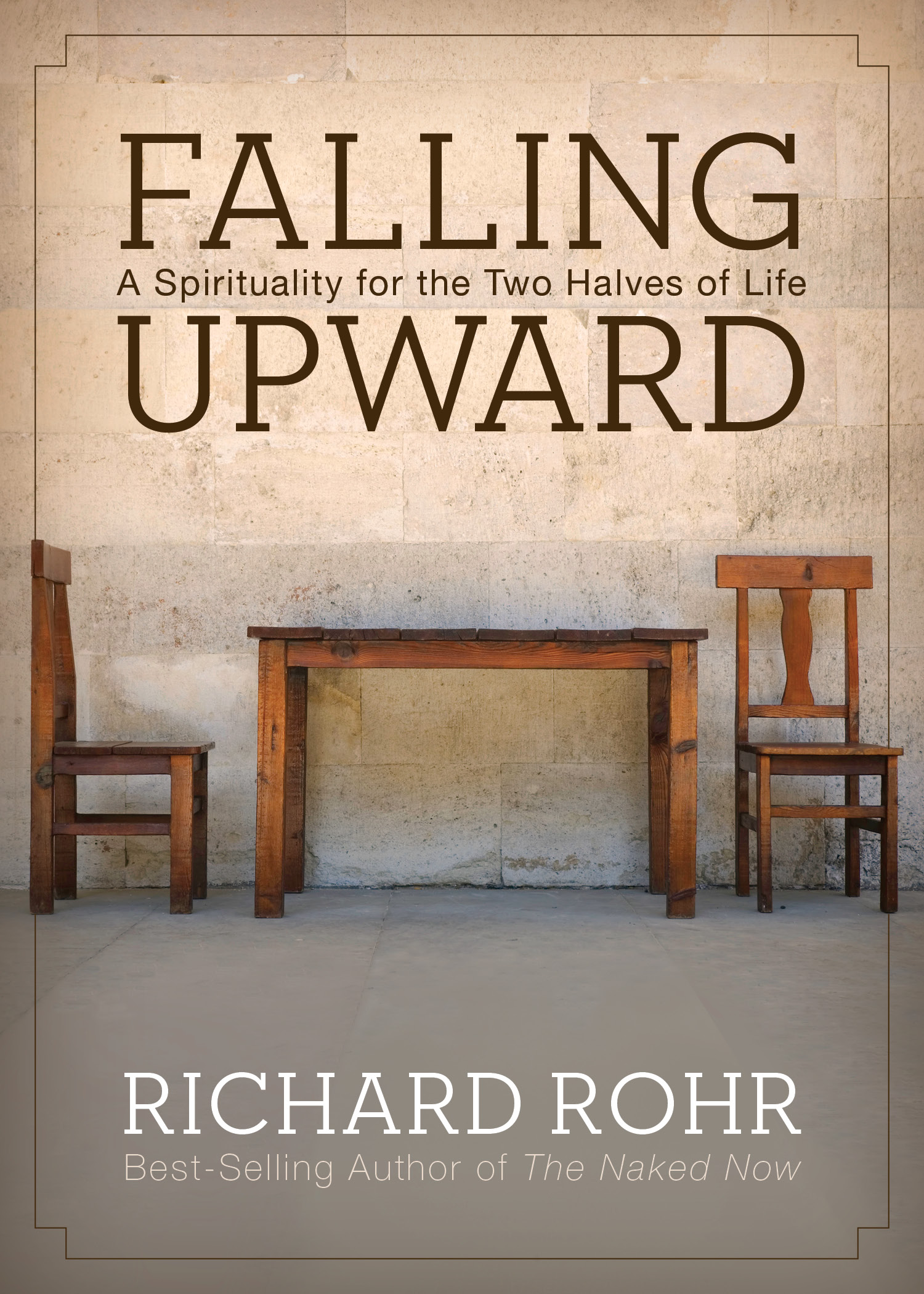
Father Richard Rohr - "Falling Upward"


Father Richard Rohr is the author of Falling Upward: A Spirituality for the Two Halves of Life (2011), as well as Everything Belongs: The Gift of Contemplative Prayer (2003), The Naked Now: Learning to See as the Mystics See (2009), Immortal Diamond: The Search for Our True Self (2013), and Dancing Standing Still: Healing the World from a Place of Prayer; A New Edition of A Lever and a Place to Stand (2014).

Fr. Rohr is in the tradition of Father Thomas Keating:
Fr. Richard Rohr is a globally recognized ecumenical teacher bearing witness to the universal awakening within Christian mysticism and the Perennial Tradition. He is a Franciscan priest of the New Mexico Province and founder of the Center for Action and Contemplation (www.cac.org) in Albuquerque, New Mexico. Fr. Richard's teaching is grounded in the Franciscan alternative orthodoxy--practices of contemplation and lived kenosis (self-emptying), expressing itself in radical compassion, particularly for the socially marginalized.

Fr. Richard is author of numerous books, including Everything Belongs, Adam's Return, The Naked Now, Breathing Under Water, Falling Upward, and Immortal Diamond: The Search for Our True Self.

CAC is home to the Rohr Institute where Fr. Richard is Academic Dean of the Living School for Action and Contemplation. Drawing upon Christianity's place within the Perennial Tradition, the mission of the Rohr Institute is to produce compassionate and powerfully learned individuals who will work for positive change in the world based on awareness of our common union with God and all beings.
His books are profound even for non-Christians.

Father Richard Rohr - "Falling Upward"

Uploaded on Oct 21, 2011


Contemporary theologian and best selling author Richard Rohr spoke at Texas Lutheran University on Sunday, Sept. 25th in Jackson Auditorium. Rohr spoke from the content of his latest book, "Falling Upward: A Spirituality for the Two Halves of Life."

About the book: As we begin to embark on a further journey, one that involves challenges, mistakes, loss of control, broadening horizons, and necessary suffering, we find that 'falling down' is actually the way that we move upward. Fr. Richard offers this new paradigm for understanding one of the most profound of life's mysteries: how the heartbreaks, disappointments, and first loves of life are actually stepping stones to the spiritual joys that the second half of life has in store for us. You can find more information about Richard Rohr on his website www.fallingupwardbook.com.

Friday, March 14, 2014

Brian McLaren — The Equation of Change (On Being)


An interesting discussion from Krista Tippett's On Being (NPR) on how we can regain our faith in a postmodern, post-traditional world. Brain McLaren is a progressive voice in the new(ish) "Emerging Christianity" movement.

Brian McLaren — The Equation of Change


March 13, 2014

How can people rediscover faith as a series of stories and encounters rather than being reduced to a system of abstractions and beliefs? An influential voice in the worlds of progressive Evangelicalism and “emerging” Christianity, Brian McLaren envisions a community where diversity no longer means division. A provocative conversation on the meaning and future of Church in a 21st-century world.


Listen


Radio Show/Podcast - (mp3, 51:00)
Unedited Interview, Brian McLaren - (mp3, 1:19:02)

Learn

Voices on the Radio


Brian McLaren is a leading Evangelical pastor and author of several books including A Generous Orthodoxy, Why Did Jesus, Moses, the Buddha, and Mohammed Cross the Road?, and the forthcoming We Make the Road by Walking.

Production Credits

Host/Executive Producer: Krista Tippett
Head of Content: Trent Gilliss
Technical Director: Chris Heagle
Senior Producer: Lily Percy
Associate Producer: Mariah Helgeson

Pertinent Posts from the On Being Blog


Nadia Bolz-Weber Talks Tattoos, Resurrection, and God's Disruption (video)
Every so often, Krista's interviews should be seen as much as heard. Her conversation with Nadia Bolz-Weber is one of these essential moments.


Bluegrass Unites: A Musical Collaboration Between an Orthodox Jew and Evangelical Christian
A joyful story on how bluegrass music brought together a country music star and klezmer virtuoso to record the classic 18th-century hymn, "The Lord Will Provide."


Millennials, DJs of Their Own Spiritualities
Krista sits down with The Takeaway to explain the impulses behind the Pew polls on the religiously unaffiliated Millennials. She believes that this growing number of unaffiliated young people are a source of renewal of religion in the U.S.


Rooting the Poetry of Resurrection in the Garden of Eden
In the beginning was poetry. The book of Genesis starts with a liturgical poem.

The creation of the cosmos can only be communicated, the ancients knew, through language that speaks to the imagination — that unity of intellect and emotion, which was for the biblical writers the restless human heart. Images and metaphors are primary speech, conveyers of truth — durable yet pliable, precise yet ever expansive in the vision of the world (and ourselves) they set before us.


Transforming the "Other" to "Us": A Call for Faith Communities to Practice Mutuality
How do we fulfill the dream that was bequeathed to us? By practicing the joyful art of doing life together across racial categories without fear.

Thursday, February 20, 2014

Omnivore - Religion in the Public Sphere

From Bookforum's Omnivore blog, here is a collection of recent links on the role of religion in the public sphere, everything from religious pluralism to religious fanaticism to a supposed "global war" on Christianity.

Religion in the Public Sphere

Feb 17 2014 
3:00PM

Friday, December 06, 2013

Omnivore - Can You Have Religion Without God?

From Bookforum's Omnivore blog, a collection of links on all things religious - from Satan to Jesus, and from evolution to a religious worldview for secularists. A particularly good read is an article from Scientific American, The Psychological Power of Satan.


Can you have religion without God?

Dec 5 2013
9:00AM

Thursday, November 14, 2013

Jim Palmer - 6 Things I Said About the Bible that Received Hate Mail

I like Jim Palmer - I only very recently discovered him on Facebook and began reading his blog. He is as close to a secular Christian as I have ever seen (his motto is "Life Is My Religion") - and as a secular Buddhist, that really appeals to me. He is founder of the Religion-Free Bible Project.

This post will give you a sense of why I resonate with him and his work.

6 things I said about the Bible that received hate mail


(1)

“From the very beginning, there was no attempt at creating a single orthodoxy with the Bible. If there’s one thing that’s clear is that the editors of the Bible incorporated different and diverse traditions about such things as the creation story, the stories of the patriarchs, the story of the exodus from Egypt and four different views of Jesus, each with distinctive slants on Jesus. The Bible is not a landing strip for landing on a particular belief system or theology about God, but a spiritual launching pad setting me free to explore the height, width, and depth of myself, God, humankind, life and this world.”

(2)

“The Bible is not a club that you beat over someone’s head,
it’s a cup of cool water to a parched and weary soul.

The Bible is not a book of information and doctrines about God,
it’s an invitation into the reality of love, peace, and freedom.

The Bible is not a playbook for being more religious,
it’s a story about humankind’s relationship with God – the good, the bad, the beautiful, the ugly.

The Bible is not a book with a message about what’s wrong with you,
the Bible is a voice, whispering how good and beautiful you are.

The Bible is not a smack in the face about what you should be doing better,
it’s a tap on the shoulder, reminding you that you are never separated from what you most deeply long for.

The Bible was not written for establishing a belief system about God,
it was written as an invaluable spiritual resource for one’s journey with God.”

(3)

9 Thoughts To Challenge Your View Of The Bible:

1. The Bible is not a religious book.
2. The story of the Bible has value for all of humankind, regardless of your religious tradition or no religion at all.
3. The Bible is not owned by any particular sect of people, including institutional Christianity; the Bible is a spiritual resource for all people.
4. Contrary to what “they” say, there is more than one way to read, interpret, and understand the Bible.
5. People need to know that the destructive and oppressive ideas they learned about God as a result of their involvement with religion are not truly “biblical.”
6. In the hands of the people, the Bible can be an instrument of love, beauty, peace, acceptance and harmony in the world.
7. Humankind needs permission to walk away from the lie we learned about ourselves that we are bad, flawed, defective, not good enough, and unacceptable to God.
8. You don’t need an MDiv or PhD in theology to embrace the simple but profound message of the Bible.
9. Jesus could not and would not subscribe to what is often passed off as “orthodoxy.”

(4)

Why we need a Religion-Free Bible

Reason #12: Toxic Claims “Spiritual Leaders” Make About the Bible:

In order to be a real Christian you need to know who the real God is, and how the real God feels. Some of you … God hates you. Some of you, God is sick of you. God is frustrated with you. God is wearied by you. God has suffered long enough with you. He doesn’t think you’re cute. He doesn’t think it’s funny. He doesn’t think your excuse is meritorious. He doesn’t care if you compare yourself to someone worse than you, He hates them too. God hates, right now, personally, objectively hates some of you. He has had enough.” – Mark Driscoll

(5)
  • What if a collection of writings, giving different snapshots of humankind’s relationship with the divine, were assembled into one volume?
  • What if these snapshots told a story that we somehow find ourselves in at every turn, including moments of profound beauty and goodness, and moments of deep heartache and sorrow?
  • What if the story includes chapters where people are getting God horribly wrong and justifying hatred and atrocity in God’s name, and other chapters where people are getting it right and living as powerful expressions of love in the world?
  • What if it’s a human story, a divine story, and a cultural story happening, evolving and intertwined all at once?
  • What if their is an unnamed brilliance, depth and mystery to the story that requires one to look deeper, read between the lines, and listen with your heart?
  • What if the primary plot or theme of the whole story is strangely fulfilled in the birth, life, and death of a divine nobody?
  • What if the story has the power to inspire love, peace, beauty, healing, wholeness, harmony, and goodness in the world, and transform humankind’s relationships with ourselves individually and collectively, with God, with others, and with life itself?
What if this story is the Bible?

(6)

During my process of shedding religion I put away my Bible for a season, and it’s one of the best things I’ve done for my relationship with God. I quit reading it. I tuned out preachers and others quoting or referring to it. Of course, I had enough horse sense not to broadcast my taking a break from reading the Bible, but it’s not something you can hide from everyone.

The results? God deepened his life in me during my hiatus from the Scriptures in ways I’m still coming to grips with. At the top of the list was the experience of God’s unconditional acceptance. For many years I carried inside and unspoken list of “what if” questions about the extent of God’s acceptance. I knew God loved me, in a general John 3:16 sort of way, but what if I didn’t go to church anymore… or have daily quiet times… or didn’t read my Bible? Would God accept me and love me then? Would I still have a relationship with God then? Would there really even be a God… then?

God didn’t stop communicating with me when I quit reading the Bible, which took care of several of my “what if” questions. I discovered a living God I could know and interact with in real time whenever I wanted to. The personal and intimate, accepting and loving Father God the Scriptures pointed to was real, really real! God began expressing himself in a variety of ways, which I had been oblivious to operating under the assumption that God only spoke through the words of Scripture. These spiritual exchanges between God and me occurred through such things as nature, people, art, film, music, and the still, small voice within.

For me, God went from being locked up in a book that I accessed during morning quiet times, sermon preparation, and Bible study to being everywhere all the time. It’s amazing what you can see when you’re actually looking… and that goes for hearing, touching, smelling, tasting, and feeling as well. It’s like God was always there but my radar was off, or only on during specific times and then only narrowly focused in one particular area of Scripture.

Saturday, September 07, 2013

On Being - Nadia Bolz-Weber on Seeing the Underside and Seeing God: Tattoos, Tradition, and Grace


Nadia Bolz-Weber was Krista Tippett's guest last week for the NPR On Being show. Nadia has a blog called the Sarcastic Lutheran: The cranky spirituality of a postmodern Gal, as well as a couple of books (links below). She is the mission developer for House for All Sinners and Saints (HFASS) in Denver, Colorado, an urban liturgical community with a progressive yet deeply-rooted theological imagination. 

This is a cool pastor - if I had a pastor like this when I was young, I would have been a lot more tolerant of religion.

Nadia Bolz-Weber on Seeing the Underside and Seeing God: Tattoos, Tradition, and Grace

September 5, 2013


She’s the tattooed, Lutheran pastor of the House for All Sinners and Saints in Denver, a church where a chocolate fountain, a blessing of the bicycles, and serious liturgy come together. She's a face of the Emerging Church — redefining what church is, with deep reverence for tradition.

Recommended Reading


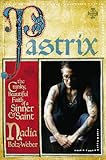
Pastrix: The Cranky, Beautiful Faith of a Sinner & Saint
By Nadia Bolz-Weber
Jericho Books (2013)


Salvation on the Small Screen? 24 Hours of Christian Television 
By Nadia Bolz-Weber
Seabury Books (2008)


Under the Tent with Nadia Bolz-Weber (video)
Watch Krista's unedited conversation with a leading voice in the Emerging Church. Live from the Wild Goose Festival in Hot Springs, North Carolina, this interview is a dynamic 90 minutes of discussion about tattoos and tradition, death and resurrection, and redefining what church is.

Sunday, August 25, 2013

NPR: Follow Your Weird


With this year's Burning Man Festival about to kick off, NPR's To the Best of Our Knowledge (TTBOOK) has devoted their show this week to "following your weird." Among their guests this week are Erik Davis, author of Nomad Codes: Adventures in Modern Esoterica, Barbara Ehrenreich, author of Dancing in the Streets: A History of Collective Joy; and Hal Taussig, author of A New New Testament: A Bible for the 21st Century Combining Traditional and Newly Discovered Texts. 

Interesting people and interesting discussions.

Follow Your Weird

08.25.2013

From trance music to ecstatic dance, from Burning Man to psychedelic mushrooms, Americans are awash in weird and intense experiences - and maybe even inventing a new kind of religion. Is this just a bunch of New Age thrill-seekers getting off, or is something deeper going on? We explore the edges of contemporary spiritual culture.

Interviewer(s):
Jim FlemingSteve PaulsonAnne Strainchamps


Producer(s):
Steve Paulson


MODERN ESOTERICA - ERIK DAVIS
If traditional religion has lost its luster, where do you find sacred experiences? Anthropologist Erik Davis goes looking around the edges of contemporary culture - from Burning Man and trance music to psychedelics.


* * * * *

MURDER AND MAGIC MUSHROOMS - HAMILTON MORRIS
Steven Pollock, a legendary figure in the psychedelic underground, was murdered in 1981. Journalist Hamilton Morris investigates this unsolved murder and uncovers the largely forgotten story of Pollock, a brilliant - if renegade - scientist.

Here's Pollock's article from Harpers, "Blood Spore"


* * * * *

ECSTATIC DANCE - SARA NICS
Ecstatic dance can help us transcend our day-to-day lives. TTBOOK producer Sara Nics describes her own experience of ecstatic dance - grounded in her body, feeling bliss without invoking God or any larger meaning.


* * * * *

COLLECTIVE JOY - BARBARA EHRENREICH
From carnivals and music festivals to Dionysian revelries, people have always engaged in ecstatic rituals. But Barbara Ehrenreich says modern Westerners have become obsessed with personal happiness, and we often neglect the pleasures of collective joy.


* * * * *

NEW NEW TESTAMENT - HAL TAUSSIG
What would make Christianity more vital in the 21st century? Theologian Hal Taussig says one answer is "A New New Testament," which combines Gnostic gospels with the traditional New Testament scriptures - all within the same book.

* * * * *

Related Books:

Incidental Music:

Tuesday, July 30, 2013

Rachel Held Evans - Why Millennials Are Leaving the Church


The future is looking a little brighter after reading this piece from CNN's Belief Blog. It seems that the next generation of leaders, the millennials, are not much enamored of the evangelical church's narrow and limiting views on human nature. Specifically, these young people are voting with their feet, by leaving the church, in opposition to their perception that "evangelical Christianity [is] too political, too exclusive, old-fashioned, unconcerned with social justice and hostile to lesbian, gay, bisexual and transgender people." The research indicates that "young evangelicals often feel they have to choose between their intellectual integrity and their faith, between science and Christianity, between compassion and holiness."

Why millennials are leaving the church

July 27th, 2013


By Rachel Held Evans, Special to CNN

(CNN) – At 32, I barely qualify as a millennial.

I wrote my first essay with a pen and paper, but by the time I graduated from college, I owned a cell phone and used Google as a verb.

I still remember the home phone numbers of my old high school friends, but don’t ask me to recite my husband’s without checking my contacts first.

I own mix tapes that include selections from Nirvana and Pearl Jam, but I’ve never planned a trip without Travelocity.

Despite having one foot in Generation X, I tend to identify most strongly with the attitudes and the ethos of the millennial generation, and because of this, I’m often asked to speak to my fellow evangelical leaders about why millennials are leaving the church.

Armed with the latest surveys, along with personal testimonies from friends and readers, I explain how young adults perceive evangelical Christianity to be too political, too exclusive, old-fashioned, unconcerned with social justice and hostile to lesbian, gay, bisexual and transgender people.

I point to research that shows young evangelicals often feel they have to choose between their intellectual integrity and their faith, between science and Christianity, between compassion and holiness.

I talk about how the evangelical obsession with sex can make Christian living seem like little more than sticking to a list of rules, and how millennials long for faith communities in which they are safe asking tough questions and wrestling with doubt.

Invariably, after I’ve finished my presentation and opened the floor to questions, a pastor raises his hand and says, “So what you’re saying is we need hipper worship bands. …”

And I proceed to bang my head against the podium.

Time and again, the assumption among Christian leaders, and evangelical leaders in particular, is that the key to drawing twenty-somethings back to church is simply to make a few style updates – edgier music, more casual services, a coffee shop in the fellowship hall, a pastor who wears skinny jeans, an updated Web site that includes online giving.

But here’s the thing: Having been advertised to our whole lives, we millennials have highly sensitive BS meters, and we’re not easily impressed with consumerism or performances.

In fact, I would argue that church-as-performance is just one more thing driving us away from the church, and evangelicalism in particular.

Many of us, myself included, are finding ourselves increasingly drawn to high church traditions – Catholicism, Eastern Orthodoxy, the Episcopal Church, etc. –precisely because the ancient forms of liturgy seem so unpretentious, so unconcerned with being “cool,” and we find that refreshingly authentic.

What millennials really want from the church is not a change in style but a change in substance.

We want an end to the culture wars. We want a truce between science and faith. We want to be known for what we stand for, not what we are against.

We want to ask questions that don’t have predetermined answers.

We want churches that emphasize an allegiance to the kingdom of God over an allegiance to a single political party or a single nation.

We want our LGBT friends to feel truly welcome in our faith communities.

We want to be challenged to live lives of holiness, not only when it comes to sex, but also when it comes to living simply, caring for the poor and oppressed, pursuing reconciliation, engaging in creation care and becoming peacemakers.

You can’t hand us a latte and then go about business as usual and expect us to stick around. We’re not leaving the church because we don’t find the cool factor there; we’re leaving the church because we don’t find Jesus there.

Like every generation before ours and every generation after, deep down, we long for Jesus.

Now these trends are obviously true not only for millennials but also for many folks from other generations. Whenever I write about this topic, I hear from forty-somethings and grandmothers, Generation Xers and retirees, who send me messages in all caps that read “ME TOO!” So I don’t want to portray the divide as wider than it is.

But I would encourage church leaders eager to win millennials back to sit down and really talk with them about what they’re looking for and what they would like to contribute to a faith community.

Their answers might surprise you.

~ Rachel Held Evans is the author of "Evolving in Monkey Town" and "A Year of Biblical Womanhood." She blogs at rachelheldevans.com. The views expressed in this column belong to Rachel Held Evans.

Friday, July 12, 2013

Eric Yordy - An Analysis of Same-Sex Marriage Through the Lens of the Establishment Clause


I have argued for most of the last decade or more that all laws banning same-sex marriage, or reducing same-sex marriage to the level of civil unions, is a violation of the Establishment Clause in the U.S. Constitution (the separation of church and state). These laws are founded in and argued from a distinctly Christian framework, which is in essence establishing a state religion (any encoding of religious beliefs in law by the government can be seen as a violation of the Establishment Clause).

I have never seen a legal expert make this argument, so I thought I would share this article from Eric Yordy, Associate Dean and Assistant Professor, The W.A. Franke College of Business, Northern Arizona University (Yordy has a J.D. from Cornell Law School).

The W. A. Franke College of Business 

February 5, 2013

22 Tul. J.L. & Sexuality 55, 2013

Abstract: 
This article addresses the conflict between marriage as a religious concept and marriage as a legal concept. It analyzes the "establishment" of religion when government defines marriage.
Full Citation:
Yordy, Eric D., Caught in the Clause: An Analysis of Same-Sex Marriage Through the Lens of the Establishment Clause (February 5, 2013). 22 Tul. J.L. & Sexuality 55, 2013. Available at SSRN: http://ssrn.com/abstract=2278641

LEXISNEXIS SUMMARY:

... At the federal level, the Defense of Marriage Act was passed into law in 1996, giving states the ability to refuse to recognize same-sex marriages performed in other states and defining marriage as a union between a man and a woman for all federal purposes. ... Because the religion clauses do focus on the term "religion" rather than "moral belief" or simply "belief," Professor Choper uses the after-life consequences as the sole factor to separate religious beliefs from other beliefs. ... Goodsell, early Christian churches sanctioned and accepted existing nonchurch marriages. ... And like the MCC churches, the UUA seems to be a legitimate religion under the Brimmer test. ... Justice Thomas concurred in the opinion but argued that the Establishment Clause should not even be a consideration for two reasons: (1) the Establishment Clause was never meant to apply to the states but only to the federal government, and (2) even if the clause applies to the states, there is nothing about this display that coerces a person to view the display. ... Applying this idea to the marriage definition question, the precise argument of many religious leaders is that a civil definition of marriage that includes same-sex couples will lead to coercion to perform those marriages or lose government benefits (such as tax exempt status). ... Applying a two-prong Lemon test, where excessive entanglement and effect are analyzed together, we see that civil marriage definitions still fail the test - in large part due to the tremendous effect of advancing traditional religion over legitimate, nontraditional, religion or nonreligion. ... Conclusion: Given that marriage is primarily a religious concept, or at least is a primary and defining concept in many religions, it is a violation of the Establishment Clause of the United States Constitution for the government to be involved in defining religion.


Thursday, May 16, 2013

Julian Baggini - I Still Love Kierkegaard

Here's a mini Kierkegaard festival for your reading and viewing entertainment. First up is philosopher Julian Baggini (author of The Ego Trick [2011], What's It All About?: Philosophy and the Meaning of Life [2007] and The Shrink and the Sage[2012, co-authored with Antonia Macaro]) discussing his affection for Søren K.

Then, from Open Culture, an episode of a BBC documentary on philosophers (in two parts, both included below):

Marx and Kierkegaard’s many contrasts and contradictions are well represented in Episode 4 of the BBC documentary series Sea of Faith, “Prometheus Unbound”. The 1984 six-part series—named in reference to Matthew Arnold’s famous poem “Dover Beach” and hosted by radical theologian Don Cupitt—examines the ways in which the Copernican and Darwinian scientific revolutions and the work of critics of religious doctrine like Freud, Marx, Nietzsche, Strauss, and Schweitzer shook the foundations of orthodox Christianity.
Also included below is an audio lecture by Walter Kaufmann on Kierkegaard.


I still love Kierkegaard

He is the dramatic, torrential thunderstorm at the heart of philosophy and his provocation is more valuable than ever


by Julian Baggini

Illustration by Stephen Collins
Julian Baggini is a writer and founding editor of The Philosopher’s Magazine. His latest book is The Shrink and the Sage, co-authored with Antonia Macaro.

I fell for Søren Kierkegaard as a teenager, and he has accompanied me on my intellectual travels ever since, not so much side by side as always a few steps ahead or lurking out of sight just behind me. Perhaps that’s because he does not mix well with the other companions I’ve kept. I studied in the Anglo-American analytic tradition of philosophy, where the literary flourishes and wilful paradoxes of continental existentialists are viewed with anything from suspicion to outright disdain. In Paris, Roland Barthes might have proclaimed the death of the author, but in London the philosopher had been lifeless for years, as anonymous as possible so that the arguments could speak for themselves.

Discovering that your childhood idols are now virtually ancient is usually a disturbing reminder of your own mortality. But for me, realising that 5th May 2013 marks the 200th anniversary of Søren Kierkegaard's birth was more of a reminder of his immortality. It's a strange word to use for a thinker who lived with a presentiment of his own death and didn't reach his 43rd birthday. Kierkegaard was the master of irony and paradox before both became debased by careless overuse. He was an existentialist a century before Jean-Paul Sarte, more rigorously post-modern than postmodernism, and a theist whose attacks on religion bit far deeper than many of those of today’s new atheists. Kierkegaard is not so much a thinker for our time but a timeless thinker, whose work is pertinent for all ages yet destined to be fully attuned to none.

It’s easy enough to see why I fell in love with Kierkegaard. Before years of academic training does its work of desiccation, young men and women are drawn to philosophy and the humanities by the excitement of ideas and new horizons of understanding. This youthful zeal, however, is often slapped down by mature sobriety. I remember dipping into the tiny philosophy section of my school library, for example, and finding Stephan Körner’s 1955 Pelican introduction to Kant. I couldn’t make head nor tail of it. Strangely, this did not put me off philosophy, the idea of which remained more alluring than the little bit of reality I had encountered.

Kierkegaard was not so much an oasis in this desert as a dramatic, torrential thunderstorm at the heart of it. Discovering him as a 17-year-old suddenly made philosophy and religion human and exciting, not arid and abstract. In part that’s because he was a complex personality with a tumultuous biography. Even his name emanates romantic darkness. ‘Søren’ is the Danish version of the Latin severus, meaning ‘severe’, ‘serious’ or ‘strict’, while ‘Kierkegaard’ means churchyard, with its traditional associations of the graveyard.

He knew intense love, and was engaged to Regine Olsen, whom he describes in his journals as ‘sovereign queen of my heart’. Yet in 1841, after four years of courtship, he called the engagement off, apparently because he did not believe he could give the marriage the commitment it deserved. He took love, God and philosophy so seriously that he did not see how he could allow himself all three.

He was a romantic iconoclast, who lived fast and died young, but on a rollercoaster of words and ideas rather than sex and booze. During the 1840s, books poured from his pen. In 1843 alone, he published three masterpieces, Either/Or, Fear and Trembling, and Repetition.

All of this, however, was under the shadow of a deep melancholy. Five of his seven siblings died, three in the space of the same two years that claimed his mother. These tragedies fuelled the bleak religiosity of his father, who believed he had been punished for cursing God on a Jutland heath for His apparent indifference to the hard, wretched life of the young sheep farmer. When his father told Søren about this, it seems that the son adopted the curse, along with his father’s youthful sins.

Yet alongside this melancholy was a mischievous, satirical wit. Kierkegaard was a scathing critic of the Denmark of his time, and he paid the price when in 1846 The Corsair, a satirical paper, launched a series of character attacks on him, ridiculing his gait (he had a badly curved spine) and his rasping voice. Kierkegaard achieved the necessary condition of any great romantic intellectual figure, which is rejection by his own time and society. His biographer, Walter Lowrie, goes so far as to suggest that he was single-handedly responsible for the decline of Søren as a popular first name. Such was the ridicule cast upon him that Danish parents would tell their children ‘don’t be a Søren’. Today, Sorensen — son of Søren — is still the eighth most common surname in Denmark, while as a first name Søren itself doesn’t even make the top 50. It is as though Britain were full of Johnsons but no Johns.

All this was more than enough to draw my open but largely empty 17-year-old mind to him. In the battle for intellectual affections, how could the likes of A J Ayer’s Language, Truth and Logic (1936) or Willard Van Orman Quine’s Word and Object (1960) compete with Kierkegaard’s The Sickness Unto Death (1849) or Stages on Life’s Way (1845)? What is more interesting, however, is why the intellectual affair lasted even as I became a (hopefully) less impressionable, older atheist.

If Kierkegaard is your benchmark, then you judge any philosophy not just on the basis of how cogent its arguments are, but on whether it speaks to the fundamental needs of human beings trying to make sense of the world. Philosophy prides itself on challenging all assumptions but, oddly enough, in the 20th century it forgot to question why it asked the questions it did. Problems were simply inherited from previous generations and treated as puzzles to be solved. Kierkegaard is inoculation against such empty scholasticism. As he put it in his journal in 1835:
What would be the use of discovering so-called objective truth, of working through all the systems of philosophy and of being able, if required, to review them all and show up the inconsistencies within each system ... what good would it do me if truth stood before me, cold and naked, not caring whether I recognised her or not, and producing in me a shudder of fear rather than a trusting devotion?
When, for example, I became fascinated by the philosophical problem of personal identity, I also became dismayed by the unwillingness or inability of many writers on the subject to address the question of just why the problem should concern us at all. Rather than being an existential problem, it often became simply a logical or metaphysical one, a technical exercise in specifying the necessary and sufficient conditions for identifying one person as the same object at two different points in time.

So even as I worked on a PhD on the subject, located within the Anglo-American analytic tradition, I sneaked Kierkegaard in through the back door. For me, Kierkegaard defined the problem more clearly than anyone else. Human beings are caught, he said, between two modes or ‘spheres’ of existence. The ‘aesthetic’ is the world of immediacy, of here and now. The ‘ethical’ is the transcendent, eternal world. We can’t live in both, but neither fulfils all our needs since ‘the self is composed of infinitude and finitude’, a perhaps hyperbolic way of saying that we exist across time, in the past and future, but we are also inescapably trapped in the present moment.

The limitations of the ‘ethical’ are perhaps most obvious to the modern mind. The life of eternity is just an illusion, for we are all-too mortal, flesh-and-blood creatures. To believe we belong there is to live in denial of our animality. So the world has increasingly embraced the ‘aesthetic’. But this fails to satisfy us, too. If the moment is all we have, then all we can do is pursue pleasurable moments, ones that dissolve as swiftly as they appear, leaving us always running on empty, grasping at fleeting experiences that pass. The materialistic world offers innumerable opportunities for instant gratification without enduring satisfaction and so life becomes a series of diversions. No wonder there is still so much vague spiritual yearning in the West: people long for the ethical but cannot see beyond the aesthetic.

In evocative aphorisms, Kierkegaard captured this sense of being lost, whichever world we choose: "Infinitude’s despair is to lack finitude, finitude’s despair is to lack infinitude." Kierkegaard thus defined what I take to be the central puzzle of human existence: how to live in such a way that does justice both to our aesthetic and our ethical natures.

His solution to this paradox was to embrace it — too eagerly in my view. He thought that the figure of Christ — a man-made God, wholly finite and wholly infinite at the same time — was the only way to make sense of the human condition, not because it explains away life’s central paradox but because it embodies it. To become a Christian requires a ‘leap of faith’ without the safety net of reason or evidence.

Kierkegaard’s greatest illustration of this is his retelling of the story of Abraham and Isaac in Fear and Trembling (1843). Abraham is often held up as a paradigm of faith because he trusted God so much he was prepared to sacrifice his only son on his command. Kierkegaard makes us realise that Abraham acted on faith not because he obeyed a difficult order but because lifting the knife over his son defied all morality and reason. No reasonable man would have done what Abraham did. If this was a test, then surely the way to pass was to show God that you would not commit murder on command, even if that risked inviting divine wrath. If you heard God’s voice commanding you to kill, surely it would be more rational to conclude you were insane or tricked by demons than it would to follow the order. So when Abraham took his leap of faith, he took leave of reason and morality.

How insipid the modern version of faith appears in comparison. Religious apologists today might mumble about the power of faith and the limits of reason, yet they are the first to protest when it is suggested that faith and reason might be in tension. Far from seeing religious faith as a special, bold kind of trust, religious apologists are now more likely to see atheism as requiring as much faith as religion. Kierkegaard saw clearly that that faith is not a kind of epistemic Polyfilla that closes the small cracks left by reason, but a mad leap across a chasm devoid of all reason.

That is not because Kierkegaard was guilty of an anarchic irrationalism or relativistic subjectivism. It is only because he was so rigorous with his application of reason that he was able to push it to its limits. He went beyond reason only when reason could go no further, leaving logic behind only when logic refused to go on.

This was powerful stuff for a teenager such as me who was losing his religious belief. What Kierkegaard showed was that the only serious alternative to atheism or agnosticism was not what generally passes for religion but a much deeper commitment that left ordinary standards of proof and evidence completely behind. Perhaps that’s why so many of Kierkegaard’s present-day admirers are atheists. He was a Christian who nonetheless despised ‘Christendom’. To be a Christian was to stake one’s life on the absurdity of the risen Christ, to commit to an ethical standard no human can reach. This is a constant and in some ways hopeless effort at perpetually becoming what you can never fully be. Nothing could be more different from the conventional view of what being a Christian means: being born and baptised into a religion, dutifully going to Church and partaking in the sacraments. Institutionalised Christianity is an oxymoron, given that the Jesus of the Gospels spent so much time criticising the clerics of his day and never established any alternative structures. Kierkegaard showed that taking religion seriously is compatible with being against religion in almost all its actual forms, something that present-day atheists and believers should note.

Kierkegaard would undoubtedly have been both amused and appalled at what passes for debate about religion today. He would see how both sides move in herds, adhering to a collectively formed opinion, unwilling to depart from the local consensus. Too many Christians defend what happens to pass for Christianity in the culture at the time, when they should be far more sceptical that their churches really represent the teachings of their founder. Too many atheists are just as guilty of rallying around totems such as Charles Darwin and the scientific method, as though these were the pillars of the secular outlook rather than merely the current foci of its attention.

Kierkegaard’s views on religion are not the only way in which his critique of ‘the present age’ is strangely timely for us, and likely to be the same for future readers. ‘Our age is essentially one of understanding and reflection, without passion, momentarily bursting into enthusiasm,’ he wrote in 1846, ‘and shrewdly lapsing into repose.’ Passion in this sense is about bringing one’s whole self to what one does, including reasoning. What is much more common today is either a sentimental subjectivity, in which everything becomes about your own feelings or personal story; or a detached objectivity in which the motivations and interests of the researchers are deemed irrelevant. Kierkegaard insisted on going beyond this objective/subjective choice, recognising that honest intellectual work requires a sincere attempt to see things as they are and an authentic recognition of how one’s own nature, beliefs and biases inevitably shape one’s perceptions.

This central insight is nowhere more developed than in his pseudonymous works. Many of Kierkegaard’s most important books do not bear his name. On the Concept of Irony (1841) is written by Johannes Climacus; Fear and Trembling (1843) by Johannes de Silentio; Repetition (1843) by Constantin Constantius; while Either/Or (1843) is edited by Victor Eremita. This is not just some ludic, post-modern jape. What Kierkegaard understood clearly was that there is no neutral ‘objective’ point of view from which alternative ways of living and understanding the world can be judged. Rather, you need to get inside a philosophy to really see its attractions and limitations. So, for example, to see why the everyday ‘aesthetic’ life is not enough to satisfy us, you need to see how unsatisfying it is for those who live it. That’s why Kierkegaard writes from the point of view of people who live for the moment to show how empty that leaves them. Likewise, if you want to understand the impossibility of living on the eternal plane in finite human life, see the world from the point of view of someone trying to live the ethical life.

This approach makes many of Kierkegaard’s books genuine pleasures to read, as literary as they are philosophical. More importantly, the pseudonymous method enables Kierkegaard to achieve a remarkable synthesis of objectivity and subjectivity. We see how things are from a subjective point of view, and because they really are that way, a form of objectivity is achieved. This is a lesson that our present age needs to learn again. The most complete, objective point of view is not one that is abstracted from the subjective: it is one that incorporates as many subjective points of view as are relevant and needed.

This also provides the link between imagination and rationality. A detached reason that cannot enter into the viewpoints of others cannot be fully objective because it cannot access whole areas of the real world of human experience. Kierkegaard taught me the importance of attending to the internal logic of positions, not just how they stand up to outside scrutiny.

This is arguably even more vital today than it was in Kierkegaard’s time. In a pluralist world, there is no hope of understanding people who live according to different values if we only judge them from the outside, from what we imagine to be an objective point of view but is really one infused with our own subjectivity. Atheists need to know what it really means to be religious, not simply to run through arguments against the existence of God that are not the bedrock of belief anyway. No one can hope to understand emerging nations such as China, India or Brazil unless they try to see how the world looks from inside those countries.

But perhaps Kierkegaard’s most provocative message is that both work on the self and on understanding the world requires your whole being and cannot be just a compartmentalised, academic pursuit. His life and work both have a deep ethical seriousness, as well as plenty of playful, ironic elements. This has been lost today, where it seems we are afraid of taking ourselves too seriously. For Kierkegaard, irony was the means by which we could engage in serious self-examination without hubris or arrogance: ‘what doubt is to science, irony is to personal life’. Today, irony is a way of avoiding serious self-examination by believing one is above such things, a form of superiority masquerading as modesty. It might be spotty, angst-filled adolescents who are most attracted to the young Kierkegaard, but it’s us, the supposed adults, who need the 200-year-old version more than ever.

~ Published on 6 May 2013

* * * * * * *

The Philosophy of Kierkegaard, the First Existentialist Philosopher, Revisited in 1984 Documentary


May 7th, 2013


Danish philosopher Søren Kierkegaard—often considered the first existentialist—was born 200 years ago this past Sunday in Copenhagen. Writing under pseudonyms like Johannes Climacus and Johannes de Silentio, Kierkegaard attacked both the idealism of contemporary philosophers Hegel and Schelling and the bourgeois complacency of European Christendom. A highly skilled rhetorician, Kierkegaard preferred the indirect approach, deploying irony, ridicule, parody and satire in a paradoxical search for individual authenticity within a European culture he saw as beset by self-important puffery and unthinking mass movements.

While millions of readers have embraced Kierkegaard’s probing method, as many have also rejected his faith-based conclusions. Nevertheless, his strikingly eccentric skewering of the tepidly faithful and overly optimistic breathed light and heat into the nineteenth century debates among modern Christians as they confronted the findings of science and the challenges posed by world religions and materialist philosophers like Karl Marx.


Marx and Kierkegaard’s many contrasts and contradictions are well represented in Episode 4 of the BBC documentary series Sea of Faith, “Prometheus Unbound” (part one at top, part two immediately above). The 1984 six-part series—named in reference to Matthew Arnold’s famous poem “Dover Beach” and hosted by radical theologian Don Cupitt—examines the ways in which the Copernican and Darwinian scientific revolutions and the work of critics of religious doctrine like Freud, Marx, Nietzsche, Strauss, and Schweitzer shook the foundations of orthodox Christianity. Here, Kierkegaard is played in reenactments with appropriate intensity by British actor Colin Jeavons.


You can learn more about the documentary series (and purchase DVDs) here. And for more on Kierkegaard, you would be well-served by listening to Walter Kaufmann’s lecture above. For a lighter-hearted but still rigorous take on the philosopher, be sure to catch the well-read, irreverent gents at the Partially Examined Life podcast in a discussion of Kierkegaard’s earnest and often disturbing defense of existential Christianity, The Sickness Unto Death.

Related Content:
~ Josh Jones is a writer and musician based in Washington, DC. Follow him @jdmagness