Showing posts with label charity. Show all posts

Saturday, July 26, 2014

A $650 Million Dollar Donation for Psychiatric Research - Misguided?

http://upload.wikimedia.org/wikipedia/commons/8/8a/MIT_Broad_Center.jpg 
The Broad Institute of MIT and Harvard

This was big news last week, when late on Monday, the Broad Institute, a biomedical research center, announced a $650 million donation for psychiatric research from the Stanley Family Foundation — one of the largest private gifts ever for scientific research.

This news broke the same day as a new article in the journal Nature - Biological insights from 108 schizophrenia-associated genetic loci - revealed research that identified an additional 83 genes linked to schizophrenia, as well as confirming 25 previously identified genes - now a total of 108 genes are linked to schizophrenia.

With 108 possible genes linked to schizophrenia, we know little about the specific combinations of genes, their epigenetic triggers, their environmental factors (both physiological and relational) that may turn off or on specific genes, and a lot of other variables.

For example, we know that physical and emotional neglect is more linked to psychosis and schizophrenia than is physical and sexual abuse. For more background on a relational view, see A relational view of causality in normal and abnormal development (2002).

Anyway, this article is about the generous donation given to the Broad Institute. It's wonderful that they gave such a huge sum in support of research, however, by giving it to an organization that focuses on psychiatric research (psychopharmacology and genetics) rather than a wider bio-psycho-social model.

Spark for a Stagnant Research

A $650 Million Dollar Donation for Psychiatric Research

By Carl Zimmer and Benedict Carey
July 21, 2014

“You’re talking to a guy who went from psychotic to normal with some pills,” said Jonathan Stanley, who was found to have bipolar disorder in the 1980s. The donation of a foundation started by his father is one of the largest private gifts ever for scientific research. Credit Max Reed for The New York Times
ONE DAY IN 1988, a college dropout named Jonathan Stanley was visiting New York City when he became convinced that government agents were closing in on him.

He bolted, and for three days and nights raced through the city streets and subway tunnels. His flight ended in a deli, where he climbed a plastic crate and stripped off his clothes. The police took him to a hospital, and he finally received effective treatment two years after getting a diagnosis of bipolar disorder.

“My son’s life was saved,” his father, Ted Stanley, said recently. When he himself was in college, he added, “those drugs didn’t exist; I would have had a nonfunctioning brain all the rest of my life.”

The older Mr. Stanley, 84, who earned a fortune selling collectibles, created a foundation to support psychiatric research. “I would like to purchase that happy ending for other people,” he said.

Late on Monday, the Broad Institute, a biomedical research center, announced a $650 million donation for psychiatric research from the Stanley Family Foundation — one of the largest private gifts ever for scientific research. Audio

It comes at a time when basic research into mental illness is sputtering, and many drug makers have all but abandoned the search for new treatments.

Despite decades of costly research, experts have learned virtually nothing about the causes of psychiatric disorders and have developed no truly novel drug treatments in more than a quarter century.

Broad Institute officials hope that Mr. Stanley’s donation will change that, and they timed their announcement to coincide with the publication of the largest analysis to date on the genetics of schizophrenia.

The analysis, reported by the journal Nature on Monday, identified more than 100 regions of DNA associated with the disease. Many of them contain genes involved in just a few biological functions, like pumping calcium into neurons, that could help guide the search for treatments.

“For the first time, there’s a clear path forward,” said Eric Lander, the president of the Broad Institute.

Experts not affiliated with the institute or the new paper agreed that the news on both fronts was good, but characterized the research as a first step in a long process. “The signals they found are real signals, period, and that is encouraging,” said David B. Goldstein, a Duke University geneticist who has been critical of previous large-scale projects. “But at the same time, they give us no mechanistic insight, no targets for drug development. That will take a lot more work.”

Jonathan Stanley, now 48, cannot explain why he suddenly developed bipolar disorder at 19. All he knows is that his brain responded well to lithium. He was eventually able to return to college, complete law school and become a lawyer. “You’re talking to a guy who went from psychotic to normal with some pills,” he said.

When scientists began to discover psychiatric drugs like lithium in the mid-20th century, they did so mostly by accident, not out of an understanding of the biology of the diseases they hoped to cure. For many years, they worked backward, hoping that by figuring out the action of the drugs, they could understand the causes of the diseases. But they came up empty.

Some researchers argued that a better strategy would be to find the genes involved in psychiatric disorders. This approach would give them new molecular targets for drugs they could test.

Yet the staggering complexity of the brain has yielded few secrets. More than 80 percent of the roughly 20,000 genes in human DNA are active in the brain.

In the 1990s, many scientists argued that the best approach to find “mood genes” was top-down. They would identify promising genes based on their biological properties and then survey their variants in people with and without a diagnosis.

But this approach was something like trying to find a thief in a crowd, based on a hunch of what he or she might look like. The research was “pretty much completely useless,” Dr. Lander said. “It turns out we are terrible guessers.”

By the early 2000s, the ability to decode human DNA had vastly improved, and scientists could look across our complete complement of genetic material, known as the genome, comparing samples from ever-larger groups of people. Ted Stanley’s first donation to the Broad Institute — $100 million in 2007, to found the Stanley Center for Psychiatric Research — went to support precisely such research.

Yet these studies were disappointing, too, and many researchers thought they were a dead end. “We were saying, ‘Maybe it isn’t the right way to go,’ ” Dr. Lander said.

Soon, the Broad Institute joined forces with scores of other research groups to form a consortium that could pool tens of thousands of subjects for analysis. In 2011, the consortium reported five genetic markers associated with schizophrenia. The group added more people to its studies and found even more genetic links.

The new paper in Nature is a culmination of the effort to date. The consortium analyzed 37,000 people who had schizophrenia and 114,000 who did not. It found 83 regions of the genome linked to the disorder that had not been previously flagged, and confirmed 25 previously identified ones, bringing the total to 108.

Dr. Lander cautioned that each variant accounts for only a tiny portion of the risk of developing schizophrenia. “It shouldn’t be used for a risk predictor,” he said.

Still, Dr. Samuel Barondes, a professor of neurobiology and psychiatry at the University of California, San Francisco, who was not involved in the study, called the findings encouraging. Even though schizophrenia is a “diverse disorder, with a horribly complicated genetic basis,” he said, “it is possible to pick up a reliable genetic signal if you have enough people.”

Other research teams are making progress on other conditions, such as bipolar disorder and autism, and finding that some mutations are rare while others are common variants.

On Sunday, an international team of scientists reported a study in Nature Genetics in which they compared 466 autistic people to 2,580 others. They found that most of the genetic risk of autism involved common mutations.

But these studies of brain disorders are also revealing a deep complexity that could pose an obstacle to rapid progress to effective drugs.

For example, recent research has found that mutations in the very same gene can cause a wide range of brain disorders, including autism, schizophrenia and epilepsy. “We are implicating the exact same genes across really different neuropsychiatric disorders,” Dr. Goldstein said. “We have no idea at all about why that is, and the only way to find out is to do some hard biology — to find out not only which genes matter, but what about them matters.”

That will take time and will probably produce plenty of reversals and spurious predictions. “Expect no grand-slam home runs,” said Dr. Allen Frances, professor emeritus of psychiatry at Duke and author of “Saving Normal,” a critique of psychiatric diagnosis. “There will be lots of strikeouts and only occasional singles.” The new study in Nature found that many risk variants clustered around specific body functions, like the immune system and calcium transmission in brain cells.

To understand their underlying biology, Broad researchers plan to grow neurons with mutations in the genes they have discovered, to see how they differ from normal cells. They will engineer mice with some of the mutations to see how their brains are affected. The scientists hope these experiments will lead them to hypotheses about the biology underlying psychiatric disorders — which they will test by giving mice drugs that target specific molecules in the brain.

These studies will be expensive, which is where the Stanley foundation comes in. Last year, after the death of his wife, Vada, Mr. Stanley, the founder of MBI, began considering what he would do with his fortune. He decided that his first gift to Broad Institute was not enough.

“After I’m gone,” he said, “I just want the money to flow to them as it would if I was still alive.”
 

Wednesday, May 28, 2014

Happiness and its Discontents - Omnivore

From Bookforum's Omnivore blog, sometime last week, this collection of links focuses on happiness and its various forms, its economics, and as an object of our obsession.

Happiness and its discontents

May 22 2014
9:00AM

Thursday, June 20, 2013

Gratitude to The Pema Chödrön Foundation


Back in April, on behalf of SACASA, I sent an online application to The Pema Chödrön Foundation, which offers a program providing Ani Pema's books to non-profit organizations who wish to use them for the people they serve. A couple of weeks ago I received notification that our application had been approved.

Yesterday I received a box with 10 copies each of four of Ani Pema's books that I requested based on their useful for our clients and their accessibility for non-Buddhists. There were single copies also 5 audio (CDs) courses and a DVD.

We are so incredibly grateful to The Pema Chödrön Foundation for their generous gift to our organization and our clients.

If you find it in your heart to donate to the Foundation, please do so, they rely on donor support to pay for the program. 

SACASA also relies on donations to support our work, and you can DONATE here.

Book Initiative


The PCF ‘book initiative’ aims to make Pema’s books and recorded teachings available to underserved individuals, and the organizations that serve them, free of charge.

This program is for the benefit of those who have no access to Pema’s teachings, and to groups and not-for-profit organizations who serve people in need.

If your organization would like to participate in this initiative, an application can be found here: Application Form

On behalf of Pema and The Pema Chödrön Foundation, we want to thank our donors for their support, and the Oliver S. and Jennie R. Donaldson Charitable Trust for two generous grants to this initiative. It is because of their support that we’re able to offer Pema’s teachings to those in need.

If you’d like to support the Book Initiative you can do so below.

Saturday, March 02, 2013

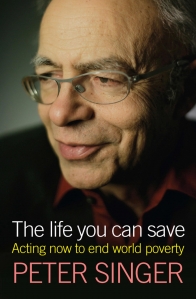
Peter Singer - The Life You Can Save (Authors@Google)


As part of the Authors@Google series, philosopher Peter Singer talks about how each of us has a role to play in ending world poverty. His book on this topic is The Life You Can Save: How to Do Your Part to End World Poverty.


Peter Singer: Authors at Google 
Peter Singer is recognized as one of the most influential philosophers alive. He is the author of Animal Liberation and Practical Ethics, and has motivated countless people to give more to charity. His most recent book is The Life You Can Save: How to Do Your Part to End World Poverty, and he has recently set up an organization of the same name. In this talk he speaks about the ethical argument for charitable giving and steps we can take to have a positive impact.

Tuesday, November 20, 2012

Jose Mujica: The World's 'Poorest' President (by choice)

I had heard bits and pieces about this man in the media, but this BBC article is the first time I had actually read about Uruguay's President, Jose Mujica, a man who has chosen to donate about 90% of his monthly salary, equivalent to $12,000, to charity and to live in his wife's old farmhouse outside the capital city. Very interesting form of leadership.

Jose Mujica: The world's 'poorest' president


Jose Mujica and his dogs outside his home
It's a common grumble that politicians' lifestyles are far removed from those of their electorate. Not so in Uruguay. Meet the president - who lives on a ramshackle farm and gives away most of his pay.

Laundry is strung outside the house. The water comes from a well in a yard, overgrown with weeds. Only two police officers and Manuela, a three-legged dog, keep watch outside.

This is the residence of the president of Uruguay, Jose Mujica, whose lifestyle clearly differs sharply from that of most other world leaders.

President Mujica has shunned the luxurious house that the Uruguayan state provides for its leaders and opted to stay at his wife's farmhouse, off a dirt road outside the capital, Montevideo.

The president and his wife work the land themselves, growing flowers.

This austere lifestyle - and the fact that Mujica donates about 90% of his monthly salary, equivalent to $12,000 (£7,500), to charity - has led him to be labelled the poorest president in the world.

 "I've lived like this most of my life," he says, sitting on an old chair in his garden, using a cushion favoured by Manuela the dog.

"I can live well with what I have."

His charitable donations - which benefit poor people and small entrepreneurs - mean his salary is roughly in line with the average Uruguayan income of $775 (£485) a month.

President Mujica's VW Beetle 
All the president's wealth - a 1987 VW Beetle

In 2010, his annual personal wealth declaration - mandatory for officials in Uruguay - was $1,800 (£1,100), the value of his 1987 Volkswagen Beetle.

This year, he added half of his wife's assets - land, tractors and a house - reaching $215,000 (£135,000).

That's still only about two-thirds of Vice-President Danilo Astori's declared wealth, and a third of the figure declared by Mujica's predecessor as president, Tabare Vasquez.

Elected in 2009, Mujica spent the 1960s and 1970s as part of the Uruguayan guerrilla Tupamaros, a leftist armed group inspired by the Cuban revolution.

He was shot six times and spent 14 years in jail. Most of his detention was spent in harsh conditions and isolation, until he was freed in 1985 when Uruguay returned to democracy.

Those years in jail, Mujica says, helped shape his outlook on life.

"I'm called 'the poorest president', but I don't feel poor. Poor people are those who only work to try to keep an expensive lifestyle, and always want more and more," he says.

"This is a matter of freedom. If you don't have many possessions then you don't need to work all your life like a slave to sustain them, and therefore you have more time for yourself," he says.

"I may appear to be an eccentric old man... But this is a free choice."

The Uruguayan leader made a similar point when he addressed the Rio+20 summit in June this year: "We've been talking all afternoon about sustainable development. To get the masses out of poverty.

"But what are we thinking? Do we want the model of development and consumption of the rich countries? I ask you now: what would happen to this planet if Indians would have the same proportion of cars per household than Germans? How much oxygen would we have left?

"Does this planet have enough resources so seven or eight billion can have the same level of consumption and waste that today is seen in rich societies? It is this level of hyper-consumption that is harming our planet."

Mujica accuses most world leaders of having a "blind obsession to achieve growth with consumption, as if the contrary would mean the end of the world".

Tabare Vasquez, his supporters and relatives on a balcony at Uruguay's official presidential residence  
Mujica could have followed his predecessors into a grand official residence . . .

But however large the gulf between the vegetarian Mujica and these other leaders, he is no more immune than they are to the ups and downs of political life.

"Many sympathise with President Mujica because of how he lives. But this does not stop him for being criticised for how the government is doing," says Ignacio Zuasnabar, a Uruguayan pollster.

The Uruguayan opposition says the country's recent economic prosperity has not resulted in better public services in health and education, and for the first time since Mujica's election in 2009 his popularity has fallen below 50%.

This year he has also been under fire because of two controversial moves. Uruguay's Congress recently passed a bill which legalised abortions for pregnancies up to 12 weeks. Unlike his predecessor, Mujica did not veto it.

President Mujica's house  
. . . Instead, he chose to stay on his wife's farm

He is also supporting a debate on the legalisation of the consumption of cannabis, in a bill that would also give the state the monopoly over its trade.

"Consumption of cannabis is not the most worrying thing, drug-dealing is the real problem," he says.
However, he doesn't have to worry too much about his popularity rating - Uruguayan law means he is not allowed to seek re-election in 2014. Also, at 77, he is likely to retire from politics altogether before long.

When he does, he will be eligible for a state pension - and unlike some other former presidents, he may not find the drop in income too hard to get used to.

Tupamaros: Guerrillas to government

Jose Mujica - in silhouette - speaking at a rally to commemorate the formation of the Frente Amplio
  • Left-wing guerrilla group formed initially from poor sugar cane workers and students
  • Named after Inca king Tupac Amaru
  • Key tactic was political kidnapping - UK ambassador Geoffrey Jackson held for eight months in 1971
  • Crushed after 1973 coup led by President Juan Maria Bordaberry
  • Mujica was one of many rebels jailed, spending 14 years behind bars - until constitutional government returned in 1985
  • He played key role in transforming Tupamaros into a legitimate political party, which joined the Frente Amplio (broad front) coalition

Monday, October 29, 2012

Download a Free, New Halloween Story by Neil Gaiman (and Help Charities Along the Way)


From Open Culture (of course), a new Halloween story from Neil Gaiman (Click-Clack, the Rattlebag) is free to download, and each download generates money ($1) to charity (one in the Us and one in the UK):
We chose our charities with pride and with care:
we picked Donors Choose -- http://www.donorschoose.org/ *  - for the US;
we picked Booktrust  - http://www.booktrust.org.uk/ ** - for the UK.
This offer, through Audible.com, is only good through Halloween, so act now. If enough people do the download, he will make a 2nd story available as well (it's already recorded). You can read more at Gaimon's blog. Links to the Audible sites (US and UK) are in the article below and at Gaimon's blog.

Download a Free, New Halloween Story by Neil Gaiman (and Help Charities Along the Way)


We’ve previously featured the free, downloadable stories and novels by author Neil Gaiman available online in video, audio, and text format. This is a wonderful thing, to be sure; Gaiman’s a fantastic writer of dark fantasy for children and adults alike, so who better to inaugurate this year’s Halloween celebrations with a new free story, available for download through Audible.com and read by Neil himself?

Gaiman’s new story, entitled “Click-Clack the Rattlebag,” is creepy, for sure, but that’s all I’m going say about it. You’ll need to download it yourself to find out more, and you really should because for every download of the story, Audible has agreed to donate a dollar to one of two charities that Neil has chosen—one for the U.S. and one for the U.K.. Gaiman has more information on his personal website, where he describes his negotiations with Audible in setting up the donations and the process of recording the story. He writes:

The story is unpublished (it will be published in a forthcoming anthology called Impossible Monsters, edited by Kasey Lansdale and coming out from Subterranean Press). It’s funny, a little bit, and it’s scary, just enough for Hallowe’en, I hope.

Gaiman also has a few requests: first, you need to download the story by Halloween in order to make the donation; second, please don’t give the story away—encourage people to go download it for themselves; and lastly, “wait to listen to it until after dark.” Atmosphere matters.

You do not need an Audible account to download the story, but you do need to give them your email address to prove you’re a human. U.S. readers should go to www.audible.com/ScareUs and U.K. readers to www.audible.co.uk/ScareUs. (Gaiman provides no instructions for readers in other countries; I suppose they could go to either site). So don’t wait—help Audible raise money for some worthy educational charities and get in the spirit with some great new fiction from one of the most imaginative writers working today. Finally, if you’re looking for more scary reads this Halloween, download Gaiman’s “All Hallow’s Read” book recommendations in a .pdf.

Note: Do you want to listen to other free audio books by Neil Gaiman? Just head over to Audible.com and register for a 30-day free trial. You can download any audiobook for free. Then, when the trial is over, you can continue your Audible subscription, or cancel it, and still keep the audio book. The choice is entirely yours. And, in full disclosure, let me tell you that we have a nice arrangement with Audible. Whenever someone signs up for a free trial, it helps support Open Culture.

Finally, we also suggest that you explore our collection of 450 Free Audio Books. It’s loaded with great classics.

Josh Jones is a doctoral candidate in English at Fordham University and a co-founder and former managing editor of Guernica / A Magazine of Arts and Politics.

Thursday, September 06, 2012

Support SACASA - Survivor Support Network

The Southern Arizona Center Against Sexual Assault exists purely on grants, donations, and fundraisers - if you can help or know someone who can, we are hosting an Open House on Wednesday, September 19, from 5:30-7:00 pm.

As always, you can donate online.

We do education and outreach through our prevention program, we provide Sexual Assault Response Services for survivors in the hours following an assault, we provide crisis advocates to help those who are reaching out for help for the first time, and we provide free therapy for survivors and their loved ones (secondary survivors). We do a whole lot more than I can even list here.

Tuesday, April 07, 2009

Lift Strong - The Book for Charity

We've all heard of Lance Armstrong's Live Strong Foundation, with their yellow bracelets, the world's most successful cancer fund-raising effort (as far as I know).

For those of us in the lifting world, Alwyn Cosgrove has gathered a large group of the best minds on training and nutrition to put together a book - Lift Strong - with 100% of the profits going to cancer research. Jason Ferruggia posted on it and I am reposting his whole entry here.

Lift Strong


If you have never heard the name Alwyn Cosgrove before let me just tell you that he is one of the top fitness experts in the world and someone we could all learn a lot from.

He is also a great friend of mine who has gone out of his way for me more times than I can remember.

Not too long ago I was overcome with sadness because I thought I was going to lose my friend. I simply couldn’t imagine how someone could battle back from Stage IV cancer yet again.

But he did.

And as a multiple time cancer survivor Alwyn is doing his part in the fight for a cure.

He has gathered the top fitness experts in the world to contribute to an 800 page manual of incredible information that is available for only $24.99. The best part is that 100% of the proceeds go to the Leukemia and Lymphoma Society.

Please help this great cause by clicking the link below:

http://www.LiftStrong.com/

Thanks,

Jason Ferruggia

Strength & Conditioning Specialist

Chief Training Adviser, Men’s Fitness Magazine

Author, Media Spokesperson, Consultant

http://www.LiftStrong.com


Saturday, November 15, 2008

Bono's Letter to Obama

Interesting, posted at Jim Wallis's blog.

God's Politics

Obama’s Harmony of Intellect and Intuition

by Bono 11-07-2008

Mr. President, Barack,

Every room I have ever been in with you was a much easier room for your presence.

It’s rare to meet a person like you, where intellect and intuition make such a perfect rhyme.

Your intuition tells you that the well-being of the American people, spiritually as well as physically, is connected with America’s role in the world. I know you know that the prosperity of your fellow Americans, though hard fought, is less fulfilling knowing there is so much more that can be done to alleviate poverty and suffering in the developing world. You know that less than 1 percent of government income as a contribution from the world’s richest economy to the world’s poorest is not a fair tithe — even in times like these — which is why you have promised to double foreign assistance. As with our own personal sojourn, so it is with country and community -– we discover who we are in service to others.

I know your intellect — fashioned in the halls of Harvard and on the floor of the United States Senate — has weighed up the evidence on how effective American tax dollars are, when converted into smart, targeted, focused aid. Putting children into school where they can think freely of freedom. Giving farmers on the parched land seed varieties that double the size of their crop yields. Giving mothers 20 cent immunizations to protect their newborns from the deadly viruses that they pass on through childbirth. I know your intellect has taken in the data and seen the analysis on the transformative power of effective aid in places where the United States flag is currently not one smiled at. I know you know how much cheaper it is to make friends of potential enemies than to defend yourself at a later date. I know you know all this stuff.

My prayer for you is that your instinct and intellect stay in harmony in the difficult months and triumphant years ahead.

Bono is lead singer of U2 and co-founder of The ONE Campaign.


Tuesday, November 11, 2008

Greg Mortenson Brings Education to Afghanistan

If we really want to win the falsely named "war on terror," the real task is to win the hearts and minds of the people, especially the minds. The majority of people in Afghanistan and Pakistan are uneducated -- at least in the tribal areas where the Taliban reigns.

Afghanistan

Greg Mortenson is doing just that. He is the author of Three Cups of Tea, a book that is now required reading in graduate level education for military counter-intelligence students.
In Three Cups of Tea: One Man’s Mission to Promote Peace . . . One School at a Time , Greg Mortenson, and journalist David Oliver Relin, recount the journey that led Mortenson from a failed 1993 attempt to climb Pakistan’s K2, the world’s second highest mountain, to successfully establish schools in some of the most remote regions of Afghanistan and Pakistan. By replacing guns with pencils, rhetoric with reading, Mortenson combines his unique background with his intimate knowledge of the third-world to promote peace with books, not bombs, and successfully bring education and hope to remote communities in central Asia. Three Cups of Tea is at once an unforgettable adventure and the inspiring true story of how one man really is changing the world—one school at a time.
Outside Magazine followed Mortenson into one of the roughest regions -- the Wakhan Corridor.

If any region of the country stands apart, it's the remote, sparsely populated Wakhan Corridor, which has been spared much of the recent bloodletting. Carved by the Wakhan and Panj rivers, the 200-mile-long valley, much of it above 10,000 feet, separates the Pamir mountains to the north from the Hindu Kush to the south. For centuries it has been a natural conduit between Central Asia and China, and one of the most forbidding sections of the Silk Road, the 4,000-mile trade route linking Europe to the Far East.

The borders of the Wakhan were set in an 1895 treaty between Russia and Britain, which had been wrestling over the control of Central Asia for nearly a century. In what was dubbed the "Great Game" (a term coined by British Army spy Arthur Conolly of the 6th Bengal Native Light Cavalry), both countries had sent intrepid spies into the region, not a few of whom had been caught and beheaded. (Conolly was killed in Bokhara in 1842.) Eventually Britain and Russia agreed to use the entire country as a buffer zone, with the Wakhan extension ensuring that the borders of the Russian empire would never touch the borders of the British Raj.

Wakhi women and children in the settlement of Sarhad in the Wakhan corridor. Badakhshan province, Afghanistan, April/May 2005

Only a handful of Westerners are known to have traveled through the Wakhan Corridor since Marco Polo did it, in 1271. There had been sporadic European expeditions throughout the second half of the 19th century and the beginning of the 20th. In 1949, when Mao Zedong completed the Communist takeover of China, the borders were permanently closed, sealing off the 2,000-year-old caravan route and turning the corridor into a cul-de-sac. When the Soviets invaded Afghanistan in December 1979, they occupied the Wakhan and plowed a tank track halfway into the corridor. Today, the Wakhan has reverted to what it's been for much of its history: a primitive pastoral hinterland, home to about 7,000 Wakhi and Kirghiz people, scattered throughout some 40 small villages and camps. Opium smugglers sometimes use the Wakhan, traveling at night.

Among the diverse people Mortenson has befriended, the idea of Three Cups of Tea is crucial. With the first cup of tea you are a visitor, with the second you are a friend, and with the third you are family. Once you are family, these people will die for you.

Mortenson's strategy is working so well that American military leaders are asking his input on how to work with the locals in Afghanistan and Pakistan in a way that will foster alliance and support for the effort to depose the Taliban once and for all from this part of the world. It may never totally squash the Taliban, but with education comes a wider view of the world.

There are about 550 Wakhi families in the western Wakhan, and he and Sarfraz had identified 21 villages that needed schools. "Educating girls, in particular, is critical," he continued. "If you can educate a girl to the fifth-grade level, three things happen: Infant mortality goes down, birthrates go down, and the quality of life for the whole village, from health to happiness, goes up. Something else also happens. Before a young man goes on jihad, holy war, he must first ask for his mother's permission. Educated mothers say no."

I asked him how the villages paid for their half of building and supporting a school.

"Often they provide labor in lieu of money," Greg replied, "but most of the money in many Afghan villages outside the Wakhan comes from growing poppies."

"Opium."

"Opium," said Greg. "It can't be eliminated. These villages are desperately poor. They're utterly dependent on this income. Eliminating opium farming will only cause more poverty and more hopelessness, which will cause more killing and more wars."

I let it rest.

In 2004, Afghanistan produced 4,200 tons of opium, 87 percent of the world's total supply. The revenue from the illegal trade was estimated at $2.8 billion, roughly two-thirds the amount Afghanistan receives in foreign aid. In 2005, the U.S. allocated about $774 million to the effort to eradicate poppy farming in Afghanistan. Is there a better way? The Senlis Council, an international drug-policy think tank, recently proposed a radical alternative: Legalize opium for medicinal purposes.

India is already licensed by the International Narcotics Control Board, an independent watchdog group that monitors the trade of illicit and medicinal drugs, to grow opium and produce generic pain medication for developing nations. Afghanistan could do the same. The cost of creating such a program has been estimated at only $600 million. Ideally, the farmers would get cash, the drug lords would get cut out, the developing world would get more pain-relief medicine, and the major demand for the global traffic in heroin could be drastically reduced.

It's a compelling strategy—accepting the reality on the ground rather than fighting it—and it's exactly how Greg operates. He doesn't get caught up in moral abstractions; he focuses on what works, no matter how tortured or contradictory.

The December issue of Outside features "No Bachcheh (child) Left Behind," the article that got me interested in doing this post (the article will not be online until January, 2009).

It's a compelling piece. Education - to me - is the bottom line for any attempt to improve the lives of others. That this man who had nothing -- he sold all his possessions in order to keep his promise to those who nursed him back to health after his failed attempt on K2 -- was able to turn his promise into reality with dozens of schools built serving thousands of children should be an inspiration to all of us.

Part of what makes Mortenson's project work is that is funded by individual Americans -- which demonstrates to the Pakistani and Afgani people that American's do care about their well-being (contrary to the bombings by the US Military). We all can help with this project:

Central Asia Institute
Pennies for Peace

Here is Mortenson speaking at UC Santa Barbara.


Wednesday, July 02, 2008

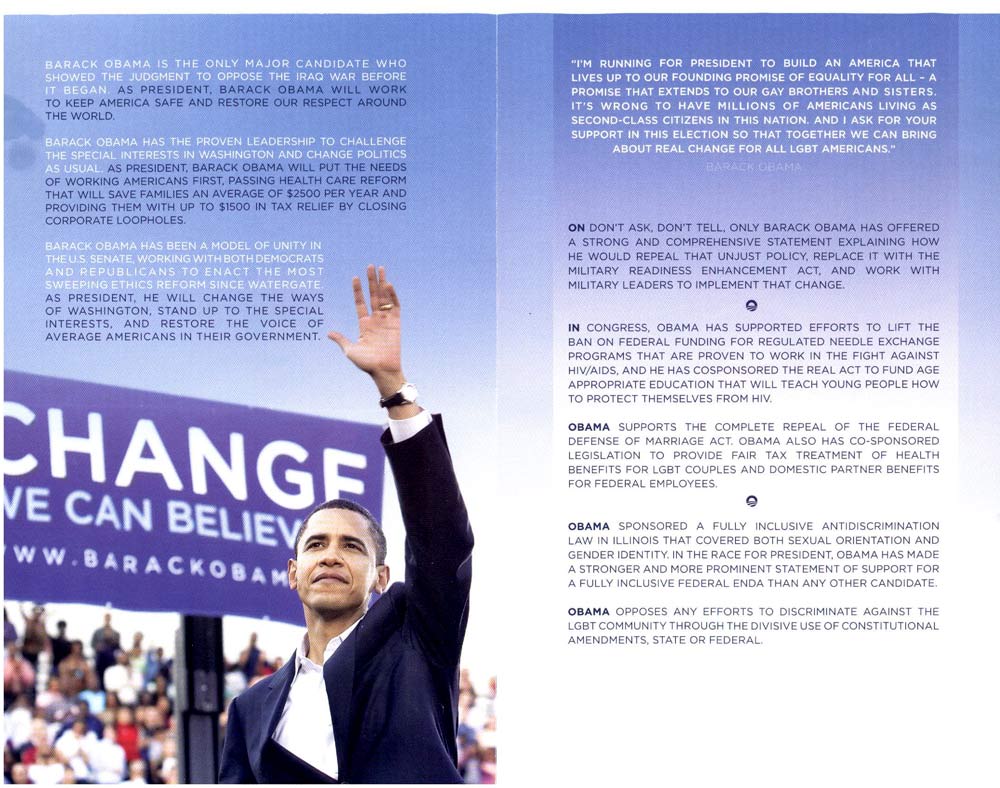
Obama's Faith-Based Plan


A lot of liberals [check out PZ Myers] are concerned about Obama's proposal to expand faith-based programs to reduce poverty, should he be elected president. A couple of years ago, I would have been, too. In fact, I opposed Bush's program at first. So maybe I am a hypocrite to support Obama's proposal (transcript here). [Emphasis added below.]

Obama's proposal for a $500 million-a-year Council for Faith-Based and Neighborhood Partnerships would also create 1 million slots for summer jobs and education programs.

"I'm not saying that faith-based groups are an alternative to government or secular nonprofits, and I'm not saying that they're somehow better at lifting people up," the presumptive Democratic presidential nominee said after touring the Eastside Community Ministry. "What I'm saying is that we all have to work together -- Christian and Jew, Hindu and Muslim, believer and nonbeliever alike -- to meet the challenges of the 21st century."

In Zanesville, Obama (Ill.) did not shy away from professing his beliefs.

"I didn't grow up in a particularly religious household," he said. "But my experience in Chicago showed me how faith and values could be an anchor in my life. And in time, I came to see my faith as being both a personal commitment to Christ and a commitment to my community, that while I could sit in church and pray all I want, I wouldn't be fulfilling God's will unless I went out and did the Lord's work."

George W. Bush first proposed federal assistance to religious organizations during his 2000 presidential campaign. But Bush's faith-based initiative has been mired in controversy. Its first director, John DiIulio, quit the White House and charged that the administration was stocked with "Mayberry Machiavellis" more interested in politics than policy.

Another program director, David Kuo, wrote a scathing tell-all book recounting how Bush's Office of Faith-Based and Community Initiatives was used to advance Republican political objectives. Even most critics, however, concede that the program has increased the number of faith-based groups winning access to federal dollars and has lifted what in some cases were discriminatory policies against religious groups.

Obama aides, however, say the current program has not worked. Funding has not reached the levels Bush promised, and the program, Obama contends, has been too bureaucratic, including onerous training for groups who wish to apply.

It's not that I think Obama's plan is better than Bush's -- although I trust Obama to actually follow through with it much more than I trusted Bush, and rightfully so -- it's that the problem is so overwhelming (and is getting worse daily as the economy declines) that any effort is better than no effort. Further, I think those agencies already established in communities are best able assess need and distribute help -- and most of them are faith-based.

Jim Wallis has long been a supporter of faith-based programs.

The key to today's proposal is that it is based on public and faith-based partnership, and will not become another replacement for sound public policy. To truly be successful, this initiative must utilize the unique resources and identity of the faith community, while at the same time recognizing the indispensible role that government and public policy must play in tackling the root causes of poverty. Obama's proposals also contain necessary protections for religious liberty, pluralism, and constitutional safeguards.

This initiative has the potential to unite people across partisan lines. I truly hope that a recommitment to engaging the valuable role of faith-based organizations doesn't get mired in the endless political debates of the past while God's concerns for the weak and vulnerable get ignored.

Not suprisingly, Mark Ambinder, at The Atlantic, also supports the plan, or seems to.
Barack Obama unveiled his faith and government initiative today, and everyone's trying to sort out what exactly he wants to do and why. First, an Associated Press story suggested that Obama would allow faith-based groups to discriminate in hiring. (The AP walked back a bit.) Then, the Politico wrote that Obama planned to shutter Bush's executive office because he considered it a gimmick. Then, Wes Clark morning interviews -- was he asked to do them by the campaign? -- gummed up the works, again, and distracted the press corps. Here's what the Obama campaign says about faith-based initiatives. He's committed, they say., to all non-discrimination laws under Title VII and will see what he can do to reverse President Bush's executive order muddying the water on that front. Here's a key point: Obama would allow charities to impose faith requirements hiring for those programs that did not receive federal funding. Federally-funded programs would have to be discrimination-free but since discrimination on the basis of sexual orientation is not prohibited, Obama wants to find a way to bring the state of the law back to where it was before President Bush's executive orders on religious hiring rights. So -- Obama's principle is clear, but how he'd put them into practice is not clear. Would Catholic charities be allowed to refuse to hire gay people for federally-funded programs? Obama thinks they shouldn't be able to, but it's not clear how or whether Obama would intervene to prevent them from doing so. It's also clear that Obama wants to expand the Bush initiative and rebrand it a bit. His new name for it is the Council for Faith-Based and Neighborhood Partnerships.

Some of my e-mailers today see a contradiction between Obama's support for gay rights, his own stark language on faith .....

"Now, I didn't grow up in a particularly religious household. But my experience in Chicago showed me how faith and values could be an anchor in my life. And in time, I came to see my faith as being both a personal commitment to Christ and a commitment to my community; that while I could sit in church and pray all I want, I wouldn't be fulfilling God's will unless I went out and did the Lord's work."

I don't really see where the contradiction is. Obama supports gay rights. And he's an evangelical. And he opposes federally-sanctioned gay marriage. And he supports an expanded government partnership with non-secular groups.

Obama is a man of faith -- and it seems he is willing to walk the talk a hell of a lot more than Bush ever did. Let's see if he follows through.


Wednesday, April 16, 2008

TED Talks: Bill Strickland: Rebuilding America

Incredibly inspiring TED Talk. This talk was given in 2002, but not posted until this January.

Bill Strickland: Rebuilding America, one slide show at a time

With subtle accompaniment by longtime friend Herbie Hancock, and a slide show that has opened the minds (and pocketbooks) of CEOs across the country, Bill Strickland tells a quiet and astonishing tale of redemption through arts, music and unlikely partnerships.


Wednesday, April 02, 2008

Cool Cause - Achieving Sustainable Social Equality through Technology

I have some very cool clients, one of whom has a very special daughter. Nita Umashankar (with the support of her parents, Sue and Ray Umashankar) is the founder of ASSET India Foundation, Achieving Sustainable Social Equality through Technology. Here is their mission statement:

Mission Statement
We aim to provide children of women in prostitution and those rescued from trafficking in India with basic information technology skills and secure employment opportunities. By harnessing the technical aptitude of this neglected and under-served population, we hope to fulfill the needs of a global market using knowledge empowerment as a method of preventing these children from entering the flesh trade.

Description of ASSET centers
We provide computer literacy in the form of information technology and conversational English training to children of women in prostitution ranging from ages 16-20 years. We partner with Indian non-profit organizations and leverage their existing relationships with the prostitute community. Together, we manage and run computer centers and train students in batches of 20. We train students that have completed a pre-specified level of education to ensure adequate prerequisite knowledge. Our course is designed for 6-9 months, depending on the number of hours taught per week at each center. After the students complete our course, they apply for a competitive internship and upon satisfactory completion, they are placed at various IT and BPO firms. Prospective jobs include transcription, data entry and office suite application. Currently, our centers are located in major metropolitan Indian cities including Delhi, Chennai and Hyderabad. For information on each center and our partnering NGOs in each city, please visit the programs tab.

I think what they are doing is amazing, and that Nita is doing it while completing a doctorate in marketing at the University of Texas is even more remarkable. Fortunately, their work has not gone unnoticed.

ASSET has been nominated for a Stockholm Challenge prize (5,000 Euros) for 2008 in the area of education (here is their page at the Stockholm site).

While ASSET works with major corporations (such as Microsoft) to set up their programs, they also accept donations through the PayPal link at their site. They also offer internships in several areas. Please consider a donation.


Tuesday, January 15, 2008

Children of Tibet Foundation

A cool site, and a good cause.

Children of Tibet Foundation

Vision

We want the children of Tibet to go to school and get an education.
Some of them will get a higher education. They will attend agricultural schools, vocational schools, colleges, universities and might become midwives, nurses, physicians, teachers, artists, engineers, economists, etc.

Some of them will spend a few months or years outside their communities in order to gain more experience and better their qualifications.

Most of them will return to their communities to use and pass on their knowledge - they are going to benefit their people enormously and will help to modernize Tibet and maintain its culture and heritage.

Eventually, they will contribute to improved living conditions throughout the country.

Mission

The children of Tibet are our mission. By helping them, we will help preserve their heritage and improve the well being of all the people of Tibet.

The Foundation will help the children of Tibet be healthy by supplementing their diets while in school, providing regular clinic services and ensuring adequate clothing and bedding.

We will contribute to their education by providing needed school supplies and equipment, repairing school facilities, and recognizing and rewarding teaching excellence.

The Foundation will provide scholarships to deserving students to pursue further studies in Tibet as well as other places.

For those children who pursue further education in the United States, we will find willing families to provide these students a home away from home.

Strategies

The Children of Tibet Trust Foundation recognizes the enormity of its mission and seeks to work in cooperation with established government agencies, international programs and other non-profit organizations.

We will implement our mission one child at a time.

It takes $365 a year to support one child, or $1 a day.

The Trust is also cognizant of its responsibilities to the people and organizations who make donations and contribute their efforts toward our mission.

We follow sound business practices and ethical policies to ensure accountability for all funding received.


Another easy way to help:

PLEASE go to www.GoodSearch.com and enter “Children of Tibet Trust Foundation” as the charity you want to support (VERY IMPORTANT).
CTTF will earn a penny every time you search the Internet (at home/at the office) – regardless what you are searching for.
Therefore, instead of using Google etc. please use GoodSearch in the future.
GoodSearch.com is a new search engine that donates half its revenue, about a penny per search, to the charities its users designate. You use it just as you would any search engine, and it’s powered by Yahoo!, so you get great results.
Please tell your friends and colleagues about it and ask them to support CTTF. They will be able to help us raise much needed funds without anyone spending a dime.
Thank you.

Saturday, December 08, 2007

Canadaville - Inspirational Giving

This is old news, but I just saw a report on it on my local news. When Hurricane Katrina destroyed so many lives in New Orleans, Frank Stronach, the Austrian-Canadian billionaire chairman of auto-parts giant Magna International, offered to put up more than 200 Katrina evacuees in dorm rooms at a racetrack training facility his company owns in Florida.

But that wasn't all he had in mind. And he asked some serious commitment from those he was willing to help.

From the CBC:

Hurricane Katrina hit the U.S. Gulf coast in late August 2005, devastating the city of New Orleans, La. The storm surge breached the levees protecting the "Big Easy" and left huge areas partially submerged in filthy water. The worst-hit area was the city's Lower Ninth Ward – home to some of New Orleans's poorest residents. With their homes and most of their jobs washed away and little prospect of any quick improvement in their situation, thousands of people were facing a bleak future indeed.


That was Frank Stronach's cue. The Austrian-Canadian billionaire chairman of auto-parts giant Magna International offered to put up more than 200 Katrina evacuees in dorm rooms at a racetrack training facility his company owns in Florida. That gesture alone would have been noteworthy; Stronach and Magna, after all, have no links to Louisiana. But there was more.

Stronach then offered to spend $10 million to relocate the Katrina evacuees to another part of Louisiana and build them homes where they could live at no charge.

The new community that arose from that remarkable act has been dubbed Canadaville. Its first residents moved in Dec. 13.

What does the Canadaville development consist of?

The project is on about 320 hectares of land (800 acres) Stronach bought near Simmesport, La., a Cajun town of 2,200 people about an hour inland from Baton Rouge. The town is half-white, half-black, and about a third of its residents live below the poverty line.

The first phase of the development includes 49 three-bedroom mobile homes, complete with furniture, central air conditioning and porches, front and back. A recreational centre will include areas for basketball and soccer. Stronach is also paying for a new police station and three new police cars.

Canadaville has a capacity of 280 "guests," as the evacuees are called. The first group to move in numbers about 120.

There are plans to build an organic farm to produce chickens, hogs, Angus beef cattle and organic vegetables. Stronach predicts the farm will be profitable within five years.

Canadaville, in short, is meant to be a kind of self-sustaining model community.

What is expected of the residents?

Canadaville's residents will be allowed to stay rent free for up to five years. If they can't find jobs in the area on their own, they will be expected to work on the farm. Each resident is also expected to perform some community service. Eventually, most will likely return to the New Orleans area to try to pick up their lives. Any homes that they leave behind will be turned over to the Red Cross so the charity can use them for others who need housing. But some residents say they have no intention of going back to the "Big Easy," and hope to stay in Canadaville for years.

Who else has helped the Canadaville effort?

While Stronach has footed most of the bills, the effort has been supported by plenty of donations and volunteers. Nineteen Canadian carpenters went to Louisiana in November to donate their time and expertise by building the wood porches on the homes. The evacuees got free flights from Air Canada. The village was designed by the Toronto-based architectural firm Giffels/NORR. Other help was provided by the Canadian Auto Workers union, the Canadian Red Cross, St. John Ambulance Canada, employees of various Magna companies and many Louisiana residents.

What was the reaction in Simmesport?

There was some hostility. The majority of town councillors was initially against the proposal. Mobile home parks are often a hard sell at the best of times. And this one would be home to people from an especially poor and crime-ridden part of New Orleans. Would these streetwise transplants adapt to rural life? Would they cause trouble?

Some are skeptical that anyone would want to spend millions in an act of generosity unless he eventually expected something big in return. Others don't like that the Canadian flag is flying alongside the U.S. flag.

But local politicians and many of Simmesport's residents were won over as the new village created work and Stronach suggested that he may build a small manufacturing facility nearby for his company.

New Orleans newspaper columnist John Maginnis said the folks around Simmesport are "so bowled over" by the Canadaville project that many have put aside their initial objections.

"Oh, Canadaville, would that your spirit find its way into the hearts of more Louisiana communities," he wrote.

As of today's report, nearly all of the goals have been met. They have the organic farm, occupational retraining, and a good school. Children who had never been good students are now on the honor roll.

One of the things this "experiment" shows is how much of a role environment plays in people's lives. When given a chance to thrive in a good environment, these people are doing so.

Here's a video on this story.