Showing posts with label abuse. Show all posts

Monday, November 17, 2014

Trauma and Psychosis: A Review and Framework for Psychoanalytic Understanding

https://blogger.googleusercontent.com/img/b/R29vZ2xl/AVvXsEhIbvh2pbxvzLHs8IF9vuQKu-Mduzv56FhAP0Ow8mJcyvywwN997M0TDBiFrJCPnblJitrujlfUVOTIAFZTIzU2wGBzxv9jLULaiWGOkgU84ShmpeWXxItflauksMJM40p1-6sAKg/s400/shutterstock_56739238.jpg

I have long felt that psychosis is more adequately understood when it is seen as the most extreme form of dissociation - a need so intense that it is not the body, or emotions, or memories that are dissociated, it is reality itself.

Although it is reality that is dissociated (through delusions, hallucinations, paranoia, and cognitive distortions), it is fundamentally the emotions that are most important in making sense of the psychotic features and in bringing the client back. I have no doubt that meds are important for some, but not everyone benefits from the psychological numbing effects of the atypical antipsychotics.

What my clients have taught me is that the key to recover is to reclaim the body, and with it the emotions that are so painful the person needed to create a different reality, where the client is often a different person, with different origins, and who is much more important in some ways than they ever were in their "normal" life.

This is a free article (until the end of December) from the International Forum of Psychoanalysis in which Lawrence Kirshner offers a psychoanalytic take on psychosis and its roots in trauma (follow the links to read online or download).

Full Citation:
Kirshner, L.A. (2013, Jun 4). Trauma and psychosis: A review and framework for psychoanalytic
understanding. International Forum of Psychoanalysis, DOI: 10.1080/0803706X.2013.778422


Lewis A. Kirshner

Wednesday, September 17, 2014

Mindfulness Protects Adults' Health from the Impacts of Childhood Adversity

http://boldogsagtervezes.hu/wp-content/uploads/2014/05/mindfulness.jpg

A recently developed model (late 1990s) for assessing early childhood experience as it relates to adult physical and mental health is the Adverse Childhood Experiences (ACE) assessment (Felitti, et al., 1998; get your score here). The ACE scale identifies ten forms of adverse childhood experience (occurring before the age of 18): (1) verbal and emotional abuse, (2) physical abuse, (3) sexual abuse, (4) emotional neglect, (5) physical neglect, (6) battered parent (originally included as “battered mother”), (7) household substance abuse, (8) household psychological distress, (9) parental separation or divorce, and (10) criminal household member(s) (Dong, et al., 2003). The more ACEs that have been experienced, the greater the risk for later life health issues (Weiss & Wagner, 1998), including heart disease (Dong, et al., 2004), obesity (Williamson, et al., 2002), cancer (Brown, et al., 2010), drug use (Dube, et al., 2003), suicide risk (Dube, et al., 2001), smoking (Anda, et al., 1999), and psychological distress (Anda, et al., 2007; Chapman, et al., 2004; Chapman, et al., 2007; Edwards, et al., 2003), among many others (Felitti, et al., 1998, Felitti, 2002).

None of this deals with the intense mental distress (depression, anxiety, PTSD, psychosis) than can result from ACEs.

The new study below shows that the impact of ACEs can be mitigated by mindfulness meditation.  
References

1. Felitti, V.J., Anda, R.F., Nordenberg, D., Williamson, D.F., Spitz, A.M., Edwards, V., Koss, M.P. & Marks, J.S. (1998, May). Relationship of childhood abuse and household dysfunction to many of the leading causes of death in adults. The Adverse Childhood Experiences (ACE) Study. American Journal of Preventive Medicine; 14(4):245-58.
2. Maxia Dong, M., Anda, R.E., Dube, S.R., Giles, W.H., and Felitti, V.J. (2003). The relationship of exposure to childhood sexual abuse to other forms of abuse, neglect, and household dysfunction during childhood. Child Abuse & Neglect; 27: 625–639.
3. Weiss JS, Wagner SH. (1998). What explains the negative consequences of adverse childhood experiences on adult health? Insights from cognitive and neuroscience research (editorial). American Journal of Preventive Medicine; 14:356-360.
4. Dong M, Giles WH, Felitti VJ, Dube, SR, Williams JE, Chapman DP, Anda RF. (2004). Insights into causal pathways for ischemic heart disease: Adverse Childhood Experiences Study. Circulation; 110:1761-1766.
5. Williamson DF, Thompson TJ, Anda RF, Dietz WH, Felitti VJ. (2002). Adult Body Weight, Obesity, and Self-Reported Abuse in Childhood. International Journal of Obesity; 26: 1075–1082.
6. Brown DW, Anda RA, Felitti VJ, Edwards VJ, Malarcher AM, Croft JB, Giles WH. (2010). Adverse childhood experiences are associated with the risk of lung cancer: a prospective cohort study. BMC Public Health; 10: 20-32.
7. Dube SR, Anda RF, Felitti VJ, Chapman DP, Giles WH. (2003). Childhood Abuse, Neglect, and Household Dysfunction and the Risk of Illicit Drug Use: The Adverse Childhood Experiences Study. Pediatrics; 111:564-572.
8. Dube SR, Anda RF, Felitti VJ, Chapman D, Williamson DF, Giles WH. (2001). Childhood abuse, household dysfunction and the risk of attempted suicide throughout the life span: Findings from the Adverse Childhood Experiences Study. Journal of the American Medical Association; 286:3089-3096.
9. Anda RF, Croft JB, Felitti VJ, Nordenberg D, Giles WH, Williamson DF, Giovino GA. (1999). Adverse childhood experiences and smoking during adolescence and adulthood. Journal of the American Medical Association; 282:1652-1658.
10. Felitti VJ. (2002). The relationship between adverse childhood experiences and adult health: Turning gold into lead. The Permanente Journal; 6:44-47.
Here, then, is the article (a summary press release of the original article, which is behind a paywall).
 

Mindfulness protects adults' health from the impacts of childhood adversity

Date: September 13, 2014
Source: Temple University
Summary:
Adults who were abused or neglected as children are known to have poorer health, but adults who tend to focus on and accept their reactions to the present moment—or are mindful—report having better health, regardless of their childhood adversity, researchers report.
Adults who were abused or neglected as children are known to have poorer health, but adults who tend to focus on and accept their reactions to the present moment -- or are mindful -- report having better health, regardless of their childhood adversity. These findings, to be published in the October issue of Preventive Medicine, are based on the first study ever conducted to examine the relationship between childhood adversity, mindfulness, and health.

Led by Robert Whitaker, professor of public health and pediatrics at Temple University, the researchers surveyed 2,160 adults working in Head Start, the nation's largest federally-funded early childhood education program.

Survey respondents, who worked in 66 Pennsylvania Head Start programs, were asked if they experienced any of eight types of childhood adversity, such as being abused or having a parent with alcoholism or drug addiction. In addition, respondents were asked questions about their current health, as well their mindfulness, meaning their tendency in daily life to pay attention to what is happening in the moment and to be aware of and accepting of their thoughts and feelings.

Nearly one-fourth of those surveyed reported three or more types of adverse childhood experiences, and almost 30 percent reported having three or more stress-related health conditions like depression, headache, or back pain, noted the researchers. However, the risk of having multiple health conditions was nearly 50 percent lower among those with the highest level of mindfulness compared to those with the lowest. This was true even for those who had multiple types of childhood adversity.

Regardless of the amount of childhood adversity, those who were more mindful also reported significantly better health behaviors, like getting enough sleep, and better functioning, such as having fewer days per month when they felt poorly -- either mentally or physically, said Whitaker.

"Our results suggest that mindfulness may provide some resilience against the poor adult health outcomes that often result from childhood trauma," he said. "Mindfulness training may help adults, including those with a history of childhood trauma, to improve their own well-being and be more effective with children."

While many smaller studies have shown that learning mindfulness practices like meditation can improve psychological and physical symptoms such as depression and pain, more research is needed to see if interventions to increase mindfulness can improve the health and functioning of those who have had adverse childhood experiences, Whitaker said.

With nearly two-thirds of U.S. adults reporting one or more types of adverse childhood experiences, Whitaker noted that "mindfulness practices could be a promising way to reduce the high costs to our society that result from the trauma adults experienced during childhood."

The findings are a follow-up to the researchers' previous study which found that women working in Head Start programs reported higher than expected levels of physical and mental health problems. That study was published in 2013 in the journal Preventing Chronic Disease.


Story Source:
The above story is based on materials provided by Temple University. Note: Materials may be edited for content and length.

Journal Reference:
Robert C. Whitaker, Tracy Dearth-Wesley, Rachel A. Gooze, Brandon D. Becker, Kathleen C. Gallagher, Bruce S. McEwen. (2014). Adverse childhood experiences, dispositional mindfulness, and adult health. Preventive Medicine; 67: 147 DOI: 10.1016/j.ypmed.2014.07.029

Sunday, August 10, 2014

Childhood Abuse and Neglect - The Objective Effects and the Subjective Experience


The two articles below are complimentary in their description of the impact of childhood maltreatment (CM: abuse and/or neglect). The first is only available as an abstract (paywall, of course) and the second comes from Psych Central, a nice resource for lay readers in psychology.

Together these articles show the impact of CM on the function and structure of the brain and the subjective suffering that can result from CM years later. This is the "conclusion" of the first article:
Maltreatment was associated with decreased centrality in regions involved in emotional regulation and ability to accurately attribute thoughts or intentions to others and with enhanced centrality in regions involved in internal emotional perception, self-referential thinking, and self-awareness. This may provide a potential mechanism for how maltreatment increases risk for psychopathology.
In the adults molested as children (AMAC) clients I work with, I see these two processes playing themselves out in their lives every week. The limited affect regulation and the strong tendency toward inaccurate attribution of intentions to others creates a near-constant state of hypervigilance and a general sense of being unsafe with anyone, anywhere.

Likewise, the accentuated interior focus creates a self-sustaining cycle of anxiety, depression, self-blame, and rumination on past wounding. This too can be very debilitating. 


Full Citation:
Teicher, MH, Anderson, CM, Ohashi, K, and Polcari, A. (2013, Aug 15). Childhood Maltreatment: Altered Network Centrality of Cingulate, Precuneus, Temporal Pole and Insula. Biological Psychiatry; 76(4): 297–305. DOI: http://dx.doi.org/10.1016/j.biopsych.2013.09.016

Childhood Maltreatment: Altered Network Centrality of Cingulate, Precuneus, Temporal Pole and Insula

Martin H. Teicher, Carl M. Anderson, Kyoko Ohashi, Ann Polcari

Background

Childhood abuse is a major risk factor for psychopathology. Previous studies have identified brain differences in maltreated individuals but have not focused on potential differences in network architecture.

Methods

High-resolution T1-weighted magnetic resonance imaging scans were obtained from 265 unmedicated, right-handed 18- to 25-year-olds who were classified as maltreated (n = 142, 55 men/87 women) or nonmaltreated (n = 123, 46 men/77 women) based on extensive interviews. Cortical thickness was assessed in 112 cortical regions (nodes) and interregional partial correlations across subjects were calculated to derive the lowest equivalent cost single-cluster group networks. Permutation tests were used to ascertain whether maltreatment was associated with significant alterations in key centrality measures of these regions and membership in the highly interconnected “rich club.”

Results

Marked differences in centrality (connectedness, “importance”) were observed in a handful of cortical regions. Left anterior cingulate had the second highest number of connections (degree centrality) and was a component of the “rich club” in the control network but ranked low in connectedness (106th of 112 nodes) in the network derived from maltreated-subjects (p < .01). Conversely, right precuneus and right anterior insula ranked first and 15th in degree centrality in the maltreated network versus 90th (p = .01) and 105th (p < .03) in the control network.

Conclusions

Maltreatment was associated with decreased centrality in regions involved in emotional regulation and ability to accurately attribute thoughts or intentions to others and with enhanced centrality in regions involved in internal emotional perception, self-referential thinking, and self-awareness. This may provide a potential mechanism for how maltreatment increases risk for psychopathology.
* * * * *

This article comes from Psych Central's World of Psychology blog.

Consequences of Emotional Abuse

By Archana Sankaran
August 1, 2014


I come from a family where abuse has had a generational continuity. My grandfather abused my grandmother. My grandmother abused her son, daughter-in-law and other people. (She threw food at me once.) My father bullies his wife and daughter. My mother is emotionally violent to me. I go crazy and can break stuff around my mother.

Overall it is a very disturbing home environment. No one knows how to get out of the situation and we continue to harm each other. At times it feels like a spiraling battle to death. My grandpa passed away recently, ending his part.

Abuse has many forms. Sometimes it involves power over decision-making, where some people’s opinions do not count in matters related to them. Sometimes the emotional reactions of one person are projected onto others, shifting responsibility. It also can be physically violent, involving breaking things, hitting or cutting. Gossip and social shaming was one of my grandmother’s favorite ways to get control over my father.

I think that abuse is basically a perverted mechanism for control when the healthy ways to influence people seem infeasible. Often with dysfunctional families there is a repetitive nature to these conflicts.

After a few weeks with my family, my body seems to be permanently ready for attack. My shoulder hunches up and there is constant fear in the pit of my stomach. It feels like every person around me who I let into my territory is out to harm me. And no one will choose to spend time with me if they know me fully.

For years the only places I could feel safe or relax in were ashrams and meditation halls. I spent a lot of time by myself in nature. That would eventually calm me down. I was greatly anxious in social interactions, even of a functional nature such as asking for a room to rent.

My father told me a few years ago that every man I am with would leave me. I could not believe that he had used those words on me, knowing that I hurt terribly on this topic. I had just come out of four dark years of matrimony-related sorrow. There was a sense of being boxed in and bashed up.

My father, in his anger, tuned into my wounds and stabbed me where it always hurt most. It took me a while to understand this. I reacted in shock, numbness, severe depression at times. At other times I screamed at him and he released more toxic words.

Always there was a need in me to go closer, to understand the abuse and resolve it. Not one situation resolved. I am being forced to see that there is no healthy closure available to these situations. It is wounded people reacting and damaging others from their woundedness.

Family dynamics harmed me even in less-dramatic situations. For example, I do not recall being able to relax at home with family as a child. Any time I sat down with people at home, I had to perform — an activity such as cleaning the table, or listening to a story or dreaming up projects to do.

That made me always tense when I sat down with people in social situations. How should I entertain them? Often in a group of friends this behavior of mine was not received as my insecurity but as my need to show off.

As a child, positive social stamping was extremely important to me. It was the one way to get attention from my father. I could get warmth and respect from my family and from society if I was a successful person. Social regard became a very important part of my psyche’s feel-good mechanism. I didn’t realize that they would turn completely against me if they perceived me as a failure, which happened later.

In India’s strictly traditional society, I remained unmarried. I was not able to dismiss the social rejection and shaming easily. It was a painful lesson — not only but my society is extreme. Arranged marriages still account for the majority of Indian marriages. Most of the population is married and there is little acceptance of any other choice of living.

I believe that life is a series of lessons that we have to learn and graduate from. Most of us remain broken, wounded individuals trying to cope with our ceaseless desires. May we awaken to an awareness of our wounds. May we find our path to wholeness.

~ Archana Sankaran is an artist and therapist who lives in south India. She writes on alternative health, psychology and gardening. Her blog is at http://energyclinic.wordpress.com

Tuesday, July 22, 2014

The Drunken, Racist, Homophobic Fall of J.Z. Knight (or is it Ramtha?)

Several years ago, maybe almost a decade now, a few of J.Z. Knight's followers made a film called What the Bleep Do We Know? In a sense, that film mainstreamed Knight and her channeled deity, Ramtha, the Enlightened One, a supposed 35,000-year-old Lemurian warrior. By including her "channeled" perspectives alongside those of physicists, philosophers, and consciousness researchers, they tried to lend credibility to cult leader and her alter ego.

A couple of years ago, however, any tolerance most people held for this seemingly harmless cult was erased by a series of videos in which Knight rambled drunken racist, homophobic, and just plain ignorant rants during "teachings" in which all the audience members were required to drink each time Knight/Ramtha drank.
“JZ Knight shrieks abuse and ridicule at her followers, and hate speech against Catholics, Jews, gays, and others — all welcomed with audience cheers,” Melissa Genson wrote in one of a series of critical articles on RSE for the South Thurston Journal.
Knight has always been sketchy in my opinion, but other than bilking her followers of their money, she seemed relatively harmless, or at least her public image seemed harmless.

Not any more.

Ramtha, New Age Cult Leader, Unleashes Drunken, Racist, Homophobic Rants to Large Following

She "channels" a 35,000-year-old Lemurian warrior.

July 9, 2014 | Southern Poverty Law Center / By Susy Buchanan


RAMTHA SCHOOL OF ENLIGHTENMENT - Photo Credit: RAMTHA SCHOOL OF ENLIGHTENMENT

YELM, Wash. — It’s March 2011 at the Ramtha School of Enlightenment (RSE) in this rapidly growing town just outside of Olympia. Hundreds of truth seekers pack into a converted horse arena to hear a 35,000-year-old Lemurian warrior speak the wisdom of the ages. The crowd is yearning for super-consciousness and enlightenment; what they get is drunken ramblings peppered with curse words. There’s no Kool-Aid served, just red wine, bottles and bottles of it. Wine ceremonies, which have been going on at RSE since 1996, are significant because students believe wine grapes were brought to Earth by extraterrestrials 450,000 years ago.

The blonde on stage is J.Z. (for Judith Zebra) Knight, a 65-year-old former rodeo queen and cable TV saleswoman. The words coming from her mouth aren’t hers, the assembled crowd believes, but rather those of the ethereal being she channels, Ramtha the Enlightened One. Knight goes back and forth between herself and the supposedly channeled Ramtha.

During the 16 or so hours the students spend in a spiritual drinking game (students must drink every time Ramtha/Knight does), Knight will disparage Catholics, gay people, Mexicans, organic farmers, and Jews.

“Fuck God’s chosen people! I think they have earned enough cash to have paid their way out of the goddamned gas chambers by now,” she says as members of the audience snicker. There are also titters when she declares Mexicans “breed like rabbits” and are “poison,” that all gay men were once Catholic priests, and that organic farmers have questionable hygiene.

These are not the kind of cosmic revelations that have drawn students to Knight for 38 years. For the most part, RSE students are thoughtful and well-educated, not apt to embrace a bigoted guru. For decades, the message had been more about finding the god within than disparaging minorities, and the blend of science and New Age Gnosticism made J.Z. Knight millions well before the drunken homophobic, anti-Catholic, anti-Semitic racist rants began to make their way into her preachings.

What happened at RSE would have stayed at RSE had it not been for the Internet. In 2012, livestreamed videos of Ramtha’s hate speech were posted to the Web, first by ex-students Virginia Coverdale and David McCarthy, then by a libertarian-leaning think tank called the Freedom Foundation that is based in Olympia. The excerpts from that wine ceremony left Thurston County residents shocked and wondering if there was a more sinister side to their kooky neighborhood cult.

Was there a hate group lurking in “The Pride of the Prairie,” as Yelm calls itself? Knight blamed Coverdale, who had slept with Knight’s boyfriend, as a spurned lover, and the libertarian-leaning think tank, the Freedom Foundation, as politically motivated.

But the scandal caused by the videos embarrassed Democratic candidates who had taken a total of $70,000 in campaign donations from Knight. “I am appalled by Ms. Knight’s outrageous anti-Mexican, anti-Catholic raging,” said Thurston County (Wash.) Commissioner Sandra Romero. “These vile, racist, and divisive comments against responsible and caring people have no place in Thurston County, or anywhere else.” Romero ended up giving Knight’s donation to nonprofits benefitting Latinos.

Through it all, Knight has ignored requests for a retraction and maintained that the videos were maliciously edited and taken out of context.

Melissa and Steve Genson, farmers and restaurateurs who also operate an online newspaper, were equally outraged, and Melissa, a CPA and fraud investigator by training, began an intense investigation into activities at RSE. “JZ Knight shrieks abuse and ridicule at her followers, and hate speech against Catholics, Jews, gays, and others — all welcomed with audience cheers,” Melissa wrote in one of a series of critical articles on RSE for the South Thurston Journal.

Raising Ramtha

J.Z. Knight was born Judith Darlene Hampton in 1946 in Roswell, N.M., one of eight children in a family of migrant farm workers. In her autobiography, 1987’s A State of Mind: My Story, she says a Yaqui Indian woman told her mother that baby Judith would one day see what no one else could. In 1977, that prediction came true, as Knight tells it. She and her first husband heard about “Pyramid Power” — the belief that pyramids modeled on those in Egypt could sharpen razor blades and preserve food through mummification — and spent a rather manic weekend constructing paper pyramids and placing various objects (cheese, dog food) inside.

“My kitchen was looking more like a wholesale warehouse than a kitchen, but it was worth it,” Knight wrote. “We retired at three a.m., exhausted.”

The following day, Knight jokingly grabbed one of the paper pyramids, placed it on her head, and Ramtha, a seven-foot-tall apparition of golden glitter clad in a purple robe, appeared in her kitchen. “I am Ramtha the Enlightened One. I have come to help you over the ditch,” she says he told her, and shortly thereafter Knight was in business.

She began channeling Ramtha in public in 1979, presenting his wisdom nationally and internationally through workshops and retreats called “Ramtha Dialogues.” Early students included Shirley MacLaine (who broke off contact with Knight 30 years ago, a spokesman for the actress and author said), and, RSE officials say, actors Richard Chamberlain and Mike Farrell. Actress Salma Hayek and former “Dynasty” star Linda Evans are current students, they add.


Based in Yelm, Wash., J.Z. Knight has spent the years since 1979 travelling the globe and channeling “Ramtha the Enlightened One.” It has made her a millionaire. Photo Credit: RAMTHA SCHOOL OF ENLIGHTENMENT

That same year, she purchased an 80-acre ranch in Yelm, where she would breed Arabian horses for a time, build herself a 12,800-square-foot chateau, subsequently sell the horses, remodel the 15,000-square-foot horse arena, and open what would become RSE in 1989.

The location has significance that goes beyond cheap land. The region, according to RSE, was actually part of ancient Lemuria during Ramtha’s lifetime, before he migrated to Atlantis and freed his people from tyranny at the age of 14, then went on to conquer two-thirds of the world at the head of an army of 2.5 million. After being run through with a sword during battle, Ramtha sat on a rock and meditated for seven years, became enlightened, taught his body to vibrate at a high frequency and ascended, like Jesus, RSE’s website explains.

“Since the school was founded in 1989, more than 86,000 people worldwide have attended RSE events including about 7,500 in Washington State,” Knight’s Manhattan Beach, Calif.-based PR firm told the Intelligence Report. About 2,000 students live near Yelm, which has a total population of close to 7,000. The students are drawn in by the four tenets of Ramtha’s philosophy: the statement, ‘You are god’; the mandate to make known the unknown; the concept that consciousness and energy create the nature of reality; the challenge to conquer yourself.

The Nazis Cheer

But Knight also teaches students to be sovereign, to hoard gold and prepare food and supplies to survive for two years after one of the natural disasters that she often predicts will hit the earth. Knight as Ramtha is also quoted on the neo-Nazi Web forum Stormfront, where her writings on the “New World Order” are much appreciated and quoted under headings such as “Jews were responsible for causing WW1 & 2.”

“It took a lot to get this country into the First World War, because no one wanted to get into it. And so the Graymen, owning most of the media ... do you know what the media is? I have learned that term!” wrote “Ramtha” in 1999’s Ramtha: The White Book (which also carries an introduction by Knight). “The Graymen own them all; you know, the papers you read, the box you watch, the magazines you thumb through, the radio waves you listen to.”

In 2004, RSE students produced an infomercial for the school disguised as a documentary called “What the Bleep do we Know!?” The film grossed $10 million in the United States but was panned by critics. “New Age hooey disguised as a scientific documentary about quantum physics,” is how Jack Garner of the Rochester [N.Y.] Democrat and Chronicle summed it up.

Appearing in the film is Irishman Míceál Ledwith, a former monsignor in the Catholic Church, adviser to the pope, and president at St. Patrick’s College, Maynooth, an Irish seminary dating back to 1518.

Ledwith resigned abruptly in 1994 after allegations of pedophilia, which were later settled out of court, and was defrocked by the Vatican in 2005.

Ledwith, who is part of Knight’s inner circle and has been a student at RSE since 1989, can be seen in the full-length, 16-hour video of the 2011 wine ceremony, where he takes the stage with Knight about seven hours in, propping himself up on Ramtha’s ornate throne.

“Fuck Jehovah,” Knight proclaims, speaking in Ramtha’s voice and outing Jesus as a fellow alien who came to this planet to basically teach the same things. From the same stage, Ledwith denounces the biblical God as “fickle, capricious, psychotic, neurotic, and insecure, and we are supposed to believe that he is the creator God.” Knight adds that God is a “psychotic, insecure son of a bitch,” which draws a chuckle from the former priest. Then they dance.

Of Orbs and Soap Bubbles


Promoting Ramtha is serious business. Knight oversees 80 employees. In the past, students have paid $1,000 or more to participate in events where crowds often reached a thousand people or more. The school currently holds about 50 events a year, has published more than 600 books, CDs and videos, and has material translated into 18 languages.

Knight is fiercely protective of her kingdom. When a woman in Berlin, Germany, Judith Ravell, claimed that she was also channeling Ramtha, Knight took her to court and won the copyright to Ramtha’s teachings. Later, after another woman, Whitewind Weaver, who had attended a dozen events at RSE, imparted Ramtha’s teachings in an event of her own, Knight sued her as well, and was awarded $10,000 in 2008.

Currently, Knight is involved in legal action against those who released the hate-filled video clips to the Internet in 2012. The efforts of both Coverdale of Yelm and McCarthy of New Zealand to expose the darker side of the Enlightened One have landed them in a courtroom facing Knight. They are supported by a growing online community of ex-RSE students critical of Knight, who they describe as a dangerous cult leader. Coverdale is appealing a $600,000 judgment against her for releasing the videos, while McCarthy has a court date in May.

“The whole idea of Ramtha seemed absolute nonsense. But the RSE students I met were idealistic, intelligent, well educated and very caring, hardly the sort cult members typify, and besides I could just walk away anytime. I was convinced to just give it a try,” says McCarthy, who left the school in 1995 after seven years.

“Most people who attend the RSE flowery love bomb introductory events will be drawn in by very appealing concepts and promises. The promoters will appear smart, happy and very supportive. Nothing like typical cult behavior and recruitment techniques would be recognizable,” he adds. “The trap is set by J.Z. Knight, and those attending are clueless to the cult persuasion techniques they could fall prey to.”

It’s early March 2014, and about 30 students have come to Yelm for a “Beginner’s Event” at a cost of $450 apiece. They’ve brought sleeping bags and pillows, and are sprawled out on the floor waiting for instruction. It begins, as always, with a blast of upbeat pop music, which means the students are to assemble and dance. The schedule is rigorous, from dawn until well past dusk. Most of them sleep in the arena or camp on the compound. There are live lectures from some of the seven RSE teachers anointed by Knight, video lessons from Knight, and a number of spiritual exercises designed to expand the mind.

The music builds to a crescendo as students sit in the lotus position doing “C&E,” a meditative breathing technique which involves clenching the buttocks and thighs followed by forced breaths that make the arena sound like a pit of snakes all hissing in unison. Some students tremble and shout with ecstasy. After about 15 minutes, they don their rubber boots and rain jackets, collect two different cards with drawings of objects or concepts they covet, and proceed to a two-acre fenced paddock. They pin their cards to various places around the paddock, don their blindfolds, spin around and then attempt to find their own cards using only their minds to guide them.

The previous evening, the small class of initiates was joined by an international crowd of around 400 local students — including many young children — who filled the arena, dancing together with joyful abandon as the music throbbed at what was undoubtedly the most happening night spot in the entire county.

During the five-day retreat they’ll learn about orbs, that cabbages scream when you cut them, that the spirit looks like a soap bubble, and that Ramtha has the ability to conjure up spirits such as “Mothman” (along with photographic proof).

They’ll see photos of grinning “ramsters,” as the townies call them, holding up checks for various amounts from Ramtha-inspired wins in the lottery or at the nearby casino, and be lectured on quantum physics. There’s not a whisper of hate, Ramtha is not in attendance (although staff tell students he is always here), and toasts are made with water glasses.


Several times a year, up to 1,000 students flock to the 80-acre Ramtha School of Enlightenment, where they live in tents and receive doses of cosmic wisdom they believe are imparted by an ancient “Lemurian warrior.” Photo Credit: JEFF ADAMS

Satire or Simply Slurs?

To this day, there have been no apologies or retractions of the hate speech that has caused RSE such embarrassment. One is not needed, her defenders insist, pointing out that Knight employs lapsed Catholics, former Jews, a lesbian and a Mexican-born man as part of her inner circle. They say her remarks were taken out of context, invoking the example of satirist Steven Colbert telling his audience that the poor should be euthanized. One RSE teacher, Jaime Leal-Anaya, Mexican by birth, explains that Jesus was also taken out of context in the early days of Christianity, and that people mistook his followers for cannibals when Jesus told them to eat of his body, and drink of his blood.

Knight herself consents to answer questions by telephone on day four of the Beginner’s Event. Although she’s at home in the mansion next door, a recent channeling session in Mexico and the death of a beloved pet have left her bedridden.

Unlike her staff, Knight maintains that the offending videos were heavily edited. “We have a very sophisticated videography streaming department. We know what edited looks like,” she says, claiming she would never go through a “multimillion dollar lawsuit” if there were any truth to the clips. Her litigiousness, she explains, stems from trying to protect her business and company secrets. “We are a revered school around the world, I was part of the president’s re-election committee, we are proactive in education, and this is not who we are.”

Knight dismisses Coverdale as a woman who “couldn’t keep the man she was after for more than three weeks and hated me for it for the rest of her life. I never had a conversation with her. She’s somebody who wants to be famous and is a very jealous and envious, controlling person that thought they could make some money off of me,” she claims. “People who say those things, we are taught by the Ram, are really speaking about themselves, it’s the Jung concept of the shadow.”

Knight vehemently objects to her school being labeled as a cult, which she considers another four-letter word. She says she’s tired after 38 years of channeling Ramtha, and plans to retire from the business side of things and write books.

By all appearances, that doesn’t mean she’s planning to go easy on Coverdale and McCarthy. “Those tapes were illegal from the get-go, and that they were distributed, edited and chopped to make us look like bigots and hateful people when nothing could be further from the truth, nothing!” she charges. “I will not let other people rewrite our history!”

Coverdale, for her part, is not backing down. “Although admittedly, as a rule, the cult does not have as one of its ideologies hating Mexicans or Jewish people or gay people or Catholics, J.Z. Knight herself is proving she does as her [drinking] increases and she is unable to keep up the love act she had going in the ’80s. It is beyond hate speech,” Coverdale says.

“In America, there are many First Amendment rights I agree with, even if I disagree with what is being said. Where I get concerned is when you have a large group of people that believe they are hearing from a powerful enlightened entity, creating an ‘us versus them’ situation.”

Wednesday, May 21, 2014

Genie: Secret of the Wild Child


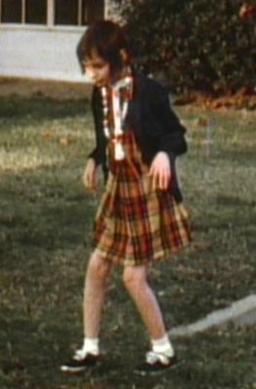
This is an old (1997) NOVA documentary from PBS on one of the classic cases of a feral child. "Genie" was isolated and neglected in every possible way (other than barely enough food and water to keep her alive), and when discovered she was unable to speak and presented more as a wild animal than a 13-year-old girl.

Her case, and a handful of others, revealed that there is an age "cap" of socialization and language, after which it is nearly impossible to alter the brain and behavior. It also demonstrates how important the attachment system is in allowing infants to become human beings - in many ways, Genie was never fully human. 

File:Genie (feral child).jpg

Her case highlights the degree to which extreme neglect can destroy a human being. I have seen this film several times over the years, and it tears my heart each time I see it.

Genie: Secret of the Wild Child

NOVA Documentary | 1997 | Transcript


This is an Emmy Award-winning documentary about a girl who spent her early life chained in a bedroom. Brought up in confinement, "Genie" was primitive, brutish, and hardly capable of walking or talking. NOVA follows the contentious attempts to unbolt the secret of the wild child who has reached near maturity in an agonizing seclusion with almost no human contact.

The story begins in Los Angeles on November 4, 1970, when authorities have taken under protection a thirteen-year-old girl that was kept in such solitude imposed by her parents that she never even learned to talk. The parents have been accused of child abuse.

Genie was imprisoned in a bedroom and bound to a potty chair for the most of her early life. Fully kept under control, she was made to sit alone every day and night. She had almost nothing to look at and no one to talk to for more than a decade. The girl allegedly was emitting immature noises and was still in diapers when social workers found out about the case, but the officials were anticipating she may still possess a normal ability to learn.

The girl who gave an impression of an infant would be well known as "Genie." She was transported to Children's Hospital in Los Angeles where she instantly gained the affection of doctors and scientists. She was delicate, lovely and poignant... and Genie was about to put on trial an idea paramount to science and society: that caring, encouraging and affectionate environment could make up for even the most brutal past.

Genie had an awkward walk and other almost non-human features. She continuously spat, sniffed, and clawed. She hardly articulated anything or produced any noises. Investigation showed that she was abused for making noise and as a consequence, had learned, basically, not to vocalize. And she really didn't speak at all. She was mute most of the time.
Watch the full documentary now

Tuesday, April 22, 2014

Why Predators Are Attracted to Careers In The Clergy

Cardinal Bernard Law - April 2002

This is excellent article that outlines why religious organizations make the perfect home for predators. The most common example, and one used in the article, are the priests who molested so many children over the last several decades.

However, there are also lower profile situations we all have encountered. Dennis Merzel lost his sangha as a result of his predatory behavior with female students. And most notorious in integral circles is Marc Gafni - who began his career of predation as a Rabbi. After losing all credibility in the Jewish world, he reinvented himself as an integral teacher. Even then he continued to be predatory with female students (sexual relationships he justifies with his own brand of spiritual bypassing).

Anyway, this is good, important stuff.

Why Predators Are Attracted to Careers In The Clergy


Some further insight into a serious phenomenon


Published on April 20, 2014 by Joe Navarro, M.A. in Spycatcher

The eye-catching headline read, “Which Professions Have The Most Psychopaths?” (The Week, October 30, 2013) What ensued was quite a dialogue on the internet, as everyone seemed to have their own favorite picks or a personal horror story. The article stimulated debate, but unfortunately did not add clarity to a worthy subject. And that subject is: Why would a so-called “psychopath” be found in greater numbers in one profession versus another?

According to the article, CEO positions attract the most psychopaths. Perhaps so, if one considers the history of Enron, Bernard Madoff, and movies such as “The Wolf of Wall Street” (2013). But the one career that caught my eye, and that thirty years ago probably would have escaped me, is that of the clergy (8th in line behind law enforcement, according to the article). I say thirty years ago because prior to the revelations relating to Catholic priests abusing children, one would not think of predators going into the clergy, yet that is a reality. Which begs the question, why a so-called “psychopath” would be attracted to the clergy? As it turns out, there are good reasons for this; that predators understand all too well – but first some caveats.

Unfortunately, the term psychopath is bandied about too much, making things murkier. There is a huge difference between a psychopath as defined by Robert Hare, a sociopath, someone with antisocial personality disorder, someone with conduct disorder, an aggressive narcissist, or someone with dissocial personality disorder. Unfortunately most people, even many clinicians, don’t differentiate, and we should. Too often these terms are lumped together, as in the above captioned article, and that can be confusing. There are distinctions between all these terms, and so rather than use this vague and overused term (psychopath), I will call these individuals predators, which encompasses all of the above noted disorders and pathologies.

I should also note that I am not writing this article to criticize any particular religion, because any religious group, as history has taught us, can be taken advantage of by predators or malignant zealots. Rather, it is an analysis of why predators would choose to imbed themselves within a religious organization or seek to be part of the clergy – so that we can be more aware in order to protect our loved ones and ourselves. Knowing what we do now, it is fitting that we examine predators among the clergy and how they would use their office or a religious organization to take advantage of others.

Having said all of that, we need to be reminded that predators seek to be in organizations (any organization) for a variety of reasons that are both useful and beneficial but that may not be clear to us; including of course so that they can better conduct their predatory activities. The reasons vary, but here are just a few:
1. Organizations provide a convenient infrastructure from which a predator can prey on others for financial gain or to otherwise exploit others (sexually, mentally, physically).

2. Membership in a legitimate institution, be it a club, a branch of the military, or a corporation, gives legitimacy to individuals. We are more respectful and trusting when we are told a certain person is a VP or head of sales for XYZ company rather than just a stranger off the street.

3. Organizations give predators ready and easy access to an identifiable pool of individuals or potential victims. A cable television installer, for instance, can gain access to a home, assess the level of security, appraise what is of value, or determine if the person lives alone.

4. Organizations give predators access to potential victims they otherwise might not come into contact with, or might have to spend a lot of time finding. Predators may even find potential victims conveniently working two cubicles away.

5. Alliances are easy to make in an organization. These can serve to provide the predator information about exploitable weaknesses of others, as well as proprietary, personal, or sensitive data otherwise difficult to obtain.

6. Colleagues within an organization can serve to warn or protect the predator as a result of conspiratorial alliances or because they have a fiduciary interest in those predatory practices (predatory accountants protecting predatory CEOs).

7. Some organizations can be very financially rewarding for predators where they can exercise their anti-social traits (e.g., lack of conscience, indifference to others, bullying, cavalier attitudes, minimal concern for the welfare of employees, narcissism, sense of entitlement, placing profits over people). Often a similarly calloused and indifferent board of directors, interested only in profits, rewards these predators and their anti-social acts. It is a toxic but profitable symbiotic relation that is all too often familiar.

8. Organizations often try to “handle” negative things in-house to avoid bad publicity, so they are reluctant to report even gross criminal misconduct on the part of the predators in their midst; preferring to transfer them, fire them, or have them leave quietly.

9. Organizations are sometimes structured in such a way that the predator merely has to take advantage of existing weaknesses in the organization in order to profit – as we saw with the banking debacle of 2008.

10. Predators know that in civil lawsuits victims will go after the corporation with the deeper pockets rather than go after individuals with limited financial resources.
As we can see, there are a host of reasons why predators join organizations and if you think like a predator, it makes perfect sense. But there is something disturbing about why they would choose the clergy, or for that matter join a religious organization of any kind. It is disturbing because most of us don’t think about these things. Most people don’t think like a predator, but below are some insights that should make you think. These insights are based on conversations I and others have had with predators who intentionally sought to join religious organizations and from studying such individuals:
1. As noted earlier, within organizations, predators have access to a ready/available pool of potential victims. Within a religious order, those potential victims are identified for the predator, who knows how often they will get together and where (Sunday worship service at 11:00 am, at the local chapel, for example). Metronomic frequency of meetings creates opportunities for the predator to exploit directly, or even at a distance, such as committing burglaries based on knowing precisely when no one is home.

2. Some religious organizations require members to expose their faults, sins, or frailties in public. This is “manna from heaven” for predators who then use that information to better access or target their victims. Information like that serves to provide all the exploitable weaknesses a predator needs. As one predator told me, “With that kind of information I know exactly who to target and when.”

3. People gossip in most organizations, and in religious organizations it is no different. These informal social channels can be very effective in divulging who got promoted and has extra cash; who is going on vacation; whose spouse is overseas for seven months; who is naïve or gullible: who needs financial help; or who is having marital problems and is now lonely or vulnerable.

4. Within a religious organization, individuals of different social strata associate with one another with greater ease than in society. This gives the predator of low social status access to people who often live and socialize within restricted or gated communities and who otherwise would be impossible for them to target. In other words, if you can’t afford the country club, you can have access to those same socially higher-status people at a church gathering. This is a favored technique of conmen, grifters, and swindlers especially for Ponzi or pyramid schemes.

5. Many religious organizations preach forgiveness, even for felonies. For predators this is truly a godsend. This means that if they get caught, they can ask for forgiveness and chances are it will be given, in a pious but naïve effort to help the lawbreaker “learn from his mistakes.” Unfortunately, the predator sees this as an opportunity to sharpen his skills and to do his crime again, perhaps this time more carefully.

This apparently is what happened so many times with Catholic priests who were eventually convicted of serial child abuse. They were systematically “forgiven” along the way and thus they left behind a Grand Canyon-sized “debris field of human suffering” – namely children scarred for life, not to mention the trauma of the childrens’ families and the crisis of faith triggered among many devout Catholics as these transgressions were exposed.

If you are only casually familiar with what went on with the priests and the thousands of victims, you must read the Pulitzer prize-winning book Betrayal: The Crisis in the Catholic Church, by the superb investigative staff of The Boston Globe. And if that doesn’t rake at your heart, then Sacrilege: Sexual Abuse in the Catholic Church, by Leon J. Podles should make you cringe, cry, and cogitate.

6. Because religious organizations preach brotherly love, even when someone has done horrific crimes, there will be those gullible enough to defend the predator or willing to look the other way. The book Betrayal, by the Boston Globe has account after account of exactly that kind of sickening indulgence. But you don’t only have to look at religious organizations; just look at how many still defend, poodle-like, Jerry Sandusky, the convicted ex-football coach at Penn State, even after so many revelations of child abuse. In the book, Betrayal, there is example after example cited of parishioners, even fellow priests, staunchly defending priests convicted of serial offenses.

7. Another advantage for the predator in a religious organization is that if caught, he or she can very conveniently say it was “Satan's” fault. Whether cheating, taking advantage of the elderly, conducting financial shenanigans, or even abusing children, the predator merely has to say that the “devil” tempted him or her and that’s that. Predators know they can rely on a certain portion of the population to buy into that argument, and so they use it.

8. If the predator is in a position of authority within a religious organization, he or she can claim persecution by the “enemies” of the church or the organization. Any outside scrutiny subjecting the predator to the sanitizing rays of light is thus characterized as, “them,” the unbelievers “against us.” This often compels the group to “circle the wagons” in support of their leader, as we saw with David Koresh and Jim Jones. And of course they will argue that it is we the “outsiders,” who are distrusting of the leader/predator, and who don’t understand, because we simply don’t have “faith,” or we are (the more trendy) “haters.”

For the religious-based predator it is very convenient to label these individuals enemies of the: “the church,” “the Lord”, “the congregation,” “the prophet,” “the leader(s),” “the free practice of religion,” and an attack on the “the anointed,” “the faithful,” or the “righteous,” on and on. Once you label something an “enemy,” it truly does bring the true believers, as Eric Hoffer warned us, further together. This is exactly what happened when inquiries were first made of Warren Jeffs – later convicted of sexual assault on two girls. This is exactly the argument made by those who supported Jim Jones, many of whom are now dead as a result of his command to his followers to poison their own children and themselves.

9. If the predator becomes a leader within the organization, or if lucky, becomes the head of a church or religious group, then he or she is immediately cloaked with power and authority (moral power) that mere corporations don’t have. Keep in mind that most people still have a high respect for their church leaders and are willing to give them greater latitude and the benefit of the doubt.

10. Predators soon realize that the ability to invoke a deity in their defense is a powerful card to hold that trumps all other arguments. They can always say, “I was moved by the lord,” to do this or that, “I was commanded by God to,” do this or that, or “it is the will of the lord,” to do this or that. That is a tough, faith/emotionally-laden argument that is difficult to refute; especially for believers that are already vested having spent time and money in an organization. Thus the rape of children is justified merely by invoking the ostensible desire and will of a deity. And let’s be clear, predators love that they can do that. Once again, this is precisely what Warren Jeffs did with the assistance of repugnantly complicit mothers who willingly offered up their daughters for his sexual pleasure. Fugitive cult leader, Victor, Arden Barnard is alleged to have invoked the same defense, that he had a right to sexually abuse children because it was “God’s word.”

11. There is, it should be noted, no religion or sect that screens for psychopathy as defined by Robert Hare that I am awware of. All you need is to be ordained, or you declare yourself a religious leader and the way is clear for the predator. And so while some organizations, such as in law enforcement, screen for pathologies by using psychometric tools, very few religious organization do so. Which is why the predator would benefit from joining or leading such an organization. Across the planet, there is almost no scrutiny or due diligence that is or will be conducted. To connive, or to “con,” the predator merely needs his victim to have faith and trust in the predator something that is often easily achieved with the vestments of a legitimate religious organization.

12. To be a predator is to overvalue yourself at the expense of others – a key component of both the pathologically narcissistic and the predator (see Dangerous Personalities). Here is where a predator has an advantage because in a religious organization, this overvaluation of self is potentiated by the title that is either conferred, that comes with the office, or bestowed through ordination. For the predator, it is tantamount to being told, “you are” therefore “you can.”

13. Predators know or soon learn that society tends to revere and not question religious authority. People of high status such as famous coaches, TV personalities, politicians, and so on are often given great latitude to the point where allegations of misconduct, even serious criminal offenses are often ignored (Jimmy Savile in the UK; O.J. Simpson in the US).

14. Parents may be more trusting of a religious leader than of the average person. As history has taught us, they may dismiss allegations made by their own children as to sexual abuse by a religious leader or they will remain quiescent so as to not “rock the boat.” It is very tough for parents, especially those from humble background or who are deeply religious, to go up against a popular or charismatic leader, “the church” or a large, well-financed religious order. Often, as we now well know, the fear of retribution, being ostracized or socially marginalized, or excommunicated keeps victims and parents silent.
So, where does this leave us? With the reality that predators are all around us. Anywhere from 1% to 4% or perhaps more of any population, according to researchers, is made up of individuals who are social predators (DSM V, 2013, 659-663). They may seek to join organizations for the additional benefits these organizations bring. It is not the organization; it is the individuals who seek to use those organizations for predation and that is the problem. Individuals who seek religious organizations because there they can more easily target victims and do so much more harm – that is our reality.

We cannot prevent all crimes, nor can we always know how predators will come after us, but knowledge helps. If we are sensitized ahead of time to how predators think, how they use legitimate organizations, and take advantage of others, perhaps then we can protect one more child, or perhaps even ourselves from these social predators.

* * * * * * * * *

Joe Navarro, M.A. is 25 year veteran of the FBI and is the author of What Every Body is Saying, as well as Louder Than Words. For additional information and a free bibliography please contact him through

Psychology Today: http://www.psychologytoday.com/blog/spycatcher or at www.jnforensics.com – Joe can be found on twitter: @navarrotells or on Facebook. His latest book Dangerous Personalities (Rodale) is available on Amazon.

Wednesday, March 26, 2014

Abuse Alters Hormones in Kids, Hikes Risk of Metabolic Disorders

We have known for quite a while that children who experience abuse and/or neglect in childhood are more likely to have metabolic disorders as adults (i.e., be overweight, have type-II diabetes, high blood pressure, and so on). The mechanisms of action have not been clear, other than an awareness that it involves inflammation.

The researchers looked at the weight-regulating hormones leptin, adiponectin, and irisin (as well as the inflammatory marker C-reactive protein) in the blood of adults who endured physical, emotional, or sexual abuse or neglect as children. They found that early-life adversity is directly associated with elevated circulating leptin and irisin, and indirectly associated with elevated CRP and decreased adiponectin.


Abuse Alters Hormones in Kids, Hikes Risk of Metabolic Disorders

By Rick Nauert PhD Senior News Editor
Reviewed by John M. Grohol, Psy.D. on March 21, 2014


A new endocrinology investigation suggests childhood abuse or neglect can lead to long-term hormone impairment that raises the risk of developing obesity, diabetes, or other metabolic disorders in adulthood.

The study is published in the Endocrine Society’s Journal of Clinical Endocrinology & Metabolism (JCEM).

For the study, researchers examined levels of the weight-regulating hormones leptin, adiponectin, and irisin in the blood of adults who endured physical, emotional, or sexual abuse or neglect as children.

Leptin is involved in regulating appetite and is linked to body-mass index (BMI) and fat mass. The hormone irisin is involved in energy metabolism. Adiponectin reduces inflammation in the body, and obese people tend to have lower levels of the hormone.

Researchers found that these important hormones were out of balance in people who had been abused or neglected as children.

“This study helps illuminate why people who have dealt with childhood adversity face a higher risk of developing excess belly fat and related health conditions,” said one of the study’s authors, Christos S. Mantzoros, M.D., D.Sc., Ph.D.

“The data suggest that childhood adversity places stress on the endocrine system, leading to impairment of important hormones that can contribute to abdominal obesity well into adulthood.”

The cross-sectional study examined hormone levels in the blood of 95 adults ages 35 to 65. Using questionnaires and interviews, each participant was assigned a score based on the severity of the abuse or neglect experienced during childhood.

Researchers divided the participants into three groups and compared hormone levels in people with the highest adversity scores to the other two-thirds of the participants.

Participants with the highest adversity scores tended to have higher levels of leptin, irisin, and the inflammatory marker C-reactive protein in their blood. All of these markers are linked to obesity.

In addition, the group of people who suffered the most adversity tended to have lower levels of adiponectin, another risk factor for obesity.

Even after researchers adjusted for differences in diet, exercise, and demographic variables among the participants, high levels of leptin and irisin continued to be associated with childhood adversity.

“What we are seeing is a direct correlation between childhood adversity and hormone impairment, over and above the impact abuse or neglect may have on lifestyle factors such as diet and education,” Mantzoros said.

“Understanding these mechanisms could help health care providers develop new and better interventions to address this population’s elevated risk of abdominal obesity and cardiometabolic risk later in life.”

Source:
The Endocrine Society

* * * * *


Early-life adversity, defined as physical, emotional, or sexual abuse and neglect before 18 years of age, is associated with metabolic syndrome, obesity, and type 2 diabetes mellitus in adult life. However, the underlying mechanism is not fully understood, and whether adipomyokines are associated with early-life adversity independent of other factors such as body mass index, psychosocial risks, and health behaviors is not known.

The objective of the study was to evaluate the association between early-life adversity and circulating the levels of the adipomyokines such as leptin, adiponectin, and irisin and the inflammatory marker, C-reactive protein (CRP).

This study was a cross-sectional study of 95 adults at a university-based research center. We collected venous blood from participants and analyzed serum for leptin, adiponectin, irisin, and CRP.

Circulating leptin, irisin, and CRP levels were significantly higher in the highest adversity tertile group compared with low and middle tertile groups (P < .001 for leptin, P = .01 for irisin, and P = .02 for CRP). Adiponectin levels were lower in the highest tertile group compared with the low and middle tertile groups (P = .03). After adjusting for demographic variables, physical activity, diet, current mental health, and body mass index, the associations between early-life adversity leptin, irisin, and did not change. However, adiponectin and CRP levels were no longer significantly related to early life adversity.

Early-life adversity is directly associated with elevated circulating leptin and irisin, and indirectly associated with elevated CRP and decreased adiponectin. These findings suggest that these adipomyokines may play a role in the pathogenesis of metabolic abnormality in a population with significant early life adversity.

Wednesday, March 05, 2014

Another Couple Found Guilty of Murder for Parenting by "To Train Up a Child"

This is so effed up I am nearly speechless. The children being raised by people who follow this ass-backward book by Michael and Debi Pearl are destined for years of therapy, assuming they don't wake up one morning in their teen years and decide that the only solution to their suffering is to shoot their parents while they sleep.

The Pearls should be charged and tried as accessories to these murders.

Another couple found guilty of murder for parenting by "To Train Up a Child"

November 15, 2013

SEATTLE – Carri Williams was found guilty of homicidal abuse of a child and first-degree assault of a child in the death of her adopted daughter, Hana.  Carri’s husband, Larry Williams, was found guilty of first-degree manslaughter and assault of a chi...

SEATTLE – Carri Williams was found guilty of homicidal abuse of a child and first-degree assault of a child in the death of her adopted daughter, Hana. Carri’s husband, Larry Williams, was found guilty of first-degree manslaughter and assault of a child...


Two parents in Washington state have been found guilty of murder after allegedly following the abusive parenting techniques advocated in the parenting book "To Train Up a Child" by Michael and Debi Pearl.

Larry and Carri Williams received the maximum prison sentences allowable under the law after being found guilty of beating and starving their adopted daughter Hana to death. The methods they used to "discipline" their daughter were advocated in the controversial Christian book.

The New York Times reported:
Late one night in May this year, the adopted girl, Hana, was found face down, naked and emaciated in the backyard; her death was caused by hypothermia and malnutrition, officials determined. According to the sheriff’s report, the parents had deprived her of food for days at a time and had made her sleep in a cold barn or a closet and shower outside with a hose. And they often whipped her, leaving marks on her legs. The mother had praised the Pearls’ book and given a copy to a friend, the sheriff’s report said. Hana had been beaten the day of her death, the report said, with the 15-inch plastic tube recommended by Mr. Pearl.
Some of the discipline techniques the Pearls teach include:
  • Using plastic plumbing tubing to beat children
  • Wearing the plastic tubing around the parent's neck as a constant reminder to obey
  • "Swatting" babies as young as six months old with instruments such as "a 12-inch willowy branch," thinner plastic tubing or a wooden spoon
  • "Blanket training" babies by hitting them with an instrument if they try to crawl off a blanket on the floor
  • Beating older children with rulers, paddles, belts and larger tree branches
  • "Training" children with pain before they even disobey, in order to teach total obedience
  • Giving cold water baths, putting children outside in cold weather and withholding meals as discipline
  • Hosing off children who have potty training accidents
  • Inflicting punishment until a child is "without breath to complain"
Michael Pearl tells one mother on his website, "I could break his anger in two days. He would be too scared to get angry. On the third day he would draw into a quiet shell and obey."

Despite Pearl's claim that plumbing line is too light to cause damage to muscle or bone, it caused the death of seven year-old Lydia Schatz in 2010. Officials ruled that she died of severe tissue damage.

The Pearls and their ministry, No Greater Joy, make an estimated $1.7 million a year.

The couple is the third set of parents to be found guilty of killing their children who were said to be followers of the Pearls, whose books are commonly given out in some churches and sent for free to military families. It is unknown how many other children's deaths could be tied to the books.

I have written extensively about the Pearls in the past, including:
After the death of 7 year-old Lydia Schatz, family friend Paul Mathers wrote on his blog:
"The Schatzes followed, to a "t", a system of child rearing which came from Michael and Debi Pearl... The Pearls are not professionally trained or educated in child development. They came up with this darkness out of the abundance of their hearts... It is one of the most hate-filled, wicked and evil systems I've encountered in my life, all with a sheen of 'Christian' and 'happy families.'"
Mathers told Salon.com:
"I would love to see the people rise up and say no to the Pearls, that this will not stand. I would love to see the Pearl system become anathema, disgusting, and shunned by the world. I would love to see the Pearls out of a job. Before another child dies."
Sadly, this was not the case.

Please use your voice, both online and off, to speak up against abusive practices like those advocated in To Train Up a Child. Put a banner on your blog. Post to your Facebook page. Speak up in your church. Sign the petition asking Amazon.com to stop selling these books. Give better books and resources to new parents you know.

Children need love, safety and guidance. The best way to raise good children is to be good to them. Let's do all we can to protect all children from anybody who says otherwise.

Want to stay in the loop? Be sure to subscribe to my column to be updated when I post articles. You can also find me on Pinterest and on examiner.com on the topics of homeschooling, green living and my national attachment parenting column.

Want to learn a gentler way to deal with discipline issues? To see some of my advice on issues such as children talking back, hitting, drawing on walls, toothbrushing battles and fighting with siblings, see my Attachment Parenting archives here.