
This is today's Daily Dharma quote from Tricycle.
Here is another wonderful Buddhist teacher, and this one a Westerner, who confuses ego and self."Our fundamental problems are our ignorance and ego-grasping. We grasp at our identity as being our personality, memories, opinions, judgments, hopes, fears, chattering away—all revolving around this me me me me. This creates the idea of an unchanging permanent self at the center of our being, which we have to satisfy and protect. This is an illusion." — Jetsunma Tenzin Palmo, “No Excuses”
The last piece of her quote is exactly right, grasping or attachment "creates the idea of an unchanging permanent self at the center of our being, which we have to satisfy and protect. This is an illusion." But the initial comment on "ego-grasping" misunderstands ego and - I'm willing to suggest - represents issues in translation of the original texts into English by people who do not understand the distinctions between ego and self.
Let's start with the self.
"Nobody ever was or had a self"
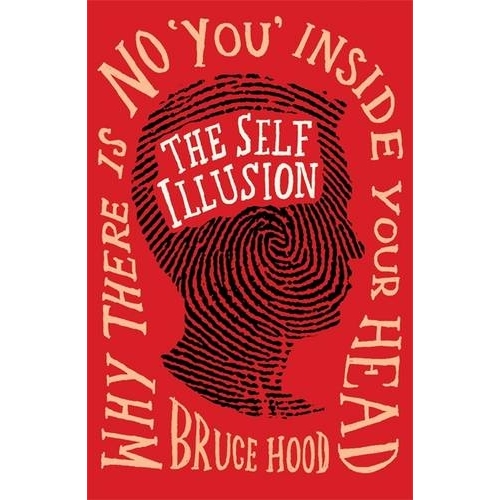
The self is an illusion, as Bruce Hood so eloquently described in his 2002 book, The Self Illusion: How the Social Brain Creates Identity. Here is a quote from his interview with Sam Harris in 2012:
For most of us, the sense of our self is as an integrated individual inhabiting a body. I think it is helpful to distinguish between the two ways of thinking about the self that William James talked about. There is conscious awareness of the present moment that he called the “I,” but there is also a self that reflects upon who we are in terms of our history, our current activities and our future plans. James called this aspect of the self, “me” which most of us would recognize as our personal identity—who we think we are. However, I think that both the “I” and the “me” are actually ever-changing narratives generated by our brain to provide a coherent framework to organize the output of all the factors that contribute to our thoughts and behaviors.In Integral Psychology (Wilber, 2000), the experience of an "I" is known as the proximate self (the self from which we view the world) and the "me" is known as the distal self (the self upon which the proximate self reflects).
Here is another quote from Hood in that interview:
I do not think there are many cognitive scientists who would doubt that the experience of I is constructed from a multitude of unconscious mechanisms and processes. Me is similarly constructed, though we may be more aware of the events that have shaped it over our lifetime. But neither is cast in stone and both are open to all manner of reinterpretation. As artists, illusionists, movie makers, and more recently experimental psychologists have repeatedly shown, conscious experience is highly manipulatable and context dependent. Our memories are also largely abstracted reinterpretations of events – we all hold distorted memories of past experiences.What Hood is discussing is the lack of a concrete, unitary self. Self is more accurately understood as a process, not as a static "thing." This is the fundamental error of Buddhist psychology as interpreted in the West.
Before moving on to the ego, here is Thomas Metzinger (Being No One: The Self-Model Theory of Subjectivity, 2003) on the self:
[My] main thesis is that no such things as selves exist in the world: Nobody ever was or had a self. All that ever existed were conscious self-models that could not be recognized as models. The phenomenal self is not a thing, but a process—and the subjective experience of being someone emerges if a conscious information-processing system operates under a transparent self-model.Again, Metzinger's concept of a self-model is roughly the same as the proximate self, the constantly changing and illusory "I" of consciousness.
In more contemporary conceptions, self is seen as a process, as on-going experiencing and narrative of thoughts, feelings, senses, and so on. There is an absence of evaluation, but attention is focused on the content, observing thoughts and feelings and watching them come and go.
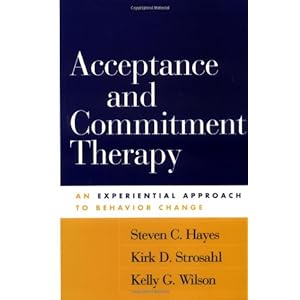
Stephen Hayes' Acceptance and Commitment Therapy model (1999/2011) recognizes three types of self: "the conceptualized self, ongoing self-awareness, and self as perspective." Each of these has its role, but one of them keeps as trapped in ideas and perceptions that are usually outdated and/or distorted.
People tell stories, narrate life histories, define their best attributes, evaluated themselves, compare their attributes to those of others, create cause and effect theories between their narrative memories and their experiences (and reflected) attributes. This is the conceptualized self (the distal self), and it can frequently be our own personally constructed prison. From Hayes:
Often consistency can be maintained more easily simply by distorting or reinterpreting events if they are inconsistent with our conceptualized self. If a person believes him- or herself to be kind, for example, there is less room to deal directly and openly with instances of behavior that could more readily be called cruel. In this way, a conceptualized self becomes resistant to change and variation and fosters self-deception.Hayes also points out that many modern therapies (especially cognitive behavioral therapy, CBT, and dialectical behavioral therapy, DBT) focus almost exclusively on this conceptualized self, identifying healthy emotion from destructive emotions, rational thoughts from irrational, self-affirming beliefs from self-negating beliefs, and so on. This is what most of us are doing to ourselves already.
Ongoing self-awareness encourages people to see what they see (in their minds or their experience) as they see it, without objectifying, concretizing, or justifying what was felt or seen. If we do not objectify experience, we cease to need lies or self-deception to feel okay. When the specific content of our ongoing self-awareness becomes less of an issue, a "fluid and useful self-knowledge is more likely to be fostered" (Hayes, 1999).
This aspect of self leads inherently to psychological flexibility because on-going experience is ever-changing, always creating itself anew with each passing moment.
Self as perspective, or self as context, can also be thought of as the observing self. The the observing self is a core capacity often equated with the higher self, the soul, the Atman, Buddhanature, or Christ Consciousness. For a more psychoanalytic variation, see Arthur Deikman's The Observing Self (1983). Hayes argues that "a sense of self as locus or context cannot change once it emerges, because it is so basic and fundamental." As organisms, all of us have a locus, context, or perspective, and at the same time, "awareness of an experiential locus feels transcendent." He places the spirit/matter duality in this "paradox" (his word).
When self is contextualized and process-focused, we are as close as we will get to being in the present moment, which can be equated with 2 of the four types of samadhi identified by the Buddha:
- A pleasant abiding in this current life — achieved through concentrative development of the four jhānas
- Mindfulness and clear comprehension — achieved through concentrative mindfulness of the rise and fall of feelings, perceptions and thoughts.[3]
Even if we could live in this state, it would not be conducive to paying bills, going to work, building something, writing a blog post, or much of anything else that requires we interact intentionally with the world, including awareness of past and future events.
Certainly, the more time we spend in that state, the less attached we become to our thoughts, feelings, and beliefs - we realize they are as transient as clouds in the sky. But we need Metzinger's self-model to negotiate daily life.
To be clear, none of what we have described thus far is the ego, at least not in the model of the mind I am presenting here.
[NOTE: this all might be just my theory, although it is cobbled together from years of reading and practice.]
And so what of ego?
Sigmund Freud coined the term ego as the psychological mechanism to mediate sexual and aggression drives and reconcile the tension between id-level drives and the internalized rules and mores of society (the super ego). From Wikipedia:
The ego is the organized part of the personality structure that includes defensive, perceptual, intellectual-cognitive, and executive functions. Conscious awareness resides in the ego, although not all of the operations of the ego are conscious. Originally, Freud used the word ego to mean a sense of self, but later revised it to mean a set of psychic functions such as judgment, tolerance, reality testing, control, planning, defense, synthesis of information, intellectual functioning, and memory.[1] The ego separates out what is real. It helps us to organize our thoughts and make sense of them and the world around us.[1]Few professionals (aside form a handful of psychoanalytic originalists) still adhere to this model. The advent of ego psychology in the early to middle part of the last century began the redefinition process. Later proponents of ego psychology
emphasized the importance of early-childhood experiences and socio-cultural influences on ego development. René Spitz (1965), Margaret Mahler (1968), Edith Jacobson (1964), and Erik Erikson studied infant and child behavior and their observations were integrated into ego psychology. Their observational and empirical research described and explained early attachment issues, successful and faulty ego development, and psychological development through interpersonal interactions.Ego psychology has since waned in influence and popularity.

More contemporary definitions conceptualize ego not as our sense of self-importance ("man, he sure has a large ego!"), but as our adaptation(s) to experience through which we navigate the world. In the Ego States: Theory and Therapy model of John and Helen Watkins (1997), we are not born with parts or ego states--they are learned through repetition over time.
Our ego states are formed when we do something over and over again. This 'over and over again' learning creates a physical neural pathway in the brain that has its own level of emotion, abilities, and experience of living. As stated by the Watkins in their book, "Another characteristic of an ego state is that it was probably developed to enhance the individual's ability to adapt and cope with a specific problem or situation" (Watkins & Watkins, p. 29, 1997).Once these neural pathways become wired into the brain, they are ego states, and we can be overtaken by an ego state whenever a need for that particular state occurs, or when a memory or a trigger for a specific injury is activated, an ego state may come out in an attempt to gain some resolution (repetition of the trauma). Our experience of this may feel like we were hijacked by a whole different self, and to the extent that the wounding was longitudinal there is some truth to this. In the same way that Jung defined complexes as semi-autonomous parts of the self that have been split off, the same is true of ego states.
The most extreme form of this is called dissociative identity disorder (formerly multiple personality disorder). In this condition, the parts or ego states are so adapted and structurally embeded in the mind/brain that they are autonomous, at least until the person enters therapy.
Another way of understanding this process is that ego states develop out of an attachment to or avoidance of (which is still an attachment, but to its supposed opposite) a particular experiential state. For example, as an infant and toddler, whenever I am scared or in discomfort, I would cry, a baby's only means of getting its needs met. But my hypothetical mother would yell at me to stop crying, or even spank me when I cry for too long. After a few repetitions of this, I have learned not to display overt signs of fear or pain, and I no longer cry.
As I grow up, this message is repeated frequently - boys don't cry, only wusses cry. So on top of the fear of being punished (or more accurately, to an infant, annihilated) for crying or showing fear/pain, now such expressions of healthy human emotions are equated with being a girl, and as a little boy, being a girl is about the worst thing possible (obvious nonsense, but many boys are raised this way). So I learn an adaptation--whenever I am scared or in pain/fear, I hit myself on the chest with my fist once or twice to remind me not to show my feelings.
By the time I am 8-10 years old, I have learned how to stuff down those feelings so that I don't even consciously acknowledge them. However, when something that should scare me or cause me pain does happen, I feel certain I am going to be punished, and I am filled with shame. That is the ego state that arises. The shame is sourced in that earliest experience--mommy doesn't love me when I cry, so something must be wrong with me that some things make me cry. To feel ashamed is to believe that one is defective and worthless. We will go to any lengths not to feel that shame and, especially, not let anyone else know about it. It's not rational logic, it's relational logic.
From the perspective I just outlined, ego grasping is holding onto and defending our adaptive strategies that keep us stuck in an emotional and behavioral box--our ego states. These behaviors have at one time served us well, and kept us safe, but now they are no longer adaptive and may, in fact, be harmful. Yet we cling to these strategies until we learn something better. That's one layer of ego-grasping.
A second layer of ego grasping is identifying with and internalizing our conceptualized self. We often do this, in part, as a response to triggering of an ego state. When that shame state gets triggered, we cannot tolerate the feeling so we puff ourselves up and act as if we are self-confident and secure. This may be a distorted version of self we have created and concretized, but it is dishonest and does not serve us in alleviating or removing the shame.
This gets to the heart of ego grasping: When we are attached to ego states or to the conceptualized self (the me), we continue to live within the prison of samsara, which is the source of our suffering. As long as well allow those attachments, there is no way to unlock and release the negative feelings/emotions they conceal.
Definitions
I often find myself at odds with the Western Buddhist definitions of ego and self. Too often they are confused, conflated, and seen as unnecessary, something to be shed through dedicated practice.
I prefer my own model - although it is most certainly not mine in that it is based on the work of many other people from diverse fields.
After several hours working on this post, my main point is that there needs to be some form of agreement within the Buddhist and psychological words as to what these words mean. With so many teachers from so many disciplines using this terminology now, the lack of an agreed-upon glossary of terms is confusing at best, and sometimes just plain frustrating.


