Wednesday, July 11, 2012

P2P Foundation - Participatory and Relational Spirituality: Ending the Guru Age


The P2P Foundation has a wiki that offers a lot of useful material on the variations of participatory and relational spirituality that are emerging as an alternative to the traditional guru model of spiritual teaching.

If the ideas of P2P (peer-to-peer) are not familiar, check out the Manifesto: Peer to Peer and Human Evolution.

I've been following Michel Bauwens' work in the P2P realm for several years. More recently, as I have become familiar with Robert Stolorow's Intersubjective Systems Theory in psychoanalysis, a model he has developed in association with George Atwood, Donna Orange, and Bernard Brandchaft (among others) - see The Intersubjective Perspective for a nice collection of essays introducing the topic).

In Notes on Spiritual Leadership and Relational Spirituality, selections of text by John Heron, there is a good definition of the guru phenomenon and why its dominance is coming to an end. [See also an entry on Spiritual Authoritarianism.]

The guru phenomenon

The traditional oriental guru represents a form of spiritual leadership in which so-called advanced spiritual states of being are transmitted from guru to disciple. This requires the disciple to be present with the guru, physically or psychically, to project onto the guru the disciple’s latent divine nature, to be obedient and devoted to the guru, and to practise the disciplines he prescribes. There is a hierarchical, charismatic relationship to effect the disciple’s shift from an ordinary to an extraordinary state of being ‘enlightened’. A favourite candidate for ‘enlightenment’ is the so-called nondual state, in which spirit and any kind of form are known to be not two.

There seem to have been four phases of the guru phenomenon in the West.

(1) In the late decades of the nineteenth century and early decades of the twentieth century, there was just a small guru-invasion from the East with key players like Vivekananda and the spread of the Vedanta movement in the West.

(2) Then post-war from 1945 with the publication of Huxley's The Perennial Philosophy, there started a major guru-invasion from the East including the dramatic spread through the 60s and the 70s of Zen and Tibetan Buddhism in the USA and Europe.

(3) In the third phase, over the last thirty years or so, alongside the guru-invasion from the East there has been the growing phenomenon of home-grown Western gurus and spiritual teachers claiming the special status of 'enlightenment'.

(4) The fourth phase is just getting under way. It seems to be distinguished by four features.
(a) The erosion of guru status as a result of a continuous stream of sexual and financial abuse and bullying scandals among both Eastern and home-grown Western gurus and spiritual teachers.

(b) The erosion of 'enlightenment' claims by the proliferation of the number of people, especially in the West, making the claim: the more people who make the claim, the more its narcissistic inflation stands revealed. For the 'enlightenment' claim is also an authority-claim to have followers, a recruiting drive to gather in spiritual projections. The more claims that are made, the stronger the competition among claimants in the market-place for attention.

(c) A growing awareness that spiritual authority is within and that to project it outward onto teacher, tradition or text is an early, adolescent phase of spiritual development in the one projecting, and counter-spiritual manipulative abuse in any guru/teacher who seeks to elicit, to appropriate and to sustain the projection.

(d) The emergence of peer to peer spirituality, which democratizes charismatic, enlightened leadership, and realizes that it is a role which different persons assume at different times, either in the initiation of a peer group or in the continuous unfolding of its process. 
In a section called The fallacy of nondual individualism, Heron dismantles Ken Wilber's version of nondual enlightenment that is based on individual development of lines (kinds of knowing, such as cognitive, psychosexuality, socio-emotional capacity, communicative competence, creativity, and many others) through stages (from pre-personal, through personal, to transpersonal). Heron concludes:
Wilber tries to argue that the basic categories for integrating all the lines in higher unfoldment have been uncovered on a single line that has no experience whatsoever of such multi-line integration. The way out of this tangle is gently and radically to propose that the contemplative line is not a spirituality line, that spirituality is not about states, however remarkable and extraordinary, that people get into by a lifetime of individual meditation. 
As an alternative, Heron offers Relational Spirituality:

Relational spirituality

A more convincing account of spirituality is that it is about multi-line integral development explored by persons in relation. This is because many basic developmental lines - e.g. those to do with gender, psychosexuality, emotional and interpersonal skills, communicative competence, morality, to name but a few - unfold through engagement with other people. A person cannot develop these lines on their own, but through mutual co-inquiry. The spirituality that is the highest development of these lines can only be achieved through relational forms of practice that unveil the spirituality implicit in them (Heron 1998, 2005).

In short, the spirituality of persons is developed and revealed primarily in their relations with other persons. If you regard spirituality primarily as the fruit of individual meditative attainment, then you can have the gross anomaly of a "spiritual" person who is an interpersonal oppressor, and the possibility of "spiritual" traditions that are oppression-prone (Heron, 1998; Kramer and Alstad, 1993; Trimondi and Trimondi, 2003). If you regard spirituality as centrally about liberating relations between people, then a new era of participative religion opens up, and this calls for a radical restructuring and reappraisal of traditional spiritual maps and routes.

Certainly there are important individualistic developmental lines that do not necessarily directly involve engagement with other people, such as contemplative development, and physical fitness. But these are secondary and supportive of those that do, and are in turn enhanced by co-inquiry with others.

On this overall view, spirituality is located in the interpersonal heart of the human condition where people co-operate to explore meaning, build relationship and manifest creativity through collaborative action inquiry into multi-line integration and consummation. I propose one possible model of such collegial applied spirituality with at least eight distinguishing characteristics.

(1) It is developmentally holistic, involving diverse major lines of human development; and the holism is both within each line and as between the lines. Prime value is put on relational lines, such as gender, psychosexuality, emotional and interpersonal skills, communicative competence, peer communion, morality, human ecology, supported by the individualistic, such as contemplative competence, physical fitness.

(2) It is psychosomatically holistic, embracing a fully embodied and vitalized expression of spirit. Spirituality is found not just at the ‘top end’ of a developmental line, but in the ground, the living root of its embodied form, in the relational heart of its current level of unfolding, and in the transcendent awareness embracing it.

(3) It is epistemologically holistic, embracing many ways of knowing: knowing by presence with, by intuiting significant form and process, by conceptualizing, by practising. Such holistic knowing is intrinsically dialogic, action- and inquiry-oriented. It is fulfilled in peer-to-peer participative inquiry, and the participation is both epistemic and political.

(4) It is ontologically holistic, open to the manifest as nature, culture and the subtle, and to spirit as immanent life, the situational present, and transcendent mind. It sees our relational, social process in this present situation as the immediate locus of the unfolding integration of immanent and transcendent spirit (Heron, 1998, 2004, 2005).

(5) It is focused on worthwhile practical purposes that promote a flourishing humanity-cum-ecosystem; that is, it is rooted in an extended doctrine of rights with regard to social and ecological liberation.

(6) It embraces peer-to-peer relations and participatory forms of decision-making. The latter in particular can be seen as a radical discipline in relational spirituality, burning up a lot of the privatized ego.

(7) It honours the gradual emergence and development of peer-to-peer forms of association and practice.

(8) It affirms the role of both initiating hierarchy, and spontaneously surfacing and rotating hierarchy among the peers, in such emergence.
In a separate P2P Wiki entry on Relational Spirituality, there are two additional definitions of this topic offered by John Heron in his various writings.
Relational spirituality as primary in dipolar spiritual development By John Heron: (Adapted from pp. 99-101 of Heron, J. Sacred Science: Person-centred Inquiry into the Spiritual and the Subtle, Ross-on-Wye: PCCS Books, 1998.)
 
“My own view of spiritual development is:

(1) That it is dipolar, to do (a) with moral life committed to the empowerment of ourselves and other people in relationship, to the full flowering of our immanent life, in community embracing diversity in free unity, and (b) with the inner transformation of consciousness.

(2) That (a) is primary and the consummation of (b).

The tendency of the eastern mystic has been to reduce his involvement with other people to directing the vertical transformation of their consciousness. His commitment to his own transformation as an end-in-itself overflows into guiding other people to do the same. His moral goal has been to enable the unenlightened to become enlightened and so attain moksha, release from the treadmill of reincarnation in the phenomenal world, regarded for the most part as an illusion grounded on ignorance, want of discrimination. However, I regard the phenomenal world as an innovative process of divine becoming, within which we humans are co-creators of global transformation, a planetary civilization.

On this view, my spiritual development has these two interdependent aspects, primary and secondary. The secondary and supportive aspect is that it works to foster and facilitate, with others, the inner transformation of human consciousness, so that we may celebrate the integrated fullness of creation in its physical, subtle and spiritual dimensions (not so that we can get release from it all).

The primary aspect is that it works to release the life-potential of persons-in-relation, to facilitate social empowerment and social justice in every sphere of human activity. For persons to become full co-creators of a planetary civilization, each one has an all-pervasive right to participate in any decision that affects the fulfilment of their needs and interests, the expression of their preferences and values. This universal right has a claim not only within political institutions, but in every sphere of human association where decisions are being taken: in industry, education, ecology, medicine, the family, and, of course, in research and in religion . The fulfilment of this claim throughout our planet in all these spheres has hardly begun. Moreover, the fact that there is so much spiritual authoritarianism in the world, in creeds and cults both old and new, creates a deep attitudinal warp in people which makes them susceptible to oppression by many other kinds of external authority. In reviewing criticisms of the traditional hierarchical model of spiritual reality, promoted by current adherents of the perennial philosophy, Donald Rothberg writes:
Hierarchical ontologies are commonly ideological expressions of social and psychological relations involving domination and exploitation - of most humans (especially women, workers, and tribal people), of nature, and of certain parts of the self. Such domination limits drastically the autonomy and potential of most of the inhabitants of the human and natural worlds, justifying material inequalities and preventing that free and open discourse which is the end of a free society. It distorts psychological life by repressing, albeit in the name of wisdom and sanctity, aspects of ourselves whose full expression is necessary to full psychological health and well-being (Journal of Transpersonal Psychology, 1986, 18(1): 1-34). 
My spiritual development, then, cannot be measured simply in terms of hours of meditation or number of extended retreats or stabilized attainment of some inner, transcendent state of mind, as I ascend the hierarchical spiritual ladder. On its own, this is vertical flight from full spiritual development, which I believe finds its primary consummation in the unfolding of my immanent spiritual life. And this, fully followed through, involves attention to social change and social justice through promoting participative forms of decision-making in every kind of human association with which I am involved, including the religious.

To summarize and restate the above: spiritual transformation of human beings has two complementary forms. The first form is about how persons realize in their exterior daily lives their immanent spiritual life and its potential. I believe this means developing the fulness of relational living, of expressive personal autonomy-in-connectedness, in terms of:

· Emotional and interpersonal competence: empowering self, the other and the relationship.
· The exercise of self-determination and co-operation in every situation of decision-making.
· The external expression of imaginative, creative skills .
· Commitment to social and planetary transformation.
· The grounding of life-style management in a co-creating relation with immanent spiritual life.

The second form is about how people open to a progressive interior transfiguration by a transcendent spiritual consciousness interdependent with immanent spiritual life. I believe this is secondary to, supportive of, and consummated in, the first form.

The following extract from my keynote talk at an international conference on “Living Spirit – New Dimensions in Work and Learning" at the University of Surrey, UK, in 2002, elaborates further the immanent relational pole of dipolar spiritual development.

Living spirit in the dawn of the age of immanence What I believe all this really shows is the newly emerging power of the human spirit, the dawning age of divine immanence, of the indwelling spirit that is the ground of human motivation. I think that living spirit is active within us, the very deep source of all human aspiration, both the will to live as a distinct individual, and the will to live as a universal participant – the will to be one of the creative Many and to be engaged with the creative One. These profound impulses have for the past 3,000 years been predominantly subordinate to the authoritative control of religious traditions, teachers and texts which have promoted spirit as primarily transcendent. And where these impulses have been emancipated from such control they have been reduced to secular status. Secular modernity has delivered huge gains in terms of relatively autonomous ethics, politics, science, knowledge generally, and art.

Yet it has championed the autonomy of the isolated Cartesian ego, separated off from the world it seeks to categorize, codify and manage. I do think this is the century of the spirit that is living deep within: the self-actualizing tendency of Rogers (1959, 1980), Maslow (1970), Gendlin (1981), embedded within the body-mind; the bio-spiritual experience of grace in the body of McMahon and Campbell (1991); Jean Houston’s entelechy self, the ground of one’s being, the root self whence all our possibilities emerge (Houston, 1987); Washburn’s dynamic ground of libido, psychic energy, numinous power or spirit (Washburn, 1995); Wilber’s ground unconscious, Eros, spirit-in-action (Wilber, 2000a).

Instead of appealing to the spiritual authority of teacher, tradition and text, an increasing number of people respond co-creatively with this divine dynamic moving within. Spiritual authority is found in the exercise of a deep kind of inner discrimination, where human autonomy and divine animation marry.

Nikolai Berdyaev (1874-1948), in the great tradition of European personalism, with which I align myself, was on to it with his affirmation of human personhood as manifesting the creative process of spirit. For he defined spirit as self-determining human subjectivity engaged in the realization of value and achieved in true community. He used the excellent Russian word sobornost to name such a community: it means diversity in free unity. Berdyaev also had a wonderful vision of the impending era, which he called the third epoch. The third epoch is the epoch of divine-human co-creation of a transformed planet, transformed persons, transformed social relationships (Berdyaev, 1937). Translated into my conceptual system, Berdyaev’s account means that living spirit manifests as a dynamic interplay between autonomy, hierarchy and co-operation. It emerges through autonomous people each of whom who can identify their own idiosyncratic true needs and interests; each of whom can also think hierarchically in terms of what values promote the true needs and interests of the whole community; and each of whom can co-operate with – that is, listen to, engage with, and negotiate agreed decisions with - their peers, celebrating diversity and difference as integral to genuine unity. Hierarchy here is the creative leadership which seeks to promote the values of autonomy and co-operation in a peer to peer association. Such leadership, as in the free software movement mentioned earlier, is exercised in two ways. First, by the one or more people who take initiatives to set up such an association. And second, once the association is up and running, as spontaneous rotating leadership among the peers, when anyone takes initiatives that further enhance the autonomy and co-operation of other participating members. The autonomy of participants is not that of the old Cartesian ego, isolated and cut off from the world. Descartes sat inside a big stove to get at his cogito, ergo sum - I think, therefore I am – and while his exclusively subjective self provided a necessary leverage against traditional dogmatisms to help found the modern worldview, it left the modern self alienated from the separated world it commands. The autonomy of those who flourish within sobornost, by contrast, is an autonomy that is rounded and enriched by a profound kind of inner animation, that develops and flourishes only in felt interconnectedness, participative engagement, with other persons, and with the biodiversity and integral ecology of our planet (Spretnak, 1995). This is the participatory worldview, expressed also in the extended epistemology I mentioned earlier on: our conceptual knowing of the world is grounded in our experiential knowing – a felt resonance with the world and imaginal participation in it. This epistemic participation is the ground for political participation in social processes that integrate autonomy, hierarchy and co-operation. What we are now about is a whole collaborative regeneration of our world through co-creative engagement with the spirit that animates it and us.

For just a few of the many contributors to the participatory worldview see: Abram (1996); Bateson, 1979; Berman, 1981; Ferrer (2001); Heron, 1992, 1996a, 1998; Merleau-Ponty, 1962; Skolimowski (1994); Spretnak, 1991; Reason, 1994; Reason and Rowan, 1981; Tarnas (1991); Varela, Thompson and Rosch, (1991).
See the original entry for a list of references.


There is another excellent entry at the P2P Wiki on Participatory Spirituality, which opens with an excellent definition from Jorge Ferrer, author of Revisioning Transpersonal Theory : A Participatory Vision of Human Spirituality and co-editor of The Participatory Turn: Spirituality, Mysticism, Religious Studies.
As defined by Jorge Ferrer: Spiritual knowing is a participatory process. What do I mean by "participatory"? First, "participatory" alludes to the fact that spiritual knowing is not objective, neutral, or merely cognitive. On the contrary, spiritual knowing engages us in a connected, often passionate, activity that can involve not only the opening of the mind, but also of the body, the heart, and the soul. Although particular spiritual events may involve only certain dimensions of our nature, all of them can potentially come into play in the act of spiritual knowing, from somatic transfiguration to the awakening of the heart, from erotic communion to visionary co-creation, and from contemplative knowing to moral insight, to mention only a few (see also Ferrer, 2000a, 2002).

Second, the participatory nature of spiritual knowing refers to the role that our individual consciousness plays during most spiritual and transpersonal events. This relation is not one of appropriation, possession, or passive representation of knowledge, but of communion and co-creative participation.
 
Finally, "participatory" also refers to the fundamental ontological predicament of human beings in relation to spiritual energies and realities. Human beings are - whether we know it or not - always participating in the self-disclosure of Spirit. This participatory predicament is not only the ontological foundation of the other forms of participation, but also the epistemic anchor of spiritual knowledge claims and the moral source of responsible action.

Spiritual phenomena involve participatory ways of knowing that are presential, enactive, and transformative:

1. Spiritual knowing is presential: Spiritual knowing is knowing by presence or by identity. In other words, in most spiritual events, knowing occurs by virtue of being. Spiritual knowing can be lived as the emergence of an embodied presence pregnant with meaning that transforms both self and world. Subject and object, knowing and being, epistemology and ontology are brought together in the very act of spiritual knowing.

2. Spiritual knowing is enactive: Following the groundbreaking work of Varela, Thompson, and Rosch (1991), my understanding of spiritual knowing embraces an enactive paradigm of cognition: Spiritual knowing is not a mental representation of pregiven, independent spiritual objects, but an enaction, the bringing forth of a world or domain of distinctions co-created by the different elements involved in the participatory event. Some central elements of spiritual participatory events include individual intentions and dispositions; cultural, religious, and historical horizons; archetypal and subtle energies; and, most importantly, a dynamic and indeterminate spiritual power of inexhaustible creativity.

3. Spiritual knowing is transformative: Participatory knowing is transformative at least in the following two senses. First, the participation in a spiritual event brings forth the transformation of self and world. Second, a transformation of self is usually necessary to be able to participate in spiritual knowing, and this knowing, in turn, draws forth the self through its transformative process in order to make possible this participation. (http://www.datadiwan.de/SciMedNet/library/articlesN81+/N83Ferrer_part.htm)
There is also a definition from John Heron:

"The parties involved in a co-creative, enactive, transformative relation reciprocally and dynamically shape and reshape - in and through the process of meeting – how they understand each other, the regard they have for each other, and how they act and interact in relation with each other.

This definition is framed to apply to the central person-to-person relations. It can, with appropriate modifications, be applied to relations between ways of knowing, to relations between persons and their worlds, and, including and transcending all these, to the relation between persons and the divine.

Person-to-person relations are central because they are a precondition for setting the scene for divine self-disclosure and for persons to participate in it. In previous epochs this precondition was met by teacher-disciple hierarchical relations. Today divine self-disclosure can manifest through person-to-person peer relations, serviced from time to time by temporary hierarchical initiatives rotating among the peers.

Person-to-person peer relations are central, in my view, because of the intimate relation between epistemic participation and political participation. Epistemic participation is about the participative relation between the knower and the known. Political participation in this context is to do with participative decision-making among those involved about how we know and what we know. If participative knowing between persons is consummated in fully reciprocal encounter, then co-operative decision-making, both about how to engage in such reciprocal knowing and about what it reveals, is necessary for authentic interpersonal knowing - the realm of the between where divine self-disclosure can manifest."

Spiritual practice: A primary ground for the practice of participatory-relational spirituality can be cultivated by collaborative peer-to-peer relations between persons engaged in fully embodied, multidimensional, transformative flourishing in and with their worlds. See [1]


Finally, here is a Discussion section that presents a brief summary of exchanges between Heron and Ferrer on their slightly differing definitions:

John Heron's critique on the relation between participatory and Relational Spirituality

Ferrer's account of participatory spirituality - in the passage quoted above – fails, from my point of view, to bring out the centrality of co-creative/collaborative relations between persons as central to the meaning and the practice of participatory spirituality. If you read the whole passage very carefully you will find that this is indeed the case. Thus, and crucially, person-to-person collaboration is absent from his account of "some central elements of spiritual participatory events". Elsewhere he refers to "self and world", and nowhere to self and other selves. I think he would argue that person-to-person co-operation is implicit in phrases like "other forms of participation" and "responsible action", but, if so, this buries it in unstated implications and makes it appear very subsidiary - instead of central. A few pages earlier in his book he writes of transpersonal events as multilocal, including the interpersonal and the communal, yet makes no explicit reference to any of this when he comes on to the passage quoted above."


The Relational Dimension of Participatory Spirituality: Reflections by Jorge Ferrer on John Heron’s Critique

1. Although my theorizing has always been grounded in collaborative interpersonal spiritual practice (plus my own personal spiritual inquiry, extensive reading, and dialogue with others), John is correct stating that the relational or interpersonal dimension of participation is not emphasized in Revisioning Transpersonal Theory (RTT, 2002). I see RTT and Sacred Science very complementary in this respect.

2. I stress the importance of relational spiritual work in later writings that deal with more practical, less philosophical issues than RTT. See, for example, my essay on "Integral Transformative Practice: A Participatory Perspective," published in The Journal of Transpersonal Psychology (2003), my co-authored essay on "Integral Tranformative Education: A Participatory Proposal,‿ published in The Journal of Transformative Education (2005), and, to a lesser extent, my recent essay on “Embodied Spirituality: Now and Then,‿ published in Tikkun. Of related interest, I wrote another essay on spirituality and intimate relationships, whose shorter version will be published in the next issue of Tricycle: The Buddhist Review, and the complete one in Tikkun a few months later.

3. In my talks and conferences, I have found very helpful to introduce the notion of participatory spirituality in terms of three forms of co-creation: (1) intrapersonal co-creation, i.e., of the various human dimensions working together creatively as a team; (2) interpersonal co-creation, i.e., of human beings working together as peers in solidarity and mutual respect; and (3) transpersonal co-creation, i.e., of both human dimensions and collaborative human beings interacting with the Mystery in the co-creation of spiritual insights, practices, expanded forms of liberation, and spiritual worlds.

4. On a practical level, many of my courses at the California Institute of Integral Studies, San Francisco, and the integral transformative work I facilitate, are deeply relational and stress the centrality of interactive embodied meditations, interpersonal and group dynamics, collaborative spiritual inquiry, among other dimensions.

In sum, though I don't see the contrast between my participatory approach and relational approaches to spirituality as sharp as John paints it, it is accurate to say that the presentation of participatory spirituality in RTT did not stress the practical, and strongly relational, dimension of my participatory perspective.


John Heron's account of the relation between participatory spirituality and relational spirituality

The simplest provisional account I can give of this relation is as follows:

Participatory spirituality is inherently relational in four ways:

1. It involves a co-creative, enactive, transformative relation between persons and the divine.

2. This relation transcends and includes the relations between multiple ways of knowing within the person.

3. And centrally the relations between persons and other persons.

4. And the relations between persons and their worlds.


In one sentence:

Participatory spirituality involves a co-creative, enactive, transformative relation between persons and the divine, a relation which transcends and includes: the relations between multiple ways of knowing within the person, centrally the relations between persons and other persons, and the relations between persons and their worlds.
Again, there are links and references at the post.

Tuesday, July 10, 2012

Global Workspace Theory and the Future Evolution of Consciousness, Part Three

The Global Workspace Model

This is the third part of a multi-part post (originally intended to be two parts) on Bernard Baars' Global Workspace Theory and the future evolution of consciousness (Part One is here).

In Part One, I outlined the basic ideas of GWT, suggesting that it may be the cognitive model that is closest to being integral while still being able explain the actual brain circuitry involved in creating self-awareness, the sense of an individual identity, the development of consciousness through stages, the ability of introspection to revise brain wiring, and the presence of multiple states of consciousness.

In Part Two, I established a foundation for a paper that seeks to explain how our consciousness will evolve in the future - The Future Evolution of Consciousness by John Stewart (ECCO Working paper, 2006-10, version 1: November 24, 2006). His work assumes some specialized knowledge of cognitive developmental theory, so that post attempted to provide a little more solid understanding for the ideas that will come up in the next posts.

This post features a very recent video of Dr. Baars speaking about GWT - The Biological Basis of Conscious Experience: Global Workspace Dynamics in the Brain - a talk given at the Evolution and Function of Consciousness Summer School ("Turing Consciousness 2012") held at the University of Montreal.

Here is the conference abstract:

Bernard Baars - The biological basis of conscious experience: Global workspace dynamics in the brain 
 
Abstract: Some philosophers maintain that consciousness as subjective experience has no biological function. However, conscious brain events seem very different from unconscious ones. For example, the cortex and thalamus support the reportable qualitative contents of consciousness. Subcortical structures like the cerebellum do not. Likewise, attended sensory stimuli are typically reportable as conscious, while accurate memory traces of the same stimuli are not reportable, unless they are specifically recalled.  Like other major adaptations, conscious and unconscious brain events have distinctive biological pros and cons. These involve information processing efficiency, metabolic costs, and behavioral pros and cons. The well-known momentary limited capacity of conscious contents is an example of an information processing cost, while the very large and energy-hungry corticothalamic system makes costly metabolic demands. Limited capacity can cause death and injury in humans and other animals, as in the case of traffic accidents and predation by ambush. Sleep is a state of high vulnerability among prey animals. We can begin to sketch out some of the biological costs and benefits of conscious states and their stream of reportable contents.
The abstract above is a condensed version of the abstract to a 2012 article from Nature Proceedings (offered as open access under a Creative Commons license) - all of the other papers cited above are also available.

The biological cost of consciousness

Some philosophers maintain that consciousness as subjective experience has no biological function. However, conscious brain events seem very different from unconscious ones. The cortex and thalamus support the reportable qualitative contents of consciousness. Subcortical structures like the cerebellum do not. Likewise, attended sensory stimuli are typically reportable as conscious, while memories of those stimuli are not so reportable until they are specifically recalled.
Reports of conscious experiences in normal humans always involve subjectivity and an implicit observing ego. Unconscious brain events are not reportable, even under optimal conditions of report. While there are claimed exceptions to these points, they are rare or poorly validated.
Normal consciousness also implies high availability (rapid conscious access) of the questions routinely asked of neurological patients in the Mental Status Examination, such as common sense features of personal identity, time, place, and social context. Along with “current concerns,” recent conscious contents, and the like, these contents correspond to high frequency items in working memory. While working memory contents are not immediately conscious, they can be rapidly re-called to consciousness.
The anatomy and physiology of reportable conscious sensorimotor contents are ultraconserved over perhaps 200 million years of mammalian evolution. By comparison, full-fledged language is thought to arise some 100,000 years ago in homo sapiens, while writing, which enables accel-erated cultural development, dates between 2.5 and 6 millennia. Contrary to some claims, therefore, conscious waking precedes language by hundreds of millions of years.
Like other major adaptations, conscious and unconscious brain events have distinctive biological pros and cons. These involve information processing efficiency, metabolic costs and benefits, and behavioral pros and cons. The well known momentary limited capacity of conscious contents is an example of an information processing cost, while the very large and energy-hungry corticothalamic system makes costly metabolic demands.
After a century of scientific neglect, fundamental concepts like “conscious,” “unconscious,” “voluntary” and “non-voluntary” are still vitally important, because they refer to major biopsychological phenomena that otherwise are difficult to discuss.

The whole paper is definitely worth reading as an adjunct this talk. With all of that as background, here is the video:


In the next post, I will return to the topic of evolving our consciousness - there are actually a couple of bran new papers to read that are related to that topic.

Secular Buddhist Podcast Episode 125: Gregory Kramer: Insight Dialogue

 
In this episode of the Secular Buddhist Podcast, your host, Ted Meissner, speaks with Gregory Kramer about his book Insight Dialogue: The Interpersonal Path to Freedom, and about his website, Metta.org. I read his book a while back and it was a powerful impetus for my views on relational spirituality.

Episode 125 :: Gregory Kramer :: Insight Dialogue

Gregory Kramer

Gregory Kramer speaks with us about his book Insight Dialogue: The Interpersonal Path to Freedom, and his work at Metta.org.

The wonderful thing about our practice is that it isn’t dependent on a particular ideological point of view. One can do the practice within or without the context of a religious setting. We’re seeing more and more that traditional ways of describing the overall engagement with the present moment, and its implications for social engagement, are being put into language that may be more approachable to a contemporary Western audience.

Take for example the high level view of Insight Dialogue: there are a few basic steps to the practice. (1) pause, (2) relax, (3) open, (4) trust emergence, (5) listen deeply, and (6) speak the truth. Simple to say, filled with a fascinating depth of ongoing examination of our interpersonal experiences. It’s how we use this not just in our own minds, but in our outward interactions, that really impacts our lives and the lives of others.

Gregory Kramer has taught Vipassana and Metta practice since 1980. He has studied with esteemed teachers, including Anagarika Dhammadina, Ven. Ananda Maitreya, Achan Sobin Namto, and Ven. Punnaji Maha Thero. Gregory is the author of Insight Dialogue: the Interpersonal Path to Freedom; Seeding the Heart: Practicing Lovingkindness with Children; and Meditating Together, Speaking from Silence: the Practice of Insight Dialogue. He is also the founder and director of the non-profit Metta Foundation. Gregory travels extensively sharing Insight Dialogue and Dharma Contemplation, he holds a Ph.D. in Learning and Change in Human Systems, and is a visiting teacher at the Barre Center for Buddhist Studies. I would also like to thank Lenore Lambert of the Secular Buddhism Australia website for her introductions, which made today’s episode possible.

So, sit back, relax, and have a nice Earl Green tea.


Quotes

“I’ve never been troubled by having integrity to my culture.” — Gregory Kramer

Web Links


Music for This Episode Courtesy of Rodrigo Rodriguez

The music heard in the middle of the podcast is from Rodrigo Rodriguez. The track used in this episode is “Eleven Waterfalls” from his CD, The Shakuhachi.


What Can Neuroscience Tell Us About Religious Consciousness? A Complex Adaptive Systems Framework for Understanding the Religious Brain


In this paper from last year (free download), Aaron Burgess employs emergence and complex systems theory to explain consciousness and the religious impulse of believers. Complex adaptive systems theory (CAS) tries to explain the ways new causal properties (such as consciousness) can emerge in complex systems that are "characterized by a high level of nonlinear interactions between their elements."

Burgess rejects the tendency to move from emergence to non-reductive physicalism. He agress that it is a plausible explanation, but argues that it is not necessary. Rather, he proposes (as an alternative to dualism and reductive materialism), a perspective popularized by the philosopher Nancy Cartwright (1999, The Dappled World: A Study of the Boundaries of Sciences), causal pluralism. For Burgess, "Causal pluralism could also be called emergent pluralism."

What Can Neuroscience Tell Us About Religious Consciousness? A Complex Adaptive Systems Framework for Understanding the Religious Brain


Aaron Burgess

Cincinnati Christian University

American Political Science Association Conference
Current Research in Bio-politics: September 01, 2011


Abstract:

Neuro-theology (a science of religious experience) has deepened our understanding of the religious brain but the research inevitably runs into many of the classical philosophical problems associated with any study of human consciousness. One of these problems is what philosopher John Hick (2006) has called the hard problem of consciousness. If we are going to understand something about the causes and content of religious consciousness we must devise a framework that will adequately address the hard problem. This paper gives a brief overview of Sam Harris' and Andrew Newberg's research on the religious brain, as well as an introduction to the hard problem and concludes that the problem materializes because the question of consciousness is ill-posed by materialism and dualism. The paper concludes that a plural aspect conceptual framework known as Complex Adaptive Systems Theory (CAS) with its emphasis on dynamical emergence allows researchers to escape reductive materialism without resorting to dualism. Instead of turning to dualism or reductive materialism researchers can turn to complexity and emergence to frame studies in neuro-theology. Emergence provides a basis for a position promoted by Nancy Cartwright (2004) known as causal pluralism which is promising in helping to explain the complex relationships between the brain and the mind.
Here are the first few paragraphs of the article:


What Can Neuroscience Tell Us About Religious Consciousness?


The human animal is religious but why? Why do people among all human populations devote so much time and energy in religious activities? This ubiquitous nature of religious practice and belief has caused some to call the human animal the “religious species” or Homo religio (Jeeves & Brown, 2009). Lissner (1961) has written, “All the civilizations of mankind that have existed were rooted in religion and a quest for God” (p. 12). Dennett (2007) suggests that questions about religion and spirituality can now finally be embarked upon by science. If our capacity to have “spiritual” experiences represents an innate feature of our species, this means that such experiences must be produced from some part of our brain (Alper, 2006). Our brain is ultimately responsible for creating a conscious state that could be described as spiritual, mystical, or religious. Religion is not a supernatural, psychological or sociological phenomenon, but rather it is, foremost, biological.

For the past half century, few can deny that the field of neuroscience has experienced exponential growth and is thought to be one of the fastest growing scientific fields. Bennett (1998) reflected on the growth of neuroscience by asking, “Are neuroscientists the new Masters of the Universe?” New technologies in functional neuroimaging have fueled this growth. The most significant technologies allow scientists to image the human brain in a non-invasive manner, similar to taking a simple x-ray. One of these technologies, magnetic resonance imaging (MRI), allows researchers to look at the structure of brain tissue inside the actual skull of a human being. Then using functional MRI (fMRI) researchers can lay one brain image over another to provide an additional representation of brain regions that are metabolically dynamic (Lagopoulos, 2008). The significance of the fMRI is that researchers can observe a particular brain state while a subject is performing a cognitive task. “Brain activity can be observed in the language areas of the left cerebral cortex when a subject is asked, for instance, to provide verbs that accompany nouns” (Jeeves & Brown, 2006, p. 6).

With the tools of neuroimaging researchers have also undertaken projects to understand the neural correlates associated with the highest forms of cognitive functioning (Burgess, Gonen-Yaacovi, & Volle, 2011). Researchers now can image brain states while a subject is experiencing sympathy for another human being or while a subject is engaged in ethical thought. This means that it is also now possible to study the neural correlates of religious belief and practice since these activities are the products of cognition. Boyer (2001) has suggested that the explanation for religiosity in homo religio resides internally rather than externally. The religious impulse is rooted in the biology of the brain and therefore we are innately hard-wired by our genes to perceive a spiritual reality and to believe in supernatural forces that transcend the limitations of our physical reality.
Download the article and read it for yourself.

Monday, July 09, 2012

UCTV - Deepak Chopra and Leonard Mlodinow - War of the Worldviews: Exploring Science and Spirituality


This video from UCTV features New Age guru Deepak Chopra and physicist Leonard Mlodinow in one of their traveling debates known as War of the Worldviews. These debates are in support of their book, War of the Worldviews: Science vs. Spirituality, in which the two bestselling authors debate the most fundamental questions of human existence. I posted an earlier iteration of this series a while back.

While this is entertaining and all, it's also very frustrating. Both sides present their views and no one seeks the synthesis that is necessary, nor do they seek the understanding that objectivity (physics) and subjectivity (spirituality) are not necessarily in opposition, but that we make them so.


The Atlantic Meets Pacific: War of the Worldviews: Exploring Science and Spirituality

2012 Atlantic Meets the Pacific conference

Atlantic Editor James Bennet interviews Dr. Deepak Chopra and physicist Leonard Mlodinow on their upcoming book about spirituality and science as part of The Atlantic Meets The Pacific, hosted by The Atlantic and UC San Diego. Series: "The Atlantic Meets The Pacific" [11/2011]

Deepak Chopra
Deepak Chopra is the author of more than fifty books translated into more than thirty-five languages. Dr. Chopra is a fellow of the American College of Physicians, a member of the American Association of Clinical Endocrinologists, adjunct professor at the Kellogg School of Management, and a senior scientist with the Gallup Organization. He is founder and president of the Alliance for a New Humanity. Time magazine heralds Deepak Chopra as one of the top 100 heroes and icons of the century and credits him as "the poet–prophet of alternative medicine."

Leonard Mlodinow
Physicist and author Leonard Mlodinow explores the extraordinary extent to which randomness, chance and probability influence and shape our work and everyday lives. Mlodinow was a writer for the television series MacGyver and Star Trek: The Next Generation and co-author with Stephen Hawking of the recent best-seller The Grand Design. His most recent book is Subliminal: How Your Unconscious Mind Rules Your Behavior.

Michael Shermer - What Happens to Consciousness When We Die

In this recent article from Scientific American, Michael Shermer debunks one of the most annoying arguments I see in the New Age people (like Deepak Chopra, who is the target in this article) - the anthropocentric that consciousness is fundamental to the existence of the universe.

The logic gap in this perspective is astounding (and Shermer doesn't even get into that part of it) - the belief that human consciousness, which has been around a mere 500,000 years (and that's being extremely generous) is necessary for the existence of the universe, which has been here for 15 billion years, is mind-bogglingly incoherent to me.

What Happens to Consciousness When We Die

The death of the brain means subjective experiences are neurochemistry


Image: Brian Cairns

Where is the experience of red in your brain? The question was put to me by Deepak Chopra at his Sages and Scientists Symposium in Carlsbad, Calif., on March 3. A posse of presenters argued that the lack of a complete theory by neuroscientists regarding how neural activity translates into conscious experiences (such as redness) means that a physicalist approach is inadequate or wrong. The idea that subjective experience is a result of electrochemical activity remains a hypothesis, Chopra elaborated in an e-mail. It is as much of a speculation as the idea that consciousness is fundamental and that it causes brain activity and creates the properties and objects of the material world.

Where is Aunt Millie's mind when her brain dies of Alzheimer's? I countered to Chopra. Aunt Millie was an impermanent pattern of behavior of the universe and returned to the potential she emerged from, Chopra rejoined. In the philosophic framework of Eastern traditions, ego identity is an illusion and the goal of enlightenment is to transcend to a more universal nonlocal, nonmaterial identity.

The hypothesis that the brain creates consciousness, however, has vastly more evidence for it than the hypothesis that consciousness creates the brain. Damage to the fusiform gyrus of the temporal lobe, for example, causes face blindness, and stimulation of this same area causes people to see faces spontaneously. Stroke-caused damage to the visual cortex region called V1 leads to loss of conscious visual perception. Changes in conscious experience can be directly measured by functional MRI, electroencephalography and single-neuron recordings. Neuroscientists can predict human choices from brain-scanning activity before the subject is even consciously aware of the decisions made. Using brain scans alone, neuroscientists have even been able to reconstruct, on a computer screen, what someone is seeing.

Thousands of experiments confirm the hypothesis that neurochemical processes produce subjective experiences. The fact that neuroscientists are not in agreement over which physicalist theory best accounts for mind does not mean that the hypothesis that consciousness creates matter holds equal standing. In defense, Chopra sent me a 2008 paper published in Mind and Matter by University of California, Irvine, cognitive scientist Donald D. Hoffman: Conscious Realism and the Mind-Body Problem.
Conscious realism asserts that the objective world, i.e., the world whose existence does not depend on the perceptions of a particular observer, consists entirely of conscious agents. Consciousness is fundamental to the cosmos and gives rise to particles and fields. It is not a latecomer in the evolutionary history of the universe, arising from complex interactions of unconscious matter and fields, Hoffman writes. Consciousness is first; matter and fields depend on it for their very existence.

Where is the evidence for consciousness being fundamental to the cosmos? Here Hoffman turns to how human observers construct the visual shapes, colors, textures and motions of objects. Our senses do not construct an approximation of physical reality in our brain, he argues, but instead operate more like a graphical user interface system that bears little to no resemblance to what actually goes on inside the computer. In Hoffman's view, our senses operate to construct reality, not to reconstruct it. Further, it does not require the hypothesis of independently existing physical objects.

How does consciousness cause matter to materialize? We are not told. Where (and how) did consciousness exist before there was matter? We are left wondering. As far as I can tell, all the evidence points in the direction of brains causing mind, but no evidence indicates reverse causality. This whole line of reasoning, in fact, seems to be based on something akin to a God of the gaps argument, where physicalist gaps are filled with nonphysicalist agents, be they omniscient deities or conscious agents.

No one denies that consciousness is a hard problem. But before we reify consciousness to the level of an independent agency capable of creating its own reality, let's give the hypotheses we do have for how brains create mind more time. Because we know for a fact that measurable consciousness dies when the brain dies, until proved otherwise, the default hypothesis must be that brains cause consciousness. I am, therefore I think.
 
SCIENTIFIC AMERICAN ONLINE
Comment on this article at ScientificAmerican.com/jul2012

Dr. Marsha Lucas on the Free Your Mind Podcast


Dr. Marsha Lucas recently was featured on the Free Your Mind Podcast discussing her first book, Re-Wire Your Brain for Love: Creating Vibrant Relationships Using the Science of Mindfulness. This is an excellent book that I highly recommend, especially for novices in the realm of neuroscience. Here is a little blurb from the Amazon page:
Focusing on seven high-voltage benefits -- including everything from being able to better manage your reactions, to improved communication with yourself and others, to an enhanced ability to handle fear -- Lucas shows how a short daily meditation practice can change the way you interact with everyone around you . . . especially those closest to you. Each chapter focuses on one benefit, including an in-depth description of exactly what that benefit is and how it will improve the reader's life. She looks at the science and research associated with mindfulness meditation in relation to each benefit, and then provides readers with a specific meditation to help bring that benefit into their relationships.

Imagine, instead of blowing up at an off-hand statement your partner makes, you are able to stop, breathe, and respond in a thoughtful manner. And as the author says, "You don't have to become a monk, or a vegetarian, or spend hours contemplating your navel" -- you simply need to notice your mind's busyness and not get all tangled up in it. This simple process truly can help you break free of knee-jerk, "autopilot" relationship habits -- the ones where you say to yourself minutes or months later, "Why did I say that?!" -- and move forward into healthier, more vibrant relationships.
Great book - enjoy the podcast.

Dr. Marsha Lucas on Free Your Mind – Podcast

July 6, 2012
The hosts of Free Your Mind talk with Dr. Marsha Lucas, author of the book called “Rewire Your Brain for Love: Creating Vibrant Relationships Using the Science of Mindfulness.
Enjoy!


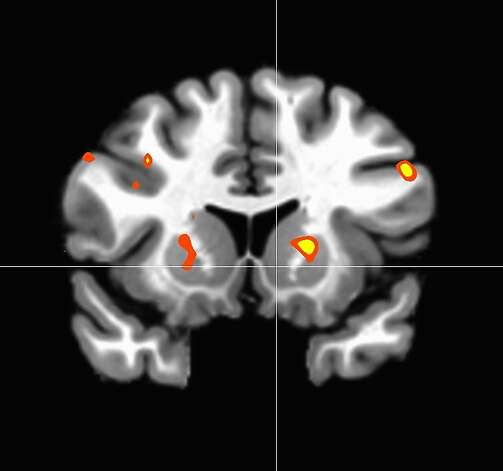
Stanford Neuroeconomist Brian Knutson Studies Monks in Tonglen Compassion Meditation

A brain scan of a monk actively extending compassion shows activity in the striatum, an area of the brain associated with reward processing. Photo: SPAN Lab, Stanford University / SF

It's always cool to see more research on meditative states and brain function - but we need to be a little more careful than we have been with brain imaging studies. We see associations and correlations - at best - but there are always other brain regions active. Just as important as seeing which brain areas or circuits are active is seeing which ones are not active - dampening has a lot to do with functional experience as well.

Stanford studies monks' meditation, compassion

Meredith May

Saturday, July 7, 2012

Stanford neuroeconomist Brian Knutson is an expert in the pleasure center of the brain that works in tandem with our financial decisions - the biology behind why we bypass the kitchen coffeemaker to buy the $4 Starbucks coffee every day.

He can hook you up to a brain scanner, take you on a simulated shopping spree and tell by looking at your nucleus accumbens - an area deep inside your brain associated with fight, flight, eating and fornicating - how you process risk and reward, whether you're a spendthrift or a tightwad.

So when his colleagues saw him putting Tibetan Buddhist monks and nuns into the MRI machine in the basement of the Stanford psychology building, he drew a few double-takes.

Knutson is still interested in the nucleus accumbens, which receives a dopamine hit when a person anticipates something pleasant, like winning at blackjack.

Only now he wants to know if the same area of the brain can light up for altruistic reasons. Can extending compassion to another person look the same in the brain as anticipating something good for oneself? And who better to test than Tibetan monks, who have spent their lives pursuing a state of selfless nonattachment?

Meditation science

The "monk study" at Stanford is part of an emerging field of meditation science that has taken off in the last decade with advancements in brain image technology, and popular interest.

"There are many neuroscientists out there looking at mindfulness, but not a lot who are studying compassion," Knutson said. "The Buddhist view of the world can provide some potentially interesting information about the subcortical reward circuits involved in motivation."

By looking at expert meditators, neuroscientists hope to get a better picture of what compassion looks like in the brain. Does a monk's brain behave differently than another person's brain when the two are both extending compassion? Is selflessness innate, or can it be learned?

Looking to the future, neuroscientists wonder whether compassion can be neurologically isolated, if one day it could be harnessed to help people overcome depression, to settle children with hyperactivity, or even to rewire a psychopath. 

"Right now we're trying to first develop the measurement of compassion, so then one day we can develop the science around it," Knutson said.

Stress reduction

Thirty years ago, medical Professor Jon Kabat-Zinn used meditation as the basis for his revolutionary "Mindfulness-Based Stress Reduction Program." He put people with chronic pain and depression through a six-week meditation practice in the basement of the University of Massachusetts Medical School and became one of the first practitioners to record meditation-related health improvements in patients with intractable pain. His stress-reduction techniques are now used in hospitals, clinics and by HMOs.
"In the last 25 years there's been a tidal shift in the field, and now there are 300 scientific papers on mindfulness," said Emiliana Simon-Thomas, science director for the Greater Good Science Center at UC Berkeley.
People who meditate show more left-brain hemisphere dominance, according to meditation studies done at the Center for Investigating Healthy Minds at the University of Wisconsin-Madison.
"Essentially when you spend a lot of time meditating, the brain shows a pattern of feeling safe in the world and more comfortable in approaching people and situations, and less vigilant and afraid, which is more associated with the right hemisphere," she said.

Effect on aging

The most comprehensive scientific study of meditation, the Shamantha Project led by scientists at UC Davis, indicates meditation leads to improved perception and may even have some effect on cellular aging. 

Volunteers who spent an average of 500 hours in focused-attention meditation during a three-month retreat in 2007 were better than the control group at detecting slight differences in the length of lines flashed on a screen.

When researchers compared blood samples between the two groups, they found the retreat population had 30 percent more telomerase - the enzyme in cells that repairs the shortening of chromosomes that occurs throughout life. This could have implications for the tiny protective caps on the ends of DNA known as telomeres, which have been linked to longevity.

"This does not mean that if you meditate, you're going to live longer," said Clifford Saron, a research neuroscientist leading the study at the UC Davis Center for Mind and Brain.

"It's an empirical question at this point, but it's remarkable that a sense of purpose in life, a belief that your goals and values are coming more into alignment with your past and projected future is likely affecting something at the level of your molecular biology," Saron said. 

Knutson's monk study at Stanford is in its early stages. He has some data collected from Stanford undergrads to use as part of the control group, but he still needs more novice meditators and monks to go into the MRI machine. It's an expensive proposition. Subjects are in the machine for eight to 12 hours a day, for three days, at $500 an hour.

Dalai Lama donation

Knutson's study is funded by Stanford's Center for Compassion and Altruism Research and Education, which was started with a sizable donation of seed money from the Dalai Lama after his 2005 campus visit to discuss fostering scientific study of human emotion.
Knutson and his team asked the monks and nuns to lie down in the MRI scanner and look at a series of human faces projected above their eyes. He asked them to withhold emotion and look at some of the faces neutrally, and for others, to look and show compassion by feeling their suffering. 

Next he flashed a series of abstract paintings and asked his subjects to rate how much they liked the art. What the monks and nuns didn't know was that Knutson was also flashing subliminal photos of the same faces before the pictures of the art.

"Reliably they like the art more if the faces they showed compassion to came before it," Knutson said, "Which leads to a hypothesis that there is some sort of compassion carryover happening."

Extending compassion

Next Knutson asked the Buddhists to practice a style of meditation called "tonglen," in which the person extends compassion outward from their inner circle, first to their parent, then to a good friend, then to a stranger and last to all sentient beings. He wants to see whether brain activity changes depending on different types of compassion. 

"There's a concern that scientists might be 'trying to prove meditation,' but we are scientists trying to understand the brain," said Matthew Sacchet, a neuroscience doctoral student at Stanford working with Knutson.

"The research has important possibilities for medicine, and also it could get rid of some of the fuzz and help make meditation more empirically grounded," he said. "If there is some kind of underlying structure to be understood scientifically, it could make things more clear for everyone."

Meredith May is a San Francisco Chronicle staff writer. E-mail: mmay@sfchronicle.com

Sunday, July 08, 2012

Guitarist Plays 100 Famous Guitar Riffs in One Take

Awesome . . . doing that in one take is so impressive. This was shared on the MSNBC site.

Chicago guitar salesman Alex Chadwick takes YouTube viewers from 1950s hit "Mr. Sandman" through surf rock, Ozzy Osbourne, Bruce Springsteen, alternative, grunge and modern rock, playing the catchy guitar riffs from an even 100 songs without a break or even, seemingly, a breath.


"The reaction has been overwhelming," Chadwick told msnbc.com. "I don't think anyone here expected it to take off the way it did, and we've had a ton of positive feedback."

Chadwick played the medley on a 1958 Fender Stratocaster that belongs to the store where he works, The Chicago Music Exchange, which helped him put together the video and features it on the store's page. The store specializes in new and vintage guitars, basses and drums.

Chadwick acknowledges that he wasn't the first to take on the "100 riffs" idea. Earlier versions didn't arrange the riffs chronologically, making Chadwick's a fun musical history lesson.

While Chadwick did play all the riffs in one take, smoothly and effortlessly switching from song to song, it wasn't that way on his first try.

"I ruined a few good takes just by knocking over the slide I had to use on a few tracks, and I completely missed one of the re-tunings on one take," he said. Since he's a practiced musician, his fingers weren't sore after the marathon session and all the practicing that led up to it, but admits "my shoulder was pretty destroyed after weeks of running through the tunes."

While Chadwick doesn't claim that these are the absolute best 100 riffs ever, of course music fans had to point out favorite riffs that he missed.

"We've had a lot of people asking for Radiohead -- which was an oversight on my part, as they're one of my favorite bands and I meant to put in at least a few of their tunes," Chadwick says, noting that readers also requested he add riffs from Motorhead and Iron Maiden. "You can't please everyone, and we do plan on doing some kind of follow-up where I'll try to include as many of those as possible."

Every music fan probably has a favorite riff, and Chadwick names Dire Straits' "Sultans of Swing" as his top pick from the 100 he played. "Mark Knopfler has a really fantastic technique and it's a lot of fun to try and mimic that," he said.

What do you think of the video? Were any classic riffs left off? Tell us your favorite on Facebook.

The Role of Self-Distancing in Enabling Adaptive Self-Reflection


There was a recent article in Medical News Today on self-distancing to temper aggressive reactions, based on research conducted by Dominik Mischkowski, Ethan Kross, and Brad J. Bushman. Kross is from the University of Michigan's Emotions and Self-Control Laboratory (more on this below). Their findings appear online in the Journal of Experimental Social Psychology. [NOTE: The other two researchers are from Ohio State University, proof that differing tribes - who often express mortal hatred on the sports field - can indeed work together in peace.]


With this research, and a whole collection of similar studies, psychology has essentially (re)discovered the Buddhist teachings on non-attachment. If we can avoid becoming identified with our thoughts and feelings, we can remain non-reactive and more able to respond appropriately to the circumstances.

There several other similar studies abstracted below.

Here is the report on the study from Medical News Today. The original research is also available online and the link is at the bottom.

Aggressive Reactions Can Be Tempered By 'Self-Distancing'

Article Date: 04 Jul 2012

A new study reveals a simple strategy that people can use to minimize how angry and aggressive they get when they are provoked by others.

When someone makes you angry, try to pretend you're viewing the scene at a distance - in other words, you are an observer rather than a participant in this stressful situation. Then, from that distanced perspective, try to understand your feelings.

Researchers call this strategy "self-distancing."

In one study, college students who believed a lab partner was berating them for not following directions responded less aggressively and showed less anger when they were told to take analyze their feelings from a self-distanced perspective.

"The secret is to not get immersed in your own anger and, instead, have a more detached view," said Dominik Mischkowski, lead author of the research and a graduate student in psychology at Ohio State University.

"You have to see yourself in this stressful situation as a fly on the wall would see it."

While other studies have examined the value of self-distancing for calming angry feelings, this is the first to show that it can work in the heat of the moment, when people are most likely to act aggressively, Mischkowski said.

The worst thing to do in an anger-inducing situation is what people normally do: try to focus on their hurt and angry feelings to understand them, said Brad Bushman, a co-author of the study and professor of communication and psychology at Ohio State.

"If you focus too much on how you're feeling, it usually backfires," Bushman said.

"It keeps the aggressive thoughts and feelings active in your mind, which makes it more likely that you'll act aggressively."

Mischkowski and Bushman conducted the study with Ethan Kross of the University of Michigan. Their findings appear online in the Journal of Experimental Social Psychology and will be published in a future print edition.

There were two related studies. The first involved 94 college students who were told they were participating in a study about the effects of music on problem solving, creativity and emotions.

The students listened to an intense piece of classical music while attempting to solve 14 difficult anagrams (rearranging a group of letters to form a word such as "pandemonium"). They had only seven seconds to solve each anagram, record their answer and communicate it to the experimenter over an intercom.

But the plan of the study was to provoke the students into anger, which the experimenters did using a technique which has been used many times in similar studies.

The experimenter interrupted the study participants several times to ask them to speak louder into the intercom, finally saying "Look, this is the third time I have to say this! Can't you follow directions? Speak louder!"

After this part of the experiment, the participants were told they would be participating in a task examining the effects of music on creativity and feelings.

The students were told to go back to the anagram task and "see the scene in your mind's eye." They were put into three groups, each of which were asked to view the scene in different ways.

Some students were told to adopt a self-immersed perspective ("see the situation unfold through your eyes as if it were happening to you all over again") and then analyze their feelings surrounding the event. Others were told to use the self-distancing perspective ("move away from the situation to a point where you can now watch the event unfold from a distance - watch the situation unfold as if it were happening to the distant you all over again") and then analyze their feelings. The third control group was not told how to view the scene or analyze their feelings.

Each group was told the replay the scene in their minds for 45 seconds.

The researchers then tested the participants for aggressive thoughts and angry feelings.

Results showed that students who used the self-distancing perspective had fewer aggressive thoughts and felt less angry than both those who used the self-immersed approach and those in the control group.

"The self-distancing approach helped people regulate their angry feelings and also reduced their aggressive thoughts," Mischkowski said.

In a second study, the researchers went further and showed that self-distancing can actually make people less aggressive when they've been provoked.

In this study, 95 college students were told they were going to do an anagram task, similar to the one in the previous experiment. But in this case, they were told they were going to be working with an unseen student partner, rather than one of researchers (in reality, it actually was one of the researchers). In this case, the supposed partner was the one who delivered the scathing comments about following directions.

As in the first study, the participants were then randomly assigned to analyze their feelings surrounding the task from a self-immersed or a self-distanced perspective. Participants assigned to a third control group did not receive any instructions regarding how to view the scene or focus on their feelings.

Next, the participants were told they would be competing against the same partner who had provoked them earlier in a reaction-time task. The winner of the task would get the opportunity to blast the loser with noise through headphones - and the winner chose the intensity and length of the noise blast.

The findings showed that participants who used the self-distancing perspective to think about their partners' provocations showed lower levels of aggression than those in the other two groups. In other words, their noise blasts against their partner tended to be shorter and less intense.

"These participants were tested very shortly after they had been provoked by their partner," Mischkowski said.

"The fact that those who used self-distancing showed lower levels of aggression shows that this technique can work in the heat of the moment, when the anger is still fresh."

Mischkowski said it is also significant that those who used the self-distancing approach showed less aggression than those in the control group, who were not told how to view the anger-inducing incident with their partner.

This suggests people may naturally use a self-immersing perspective when confronted with a provocation - a perspective that is not likely to reduce anger.

"Many people seem to believe that immersing themselves in their anger has a cathartic effect, but it doesn't. It backfires and makes people more aggressive," Bushman said.

Another technique people are sometimes told to use when angered is to distract themselves - think of something calming to take their mind off their anger.

Mischkowski said this may be effective in the short-term, but the anger will return when the distraction is not there.

"But self-distancing really works, even right after a provocation - it is a powerful intervention tool that anyone can use when they're angry." 
* * * * * * *

Flies on the wall are less aggressive: Self-distancing “in the heat of the moment” reduces aggressive thoughts, angry feelings and aggressive behavior

Dominik Mischkowski, Ethan Kross, Brad J. Bushman
ABSTRACT:

People tend to ruminate after being provoked,which is like using gasoline to put out a fire—it feeds the flame by keeping aggressive thoughts and angry feelings active. In contrast, reflecting over past provocations from a self-distanced or “fly on the wall” perspective reduces aggressive thoughts and angry feelings. However, it is unclear whether people can self-distance “in the heat of the moment” (i.e., immediately after being provoked), and if they can, whether doing so reduces actual aggressive behavior. Two experiments addressed these issues. The results indicated that provoked participants who self-distanced had fewer aggressive thoughts and angry feelings (Experiment 1) and displayed less aggressive behavior (Experiment 2) than participants who self-immersed or were in a control group. These findings demonstrate that people can self-distance in the heat of the moment, and that doing so reduces aggressive thoughts, angry feelings, and aggressive behavior.
* * * * * * *

This feels like an important skill to teach clients - and perhaps an approach that feels less Buddhist (being mindful, non-attachment) or spiritual (the observing self, or witness). Some clients seem to have a harder time when the idea is presented in that kind of terminology.

But self-distancing? Makes perfect sense.

So I did a little Googling and found that Ethan Kross is the primary researcher in this field, and that many of his articles are freely available online from the U of Michigan's Emotions and Self-Control Laboratory.

Here are some of the papers and links - abstracts only (in no particular order).

Analyzing Negative Experiences Without Ruminating: The Role of Self-Distancing in Enabling Adaptive Self-Reflection


Ozlem Ayduk and Ethan Kross
Social and Personality Psychology Compass 4/10 (2010): 841–854.
doi: 10.1111/j.1751-9004.2010.00301.x

ABSTRACT:

Both common intuition and findings from multiple areas of research suggest that when faced with distressing experiences, it is helpful to understand one’s feelings. However, a large body of research also indicates that people’s attempts to make sense of their feelings often backfire, leading them to ruminate and feel worse. In this article, we describe a program of research that focuses on disentangling these seemingly contradictory sets of findings. The research program we describe proposes that psychological distance from the self plays a key role in determining whether people’s attempts to understand their feelings lead to adaptive or maladaptive self-reflection. It suggests that people’s attempts to understand their feelings often fail because they analyze their feelings from a self-immersed perspective rather than a self-distanced perspective. Empirical evidence from multiple levels of analysis is presented to support this prediction. The basic science and clinical implications of these findings are discussed.

* * * * * * *

From a Distance: Implications of Spontaneous Self-Distancing for Adaptive Self-Reflection

Ozlem Ayduk and Ethan Kross
Journal of Personality and Social Psychology, 2010, Vol. 98, No. 5, 809–829.
DOI: 10.1037/a0019205

ABSTRACT

Although recent experimental work indicates that self-distancing facilitates adaptive self-reflection, it remains unclear (a) whether spontaneous self-distancing leads to similar adaptive outcomes, (b) how spontaneous self-distancing relates to avoidance, and (c) how this strategy impacts interpersonal behavior. Three studies examined these issues demonstrating that the more participants spontaneously self-distanced while reflecting on negative memories, the less emotional (Studies 1–3) and cardiovascular (Study 2) reactivity they displayed in the short term. Spontaneous self-distancing was also associated with lower emotional reactivity and intrusive ideation over time (Study 1). The negative association between spontaneous self-distancing and emotional reactivity was mediated by how participants construed their experience (i.e., less recounting relative to reconstruing) rather than avoidance (Studies 1–2). In addition, spontaneous self-distancing was associated with more problem-solving behavior and less reciprocation of negativity during conflicts among couples in ongoing relationships (Study 3). Although spontaneous self-distancing was empirically related to trait rumination, it explained unique variance in predicting key outcomes.
* * * * * * *

Boosting Wisdom: Distance From the Self Enhances Wise Reasoning, Attitudes, and Behavior

Ethan Kross and Igor Grossmann
Journal of Experimental Psychology: General. Advance online publication, July 4, 2011.
doi: 10.1037/a0024158

ABSTRACT:

Although humans strive to be wise, they often fail to do so when reasoning over issues that have profound personal implications. Here we examine whether psychological distance enhances wise reasoning, attitudes and behavior under such circumstances. Two experiments demonstrate that cueing people to reason about personally meaningful issues (Study 1: Career prospects for the unemployed during an economic recession; Study 2: Anticipated societal changes associated with one’s chosen candidate losing the 2008 U.S. Presidential election) from a distanced perspective enhances wise reasoning (dialecticism; intellectual humility), attitudes (cooperation-related attitude assimilation), and behavior (willingness to join a bipartisan group).
* * * * * * *

Making Meaning out of Negative Experiences by Self-Distancing

Ethan Kross and Ozlem Ayduk
Current Directions in Psychological Science, 2011, 20(3) 187-191.
DOI: 10.1177/0963721411408883

ABSTRACT:

Both common wisdom and findings from multiple areas of research suggest that it is helpful to understand and make meaning out of negative experiences. However, people’s attempts to do so often backfire, leading them to ruminate and feel worse. Here we attempt to shed light on these seemingly contradictory sets of findings by examining the role that self-distancing plays in facilitating adaptive self-reflection. We begin by briefly describing the ‘‘self-reflection paradox.’’ We then define self-distancing, present evidence from multiple levels of analysis that illustrate how this process facilitates adaptive self-reflection, and discuss the basic science and practical implications of this research.
* * * * * * *

The Relationship Between Self-Distancing and the Duration of Negative and Positive Emotional Experiences in Daily Life

Philippe Verduyn, Iven Van Mechelen, Ethan Kross, Carmen Chezzi, and Femke Van Bever
Emotion. Online First Publication, May 28, 2012. 
doi: 10.1037/a0028289

ABSTRACT:

Extant research suggests that self-distancing facilitates adaptive self-reflection of negative emotional experiences. However, this work operationalizes adaptive self-reflection in terms of a reduction in the intensity of negative emotion, ignoring other important aspects of emotional experience such as emotion duration. Moreover, prior research has predominantly focused on how self-distancing influences emotional reactivity in response to reflecting on negative experiences, leaving open questions concerning how this process operates in the context of positive experiences. We addressed these issues by examining the relationship between self-distancing and the duration of daily negative and positive emotions using a daily diary methodology. Discrete-time survival analyses revealed that reflecting on both daily negative (Studies 1 and 2) and positive events (Study 2) from a self-distanced perspective was associated with shorter emotions compared with reflecting on such events from a self-immersed perspective. The basic science and clinical implications of these findings are discussed.

Sam Harris - Death and the Present Moment


Sam Harris is a challenging figure for me - his perspectives do not feel consistent or, rather, I struggle with my sense of moral inconsistency in his writings. It's hard for me to reconcile the man who believes in torture and racial profiling with the man who has had a long-term meditation practice and whose next book seeks to revive the word spiritual in a non-New Age context.

I guess these are simply my issues - he is what he is.


Sam Harris - Death and the Present Moment 

A Celebration of Reason - 2012 Global Atheist Convention
13-15th April - Melbourne Convention Exhibition Centre
Presented by the Atheist Foundation of Australia

Sam Harris is a Co-Founder and CEO of Project Reason, a non-profit foundation devoted to spreading scientific knowledge and secular values in society. He received a degree in philosophy from Stanford University and a Ph.D. in neuroscience from UCLA.