Keep reading . . . there's much more.Sam Harris’ Buddhist Bullshit
Posted by Chris Dierkes in Mystics, Spirituality
October 16, 2014

Sam Harris, one of the so-called New Atheists, has been making waves recently with his new book Waking Up: A Guide to Spirituality Without Religion. In it Harris talks openly about his meditation practice and spiritual experience–something he has done before but doesn’t seem to have gained as much interest or notice as it has now. (Harris is also in the news recently for his statements on Islam, but I’m not going to focus on those here.)
The video above begins with Harris making an important point about the nature of consciousness. Contrary to most philosophy and science (particularly in North America), Harris argues that human consciousness can’t be reduced to states of the brain. Harris mentions a few other philosophers who have made similar arguments recently, e.g. David Chalmers, John Searle, and Thomas Nagel. In so doing Harris adds his voice to the conversation and places himself squarely on the minority side of the debate within atheism and the wider secular philosophical world.
The basic premise here is that the felt sense of having an inner world complete with thoughts, emotions, and sensations can’t be reduced solely to material events (e.g. changes in neurons or brain states). As Harris points out the best science can do is correlate certain brain states with states of consciousness, states like anger, fear, sadness, or calm meditative repose. There’s a strong interest in mapping brain states for meditators–it’s important research but it’s research is about correlation not causation, a point too often missed in the literature itself, not to mention in wider public discourse. As Harris correctly notes we still have to trust the reported subjective experiences of individuals because no matter how many physical experiments a scientist may do, none of them gain access to the inner world of 1st person, subjective experience. The methods of science are 3rd person, objective measurements, whereas the inner world is one of 1st person, subjective experience.
Therefore, in order to gain individual access to the data of 1st person, inner, subjective experience one has to take up some an inner practice like meditation, describing one’s feelings, and the like. Human subjectivity is qualitative not quantitative.
So far so good. It’s a sad commentary on the status of Western philosophy that Harris’ point is seen as controversial. It should be an absolute no brainer (bad pun not intended), but unfortunately it’s actually a hugely disputed point. So hats off to Harris for making this point in a straightforward, clear manner.
This takes us up to the 2:50 mark in the video. And here’s where the problems arise.
Showing posts with label atheism. Show all posts
Showing posts with label atheism. Show all posts
Monday, October 20, 2014
Chris Dierkes - Sam Harris’ Buddhist Bullshit
Read this, it's good, and it's worth your time.


Monday, September 15, 2014
Atheists Seen as a Threat to Moral Values (via Pacific Standard)

For some reason, I find this nonsense deeply amusing. It's ludicrous to think that Christians, who have been responsible for some of the greatest atrocities in human history, can condemn atheists as immoral and "deeply threatening." One need look no further than the Middle East to see how religion can motivate hate and violence.
At the same time, I do not reject religion as a whole, despite being an atheist of sorts myself (an agnostic atheist). Religion is an important moral and communal center in many peoples' lives. It's only when the "one true god" or "nonbelievers are heretics" ideologies get triggered that religion becomes dangerous.
“Atheists are stereotyped to be (among other things) cynical, skeptical, and nonconformist,” they write. “Individuals perceived to endorse conflicting values, or who fail to openly endorse group values, could threaten to undermine performance and success of the group as a whole by failing to adhere to group norms.”
***
So it appears atheists have a huge perception problem: People widely assume that if they reject the notion of God, they also reject essential ethical values. Although they don’t represent all atheists, it would clearly help if humanists, with their vision of a moral society that does not require otherworldly guidance or punishment, could raise their profile.Richard Dawkins, Sam Harris, and Bill Maher have done a good job of instilling this view of atheists in the public. Dawkins and Maher, in particular, are so strident in their views and their presentation of their views that they alienate even other atheists, such as myself. Secular Humanism is the best antidote to the dogma of Dawkins and the rest.
Atheists Seen as a Threat to Moral Values
By Tom Jacobs • September 15, 2014
 (Photo: J. Bicking/Shutterstock)
New research attempts to pinpoint why non-believers are widely disliked and distrusted.•
Halloween is coming, so here’s a tip for those of you who have yet to decide on a costume. If you really want to scare people, dress up as Richard Dawkins. Or Sam Harris.
Or just tell them you’re an atheist.
Confirming and expanding upon previous research, a newly published paper reports that, in the minds of many, atheists are deeply threatening. Specifically, they are seen as posing a danger to the value systems that unite us.
The fact that their belief systems defy the national consensus, along with “negative cultural stereotypes of atheists as cynical,” leads to the assumption that “atheists are unlikely to follow important group-based value norms” such as reciprocity and trust, according to a research team led by Skidmore College psychologist Corey Cook.
“The perception of threat alone is enough to drive intergroup enmity,” the researchers note, “even if atheists as a minority group do not have the political power or raw numbers to institute cultural changes in value systems.”
Cook and his colleagues describe two experiments, one of which featured 100 undergraduates at a large public university in the southeastern U.S. Seventy-three percent of participants were affiliated with a Christian church.
They were randomly assigned to read one of two news stories designed to appear as if they ran in the college newspaper. One was about a proposed expansion to the dental school. The other was about “moral decline among college students.” It reported that “traditional values such as loyalty and fidelity are less important than in previous years,” adding that today’s students lie and cheat more frequently than their predecessors.
After completing a filler task, participants reported how tense and anxious they felt when thinking about groups of people who are frequently stigmatized: college students, gay men, HIV-infected students, and atheists. They were also asked to indicate, on a one-to-six scale, “whether they would be willing to vote for an atheist presidential candidate, support a local business run by atheists, and whether they believed the U.S. Supreme Court should include atheists.”
Participants who read the neutral essay felt less anxiety when thinking about atheists than they did when considering the other feared groups. But for those who read the “moral threat” story, the level of anxiety provoked by pondering atheists shot up, to the point where it basically equaled the tension elicited by thinking about the other feared groups.
In addition, those who had read about the looming “moral threat” expressed more willingness to discriminate against atheists in the various contexts described above.
In another experiment, atheists produced more “feelings of moral disgust” than other “groups also perceived to threaten values—Muslims, gay men, and people with HIV.” Participants in this experiment (131 undergraduates) also expressed more willingness to discriminate against atheists than against member of the other groups.
Cook and his colleagues have a pretty good idea why the anti-atheist prejudice they documented is so pervasive.
“Atheists are stereotyped to be (among other things) cynical, skeptical, and nonconformist,” they write. “Individuals perceived to endorse conflicting values, or who fail to openly endorse group values, could threaten to undermine performance and success of the group as a whole by failing to adhere to group norms.”
“Although acceptance and egalitarianism are endorsed as traditional American values,” they add, “perceptions of violations to personal and group values are often seen as justification for hostile attitudes and subsequent discrimination. Such justification is reflected in the unwillingness to accept atheists as an everyday part of American society.”
So it appears atheists have a huge perception problem: People widely assume that if they reject the notion of God, they also reject essential ethical values. Although they don’t represent all atheists, it would clearly help if humanists, with their vision of a moral society that does not require otherworldly guidance or punishment, could raise their profile.

Staff writer Tom Jacobs is a veteran journalist with more than 20 years experience at daily newspapers. He has served as a staff writer for The Los Angeles Daily News and the Santa Barbara News-Press. His work has also appeared in The Los Angeles Times, Chicago Tribune, and Ventura County Star.
More From Tom Jacobs
- Big Government, Happy Citizens?
- Comfort Food Is a Myth
- Yes, I’m a Good Person. But Did You Hear About Her?
Related Story

Americans Intuitively Judge Atheists as Immoral
Wednesday, June 04, 2014
Is God Irrelevant - Atheism and Belief
From Bookforum's Omnivore blog comes this interesting assortment of links on all things atheism and faith. One of the highlights is a Julian Baggini review (in The Guardian) of Atheists: The Origin of the Species by Nick Spencer.
Another interesting link is from Steven Douglas Smith (University of San Diego School of Law), Is God Irrelevant? Here's the abstract:
This essay, written for a symposium on Ronald Dworkin’s recent posthumous book Religion Without God, argues that Dworkin misunderstands the way theists typically think God relates to “morality.” The essay sketches a subjectivist (or “super-subjectivist”) account of morality that arguably better fits the understanding of believers in the biblical tradition than does Dworkin’s more objectivist account.There are other good links as well.
God irrelevant
Jun 2 2014
9:00AM

- Justin Remes (Oakland): “That Man Behind the Curtain”: Atheism and Belief in The Wizard of Oz.
- C'Zar Bernstein (FSU): Is God's Existence Possible?
- David Kyle Johnson (King’s): Why Religious Experience Can't Justify Religious Belief; and Justified Belief in Miracles is Impossible.
- Steven Douglas Smith (San Diego): Is God Irrelevant?
- Steven Kettell (Warwick): Faithless: The Politics of New Atheism.
- Carl Mosk (Victoria): Is There a Religion Trap? Atheism, Agnosticism, and Innovation.
- Gary Gutting interviews Louise Antony, editor of Philosophers Without Gods: Meditations on Atheism and the Secular Life.
- Can merit be found in the “defective father hypothesis"? Stephen Padilla on a psychology of atheism.
- Emma Green on the intellectual snobbery of conspicuous atheism: Beyond the argument that faith in God is irrational — and therefore illegitimate.
- There are more reasons than ever why God isn't necessary: An excerpt from Mental Biology: The New Science of How the Brain and Mind Relate by W.R. Klemm.
- From TNR, a failed argument for God: Jerry Coyne reviews The Experience of God: Being, Consciousness, Bliss by David Bentley Hart; how religious people keep trying to say God and science are compatible — and they keep being wrong; how atheists could learn a lot from religious people about how to win debates; and on the atheists' case for fighting poverty: Religiosity, social dysfunction linked in Pew study.
- Why do many religious believers want to silence atheists? Greta Christina wants to know.
- Julian Baggini reviews Atheists: The Origin of the Species by Nick Spencer.
- God is dead, what next? Alasdair Craig on searching for meaning in the age of atheism.
Friday, May 09, 2014
Barbara Ehrenreich - A Rationalist’s Mystical Moment (Living with a Wild God)

I just ordered a copy of Barbara Ehrenreich's newest book, Living with a Wild God: A Nonbeliever's Search for the Truth about Everything. Her last book (as far as I know) was Bright-Sided: How Positive Thinking Is Undermining America (2009), a very fascinating and insightful book:
In this utterly original debunking, Barbara Ehrenreich confronts the false promises of positive thinking and shows its reach into every corner of American life, from Evangelical megachurches to the medical establishment, and, worst of all, to the business community, where the refusal to consider negative outcomes--like mortgage defaults--contributed directly to the current economic disaster. With the myth-busting powers for which she is acclaimed, Ehrenreich exposes the downside of positive thinking: personal self-blame and national denial. This is Ehrenreich at her provocative best--poking holes in conventional wisdom and faux science and ending with a call for existential clarity and courage.I have no doubt her new book will be equally as fascinating and astute in its observations.
There have already been a ton of reviews, including the New York Times, Los Angeles Times, Slate, Seattle Times, The Independent, The New Republic (an interview, included below), NPR (another, much longer interview - best choice), Harper's (still another interview), and many, many more.
This quote is taken from the review in the LA Times:
"How," she asks, "do we reconcile the mystical experience with daily life? Let us be open to the anomalous experience. If you see something that looks like the Other, do not fall on your knees. Find out what it is and report back."Thank Darwin for an open-minded atheist.
The following is a brief excerpt from her new book.
* * * * *A Rationalist’s Mystical Moment
By BARBARA EHRENREICH
APRIL 5, 2014 | New York Times
Credit Kris Mukai
MY atheism is hard-core, rooted in family tradition rather than adolescent rebellion. According to family legend, one of my 19th-century ancestors, a dirt-poor Irish-American woman in Montana, expressed her disgust with the church by vehemently refusing last rites when she lay dying in childbirth. From then on, we were atheists and rationalists, a stance I perpetuated by opting, initially, for a career in science.
How else to understand the world except as the interaction of tiny bits of matter and mathematically predictable forces? There were no gods or spirits, just our own minds pressing up against the unknown.
But something happened when I was 17 that shook my safely rationalist worldview and left me with a lifelong puzzle. Years later, I learned that this sort of event is usually called a mystical experience, and I can see in retrospect that the circumstances had been propitious: Thanks to a severely underfunded and poorly planned skiing trip, I was sleep-deprived and probably hypoglycemic that morning in 1959 when I stepped out alone, walked into the streets of Lone Pine, Calif., and saw the world — the mountains, the sky, the low scattered buildings — suddenly flame into life.
There were no visions, no prophetic voices or visits by totemic animals, just this blazing everywhere. Something poured into me and I poured out into it. This was not the passive beatific merger with “the All,” as promised by the Eastern mystics. It was a furious encounter with a living substance that was coming at me through all things at once, too vast and violent to hold on to, too heartbreakingly beautiful to let go of. It seemed to me that whether you start as a twig or a gorgeous tapestry, you will be recruited into the flame and made indistinguishable from the rest of the blaze. I felt ecstatic and somehow completed, but also shattered.
Of course I said nothing about this to anyone. Since I recognized no deities, and even the notion of an “altered state of consciousness” was unavailable at the time, I was left with only one explanation: I had had a mental breakdown, ultimately explainable as a matter of chemical imbalances, overloaded circuits or identifiable psychological forces. There had been some sort of brief equipment failure, that was all, and I determined to pull myself together and put it behind me, going on to finish my formal education as a cellular immunologist and become a responsible, productive citizen.
It took an inexcusably long time for me to figure out that what had happened to me was part of a widespread category of human experience. Some surveys find that nearly half of Americans report having had a mystical experience. Historically, the range of people reporting such experiences is wide — including saints, shamans and Old Testament prophets as well as acknowledged nonbelievers like Virginia Woolf and the contemporary atheist writer Sam Harris. It is of course impossible to ascertain how much these experiences have in common. We may be comparing apples and asteroids.
On the religious end of the spectrum, people have tended to describe their experiences as encounters with familiar deities or spirits, while nonbelievers — like some quoted by William James — are likely to speak of a more generic “living Presence.” Others write of something more akin to my own experience, which was wordless and profoundly unsettling. When the early 20th-century Protestant theologian Rudolf Otto surveyed the works of (mostly Christian) mystics for clues as to the nature of the “Other” they had encountered, he concluded that it was “beyond all question something quite other than the ‘good.’ ” It was more like a “consuming fire,” he wrote, and “must be gravely disturbing to those persons who will recognize nothing in the divine nature but goodness, gentleness, love and a sort of confidential intimacy.”
Of course all such experiences can be seen as symptoms of one sort or another, and that is the way psychiatry has traditionally disposed of the mystically adept: The shaman was simply the local schizophrenic, Saint Teresa of Avila a clear hysteric. The Delphic oracles may have been inhaling intoxicants; all of the great Christian mystics showed clear signs of temporal lobe epilepsy. A recent paper from Harvard Medical School proposes that the revelations experienced by Abraham, Moses, Jesus and Paul can all be attributed to “primary or mood-disorder-associated psychotic disorders.” I suspect we would have more reports of uncanny experiences from ordinary, rational people if it were not for the fear of being judged insane or at least unstable.
An alternative to the insanity explanation would be that such experiences do represent some sort of encounter. It was my scientific training, oddly enough, that eventually nudged me to consider this possibility. Sometime in middle age, when I had become a writer and amateur historian, I decided that the insanity explanation may have been a cop-out, that I could have seen something that morning in Lone Pine.
If mystical experiences represent some sort of an encounter, as they have commonly been described, is it possible to find out what they are encounters with? Science could continue to dismiss mystical experiences as mental phenomena, internal to ourselves, but the merest chance that they may represent some sort of contact or encounter justifies investigation. We need more data and more subjective accounts. But we also need a neuroscience bold enough to go beyond the observation that we are “wired” for transcendent experience; the real challenge is to figure out what happens when those wires connect. Is science ready to take on the search for the source of our most uncanny experiences?
Fortunately, science itself has been changing. It was simply overwhelmed by the empirical evidence, starting with quantum mechanics and the realization that even the most austere vacuum is a happening place, bursting with possibility and giving birth to bits of something, even if they’re only fleeting particles of matter and antimatter. Without invoking anything supernatural, we may be ready to acknowledge that we are not, after all, alone in the universe. There is no evidence for a God or gods, least of all caring ones, but our mystical experiences give us tantalizing glimpses of other forms of consciousness, which may be beings of some kind, ordinarily invisible to us and our instruments. Or it could be that the universe is itself pulsing with a kind of life, and capable of bursting into something that looks to us momentarily like the flame.
Barbara Ehrenreich is the author of Living With a Wild God and Nickel and Dimed: On (Not) Getting By in America.
A version of this op-ed appears in print on April 6, 2014, on page SR8 of the New York edition with the headline: A Rationalist’s Mystical Moment. Order Reprints|Today's Paper|Subscribe

Here is the interview she did with The New Republic - the interview is most interesting as an example of how NOT to interview a smart person.

Barbara Ehrenreich: I'm an Atheist, But Don't Rule Out "Mystical Experiences" A Q&A with the author of "Living With a Wild God"
BY ISAAC CHOTINER
APRIL 20, 2014
Barbara Ehrenreich, the best-selling author of Nickel and Dimed: The (Futile) Pursuit of the American Dream, is generally known for reportage on subjects such as the minimum wage and the rights of workers. But this month she has released a new book that is less a change of pace than a step in an entirely different direction.
Living With a Wild God: A Nonbeliver’s Search for the Truth About Everything is Ehrenreich’s personal story of mystical experiences that she says first occurred when she was a girl. It is also a critique of science for failing to adequately investigate experiences like her own. The book has aroused controversy and discussion, in part because it comes from such an unexpected source.
Ehrenreich and I recently spoke on the phone about her problems with monotheism, why she can’t read Christopher Hitchens, and why she still insists on calling herself an atheist.
Isaac Chotiner: What are you arguing in this book?
Barbara Ehrenreich: This book is not an argument. It is a report.
IC: Tell us what you are reporting then.
BE: I think of it as a metaphysical thriller. The story starts when I am a child, around 12, and I start asking the questions, What is this all about? Why are we here? What is going on? My parents were atheists, strong atheists. I never got the answer “God.”
IC: Some things happen in the book that cause you to ask the questions differently.
BE: Right. When I was 13, I had some particular mental adventures. Perceptual adventures. I began to see things rather differently. It seemed like a layer peeled off the world, layers that contained all the meanings and words and significance. Everything we apply to the world. I didn’t find it frightening. It was fascinating.
Then when I was 17, I had an experience that I later learned could be called a “mystical experience.” It was almost violent. No faces, voices, nothing like that. It is like the world burst and flamed into life all around me. That is not a great image, but it is as good as I will ever do.
IC: At that age, what was your explanation?
BE: I had a sense that I had answered those questions from earlier. What is the world about? But there were no words for it. I knew it was an encounter with something, some being or beings. But I also knew or suspected that the rational or scientific explanation would be mental breakdown. And I decided to go with breakdown. And then I thought I got better. It was only in middle age I began to say, “No, that was a kind of encounter.”
IC: What caused the change?
BE: I became a student of the history of religion. I am fascinated by how religions often center on mystical experience, and in the Old Testament tradition you find flames, the burning bush. I was beginning to find that other people had experienced such things. And furthermore I became convinced that historically our kind of monotheism is a kind of aberration. Multiple dieities, animal deities, but not good and benevolent deities. We now have a strange and limited vision.
IC: Saying these experiences are real—that there are other spirits or consciousnesses out there—is very different from saying that maybe our brains just make us think that they are real?
BE: What do you mean? Our brains visually perceive the world if we are not blind. The world is real.
IC: So there is no difference between perceiving a spirit and perceiving a chair? I am confused.
BE: It takes work to even perceive the world that you and I share. Protons travel to my eyes but the brain has to do a lot of work to say, “desk, chair, table.”
IC: Yes but we both agree the desk I am leaning on exists. That it is real. It may take a lot to perceive but it is there.
BE: We are impelled to see the world as dead, without conscious agency. We are reductionists. We see the chair and know we can sit in it or lift it. But there are some things we experience that maybe do call for a different sort of explanation. And as a rational person with a scientific background I am putting that forward. And being called insane.
IC: I am not calling you insane. I still don’t know whether you think they are real or whether they are products of our brain. Those seem like hugely different claims and ideas and even subjects.
BE: As I say in the last paragraph of my book, it is all in my head. And yes, of course, it is.
IC: But it is not all in your head if there are other conscious beings floating about.
BE: Well, that’s what I would like to know. Here is one example. In the 19th century, most physicians would have said that contagious diseases were caused by mist in the air. If you had said, no, there are living things, you would have sounded insane because those things were invisible. There is a lesson in that. There may be invisible things that are still there.
IC: Well, there is no end to the number of things that might be there.
BE: That’s right.
IC: When you say “wired,” do you mean designed, like with intelligent design, or just some evolutionary reason?
BE: I wouldn’t even speculate. I have no theory of why natural selection would favor these sorts of experiences.
If there is something I am arguing, it is a critique of science. Science has consistently denied the existence of consciousness other than human. Only in the last 20 years do we have acknowledgement of animal feeling or culture or experience.
IC: No one considered the existence of animal feeling before 20 years ago?1
BE: Absolutely no! We know in our ordinary lives that our pets are conscious beings with feelings. But the doctrine was still Cartesian. These are little mechanisms or things. We are alone. That has been central to science, the denial of agency except in the case of humans and some hypothetical diety.
IC: Are you critiquing science or just saying science needs to get better? We know all this stuff because of science.
BE: I remain a scientific rationalist. I want science to look at these odder phenomena, and not rule out the possibility of mystical experiences with another kind of mind.
IC: Are scientists ruling it out, or saying these are not evidence for it?
BE: We need databases. William James kept one. But it is unexamined, the data that might be there. People are so afraid to talk about it. My book has gotten readers, and I have gotten friends to tell me that similar things happened but they were scared to talk about it. This is going to sound totally crazy to you but this is a public health issue! When people have a shattering type of experience and never say anything about it, it is time to investigate.
IC: The last five or ten years have seen the rise of what’s called the ‘New Atheism.’ How do you think about this, and about the use of the word atheism?
BE: I am an atheist. As for the ‘New Atheists,’ I am not that interested because I was raised on this. I couldn’t, delightful as he is, read Hitchens’s book. He sounded too much like my dad. I have heard it all. That is a tiny American working class tradition. Skepticism, free thought, atheism.
IC: It’s interesting that you call yourself an atheist rather than an agnostic.
BE: I am insistent on atheist. If we are talking about a monotheistic, benevolent God, I know there is no such thing.
IC: How do you know that there is no benevolent God when you think there might be spirits talking to me?
BE: It depends on what I have experienced. I have many areas of experience which show there is no giant benevolent force.
IC: But some people claim to experience a monotheistic God.
BE: That is not my experience.
IC: But we don’t make these grand judgments based on our own experience. [Pause] Do we?
BE: Yeah.
IC: We do?
BE: To an extent. Where is the evidence for a benevolent God?
IC: I agree with you. But there isn’t evidence for spiritual figures in the room either.
BE: Well, we need to find out.
This interview has been edited and condensed.
Friday, March 28, 2014
Omnivore - Religion in Contemporary World
From Bookforum's Omnivore blog, another cool collection of links, this time on the state of religion in the world today. Some good stuff in this collection.
Religion in contemporary world
Mar 27 2014
9:00AM

- Alison Greig (Wales): Heaven in the Early History of Western Religions.
- From Cognition and Culture, a webinar on Big Gods: How Religion Transformed Cooperation and Conflict by Ara Norenzayan.
- Terry D. Goddard reviews Before Religion: a History of a Modern Concept by Brent Nongbri.
- Religion in contemporary world: Octavia Domide and Larisa Bianca Pirjol review The Everyday Sacred: Symbols, Rituals, Mythologies by Cristina Gavriluta and The Sociology of Religions: Beliefs, Rituals, Ideologies by Nicu Gavriluta.
- The introduction to A History of Jewish-Muslim Relations: From the Origins to the Present Day, ed. Abdelwahab Meddeb and Benjamin Stora.
- Rosemary Joyce on women as leaders in early Christianity: Fairy tales?
- From The Atlantic, Richard J. Miller on religion as a product of psychotropic drug use: How much of religious history was influenced by mind-altering substances?
- From Student Pulse, is paganism a religion? Betsy C. Chadbourn on exploring the historical and contemporary relevance of paganism.
- Was Nietzsche right about religion? John Gray reviews The Age of Nothing by Peter Watson and Culture and the Death of God by Terry Eagleton.
- Secularisation, myth or menace? Melvin Tinker on an assessment of modern “worldliness”.
- God and Man in the Machine: Peter Moons on religion in the transhumanist environment.
- Laura Leibman on clothing and religion.
- An interview with Dan W. Clanton, Jr., author of Understanding Religion and Popular Culture.
- An excerpt from The Age of Atheists by Peter Watson.
- Pseudo-scientists are still trying to convince you that the Shroud of Turin is real — don't believe them.
Tuesday, February 25, 2014
Omnivore - The Age of Atheism
From Bookforum's Omnivore blog, a collection of interesting links on atheism and its discontents.
The age of atheism
Feb 24 2014
3:00PM
- Stephen Bullivant (St. Mary’s): Why Study Atheism?; and Defining “Atheism”.
- The real New Atheism: Jeffrey Tayler on rejecting religion for a just world.
- Remembering Christopher Hitchens: G. Elijah Dann on religious belief and Hitch's greatest hits.
- When did faith start to fade? Adam Gopnik reviews The Age of Atheists: How We Have Sought to Live Since the Death of God by Peter Watson; and Imagine There's No Heaven: How Atheism Helped Create the Modern World by Mitchell Stephens.
- George Dvorsky on the 7 most intriguing philosophical arguments for the existence of God.
- From Philosophy Now, does God exist? William Lane Craig says there are good reasons for thinking that He does (and a response); and Rick Lewis interviews Simon Blackburn on his atheism.
- Clayton Littlejohn reviews God and Evidence: Problems for Theistic Philosophers by Rob Lovering.
- Ryan Stringer on a logical argument from evil.
- Oliver Burkeman on David Bentley Hart's The Experience of God: Being, Consciousness, Bliss, the one theology book all atheists really should read (and more by Damon Linker; Isaac Chotiner on how the case for God's existence is empowering atheists; and Jerry Coyne on why the “best arguments for God's existence” are actually terrible).
- No, we don’t owe your religion any “respect”.
- Can a Christian be an atheist? Dom Turner finds out.
- Are religious teachings fairy tales? Howard Kainz wonders.
- Research indicates that lack of religion is a key reason why people in wealthy countries don't feel a sense of purpose.
- Katie Engelhart on the age of atheism: “If God exists, why is anybody unhappy?”
Friday, December 06, 2013
Omnivore - Can You Have Religion Without God?
From Bookforum's Omnivore blog, a collection of links on all things religious - from Satan to Jesus, and from evolution to a religious worldview for secularists. A particularly good read is an article from Scientific American, The Psychological Power of Satan.
Can you have religion without God?
Dec 5 2013
9:00AM

Can you have religion without God?
Dec 5 2013
9:00AM
- Taylor Davis (UBC): Group Selection in the Evolution of Religion: Genetic Evolution or Cultural Evolution?
- Rob Ninowski on the origins of religion: A historical and methodological review.
- The rise of religion might be all about sex: A study suggests religion might have arisen to protect certain reproductive strategies, like long-term partnership.
- The introduction to God, Sexuality, and the Self by Sarah Coakley.
- Andrea Castillo on New Atheism, moral orders, and the psychology of sanctity.
- David E. Campbell on how it’s social ties — not religion — that makes the faithful give to charity.
- What good is religion? Sigfried Gold wonders.
- Can you have religion without God? Moshe Halbertal on Ronald Dworkin and a religious worldview for secularists (and more).
- Deeper than God: Stanley Fish on Ronald Dworkin’s religious atheism.
- Isaac Chotiner interviews Richard Dawkins on the Pope, fiction, and why Jews win Nobel Prizes.
- Scientists try to reconcile Adam and Eve story, whiff — again.
- What are the odds that Jesus rose from the dead or Moses parted the waves? Even with the best witnesses, vanishingly small.
- From Vice, was Jesus a Roman hoax to trick the Jews?
- Piercarlo Valdesolo on the psychological power of Satan: How a belief in “pure evil” shapes people’s thinking.
- Is secularism unprincipled? Ian Pollock wonders.
- Billy Sichone on why Bertrand Russell rejected Christianity.
- London-based “atheist church” launches new congregation in Nashville.
- Adam Lee on why people are flocking to a new wave of secular communities: Atheist churches.
Sunday, May 19, 2013
Stephen Batchelor - Buddhism: A Changing, Living Organism (Upaya Zen Podcasts)

Upaya Zen Center's monthly podcast features Stephen Batchelor this month, talking about the ever-evolving nature of Buddhism. They discuss a wide variety of topics:
“confession of a Buddhist atheist”; a Buddhist way of life; a middle road between religion and secularism; ethics & contemplation without metaphysical beliefs; the Dharma in a global culture; “Buddhism 2.0″; a plurality of discourses: the mythical and the historical; Keats and Zen.Enjoy.
Stephen Batchelor: Buddhism: A Changing, Living Organism
Speaker: Stephen Batchelor
Upaya Conversations
This is Upaya’s monthly podcast series with our host Joanna Harcourt-Smith of Future Primitive. Today’s guest is Stephen Batchelor.
Stephen Batchelor is a contemporary Buddhist teacher and writer, best known for his secular or agnostic approach to Buddhism. Stephen considers Buddhism to be a constantly evolving culture of awakening rather than a religious system based on immutable dogmas and beliefs. Through his writings, translations and teaching, Stephen engages in a critical exploration of Buddhism’s role in the modern world. He is the translator and author of various books and articles on Buddhism, including the bestselling “Buddhism Without Beliefs” (Riverhead, 1997) and “Living with the Devil: A Meditation on Good and Evil” (Riverhead, 2004). His most recent publication is “Confession of a Buddhist Atheist” (Spiegel & Grau, 2010)
Stephen speaks with Joanna about “confession of a Buddhist atheist”; a Buddhist way of life; a middle road between religion and secularism; ethics & contemplation without metaphysical beliefs; the Dharma in a global culture; “Buddhism 2.0″; a plurality of discourses: the mythical and the historical; Keats and Zen.

* * * * * * *Roshi Joan and Upaya Zen Center launched a new Google+ Community on Engaged Buddhism. Please visit & join the community.

Wednesday, April 03, 2013
Contemporary Continental [Philosophical] Thought (Heavy on Deleuze)
This is an excellent collection of links on contemporary European (i.e., Continental) philosophy and thought, courtesy of Bookforum's Omnivore blog.
Contemporary continental thought
APR 2 2013
Contemporary continental thought
APR 2 2013
9:00AM

- Thomas Nail (Denver): Deleuze, Occupy, and the Actuality of Revolution.
- David R Cole (UWS): Traffic Jams: Analysing Everyday Life Using Deleuze and Guattari.
- From New Left Project, Samuel Grove interviews Andrew Robinson on the political philosophy of Gilles Deleuze (and part 2).
- John Protevi reviews Political Theory after Deleuze by Nathan Widder.
- Ashley Bohrer reviews Jacques Ranciere’s Althusser’s Lesson.
- Richard Fitch reviews Thinking the Impossible: French Philosophy since 1960 by Gary Gutting.
- Daniel Tutt reviews Difficult Atheism: Tracing the Death of God in Contemporary Continental Thought by Christopher Watkin.
- Slavoj Zizek on the three events of philosophy.
- Rebecca Rothfeld on why we slober over Slavoj Zizek: Or, how to be incomprehensible and relevant at the same time.
- You can download Everyday Life and the State by Peter Bratsis (2006).
Friday, March 29, 2013
Frans de Waal - The Brains of the Animal Kingdom
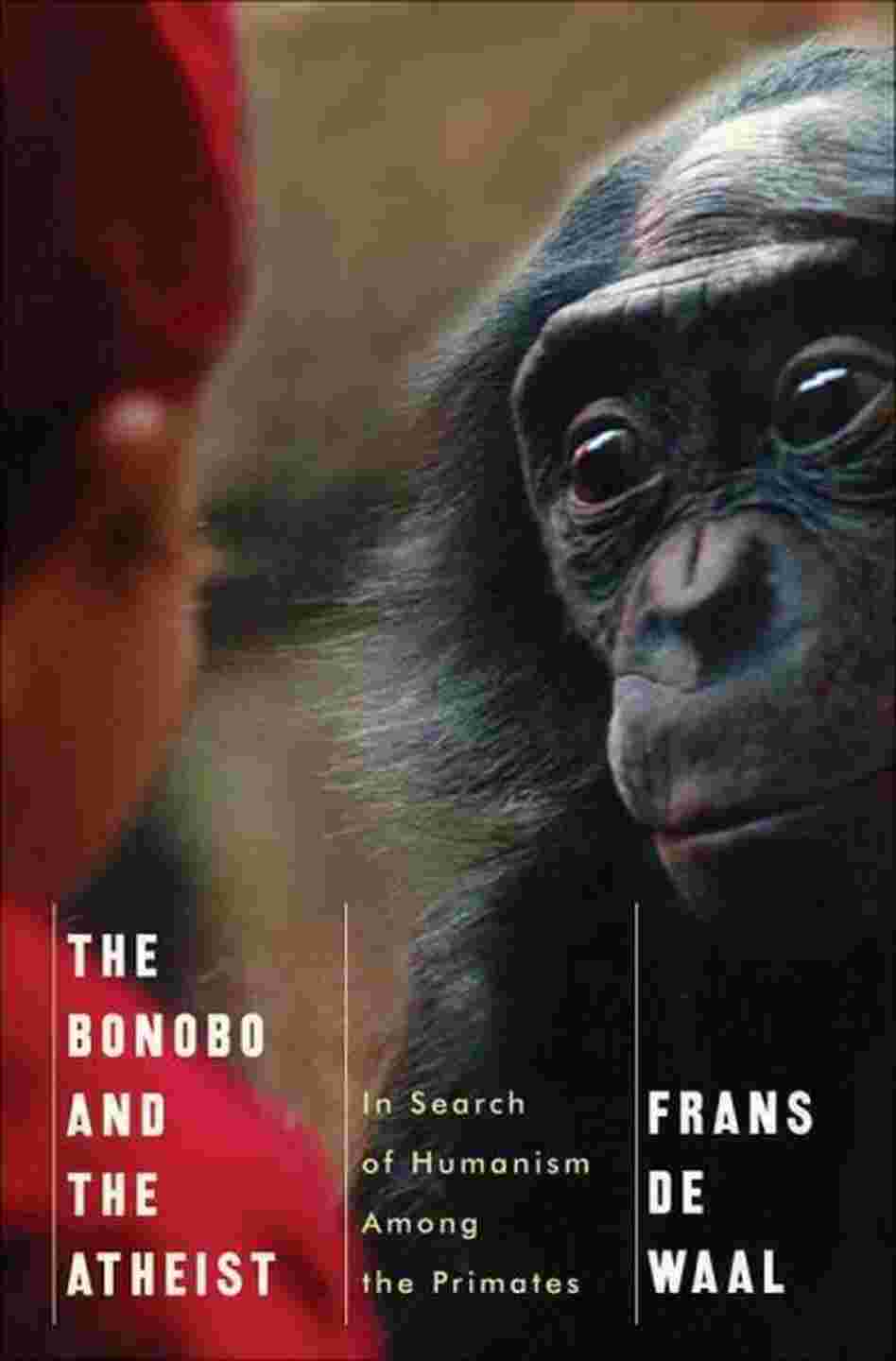
Esteemed primatologist Frans de Waal's latest book is The Bonobo and the Atheist: In Search of Humanism Among the Primates, published by Norton on Monday. In this new book, which clarifies and expands his ground-breaking research with bonobos, de Waal argues that morality is generated by God(s), nor is it the strict realm of religion. Rather, morality is something that comes from within our primate history, developed and refined through evolution.
Here is the publisher's synopsis of the book:
Book DescriptionWhat follows below is an adapted excerpt from the book that was published in the weekend edition of the Wall Street Journal last Saturday. The book has received a LOT of good reviews already, including Scientific American, Publisher's Weekly, and The New Prospect (although they ding him for being too gentle on religion).
Publication Date: March 25, 2013 | ISBN-10: 0393073777 | 12 Illustrations | Edition: 1st
In this lively and illuminating discussion of his landmark research, esteemed primatologist Frans de Waal argues that human morality is not imposed from above but instead comes from within. Moral behavior does not begin and end with religion but is in fact a product of evolution. For many years, de Waal has observed chimpanzees soothe distressed neighbors and bonobos share their food. Now he delivers fascinating fresh evidence for the seeds of ethical behavior in primate societies that further cements the case for the biological origins of human fairness. Interweaving vivid tales from the animal kingdom with thoughtful philosophical analysis, de Waal seeks a bottom-up explanation of morality that emphasizes our connection with animals. In doing so, de Waal explores for the first time the implications of his work for our understanding of modern religion. Whatever the role of religious moral imperatives, he sees it as a “Johnny-come-lately” role that emerged only as an addition to our natural instincts for cooperation and empathy.
But unlike the dogmatic neo-atheist of his book’s title, de Waal does not scorn religion per se. Instead, he draws on the long tradition of humanism exemplified by the painter Hieronymus Bosch and asks reflective readers to consider these issues from a positive perspective: What role, if any, does religion play for a well-functioning society today? And where can believers and nonbelievers alike find the inspiration to lead a good life?
Rich with cultural references and anecdotes of primate behavior, The Bonobo and the Atheist engagingly builds a unique argument grounded in evolutionary biology and moral philosophy. Ever a pioneering thinker, de Waal delivers a heartening and inclusive new perspective on human nature and our struggle to find purpose in our lives.
The Brains of the Animal Kingdom
By FRANS DE WAAL
THE SATURDAY ESSAY
March 22, 2013
New research shows that we have grossly underestimated both the scope and the scale of animal intelligence. Primatologist Frans de Waal on memory-champ chimps, tool-using elephants and rats capable of empathy.
Associated Press
A herd of African elephants drink water at a dam inside the Addo Elephant National Park near Port Elizabeth, South Africa.
Who is smarter: a person or an ape? Well, it depends on the task. Consider Ayumu, a young male chimpanzee at Kyoto University who, in a 2007 study, put human memory to shame. Trained on a touch screen, Ayumu could recall a random series of nine numbers, from 1 to 9, and tap them in the right order, even though the numbers had been displayed for just a fraction of a second and then replaced with white squares.
I tried the task myself and could not keep track of more than five numbers—and I was given much more time than the brainy ape. In the study, Ayumu outperformed a group of university students by a wide margin. The next year, he took on the British memory champion Ben Pridmore and emerged the "chimpion."
How do you give a chimp—or an elephant or an octopus or a horse—an IQ test? It may sound like the setup to a joke, but it is actually one of the thorniest questions facing science today. Over the past decade, researchers on animal cognition have come up with some ingenious solutions to the testing problem. Their findings have started to upend a view of humankind's unique place in the universe that dates back at least to ancient Greece.
Aristotle's idea of the scala naturae, the ladder of nature, put all life-forms in rank order, from low to high, with humans closest to the angels. During the Enlightenment, the French philosopher René Descartes, a founder of modern science, declared that animals were soulless automatons. In the 20th century, the American psychologist B.F. Skinner and his followers took up the same theme, painting animals as little more than stimulus-response machines. Animals might be capable of learning, they argued, but surely not of thinking and feeling. The term"animal cognition" remained an oxymoron.
A growing body of evidence shows, however, that we have grossly underestimated both the scope and the scale of animal intelligence. Can an octopus use tools? Do chimpanzees have a sense of fairness? Can birds guess what others know? Do rats feel empathy for their friends? Just a few decades ago we would have answered "no" to all such questions. Now we're not so sure.
Experiments with animals have long been handicapped by our anthropocentric attitude: We often test them in ways that work fine with humans but not so well with other species. Scientists are now finally meeting animals on their own terms instead of treating them like furry (or feathery) humans, and this shift is fundamentally reshaping our understanding.
Elephants are a perfect example. For years, scientists believed them incapable of using tools. At most, an elephant might pick up a stick to scratch its itchy behind. In earlier studies, the pachyderms were offered a long stick while food was placed outside their reach to see if they would use the stick to retrieve it. This setup worked well with primates, but elephants left the stick alone. From this, researchers concluded that the elephants didn't understand the problem. It occurred to no one that perhaps we, the investigators, didn't understand the elephants.
Think about the test from the animal's perspective. Unlike the primate hand, the elephant's grasping organ is also its nose. Elephants use their trunks not only to reach food but also to sniff and touch it. With their unparalleled sense of smell, the animals know exactly what they are going for. Vision is secondary.
But as soon as an elephant picks up a stick, its nasal passages are blocked. Even when the stick is close to the food, it impedes feeling and smelling. It is like sending a blindfolded child on an Easter egg hunt.
What sort of experiment, then, would do justice to the animal's special anatomy and abilities?
On a recent visit to the National Zoo in Washington, I met with Preston Foerder and Diana Reiss of Hunter College, who showed me what Kandula, a young elephant bull, can do if the problem is presented differently. The scientists hung fruit high up above the enclosure, just out of Kandula's reach. The elephant was given several sticks and a sturdy square box.
Kandula ignored the sticks but, after a while, began kicking the box with his foot. He kicked it many times in a straight line until it was right underneath the branch. He then stood on the box with his front legs, which enabled him to reach the food with his trunk. An elephant, it turns out, can use tools—if they are the right ones.
While Kandula munched his reward, the investigators explained how they had varied the setup, making life more difficult for the elephant. They had put the box in a different section of the yard, out of view, so that when Kandula looked up at the tempting food he would need to recall the solution and walk away from his goal to fetch the tool. Apart from a few large-brained species, such as humans, apes and dolphins, not many animals will do this, but Kandula did it without hesitation, fetching the box from great distances.
Another failed experiment with elephants involved the mirror test—a classic evaluation of whether an animal recognizes its own reflection. In the early going, scientists placed a mirror on the ground outside the elephant's cage, but the mirror was (unsurprisingly) much smaller than the largest of land animals. All that the elephant could possibly see was four legs behind two layers of bars (since the mirror doubled them). When the animal received a mark on its body visible only with the assistance of the mirror, it failed to notice or touch the mark. The verdict was that the species lacked self-awareness.
But Joshua Plotnik of the Think Elephant International Foundation modified the test. He gave the elephants access to an 8-by-8-foot mirror and allowed them to feel it, smell it and look behind it. With this larger mirror, they fared much better. One Asian elephant recognized herself. Standing in front of the mirror, she repeatedly rubbed a white cross on her forehead, an action that she could only have performed by connecting her reflected image with her own body.
A similar experimental problem was behind the mistaken belief, prevalent until two decades ago, that our species has a unique system of facial recognition, since we are so much better at identifying faces than any other primate. Other primates had been tested, but they had been tested on human faces—based on the assumption that ours are the easiest to tell apart.
When Lisa Parr, one of my co-workers at Emory University, tested chimpanzees on portraits of their own species, they excelled at it. Selecting portraits on a computer screen, they could even tell which juveniles were born to which females. Having been trained to detect similarities among images, the apes were shown a female's portrait and then given a choice between two other faces, one of which showed her offspring. They preferred the latter based purely on family resemblance since they did not know any of the depicted apes.
We also may need to rethink the physiology of intelligence. Take the octopus. In captivity, these animals recognize their caretakers and learn to open pill bottles protected by childproof caps—a task with which many humans struggle. Their brains are indeed the largest among invertebrates, but the explanation for their extraordinary skills may lie elsewhere. It seems that these animals think, literally, outside the box of the brain.
Octopuses have hundreds of suckers, each one equipped with its own ganglion with thousands of neurons. These "mini-brains" are interconnected, making for a widely distributed nervous system. That is why a severed octopus arm may crawl on its own and even pick up food.
Similarly, when an octopus changes skin color in self-defense, such as by mimicking a poisonous sea snake, the decision may come not from central command but from the skin itself. A 2010 study found gene sequences in the skin of cuttlefish similar to those in the eye's retina. Could it be: an organism with a seeing skin and eight thinking arms?
A note of caution, however: At times we also have overestimated the capacities of animals. About a century ago, a German horse named "Kluger Hans" (Clever Hans) was thought to be capable of addition and subtraction. His owner would ask him the product of multiplying four by three, and Hans would happily tap his hoof 12 times. People were flabbergasted, and Hans became an international sensation.
That is, until Oskar Pfungst, a psychologist, investigated the horse's abilities. Pfungst found that Hans was only successful if his owner knew the answer to the question and was visible to the horse. Apparently, the owner subtly shifted his position or straightened his back when Hans reached the correct number of taps. (The owner did so unknowingly, so there was no fraud involved.)
Some look at this historic revelation as a downgrading of Hans's intelligence, but I would argue that the horse was in fact very smart. His abilities at arithmetic may have been flawed, but his understanding of human body language was remarkable. And isn't that the skill a horse needs most?
Awareness of the "Clever Hans Effect," as it is now known, has greatly improved animal experimentation. Unfortunately, it is often ignored in comparable research with humans. Whereas every dog lab now tests the cognition of its animals while their human owners are blindfolded or asked to face away, young children are still presented with cognitive tasks while sitting on their mothers' laps. The assumption is that mothers are like furniture, but every mother wants her child to succeed, and nothing guarantees that her sighs, head turns and subtle changes in position don't serve as cues for the child.
This is especially relevant when we try to establish how smart apes are relative to children. To see how their cognitive skills compare, scientists present both species with identical problems, treating them exactly the same. At least this is the idea. But the children are held by their parents and talked to ("Watch this!" "Where is the bunny?"), and they are dealing with members of their own kind. The apes, by contrast, sit behind bars, don't benefit from language or a nearby parent who knows the answers, and are facing members of a different species. The odds are massively stacked against the apes, but if they fail to perform like the children, the invariable conclusion is that they lack the mental capacities under investigation.
A recent study, tracking the pupil movements of chimpanzees, found that they followed the gaze of members of their own species far better than that of humans. This simple finding has huge implications for tests in which chimpanzees need to pay attention to human experimenters. The species barrier they face may fully explain the difference in performance compared with children.
Underlying many of our mistaken beliefs about animal intelligence is the problem of negative evidence. If I walk through a forest in Georgia, where I live, and fail to see or hear the pileated woodpecker, am I permitted to conclude that the bird is absent? Of course not. We know how easily these splendid woodpeckers hop around tree trunks to stay out of sight. All I can say is that I lack evidence.
It is quite puzzling, therefore, why the field of animal cognition has such a long history of claims about the absence of capacities based on just a few strolls through the forest. Such conclusions contradict the famous dictum of experimental psychology according to which "absence of evidence is not evidence of absence."
Take the question of whether we are the only species to care about the well-being of others. It is well known that apes in the wild offer spontaneous assistance to each other, defending against leopards, say, or consoling distressed companions with tender embraces. But for decades, these observations were ignored, and more attention was paid to experiments according to which the apes were entirely selfish. They had been tested with an apparatus to see if one chimpanzee was willing to push food toward another. But perhaps the apes failed to understand the apparatus. When we instead used a simple choice between tokens they could exchange for food—one kind of token rewarded only the chooser, the other kind rewarded both apes—lo and behold, they preferred outcomes that rewarded both of them.
Such generosity, moreover, may not be restricted to apes. In a recent study, rats freed a trapped companion even when a container with chocolate had been put right next to it. Many rats first liberated the other, after which both rodents happily shared the treat.
The one historical constant in my field is that each time a claim of human uniqueness bites the dust, other claims quickly take its place. Meanwhile, science keeps chipping away at the wall that separates us from the other animals. We have moved from viewing animals as instinct-driven stimulus-response machines to seeing them as sophisticated decision makers.
Aristotle's ladder of nature is not just being flattened; it is being transformed into a bush with many branches. This is no insult to human superiority. It is long-overdue recognition that intelligent life is not something for us to seek in the outer reaches of space but is abundant right here on earth, under our noses.

—Mr. de Waal is C.H. Candler Professor at Emory University and director of the Living Links Center at the Yerkes National Primate Research Center, both in Atlanta. His latest book, "The Bonobo and the Atheist: In Search of Humanism among the Primates," will be published by Norton on Monday.
~ A version of this article appeared March 23, 2013, on page C1 in the U.S. edition of The Wall Street Journal, with the headline: The Brains of Animal Kingdom.
Wednesday, March 20, 2013
Ronald Dworkin - Religion Without God (New York Review of Books)

Via The New York Review of Books, this is excerpt from the late Ronald Dworkin's last manuscript, Religion Without God, which will be published later this year by Harvard University Press. He died in February, 2013, at the age of 81.
Ronald Myles Dworkin, FBA (December 11, 1931 – February 14, 2013)[1] was an American philosopher and scholar of constitutional law. He was Frank Henry Sommer Professor of Law and Philosophy at New York University and Emeritus Professor of Jurisprudence at University College London, and had taught previously at Yale Law School and the University of Oxford. An influential contributor to both philosophy of law and political philosophy, Dworkin received the 2007 Holberg International Memorial Prize in the Humanities for "his pioneering scholarly work" of "worldwide impact."[2]According to a survey in The Journal of Legal Studies, Dworkin was the second most-cited American legal scholar of the twentieth century.[3]
His theory of law as integrity, in which judges interpret the law in terms of consistent and communal moral principles, especially justice and fairness, is among the most influential contemporary theories about the nature of law. Dworkin advocated a "moral reading" of the United States Constitution,[4] and an interpretivist approach to law and morality. He was a frequent commentator on contemporary political and legal issues, particularly those concerning the Supreme Court of the United States, often in the pages of The New York Review of Books.Here is the whole excerpt.
Religion Without God
APRIL 4, 2013
Ronald Dworkin
Before he died on February 14, Ronald Dworkin sent to The New York Review a text of his new book, Religion Without God, to be published by Harvard University Press later this year. We publish here an excerpt from the first chapter. —The Editors
The familiar stark divide between people of religion and without religion is too crude. Many millions of people who count themselves atheists have convictions and experiences very like and just as profound as those that believers count as religious. They say that though they do not believe in a “personal” god, they nevertheless believe in a “force” in the universe “greater than we are.” They feel an inescapable responsibility to live their lives well, with due respect for the lives of others; they take pride in a life they think well lived and suffer sometimes inconsolable regret at a life they think, in retrospect, wasted. They find the Grand Canyon not just arresting but breathtakingly and eerily wonderful. They are not simply interested in the latest discoveries about the vast universe but enthralled by them. These are not, for them, just a matter of immediate sensuous and otherwise inexplicable response. They express a conviction that the force and wonder they sense are real, just as real as planets or pain, that moral truth and natural wonder do not simply evoke awe but call for it.
There are famous and poetic expressions of the same set of attitudes. Albert Einstein said that though an atheist he was a deeply religious man:To know that what is impenetrable to us really exists, manifesting itself as the highest wisdom and the most radiant beauty which our dull faculties can comprehend only in their most primitive forms—this knowledge, this feeling, is at the center of true religiousness. In this sense, and in this sense only, I belong in the ranks of devoutly religious men.1Percy Bysshe Shelley declared himself an atheist who nevertheless felt that “The awful shadow of some unseen Power/Floats though unseen among us….”2 Philosophers, historians, and sociologists of religion have insisted on an account of religious experience that finds a place for religious atheism. William James said that one of the two essentials of religion is a sense of fundamentality: that there are “things in the universe,” as he put it, “that throw the last stone.”3 Theists have a god for that role, but an atheist can think that the importance of living well throws the last stone, that there is nothing more basic on which that responsibility rests or needs to rest.
Judges often have to decide what “religion” means for legal purposes. For example, the American Supreme Court had to decide whether, when Congress provided a “conscientious objection” exemption from military service for men whose religion would not allow them to serve, an atheist whose moral convictions also prohibited service qualified for the objection. It decided that he did qualify.4 The Court, called upon to interpret the Constitution’s guarantee of “free exercise of religion” in another case, declared that many religions flourish in the United States that do not recognize a god, including something the Court called “secular humanism.”5 Ordinary people, moreover, have come to use “religion” in contexts having nothing to do with either gods or ineffable forces. They say that Americans make a religion of their Constitution, and that for some people baseball is a religion. These latter uses of “religion” are only metaphorical, to be sure, but they seem parasitic not on beliefs about God but rather on deep commitments more generally.
So the phrase “religious atheism,” however surprising, is not an oxymoron; religion is not restricted to theism just as a matter of what words mean. But the phrase might still be thought confusing. Would it not be better, for the sake of clarity, to reserve “religion” for theism and then to say that Einstein, Shelley, and the others are “sensitive” or “spiritual” atheists? But on a second look, expanding the territory of religion improves clarity by making plain the importance of what is shared across that territory. Richard Dawkins says that Einstein’s language is “destructively misleading” because clarity demands a sharp distinction between a belief that the universe is governed by fundamental physical laws, which Dawkins thought Einstein meant, and a belief that it is governed by something “supernatural,” which Dawkins thinks the word “religion” suggests.
But Einstein meant much more than that the universe is organized around fundamental physical laws; indeed his view I quoted is, in one important sense, an endorsement of the supernatural. The beauty and sublimity he said we could reach only as a feeble reflection are not part of nature; they are something beyond nature that cannot be grasped even by finally understanding the most fundamental of physical laws. It was Einstein’s faith that some transcendental and objective value permeates the universe, value that is neither a natural phenomenon nor a subjective reaction to natural phenomena. That is what led him to insist on his own religiosity. No other description, he thought, could better capture the character of his faith.
So we should let Einstein have his self-description, the scholars their broad categories, the judges their interpretations. Religion, we should say, does not necessarily mean a belief in God. But then, granted that someone can be religious without believing in a god, what does being religious mean? What is the difference between a religious attitude toward the world and a nonreligious attitude? That is hard to answer because “religion” is an interpretive concept. That is, people who use the concept do not agree about precisely what it means: when they use it they are taking a stand about what it should mean. Einstein may well have had something different in mind when he called himself religious than William James did when he classified certain experiences as religious or the Supreme Court justices did when they said that atheistic beliefs could qualify as religious. So we should consider our question in that spirit. What account of religion would it be most revealing to adopt?
We must turn to this challenge almost immediately. But we should pause to notice the background against which we consider the issue. Religious war is, like cancer, a curse of our species. People kill each other, around the world, because they hate each other’s gods. In less violent places like America they fight mainly in politics, at every level from national elections to local school board meetings. The fiercest battles are then not between different sects of godly religion but between zealous believers and those atheists they regard as immoral heathens who cannot be trusted and whose growing numbers threaten the moral health and integrity of the political community.
The zealots have great political power in America now, at least for the present. The so-called religious right is a voting bloc still eagerly courted. The political power of religion has provoked, predictably, an opposite—though hardly equal—reaction. Militant atheism, though politically inert, is now a great commercial success. No one who called himself an atheist could be elected to any important office in America, but Richard Dawkins’s book The God Delusion (2006) has sold millions of copies here, and dozens of other books that condemn religion as superstition crowd bookstores. Books ridiculing God were once, decades ago, rare. Religion meant a Bible and no one thought it worth the trouble to point out the endless errors of the biblical account of creation. No more. Scholars devote careers to refuting what once seemed, among those who enthusiastically buy their books, too silly to refute.
If we can separate God from religion—if we can come to understand what the religious point of view really is and why it does not require or assume a supernatural person—then we may be able to lower, at least, the temperature of these battles by separating questions of science from questions of value. The new religious wars are now really culture wars. They are not just about scientific history—about what best accounts for the development of the human species, for instance—but more fundamentally about the meaning of human life and what living well means.
As we shall see, logic requires a separation between the scientific and value parts of orthodox godly religion. When we separate these properly we discover that they are fully independent: the value part does not depend—cannot depend—on any god’s existence or history. If we accept this, then we formidably shrink both the size and the importance of the wars. They would no longer be culture wars. This ambition is utopian: violent and nonviolent religious wars reflect hatreds deeper than philosophy can address. But a little philosophy might help.
What Is Religion? The Metaphysical Core
What, then, should we count as a religious attitude? I will try to provide a reasonably abstract and hence ecumenical account. The religious attitude accepts the full, independent reality of value. It accepts the objective truth of two central judgments about value. The first holds that human life has objective meaning or importance. Each person has an innate and inescapable responsibility to try to make his life a successful one: that means living well, accepting ethical responsibilities to oneself as well as moral responsibilities to others, not just if we happen to think this important but because it is in itself important whether we think so or not.
The second holds that what we call “nature”—the universe as a whole and in all its parts—is not just a matter of fact but is itself sublime: something of intrinsic value and wonder. Together these two comprehensive value judgments declare inherent value in both dimensions of human life: biological and biographical. We are part of nature because we have a physical being and duration: nature is the locus and nutrient of our physical lives. We are apart from nature because we are conscious of ourselves as making a life and must make decisions that, taken together, determine what life we have made.
For many people religion includes much more than those two values: for many theists it also includes obligations of worship, for instance. But I shall take these two—life’s intrinsic meaning and nature’s intrinsic beauty—as paradigms of a fully religious attitude to life. These are not convictions that one can isolate from the rest of one’s life. They engage a whole personality. They permeate experience: they generate pride, remorse, and thrill. Mystery is an important part of that thrill. William James said thatlike love, like wrath, like hope, ambition, jealousy, like every other instinctive eagerness and impulse, [religion] adds to life an enchantment which is not rationally or logically deducible from anything else.6The enchantment is the discovery of transcendental value in what seems otherwise transient and dead.
But how can religious atheists know what they claim about the various values they embrace? How can they be in touch with the world of value to check the perhaps fanciful claim in which they invest so much emotion? Believers have the authority of a god for their convictions; atheists seem to pluck theirs out of the air. We need to explore a bit the metaphysics of value.
The religious attitude rejects naturalism, which is one name for the very popular metaphysical theory that nothing is real except what can be studied by the natural sciences, including psychology. That is, nothing exists that is neither matter nor mind; there is really, fundamentally, no such thing as a good life or justice or cruelty or beauty. Richard Dawkins spoke for naturalists when he suggested the scientists’ proper reply to people who, criticizing naturalism, endlessly quote Hamlet: “There are more things in heaven and earth, Horatio, than are dreamt of in your philosophy.” “Yes,” Dawkins replied, “but we’re working on it.”7
Some naturalists are nihilists: they say that values are only illusions. Other naturalists accept that in some sense values exist, but they define them so as to deny them any independent existence: they make them depend entirely on people’s thoughts or reactions. They say, for instance, that describing someone’s behavior as good or right only means that, as a matter of fact, the lives of more people will be pleasant if everyone behaves in that way. Or that saying a painting is beautiful only means that in general people take pleasure in looking at it.
The religious attitude rejects all forms of naturalism. It insists that values are real and fundamental, not just manifestations of something else; they are as real as trees or pain. It also rejects a very different theory we might call grounded realism. This position, also popular among philosophers, holds that values are real and that our value judgments can be objectively true—but only on the assumption, which might be wrong, that we have good reason, apart from our own confidence in our value judgments, to think that we have the capacity to discover truths about value.
There are many forms of grounded realism: one is a form of theism that traces our capacity for value judgment to a god. (I shall shortly argue that this supposed grounding goes in the wrong direction.) They all agree that, if value judgment can ever be sound, there must be some independent reason to think that people have a capacity for sound moral judgment—independent because it does not itself rely on that capacity. That makes the status of value hostage to biology or metaphysics. Suppose we find undeniable evidence that we hold the moral convictions we do only because they were evolutionarily adaptive, which certainly did not require them to be true. Then, on this view, we would have no reason to think that cruelty is really wrong. If we think it is, then we must think we have some other way of being “in touch with” moral truth.
The religious attitude insists on a much more fundamental divorce between the world of value and facts about our natural history or our psychological susceptibilities. Nothing could impeach our judgment that cruelty is wrong except a good moral argument that cruelty is not after all wrong. We ask: What reason do we have for supposing that we have the capacity for sound value judgment? Ungrounded realism answers: the only possible reason we could have—we reflect responsibly on our moral convictions and find them persuasive. We think them true, and we therefore think we have the capacity to find the truth. How can we reject the hypothesis that all our convictions about value are only mutually supporting illusions? Ungrounded realism answers: we understand that hypothesis in the only way that makes it intelligible. It suggests that we do not have an adequate moral case for any of our moral judgments. We refute that suggestion by making moral arguments for some of our moral judgments.
The religious attitude, to repeat, insists on the full independence of value: the world of value is self-contained and self-certifying. Does that disqualify the religious attitude on grounds of circularity? Notice that there is no finally noncircular way to certify our capacity to find truth of any kind in any intellectual domain. We rely on experiment and observation to certify our judgments in science. But experiment and observation are reliable only in virtue of the truth of basic assumptions about causation and optics that we rely on science itself, and nothing more basic, to certify. And of course our judgments about the nature of the external world all depend, even more fundamentally, on a universally shared assumption that there is an external world, an assumption that science cannot itself certify.
We find it impossible not to believe the elementary truths of mathematics and, when we understand them, the astonishingly complex truths that mathematicians have proved. But we cannot demonstrate either the elementary truths or the methods of mathematical demonstration from outside mathematics. We feel that we do not need any independent certification: we know we have an innate capacity for logic and mathematical truth. But how do we know we have that capacity? Only because we form beliefs in these domains that we simply cannot, however we try, disown. So we must have such a capacity.
We might say: we accept our most basic scientific and mathematical capacities finally as a matter of faith. The religious attitude insists that we embrace our values in the same way: finally as a matter of faith as well. There is a striking difference. We have generally agreed standards of good scientific argument and valid mathematical demonstration; but we have no agreed standards for moral or other forms of reasoning about value. On the contrary, we disagree markedly about goodness, right, beauty, and justice. Does that mean that we have an external certification of our capacities for science and mathematics that we lack in the domain of value?
No, because interpersonal agreement is not an external certification in any domain. The principles of scientific method, including the need for interpersonal confirmation of observation, are justified only by the science these methods have produced. As I said, everything in science, including the importance of shared observation, hangs together: it rests on nothing outside science itself. Logic and mathematics are different still. Consensus about the validity of a complex mathematical argument is in no way evidence of that validity. What if—unimaginable horror—the human race ceased to agree about valid mathematical or logical arguments? It would fall into terminal decline, but no one would have any good reason, along the way, to doubt that five and seven make twelve. Value is different still. If value is objective, then consensus about a particular value judgment is irrelevant to its truth or anyone’s responsibility in thinking it true, and experience shows, for better or worse, that the human community can survive great discord about moral or ethical or aesthetic truth. For the religious attitude, disagreement is a red herring.
I said, just now, that the religious attitude rests finally on faith. I said that mainly to point out that science and mathematics are, in the same way, matters of faith as well. In each domain we accept felt, inescapable conviction rather than the benediction of some independent means of verification as the final arbiter of what we are entitled responsibly to believe. This kind of faith is not just passive acceptance of the conceptual truth that we cannot justify our science or our logic or our values without appealing to science or logic or value. It is a positive affirmation of the reality of these worlds and of our confidence that though each of our judgments may be wrong we are entitled to think them right if we have reflected on them responsibly enough.
In the special case of value, however, faith means something more, because our convictions about value are emotional commitments as well and, whatever tests of coherence and internal support they survive, they must feel right in an emotional way as well. They must have a grip on one’s whole personality. Theologians often say that religious faith is a sui generis experience of conviction. Rudolf Otto, in his markedly influential book, The Idea of the Holy, called the experience “numinous” and said it was a kind of “faith-knowledge.”8 I mean to suggest that convictions of value are also complex, sui generis, emotional experiences. As we will see [in a later section of the new book, Religion Without God], when scientists confront the unimaginable vastness of space and the astounding complexity of atomic particles they have an emotional reaction that matches Otto’s description surprisingly well. Indeed many of them use the very term “numinous” to describe what they feel. They find the universe awe-inspiring and deserving of a kind of emotional response that at least borders on trembling.
But of course I do not mean, in speaking of faith, that the fact that a moral conviction survives reflection is itself an argument for that conviction. A conviction of truth is a psychological fact and only a value judgment can argue for the conviction’s truth. And of course I do not mean that value judgments are in the end only subjective. Our felt conviction that cruelty is wrong is a conviction that cruelty is really wrong; we cannot have that conviction without thinking that it is objectively true. Acknowledging the role of felt, irresistible conviction in our experience of value just recognizes the fact that we have such convictions, that they can survive responsible reflection, and that we then have no reason at all, short of further evidence or argument, to doubt their truth.
You may think that if all we can do to defend value judgments is appeal to other value judgments, and then finally to declare faith in the whole set of judgments, then our claims to objective truth are just whistles in the dark. But this challenge, however familiar, is not an argument against the religious worldview. It is only a rejection of that worldview. It denies the basic tenets of the religious attitude: it produces, at best, a standoff. You just do not have the religious point of view.
Religious Science and Religious Value
I have already suggested reasons why we should treat the attitude I have been describing as religious and recognize the possibility of religious atheism. We hope better to understand why so many people declare that they have a sense of value, mystery, and purpose in life in spite of their atheism rather than in addition to their atheism: why they associate their values with those of conventional religion in that way. We also hope to produce an account of religion that we can use to interpret the widespread conviction that people have special rights to religious freedom. [That is one of the projects of the new book.]
I want now to explore another, more complex, reason for treating the attitude I describe as religious. Theists assume that their value realism is grounded realism. God, they think, has provided and certifies their perception of value: of the responsibilities of life and the wonders of the universe. In fact, however, their realism must finally be ungrounded. It is the radical independence of value from history, including divine history, that makes their faith defensible.
The heart of my argument is the following assumption. The conventional, theistic religions with which most of us are most familiar—Judaism, Christianity, and Islam—have two parts: a science part and a value part. The science part offers answers to important factual questions about the birth and history of the universe, the origin of human life, and whether or not people survive their own death. That part declares that an all-powerful and all-knowing god created the universe, judges human lives, guarantees an afterlife, and responds to prayer.
Of course I do not mean that these religions offer what we count as scientific arguments for the existence and career of their god. I mean only that this part of many religions makes claims about matters of fact and about historical and contemporary causes and effects. Some believers do defend these claims with what they take to be scientific arguments; others profess to believe them as a matter of faith or through the evidence of sacred texts. I call them all scientific in virtue of their content, not their defense.
The value part of a conventional theistic religion offers a variety of convictions about how people should live and what they should value. Some of these are godly commitments, that is, commitments that are parasitic on and make no sense without the assumption of a god. Godly convictions declare duties of worship, prayer, and obedience to the god the religion endorses. But other religious values are not, in that way, godly: they are at least formally independent of any god. The two paradigm religious values I identified are in that way independent. Religious atheists do not believe in a god and so reject the science of conventional religions and the godly commitments, like a duty of ritual worship, that are parasitic on that part. But they accept that it matters objectively how a human life goes and that everyone has an innate, inalienable ethical responsibility to try to live as well as possible in his circumstances. They accept that nature is not just a matter of particles thrown together in a very long history but something of intrinsic wonder and beauty.
The science part of conventional religion cannot ground the value part because—to put it briefly at first—these are conceptually independent. Human life cannot have any kind of meaning or value just because a loving god exists. The universe cannot be intrinsically beautiful just because it was created to be beautiful. Any judgment about meaning in human life or wonder in nature relies ultimately not only on descriptive truth, no matter how exalted or mysterious, but finally on more fundamental value judgments. There is no direct bridge from any story about the creation of the firmament, or the heavens and earth, or the animals of the sea and the land, or the delights of Heaven, or the fires of Hell, or the parting of any sea or the raising of any dead, to the enduring value of friendship and family or the importance of charity or the sublimity of a sunset or the appropriateness of awe in the face of the universe or even a duty of reverence for a creator god.
I am not arguing, against the science of the traditional Abrahamic religions, that there is no personal god who made the heavens and loves its creatures. I claim only that such a god’s existence cannot in itself make a difference to the truth of any religious values. If a god exists, perhaps he can send people to Heaven or Hell. But he cannot of his own will create right answers to moral questions or instill the universe with a glory it would not otherwise have. A god’s existence or character can only figure in the defense of such values as a fact that makes some different, independent background value judgment pertinent; it can only figure, that is, as a minor premise. Of course, a belief in a god can shape a person’s life dramatically. Whether and how it does this depends on the character of the supposed god and the depth of commitment to that god. An obvious and crude case: someone who believes he will go to Hell if he displeases a god will very likely lead a different life from someone who does not have any such belief. But whether what displeases a god is morally wrong is not up to that god.
I am now relying on an important conceptual principle that we might call “Hume’s principle” because it was defended by that eighteenth-century Scottish philosopher. This principle insists that one cannot support a value judgment—an ethical or moral or aesthetic claim—just by establishing some scientific fact about how the world is or was or will be. Something else is always necessary: a background value judgment that shows why the scientific fact is relevant and has that consequence. Yes, whenever I see that someone is in pain, or threatened with danger, I have a moral responsibility to help if I can. Just the plain fact of pain or danger appears to generate, all by itself, a moral duty. But the appearance is deceptive: the pain and danger would not generate a moral duty unless it was also true, as a matter of background moral truth, that people have a general duty to relieve or prevent suffering. Very often, as in this case, the background principle is too obvious to need stating or even thinking. But it must still be there, and it must still really connect the ordinary judgment with the more concrete moral or ethical or aesthetic judgment it is supposed to support.
I agree that the existence of a personal god—a supernatural, all-powerful, omniscient, and loving being—is a very exotic kind of scientific fact. But it is still a scientific fact and it still requires a pertinent background moral principle to have any impact on value judgments. That is important because those background value judgments can only themselves be defended—to the extent they can be defended at all—by locating them in a larger network of values each of which draws on and justifies the others. They can only be defended, as my account of the religious attitude insists, within the overall scheme of value.
So a god’s existence can be shown to be either necessary or sufficient to justify a particular conviction of value only if some independent background principle explains why. We might well be convinced of some such principle. We might think, for instance, that the sacrifice of God’s son on the Cross gives us a responsibility of gratitude to honor the principles for which He died. Or that we owe the deference to the god who created us that we owe a parent, except that our deference to that god must be unlimited and unstinting. Believers will have no trouble constructing other such principles. But the principles they cite, whatever they are, must have independent force seen only as claims of morality or some other department of value. Theists must have an independent faith in some such principle; it is that principle, rather than just the divine events or other facts they claim pertinent, that they must find they cannot but believe. What divides godly and godless religion—the science of godly religion—is not as important as the faith in value that unites them.
Copyright ©2013 by Ronald Dworkin
1 Albert Einstein, in Living Philosophies: The Reflections of Some Eminent Men and Women of Our Time, edited by Clifton Fadiman (Doubleday, 1990), p. 6. ↩
2 “Hymn to Intellectual Beauty” (1816). ↩
3 William James, The Will to Believe and Other Essays in Popular Philosophy (Longmans, Green, and Co., 1896), p. 25. ↩
4 United States v. Seeger, 380 US 163 (1965). ↩
5 Torcaso v. Watkins, 367 US 488 (1961), fn. 11: “Among religions in this country which do not teach what would generally be considered a belief in the existence of God are Buddhism, Taoism, Ethical Culture, Secular Humanism and others. SeeWashington Ethical Society v. District of Columbia, 101 US App. D.C. 371, 249 F. 2d 127; Fellowship of Humanity v. County of Alameda, 153 Cal. App. 2d 673, 315 P. 2d 394; II Encyclopaedia of the Social Sciences 293; 4 Encyclopaedia Britannica(1957 ed.) 325–327; 21 id., at 797; Archer, Faiths Men Live By (2d ed. revised by Purinton) 120–138, 254–313; 1961 World Almanac 695, 712; Year Book of American Churches for 1961, at 29, 47.” ↩
6 William James, The Varieties of Religious Experience (The Modern Library, 1902), p. 47. ↩
7 Richard Dawkins, Unweaving the Rainbow: Science, Delusion and the Appetite for Wonder (Houghton Mifflin, 1998), p. xi. ↩
8 Rudolf Otto, The Idea of the Holy, translated by John W. Harvey (Oxford University Press, 1923). Originally published in German in 1917. ↩

Subscribe to:
Posts (Atom)