Showing posts with label causal pluralism. Show all posts

Tuesday, July 10, 2012

What Can Neuroscience Tell Us About Religious Consciousness? A Complex Adaptive Systems Framework for Understanding the Religious Brain


In this paper from last year (free download), Aaron Burgess employs emergence and complex systems theory to explain consciousness and the religious impulse of believers. Complex adaptive systems theory (CAS) tries to explain the ways new causal properties (such as consciousness) can emerge in complex systems that are "characterized by a high level of nonlinear interactions between their elements."

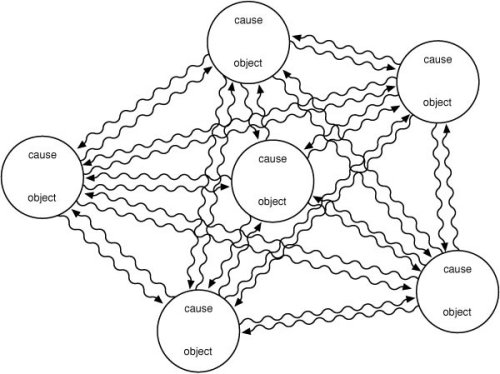
Burgess rejects the tendency to move from emergence to non-reductive physicalism. He agress that it is a plausible explanation, but argues that it is not necessary. Rather, he proposes (as an alternative to dualism and reductive materialism), a perspective popularized by the philosopher Nancy Cartwright (1999, The Dappled World: A Study of the Boundaries of Sciences), causal pluralism. For Burgess, "Causal pluralism could also be called emergent pluralism."

What Can Neuroscience Tell Us About Religious Consciousness? A Complex Adaptive Systems Framework for Understanding the Religious Brain


Aaron Burgess

Cincinnati Christian University

American Political Science Association Conference
Current Research in Bio-politics: September 01, 2011


Abstract:

Neuro-theology (a science of religious experience) has deepened our understanding of the religious brain but the research inevitably runs into many of the classical philosophical problems associated with any study of human consciousness. One of these problems is what philosopher John Hick (2006) has called the hard problem of consciousness. If we are going to understand something about the causes and content of religious consciousness we must devise a framework that will adequately address the hard problem. This paper gives a brief overview of Sam Harris' and Andrew Newberg's research on the religious brain, as well as an introduction to the hard problem and concludes that the problem materializes because the question of consciousness is ill-posed by materialism and dualism. The paper concludes that a plural aspect conceptual framework known as Complex Adaptive Systems Theory (CAS) with its emphasis on dynamical emergence allows researchers to escape reductive materialism without resorting to dualism. Instead of turning to dualism or reductive materialism researchers can turn to complexity and emergence to frame studies in neuro-theology. Emergence provides a basis for a position promoted by Nancy Cartwright (2004) known as causal pluralism which is promising in helping to explain the complex relationships between the brain and the mind.
Here are the first few paragraphs of the article:


What Can Neuroscience Tell Us About Religious Consciousness?


The human animal is religious but why? Why do people among all human populations devote so much time and energy in religious activities? This ubiquitous nature of religious practice and belief has caused some to call the human animal the “religious species” or Homo religio (Jeeves & Brown, 2009). Lissner (1961) has written, “All the civilizations of mankind that have existed were rooted in religion and a quest for God” (p. 12). Dennett (2007) suggests that questions about religion and spirituality can now finally be embarked upon by science. If our capacity to have “spiritual” experiences represents an innate feature of our species, this means that such experiences must be produced from some part of our brain (Alper, 2006). Our brain is ultimately responsible for creating a conscious state that could be described as spiritual, mystical, or religious. Religion is not a supernatural, psychological or sociological phenomenon, but rather it is, foremost, biological.

For the past half century, few can deny that the field of neuroscience has experienced exponential growth and is thought to be one of the fastest growing scientific fields. Bennett (1998) reflected on the growth of neuroscience by asking, “Are neuroscientists the new Masters of the Universe?” New technologies in functional neuroimaging have fueled this growth. The most significant technologies allow scientists to image the human brain in a non-invasive manner, similar to taking a simple x-ray. One of these technologies, magnetic resonance imaging (MRI), allows researchers to look at the structure of brain tissue inside the actual skull of a human being. Then using functional MRI (fMRI) researchers can lay one brain image over another to provide an additional representation of brain regions that are metabolically dynamic (Lagopoulos, 2008). The significance of the fMRI is that researchers can observe a particular brain state while a subject is performing a cognitive task. “Brain activity can be observed in the language areas of the left cerebral cortex when a subject is asked, for instance, to provide verbs that accompany nouns” (Jeeves & Brown, 2006, p. 6).

With the tools of neuroimaging researchers have also undertaken projects to understand the neural correlates associated with the highest forms of cognitive functioning (Burgess, Gonen-Yaacovi, & Volle, 2011). Researchers now can image brain states while a subject is experiencing sympathy for another human being or while a subject is engaged in ethical thought. This means that it is also now possible to study the neural correlates of religious belief and practice since these activities are the products of cognition. Boyer (2001) has suggested that the explanation for religiosity in homo religio resides internally rather than externally. The religious impulse is rooted in the biology of the brain and therefore we are innately hard-wired by our genes to perceive a spiritual reality and to believe in supernatural forces that transcend the limitations of our physical reality.
Download the article and read it for yourself.

Monday, June 25, 2012

What I'm Reading, Part Two: Causal Pluralism


Somehow, while I was down the complex adaptive systems rabbit hole, I stumbled across another new term, causal pluralism. A quick and easy definition comes from Peter Godfrey-Smith (Harvard University):
Causal pluralism is the view that causation is not a single kind of relation or connection between things in the world. Instead, the apparently simple and univocal term "cause" is seen as masking an underlying diversity.
Leen De Vreese (Centre for Logic and Philosophy of Science; Ghent University, Belgium) argues that the field is still relatively new (as of early 2007), but the term “causal pluralism” already has accrued a variety of meanings, which he feels leads to confusion. In his paper, Disentangling Causal Pluralism, he tries to sort the threads of pluralistic approaches to causation and to identify the different perspectives held by their adherents.

I wonder if he sees the irony in trying to identify the individual ideas and perspectives that constitute the pluralist origins of causal pluralism?
Full Citation:
De Vreese, L, Weber, E. (2008). Disentangling Causal Pluralism. Robrecht Vanderbeeken, (ed.), Worldviews, Science, and Us: Studies of Analytical Metaphysics. A Selection of Topics From a Methodological Perspective. Singapore: World Scientific Publishing Company.
De Vreese identifies three basic kinds of causal pluralism:
  • conceptual causal pluralism
  • metaphysical causal pluralism
  • epistemological-methodological causal pluralism
Each of these positions has an opposite stance in the monistic causation camp.

However, his primary agenda in the paper is to reduce the (perceived) confusion in the field of causal
pluralism by identifying the perspectives being taken in relation to metaphysical causal pluralism. In essence, are there metaphysical reasons to accept causal pluralism, or is causal pluralism only a conceptual matter

He proposes three "central metaphysical questions" about causation to achieve this goal.
  • Firstly, is causation a realistic notion, or is it a mental construct? 
  • Secondly, does causation only occur as a real relation at the fundamental level of reality, or does it also occur as a real relation between objects at higher levels of reality? 
  • And lastly, does causation consist in a single empirical relation, or does it consist in diverse empirical relations deserving the label “causal”?
In answering these questions, he proposes four types of metaphysical perspectives regarding causation:
  • metaphysical causal constructivism
  • strong metaphysical causal pluralism
  • weak metaphysical causal pluralism 
  • metaphysical causal monism
He concludes his paper by making a clear distinction between conceptual and metaphysical causal pluralism from a third variation on causal pluralism, which he terms "epistemological-methodological causal pluralism." He is referring to "the importance of a pluralistic view on causation for our scientific knowledge in general on the one hand, and for assembling causal knowledge in specific domains of science on the other hand."

While he maintains that an epistemological-methodological approach to causation is still intimately related to conceptual and metaphysical causal pluralism, he feels it's still important to value this line of approach as different from the others, maintaining that "certain questions become utterly important for the sake of our knowledge."

That is one view of causal pluralism, but there are as many variations as there are authors, or at least that is how it seems to a new reader in the field.

In an article more specifically relevant to my work, Julian Reiss (Erasmus University Rotterdam, the Netherlands) published Causation in the Social Sciences: Evidence, Inference, and Purpose in Philosophy of the Social Sciences (2009).
Full Citation:
Reiss, J. (2009, Mar). Causation in the Social Sciences: Evidence, Inference, and Purpose. Philosophy of the Social Sciences, Volume 39(1); 20-40. doi: 10.1177/0048393108328150
Abstract:
All univocal analyses of causation face counterexamples. An attractive response to this situation is to become a pluralist about causal relationships. “Causal pluralism” is itself, however, a pluralistic notion. In this article, I argue in favor of pluralism about concepts of cause in the social sciences. The article will show that evidence for, inference from, and the purpose of causal claims are very closely linked.
This is definitely worth the read.

In an oft-cited paper, Christopher Hitchcock's Of Humean Bondage, he offers a classification scheme for the various forms of causal pluralism. He clarifies up front that he is interested in a pluralism of causation, not a pluralism of causes (which he claims all philosophers already accept). This paper relies more on classical logic arguments in assigning causation, but it is still useful.

Finally, Cognitive Psychology (2010) published Causal–explanatory pluralism: How intentions, functions, and mechanisms influence causal ascriptions by Tania Lombrozo, for which this is the abstract:
Both philosophers and psychologists have argued for the existence of distinct kinds of explanations, including teleological explanations that cite functions or goals, and mechanistic explanations that cite causal mechanisms. Theories of causation, in contrast, have generally been unitary, with dominant theories focusing either on counterfactual dependence or on physical connections. This paper argues that both approaches to causation are psychologically real, with different modes of explanation promoting judgments more or less consistent with each approach. Two sets of experiments isolate the contributions of counterfactual dependence and physical connections in causal ascriptions involving events with people, artifacts, or biological traits, and manipulate whether the events are construed teleologically or mechanistically. The findings suggest that when events are construed teleologically, causal ascriptions are sensitive to counterfactual dependence and relatively insensitive to the presence of physical connections, but when events are construed mechanistically, causal ascriptions are sensitive to both counterfactual dependence and physical connections. The conclusion introduces an account of causation, an ‘‘exportable dependence theory,” that provides a way to understand the contributions of physical connections and teleology in terms of the functions of causal ascriptions.
It's probably indicative of my geekiness that I am looking forward to reading this one.


Here are a few other papers, all of which are freely available online.