Pema Chödrön: Staying Present in Difficult Situations
As one of the most beloved voices of American Buddhism, Pema Chödrön shares traditional wisdom with openness, warmth, and spritely good humor. In the words of Sounds True producer Randy Roark, “It’s as if all that’s left of Pema is compassion, no matter what subject she’s addressing.” In this excerpt drawn from the new audio program Walking the Walk: Putting the Teachings into Practice When It Matters Most, Ani Pema relates a practice intended to help you grapple with troubling emotions during the most difficult periods of your life.
Download »
You might also enjoy:

When Pain is the Doorway
$13.37

Getting Unstuck
$16.72

Learning to Stay Present
$4.99

Coming Closer to Ourselves
Making Everything the Path of Awakening - How to use curiosity and compassion to befriend your most challenging emotions.
CD: US $23.42 (33% Off)
Audio Download: US $18.35 (25% Off)
CE Credits: US $20.00
Showing posts with label wisdom. Show all posts
Showing posts with label wisdom. Show all posts
Saturday, September 27, 2014
Pema Chödrön: Staying Present in Difficult Situations (Sounds True Producer's Pick)
This week's Sounds True Director's Pick is an excerpt from Pema Chödrön's Walking the Walk: Putting the Teachings into Practice When It Matters Most. Nice bit of wisdom


Tuesday, March 18, 2014
Song of the Reed: The Poetry of Rumi

The 2014 AWP Conference and Bookfair was held in Seattle, WA, from February 27 - March 1, 2014. Among the panel discussions, one focused and the life and poetry of Rumi, featuring Coleman Barks (one of the best known translators), Brad Gooch (author of a forthcoming Rumi biography), and Buddhist poet Anne Waldman (another of my favorites poets).
Song of the Reed: The Poetry of Rumi
Event Date: 03.01.14
Speakers: Coleman Barks, Brad Gooch, Anne Waldman
Song of the Reed: The Poetry of Rumi from Association of Writers and Writing Programs on FORA.tv
Thirteenth-century Persian poet Rumi is now the most popular poet in the United States. In this event, leading Rumi interpreter, Coleman Barks, reads his beloved versions of the Sufi poet’s verse, biographer Brad Gooch shares research into Rumi’s lived experience, and poet Anne Waldman reflects on Rumi’s contribution to poetry’s ecstatic tradition.
Bio
Coleman Barks has taught poetry and creative writing at the University of Georgia for thirty years. He is the author of numerous Rumi translations. His work with Rumi was the subject of an hour-long segment in Bill Moyers' Language of Life series on PBS, and he is a featured poet and translator in Bill Moyers' poetry special, "Fooling with Words." His own books of poetry include Winter Sky: Poems 1968-2008.
Brad Gooch’s Flannery: A Biography of Flannery O’Connor was a 2010 National Book Critics Circle Award finalist and a New York Times notable book. His short story collection Jailbait and Other Stories won the 1985 Writer’s Choice Award, sponsored by the Pushcart Foundation and National Endowment for the Arts. A Guggenheim fellow in biography, he has received a National Endowment for the Humanities fellowship and is a professor of English at William Paterson University. He is currently at work on a biography and translations of Rumi.
Anne Waldman is the author of more than forty books, including Fast Speaking Woman and Vow to Poetry, a collection of essays, and The Iovis Trilogy: Colors in the Mechanism of Concealment, an epic poem and twenty-five-year project. With Allen Ginsberg she co-founded the Jack Kerouac School of Disembodied Poetics at Naropa University, where she is a Distinguished Professor of Poetics. She received a 2013 Guggenheim Fellowship, the Poetry Society of America’s Shelley Memorial Award, and has recently been appointed a Chancellor of the Academy of American Poets.
Saturday, December 21, 2013
Richard Rohr's Daily Meditation - The Loss of Any Alternative Consciousness
A little wisdom for your Saturday morning.
Richard Rohr's Daily Meditation: The Loss of Any Alternative Consciousness
Saturday, December 21, 2013
Winter Solstice (Northern Hemisphere)

Seven Themes of an Alternative OrthodoxyThe Loss of Any Alternative Consciousness (Meditation 43 of 52)
Seventh Theme: Reality is paradoxical and complementary. Non-dual thinking is the highest level of consciousness. Divine union, not private perfection, is the goal of all religion (Goal).
Hugh of St. Victor (1078-1141) and Richard of St. Victor (1123-1173) wrote that humanity was given three sets of eyes, each building on the previous one. The first set of eyes were the eyes of the flesh (thought or sight), the second set of eyes were the eyes of reason (meditation or reflection), and the third set of eyes were the eyes of true understanding (contemplation). They represent the last era of broad or formal teaching of the contemplative mind in the West, although St. Bonaventure (1221-1274) and Francisco de Osuna (1492-1542) are some rare examples who carry it into the following centuries. But for the most part, the formal teaching of the contemplative mind, even in the monasteries, winds down by the beginning of the fourteenth century. No wonder we so badly needed some reformations by the sixteenth century.
I cannot emphasize strongly enough that the loss of the contemplative mind is at the basis of much of the shortsightedness and religious crises of the Western world. Lacking such wisdom, it is very difficult for churches, governments, and leaders to move beyond ego, the desire for control, and public posturing. Everything divides into oppositions such as liberal versus conservative, with vested interests pulling against one another. Truth is no longer possible at this level of conversation. Even theology becomes more a quest for power than a search for God and Mystery.
Adapted from The Naked Now: Learning to See as the Mystics See, pp. 28-29
The Daily Meditations for 2013 are now available
in Fr. Richard’s new book Yes, And . . .
~ Image: The Incredulity of Saint Thomas (detail), c. 1601-1602, by Caravaggio
Saturday, November 23, 2013
Sacred Silence in Sufism and the Vedanta - 2013 Festival of Faiths

This is a lengthy and interesting talk from this Fall 2013's Festival of Faiths, a festival devoted to Sacred Silence: Pathway to Compassion. Forum presentations focused on compassion and common action that our community of many faiths can embrace.
From Wikipedia:
Seyyed Hossein Nasr is a Muslim Persian philosopher and renowned scholar of comparative religion, a lifelong student and follower of Frithjof Schuon, and writes in the fields of Islamic esoterism, Sufism, philosophy of science, and metaphysics.From Spiritual Paths:
Nasr was the first Muslim to deliver the prestigious Gifford Lectures, and in year 2000, a volume was devoted to him in the Library of Living Philosophers. Professor Nasr speaks and writes based on the doctrine and the viewpoints of the perennial philosophy on subjects such as philosophy, religion, spirituality, music, art, architecture, science, literature, civilizational dialogues, and the natural environment.
Swami Atmarupananda is a renowned scholar, teacher, and Monk of the Ramakrishna Order of India, a monastic organization dedicated to the teaching of Vedanta. He joined the Order in 1969 and spent many years in India engaged in monastic, scholarly and spiritual training. He combines a contemplative and mystical approach with a extraordinary scholarly training and a good sense of humor that are helpful in explaining subtle concepts of Hinduism to Western students.

Sacred Silence in Sufism and the Vedanta - 2013 Festival of Faiths
Published on May 27, 2013
Seyyed Hossein Nasr, one of the world's leading experts on Islamic science and spirituality, and Swami Atmarupananda, renowned teacher of Hinduism, will talk about Compassion as being intrinsic to who we really are -- the true Self, the "image of God" which is free of all alienation. And that is wisdom itself, love itself, discovered in inner silence -- the still point that unites us to both God and the universe.
Tuesday, September 17, 2013
Carl Jung: The Wisdom of the Dream - A Three-Part Documentary on the Psychologist’s Life & Ideas

These videos comprise a three-part series, produced by PBS, on the life and works of the great thinker and psychiatrist Carl Gustav Jung (born July 26, 1875, Switzerland). Jung became interested in psychiatry during his medical studies and soon joined the group around Sigmund Freud (a relationship that lasted six tumultuous years).
Jung believed that the minds of mentally ill persons all had similar contents, much of which he recognized from his own interior life, described in his autobiography Memories, Dreams, Reflections and in The Red Book (cheaper reader's version). He spent his life trying to understand the workings of the psyche, a project that led him to develop the methods of analytical psychiatry. Jung's model looked at the role in his patients' lives of what he termed the personal and collective unconscious, as expressed through dreams, myths, and outer events (synchronicity).
Jung created some of the best known psychological concepts including the archetype, the collective unconscious, the complex, and synchronicity. The Myers-Briggs Type Indicator (MBTI), a popular psychometric instrument, was developed from Jung's theory of personality typology.
Watch Carl Jung: The Wisdom of the Dream: A Three-Part Documentary on the Psychologist’s Life & Ideas
September 16th, 2013
Volume 1, ‘A Life of Dreams:
“The interpretation of dreams,” Sigmund Freud famously said, “is the royal road to a knowledge of the unconscious activities of the mind.” Freud’s younger colleague Carl Gustav Jung agreed with him, but with important differences.
Whereas Freud saw dreams as manifestations of repressed sexual wishes disguised in a form drawn exclusively from the residue of the memories of events from the previous day and from childhood, Jung believed dreams deal with a much wider range of human concerns and are drawn not just from personal memory but from a range of universal psychological archetypes he called the “collective unconscious.”
In this fascinating three-hour documentary series from 1989, The Wisdom of the Dream, we learn about Jung’s life and ideas. Produced and directed by Stephen Segaller, the films draw on rare interviews and footage of Jung, as well as interviews by prominent psychologists, including some who knew Jung personally. Advocates of Jung’s theories explain the basis of his ideas and their continuing influence. The films are narrated by writer Sarah Dunant. Passages from Jung’s writings are read by actor Max Von Sydow.
Volume 2, ‘Inheritance of Dreams’:
Volume 3, ‘A World of Dreams’:
via Partially Examined Life
Related content:
Saturday, June 29, 2013
The Loving Brain - Tools for Real Issues (Free Telecourse Hosted by Rick Hanson, PhD)
Rick Hanson, PhD, is hosting another free telecourse, this time through en*theos, the latest and continuously expanding project of Brian Johnson (founder of the now-defunct social-networking site, Zaadz [purchased then shut down by Gaiam]).
This particular course is called The Loving Brain: Tools for Real Issues. Rick will be speaking with Harville Hendrix and Helen LaKelly Hunt, Tara Brach, Paul Gilbert, Geneen Roth, Paul Zak, Sara Gottfried, MD, Christine Carter, and Rick Hanson.
This particular course is called The Loving Brain: Tools for Real Issues. Rick will be speaking with Harville Hendrix and Helen LaKelly Hunt, Tara Brach, Paul Gilbert, Geneen Roth, Paul Zak, Sara Gottfried, MD, Christine Carter, and Rick Hanson.
July 15 - September 2, 2013
Join neuropsychologist Rick Hanson and 7 top-tier academics, clinicians, and teachers as they apply new research, ancient wisdom, and powerful clinical insights to the messy, high stakes issues many people face in their work, family, friendship, and romantic relationships.
Mouse over the images to learn more about each speaker and their session! (at the site, not here)
Harville Hendrix and Helen LaKelly Hunt
Tara Brach
Paul Gilbert
Geneen Roth
Paul Zak
Sara Gottfried, MD
Christine Carter
Rick HansonYOUR HOST
Rick Hanson, Ph.D., is a neuropsychologist and author of Hardwiring Happiness: The New Brain Science of Contentment, Calm, and Confidence (coming in October 2013), Buddha’s Brain: The Practical Neuroscience of Happiness, Love, and Wisdom, and Just One Thing: Developing a Buddha Brain One Simple Practice at a Time. Founder of the Wellspring Institute for Neuroscience and Contemplative Wisdom and Affiliate of the Greater Good Science Center at UC Berkeley, he’s been an invited speaker at Oxford, Stanford, and Harvard, and taught in meditation centers worldwide.
An authority on self-directed neuroplasticity, Dr. Hanson’s work has been featured on the BBC, NPR, Fox Business, Consumer Reports Health, U.S. News and World Report, and O Magazine. He edits the Wise Brain Bulletin, and his weekly e-newsletter – Just One Thing – has over 73,000 subscribers, and also appears on Huffington Post, Psychology Today, and other major websites. He has several audio programs with Sounds True, and his first book was Mother Nurture: A Mother’s Guide to Health in Body, Mind, and Intimate Relationships.
A summa cum laude graduate of UCLA, Dr. Hanson is a trustee of Saybrook University. He also served on the board of Spirit Rock Meditation Center for nine years, and was President of the Board of Family Works, a community agency. He began meditating in 1974, trained in several traditions, and leads a weekly meditation gathering in San Rafael, CA. He enjoys rock-climbing and taking a break from emails. He and his wife have two adult children.
For more information about Rick, please go to www.RickHanson.net


Tuesday, April 30, 2013
THE MIND REPORT - Paul Bloom and Barry Schwartz

On this week's Mind Report from bloggingheads.tv, Paul Bloom, professor of psychology at Yale University, speaks with Barry Schwartz, the Dorwin Cartwright Professor of Social Theory and Social Action in the psychology department at Swarthmore College, Swarthmore, Pennsylvania.
Schwartz is author of The Paradox of Choice: Why More Is Less (2005), Practical Wisdom: The Right Way to Do the Right Thing (2011), and The Battle for Human Nature: Science, Morality and Modern Life (1987), among other books. Bloom is the author of Descartes' Baby: How the Science of Child Development Explains What Makes Us Human (2005) and How Pleasure Works: The New Science of Why We Like What We Like (2011), as well as other books.
Paul Bloom (Yale University) and Barry Schwartz (Swarthmore College)
PLAY ENTIRE VIDEO
FOLLOW:Paul Bloom
Recorded: Apr 23 Posted: Apr 27, 2013
Download: wmv | mp4 | mp3 | fast mp3
LINKS MENTIONED:
Thursday, December 20, 2012
Wade Davis - The Wayfinders: Why Ancient Wisdom Matters in the Modern World

Interesting talk about the loss of knowledge as we progressively destroy the few remaining indigenous cultures around the planet. This is one of several videos being pout up online from the Creative Innovation 2012 conference in Australia.
The Wayfinders: Why Ancient Wisdom Matters in the Modern World. Wade Davis
Wade Davis is an Explorer-in-Residence at the National Geographic Society. An ethnographer, writer, photographer, and filmmaker, Davis holds degrees in anthropology and biology and received his Ph.D. in ethnobotany, all from Harvard University. In this talk at the Creative Innovation 2012 conference, Davis speaks about the world's at-risk indigenous cultures, and the vast archive and knowledge and expertise that they represent, and how we can learn from them. November 2012.
Wednesday, October 17, 2012
Authors@Google Will Tuttle: The World Peace Diet - Being Healthy and Saving the Planet
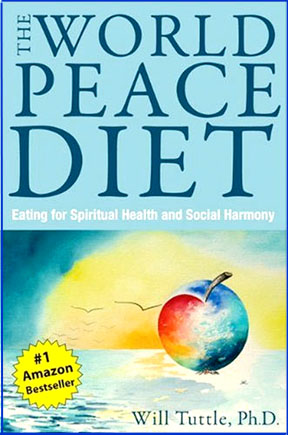
According to Wikipedia, Will Tuttle is a former Zen monk who studied in Korea. He holds a master's in humanities from San Francisco State University and a PhD in the philosophy of education from the University of California, Berkeley. He often speaks at vegetarian, spiritual, and animal rights conferences and at local vegetarian societies. He also speaks about inner and outer peace and harmony in the context of a vegan diet.
I support the majority of his views, but I am an omnivore - and I try to eat organic, free range chicken, turkey, grassfed beef and elk, and wild caught salmon. Yes, the world might be a better place if people like me stopped eating meat altogether, but alas, I am a human being in a human body and I give my body the nutrition it needs. I tried being a vegetarian for a while (and I know more than most about how to combine foods to get adequate amino acids), but I was not able to get sufficient nutrition for my lifestyle.
Take that for what it's worth - your results may vary.
About The World Peace Diet: VegNews reviewed Tuttle's book with considerable praise, suggesting he sought to
"...lift the discussion of veganism to a higher level. He argues cogently for a spiritual component, one where the consequence of using and consuming animals, so ubiquitous in human society, affects us not only in ways that can be measured physically, but spiritually as well. He convincingly shows how science and patriarchical religions, so often at odds in Western Society, are both cut from the same cloth—one that reinforces the domination of women, animals and nature in order to further the interests of the ruling elite. Yet for all of the complexities of how we ended up where we are, Tuttle’s remedy of spiritual veganism is offered as the cure for what ails us."At the site for the book, they offer some free downloads, which I will link to below. But now, on to our feature presentation.
Authors@Google - Will Tuttle: The World Peace Diet
If you wonder how the food you eat affects your health and well-being and that of those you care about, you shouldn't miss this talk. Will Tuttle delivers an inspiring talk about the food we choose, where it comes from, and how it affects us physically, culturally, and spiritually. You will learn how we have become disconnected from our innate wisdom, and how to make positive changes that promote wellness, encourage wisdom and abundance, and minimize our eco-footprints on the Earth.Free downloads from Will Tuttle and his website:
We are offering 2 complimentary downloads on this page
1 - "Intuitive Cooking" - A PDF file of plant-based recipes by Madeleine Tuttle
Please enjoy and share.
2 - "Living in Harmony with All Life" - an audio discourse by Dr. Will Tuttle - English & German
These works are licensed under a Creative Commons Attribution-Noncommercial-No Derivative Works 3.0 Unported License.
To download "Intuitve Cooking" and/or the MP3 audio file of the 75-minute CD, Living In Harmony With All Life by Dr. Tuttle, please enter your email address here. You will automatically be taken to a page with the download links.
Downloading the PDF books below requires the submission of a first name and email address at their page, linked to at the top of the section.
- Click here to download a printable PDF file of The World Peace Diet by Dr. Will Tuttle
- Click here to download a Spanish-language printable PDF file of The World Peace Diet by Dr. Will Tuttle
Monday, September 10, 2012
Locating the Stillness at the Center

If our feelings and thoughts activate one another in a hectic way, then we become caught up in the confusion that surrounds us. However, if we can locate the stillness at the center of our hearts, we can find composure in almost any situation.
The quote is from today's Daily Om.
Sunday, August 26, 2012
Karuna Cayton: The Misleading Mind, Authors at Google

Nice talk. Karuna Cayton is the author of The Misleading Mind: How We Create Our Own Problems and How Buddhist Psychology Can Help Us Solve Them.
Google has disabled embedding (how annoying is that?), so you can watch the video at their YouTube page.
Karuna Cayton: The Misleading Mind, Authors at Google
Psychotherapist and author Karuna Cayton talks about his book The MIsleading Mind: How We Create Our Own Problems and How Buddhist Psychology Can Help Us Solve Them. He introduces a process for working with, rather than against, depression, anxiety, and stress by recognizing the habitual ways our minds perceive, react, and ultimately mislead us. He also presents practical exercises for stepping onto the path of a radically liberating self-understanding. While the essence of the wisdom he presents is central to Buddhism, he covers it in a way that is accessible to all.
KARUNA CAYTON is the author of The Misleading Mind. He's a psychotherapist who spent twelve years working with Tibetan refugees in Nepal and studying with Buddhist masters. His Karuna Group practice applies Buddhist psychology to individual and organizational clients. You can visit him online at http://www.karunagroup.com
Saturday, August 25, 2012
Pema Chödrön - Stay With Your Broken Heart
This wisdom quote from Pema Chödrön was posted at Tricycle's Brief Teachings page - this is a hard one to master, but it is also one of the most important skills we can develop. When we can learn to stay with the pain, or sadness, or whatever - rather than stuff it down or try to escape it through addictions - we become more present in our lives, present to others, and less likely to be reactive or defensive. This has been for me a path toward happiness.


Stay with Your Broken Heart
When anyone asks me how I got involved in Buddhism, I always say it was because I was so angry with my husband. The truth is that he saved my life. When that marriage fell apart, I tried hard—very, very hard—to go back to some kind of comfort, some kind of security, some kind of familiar resting place. Fortunately for me, I could never pull it off. Instinctively I knew that annihilation of my old dependent, clinging self was the only way to go. . . .Life is a good teacher and a good friend. Things are always in transition, if we could only realize it. Nothing ever sums itself up in the way that we like to dream about. The off-center, in-between state is an ideal situation, a situation in which we don’t get caught and we can open our hearts and minds beyond limit. It’s a very tender, nonaggressive, open-ended state of affairs.To stay with that shakiness—to stay with a broken heart, with a rumbling stomach, with the feeling of hopelessness and wanting to get revenge—that is the path of true awakening. Sticking with that uncertainty, getting the knack of relaxing in the midst of chaos, learning not to panic—this is the spiritual path. Getting the knack of catching ourselves, of gently and compassionately catching ourselves, is the path of the warrior. We catch ourselves one zillion times as once again, whether we like it or not, we harden into resentment, bitterness, righteous indignation— harden in any way, even into a sense of relief, a sense of inspiration.Every day we could think about the aggression in the world, in New York, Los Angeles, Halifax, Taiwan, Beirut, Kuwait, Somalia, Iraq, everywhere. All over the world, everybody always strikes out at the enemy, and the pain escalates forever. Every day we could reflect on this and ask ourselves, “Am I going to add to the aggression in the world?” Every day, at the moment when things get edgy, we can just ask ourselves, “Am I going to practice peace, or am I going to war?”
From The Buddha Is Still Teaching, selected and edited by Jack Kornfield, © 2010. Reprinted with permission of Shambhala Publications, Inc., Boston. www.shambhala.com.
Saturday, August 11, 2012
Neurobiology of Wisdom - A Literature Overview

This is an article from the April 2009 issue of JAMA's Archives of General Psychiatry - it's one of the rare open source articles published by JAMA.
Wisdom is an idea we talk about a lot - and I am sure most of us would like to feel we have more of it than we currently do. But what is wisdom? Is there an accepted definition that we can then create an assessment to measure for in others?
The authors do offer a collection of traits associated with wisdom in this slide:

It's an interesting article - and it can be downloaded as a PDF.
Neurobiology of Wisdom: A Literature Overview
Arch Gen Psychiatry. 2009;66(4):355-365.
Original Article | April 2009
ABSTRACT
Context Wisdom is a unique psychological trait noted since antiquity, long discussed in humanities disciplines, recently operationalized by psychology and sociology researchers, but largely unexamined in psychiatry or biology.
Objective To discuss recent neurobiological studies related to subcomponents of wisdom identified from several published definitions/descriptions of wisdom by clinical investigators in the field, ie, prosocial attitudes/behaviors, social decision making/pragmatic knowledge of life, emotional homeostasis, reflection/self-understanding, value relativism/tolerance, and acknowledgment of and dealing effectively with uncertainty.
Data Sources Literature focusing primarily on neuroimaging/brain localization and secondarily on neurotransmitters, including their genetic determinants.
Study Selection Studies involving functional neuroimaging or neurotransmitter functioning, examining human (rather than animal) subjects, and identified via a PubMed search using keywords from any of the 6 proposed subcomponents of wisdom were included.
Data Extraction Studies were reviewed by both of us, and data considered to be potentially relevant to the neurobiology of wisdom were extracted.
Data Synthesis Functional neuroimaging permits exploration of neural correlates of complex psychological attributes such as those proposed to comprise wisdom. The prefrontal cortex figures prominently in several wisdom subcomponents (eg, emotional regulation, decision making, value relativism), primarily via top-down regulation of limbic and striatal regions. The lateral prefrontal cortex facilitates calculated, reason-based decision making, whereas the medial prefrontal cortex is implicated in emotional valence and prosocial attitudes/behaviors. Reward neurocircuitry (ventral striatum, nucleus accumbens) also appears important for promoting prosocial attitudes/behaviors. Monoaminergic activity (especially dopaminergic and serotonergic), influenced by several genetic polymorphisms, is critical to certain subcomponents of wisdom such as emotional regulation (including impulse control), decision making, and prosocial behaviors.
Conclusions We have proposed a speculative model of the neurobiology of wisdom involving frontostriatal and frontolimbic circuits and monoaminergic pathways. Wisdom may involve optimal balance between functions of phylogenetically more primitive brain regions (limbic system) and newer ones (prefrontal cortex). Limitations of the putative model are stressed. It is hoped that this review will stimulate further research in characterization, assessment, neurobiology, and interventions related to wisdom.
Our suggested model of the neurobiology of wisdom raises a conceptual issue. How can our holistic concept of wisdom as a distinct trait, which is consistent with the unified theory of mind,130 be compatible with the reductionism implicit in the relationship between individual brain regions and specific mental functions hypothesized in the neuroimaging research reviewed earlier? We believe that these 2 perspectives can coexist, just as Takahashi and Overton5 have sought to integrate the analytic and synthetic models of wisdom. Examining functional divisions in the brain via fMRI and similar methods is potentially valuable. For example, Jung and Haier131 recently reviewed neuroimaging studies relevant to human intelligence and reasoning. They concluded that there are several distinct brain regions that contribute to intelligence and reasoning and that the coordination among these regions appears to follow a pattern they termed parieto-frontal integration. As expected, there is partial overlap in the brain regions (eg, ACC, DLPFC) implicated in their review and ours. Nonetheless, there are several important characteristics in which wisdom differs from intelligence and reasoning in that it also includes domains such as practical application of knowledge, use of knowledge for the common social good, and integration of affect and knowledge.12 ,132 Brain regions putatively involved in wisdom that were not prominent in the review of intelligence and reasoning131 include limbic cortex, MPFC, and striatum. Although there is general agreement regarding important functional divisions within the brain, the nature of these divisions is almost assuredly oversimplified and will undergo continual revisions.5 The same would apply to specific subcomponents of wisdom.
The possible neurochemical and genetic contributions to wisdom (Table 1) are related to many of those identified in psychopathology. The fact that monoaminergic functioning is related to stress reactivity and emotional homeostasis is not surprising. The possible roles of oxytocin and vasopressin in prosocial behaviors demonstrate the importance of examining nontraditional neurotransmitters.
Empirical research on wisdom is in its infancy. There are several potentially valuable lines of research that may be suggested.
Wisdom warrants scientific study with the same rigorous methods that we demand in investigations on various forms of psychopathology. At the same time, progress in such research will require maintaining the wisdom to recognize the limits of available scientific methods.
Saturday, July 28, 2012
Barry Schwartz – Practical Wisdom: The Right Way to Do the Right Thing

The Association for Psychological Science posted this video from the APS 24th Annual Convention (2012) featuring Barry Schwartz speaking about his book, Practical Wisdom: The Right Way to Do the Right Thing.
Below the video is the first entry from the Practical Wisdom blog at Psychology Today, which offers a good overview of the book. For a shorter video, you can view the TED Talk, Using Our Practical Wisdom.
Barry Schwartz – Practical Wisdom: The Right Way to Do the Right Thing
Practical Wisdom: The Right Way to Do the Right Thing
Why neither rules nor incentives are enough to solve the problems we face.
We Americans are growing increasingly disenchanted with the institutions on which we depend. We can't trust them. They disappoint us. They fail to give us what we need. This is true of schools that are not serving our kids as well as we think they should. It is true of doctors who seem too busy to give us the attention and unhurried care we crave. It's true of banks that mismanage our assets, and of bond-rating agencies that fail to provide an accurate assessment of the risk of possible investments. It's true of a legal system that seems more interested in expedience than in justice. It's true of a workplace in which we fulfill quotas and hit targets and manage systems but wind up feeling disconnected from the animating forces that drew us to our careers in the first place.
And the disenchantment we experience as recipients of services is often matched by the dissatisfaction of those who provide them. Most doctors want to practice medicine as it should be practiced. But they feel helpless faced with the challenge of balancing the needs and desires of patients with the practical demands of hassling with insurance companies, earning enough to pay malpractice premiums, and squeezing patients into seven-minute visits--all the while keeping up with the latest developments in their fields. Most teachers want to teach kids the basics and at the same time excite them with the prospects of educating themselves. But teachers feel helpless faced with the challenge of reconciling these goals with mandates to meet targets on standardized tests, to adopt specific teaching techniques, and to keep up with the ever-increasing paperwork. No one is satisfied--not the professionals and not their clients.
When we try to make things better, we generally reach for one of two tools. The first tool is a set of rules and administrative oversight mechanisms that tell people what to do and monitor their performance to make sure they are doing it. The second tool is a set of incentives that encourage good performance by rewarding people for it. The assumption behind carefully constructed rules and procedures, with close oversight, is that even if people do want to do the right thing, they need to be told what that is. And the assumption underlying incentives is that people will not be motivated to do the right thing unless they have an incentive to do so. Rules and incentives. Sticks and carrots. What else is there?
This blog is an attempt to answer this question. In our new book, Practical Wisdom: The Right Way to Do the Right Thing, we acknowledge the need for both rules and incentives. But rules and incentives are not enough. They leave out something essential. It is what classical philosopher Aristotle called practical wisdom (his word was phronesis). Without this missing ingredient, neither rules (no matter how detailed and well monitored) nor incentives (no matter how clever) will be enough to solve the problems we face.
The term practical wisdom sounds like an oxymoron to modern ears. We tend to think of "wisdom" as the opposite of "practical." Wisdom is about abstract, ethereal matters like "the way" or "the good" or "the truth" or "the path," and it is the province of special sages. Aristotle's teacher, Plato, shared this view that wisdom was theoretical and abstract, and the gift of only a few. But Aristotle disagreed. He thought that our fundamental social practices constantly demanded choices--like when to be loyal to a friend, or how to be fair, or how to confront risk, or when and how to be angry--and that making the right choices demanded wisdom. Aristotle distilled the idea of practical wisdom in his classic book, Nicomachean Ethics. Ethics, said Aristotle, was not mainly about establishing moral rules and following them. It was about performing a particular social practice well-being a good friend or parent or doctor or soldier or citizen or statesmen--and that meant figuring out the right way to do the right thing in a particular circumstance, with a particular person, at a particular time.
This is what took practical wisdom. Aristotle's Ethics was about what we needed to learn to succeed at our practices and to flourish as human beings. We needed to learn certain character traits like loyalty, self-control, courage, fairness, generosity, gentleness, friendliness, and truthfulness--a list that today would also include perseverance, integrity, open-mindedness, thoroughness, and kindness. Aristotle called these traits "excellences" (arete)-often translated as "virtues." But the master excellence--the virtue at the heart of his Ethics--was practical wisdom. None of these other traits could be exercised well without it.
Why "wisdom"? Why "practical"? Why not just a good set of rules to follow? Most experienced practitioners know that rules only take them so far. Consider the doctor. How should the doctor balance respect for the autonomy of her patients when it comes to making decisions with the knowledge that sometimes the patient is not the best judge of what is needed? How should the doctor balance the desire to spend enough time with each patient to be thorough, compassionate, and understanding with the need to see enough patients in a day to keep the office solvent? How should the doctor balance the desire to tell patients the truth, no matter how difficult, with the desire to be kind?
Doctors--and teachers attempting to teach and inspire, or lawyers attempting to provide proper counsel and serve justice--are not puzzling over a choice between the "right" thing and the "wrong" thing. The common quandaries they face are choices among right things that clash. A good doctor needs to be honest with her patients, and kind to her patients, and to give them the hope they need to endure difficult treatments. But in diagnosing or treating a patient, these aims can be at odds, and the doctor must decide whether to be honest or kind, or more likely how to balance honesty and kindness in a way that is appropriate for the patient in front of her.
Aristotle recognized that balancing acts like these beg for wisdom, and that abstract or ethereal wisdom would not do. Wisdom has to be practical because the issues we face are embedded in our everyday work. They are not hypotheticals being raised in college ethics courses. They are quandaries that any practitioner must resolve to do her work well. Practical wisdom combines the will to do the right thing with the skill to figure out what the right thing is.
In this blog, we will describe the essential characteristics of practical wisdom, and show why it's needed to inform the everyday activities of doctors, lawyers, and teachers--parents, lovers, and friends. We will discuss some impressive examples of wisdom--and its absence-in practice. We will show that rules and incentives--the tools we reach for to improve our schools or our clinics, or even our banks--are no substitute for wisdom. Worse, they are the enemies of wise practice. And finally we will suggest that when wisdom is cultivated it is not only good for society but is, as Aristotle thought, a key to our own happiness. Wisdom isn't just something we "ought" to have. It's something we want to have to flourish. Our book makes all of these points in detail. In the blog, we will try to give you a taste of the arguments in the book.
We've been working together on practical wisdom, and teaching courses in it, for a decade. During that time, we have seen the failure of the institutions we rely on grow more acute, and the need for wisdom grow more urgent. We hope this blog will help people appreciate the central importance of practical wisdom, and induce them to ask how they can nurture it in their own lives and in the lives of the people with whom they live and work.
Wednesday, June 27, 2012
Upaya Dharma Podcasts - Shinzan Palma: The Wisdom in Doing Nothing
Another cool dharma podcast from Upaya Zen Center - and this is one I need to learn for myself. I have a hard time with doing nothing. Giving over a whole day to uninterrupted meditation would be excruciating for me - there is so much to read and so much to write. And at the same time, I can see how valuable it would be for me to do this from time to time.
Shinzan Palma: 06-23-2012: The Wisdom in Doing Nothing
Speaker: Shinzan Palma
Recorded: Saturday Jun 23, 2012
Episode Description: A daylong silent meditation retreat provides us with the experience of deep periods of uninterrupted meditation. We do sitting and walking meditation throughout the day, one hour of work practice, three informal meals and dharma talk by the teacher in the afternoon. In this dharma talk Shinzan provides motivation and direction for our day.Bio: Shinzan Jose Manuel Palma was born in Veracruz, Mexico. He has been practicing Zen since 1996. He met his former teacher, Korean Zen Master Samu Sunim in Mexico City and trained under his guidance for 8 years. He did a residential training for 4 years at the Zen Buddhist Temple in Toronto, Canada and was ordained as a novice priest by Samu Sunim in 2004. After leaving Canada, he was invited by Roshi Joan Halifax to come to Upaya in 2006. Shinzan asked Roshi to be her student and he was re-ordained as a Priest in 2007 by Roshi Joan Halifax. Since then, he has been at Upaya practicing with the community. He is now the Head Monk and Tenzo, giving guidance to the residents on Zen training. He became Dharma holder on March, 2010. He has a sincere and strong heart committed to the Dharma.Podcast: Play in new window | Download

Thursday, April 05, 2012
Generation Wise - The Buddhist Geeks Conference (2011)
Nice conversation on the evolution of 21st Century dharma from last years' Buddhist Geeks Conference. This year's conference is in Boulder . . . see the box below.

Generation Wise
Wednesday, December 21, 2011
Mary Grace Orr - The Wise and Fearless Heart
This is a very useful dharma teaching from Mary Grace Orr that she gave at Spirit Rock Meditation Center.
Mary Grace Orr

Lately, my own practice is moving more and more into the monastic world. As I teach out of that nourishment, I find people hungry for the traditional, solid forms of the Dharma. I see people's lives changing when they engage in these forms. Certainly, as I deepen my own Sutta study, I find the traditional ideas so helpful it encourages me to delve further.
2011-12-16 The Wise & Fearless Heart 62:26
Download Stream Order
Developing the Brahma Viharas (good will, compassion, gladness and equanimity), to strengthen the heart and meet fear.

Insight Meditation Retreat
Saturday, December 17, 2011
Dalai Lama - The Perfection of Wisdom
ESSENCE OF THE HEART SUTRA:
The Dalai Lama's
Heart of Wisdom Teachings
by H.H. the Dalai Lama
trans. & ed. by Geshe Thupten Jinpa
more...Dalai Lama Quote of the Week
"The mantra of the perfection of wisdom--the mantra of great knowledge, the unexcelled mantra, the mantra equal to the unequalled, the mantra that quells all suffering--is true because it is not deceptive."--The Heart SutraThe perfection of wisdom is called "the mantra of great knowledge" because thoroughly understanding its meaning eliminates the three poisons of craving, hatred, and delusion. It is called the "unexcelled mantra" because there is no greater method than the perfection of wisdom for saving one from the extremes of cyclic existence and the isolated peace of individual nirvana. It is called the mantra "equal to the unequalled" because the Buddha's enlightened state is unequalled, and, through the deepest realization of this mantra, one attains a state equal to that state. Finally, the perfection of wisdom is known as the "mantra that quells all suffering" because it quells manifest sufferings and also removes all propensities for future suffering.
The perfection of wisdom is the ultimate truth, thus the statement "it is true." In the realm of the ultimate truth, there is no disparity, as there is in conventional reality, between appearance and reality, and thus this manifest ultimate truth is "not deceptive." This nondeceptiveness also suggests that, through actualization of this mantra, the perfection of wisdom can enable one to attain total freedom from suffering and its causes. From this perspective too, we can say that it is the truth.
"The mantra of the perfection of wisdom is proclaimed:--from Essence of the Heart Sutra: The Dalai Lama's Heart of Wisdom Teachings by H.H. the Dalai Lama, translated & edited by Geshe Thupten Jinpa
tadyatha gate gate paragate parasamgate bodhi svaha!
Shariputra, the bodhisattvas, the great beings, should train in the perfection of wisdom in this way."
Essence of the Heart Sutra • Now at 2O% off!
(Good until December 23rd).


Wednesday, November 23, 2011
TEDxNewEngland | John Hunter, Unknowing Can be the Beginning of Wisdom
An open mind is beginner's mind - unknowing is an opening.
TEDxNewEngland - John Hunter, Unknowing Can be the Beginning of Wisdom
Acceptance of reality is often a beginning step in mastering one's self. How does one live in this vast sea of uncertainty without fear, and with ease and happiness? John Hunter helps school children reveal these secrets to carry through their whole lives. He will show how we can learn from children that, unknowing is the beginning of wisdom, and that our most glaring weakness may be the pointer to our greatest strengths.
Thursday, September 15, 2011
Sogyal Rinpoche's Glimpse of the Day for September 15, 2011

What the world needs more than anything is bodhisattvas, active servants of peace, “clothed,” as Longchenpa said, “in the armor of perseverance,” dedicated to their bodhisattva vision and to the spreading of wisdom into all reaches of our experience. We need bodhisattva lawyers, bodhisattva artists and politicians, bodhisattva doctors and economists, bodhisattva teachers and scientists, bodhisattva technicians and engineers, bodhisattvas everywhere, working consciously as channels of compassion and wisdom at every level and in every situation of society; working to transform their minds and actions and those of others, working tirelessly in the certain knowledge of the support of the buddhas and enlightened beings for the preservation of our world and for a more merciful future.
Amen.
Subscribe to:
Posts (Atom)