Showing posts with label wellness. Show all posts

Thursday, May 09, 2013

The Biology of Kindness: How It Makes Us Happier & Healthier

A nice little piece from Time Magazine. The author of the article, Maia Szalavitz, is a neuroscience journalist for TIME.com and co-author of Born for Love: Why Empathy Is Essential--and Endangered.

Szalavitz looks at a new study published in Psychological Science, suggests that the link between social connection and physical health may be related to the vagus nerve, which connects social contact to the positive emotions that can flow from interactions.

The Biology of Kindness: How It Makes Us Happier & Healthier

By Maia Szalavitz
May 09, 2013


There’s a reason why being kind to others is good for you— and it can now be traced to a specific nerve.

When it comes to staying healthy, both physically and mentally, studies consistently show that strong relationships are at least as important as avoiding smoking and obesity. But how does social support translate into physical benefits such as lower blood pressure, healthier weights and other physiological measures of sound health? A new study published in Psychological Science, suggests that the link may follow the twisting path of the vagus nerve, which connects social contact to the positive emotions that can flow from interactions.

The researchers, led by Barbara Fredrickson, professor of psychology at the University of North Carolina at Chapel Hill, recruited 65 members of the faculty and staff of the university for a study on meditation and stress. Roughly half were randomly assigned to take an hour-long class each week for six weeks in “lovingkindness” meditation, which involves focusing on warm, compassionate thoughts about yourself and others.

In the class, the participants were instructed to sit and think compassionately about others by starting to contemplate their own worries and concerns and then moving out to include those of more of their social contacts. People were taught to silently repeat phrases like, “May you feel safe, may you feel happy, may you feel healthy, may you live with ease,” and keep returning to these thoughts when their minds wandered. They were also advised to focus on these thoughts, and on other people, in stressful situations such as when they were stuck in traffic. “It’s kind of softening your own heart to be more open to others,” says Fredrickson.

The group not assigned to the meditation class was placed on a waiting list for a future class. For 61 days, all of the participants logged their daily amount of meditation and prayer (those in the class were encouraged to practice every day) as well as their most powerful experiences of positive and negative emotions. They were also tested before starting the six week class and again after completing it on their heart rate variability, which is a measure of how “toned,” or responsive the vagus can be.

The vagus regulates how efficiently heart rate changes with breathing and, in general, the greater its tone, the higher the heart rate variability and the lower the risk for cardiovascular disease and other major killers. It may also play a role in regulating glucose levels and immune resoponses.

In addition, and relevant to the study, the vagus is intimately tied to how we connect with each other— it links directly to nerves that tune our ears to human speech, coordinate eye contact and regulate emotional expressions. It influences the release of oxytocin, a hormone that is important in social bonding. Studies have found that higher vagal tone is associated with greater closeness to others and more altruistic behavior.

More of the meditaters than those on the waiting list showed an overall increase in positive emotions, like joy, interest, amusement, serenity and hope after completing the class. And these emotional and psychological changes were correlated with a greater sense of connectedness to others — as well as to an improvement in vagal function as seen in heart rate variability, particularly for those whose “vagal tone,” was already high at the start of the study.

“The biggest news is that we’re able to change something physical about people’s health by increasing their daily diet of positive emotion and that helps us get at a long standing mystery of how our emotional and social experience affects our physical health,” says Fredrickson.

Simply meditating, however, didn’t always result in a more toned vagus nerve, however. The change only occurred in meditaters who became happier and felt more socially connected; for those who meditated just as much but didn’t report feeling any closer to others, there was no change in the tone of the vagal nerve. “We find that the active ingredients are two psychological variables: positive emotion and the feeling of positive social connection,” she says. “If the practice of “lovingkindness” didn’t budge those, it didn’t change vagal tone.”

More research is needed to determine how large these changes can be and if they can be sustained, as well as how the feelings of social connectedness and interact with compassionate meditation. But, Fredrickson says, “We’ve had a lot of indirect clues that relationships are healing. What’s exciting about this study is that it suggests that every [positive] interaction we have with people is a miniature health tune-up.” Being a good friend, and being compassionate toward others, may be one of the best ways to improve your own health.

Tuesday, April 09, 2013

Transitioning to Integrative Medicine


From Emory University, this is a useful talk on how we can move toward an integrative medicine model.


Transitioning to Integrative Medicine
Published on Apr 3, 2013

Dr. Yoon Hang John Kim talks about integrative medicine, a healing-oriented approach that takes account of the whole person (body, emotion, and spirit) including all aspects of lifestyle (March 26, 2013). Integrative medicine emphasizes the healing relationship and makes use of all appropriate therapies, both conventional and alternative, including:
  • Conventional Medicine
  • Homeopathy
  • Acupuncture & Chinese Herbs
  • Energy Healing
  • Nutrition - Food As Medicine, Anti-inflammatory Foods, Low Glycemic Foods, and Hypoallergenic Food Choices
  • Naturopathy
  • Mind-Body Medicine
His talk was sponsored by the Center for the Study of Human Health (CSHH), which was established to centralize and organize Emory's rich resource base of opportunities in health-related studies. The Center provides a home for unique interdisciplinary undergraduate curricula, as well as a functional unit where an interdisciplinary faculty-based consortium can develop path-breaking programs and research.

Wednesday, October 17, 2012

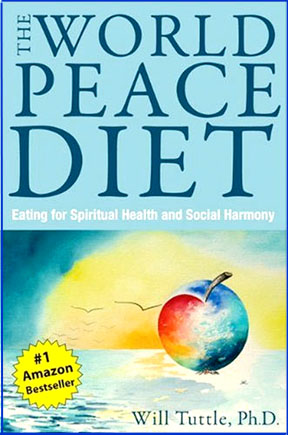
Authors@Google Will Tuttle: The World Peace Diet - Being Healthy and Saving the Planet


According to Wikipedia, Will Tuttle is a former Zen monk who studied in Korea. He holds a master's in humanities from San Francisco State University and a PhD in the philosophy of education from the University of California, Berkeley. He often speaks at vegetarian, spiritual, and animal rights conferences and at local vegetarian societies. He also speaks about inner and outer peace and harmony in the context of a vegan diet.

I support the majority of his views, but I am an omnivore - and I try to eat organic, free range chicken, turkey, grassfed beef and elk, and wild caught salmon. Yes, the world might be a better place if people like me stopped eating meat altogether, but alas, I am a human being in a human body and I give my body the nutrition it needs. I tried being a vegetarian for a while (and I know more than most about how to combine foods to get adequate amino acids), but I was not able to get sufficient nutrition for my lifestyle.

Take that for what it's worth - your results may vary.

About The World Peace Diet: VegNews reviewed Tuttle's book with considerable praise, suggesting he sought to
"...lift the discussion of veganism to a higher level. He argues cogently for a spiritual component, one where the consequence of using and consuming animals, so ubiquitous in human society, affects us not only in ways that can be measured physically, but spiritually as well. He convincingly shows how science and patriarchical religions, so often at odds in Western Society, are both cut from the same cloth—one that reinforces the domination of women, animals and nature in order to further the interests of the ruling elite. Yet for all of the complexities of how we ended up where we are, Tuttle’s remedy of spiritual veganism is offered as the cure for what ails us."
At the site for the book, they offer some free downloads, which I will link to below. But now, on to our feature presentation.


Authors@Google - Will Tuttle: The World Peace Diet

If you wonder how the food you eat affects your health and well-being and that of those you care about, you shouldn't miss this talk. Will Tuttle delivers an inspiring talk about the food we choose, where it comes from, and how it affects us physically, culturally, and spiritually. You will learn how we have become disconnected from our innate wisdom, and how to make positive changes that promote wellness, encourage wisdom and abundance, and minimize our eco-footprints on the Earth.
Free downloads from Will Tuttle and his website:

We are offering 2 complimentary downloads on this page
Please enjoy and share.

1 - "Intuitive Cooking" - A PDF file of plant-based recipes by Madeleine Tuttle
2 - "Living in Harmony with All Life" - an audio discourse by Dr. Will Tuttle - English & German

These works are licensed under a Creative Commons Attribution-Noncommercial-No Derivative Works 3.0 Unported License.

To download "Intuitve Cooking" and/or the MP3 audio file of the 75-minute CD, Living In Harmony With All Life by Dr. Tuttle, please enter your email address here. You will automatically be taken to a page with the download links.
Downloading the PDF books below requires the submission of a first name and email address at their page, linked to at the top of the section.

  • Click here to download a printable PDF file of The World Peace Diet by Dr. Will Tuttle
  • Click here to download a Spanish-language printable PDF file of The World Peace Diet by Dr. Will Tuttle

Saturday, May 14, 2011

Focus on You: Wellness - Dr. Rezvan Ameli


Nice presentation. The powerpoint slides are available at the NIH site. It's great to see the NIH (National Institutes of Health) paying attention to less "mechanistic" approaches to health and wellness.
Focus on You: Wellness
Dr. Rezvan Ameli


Description: Monthly Focus on You Lecture Series. Rezvan Ameli, Ph.D., is a licensed psychologist, trained and certified as a cognitive behavior therapist. She provides training in the use and integration of mindfulness in day-to-day living to reduce stress and enhance the quality of life. Dr. Ameli has provided clinical services, teaching and research at Yale-New Haven Hospital, Hartford Hospital, and the Masonic Geriatric HealthCare Center. She has held academic positions at Yale University, the University of Connecticut, and Howard University. She has been studying mindfulness for the past eight years and has participated in teachings by Jon Kabat-Zinn, Tara Brach, Jack Kornfield, Zindel Segal, Christina Feldman and John Teasdale.


Runtime: 01:00:22
Download: Download Video
How to download a Videocast
Permanent link: http://videocast.nih.gov/launch.asp?16648