Showing posts with label yoga. Show all posts

Sunday, November 09, 2014

Bessel van der Kolk — Restoring the Body: Yoga, EMDR, and Treating Trauma

This episode of On Being aired a few weeks ago, so I am late getting to this. Van der Kolk's include Traumatic Stress: The Effects of Overwhelming Experience on the Mind, Body and Society and, most recently, The Body Keeps the Score: Brain, Mind, and Body in the Healing of Trauma (which I will be reviewing soon).

Enjoy the conversation.

Bessel van der Kolk — Restoring the Body: Yoga, EMDR, and Treating Trauma


October 30, 2014
Photo by Aaron Feen


Human memory is a sensory experience, says psychiatrist Bessel van der Kolk. Through his longtime research and innovation in trauma treatment, he shares what he's learning about how bodywork like yoga or eye movement therapy can restore a sense of goodness and safety. What he’s learning speaks to a resilience we can all cultivate in the face of the overwhelming events — which, after all, make up the drama of culture, of news, and of life.
Guests


Bessel van der Kolk is medical director of the Trauma Center at the Justice Resource Institute in Brookline, Massachusetts. He’s also professor of Psychiatry at Boston University Medical School. His books include Traumatic Stress: The Effects of Overwhelming Experience on the Mind, Body and Society and The Body Keeps the Score: Brain, Mind, and Body in the Healing of Trauma.

Wednesday, October 02, 2013

New Issue of Integral Review - Vol. 9(3), Sept 2013 - Abstracts

A new issue of Integral Review, Vol. 9(3), September 2013 is now online and available to read. As always, it is an open access, Creative Commons publication.

Here are the abstracts. I am particularly interested in the articles by Gary Raucher (initiation in Western esoteric thought) and Bahman A.K. Shirazi (metaphysics and spiritual bypassing in integral psychology).
Enjoy!

Special Issue: CIIS - Integral consciousness: From cosmology to ecology

CIIS Special Issue Editor: Bahman Shiraz

Vol. 9, No. 3 Abstracts 


Editorial

Bahman Shiraz

The Founding Mission of CIIS as an Education for the Whole Person

Joseph L. Subbiondo

Abstract: This article discusses the introduction of meditation practice into higher education as part of an integral approach to education. A number of current authors are cited emphasizing the importance and relevance of mindfulness mediation in daily life. In addition, California Institute of Integral Studies founder Haridas Chaudhuri’s philosophy of meditation and its connection to action are explored.

* * * * *

The Quest for Integral Ecology

Sam Mickey, Adam Robbert, Laura Reddick

Abstract: Integral ecology is an emerging paradigm in ecological theory and practice, with multiple and varied integral approaches to ecology having been proposed in recent decades. A common aim of integral ecologies is to cross boundaries between disciplines (humanities, social sciences, and biophysical sciences) in efforts to develop comprehensive understandings of and responses to the intertwining of nature, culture, and consciousness in ecological issues. This article presents an exploration of the different approaches that have been taken in articulating an integral ecology. Along with a historical overview of the notion of integral ecology, we present an exposition of some of the philosophical and religious visions that are shared by the diversity of integral ecologies. Keywords: ecology, integral ecology, religion and ecology, speculative philosophy, Thomas Berry.

* * * * *

Toward an Integral Ecopsychology: In Service of Earth, Psyche, and Spirit

Adrian Villasenor-Galarza

Abstract: In this paper, I advance a proposal for an integral ecopsychology, defining it as the study of the multileveled connection between humans and Earth. The initial section expounds the critical moment we as a species find ourselves at and, touching on different ecological schools, focuses on ecopsychology as a less divisive lens from which to assess our planetary moment. In the next section, I explore three avenues in which the project of ecopsychology enters into dialogue with spiritual and religious wisdom, thus expanding the project’s scope while spelling out the particular lineage of integral philosophy followed. The next section addresses the value of integral ecopsychology in facing the ecological crisis, highlighting the importance of seeing such a crisis as a crisis of human consciousness. At the level of consciousness, religious and spiritual wisdom have much to offer, in particular the anthropocosmic or “cosmic human” perspective introduced in the next section. The relevance of the anthropocosmic perspective to cultivate ecologically sound behaviors and ecopsychological health is explored and presented as a main means to bringing ecopsychology in direct contact with religious and spiritual teachings. This contact is necessary for the study of the multileveled connection between humans and Earth. Finally, I propose an expanded definition of integral ecopsychology while offering three tenets deemed essential for its advancement.

* * * * *

Integral Ecofeminism: An Introduction

Chandra Alexandre

Abstract: This article offers an introduction to integral ecofeminism as a spiritually-grounded philosophy and movement seeking to catalyze, transform and nurture the rising tension of the entire planet. It articulates integral ecofeminism as an un-pathologizing force toward healing, as the offering of a possibility for creating and sustaining the emergent growth of individuals, institutions and our world systems toward awareness. Doing so, it embraces sacred and secular, rational and emotional, vibrant and still, in its conception of reality; and with this, it is a way of looking at the world whole, seeking to acknowledge the wisdom of creation in its multiplicity, specificity, and completely profound manifestation.

* * * * *

Loving Water: In Service of a New WaterEthic

Elizabeth McAnally

Abstract: In this paper, I argue that a new water ethic is needed in light of the global water crisis, an ethic that responds to contemporary water issues as it draws from the values embedded within the rich religious and spiritual traditions of the world. This paper explores how a new water ethic could gain much from the Hindu concept seva (loving service) that arises from the traditions of bhakti yoga (loving devotion) and karma yoga (altruistic service). Drawing from David Haberman’s work with the Yamuna River of Northern India, I investigate how the concept of seva has been recently used in the context of environmental activism that promotes restoration efforts of the Yamuna River, a river worshiped by many as a goddess of love.

* * * * *

An Integral Perspective on Current Economic Challenges: Making Sense of Market Crashes 

Pravir Malik

Abstract: Market crises are interpreted in much the same way. Hence action is also always of a similar type, regardless of the market crisis that may have occurred. It is a similar set of tools that are applied to all crises, and usually this has to do with managing the money supply, interest rates, and slapping on austerity measures. But this is a myopic view. Crises are never the same. Presented here is a holistic model that draws inspiration form the journey a seed makes in becoming a flower in more fully understanding the nature of the crisis we may be facing. Action will be different depending on what phase in the journey the economy is assessed at being. In this paper we look at market crises scanning four decades, from the Bear Market of the early 1970s to recent European Union Sovereign Debt Crises.

* * * * *

The Path of Initiation: The Integration of Psychological and Spiritual Development in Western Esoteric Thought

Gary Raucher

Abstract: This paper examines, from an emic stance, a strand of Western esoteric wisdom that offers a particular perspective on psycho-spiritual development in relation to spiritual emergence, the mutually interdependent evolution of consciousness and substance, and the functional role of human incarnation within our planetary life. The writings of Alice A. Bailey (1880-1949) and Lucille Cedercrans (1921-1984) serve as significant reference points in this effort. These teachings hold an integral view of human development in which a person’s awareness and self-identification progress from polarization in physical matter and sensation through progressively subtler gradients of emotional and mental experience, culminating in “The Path of Initiation,” a phase of psychological and spiritual expansions into deepening levels of transcendent, supramental consciousness and functioning. The esoteric teachings described here portray this path descriptively rather than prescriptively, and have significant parallels to Sri Aurobindo’s Integral vision. Both consider human life in form to be a vital and necessary phase within the larger cosmic evolution of consciousness and matter, and both are frameworks that expansively embrace the significance of the Divine as both immanent and transcendent presence. The important issue of epistemological methodology and the testing of esoteric assertions is also considered.

* * * * *

A New Creation on Earth: Death and Transformation in the Yoga of Mother Mirra Alfassa

Stephen Lerner Julich

Abstract: This paper acts as a précis of the author’s dissertation in East-West Psychology at the California Institute of Integral Studies in San Francisco. The dissertation, entitled Death and Transformation in the Yoga of Mirra Alfassa (1878-1973), Mother of the Sri Aurobindo Ashram: A Jungian Hermeneutic, is a cross-cultural exploration and analysis of symbols of death and transformation found in Mother’s conversations and writings, undertaken as a Jungian amplification. Focused mainly on her discussions of the psychic being and death, it is argued that the Mother remained rooted in her original Western Occult training, and can best be understood if this training, under the guidance of Western Kabbalist and Hermeticist Max Théon, is seen, not as of merely passing interest, but as integral to her development.

* * * * *

Traditional Roots of Sri Aurobindo’s Integral Yoga

Debashish Banerji

Abstract: Sri Aurobindo’s teachings on Integral Yoga are couched in a universal and impersonal language, and could be considered an early input to contemporary transpersonal psychology. Yet, while he was writing his principal works in English, he was also keeping a diary of his experiences and understandings in a personal patois that hybridized English and Sanskrit. A hermeneutic perusal of this text, The Record of Yoga, published by the Sri Aurobindo Ashram, uncovers the semiotics of Indian yoga traditions, showing how Sri Aurobindo utilizes and furthers their discourse, and where he introduces new elements which may be considered “modern.” This essay takes a psycho-biographical approach to the life of Sri Aurobindo (1872-1950), tracing his encounters with texts and situated traditions of Indian yoga from the period of his return to India from England (1893) till his settlement in Pondicherry (1910), to excavate the traditional roots and modern ruptures of his own yoga practice, which goes to inform his non-sectarian yoga teachings.

* * * * *

The Metaphysical Instincts & Spiritual Bypassing in Integral Psychology

Bahman A.K. Shirazi

Abstract: Instincts are innate, unconscious means by which Nature operates in all forms of life including animals and human beings. In humans however, with progressive evolution of consciousness, instincts become increasingly conscious and regulated by egoic functions. Biological instincts associated with the lower-unconscious such as survival, aggressive, and reproductive instincts are well known in general psychology. The higher-unconscious, which is unique to human beings, may be said to have its own instinctual processes referred to here as the ‘metaphysical instincts’. In traditional spiritual practices awakening the metaphysical instincts has often been done at the expense of suppressing the biological instincts—a process referred to as spiritual bypassing. This essay discusses how the metaphysical instincts initially expressed as the religious impulse with associated beliefs and behaviors may be transformed and made fully conscious, and integrated with the biological instincts in integral yoga and psychology in order to achieve wholeness of personality.

Friday, July 12, 2013

Restoring the Body: Bessel van der Kolk on Treating Trauma with Yoga, EMDR, and Healing Therapies


Bessel van der Kolk is one of the major figures in the conception and treatment of trauma and post-traumatic stress. Among his many books are Traumatic Stress: The Effects of Overwhelming Experience on the Mind, Body and Society (2006), Psychological Trauma (1987), and Overcoming Trauma through Yoga: Reclaiming Your Body (2011).

On last week's On Being (NPR), Krista Tippett talks with van der Kolk about some of the newer body-centered approaches to treating trauma and traumatic stress.

Restoring the Body: Bessel van der Kolk on Treating Trauma with Yoga, EMDR, and Healing Therapies


July 11, 2013

Human memory is a sensory experience says psychiatrist Bessel van der Kolk. Through his longtime research and innovation in trauma treatment, he shares what he's learning how bodywork like yoga or eye movement therapy can restore a sense of goodness and safety. And what he’s learning speaks to a resilience we can all cultivate in the face of the overwhelming events that after all make up the drama of culture, of news, of life.


Voices on the Radio


Bessel van der Kolk is Medical Director of the Trauma Center at the Justice Resource Institute in Brookline, Massachusetts. He’s also Professor of Psychiatry at Boston University Medical School. His books include Traumatic Stress: The Effects of Overwhelming Experience on the Mind, Body and Society and Overcoming Trauma through Yoga: Reclaiming Your Body.

Production Credits

  • Host/Executive Producer: Krista Tippett
  • Senior Editor: Trent Gilliss
  • Senior Producer: David McGuire
  • Technical Director: Chris Heagle
  • Coordinating Producer: Stefni Bell

Pertinent Posts from the On Being Blog


Beyond PTSD to "Moral Injury"

For service members returning home from combat, PTSD diagnoses are commonplace and extensive. But one VA psychologist argues that the complications of PTSD compound to create a moral injury — one that requires a community, not a clinic, in order to heal.


Refugee Yoga in Beirut

Can a yoga class really make a difference in the midst of a war zone? Emily O'Dell on finding our way home.


Nature in Our Backyards: Healing Places, Sacred Spaces

Folks continue to gift us with picturesque images of their physical sanctuaries and healing spaces. The common themes? Home and nature.

Monday, June 24, 2013

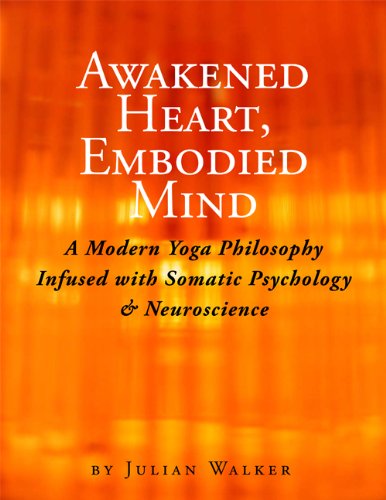
My Review - Julian Walker - Awakened Heart, Embodied Mind: A Modern Yoga Philosophy Infused with Somatic Psychology and Neuroscience


I've known Julian Walker indirectly (through social media) for several years, so it is with great pleasure that I offer this brief review of his new book, Awakened Heart, Embodied Mind: A Modern Yoga Philosophy Infused with Somatic Psychology and Neuroscience ($8.99, Kindle only).

In the interest of full disclosure, I bought this book as soon as I knew it was available, although Julian offered me a free review copy later the same day. It's a pleasure to review a book I chose to buy based on its merits rather than simply because I was sent a review copy.

Julian's combination of yoga theory, somatic psychology, neuroscience, and Buddhist meditation and the application of this model to the chakra system (which is foundational for yoga theory) is the kind of unified, interdisciplinary approach that we need more of in spiritual circles, in body-based practices, in psychology and, most importantly, in our basic efforts to understand who we are as human beings.

His discussion of the chakra system (from Tantric Yoga), which is something I have studied in the past, offers a fuller and deeper perspective than I have encountered before. Julian describes the chakra system as "a map of mind/body relationships, stages of development, and a way to reflect on various key aspects of inner work," offering an integrally-based model of personal growth.

This book, in its origin, is a handbook or teaching manual for yoga teachers in training (which he co-teaches with Hala Khouri). I know very little about yoga, other than having been a student of Hatha Yoga many years ago. While I have no intention of ever becoming a yoga instructor, I found the book entirely readable and engaging.

However, I am a specialist in trauma therapy, somatic psychology, and embodied cognition. I suspect this book may be very useful in helping my clients understand themselves and how their emotions, sensations, thoughts, and experiences are integrated within the mind-body system (in essence, the mind is the body-brain).

The bottom line is that in this book, Julian integrates "ancient and modern, Eastern and Western, intentional and embodied approaches in grounded way" that is also infused with intelligence and heart. Definitely a book I am pleased to recommend.

Over at Elephant Journal there is a brief review and slightly longer interview with Julian about his new book.

Tuesday, May 07, 2013

Meditation Produces Opposite Effect of ‘Fight or Flight’


A recent post at Psych Central, by Traci Pedersen, offers a brief summary of a study from PLoS ONE on how the relaxation response can reduce inflammation, insulin levels, and energy metabolism - but her summary looks specifically at how meditation, as one means of inducing the relaxation response, can reduce the stress response that leads the body into the "fight or flight" mode.

Here is the abstract to the original article (available in full at the link), followed by the Psych Central article.

Relaxation Response Induces Temporal Transcriptome Changes in Energy Metabolism, Insulin Secretion and Inflammatory Pathways


Abstract

The relaxation response (RR) is the counterpart of the stress response. Millennia-old practices evoking the RR include meditation, yoga and repetitive prayer. Although RR elicitation is an effective therapeutic intervention that counteracts the adverse clinical effects of stress in disorders including hypertension, anxiety, insomnia and aging, the underlying molecular mechanisms that explain these clinical benefits remain undetermined. To assess rapid time-dependent (temporal) genomic changes during one session of RR practice among healthy practitioners with years of RR practice and also in novices before and after 8 weeks of RR training, we measured the transcriptome in peripheral blood prior to, immediately after, and 15 minutes after listening to an RR-eliciting or a health education CD. Both short-term and long-term practitioners evoked significant temporal gene expression changes with greater significance in the latter as compared to novices. RR practice enhanced expression of genes associated with energy metabolism, mitochondrial function, insulin secretion and telomere maintenance, and reduced expression of genes linked to inflammatory response and stress-related pathways. Interactive network analyses of RR-affected pathways identified mitochondrial ATP synthase and insulin (INS) as top upregulated critical molecules (focus hubs) and NF-κB pathway genes as top downregulated focus hubs. Our results for the first time indicate that RR elicitation, particularly after long-term practice, may evoke its downstream health benefits by improving mitochondrial energy production and utilization and thus promoting mitochondrial resiliency through upregulation of ATPase and insulin function. Mitochondrial resiliency might also be promoted by RR-induced downregulation of NF-κB-associated upstream and downstream targets that mitigates stress.
Full Citation: 
Bhasin MK, Dusek JA, Chang B-H, Joseph MG, Denninger JW, et al. (2013) Relaxation Response Induces Temporal Transcriptome Changes in Energy Metabolism, Insulin Secretion and Inflammatory Pathways. PLoS ONE 8(5): e62817. doi:10.1371/journal.pone.0062817

Meditation Produces Opposite Effect of ‘Fight or Flight’

By TRACI PEDERSEN Associate News Editor
Reviewed by John M. Grohol, Psy.D. on May 4, 2013


A new study reveals that practitioners of meditation experience changes in gene expression that are the exact opposite of what occurs during the “flight or fight” stress response.

Specifically, genes associated with energy metabolism, mitochondrial function, insulin secretion, and telomere maintenance are turned on, while those involved in inflammation are turned off.

These effects are more significant and consistent for long-term practitioners.

People who practice simple meditation aren’t “just relaxing,” explained the study’s senior author, Dr. Herbert Benson. Instead, they’re experiencing “a specific genomic response that counteracts the harmful genomic effects of stress.”

It’s been shown that repeating a yoga pose, prayer, or mantra while disregarding other thoughts protects against anxiety and depression as well as physical conditions such as hypertension, cardiovascular disease, and types of cancer that are exacerbated by stress.

For the study, published in the open access journal PLoS One, researchers at the Benson-Henry Institute for Mind/Body Medicine at Massachusetts General Hospital and Beth Israel Deaconess Medical Center Subjects trained 26 adults with no previous meditation experience for eight weeks.

The participants practiced deep breathing, repeated mantras, and learned to ignore intrusive thoughts.

At first, they were given blood tests immediately before and 15 minutes after listening to a 20-minute health education CD. This was repeated after their training, except this time with a CD that guided them through meditation. Twenty-five other individuals, who had long-term experience in evoking the relaxation response, were tested as well.

All of the subjects’ blood samples revealed changes in gene expression following meditation. The changes were the exact opposite of what occurs during flight or fight. In the long-term practitioners, the effects were more pronounced and consistent.

Although the study only explored one way of reaching a relaxation response, people have been figuring this out for themselves for thousands of years, through yoga, prayer, and other forms of meditation.

This is the first time, however, that researchers have been able to show that these practices actually produce a change in gene expression.

The findings show that the effects of the relaxation response become stronger with practice, typically twice a day for 10 to 20 minutes. “Do it for years,” said Benson, “and then these effects are quite powerful in how they change your gene activity.”

Source: PLoS ONE

Tuesday, February 12, 2013

Secular Buddhist Podcast, Episode 155: Julian Marc Walker - Devil in the Details

This week's episode of the Secular Buddhist Podcast (Episode 155) features integral theorist and yoga teacher Julian Marc Walker, discussing his new book, Devil In the Details: 3 Keys To Thinking More Clearly About Spirituality (Thinking Clearly About Spirituality). Enjoy.

Secular Buddhist Podcast, Episode 155: Julian Marc Walker: Devil in the Details
Ted Meissner | February 9, 2013


Julian Marc Walker

Today we speak with yoga instructor Julian Marc Walker about his online book, Devil In the Details: 3 Keys To Thinking More Clearly About Spirituality.

Secular Buddhism is, in many ways, suspended between two world views: that of the naturalistic and non-religious, and that of the faithful and religious. We often find ourselves brokering discussions between these very different poles, caught in the middle as we explore Buddhism’s teachings and practice, couched in ancient tradition, with contemporary understanding of the world informed by science.

This is also true of other disciplines like yoga, which is also undergoing a protestant evolution. New ways of seeing the world seem to clash with ancient attempts to understand. We often get mired in discriminating attitudes, rather than collaborative investigations about how our predecessors in practice may have been trying to understand what they were discovering.

Julian Walker has been teaching yoga since 1994 and practicing Mind-Body Healing since 1997. He studied under Ana Forrest from 1992 to 1998 and was certified by her to teach. Influenced by American Buddhism, Tantra, and Transpersonal Psychology, Julian has led workshops across the United States and in Canada and has been training teachers and bodyworkers since 2001 and sharing his twice-a-year Transformation Retreats to Ojai since 2002. He weaves sacred poetry, world music, mythology and transformational themes into his deep stretch and flow yoga classes and is well known for his “Funky Friday” class that includes ecstatic dance.

So, sit back, relax, and have a nice Darjeeling.

Podcast: Download
Quotes
“I’ve been in pursuit of integration. I think the underlying question for me has been, ‘Is there a way to have a meaningful spiritually engaged life that is congruent with science and psychology and is really about seeing spirituality as a way to cut through delusion.’” — Julian Marc Walker 
“Spirituality is often the domain of fuzzy logic and vague beliefs. But this need not be the case! Julian Walker identifies the three key mistakes in reasoning made again and again in our thinking about, and discussion of, subjects like God, The Big Bang, evolution, souls, astrology, psychics and other aspects of religion and pop spirituality.” — Julian Marc Walker 
Web Links
Music for This Episode Courtesy of Rodrigo Rodriguez
The music heard in the middle of the podcast is from Rodrigo Rodriguez. The track used in this episode is “Sagariha” from his CD,Traditional and Modern Pieces: Shakuhachi.

Friday, December 21, 2012

Dave Emerson - Yoga for Trauma Survivors


Interesting talk - I have been seeing more and more books and papers about using yoga as a healing modality for trauma. In this podcast from Safe Space Radio, Dr. Anne interviews Dave Emerson (Trauma Center at Justice Resource Institute), who co-wrote, Overcoming Trauma through Yoga: Reclaiming Your Body, about the development of “trauma-sensitive yoga.”


Yoga for Trauma Survivors

An interview with yoga teacher and author, Dave Emerson, who co-wrote, Overcoming Trauma through Yoga about the development of “trauma-sensitive yoga.” Dave begins by talking about how trauma is held in the body, and can be addressed through the body, often in conjunction with talk therapy. Dave talks about the many ways yoga teachers and therapists at the Trauma Center in Boston collaborated to modify traditional yoga to make it safer for trauma survivors. He discusses four themes that guide their work, each of which has been deeply shaken by trauma and each of which can be directly impacted by the practice of yoga: making choices based on listening to the body, present moment awareness, feeling effective and developing ways to be in rhythm with others. Lastly, Dave talks about their research showing that yoga is so effective a treatment that after two months, patients who previously had PTSD, and did trauma-sensitive yoga, no longer meet the criteria for the diagnosis!

Standard Podcast: Hide Player | Play in Popup | Download
This show aired on December 19th, 2012

Friday, September 21, 2012

Shrink Rap Radio #320 – Frontiers in Somatic Therapy with Eleanor Criswell EdD

It's good to hear more people talking about somatic approaches to psychotherapy - this is an often neglected area in mental health treatment. In this episode, Dr. David Van Nuys interviews Dr. Eleanor Criswell, is currently a Distinguished Consulting Faculty member for Saybrook University, editor of Somatics Magazine (the magazine-journal of the mind-body arts and sciences), and director of the Novato Institute for Somatic Research and Training. Her books include Biofeedback and Somatics: Toward Personal Evolution and How Yoga Works: An Introduction to Somatic Yoga.

Shrink Rap Radio #320 – Frontiers in Somatic Therapy with Eleanor Criswell EdD

Posted on September 17, 2012


Eleanor Criswell, Ed.D.is emeritus professor of psychology and former chair of the psychology department, Sonoma State University. Founding director of the Humanistic Psychology Institute (now Saybrook University, San Francisco), she is currently a Distinguished Consulting Faculty member for Saybrook University. Editor of Somatics Magazine, the magazine-journal of the mind-body arts and sciences, and director of the Novato Institute for Somatic Research and Training, her books include Biofeedback and Somatics: Toward Personal Evolution, How Yoga Works: An Introduction to Somatic Yoga, and she is editor of Cram’s Introduction to Surface Electromyography. She is president of the International Association of Yoga Therapists, the Somatics Society, and past president of Division 32—Humanistic Psychology of the American Psychological Association, the Association for Humanistic Psychology, and the Biofeedback Society of California. She is on the board of the Association for Hanna Somatic Education. She is the originator of Somatic Yoga and Equine Hanna Somatics.

A psychology podcast by David Van Nuys, Ph.D.
copyright 2012: David Van Nuys, Ph.D.

Check out the following Psychology CE Courses based on listening to Shrink Rap Radio interviews
Get our iPhone/Android app!

Wednesday, March 14, 2012

Michael Stone - Awake In the World - On Samskaras and the Bodhisattva Vow


I'm not sure how I found this, but it's an interesting talk, especially for the Buddhist crowd. Michael Stone is a yoga teacher and Buddhist teacher. He travels internationally teaching about the intersection of Yoga, Buddhism and mental health. He has written four books with Shambhala Publications on ethics, yoga's subtle body, inner/outer pilgrimages, and the sometimes uneasy blend of social engagement and Buddhism. Please check out the website at www.centreofgravity.org. He is also a contributor at Elephant Journal.

 
shared by ianmackenz

The practice of yoga is a practice of intimacy. The process of reaching into the physical, psychological and other interdependent sheaths of the postures wakes us up to the intelligence of life.
Through becoming intimate with the breathing patterns, bandhas and stillness of meditative awareness we wake to our lives and realize the possibility of serving others. Yoga Philosophy and practice, juxtaposed with Buddhism and western Psychology gives us the tools for personal healing and social action.

Learn more about Michael Stone
http://www.centreofgravity.org/
"Michael Stone - Awake In the World - On Samskaras and the Bodhisattva Vow" by ianmackenz is licensed under a Creative Commons License

Thursday, November 11, 2010

Research Articles Link Dump - 11/11/2010

Here is another clear of the tabs - a whole series of articles from Science Codex that I think are interesting, but haven't had a chance to share yet. Enjoy - and follow the title links to read the whole article.

Dangerous PFCA chemicals in food wrappers likely migrating to humans

Posted On: November 8, 2010

University of Toronto scientists have found that chemicals used to line junk food wrappers and microwave popcorn bags are migrating into food and being ingested by people where they are contributing to chemical contamination observed in blood.

Perfluorinated carboxylic acids or PFCAs are the breakdown products of chemicals used to make non-stick and water- and stain-repellant products ranging from kitchen pans to clothing to food packaging. PFCAs, the best known of which is perfluorooctanoic acid (PFOA), are found in humans all around the world.

"We suspected that a major source of human PFCA exposure may be the consumption and metabolism of polyfluoroalkyl phosphate esters or PAPs," says Jessica D'eon, a graduate student in the University of Toronto's Department of Chemistry. "PAPs are applied as greaseproofing agents to paper food contact packaging such as fast food wrappers and microwave popcorn bags."

* * * * *

Differences in human and Neanderthal brains set in just after birth

Posted On: November 8, 2010

The brains of newborn humans and Neanderthals are about the same size and appear rather similar overall. It's mainly after birth, and specifically in the first year of life, that the differences between our brains and those of our extinct relatives really take shape, according to a report published in the Nov. 9 issue of Current Biology.

The findings are based on comparisons of virtual imprints of the developing brain and surrounding structures (known as endocasts) derived from the skulls of modern and fossilized humans, including that of a newborn Neanderthal.

Philipp Gunz of the Max Planck Institute for Evolutionary Anthropology explained that the differences researchers observe in early brain development likely reflect changes in the underlying brain circuitry. It is that internal organization of the brain that matters most for cognitive ability.

"In modern humans, the connections between diverse brain regions that are established in the first years of life are important for higher-order social, emotional, and communication functions," Gunz said. "It is therefore unlikely that Neanderthals saw the world as we do."

* * * * *

Study: Tai Chi relieves arthritis pain, improves reach, balance, well-being

Posted On: November 7, 2010

CHAPEL HILL, N.C. – In the largest study to date of the Arthritis Foundation's Tai Chi program, participants showed improvement in pain, fatigue, stiffness and sense of well-being.

Their ability to reach while maintaining balance also improved, said Leigh Callahan, PhD, the study's lead author, associate professor in the University of North Carolina at Chapel Hill School of Medicine and a member of UNC's Thurston Arthritis Research Center.

"Our study shows that there are significant benefits of the Tai Chi course for individuals with all types of arthritis, including fibromyalgia, rheumatoid arthritis and osteoarthritis," Callahan said. "We found this in both rural and urban settings across a southeastern state and a northeastern state."

Callahan will present these results on Monday, Nov. 8, at the annual scientific meeting of the American College of Rheumatology in Atlanta.

* * * * *

Play with your kid, for their mental health's sake

Posted On: November 8, 2010

Play with your kid, for their mental health's sake

Learning a hobby or other complex task in childhood with assistance from a trusted adult may help guard against the emergence of a personality disorder (PD) later on in life, reports a study in the current issue of the journal, Development and Psychopathology.

Spending time with a child by reading with them, helping with homework or teaching them organizational skills helps to foster better psychological health in adulthood.

"The strong interpersonal connectedness and social skills that children learn from having active, healthy engagements with adults fosters positive psychological development," said lead study author Mark F. Lenzenweger, a distinguished professor of clinical science, neuroscience and cognitive psychology at Binghamton University, State University of New York. "With it, a child develops his or her affiliation system – their connection to the world of people. Without it, the way a child connects with other human beings can be severely impaired. And as I found out, it is this impairment that predicts the appearance of schizoid personality disorder symptoms in emerging adulthood and beyond."

Lenzenweger says that the real importance of his findings is that it underscores the value of actively engaging a child during their formative years – which is particularly relevant in this age of day care, TV, videos, and web-based virtual reality games.

* * * * *

This one is huge - to be able to reduce the risk on Type-I Diabetes onset is a tremendous step forward, and further proof that epigenetics may be more powerful than genetics.

Dietary intervention can prevent the disease process leading to Type 1 diabetes

Posted On: November 10, 2010

A Finnish study confirms the hypothesis that infant feeding plays a role in the initiation of the disease process leading to type 1 diabetes in children carrying increased genetic disease risk.

The study population comprised 230 newborn infants with at least one family member affected by type 1 diabetes and a predisposing genotype based on screening cord blood at birth. The participants were randomized into two groups; the infants in the intervention group were weaned to a highly hydrolyzed casein-based formula (Nutramigen, Mead Johnson Nutrition), while those in the control group were weaned to a regular cow's milk-based formula supplemented with 20% Nutramigen to make the two formulas comparable in terms of smell and taste. The intention was that the participants should be exposed to their study formula for at least 2 months by the age of 6 months, or if exclusively breast-fed up to that age by the age of 8 months.

The study participants were observed up to the age of 10 years for the appearance of diabetes-predictive autoantibodies and progression to type 1 diabetes. Twenty-five children (12%) developed at least two diabetes-predictive autoantibodies out of the five tested for, which marks a high risk of presenting with clinical diabetes. Seventeen children tested positive for two or more autoantibodies had been randomized to the control group (16%), whereas seven belonged to the intervention (casein hydrolysate) group (7%). Nine children (8%) in the control group presented with clinical diabetes by the age of 10 years, while four of those (4%) who had been exposed to the casein hydrolysate progressed to clinical disease

Professor Mikael Knip of the Hospital for Children and Adolescents, and University of Helsinki, who has been responsible for the analyses of diabetes-predictive autoantibodies states: "The study showed that the safe and simple dietary intervention applied in this pilot trial was capable of reducing the emergence of diabetes-predictive autoantibodies by about 50% by age 10 in the participants carrying increased disease risk. The current study population does not provide sufficient statistical power to definitely conclude whether an intervention of this type will reduce the frequency of clinical type 1 diabetes, although the preliminary data are promising."

* * * * *

Yoga's ability to improve mood and lessen anxiety is linked to increased levels of a critical brain chemical

Posted On: November 11, 2010

New Rochelle, NY, November 11, 2010—Yoga has a greater positive effect on a person's mood and anxiety level than walking and other forms of exercise, which may be due to higher levels of the brain chemical GABA according to an article in The Journal of Alternative and Complementary Medicine, a peer-reviewed journal published by Mary Ann Liebert, Inc. The article is available free online.

Yoga has been shown to increase the level of gamma-aminobutyric acid, or GABA, a chemical in the brain that helps to regulate nerve activity. GABA activity is reduced in people with mood and anxiety disorders, and drugs that increase GABA activity are commonly prescribed to improve mood and decrease anxiety.

Tying all of these observations together, the study by Chris Streeter, MD, from Boston University School of Medicine (Massachusetts) and colleagues demonstrates that increased GABA levels measured after a session of yoga postures are associated with improved mood and decreased anxiety. Their findings establish a new link between yoga, higher levels of GABA in the thalamus, and improvements in mood and anxiety based on psychological assessments. The authors suggest that the practice of yoga stimulates specific brain areas, thereby giving rise to changes in endogenous antidepressant neurotransmitters such as GABA.

* * * * *

Study finds the mind is a frequent, but not happy, wanderer

Posted On: November 11, 2010

CAMBRIDGE, Mass. -- People spend 46.9 percent of their waking hours thinking about something other than what they're doing, and this mind-wandering typically makes them unhappy. So says a study that used an iPhone web app to gather 250,000 data points on subjects' thoughts, feelings, and actions as they went about their lives.

The research, by psychologists Matthew A. Killingsworth and Daniel T. Gilbert of Harvard University, is described this week in the journal Science.

"A human mind is a wandering mind, and a wandering mind is an unhappy mind," Killingsworth and Gilbert write. "The ability to think about what is not happening is a cognitive achievement that comes at an emotional cost."

Unlike other animals, humans spend a lot of time thinking about what isn't going on around them: contemplating events that happened in the past, might happen in the future, or may never happen at all. Indeed, mind-wandering appears to be the human brain's default mode of operation.


Thursday, October 07, 2010

Big Think - How Meditation Reshapes Your Brain

No new information here, but a nice collection and summary of the research. Big Think is rapidly becoming one of my favorite sites.

How Meditation Reshapes Your Brain

Meditation_pic

In 2006, filmmaker David Lynch—a poet of the sublimely bizarre and the surreally normal—wrote a book on transcendental meditation. Describing his experience, he writes: "It takes you to an ocean of pure consciousness, pure knowingness. But it's familiar; it's you. And right away a sense of happiness emerges—not a goofball happiness, but a thick beauty."

Coming from the man behind disturbing mindbenders like "Eraserhead" and "Blue Velvet," it's hard to take this statement seriously. But Lynch is indeed being sincere; he has reportedly meditated for 20 minutes twice a day since the 1970s. And his belief in the power of this age-old practice is shared with an estimated 20 million people in the United States alone who engage some form of meditation.

Sharon Gannon, the co-founder of Jivamukti Yoga, the largest yoga center in the U.S., tells Big Think that meditation is all about ignoring stimuli. "We're so habituated to reacting to every stimulus," she says. If the phone rings, we answer it; if someone knocks at the door, we open it. But meditation is a space where we don't react to the stimuli that constantly bombard us; it is about letting go, and it paradoxically makes us better able to engage. "Without taking the time every day to let things come and let things go without acting upon it, you won't have clarity of mind," she says.

Watch a short video of Sharon Gannon.

But what is actually happening in the brain as we seek nirvana? Meditators have long described their experiences as transformative states that are markedly different from normal consciousness, but only recently have researchers found the evidence to back this up.

Richard Davidson is one of the foremost researchers of meditation's effects on the brain. A Harvard Ph.D graduate and a friend of the Dalai Lama, he was chided early in his career for wanting to study something as unscientific as meditation. But in 2004 he became an overnight scientific celebrity for discovering that Buddhist monks exhibit vastly different brainwaves during meditation than normal people. Brainwaves are produced as the billions of neurons in our brains transmit action potentials down their axons to the synapses where they trigger the release of neurotransmitters. These action potentials are essentially electrical charges that are passed from neuron to neuron. By placing sensors on the scalp, researchers can detect not the individual firings of neurons—they are far too small and numerous to differentiate—but the sum total of this electrical activity, dubbed brainwaves for their cyclical nature.

Types of Brain Waves

The frequency of brainwaves varies among different mental states, indicating the amount of neuronal activity in the brain. Delta waves (below 4 Hz) are the longest waves and occur mostly during deep sleep. Theta waves (5-8 Hz) are seen most commonly in young children and in drowsy adults, often as an entree to sleep. Alpha waves (8-12 Hz) are the waves of an relaxed, non-aroused mind. Beta waves (12-30 Hz) are fast and low amplitude and are characteristics of an engaged mind. And finally gamma waves (30-100 Hz) are the highest in frequency and are thought to represent the synchronization of different brain areas as they carry out certain cognitive or motor functions. It is important to realize that the brain never produces just one type of these brain waves; they all occur simultaneously, but their ratios will change depending on one's mental state.

Using this electroencephalograph technology, Davidson asked his monks, each with 10,000 to 50,000 hours of meditation practice over their lifetimes, to concentrate on "unconditional loving-kindness and compassion." A group of inexperienced meditators were also trained for one-week and then instructed to do the same. The results were dramatic, revealing two important things: first, the monks exhibited a higher ratio of high frequency gamma brainwaves to slower alpha and beta waves during their resting baseline before the experiment began; and when the monks engaged in meditation, this ratio skyrocketed—up to 30 times stronger than that of the non-meditators. In fact, the gamma activity measured in some of the practitioners was the highest ever reported in a non-pathological context. Not only did this suggest that long-term mental training could alter brain activity, it also suggested that compassion might be something that could be cultivated.

New neurobiological research bolsters the idea that meditation effects a permanent restructuring of the brain. In 2008 a team of researchers from UCLA led by Eileen Luders compared the brains of long-term meditators with those of control subjects. In the brains of the meditators, they found larger volumes of gray matter in the right orbito-frontal cortex and the right hippocampus, areas thought to be implicated in emotion and response control. "It is likely that the observed larger hippocampal volumes may account for meditators' singular abilities and habits to cultivate positive emotions, retain emotional stability, and engage in mindful behavior," Luders writes. They also discovered a marked increase of gray matter in the thalamus, which is thought to act as the brain's switchboard, relaying information between the cerebral cortex and subcortical areas. The change in size might allow for the meditators' enhanced sense of focus during their practice.

And it turns out, you don't have to be a yogi to reap the benefits of meditation. Even those who participate in short-term training courses can alter their brains, according to research published this summer: In a collaborative study between the University of Oregon and the Dalian University of Technology in China, neuroscientists discovered that a Chinese meditation technique called integrative body-mind training (IBMT) could alter the connectivity in the brain after just 11 hours of practice. Using a type of magnetic resonance called "diffusion tensor imaging," the researchers examined the white matter fibers connecting different brain regions before and after training. The changes were most dramatic in the anterior cingulate, an area implicated in emotion control.

Takeaway

Far from being simply a relaxed state, meditation is a period of heightened activity in the brain—one that can actually reshape your brain. People as diverse as David Lynch and the Dalai Lama have touted the benefits of meditation, claiming that it can increase attention, combat stress, foster compassion, and boost health. And in the past two decades, neuroscientists have begun to understand the biological substrates of these claims. Research suggests that long-term meditation increases the orbitofrontal cortex, the hippocampus, and the thalamus, potentially increasing one's capacity for attention as well as compassion.

More Resources

—"Mental Training Enhances Attentional Stability: Neural and Behavioral Evidence," (2009) published by Antoine Lutz in The Journal of Neuroscience [PDF]

—"Short-term meditation training improves attention and self-regulation," (2007) published by Michael Posner in the journal PNAS

David Lynch on meditation [VIDEO]


Thursday, May 27, 2010

Shrink Rap Radio - #225 – The Neuroscience of Meditation with Sara Lazar

I've been trying to catch up on older podcasts I missed (while working out, which is much easier than I had thought it might be) - this is a good one.


Sarah has a chapter in Mindfulness and Psychotherapy, edited by Christopher K. Germer, Ronald D. Siegel, and Paul R. Fulton, a very excellent book.

Shrink Rap Radio, #225 – The Neuroscience of Meditation with Sara Lazar

photo of Sara Lazar

Transcript

Sara W. Lazar, PhD is a neuroscientist in the Psychiatry Department at Massachusetts General Hospital and an Instructor in Psychology at Harvard Medical School. The focus of her research is to elucidate the neural mechanisms underlying meditation, both in clinical settings and to promote and preserve health and well-being in healthy individuals. One main focus of her work is determining how yoga and meditation influence brain structure, and how these changes influence behavior. She has been practicing yoga and mindfulness meditation since 1994, and is a Board member of the Institute for Meditation and Psychotherapy.

A psychology podcast by David Van Nuys, Ph.D.


icon for podpress Standard Podcast [1:00:29m]: Hide Player | Play in Popup | Download

Tuesday, March 16, 2010

Pandit Rajmani Tigunait - Living Tantra (2 Parts)

http://learntantra.files.wordpress.com/2009/07/tantra2.jpg

Cool two-part article from Yoga+ Joyful Living.

Watch clips of Pandit Rajmani Tigunait lecturing on mantra.

Pandit Rajmani Tigunait, PhD, is the spiritual head of the Himalayan Institute. A teacher, lecturer, Sanskrit scholar, and author, he has practiced yoga and tantra for more than 30 years.

Living Tantra (Part 1)

Sex, drugs, and black magic? Tantra is infinitely more powerful than that. A modern master reveals the truth about this complex and controversial path.

By Pandit Rajmani Tigunait I was born and raised in the part of North India that has long been a stronghold of tantric practices. My birthplace, Amargarh, lies in a triangle formed by three of India’s holiest cities: Varanasi, Allahabad, and Ayodhya. Varanasi, the city of light, embodies the spiritual traditions of ancient India, including all forms of tantra: Hindu, Buddhist, and Jain tantras; left-hand tantra; right-hand tantra; forbidden tantra; and tantric practices of a purely yogic nature. Allahabad, the city of gods, experiences a big congregation of saints, yogis, and tantrics from every tradition every January and February, and an even larger congregation every 12 years during the Kumbha Mela. Ayodhya, the invincible city of Lord Rama, is the most mysterious of all, for thousands of saints and yogis, mostly practicing right-hand tantra, are hidden behind the walls of hundreds of monasteries and ashrams.

There was a monastery a little more than a mile from my childhood home that was a magnet for wandering sadhus, novice seekers, and adepts. The nearby palace had its own circle of tantrics, pandits, and astrologers. My father was one of them. Growing up in this land I saw pandits debating their views, astrologers making their predictions, and tantrics performing their magical rituals. I saw my father spend hours every day reciting scriptures, meditating on mantra, and worshipping the Divine Mother through rituals and fire offerings.

My own spiritual quest began in an extremely simple way. I was afraid of the ghosts who live in dust devils. Inspired by my mother, I started meditating on Hanuman by reciting 40 couplets dedicated to him to protect myself from these ghosts. But it was only when I heard an amazing story that I became intensely interested in spirituality and understood that tantric practice could help me discover the best in myself and in the world around me.

The raja of Amargarh was fond of the number 24. He had 24 horses, 24 wrestlers, and 24 pandits. One of the pandits was an accomplished left-hand tantric who worshipped Divinity with alcohol and meat. In those days, palace politics were dominated by right-hand tantrics, who condemned using these articles in rituals. Under pressure from them, the raja demanded that the left-hand tantric clarify whether or not he was using these “impure” articles in his rituals. Instead of answering directly, the tantric said, “I do not indulge in liquor. I worship the Divine Mother in a manner prescribed in the scriptures.” This statement annoyed the right-hand tantrics even more. They conspired with the raja to raid the temple at midnight, the time the tantric performed his rituals. They pounded on the door when the tantric was in the middle of his chakra puja, a practice forbidden to non-initiates. Not knowing what else to do, the tantric interrupted his practice and, before opening the door, prayed, “Oh Divine Mother, do whatever you wish.” The crowd stormed in, only to find a chalice filled with milk instead of wine. The tantric, saddened that the Divine Mother had to go out of her way to protect him, resigned from the raja’s court. Many other tantrics followed suit. Soon all kinds of calamities—disease, accidents, and death—began to befall the raja’s family. The royal elephants became deranged and portions of the palace collapsed.

To me everything about this incident—a ritual so potent and sacred it is forbidden to non-initiates, wine turning into milk, and a chain of calamities ensuing from the disruption of a tantric practice—was both fascinating and bewildering. When I asked my father what tantra is and who these tantrics were, he only said, “Tantra is the way to discover the infinite potential of your body, the power of your mind, and the beauty of your soul. Tantrics are the blessed children of the Divine Mother.” Although I was too young to understand the meaning of this answer, the incident at the palace temple was so compelling that it pulled me deeper into the world of tantra.

I began to actively seek out tantrics who practiced special techniques and possessed unique powers. Miracles held a particular fascination so I was thrilled when I met a tantric with an amazing metal bowl. When a theft occurred he would invoke his bowl. The bowl would come to life, rise in the air, float to the place where the stolen objects were hidden, and hover over that spot until the objects were exposed and the recovery acknowledged. I met another tantric who cured cobra bites. Yet another tantric would draw a mandala known as chakra vyuha, show it to a woman in labor, and within minutes the baby would be delivered. I met a sadhu who specialized in the tantric use of herbs. He would invoke the energy of prickly chaff, for example, and give it to a client whose house was infested with cobras. As soon as the client deposited the herb in his house, the cobras would slither out unharmed. A Sufi fakir specialized in the science of jantar (yantra/mandala). He cured nightmares, phobias, and infertility by tying the jantar to a patient’s arm. Experiences with these and other tantrics convinced me tantra was as profound, useful, and rewarding as any other science known to man. But when I went to Allahabad and enrolled in the university, I witnessed events that made me wonder if tantra were merely a combination of trickery and superstition.
Read the rest of this post. And here is the beginning of part two.

Living Tantra, (Part 2)

Harness prana shakti—the inner divinity—with a potent tantric practice that will charge your mind with vitality, insight, and the power to heal.

By Pandit Rajmani Tigunait

Let’s begin by reminding ourselves of the distinctive nature of tantra as encapsulated at the end of my last article:

For ages people have been fighting an unending war—the war of good and bad, right and wrong, virtue and sin, heaven and hell, sacred and mundane, freedom and bondage. Everyone caught in this war—monks and householders, clergy and laymen, politicians and philosophers, men and women, poor and rich, businessmen and those fully committed to inner life—are equally miserable. Tantra has a remedy for this misery. This remedy works because a tantric seeks freedom in the world, not from the world. In tantra, the sacred and the mundane are held together in harmonious balance. Worldly success and spiritual development go hand in hand. This is a joy-driven path, a path of active participation in life. It is not a path for those who seek salvation after death but a path for those who seek health, wealth, peace, and happiness here and now.

The events I shared with you in the last issue show that the range of tantra is as vast as life itself. Within tantra there are numerous paths—each leading to unique experiences. Some tantric practices are trivial and shallow. Others are profound and deeply meaningful. Some focus on the acquisition of worldly possessions and power. Others have spiritual enlightenment as their central goal. Some tantric paths place exclusive emphasis on rituals and others employ yogic techniques to awaken the kundalini shakti and chakras in one’s own body. Some use yantras and mandalas to awaken and gain mastery over the healing power. Other paths employ unique internal visualizations and concentration techniques to awaken and acquire that same healing power. Some tantrics use herbs to accelerate their practice and others use unique breathing techniques. Some go as far as to use drugs and sex while others abstain from both. But all tantric paths and practices have one common theme: the acquisition of power.

The power to be and the power to become, the power to grow and the power to blossom, the power to explore limitless possibilities and the power to materialize those possibilities—these are the hallmarks of tantric spirituality. Rising above our limitations and gaining access to the limitless domain of the power of will, the power of knowledge, and the power of action is the ultimate goal of tantric wisdom and practice. The term tantra itself tells how to gain access to this boundless field of power.

Tantra is a compound of two verbs, tan and tra. The verb tan has two sets of meanings. The first is “to expand, to grow, to expound, to give meaning.” Tan also means “to weave, to intertwine, to integrate, to connect, to breathe newness into the old, to pull the present out of the past and give it a meaningful future.” The second verb in this compound, tra, means “to protect, to free from sorrow, to help one move away from the domain of afflictions.” Thus tantra refers to the path of health and healing, science and spirituality, that holds our full expansion and development as its main objective. It shows us how we can grow and blossom. It shows us how to find purpose in life and how to weave the tapestry of life in the most meaningful manner, how to protect and nurture ourselves, and how to protect and nurture others. The principle of integration lies at the core of tantric philosophy and practice. This principle refers to the integration of our worldly endeavors with our spiritual pursuits, the integration of personal empowerment with the empowerment of others and the empowerment of the natural world. Good and evil, sacred and mundane, coexist harmoniously in this tantric world of integration. Following the principle of integration, a tantric practitioner attempts to find freedom while living in the world and aspires to experience the fullness of life.

To a tantric, life is not bondage but the gateway to freedom. To be born as a human is an opportunity to experience our oneness with Absolute Consciousness—our own inner divinity. God, Absolute Consciousness, deposited Her limitless power of creativity in each of us. Gaining access to that limitless creativity fulfills the purpose of life. And dying without knowing and experiencing that power defeats the purpose of human birth.

Inner Temple
A tantric begins his spiritual quest by changing his worldview and his attitude toward his own body, mind, and senses. For ages, people have been living with a self-defeating philosophy that condemns the world and thereby promotes the idea of finding freedom from it. According to that philosophy, the body is the focal point of misery: pleasure is the doorway to hell; worldly objects are a burden to the soul. In the view of tantra, this philosophy is deeply flawed.

According to tantra, the world is beautiful. Life in the world is beautiful. Our inability to see the beauty within and without is bondage for it forces us to live in this world purposelessly. The quest for freedom here and now begins with understanding the sacred nature of our body, mind, and senses. According to tantra, the body is the living temple of divinity. The center of consciousness (soul, atman, jiva) is the highest divinity within us. A vast portion of the powers, potentials, and privileges of this divinity remain dormant. This dormant power is called kundalini shakti. Only a fraction of its potentials are available in their awakened form. The power and potential of the soul that is awakened and active in us is called prana. Prana, the force that keeps us alive, is the intrinsic and vibrant attribute of this inner divinity. For all practical purposes, this prana shakti is the highest god in us, for it is this particular aspect of divine power that helps us gain access to the infinite dormant potentials within.
Read the rest of this post.