Showing posts with label tradition. Show all posts

Thursday, February 20, 2014

Omnivore - Religion in the Public Sphere

From Bookforum's Omnivore blog, here is a collection of recent links on the role of religion in the public sphere, everything from religious pluralism to religious fanaticism to a supposed "global war" on Christianity.

Religion in the Public Sphere

Feb 17 2014 
3:00PM

Saturday, September 07, 2013

On Being - Nadia Bolz-Weber on Seeing the Underside and Seeing God: Tattoos, Tradition, and Grace


Nadia Bolz-Weber was Krista Tippett's guest last week for the NPR On Being show. Nadia has a blog called the Sarcastic Lutheran: The cranky spirituality of a postmodern Gal, as well as a couple of books (links below). She is the mission developer for House for All Sinners and Saints (HFASS) in Denver, Colorado, an urban liturgical community with a progressive yet deeply-rooted theological imagination. 

This is a cool pastor - if I had a pastor like this when I was young, I would have been a lot more tolerant of religion.

Nadia Bolz-Weber on Seeing the Underside and Seeing God: Tattoos, Tradition, and Grace

September 5, 2013


She’s the tattooed, Lutheran pastor of the House for All Sinners and Saints in Denver, a church where a chocolate fountain, a blessing of the bicycles, and serious liturgy come together. She's a face of the Emerging Church — redefining what church is, with deep reverence for tradition.

Recommended Reading


Pastrix: The Cranky, Beautiful Faith of a Sinner & Saint
By Nadia Bolz-Weber
Jericho Books (2013)


Salvation on the Small Screen? 24 Hours of Christian Television 
By Nadia Bolz-Weber
Seabury Books (2008)


Under the Tent with Nadia Bolz-Weber (video)
Watch Krista's unedited conversation with a leading voice in the Emerging Church. Live from the Wild Goose Festival in Hot Springs, North Carolina, this interview is a dynamic 90 minutes of discussion about tattoos and tradition, death and resurrection, and redefining what church is.

Saturday, October 20, 2012

Secular Buddhist Episode 138 - Brad Warner: Hardcore Zen Strikes Again


This week's episode of the Secular Buddhist Podcast features Ted Meissner (your host) in conversation with Brad Warner, one of the most controversial and popular young Buddhist teachers in America. Warner began life as a musician in bands such as Zero Defex, Dementia 13 (I loved the punk psychedelics of Mirror Mind and Disturb the Air, on vinyl no less), and others, and as an aficionado of B-grade horror film monsters (especially those from Japan).

Here is a little history of his training in Zen, from Wikipedia (edited and condensed):
He began practicing Zen Buddhism under his first teacher, Tim McCarthy. Warner later studied with Gyomay Kubose. When music failed to earn him a living, he moved to Japan. While in Japan he met and trained with Gudo Wafu Nishijima, who ordained him as a priest. In 2007, Gudo Wafu Nishijima named Warner the leader of Dogen Sangha International which Nishijima had founded. Warner dissolved the organization in April 2012.
Warner is an interesting guy - and while his background and context is very DIY, his Zen teachers, to me, have seemed very traditional and faithful to the structure in which he was taught.

This is an interesting conversation for those reasons and many others.

Episode 138 :: Brad Warner :: Hardcore Zen Strikes Again

Hosted by | October 13, 2012


Brad Warner

Zen teacher Brad Warner speaks with us about his new book, Hardcore Zen Strikes Again.

Zen stories are filled with teachers doing odd things. Their behaviors, their words, can often rub people the wrong way as the softness of social constraint gives way to pointing out the realities we often lose sight of, and the profound nature of our practice. By their very example, these teachers have historically called us out in our lack of questioning the urgent need for looking at life differently, and changing it.

Fast forward in time and to the left geographically, to modern day America. How might the words of some contemporary Zen teachers have that same impact on our social attitudes? It can be said that it challenges us to rethink what we’re really responding to, and what that can tell us about our priorities. Interestingly enough, punk does the same thing, so to find the radical hardness of punk in alignment with a coarse zen teaching shouldn’t be very surprising.

Our guest today is Brad Warner, Zen monk, writer, bass player, and film-maker. He wrote the books Hardcore Zen, Sit Down And Shut Up, Zen Wrapped in Karma Dipped in Chocolate, and Sex, Sin, and Zen. He received Dharma Transmission from Gudo Nishijima Roshi, who received his transmission from Rempo Niwa Roshi who, at the time was the head of the Soto Sect in Japan. Brad was also a student of Tim McCarthy, who was a student of Kobun Chino Roshi.

So, sit back, relax, and have a nice Oyama cold sake.


Books


Web Links


Music for This Episode Courtesy of Rodrigo Rodriguez

The music heard in the middle of the podcast is from Rodrigo Rodriguez. The track used in this episode is “Shikantaza” from his CD, Shakuhachi Meditations.

Monday, September 24, 2012

Secular Buddhist Podcast #135: Charles Prebish, Sarah Haynes, Justin Whitaker, Danny Fisher - Two Buddhisms Today

This is a very cool episode of the Secular Buddhist Podcast, a round-table discussion with Charles Prebish, Sarah Haynes, Justin Whitaker, and Rev. Danny Fisher on the current changes in the American Buddhist world.

In this discussion, they look at the increasing divide between traditional Buddhist practice in the U.S. and the widening circles of secular Buddhist practice.

I'm happy to add, on a personal note, that I have been reading Justin Whitaker and Danny Fisher for many years now, their blogs being among the elite Buddhist blogs on the internets.

Episode 135 :: Charles Prebish, Sarah Haynes, Justin Whitaker, Danny Fisher :: Two Buddhisms Today


Today we have a round table discussion with Charles Prebish, Sarah Haynes, Justin Whitaker, and Danny Fisher on the changes in the American Buddhist landscape.

Our cultural landscape is changing, and it seems the rate of change is more rapid than ever. We’ve seen tremendous progress in civil rights, diversity issues, and of particular interest to Buddhists, our communities of practice. There is now a much wider representation in America of traditional Buddhism, and increasingly secular groups. Whatever you find most helpful to you in your practice, it’s likely out there somewhere, or on the way. But, that wasn’t always the case. Buddhism has grown through the pioneering efforts of those from particular traditional backgrounds, and their sanghas reflected that.

Today, we’re going to have a round table discussion that’s a response. Not to the cultural landscape’s change, but to criticisms about past efforts to understand that landscape at the time. Understanding that this is a controversial topic, we’ve invited the participation of four Buddhist scholars to discuss it, and provide their insight and point of view.


Charles Prebish

Charles Prebish is among the most prominent scholars in studying the forms that Buddhist tradition has taken in the United States. Dr. Prebish has been an officer in the International Association of Buddhist Studies, and was co-founder of the Buddhism Section of the American Academy of Religion. In 1994, he co-founded the online Journal of Buddhist Ethics, which was the first online peer-reviewed journal in the field of Buddhist Studies. Prebish has also served as editor of the Journal of Global Buddhism and Critical Review of Books in Religion. In 1996, he co-founded the Routledge “Critical Studies in Buddhism” series, and currently co-edits the Routledge “World Religions” series of textbooks. He is also co-editor of the Routeldge Encyclopedia of Buddhism project.

Sarah Haynes

Sarah Haynes is assistant professor in the Department of Philosophy & Religious Studies at Western Illinois University. Her primary area of research is Tibetan Buddhism, specifically Tibetan Buddhist ritual and its manifestations in North America. She has also conducted research on Jodo Shinshu communities in North America and their relationship to Mormon communities in Utah and Alberta. Her publications include: A Relationship of Reciprocity: Globalization, Skilful Means, and Tibetan Buddhism in Canada, in Wild Geese: Studies of Buddhism in Canada; An Exploration of Jack Kerouac’s Buddhism: Text and Life Journal of Contemporary Buddhism; and the forthcoming collection of essays “Wading into the Stream of Wisdom: Essays in Honor of Leslie Kawamura”.


Justin Whitaker

Justin Whitaker is a student of Damien Keown and a PhD candidate at Goldsmiths, University of London. There he is working on a thesis comparing early Buddhist ethics and the work of the German philosopher Immanuel Kant. Mr Whitaker holds a BA (with Honours) in Philosophy from The University of Montana and an MA (with Distinction) in Buddhist Studies from Bristol University. He has extensive experience teaching Buddhist Studies and Philosophy as an Instructor and Teaching Assistant at The University of Montana as well as Antioch University’s Education Abroad programme based in Bodhgaya, India, and currently works as a Distance Education Instructor in Comparative World Religions for Mohave Community College, Arizona. He has presented papers at several academic conferences including “Meditation’s Ethics: Ignatian Spiritual Exercises and Buddhist Metta-Bhavana” at the American Academy of Religion’s 2009 international conference in Montreal as well as “Wriggling Eels in the Wilderness of Views: Studies in Buddhist Ethics” for the Oxford Centre for Buddhist Studies, and “Warnings from the Past, Hope for the Future: The Ethical-Philosophical Unity of Buddhist Traditions” at the International Association of Buddhist Universities UN Day of Vesak, both in 2012.


Danny Fisher

Reverend Danny Fisher is the author of the Patheos blog Off the Cushion, maintains an official website, and writes for Shambhala Sun, Buddhadharma: The Practitioner’s Quarterly, and elephantjournal.com. Rev. Fisher’s commentary on Buddhism in the United States has been featured on CNN, the Religion News Service, E! Entertainment Television, and others. Rev. Fisher earned his Master of Divinity from Naropa University and his Doctorate in Buddhist Studies from University of the West. He is also a professor and Coordinator of the Buddhist Chaplaincy Program at University of the West. He was ordained as a lay Buddhist minister by the Buddhist Sangha Council of Southern California in 2008 and is certified as a mindfulness meditation instructor by Naropa University in association with Shambhala International. He also serves on the advisory council for the Upaya Buddhist Chaplaincy Program, and in 2009 became the first-ever Buddhist member of the National Association of College and University Chaplains.

So, sit back, relax, and have a nice white grape juice.
 
:: Discuss this episode ::
 

Web Links


Sunday, August 19, 2012

My Reincarnation - The Life of Yeshi Namkhai

Excellent film -I've included the first chapter of five below. You can watch the whole film until September 20 at the POV site from PBS.

Watch My Reincarnation on PBS. See more from POV.

My Reincarnation

My Reincarnation tells of the tireless work of exiled Tibetan Buddhist Master Namkhai Norbu to transmit the highest path of Tibetan Buddhism — called Dzogchen — around the world. Namkhai Norbu Rinpoche ("Rinpoche" is a Tibetan honorific title for Reincarnate Teachers meaning "precious one") feels enormous responsibility for keeping an ancient spiritual and cultural tradition alive in the face of a 50-year long diaspora that threatens Tibetan identity.

But Fox's film goes beyond reporting on the state of Tibetan Buddhism in exile. It enters Namkhai Norbu's story in unprecedented fashion. Filmed over 20 years, My Reincarnation follows a long, gentle, sometimes amusing, yet intense struggle between him and his Italian-born son, Yeshi. Namkhai Norbu, along with the Tibetan Buddhist community, is convinced Yeshi is the reincarnation of his own master and destined to take up Namkhai Norbu's work. Yeshi, however, was raised in Italy and feels and looks more like an up-and-coming young businessman than anybody's spiritual master. Yet he can't quite turn away from his father's legacy. There are physical proofs of his reincarnation according to Buddhist tradition and his own spiritual yearnings. And there is the quiet, implacable determination of his father.

Yeshi Namkhai being brought to the monastery of his previous reincarnation
Yeshi Namkhai being brought to the monastery of his previous reincarnation where he will be enthroned during a large ceremony. Credit: Luigi Ottaviani

Fox began filming Namkhai Norbu in 1988 when, as a filmmaker and student of the Dzogchen tradition of Tibetan Buddhism, she took a four-year sabbatical from filmmaking and worked as his secretary. She started out recording his everyday life, including his work, family and travels, intent on documenting a spiritual life to which she'd been given unusual access. She returned 13 years later, and periodically after that, until 2009, amassing more than 1,000 hours of footage from Italy and the family's travels all over the world, including Venezuela, Russia and the United States (in Massachusetts and New York).

Using this footage plus archival material, My Reincarnation achieves a remarkably intimate and vivid account of Namkhai Norbu's life and work. Fleeing Tibet in 1959 in the wake of the Chinese takeover, along with thousands of other Tibetans including the H.H. the Dalai Lama, he settled in Italy, married an Italian woman, Rosa, had two children and began the work that brought him worldwide recognition as a Spiritual Master and Scholar. The film shows 20 years of constant travel as he lectures, counsels, leads ritual Buddhist observances and Tibetan gatherings and hosts the Dalai Lama. He ages, of course, but also appears to take on an extra burdens — not only the hopes, fears and challenges of spiritual seekers and Tibetans scattered in foreign lands, but also the survival of Tibetan Buddhism itself.

And so a movie-within-the-movie unfolds, because the struggle to preserve Tibetan Buddhism — to pass it on as a living legacy — extends to Namkhai Norbu's family. Tibetan Buddhism depends greatly on unbroken lines of reincarnated lamas, who continue to teach and interpret the scriptures. Namkhai Norbu is himself a reincarnate master, and Yeshi, his first-born son, was recognized from birth as the reincarnation of his great-uncle, another famous Buddhist master, who died imprisoned by the Chinese after their invasion of Tibet. Various traditional proofs of reincarnation, particularly involving a child's familiarity with the late lama's objects, convinced not only Namkhai Norbu but also other Tibetans that Yeshi is a reincarnate master. The only one who isn't convinced is Yeshi himself.

Chögyal Namkhai Norbu in his favorite pastime, swimming in the water
Chögyal Namkhai Norbu in his favorite pastime, swimming in the water. Credit: Zohe Film Productions, Inc. 

Yeshi is first seen in My Reincarnation as an intense, intelligent 18-year-old (he ages to 39 and Namkhai Norbu ages from 49 to 70 in the film) listening to his father's teaching or helping with ceremonies, but hanging on the margins of events. Later, he's an intense, intelligent young man on a fast-track to business success and all the things this can bring in Western society. Alternately amused and awe-struck by his Tibetan status, he can't quite shake the overwhelming implications of it. He's drawn along in his father's wake but resists all the way. He doesn't want to take up Buddhist study or teaching or to go to Tibet, as his father urges. Yeshi is especially unnerved by the idea of visiting the very monastery where his great-uncle had been master and where students await Yeshi as their master's reincarnation.

One of the delights of My Reincarnation is sharing Yeshi's views of his father and thoughts about the spiritual legacy to which he is heir. Even more striking is witnessing Yeshi's spiritual evolution, the highlight of which is his visit to the Tibetan monastery of his great uncle, where the local monks and villagers greet him with ancient ceremony and respect as their reincarnate Master. Such a profound demonstration of faith and spiritual continuity cannot help but have a great impact on Yeshi, and begins to awaken the heir to Namkhai Norbu's great mission.  

My Reincarnation will be streaming in its entirety through September 20, 2012. It is only available in the United States.  

Meet the film's protagonist and Tibetan Buddhist Master — Namkhai Norbu Rinpoche — in-person during his 2012 U.S. Summer Teaching Tour! For more information: www.tsegyalgar.org.

Read more: The Crystal and the Way of Light by Namkhai Norbu Rinpoche (Shambhala Publications www.shambhala.com). 


Monday, May 24, 2010

Film - The Saltmen of Tibet

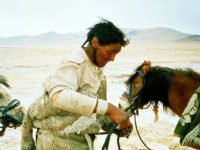
http://auteurs_production.s3.amazonaws.com/stills/12295/saltmen-of-tibet.jpg

I love this film - it's one of the best windows into traditional Tibetan culture that I have ever seen. It's great to see that it's available online - most of the major video stores don't carry it and won't order it.

The Saltmen of Tibet

Posted On: May 23, 2010

Since time immemorial, the nomadic herdsmen of northern Tibet have lived in an extremely harsh environment on the high plateau of the Himalayas, pasturing their yaks in the highest meadows of the world. In the spring of each year, the men of one tribe of nomads sets off with their robust pack animals on the long and difficult journey to the salt lakes. These lakes in the Himalayas are among the world’s largest reserves of salt, which is increasingly exploited on an industrial basis and transported away by truck. The film follows one of the traditional nomadic caravans, steeped in religious ritual but doomed by technological progress, as its sets off to the salt lakes with well over a hundred yaks which will be used to haul this “white gold” back to their native valleys.