Showing posts with label reviews. Show all posts

Saturday, October 11, 2014

A Review of Darin Weinberg's "Contemporary Social Constructionism: Key Themes"


From Inside Higher Ed, Scott McLemee reviews Darin Weinberg's Contemporary Social Constructionism: Key Themes (Temple UP; April, 2014). According to McLemee, social construction is a "loose, baggy monster,"a concept stretched so far it has lost its value.

Weinberg, however, seeks to distinguish the varieties of social constructionism, those with value vs. those that are useless. According to the Amazon blurb:
Contemporary Social Constructionism illuminates how constructionist social science developed in relation to positivism, critical and hermeneutic philosophy, and feminism and then goes on to distinguish the concept from postmodernism and deconstructionism. In addition, Weinberg shows how social constructionists have contributed to our understanding of biology, the body, self-knowledge, and social problems.
You can read an excerpt from Chapter 1 (pdf).

The Loose, Baggy Monster


July 16, 2014
By Scott McLemee

Like a t-shirt that used to say something you can’t quite read anymore, a piece of terminology will sometimes grow so faded, or be worn so thin, that retiring it seems long overdue. The threadbare expression “socially constructed” is one of them. It’s amazing the thing hasn’t disintegrated already.
In its protypical form -- as formulated in the late 1920s, in the aphorism known as the Thomas theorem – the idea was bright and shapely enough: “If men define situations as real, they are real in their consequences.” In a culture that regards the ghosts of dead ancestors as full members of the family, it’s necessary to take appropriate actions not to offend them; they will have a place at the table. Arguments about the socially constructed nature of reality generalize the Thomas theorem more broadly: we have access to the world only through the beliefs, concepts, categories, and patterns of behavior established by the society in which we live.

The idea lends itself to caricature, of course, particularly when it comes to discussion of the socially constructed nature of something brute and immune to argumentation like, say, the force of gravity. “Social constructivists think it’s just an idea in your head,” say the wits. “Maybe they should prove it by stepping off a tall building!”

Fortunately the experiment is not often performed. The counterargument from gravity is hardly so airtight as its makers like to think, however. The Thomas theorem holds that imaginary causes can have real effects, But that hardly implies that reality is just a product of the imagination.

And as for gravity -- yes, of course it is “constructed.” The observation that things fall to the ground is several orders of abstraction less than a scientific concept. Newton’s development of the inverse square law of attraction, its confirmation by experiment, and the idea’s diffusion among the non-scientific public – these all involved institutions and processes that are ultimately social in nature.

Isn’t that obvious? So it seems to me. But it also means that everything counts as socially constructed, if seen from a certain angle, which may not count as a contribution to knowledge.

A new book from Temple University Press, Darin Weinberg’s Contemporary Social Constructionism: Key Themes, struggles valiantly to defend the idea from its sillier manifestations and its more inane caricatures. The author is a reader in sociology and fellow at King’s College, University of Cambridge. “While it is certainly true that a handful of the more extravagant and intellectually careless writers associated with constructionism have abandoned the idea of using empirical evidence to resolve debates,” he writes, not naming any names but manifestly glaring at people over in the humanities, “they are a small and shrinking minority.”

Good social constructionist work, he insists, “is best understood as a variety of empirically grounded social scientific research,” which by “turn[ing] from putatively universal standards to the systematic scrutiny of the local standards undergirding specific research agendas” enables the forcing of “the tools necessary for discerning and fostering epistemic progress.”

The due epistemic diligence of the social scientists renders them utterly distinct from the postmodernists and deconstructionists, who, by Weinberg's reckoning, have done great damage to social constructionism’s credit rating. “While they may encourage more historically and politically sensitive intuitions regarding the production of literature,” he allows, “they are considerably less helpful when it comes to designing, implementing, and debating the merits of empirically grounded social scientific research projects.”

And that is being nice about it. A few pages later, Weinberg pronounces anathema upon the non-social scientific social-constructionists. They are “at best pseudo-empirical and, at worst, overtly opposed to the notion that empirical evidence might be used to improve our understanding of the world or resolve disputes about worldly events.”

Such hearty enthusiasm for throwing his humanistic colleagues under the bus is difficult to gainsay, even when one doubts that a theoretical approach to art or literature also needs to be “helpful when it comes to designing, implementing, and debating the merits of empirically grounded social scientific research projects.” Such criticisms are not meant to be definitive of Weinberg’s project. A sentence like “Derrida sought to use ‘deconstruction’ to demonstrate how specific readings of texts require specific contextualizations of them” is evidence chiefly of the author’s willingness to hazard a guess.

The book’s central concern, rather, is to defend what Weinberg calls “the social constructionist ethos” as the truest and most forthright contemporary manifestation of sociology’s confidence in its own disciplinary status. As such, it stresses “the crucially important emphases” that Weinberg sees as implicit in the concept of the social – emphases “on shared human endeavor, on relation over isolation, on process over stasis, and on collective over individual, as well as the monumental epistemic value of showing just how deeply influenced we are by the various sociohistorical contexts in which we live and are sustained.”

But this positive program is rarely in evidence so much as Weinberg’s effort to close off “the social” as something that must not and cannot be determined by anything outside itself – the biological, psychological, economic, or ecological domains, for example. “The social” becomes a kind of demiurge: constituting the world, then somehow transcending its manifestations.

It left this reader with the sense of witnessing a disciplinary turf war, extended to almost cosmological dimensions. The idea of social construction is a big one, for sure. But even an XXL can only be stretched just so far before it turns baggy and formless -- and stays that way for good.

Saturday, July 26, 2014

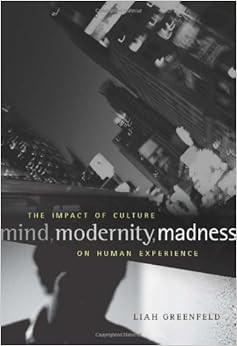
Book - "Mind, Modernity, Madness: The Impact of Culture on Human Experience" by Liah Greenfeld

http://ecx.images-amazon.com/images/I/41gs8XWQihL._SY344_BO1,204,203,200_.jpg

Allan Young reviews Liah Greenfeld's final installment in her Nationalism trilogy, Mind, Modernity, Madness: The Impact of Culture on Human Experience (2013) for the summer issue of The Hedgehog Review.

This appears to be a very interesting book - although Young doesn't feel there is too much true innovation here. Here is a passage from the review below:


Greenfeld argues that culture is simultaneously a source of madness and a source of self-medication that attenuates the severity of madness. As pathogenic forces strengthen, she writes, self-medication grows equally more desperate and socially disruptive in an era of globalization:
“Paradoxically, the rate of severe (clinical) mental disturbance should, in general, be proportional to the possibility of engaging in ideologically motivated collective activism; that is, the rate of disturbance should necessarily be highest in individualistic nations, and higher in collectivistic civic nations than in ones organized on the basis of ethnicity. The most aggressive and xenophobic strains of nationalism—the worst kind for international comity—would be the best for the mental health of individual citizens in states where such virulence held sway.”
Based on the brief review, this book, having not read it yet, seems like the intellectual heir of Wilhelm Reich's The Mass Psychology of Facism. If so, it is an important book.

Mind, Modernity, Madness: The Impact of Culture on Human Experience

Liah Greenfeld
Cambridge, MA: Harvard University Press, 2013.

Reprinted from The Hedgehog Review; 16.2 (Summer 2014). This essay may not be resold, reprinted, or redistributed for compensation of any kind without prior written permission. Please contact The Hedgehog Review for further details.


Liah Greenfeld, a professor of sociology at Boston University, describes Mind, Modernity, Madness as the product of “a new—radically different—approach that has never been tried.” At 688 pages, it is a long book that ranges in its “interdisciplinarity” from the clinical epidemiology of bipolar depression to the historiography of romantic love in Shakespeare. But it has a clear, bold thesis: that the advent of madness is connected, as both cause and effect, to the rise of nations and nationalism.

More specifically, Greenfeld contends, the historical conditions that gave rise to the nation—a community of equals; a measure of individual autonomy, liberty, and mobility; and a declining acknowledgment of divine authority—make madness not only possible but inevitable. As the value of human life grows and becomes of paramount concern, self-invention and romantic love become popular ideals, and even common people are driven by ambition, aspiration, and the pursuit of happiness. “Modern culture,” Greenfeld writes, “leaves us free to decide what to be and to make ourselves. It is this cultural laxity that is anomie—the inability of a culture to provide the individuals within it with consistent guidance.”

The author’s evidence is historical and biographical. Her conceptual framework is sociological, inspired by Émile Durkheim’s 1897 book Suicide. Indeed, Greenfeld’s vision of modernity restates and broadens Durkheim’s view that social disintegration produces the anomie and alienation that can lead to self-destructive behavior and acts, including the taking of one’s own life. While Durkheim adduced higher rates of suicide in the anomic nations of later-nineteenth-century Protestant Europe, Greenfeld focuses on the worldwide epidemiology of schizophrenia, bipolar disorder, and major depression, which she regards as an overwhelming threat to Western civilization.

Greenfeld rejects the “constructivist” approach that she believes is prevalent “among Western social scientists—anthropologists, sociologists, and historians studying psychiatry—who conclude that madness is largely an invented problem… analogous to the equally false ‘social constructions’ of witchcraft and possession of other cultures, but dressed in a scientific garb and unjustifiably enjoying the authority of science in ours.” She derides the “poetic” excesses of Michel Foucault’s Madness and Civilization, but ignores constructivist conceptualizations of greater consequence, notably “idioms of distress” and “bio-looping,” which circulate freely within clinical psychiatry and can be found in the Diagnostic and Statistical Manual on Mental Disorders in appendixes on somatization syndromes and cultural psychiatry.

When Greenfeld accuses anthropologists of creating “false social constructions” of witchcraft and possession and repeating this effect on Western madness, she means that anthropologists have misconstrued how culture, mind, consciousness, brain, and madness are connected. Culture, in her view, is an ideational, symbolic, non-material phenomenon. Human consciousness is an emergent phenomenon, “logically consistent with the biological and physical laws but autonomous,” and irreducible to organic reality. The human mind comprises or contains a form of collective consciousness she calls “culture in the brain.”

These conceptions, Greenfeld says, run counter to the dominant “dual mind/body view of reality,” which attributes causal primacy to the “material” (the central nervous system) over the “spiritual” (consciousness, mind, culture). Culture and consciousness, in this paradigm, are epiphenomena of the material world: causation proceeds from brain to mind via identifiable mechanisms. In other words, culture can disguise the material nature of madness but cannot interfere with it. Constructionists are said to share these conventions.

Greenfeld emphatically rejects the dualist paradigm, contending that culture can and does cause biologically real (material) diseases, including madness. She believes that her thesis, being both counterintuitive and empirically proven, has revolutionary implications for how we understand and address the increasing prevalence of madness in our current era and culture. Furthermore, she believes that her thesis enables her to advance additional, counterintuitive claims concerning the historical origins and epidemiology of madness.

Yet it is unclear to me whether Greenfeld’s thesis is truly revolutionary. The difficulty comes in her proposal that culture causes biologically real diseases. There are two ways to interpret this claim. She could mean that “culture in the brain” is a source of distressful dilemmas, contradictions, and emotions that precipitate chains of physiological, molecular, neurological, and anatomical effects; that these changes in turn undermine the homeostasis underpinning normal functioning; and that, as a result, a pathogenic loop is created and sustained. This interpretation seems consistent with the process Greenfeld is proposing, and it is consistent with what she says about clinical psychiatry and research. This is a credible thesis, but it is far from being counterintuitive or revolutionary. Indeed, it is the prevailing approach among anthropologists and other social scientists interested in mind, brain, and psychopathology.

But Greenfeld may have something far more original in mind: “So long as there remains the unresolved philosophical mind-body problem, no significant advance in human neuroscience and, therefore, psychiatry would be possible.… The first order of the business is, therefore, to escape the mind-body quagmire.” If, in this book, she has found a way out of this 400-year-old problem, however, it is not at all obvious to this reader what it is.

Such matters occupy only two chapters. The remaining 500 pages are devoted to “madness.” According to Greenfeld, the term was coined in England in the early modern period (fifteenth and sixteenth centuries), then spread to France and Germany. Between 1880 and 1900, “madness” bracketed the maladies we know today as schizophrenia and bipolar disorder. (In psychiatry, there is currently renewed interest in reconnecting the two disorders on a single diagnostic spectrum.) The author further describes the history of the term in separate chapters on Europe and America.

In a brief but provocative epilogue, Greenfeld argues that culture is simultaneously a source of madness and a source of self-medication that attenuates the severity of madness. As pathogenic forces strengthen, she writes, self-medication grows equally more desperate and socially disruptive in an era of globalization:

“Paradoxically, the rate of severe (clinical) mental disturbance should, in general, be proportional to the possibility of engaging in ideologically motivated collective activism; that is, the rate of disturbance should necessarily be highest in individualistic nations, and higher in collectivistic civic nations than in ones organized on the basis of ethnicity. The most aggressive and xenophobic strains of nationalism—the worst kind for international comity—would be the best for the mental health of individual citizens in states where such virulence held sway.”

Mind, Modernity, Madness is the final volume in Greenfeld’s trilogy on nationalism. It provides readers with a provocative commentary on the sociocultural origins and psychopathological consequences of modernity. And it is a splendid antidote to the reckless application of the term “madness,” by both pundits and politicians, to the policies and persons of America's political opponents and the excesses of their nationalisms.


~ Allan Young, professor of anthropology at McGill University and author of The Harmony of Illusions: Inventing Posttraumatic Stress Disorder (1995), is completing a book on the social brain, psychopathology, and myths of empathy.

Friday, February 28, 2014

Omnivore - What Neuroscience Is Learning

From Bookforum's Omnivore blog, this is cool collection of links related to mind and consciousness, including several pieces on free will.

One of the highlights of this collection is a review by John Jeffery and Todd K. Shackelford (from Evolutionary Psychology, 2013. 11(5): 1077-1083) of Daniel C. Dennett’s Intuition Pumps and Other Tools for Thinking and Nicholas Humphrey’s Soul Dust: The Magic of Consciousness. Here is part of the review:
Humphrey, like Dennett, dispels the more romantic notions of consciousness as the gift of a spirit, but he cleverly reappropriates the terminology of spirituality to align with a scientific vision of consciousness. Both he and Dennett employ tactical vocabularies, wishing to make their arguments more appetizing to a general audience and, in Dennett’s case for compatibilism, safe for consumption. Most importantly, Soul Dust and Intuition Pumps work to collapse the irresistible assumption that we live in a phenomenological reality outside of our biology, while simultaneously celebrating and elevating its significance.
Enjoy the other links, as well.

What neuroscience is learning

Feb 27 2014  
9:00AM

Tuesday, February 25, 2014

Omnivore - The Age of Atheism

From Bookforum's Omnivore blog, a collection of interesting links on atheism and its discontents.

The age of atheism

Feb 24 2014 
3:00PM

  • Stephen Bullivant (St. Mary’s): Why Study Atheism?; and Defining “Atheism”
  • The real New Atheism: Jeffrey Tayler on rejecting religion for a just world. 
  • Remembering Christopher Hitchens: G. Elijah Dann on religious belief and Hitch's greatest hits. 
  • When did faith start to fade? Adam Gopnik reviews The Age of Atheists: How We Have Sought to Live Since the Death of God by Peter Watson; and Imagine There's No Heaven: How Atheism Helped Create the Modern World by Mitchell Stephens. 
  • George Dvorsky on the 7 most intriguing philosophical arguments for the existence of God. 
  • From Philosophy Now, does God exist? William Lane Craig says there are good reasons for thinking that He does (and a response); and Rick Lewis interviews Simon Blackburn on his atheism. 
  • Clayton Littlejohn reviews God and Evidence: Problems for Theistic Philosophers by Rob Lovering. 
  • Ryan Stringer on a logical argument from evil. 
  • Oliver Burkeman on David Bentley Hart's The Experience of God: Being, Consciousness, Bliss, the one theology book all atheists really should read (and more by Damon Linker; Isaac Chotiner on how the case for God's existence is empowering atheists; and Jerry Coyne on why the “best arguments for God's existence” are actually terrible). 
  • No, we don’t owe your religion any “respect”. 
  • Can a Christian be an atheist? Dom Turner finds out. 
  • Are religious teachings fairy tales? Howard Kainz wonders. 
  • Research indicates that lack of religion is a key reason why people in wealthy countries don't feel a sense of purpose. 
  • Katie Engelhart on the age of atheism: “If God exists, why is anybody unhappy?”

Sunday, February 23, 2014

Omnivore - The Path of Philosophy

From Bookforum's Omnivore blog, here is another fine collection of links inspired and related to philosophy.

The path of philosophy
Feb 21 2014 
9:00AM

Wednesday, February 19, 2014

Jerome Groopman - Marijuana: The High and the Low


From The New York Review of Books, Jerome Groopman reviews A New Leaf: The End of Cannabis Prohibition, and he also adds a pretty solid background on the use of cannabis in history. This is an excellent overview and review of the book and the issues around making medical marijuana more accessible.

Marijuana: The High and the Low

Jerome Groopman
February 20, 2014 Issue

A New Leaf: The End of Cannabis Prohibition
by Alyson Martin and Nushin Rashidian
New Press, 264 pp., $17.95 (paper)

Jeff Chiu/AP Images Medical marijuana patient Kevin Brown at the Apothecarium, a medical cannabis dispensary in San Francisco, December 2011

In the summer of 2006, a young scientist from Israel joined my laboratory. He came to learn how viruses attack cells, a major focus of my research program. And I looked forward to drawing on his expertise in an emerging area of science that intrigued me: the biological effects of cannabinoids, the active chemical compounds in the marijuana plant. The Israeli researcher had trained at Jerusalem’s Hebrew University with Professor Raphael Mechoulam, a chemist credited with the discovery in 1964 of delta-9-tetrahydrocannabinol (THC), the primary psychoactive compound in marijuana. Mechoulam later characterized cannabidiol (CBD), a related substance plentiful in the plant, as distinct from THC in that it had no discernible effects on mood, perception, wakefulness, or appetite.1

The work of the young scientist proved productive. In short order, he tested the effects of several cannabinoids on a herpes virus that promotes the development of Kaposi’s sarcoma, a disfiguring and sometimes fatal tumor among people with impaired immunity, like those with AIDS. It turned out that CBD, the plentiful, nonpsychoactive compound, could switch off the malignant effects of the virus.2 Scientists in my department also found that cannabinoids could alter how white blood cells migrated in response to physiological stimuli, a key aspect of immune defense; other research teams found that THC inhibited the growth and spread of lung cancer and CBD of breast cancer in laboratory models.3 Clearly, chemicals in the plant could have diverse and potent effects on normal and malignant cells.

But what I found most fascinating was that we have a natural or “endogenous” cannabinoid system. In 1988, researchers identified a specific docking site, or receptor, on the surface of cells in the brain that bound THC. This first receptor was termed cannabinoid receptor 1, or CB1.4 Five years later, a second receptor for cannabinoids, CB2, was found.5 This latter docking protein was less plentiful in the central nervous system but richly present on white blood cells. Again, it was Raphael Mechoulam who discovered the first endogenous cannabinoid, a fatty acid in the brain, which he termed “anandamide.” (The name is derived from the Sanskrit word ananda, which means “bliss.”) When anandamide attached to CB1 it triggered a cascade of biochemical changes within our neurons.6

Other endogenous cannabinoids were later identified. This makes evolutionary sense, since the CB1 and CB2 receptors would not be present on our cells if we did not normally make molecules to dock on them. The physiological ramifications of endogenous cannabinoids appeared quite broad; their most impressive effects were related to perception of and response to pain.

CANNABIS is one of the oldest psychotropic drugs in continuous use. Archaeologists have discovered it in digs in Asia that date to the Neolithic period, around 4000 BCE. The most common species of the plant is Cannabis sativa, found in both tropical and temperate climates. Marijuana is a Mexican term that first referred to cheap tobacco and now denotes the dried leaves and flowers of the hemp plant. Hashish is Arabic for Indian hemp and refers to its viscous resin. An emperor of China, Shen Nung, also the discoverer of tea and ephedrine, is held to be among the first to report on therapeutic uses of cannabis in a medicinal compendium that dates to 2737 BCE. In 1839, William O’Shaughnessy, a British doctor working in India, published a paper on cannabis as an analgesic and appetite stimulant that also tempered nausea, relaxed muscles, and might ameliorate epileptic seizures. His observations led to widespread medical use of cannabis in the United Kingdom; it was prescribed to Queen Victoria for relief of menstrual discomfort.7

The cannabis plant contains some 460 compounds, including more than 60 cannabinoids. THC, the key psychoactive substance in marijuana, has increased from about 1–5 percent to as much as 10–15 percent in cultivated plants since the 1960s. When herbal cannabis is smoked, some 20 to 50 percent of the THC is absorbed via the lungs. When herbal cannabis is eaten, less THC reaches the brain because it is metabolized as it passes from the gut through the liver. THC accumulates in fatty tissues, from which it is slowly released, and acts primarily on CB1 receptors in the brain’s mesolimbic dopamine system, which is believed to contribute to the positive reinforcing and rewarding effects of the drug.8

While smoking or eating cannabis typically results in the user’s feeling “high,” with a relaxed, euphoric sense as anxiety and alertness decrease, some first-time users, as well as individuals who have psychological problems, can experience dysphoria, fear, and panic. Typically, when high on marijuana, there is an increased sense of sociability, although among those who have a dysphoric reaction, there can be sharp social withdrawal. Perception of time is altered, generally with perceived time faster than clock time; spatial perception also may change, and colors may seem brighter and music more resonant. High doses of cannabis can result in hallucinations, which may account for its religious use in some cultures. Yet unlike opioids, there are no reported cases of death due to a THC overdose, probably because cannabinoids do not inhibit our respiratory drive, which would result in asphyxiation. Among regular users, abstinence from marijuana can cause an uncomfortable or distressing withdrawal syndrome.

In 2008 the World Health Organization published a Mental Health Survey of 54,068 persons age sixteen and older in seventeen nations. On the basis of this survey, cannabis was found to have been used at least once by some 160 million people between the ages of fifteen and sixty-five; reported use was lowest in the People’s Republic of China, 0.3 percent, and highest in the United States, 42.4 percent, with New Zealand close behind.9

Despite such widespread use, cannabis is illegal in most countries. Harry J. Anslinger, a prominent prohibitionist, successfully lobbied Congress to pass the Marihuana Tax Act in 1937, making access to the plant costly. Anslinger was the head of the Federal Bureau of Narcotics and presented cannabis use to the public as an unalloyed danger, resulting in “reefer madness.” The American Medical Association opposed the Marihuana Tax Act, fearing that it would limit medicinal study and potential prescription of the plant. Long a part of the United States Pharmacopeia, a compendium that set standards for medicines and foods, cannabis was removed in 1942.

In 1970, Congress enacted the Controlled Substances Act, classifying marijuana along with heroin as a Schedule I drug. Drugs in this category have a proven potential for abuse and no medical value. (Opium, the source of morphine, and amphetamines are Schedule II drugs, classified as less dangerous despite their potent addictive properties.) Soon thereafter, President Nixon launched the “war on drugs,” and in 1986, President Reagan signed the Anti-Drug Abuse Act, which mandated prison sentences without parole for offenders convicted of possession and sale of all illegal drugs, including marijuana.

THE STUDY of cannabinoids, both those derived from plant sources as well as the endocannabinoids that exist naturally within our body, is now an extensive enterprise that spans the globe and links numerous scientists in both academic centers and pharmaceutical companies.

Mitch Earleywine, a prominent researcher on drugs and addiction at SUNY Albany, observed how results from current studies on marijuana are akin to Rorschach blots. “People purportedly see these ambiguous pictures in a way that reveals more about them than the ink.” Many who make public policy or are associated with interest groups, he contends, may respond to marijuana research according to the views of these groups: their interpretations say more about their own biases than about the actual data. For example, prohibitionists contend that THC often appears in the blood of people involved in auto accidents; yet they omit the fact that most of these people also had been drinking alcohol. Antiprohibitionists cite research that showed no sign of memory problems in chronic marijuana smokers; but they do not mention that the cognitive tests were so easy that even an impaired person could perform them.

Two recent reviews avoid such biases and critically examine data from more than a hundred randomized placebo-controlled clinical trials involving some 6,100 patients with a variety of medical conditions.10 Marijuana appears useful in treating anorexia, nausea and vomiting, glaucoma, irritable bowel disease, muscle spasticity, multiple sclerosis, symptoms of amyotropic lateral sclerosis (Lou Gehrig’s disease), epilepsy, and Tourette’s syndrome. (Recent clinical trials confirm many of the claims of Emperor Shen Nung and Dr. O’Shaughnessy.) Despite findings from experiments in my laboratory and others, its anticancer effects in patients are more uncertain and neither THC nor CBD is a proven antineoplastic agent, i.e., effective in treating abnormal growth of tissue.

Judy Foreman, an accomplished medical journalist, devotes a chapter to marijuana in her recent book A Nation in Pain: Healing Our Biggest Health Problem.11 She judiciously reviews the data on the risks and benefits of marijuana as a therapy for medical conditions marked by pain, highlighting where it appears ameliorative, where it falls short, and where there is lack of clarity about its value. Foreman writes:
To put it bluntly, marijuana works. Not dazzlingly, but about as well as opioids. That is, it can reduce chronic pain by more than 30 percent. And with fewer serious side effects. To be sure, some researchers think it’s too soon to declare marijuana and synthetic cannabinoids a first-line treatment for pain, arguing that other drugs should be tried first. But that may be too cautious a view.
Ultimately, marijuana may be used in conjunction with opioids like morphine to allow for lower doses and fewer of the side effects of the opioid family of analgesics. While chronic pain seems amenable to amelioration by marijuana, its impact on reducing acute pain, such as after surgery, is minimal.

How do cannabinoids reduce pain? Some of the benefit appears to result from cognitive dissociation: you realize that pain is present, but don’t respond to it emotionally. If you are able to detach yourself from pain in that way, there is less suffering.

EVERY therapy, whether a drug or a procedure, involves a tradeoff of benefits versus risks. Perhaps the most controversial and important concern around cannabinoids is whether they increase the risk of psychoses like schizophrenia. This question is most germane for adolescents and young adults. A number of studies reviewed the health records of young people in Sweden, New Zealand, and Holland who reported cannabis use, as compared to the records of those who did not. A combined or metaanalysis of results from nearly three dozen such studies linked cannabis use to later development of schizophrenia and other psychosis.12

The limitation of such observational studies is that they may suggest an association but in no way prove a causal link. Indeed, the medical literature is littered with observational studies that were taken as meaningful but later overturned when randomized placebo-controlled trials were conducted. Here the Women’s Health Initiative comes to mind. This was a randomized study, using placebos as controls, that reversed some four decades of thinking about the alleged benefits of hormonal replacement therapy among postmenopausal women in preventing dementia and heart disease. No one is likely to conduct a randomized controlled trial of thousands of teenagers, assigning one group to smoke or ingest cannabis and the other group to receive placebos. The issue of marijuana as a cofactor in the development of schizophrenia and other psychosis will therefore remain unresolved.

What is clear is that cannabis impairs cognition and psychomotor responses. Numerous studies show that it lengthens a person’s reaction time and impairs his or her attention, concentration, short-term memory, and assessment of risks. These changes in psychomotor performance can last longer than the feeling of being high. Trials with licensed pilots found that marijuana impaired performance on a flight simulator for up to twenty-four hours.13 Further, most of the pilots were unaware that their performance was still impaired a day later. Several studies demonstrate associations between cannabis and collisions: drivers who use it are estimated to be some two to seven times more likely to be responsible for accidents compared to drivers not using drugs or alcohol.14

The American Psychiatric Association, in the new DSM-5, has defined a diagnosis of “cannabis use disorder.” These people had a repeated pattern of use with harmful consequences, such as inability to fulfill major responsibilities at work and persistent social problems at home. Both the DSM-5 and the World Health Organization’s International Classification of Diseases 10th edition (ICD-10) also include a list of possible symptoms of withdrawal from using cannabis: significant fatigue, sleepiness, psychomotor retardation, anxiety, and depression.15 Yet there is fierce argument about whether marijuana is addictive. Proponents of cannabis doubt that it can cause true addiction, a physiological condition with compulsive craving and use despite harm; they argue that any dependence is less significant than that seen with alcohol. Opponents of cannabis use, particularly those from the National Institutes of Health, affirm both dependence and addiction as real risks, although at a much lower percentage than that seen with cocaine or heroin.16

A New Leaf is a detailed account of the history of the regulation of cannabis, presenting in a blow-by-blow manner the legal and political battles around its prohibition. It opens on a celebratory note, with the legalization of marijuana for recreational use in two states:
Another prohibition is ending. On November 6, 2012, voters in Colorado and Washington were the first in the world to successfully challenge nearly a century of bad policy and misconceptions about cannabis.
In downtown Seattle, the Hotel Ă„ndra was dressed white and blue, the team colors of Washington State’s…campaign….
Around 7 p.m., the owner of one of the largest and most successful medical cannabis dispensaries in the country arrived. Steve DeAngelo was unmistakable even in a crowd, with his signature long, tight pigtail braids and dark fedora…. Earlier that year, he was the star of his own Discovery Channel show, Weed Wars. His two Harborside Health Centers are in the Bay Area, but he had a soft spot for Seattle. Just a few months before, he had spoken at Seattle’s well-known Hempfest, attended by tens of thousands each year. “I’ve been working on this issue for my entire life…. And I know tonight…that there’s going to be a whole lot of angels dancing in heaven,” DeAngelo said, his eyes flooding.
The authors describe a similar scene in Denver:
Brian Vincente, a lawyer who advocated for medical cannabis in Colorado for nearly a decade,… took the stage. “Tonight we made history. This is something you’re going to tell your kids about,” Vincente said. “Marijuana prohibition started in 1937. The first person arrested was in Colorado.” The crowd booed. “Colorado fucking turned this thing around tonight.” And with the f-word came gaiety.
These successes resulted from a unique effort joining groups from the ends of the political spectrum:
The support of conservative Republicans and Libertarians was as important to the Colorado…campaign as that of Democrats and liberals…. The swing state of Colorado, birthplace of the Libertarian party, is decidedly purple. The Libertarian Party of Colorado emphatically endorsed Amendment 64 in May, for example, while the Colorado Democratic Party offered support but stopped short of an endorsement. The Republican Liberty Caucus of Colorado also endorsed the amendment because prohibition is “inconsistent with Republican values,” which call for more “personal responsibility” and less “federal overreach.”
RECENT articles in The New Yorker17 and The Nation18 describe in a succinct and focused way the political terrain around cannabis legalization for medicinal or recreational use in the United States. The New Yorker article features Professor Mark Kleiman, a drug policy expert at the University of California, Los Angeles, who sees legalization through the perspective of a scientist, who regards it as a kind of ongoing experiment. Legalization will test a group of hypotheses about public policy, and he suspends conclusions until more data are available.

As with every social initiative, there could be negative effects and Kleiman advocates close monitoring of excessive use among adolescents and of driving under the influence when cannabis is legal for recreational use. He “appears,” according to the New Yorker article, “to derive grim pleasure from informing politicians that they have underestimated the complexity of a problem.” One major concern is that when legal marijuana goes on sale in Washington State this spring, the current black market will not disappear; rather, legal over-the-counter marijuana will be competing with illicit sources. Kleiman argues that to support the legal market, there should be even greater law enforcement pressure on those who do not respect the rules. In Washington, few in government wanted to hear such a proposal.

Similarly, Kleiman is not confident that alcohol will become less appealing as marijuana is made available. While he acknowledges that alcohol is the greater danger of the two, he raises the possibility that cannabis will be used to complement drinking. Finally, he says that in the “Manichaean world of politics,” the pendulum may swing from marijuana as illegal—with sale or use of it causing imprisonment—to “going all the way to ‘We should sell it like cornflakes.’”

Unlike the cautious New Yorker piece, the articles in The Nation offer a robust endorsement of legalization. The cover of the magazine displays a photograph of a young Barack Obama flashing the V for victory sign with friends in high school clustered around the logo of the “Choom Gang.” An accompanying editorial by Katrina vanden Heuvel notes that recent presidents, including Bill Clinton, George W. Bush, and Barack Obama, all “have more or less owned up to breaking America’s drug laws” through possession or use of cannabis; if they had been observed by the police, they might well have been incarcerated, with no hope of a career leading to the White House. A New Leaf emphasizes the risks of arrest for possession. Racial discrimination, with disproportionate numbers of African-Americans arrested, is one ugly reality of prohibition:
While cannabis users who are arrested are not often sent to prison, there are still more than twenty thousand people incarcerated for mere possession. According to a comprehensive 2013 report released by the ACLU, between 2001 and 2010 more than 8 million cannabis arrests were made in the United States (88 percent for possession), and the possession enforcement alone cost more than $3.6 million in 2010.  
Across the country, blacks are nearly four times more likely than whites to be arrested for cannabis possession, despite comparable rates of use; in some counties that number increases from four to thirty. Finally, 62 percent of those arrested are twenty-four or younger, which means their arrest records will follow them throughout adulthood.
All of these wasted hours, dollars, and arrests are a distraction from hard drug use and trafficking:
Again, when cannabis—which accounts for 80 percent of all illegal substance use in the United States—is removed from the drug war picture, the country can more effectively discuss and implement a new and more fitting public health approach for the remaining hard drugs.
SEVERAL years ago, I consulted on the case of a young woman with anemia. Her internist had made an exhaustive evaluation of her condition but had found no cause for it. The patient had been under a great deal of stress at work, and when I asked how she dealt with this, she said she had been smoking marijuana every night. A bone marrow examination showed reduced numbers of cells, not severe enough to be classified as aplastic anemia, but certainly abnormal in a woman in her twenties. The numerous components of cannabis are not known to be toxic to blood cells; marijuana smoking has not been reported as a cause of anemia. But I recalled that some of the illicit crops had been sprayed with toxins that might have deleterious effects on blood cell development.

So together we decided that she would suspend smoking, and over a period of months her anemia was resolved. A subsequent bone marrow examination showed full restoration of normal blood cell numbers. This was not definitive proof, but it certainly suggested that something in the grass she got from a dealer was the potential culprit. If there is not adequate oversight of the marijuana on sale, those seeking street cannabis could be exposed to dangerous contaminants.

In a forthcoming book, Weed Land, Peter Hecht, a journalist at The Sacramento Bee, charts the evolution of California’s medical marijuana law, the first in the nation.19 Much of the momentum behind its passage came from a joining of forces between AIDS activists and academic physicians like Donald Abrams at San Francisco General Hospital, who demonstrated the clinical benefits of augmented appetite and relief of pain in patients with cachexia from HIV. Medical marijuana, now legal in twenty states and the District of Columbia, is regulated like a supplement rather than a drug. There is no standardization of optimal amounts of psychoactive THC and nonpsychoactive CBD, although they must be free of toxins. (A British company, GW Pharmaceuticals, makes Sativex, an oral spray containing extracts of two standardized cannabis strains that are mixed to give exact doses of THC and CBD. Sativex was approved in several countries, but not in the United States.)

For a physician like myself prescribing a therapy, this is an uncomfortable situation, because a prescription should be exact in specifying how much drug is delivered. Further, side effects may occur in patients taking multiple other medications, due to so-called “drug-drug interactions.” Such interactions have not been well studied with THC and CBD, in part because of the restriction of access to the plant for the clinical research community. Scientists in my laboratory studied pure chemicals, THC and CBD, under strict federal oversight; we purchased the cannabinoids from chemical companies that used quality control. As Martin and Rashidian note, clinical study of the plant itself, with its scores of active chemicals, is another matter:
The federal government has imposed additional and unique restrictions on cannabis research, with little rationale—beyond politics. The federal government has enabled only one institution, the University of Mississippi, to legally grow cannabis for research on its behalf, although it is free to award additional and alternative contracts. And cannabis is the only research substance for which the government is the sole supplier. For a scientist to receive cannabis from the federal farm at the University of Mississippi, a trifecta of approvals…must be obtained from the FDA, DEA, and a Public Health Service panel.
Perhaps as states legalize marijuana, this barrier to research will be lowered, as it was for stem cell research, once restricted by federal law. And as more studies are conducted on marijuana for medical or recreational uses, opponents and enthusiasts may both discover that they were neither entirely right nor entirely wrong.


Notes


1. Mohamed Ben Amar, “Cannabinoids in Medicine: A Review of Their Therapeutic Potential,” Journal of Ethno-pharmacology, Vol. 105 (2006); Arno Hazekamp and Franjo Grotenhermen, “Review on Clinical Studies with Cannabis and Cannabinoids 2005–2009,” Cannabinoids, Vol. 5 (2010).

2. Y. Maor, J. Yu, P.M. Kuzontkoski, B.J. Dezube, X. Zhang, and J.E. Groopman, “Cannabidiol Inhibits Growth and Induces Programmed Cell Death in Kaposi Sarcoma–Associated Herpesvirus-Infected Endothelium,” Genes & Cancer, Vol. 3, No. 7–8 (2012); X. Zhang, J.F. Wang, G. Kunos, and J.E. Groopman, “Cannabinoid Modulation of Kaposi’s Sarcoma–Associated Herpesvirus Infection and Transformation,” Cancer Research, Vol. 67, No. 15 (August 1, 2007).

3. S. Ghosh, A. Preet, J.E. Groopman, and R.K. Gaju, “Cannabinoid Receptor CB 2 Modulates the CXCL 12/ CXCR 4-Mediated Chemotaxis of T Lymphocytes,” Molecular Immunology, Vol. 43 (2006); A. Preet, R.K. Ganju, and J.E. Groopman, “∆ 9 -Tetrahydrocannabinol Inhibits Epithelial Growth Factor–Induced Lung Cancer Cell Migration in Vitro as Well as Its Growth and Metastasis in Vivo,” Oncogene, Vol. 27 (2008); X. Zhang, Y. Maor, J.F. Wang, G. Kunos, and J.E. Groopman, “Endocannabinoid-like N-arachidonoyl Serine Is a Novel Pro-angiogenic Mediator,” British Journal of Pharmacology, Vol. 160 (2010); A. Preet, Z. Qamri, M. Nasser, A. Prasad, K. Shilo, X. Zou, J.E. Groopman, and R. Ganju, “Cannabinoid Receptors, CB 1 and CB 2, as Novel Targets for Inhibition of Non-Small Cell Lung Cancer Growth and Metastasis,” Cancer Prevention Research, Vol. 4 (2011); A. Shrivastava, P.M. Kuzontkoski, J.E. Groopman, and A. Prasad, “Cannabidiol Induces Programmed Cell Death in Breast Cancer Cells by Coordinating the Cross-Talk Between Apoptosis and Autophagy,” Molecular Cancer Therapeutics, Vol. 10 (2011).

4. W.A. Devane, F.A. Dysarz III, M.R. Johnson, L.S. Melvin, and A.C. Howlett, “Determination and Characterization of a Cannabinoid Receptor in Rat Brain,” Molecular Pharmacology, Vol. 34 (November 1, 1988).

5. S. Munro, K.L. Thomas, and M. Abu-Shaar, “Molecular Characterization of a Peripheral Receptor for Cannabinoids,” Nature, Vol. 365 (1993).

6. W.A. Devane, L. Hanus, A. Breuer, R.G. Pertwee, L.A. Stevenson, and G. Griffin, “Isolation and Structure of a Brain Constituent That Binds to the Cannabinoid Receptor,” Science, Vol. 258 (December 18, 1992).

7. D. Baker, G. Pryce, G. Giovannoni, and A.J. Thompson, “The Therapeutic Potential of Cannabis,” Lancet Neurology, Vol. 2 (May 2003).

8. Mitch Earleywine, Understanding Marijuana: A New Look at the Scientific Evidence (Oxford University Press, 2002).

9. L. Degenhardt, W.T. Chiu, N. Sampson, et al., “Toward a Global View of Alcohol, Tobacco, Cannabis, and Cocaine Use: Findings from the WHO World Mental Health Surveys,” PLoS Medicine, Vol. 5 (July 2008).

10. See Amar, “Cannabinoids in Medicine: A Review of Their Therapeutic Potential,” and Hazekamp and Grotenhermen, “Review on Clinical Studies with Cannabis and Cannabinoids 2005–2009.”

11. Oxford University Press, 2014

12. M. Large, S. Sharma, M.T. Compton, T. Slade, O. Nielssen, “Cannabis Use and Earlier Onset of Psychosis,” Archives of General Psychiatry, Vol. 68, No. 6 (2011).

13. V.O. Leirer, J.A. Yesavage, and D.G. Morrow, “Marijuana Carry-Over Effects on Aircraft Pilot Performance,” Aviation, Space, and Environmental Medicine, Vol. 62, No. 3 (1991); D.G. Newman (Australian Government, Australian Transport Safety Bureau), “Cannabis and Its Effects on Pilot Performance and Flight Safety: A Review” (2004).

14. M. Asbridge, J.A. Hayden, and J.L. Cartwright, “Acute Cannabis Consumption and Motor Vehicle Collision Risk: Systematic Review of Observational Studies,” BMJ, Vol. 344, No. 14 (2012).

15. D.S. Hasin, K.M. Keyes, D. Alderson et al., “Cannabis Withdrawal in the United States: Results from NESARC,” Journal of Clinical Psychiatry, Vol. 69, No. 9 (2008).

16. See Baker et al., “The Therapeutic Potential of Cannabis,” and Foreman, A Nation in Pain.

17. Patrick Radden Keefe, “Buzzkill,” The New Yorker, November 18, 2013.

18. Katrina vanden Heuvel, “Why It’s Always Been Time to Legalize Pot,” and other articles in The Nation ’s “Special Issue: Marijuana Wars,” November 18, 2013.

19. Peter Hecht, Weed Land: Inside America’s Marijuana Epicenter and How Pot Went Legit (University of California Press, May 2014).

Saturday, February 15, 2014

Julian Baggini - The Social Animal

Julian Baggini is the author of The Virtues of the Table (coming in 2014) and the more well-known, The Ego Trick (2012), among many other books. In this review article for The Financial Times, he looks at three different books on the common theme of our human need to social structure.

The Social Animal


By Julian Baggini

Whether in education, ethics or politics, we ignore our social natures at our peril


©Alex Prager - ‘Crowd #2 (Emma)’, 2012. The exhibition ‘Alex Prager: Face in the Crowd’ runs until March 9 2014 at the Corcoran Gallery in Washington DC

Social: Why Our Brains Are Wired to Connect, by Matthew Lieberman, OUP, RRP£18.99/Crown, RRP$26, 384 pages

Moral Tribes: Emotion, Reason and the Gap Between Us and Them, by Joshua Greene, Atlantic Books, RRP£22/Penguin Press, RRP$29.95, 432 pages

Political Emotions: Why Love Matters for Justice, by Martha Nussbaum, Belknap Press, RRP£25/$35, 480 pages

Human beings are born social. Evolution has forced women to give birth before their babies could possibly survive by themselves, since our big brains mean any more time in the womb and our heads couldn’t get out.

As life goes on, our social connections continue to be vital. We live in families, tribes and nations, and increasingly as part of an interconnected global community. The problem is that these groups make different and often competing demands on us. We may well be social animals but our habitats are changing, and we haven’t yet adapted to them.

That is the central problem dealt with in three very different books about being with others. Matthew Lieberman approaches the issue from the perspective of his pioneering field of social cognitive neuroscience, the study of how the brain responds to the social world; Joshua Greene looks at it through the lens of moral philosophy and psychology; and Martha Nussbaum brings political philosophy to the party, infusing her discussion with her trademark blend of aesthetic and historical analysis.

Lieberman’s task is in some ways the most straightforward. His aim in Social is to impress upon us just how much we have learnt in recent years about the wiring of our brains. Social thinking is so fundamental that it fills our consciousness whenever we switch off from any pressing task. This “default mode network” activity “precedes any conscious interest in the social world”, having been detected in babies as young as two days.

Most neuroscientists believe we have a dedicated system for social reasoning, quite different to the one that is used for non-social thinking. What’s more, when one system is on, the other turns off. Lieberman explains how the social system fulfils three core tasks. First, it must make connections with others, which involves feeling social pains and pleasures, such as those of rejection or belonging. Second, it must develop mind-reading skills, in order to know what others are thinking, so as to predict their behaviour and act appropriately. Finally, it must use these abilities to harmonise with others, so as to thrive safely in the social world.

Peering into the skull leads to some intriguing observations. For example, Lieberman says that brains “experience threats to our social connections in much the same way they experience physical pain”, and that some brain scans of social and physical pain are indistinguishable. Most surprisingly, taking paracetamol appears to lessen both. The visceral nature of emotional hurt might well explain why one survey found that more people feared public speaking than death, or why languages around the world use metaphors such as a broken heart, a punch in the gut or a slap in the face.

This isn’t just fascinating for its own sake. Lieberman has a social and political purpose. The contemporary western world just doesn’t take enough account of our fundamentally social nature. “We are square (social) pegs being forced into round (nonsocial) holes,” he says. Part of the blame for this lands on the enlightenment idea of the autonomous rational agent. This individualism is so ingrained in the west that what eastern cultures and Lieberman call “harmonising” is more often thought of as “conforming”, with all the negative connotations that entails.

“Some day we will look back and wonder how we ever had lives, work and schools that weren’t guided by the principles of the social brain,” he says. In the book’s last chapters he makes some suggestions for how we might reach this truly enlightened age, some more credible than others. In education, he says we must find a way to “stop making the social brain the enemy during class time”. That makes sense but I’m not sure I like the sound of “communication classes” replacing English. Some employers might welcome the study that found reminding people of how their work helped others improved performance more than cash incentives – but only if there is such a fact to be reminded of. As for his idea that apartment blocks should have social organisers and more communal space, I’m sure I’m not the only one who shudders at the prospect of living in a grown-up version of a student hall of residence.

While Lieberman presents a sunny picture of the potential of unlocking the social brain, in Moral Tribes Joshua Greene exposes a serious problem with its wiring. Our moral brains were designed to solve the problem of “Me versus Us”. It does this by creating emotions such as guilt, shame and loyalty, all of which are necessary to keep our narrow selfishness in check, so that we can reap the benefits of co-operation.

Evolution has thus made us tribal. On our crowded planet today, however, our biggest problem is that of “Us versus Them”, and tribalism just makes it worse. “Our moral brains evolved for co-operation within groups”, he says, but they “did not evolve for co-operation between groups”. This is what Greene calls “The Tragedy of Commonsense Morality”: what our intuition tells us is morally right is often very wrong, if we want to live peacefully with those who hold different values.

The good news is that “being wired for tribalism does not mean being hardwired for tribalism”, a vital distinction that is often missed when people write about how the brain determines all that we do. “Morality can do things it did not evolve (biologically) to do,” says Greene. How can it do this? By switching from the intuitive “automatic mode” that underpins our gut reactions to the calculating, rational “manual mode”. This, for Greene, means embracing utilitarianism, “the native philosophy of the manual mode”. Utilitarianism takes the idea that “happiness is what matters, and everyone’s happiness counts the same”, generating the simple three-word maxim, “maximise happiness impartially”.

Greene is not the first to think that he has found “a universal moral philosophy that members of all human tribes can share” and that those who disagree are simply not being rational enough. Many a philosopher will raise an eyebrow at his claim that “the only truly compelling objection to utilitarianism is that it gets the intuitively wrong answers in certain cases”.

At least one strong objection is suggested by what Greene himself says. He knows full well that the kind of absolutely impartial perspective demanded by utilitarianism – in which the interests of your own child, partner or friends count for no more than any others – “is simply incompatible with the life for which our brains were designed”. Greene takes this as a flaw of human beings, not his preferred moral theory. But when someone, for example, dedicates a book to his wife, as Greene does, this does not reflect a failure to be appropriately objective. A world in which people showed no such preferences would be an inhuman, not an ideal, one. A morality that values human flourishing, as Greene thinks it should, should put our particular attachments at its core, not view them as “species-typical moral limitations” to be overcome.

If Greene overreaches, he achieves a great deal in the attempt. This is an important synthesising work of great depth and breadth. Time and again he nails what is centrally important, such as in his observation that “The problem is that we’ve been looking for universal moral principles that feel right, and there may be no such thing.” He also makes it clear how people can pursue their own interests while being genuinely motivated by justice. “Groups can have selfish reasons for favouring some moral values over others,” he says, naming this phenomenon “biased fairness”.

Having long argued for the importance of emotion in ethics, Martha Nussbaum must be pleased to see these distinguished peers rallying to the cause. In Political Emotions, she argues more specifically for the importance of love in politics. She is well aware that many liberal-minded intellectuals are wary about bringing too much emotion into the public square but she argues persuasively that “ceding the terrain of emotion-shaping to antiliberal forces gives them a huge advantage in the people’s hearts and risks making people think of liberal values as tepid and boring”. The political cultivation of emotions is needed “to engender and sustain strong commitment to worthy projects that require effort and sacrifice”.

Nussbaum makes the general point eloquently and persuasively but her lengthy, at times repetitive, elaboration of it is not usually as compelling. She advocates an inclusive patriotism, for example, arguing that the nation is “a necessary intermediary between the ego and the whole of humanity”. As evidence of the possibility of such a benign belonging she examines in detail not only the speeches but also sometimes the dress and demeanour of Washington, Lincoln, King, Gandhi and Nehru, all of whom “understood the need to touch citizens’ hearts and to inspire, deliberately, strong emotions”. But these were exceptional people talking at exceptional times in their countries’ histories, and such cherry-picking is also evident elsewhere. She acknowledges, for instance, that “patriotic emotion continually needs critical examination” but doesn’t take seriously enough the problem that flag-waving tends to make this more difficult, with dissenters dismissed as unpatriotic.

Some other sections are not so much overlong as largely redundant. She doesn’t need contentious psychoanalytic ideas about the role of narcissism in child development to make her point about its pernicious influence in adult life, and nor does there seem to be any real insight into human affairs from a discussion of compassion among animals. As is often the case with Nussbaum, the reader is left with the sense of a good, insightful thin book trapped in the body of a fat and verbose, albeit impressively erudite, one.

Taken together, these books show how the personal is political in ways that have not been fully appreciated. None comes up with entirely convincing solutions to problems of social co-operation, within and between nations, but all help us to understand more clearly how we must take account of our affective as well as rational natures if we are to deal with them. Emotion is not the spanner in the works of a more rational society. It is the engine that powers it, which reason must understand in order to steer it wisely.

-------------------------------------------

Julian Baggini is author of ‘The Ego Trick’. His latest book, ‘The Virtues of the Table’, is published this month by Granta

Copyright The Financial Times Limited 2014.

Wednesday, February 12, 2014

Omnivore - This Is Your Brain on Religion

From Bookforum's Omnivore blog, this is a cool collection of links on the science and psychology - and pathology - of religious belief.

This is your brain on religion

Feb 10 2014 
3:00PM

  • Kosta Gligorijevic (Guelph): Theology as the Limit of Science: Anaximander's Discovery of Metaphysics and the Milesian Concept of Divinity. 
  • Cosmin Tudor Ciocan (Ovidius): God, the Creator of the Multiverse: The Theory of Concomitance. 
  • David J. Davis reviews The Genesis of Science: How the Christian Middle Ages Launched the Scientific Revolution by James Hannam. 
  • The Dumb Ox on evolution: Thomism offers a valuable service to mankind by guiding the scientific discussions only in the direction of those theories that have a solid metaphysical foundation. 
  • No faith in science: Jerry A. Coyne on why the Higgs boson is not like a sea of milk that sustains the gods. 
  • From Skeptic, William S. Moore reviews Where the Conflict Really Lies: Science, Religion, and Naturalism by Alvin Plantinga. 
  • Keith Ward reviews Evolutionary Religion by J. L. Schellenberg. 
  • Can an evolutionary explanation of religious beliefs call the contents of those beliefs into question? Charles Pigden says yes — under certain circumstances. 
  • This is your brain on religion: DF Swaab on uncovering the science of belief
  • 7 reasons why it's easier for humans to believe in God than evolution: Chris Mooney on what science can tell us about our not-so-scientific minds. 
  • Inside Ken Ham’s mind: Elizabeth Stoker on why the creationist couldn’t sustain a scientific discussion (and more). 
  • Texas public schools are teaching creationism: Zack Kopplin on an investigation into charter schools’ dishonest and unconstitutional science, history, and “values” lessons. 
  • Joshua Cowen on how taxpayer-funded schools teach creationism and get away with it. 
  • Noah took a baby dinosaur on the Ark? Jonny Scaramanga on 5 extremist Christian "science" teachings.

Thursday, July 25, 2013

Omnivore: Philosophical Brainstorms

From Bookforum's Omnivore blog, here is yet another new collection of links to philosophy articles and reviews of new philosophy books.


Philosophical Brainstorms

JUL 23 2013 
9:00AM