Showing posts with label nationalism. Show all posts

Saturday, July 26, 2014

Book - "Mind, Modernity, Madness: The Impact of Culture on Human Experience" by Liah Greenfeld

http://ecx.images-amazon.com/images/I/41gs8XWQihL._SY344_BO1,204,203,200_.jpg

Allan Young reviews Liah Greenfeld's final installment in her Nationalism trilogy, Mind, Modernity, Madness: The Impact of Culture on Human Experience (2013) for the summer issue of The Hedgehog Review.

This appears to be a very interesting book - although Young doesn't feel there is too much true innovation here. Here is a passage from the review below:


Greenfeld argues that culture is simultaneously a source of madness and a source of self-medication that attenuates the severity of madness. As pathogenic forces strengthen, she writes, self-medication grows equally more desperate and socially disruptive in an era of globalization:
“Paradoxically, the rate of severe (clinical) mental disturbance should, in general, be proportional to the possibility of engaging in ideologically motivated collective activism; that is, the rate of disturbance should necessarily be highest in individualistic nations, and higher in collectivistic civic nations than in ones organized on the basis of ethnicity. The most aggressive and xenophobic strains of nationalism—the worst kind for international comity—would be the best for the mental health of individual citizens in states where such virulence held sway.”
Based on the brief review, this book, having not read it yet, seems like the intellectual heir of Wilhelm Reich's The Mass Psychology of Facism. If so, it is an important book.

Mind, Modernity, Madness: The Impact of Culture on Human Experience

Liah Greenfeld
Cambridge, MA: Harvard University Press, 2013.

Reprinted from The Hedgehog Review; 16.2 (Summer 2014). This essay may not be resold, reprinted, or redistributed for compensation of any kind without prior written permission. Please contact The Hedgehog Review for further details.


Liah Greenfeld, a professor of sociology at Boston University, describes Mind, Modernity, Madness as the product of “a new—radically different—approach that has never been tried.” At 688 pages, it is a long book that ranges in its “interdisciplinarity” from the clinical epidemiology of bipolar depression to the historiography of romantic love in Shakespeare. But it has a clear, bold thesis: that the advent of madness is connected, as both cause and effect, to the rise of nations and nationalism.

More specifically, Greenfeld contends, the historical conditions that gave rise to the nation—a community of equals; a measure of individual autonomy, liberty, and mobility; and a declining acknowledgment of divine authority—make madness not only possible but inevitable. As the value of human life grows and becomes of paramount concern, self-invention and romantic love become popular ideals, and even common people are driven by ambition, aspiration, and the pursuit of happiness. “Modern culture,” Greenfeld writes, “leaves us free to decide what to be and to make ourselves. It is this cultural laxity that is anomie—the inability of a culture to provide the individuals within it with consistent guidance.”

The author’s evidence is historical and biographical. Her conceptual framework is sociological, inspired by Émile Durkheim’s 1897 book Suicide. Indeed, Greenfeld’s vision of modernity restates and broadens Durkheim’s view that social disintegration produces the anomie and alienation that can lead to self-destructive behavior and acts, including the taking of one’s own life. While Durkheim adduced higher rates of suicide in the anomic nations of later-nineteenth-century Protestant Europe, Greenfeld focuses on the worldwide epidemiology of schizophrenia, bipolar disorder, and major depression, which she regards as an overwhelming threat to Western civilization.

Greenfeld rejects the “constructivist” approach that she believes is prevalent “among Western social scientists—anthropologists, sociologists, and historians studying psychiatry—who conclude that madness is largely an invented problem… analogous to the equally false ‘social constructions’ of witchcraft and possession of other cultures, but dressed in a scientific garb and unjustifiably enjoying the authority of science in ours.” She derides the “poetic” excesses of Michel Foucault’s Madness and Civilization, but ignores constructivist conceptualizations of greater consequence, notably “idioms of distress” and “bio-looping,” which circulate freely within clinical psychiatry and can be found in the Diagnostic and Statistical Manual on Mental Disorders in appendixes on somatization syndromes and cultural psychiatry.

When Greenfeld accuses anthropologists of creating “false social constructions” of witchcraft and possession and repeating this effect on Western madness, she means that anthropologists have misconstrued how culture, mind, consciousness, brain, and madness are connected. Culture, in her view, is an ideational, symbolic, non-material phenomenon. Human consciousness is an emergent phenomenon, “logically consistent with the biological and physical laws but autonomous,” and irreducible to organic reality. The human mind comprises or contains a form of collective consciousness she calls “culture in the brain.”

These conceptions, Greenfeld says, run counter to the dominant “dual mind/body view of reality,” which attributes causal primacy to the “material” (the central nervous system) over the “spiritual” (consciousness, mind, culture). Culture and consciousness, in this paradigm, are epiphenomena of the material world: causation proceeds from brain to mind via identifiable mechanisms. In other words, culture can disguise the material nature of madness but cannot interfere with it. Constructionists are said to share these conventions.

Greenfeld emphatically rejects the dualist paradigm, contending that culture can and does cause biologically real (material) diseases, including madness. She believes that her thesis, being both counterintuitive and empirically proven, has revolutionary implications for how we understand and address the increasing prevalence of madness in our current era and culture. Furthermore, she believes that her thesis enables her to advance additional, counterintuitive claims concerning the historical origins and epidemiology of madness.

Yet it is unclear to me whether Greenfeld’s thesis is truly revolutionary. The difficulty comes in her proposal that culture causes biologically real diseases. There are two ways to interpret this claim. She could mean that “culture in the brain” is a source of distressful dilemmas, contradictions, and emotions that precipitate chains of physiological, molecular, neurological, and anatomical effects; that these changes in turn undermine the homeostasis underpinning normal functioning; and that, as a result, a pathogenic loop is created and sustained. This interpretation seems consistent with the process Greenfeld is proposing, and it is consistent with what she says about clinical psychiatry and research. This is a credible thesis, but it is far from being counterintuitive or revolutionary. Indeed, it is the prevailing approach among anthropologists and other social scientists interested in mind, brain, and psychopathology.

But Greenfeld may have something far more original in mind: “So long as there remains the unresolved philosophical mind-body problem, no significant advance in human neuroscience and, therefore, psychiatry would be possible.… The first order of the business is, therefore, to escape the mind-body quagmire.” If, in this book, she has found a way out of this 400-year-old problem, however, it is not at all obvious to this reader what it is.

Such matters occupy only two chapters. The remaining 500 pages are devoted to “madness.” According to Greenfeld, the term was coined in England in the early modern period (fifteenth and sixteenth centuries), then spread to France and Germany. Between 1880 and 1900, “madness” bracketed the maladies we know today as schizophrenia and bipolar disorder. (In psychiatry, there is currently renewed interest in reconnecting the two disorders on a single diagnostic spectrum.) The author further describes the history of the term in separate chapters on Europe and America.

In a brief but provocative epilogue, Greenfeld argues that culture is simultaneously a source of madness and a source of self-medication that attenuates the severity of madness. As pathogenic forces strengthen, she writes, self-medication grows equally more desperate and socially disruptive in an era of globalization:

“Paradoxically, the rate of severe (clinical) mental disturbance should, in general, be proportional to the possibility of engaging in ideologically motivated collective activism; that is, the rate of disturbance should necessarily be highest in individualistic nations, and higher in collectivistic civic nations than in ones organized on the basis of ethnicity. The most aggressive and xenophobic strains of nationalism—the worst kind for international comity—would be the best for the mental health of individual citizens in states where such virulence held sway.”

Mind, Modernity, Madness is the final volume in Greenfeld’s trilogy on nationalism. It provides readers with a provocative commentary on the sociocultural origins and psychopathological consequences of modernity. And it is a splendid antidote to the reckless application of the term “madness,” by both pundits and politicians, to the policies and persons of America's political opponents and the excesses of their nationalisms.


~ Allan Young, professor of anthropology at McGill University and author of The Harmony of Illusions: Inventing Posttraumatic Stress Disorder (1995), is completing a book on the social brain, psychopathology, and myths of empathy.

Friday, August 24, 2012

Authors@Google: Howard Friedman, "The Measure of a Nation"


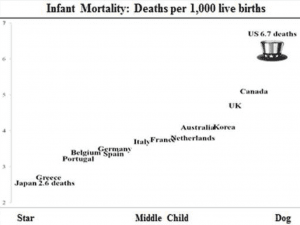
Interesting talk . . . . Friedman is author of The Measure of a Nation: How to Regain America's Competitive Edge and Boost Our Global Standing. Based on things like infant mortality rate, number of citizens per representative, percentage of women in national legislature, global peace index, voter turnout, and yearly days spent in school for children, we are not among the world leaders. In fact, we pretty much trail most of the other nations Friedman uses for comparison.

Here is a little of the publisher's commentary on the book:
This book focuses on how to improve America by first comparing its performance with thirteen competitive industrial nations, then identifying the best practices found throughout the world that can be adopted here in the United States. Friedman lays out some disturbing facts about America's lack of competitiveness in five key areas: health, education, safety, equality, and even democracy. Taking the approach that "data doesn't lie," Friedman notes alarming statistics, for example:
  • Americans have the lowest life expectancy among all competitor nations.
  • Americans are at least two times more likely to be murdered and four times more likely to be incarcerated than any other competitor country, including Japan, France, and the United Kingdom.
  • America shows the sharpest disparity between rich and poor among all nations on its competitor list.
Using charts that clearly illustrate the unbiased, party-neutral data, Friedman uncovers the major problem areas that the nation must address to become a leader again. Homing in on best practices from other countries than can be adapted to the United States, Friedman plots a course to transform America from a corporate behemoth burdened by internal issues and poor performance to a thriving business with an exciting portfolio of solutions.

Enjoy the talk.

Authors@Google: Howard Friedman, "The Measure of a Nation"


If America were a corporation, how would an independent analyst judge its ability to compete against other corporate giants? According to UN statistician Howard Steven Friedman, that hypothetical analyst would label America a corporate dinosaur and recommend that the nation either change or face extinction.


Sunday, February 13, 2011

Shlomo Sand: On Nations and Nationhood

Interesting talk from Shlomo Sand on the changing nature of how we think of nations - or at least how we should maybe think of nations. Sand argues that nationality should not based on race, religion, or language - so then what? Listen to hear his arguments.

On Nations and Nationhood

10th Feb 2011; 13:00

Listen to the audio

Please right-click button and choose "Save Link As..." to download audio file onto your computer.

RSA Thursday

What is a nation? Is it a group of strangers with a shared history, government, language, or ethnography? Are there inseparable cultural ties between inhabitants, or only shared political aims? Are there objective national histories or simply myths of creation?

The best-selling writer and academic Shlomo Sand asks what constitutes the national identity of a body of people, and interrogates the foundations of nationhood, arguing that a nation is not based upon race, religion, or language.

The author of the controversial 'The Invention of the Jewish People', Sand explains how the idea of the ‘invention’ of nationhood has played out in the national projects of Israel and Palestine.

Chair: Rosemary Hollis, Professor of Middle East Policy Studies and Director of the Olive Tree Programme at City University London

Twitter logoSuggested hashtag for Twitter users: #rsanation

Listen Live

You can listen to this event live.

Get the latest RSA Audio

Subscribe to RSA Audio iTunes Podcast iTunes | RSA Audio RSS Feed RSS | RSA Mixcloud page Mixcloud

You are welcome to link to, download, save or distribute our audio/video files electronically. Find out more about our open access licence.

Speakers


Sunday, April 05, 2009

The Right's Nationalistic Ignorance

I sometimes struggle to understand how the right thinks because it is so different from how I or my friends think. I try to hold a worldcentric view, though not a relativist one. So when I read something like the following from the right-wing Big Hollywood blog, it boggles my mind.

This kind of anti-progress, ethnocentric nationalism is a big part of the conservative worldview. To me, it strikes me as ostrich-like, head buried in the sand. Anyone who disagrees with their view is anti-American

With the advent of World War I, we became a global community, for good or ill. At this point in time, we are much more interdependent than the author of this post can grasp. We can't undo that anymore than we can turn back time.

Our Exceptionalism Comes From Our Constitution

by Doug TenNapel

I’m not a big Global Citizen. I’m not proud of how the world conducts itself, it has a terrible history and there’s nothing great about humanity other than we have a great Creator. Mankind’s achievement is only consistent in how spotty it is. Intelligence has only made us immoral with more knowledge. Technology has brought us ways to destroy more lives and project more misery with less effort and more efficiency.

Individual countries pale compared to America. So contrast my relative shame as a global citizen with my pride, excitement and honor of being a member of the United States of America. Our country is the best. I’d say that we’re not perfect, but I hate opening any kind of door for the America haters to drive their Prius through. We have good standards, fund charities around the world and have left more of our bodies in the graveyards of other countries to defend and expand liberty than any other country in the history of the world. Our economy is the singularity of the Big Bang from which prosperity flows to the rest of the world.

So it pains me to watch my President stand among the G20 leaders as he works hard to fit in with a bunch of really stupid countries. I admit it, I’m a jealous citizen and I don’t like to share the attention and will of my president with the rest of the world. He’s mine, not theirs. The world may think they elected President Obama, and perhaps even Obama may think that, but I don’t have a vote in the Global Community. I don’t get to participate in how China must conduct herself so I’d rather my president not give away our power, treasure and values to fit in with a global consensus of lesser countries than our own.

The post goes to explain why Constitution makes us the best country on Earth.

This kind of thinking in the 21st Century really seems regressive in so many ways. Makes me happy to think that the Millennials are much more likely to hold a worldcentric view.


Saturday, January 17, 2009

Eurozine - Culturalism: Culture as Political Ideology


This is an excellent article from Eurozine demonstrating that both the liberal view (multicultural respect for all cultures) and the conservative (nationalistic protection of one's own culture) are simply variations on the same belief that individuals are formed and shaped by the culture in which they live. Both views also maintain that culture should be protected from corruption, in whatever form that might take.

From an integral view, both are correct, but partial. We are, indeed, embedded in our cultural environment in many ways, and thus shaped by it. However, the moment we become aware of this fact and begin to observe it is the moment at which it is no longer the dominant determinant of who we are and how we define ourselves.

When we begin to treat culture as an object of our awareness, we can begin to dis-identify with its power over us and become unique, post-cultural individuals.

Anyway, here is the article (it's very long, but worth the read). It takes a different angle on the topic of culturalism than I do, but it's an interesting one. I don't necessarily agree with thier anti-Islamic rhetoric, but they are on the right path for the wrong reasons. Fundamentalist Islam is dangerous, but not because of its political beliefs. Rather, it is a pre-rational expression of cultural, one embedded in a tribal, mythic view of the world.

More advanced versions of Islam, such as those practiced by many American Muslims, are rational and even multicultural in their worldviews and, thus, not in any way dangerous. We need to get to a point where we can understand that it is not specific religions that are dangerous, but rather the worldview through which they are understood.

Culturalism: Culture as political ideology

By Jens-Martin Eriksen, Frederik Stjernfelt

The controversy on multiculturalism has changed the political fronts. The Left defends respect for minority cultures while the Right stands guard over the national culture. But these two fronts merely constitute two variants of a culturalist ideology, argue Jens-Martin Eriksen and Frederik Stjernfelt.

Culturalism is the idea that individuals are determined by their culture, that these cultures form closed, organic wholes, and that the individual is unable to leave his or her own culture but rather can only realise him or herself within it. Culturalism also maintains that cultures have a claim to special rights and protections – even if at the same time they violate individual rights.

The culturalism of today, in which culture becomes a political ideology, thrives on both the Left and the Right. Most well known is leftwing multiculturalism, which has a radical, anti-democratic variant as well as one that suggests that it is possible to harmonize multiculturalism and (social-) liberal views. However, multiculturalism can also exist in forms that belong to the far Right, such as the French concepts of ethnopluralism, the idea that all cultures have the right to autonomy as long as each remains in its own territory. This approach results in political conclusions to the effect that immigrants must either allow themselves to be assimilated lock, stock and barrel, including everything from their religion down to their cuisine, or else return to their original native countries (assuming that such countries exist).

Culturalism has an entire range of categories in common with nationalism; indeed, nationalism in reality constitutes a subvariant of culturalism, in which a single culture provides the basis for the state. Therefore it does not come as a surprise that the present nationalist renaissance in European politics makes use of culturalist ideas to a great extent. On the domestic stage, the Danish People¹s Party is the obvious example in its re-adoption of Danish nationalist ideas from the nineteenth and early twentieth centuries, including its radical anti-Enlightenment stance. Since the Mohammed cartoon controversy, the party has felt a strategic need to join the defenders of freedom of speech against Islamist machinations. And irrespective of what one can surmise to be the motives for this about turn, it has to be noted that it was possible only as a result of the party claiming freedom of speech a "Danish value", as though it were a homegrown invention. This is naturally a culturalist falsification of history: freedom of speech is not a Danish invention. Its roots are of course found in international enlightenment movements; freedom of speech is a high-quality import. It is something that liberal and democratically-minded forces, by dint of great effort and at great cost to themselves, managed to force through in the face of Danish absolutism and the Danish State Church until the right was formalised in the June Constitution of 1849.

An immediate problem in Denmark – and also international politics – is therefore that there is culturalism on both sides of the political spectrum. On the Left we hear culturalist battle cries calling for the recognition of the most anti-modern and unappetising cultural practices; on the right we hear the battle cry of Danishness and the reawakening of a most anti-modern and unpalatable Danish nationalism. These two versions of culturalism are natural enemies, even though they base themselves on the same spurious system of ideas. For a hundred years, French and German nationalisms were each other¹s main opponents, yet frequently drew on exactly the same intellectual heritage. One culturalism is the automatic enemy of the other precisely because culturalisms are naturally particularisms, which is to say, they each select their chosen people – and not all people can be equally chosen. But this evil and strident antiphon of particularisms, in which the reinforcement of the culturalism of the Left frightens more voters to move towards the culturalism of the Right and vice versa, ought not to persuade anyone into believing that culturalisms of the Left and the Right constitute the main antithesis in modern politics. On the contrary, the conflict is between Enlightenment and culturalism – between democracy, political liberalism, the rights of the individual, universalism and the Enlightenment on the one hand, and on the other hand the unenlightened maintenance of culture, tradition and authenticity, and the conservative opinion that the individual is linked by fate to a specific culture.

There are consequently two kinds of criticism of Islam that often sound as though they were related, but which must not be confused. One of them criticises Islam as such because it is a foreign religion that is irreconcilable with Danish values and Danish traditions. This is the criticism of one culturalism expressed by another; it is Jesus Christ against Mohammed. It is one mythological figure in fateful conflict with another. The other criticism, meanwhile, attacks Islamism, not because it is un-Danish, but because it is a totalitarian ideology related to the various forms of totalitarianism during the inter-war period in Europe. This criticism is an informed criticism of a political movement that is opposed to the open society and fundamental democratic principles. This criticism is not directed at Islam as such, but rather focuses on ideological, political and social barriers that cut off individuals from his or her rights. Whether these barriers have their background in cultural, political, religious or other dogmas is ultimately irrelevant.

There is scarcely a more important task in contemporary politics and political philosophy than giving full consideration to developing universal Enlightenment and with the greatest possible force turning against both the prevailing right and leftwing forms of culturalism and their enslavement of the individual in his or her own "culture".

A glance at the criticisms directed by the Left at the culturalism of the Right provides a point of reference of how far the Left has strayed from its starting point in the Enlightenment. It also reveals how little the Left actually knows about its political opponents in the battle that has developed over the last few decades, during which the question of culture has appeared on the agenda and gradually replaced prior debate on divergent political utopias.

Let us take a look at the task facing left wing culturalism and at the way in which the two culturalisms are blind to the similarities between them. In Denmark, it is remarkable that since the defeat of the Left in the parliamentary elections in 2001, leftwing culturalism has not yet been able to produce an analysis of its ostensible opponent, the Danish People's Party. It seems that many years after its defeat, the Left has not been able to move on. It continues to base its ideas on what it sees as the only thing applicable to the Right: that it is "racist" and that the voters the Right has succeeded in mobilising are either "racist" or suffer from other psychological defects such as "Islamophobia". Political analysis seems in some way to have been taken over by a rather slipshod social-psychological diagnostic. Naturally, this finds expression in repeated accusations of racism aimed at rightwing culturalism.

In his book Islams and Modernities, the Syrian philosopher Aziz Al-Azmeh points out that differentialism, which is a more generalised concept for racism, has undergone what he calls a "de-racialisation". "Race" is no longer used as a valid form of identification, and all that is left is the culturalist argument. In Denmark, the Danish People¹s Party should be understood as being a culturalist party whose attitudes are an expression of a modern differentialism. No major political movement in Denmark or anywhere else in Europe bases its platform on racism. Such a position is no longer held by an elite and is not represented by any but radical losers without political significance.

But why is the Left unable to diagnose culturalism in its political opponent and to launch an offensive against the opinions that the party really represents? Logically enough, this is due to the fact that they allow themselves to be blinded by the same cultural views as their homologous opponents: they are themselves culturalist. And this naturally establishes limits to the extent to which they are able to analyse their opponents' position.

Both culturalisms express respect for cultural differences and espouse their belief in the protection of these identities. Right and leftwing culturalists merely maintain these protective measures under various guises. Leftwing culturalists claim that various distinct cultures should be able to co-exist on the same territory or in the same state, where, formally or informally, different jurisdictions for individuals are applied, according to the cultural group into which they were born. Rightwing culturalists maintain the same attitude towards preserving cultural identity, but each culture in its own territory, each culture in its own country.


An important and frequently overlooked effect of the growing importance of the two forms of culturalism on contemporary politics is that social groups that had previously organised themselves on the basis of "interests" are now increasingly organising themselves on the basis of "culture". This naturally divides these groups politically.

British philosopher Brian Barry writes that:

The proliferation of special interests fostered by multiculturalism is [...] conducive to a politics of 'divide and rule' that can only benefit those who benefit most from the status quo. There is no better way of heading off the nightmare of unified political action by the economically disadvantaged that might issue in common demands than to set different groups of the disadvantaged against one another. Diverting attention away from shared disadvantages such as unemployment, poverty, low-quality housing and inadequate public services is an obvious long-term anti-egalitarian objective. Anything that emphasizes the particularity of each group's problems at the expense of a focus on the problems they share with others is thus to be welcomed.[1]

If underprivileged groups can be persuaded to become more concerned with religion, culture and identity, they will be split, and the focus will be moved away from concrete political problems. The current configuration in Danish politics, in which many disadvantaged Danes support the culturalist Right, while immigrants and multiculturalists support the Left, is a striking example of this phenomenon. It probably constitutes one of the main structural reasons for the profound crisis in the Social Democratic Party, whose core voters are now distributed according to cultural affiliation rather than their own interests. The question poses itself as to how long the Social Democratic Party and the rest of the Left intends to allow itself to be guided by the delusion of culturalism.


The Left's progressive involvement with the hardline concept of culture both in Denmark and internationally is one of the most important and least recognised political developments of the last thirty years. Culturalism, in its political and leftwing forms, is by no means a recent phenomenon. Its first appearance on the world stage came in 1947 when American anthropologists attempted to derail the UN Human Right's Charter. They refused to accept that it was possible to presume universal human rights, since this would suppress individual cultures. However, the Western Left – whether in its Communist, Social Democratic or social liberal variants – was at that time so international in its views that culturalism remained below the surface. Meanwhile, in the 80s and 90s a vacuum was created by the demise of Marxism and its role as a reference point for leftwing parties in the West. The profoundly conservative cultural ideas of culturalism subsequently and surreptitiously moved into this arena. The surprising thing is that this transformation took place largely without a blow being struck – although culturalism is in many respects diametrically opposed to Marxism. Whereas Marxism maintains that culture is a superstructure on social economic regularities, in contrast culturalism will say that the economy of a society depends on its culture and the value systems of that culture, or at least that the economy is indistinguishable from all other cultural features in the society in question.

In this way, culturalism constitutes a kind of anthropological counter-revolution that turns Marxism on its head. If one reflects on the argumentation of the left in the 1960s and 1970s – in those days it was above all the economy, the class struggle, means of production, sociology, political systems and resources that were seen as crucial, and it was quite rare and peripheral for the term "culture" to appear. The reverse now applies, and culture attracts far more attention than economics and society – but there has never been any major confrontation in which one model was exchanged for another, as might be expected in ordinary political debate. There have been no furious confrontations between parties concerning the absolute importance of the economy or culture. The transition between opposites has been achieved through a gentle transformation, almost from one day to the next, often without the figures embodying the two attitudes being aware of what was taking place. This is perhaps due to the fact that both Marxism and culturalism have an even simpler and deeper pattern in common: the phenomenon of an oppressed group in relationship to the dominant majority. It is then possible to take the political side of the oppressed following the leftwing slogan of the 1970s: "An oppressed people is always right". This was understood quite literally, with implications that far surpassed the argument that an oppressed people have the right to be liberated from their oppression. They were now right with respect to all their cultural dogmas, regardless whether what these dogmas maintain is just or true; what was important was that they were derived from the culture of an oppressed people. An argument purely ad hominem. It was thus possible to replace the working classes with "the oppressed culture" – even if the implication of this was that emancipation was to be replaced by disciplined culturalism, which maintains antiquated and pre-modern norms – which is to say, an absolute reversal, both in terms of philosophy and values, of what the Left used to stand for.

In her book La tentation obscurantiste, the French journalist Caroline Fourest presents an interesting hypothesis regarding the advance of what we call leftwing culturalism. She notes that the two great prototypical points of identification for the European Left during and after World War II were the anti-totalitarian struggle on the one hand and decolonisation and anti-imperialism on the other. For a long time they were able to co-exist without conflict; but, following the important growth of Islamisms in the Islamic countries and among Muslim immigrant groups, the Left found itself divided according to which of the two principal causes was considered most important. If the anti-totalitarian struggle was considered crucial, people tended to turn against Islamism as yet another form of totalitarianism from the inter-war period. But if the anti-imperialist struggle was considered paramount, the tendency was to support Islamism as a legitimate challenge to Western imperialism, at first in the colonialist version and subsequently in the globalised version. This latter choice naturally opened up the Left to culturalism. This turns out to be a twofold problem for the hardline, multi-cultural left wing: culture means at once too little and too much. On the one hand, it is very important, in that it provides an individual with an identity and therefore the right to political care and protection – conservatism built into the culturalist concept of culture. On the other hand, the Left has historically maintained that culture has no meaning, for it is economic and social conditions that are the critical determining factors. Yet at the same time, this Marxist doctrine is behind the multiculturalist idea that all cultures, irrespective of how anti-democratic and anti-liberal they are, can a priori co-exist in the same society. This duality is naturally a constant source of confusion for hardline leftwing multiculturalism. Culture is at once an immutable source of profound identity and at the same time a purely surface phenomenon based on economic determinants. It is naturally impossible for both to be true.


One encounters the concept of "Islamophobia" with increasing frequency; it is used to stigmatise any criticism of Islamism and aspects of Islam that conflict with democracy, human rights and the constitutional state. The hardline, culturalist concept of culture throws a crucial light on the problems raised by the word, first deployed by the Islamic world organisation OIC in its struggle against human rights, and more specifically the freedom of speech. The campaign against the cartoons published in the Danish newspaper Jyllands-Posten and the subsequent Mohammed crisis was an example of this struggle. The word "Islamophobia" is increasingly used by Islamic organisations and hardline multiculturalists in an attempt to limit criticism of Islamic movements. Both valid and unfounded criticisms of various forms of Islam are brushed aside by the argument that they constitute "Islamophobia" – and are thus grouped with racism, anti-Semitism, homophobia, etc. In this way, the concept has also been able to infiltrate the left, where it is seen used alongside "xenophobia" and the other words terms listed above. The word, even semantically, with its clinical suffix "phobia", expresses a negative quality – it combines a critical analysis with the implication of mental illness. However, the crucial problem with the word "Islamophobia" is in fact that, unlike the other words that are similarly constructed, it applies to a set of opinions. Racism, homophobia and so on are words that speak to a disproportionate reaction to qualities intrinsic to an individual – the colour of their skin, their sexual orientation, etc. But Islam is not a race. Islam is a set of beliefs exactly like other sets of beliefs such as Christianity, communism, liberalism, conservatism, Nazism, Hinduism and many other widely divergent intellectual doctrines of a religious, political or philosophical nature. This is not altered by the fact that certain Muslims, including Islamists, are adamant in their conviction that their set of beliefs is particularly prominent and transcends conventional debate, development and revision. As has been said, democracy is based on the principle of "taking sides according to opinion" and "holding one view until you adopt another" – as two Danish democratic mottoes have it.

Philosophies are susceptible to open and ongoing criticism and revision – and if you are resolutely convinced of your position, you are naturally welcome to attempt to uphold this true faith in an unaltered form. But you cannot compel others to participate in this by asking them to refrain from criticism. And this is what the word "Islamophobia" attempts to do. In this, the Left has devised a useful attitude towards Islamism through its uncritical adoption of the term, with its intentionally manipulative and disciplinary effect. This approach has also served to paralyse the Left's own ability to reflect. Any criticism of culturalism is deflected and condemned as Islamophobia. And as such it is politically excluded.

The acceptance of the term Islamophobia is achieved precisely by invoking a hardline concept of culture, as if there were such a thing as homo islamicus. This is carried out in alliance with those various practices in Islam that specifically attempt to give the Muslim religion the quality of fate, requiring, in all circumstances, that male spouses in mixed marriages convert to Islam, while information regarding other choices is suppressed, and most importantly, respecting the prohibition against apostasy. (Apostasy is always punished, either by a fine, "reeducation", the confiscation of property and compulsory divorce from the husband or wife, by so-called "civil death" or even by real death). For this reason, "Islamophobia" leaves a particularly strange taste in the mouth. The word transforms religion into race.

The reason why intellectual Islamism has succeeded in infiltrating international forums, the political Left and liberal groups, is that is has been able to gain general acceptance of the cultural argument. This has been achieved through the popular anthropological concept of culture, culturalism. It is all the more harmful to the democratic debate, as it tends to de-politicise dogmas that are essentially political and thus leaves them open to criticism – and insult.


Political opinions are one-sided by nature: liberalism, conservatism, social liberalism, social democracy, socialism and so on all compete against each other – although as a rule they are united on a more basic level, each in turn confronting fascism, communism, Islamism and other totalitarian "isms". But if a set of dogmas, a political movement, is defined as "culture", there is a tendency for it to be immediately left in peace and for it to no longer be seen as a single partisan and discussible point of view among others. According to this concept, cultures are organic, irreducible totalities in themselves. Hence, cultures not only have a right to existence and a claim to respect – and to have privileges conferred on them – they also have a claim to protection and to the right to continue living in an unchanging way. This was made topical in the case of the caricatures in Jyllands-Posten, which were accused of insulting a culture.

In our book The Politics of Segregation,[2] we asked Islamists in multicultural Malaysia why they believed it was inappropriate to criticize, mock or hurt people holding different opinions and how one might instead behave when dealing with a subject such as Jyllands-Posten wanted to address. A director of studies in an Islamic university explained that it is necessary to first enter into dialogue with the party you wish to criticise, before anything is printed. With the case in question, Jyllands-Posten ought to have called, for instance, Islamisk Trossamfund ("The Islamic Religious Community" – a Danish branch of The Muslim Brotherhood) to seek permission. The consequences for democratic discussion that this implies are quite remarkable: if this approach were systematically carried out, any exchange of viewpoints would be removed from the public sphere and relegated to a closed forum, in order to prioritize mediation between parties. The result of protecting cultures in this way would be to close down open public discussion, and to abandon free debate among citizens.

If one were to follow this logic it would naturally have dramatic consequences on the way in which democracy functions. Jyllands-Posten caricatured scurrilous political ideas about using religion in the service of politics, as in Kurt Westergaard¹s famous cartoon of the prophet with a bomb in his turban. But the Islamists attempted to delegitimise Jyllands-Posten by accusing the newspaper of Islamophobia.

In all cases, whether in its reformist, revolutionary or terrorist variant, Islamism is in agreement that society should be organised according to the principles of Shariah. When this is categorised as "culture", it becomes possible to reject any exterior criticism as "Islamophobia" or "racism" because the critics are not "respecting" a "culture". Nazism attempted something similar when it presented itself as the continuation of ancient Germanic culture; however, in those days, the critics were sharper than the Left today, and were able to see through the rhetoric. We are now in the process of witnessing how Islamist movements such as Deobandi, Wahhabism, Salafism and The Muslim Brotherhood (directly influenced by Italian fascism and the French fascist Alexis Carrel) are protected by the "cultural" argument: they are not in fact political programmes, but in reality "cultures" which eo ipso cannot be criticised. But as soon as cultures enter the political arena, they must, by definition, be as accountable to discussion and criticism as all other associations, groups, parties and movements that make political demands. In this regard, neither priests, imams nor clerics – of any faith – have an ounce more right to respect than any other individual simply because they make use of divine rhetoric in their political demands.
  • [1] Brian Barry, Culture and Equality, 2001, 11-12.
  • [2] Jens-Martin Eriksen, Frederik Stjernfelt, Adskillelsens politik. Multikulturalisme – ideologi og virkelighed [The Politics of Segregation. Multiculturalism – Ideology and Reality], Lindhardt og Ringhof, Copenhagen: 2008.

Saturday, October 25, 2008

William Grassie - Nationalism, Terrorism, and Religion: A Bio-Historical Approach

This is an interesting lecture on nationalism, terrorism, and religion, given under the context of understanding the political situation in Sri Lanka. Grassie takes a bio-historical, evolutionary perspective in his lecture, which allows us to extrapolate his ideas into a broader context.
Nationalism, Terrorism, and Religion: A Bio-Historical Approach
By William Grassie

There were three different versions of this talk and after some consultation I have decided to go back to the basic outline of the original, which is a lecture that I gave in February at the Subodhi Institute and again in April at the University of Peradeniya. The original lecture was under the title “Nationalism, Terrorism, and Religion: A Bio-Historical Approach”. The lecture ends with a discussion of the advertised topic, “Creating a Best Case Scenario for Sri Lanka”, but I will do so by first discussing the phenomena of nationalism, terrorism, and religion. I take a bio-historical, evolutionary perspective, because I think this will help us best understand and transform this conflict in Sri Lanka and others throughout the world.

I am inspired to take this evolutionary approach in part through my encounters with the writings of Pierre Teilhard de Chardin, a French Jesuit Paleontologist who died in 1955. He writes:

For our age, to have become conscious of evolution means something very different and much more than having discovered one further fact...

Blind indeed are those who do not see the sweep of a movement whose orb infinitely transcends the natural sciences and has successfully invaded and conquered the surrounding territory – chemistry, physics, sociology, and even mathematics and the history of religions. One after the other all the fields of human knowledge have been shaken and carried away by the same under-water current in the direction of some development. Is evolution a theory, a system, or a hypothesis? It is more: it is a general condition to which all theories, all hypotheses, all systems must bow and which they must satisfy henceforward if they are to be thinkable and true. Evolution is a light illuminating all facts, a curve that all lines must follow.

By taking this broad evolutionary approach, we gain the most leverage in both understanding and transforming this country and the world. To paraphrase Dwight Eisenhower, if a problem cannot be solved, then enlarge it. So I begin globally and end locally here in Sri Lanka.

1. Nationalism

Nationalism can be understood as an evolutionary outgrowth of our natural tribal passions and rationalities, which were imprinted in the human psyche and genome over millions of years. Humans are profoundly social animals with a highly evolved capacity to engage in symbolic thought. One of the fundamental challenges in social species is how to ensure cooperation within the group and sacrifice on behalf of the group. The wellbeing and survival of the group depends on this cooperation and sacrifice. In humans, this is accomplished by a mix of evolved primate behaviors, as well as, newer cultural adaptations in the realm of religions, ideologies, and cultures.

It is no simple evolutionary trick to get individuals to cooperate and to sacrifice their own wellbeing, or that of their immediate offspring, for the benefit of the group. And yet, we cannot imagine that a human society would long endure if it could not 1) organize its members to cooperate and 2) in extreme instances, ask individuals to sacrifice their wellbeing for the benefit of the group. The latter is particularly troublesome to evolutionary biologists, because true altruism would contradict Darwin’s theory of natural selection. There are various theories within evolutionary biology that try to explain other-regarding behavior. They go by names like kin selection and reciprocal altruism. At this stage, we need only consider a few of the proximate mechanism, rather than their ultimate explanations, and think about how these scale up from the level of the tribe to the dynamics of a nation state.

Remember that the dark side of this in-group altruism is that it is often employed in the most brutal manner against outsiders. Humans are clearly capable of great evil, as manifested in warfare, massacres, pillaging, raping, and enslavement, which have been the norm for most of human history and presumably much of our pre-history. This evil is partly a function of our evolved nature.

Of course, humans have natural dispositions towards living in groups. It hardly needs to be said, but no human is self-created. There is no such thing as a fully autonomous individual human. We speak languages we did not invent; we use tools that we did not design; we benefit from a vast library of knowledge that we did not discover; and we are nurtured as infants and children into “individuality” by families and societies that we did not choose.

We note in many species of primates, including humans, there is the phenomenon of the dominant male and occasionally a dominant female, which role also helps to hold the tribe together. This Alpha-Factor is replicated in a number of mammalian species, including wolves, horses, and elephants. This institution of social hierarchy within the group helps provide for cohesiveness. The maintenance of social hierarchy is generally achieved through displays of aggression and displays of altruism. Members of the group appease the BigMan out of fear, but also out of hoped for benefits. The BigMan doles out rewards and punishments in order to reinforce this social hierarchy. He passes on his kingdom to one of his children, thus increasing his “reproductive fitness”, but does so in part at the expense of the community from which he extracts surplus production and surplus reproduction as his “sovereign right”. The Alpha-Factor is not the only form of social organization that humans use to maintain solidarity, and it is certainly supplemented by many other social tools as well, but I believe it is the predominant outward structure of societies for most of human history, especially societies that grow in size and complexity.

As humans moved from small, intimate hunter-gatherer tribes into larger social groups and spanning numerous settlements and geographical regions, it was largely the BigMan model of social organization that succeeded and prevailed. In this form of social organization a dominant human, typically a male, would serve as the leader of the group, extracting surplus production from others, while ensuring social harmony and organizing common defense, as well as, waging wars against neighbors in order to expand the territory, wealth, and population of the tribe, city-state, kingdom, or empire. The dictator-king would hand out favors to followers and ruthlessly punish transgressors. Machiavelli recognizes as much in The Prince. “Is it better to be loved than feared, or vice versa” asks Machiavelli. He answers both, but if you cannot have both, then “it is much safer to be feared than loved” (XVII, p. 59). In all of this, we can see many parallels between human social relations and our chimpanzee cousins (though less so with our bonobo relatives, who would rather “make love, not war”). Note that in studies of chimpanzee bands and contemporary hunter-gather societies, some 25 to 30 percent of males die a violent death in competition with outsiders (Dyer, 2004, 71-79).

So nationalism is a synthesis of primordial passions and modernity. As local communities decline from the 1800s on, nationalism fills the gap. This was enabled in large part because of new modes of communication, transportation, and production, as well as a race for military superiority over ones’ neighbors. Today, there are many forms of nationalism, but they all involve concepts of a homeland, sacred centers, shared language, common customs, a hostile surrounding, memories of battles, and historical thinking. These combine to create a common motivating mythology that united “the whole people”. Nationalisms are invented traditions and almost always have an ethnic component. There is a Romantic side to nationalism, typically projecting an essentialist organic or “blood” bond between the people.

In modern history, nationalism became a global phenomenon with growing opposition to multi-ethnic empires – rebelling against the Austro-Hungarian empire, the Ottoman empire, the Russian empire, the British empire, among others. Nationalism spreads the world round in opposition to colonialism and takes on new forms today in opposition to globalization. Nationalism seeks the preservation of the Vaterland and the Muttersprache. It confers political legitimacy on leaders and imposes obligations on citizens to the state.

While much harm has been done in the name of nationalism, I want to emphasize that group identity is a normal, natural, and necessary part of being human. One can be a nationalist without being xenophobic and chauvinistic. Liberal forms of nationalism offer people meaningful lives in integrated societies, a sense of belonging and pride, which need not be exaggerated and jingoistic. Note that World Cup Football and the Olympic Games are organized around national teams and are in themselves quite wholesome. Competition, including competition between nations, can be a good thing. The dialectic between competition and cooperation helps to move humanity and evolution forward.

One of the more destructive forms of nationalism is when it is combined with BigMan governance. In these instances, the BigMan and his cronies use nationalism as a form of political legitimation and control. By controlling the power of the State, they are able to manipulate rewards and punishments to entrench themselves through the Alpha-Factor. And like little chimpanzees that we are, most humans are only too happy to fall in line. Big-Man governance, however, disrupts the dialectic of competition and cooperation, so the society stagnates, becomes inefficient, and at war with itself or the outside world.

The only alternative to BigMan governance that humans have invented is in some form of limited government with checks and balances built into the structure of government to restrict the power of the State and the Alpha leaders who would grab control of state power. Remember that the modern concept of national sovereignty, as opposed to the BigMan concept of the sovereign’s rights, is derived from the concept of individual sovereignty. In other words, each individual is ultimately the king or queen of his or her own personhood. Government in this view is a social contract entered into to enhance individual freedoms – the right to life, liberty, and the pursuit of happiness, as stated for instance in the U.S. Declaration of Independence.

Implied in this social contract theory of legitimate government is the notion that economic activity is not the primary responsibility of the State, but of individuals. The state is to maintain a level playing field for economic interests to compete and cooperate, enforcing laws equally, protecting private property, enforcing contracts, providing for national defense, and when efficient, promoting public goods like transportation or education. Thus, the concept of limited government liberates economic markets and human ingenuity to create a rich ecology of production and innovation within a society. This non-zero sum dynamic is the magic of economic development. New wealth is created.

Note that I used the term “limited government” and not “democracy” per se. Democracy, as Plato already pointed out in The Republic, is simply the tyranny of the majority. The majority is not likely to be virtuous or just. In Socrates’ words, the majority will be governed by base “appetites” and “passions” and not noble virtues and wisdom. In democracies, Socrates argues, the minorities will rebel against the tyranny of the majority. Civil war will ensue. And before you know it, democracy will end in chaos followed by dictatorship (Plato). Universal suffrage may be an important part of limited government, but in itself is only one piece of the puzzle.

I have already argued that the concept of individual sovereignty as formulated by John Locke and others is a fiction that we have invented. Humans are never independent, autonomous individuals – sovereign nations unto themselves. We are always dependent on a web of social relations that form our identities and enhance our survival. Let us think of individual sovereignty as a useful fiction, one that has productively spawned a discourse about human rights, legitimacy, and justice. This discourse helps make the world a better place. Even if it is not ontologically true, it is pragmatically useful. Let us call this the dialectic between individual rights and social obligations, the dialectic between individualism and communalism, which we can add to the dialectic of competition and cooperation.

In her book, Sri Lanka in the Modern Age: A History of Contested Identities (2006), Nira Wickramasinghe ends up arguing for just such an understanding of citizenship and sovereignty and against the identity politics that has destroyed this country. In her chapter “Citizens, Communities, Rights, Constitutions, 1947-2000”, she concludes:

The curse of multiculturalism is that while providing for more freedom and recognition to the group or community it is a closure in that it denies the contingency and ambiguity of every identity. Multiculturalism cannot help but essentialise the fragment. Turning towards the citizen is a possible way out of the impasse. The citizen is not only a legal subject; s/he is also the part owner of political sovereignty...(Wickramasinghe 2006)

By the way, nation-states are not really independent either, though national sovereignty is regularly invoked against interference in the internal affairs of others. Say what you will to justify what you may, but in the end neither the large and powerful, nor the small and less powerful nations of the world can escape what Martin Luther King, Jr. called “the inescapable web of mutuality”(King 1963) in which all of us our entangled today through global markets and global communications.

Go read the whole, long, but interesting article.