Showing posts with label intention. Show all posts

Saturday, May 17, 2014

Evolving the Future: Toward a Science of Intentional Change


From the journal Behavioral and Brain Science, this is a very interesting and long article on the process of creating intentional change in people. Two of the authors are the evolutionary sociobiologist, David Sloan Wilson, and the creator of Acceptance and Commitment Therapy (ACT), Steven C. Hayes. I am only including the abstract and introduction, along with the first section - the whole paper is 91 pages.


Full Citation:
Wilson, DS, Hayes, SC, Biglan, A, Embry, DD. (2014, May 15). Evolving the Future: Toward a Science of Intentional Change. Behavioral and Brain Sciences; pp 1-99. DOI: http://dx.doi.org/10.1017/S0140525X13001593 

Evolving the Future: Toward a Science of Intentional Change

David Sloan Wilson [a1 c1], Steven C. Hayes [a2], Anthony Biglan [a3] and Dennis D. Embry [a4]
a1. SUNY Distinguished Professor, Departments of Biology and Anthropology, Binghamton University, Binghamton, NY 13903. Email: dwilson@binghamton.edu Home page: http://evolution.binghamton.edu/dswilson/
a2. Foundation Professor, Department of Psychology, University of Nevada, Reno, NV 89557-0062. Email: stevenchayes@gmail.com Home page: http://stevenchayes.com/
a3. Senior Scientist, Oregon Research Institute, 1715 Franklin Boulevard, Eugene, OR 97403. Email: Tony@ori.org Home page: http://promiseneighborhoods.org/about/people/
a4. CEO, PAXIS, Inc. Tucson, Arizona. Email: dde@paxis.org Home page: http://www.paxis.org/content/DennisBio.aspx

Abstract

Humans possess great capacity for behavioral and cultural change, but our ability to manage change is still limited. This article has two major objectives: first, to sketch a basic science of intentional change centered on evolution; second, to provide examples of intentional behavioral and cultural change from the applied behavioral sciences, which are largely unknown to the basic scientific community.

All species have evolved mechanisms of phenotypic plasticity that enable them to respond adaptively to their environments. Some mechanisms of phenotypic plasticity count as evolutionary processes in their own right. The human capacity for symbolic thought provides an inheritance system with the same kind of combinatorial diversity as genetic recombination and antibody formation. Taking these propositions seriously allows an integration of major traditions within the basic behavioral sciences, such as behaviorism, social constructivism, social psychology, cognitive psychology, and evolutionary psychology, which are often isolated and even conceptualized as opposed to each other.

The applied behavioral sciences include well-validated examples of successfully managing behavioral and cultural change at scales ranging from individuals, to small groups, to large populations. However, these examples are largely unknown beyond their disciplinary boundaries, for lack of a unifying theoretical framework. Viewed from an evolutionary perspective, they are examples of managing evolved mechanisms of phenotypic plasticity, including open-ended processes of variation and selection.

Once the many branches of the basic and applied behavioral sciences become conceptually unified, we are closer to a science of intentional change than one might think.

1. Introduction


Change is the mantra of modern life. We embrace change as a virtue but are desperate to escape from undesired changes that appear beyond our control. We crave positive change at all levels: individuals seeking to improve themselves, neighborhoods seeking a greater sense of community, nations attempting to function as corporate units, the multinational community attempting to manage the global economy and the environment.


Science should be an important agent of change, and it is; but it is responsible for as many unwanted changes as those we desire. Even the desired changes can be like wishes granted in folk tales, which end up regretted in retrospect. Despite some notable successes, some of which we highlight in this article, our ability to change our behavioral and cultural practices lags far behind our ability to manipulate the physical environment. No examples of scientifically guided social change can compare to putting a man on the moon.


In this article we ask what a science of positive behavioral and cultural change would look like and what steps might be required to achieve it. We begin with the basic suggestion that evolution must be at the center of any science of change. After all, evolution is the study of how organisms change in relation to their environments, not only by genetics but also by mechanisms of phenotypic plasticity that evolved by genetic evolution, including some that count as evolutionary processes in their own right (Calvin 1987; Jablonka & Lamb 2006; Richerson & Boyd 2005). A solid foundation in evolutionary theory can also help us understand why some changes we desire, which count as adaptations in the evolutionary sense of the word, can turn out to be bad for long-term human welfare. Left unmanaged, evolutionary processes often take us where we would prefer not to go. The only solution to this problem is to become wise managers of evolutionary processes (Wilson 2011c).

The first step – appreciating the central importance of evolution – reveals how many steps remain to achieve a mature science of behavioral and cultural change. The study of evolution in relation to human affairs has a long and tortuous history that led many to abandon and even oppose the enterprise altogether (Ehrenreich & McIntosh 1997; Sahlins 1976; Segerstrale 2001). Using evolution to inform public policy earned such a bad reputation that “social Darwinism” came to signify the justification of social inequality (Hofstadter 1959/1992; Leonard 2009). Evolution became a pariah concept to avoid as a conceptual foundation for the study of human behavior and culture for most of the 20th century. The implicit assumption was that evolution explained the rest of life, our physical bodies, and a few basic instincts such as the urge to eat and have sex, but had little to say about our rich behavioral and cultural diversity.

The reception to E. O. Wilson’s 1975 book Sociobiology provides an example of this intellectual apartheid. The purpose of Sociobiology was to show that a single science of social behavior could apply to all species, from microbes to insects to primates. It was celebrated as a triumph except for the final chapter on humans, which created a storm of controversy (Segerstrale 2001). Only during the late 1980s did terms such as evolutionary psychology and evolutionary anthropology enter the scientific language, signifying a renewed attempt to place the study of human behavior and culture on an evolutionary foundation.
 

As a result, an enormous amount of integration must occur before a science of human behavioral and cultural change can center on evolution. This integration needs to be a two-way street, involving not only contributions of evolutionary theory to the human-related disciplines but also the reverse. For example, core evolutionary theory needs to expand beyond genetics to include other inheritance systems, such as environmentally induced changes in gene expression (epigenetics), mechanisms of social learning found in many species, and the human capacity for symbolic thought that results in an almost unlimited variety of cognitive constructions, each motivating a suite of behaviors subject to selection (Jablonka & Lamb 2006; Penn et al. 2008).
 

We will argue that the first steps toward integration, represented by a configuration of ideas that most people associate with evolutionary psychology, was only the beginning and in some ways led in the wrong direction. In particular, the polarized distinction between evolutionary psychology and the standard social science model (Pinker 1997; 2002; Tooby & Cosmides 1992) was a wrong turn we must correct. A mature EP needs to include elements of the SSSM associated with major thinkers such as Emile Durkheim, B. F. Skinner, and Clifford Geertz. Only when we depolarize the distinction between EP and the SSSM can a science of change occur (Bolhuis et al. 2011; Buller 2005; Scher & Rauscher 2002; Wilson 2002b).
 

In section 2 of this article we will attempt to accomplish this depolarization to provide a broader evolutionary foundation for the human behavioral and social sciences. In section 3 we will review examples of scientifically based and validated programs that accomplish change on three scales: individuals, small groups, and large populations. We draw these examples from branches of the applied behavioral sciences that, like diamonds in the sand, have remained largely hidden from evolutionary science and the basic human behavioral sciences. The examples provide a much needed body of empirical information to balance evolutionary theorizing, which is frequently criticized for remaining at the speculative “just so” storytelling stage. Indeed, the randomized control trials and other high-quality real-world experiments described in section 2 can be regarded as a refined variation-and-selection process with faster and more accurate feedback on effectiveness than other mechanisms of cultural evolution. When viewed from an evolutionary perspective, they emerge as examples of wisely managing evolutionary processes to accomplish significant improvement in human well-being. We are closer to a science of intentional change than one might think.


2. Toward a basic science of change


The ability to change behavioral and cultural practices in practical terms can profit from a basic scientific understanding of behavioral and cultural change. The human behavioral sciences are currently in disarray on the subject of change. Every discipline has its own configuration of ideas that seldom relate to other disciplines or to modern evolutionary science. We will focus on a major dichotomy that all human-related disciplines must confront: On the one hand, human behavior and culture appear elaborately flexible. On the other, as with all species, the human brain is an elaborate product of genetic evolution. These two facts often appear in opposition to each other, as if evolution implies genetic determinism, which in turn implies an incapacity for change over short time intervals. Once this misformulation is accepted, then the capacity for short-term change becomes conceptualized as outside the orbit of evolutionary theory.


Although the tension between genetic innateness and the capacity for short-term change exists in all branches of the human behavioral sciences, we will focus on two major branches: the behaviorist tradition associated with B. F. Skinner and the configuration of ideas that arose in the late 1980s under the label evolutionary psychology (EP). These merit special attention because of the history of the behaviorist tradition in academic psychology, even before EP made the scene, and because EP came about in a way that seemed to exclude the standard social science model (SSSM) centered on behaviorism in psychology and so-called blank slate traditions in anthropology associated with figures such as Durkheim and Geertz (e.g., Pinker 1997; 2002; Tooby & Cosmides 1992). Reconciling the differences between the behaviorist tradition and EP can go a long way toward reconciling the apparent paradox of genetic innateness and the capacity for short-term change in all branches of the human behavioral sciences.


2.1. B. F. Skinner: Evolutionary psychologist


In the abstract of his influential article “Selection by Consequences,” Skinner (1981) framed his version of behaviorism in terms of evolution:
Selection by consequences is a causal mode found only in living things, or in machines made by living things. It was first recognized in natural selection, but it also accounts for the shaping and maintenance of the behavior of the individual and the evolution of cultures. In all three of these fields, it replaces explanations based on the causal modes of classical mechanics. The replacement is strongly resisted. Natural selection has now made its case, but similar delays in recognizing the role of selection in the other fields could deprive us of valuable help in solving the problems which confront us. (p. 501)
Although the term evolutionary psychology had not yet been coined, Skinner’s passage leaves no doubt that he regarded the open-ended capacity for behavioral and cultural change as both (1) a product of genetic evolution and (2) an evolutionary process in its own right. It is therefore ironic that when Tooby and Cosmides (1992) formulated their version of EP, they set it apart from the SSSM that included the Skinnerian tradition (see also Pinker 1997; 2002). 

Long before Tooby and Cosmides’s version of EP made the scene, the so-called cognitive revolution had largely displaced behaviorism in academic psychology. Cognitive theorists stressed that the enormous complexity of the mind needed direct study, in contrast to Skinner’s insistence on focusing on the functional relations of environment and behavior (Brewer 1974; Bruner 1973). The central metaphor of the cognitive revolution was that the mind is like a computer that we must understand in mechanistic detail to know how it works. However, those who study computers would never restrict themselves to input-output relationships: They would study the machinery and the software. Cognitive psychologists faulted behaviorists for not following the same path.


One of the seeds of the cognitive revolution, which took root in Tooby and Cosmides’s version of EP, was a challenge to what most perceived to be the extreme domain generality of behavioral approaches. An example is Martin Seligman’s (1970) influential article on the “generality of the laws of learning.” Seligman reviewed a body of evidence showing that the parameters of learning processes had to be viewed in light of the evolutionary preparedness of organisms to relate particular events. For example, taste aversion (Garcia et al. 1966) challenged the idea that immediacy per se is key in stimulus pairings in classical conditioning, as illness could follow by tens of hours and still induce aversion to ecologically sensible food-related cues. Seligman recognized that this kind of specialized learning could evolve by altering the parameters of classical conditioning, but his preferred interpretation was that general learning processes themselves were not useful: “[W]e have reason to suspect that the laws of learning discovered using lever pressing and salivation may not hold” (p. 417).


Even more important was the conclusion that no general process account was possible in the area of human language and cognition. Pointing to evidence that seemed to show that human language requires no elaborate training for its production, Seligman concluded, “instrumental and classical conditioning are not adequate for an analysis of language” (p. 414). What interests us in this context is how these concerns quickly led to abandoning the idea that general learning process accounts were possible. For example, in an influential chapter that helped launch the “cognitive revolution,” William Brewer (1974) concluded, “all the results of the traditional conditioning literature are due to the operation of higher mental processes, as assumed in cognitive theory, and … there is not and never has been any convincing evidence for unconscious, automatic mechanisms in the conditioning of adult human beings” (p. 27, italics added).


The concern over the limits of domain generality in cognitive psychology redoubled as EP arrived as a self-described discipline, including the influential volume The Adapted Mind: Evolutionary Psychology and the Generation of Culture (Barkow et al. 1992; see also Pinker 1997; 2002). The thrust of EP was that the mind is neither a blank slate nor a general-purpose computer. The mind is a collection of many special-purpose computers that evolved genetically to solve specific problems pertaining to survival and reproduction in ancestral environments. This claim became known as “massive modularity” (Buller 2005; Buller & Hardcastle 2000; Carruthers 2006; Fodor 1983; 2000).


Tooby and Cosmides’s (1992) chapter in The Adapted Mind, titled “The Psychological Foundations of Culture,” which did much to define the field of EP, described domain-general learning (the applicability of general cognitive processes, whether viewed behaviorally or cognitively) as nearly a theoretical impossibility. Too many environmental inputs can be processed in too many ways for a domain-general learning machine to work, whether designed by humans or by natural selection. The most intelligent machines humans have designed are highly task specific. Tax preparation software provides a good example: It requires exactly the right environmental input, which it processes in exactly the right way, to calculate one’s taxes accurately. It is impressively flexible at its specific task but utterly incapable of doing anything else. According to Tooby and Cosmides, natural selection is constrained just as human engineers are in creating complex machines or programming software, leaving massive modularity as the only theoretical possibility for the design of the mind.


In discussing cultural evolution, Tooby and Cosmides observed that behavioral differences among human populations do not necessarily signify the cultural transmission of learned information. Instead, they can reflect massively modular minds responding to different environmental cues without any learning or social transmission whatsoever. They called this instinctive response to the environment “evoked” culture, in contrast to the social transmission of learned information, or “transmitted” culture. They did not deny the existence of transmitted culture, but had little to say about it.


An article titled “Evolutionary Psychology: A Primer” (Cosmides & Tooby 1997) pares their vision to its bare essentials. The human mind is described as “a set of information processing machines that were designed by natural selection to solve adaptive problems faced by our hunter-gatherer ancestors.” Because our modern skull houses a Stone-Age mind, “the key to understanding how the modern mind works is to realize that its circuits were not designed to solve the day-to-day problems of a modern American – they were designed to solve the day-today problems of our hunter-gatherer ancestors.” Evolutionary psychology is described as “relentlessly past-oriented” – meaning our genetic past, not our cultural or individual past.


In this fashion, the concept of elaborate innateness that became associated with EP sat in opposition to the open-ended capacity for change that became associated with what Tooby and Cosmides branded the SSSM. In our opinion, this is a profound mistake needing correction to achieve an integrated science of change.
Read the whole article.

Thursday, October 24, 2013

Omnivore - Topics in Contemporary Psychology

From Bookforum's Omnivore blog, here is a tasty collection of links on topics in contemporary psychology. Here are three interesting and interrelated articles (linked to in the collection) on the science (or not) of psychology:

Topics in contemporary psychology


Oct 23 2013
3:00PM

Sunday, January 13, 2013

Cassandra Vieten, PhD - Random Acts of Science: On Noetic Science


Cassandra Vieten, PhD, gave this talk at TEDxBlackRockCity (home of Burning Man and its temporary city of 50,000 people). In "Random Acts of Science: On Noetic Science," she speaks about an experiment in collective consciousness conducted at Burning Man.

Here is the introduction to the study - read the whole thing at the link above.

Deviations from Randomness Associated with Collective Attention: Burning Man 2012

Dean Radin, Cassandra Vieten, Joseph Burnett, Arnaud Delorme, Tam Hunt

Introduction

Have you ever experienced a time when the collective enthusiasm of a large event seemed to rise to such a peak that you could almost feel a crackle in the air? Or felt a haunting sense in the air while visiting a place that caused sadness or suffering for thousands of people? Provocative evidence suggests that there are significant departures from chance expectation in the outputs of random number generators (electronic devices that produce truly random bits, or sequences of zeros and ones) during times of collective upheaval, global crises and major celebrations.

PHOTO BY GEORGE POST ©2012

This year, the Institute of Noetic Sciences, along with several collaborators, conducted an exploratory experiment at Black Rock City, the temporary city created each year in the Nevada desert for the festival known as Burning Man. Burning Man is a week-long event that attracts upwards of 50,000 people. It is unique in its concentrated intensity, isolation, and collective intention, culminating with the burning of a large man-shaped effigy at the center of Black Rock City on Saturday night. See this article in the Atlantic magazine to get a feeling for the event, or these pictures in Rolling Stone magazine.


Our experiment tested the prediction that a random number generator (RNG) placed on the playa would demonstrate significant deviation from randomness during the period of highest collective intensity, i.e., during the burning of the man. In addition, the Global Consciousness Project (GCP) made a prediction that their global network of random number generators would also show a deviation from randomness. That prediction was based in part on a previously successful exploratory analysis that examined the average of eight years of global RNG data at the time of Burning Man (1999 – 2006).
In addition to talking about the experiment they conducted, she also discussed the value and importance of the Noetic Sciences and why she disagrees with critiques of Noetic Sciences that we often encounter. Besides the video, there is a more detailed follow-up phone interview that she did with one of the TEDx producers.

Vieten is the co-author of Living Deeply: The Art and Science of Transformation in Everyday Life (New Harbinger/Noetic Books 2008), and author of Mindful Motherhood: Practical Tools for Staying Sane During Pregnancy and Your Child’s First Year (New Harbinger/Noetic Books 2009)

Random Acts of Science: On Noetic Science


On Noetic Science: A TEDxTalk by Cassandra Vieten

Cassandra Vieten, PhD, is a licensed clinical psychologist, Executive Director of Research at the Institute of Noetic Sciences, Scientist at California Pacific Medical Center Research Institute, and co-president of the Institute for Spirituality and Psychology.

Funded by the National Institutes of Health, the State of California, and several private donors and foundations, her research has focused on spirituality and health, consciousness studies, mindfulness-based behavioral interventions, and experiences and practices that lead to a more meaningful, compassionate, and service-oriented way of life. Her primary interest lies in how psychology, biology, and spirituality interact to affect experience and behavior. She is collaborating on an experiential science project on collective consciousness at Burning Man 2012.

She completed her pre- and post-doctoral research training at The University of California, San Francisco, working primarily on the biological and psychological underpinnings of addiction and alcoholism. She received her PhD in clinical psychology at the California Institute of Integral Studies, where her clinical training focused on the integration of Eastern philosophy and spirituality into psychotherapy. She has authored books, chapters, and academic articles, as well as presenting at numerous international scientific conferences, trainings for colleagues and students, and workshops and events for the lay public. She is a Huffington Post and Psychology Today blogger, co-author of Living Deeply: The Art and Science of Transformation in Everyday Life (New Harbinger/Noetic Books 2008), and author of Mindful Motherhood: Practical Tools for Staying Sane During Pregnancy and Your Child’s First Year (New Harbinger/Noetic Books 2009).

* * * * *

A phone call with Cassandra Vieten


Cassandra’s Powerpoint Presentation


Sunday, July 22, 2012

James Baraz - Appropriate Response at the Tipping Point


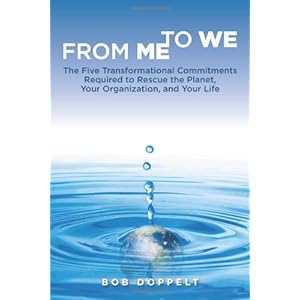
In this four-part dharma talk give at the Insight Meditation Community of Berkeley, James Baraz speaks about how we might respond as we reach the supposed "tipping point." He uses Bob Doppelt’s book From Me to We: The Five Transformational Commitments Required to Rescue the Planet, Your Organization, and Your Life as the foundation for some of his lectures.

All four of these talks were posted at Dharma Seed.


James Baraz


I try to convey that the wisdom and compassion we are looking for is already inside of us. I see practice as learning how to purify our mind and heart so we can hear the Buddha inside. In doing so, we naturally embody the dharma and help awaken that understanding and love in others we meet. 

2012-06-14 Appropriate Response at the Tipping Point:
Concern for the Planet as Dharma Practice 46:36

This is the first of a four-part series inspired by the Spring 2012 issue of Inquiring Mind, entitled 'Earth Now.' In addition to reading this issue, especially the interview with Joanna Macy: Woman on the Edge of Time, James also suggested these readings: Ernest Callenbach’s essay "Epistle to Ecotopians" and Bob Doppelt's book From Me to We: The Five Transformational Commitments Required to Rescue the Planet, Your Organization, and Your Life.

The series continues on 6/28, 7/5, and 7/19.

Insight Meditation Community of Berkeley IMCB Regular Talks


* * * * *

2012-06-28  Seeing the System You Are Part Of  59:40

Sharing a positive vision for the future from Ernest Callenbach’s "Epistle to Ecotopians". We then begin to explore the first of five Dharma principles using systems and sustainability expert Bob Doppelt’s book From Me to We. The ignorance of these principles is what perpetuates the problem and the understanding of them is the key to changing our consciousness and providing a path toward healing the planet. This is part 2 of the series 'Appropriate Response at the Tipping Point' that began June 14.

Insight Meditation Community of Berkeley IMCB Regular Talks

* * * * *

2012-07-05 Karma and Sila as Gaia Practices 53:57

This is part 3 of the series 'Appropriate Response at the Tipping Point' that began 6/14. In this talk, James discusses the first three of the five transformational commitments in Bob Doppelt's book From Me to We:

1. See the systems you are part of
2. Be accountable for all the consequences of your actions
3. Abide by society’s most deeply held universal principles of morality and justice

Insight Meditation Community of Berkeley IMCB Regular Talks

* * * * *

2012-07-19 Stewahip and Intention as Gaia Practices  52:25

This is part 4 of the series 'Appropriate Response at the Tipping Point' that began 6/14. In this talk, James discusses the last two of the five transformational commitments in Bob Doppelt's book From Me to We:

4. Acknowledge your trustee obligations and take responsibility for the continuation of all life
5. Choose your own destiny

Insight Meditation Community of Berkeley IMCB Regular Talks

Wednesday, January 11, 2012

TEDxHogeschoolUtrecht - Liane Young - The Brain on Intention


Via TEDx Talks:
Liane Young is an Assistant Professor in the Department of Psychology at Boston College. Young studies the cognitive and neural basis of human moral judgment. Her current research focuses on the role of theory of mind and emotions in moral judgment and moral behavior, as well as individual and cultural differences in moral cognition.

Monday, December 19, 2011

Esoteric Voices 2: Consciousness Transformation w/ Dr. Marilyn Mandala Schlitz of the Institute of Noetic Sciences

Reality Sandwich posted this interview with Dr. Marilyn Mandala Schlitz of the Institute of Noetic Sciences on the topic of consciousness transformation. Kent Bye conducted the interview - he is an integrally-informed film maker and podcaster.

Dr. Schlitz and her colleagues have been studying the foundations for transforming consciousness for more than ten years, and their research is available at Living Deeply. At the 2010 Toward a Science of Consciousness Conference here in Tucson, they gave an excellent summary of their work.

Esoteric Voices 2: Consciousness Transformation

EsotericVoices-440px.jpg


Dr. Marilyn Mandala Schlitz is the President of the Institute of Noetic Sciences, which does research into extended human capacities, consciousness & healing as well as consciousness transformation.

Consciousness transformation is a shift in the way that you see the world, and IONS wanted to see what the common ingredients of transformation were were across many different religious practices and spiritual paths. Dr. Schlitz was involved conducting a 10-year study in order to discover what facilitates and sustains consciousness transformation, what the benefits of it are, and how it happens. They interviewed spiritual teachers and conducted a survey of over 2000 people who have experienced some type of transformative event in their lives. This helped them to create a set of hypotheses of the common elements across all of the different transformative practices that they then tested over time.

The four elements that they found to be common to all transformative spiritual practices were:
  1. Intention to change
  2. Attention to a broader set of possibilities
  3. Repetition to build new muscle groups
  4. Guidance from a teacher, book or internal guidance
Schlitz says that these four elements wrapped in the arms of surrender framework can give us an understanding of what a transformative practice looks like. She talks about how the primary catalyst for transformation is typically some type of crisis, but it's also possible for people can transform through insight. Finally, she talks about the process of cultural paradigm shift and the importance of expanding your identity from an egocentric perspective to a more global and cosmic perspective.

For more information into this 10-year study in consciousness transformation, then be sure to check out their Living Deeply website and book of the same name.

Download File
Music by scottaltham, courtesy of Creative Commons license.

Saturday, December 03, 2011

The Dalai Lama - Setting an Intention


DALAI LAMA HEART OF WISDOM
CALENDAR 2012
more...

Dalai Lama Quote of the Week

"When serving society or others in general, it is very important to set a proper motivation at the start of each day. When we wake up each morning, we reflect, 'Today I am not going to come under the power of either attachment or hostility. Today I am going to be of benefit and help to others.' Thus we consciously set the tone for the entire day so that we go through it within the context of a pure, altruistic motivation and attitude."

--H.H. the Dalai Lama, excerpted from The Gelug/Kagyu Tradition of Mahamudra, published by Snow Lion Publications

--from Dalai Lama Heart of Wisdom Calendar 2012 (June)

Thursday, October 20, 2011

Lynne Rudder Baker: The Metaphysics of Everyday Life

This is an interesting paper from PhilPapers site (short for philosophy papers). Here is the abstract (clicking the title will download the PDF file of the paper):

Lynne Rudder Baker: The Metaphysics of Everyday Life.
I hope that my title, “The Metaphysics of Everyday Life,” brings to mind the title of the lively little book, The Psychopathology of Everyday Life, which Sigmund Freud published in 1904. Although scientifically obsolete, this small volume describes numerous kinds of familiar phenomena that go unnoticed: Forgetting proper names; forgetting foreign words; making mistakes in reading and writing; concealing memories from childhood; mislaying things, and so on. These banal errors appear to be random but, according to Freud, they are bursting with psychological importance. What I find congenial in Freud is not his diagnosis of these little mistakes, but his finding consequence in occurrences that are usually overlooked as haphazard and purposeless. Whereas Freud saw the psychological significance of ordinary mistakes, I want to show the ontological significance of ordinary things that we encounter in everyday life.
Early in the paper are the following paragraphs, which I think provide a bit of a thesis for those who are curious about what she has in mind:
One noticeable feature of the world as encountered is that it is populated by things—such as pianos, pacemakers, and paychecks—whose existence depends on there being persons with propositional attitudes. I call any object that could not exist in a world lacking beliefs, desires and intentions an ‘intentional object.’(2) Intentional objects that we are familiar with include emails, kitchen utensils, precision instruments, and so on. Other communities may be familiar with other intentional objects; but all communities recognize many kinds of intentional objects—as well as other intentional phenomena like conventions, obligations, and so on. All artifacts and artworks, and most human activities (getting a job, going out to dinner, etc.), are intentional in this way: They could not exist or occur in a world without beliefs, desires, and intentions.


However, not all things in the world as encountered depend on intentionality. For example, planets and dinosaurs could—and did—exist in a world without beliefs, desires and intentions.(3) In the world as encountered, whether an object is intentional or not is often insignificant: Whether a ball is constituted by a piece of natural rubber or artificial rubber is usually not salient feature of it. My theory of the world as encountered allows for the distinction between intentional and nonintentional objects, but does not highlight it.
I probably enjoyed this article in part because that one paragraph (the 2nd one above) offers the best commonsense argument against anthropocentric thinking (the universe depends on human consciousness for its existence) that I have seen recently.

Maybe you will enjoy it, too.

Tuesday, December 29, 2009

All in the Mind - The philosophy of good intentions

Cool.

The philosophy of good intentions

Reading the minds of others can be darned hard. Are their intentions good, bad or indifferent? Whether we hold people accountable for their behaviour depends on the answer. Scientists probe questions like this through experiments. Philosophers traditionally appeal to intuition and argument. But now a young band of experimental philosophers are taking armchair philosophy to task, and digging for data.

Show Transcript | Hide Transcript

Guests

Joshua Knobe
Assistant Professor
Department of Philosophy
University of North Carolina-Chapel Hill
http://www.unc.edu/%7Eknobe/

Edouard Machery
Associate Professor of Philosophy
Department of History and Philosophy of Science
University of Pittsburgh
Resident Fellow of the Center for Philosophy of Science
Member of the Center for the Neural Basis of Cognition
http://www.pitt.edu/~machery/

Further Information

Join the discussion on the All in the Mind blog
Lots of thought provoking comments from All in the Mind listeners on this one!

Experimental philosophy anthem on Youtube
...complete with a burning armchair.

Video on experimental philosophy
Comedian Eugene Mirman explaining Joshua Knobe's experiment.

Online experiments from the concept of intentional action - have a go!
Joshua Knobe invites you to participate with this question: "What do people mean when they say that a behavior was performed intentionally? This series of experiments was designed to help address that question. At times, the results are surprising".

Intentional Action and Asperger Syndrome
Posted by Edouard Machery on the Psychology Today blog, and he asks: "How do we think about the intentional nature of actions? And how do people with an impaired mindreading capacity think about it?". Try the test yourself.

Experimental philosophy blog
Written by the experimental philosophy community, worldwide.

The New New Philosophy (New York Times, December 2007)
Article by Kwame Anthony Appiah

The X-Philes - Philosophy Meets the Real World (Slate, March 2006)

Against Intuition (The Chronicle of Higher Education, October 2008)
"Experimental philosophers emerge from the shadows, but skeptics still ask: Is this philosophy?"
Article by Christopher Shea

More on the experimental philosophy movement
Compiled by Joshua Knobe, includes critiques.

Publications

Title: The Folk Concept of Intentional Action: Philosophical and Experimental Issues
Author: Edouard Machery
Publisher: Mind & Language, 23, 165-189, 2008
URL: http://www.pitt.edu/~machery/papers/The%20folk%20concept%20of%20intentionality_machery.pdf

Title: Philosophy of Psychology
Author: Edouard Machery In F. Allhoff (Ed.), Philosophy of the Special Sciences.
Publisher: Philosophy of Psychology, SUNY Press (forthcoming).
URL: http://www.pitt.edu/~machery/papers/Psychology_machery.pdf

Title: The Concept of Intentional Action:A Case Study in the Uses of Folk Psychology.
Author: Joshua Knobe
Publisher: Philosophical Studies. 130: 203-231, 2006.
URL: http://www.unc.edu/%7Eknobe/PhilStudies.pdf

Title: Acting intentionally and the side-effect effect: Theory of mind and moral judgment
Author: Alan M. Leslie, Joshua Knobe, Adam Cohen
Publisher: Psychological Science, 17, 421-427, 2006.
URL: http://www.unc.edu/%7Eknobe/LeslieKnobeCohen.pdf

Title: Intentional Action and Side Effects in Ordinary Language
Author: Joshua Knobe
Publisher: Analysis, 63, 190-193, 2003
URL: http://www.unc.edu/%7Eknobe/side-effects.html

Title: Theory of Mind and Moral Cognition: Exploring the concepts
Author: Joshua Knobe
Publisher: Trends in Cognitive Sciences, 9, 357-359, 2005
URL: http://www.unc.edu/%7Eknobe/tics.pdf

Title: Moral Responsibility and Determinism: The Cognitive Science of Folk Intuitions
Author: Shaun Nichols and Joshua Knobe
Publisher: Nous, 41, 663-685 (forthcoming)
URL: http://www.unc.edu/%7Eknobe/Nichols-Knobe.pdf

Title: Intuitions about Consciousness: Experimental Studies
Author: Joshua Knobe and Jesse Prinz
Publisher: Phenomenology and Cognitive Science, forthcoming.
URL: http://www.unc.edu/%7Eknobe/consciousness.pdf

Presenter

Natasha Mitchell