Showing posts with label acceptance. Show all posts

Wednesday, October 30, 2013

The Wright Show - Robert Wright and Sharon Salzberg Discuss "Love Your Enemies"


Meditation teacher Sharon Salzberg and Buddhist Scholar Robert Thurman have authored a new book entitle, Love Your Enemies: How to Break the Anger Habit & Be a Whole Lot Happier.  Here is a brief description of the book:
When people and circumstances upset us, how do we deal with them? Often, we feel victimized. We become hurt, angry, and defensive. We end up seeing others as enemies, and when things don’t go our way, we become enemies to ourselves.
 

But what if we could move past this pain, anger, and defensiveness?
 

Inspired by Buddhist philosophy, this book introduces us to the four kinds of enemies we encounter in life: the outer enemy, people, institutions, and situations that mean to harm us; the inner enemy, anger, hatred, fear, and other destructive emotions; the secret enemy, self-obsession that isolates us from others; and the super-secret enemy, deep-seated self-loathing that prevents us from finding inner freedom and true happiness.

In this practical guide, we learn not only how to identify our enemies, but more important, how to transform our relationship to them. Love Your Enemies teaches us how to . . .

  • break free from the mode of “us” versus “them” thinking
  • develop compassion, patience, and love
  • accept what is beyond our control
  • embrace lovingkindness, right speech, and other core concepts
Throughout, authors Sharon Salzberg and Robert Thurman share stories and exercises for achieving finding peace within yourself and with the world. Drawing from ancient spiritual wisdom and modern psychology, Love Your Enemies presents tools that are useful for all readers.
Ms. Salzberg stopped by The Wright Show last week to speak with Robert Wright (The Evolution of God, The Moral Animal: Why We Are, the Way We Are: The New Science of Evolutionary Psychology, and other books) about the new book and the methods of and challenges to loving one's enemies.

Robert Wright and Sharon Salzberg Discuss "Love Your Enemies"

October 27, 2013 | The Wright Show


Robert Wright (Bloggingheads.tv, The Evolution of God, Nonzero) and Sharon Salzberg (SharonSalzberg.com)
Recorded: Oct 23   Posted: Oct 27, 2013
Download:   wmv | mp4 | mp3 | fast mp3

Links:

Sunday, August 11, 2013

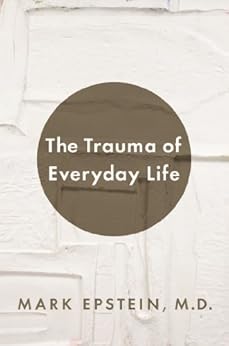
Mark Epstein - The Trauma of Being Alive (New York Times)


In anticipation of his new book, The Trauma of Everyday Life, being released this week (Aug. 15), Mark Epstein had an interesting column in the New York Times a week ago. His point here, and I would assume in the book, as well, is that being alive entails the experience of trauma in some form or another (whether big T traumas like death, natural disasters, rape, being a refugee, and so on; or small t traumas such as neglect, bullying, social isolation, and so on).
An undercurrent of trauma runs through ordinary life, shot through as it is with the poignancy of impermanence. I like to say that if we are not suffering from post-traumatic stress disorder, we are suffering from pre-traumatic stress disorder. There is no way to be alive without being conscious of the potential for disaster. One way or another, death (and its cousins: old age, illness, accidents, separation and loss) hangs over all of us. Nobody is immune. Our world is unstable and unpredictable, and operates, to a great degree and despite incredible scientific advancement, outside our ability to control it.
I suppose there is truth in this - and a little wisdom. On the other hand, I can see some people becoming frozen in their fear of the next traumatic experience. I see two solutions to this awareness: (1) Allow our brains to do what they do well, keep such awareness below the threshold of consciousness, or (2) Embrace the knowledge that any moment could be our last and carpe diem.

The Trauma of Being Alive

By MARK EPSTEIN
Published: August 3, 2013

TALKING with my 88-year-old mother, four and a half years after my father died from a brain tumor, I was surprised to hear her questioning herself. “You’d think I would be over it by now,” she said, speaking of the pain of losing my father, her husband of almost 60 years. “It’s been more than four years, and I’m still upset.”

Balint Zsako

I’m not sure if I became a psychiatrist because my mother liked to talk to me in this way when I was young or if she talks to me this way now because I became a psychiatrist, but I was pleased to have this conversation with her. Grief needs to be talked about. When it is held too privately it tends to eat away at its own support.

“Trauma never goes away completely,” I responded. “It changes perhaps, softens some with time, but never completely goes away. What makes you think you should be completely over it? I don’t think it works that way.” There was a palpable sense of relief as my mother considered my opinion.

“I don’t have to feel guilty that I’m not over it?” she asked. “It took 10 years after my first husband died,” she remembered suddenly, thinking back to her college sweetheart, to his sudden death from a heart condition when she was in her mid-20s, a few years before she met my father. “I guess I could give myself a break.”

I never knew about my mother’s first husband until I was playing Scrabble one day when I was 10 or 11 and opened her weather-beaten copy of Webster’s Dictionary to look up a word. There, on the inside of the front cover, in her handwriting, was her name inscribed in black ink. Only it wasn’t her current name (and it wasn’t her maiden name). It was another, unfamiliar name, not Sherrie Epstein but Sherrie Steinbach: an alternative version of my mother at once entirely familiar (in her distinctive hand) and utterly alien.

“What’s this?” I remember asking her, holding up the faded blue dictionary, and the story came tumbling out. It was rarely spoken of thereafter, at least until my father died half a century later, at which point my mother began to bring it up, this time of her own volition. I’m not sure that the trauma of her first husband’s death had ever completely disappeared; it seemed to be surfacing again in the context of my father’s death.

Trauma is not just the result of major disasters. It does not happen to only some people. An undercurrent of trauma runs through ordinary life, shot through as it is with the poignancy of impermanence. I like to say that if we are not suffering from post-traumatic stress disorder, we are suffering from pre-traumatic stress disorder. There is no way to be alive without being conscious of the potential for disaster. One way or another, death (and its cousins: old age, illness, accidents, separation and loss) hangs over all of us. Nobody is immune. Our world is unstable and unpredictable, and operates, to a great degree and despite incredible scientific advancement, outside our ability to control it.

My response to my mother — that trauma never goes away completely — points to something I have learned through my years as a psychiatrist. In resisting trauma and in defending ourselves from feeling its full impact, we deprive ourselves of its truth. As a therapist, I can testify to how difficult it can be to acknowledge one’s distress and to admit one’s vulnerability. My mother’s knee-jerk reaction, “Shouldn’t I be over this by now?” is very common. There is a rush to normal in many of us that closes us off, not only to the depth of our own suffering but also, as a consequence, to the suffering of others.

When disasters strike we may have an immediate empathic response, but underneath we are often conditioned to believe that “normal” is where we all should be. The victims of the Boston Marathon bombings will take years to recover. Soldiers returning from war carry their battlefield experiences within. Can we, as a community, keep these people in our hearts for years? Or will we move on, expecting them to move on, the way the father of one of my friends expected his 4-year-old son — my friend — to move on after his mother killed herself, telling him one morning that she was gone and never mentioning her again?

IN 1969, after working with terminally ill patients, the Swiss psychiatrist Elisabeth Kübler-Ross brought the trauma of death out of the closet with the publication of her groundbreaking work, “On Death and Dying.” She outlined a five-stage model of grief: denial, anger, bargaining, depression, acceptance. Her work was radical at the time. It made death a normal topic of conversation, but had the inadvertent effect of making people feel, as my mother did, that grief was something to do right.

Mourning, however, has no timetable. Grief is not the same for everyone. And it does not always go away. The closest one can find to a consensus about it among today’s therapists is the conviction that the healthiest way to deal with trauma is to lean into it, rather than try to keep it at bay. The reflexive rush to normal is counterproductive. In the attempt to fit in, to be normal, the traumatized person (and this is most of us) feels estranged.

While we are accustomed to thinking of trauma as the inevitable result of a major cataclysm, daily life is filled with endless little traumas. Things break. People hurt our feelings. Ticks carry Lyme disease. Pets die. Friends get sick and even die.

“They’re shooting at our regiment now,” a 60-year-old friend said the other day as he recounted the various illnesses of his closest acquaintances. “We’re the ones coming over the hill.” He was right, but the traumatic underpinnings of life are not specific to any generation. The first day of school and the first day in an assisted-living facility are remarkably similar. Separation and loss touch everyone.

I was surprised when my mother mentioned that it had taken her 10 years to recover from her first husband’s death. That would have made me 6 or 7, I thought to myself, by the time she began to feel better. My father, while a compassionate physician, had not wanted to deal with that aspect of my mother’s history. When she married him, she gave her previous wedding’s photographs to her sister to hold for her. I never knew about them or thought to ask about them, but after my father died, my mother was suddenly very open about this hidden period in her life. It had been lying in wait, rarely spoken of, for 60 years.

My mother was putting herself under the same pressure in dealing with my father’s death as she had when her first husband died. The earlier trauma was conditioning the later one, and the difficulties were only getting compounded. I was glad to be a psychiatrist and grateful for my Buddhist inclinations when speaking with her. I could offer her something beyond the blandishments of the rush to normal.

The willingness to face traumas — be they large, small, primitive or fresh — is the key to healing from them. They may never disappear in the way we think they should, but maybe they don’t need to. Trauma is an ineradicable aspect of life. We are human as a result of it, not in spite of it.


~ Mark Epstein is a psychiatrist and the author, most recently, of the forthcoming book “The Trauma of Everyday Life.”

Monday, April 01, 2013

The Power of Forgiveness - Gina Sharpe (Tricycle)

As much as I like this article and I think it is good to practice forgiveness when we can, I am not convinced that it is always the best choice. Gina Sharpe quotes Jack Kornfield: “Forgiveness is giving up all hope of a better past.” I like this perspective, but I might exchange the word "forgiveness" with "acceptance." For many of us, acceptance is giving up all hope of a better past. And that is a good place to begin.

This comes from Tricycle's Wisdom Collection.

The Power of Forgiveness

Our ability to forgive allows us to meet suffering—our suffering as well as the suffering of others—with a kind heart.


by Gina Sharpe


Forgiveness is not simple. When we have been harmed, hurt, betrayed, abandoned, or abused, forgiveness can often seem to be out of the question. And yet, unless we find some way to forgive, we will hold that hatred and fear in our hearts forever. Imagine what the world would be like without forgiveness. Imagine what it would be like if every one of us carried every single hurt, every single resentment, all the anger that came up, when we felt betrayed. If we just kept that in our hearts and never let it go, it would be unbearable. Without forgiveness, we’re forced to carry the sufferings of the past. As Jack Kornfield says, “Forgiveness is giving up all hope of a better past.” In that sense, forgiveness is really not about someone’s harmful behavior; it’s about our own relationship with our past. When we begin the work of forgiveness, it is primarily a practice for ourselves.

Maha Ghosananda, a Theravada monk who was known as “the Gandhi of Cambodia,” used to lead dhammayietra (“pilgrimage of truth”) walks in the early 1990s, after peace accords ending the civil war between the Khmer Rouge and the new Cambodian government had been signed. When Maha Ghosananda died in 2007 at the age of 78, an obituary in The Economist detailed his experiences walking through Cambodia after the war: He often found war still raging. Shells screamed over the walkers, and firefights broke out round them. Some were killed. The more timid ran home, but Ghosananda had chosen his routes deliberately to pass through areas of conflict. Sometimes the walkers found themselves caught up in long lines of refugees, footsore like them, trudging alongside oxcarts and bicycles piled high with mattresses and pans and live chickens. “We must find the courage to leave our temples,” Ghosananda insisted, “and enter the suffering-filled temples of human experience.”

Now, though the Khmer Rouge had outlawed nostalgia, had razed the monasteries and thrown the mutilated Buddha statues into the rivers, old habits stirred. As they caught Ghosanada’s chant, “Hate can never be appeased by hate; hate can only be appeased by love,” soldiers laid down their arms and knelt by the side of the road. Villagers brought water to be blessed and plunged glowing incense sticks into it to signal the end of war. . . . He could not stay out of the world. Rather than devoting himself to monastic scholarship, he built hut-temples in the refugee camps.

Maha Ghosananda built those temples even though he was told by the remnants of the Khmer Rouge that if he dared to open these temples he would be killed. As thousands of refugees arrived at the temples, Maha Ghosanada handed out dog-eared photocopies of the Buddha’s Metta Sutta:
With a boundless heart
Should one cherish all living beings:
Radiating kindness over the entire world,
Spreading upwards to the skies,
And downwards to the depth.
This story is a powerful reminder of what forgiveness can do. Maha Ghosananda’s family was wiped out by the Khmer Rouge, and during their reign Buddhist monks were labeled as social parasites. They were defrocked, forced into labor fields, or murdered: out of 60,000 monks, only 3,000 remained in Cambodia after the war. But despite all that he had suffered during the Khmer Rouge regime, Maha Ghosananda was able to find forgiveness in his heart.

Forgiveness releases us from the power of fear and allows us to see kindly with a wise heart. First, we need to understand forgiveness: then we learn how it is practiced, and then how we may forgive ourselves and others. The Buddha said, “If it were not possible to free the heart from entanglement and greed, hate, fear, and delusion, I would not teach you or ask you to do so.” The power of forgiveness releases us from the power of fear. Our practice of lovingkindness can be enhanced by our practice of forgiveness, because it allows us to see with kind eyes and to rest in a wise and peaceful heart. In any moment, we can learn to let go of hatred and fear and rest in peace and forgiveness—it’s never, ever too late. But in order to cultivate a truly loving and kind heart, we need to develop the practices that cultivate and strengthen forgiveness and the natural compassion within us. Our ability to forgive allows us to make space for our ability to meet suffering—our suffering as well as the suffering of others—with a kind heart.

Forgiveness does not gloss over what has happened in a superficial way. The practice is not about planting a smile on our face and saying, “It’s okay. I don’t mind.” It’s not a misguided effort to suppress our pain or to ignore it. If you’ve suffered a great injustice, coming to forgiveness may include a long process of grief and outrage and sadness and loss and pain. Forgiveness is a deep process, which is repeated over and over and over again in our hearts. It honors the grief and it honors the betrayal. And in its own time, it ripens into the freedom to truly forgive. And if we look honestly at our own lives, we can see the sorrows and pain that have led to our own wrongdoing. We’re not just victims; sometimes we also need to be forgiven. And in this way we can finally extend forgiveness to ourselves and hold the pain that we have caused in the heart of compassion. Without such mercy we would live in isolation or in exile.

As you do the following forgiveness practices, let yourself feel whatever small or large release there is in your heart. Or if there is no release, notice that too. And if you are not ready to forgive, that’s all right. Sometimes the process of forgiveness takes a lifetime, and that’s perfectly fine. You can unfold in your own time and in your own way. We’re not trying to manufacture some kind of feeling, so if all you can muster is the understanding that harm was done, that’s perfectly okay. Emotions will come not because we force them to but because they’re there, because they’re an expression of some deep feeling inside. So if as a result of the harm, there were ways in which your heart closed or your feelings closed, you can acknowledge that too as part of the harm. Whatever you feel, you feel. And whatever you don’t feel, you don’t feel. Forgiveness is an attitude of welcoming and inviting and spaciousness rather than some emotion that we pump up in our bodies and minds and hearts.

We practice with the faith that as we do the repetitions, the body, mind, and heart learn. That’s the beauty of these practices, we learn that we’re not in control of the fruits of our practice, but we are in control of how we do the practice—whether we do it with patience and diligence and determination and wisdom and effort and energy. We’re not in control of how it then manifests in our life. We’re not trying to make anything happen, because in the trying to make something happen, we will miss the beauty and the delight of what does happen.

~ Gina Sharpe is a cofounder of New York Insight Meditation Center, where she currently serves as the guiding teacher, and a core teacher at Insight Meditation Society in, Barre, MA.

Image: After Attar's 'The Conference of the Birds' V, 45 inches by 45 inches, watercolor/paper, 2006. © Francesco Clemente. Courtesy: Mary Boone Gallery, New York. 

* * *

Forgiveness Practice


This practice of forgiveness comes in three parts: forgiveness from others, forgiveness for ourselves, and forgiveness for those who have hurt or harmed us. This is not a coercive practice, so if we feel that we don’t want to ask for forgiveness, then we don’t have to. If we think we can’t forgive ourselves, we can sit quietly and see if there’s any small, even tiny little opening in our hearts that can allow just the smallest amount of light to come in. And if we feel that we can’t extend forgiveness to others because we think that something is completely unforgivable, then we can know that too. During this practice we reflect on whatever resentment or bitterness we’re holding onto and how that is working in our own hearts. And if you think that there is just a tiny little amount that you can forgive, then that’s fine too. This is a deep, unfolding process that can take a lifetime to work through.

You may not want to take on the largest thing that you’ve not been willing to forgive up to now, but maybe you can address some small offenses. Let your heart get some exercise in forgiveness. You want to start with something that isn’t quite so overwhelming and allow the heart to begin to exercise. It’s like exercising a muscle in our bodies. We don’t start with the 500-pound weight. We start maybe with a couple of small barbells, and we work with those to get the muscle going. And then eventually it may be strong enough to take up heavier and heavier weights. In the same way, with forgiveness practice, you may want to start small.

Sit comfortably and allow the eyes to close and the breath to be natural and easy. Let the body and the mind relax. Feel your connection to the earth. Breathe gently into your whole body, especially into your heart.

As you’re breathing, feel all the barriers that you’ve erected and the emotions you’ve carried because you haven’t forgiven yourself or others. Let yourself feel the pain of keeping your heart closed.

Forgiveness from Others


As you are breathing into your heart and feeling any hardness there, repeat silently to yourself, “There are many ways that I have hurt or harmed others. And I remember them now. Ways that I have betrayed, abandoned, or caused suffering, knowingly or unknowingly, out of my pain, fear, anger, or confusion.” Let yourself remember and visualize the ways you have hurt others. See pain that you may have caused with your own fear and confusion. Sense that you can finally release this burden and ask for forgiveness. Take as much time as you need to picture the memory that burdens your heart. And as each person comes to mind, just gently say, “I ask for your forgiveness. I ask for your forgiveness.”

Forgiveness for Ourselves


To ask forgiveness for yourself, repeat silently, “Just as I have caused suffering to others, there are many ways that I have hurt and harmed myself. I have betrayed or abandoned myself many times in thought, word, or deed, knowingly or unknowingly.” Let yourself remember the ways that you have harmed yourself. And extend forgiveness for each act of harm, one by one. “For the ways that I have hurt myself through action or inaction, out of fear, pain, and confusion, I now extend a full and heartfelt forgiveness. I forgive myself. I forgive myself. I forgive myself.”

Forgiveness for Those Who Have Hurt or Harmed Us


To extend forgiveness to those who have hurt or harmed you, repeat, “There are many ways I have been harmed by others, abused or abandoned, knowingly or unknowingly, by thought, word, or deed.” Picture the ways you have felt harmed. Remember them. We’ve each been betrayed. Let yourself remember the ways that this may have been true for you, and feel the sorrow you have carried from the past. And now, sense that it’s possible to release this burden by extending forgiveness gradually as your heart is ready. Don’t force it; every harm does not have to be forgiven in one sitting. The point is to exercise in a very small way something that you think you are ready to forgive right now. Gently repeat to yourself, “I remember the many ways that I have been hurt, wounded, or harmed. And I know that it was out of another’s pain, confusion, fear, anger. I have carried this pain in my heart long enough. To the extent that I am ready, I offer you forgiveness. You who have caused me harm, I offer my heartfelt forgiveness. I forgive you.”

These three practices for forgiveness may be gently repeated until you feel a release in your heart. For some great pain you may not feel a release. Instead, you may experience again the burden or the anger that you’re holding onto. If that is the case, then you can just touch this softly. Be forgiving of yourself for not being ready to let it go, and move on.

Wednesday, December 19, 2012

ADDICTION: A Spiritual Search? - Jeff Foster


When I was in my 20s, a friend/mentor told me that all addictions are pale substitutes for a sense of the sacred. There is some overlap in this perspective from 20+ years ago and Jeff Foster's perspective that we are all addicts in that we are seeking ways to numb ourselves from pain, from anger, from ourselves being present to our feelings in the present moment.

Sounds True has published Foster's newest book, The Deepest Acceptance: Radical Awakening in Ordinary Life.


ADDICTION: A Spiritual Search? - Jeff Foster


Jeff Foster offers an alternative perspective on addiction. He suggests that all human beings are 'addicts' to some extent - we are all trying to escape or distract ourselves from the present moment in various ways - through drugs, through shopping, through alcohol, through work, even through spirituality - seeking contentment outside of ourselves, seeking wholeness in the future. What goes to the core of all our addictions is our addiction to "me", our misidentification as a separate wave in the vast ocean of life, and the ensuing search for That which we already are. Addiction is a war with the present moment, and discovering deep acceptance - the acceptance that you are in your essence - is where this war can end. We simply stop seeking contentment outside of ourselves.... Jeff's new book The Deepest Acceptance: Radical Awakening in Ordinary Life is published by Sounds True. 
For more:http://www.lifewithoutacentre.com
Here is the publisher's information about the book (from Amazon.com):
How can we bring an effortless yes to this moment? How do we stop running from "the mess of life"-our predicaments, our frustrations, even our search for liberation-and start flowing with all of it? 
In small venues throughout the UK and Europe, a young teacher named Jeff Foster is quietly awakening a new generation of spiritual inquirers to the experience of abiding presence and peace in our ever-shifting world. His informal gatherings, blogs, and "kitchen-table video posts" have created a rising tide of interest in his teachings. 
With The Deepest Acceptance, Jeff Foster invites us to discover the ocean of who we are: an awareness that has already allowed every wave of emotion and experience to arrive. 
While Jeff delightfully admits the irony of writing a book to convey something that is beyond words to teach, here he confirms his ability to guide us in unexpected new ways to a space of absolute acceptance and joy, no matter what's happening in our lives. 
Candid, thoughtful, humorous-and deeply compassionate toward those searching for a way out of suffering-this refreshing new luminary inspires us to stop trying to "do" acceptance . and start falling in love with "what has already been allowed." 
Jeff Foster writes and speaks from his own awakened experience to help show the way out of seeking fulfillment in the future and into the acceptance of "all this, here and now." He studied astrophysics at Cambridge University. Following a period of depression and physical illness, he embarked on an intensive spiritual search that came to an end with the discovery that life itself was what he had always been seeking. 
"Just as the ocean accepts every wave, so too has our awareness already allowed and accepted what is here."-Jeff Foster

Saturday, December 08, 2012

The Mind Report - Tamar Szabo Gendler (Yale University) and Andrew Solomon (Far from the Tree)


Andrew Solomon is author of one of the year's best psychology (on several Best 10 lists I have seen), Far From the Tree: Parents, Children and the Search for Identity. Here is the publisher blurb about the book:
From the National Book Award–winning author of The Noonday Demon: An Atlas of Depression comes a monumental new work, a decade in the writing, about family. In Far from the Tree, Andrew Solomon tells the stories of parents who not only learn to deal with their exceptional children but also find profound meaning in doing so.
Solomon’s startling proposition is that diversity is what unites us all. He writes about families coping with deafness, dwarfism, Down syndrome, autism, schizophrenia, multiple severe disabilities, with children who are prodigies, who are conceived in rape, who become criminals, who are transgender. While each of these characteristics is potentially isolating, the experience of difference within families is universal, as are the triumphs of love Solomon documents in every chapter.

All parenting turns on a crucial question: to what extent parents should accept their children for who they are, and to what extent they should help them become their best selves. Drawing on forty thousand pages of interview transcripts with more than three hundred families, Solomon mines the eloquence of ordinary people facing extreme challenges. Whether considering prenatal screening for genetic disorders, cochlear implants for the deaf, or gender reassignment surgery for transgender people, Solomon narrates a universal struggle toward compassion. Many families grow closer through caring for a challenging child; most discover supportive communities of others similarly affected; some are inspired to become advocates and activists, celebrating the very conditions they once feared. Woven into their courageous and affirming stories is Solomon’s journey to accepting his own identity, which culminated in his midlife decision, influenced by this research, to become a parent.

Elegantly reported by a spectacularly original thinker, Far from the Tree explores themes of generosity, acceptance, and tolerance—all rooted in the insight that love can transcend every prejudice. This crucial and revelatory book expands our definition of what it is to be human.
Solomon is interviewed by Tamar Szabo Gendler (of Yale University) in this fascinating discussion.

The Mind Report


Tamar Szabo Gendler (Yale University) and Andrew Solomon (Far from the Tree)

On The Mind Report, Tamar speaks to Andrew Solomon, author of the new book, Far from the Tree. Andrew explains how his eyes were opened to the rich linguistic culture of the deaf community. Tamar asks him if he thinks schizophrenia or anorexia should be valorized as identities. Next, Andrew tells the moving story of Clinton Brown, a dwarf who exceeded all expectations, and two stories about parents of transgender children in radically different communities. Finally, Andrew has some closing words on identity, illness, and parenting


Recorded: Dec 31 |  Posted: Dec 2, 2012
Download:   wmv | mp4 | mp3 | fast mp3  

Saturday, November 17, 2012

Tami Simon with Jeff Foster - The Deepest Acceptance


Sounds True founder and CEO spoke with Jeff Foster in this recent podcast about his new book and audio course, The Deepest Acceptance: Radical Awakening in Ordinary Life. For those not familiar with Foster, here is a little background from his own website:
Jeff Foster studied Astrophysics at Cambridge University. In his mid-twenties, after a long period of depression and illness, he became addicted to the idea of ‘spiritual enlightenment’ and embarked on an intensive spiritual quest for the ultimate truth of existence.

The spiritual search came crashing down with the clear recognition of the non-dual nature of everything, and the discovery of the extraordinary in the ordinary. In the clarity of this seeing, life became what it always was: intimate, open, loving and spontaneous, and Jeff was left with a deep understanding of the root illusion behind all human suffering, and a love of the present moment.
Enjoy the podcast.

The Deepest Acceptance

Tuesday, November 6, 2012

Tami Simon speaks with Jeff Foster, voted in 2012 by The Watkins Review as one of the world’s 100 most spiritually influential people living today. With Sounds True, Jeff has released a new book, The Deepest Acceptance: Radical Awakening in Ordinary Life, and an accompanying audio program inviting us to discover the ocean of who we are: an awareness that has already allowed every wave of emotion and experience to arrive. In this episode, Jeff explains that we are acceptance, how to work with practical concerns such as financial fears, and the power of being with someone who is suffering—with an absolutely open embrace. Jeff also talks about his own path of awakening, including deep depression and some of his most important discoveries. (90 minutes)

Play

Thursday, September 27, 2012

Sounds True - Pema Chödrön: The Fundamental Ambiguity of Human Existence


This was the Sounds True Weekly Wisdom Producer's Pick from last week - Pema Chodron talking on ambiguity and becoming comfortable with uncertainty. Sounds True producer Randy Roark offers this selection from The Three Commitments as an example of how "accepting the underlying groundlessness of human life can give us a new understanding of personal freedom." There is a link at the bottom to all of Pema Chodron's offerings at Sounds True. Enjoy!

Pema Chödrön: The Fundamental Ambiguity of Human Existence


Pema-Chodron-2.jpg
Pema Chödrön teaches that the awakened life begins and ends with wonder—the thrill of letting go and thoroughly enjoying the ride. What prevents us from making this leap? Our ego’s survival instincts. In the audio program The Three Commitments, Pema teaches about Tibetan Buddhism’s essential life instructions for letting go of confusion and fear so we may take the next step towards true liberation and joy. Sounds True producer Randy Roark chose this week’s selection as an example of how Pema artfully turns our fears into an opening for transformation—describing how accepting the underlying groundlessness of human life can give us a new understanding of personal freedom.

More from Pema Chödrön

Thursday, September 06, 2012

Rick Hanson: R.A.I.N. - Recognize, Accept, Investigate, Not-Identify

This is an useful post from Rick Hanson in which he adapts Michelle McDonald's (a senior mindfulness teacher) R.A.I.N. acronym for achieving greater self-awareness. The more we practice this, the less reactive we become, and the less we get emotionally and energetically ensnared by little things.

Can you be with the whole of your psyche?
 

Post image for Let it R.A.I.N.

The Practice: Let it R.A.I.N.
 

Why?

When you’re young, the territory of the psyche is like a vast estate, with rolling hills, forests and plains, swamps and meadows. So many things can be experienced, expressed, wanted, and loved.
But as life goes along, most people pull back from major parts of their psyche. Perhaps a swamp of sadness was painful, or fumes of toxic wishes were alarming, or jumping exuberantly in a meadow of joy irritated a parent into a scolding. Or maybe you saw someone else get in trouble for feeling, saying, or doing something and you resolved, consciously or unconsciously, to Stay Away From That Place Forever.

In whatever way it happens, most of us end up by mid-adulthood living in the gate house, venturing out a bit, but lacking much sense of the whole estate, the great endowment of the whole psyche. Emotions are shut down, energetic and erotic wellsprings of vitality are capped, deep longings are set aside, sub-personalities are shackled and silenced, old pain and troubles are buried, the roots of reactions – hurt, anger, feelings of inadequacy – are veiled so we can’t get at them, and we live at odds with both Nature and our own nature.

Sure, the processes of the psyche need some regulation. Not all thoughts should be spoken, and not all desires should be acted upon! But if you suppress, disown, push away, recoil from, or deny major parts of yourself, then you feel cut off, alienated from yourself, lacking vital information about what is really going on inside, no longer at home in your own skin or your own mind – which feels bad, lowers effectiveness at home and work, fuels interpersonal issues, and contributes to health problems.

So what can we do? How can we reclaim, use, enjoy, and be at peace with our whole estate – without being overwhelmed by its occasional swamps and fumes?

This is where R.A.I.N. comes in.

How?

R.A.I.N. is an acronym developed by Michelle McDonald, a senior mindfulness teacher, to summarize a powerful way to expand self-awareness. (I’ve adapted it a bit below, and any flaws in the adaptation are my own, not Michelle’s.)

R = Recognize: Notice that you are experiencing something, such as irritation at the tone of voice used by your partner, child, or co-worker. Step back into observation rather than reaction. Without getting into story, simply name what is present, such as “annoyance,” “thoughts of being mistreated,” “body firing up,” “hurt,” “wanting to cry.”

A = Accept (Allow): Acknowledge that your experience is what it is, even if it’s unpleasant. Be with it without attempting to change it. Try to have self-compassion instead of self-criticism. Don’t add to the difficulty by being hard on yourself.

I = Investigate (Inquire): Try to find an attitude of interest, curiosity, and openness. Not detached intellectual analysis but a gently engaged exploration, often with a sense of tenderness or friendliness toward what it finds. Open to other aspects of the experience, such as softer feelings of hurt under the brittle armor of anger. It’s OK for your inquiry to be guided by a bit of insight into your own history and personality, but try to stay close to the raw experience and out of psychoanalyzing yourself.

N = Not-identify (Not-self): Have a feeling/thought/etc., instead of being it. Disentangle yourself from the various parts of the experience, knowing that they are small, fleeting aspects of the totality you are. See the streaming nature of sights, sounds, thoughts, and other contents of mind, arising and passing away due mainly to causes that have nothing to do with you, that are impersonal. Feel the contraction, stress, and pain that comes from claiming any part of this stream as “I,” or “me,” or “mine” – and sense the spaciousness and peace that comes when experiences simply flow.

* * *

R.A.I.N. and related practices of spacious awareness are fundamental to mental health, and always worth doing in their own right. Additionally, sometimes they alone enable painful or challenging contents of mind to dissipate and pass away.

But often it is not enough to simply be with the mind, even in as profound a way as R.A.I.N. Then we need to work with the mind, by reducing what’s negative and increasing what’s positive. (It’s also necessary to work with the mind to build up the inner resources needed to be with it; being with and working with the mind are not at odds with each other as some say, but in fact support each other.)
And whatever ways we work with the garden of the mind – pulling weeds and planting flowers – will be more successful after it R.A.I.N.s.

~ Rick Hanson, Ph.D., is a neuropsychologist and author of Buddha’s Brain: The Practical Neuroscience of Happiness, Love, and Wisdom (in 22 languages) and Just One Thing: Developing a Buddha Brain One Simple Practice at a Time (in 9 languages). Founder of the Wellspring Institute for Neuroscience and Contemplative Wisdom and Affiliate of the Greater Good Science Center at UC Berkeley, he’s been an invited speaker at Oxford, Stanford, and Harvard, and taught in meditation centers worldwide. His work has been featured on the BBC, NPR, FoxBusiness, Consumer Reports Health, U.S. News and World Report, and O Magazine and he has several audio programs with Sounds True. His weekly e-newsletter - Just One Thing – has over 40,000 subscribers, and suggests a simple practice each week that will bring you more joy, more fulfilling relationships, and more peace of mind and heart. If you wish, you can subscribe to Just One Thing here.

Monday, March 19, 2012

Upaya Dharma Podcasts - Erika Rosenberg: Working with Emotions through Meditation


Nice talk by Erika Rosenberg at the Upaya Zen Center on working with emotions through meditation. This is a topic relevant to a lot of people who use meditation as a part of their mental health regimen, or as part of their psychotherapy.

Erika Rosenberg: 03-14-12: Working with Emotions through Meditation


Speaker: Erika Rosenberg

Recorded: Wednesday Mar 14, 2012

Episode Description: How do we use the skills we develop in meditation practice and use them to understand our emotions? In a lively and engaging style, Erika explores emotions and discusses how we can work with them.

Teacher Bio: Erika Rosenberg received her Ph.D. in Psychology from the University of California, San Francisco (1994) and her B.S. in Neuroscience from San Jose State University (1986). Dr. Rosenberg’s scientific research has examined how our feelings are revealed in our facial expressions, how social factors influence emotional signals, and how anger affects cardiovascular health. Her work is published in a wide range of psychological journals and books, and she speaks at national conferences on the topics of emotions and facial expressions. Erika Rosenberg currently collaborates with other scientists on numerous projects in psychology, medicine, and computer science.

Dr. Rosenberg served on the faculties of the University of Delaware and the College of William and Mary, currently conducts research at the Center for Mind and Brain at the University of California, Davis, teaches at the Nyingma Institute of Tibetan Studies in Berkeley, and offers workshops worldwide.

Play

Tuesday, March 13, 2012

Melanie Greenberg, Ph.D. - Nine Essential Qualities of Mindfulness

Some good advice here - hope this helps for anyone still learning or refining their mindfulness practice (after 20+ years, that includes me). This comes from at Psychology Today, by
Learn how to say "yes" to the present moment.


mindful meditation
Meditation is one aspect of mindfulness
Most people these days are stressed out by the fast pace of life, economy, and worries about the future. In a recent survey, conducted in the UK, a whopping 86 percent agreed that "people would be much happier and healthier if they knew how to slow down and live in the moment" (Mental Health Foundation, 2010).  It is no wonder that mindfulness has rapidly gained attention in the popular press and is one of the few complementary medicine techniques to be offered in  hospitals and clinics worldwide. But what exactly is mindfulness?
Mindfulness is a mind-body medicine practice, based on ancient Zen Buddhist meditation techniques, that was popularized by Jon Kabat-Zinn, a researcher at the University of Massachusetts Medical School. According to Kabat-Zinn, mindfulness is an internal resource that all of us already have within us. The idea is to channel or direct this resource to transform our relationships with stress, emotions, pain, and illness. Indeed, controlled research studies suggest that mindfulness-based interventions can effectively reduce symptoms in people with chronic pain, recurrent depression, anxiety disorders, substance abuse, binge-eating, and many other health conditions. Mindfulness interventions have also been shown to change the brain's grey matter and reactivity to emotional stimuli in ways that promote greater conscious control over emotion.
While most people seem to think that mindfulness is a good thing, many people are confused about what exactly mindfulness is. Does it involve emptying the brain of thoughts, inducing relaxation, or going into a trance? Do you have to go live in an ashram and retreat from the material world to practice it effectively?  Is it a kind of religion or cult, and is it potentially dangerous?  In fact, none of the above have been shown to be true. Below is a description of some key concepts that can help illuminate what it means to have a mindful attitude to life.


mindfulness

The beauty of the present moment

Focus on the Present Moment—When your thoughts get lost in thinking about the past or worrying about the future, you bring them back to what you are experiencing right now. You try to remain open to how things unfold in the present, rather than having preconceived ideas about how things will or should turn out.

Being Fully PresentYou are spaciously aware of whatever you are experiencing in the present moment as you go through your daily life. What do you feel in your body? What are you seeing, hearing, doing - right now?

Openness to Experience—Rather than dreading and shutting out your own feelings and experiences because you think you can't handle them, you welcome with curiosity any thoughts and feelings that naturally arise, knowing they are merely sensations in the moment and the next moment can be different. You create mental spaciousness to contain these thoughts and feelings. Become aware of your experience as a flow of sensations, thoughts, and feelings and watch how these change and transform naturally over time.

Non-Judgment—You don't categorize your thoughts and feelings as good or bad, try to change them, or feel compelled to act on them. All feelings have a purpose, whether to protect you from danger or open you to love. You watch and accept whatever arises in consciousness with an open mind. You extend this non-judging attitude to other people and things.

Acceptance of Things as They Are—You don't try to force or change reality to fit your vision of what it should be, feel like a victim, or bemoan the unfairness of life. Instead, you try to see reality clearly and let it be as it is, knowing that you can tolerate whatever it is that comes up. You extend this acceptance to others, knowing they are the best judges of what is right for them.

Connection—You feel connected to all living things and nature in being part of a larger whole. You reflect on and feel grateful for the cycle of life and the food, beauty, and protection that nature gives us. You know that all living beings want to feel happy and secure and avoid suffering and you feel connected by similarity of needs and experience.

Non-Attachment—You do not try to hold onto things, people, or experiences, knowing that life is in constant flow. Attachment comes from fear and is the basis of suffering. You learn to surf the wave of life, going with the flow and being confident in your own ability to adapt. When one door closes, another opens.


mindfulness
Mindfully walking a labyrinth

Peace and Equanimity—You maintain an even-keel, not getting too swept up in life's highs and lows. You know that life is a cycle and you can't see the whole picture at any one moment. When things don't go your way, you stay firmly rooted in your own clear vision and values. You walk with a peaceful heart and adopt a non-harming, non-violent attitude.

Compassion—You deal gently, kindly, and patiently with yourself and others. Rather than judging, or condemning, you open your heart to really listen and try to understand your own and other people's experiences. You allow yourself to feel other people's suffering. You love people not for what they can give you or because you need something from them, but because you connect and empathize with their experiences.

With these concepts in mind, you can begin to introduce mindfulness into your own life, whether it is by deliberately directing attention to your breath and senses at different times during the day, taking a mindful nature walk, or beginning a simple meditation practice. You might want to center your attention on each in- and out-breath, noticing the length, quality, and sensations of the breath moving in and out of your body, without trying to force or change it in any way. You may also begin to become aware of the times in the day that you operate "mindlessly," and on automatic pilot, your head so busy with plans and worries, that you don't even notice what you feel inside or what is around you.

Developing an observing mind that watches your own daily experience, notices your automatic patterns, and gently redirects attention to the present moment is the beginning of growing a "mindfulness muscle" to help you navigate the winds of change and stresses in your life. "As Eckhart Tolle so eloquently said: "Always say "yes" to the present moment. Surrender to what is. Say "yes" to life—and see how life suddenly starts working for you rather than against you."


~ Melanie Greenberg is a clinical psychologist in private practice in Mill Valley, Marin County, CA. She is also a researcher, author, and national speaker with expertise in life stress, relationships, mind-body health, and effects of society and media on human behavior.Visit my website at http://www.marinpsychologist.blogspot.com/ for original research articles and therapy services

Thursday, December 08, 2011

Kristen Neff - Self-Compassion: The Key to Psychological Well-Being


A while back I posted a video presentation by Dr. Kristin Neff on The Science of Self-Compassion. I am a fan of her work, so I thought I'd post this interview from Noetic Now, conducted by Dr. Cassandra Vieten, who is also quite cool (saw her at the Toward a Science of Consciousness Conference here in Tucson in 2010).

The Noetic Now people are strict about quoting their articles, so here is one especially important section of which I think a LOT more people (especially in education) should be aware.


Self-Compassion: The Key to Psychological Well-Being


Self-Compassion: The Key to Psychological Well-Being
Self-esteem is judging yourself positively—“This is me; I am good.” Self-compassion has nothing to do with judgment or evaluation. It’s a way of relating to yourself kindly and with concern, in an interconnected way.
Vieten: What's the difference between self-compassion and self-esteem?

Neff: I can talk for a long time about this one. One of the reasons I got interested in studying self-compassion is because it changed my life personally when I started learning about it in my Buddhist meditation group. As luck would have it, I did a postdoc with Susan Harter, one of the country’s leading researchers on self-esteem. I learned that psychology has fallen out of love with self-esteem. Certainly if you don't have it, you’ll be depressed and anxious, which is not a good thing, but the big question is how do you get it? There’s an epidemic of narcissism in our culture. All the emphasis on self-esteem over the last twenty years or so has led to the highest levels of narcissism ever recorded, especially among college students—and this is a problem. People who are prejudiced, for example, have very high self-esteem; that’s how they get their self-esteem—“I’m better than you.” Bullies often have high self-esteem, which they get in the same way.

There’s something called the better-than-average affect, which refers to how everyone needs to feel special or above average just to feel okay about themselves. For example, let’s say I meet up with you, Cassie, and say, “Oh wow, your outfit looks really average today,” you’d be horrified, right? You’d be insulted. If someone calls us average, it feels like a blow to our egos. What that shows is that we all have to feel better than average in order to feel okay about ourselves. How do we do that? We subtly put other people down, and we subtly puff ourselves up. We subtly find ways to feel we’re better than others to maintain our self-esteem. Self-esteem is actually problematic, and the research is now very clear on that.

Self-esteem is judging yourself positively—“This is me; I am good.” Self-compassion has nothing to do with judgment or evaluation. It’s a way of relating to yourself kindly and with concern, in an interconnected way. Self-compassion isn’t about good or bad—in fact, when you fail, that’s exactly when self-compassion is needed. That’s one important difference: self-esteem is a kind of judgment, while self-compassion is a way of relating.

I think the research is encouraging because it shows that self-compassion does all the good things self-esteem does. In other words, if you have high levels of self-compassion, or self-esteem, you won’t be depressed or anxious, and it’s unlikely to get so bad that you would fall into a psychological abyss and think about suicide. But self-compassion doesn’t include the problems self-esteem brings. Self-compassion is not at all associated with narcissism. It’s associated with interconnectedness as opposed to feelings of isolation. People who are self-compassionate don’t feel better than other people. Self-compassion also manifests better in relationships than self-esteem does. If you think about the fights we have, they’re often about our egos, right? And they’re often with the people we love. I could go on and on, so to sum it up, I would say self-compassion has the benefits of self-esteem without self-esteem’s drawbacks.
Read the whole interview.

About the Authors

Tuesday, March 08, 2011

The More Secure You Feel, the Less You Value Your Stuff

http://www.bible-topten.com/ways_t11.jpg

Cool article from the Science Daily people - seems that when we are secure emotionally, and trust that we are receiving and will receive love and acceptance from others, then our toys don't mean as much as to us.

Full Reference:
Margaret S. Clark, Aaron Greenberg, Emily Hill, Edward P. Lemay, Elizabeth Clark-Polner, David Roosth. Heightened interpersonal security diminishes the monetary value of possessions. Journal of Experimental Social Psychology, 2010; DOI: 10.1016/j.jesp.2010.08.001

The More Secure You Feel, the Less You Value Your Stuff

ScienceDaily (Mar. 3, 2011) — People who feel more secure in receiving love and acceptance from others place less monetary value on their possessions, according to new research from the University of New Hampshire.

The research was conducted by Edward Lemay, assistant professor of psychology at UNH, and colleagues at Yale University. The research is published in the Journal of Experimental Social Psychology.

Lemay and his colleagues found that people who had heightened feelings of interpersonal security -- a sense of being loved and accepted by others -- placed a lower monetary value on their possession than people who did not.

In their experiments, the researchers measured how much people valued specific items, such as a blanket and a pen. In some instances, people who did not feel secure placed a value on an item that was five times greater than the value placed on the same item by more secure people.

"People value possessions, in part, because they afford a sense of protection, insurance, and comfort," Lemay says. "But what we found was that if people already have a feeling of being loved and accepted by others, which also can provide a sense of protection, insurance, and comfort, those possessions decrease in value."

The researchers theorize that the study results could be used to help people with hoarding disorders.

"These findings seem particularly relevant to understanding why people may hang onto goods that are no longer useful. They also may be relevant to understanding why family members often fight over items from estates that they feel are rightfully theirs and to which they are already attached. Inherited items may be especially valued because the associated death threatens a person's sense of personal security," Lemay says.

The research was conducted by Lemay; Margaret Clark, Aaron Greenberg, Emily Hill, and David Roosth, all from Yale University; and Elizabeth Clark-Polner, from Université de Genève, Switzerland.


Tuesday, September 14, 2010

Julia Flood - Practicing Radical Acceptance – a Beginner’s Guide to Serenity

http://farm1.static.flickr.com/160/381671928_e66b8f8e03.jpg

This is a cool post from Julia Flood at GoodTherapy.org - for some of us, well, ok - me - radical acceptance and serenity, no matter how much I value them as concepts, are not easy. She offers two ways to increase our skill in this area.

Practicing Radical Acceptance – a Beginner’s Guide to Serenity

September 9th, 2010 | By Julia Flood, LCSW

Click here to contact Julia and/or see her GoodTherapy.org Profile

Remember the Serenity Prayer? “Grant me the serenity to accept the things I cannot change”. What’s difficult about this is that we often believe that certain things shouldn’t be happening in the first place, but as author Shari Barr puts it: “Expecting life to treat you well because you are a good person is like expecting an angry bull not to charge you because you are a vegetarian.” In other words, life is unfair. So for anyone with a strong sense of right and wrong, judgments about the world around us occur almost automatically. However, such judgments are known as the royal road to suffering, because we tend to get angry when we judge others, and we tend to get depressed when we judge ourselves, and serenity goes out the window.

The key to staying serene in the face of uncontrollable circumstances is to take a step back from our thoughts, and practice what Dialectical Behavior Therapists call “Radical Acceptance”. This means accepting life on its own terms and finding effective strategies to cope with life as it happens. For some, this might mean giving up the “hope for a better past,” for others, it means letting go of how the world should be in order to deal better with the way it is. The trick is not getting stuck and debilitated by the things you can’t change, so you have the emotional reserves to take on the things you can.

So how can we achieve that? I’d like to introduce you to two ways.

1. Describe What’s Happening

Whether you think about yourself, your relationship with another, or anything else, try to approach it with objectivity and curiosity, much like a scientist studying a fascinating phenomenon. Being serene doesn’t mean closing your eyes and pretending that bad things aren’t happening, that’s called denial! Rather, look closely at the situation. Notice your reaction to it (what you sense, feel, want), and describe this in detail. If emotions come up as a result of this, acknowledge and name these, too. The goal is to focus on describing what you discover rather than on judging it. When you describe something, you take the stance of an observer, looking onto the situation, and while you’re still able to see everything, you are also gaining some distance. Distance and serenity is something we naturally gain after some time has passed, but observing and describing helps you gain that perspective much sooner.

To put this another way, when you think of your relationships with others, face them as honestly as you can without getting emotionally dragged into it. Spend more time on identifying what you feel (disappointment, rejection, etc.) than what the other person did wrong. When you’re not debilitated with resentment, this enables you to do something about it. Similarly, when you look at yourself, own your responsibility in creating a situation, but don’t beat yourself up. Find the balance between empowering yourself to get out of the victim’s mindset on the one hand, and being merciful with your current limitations on the other hand.

2. Apply Coping Thoughts

Another way to keep your serenity in a situation is to deliberately change the message that your circumstances seem to suggest to you. In other words, a lot of your happiness will depend on how you frame what is happening in your life. We all benefit from a friend’s encouragement, so why not help yourself that way? One way to do that is to have some thoughts handy that help you accept situations outside of your control. Not every statement will work for everybody, so spend some time finding of ones that make sense to you. Here are some to start you off:

  • This is really hard, but I can handle it. I’ve been through worse before.
  • I can’t do anything about this til Monday, but I can decide to stop worrying about it right now.
  • This sucks, but it’s only temporary.
  • My circumstances don’t define me, I do.

The art of facing the uncontrollable without being overcome by it needs to be practiced. The good news is that you’ll probably get a chance to practice it every day. Try it with smaller things first before you move on to the ones that keep you up at night. Next time you’re stuck in traffic or hear an upsetting story in the news, take a deep breath and try to observe and describe what thoughts, feelings and body sensations you’re noticing. Use a coping statement. Remember to be patient with yourself, changing the way you typically react will take time.

©Copyright 2010 by Julia Flood, LCSW. All Rights Reserved. This article was solely written and edited by the author named above. The views and opinions expressed are not necessarily shared by GoodTherapy.org. Questions or concerns about this article can be directed to the author or posted as a comment to this blog entry. Click here to contact Julia and/or see her GoodTherapy.org Profile