Showing posts with label anger. Show all posts

Wednesday, October 30, 2013

The Wright Show - Robert Wright and Sharon Salzberg Discuss "Love Your Enemies"


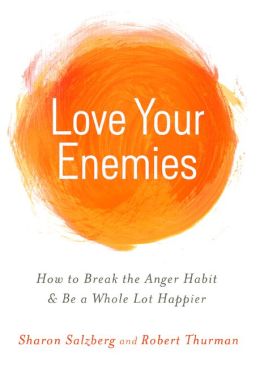
Meditation teacher Sharon Salzberg and Buddhist Scholar Robert Thurman have authored a new book entitle, Love Your Enemies: How to Break the Anger Habit & Be a Whole Lot Happier.  Here is a brief description of the book:
When people and circumstances upset us, how do we deal with them? Often, we feel victimized. We become hurt, angry, and defensive. We end up seeing others as enemies, and when things don’t go our way, we become enemies to ourselves.
 

But what if we could move past this pain, anger, and defensiveness?
 

Inspired by Buddhist philosophy, this book introduces us to the four kinds of enemies we encounter in life: the outer enemy, people, institutions, and situations that mean to harm us; the inner enemy, anger, hatred, fear, and other destructive emotions; the secret enemy, self-obsession that isolates us from others; and the super-secret enemy, deep-seated self-loathing that prevents us from finding inner freedom and true happiness.

In this practical guide, we learn not only how to identify our enemies, but more important, how to transform our relationship to them. Love Your Enemies teaches us how to . . .

  • break free from the mode of “us” versus “them” thinking
  • develop compassion, patience, and love
  • accept what is beyond our control
  • embrace lovingkindness, right speech, and other core concepts
Throughout, authors Sharon Salzberg and Robert Thurman share stories and exercises for achieving finding peace within yourself and with the world. Drawing from ancient spiritual wisdom and modern psychology, Love Your Enemies presents tools that are useful for all readers.
Ms. Salzberg stopped by The Wright Show last week to speak with Robert Wright (The Evolution of God, The Moral Animal: Why We Are, the Way We Are: The New Science of Evolutionary Psychology, and other books) about the new book and the methods of and challenges to loving one's enemies.

Robert Wright and Sharon Salzberg Discuss "Love Your Enemies"

October 27, 2013 | The Wright Show


Robert Wright (Bloggingheads.tv, The Evolution of God, Nonzero) and Sharon Salzberg (SharonSalzberg.com)
Recorded: Oct 23   Posted: Oct 27, 2013
Download:   wmv | mp4 | mp3 | fast mp3

Links:

Thursday, August 29, 2013

Seth Greenland - Why Is America So Angry?

This brief article excerpt by Seth Greenland comes from the September 2013 issue of Shambhala Sun. Greenland asks, and with good reason, Why is America so angry?
Someday, someone will write a book about how we arrived at American apoplexy, but for now let’s be more forward-looking\ and consider what some people are doing about it other than consuming massive levels of prescription medication.
This is only a small part of the whole article, but it offers some thoughts on doing something about the anger instead of simply allowing ourselves to become the anger.

Why Is America So Angry?

Shambhala Sun | September 2013


Someday somebody will explain why we're all so mad these days. But for now, says SETH GREENLAND, let's consider what to do about it. 

When the guy driving the late-model Volvo with a “War Is Not the Answer” bumper sticker gave me the finger, I knew America had taken a wrong turn. The behavior of this hostile L.A. hippie represented more than a traffic kerfuffle. A Volvo with that kind of bumper sticker is a signifier: college graduate, votes Democratic, listens to NPR, and will think about moving to Canada if a Republican becomes president, or at least attend a dinner party where another guest will talk about it. In other words, we are not dissimilar, and we’re reasonable people, aren’t we, this paragon of liberalism and I? And here he was, my sociocultural doppelgänger, thrusting his middle finger at me, bespectacled, professorial face contorted in rage. Yes, I had accidentally cut him off on Olympic Boulevard—He was in my blind spot, Your Honor!—but did the sixties not happen? Did he not at some point also own a vinyl copy of Sweet Baby James? Are we not brothers?

From the perspective of a blue state resident, it’s easy—and facile—enough to ascribe the anger percolating in America to the political ascendancy of the right. The enviable market share of Fox News and the conservative monopoly of AM talk radio all speak to their dominion. But this is misleading. Perhaps the manner in which they express their rage is more colorful (thank you, Tea Party costume department), but, as my Olympic Boulevard encounter illustrates, anger is everywhere. People talk about the mainstream media’s sense of misguided fairness that makes them treat both sides equally, but here is a fact: America is furious.

The left became unhinged when George W. Bush was elected. Admittedly, given the Florida recount, the worst recession in sixty years, and the most foolish American war since, well, ever, there was something to be angry about. But the hatred expressed toward him was profound; it felt new and stronger than the opprobrium heaped on Reagan when he was in office. Interestingly, even with all of the anger toward Bush, the left pretty much stayed home while he was in the White House. There were a few economic demonstrations and some antiwar activity, but it paled compared to how people hit the streets during, say, the Vietnam era.

Charles Krauthammer dubbed this Bush Derangement Syndrome (BDS)— basically ascribing all the world’s ills to the president— and it has become deeper, crazier, and more active now that the virus has migrated from left to right and its symptoms are projected onto President Obama. How else to explain the Tea Partiers, who had no problem with Bush’s vast spending, claiming Obama’s fiscal habits are a danger to the republic? Or the characterization of this barely left-of-center politician who has treated Wall Street with kid gloves as some kind of socialist class warrior and aspiring tyrant? This epic level of anger is most visible on the level of national politics, but it has trickled all the way to the bottom. By bottom I am referring not only to the guy in the Volvo who gave me the finger but also to the comments section of any website that allows them. The Internet has enabled the anger, allowing it to spin like a Catherine wheel, spreading toxicity everywhere.

Why is America so angry?

Someday, someone will write a book about how we arrived at American apoplexy, but for now let’s be more forward-looking\ and consider what some people are doing about it other than consuming massive levels of prescription medication.

One of the things they’re doing is meditating. This explains the rise of what is known as applied mindfulness, which offers practices to develop the capacity to deal with their anger skillfully. People from many religious backgrounds have engaged with this work without giving up their own spiritual identities. They can celebrate the High Holidays and still meditate each morning without annoying their rabbis. They can sing hymns and eat fruitcake at Christmas while still attending their sitting group. Chances are you or someone you know practices a form of meditation. Major universities are researching the effects of these practices. Young children are being taught mindfulness, and not just the ones on Adderall.

Apart from scale, anger is no different on the national level than it is in preschool. When little Emma takes Jacob’s toy truck, Jacob’s anger springs from his thwarted need to possess the object. He is thinking about what he wants, or thinks he wants. Emma, of course, is thinking about what she wants. A fundamental Buddhist belief is that all people want to be happy and, at root, all of our actions, even angry ones, come from that fact. So this kid thinks the truck will make him happy, when really what is probably going to make him happier in the long run is having a friendly relationship with Emma.

Mindfulness, as it happens, is a remarkably effective way to deal with anger. Anger is about my needs. When you get angry, here’s what you’re really screeching: What about ME? The Tea Partiers who hate Obama are really upset because THEIR ideas about economics are so much better, and why doesn’t he see that?

The hostile left-wing Volvo driver might be shocked to hear it, but he’s not so different from Rush Limbaugh: both lack a filter with which to screen their bile. Meditation practice provides this filter by training us to be nonreactive, to consider our actions, to “check in” and directly experience how we feel physically and emotionally before acting on it. They teach us to see the larger world and our place in it more clearly, and to experience what we are feeling with some degree of awareness.

We don’t need to become Buddhists to deal with our anger but everyone can benefit from what Buddhists have learned from millennia of training. These practices are not a panacea or a cure, but a process through which we learn to see our emotions as dynamic and changing. By undertaking this work, we are less likely to give the finger to the next hapless driver who accidentally cuts us off. Or start a war.

That’s right, Volvo Guy. I’m talking to you.


~ Seth Greenland is the author of three novels, including The Angry Buddhist, and was a writer-producer on the HBO series Big Love.

Excerpted from the September 2013 Shambhala Sun magazine. To see what else is in this issue, click here.

Tuesday, November 13, 2012

Secession Petitions Filed on Behalf of Citizens in 30 States (So Far)


Wow, some people seriously cannot stand living in a country with a black man as president. Or maybe it's that he supports caring for each other as citizens and acknowledging that we are interdependent both personally and economically.

According to Huffington Post, citizens in 30 states (or more) have filed petitions to secede from the union. The threshold for White House response is 25,000 signatures in 30 days. As of now, Texas already has 80,000 signatures.
Here's a list of states where residents have filed secession petitions in recent days: Alabama, Alaska, Arizona, Arkansas, California, Colorado, Delaware, Florida, Georgia, Idaho, Illinois, Indiana, Kansas, Kentucky, Louisiana, Michigan, Minnesota, Mississippi, Missouri, Montana, Nebraska, New Hampshire, New Jersey, New Mexico, New York, Nevada, North Carolina, North Dakota, Ohio, Oklahoma, Oregon, Pennsylvania, Rhode Island, South Carolina, South Dakota, Tennessee, Texas, Utah, Virginia, West Virginia, Wisconsin and Wyoming.
This number is way up from 20 states reported earlier today by CBS. Not at all surprised to see Arizona on the list - we think we are Texas's little brother.

Residents In More Than 30 States File Secession Petitions

Posted:

Residents in more than 30 states have filed secession petitions with the "We the People" program on the White House website.

Petitions to strip citizenship of individuals signing onto petitions to secede and exile them have also been submitted.

A threshold of 25,000 signatures must be met within 30 days for petitions to be reviewed. The Obama administration explains, "If a petition meets the signature threshold, it will be reviewed by the Administration and we will issue a response."

Micah H. (no last name provided) of Arlington, Texas filed a petition that had nearly 60,000 signatures as of Tuesday morning. It reads:
The US continues to suffer economic difficulties stemming from the federal government's neglect to reform domestic and foreign spending. The citizens of the US suffer from blatant abuses of their rights such as the NDAA, the TSA, etc. Given that the state of Texas maintains a balanced budget and is the 15th largest economy in the world, it is practically feasible for Texas to withdraw from the union, and to do so would protect it's citizens' standard of living and re-secure their rights and liberties in accordance with the original ideas and beliefs of our founding fathers which are no longer being reflected by the federal government.
Unfortunately for Micah H. and Peter Morrison -- a Texas GOP official who called for an "amicable divorce" from the United States last week -- secession is not in the cards for the Lone Star State.
Texas Gov. Rick Perry (R) sought to distance himself from the petition on Monday. The Dallas Morning News reported that the Republican governor's press secretary wrote in an email, "Gov. Perry believes in the greatness of our Union and nothing should be done to change it. But he also shares the frustrations many Americans have with our federal government."

Tuesday, October 30, 2012

The Sun - Gabor Maté Challenges The Way We Think About Chronic Illness, Drug Addiction, And Attention-Deficit Disorder


This article from the always wonderful The Sun Magazine features an interview of physician Gabor Maté by Tracy Frisch. This is only a part of the interview, the rest is available in the print edition only, but even this is more than you might find in any other magazine. The Sun is the only ad-free magazine that I am aware of, so let's support them by subscribing if you are able and interested.

Among Maté's books are In the Realm of Hungry Ghosts: Close Encounters with Addiction (2010), Scattered: How Attention Deficit Disorder Originates And What You Can Do About It (2000, his first book), and When the Body Says No: Exploring the Stress-Disease Connection (2011, now in paperback).

One of the many things I like about his approach to illness is that he understands biology is not the only possible cause of disease, and in fact it may not even be relevant in some cases (especially, as shown in his own work, attention deficit disorder [ADD] and addiction). 

Here is the beginning of the article:

What Ails Us

Gabor Maté Challenges The Way We Think About Chronic Illness, Drug Addiction, And Attention-Deficit Disorder

by Tracy Frisch

~ TRACY FRISCH lives in Argyle, New York. For almost a decade she ran a sustainable-agriculture organization called the Regional Farm & Food Project. Currently she is a homesteader, community educator, and journalist.

Physician Gabor Maté was born in Nazi-occupied Hungary in 1944 to Jewish parents who were primarily concerned with simple survival. His father was interned in a forced-labor battalion, his aunt disappeared, and his maternal grandparents died in Auschwitz. 

In 1957 Maté and his mother and father immigrated to Canada, and he went on to get a medical degree from the University of British Columbia in Vancouver. He started a private family practice in East Vancouver that lasted for twenty-seven years. While treating patients, he observed that those who had experienced trauma, stress, and anxiety at a young age tended to repress their emotions and also to have more health problems. He also served as medical coordinator of the palliative-care unit at Vancouver General Hospital for seven years. In the late 1990s he took a job working with hiv-positive drug addicts at several innovative urban rehab programs, including one where addicts are given needles and allowed to inject heroin on-site — the only such supervised-injection program in North America. 

With both the chronically ill and addicts, Maté again saw the roots of their problems in “adverse childhood experiences,” such as abuse, neglect, poverty, or parental stress. At a time when medical science was increasingly looking to our dna for the source of many illnesses, Maté was becoming convinced that experiences in our early years play an even greater role in brain development and behavior. The emotional patterns we learn as small children, he says, live on in the cells of our minds and come back to us as adults. 

In his fifties Maté diagnosed himself with attention-deficit disorder [add] — a result, he says, of his early childhood in wartime Hungary. Those difficult formative experiences also led him to become a workaholic and a shopaholic, he believes. He credits mindfulness meditation and therapy with helping him cope.

In his first book, Scattered, Maté makes the case that add is not a genetically inherited disorder but rather is caused by the environment in which one is raised. He proposes the same for addiction in his book In the Realm of Hungry Ghosts. His other titles are When the Body Says No: Exploring the Stress-Disease Connection and, with Dr. Gordon Neufeld, Hold On to Your Kids: Why Parents Need to Matter More Than Peers. Protecting and strengthening the parent-child bond is crucial, Maté says, and he identifies the lack of support for struggling families in the U.S. and Canada as the root cause of many social and healthcare crises. 

For many years Maté wrote a weekly medical column for The Globe and Mail, Canada’s most widely read newspaper. Recently he gave up practicing medicine to focus on his appearances at seminars and conferences, where he discusses disease, addiction, and human development within a social context. Attributing our maladies to heredity is simplistic and disempowering, he says, a distraction from the problems of economic inequality, bad schools, and a declining sense of community.
I met with Maté over dinner in Albany, New York, following one of his intense all-day presentations, at which he’d developed a powerful rapport with an audience of two hundred. It was his fourth program of the week.


Frisch: Medical science has tried to offer genetic explanations for everything from alcoholism to obesity to breast cancer to depression. Why do you think genes can’t account for all our differences?

Maté: The genetic explanation is comfortable because it means that we don’t have to look at people’s lives or the society in which those lives are led for the source of our problems. If addiction is genetic, we don’t have to worry that it’s connected to child abuse, for example.

But studies actually show that, though certain genes might predispose you to addiction, if you grow up in a nurturing environment, those genes are inactive. Most genetic studies completely ignore the science of epigenetics, which is how the environment actually turns certain genes on or off.

Frisch: What led you to become interested in the connection between illness and environmental pressures?

Maté: As a family physician I began to notice that who got sick and who didn’t wasn’t completely random, that people who got sick more often tended to have more stressful lives. And I began to think that the stress had a lot to do with their illnesses.

I am not the first to arrive at that thought, which has been amply validated by research over the decades. Stress is a significant factor in the onset of diabetes, high blood pressure, heart disease, and cancer. But that research is generally not part of medical education. Doctors are trained to understand disease as a random event usually caused by external agents — bacteria, viruses — or genetics. We’re not taught to look at patients’ formative experiences or multigenerational stress patterns. Yet both my own observations and the research literature clearly indicate that you can’t separate people’s bodies from their environments.

Consider all the stresses of life in a society where people feel little sense of control and lots of uncertainty all the time; where people are expected to behave contrary to their true nature; where relationships are often troubled; where parents are not available for their kids because they’re too busy. Under such conditions, you’re more likely to get sick. Nearly 50 percent of American adults have a chronic illness.

On top of that, the U.S. has an inequitable healthcare system that provides good care to some but minimal care to others, and the debilitating expense of healthcare stresses patients further.

Frisch: We all experience stress, but we don’t all get sick. What makes some people more prone to illness than others?

Maté: People who have a chronic illness of any kind — cancer, multiple sclerosis, rheumatoid arthritis, fibromyalgia, inflammatory bowel disease, chronic neurological and skin disorders — often fit certain personality profiles. For example, they tend to pay a lot more attention to the needs of others than to their own. They get caught up in their job or their role as a caregiver rather than looking after themselves. They also tend to suppress the so-called negative emotions, such as sadness and anger. They try not to acknowledge these emotions even to themselves. And, finally, they tend to think they are responsible for how other people feel and to be terrified of disappointing others who are important to them.

So an overwhelming sense of responsibility and self-suppression is what tends to characterize the chronically ill.

Frisch: Have there been studies that support this?

Maté: Yes. In some studies of women who are having breast biopsies, psychologists could predict with relative certainty who would be diagnosed with cancer based purely on personality profiles. They were right as much as 90 percent of the time. The so-called cancer personality has been studied particularly in relationship to multiple melanoma, a type of skin cancer. Of course the personality doesn’t cause the disease, but it does increase your risk of getting it.

Frisch: Are there different personalities for people who have cancer and people who have, say, heart disease?

Maté: Well, there are two kinds of people who are prone to heart disease. One type is the rageful Type A workaholic. After a fit of rage, your chance of having a heart attack or stroke doubles for the next two hours, because your blood pressure is up, your adrenaline is up, clotting factors are increased, and your blood vessels have narrowed. In the long term you’ll suffer high blood pressure, constriction of the arteries, and so on.

The other type of person who gets heart disease is the emotional suppressor. They express no anger at all, not even healthy anger. They tend to get diseases of the heart muscle. Instead of the coronary arteries being damaged by high blood pressure, the cardiac muscle is weakened.

Frisch: Why shouldn’t we make an effort to stay calm? Doesn’t anger hurt relationships?

Maté: To say that we shouldn’t have anger is like saying that we shouldn’t have rain: we may not like getting wet, but without it there’s no irrigation. Healthy anger is a necessary response to a boundary invasion. It’s our way of saying: You’re in my space. Get out. You see this behavior in animals, too. It’s not a question of should or shouldn’t; it’s a part of our makeup. The role of emotion is to keep out that which is dangerous or unhealthy and allow in that which is helpful and healing. So we have anger and revulsion, and we have love and attraction.

Now, rage is always unhealthy. Rage is anger that is disproportionate to the situation. It usually arises from past experiences, not present boundary issues, and it keeps going on and on. It’s not discharged once you’ve protected your boundaries. It’s the result of frustration that’s built up for many years, like a pressure cooker that explodes.

Anger that is repressed can also turn inward. People who repress their anger can actually suppress their immune system, making it turn against itself. When that happens, you’re going to get autoimmune disease. Anger and the immune system have the same purpose: to protect boundaries. The immune system does its job of attacking foreign particles, and anger does its job of keeping out human invasions.

When you suppress your response to a boundary invasion, you’re going to become stressed. If I started rifling through your purse, for instance, and you didn’t object but instead repressed your anger, you’d feel very stressed, because you’d be worried I’d take your money. It takes tremendous energy to suppress emotions. The act itself is stress producing. Self-suppression is not innate. It’s a learned coping style. When you’re a child and your parents can’t handle your feelings, you learn to suppress them to maintain your relationship with your parents. But what was a coping response in the child becomes a source of illness in the adult.

Frisch: Does positive thinking protect people from illness?

Maté: A genuinely positive attitude that’s based on real experience and authentic power does protect people. If you realistically see the world as a place where you can get your needs met most of the time, you’ll be healthier.

The compulsive positive thinker is in trouble, however, because he or she is in denial of reality. Some people are not comfortable with their own pain, so they cover it up with positive thoughts in a desperate attempt to avoid what’s there.

Sunday, July 08, 2012

The Role of Self-Distancing in Enabling Adaptive Self-Reflection


There was a recent article in Medical News Today on self-distancing to temper aggressive reactions, based on research conducted by Dominik Mischkowski, Ethan Kross, and Brad J. Bushman. Kross is from the University of Michigan's Emotions and Self-Control Laboratory (more on this below). Their findings appear online in the Journal of Experimental Social Psychology. [NOTE: The other two researchers are from Ohio State University, proof that differing tribes - who often express mortal hatred on the sports field - can indeed work together in peace.]


With this research, and a whole collection of similar studies, psychology has essentially (re)discovered the Buddhist teachings on non-attachment. If we can avoid becoming identified with our thoughts and feelings, we can remain non-reactive and more able to respond appropriately to the circumstances.

There several other similar studies abstracted below.

Here is the report on the study from Medical News Today. The original research is also available online and the link is at the bottom.

Aggressive Reactions Can Be Tempered By 'Self-Distancing'

Article Date: 04 Jul 2012

A new study reveals a simple strategy that people can use to minimize how angry and aggressive they get when they are provoked by others.

When someone makes you angry, try to pretend you're viewing the scene at a distance - in other words, you are an observer rather than a participant in this stressful situation. Then, from that distanced perspective, try to understand your feelings.

Researchers call this strategy "self-distancing."

In one study, college students who believed a lab partner was berating them for not following directions responded less aggressively and showed less anger when they were told to take analyze their feelings from a self-distanced perspective.

"The secret is to not get immersed in your own anger and, instead, have a more detached view," said Dominik Mischkowski, lead author of the research and a graduate student in psychology at Ohio State University.

"You have to see yourself in this stressful situation as a fly on the wall would see it."

While other studies have examined the value of self-distancing for calming angry feelings, this is the first to show that it can work in the heat of the moment, when people are most likely to act aggressively, Mischkowski said.

The worst thing to do in an anger-inducing situation is what people normally do: try to focus on their hurt and angry feelings to understand them, said Brad Bushman, a co-author of the study and professor of communication and psychology at Ohio State.

"If you focus too much on how you're feeling, it usually backfires," Bushman said.

"It keeps the aggressive thoughts and feelings active in your mind, which makes it more likely that you'll act aggressively."

Mischkowski and Bushman conducted the study with Ethan Kross of the University of Michigan. Their findings appear online in the Journal of Experimental Social Psychology and will be published in a future print edition.

There were two related studies. The first involved 94 college students who were told they were participating in a study about the effects of music on problem solving, creativity and emotions.

The students listened to an intense piece of classical music while attempting to solve 14 difficult anagrams (rearranging a group of letters to form a word such as "pandemonium"). They had only seven seconds to solve each anagram, record their answer and communicate it to the experimenter over an intercom.

But the plan of the study was to provoke the students into anger, which the experimenters did using a technique which has been used many times in similar studies.

The experimenter interrupted the study participants several times to ask them to speak louder into the intercom, finally saying "Look, this is the third time I have to say this! Can't you follow directions? Speak louder!"

After this part of the experiment, the participants were told they would be participating in a task examining the effects of music on creativity and feelings.

The students were told to go back to the anagram task and "see the scene in your mind's eye." They were put into three groups, each of which were asked to view the scene in different ways.

Some students were told to adopt a self-immersed perspective ("see the situation unfold through your eyes as if it were happening to you all over again") and then analyze their feelings surrounding the event. Others were told to use the self-distancing perspective ("move away from the situation to a point where you can now watch the event unfold from a distance - watch the situation unfold as if it were happening to the distant you all over again") and then analyze their feelings. The third control group was not told how to view the scene or analyze their feelings.

Each group was told the replay the scene in their minds for 45 seconds.

The researchers then tested the participants for aggressive thoughts and angry feelings.

Results showed that students who used the self-distancing perspective had fewer aggressive thoughts and felt less angry than both those who used the self-immersed approach and those in the control group.

"The self-distancing approach helped people regulate their angry feelings and also reduced their aggressive thoughts," Mischkowski said.

In a second study, the researchers went further and showed that self-distancing can actually make people less aggressive when they've been provoked.

In this study, 95 college students were told they were going to do an anagram task, similar to the one in the previous experiment. But in this case, they were told they were going to be working with an unseen student partner, rather than one of researchers (in reality, it actually was one of the researchers). In this case, the supposed partner was the one who delivered the scathing comments about following directions.

As in the first study, the participants were then randomly assigned to analyze their feelings surrounding the task from a self-immersed or a self-distanced perspective. Participants assigned to a third control group did not receive any instructions regarding how to view the scene or focus on their feelings.

Next, the participants were told they would be competing against the same partner who had provoked them earlier in a reaction-time task. The winner of the task would get the opportunity to blast the loser with noise through headphones - and the winner chose the intensity and length of the noise blast.

The findings showed that participants who used the self-distancing perspective to think about their partners' provocations showed lower levels of aggression than those in the other two groups. In other words, their noise blasts against their partner tended to be shorter and less intense.

"These participants were tested very shortly after they had been provoked by their partner," Mischkowski said.

"The fact that those who used self-distancing showed lower levels of aggression shows that this technique can work in the heat of the moment, when the anger is still fresh."

Mischkowski said it is also significant that those who used the self-distancing approach showed less aggression than those in the control group, who were not told how to view the anger-inducing incident with their partner.

This suggests people may naturally use a self-immersing perspective when confronted with a provocation - a perspective that is not likely to reduce anger.

"Many people seem to believe that immersing themselves in their anger has a cathartic effect, but it doesn't. It backfires and makes people more aggressive," Bushman said.

Another technique people are sometimes told to use when angered is to distract themselves - think of something calming to take their mind off their anger.

Mischkowski said this may be effective in the short-term, but the anger will return when the distraction is not there.

"But self-distancing really works, even right after a provocation - it is a powerful intervention tool that anyone can use when they're angry." 
* * * * * * *

Flies on the wall are less aggressive: Self-distancing “in the heat of the moment” reduces aggressive thoughts, angry feelings and aggressive behavior

Dominik Mischkowski, Ethan Kross, Brad J. Bushman
ABSTRACT:

People tend to ruminate after being provoked,which is like using gasoline to put out a fire—it feeds the flame by keeping aggressive thoughts and angry feelings active. In contrast, reflecting over past provocations from a self-distanced or “fly on the wall” perspective reduces aggressive thoughts and angry feelings. However, it is unclear whether people can self-distance “in the heat of the moment” (i.e., immediately after being provoked), and if they can, whether doing so reduces actual aggressive behavior. Two experiments addressed these issues. The results indicated that provoked participants who self-distanced had fewer aggressive thoughts and angry feelings (Experiment 1) and displayed less aggressive behavior (Experiment 2) than participants who self-immersed or were in a control group. These findings demonstrate that people can self-distance in the heat of the moment, and that doing so reduces aggressive thoughts, angry feelings, and aggressive behavior.
* * * * * * *

This feels like an important skill to teach clients - and perhaps an approach that feels less Buddhist (being mindful, non-attachment) or spiritual (the observing self, or witness). Some clients seem to have a harder time when the idea is presented in that kind of terminology.

But self-distancing? Makes perfect sense.

So I did a little Googling and found that Ethan Kross is the primary researcher in this field, and that many of his articles are freely available online from the U of Michigan's Emotions and Self-Control Laboratory.

Here are some of the papers and links - abstracts only (in no particular order).

Analyzing Negative Experiences Without Ruminating: The Role of Self-Distancing in Enabling Adaptive Self-Reflection


Ozlem Ayduk and Ethan Kross
Social and Personality Psychology Compass 4/10 (2010): 841–854.
doi: 10.1111/j.1751-9004.2010.00301.x

ABSTRACT:

Both common intuition and findings from multiple areas of research suggest that when faced with distressing experiences, it is helpful to understand one’s feelings. However, a large body of research also indicates that people’s attempts to make sense of their feelings often backfire, leading them to ruminate and feel worse. In this article, we describe a program of research that focuses on disentangling these seemingly contradictory sets of findings. The research program we describe proposes that psychological distance from the self plays a key role in determining whether people’s attempts to understand their feelings lead to adaptive or maladaptive self-reflection. It suggests that people’s attempts to understand their feelings often fail because they analyze their feelings from a self-immersed perspective rather than a self-distanced perspective. Empirical evidence from multiple levels of analysis is presented to support this prediction. The basic science and clinical implications of these findings are discussed.

* * * * * * *

From a Distance: Implications of Spontaneous Self-Distancing for Adaptive Self-Reflection

Ozlem Ayduk and Ethan Kross
Journal of Personality and Social Psychology, 2010, Vol. 98, No. 5, 809–829.
DOI: 10.1037/a0019205

ABSTRACT

Although recent experimental work indicates that self-distancing facilitates adaptive self-reflection, it remains unclear (a) whether spontaneous self-distancing leads to similar adaptive outcomes, (b) how spontaneous self-distancing relates to avoidance, and (c) how this strategy impacts interpersonal behavior. Three studies examined these issues demonstrating that the more participants spontaneously self-distanced while reflecting on negative memories, the less emotional (Studies 1–3) and cardiovascular (Study 2) reactivity they displayed in the short term. Spontaneous self-distancing was also associated with lower emotional reactivity and intrusive ideation over time (Study 1). The negative association between spontaneous self-distancing and emotional reactivity was mediated by how participants construed their experience (i.e., less recounting relative to reconstruing) rather than avoidance (Studies 1–2). In addition, spontaneous self-distancing was associated with more problem-solving behavior and less reciprocation of negativity during conflicts among couples in ongoing relationships (Study 3). Although spontaneous self-distancing was empirically related to trait rumination, it explained unique variance in predicting key outcomes.
* * * * * * *

Boosting Wisdom: Distance From the Self Enhances Wise Reasoning, Attitudes, and Behavior

Ethan Kross and Igor Grossmann
Journal of Experimental Psychology: General. Advance online publication, July 4, 2011.
doi: 10.1037/a0024158

ABSTRACT:

Although humans strive to be wise, they often fail to do so when reasoning over issues that have profound personal implications. Here we examine whether psychological distance enhances wise reasoning, attitudes and behavior under such circumstances. Two experiments demonstrate that cueing people to reason about personally meaningful issues (Study 1: Career prospects for the unemployed during an economic recession; Study 2: Anticipated societal changes associated with one’s chosen candidate losing the 2008 U.S. Presidential election) from a distanced perspective enhances wise reasoning (dialecticism; intellectual humility), attitudes (cooperation-related attitude assimilation), and behavior (willingness to join a bipartisan group).
* * * * * * *

Making Meaning out of Negative Experiences by Self-Distancing

Ethan Kross and Ozlem Ayduk
Current Directions in Psychological Science, 2011, 20(3) 187-191.
DOI: 10.1177/0963721411408883

ABSTRACT:

Both common wisdom and findings from multiple areas of research suggest that it is helpful to understand and make meaning out of negative experiences. However, people’s attempts to do so often backfire, leading them to ruminate and feel worse. Here we attempt to shed light on these seemingly contradictory sets of findings by examining the role that self-distancing plays in facilitating adaptive self-reflection. We begin by briefly describing the ‘‘self-reflection paradox.’’ We then define self-distancing, present evidence from multiple levels of analysis that illustrate how this process facilitates adaptive self-reflection, and discuss the basic science and practical implications of this research.
* * * * * * *

The Relationship Between Self-Distancing and the Duration of Negative and Positive Emotional Experiences in Daily Life

Philippe Verduyn, Iven Van Mechelen, Ethan Kross, Carmen Chezzi, and Femke Van Bever
Emotion. Online First Publication, May 28, 2012. 
doi: 10.1037/a0028289

ABSTRACT:

Extant research suggests that self-distancing facilitates adaptive self-reflection of negative emotional experiences. However, this work operationalizes adaptive self-reflection in terms of a reduction in the intensity of negative emotion, ignoring other important aspects of emotional experience such as emotion duration. Moreover, prior research has predominantly focused on how self-distancing influences emotional reactivity in response to reflecting on negative experiences, leaving open questions concerning how this process operates in the context of positive experiences. We addressed these issues by examining the relationship between self-distancing and the duration of daily negative and positive emotions using a daily diary methodology. Discrete-time survival analyses revealed that reflecting on both daily negative (Studies 1 and 2) and positive events (Study 2) from a self-distanced perspective was associated with shorter emotions compared with reflecting on such events from a self-immersed perspective. The basic science and clinical implications of these findings are discussed.
Saturday, November 19, 2011

Rick Hanson, Ph.D. - Stay Right When You're Wronged

Rick Hanson, Ph.D., is a neuropsychologist and author of the bestselling "Buddha's Brain: The Practical Neuroscience of Happiness, Love, and Wisdom" (in 21 languages) and "Just One Thing: Developing a Buddha Brain One Simple Practice at a Time." Founder of the Wellspring Institute for Neuroscience and Contemplative Wisdom and Affiliate of the Greater Good Science Center at UC Berkeley, he's taught at Oxford, Stanford, and Harvard, and in meditation centers worldwide. His work has been featured on the BBC, NPR, Consumer Reports Health, and "U.S. News and World Report" and he has several audio programs. His blog, "Just One Thing," has nearly 30,000 subscribers and suggests a simple practice each week that will bring you more joy, more fulfilling relationships, and more peace of mind and heart. If you wish, you can subscribe to "Just One Thing" here.


Stay Right When You're Wronged


Think of times you've been truly wronged, in small ways or big ones. Maybe someone stole something, turned others against you, broke an agreement, cheated on you or spoke unfairly or abusively.

When things like these happen, I feel mad, hurt, startled, wounded, sad. Naturally it arises to want to strike back and punish, get others to agree with me, and make a case against the other person in my own mind.

These feelings and impulses are normal. But what happens if you get caught up in reactions and go overboard? (Which is different from keeping your cool, seeing the big picture and acting wisely -- which we'll explore below.) There's usually a release and satisfaction, and thinking you're justified. It feels good.

For a little while.

But bad things usually follow. The other person overreacts, too, in a vicious cycle. Other people -- relatives, friends, co-workers -- get involved and muddy the water. You don't look very good when you act out of upset, and others remember. It gets harder to work through the situation in a reasonable way. After the dust settles, you feel bad inside.

As the Buddha said long ago, "Getting angry with another person is like throwing hot coals with bare hands: both people get burned." You can see much the same thing internationally. Gandhi put it so well: "An eye for an eye makes the whole world blind."

Sure, you need to clarify your position, stand up for yourself, set boundaries, speak truth to power. The art -- and I'm still working on it, myself! -- is to do these things without the fiery excesses that have bad consequences for you, others, and our fragile planet.

How?

Start by getting centered, which often takes just a dozen seconds or so:
  • Pause -- You rarely get in trouble for what you don't say or do. Give yourself the gift of time, even just a few seconds.
  • Have compassion for yourself -- This a moment of feeling "Ouch, that hurts, I wish this hadn't happened." A neurologically savvy trick for activating self-compassion is to first recall the feeling of being with someone who cares about you.
  • Get on your own side -- This means being for yourself, not against others. It can help to remember a time when you felt strong, like doing something that was physically challenging, or sticking up for someone you loved.
  • Make a plan -- Start figuring out what you're going to do, or at least where you'll start.

And now that you're on firmer ground, here are some practical suggestions; use the ones you like:
  • Clarify the facts -- What actually happened?
  • Rate the bad event accurately -- On a 0-10 awfulness scale (a dirty look is a 1 and nuclear war is a 10), how bad was it, really? If the event is a 3 on the awfulness scale, why have emotional reactions that are a 5 (or 9!) on the 0-10 upset scale?
  • See the big picture -- Recognize the OK aspects of the situation mixed up with the bad ones. Put the situation in the larger context of unrelated good things happening for you, and your lifetime altogether. See the biggest picture of all: how your experiences are continually changing and it's not worth getting all caught up in them.
  • Reflect about the other person -- Consider the "10,000 causes" upstream that led him or her to do whatever happened. Be careful about assuming it was intentional; much of the time you're just a bit player in other people's drama. Try to have compassion for them, which will make you feel better. If applicable, take responsibility for your own part in the matter (but don't blame yourself unfairly). You can have compassion and forgiveness for others while still considering their actions to be morally wrong.
  • Do what you can, concretely -- As possible, protect yourself from people who wrong you; shrink the relationship to the size that is safe. Get support; it's important for others to "bear witness" when you've been mistreated. Build up your resources. Get good advice -- from a friend, therapist, lawyer or even the police. As appropriate, pursue justice.
  • Act with unilateral virtue -- Live by your code even if others do not. This will make you feel good, lead others to respect you, and create the best chance that the person who wronged you will treat you better in the future.
  • Say what needs to be said -- There is a good formula from the field of "nonviolent communication": "When X happens (stated objectively; not "When you are a jerk."), I feel Y (emotions; not "I feel you are an idiot."), because I need Z (Deep needs like, "to be safe, respected, emotionally close to others, autonomous and not bossed around.").

Then, if it would be useful, you can make a request for the future. Some examples: "If I bother you, could you talk with me directly?" "Could you not swear at me?" "Could you treat your agreements with me and your children as seriously as you do those at work?"
  • Move on -- For your own sake, start releasing your angry or hurt thoughts and feelings. Stop your mind from obsessing about the past, and focus on the present and future. Turn toward what is going well, what you're grateful for. Do things that feel pleasurable.
In the garden of your life, you have to pull some weeds, sure, but mainly focus on planting flowers.
  • Be at peace -- All you can really do is what you can do. Others are going to do whatever they do, and realistically, sometimes it won't be that great. Many people disappoint: They've got a million things swirling around in their head, life's been tough, there were issues in their childhood, their ethics are fuzzy, their thinking is clouded, etc. It's the real world, and cannot be perfected.
You have to find peace in your heart, not out there in the world. A peace that comes from seeing clearly, from building up and focusing on good things in your own garden, and from letting go.