Showing posts with label Google. Show all posts

Sunday, March 30, 2014

Rebecca Goldstein, Plato at the Googlepex - Authors@Google


Philosopher-novelist Rebecca Goldstein (wife of Steven Pinker) has a new book out, Plato at the Googleplex: Why Philosophy Won't Go Away (2014). Recently, she stopped by Google to talk about her new book.

Rebecca Goldstein - Authors@Google

Published on Mar 27, 2014

Goldstein returns to Google, this time with Plato, to talk about her new book.
Abstract from Goldstein's site: "At the heart of the latest work from acclaimed philosopher and novelist Rebecca Newberger Goldstein lies one question: is philosophy obsolete? In PLATO AT THE GOOGLEPLEX (Pantheon Books/March 4, 2014), Goldstein proves why philosophy is here to stay -- and in fact more relevant today than ever before -- by revealing its hidden (though essential) role in today's debates on religion, morality, politics, and science. Goldstein does so in a wholly unique way -- by imagining Plato (the original philosopher) come to life in the twenty-first century. As he embarks on a multicity speaking tour, Goldstein asks: how would Plato handle a host on FOX News who denies that there can be morality without religion? How would he mediate a debate between a Freudian psychoanalyst and a Tiger Mom on how to raise the perfect child? How would he answer a neuroscientist who, about to scan Plato's brain, argues that science has definitively answered the questions of free will and moral agency? And what would Plato make of Google, and the idea that knowledge can be crowdsourced rather than reasoned out by experts? Goldstein also provides an in-depth study of Plato's views, while examining the culture responsible for producing them. With scholarly depth and a novelist's imagination and wit, she probes the deepest issues confronting our time, by allowing us to understand the source of Plato's theories, and to eavesdrop as he takes on the modern world."

Friday, March 28, 2014

Authors at Google: Dan Siegel - The Adolescent Brain and the Essence of Life


Dr. Dan Siegel stopped by Google earlier this month to talk about his newest book, Brainstorm: The Power and Purpose of the Teenage Brain (2013). Here is a synopsis of the book:
Between the ages of 12 and 24, the brain changes in important, and oftentimes maddening, ways. It’s no wonder that many parents approach their child’s adolescence with fear and trepidation. According to renowned neuropsychiatrist Daniel Siegel's New York Times bestseller Brainstorm, if parents and teens can work together to form a deeper understanding of the brain science behind all the tumult, they will be able to turn conflict into connection and form a deeper understanding of one another.
In Brainstorm, Siegel illuminates how brain development impacts teenagers’ behavior and relationships. Drawing on important new research in the field of interpersonal neurobiology, he explores exciting ways in which understanding how the teenage brain functions can help parents make what is in fact an incredibly positive period of growth, change, and experimentation in their children’s lives less lonely and distressing on both sides of the generational divide.

Brainstorm is a New York Times bestseller and current nominee for a Books for a Better Life award.
Enjoy the talk!

Dan Siegel - The Adolescent Brain and the Essence of Life

Published on Mar 27, 2014


Dan Siegel visited Google LA to discuss his book "Brainstorm - The Power and Purpose of the Teenage Brain." This talk took place on March 10, 2014.

Saturday, March 15, 2014

Elizabeth Kolbert, "The Sixth Extinction: An Unnatural History" | Talks at Google


Elizabeth Kolbert is the author of The Sixth Extinction: An Unnatural History, and she was recently at Google to talk about her new book. Here is the publisher's blurb for the book:
A major book about the future of the world, blending intellectual and natural history and field reporting into a powerful account of the mass extinction unfolding before our eyes.

Over the last half a billion years, there have been five mass extinctions, when the diversity of life on earth suddenly and dramatically contracted. Scientists around the world are currently monitoring the sixth extinction, predicted to be the most devastating extinction event since the asteroid impact that wiped out the dinosaurs. This time around, the cataclysm is us. In The Sixth Extinction, two-time winner of the National Magazine Award and New Yorker writer Elizabeth Kolbert draws on the work of scores of researchers in half a dozen disciplines, accompanying many of them into the field: geologists who study deep ocean cores, botanists who follow the tree line as it climbs up the Andes, marine biologists who dive off the Great Barrier Reef. She introduces us to a dozen species, some already gone, others facing extinction, including the Panamian golden frog, staghorn coral, the great auk, and the Sumatran rhino. Through these stories, Kolbert provides a moving account of the disappearances occurring all around us and traces the evolution of extinction as concept, from its first articulation by Georges Cuvier in revolutionary Paris up through the present day. The sixth extinction is likely to be mankind's most lasting legacy; as Kolbert observes, it compels us to rethink the fundamental question of what it means to be human.
Human activity has so quickly increased the rate of extinction on this planet that we will be the primary cause of the sixth extinction . . . what a dubious honor.

Elizabeth Kolbert, "The Sixth Extinction: An Unnatural History" | Talks at Google

Published on Mar 13, 2014


Over the last half a billion years, there have been five mass extinctions, when the diversity of life on earth suddenly and dramatically contracted. Scientists around the world are currently monitoring the sixth extinction, predicted to be the most devastating extinction event since the asteroid impact that wiped out the dinosaurs. This time around, the cataclysm is us.

Wednesday, February 26, 2014

Authors@Google: George R.R. Martin (Game of Thrones)


This appearance at Google was from 2011, but I just discovered it. When it first aired, Game of Thrones had probably just started on HBO, but certainly did not have the following it has now.

I should probably offer a spoiler alert, but hell, we're all adults here. Take care of your own needs.

Authors@Google: George R.R. Martin

Uploaded on Aug 6, 2011


George R. R. Martin, the acclaimed author of the Game of Thrones novels -- also a recent hit HBO series -- came to Google for a live-streamed interview where he answered your questions submitted online. The interview, part of the Authors@Google series as well as Martin's book tour promoting his latest novel A Dance with Dragons, took place on July 28th at 12pm PDT.

Martin is a bestselling author most famous for his A Song of Ice and Fire fantasy series of novels that has been adapted to the popular HBO drama Game of Thrones. Time magazine has dubbed him an "American Tolkien". In his series, Martin creates a rich world populated by a large cast of intriguing characters and interwoven storylines.

It should come as no surprise that in addition to technology, Googlers love things like dragons and fantasy worlds, and we also love meeting talented writers like Martin.

Tuesday, February 18, 2014

Omnivore - Hacking Society

From Bookforum's Omnivore blog, this collection of links is from the end of 2013. Among the topics here are technology, social constructs, social networks, digital democracy, and how Google and Amazon own the world (sort of).

Hacking Society

Dec 24 2013 
9:00AM

Saturday, February 01, 2014

Google Has Acquired AI Start-Up DeepMind - What Are They Planning?

Via Live Science, who re-posted an article originally from The Conversation, this is an op-ed by Matthew Higgs about Google's acquisition of the artificial intelligence start-up DeepMind.

Hmmm . . . Ray Kurzweil + Boston Dynamics (robotics) + DeepMind (artificial intelligence) . . . . Google is planning to upload Ray into an intelligent robot that is immortal?

What Does Google Want with DeepMind? Here are Three Clues (Op-Ed)

By Matthew Higgs, University College London | January 30, 2014

 
The golden age of AI is upon us. Credit: kidpixo.

This article was originally published at The Conversation. The publication contributed the article to LiveScience's Expert Voices: Op-Ed & Insights.

All eyes turned to London this week, as Google announced its latest acquisition in the form of DeepMind, a company that specialises in artificial intelligence technologies. The £400m pricetag paid by Google and the reported battle with Facebook to win the company over indicate that this is a firm well worth backing.

Although solid information is thin on the ground, you can get an idea of what the purchase might be leading to, if you know where to look.

Clue 1: what does Google already know?


Google has always been active in artificial intelligence and relies on the process for many of its projects. Just consider the “driver” behind its driverless cars, the speech recognition system in Google Glass, or the way its search engine predicts what we might search for after just a couple of keystrokes. Even the page-rank algorithm that started it all falls under the banner of AI.

Acquiring a company such as DeepMind therefore seems like a natural step. The big question is whether Google is motivated by a desire to help develop technologies we already know about or whether it is moving into the development of new technologies.

Given its track record, I’m betting on the latter. Google has the money and the drive to tackle the biggest questions in science, and developing computers that think like humans has, for a long time, been one of the biggest of them all.

Clue 2: what’s in the research?


The headlines this week have described DeepMind as a “secretive start-up”, but clues about what it gets up to at its London base can be gleaned from some of the research publications produced by the company’s co-founder, Demis Hassabis.

Hassabis' three most recent publications all focus on the brain activity of human participants as they undergo particular tasks. He has looked into how we take advantage of our habitat, how we identify and predict the behaviour of other people and how we remember the past and imagine the future.

As humans, we collect information through sensory input and process it many times over using abstraction. We extract features and categorise objects to focus our attention on the information that is relevant to us. When we enter a room we quickly build up a mental image of the room, interpret the objects in the room, and use this information to assess the situation in front of us.

The people at Google have, until now, generally focused on the lower-level stages of this information processing. They have developed systems to look for features and concepts in online photos and street scenes to provide users with relevant content, systems to translate one language to another to enable us to communicate, and speech recognition systems, making voice control on your phone or device a reality.

The processes Hassabis investigates require these types of information processing as prerequisites. Only once you have identified the relevant features in a scene and categorised objects in your habitat can you begin to take advantage of your habitat. Only once you have identified the features of someone’s face and recognised them as a someone you know can you start to predict their behaviour. And only once you have built up vivid images of the past can you extrapolate a future.

Clue 3: what else is on the shopping list?


Other recent acquisitions by Google provide further pieces to the puzzle. It has recently appointed futurist Ray Kurzweil, who believes in search engines with human intelligence and being able to upload our minds onto computers, as its director of engineering. And the purchase of Boston Dynamics, a company developing ground breaking robotics technology, gives a hint of its ambition.

Google is also getting into smart homes in the hope of more deeply interweaving its technologies into our everyday lives. DeepMind could provide the know-how to enable such systems to exhibit a level of intelligence never seen before in computers.

Combining the machinery Google already uses for processing sensory input with the ideas under investigation at DeepMind about how the brain uses this sensory input to complete high-level tasks is an exciting prospect. It has the potential to produce the closest thing yet to a computer with human qualities.

Building computers that think like humans has been the goal of AI ever since the time of Alan Turing. Progress has been slow, with science fiction often creating false hope in people’s minds. But these past two decades have seen unimaginable leaps in information processing and our understanding of the brain. Now that one of the most powerful companies in the world has identified where it wants to go next, we can expect big things. Just as physics had its heyday in the 20th century, this century is truly the golden age of AI.

Matthew Higgs receives funding from the EPSRC.

This article was originally published at The Conversation. Read the original article. The views expressed are those of the author and do not necessarily reflect the views of the publisher. This version of the article was originally published on LiveScience.


Editor's Recommendations

Tuesday, January 28, 2014

Dr. Temple Grandin: Authors At Google


Dr. Temple Grandin comes to Google to talk about her book: The Autistic Brain: Thinking Across the Spectrum.

Dr. Temple Grandin: Authors At Google

Published on Jan 18, 2014


When Temple Grandin was born in 1947, autism had only just been named. Today it is more prevalent than ever, with one in 88 children diagnosed on the spectrum. And our thinking about it has undergone a transformation in her lifetime: Autism studies have moved from the realm of psychology to neurology and genetics, and there is far more hope today than ever before thanks to groundbreaking new research into causes and treatments. Now Temple Grandin reports from the forefront of autism science, bringing her singular perspective to a thrilling journey into the heart of the autism revolution.

Weaving her own experience with remarkable new discoveries, Grandin introduces the neuroimaging advances and genetic research that link brain science to behavior, even sharing her own brain scan to show us which anomalies might explain common symptoms. We meet the scientists and self-advocates who are exploring innovative theories of what causes autism and how we can diagnose and best treat it. Grandin also highlights long-ignored sensory problems and the transformative effects we can have by treating autism symptom by symptom, rather than with an umbrella diagnosis. Most exciting, she argues that raising and educating kids on the spectrum isn't just a matter of focusing on their weaknesses; in the science that reveals their long-overlooked strengths she shows us new ways to foster their unique contributions.

From the "aspies" in Silicon Valley to the five-year-old without language, Grandin understands the true meaning of the word spectrum. The Autistic Brain is essential reading from the most respected and beloved voices in the field.

Tuesday, December 10, 2013

Ray Kurzweil and the Brains Behind the Google Brain (Big Think)

Ah, Ray Kurzweil . . . he's so brilliant in some respects and so misguided in others. Kurzweil has predicted, and indeed made a bet with Mitchell Kapor (of $20,000), that we will develop a conscious computer (one that can pass the Turing test) by 2029. Pardon me while I laugh hysterically for a few minutes. Ahem . . . you can read both men's arguments at the link above.

There are other reasons I find Kurweil laughable, but they are not relevant to this post.

What is relevant is that he has teamed up with the brain-trust at Google to try to create an intelligent machine, which gives him better odds than if he was on his own.


Ray Kurzweil and the Brains Behind the Google Brain

by Big Think Editors
December 8, 2013
Time was when Google engineers spent all their days counting links and ranking pages. The company's famous algorithm made it the leading search engine in the world. Admittedly, it was far from perfect. That is why current efforts are aimed at developing ways for computers to read and understand natural language.

Enter Ray Kurzweil, an inventor and expert in artificial intelligence. Kurzweil's goal is ostensibly to help the company improve the accuracy of its search results, but that is certainly not all. Kurzweil, after all, is one of the world's leading advocates of "hard AI," or the development of consciousness in an artificial being. Kurzweil believes this will come about in 2029, to be specific.

So in addition to Google's development of autonomous cars and its aggressive play in robotic delivery systems, the company is also looking to build an artificial brain, aka "The Google Brain." As Steven Levy notes on Wired, this is a fact that "some may consider thrilling and others deeply unsettling. Or both."

Kurzweil is collaborating with Jeff Dean to find the brain's algorithm, and Kurzweil says the reason he is at Google is to take full advantage of the company's deep learning resources.

In the video below, Kurzweil outlines three tangible benefits that he expects to come out of this project. Beyond building more intelligent machines, if we are able to reverse-engineer the brain, we will be able to do a better job at fixing it. We will also gain more insight into ourselves, he says. After all, "our identity, our consciousness, the concept of free will is closely associated with the brain."

Watch the video here:


Image courtesy of Shutterstock
* * * * *

Deep Learning


by Big Think Editors
The Big Idea for Sunday, December 08, 2013

A smart machine, if given enough data, can teach teach itself to recognize patterns and mimic the way that the human brain behaves.

In today's lesson, Ray Kurzweil provides insights into the work he is doing at Google. His ostensible goal is to help the company develop a better search engine that can process natural language. But the potential benefits of discovering the brain's algorithm go much further than that. The more we understand about the brain, Kurzweil says, the better we are able to fix it. Moreover, the brain is at the center of our understanding of human identity, and our notions of consciousness and free will.


Perspectives

1 Ray Kurzweil and the Brains Behind the Google Brain
Big Think Editors Big Think TV

2 Reverse-Engineering the Brain
Dr. Joy Hirsch

3 The Ghost in the Machine: Unraveling the Mystery of Consciousness
Megan Erickson Think Tank

4 The Most Amazing Race: Reverse-Engineering the Brain
Daniel Honan Think Tank

by Big Think Editors

Tuesday, October 01, 2013

Marc Lesser: "Know Yourself, Forget Yourself" | Authors at Google


Marc Lesser is the author of Know Yourself, Forget Yourself: Five Truths to Transform Your Work, Relationships, and Everyday Life and he stopped by Google headquarters recently to talk about the book.


Know Yourself, Forget Yourself

Published on Sep 30, 2013

Marc Lesser stopped by Google to chat about his new book "Know Yourself, Forget Yourself: Five Truths to Transform Your Work, Relationships, and Everyday Life"

Our brains seek order and resist the unexpected, inconsistent, and counter-intuitive. But life is more often paradoxical than predictable — which is why formulas for fulfillment and success often fail. Instead of fighting the tide of contradiction and confusion, Marc Lesser asserts, we can learn to understand and even embrace them using the simple tools he presents in these pages. Readers learn to master five core competencies:
  • Know Yourself, Forget Yourself
  • Be Confident, Question Everything
  • Fight for Change, Accept What Is
  • Embrace Emotion, Embody Equanimity
  • Benefit Others, Benefit Yourself
The result is balance, a version of Buddhism's "middle way," which prompts understanding of what is required in any given moment and actions through which we skillfully "dance" with paradox in enriching and joyful ways. Bolstered by the latest in neuroscience, this guide is nuanced and direct, profound and practical.

* * * * *
Marc Lesser is the CEO, founder and serves on the board of Search Inside Yourself Leadership Institute (SIYLI). Marc is a long term Zen student and teacher. He is the author of Know Yourself, Forget Yourself, as well as Less: Accomplishing More By Doing Less, and Z.B.A. Zen of Business Administration; How Zen Practice Can Transform Your Work and Your Life.

He was the founder and former CEO of Brush Dance, a publisher of greeting cards, calendars and gift items, with spiritual themes and artwork. He spent 15 years taking Brush Dance from an idea in his garage to a multi-million dollar publishing company, with distribution throughout the U.S. and the world.

He facilitates retreats for CEO’s, business leaders, and management teams. Has been co-leading Company Time retreats for business leaders for the past 10 years.

Saturday, August 03, 2013

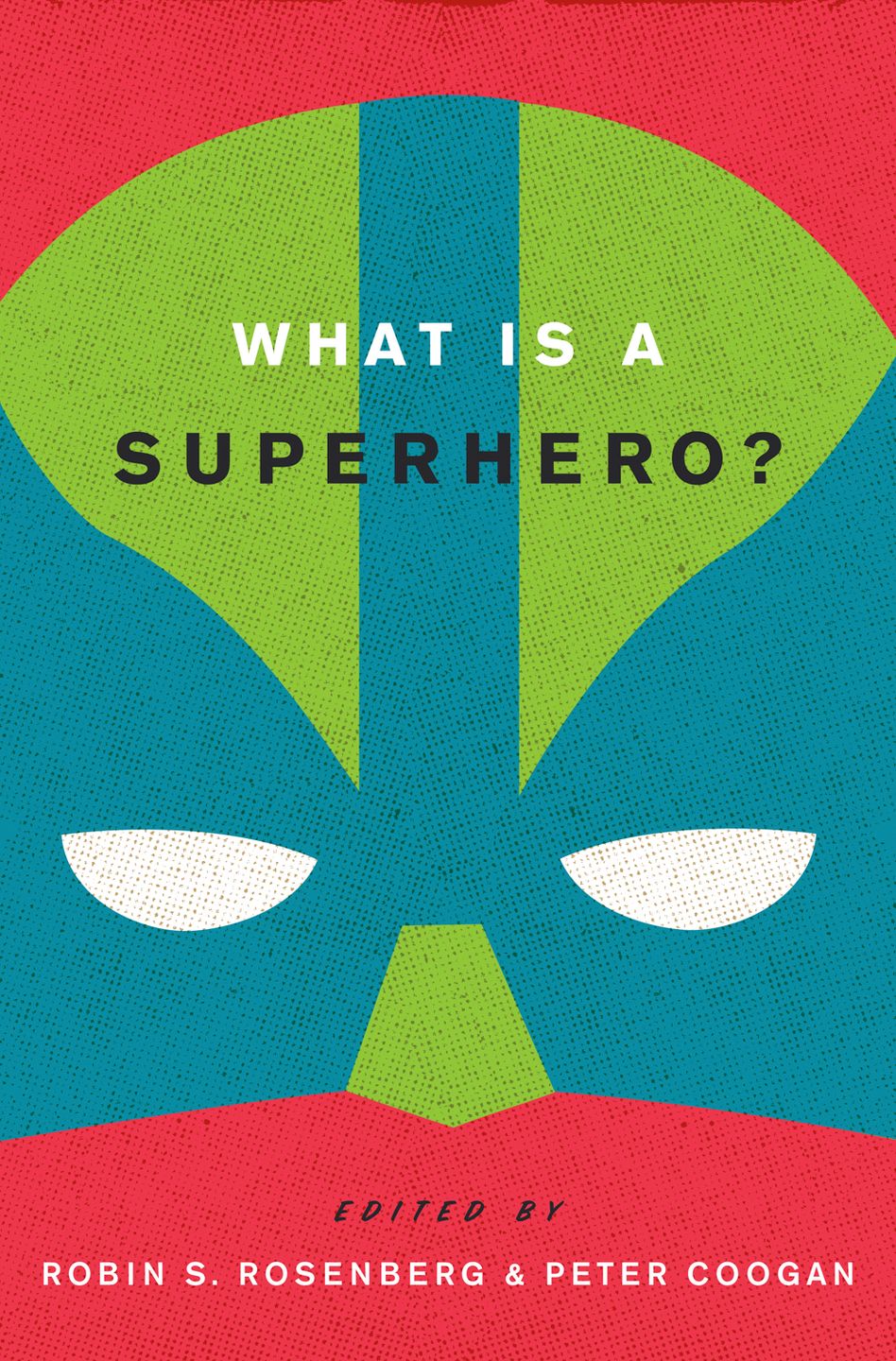
Robin Rosenberg, "What is a Superhero" | Talks at Google


Robin Rosenberg is the author of What Is a Superhero? She recently stopped by Google to talk about the book and the nature of superheroes.

Robin Rosenberg, "What is a Superhero" | Talks at Google


Published on Aug 2, 2013

What is a superhero? Everyone knows, right? And yet everyone seems to have a different answer. If asked, most people will say that a superhero is a fictional character with "superhuman" abilities or powers — and one who uses those abilities for the common good. Some might add that superheroes wear costumes. But this is only part of the story.

In this innovative collection of essays, renowned psychologist Robin Rosenberg and comics scholar Peter Coogan explore the question "What is a superhero?" from a variety of viewpoints. What is the role of power and superpower? Heroism? The environment? How is the superhero a metaphor? Perhaps most intriguing, what are super villains and why do we need them? These and many other fascinating topics are taken up in this exciting new book. With essays from scholars and commentary by the writers and creators themselves, including exclusive material from Stan Lee, Danny Fingeroth, and their peers, What is a Superhero? is the first volume to provide a true synthesis and reflection of the state of superheroes in our culture today.

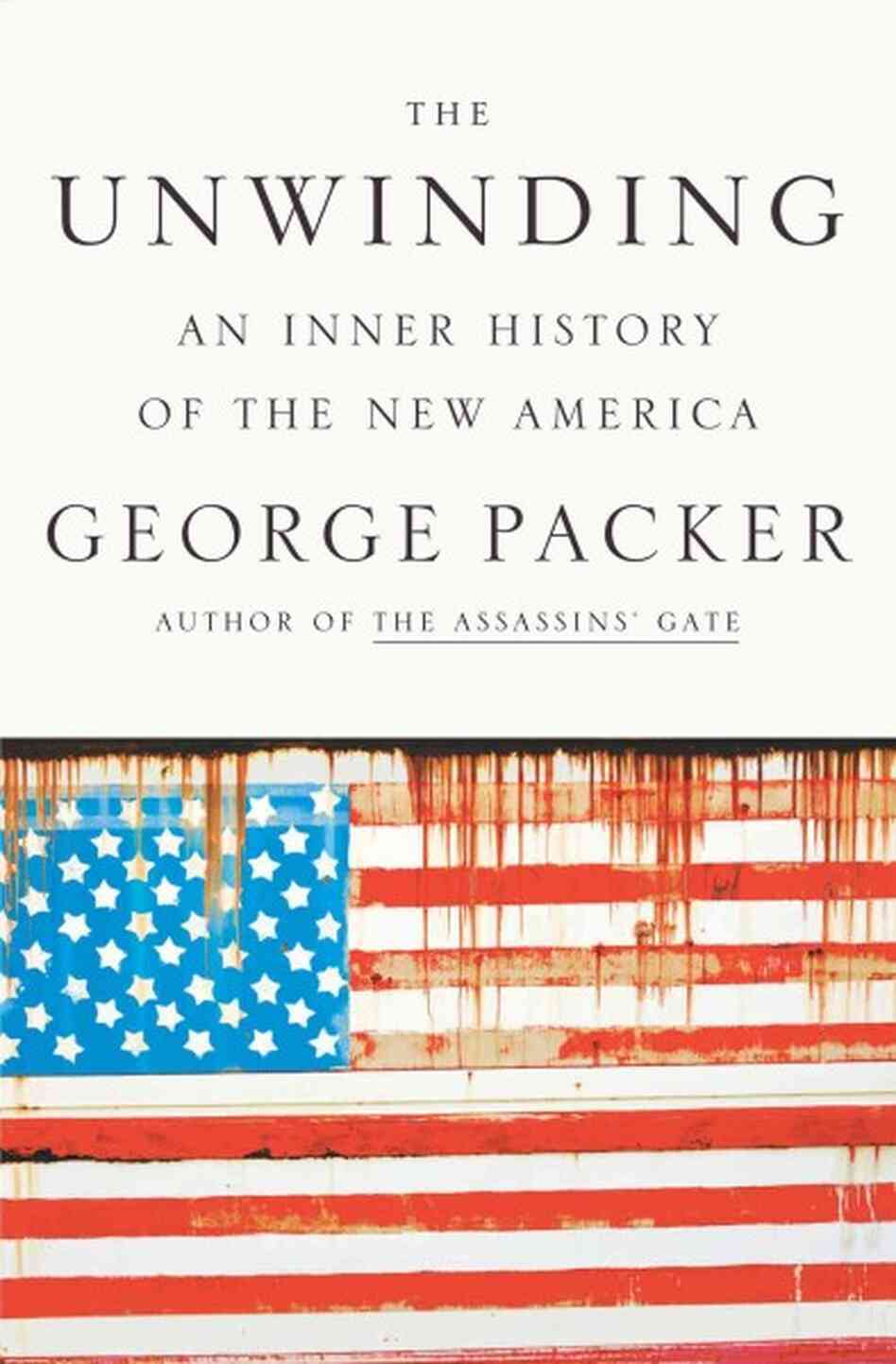
The Unwinding with George Packer - Conversations with History


George Packer recently stopped by Google to speak about his new book, The Unwinding: An Inner History of the New America. Here is a synopsis of the book from Amazon:
A riveting examination of a nation in crisis, from one of the finest political journalists of our generation 
American democracy is beset by a sense of crisis. Seismic shifts during a single generation have created a country of winners and losers, allowing unprecedented freedom while rending the social contract, driving the political system to the verge of breakdown, and setting citizens adrift to find new paths forward. In The Unwinding, George Packer, author of The Assassins’ Gate: America in Iraq, tells the story of the United States over the past three decades in an utterly original way, with his characteristically sharp eye for detail and gift for weaving together complex narratives. 
The Unwinding journeys through the lives of several Americans, including Dean Price, the son of tobacco farmers, who becomes an evangelist for a new economy in the rural South; Tammy Thomas, a factory worker in the Rust Belt trying to survive the collapse of her city; Jeff Connaughton, a Washington insider oscillating between political idealism and the lure of organized money; and Peter Thiel, a Silicon Valley billionaire who questions the Internet’s significance and arrives at a radical vision of the future. Packer interweaves these intimate stories with biographical sketches of the era’s leading public figures, from Newt Gingrich to Jay-Z, and collages made from newspaper headlines, advertising slogans, and song lyrics that capture the flow of events and their undercurrents. 
The Unwinding portrays a superpower in danger of coming apart at the seams, its elites no longer elite, its institutions no longer working, its ordinary people left to improvise their own schemes for success and salvation. Packer’s novelistic and kaleidoscopic history of the new America is his most ambitious work to date.
Sounds like an interesting book.

The Unwinding with George Packer - Conversations with History


Published on Aug 1, 2013

Harry Kreisler welcomes George Packer for a discussion of his new book, "The Unwinding: An Inner History of the New America." Packer discusses his formative experiences, including forging his own political identity and coming to terms with the legacy of his progressive grandfather and his liberal father. He then recounts the influence of his mother on his writing and his odyssey—Peace Corps, construction, working with the homeless, and membership in the socialist party-- that led him to writing as a vocation. After sketching the skills and temperament of a writer, Packer describes the origins of his new book and its architecture. He then discusses the two groups of men and women whose personal narratives his book explores and relates how their lives give insight into the unwinding of the American dream. The discussion offers a compelling portrait of the inner history of the new America defined by glaring inequality and the collapse of institutions. Series: "Conversations with History" [8/2013]

Saturday, June 29, 2013

Consciousness: The Missing Link by Radhanath Swami, Talks at Google

Not really my view on consciousness, but who knows, at this point, what consciousness really is or how it works . . . and why?

His book is The Journey Home: Autobiography of an American Swami (2010). Here is a little article from Radhanath Swami's site:

Three Planes of Consciousness

April 30, 2013


Essentially there are three planes of consciousness: enjoyment, renunciation and devotion.

1. Enjoyment

In order to survive, the environment is geared towards exploitation. Why? Because of selfishness. We put ourselves in the center and this results in conflict as everyone has a different center.

2. Renunciation

It is taught that there can be no peace in this material existence because everything is temporary and there is so much conflict. To renounce everything and have a deep dreamless sleep – no more pain and suffering, everything is just peaceful! Yet death is not the end, so the problem is that you are going to be reborn according to your karma.

3. Devotion

This path recognizes that the highest of all solutions is to understand who we are, who is our origin and to live in harmony with that. We are meant to serve and to be selfless. To put God in the center and eternally be connected to Him. Harmony is there because we have a common interest.

The path of devotion transforms the material world to the spiritual world through consciousness. We need to find the spiritual world within ourselves – to find the love, peace, compassion within ourselves and to be instruments of that within the world - Radhanath Swami


Consciousness: The Missing Link by Radhanath Swami, Talks at Google


Published on Jun 28, 2013

Despite decades of advancement in science and technology, we are somehow facing increasingly complex problems to solve -- both individual and collective -- even in the most affluent nations: identity issues, high divorce rates, unexpected violence, high school dropouts, teenage pregnancy, environmental crisis, energy shortage, unemployment rates, unstable economy, rising healthcare costs, etc. Why and where is the disconnect ?

The Vedic model of consciousness that's described in the ancient Sanskrit texts of India provides dramatically fresh insights into the root cause of these problems -- and their solutions -- in the most unexpected way. In this talk, Radhanath Swami will explore the inner workings of consciousness based on this model and discuss its application in the modern day context.

Speaker's Bio:
Radhanath Swami is a renowned Vedic scholar, a highly respected bhakti-yoga teacher and author. As a counter-cultural young American teenager, he left a promising career behind 40 years ago and hitchhiked all the way across the world in search of deeper meaning of life. Convinced from his world travels that the fundamental problems of the society are simply caused by basic human frailties irrespective of race, nationality, sex or economic status, he dedicated his life to the exploration of solutions to the world's problems through advancement of human consciousness. He is currently based in New York and travels frequently giving presentations and workshops at universities, corporate venues, community, yoga and cultural centers.

Thursday, June 06, 2013

Lenny Ravich - Humor and Laughter for Happier life, Improved Self Esteem, and Peak Performance


I often give my clients a homework assignment - find some way, any way you can, to laugh and smile and laugh some more. It's cool to see that others are also promoting the healing power of laughter.

There's also a whole movement around Laughter Yoga.


Talks@Google APAC Presents: Lenny Ravich


Published on Jun 4, 2013

At the age of 76, Lenny still travels the world, facilitating workshops and lectures on the subject of "Humor and Laughter for Happier life, Improved Self Esteem, and Peak Performance". Lenny stop by Google Singapore for an afternoon of humor, relaxation and tips on how to be happier. This event happened took place on May 22nd, 2013.

Lenny is considered one of the world's leading spiritual leaders with a rare combination of mastery in Gestalt, humor, and lifetime experiences as an educator and an actor. Lenny is also certified as a Laughter Leader by the World Laughter Tour and is a member of the Association for Applied and Therapeutic Humor.

Thursday, May 16, 2013

Organizing the World's Scientific Knowledge to make it Universally Accessible and Powerful


Very interesting, though intensely geeky, talk - "In this high-level talk, we describe a powerful, new knowledge engineering framework for describing scientific observations within a broader strategic model of the scientific process. We describe general open-source tools for scientists to model and manage their data in an attempt to accelerate discovery."

Gully Burns is project leader in the Information Sciences Institute's Information Integration Group, as well as a Research Assistant Professor of neurobiology at USC's College of Letters, Arts and Sciences. He maintains a personal blog called 'Ars-Veritatis, the art of truth'.


Organizing the World's Scientific Knowledge to make it Universally Accessible and Powerful

Published on May 7, 2013

Google Tech Talk
April 30, 2013
Presented by: Gully Burns

ABSTRACT

Not all information is created equal. Accurate, innovative scientific knowledge generally has an enormous impact on humanity. It is the source of our ability to make predictions about our environment. It is the source of new technology (with all its attendant consequences, both positive and negative). It is also a continuous source of wonder and fascination. In general, the value and power of scientific knowledge is not reflected in the scale and structure of the information infrastructure used to house, store and share this knowledge. Many scientists use spreadsheets as the most sophisticated data management tool and only publish their data as PDF files in the literature. 
In this high-level talk, we describe a powerful, new knowledge engineering framework for describing scientific observations within a broader strategic model of the scientific process. We describe general open-source tools for scientists to model and manage their data in an attempt to accelerate discovery. Using examples focussed on the high-value challenge problem: finding a cure for Parkinson's Disease, we present a high-level strategic approach that is both in-keeping with Google's vision and values and could also provide a viable new research that would benefit from Google's massively scalable technology. Ultimately, we present an informatics research initiative for the 21st century: 'Building a Breakthrough Machine".

Speaker Info

Gully Burns develops pragmatic biomedical knowledge engineering systems for scientists that (a) provide directly useful functionality in their everyday use and (b) is based on innovative, cutting edge computer science that subtlely transforms our ability to use knowledge. He was originally trained as a physicist at Imperial College in London before switching to do a Ph.D. in neuroscience at Oxford. He came to work at USC in 1997, developing the 'NeuroScholar' project in Larry Swanson's lab before joining the Information Sciences Institute in 2006. He now works as project leader in ISI's Information Integration Group, as well as a Research Assistant Professor of neurobiology at USC's College of Letters, Arts and Sciences. He maintains a personal blog called 'Ars-Veritatis, the art of truth', and is very interested in seeing how his research in developing systems for scientists could translate to helping and supporting understanding and our use of knowledge in everyday life.