TEDxCambridge - June Gruber - The Dark Side of Happiness
Sunday, January 22, 2012
TEDxCambridge - June Gruber - The Dark Side of Happiness
Yale psychologist June Gruber asks whether, in a culture obsessed with pursuing happiness, it's possible to have too much of a good thing.
TEDxCambridge - June Gruber - The Dark Side of Happiness
TEDxCambridge - June Gruber - The Dark Side of Happiness


New Light on Dark Energy
From UCTelevision, filmed at the Berkeley Cosmology Lab.
New Light on Dark Energy
New Light on Dark Energy
Is dark energy really accelerating the universe? Join Andrew Fraknoi and three Berkeley Lab cosmologists as they delve into nature's greatest mystery. Greg Aldering explores type 1 supernovae. Shirley Ho measures the cosmos through baryon oscillation and Eric Linder asks out of the box questions about the cosmos; could it be something even stranger than dark energy driving the universe? Series: "Science at the Theater" [2/2012]
On Anniversary of Citizens United, Group Says Occupy the Courts
From Common Dreams . . . . I'm not sure that there is much we can do about the Citizen's United decision. We need Congress to overturn the decision with legislation, and they will NEVER do that (they are the only people who benefit from the decision). The Court will not - and probably is not able to - reverse their own decision in the absence of a case that justifies the reversal.
“Corporate personhood and money equals political speech are court-created doctrines"
The coalition Move to Amend has called for a day of action today to occupy federal courthouses across the country, including the U.S. Supreme Court, to mark the second anniversary of the Citizens United vs. FEC ruling.

CNN reports on the timing of the action:
The event is being held around the two-year anniversary of the Supreme Court decision in the case of Citizens United v. Federal Election Commission, which removed many limits to corporate spending in federal political campaigns, organizers say.The 2010 ruling made it legal for groups to raise and spend unlimited amounts of money for a candidate, as long as the group does not coordinate with the candidate or contributed directly to his or her campaign.It allowed for the rise of Super PACs, which can raise unlimited funds from corporations.Politico reports:
“Why the courts? Because frankly folks, that’s the scene of the crime,” said David Cobb, an organizer of Friday’s protests. “Corporate personhood and money equals political speech are court-created doctrines. We the people never decided it; our elected representatives didn’t decide it; ordinary people like me and you never decided it. The court created these doctrines and it’s going to take a movement to overturn it.”One tweeter's picture this morning shows barricades going up around the Supreme Court building.
Saturday, January 21, 2012
Helen Vendler - Wallace Stevens as an American Poet

From Stanford University, Helen Vendler (one of our greatest living literary critics) speaks about Wallace Stevens, one of our greatest poets.
Wallace Stevens as an American Poet
January 17, 2012 - Helen Vendler, one of the leading American poetry critics, as well as a distinguished professor in Harvard University's Department of English, discusses Wallace Stevens, the poet. She dives into some of his work in order to show why he is one of the finest American poets to set ink to paper. Wallace Stevens was born in 1879 and died in 1955 and was awarded a Pulitzer prize that same year.
Alva Noë - Story Telling And The 'Uncanny Valley'
In this most recent entry at NPR's 13.7 Cosmos and Culture blog, philosopher Alva Noë looks at animation, narrative, and psychological reality.
Storytelling And The 'Uncanny Valley'
January 20, 2012
 Warner Brothers: Hero Boy — played by Tom Hanks — in The Polar Express
Many an animated character wouldn't seem so unreal and dead if it didn't seem so real and alive!
This is a puzzle that has long troubled animators. If you saw Robert Zemeckis' The Polar Express, you know what I'm talking about. Remember the dead eyes of the characters, their zombie-like vacancy?
Animators do an excellent job bringing the nonhuman to life on the screen — think of WALL-E, or the enchanted broomsticks in Fantasia, not to mention Mickey Mouse himself — but they falter with the more realistically human. And isn't hard to see why.
As Lawrence Weschler, who takes up this topic in the lead essay of his excellent new book Uncanny Valley: Adventures in Narrative, puts it:
"When a replicant's almost completely human, the slightest variance, the 1 percent that's not quite right, suddenly looms up enormously rendering the entire effect somehow creepy and monstrously alien (no longer, that is, an incredibly lifelike machine but rather a human being with something inexplicably wrong ..."This precipitous drop off in psychological reality, or in normalcy, as you get close to verisimilitude, but not close enough, was first dubbed "the uncanny valley" in 1970 by the Japanese roboticist Masahiro Mori.
As Weschler suggests, good story telling (supported by effective sound and music) is enough to make even the dumbest doorstop think and feel on the screen. So maybe the uncanny valley has something to do with storytelling?
This is certainly not the preferred approach, which targets technology and the human perceptual system, rather than art, to explain the uncanny valley. The preferred approach goes like this:
What makes animation possible in the first place is our evolved tendency to see mind where there is none (on a sock puppet, or in a line drawing). This tendency runs counter to another basic cognitive trait, our natural hyper-sensitivity to even the most subtle inflections of face, posture, movement. The uncanny valley opens up because these two dispositions collide: we experience the mind behind the animated humanlike face — just as we can project mind onto a teddy bear — but we can't help but experience it as in some way deviant; as "a human being with something inexplicably wrong."
Two interesting upshots. First, on this approach, if animators want to bridge the uncanny valley, they'd better find a way to cover that last 1 percent; they'd better find ways more effectively to replicate that complex choreography of eyes, skin, bone, mouth and muscle that is the genuine, animate human face.
Second, there's no obstacle in principle to bridging the valley. It's just a matter of time, money and research collaboration between animators and cognitive scientists.
Now I find the suggestion that our experience of a narrative work of art could be the result of the blind operation of the visual system highly implausible. Remember, we aren't talking about real face perception here. We're talking about animated movies. We're talking about story telling! Maybe Weschler is right that story telling is the key.
Consider this: the story-telling art forms — here, for the sake of brevity, I consider only film, writing and animated film — are each driven by and capitalize on different feelings, different stances, different kinds of desires on the part of the audience.
The basic impulse driving film as a storytelling art is the impulse to look, see, and watch; when it comes to film, we like to peep and spy. Film is the voyeuristic art. Of course we know, intellectually, that what we see, when we watch a film, is the work of directors, producers, technicians, etc. But the thrill, the magic, the excitement of the movies comes from the feeling that we have a transparent window onto the lives of others. Our primitive stance is that of the witness.
Fiction writing is altogether different. We may read fiction with voracious appetites, but when we do so we do not take up the stance of the voyeur, at least not typically. No, fiction is an act of telling and what we encounter, or seem to encounter, when we read a novel, is the story teller. I don't mean the author, or even, necessarily, the narrator. Exactly who or what we encounter is very often in no way self-evident and the fun may stem from working it out. It remains the case, though, that what is revealed to us, exposed, in works of fiction, is not worlds that we seem directly to experience, as in the case of film, but, rather, the mind of the teller. Fiction is a testimonial art (and whereas film is a cult of the actor, fiction is a cult of the writer).
Now we come to cartoons. They occupy a third position still. The underlying impulse behind our fascination with animation is not the impulse to watch, nor is it the impulse to understand the story or the story teller; it is, rather, the impulse to play. Cartoons put us in the mood for play, and we do not so much watch as we participate. Cartoons are the playful art.
Back to the uncanny valley. A movie like The Polar Express traps us in a kind of rhetorical contradiction. In so far as the characters resemble living human beings, we are invited to take an interest in them; we feel the impulse to watch them; we are invited to take up the stance to them that would be appropriate to live-action movies. But in so far as we are watching what is manifestly an animated film, then we are at one and the same time pulled to take up the altogether opposed attitude appropriate to animation, that namely of viewing the characters as mere play things. We're caught in a rhetorical contradiction: real living human beings are not play things; toys are not the sort of thing we are thrilled to watch.
Cartoons don't give us glimpses of worlds, they give us worlds to play in and toys to play with. Live-action movies, in contrast, don't give us opportunities to play; they give us access to hidden worlds. Here, then, is what I propose: the uncanny valley yawns not when animators fall short in their rendering of the human body — even if in fact they do — but rather when they get confused about what kinds of stories they are telling: Are they inviting audiences to play, or giving them an opportunity to watch? In this confusion, the story dies, and with it, the light in the eyes of the characters.
You can keep up with more of what Alva Noë is thinking on Facebook and Twitter.
Bookforum - What Has Happened to Occupy Wall Street?
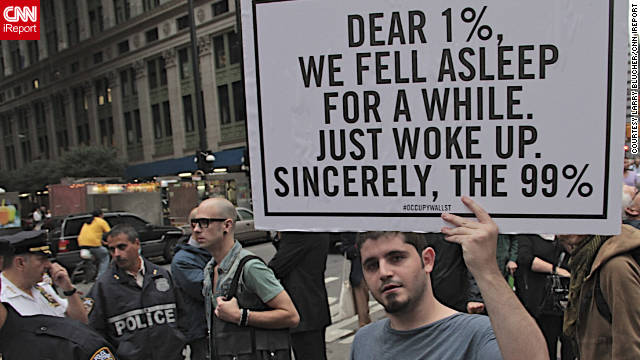
Occupy Wall Street, and all its local manifestations, has fallen off the media radar in recent weeks and months. America's short attention span is partly to blame (or at least the media's encouragement of it), but there was also the movement's own tendency toward hippie extravagance (hacky sack, Frisbee, drugs, and other nonsense).
But the people who really care about change, who want to make a more equitable system, have been continuing the work behind the scenes. This collection of articles - assembled by Bookforum - checks in with where the movement is now.
What has happened to Occupy Wall Street?
JAN 19 2012 9:00AM

- From The Nation, a special section on Occupying the Safety Net, including Frances Fox Piven on what the Occupy movement could do for poor people — and vice versa.
- Occupy the Cloud: What Occupy Wall Street can take from Gov 2.0.
- From Jacobin, Mike Beggs on Occupy economics.
- Wealthy financiers are trying to turn the Occupy movement into a rich vs. poor debate — what they still don't understand is that Americans don't hate the rich, they hate the rich in finance.
- At Occupy Wall Street, an unlikely mix of students, vets, bankers, regulators and academics are planning alternative financial institutions — including an Occupy bank (and more).
- Is Occupy Wall Street strapped for cash?
- Louis Rene Beres on Occupy Wall Street, Adam Smith, and the Wealth of Nations.
- From The Awl, Lauren Kirchner on Occupy Scandinavia's long winter.
- From Counterpunch, what if Occupiers armed themselves?
- In the year of protests, is it really fair to compare the grievances of the Occupy movement to the courage of the Arab Spring?
- Occupy Wall Street has been quiet since the November evictions, but the 2012 elections will give it a chance to have a lasting impact.
- What has happened to Occupy Wall Street?
Friday, January 20, 2012
Be Here Now - How Is the Popular Mix of Meditation and Psychotherapy Changing the Way We See the World?
Today on NPR's Science Friday, Ira Flatow spoke with clinical psychologist Mark William about his new book, Mindfulness: An Eight-Week Plan for Finding Peace in a Frantic World (written with Danny Penman and Jon Kabat-Zinn).
Meanwhile, at the beginning of the month, Psychotherapy Networker published an article by Ronald Siegel on the explosion of interest in the influence of Buddhist teachings on psychotherapeutic practice.
First up the NPR piece, then the Ron Siegel article below.
Meanwhile, at the beginning of the month, Psychotherapy Networker published an article by Ronald Siegel on the explosion of interest in the influence of Buddhist teachings on psychotherapeutic practice.
First up the NPR piece, then the Ron Siegel article below.
There was no transcript for the segment, so you'll have to listen to it. Meanwhile, here is the Ron Siegel article.January 20, 2012In his book Mindfulness: An Eight-Week Plan for Finding Peace in a Frantic World, Oxford University clinical psychologist Mark Williams talks about the brain and body benefits of mindfulness meditation, a cognitive behavioral therapy that can be as effective as drugs at staving off recurring bouts of depression.
Read the whole article.January 4, 2012 | Psychotherapy Networker | Ronald SiegelTwenty-five years ago, when our small group of Boston therapists began meeting to discuss how we might apply ancient Buddhist meditation practices in our work, we didn’t often mention it to our colleagues. Most of us had trained or were working in Harvard Medical School facilities, and the atmosphere there was heavily psychoanalytic. None of us wanted our supervisors or clinical teammates to think of us as having unresolved infantile longings to return to a state of oceanic oneness—Sigmund Freud’s view of the meditation enterprise.
At that time, Buddhist meditation was becoming more popular in America, and intensive meditative retreat centers were multiplying. The new centers often were staffed by Western teachers, many of whom had first encountered meditation in the Peace Corps and later trained in monastic settings in the East. Some of our group had studied in Asia; others had been trained by these newly minted Western teachers. Regardless of our backgrounds, what we shared was that we’d all experienced how radically meditation practices could transform the mind.
Therapists of the day typically viewed meditation as either a fading hippie pursuit or a useful means of relaxation, but of little additional value. Meditation teachers had their own biases toward psychotherapy, typically regarding it as a “lesser practice,” which might prepare someone for meditation but couldn’t really liberate the mind. So those of us who were involved in both domains, and viewed them as complementary, largely kept to ourselves.
During the subsequent decade, while the therapy and meditation communities continued to show little interest in each other, mindfulness meditation was making inroads into the medical community. This was largely through the efforts of Jon Kabat-Zinn, who, beginning in 1979, had adapted ancient Buddhist and yogic practices to create Mindfulness-Based Stress Reduction (MBSR) at the University of Massachusetts Medical Center in Worcester. This standardized, 8-week course couched meditation practices in Western, scientific terms. Their working definition of mindfulness—“the awareness that emerges through paying attention on purpose, and nonjudgmentally, to the unfolding of experience moment to moment”—made the concept readily accessible.
In its early years, MBSR was used primarily to augment the treatment of stress-related medical disorders, and was of particular interest to clinicians working in behavioral medicine. It wasn’t considered a form of psychotherapy, and MBSR teachers weren’t necessarily psychotherapists. In Boston and other psychoanalytically oriented cities, therapists were finding other developments more compelling. The zeitgeist was shifting toward biological psychiatry and short-term treatment. Cognitive-Behavioral Therapy (CBT) began to gain traction, along with a variety of systemic and humanistic approaches. Meditation practices received little attention.
Mindfulness Meets Psychotherapy
The first use of mindfulness in psychotherapy to capture widespread attention among clinicians was Marsha Linehan’s Dialectical Behavior Therapy (DBT), introduced in the early 1990s to treat suicidal individuals with complex disorders for which little else seemed to work. The central dialectic in DBT is the tension between acceptance and change. In searching for a means of helping therapists and their clients to experience what she called “radical acceptance”—fully embracing helplessness, terror, losses, and other painful facts of life—Linehan drew on a number of mindfulness practices from Zen traditions and Christian teachings. Because she empirically demonstrated that DBT could help challenging and volatile patients, the method rapidly became popular. Interest in it grew throughout the 1990s, but even though mindfulness skills were a core part of its approach, mindfulness practices still didn’t gain much acceptance within the wider therapy community.
The next big development came from Zindel Segal, Mark Williams, and John Teasdale, cognitive psychologists in the tradition of Aaron Beck, who were working on treatments for depression in the 1990s. They came across mindfulness practice through Jon Kabat-Zinn and MBSR, and were struck by its power. This led them to formulate a treatment, eventually called Mindfulness-Based Cognitive Therapy (MBCT), which combined elements of an 8-week MBSR course with cognitive therapy interventions designed to help patients gain perspective on their thinking and not identify with their depressive thoughts. The first results of their work, published in 2000, were dramatic: for patients who’d suffered three or more major depressive episodes, attending an MBCT group cut their relapse rate by 50 percent over the next year. Since not many interventions in our field cut anything in half, this caught the attention of the CBT community and piqued interest in mindfulness practices.
Around the same time, Steven Hayes and his colleagues had been developing behavior therapies based on a radical philosophical orientation that they called “relational frame theory.” They didn’t initially describe their work as mindfulness-oriented, but as the word began to be used in behavioral-research circles, they started to adopt it. Their treatment is called Acceptance and Commitment Therapy (ACT), which they describe as a psychological intervention that uses acceptance and mindfulness strategies, together with commitment and behavior change strategies, to increase psychological flexibility. ACT doesn’t teach many formal meditation practices, but uses imagery, metaphor, and brief exercises to cultivate awareness of the present, loosen identification with thought, and increase openness to the experience of moment-to-moment change. Beyond these more traditional mindfulness practices, ACT encourages clients to identify and pursue activities that give life meaning.
Bookforum - Why is religion still alive?
This interesting collection of links was posted by Bookforum on January 9th, so I am more than a little behind in my reading.
I especially enjoyed the Elaine Pagels Edge Master Class (from 2011) and the Julian Baggini article, as well as the review of the new Jesse Bering book.

I especially enjoyed the Elaine Pagels Edge Master Class (from 2011) and the Julian Baggini article, as well as the review of the new Jesse Bering book.
- Brian Ribeiro (Tennessee): The Problem of Heaven.
- From Review of Biblical Literature, a review of The Gospel "According to Homer and Virgil": Cento and Canon by Karl Olav Sandnes; and a review of The Bible in/and Popular Culture: A Creative Encounter.
- Is the Bible a reliable moral guide? (and a response).
- No Christian should ever have a least favorite book of the Bible — all Scripture is God-breathed — but it is perfectly permissible, and even desirable, to have a favorite book of the Bible.
- An interview with John Shelby Spong, author of Reclaiming the Bible for a Non-Religious World.
- Why did Jesus talk in parables? What Jesus' unique (and often confusing) ministry shows us about our own stories.
- Fringe view: James F. McGrath on the world of Jesus mythicism.
- An interview with Miguel De La Torre, author of The Quest for the Historical Satan.
- Ronald Dworkin on Einstein’s worship, faith and physics, and religion without God.
- From The Pomegranate, a review of Sacred Terror: Religion and Horror on the Silver Screen by Douglas E. Cowan.
- Why is religion still alive? Elaine Pangels investigates.
- Julian Baggini sets out on a pilgrimage towards the truth, picking his way past the noisome swamp of New Atheist controversies, and skirting the forbidding crags of fundamentalism.
- A review of Where the Conflict Really Lies: Science, Religion and Naturalism by Alvin Plantinga.
- From New Humanist, a review of The God Instinct: The Psychology of Souls, Destiny and the Meaning of Life by Jesse Bering; some secularists believe that any communication with believers amounts to collaboration — Paul Sims isn’t so sure; and social scientist Olivier Roy has been tracking religion for three decades — Caspar Melville talks to him about his new book Holy Ignorance.
Hana Owen - BAKHTINIAN THOUGHT AND THE DEFENCE OF NARRATIVE: OVERCOMING UNIVERSALISM AND RELATIVISM

Very interesting article from Cosmos and History: The Journal of Natural and Social Philosophy, vol. 7, no. 2, 2011. Bakhtin's narrative theory is one of the foundational ideas beneath Dialogic Self Theory as developed by Hermans, so it has been of particular interest to me. For some reason, I never really paid much attention to this material in my literary theories classes in my first go-round of grad school.
BAKHTINIAN THOUGHT AND THE DEFENCE OF NARRATIVE: OVERCOMING UNIVERSALISM AND RELATIVISM.
Hana M. Owen
ABTRACT: In light of recalcitrant global problems such as the prevalence of various levels and forms of inequality and increased environmental destruction, there is a growing recognition of the limitations, epistemological, political, social, cultural, ethical and ecological, of the modes of thought that have dominantly governed and continue to govern our worldview. The modernist project, despite various attempts to give voice to those previously denied, has come under criticism for tendencies to totalise experience and overlook or exclude differences. On the other hand, the postmodernist glorification of difference and tendency to isolate and fragment has generated a kind of debilitating uncertainty in the form of absolute relativism rendering any pursuit of meaning meaningless. Alongside the recognition of these limitations are attempts to overcome the negative effects of these modes of understanding and to create new ways of understanding ourselves, our relationship to others, human and non-human and to the larger world process in which we find ourselves. Despite the supposed opposition between the modern and postmodern projects, the two share in common the tendency to undermine another mode of understanding that by its very nature both precludes and succeeds them. The mode of understanding referred to is narrative understanding which has the potential to pave a middle way between modernity’s totalising exclusions and postmodernity’s fragmenting nihilism, furthermore when the narrative approach is seriously undertaken it becomes clear that the formerly polarised dominant modes of thought are part of a wider, more heterogeneous process. The following article examines and highlights in detail some of the problems surrounding the modern and postmodern modes of thought in order to demonstrate the usefulness of narrative theory in overcoming these problems. In order to augment the defence of narrative theory this article also draws considerably from the work of Mikhail Bakhtin whose philosophy, it will be argued, both compliments and enhances narrative understanding and has considerable potential for generating a more inclusive and creative understanding of humanity, its relationships to others and to the world in which it is inextricably linked.
The following essay examines and highlights in detail some of the problems surrounding the modern and post-modern modes of thought in order to demonstrate the usefulness of narrative theory in overcoming these problems. In particular, it argues that the abstract theories of both modernism and postmodernism are unfruitful for understanding humans as a process of becoming and tend to either limit humans to egoistic individuals or hinder the development of identity through fragmentation and relativism. It will be argued that modernity, through its tendency to totalise, excludes other modes of understanding and the postmodern response to this totalisation, an utter respect for and celebration of difference, has rendered the search for any kind of meaning unintelligible. In order to overcome these limitations and to augment the defence of narrative theory this article draws considerably from the work of Mikhail Bakhtin whose philosophy both compliments and enhances narrative understanding and has considerable potential in generating a more inclusive and creative understanding of humanity, our relationships to others and to the world in which we are inextricably linked. Through recognition of the dialogism inherent in the world, this article seeks neither to discredit nor destroy the two modes of thought in question, but to overcome their limitations and to recognise these modes of thought as apart of a wider process of interactive, intersubjective and creative becoming. Rather than accepting the modern dogmatism of absolute truths or the postmodern scepticism towards truth, it will be argued that narrative understanding, alongside Bakhtin’s dialogism, allow for truth to be provisional and alterable in light of an ever expanding horizon of understanding.
In light of continuing global issues including the prevalence of various levels and forms of inequality and increased environmental destruction, there is a growing recognition of the limitations, epistemological, political, social, cultural, ethical and ecological, of the modes of thought that have dominantly governed and continue to govern our worldview. Alongside the recognition of these limitations are attempts to overcome the negative affects of these modes of understanding and to create new ways of understanding ourselves, our relationship to others, human and non-human and to the larger world process in which we find ourselves.
The modernist project, despite various attempts to give voice to those previously denied, has come under criticism for tendencies to totalise experience and overlook or exclude differences. The orthodox Marxist movement for example aimed to defend the proletariat from exploitation but failed to include women in the emancipatory endeavour. Similarly, the first wave feminist movement to some extent sought to overcome inequality by extending suffrage to women, however their own endeavours were limited to white western women and failed to represent women of other cultures.
On the other hand, the post-modern attack on all things modern, its glorification of difference and its tendency to isolate and fragment, has generated a kind of debilitating uncertainty in the form of absolute relativism rendering any pursuit of meaning meaningless.
Despite the supposed opposition between the modern and postmodern projects, the two share the tendency to undermine another mode of understanding that by its very nature both precludes and succeeds them. The mode of understanding referred to is narrative understanding which has the potential to pave a middle way between modernity’s totalising exclusions and post-modernity’s fragmenting nihilism. Furthermore, when the narrative approach is seriously undertaken, it becomes clear that the formerly polarised dominant modes of thought are both are part of a wider more heterogeneous process.
Read the whole article.
The Nour Foundation - The Contingent Nature of Reality
Another collection of videos from a Nour Foundation conference, this one was on the contingent nature of reality (2010) and featured Merlin Donald and James Giordano, among others.
The first video features psychologist and author Merlin Donald.
The first video features psychologist and author Merlin Donald.
Merlin W. Donald, PhDHere is the full description of the conference.
Human Cognitive Evolution: How the Modern Mind Came into Being
Is it possible to apply a rational, scientific methodology to the study, development and articulation of personal character and the self? Can we approach morality and ethics in an objective, experimental, and systematic fashion?
To approach and understand any reality involves balancing what is known, unknown, and perhaps unknowable, a task that we undertake through both reason and personal myths or explanatory narratives. Logos (reason) and mythos (myths) could thus be said to define two different aspects of the world and our experience within it: the knowable and the unknowable. Both comprise tools that offer explanatory methods with which to better understand and interpret the world and its phenomena as explananda.
To understand the nature of the phenomena and realities of our universe—including those that we are unable to physically study due to the limitations of our senses and the lack of adequate instrumentation—science has gradually adopted a rational, objective, and systematic methodology. When we refer to science as a monolithic discipline, we are in fact referring to the objective and systematic methods employed by science to understand and explain both the perceptible and imperceptible events of nature.
A survey of the history of our scientific progress provides a perfect window into the indispensable role that the use of models has played in advancing our knowledge. In many ways, these models have provided the test bed through which mythos and logos become reciprocal and complementary links in our chains of understanding. Such models employ and rely upon the available technology to develop, test, and utilize explanatory narratives, and in so doing shape our mythos through the most current implements of logos.
When confronted with the underlying nature of any reality, including perennial questions about the origin and purpose of our existence, we thus find it necessary to engage both logos and mythos to intuit the answers that we seek. For while myths provide a steppingstone for the advancement of rationality, the ongoing discovery of new evidence allows us to continually adapt and refine the mythic with the tools of logic. Some have argued that the ultimate bridge between these seemingly diametrical realms is "practice," which provides the observer with the necessary level of insight and understanding about the inherently contingent nature of the realities that one perceives.
Featured Speakers
Merlin W. Donald, PhD, F.R.S.C., Professor Emeritus, Department of Psychology & Faculty of Education, Queen's University at Kingston, Ontario.
J.A. Scott Kelso, PhD, Glenwood and Martha Creech Chair in Science; Professor of Complex Systems and Brain Sciences, Florida Atlantic University.
Coordination and the Complimentary Nature
Is it possible to apply a rational, scientific methodology to the study, development and articulation of personal character and the self? Can we approach morality and ethics in an objective, experimental, and systematic fashion?
Peter A. Moskovitz, MD, Clinical Professor of Orthopaedic and Neurological Surgery, George Washington University Medical Center, Washington DC.
Medicine: Metrics, Myths and Models
Is it possible to apply a rational, scientific methodology to the study, development and articulation of personal character and the self? Can we approach morality and ethics in an objective, experimental, and systematic fashion?
James Giordano, PhD, Director, Center for Neurotechnology Studies; Senior Research Associate, Wellcome Centre for Neuroethics, Oxford University.
J.A. Scott Kelso, Merlin Donald, Peter A. Moskovitz and James Giordano take questions from the audience.
Is it possible to apply a rational, scientific methodology to the study, development and articulation of personal character and the self? Can we approach morality and ethics in an objective, experimental, and systematic fashion?

Thursday, January 19, 2012
Rick Hanson, Ph.D. - Step Into The Cloud

A little mid-day wisdom from Rick Hanson.
Step Into The Cloud
Rick Hanson, Ph.D. - Neuropsychologist and author of Just One Thing: Developing a Buddha Brain One Simple Practice at a Time
I had a lightbulb moment recently: I was feeling stressed about all the stuff I had to do (you probably know the feeling). After this went on for a while, I stepped back and kind of watched my mind and could see that I was thinking of these various tasks as things, like big rocks that were rolling down a hill toward me and which needed to be handled, lifted, moved, fended off or broken into pebbles. As soon as I dealt with one boulder, another one was rolling toward me. Shades of Sisyphus.
Seen as brick-like entities, no wonder these tasks felt heavy, oppressive, burdensome. Yuck!
But then I realized that in fact the tasks I needed to do were more like clouds than things. Clouds are made up of lots of vaporous little bits, those bits come together for a time due to many swirling causes, and then they swirl away again. Meanwhile, the edge or boundary of a cloud blurs into other clouds or the sky itself. There is a kind of insubstantiality to clouds, and a softness, a yielding.
For example, take writing an email message: It has lots of little parts to it (the points you need to take into account, and the words and sentences), it is nested in a larger context -- your relationship to the receiver, the needs that prompted the email -- that (in a sense) calls it forth, and it emerges and passes away. This email, this task, links to other tasks, sort of blurs into them. Fundamentally, the email is a kind of process, an event, rather than a thing. It's like you could put your hand through it.
When I considered my tasks in this way, I immediately felt better: relieved, relaxed. Tasks felt fluid, like streams or eddies I was stepping into and influencing or contributing to as best I could before they swirled on and became something else. Not so weighty or full of inertia. Not so resistant, so controlling of me. Not bearing down on me, but instead, something I was flowing into. Then I didn't feel weary dealing with them. They became fun, lighter -- there was more freedom in moving through them.
And it's not just tasks that are clouds. In a way, everything is a cloud. Everything is made of parts ("compounded"), everything arises due to causes (so nothing has absolute self-existence -- even "I"), and everything passes away eventually. Everything in your experience and everything "out there" in the universe is a cloud: every sensation, thought, object, body, job, career, activity, relationship, rock, raindrop, planet, galaxy and moment.
This doesn't mean that clouds are meaningless or that they don't have consequences. In fact, when you relate to the world in this way, you feel more connected to it, more a part of it, more tender toward it, and more responsible for it. You love the cloud!
How?
Start by noticing how everything is continually changing: both what's in your inner world of thoughts and feelings and in your outer world of people, tasks and physical stuff. Pay attention to endings and beginnings. And even if something persists, know that this is only temporary. Your own body is a cloud, continually changing.
Also recognize how everything is made up of parts. For example, our reactions have parts (e.g., body sensations, emotions, viewpoints, wants), kitchen tables have parts, relationships have parts (e.g., history, aspects in different situations), and tasks have parts.
Appreciate how these changing parts arise and pass away due to many causes. Everything really is an eddy in the river of reality, emerging and changing and ending because of 10,000 causes upstream.
Try to feel these facts -- impermanence, compoundedness, interdependence -- and the fundamental cloudiness of everything intuitively, emotionally and in your body, not just conceptualize them with your mind.
Then consider a task or situation that weighs on you in this light. Reflect on its many parts, on some of the causes that brought it into being, and on its inherent transience (even if it's a painfully long transience!). Try to see it more as a cloud than a brick.
Notice how your mind tries to turn clouds into bricks. To help us survive, the brain continually tries to make fluid processes (hard for lizards, mice and monkeys to deal with) appear to be static entities (much more manageable). It does this through forming labels, categories and concepts -- and through presuming that everything is a thing in itself rather than only passing frothy foam on a transient wave in our ocean of a universe.
Enjoy the clouds. Relax. Flow into the clouds of your responsibilities, relationships and roles. A cloud yourself, flow into them, through them, beyond them.
For more by Rick Hanson, Ph.D., click here.
For more on mindfulness, click here.
Rick Hanson, Ph.D., is a neuropsychologist and author of the bestselling Buddha's Brain: The Practical Neuroscience of Happiness, Love, and Wisdom (in 20 languages) - and Just One Thing: Developing a Buddha Brain One Simple Practice at a Time. Founder of the Wellspring Institute for Neuroscience and Contemplative Wisdom and Affiliate of the Greater Good Science Center at UC Berkeley, he's taught at Oxford, Stanford, and Harvard, and in meditation centers worldwide. His work has been featured on the BBC, NPR, Consumer Reports Health, and U.S. News and World Report and he has several audio programs. His blog - Just One Thing - has over 30,000 subscribers and suggests a simple practice each week that will bring you more joy, more fulfilling relationships, and more peace of mind and heart. If you wish, you can subscribe to Just One Thing here.
Nour Foundation - Beyond the Mind-Body Problem: New Paradigms in the Science of Consciousness

This collection of clips is from a 2008 conference hosted by the Nour Foundation at the U.N. on going beyond the mind-body problem in the study of consciousness. Dr. Sam Parnia, Andrew Newberg, Henry Stapp, and Dr. Jeffrey Schwartz are among the speakers.
This playlist below contains 14 videos for nearly 3 hours of material. The first segment is Dr. Sam Parnia's keynote lecture "Unraveling the Mystery of the Self: From Descartes to the Human Consciousness Project."
Dr. Parnia briefly chronicles the major schools of thought on the nature of the self, and announces the establishment of The Human Consciousness Project, a major new scientific initiative that aims to unravel the relationship between the mind and the brain.
Beyond the Mind-Body Problem:New Paradigms in the Science of Consciousness
September 11th, 2008, United Nations, New York An International U.N. Symposium Featuring
Over the past decade, an increasing number of physicians and neuroscientists have sought to uncover the complex relationship between mind, brain, and consciousness as they continue to search for a more comprehensive perspective on the "self" and the workings of the human mind. Though much remains to be done, their findings to date have shed a more holistic light on our understanding of the elusive mind-body problem. Join our panel of renowned experts as they explain how new paradigms fueled by the latest scientific research are beginning to fundamentally alter how we perceive and relate to the physical world.
The symposium will also serve as the occasion for the formal launch of The Human Consciousness Project—a multidisciplinary collaboration of international scientists and physicians who have joined forces to research the nature of consciousness and its relationship with the brain. Led by Dr. Sam Parnia, The Human Consciousness Project will conduct the world's first large-scale multicenter studies at major U.S. and European medical centers on the relationship between mind and brain during clinical death. The results of these studies may not only revolutionize the medical care of critically ill patients and the scientific study of the mind and brain, but may also bear profound universal implications for our understanding of death and what happens when we die.
As human beings, we are inherently driven by the quest to understand and attribute meaning to our existence, our environment, and the events that shape and influence our lives. The rise of every great civilization throughout history and the thread of discovery and progress that runs through each is perhaps the greatest testament to this unquenchable desire for meaning and purpose.
Prior to the age of reason, mysticism and revelation served as the primary source of knowledge and wisdom in the western world. With the advent of the Enlightenment, however, a schism would emerge between the comprehension of physical realities through religious thinking and the drive to understand the material universe through empirical reasoning. Though the tension between these contrasting approaches has taken on many different forms since then, it has essentially continued to this day.
One of the barriers to reconciling these dichotomous positions has been the relative lack of reliable scientific data to explain the nature of the “self” and the phenomenon of consciousness. Where, for instance, does the “self” originate? Does our consciousness have an objective reality, or is it purely an epiphenomenon of our neurobiological processes? And is it indeed plausible to speak of an atemporal, nonlocalized mind that exists independently of the physical body?
Adam Briggle and Robert Frodeman - A New Philosophy for the 21st Century

The Chronicle Review posted this article a while back by Adam Briggle and Robert Frodeman on the need for a new philosophy for the 21st century - and they offers a series of reasons for this. They also offer three broad suggestions for reform and a new model for philosophy in the future, a return to a public role that philosophers once held:
By the beginning of the 20th century, we had abandoned the public role. Like biologists or economists, we embraced expertise. We burrowed down into ever-smaller niches, coming to know more and more about less and less.
It was a model that became self-justifying, by defining its own goals and standards and creating a closed market for the supply and demand for philosophy. Decrying this development in his 1906 presidential address to the American Philosophical Association, William James argued for the recognition of both technical and general roles for philosophers. James lost that battle. Yes, 20th-century philosophy dealt with issues of perennial importance. But this work came at the cost of increasing cultural insignificance. The specialist's task was not counterbalanced by an equal emphasis on the public role of the philosopher.
It is time to reclaim the public role of philosophy.
I think they would like to see a more interdisciplinarity model for philosophy, although they do not spell that out very well.
Here is an excerpt from the much longer article, A New Philosophy for the 21st Century, by Adam Briggle and Robert Frodeman.
Areas of reform: We see three broad, interrelated areas in need of reform.Read the whole article.
First, we need to reconsider what counts as expertise, rigor, and excellence—the single-minded model of specialization that keeps us writing philosophy papers for each other. We should develop new, more interactive models of rigor that take account of the need for timeliness, sensitivity to context, and rhetorical skill in communicating with multiple audiences. And we should rank philosophy departments on measures other than publication counts in philosophy journals; other factors would include grants, for instance, or mentions in the press.
Second, a new philosophy calls for new types of philosophers trained with the skills necessary for being successful "interactional" experts. Interactional expertise means knowing enough about another field so that one can engage others in conversation and raise penetrating questions. The pedagogical challenge before us consists in educating students so that philosophy is understood not as an isolated body of ideas, but as indistinguishable from human existence and interwoven throughout contemporary social issues.
Students need to learn how to identify and create opportunities for integrating philosophy outside of the discipline. Undergraduate students need courses that draw out the philosophical dimensions of everyday life—what a colleague of ours has called "found philosophy." Graduate students need training in grant writing and multimedia communication; policy and budgets; and rhetorical skills in how to make ethical theory relevant to different audiences within severe budgetary, time, or political constraints.
Third, the case for reform made here involves an appeal to prudential self-interest—devising ways to survive in a harried, impatient, and increasingly market-driven age. Philosophers have broad social responsibilities that require directly engaging social problems. This can mean activism, but in a bureaucratic age it is more likely to mean working at the project level with scientists, engineers, and policy makers. Rather than philosopher kings, our future is more likely to lie in becoming philosopher bureaucrats.
Of course, everyone hates bureaucrats. But they serve us well in keeping the trucks and trains and planes running on time and our food and medicine safe. As philosopher bureaucrats the two of us have helped the U.S. Geological Survey think about acid mine drainage; the city of Denton, Tex., rewrite its ordinance governing natural-gas drilling and production; and the European Commission devise better criteria for peer review of research grants.
Such work raises the worry that philosophy may compromise its essential function as social critique and become captured by powerful interests. In seeking to adapt, might philosophy risk selling its soul? Or, in speaking truth to power, might we be forced to drink hemlock?
These are real concerns. But such concerns simply highlight the need and opportunity for serious philosophic work. We must recognize that clinging to the status quo in the name of academic freedom is not just unsustainable but also irresponsible. Philosophers, like any professional group, have a moral responsibility to serve the community. We need to embody our own professional code of ethics.
New models: What new approaches to philosophy should we develop? Fortunately, we need not start from scratch, as alternative models are springing up daily. Individual philosophers, and occasionally whole departments, are striking out in new directions. The recent launch of the Public Philosophy Network is one indication of the growing interest in bucking the status quo. This past October, PPN hosted a conference on "Advancing Publicly Engaged Philosophy" in Washington.
Subscribe to:
Posts (Atom)