Showing posts with label myths. Show all posts

Saturday, September 20, 2014

Donald Prothero - “Proof of Heaven”? (2 Years Later)

http://3.bp.blogspot.com/-_Xc-5JYl9XM/UPbOOy71i3I/AAAAAAAAAXI/62mMV4p92rg/s1600/led20zeppelin20stairway20to20heaven.jpg

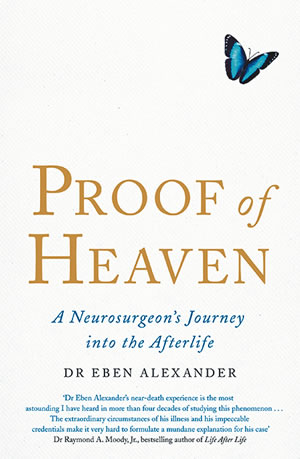
Two years after "Dr." Eben Alexander's book claimed that he had died (he was actually in a coma - death is a little more permanent) and gone to heaven, he is boasting about a new book called Map of Heaven. Seems lime a good time to re-debunk the first book.

Donald Prothero, writing at Skeptic, offers up the high points (or is that low points) of Alexander's fable as exposed by Esquire in 2013 (it will cost you $2.99 to read it).

“Proof of Heaven”?

Posted on Sep. 19, 2014 by  
proof-of-heaven 

It has been two years now since the best-seller lists in the “Non-Fiction” category were dominated by books claiming that the writer visited heaven, and then returned to write a book about it. The most famous was Dr. Eben Alexander’s tale, Proof of Heaven: A Neurosurgeon’s Journey into the Afterlife, which was released in October 2012, featured on Dr. Oz, on Larry King Live, on Oprah and on the cover of Newsweek. It  sold over two million copies and had been on the best-seller list for 35 weeks as of July 2013; more recent sales figures are not available, but it is no longer near the top of the best-seller list. But almost two years since the book came out, a lot of interesting facts have emerged that make the book seem less like a non-fictional account of heaven, and more like a convenient fiction to get a doctor in trouble out of his predicament and at the same time, make him filthy rich and immune to the criticism of the scientific and medical community. Now he has a website to suck in more readers, and is bragging about his next book to come out soon, called Map of Heaven.

The basic story is that Alexander, a neurosurgeon, was infected by a virulent strain of bacterial meningitis and was put in intensive care for seven days in 2008. Doctors also used drugs to induce a coma, which shuts down part of the brain. After his infection had subsided, he awoke from his coma, sure that he had experiences of heaven. He gave an elaborate account of it which takes up most of the book, complete with descriptions of millions of butterflies, and seeing his late sister in a peasant dress and having a conversation with her. He asserts that he was medically dead during this time, that his cerebral cortex was shut down, and that he miraculously came back to life with a memory of a pleasant short trip to celestial paradise.


But soon after his book came out, investigations into his past were conducted. In a 2013 article called “The Prophet” (paywall), Esquire contributing editor Luke Dittrich dug up a lot of facts which suggest it may all have been a fable concocted to cash in on the widespread religious belief in heaven—a fable made all the more persuasive coming from the mouth of a neurosurgeon.
Here are some of the key points established by Dittrich (given here roughly as summarized by Jerry Coyne in his useful discussion of Dittrich’s piece):
  • After repeated lawsuits, Alexander temporarily or permanently lost his surgical privileges at two different hospitals. For example, as Dittrich wrote, “In August 2003, UMass Memorial suspended Alexander’s surgical privileges ‘on the basis or allegation of improper performance of surgery.'”
  • Alexander has been repeatedly accused of falsifying evidence related to his surgeries—a “court-documented history of revising facts,” in Dittrich’s description.
  • One of the key stories which begins Alexander’s book is a near-collision with another parachutist—supposedly Alexander’s first near-death experience, and his first “proof of heaven.”  As Alexander claimed in his book,
    I had reacted in microseconds… How had I done it? … I realize now that…as marvelous a mechanism as the brain is, it was not my brain that saved my life that day at all. What sprang into action the second Chuck’s chute started to open was another, much deeper part of me. A part that could move so fast because it was not stuck in time at all the way the brain and body are.
    But rather than revealing a profound cosmic truth, this event may not have happened at all. When Dittrich dug into the story, he found that Chuck, named in the book as the other parachutist involved, had no recollection of this aerial brush with death. Confronted with this discovery, Alexander claimed that he changed the other parachutist’s name to “Chuck,” supposedly for legal reasons.
  • Some elements of the book appear to be artistic embellishments, such as the “perfect rainbow” that greeted Alexander upon his return to full consciousness. This flourish seems to be ruled out by weather records.
  • Although Alexander claimed his coma was caused by bacterial meningitis, emergency room doctor Laura Potter told Dittrich that she induced Alexander’s coma medically to stabilize his condition. Contrary to Alexander’s claims, his brain was not inactive during the coma. As Dittrich notes, “a key point of his argument for the reality of the realms he claims to have visited is that his memories could not have been hallucinations, since he didn’t possess a brain capable of creating even a hallucinatory conscious experience.
” However, Dr. Potter told Dittrich that Alexander was actually “Conscious but delirious” during his days under sedation.
  • One of the crucial moments in Alexander’s tale is his claim that he clearly cried to God just before going under. According to Dittrich, Dr. Potter
    … has no recollection of this incident, or of that shouted plea. What she does remember is that she had intubated Alexander more than an hour prior to his departure from the emergency room, snaking a plastic tube down his throat, through his vocal cords, and into his trachea. Could she imagine her intubated patient being able to speak at all, let alone in a crystal-clear way?
    “No,” she says.
Dittrich’s research paints an incredibly damning picture. As Coyne sums up, “the story looks like a sham, confected by a once-brilliant but now failed neurosurgeon who reclaims his time in the spotlight by pretending that he saw heaven. ”

An even more scathing commentary was provided by Sam Harris, who has done research in neurophysiology and brain function. Harris first eviscerates Newsweek magazine for running the story uncritically and providing no skeptical or scientific second opinions. In his words:
Whether you read it online or hold the physical object in your hands, this issue of Newsweek is best viewed as an archaeological artifact that is certain to embarrass us in the eyes of future generations. Its existence surely says more about our time than the editors at the magazine meant to say—for the cover alone reveals the abasement and desperation of our journalism, the intellectual bankruptcy and resultant tenacity of faith-based religion, and our ubiquitous confusion about the nature of scientific authority. The article is the modern equivalent of a 14th-century woodcut depicting the work of alchemists, inquisitors, Crusaders, and fortune-tellers. I hope our descendants understand that at least some of us were blushing.
Harris then goes on to carefully dissect Alexander’s claims, especially the assertion that his cerebral cortex was “shut down” or “inactivated.” His claim is not based on an fMRI or EEG or PET scan or any test that would tell if his cerebral cortex was inactive, but only CT scans, which tell you nothing about the activity within the cerebral cortex. If Alexander is such a great neurosurgeon, why doesn’t he know this?

Harris consulted Dr. Mark Cohen, a neurophysiologist at UCLA Medical Center, who pointed out the obvious problems with Alexander’s account:
As you correctly point out, coma does not equate to “inactivation of the cerebral cortex” or “higher-order brain functions totally offline” or “neurons of [my] cortex stunned into complete inactivity”. These describe brain death, a one hundred percent lethal condition. …
We are not privy to his EEG records, but high alpha activity is common in coma. Also common is “flat” EEG. The EEG can appear flat even in the presence of high activity, when that activity is not synchronous. For example, the EEG flattens in regions involved in direct task processing. This phenomenon is known as event-related desynchronization (hundreds of references).
As is obvious to you, this is truth by authority. Neurosurgeons, however, are rarely well-trained in brain function. Dr. Alexander cuts brains; he does not appear to study them. “There is no scientific explanation for the fact that while my body lay in coma, my mind—my conscious, inner self—was alive and well. While the neurons of my cortex were stunned to complete inactivity by the bacteria that had attacked them, my brain-free consciousness …” True, science cannot explain brain-free consciousness. Of course, science cannot explain consciousness anyway. In this case, however, it would be parsimonious to reject the whole idea of consciousness in the absence of brain activity. Either his brain was active when he had these dreams, or they are a confabulation of whatever took place in his state of minimally conscious coma.
There are many reports of people remembering dream-like states while in medical coma. They lack consistency, of course, but there is nothing particularly unique in Dr. Alexander’s unfortunate episode.
So, if we add all this up, we have a neurosurgeon who makes fundamental mistakes about how the brain works, because he is not a neuroscientist or neurophysiologist—and that is a BIG difference. On top of this, he has a history of falsifying records and was in trouble with numerous malpractice suits, so his medical career was effectively over. And when Dittrich checked with other people, many important details in the book turned out clearly false.

This does not seem to trouble Alexander or any of his followers who want to believe him. They, like so many others, are willing to be duped out of their money for the book and make him rich, all while he tells them fairy stories to confirm their beliefs and make them feel good. It wouldn’t be the first time some religious figure separated people from their money—but perhaps the first time it was done by a neurosurgeon in a white lab coat.

Dr. Donald Prothero taught college geology and paleontology for 35 years, at Caltech, Columbia, and Occidental, Knox, Vassar, Glendale, Mt. San Antonio, and Pierce Colleges. He earned his B.A. in geology and biology (highest honors, Phi Beta Kappa, College Award) from University of California Riverside in 1976, and his M.A. (1978), M.Phil. (1979), and Ph.D. (1982) in geological sciences from Columbia University. He is the author of over 35 books.

Tuesday, August 05, 2014

Gregory Hickok - Three Myths about the Brain

http://ecx.images-amazon.com/images/I/611jqj8dp8L._SL1215_.jpg

This is a cool article from the New York Times opinion section. Neuroscientist Gregory Hickok believes there are three serious myths about the brain that continue to be perpetuated - the 10% myth (back in the news due to the movie, Lucy), the right brain/left brain traits myth, and the mirror neuron myth. This last one is the subject of his book, The Myth of Mirror Neurons: The Real Neuroscience of Communication and Cognition.

Three Myths about the Brain

Gray Matter
By GREGORY HICKOK
August 1, 2014


Credit Olimpia Zagnoli

IN the early 19th century, a French neurophysiologist named Pierre Flourens conducted a series of innovative experiments. He successively removed larger and larger portions of brain tissue from a range of animals, including pigeons, chickens and frogs, and observed how their behavior was affected.

His findings were clear and reasonably consistent. “One can remove,” he wrote in 1824, “from the front, or the back, or the top or the side, a certain portion of the cerebral lobes, without destroying their function.” For mental faculties to work properly, it seemed, just a “small part of the lobe” sufficed.

Thus the foundation was laid for a popular myth: that we use only a small portion — 10 percent is the figure most often cited — of our brain. An early incarnation of the idea can be found in the work of another 19th-century scientist, Charles-Édouard Brown-Séquard, who in 1876 wrote of the powers of the human brain that “very few people develop very much, and perhaps nobody quite fully.”

But Flourens was wrong, in part because his methods for assessing mental capacity were crude and his animal subjects were poor models for human brain function. Today the neuroscience community uniformly rejects the notion, as it has for decades, that our brain’s potential is largely untapped.

The myth persists, however. The newly released movie “Lucy,” about a woman who acquires superhuman abilities by tapping the full potential of her brain, is only the latest and most prominent expression of this idea.

Myths about the brain typically arise in this fashion: An intriguing experimental result generates a plausible if speculative interpretation (a small part of the lobe seems sufficient) that is later overextended or distorted (we use only 10 percent of our brain). The caricature ultimately infiltrates pop culture and takes on a life of its own, quite independent from the facts that spawned it.

Another such myth is the idea that the left and right hemispheres of the brain are fundamentally different. The “left brain” is supposedly logical and detail-oriented, whereas the “right brain” is the seat of passion and creativity. This caricature developed initially out of the observation, dating from the 1860s, that damage to the left hemisphere of the brain can have drastically different effects on language and motor control than does damage to the right hemisphere.

But while these and other, more subtle, asymmetries certainly exist, far too much has been made of the idea of distinct left- and right-brain function. The fact is that the two sides of the brain are more similar to each other than they are different, and both sides participate in most tasks, especially complex ones like acts of creativity and feats of logic.

In recent years, a new myth about the brain has started to emerge. This is the myth of mirror neurons, or the idea that a certain class of brain cells discovered in the macaque monkey is the key to understanding the human mind.

Mirror neurons are activated both when a macaque monkey generates its own actions, such as reaching for a piece of fruit, and when it observes others who are performing the same action themselves. Some scientists have argued that these cells are responsible for the ability of monkeys to understand other monkeys’ actions, by simulating the action in their own brains. It has also been claimed that humans have their own mirror system (most likely true), which not only allows us to understand actions but also underlies a wide range of our mental skills — language, imitation, empathy — as well as disorders, such as autism, in which the system is said to be dysfunctional.

The mirror neuron claim has escaped the lab and is starting to find its way into popular culture. You might hear it said, for example, that watching a World Cup match is an intense experience because our mirror neurons allow us to experience the game as if we were on the field itself, simulating every kick and pass.


But as with older myths, this speculation has lost its connection with the data. We now recognize that physical movements themselves don’t uniquely determine our understanding of them. After all, we can understand actions that we can’t ourselves perform (flying, slithering) and a single movement can be understood in many ways (tipping a carafe can be pouring or filling or emptying). Further research shows that dysfunction of the motor system, for example in cerebral palsy, stroke or Lou Gehrig’s disease, does not preclude the ability to understand actions (or enjoy World Cup matches). Accordingly, more recently developed theories of mirror neuron function emphasize their role in motor control instead of understanding actions.

So please, take heed. An ounce of myth prevention now may save a pound of neuroscientific nonsense later.


Gregory Hickok, a professor of cognitive science at the University of California, Irvine, is the author of the forthcoming book “The Myth of Mirror Neurons: The Real Neuroscience of Communication and Cognition.”

Monday, July 21, 2014

Humans Already Use Way, Way More Than 10 Percent of Their Brains


From The Atlantic, Sam McDougle dispels the silly myth that we only use 10% of our brains. Oddly, the first time I saw this myth debunked was in Omni Magazine back in the 1980s.

The impetus for this new debunking of the myth is the new Luc Besson - Scarlett Johansson film, Lucy (trailer below), which begins with a neuroscientist (Morgan Freeman) delivering the following lines in a lecture:
“It is estimated most human beings only use 10 percent of the brain’s capacity. Imagine if we could access 100 percent. Interesting things begin to happen.”
We can and so access 100% of our brains (barring organic damage), and still, very few people are doing interesting things.

Humans Already Use Way, Way More Than 10 Percent of Their Brains

It’s a complex, constantly multi-tasking network of tissue—but the myth persists.

Sam McDougle | Jul 16 2014


Chris Helgren/Reuters

By now, perhaps you’ve seen the trailer for the new sci-fi thriller Lucy. It starts with a flurry of stylized special effects and Scarlett Johansson serving up a barrage of bad-guy beatings. Then comes Morgan Freeman, playing a professorial neuroscientist with the obligatory brown blazer, to deliver the film’s familiar premise to a full lecture hall: “It is estimated most human beings only use 10 percent of the brain’s capacity. Imagine if we could access 100 percent. Interesting things begin to happen.”

Johansson as Lucy, who has been kidnapped and implanted with mysterious drugs, becomes a test case for those interesting things, which seem to include even more impressive beatings and apparently some kind of Matrix-esque time-warping skills.

Of course, the idea that “you only use 10 percent of your brain” is, indeed, 100 hundred percent bogus. Why has this myth persisted for so long, and when is it finally going to die?


Unfortunately, not any time soon. A survey last year by The Michael J. Fox Foundation for Parkinson's Research found that 65 percent of Americans believe the myth is true, 5 percent more than those who believe in evolution. Even Mythbusters, which declared the statistic a myth a few years ago, further muddied the waters: The show merely increased the erroneous 10 percent figure and implied, incorrectly, that people use 35 percent of their brains. The idea that swaths of the brain are stagnant pudding while one section does all the work is silly.

Like most legends, the origin of this fiction is unclear, though there are some clues. According to Sam Wang, a neuroscientist at Princeton and the author of Welcome to Your Brain, the catalyst may have been the self-help industry. In the early 1900s, William James, one of the most influential thinkers in modern psychology, famously said that humans have unused mental potential. This completely reasonable assertion was later revived, in mangled form, by the writer Lowell Thomas in his foreword to the 1936 self-help bible How To Win Friends And Influence People. “Professor William James of Harvard used to say that the average person develops only 10 percent of his latent mental ability,” Thomas wrote. It appears that he, or perhaps someone else in his day, simply plucked the golden number out of the sky.

The 10 percent claim is demonstrably false on a number of levels. First, the entire brain is active all the time. The brain is an organ. Its living neurons, and the cells that support them, are always doing something. (Where’s the “you only use 10 percent of your spleen” myth?) Joe LeDoux, a professor of neuroscience and psychology at NYU, thinks that people today may be thrown off by the “blobs”—the dispersed markers of high brain activity—seen in functional magnetic resonance imaging (fMRI) of the human brain. These blobs are often what people are talking about when they refer to the brain “lighting up.”

Say you’re watching a movie in an fMRI scanner. Certain areas of your brain—the auditory and visual cortices, for instance—will be significantly more active than others; and that activity will show up as colored splotches when the fMRI images are later analyzed. These blobs of significant activity usually cover small portions of the brain image, often less than 10 percent, which could make it seem, to the casual observer, that the rest of the brain is idling. But, as LeDoux put it to me in an email, “the brain could be one hundred percent active during a task with only a small percentage of brain activity unique to the task.” This kind of imaging highlights big differences in regional brain activity, not everything the brain is doing. And that’s why the 10-percent myth, compared with other fantasies, is especially pernicious.

In fact, the entire premise of only “using” a certain proportion of your brain is misguided. When your brain works on a problem—turning light that hits your retina into an image, or preparing to reach for a pint of beer, or solving an algebra problem—its effectiveness is as much a question of “where” and “when” as it is of “how much.” Certain regions of the brain are more specialized than others to deal with certain tasks, and most behavior depends on tight temporal coordination between those regions. Your visual system helps you locate that pint of beer, and your motor system gets your hand around it. The idea that swaths of the brain are stagnant pudding while one section does all the work is silly. The brain is a complex, constantly multi-tasking network of tissue.

Still, the appeal of the myth is clear. If we only use 10 percent of our brains, imagine how totally great life would be if we could use more. You could dazzle Grandma and her nursing-home crew during Jeopardy. Or, like Lucy, you could learn Chinese calligraphy in an hour. The 10-percent myth presses the same buttons as any self-help scheme that promises to make us better, faster. As Wang told me, it’s “like the 4-hour workweek guy.”

And that’s why the 10-percent myth, compared with other fantasies, is especially pernicious. It has a distinct air of scientific plausibility—it’s a zippy one-liner with a nice round number, a virus with obvious vectors in pop-psychology books, easy to repeat at cocktail parties. The myth is also part of a larger way of thinking about the brain that is characterized by misleading simplifications—like the notion that the right side of the brain is creative and the left side rational. “Those kinds of ideas self-perpetuate,” LeDoux told me. “It's like saying dopamine is responsible for pleasure and the amygdala makes fear. Both are wrong.”

Neuroscience is still in its adolescence, but it is all too often served to the public as a more mature field. As psychologist Gary Marcus recently argued, biology—including neuroscience—is not like physics, where scientists build on a bedrock of established formal laws. As of yet, neuroscience has no such foundation, which may increase the likelihood that sweeping myths about the brain endure. Neuroscience and psychology are the rare scientific fields that, for many, have tangible personal value—there is no self-help industry based on the therapeutic effects of the Higgs boson—which means slow, careful progress in research often gets juiced up by opportunist, or at least over-eager, non-scientists.

I’m still going to see Lucy, if only because it’s directed by Luc Besson and The Fifth Element blew my 10-year-old mind when it came out. But here’s to hoping for Hollywood sci-fi movies that lean more on the weird and imaginative and less on the widely believed and dead wrong.

Monday, July 22, 2013

Michael Martinez - Everything You Know About the Brain Is Wrong (Salon)


From Salon, Michael Martinez looks at some of the recent research on the brain and intelligence and dispels some myths along the way. He also offers a fairly brief primer on the human brain.

This article is excerpted from Martinez's new book, Future Bright: A Transforming Vision of Human Intelligence.

Enjoy!

Everything you know about the brain is wrong

What does Einstein's brain size say about his IQ? Is the left-brain/right-brain divide a myth? There's new research.


BY MICHAEL E. MARTINEZ
SUNDAY, JUL 21, 2013

Electrodes are attached to Albert Einstein's head to pick up impulses from his brain and record them for study, Sept. 1950 in Princeton, New Jersey. (Credit: AP) 
Excerpted from Future Bright: A Transforming Vision of Human Intelligence

Within a few hours of Albert Einstein’s death in 1955, the great scientist’s brain had been surgically removed from his skull and placed in formalin. The autopsy and the events surrounding it were shrouded in secrecy and marked by contradictory claims. The brain was extracted by a hospital pathologist named Thomas Harvey in Princeton, New Jersey, where Einstein lived during the final years of his life. After the autopsy was completed, officials at Princeton University asked Harvey to turn over the brain to the university, but he refused. The pathologist claimed, but could not prove, that Einstein’s family had given him permission to keep the brain indefinitely. Thomas Harvey was determined to keep Einstein’s brain for himself.

For a long time, the whereabouts of Einstein’s brain remained a closely guarded secret known only to a select few. To the larger public, the iconic brain seemed to have vanished, probably forever. The mystery had been nearly forgotten when, in 1978, a journalist named Steven Levy tracked down Thomas Harvey in Wichita, Kansas. Levy was determined to get some answers. After relentless questioning, Harvey “sighed deeply and pulled from a cardboard box two glass jars with sectioned pieces of Einstein’s brain.” At long last, Einstein’s brain had been recovered.

Levy subsequently published a magazine article entitled “My Search for Einstein’s Brain,” which put the scientific community on notice that sections of the brain might become available for research. The obvious question, intuitive to neuroscientists and laypeople alike, was whether Einstein’s brain was unusual in any way. Could his prodigious intellect be correlated with any distinctive features of the brain’s anatomy? The answer was not obvious. Superficially, Einstein’s brain appeared to be quite average in size and structure, but more detailed analysis showed that the brain did have distinguishing features after all. One of the first scientists to receive a sample of Einstein’s brain was UC Berkeley neuroscientist Marian Diamond. Diamond found that the brain sample had far more glial cells than is typical. Glial cells do not directly participate in the brain’s signaling, but rather provide neurons with nutritional support and maintenance. Einstein’s brain cells appear to have been “well fed.” Other research showed that the brain’s cerebral cortex, while not particularly thick, had a high density of neurons. This finding led investigators to speculate that “an increase in neuronal density might be advantageous in decreasing inter-neuronal conduction time,” thereby increasing the brain’s efficiency. In other words, because the neurons were tightly packed, they could presumably carry information efficiently and with exceptional speed.Further analysis showed that Einstein’s brain had an unusually large parietal lobe, a region responsible for mathematical cognition as well as mental imagery. The enlarged parietal lobe seems consistent with Einstein’s own accounts of how he constructed the special theory of relativity. His thought experiments included imagining how objects traveling at the speed of light would be affected. Visualization gave him insight into the problem. Einstein envisioned how a light beam would appear if he were traveling alongside the beam at the same speed. Perhaps his enlarged parietal lobe helped him to integrate mental images with mathematical abstractions.

BIGGER BRAIN, HIGHER IQ?


The case of Einstein’s brain illustrates the sorts of questions posed by some neuroscientists. These concern the relationship between brain structure and function. Among the most basic questions is whether a larger brain is advantageous. Evidence from the study of human evolution strongly suggests that having a larger brain helps tremendously in adapting to, and surviving in, a hostile environment. During the past three million years, the average human brain increased in size threefold, from the modest 500-gram brain of the australopithecines to the robust 1,500-gram brain of Homo sapiens. However, this is a comparison between two different species—modern humans and their evolutionary ancestors. If we consider only the effects of brain size within Homo sapiens, the variation from person to person is not as clearly predictive of survival value or the ability to adapt. Einstein’s brain was not particularly large, which tells us that if there is a positive correlation between brain size and intelligence, it can only be approximate.

In general, a bigger brain is a more intelligent brain. In more than 50 studies dating back to 1906, measures of head size, such as length, perimeter, and volume, are at least weakly predictive of higher IQ scores, with a correlation of about r = .20. Many early studies, lacking brain-imaging technologies, could only approximate brain size by measuring head size. With the invention of brain-imaging technologies, such as CT and MRI scanning, it became possible to gather precise data on brain volume and compare those measurements to IQ. The more precise correlations between brain size and IQ vary quite a bit, but yield an average across research studies of r = .38—much higher than the correlations between head size and IQ. The correlations hold with equal strength in males and females.

Changes in brain size over the life span may help explain how various forms of intelligence change with age. Recall that fluid intelligence typically declines as we get older. After early adulthood, people normally lose some of their ability to adapt to novel problems, which is the essence of fluid intelligence. On the other hand, crystallized intelligence generally continues to climb until very late in life. The connection to brain size is that total brain volume correlates positively with fluid intelligence but not with crystallized intelligence. Brain size decreases somewhat as we age, which might contribute to the decline in fluid intelligence that is common during middle age and the later years. Crystallized intelligence seems to be unaffected by the decline in total brain size, which could explain why it remains stable or increases throughout life.

On a strictly structural level, the correspondence between brain size and intelligence should not be surprising. Larger brains have, in nearly direct proportion, greater numbers of neurons. More neurons mean greater computational power in the service of adaptation and survival. The intelligent brain in any species must somehow generate a model of the environment, a perceptual world, to which an animal can adapt. In reptiles, the brain constructs this internal world primarily through the sense of vision and its associated neurons. The more developed brains of mammals tend to support the sensory construction of the world through hearing, as well as vision and olfaction. In primates, high visual acuity acquires special importance in representing the external world. While larger brains imply a greater ability to adapt to the environment, we should not ignore the possibility of causal influence in the reverse direction, from environment to anatomy. Certainly this is the case on an evolutionary timescale, but even at the level of individual development, it is possible that intellectually demanding events lead to a larger brain volume.

BRAIN STRUCTURE AND IQ


The correlation between intelligence and brain size is far from perfect, as Einstein’s brain vividly illustrates. Clearly, the relationship between brain size and IQ falls short of a complete account of how the brain relates to intelligence. If we want to understand how intelligence is related to the brain, we must consider factors besides sheer size. At minimum, we need to examine the basic structure of the brain and ask how that gross structure relates to function. Fortunately, we have quite a bit of research to draw upon. We know, for example, that the outer layer of the brain, the cortex, is especially important to intelligent thought. The cortex is the structural basis for complex reasoning, perception, and language—indeed, for virtually all forms of higher-order cognition. Tellingly, the cortex is especially large in the human brain. Yet the human cerebral cortex is also surprisingly thin, only about 2 to 4 millimeters thick. In three dimensions, though, the cortex achieves considerable volume because it is massively convoluted. More than two-thirds of its area is tucked away into folds. Folding allows for a large cortical volume, and a large volume gives the human brain an enhanced potential for higher-order intellective functioning.

Aside from recognizing the special importance of the cerebral cortex, anatomists have also noted the division of the brain into distinct lobes.

Intelligence cannot be traced to a single region but is distributed through the brain. All four lobes—frontal, parietal, temporal, and occipital—have important relationships to intelligence. More precisely, variation within each lobe is correlated with IQ variation. Different brain regions show considerable variation from one person to another. This suggests a structural basis for different profiles of intellectual strengths and weaknesses even when overall IQ is similar.

While acknowledging that the entire brain underlies the exercise of intelligent thought, one particular lobe, the frontal lobe, has a special role: It is responsible for planning, monitoring, and problem solving. Size matters here, too. The volume of gray matter in the brain’s frontal lobe is predictive of IQ, even when total brain volume is statistically held constant. As its name suggests, the frontal lobe is located at the front of the brain, just behind the forehead. Neuroscientists have known about the special functions of the frontal lobe for a very long time. The earliest evidence for those functions came from clinical studies on the effects of damage to the frontal lobe. Some cases were so significant that they became historical milestones in our understanding of the brain. In the history of clinical neuroscience, one such case centers on a 25-year-old railway worker named Phineas Gage.

In 1848, America was coming of age. At that time, Abraham Lincoln was a relatively unknown junior congressman from Illinois, and gold had just been discovered in the foothills of the Sierra Nevada mountains of California. Across the United States, the railroad infrastructure was expanding rapidly. Late in the afternoon of September 13, Phineas Gage and a group of his fellow workers were preparing the track bed of a new railroad in rural Vermont. Mr. Gage was packing down explosive powder into a hillside when an errant spark ignited the powder, sending a three-foot tamping bar at high speed through his left cheek, behind his left eye, and out the top of his skull, landing some distance away. Gage was knocked to the ground like a rag doll. Remarkably, he soon got up and walked away from the accident. He remained conscious throughout, and although the tamping bar had completely penetrated the frontal lobe of Gage’s brain, he was able to speak.

Phineas Gage’s short-term resilience was remarkable. Nevertheless, it soon became apparent that Gage’s personality had been radically transformed by the accident. Previously a foreman, Gage could no longer marshal the interpersonal skills necessary to manage a crew of workers. He became easily angered and used obscene language, expressing behavior that was previously uncharacteristic and now problematic for his role as a railway worker. Within a few months of returning to work, Phineas Gage left his railroad job and joined P.T. Barnum’s Museum in New York as a human curiosity. Later, he traveled to South America and drove a stagecoach in Chile before moving to San Francisco with his mother and sister. Over the years, his health and coping abilities worsened. In 1860, Gage died of seizures related to the brain injury suffered 12 years previously on the Vermont railroad.

The story of Phineas Gage spotlights the profound effects of targeted disruption of brain tissue. Gage’s abilities to relate to other people and to manage his emotions were deeply compromised. By all accounts, the loss of function was directly associated with damage to his frontal lobe. For neuroscientists, the theoretical upshot was clear: Social competence, to a significant degree, seemed to have an anatomical home in the brain. The brain’s frontal lobe is also deeply implicated in the executive control of information in working memory as well as in planning functions. When working memory is taxed by holding information while performing a complex task, certain areas of the frontal cortex are highly metabolically active. Overlapping regions of the frontal lobe are also active when separating relevant from irrelevant information to focus on the task at hand. These associations tell us that the frontal lobe has unique importance in the exercise of intelligent thought. More than any other brain region, the volume of brain tissue in the frontal lobe is correlated with IQ scores. To the degree that intelligence is an inherited trait, the genetic control of intelligence is probably exerted largely by variation in gray matter in the brain’s frontal lobe.

With this research in hand, we can identify with some precision the structural correspondences between brain anatomy and the two most important psychometric factors, fluid and crystallized intelligence. The brain’s frontal lobe is strongly identified with the planning and control functions that are associated with fluid intelligence, whereas all other brain lobes that lie posterior to the frontal lobe—parietal, temporal, and occipital—are more closely associated with the accumulated knowledge that we call crystallized intelligence. The border between the frontal lobe and the other brain lobes is marked by a large groove, the central sulcus, which runs from one side of the head to the other. This groove effectively divides the brain into two functional areas. Brain images show that the parietal lobe, situated at the top of the brain and just behind the central sulcus, is especially correlated with differences in crystallized intelligence. The functional role of the parietal lobe may include the consolidation of knowledge through enhanced neuronal connectivity. The parietal lobe might also serve as a relay center connecting the brain’s posterior regions with the executive planning activity that is localized in the frontal lobes. Thus, the brain’s central sulcus is akin to an international border, dividing the brain into the “nations” of fluid intelligence and crystallized intelligence.

The forward-most region of the frontal lobe, known as the prefrontal cortex, has special importance across the range of mental activities measured by intelligence tests. So important is the prefrontal cortex that, in some studies, it is the single brain area consistently activated by a broad array of intelligence tests. If we had to name the anatomical epicenter of intelligence, it would be the prefrontal cortex. Phylogenetically, it was one of most recent evolutionary developments in humans and apes. The prefrontal cortex has distinct developmental qualities that align with its role in regulating complex thought. Its primary role is to control attention and resist distraction, both key features of working memory and absolutely vital to intelligent behavior. The prefrontal cortex develops slowly in comparison to other brain regions and shows a surprising degree of plasticity in response to experience. It is one of the last areas of the brain to mature completely, with synapse formation and restructuring extending far past childhood into early adulthood. The protracted period of synaptic structuring and restructuring is use-dependent, implying that it is specially attuned to higher-order cognitive demands.

THE LEFT AND RIGHT HEMISPHERES


The case of Phineas Gage was forever instructive to neuroscientists about the functional role of the brain’s frontal lobe. In 1861, a year after Gage died, a French physician named Paul Pierre Broca documented a different correspondence between localized brain injury and specific compromises to intellectual functioning. Broca found that injury to the brain’s left temporal lobe, located just above the ear, produces specific and profound speech disruption, called aphasia. The localization of speech to the left hemisphere hints of a more sweeping pattern: the separation of function by the brain’s left and right hemispheres.

Like two halves of an intact walnut, the brain exhibits bilateral symmetry. That structural separation, it turns out, also has counterpart functional separations: The two hemispheres exhibit somewhat different ways of processing information. We noted, for example, that the left hemisphere tends to be more proficient at language processing; the right hemisphere, by contrast, specializes more directly in processing spatial and musical information. This separation of function exists not only in the temporal lobes but also in the frontal lobe. The left side of the frontal lobe is dedicated to the processing of verbal information, whereas the right side is active when spatial information is processed. The bilateral separation of function must be qualified, however. It holds up well for right-handed people, but less so for left-handers: About 40 percent of left-handers have language centers in their right hemispheres. The brain’s hemispheres also differentiate in a second way. Whereas the left hemisphere tends to process information analytically by attending to details, the right hemisphere interprets information more holistically by seeing the big picture. The two processes are, of course, complementary. Every brain needs to operate both analytically and holistically in order to interpret the environment in an intelligent way.

The brain’s hemispheres display other differences of function. The most basic difference is that each hemisphere exercises muscular control over the opposite side of the body. The left hand, for example, is controlled by the right hemisphere. Partial paralysis following a stroke on one side of the brain is manifest on the opposite, or contralateral, side. Sensory information, too, is at least partly processed by the opposite hemisphere. The retina of each eye divides incoming light sensation into the right and left visual fields, and the signals from each field are shunted to the opposite brain hemisphere. Hearing is mostly contralateral, but not completely. Auditory data from each ear is sent to both hemispheres, but most of the auditory processing occurs in the hemisphere opposite to the ear that received the input.

The independent functions of the cerebral hemispheres were explored more fully in the 1960s, when in some epilepsy patients the neural bridge connecting the two hemispheres was surgically cut. The main neural structure connecting the brain’s left and right hemispheres is the corpus callosum, the sheet of neurons that runs beneath the two hemispheres. In “split brain” patients, the corpus callosum was severed to alleviate symptoms of epilepsy. The surgery resulted in the functional isolation of the hemispheres, whose psychological consequences were revealed by a series of fascinating studies.For example, when common objects such as scissors were presented to the right visual field, the patient had no difficulty naming the object because information was projected to the language centers in the left hemispheres. However, when objects were shown to the left visual field, the information was shunted to the brain’s right hemisphere. Because the right hemisphere ordinarily has a much-reduced capacity to use language, the patient was frequently unable to name the object.

Split-brain patients sometimes displayed quite remarkable behavior showing that the left and right hemispheres could have different, and even contradictory, knowledge. Keep in mind that each brain hemisphere communicates directly only with the contralateral side of the body. Now consider what happened when conflicting instructions were presented to the brain’s right and left hemispheres. Through spoken instructions to the left ear, the right hemisphere was told to pick up a paper clip; instructions to the right ear told the left hemisphere to pick up an eraser. If the left hand correctly picked up the paper clip, this action was consistent with information given to the controlling right hemisphere, but it contradicted the request given to the left hemisphere. In split-brain patients, the left hemisphere would sometimes respond by misnaming the object, calling it an eraser. The two hemispheres could even hold contradictory wishes. This was illustrated when a 15-year-old boy was asked about his ideal future job. The question was posed independently to his left and right hemispheres. The answer given by his left hemisphere was “draftsman,” but his right hemisphere responded “automobile racer.”

Differences in function between the brain’s right and left hemispheres are fascinating, but have sometimes been overextended or misapplied. For example, some people have interpreted the separation of function within the individual brain as a way to understand differences between people. That’s why we sometimes hear people describe themselves or others as “left-brained” or as “right-brained.” “Left-brained” people tend to process information more linearly and rationally; they are analytic, detail-oriented, and not at all averse to splitting technical hairs. By contrast, “right-brained” people prefer to consider the larger picture. Less concerned with dissecting a problem or situation, their propensity is to understand and appreciate sweeping patterns, including their aesthetic qualities.

Separating people into left-brained and right-brained is deeply problematic for two reasons. First, it fails to recognize that the separation of function in the individual brain is only partial. The relative specialization of the left side to analytical processing and the right to holistic processing is only a tendency, a partial division of labor, and certainly not a strict assignment. After all, the hemispheres are normally cross-wired by the corpus callosum, which ensures that information is communicated between the two halves of the brain. More importantly, the analytic-holistic distinction that holds up when describing the individual brain does not automatically map on to descriptions of people. For such descriptions as “left-brained” and “right-brained” to be validated, an entirely separate research track must test and verify that individuals really do differ significantly and consistently in their preferences for processing information. The binary categorization, either left or right, makes such a clean distinction unlikely. Such differences may turn out to be a continuum rather than categories, but this is speculation. Such a hypothetical dimension for understanding cognitive preferences has yet to be backed by data. These missteps and misconstruals tell us that the study of brain structure and function provides plenty of grist for speculation, but the resulting enthusiasm should be tempered with caution against errors of application.

INTELLIGENCE DRAWS UPON THE ENTIRE BRAIN


As neuroanatomists continue to employ sophisticated imaging technologies to map brain anatomy to specific cognitive functions, the resulting “cartography” becomes more precise and, at the same time, less simplistic. As research continues, the emerging field of cognitive neuroscience becomes progressively more complex. Now we know that the mapping of brain function to brain anatomy does not follow a pattern of one-to-one correspondence. Instead, as a rule, every complex cognitive function is supported by several brain locations acting in a coordinated fashion. Thus, while the frontal lobe and Broca’s areas have specific functions, they never work alone. Every act of intelligence requires the activation of multiple brain sites, or circuits, working in concert. Reading engages its own characteristic brain circuitry; mathematics activates a different circuit. Brain circuits display both unity and diversity—another version of the “one and many” logic that we found describes the organization of intelligence as viewed through the lens of psychometrics.

Let’s acknowledge, then, that complex cognition invokes multiple areas of the brain as coordinated circuits. This does not mean that the entire brain is activated. In fact, when neuroscientists identify multisite circuits through scans showing areas of high metabolic activity, other areas of the brain are not particularly active—at least not above baseline levels. This fact raises a question: Does the average person use all of the brain’s potential capacity, or does most of that potential lie dormant? Let’s ask the question in a more familiar form: Does the average person use only 10 percent of his or her brain’s capacity? The answer is important. If the answer is yes, it means that the brain’s potential is largely untapped, implying a lamentable waste. It also hints at something exciting—the possibility of far greater brainpower in the average person if only some of that unused 90 percent were put into play. If we use only 10 percent of our brain capacity, as is widely believed, then perhaps each of us has tremendous reserves of intellectual capacity. Is the idea valid?

To cut straight to the answer, the claim that we use no more than 10 percent of our brain is a myth, plain and simple. We have no evidence that 90 percent of the brain is held in unused reserve. How, then, did this widely believed myth arise? The claim has sometimes been attributed to Albert Einstein, though there is no evidence that he ever said anything about the topic. More likely, it traces to the great 19th-century American psychologist William James. Along with his scholarly manuscripts, Professor James wrote popular articles in which he expressed his belief that people “make use of only a small part of our mental and physical resources.” In 1936, this statement was paraphrased in the preface to Dale Carnegie’s classic self-help book How to Win Friends and Influence People. The writer of the preface, journalist Lowell Thomas, attributed to James the belief that “the average man develops only ten percent of his latent mental ability.”

The attribution to William James gave the statement instant, but undeserved, credibility.

Other explanations for the 10 percent myth arise directly from the known structure and function of the brain itself. Early studies of the brain identified large regions of cortex that served no identifiable function. Originally, these expanses were referred to as “silent areas,” implying unused potential. Later, the same regions were called “association areas,” which recognized their function as sites of neural connections associated with learning and development. Pioneering studies by the great neuroscientist Karl Lashley further recognized the brain’s remarkable plasticity of function in response to trauma or to specialized demands. The brain’s impressive ability to adapt may have been mistaken for untapped potential and so indirectly corroborated the 10 percent myth. Whatever its origin, it remains a myth—an inaccurate statement about the way brain anatomy relates to function. Though false, the 10 percent myth does contain a germ of truth—or perhaps more accurately, a credible hypothesis—that the mind is capable of much more than is typically realized. We have yet to understand what the human brain can achieve when developed to its full capacity.

INTELLIGENCE AT THE LEVEL OF NEURONS


The gross anatomy of the brain can take us only so far in understanding the biological basis for intelligence. To go further, we must examine the structure and function of the brain at a microscopic level—at the level of specialized cells called neurons. Here we are considering a biological scale roughly 1,000 times smaller than the level of detail revealed by brain-imaging technologies. At this level of detail, cells are the basic structural elements. We learned in our basic biology courses that cells are the building blocks of nearly all life forms—animals, plants, and microbes. The human body is composed of trillions of cells, including muscle cells, heart cells, and red and white blood cells. Most human cells are tiny sacs of fluid wrapped in a thin membrane. Inside the cell is its nucleus, which contains the body’s genetic blueprint, coded in DNA. The genetic code gives cells their ability to replicate as well as to differentiate into their particular cell type. As living entities, cells also have the ability to metabolize food and to get rid of waste products.

Neurons are cells that carry signals in the body, much like copper wires carry signals in electrical circuits. Because neurons function something like wires, they can be very long: The longest neuron in the human body reaches from the base of the spine to the toes. We can think of neurons as serving three functions underlying intelligent behavior. First, neurons relay information from the senses. It’s impossible to interact effectively with the external world unless we have some idea of what’s going on outside. Our senses provide that information by carrying sensations detected by our eyes, ears, and other sense organs to the brain. In order to behave intelligently, we also need to activate muscles to control movement, whether walking, talking, or engaging in other forms of muscle control. Accordingly, a second function of neurons is to enable us to act on the environment through precisely articulated muscle activation. A third neuronal function is most relevant to our quest to understand intelligence. Although neurons are distributed through our bodies, they are concentrated in two locations, the brain and the spinal cord. In the brain especially, amassed neurons are the basis for the spectrum of information-processing activity we call “thinking.” These three functions—sensory input, muscular output, and computation—are all components of intelligent behavior.

Because neurons are the anatomical basis for intelligence at the microscopic level, we need to probe more deeply into how they work. If neurons are the equivalent of wiring in a complex electrical system, say a computer, then to a first approximation a large number of neurons would seem to be advantageous. The human brain is particularly large in comparison to most other species, with about a trillion (1,000,000,000,000) neurons. For any individual, this number stays fairly constant through the life span, a fact that led some scientists to infer that adults lose the ability to generate new neurons. As children, some of us were warned against reckless behavior because, it was assumed, brain cells could never be regenerated. We now know that this is not the case. Researchers have found that the adult brain can generate new neurons in the hippocampus, a brain structure that plays a key role in memory formation.

One trillion neurons is such a huge number that it is nearly unfathomable. To gain some perspective, it equates to roughly 100 times the human population of the earth. That’s impressive, yet it’s not so much the number of neurons that expresses the intricacy of the human brain, but rather the number of connections between neurons that shows just how complex the brain is. After all, the number of neurons in the brain is irrelevant if those neurons are not connected properly. Each neuron typically connects to a thousand or so other neurons. This means that the total number of neuron-to-neuron connections in a single brain is a far greater number—approximately a quadrillion (1,000,000,000,000,000). This number is roughly equal to the number of ants living on the entire earth. The brain’s dazzling intricacy has inspired some neuroscientists to claim that it is the most complex object in the universe.

The connections between neurons have a special name—synapses. Notice that the synapse connecting the two neurons has a surprising feature. It is not a physical connection at all. Instead, the synapse is actually a very narrow gap separating the communicating neurons. This gap implies that the form of signaling between neurons is different from the way a signal is carried along the length of a neuron. Within a single neuron, and especially along the cable-like section called an axon, the signal is electrical. A rapidly changing voltage is propagated from one end of the neuron to the other. At the synapse, though, the signal is mediated solely through tiny messenger chemicals called neurotransmitters. In the diagram, the tiny particles shown floating across the synaptic gap from left to right symbolize this chemical signal. If enough neurotransmitters cross the gap, then the next neuron line will “fire,” continuing the signal down the line to the next neuron.

The picture is starting to look complicated. Human intelligence is somehow based on wild profusions of neuronal connections, which are established through a quadrillion microscopically small connections (actually gaps) bridged by neurotransmitters. Even if we take in this complexity and assume that this picture gets even more complicated (and it does!), we can still identify a few simple ideas that give order to concepts that might otherwise seem bewildering. One idea that lends clarity is the association between learning (a mental event) and the formation of new synapses (an anatomical event). This conceptual bridge links what the mind does and how the brain reacts by restructuring itself. Because each life path is uniquely personal, our individual patterns of neuronal connections are likewise uniquely constructed. Far more complex than a fingerprint, the intricate pattern of synapses makes every brain one of a kind, distinguishing even between identical twins, who share the same DNA code. The 1,000,000,000,000,000 or so neuronal connections that compose each brain’s structure form its unique signature, unprecedented and unrepeatable.

The synaptic connections in the brain form our best model for learning and intelligent functioning. Whenever learning occurs, synapses change. Learning can involve the formation of entirely new synapses or the modification of existing synapses. It’s possible that people differ significantly in how efficiently their neurons adapt to environmental input. According to one theory, variation in IQ arises directly from how efficiently brains respond to stimulation. Brains primed to respond to environmental stimulation, quite possibly through being genetically predisposed to form new connections are, for that reason, more intelligent. Less adaptable brains are not as capable of forming and maintaining new neuronal connections. This theory of brain adaptability, though somewhat speculative, has the attractive feature of merging important facts from theories of intelligence and theories of brain development.

Research on laboratory rats has provided our best understanding of how learning leads to synapse formation. In one study, rats were divided into groups and raised in one of two conditions. One group was raised in cages arranged to encourage play and exploration; another group was raised in barren cages. Rats raised in the more complex environment developed healthier, more capable brains. They had larger cerebral cortices and more extensive brain vascularization. At the microscopic level, their brains also had a greater density of synapses. These differences were expressed in the behavior of the animals: Rats raised in more complex environments were better at solving problems, such as how to find their way through a maze.

Applied to humans, the upshot of this research is that the connection between brain microanatomy and learning is direct. The brain’s experience alters its structure. This is true not only at the level of lobes and hemispheres, but also at the microscopic and molecular levels, especially at synapses. We must therefore appreciate that the “intelligence” of a laboratory rat is not the result of a unidirectional causal force from biology to behavior. The reverse direction is also operative. Differences in behavioral experience can “echo back” to modify the organism’s biological structure as manifest in modifications to its neurons. The enriched environment of some cages is what produced a greater profusion of synapses and vascularization. This general responsiveness is referred to as the brain’s plasticity. Neuronal structures, whether in rodents or in humans, respond to experience in ways that are sometimes surprising. In our quest to explore the potential of experience—the “nurture” term of the nature/nurture equation—the phenomenon of brain plasticity is a key discovery.

In human populations, we observe clear examples of brain plasticity among professionals whose work places intense demands on focused kinds of cognition. A professional violinist, for example, relies on extraordinary finger dexterity in her left hand. Much less dexterity is required in the fingers of her right hand, which is responsible for bowing. Fine coordination between sensory inputs and muscular control is handled in the somatosensory cortex, a band of brain tissue that runs crosswise just behind the frontal cortex. Brain scans of the somatosensory cortex in violinists reveal an unusually large region devoted to the fingers of the left hand—much larger than the region that supports finger movement in the right hand. The asymmetry shows that the brain has responded to the demands placed upon it. The professional violinist “needs” extraordinary finger control in the left hand, and the brain adapts by recruiting neurons to help support that function. Each finger is allocated relatively more neural “real estate” than would normally be the case. This expansion of function to adjacent neurons is beneficial—to a point. In some very experienced violinists, the recruitment of additional neurons can expand to such a degree that areas of cortex that control individual fingers begin to overlap. This results in a decline in finger dexterity, a condition known as focal dystonia. A similar pattern of degradation has been identified among Braille readers. Regions of brain tissue needed to read the elevated dots composing Braille symbols initially expand in such a way that increases sensitivity and reading efficiency. When those same brain areas expand into areas that support adjacent fingers, sensitivity and efficiency can decline.

The brain’s responsiveness to the cognitive demands of work has likewise been documented in a study of London taxi drivers. Unlike the grid pattern common to many capital cities, London streets run helter-skelter, often intersect at obtuse angles, and generally present drivers with a layout that is quite challenging to master. To become licensed, prospective taxi drivers must demonstrate a thorough knowledge of the London streets and traffic patterns so that they can efficiently navigate between any two points. In this study, the demands on long-term memory as well as spatial reasoning were particularly significant because the research was conducted in the 1990s, prior to widespread use of GPS navigation devices. Perhaps not too surprising, brain scans of the 16 London taxi drivers showed a particularly large posterior hippocampus, a region of the brain that supports two-dimensional spatial processing. The more intriguing finding is that, over time, the drivers’ brains appeared to respond to the memory demands: The posterior hippocampus was largest in taxi drivers with more than 40 years of experience navigating the streets of London.

Violinists and taxi drivers typically devote thousands of hours to their professions. Given such prolonged experience, the brain’s adaptation to long-term demands may not be too surprising. Yet brain adaptation seems to accompany short-term learning and skill development as well. One study used the skill of juggling to investigate this possibility. The point was to determine whether learning to juggle would result in measurable changes to the brain. Researchers divided a group of 24 nonjugglers into two groups, asking 12 participants to independently learn how to juggle using the basic three-ball cascade routine. No new demands were placed on the other 12 participants.

After three months, all 12 in the experimental group were successful in learning to juggle for at least 60 seconds. When their brains’ morphologies were compared before and after learning to juggle, the scans showed changes in regions specific to visualization in the temporal lobes. The total volume of those areas increased an average of 3 percent—a small but measurable difference. No such structural changes were detected in the brains of the nonjuggling group. A third scan was conducted three months later. In the intervening period, none of the study participants practiced juggling. The third scan showed that the structural changes had reversed partially and now showed only a 2 percent structural expansion over baseline levels. The study’s authors interpreted the findings as showing that the human brain’s macrostructure can change in direct response to training. The specific mechanisms underlying the structural change were not completely clear—local expansion of gray matter might be the result of changes in existing neurons or, possibly, production of new neurons. Whatever the full explanation, the brains of jugglers adapted structurally, presumably in response to, at most, a few dozen hours of practice.

The research on brain adaptation tells an important story: The brain responds to the specific demands placed upon it; in particular, it exhibits structural changes as it adapts. Those changes vary in intensity and scale: Some alterations amount to no more than heightened sensitivity of the connections between neurons. A more significant form of adaptation is the formation of new synapses, which supports longer-term knowledge and skill development. The most radical structural change entails rewiring large sections of the cortex. Although we are used to thinking about learning along the timeline of minutes or hours, wholesale brain rewiring can occur over the course of many years. We see manifestations of significant neurological “remodeling” in the neural organizations of professional violinists and taxi drivers. Such remodeling might even include brain enlargement.

Some scholars have advanced the intriguing hypothesis that correlations between brain size and IQ might arise, at least in part, from the behavior of individuals. Those who seek more intellectually challenging environments might experience a small but significant gain in total brain volume.

The research evidence is quite clear: The human brain exhibits amazing flexibility. We saw evidence of this flexibility in the brain’s adaptations to the professional demands on violinists and taxi drivers. Dramatic manifestations of functional flexibility are also apparent when large sections of the brain are injured or must be removed surgically. In some instances, trauma results in very little reduction of cognitive function; in other cases, those cognitive functions that are compromised can be substantially relearned. Sometimes this means that functions originally supported by one brain region are regained when the brain “reassigns” those functions to new areas. So while the brain’s anatomy maps to specific cognitive functions, the brain can deviate from those mappings when its plasticity is what the organism needs.

Reprinted from "Future Bright" by Michael E. Martinez with permission from Oxford University Press USA. Copyright 2013 Oxford University Press USA and published by Oxford University Press USA. All rights reserved.

Sunday, June 09, 2013

Simon Critchley on John Gray’s Godless Mysticism in "The Silence of Animals"


Philosopher John Gray's new book, The Silence of Animals: On Progress and Other Modern Myths (Jiune, 2013) [the third book in a sequence beginning with False Dawn: The Delusions of Global Capitalism (2000) and then Straw Dogs: Thoughts on Humans and Other Animals (2007)], is reviewed within the context of the whole sequence in this article from The Los Angeles Review of Books.

Key quotes:
The radical core of Gray’s work, unfashionable as it might seem, is a strident defense of the ideal of contemplation against action, whether the bios theoretikos of Aristotle or the ataraxia of the Epicureans. As Gray says in the final words of Straw Dogs, “Can we not think of the aim of life as being simply to see?”
Gray’s godless mysticism would retain the forms of askesis common to religious forms of mystical practice (fasting, concentration and prayer) that attempt to nullify the self. But this would be done not in order to attain a higher experience of “Self” [sic] or some union with god, but rather to occasion a turn towards the nonhuman world in its mere being. A godless mysticism would not redeem us, but would redeem us from the need for redemption, the very need for meaning. A redemption from redemption, then. Meaninglessness would here be the achievement of the ordinary, the life of the senses. This line of thought gets very close to what the philosopher Eugene Thacker has called a mysticism of the inhuman, a climatological mysticism expressed in the dust of the planet.
 This is an in-depth and interesting review, as well as critical in a productive way - makes me want to go back and read the three books in order, especially since I have only read a handful of essays.

Simon Critchley on The Silence of Animals

John Gray’s Godless Mysticism: On "The Silence of Animals"

Simon Critchley

June 2nd, 2013

The Silence of Animals : On Progress and Other Modern Myths

Triptych image: Mariechen Danz, "Ye (3)," 2006
Photo: Andrea Huyoff. Courtesy of the artist and Galerie Tanja Wagner, Berlin

HUMAN BEINGS DO NOT just make killer apps. We are killer apes. We are nasty, aggressive, violent, rapacious hominids, what John Gray calls in his widely read 2002 book, Straw Dogs, homo rapiens. But wait, it gets worse. We are a killer species with a metaphysical longing, ceaselessly trying to find some meaning to life, which invariably drives us into the arms of religion. Today’s metaphysics is called “liberal humanism,” with a quasi-religious faith in progress, the power of reason and the perfectibility of humankind. The quintessential contemporary liberal humanists are those Obamaists, with their grotesque endless conversations about engagement in the world and their conviction that history has two sides, right and wrong, and they are naturally on the right side of it.

Gray’s most acute loathing is for the idea of progress, which has been his target in a number of books, and which is continued in the rather uneventful first 80 pages or so of The Silence of Animals. He allows that progress in the realm of science is a fact. (And also a good: as Thomas De Quincey remarked, a quarter of human misery results from toothache, so the discovery of anesthetic dentistry is a fine thing.) But faith in progress, Gray argues, is a superstition we should do without. He cites, among others, Conrad on colonialism in the Congo and Koestler on Soviet Communism (the Cold War continues to cast a long shadow over Gray’s writing) as evidence of the sheer perniciousness of a belief in progress. He contends, contra Descartes, that human irrationality is the thing most evenly shared in the world. To deny reality in order to sustain faith in a delusion is properly human. For Gray, the liberal humanist’s assurance in the reality of progress is a barely secularized version of the Christian belief in Providence.

With the Nazi jurist Carl Schmitt in mind, Gray writes in Black Mass (2007): “Modern politics is a chapter in the history of religion.” Politics has become a hideous surrogate for religious salvation, and secularism is itself a religious myth. In The Silence of Animals, he writes, “Unbelief today should begin by questioning not religion but secular faith.” What most disturbs Gray are utopian political projects based on some faith that concerted human action in the world can allow for the realization of seemingly impossible political ends and bring about the perfection of humanity. As he makes explicit in Black Mass, he derives his critique of utopianism from Norman Cohn’s 1957 book, The Pursuit of the Millennium. What Cohn implied but Gray loudly declares is that Western civilization can be defined in terms of the central role of millenarian thinking. Salvation is collective, terrestrial, imminent, total, and miraculous. What takes root with early Christian belief, and massively accelerates in medieval Europe, finds its modern continuation in a sequence of bloody utopian political projects, from Jacobinism to Bolshevism, Stalinism, Nazism, and different varieties of Marxist-Leninist, anarchist, or Situationist ideologies. They all promised to build heaven on earth and left us with hell instead.

In Black Mass, Gray persuasively attempted to show how the energy of such utopian political projects has drifted from the left to the right. Bush, Blair, and the rest framed the war on terror as an apocalyptic struggle that would forge the new American century of untrammeled personal freedom and free markets. During the first years of the new millennium, a religious fervor energized the project of what we might call “military neoliberalism”: violence was the means for realizing liberal democratic heaven on earth. The picture of a world at war where purportedly democratic regimes, like the USA, deploy terror in their alleged attempts to confront it is still very much with us, even if full-scale, classical military invasions have given way to the calculated cowardice of drone strikes and targeted assassinations.

Carl Schmitt’s critique of parliamentary democracy led him towards an argument for dictatorship. Where does Gray’s loathing of liberalism leave him? He identifies the poison in liberal humanism, but what’s the antidote? It is what Gray calls “political realism”: we have to accept, as many ancient societies did and many non-Western societies still do, that the world is in a state of ceaseless conflict. Periods of war are followed by periods of peace, only to be followed by war again. What goes around comes around. And around. History makes more sense as a cycle than as a line of development or even decline.

In the face of such ceaseless conflict, Gray counsels that we have to abandon the belief in utopia and accept the tragic contingencies of life: there are moral and political dilemmas for which there are simply no solutions. We have to learn to abandon pernicious daydreams such as a new cosmopolitan world order governed by universal human rights, or that history has a teleological, providential purpose that underwrites human action. We even have to renounce the Obamaesque (in essence, crypto-Comtian or crypto-Saint-Simonian) delusion that one’s life is a narrative that is an episode in some universal story of progress. It is not.

Against the grotesque distortion of conservatism into the millenarian military neoliberalism, Gray wants to defend the core belief of traditional Burkean Toryism. The latter begins in a realistic acceptance of human imperfection and frailty. As such, the best that flawed and potentially wicked human creatures can hope for is a commitment to civilized constraints that will prevent the very worst from happening: a politics of the least worst. Sadly, no one in political life seems prepared to present this argument, least of all those contemporary conservatives who have become more utopian than their cynical pragmatist left-liberal counterparts, such as the British Labor Party.

* * *

The most extreme expression of human arrogance, for Gray, is the idea that human beings can save the planet from environmental devastation. Because they are killer apes who will always deploy violence, force, and terror in the name of some longed-for metaphysical project, human beings cannot be trusted to save their environment. Furthermore — and this is an extraordinarily delicious twist — the earth doesn’t need saving. Here Gray borrows from James Lovelock’s Gaia hypothesis. The ever-warming earth is suffering from disseminated primatemaia, a plague of people. Homo rapiens is savagely ravaging the planet like a filthy pest that has infested a once beautiful, well-appointed, and spacious house. In 1600, the human population was about half a billion. In the 1990s it increased by the same amount. And the acceleration continues. What Gray takes from the Gaia hypothesis is that this plague cannot be solved by the very people who are its cause. It can only be solved by a large-scale decline in human numbers back down to manageable levels. Let’s go back to 1600!

Such is the exhilaratingly anti-humanist, dystopian, indeed Ballardesque, vision of a drowned world at the heart of Gray’s work: when the earth is done with humans, it will recover and the blip of human civilization will be forgotten forever. Global warming is simply one of the periodic fevers that the earth has suffered during its long, nonhuman history. It will recover and carry on. But we cannot and will not.

* * *

Where does this leave us? Although Gray is critical of Heidegger’s residual humanism (animals are poor in world and rocks and stone are worldless, Martin insists), he is very close to a line of thought in a collection of Heidegger’s fragments published as Overcoming Metaphysics. Written between 1936 and 1946, these are Heidegger’s bleakest and most revealing ruminations, in my view. At their center stands an all-too-oblique critical engagement with National Socialism filtered through the lens of his willful reading of Nietzsche. Heidegger concludes his meditations with the words, “No mere action will change the world.” 
The statement finds its rejoinder in the title of Heidegger’s posthumously published 1966 interview with Der Spiegel: “Only a god can save us.” For Heidegger and Gray, there is no god, unfortunately, and we cannot save ourselves. It’s the belief that we can save ourselves that got us into our current mess. If political voluntarism is the motor of modernity’s distress, then the task becomes how we might think without the will.

This takes us to the compelling critique of the concept of action in Gray’s work. Whether Arendtian fantasies of idealized praxis, liberal ideas of public engagement and intervention, or leftist delusions about the propaganda of the deed, action provides consolation for killer apes like us by momentarily staving off the threat of meaninglessness. The radical core of Gray’s work, unfashionable as it might seem, is a strident defense of the ideal of contemplation against action, whether the bios theoretikos of Aristotle or the ataraxia of the Epicureans. As Gray says in the final words of Straw Dogs, “Can we not think of the aim of life as being simply to see?” 
But Gray’s ideological masterstroke is the fusion of his quasi-Burkean critique of liberalism, underpinned as it is by a deep pessimism about human nature, with a certain strand of Taoism. More particularly, what engages Gray is the ultra-skeptical illusionism of Chuang-Tzu, magnificently expressed in the subtle paradoxes of The Inner Chapters. Chuang-Tzu writes, “How do I know that to take pleasure in life is not a delusion?” The answer is that I do not know and furthermore it doesn’t matter. Pushing much further than the furtive Descartes in his Dutch oven, Chuang-Tzu writes, “While we dream we do not know that we are dreaming, and in the middle of a dream interpret a dream within it.” He concludes, “You and Confucius are both dreams, and I who call you a dream am also a dream.” There is no way out of the dream and what has to be given up is the desperate metaphysical longing to find some anchor in a purported reality. 
Homo rapiens must learn to give up the destructive and pointless search for meaning and learn to see that the aim of life is the release from meaning. What interests Gray in the mind-bending paradoxes of Chuang-Tzu is the acceptance of the fact that life is a dream without the possibility, or even the desire, to awaken from the dream. If we cannot be free of illusions, if illusions are part and parcel of our natural constitution, then why not simply accept them? In the final pages of Black Mass Gray writes: “Taoists taught that freedom lies in freeing oneself from personal narratives by identifying with cosmic processes of death and renewal.” Rather than seek the company of utopian thinkers, we should find consolation in the words of “mystics, poets and pleasure-lovers. 
Such is the consoling company Gray keeps in The Silence of Animals. There is much here that is familiar to readers of Gray, such as the critique of progress and the constant tilting at liberal humanism. There is also much that is welcome, such as the robust defense of Freud as a moralist based on Philip Rieff’s classic interpretation, which is wielded against Jungian obscurantism, the triumph of the therapeutic, and the desire to fill the Freudian void with grisly specters like the collective unconscious. But what’s new in The Silence of Animals is Gray’s argument for what he calls “godless mysticism” based largely on a reading of Wallace Stevens (it’s true that Stevens makes a couple of cameo appearances in Gray’s The Immortalization Commission from 2011). Stevens is the still point around which the world turns in The Silence of Animals. 
Each of the three parts of The Silence of Animals is framed and guided by quotations from Stevens; what seems to draw Gray’s attention is the sheer austerity of his late verse, for example the 25 poems included under the title “The Rock” in the Collected Poems in 1954, the year before Stevens’s death. Stevens’s poetry self-consciously moves between the poles of reality and the imagination. In his most Wordsworthian mood, as in “The Idea of Order at Key West,” the two poles would appear to fuse or be held in a creative balance: imagination grasps and transfigures reality. But in the very late poems, a hard, cold, contracted reality takes center stage. The power of imagination appears to be impoverished. The season of these late poems — always important for Stevens — changes from the florid and Floridian landscapes of the earlier verse to the harsh, unending cold of the Connecticut winter. 
In the final poem in The Palm at the End of the Mind, “Of Mere Being,” Stevens speaks of that which is “Beyond the last thought,” namely a bird that sings “Without human meaning, / Without human feeling, a foreign song.” Stevens seems to be saying that things merely are: the tree, the bird, its song, its feathers, the wind moving in the branches. One can say no more. For Gray, “The mere being of which Stevens speaks is the pure emptiness to which our fictions may sometimes point.” That is to say, in accepting that the world is without meaning, a path is indicated that takes us beyond the meaning we have made. 
Paradoxically, for Gray, the highest value in existence is to know that there is nothing of substance in the world. Nothing is more real than nothing. It is the nothingness beyond us, the emptiness behind words, that Gray wants us to contemplate. His is a radical nominalism behind which stands the void. In this, as he is well aware, Gray is close to Beckett. We are condemned to words, but language is a prison house from which we constantly seek to escape. Rather than any comforting dogma of the linguistic turn, Gray is trying to imagine a turn away from the linguistic. Human language should be pointed towards a nonhuman silence. 
In his very last poems, Stevens comes about as close as one can get to giving up poetry in poetry. It is poetry of the antipodes of the poetry; the hard, alien reality that we stare at, unknowing. All we have are ideas about the thing, but not the thing itself. Desire contracts, the mind empties, the floors of memory are wiped clean and nothingness flows over us without meaning. In a very late lyric that Gray does not cite but which he might, “A Clear Day and No Memories,” Stevens writes:
Today the air is clear of everything.
It has no knowledge except of nothingness
And it flows over us without meanings,
As if none of us had ever been here before
And are not now: in this shallow spectacle,
This invisible activity, this sense.
It is “this sense” that Gray wants to cultivate in us, this turning of the self away from itself and its endless meaning-making and toward things in their variousness and particularity. The point is to undergo a kind of movement from the limitations of the human towards a greater inhuman realm of experience that can be had in the observation of plants, birds, landscapes, and even cityscapes. Stevens continues, with another “as if” (and whole books have been written on his use of hypothetical conjunctions):
As if nothingness contained a métier,
A vital assumption, an impermanence
In its permanent cold, an illusion so desired.
Poems are words chosen out of desire, but words that don’t create anything permanent. In creating illusion, they assume impermanence. This is what Stevens sees as the métier of nothingness: its work, its craft, its supreme fictiveness. It is abstract. It must change. It must give pleasure. 
Gray’s godless mysticism would retain the forms of askesis common to religious forms of mystical practice (fasting, concentration and prayer) that attempt to nullify the self. But this would be done not in order to attain a higher experience of “Self” [sic] or some union with god, but rather to occasion a turn towards the nonhuman world in its mere being. A godless mysticism would not redeem us, but would redeem us from the need for redemption, the very need for meaning. A redemption from redemption, then. Meaninglessness would here be the achievement of the ordinary, the life of the senses. This line of thought gets very close to what the philosopher Eugene Thacker has called a mysticism of the inhuman, a climatological mysticism expressed in the dust of the planet. 
* * *

There’s an unexpected local hero in The Silence of Animals: J.A. Baker (1926–1987), author of The Peregrine, a book that, to my shame, I didn’t know prior to reading Gray. It is the record of 10 years spent watching peregrine falcons in a narrow stretch of Essex countryside between Chelmsford and the coast. I happen to know that landscape quite well, or once knew it. It’s a minimal, flat landscape of neat fields, mudbanks, estuarial systems, and vast skies with huge clouds shuttling from west to east. In intense lyrical descriptions, Baker sought to escape the human perspective and look at the world through the eyes of this predatory bird, “Looking down, the hawk saw the big orchard beneath him shrink into dark, twiggy lines and green strips […] saw the estuary lifting up its blue and silver mouth, tongued with green islands.”

Baker was not crazy. He knew that there is no way out of the human world, and no way he could become a peregrine falcon. What interests Gray is the discipline (for Baker, an askesis of time, place and repetition: many days, months, and years spent returning to the same small strip of countryside) involved in peeling enough of oneself away in order to try to look outwards and upwards. Contemplation here is not some Hamlet-like, inward-facing attempt at stilling the self’s commotion. It’s the outward-facing decreation of the self through a cultivation of the senses. What’s being attempted is a non-anthropomorphic relation to animals and nature as a whole, where the falcon cannot hear the falconer. Gray’s godless mysticism asks us to look outside ourselves and simply see. This is a lot more difficult than it sounds.

* * *

Schopenhauer, usually read in abridged, aphoristic form, was the most popular philosopher of the 19th century. Epigrammatic pessimism of his sort gives readers reasons for their misery and words to buttress their sense of hopelessness and impotence. Few things offer more refined intellectual pleasure than backing oneself into an impregnably defended conceptual cul-de-sac and sitting there, knowing and immovable. It’s the thrill of reading Adorno or, in a certain light, Agamben. Such is what Nietzsche called “European Buddhism.”

Sometimes I think John Gray is the great Schopenhauerian European Buddhist of our age. What he offers is a gloriously pessimistic cultural analysis, which rightly reduces to rubble the false idols of the cave of liberal humanism. Counter to the upbeat progressivist evangelical atheism of the last decade, Gray provides a powerful argument in favor of human wickedness that’s still consistent with Darwinian naturalism. It leads to passive nihilism: an extremely tempting worldview, even if I think the temptation must ultimately be refused. 
The passive nihilist looks at the world with a highly cultivated detachment and finds it meaningless. Rather than trying to act in the world, which is pointless, the passive nihilist withdraws to a safe contemplative distance and cultivates his acute aesthetic sensibility by pursuing the pleasures of poetry, peregrine-watching, or perhaps botany, as was the case with the aged Rousseau (“Botany is the ideal study for the idle, unoccupied solitary,” Jean-Jacques said). Lest it be forgotten, John Stuart Mill also ended up a botanist. 
In a world that is rushing to destroy itself through capitalist exploitation or military crusades — two arms of the same Homo rapiens — the passive nihilist resigns himself to a small island where the mystery of existence can be seen for what it is without distilling it into a meaning. The passive nihilist learns to see, to strip away the deadening horror of habitual, human life and inhale the void that lies behind our words. 
What will define the coming decades? I would wager the following: the political violence of faith, the certainty of environmental devastation, the decline of existing public institutions, ever-growing inequality, and yet more Simon Cowell TV shows. In the face of this horror, Gray offers a cool but safe temporary refuge. 
Truth to tell, the world of Gray’s passive nihilist can be a lonely place, seemingly stripped of intense, passionate, and ecstatic human relations. It is an almost autistic universe, like J.A. Baker’s. It is also a world where mostly male authors and poets seem to be read, although Elizabeth Bishop comes to mind. As Stevens writes in his Adagia, “Life is an affair of people not of places. But for me life is an affair of places and that is the trouble.” Gray, like Stevens, seems preoccupied with place but, unlike Stevens, appears untroubled. What Gray says is undeniable: we are cracked vessels glued to ourselves in endless, narcissistic twittering. We are like moths wheeling around the one true flame: vanity. Who doesn’t long to escape into an animal silence? 
Of course, love is the name of the counter-movement to that longing. Love — erotic, limb-loosening and bittersweet — is another way of pointing outwards and upwards, but this time towards people and not places. But that, as they say, is another story.

Author’s Note: This essay builds from certain formulations that the reader can find in The Faith of the Faithless (Verso, London and New York, 2012). See Chapter 2, pp.109-117.

Simon Critchley's last book was The Mattering of Matter. Documents from the Archive of the International Necronautical Society (with Tom McCarthy, Sternberg, Berlin, 2012) and his next book is Stay, Illusion! The Hamlet Doctrine (Pantheon, New York, 2013).