Bluesman 'Honeyboy' Edwards Has Died
David "Honeyboy" Edwards, considered to be the last of a generation of musicians who brought music from the rural Mississippi Delta to the rest of America, died at his home in Chicago early Monday morning. He was 96 years old.
Honeyboy Edwards was born in 1915. He grew up in segregated Mississippi during Jim Crow. Though his dad was a share-cropper, the young Edwards did not work in the fields.He figured out he could make more money by playing music on the weekends. But back then a black man would be thrown in jail if he was caught not working during the day. In 2008, Honeyboy Edwards told NPR's Andrea Seabrook that he just didn't go out until evening."I didn't come out until 5 or 6 o'clock in the evening," he said. "Sleep all day, sleep and cook and eat, stay in the house. That sun is hot, anyway. It ain't right out there."Edwards left the hot son and tried to make a living on the road. He was a teenager when he learned from, and played with, older musicians like Son House and Robert Johnson who've since become legends.Music critic and journalist Tom Piazza (his recent book Devil Sent the Rain is about the music and writing made in hard times) says Johnson and Son House were the pioneers of the Delta blues, a style that influenced everyone from The Rolling Stones to Bob Dylan."The Delta blues is some of the strongest and most concentrated blues that you can find, and life in the Mississippi delta during the time that musical form was coming up was about as tough as you could get," Piazza says. "And Honeyboy Edwards was probably the last living link we had to that era."
Purchase: Amazon / Amazon MP3 / iTunes
Edwards made his first recording in 1942 when musicologist Alan Lomax went to Clarksdale, Miss., and recorded him for the Library of Congress. He made a few commercial recordings in the '50s but mostly he made a living playing in small clubs in Chicago, where he eventually settled.In his memoir The World Don't Owe Me Nothing, Edwards wrote that he'd been "hustling all his life," and by the '60s he was tired. So he got jobs working construction to support his family. He got back into music in the '70s when he met musician Michael Frank, who recorded Edwards.Edwards always liked the raw simplicity of country blues. When he was 92 years old he told Dan Bindert of WBEZ in Chicago less is more."You don't have to play a whole lot of guitar to be a good blues player. Some people plays too much guitar," Edwards said. "Stack it on top of each other the way it don't — you're working too fast. Blues not supposed to be played fast. Blues supposed to be played slow.""You could kill a man," said Honeyboy Edwards, with just one chord.
Wednesday, August 31, 2011
NPR - Bluesman 'Honeyboy' Edwards Has Died
Another great bluesman joins Robert Johnson in the wild gig beyond.


Jeffrey Applebaum - Various Anxiety vs. Depressive Disorders
From UCTelevision.
Jeffrey A. Applebaum, M.D.
Jeffrey Applebaum of UC Davis Family Medicine presents some important distinctions between depressive disorders and anxiety disorders and how these differences impact treatment. Series: "UC Grand Rounds" [8/2011]
Jeffrey A. Applebaum, M.D.
As primary care physicians today, the family practitioner plays an essential role in the health and well-being of individuals and families across our country. More than ever, it is vital to have a physician who knows and understands the family: both the medical issues as well as social and emotional dynamics. I wish to really get to know people as individuals, over time, and as life evolves. This entails sharing in happiness and joy, and working through sadness and turmoil. The long-term relationship that follows, the caring and involvement -- this is what family medicine is all about.
Sam Harris and Richard Dawkins - Who Says Science has Nothing to Say About Morality?

Sam Harris speaks with Richard Dawkins about his recent book, The Moral Landscape: How Science Can Determine Human Values , via USAHM Videos.
In his new book The Moral Landscape, neuroscientist and philosopher Sam Harris challenges the commonly held view that science has nothing to say about moral issues and that religion is the best authority on meaning, values and a good life. For Sam, the goal of The Moral Landscape is to begin a conversation about how moral truth can be understood in terms of science.
Taped at The Sheldonian Theatre
University of Oxford
April 12th 2011
Tuesday, August 30, 2011
Mark Walsh - The Disembodied Mess We're In

Much of our suffering, Mark argues, results from our disconnection from our bodies.
How many of the world's problems are connected to being alienated from our bodies. How disembodiment relates to consumerism, relationships, trauma, the London riots and environmental destruction. A passionate plea that we get pur bodies back from Mark Walsh from Integration Training.
John Rowan - Review: Hubert Hermans & Agnieszka Hermans-Konopka (2010)/ Dialogical Self Theory: Positioning and Counter-positioning in Globalizing Society

Over at Integral Leadership Review, psychotherapist John Rowan reviews the new book from Hubert Hermans and Agnieszka Hermans-Konopka, Dialogical Self Theory: Positioning and Counter-positioning in Globalizing Society (2010). Since the book is insanely expensive, I'll have to settle for the review.
Book Review:
Hubert Hermans and Agnieszka Hermans-Konopka: Dialogical Self Theory: Positioning and Counter-positioning in Globalizing Society. Cambridge: Cambridge University Press (2010).
John Rowan
This is a brilliant book which would be of interest to Integral people for three reasons: although it does not have a concept of levels, it does range over all four quadrants of the AQAL model; it uses second-tier thinking throughout; and it is firmly research-based.
The first chapter takes us on to the international stage, and the concept of globalization. Straight away we are introduced to second-tier thinking. “The reaction to uncertainty that is central in the present book is a dialogical one. The special nature of dialogue is that it copes with uncertainty by going into this uncertainty rather than avoiding it. Entering a dialogue, with other individuals or with oneself, opens a range of possibilities that are not fixed at the beginning but remain flexible and susceptible to change during the process itself.” (p.46)
The book goes on to explore the process of globalization in a number of fruitful ways. The authors link external processes to internal processes all along the line. “In an era of increased globalization the number and nature of voices in the self have been expanded dramatically, and we are increasingly involved in mediated forms of dialogue: “In contrast to earlier times, dialogical relationships make use of technological advances such as the Internet, e-mail, mobile telephones, multi-user dimensions, and short-message systems that expand our dialogical possibilities beyond the boundaries of self and identity as described in traditional theories.” (p.64) These authors point out that dialogical self theory allows one to make distinctions between several closely related concepts such as uncertainty, anxiety, threat, confusion and absurdity. (p.79)
After the global reach of Chapter 1, in Chapter 2 we come to the individual. Self and identity are looked at in terms of traditional, modern, postmodern and dialogical models.
Read the whole review.
About the Author: John Rowan
John Rowan is an author, counselor, psychotherapist and clinical supervisor who practices Primal integration in England. He has worked with Ken Wilber in exploring Transpersonal psychology and has written several books on subpersonalities. He has a Ph. D from Middlesex University, is an Honorary Fellow of the United Kingdom Council for Psychotherapy and a past member of its governing board, representing the Humanistic and Integrative Section. He is a Fellow of the British Psychological Society (member of the Psychotherapy Section and the Counseling Psychology Division, the Counseling Psychology Division, the Transpersonal Psychology Section and the Consciousness and Experience Section). He is also a Fellow of the British Association for Counselling and Psychotherapy and a founding member of the Association of Humanistic Psychology Practitioners. His most popular publication is Ordinary Ecstasy which was originally published in 1976 and is a summary and guide to all the branches of Humanistic psychology.
Upaya Dharma Podcasts - Elaine Miller-Karas: 8-24-11: Coming to Our Senses: Connecting to the Body/Connecting to the World

The Trauma Resiliency Model is promoted and taught by the Trauma Resource Institute, a non-profit organization. Here is their mission statement:
Elaine Miller-Karas: 8-24-11: Coming to Our Senses: Connecting to the Body/Connecting to the World
Speaker: Elaine Miller-Karas
Recorded: Wednesday Aug 24, 2011
How can we come to our senses after enduring life changing events? In this talk, Elaine MIller-Karas, co-creator of the Trauma Resiliency Model, shares her experience in treating the victims of disasters around the world.Elaine Miller-Karas has 25 years of experience in health education, teaching, and clinical consultation. She is the Director of Training and Education for the Trauma Resource Institute (TRI), a non-profit center for trauma. She is on the faculty at Arrowhead Regional Medical Center’s Family Residency Program and has a private psychotherapy practice. She lectures nationally and internationally on innovative approaches to healing traumatic stress as well as the bio-psychosocial responses to chronic illness. She has been on disaster response teams in Thailand (post-tsunami) and Louisiana (post-hurricane). Most recently she presented a workshop on Trauma First Aide in Nairobi, Africa at the Conference on Female Genital Mutilation.Podcast: Play in new window | Download
OUR VISION
To restore resiliency after trauma by expanding bottom-up capacity
OUR MISSION
OUR VALUES
As a trauma educational organization we are committed to the following values:
|
Authors@Google: Penn Jillette

Penn Jillette stopped by Google to wax skeptical about religion and to talk about his new book, God No! Signs You Already May Be an Atheist and Other Magical Tales.
Penn Jillette - Authors@Google
Penn Jillette visited Google's Santa Monica office on August 19, 2011 to discuss his book "God No! Signs You Already May Be an Atheist and Other Magical Tales." This talk took place as part of the Authors@Google series. Warning: This talk contains adult language.
Monday, August 29, 2011
NPR - Don't Throw It Out: 'Junk DNA' Essential In Evolution

The notion of junk DNA always seemed rather naive to me. We barely understand what the we are looking at and we are prepared to call large portions of it junk? Massive FAIL in my opinion. At least now they are figuring out their error.
Don't Throw It Out: 'Junk DNA' Essential In Evolution
by Joe Palca
Listen to the Story
All Things Considered
[3 min 45 sec]
Download
August 19, 2011
There's a revolution under way in biology. Scientists are coming to understand that genetics isn't just about genes. Just as important are smaller sequences of DNA that control genes.
These so-called regulatory elements tell genes when to turn on and off, and when to stop functioning altogether. A new study suggests that changes in these non-gene sequences of DNA may hold the key to explaining how all species evolved.
To better understand this revolution in biology, we have to go back about a century. At that time, the notion of a gene was fairly simple. A gene was responsible for a particular trait.
"There was a gene for blue eyes, a gene for curly hair, etc.," says Gregory Wray, a geneticist at Duke University. But genes were just a concept in those days. Nobody really knew what a gene looked like. That changed in 1953, when James Watson and Francis Crick showed that genes were made of DNA, and that DNA was the chemical that allowed genes to be passed from parent to child.
"We came to understand a gene as a stretch of DNA that codes for a protein, and the protein is involved in producing that trait, whatever we're interested in — eye color, hair and so forth," says Wray.
Biologists spent the latter half of the 20th century exploring the steps involved in turning genetic instructions inside a stretch of DNA into something the body needs to survive. They wrote tens of thousands of papers explaining how genes make proteins, what proteins do, what piece of DNA codes for a particular protein. "And now we're coming to realize that that's only half the picture," says Wray. Many scientists are now shifting their attention to the other half of the picture.
Regulating Genes
Wray says there are about 20,000 genes in the human genome, but as many as 1 million of these so-called regulatory elements, so scientists have a lot to do.
Early work suggests these elements may play an important role in diseases. Craig Lowe, a genetics researcher at Stanford University, says these regulatory elements are also important in how different species evolved.
"It may not necessarily always be changing in the genes, or gains of genes or losses of genes, that are causing interesting adaptations. But it's how these genes are regulated," says Lowe.
Even a small change in when a gene is switched on as an animal is growing can have a major impact on the animal's size and shape.
Lowe and geneticist David Haussler from the University of California, Santa Cruz, have a paper in Science this week describing how some of these regulatory elements have changed over hundreds of millions of years of evolution.
"There are many genes that have changed remarkably little between a mouse and a human, for example, and yet they behave differently within the cell, and that's largely due to the way they are regulated differently," says Haussler.
Like many revolutions, only a handful of people saw this one coming. David Stern, a geneticist with the Howard Hughes Medical Institute, says as recently as two decades ago, scientists had little interest in the DNA that wasn't part of a gene.
"We used to call this junk DNA, and it's perfectly obvious now what we used to call junk DNA is actually chock-filled with the information that builds out organisms," says Stern.
Geneticists still think a lot of our DNA is junk. Makes you wonder if there are any other undiscovered treasures in all that junk that might spawn the next revolution in biology.
Interpersonal Neuroscience - The Brains of Developing Children

Two stories came my way during the last month that I thought deserved a little bit of attention - both demonstrate the impact of the interpersonal environment on the developing brains of our children. In these two instances, the outcomes are not good.
A third story (from the end of July) shows the benefits of emotionally attuned parenting in alleviating stress and anxiety in children - parenting style needs to be tailored to the child's personality.
Enlarged Amygdala: Children of depressed mothers have a different brain
Science Codex | Posted On: August 15, 2011
Researchers think that brains are sensitive to the quality of child care, according to a study using ten year old children whose mothers exhibited symptoms of depression throughout their lives, and discovered that the children’s amygdala, a part of the brain linked to emotional responses, was enlarged.
Similar changes, but of greater magnitude, have been found in the brains of adoptees initially raised in orphanages. Personalized attention to children’s needs may be the key factor. “Other studies have shown that mothers feeling depressed were less sensitive to their children’s needs and were more withdrawn and disengaged,” explained Drs. Sophie Parent and Jean Séguin of Université de Montréal, who followed the children over the years.
Scientists have established that the amygdala is involved in assigning emotional significance to information and events, and it contributes to the way we behave in response to potential risks. The need to learn about the safety or danger of new experiences may be greater in early life, when we know little about the world around us.
Indeed, studies on other mammals, such as primates, show that the amygdala develops most rapidly shortly after birth. “We do not know if the enlargement that we have observed is the result of long-term exposure to lower quality care. But we show that growing up with a depressed mother is associated with enlarged amygdala.”
“Having enlarged amygdala could be protective and increase the probability of survival,” Lupien said. The amygdala may be protective through a mechanism that produces stress hormones known as glucocorticoids. The researchers noted that the glucocorticoids levels of the children of depressed mothers who participated in this study increased significantly when they were presented with unfamiliar situations, indicating increased reactivity to stress in those children.
Adults who grew up in similar circumstances as these children show higher levels of glucocorticoids and a greater glucocorticoid reaction when participating in laboratory stress tests. “What would be the long term consequences of this increased reactivity to stress is unknown at this point.”
Although this study cannot clarify the causes of enlarged amygdala, the researchers note that the adoption studies have also shown that children who were adopted earlier in life and into more affluent families than others did not have enlarged amygdala. “This strongly suggests that the brain may be highly responsive to the environment during early development and confirms the importance of early intervention to help children facing adversity,” Lupien said. “Initiatives such as prenatal and infancy nurse home visits and enriched day care environments could mitigate the effects of parental care on the developing brain.”
Séguin adds, “Future studies testing the effects of these preventive programs and observational studies involving children exposed to maternal depressive symptoms at different ages, and consequently for different lengths of time, should provide more insight into how this occurs, its long term consequences, and how it can be prevented.”
Financed in part by the John D. and Catherine T. MacArthur Foundation, the Canadian Institutes for Health Research, and Fonds de recherche en santé du Québec.
Citation:
Lupiena, Parentd, Evanse, Tremblayc, Zelazo, et al. (2011, Aug. 15). Larger amygdala but no change in hippocampal volume in 10-year-old children exposed to maternal depressive symptomatology since birth. PNAS, www.pnas.org/cgi/doi/10.1073/pnas.1105371108
* * * * * * *
Childhood maltreatment linked to long-term depression risk and poor response to treatment
People who have experienced maltreatment as children are twice as likely to develop both multiple and long-lasting depressive episodes as those without a history of childhood maltreatment, according to a new study
People who have experienced maltreatment as children are twice as likely to develop both multiple and long-lasting depressive episodes as those without a history of childhood maltreatment, according to a new study. The research, led by a team at King's College London Institute of Psychiatry also found that maltreated individuals are more likely to respond poorly to pharmacological and psychological treatment for depression.
The results, to be published in the American Journal of Psychiatry, have emerged from a combined analysis of 16 epidemiological studies involving more than 20,000 participants and of 10 clinical trials involving more than 3,000 participants.
Depression ranks among the most common psychiatric disorders worldwide, with one in ten children exposed to maltreatment including psychological, physical or sexual abuse or neglect. By 2020, depression is predicted to be the second leading contributor to the global burden of disease across all ages, according to the World Health Organisation. The societal impact of depression is largely accounted for by individuals who develop multiple and long-lasting depressive episodes.
Previous research has shown that maltreated individuals are more likely to show abnormalities in biological systems sensitive to psychological stress – such as the brain, the endocrine, and the immune system – both in childhood and in adult life, which could have important clinical implications.
Dr Andrea Danese, senior investigator of the study at King's says: 'Identifying those at risk of multiple and long-lasting depressive episodes is crucial from a public health perspective. The results indicate that childhood maltreatment is associated both with an increased risk of developing recurrent and persistent episodes of depression, and with an increased risk of responding poorly to treatment.
'Therefore prevention and early therapeutic interventions targeting childhood maltreatment could prove vital in helping prevent the major health burden owing to depression. Knowing that individuals with a history of maltreatment won't respond as well to treatment may also be valuable for clinicians in determining patients' prognosis.'
Dr Danese continues: 'The biological abnormalities associated with childhood maltreatment could potentially explain why individuals with a history of maltreatment respond poorly to treatment for depression.'
Individuals with a history of maltreatment are at elevated risk of mental illness throughout their lives. However, in order to understand how early experiences bring about mental illness, future research should explore biological changes associated with maltreatment before accumulation of multiple depressive episodes.
Dr Rudolf Uher, co-author of the paper, says: 'Our study has shown that antidepressant medication, psychological treatment and the combination of the two are less effective in those who have a history of childhood maltreatment. Whilst we still do not know exactly what type of treatment may improve their care, it may be that new treatments based on the biological vulnerabilities associated with childhood maltreatment could prove an exciting avenue for research.'
###
The research was supported by the UK MRC Social, Genetic & Developmental Psychiatry Centre (SGDP), and the Department of Child and Adolescent Psychiatry, both at the Institute of Psychiatry, King's College London. The authors are funded by the National Alliance for Research on Schizophrenia and Depression (NARSAD/Brain and Behavior Research Fund, USA), the Italian Ministry of University and Scientific Research, and the European Commission.
Citation:
Valentina Nanni, V., Uher, R. & Danese, A. (2011, Aug. 14). Childhood maltreatment predicts unfavorable course of illness and treatment outcome in depression: A meta-analysis. American Journal of Psychiatry. doi:10.1176/appi.ajp.2011.11020335
* * * * * * *
Kids' anxiety, depression halved when parenting styled to personalityCitation:
When it comes to rearing children, just about any parent will say that what works with one kid might not work with another. Parents use all sorts of strategies to keep kids from being cranky, grumpy, fearful or moody, while encouraging them to be independent and well-adjusted.
But which parenting styles work best with which kids? A study by University of Washington psychologists provides advice about tailoring parenting to children's personalities.
At the end of the three-year study, the psychologists found that the right match between parenting styles and the child's personality led to half as many depression and anxiety symptoms in school-aged children. But mismatches led to twice as many depression and anxiety symptoms during the same three years.
The study was published online Aug. 1 in the Journal of Abnormal Child Psychology.
"This study moves away from the one-size-fits-all approach to parenting, and gives specific advice to parents on how to mitigate their child's anxiety and depression," said Cara Kiff, lead author and psychology resident at the UW School of Medicine. "We're considering characteristics that make children vulnerable to anxiety and depression, and factoring in how that shapes how kids react to different parenting approaches."
"We hear a lot about over-involved parents, like 'tiger moms' and 'helicopter parents,'" said co-author Liliana Lengua, a UW psychology professor. "It is parents' instinct to help and support their children in some way, but it's not always clear how to intervene in the best way. This research shows that parenting is a balance between stepping in and stepping out with guidance, support and structure based on cues from kids."
Kiff, Lengua and Nicole Bush, a co-author and postdoctoral fellow at University of California, San Francisco's Center for Health and Community, studied interactions between 214 children and their mothers during interviews at home. An almost even mix of boys and girls participated in the study and were, on average, 9 years old when the study began.
The children and their mothers met with the researchers once a year. The researchers observed as the pairs discussed neutral topics, such as a recap of the day's events, and common problems, like conflicts over homework and chores. During the conversations, the researchers noted parenting styles, including warmth and hostility, and how much mothers allowed their child to guide the conversations – an autonomy-granting parenting style.
The researchers also measured the children's anxiety and depression symptoms and evaluated their personality characteristics. They paid particular attention to effortful control, the kids' abilities to regulate their own emotions and actions, which is associated with lower levels of depression and anxiety.
At the end of the three-year study, the researchers found that
Children with greater effortful control had fewer symptoms of anxiety and depression compared with other kids in the study, and those symptoms usually remained low regardless of parenting style.
When children were higher in effortful control but their parents used higher levels of guidance or provided little autonomy, those children showed higher levels of depression and anxiety.
Children with low effortful control had less anxiety when mothers provided more structuring and less autonomy.
Children low in effortful control doubled their anxiety symptoms if they had mothers who provided little control.
Lengua, who is also the director of the UW Center for Child and Family Well-Being, said the study shows how parents can use their child's personality and temperament to decide how much and what type of help to give. For some kids, particularly those who have trouble regulating their emotions, more help is good. But for kids who have pretty good self-control, too much parental control can lead to more anxiety and depression.
The results were somewhat surprising, Lengua said, because parents of children at this age are typically told to give their kids more autonomy as they learn to navigate social situations and make decisions about schedules and homework. This can butt against parents' intuition to assist kids through trickier situations.
"Parents should be there to help – but not take over – in difficult situations and help their children learn to navigate challenges on their own," Lengua said.
###
The National Institute of Mental Health funded the study.
Kiff, CJ, Lengua, LJ & and Bush, NR. (2011, Jul 30). Temperament variation in sensitivity to parenting: Predicting changes in depression and anxiety. Journal of Abnormal Child Psychology. DOI: 10.1007/s10802-011-9539-x
NPR - Can Evolution Breed Better Communities?
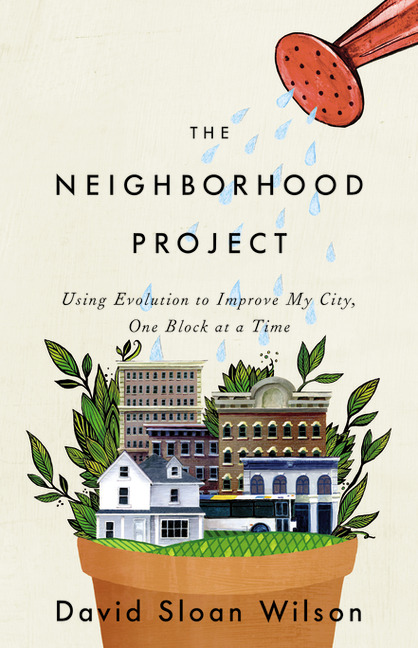
This is a short segment from NPR's Weekend Edition, but it's interesting. They are speaking with David Sloan Wilson about his new book, The Neighborhood Project: Using Evolution to Improve My City, One Block at a Time.
Can Evolution Breed Better Communities?
Listen to the Story
Weekend Edition Sunday
August 28, 2011 | 7 min 4 sec
Download
Evolutionary biologist David Sloan Wilson believes that evolutionary principles work not just at the genetic level, but also on the community level. He contends that evolution is among the factors that drive community involvement. Guest host John Ydstie speaks to Sloan Wilson about his new book, The Neighborhood Project: Using Evolution to Improve My City, One Block at a Time.
* * *
JOHN YDSTIE, host: David Sloan Wilson is an evolutionary biologist who believes that evolutionary principles work not just at the genetic level but also on the community level. Wilson is a professor at the State University of New York at Binghamton, and he's written a new book about a project he launched to illustrate that theory. It's called "The Neighborhood Project: Using Evolution to Improve My City, One Block at a Time."
David Sloan Wilson joins us from member station WSKG in Binghamton. Welcome to the program.
DAVID SLOAN WILSON: Thank you very much.
YDSTIE: Tell us why did you essentially leave the laboratory, I guess, to embark on this community project?
WILSON: Well, all of my professional life I've studies the puzzle of why altruism and cooperation, how they can succeed as evolutionary strategies. Evolution is not just about selfishness. It can also be about selflessness. But how can selflessness evolve? So that's what I was doing as a scientist and then it struck me that really I should be doing in the real world. And what better place to start than my own hometown of Binghamton, New York?
YDSTIE: And give us an outline of how you applied these principles in this project in Binghamton.
WILSON: So what I did in Binghamton was I, first of all, I measured individual differences and how prosocial you are. Prosociality is the scientific term for any other-oriented attitude or behavior. So I measured that...
YDSTIE: Any other, that is or there's concern about the other.
WILSON: That's right. I mean ask the question, you know, I think it's important to make my community a better place. The ones who agree strongly with that statement, and especially those who put it into action, we call them highly prosocial. So I measured that. I also measured the social support that everyone has, and also were there live. So if you're a highly prosocial teenager, you're likely to be surrounded with social support from family, neighborhood, school, religion, extracurricular activities.
So in essence those who gave, got. And those who didn't give, didn't get.
YDSTIE: Where did you find enhances prosociality?
WILSON: Number One: a strong sense of group identity, and a strong sense of what the group is about. If you don't think of yourself as a group and if you don't know what the purpose of the group is, then it's unlikely to function well as a group. Two: proportional costs and benefits. This cannot be the case of some people do all the work and other people get the benefits. That's not sustaining over the long term.
Three: consensus decision-making. People hate being told what to do but they'll work hard for a decision that they agree upon. Four: monitoring. Most people want to cooperate but there's always a temptation to slack a little bit. And then a few people are going to actively to game the system. So, unless you can monitor good behavior, forget about it. Next, graduated sanctions: if somebody does misbehave, you don't bring the hammer down, you mind them in a nice and friendly fashion and that keeps them in solid citizen mode. At the same time, you do need to be prepared to escalate in those rare cases when necessary. Next, a fast, fair conflict resolution. If there is a conflict, it needs to be resolved in a fast and fair fashion in a manner that's regarded as fair by all parties. Seven: autonomy - for a group to do these things, they have to have the authority to manage their own affairs. Finally, in a large society consisting of many groups, those groups have to be put together using those same principles. That's called polycentric governance, a very important concept which emerged from political science but now has a more genuine evolutionary formulation.
YDSTIE: Give us an example of how you try to apply them in a practical way in your projects in Binghamton.
WILSON: One's called Design Your Own Park, which is an innovative collaboration with the city to turn vacant lots into neighborhood parks basically. That's entering its second year, and so I don't have the numbers for that one. But the project which actually has fulfilled itself is a program for at-risk high school students called the Regents Academy. To qualify for this program, you have to have flunked at least three of your classes in the previous year. And we designed the Regents Academy so that after its first year, not only did the students do much better than the comparison group but they actually performed on a par with the average high school student on the state-mandated exams. There's almost no programs for at-risk high school students that do this, other than by taking over the lives of the students with their extended day and extended school year and that sort of thing. But we did it in the context of the normal school day and year simply by designing the program with evolutionary science in mind.
YDSTIE: Binghamton is a bit of a tough laboratory, according to the Gallup poll. A March 2011 Gallup poll found that Binghamton is one of the least-liked cities in the country by its own residents.
(SOUNDBITE OF LAUGHTER)
WILSON: That's true.
YDSTIE: It sounds like a tough row to hoe up there.
WILSON: Binghamton is known for two benign and paternalistic corporations. The first was the Johnson Endicott Shoe Company, which for a time was the largest shoe manufacturer in the world. George Johnson was a great benefactor of the community. He built all the parks. His stamp is still very much everywhere in the community. And then he was followed by John Watson, who built IBM, which started in Binghamton, into the corporation that it is. And who also, like Johnson, took care of his employees. And I think that this actually led to a kind of a helplessness and an incapacity to manage their own affairs, which, when those corporations left, just kind of left the residents stranded. And I've been told that the ethos of the city, which is reflected in that survey, is basically one of betrayal. But in other respects, Binghamton is a wonderful city.
YDSTIE: David Sloan Wilson's new book is called "The Neighborhood Project." Thanks very much for joining us.
WILSON: Thanks to you.
(SOUNDBITE OF MUSIC)
YDSTIE: You're listening to WEEKEND EDITION from NPR News.
Sunday, August 28, 2011
Neil Roberts - Surrending to Stuckness: VIDEO by Pema Chodron
Nice post by Neil Roberts - been there, done that - still learning. I have to say, however, I did not get to do the "globe trotting to exotic spiritual destinations, studying with a Tibetan lama" - I just went straight for the enormous library of dharma books. From The Interdependence Project.

Read the whole article.
Here is the video he included in the post.
Surrending to Stuckness: VIDEO by Pema Chodron
Submitted by Neil Roberts on Wed, 8/17/2011
I’ve been a “serious” meditator for a little over a year now. And it took me an entire frenzied year of consistent practice, globe trotting to exotic spiritual destinations, studying with a Tibetan lama, and amassing an enormous library of Dharma books to realize that my “seriousness,” cleverly disguised as determination, was my biggest problem.
At first, meditation was the glorious “out”, the perfect remedy to years of distraction, self-criticism, and all the ensuing frustration. The more I read, googled, and you-tubed, the more I resonated with the theories and teachings of the meditation traditions. They addressed every conceivable problem I saw in my life.
Read the whole article.
Here is the video he included in the post.
Introduction – Humanitarianism and Suffering: The Mobilization of Empathy

This essay serves as the Introduction to Humanitarianism and Suffering: The Mobilization of Empathy, edited by Richard Ashby Wilson and Richard D. Brown, Cambridge University Press (2008). The book was just released in paperback in May (2011).
Richard Ashby Wilson
University of Connecticut School of Law
Richard D. Brown
affiliation not provided to SSRN
HUMANITARIANISM AND SUFFERING: THE MOBILIZATION OF EMPATHY, Richard Ashby Wilson, Richard D. Brown, eds., Cambridge University Press, 2008
Abstract:
Humanitarian sentiments have motivated a variety of manifestations of pity, from nineteenth-century movements to end slavery to the creation of modern international humanitarian law. While humanitarianism is clearly political, Humanitarianism and Suffering addresses the ways in which it is also an ethos embedded in civil society, one that drives secular and religious social and cultural movements, not just legal and political institutions. As an ethos, humanitarianism has a strong narrative and representational dimension that can generate humanitarian constituencies for particular causes. The emotional nature of compassion is closely linked to visual and literary images of suffering and innocence. Essays in the volume seek to understand the character, form and voice of private or public narratives themselves and to explain how and why some narratives of suffering become part of political movements of solidarity, whereas others do not. Humanitarianism and Suffering is concerned with identifying when, how and why humanitarian movements become widespread popular movements, how popular sentiments move political and social elites to action and conversely, how national elites attempt to appropriate humanitarian ideals for more instrumental ends.
Citation:
Wilson, Richard Ashby and Brown, Richard D., Introduction – Humanitarianism and Suffering: The Mobilization of Empathy (May 24, 2008). HUMANITARIANISM AND SUFFERING: THE MOBILIZATION OF EMPATHY, Richard Ashby Wilson, Richard D. Brown, eds., Cambridge University Press, 2008. Available at SSRN: http://ssrn.com/abstract=1851965
Young brains lack the wisdom of their elders

The old belief that we become wiser in our old age appears to be true, at least in terms of how we allocate effort and energy in the brain. Essentially, we are better able to integrate experience into brain function and problem solving.
Clinical study shows young brains lack the wisdom of their elders
August 25, 2011
Language task reveals brains of older people are not slower but rather wiser than young brains, allowing older adults to achieve an equivalent level of performance.The brains of older people are not slower but rather wiser than young brains, which allows older adults to achieve an equivalent level of performance, according research undertaken at the University Geriatrics Institute of Montreal by Dr. Oury Monchi and Dr. Ruben Martins of the Univeristy of Montreal."The older brain has experience and knows that nothing is gained by jumping the gun. It was already known that aging is not necessarily associated with a significant loss in cognitive function. When it comes to certain tasks, the brains of older adults can achieve very close to the same performance as those of younger ones," explained Dr. Monchi. "We now have neurobiological evidence showing that with age comes wisdom and that as the brain gets older, it learns to better allocate its resources. Overall, our study shows that Aesop's fable about the tortoise and the hare was on the money: being able to run fast does not always win the race—you have to know how to best use your abilities. This adage is a defining characteristic of aging."The original goal of the study was to explore the brain regions and pathways that are involved in the planning and execution of language pairing tasks. In particular, the researchers were interested in knowing what happened when the rules of the task changed part way through the exercise. For this test, participants were asked to pair words according to different lexical rules, including semantic category (animal, object, etc.), rhyme, or the beginning of the word (attack). The matching rules changed multiple times throughout the task without the participants knowing. For example, if the person figured out that the words fell under the same semantic category, the rule was changed so that they were required to pair the words according to rhyme instead."Funny enough, the young brain is more reactive to negative reinforcement than the older one. When the young participants made a mistake and had to plan and execute a new strategy to get the right answer, various parts of their brains were recruited even before the next task began. However, when the older participants learned that they had made a mistake, these regions were only recruited at the beginning of the next trial, indicating that with age, we decide to make adjustments only when absolutely necessary. It is as though the older brain is more impervious to criticism and more confident than the young brain," stated Dr. Monchi.
Subscribe to:
Posts (Atom)