
Tuesday, July 22, 2008

How Emotional Pain Can Really Hurt


BBC News ran a story a day or two ago that shows the brain regions that light up when we are in emotional pain. Essentially they have discovered what all of us who have suffered a "broken heart" have always known -- the pain is also physical.

How emotional pain can really hurt

By Vivienne Parry
Radio 4's The Pain Of Emotion

A woman crying
Grief can have physical effects

Love really does hurt, just as poets and song lyric writers claim.

New brain scanning technologies are revealing that the part of the brain that processes physical pain also deals with emotional pain.

And in the same way that in some people injury can cause long-lasting chronic pain, science now reveals why some will never get over such heartbreak.

Emotional pain can take many forms; a relationship break-up or social exclusion, for example.

But it does not get any more extreme than losing a loved one, as Scottish broadcaster Mark Stephen did.

In July 1995 he was driving a tractor while hay-making and accidentally hit his young daughter. She died shortly afterwards

Mark's grief was overwhelming, he says.

"When people talk about a broken heart, that for me was where it was seated, just below your sternum.

"It feels like your heart is leaking and you can't run away from it because you are the source of that pain."

Thinking he would go mad with grief, he sought help from David Alexander.

Professor Alexander is director of the Aberdeen Centre for Trauma Research. He led the psychiatric team that first responded to the Piper Alpha oil-rig disaster.

Since then, he has been involved in helping survivors of many disasters including the Asian tsunami, the war in Iraq and, most recently, the earthquake in Pakistan.

He also managed to get Mark Stephen through his darkest days.

Read the whole article.

What's interesting is that the brain processes emotional pain much in the same way that is processes physical pain, lending more credence to the idea that emotions are body-centered more than brain-centered.

The way people describe emotions also favors that belief: "My head is bursting," "I feel it in my guts," "My heart aches," and so on.

The studies that have been set up to study this are interesting:

Neuroscientist Mary Frances O'Connor at the University of California, Los Angeles (UCLA) is one of the scientists who have propelled emotional pain up the research agenda.

"We're at a very new time when we can use technologies to look at the brain and the heart," she says.

Naomi Eisenberger at UCLA has shown which parts of the brain are active when we feel emotional pain.

She devised an intriguing computer game in which participants were deliberately made to feel left out.

Simultaneous brain scanning revealed that the pain of being socially rejected was processed in much the same way in the brain as physical pain and in the same area, the anterior cingulate cortex.

What's also really interesting is that this supports the anecdotal evidence that people can actually die of a broken heart. We know that older adults have a greater risk of dying within 6 months of the passing of a spouse, and this research may explain why.
But sometimes physical pain can become chronic, long outlasting its original purpose, and emotional pain is the same.

Mary Frances O'Connor calls it "complex grief" and it occurs in about 10% of people after bereavement.

"They experience a lot of bitterness and anger, that their future is senseless. They don't adapt with time as others do."

There is a very strong suspicion that people who are not adapting to bereavement are also those who experience the greatest levels of physical pain.

But can we die from a broken heart?

Martin Cowie is professor of cardiology at the Brompton Hospital. He is very sure of the answer: "Yes, we can.

"There is an increased risk of dying in the six months after bereavement and it's particularly marked amongst men."

The bereaved are much more likely to be involved in accidents, which is perhaps understandable, but also to die from heart attacks and stroke. The hormones involved in the stress of bereavement make these events more likely.

This knowledge makes it essential to identify and treat those whose emotional pain is likely to become chronic, causing debilitating depression or even death.

You can listen to the podcast of this story at BBC iPlayer for the next seven days.


Monday, July 21, 2008

Humorous Feud - Barbara Walters vs James Van Praagh

Ah, yes, the "sensitive" is sensitive to being exposed as a fraud.

Courtesy of Seriously? OMG! WTF?:
Barbara Walters vs James Van Praagh July 21st, 2008 under The View >Barbara Walters has a new feud on her hands and this time it is with the Executive Producer of Ghost Whisperer according to The New York Post. James was on The View July 7th to promote his book Ghost Among Us and warned her during a commercial break that he sensed something wrong with her blood.

"He said, 'I need to talk to you . . . There's something wrong with your blood.' Then he said, 'There's also something wrong with your lower back.'

"He said it could be an infection."

The news prayed on her mind, even though "I'm skeptical and Mr. Van Praagh knows it," she said.

"I'm obsessing, the white blood cells, blah-blah," so she went for some tests, she said on the show.

"Well, today I got the report. I am absolutely normal!" she said.

"I think it's a dangerous thing to do!" she said of Van Praagh.

Van Praagh was stunned and, he says, hurt when he saw the show.

"I felt obliged to privately acknowledge to Barbara Walters that I was sensing an abnormality with her white cell count," he told The Post over the weekend, "And even though it might not be present at the moment, she should be aware of it and keep an eye on it.

"I am sorry that Ms. Walters chose to publicly disparage me and do hope that the goodwill I demonstrated during the show is not belittled by her misinterpretation of my work."

And, oh yes, he added, "You don't have to be a psychic to know why Star [Jones] and Rosie [O'Donnell] left the show!

"I felt darts being thrown all around," Van Praagh said. "For a 'sensitive' to be on that couch, it was like sitting on ice!"

Maybe all the bad blood he saw was not her real red blood, but all the bad blood she has with people? We have seen a whole new side of her since her book came out.

Heh heh.


Satire - Domino's Scientists Test Limits Of What Humans Will Eat

The Onion News Network reports on America's diet habits.


Domino's Scientists Test Limits Of What Humans Will Eat


Satire - McCain Makes Historic First Visit to Internet


Andy Borowitz, on the campaign trail.

McCain Makes Historic First Visit to Internet

Will Spend Five Days at Key Sites

In a daring bid to wrench attention from his Democratic rival in the 2008 presidential race, Sen. John McCain (R-Ariz.) today embarked on an historic first-ever visit to the Internet.

Given that the Arizona Republican had never logged onto the Internet before, advisers acknowledged that his first visit to the World Wide Web was fraught with risk.

But with his Democratic rival Barack Obama making headlines with his tour of the Middle East and Europe, the McCain campaign felt that they needed to "come up with something equally bold for John to do," according to one advisor.

McCain aides said that the senator's journey to the Internet will span five days and will take him to such far-flung sites as Amazon.com, eBay and Facebook.

With a press retinue watching, Sen. McCain logged onto the Internet at 9:00 AM Sunday, paying his first-ever visit ever to Mapquest.com.

"I can't get this [expletive] thing to work," Sen. McCain said as he struggled with his computer's mouse, causing his wife Cindy to prompt him to add that he was "just kidding."

Having pronounced his visit to Mapquest a success, Sen. McCain continued his tour by visiting Weather.com and Yahoo! Answers, where he inquired as to the difference between Sunnis and Shiites.

Sen. McCain said that he had embarked on his visit to the Internet to allay any fears that he is too out-of-touch to be president, adding that he plans to take additional steps to demonstrate that he is comfortable with today's technology: "In the days and weeks ahead, you will be seeing me rock out with my new Walkman."


TED Talks - Martin Seligman: Why is psychology good?

Positive psychology hits TED in the person of its most well-known proponent, Martin Seligman. I'm not a huge fan of Seligman's approach because it ignores the shadow work I believe is necessary in psychological healing, but I find many of his techniques useful in creating a more meaningful life, which seems to be his major purpose.
Positive psychologist Martin Seligman talks about psychology -- both as a developing field of study, and as it works one-on-one with each patient and each practitioner. As it moves beyond a strict focus on curing mental disorders and dis-ease, what can modern psychology help us to become? (Recorded February 2004 in Monterey, California. Duration: 23:41.)

Martin Seligman founded the field of positive psychology in 2000, and has devoted his career since then to furthering the study of positive emotion, positive character traits, and positive institutions. It's a fascinating field of study that had few empirical, scientific measures -- traditional clinical psychology focusing more on the repair of unhappy states than the propagation and nurturing of happy ones. In his pioneering work, Seligman directs the Positive Psychology Center at the University of Pennsylvania, developing clinical tools and training the next generation of positive psychologists.

His earlier work focused on perhaps the opposite state: learned helplessness, in which a person feels he or she is powerless to change a situation that is, in fact, changeable. Seligman is an often-cited authority in this field as well -- in fact, his is the 13th most likely name to pop up in a general psych textbook. He was the leading consultant on a Consumer Reports study on long-term psychotherapy, and has developed several common pre-employment tests, including the Seligman Attributional Style Questionnaire (SASQ).


Daring to Dislike "The Dark Knight"

David Edelstein, writing at New York Magazine, dares to not like The Dark Knight, finding it the darkest Super Hero film imaginable.

Bat Out of Hell

They don’t make superhero franchises much darker than this.


(Photo: Courtesy of Warner Bros. Pictures)

Even if the death of Heath Ledger hadn’t already draped it in a funeral shroud, The Dark Knight would be a morbid affair: It could only be darker if Batman died. (He does die a little, on the inside.) The director, Christopher Nolan, has decided to get real with the thing. Forget Gotham City—or Anton Furst’s splendid Gothic Gotham of Tim Burton’s Batman, which summoned up the freaky superhero’s inner landscape of vaulted arches and gargoyles. We’re now in a modern, untransformed Manhattan, where the Joker’s opening bank heist unfolds in a tense, realistic style with multiple point-blank shootings. It’s a shock—and very effective—to see a comic-book villain come on like a Quentin Tarantino reservoir dog. But then the novelty wears off and the lack of imagination, visual and otherwise, turns into a drag. The Dark Knight is noisy, jumbled, and sadistic. Even its most wondrous vision—Batman’s plunges from skyscrapers, bat-wings snapping open as he glides through the night like a human kite—can’t keep the movie airborne. There’s an anvil attached to that cape.

Nolan and his brother Jonathan (they co-wrote the script) have a fine, ironic starting point: Batman (Christian Bale) has inspired copycat vigilantes, and they’re making an even bigger mess of crime-plagued Gotham City. It’s as if an action—the introduction of a vigilante do-gooder—has triggered an equal and opposite reaction. And Batman has a true counterforce: a Joker (Ledger) who’s a terrorist, a one-man insurgency, with no motivation except bringing chaos. He fancies himself a Lord of Misrule; he taunts the gangsters whose goons he exploits; and he assassinates—or works to corrupt—do-gooders like cleft-chinned district attorney Harvey Dent (Aaron Eckhart). Batman—talons tied by pesky ethics—can’t stanch the madness.

On paper, the morality play is intriguing, but a lot of the dialogue should have stayed on paper (I can imagine a study guide: “The Joker tells Batman he can’t fight chaos because he has too many ‘rules.’ Do those rules ultimately help or hinder Batman in his quest for justice?”). Nolan is grappling with the Big Themes of vigilantism (especially urban vigilantism), and he did pretty well in Batman Begins: The movie was a foundation on which to build a new series; even in the mouth of the ridiculously chirpy Katie Holmes (as Rachel Dawes, stalwart assistant D.A.), the thesis line, “Justice is about harmony. Revenge is about making yourself feel better,” made an excellent superhero mantra. But the psychological twists in The Dark Knight—especially the transformation of Dent into “Two-Face”—are baffling as drama. They play as if they’d been penned by Oxford philosophy majors trying to tone up a piece of American pop—to turn it into an uncivil Shavian dialogue, Don Juan in Hell with mutilations and truck crashes.

He goes on from there.

Besides hating the dialogue, he also finds the action sequences to be lame, or just plain incomprehensible.

I defy you to make spatial sense of the early scene in which Batman battles faux Batmen, gangsters, and the Scarecrow (Cillian Murphy in a cameo that comes to nothing). If you can, move on to Level 2, diagramming the “Bat-tank versus Joker-truck versus cop car” chase. Then, finally, take the Ultimate Challenge: following the climax with Batman, the Joker, more faux Batmen, decoy hostages dressed as clowns, a SWAT team, and Morgan Freeman’s Lucius with some kind of sonar monitoring gizmo that tracks all the parties on video screens. Actually, Freeman looks like he knows what’s going on. Maybe the sequence plays well in sonar.

However, despite all his criticisms, he does find a few things to like about the film, it's just that none of them have anything to do with Batman or the Joker, the main focus of the film.

Maggie Gyllenhaal takes over (hooray!) for Katie Holmes and graciously doesn’t trash her predecessor’s characterization. She makes sense of it: Rachel is a bratty little show-off who also happens to be kind of smart. The other great pleasure is watching Pretentious English Thespian Gary Oldman play the soon-to-be Commissioner Gordon as the most ordinary of ordinary American Joes. Rarely has flatness been so witty.

His review of Heath Ledger's Joker is sympathetic but ultimately negative, and not because of Ledger's performance as much as, one intuits, the badly written character that he tries to inhabit:

How is Heath Ledger? My heart went out to him. He’s working so very hard to fill the void, to be doing something every second. It’s rave and rage and purge acting. This Joker is a straight-out psychopath—a Stephen King clown-demon with smudged greasepaint and yellow teeth and hair that appears to have never been washed. As written, the Joker is like a souped-up Andy Robinson in Dirty Harry (only this Harry won’t blow him away with a .44 Magnum), and Ledger revs it higher and higher. He bugs his eyes and licks compulsively at the gashes that extend his mouth. He tries on different voices. First he sounds like Cagney in White Heat, then slides into a prissy singsong like Al Franken’s Stuart Smalley, then throws in some fruity Brando flourishes and a dash of Hannibal Lecter. He’s lethal—fast with sharp objects—but apart from a gruesome bit with a pencil not terribly prankish. I couldn’t take my eyes off him, but in truth, I found the performance painful to watch. Scarier than what the Joker does to anyone onscreen is what Ledger must have been doing to himself—trying to find the center of a character without a dream of one.

Needless to say, this review has generated quite a few comments, many of them suggesting that Edelstein might be better suited to a career not involving critical thinking, or that he needs to learn how to have fun.

If nothing else, the man showed some courage in going against the grain so adamently. Or maybe foolishness.


New Kind of Therapy Combines Quantum Mechanics with Psychology

Can quantum mechanics offer a shortcut in the therapy process? Jean Boyd, author of The Greatest Escape: Travel the Quantum Path to Personal Freedom, says it can.

New Kind of Therapy Combines Quantum Mechanics with Psychology

For those disappointed with the results of lengthy, expensive, traditional therapies, quantum psychology offers a different path.

New York, NY (PRWEB) July 20, 2008 -- It seems like everyone these days in is some sort of therapy, whether it is for stress associated with a troubled economy, family problems, or traumatic experiences such as child abuse and "battle fatigue." Now a new book offers a different solution to the problems we all must deal with in our lives. "The surprise is that our bodies are way smarter then we thought they were," says Jean Boyd, author of The Greatest Escape: Travel the Quantum Path to Personal Freedom. "Our brains are hard-wired with a remarkable program that gives us a way to solve the problems associated with our everyday lives, heal our psychological wounds and transform our lives." She adds that along with this healing, there's an added bonus. "Once we access this program, we simultaneously evolve to higher levels of consciousness and acquire new abilities, such as - courageousness, individual power and even 'enlightenment.'"

Her beautifully illustrated, full color book explains how a new psychology, quantum psychology, is providing new insights into our ability to be our own counselors, therapists and gurus. Combining Eastern philosophy and Western science, in particular quantum mechanics, quantum psychology presents a system of personal growth that is, as Ms. Boyd puts it, "Simple but not always easy." The work is almost the direct opposite of talk therapy, as it does not include discussing problems. It consists of the practice of a few techniques that produce immediate, fundamental change. Jean, a former nurse, college instructor, and counselor, says that based on her years of working with abuse survivors, veterans, and those troubled by everyday problems, such as failed relationships and unsuccessful careers, "the biggest obstacle to change is resistance to change."

For those disappointed with the results of lengthy, expensive, traditional therapies, quantum psychology offers a different path. "When you consider that our bodies know how to digest food and kill germs, it only makes sense that they also know how to produce personal growth - with a little help from us," Ms. Boyd notes. More information on quantum psychology can be found at Jean Boyd's web site, www.quantumboyd.com. Those who wish to explore this growing field of quantum psychology can download a free excerpt from The Greatest Escape.

Here is an excerpt from the book:

Six deadly emotions

The Judaic-Christian tradition identifies seven “deadly sins:” pride, greed, envy, anger, lust, gluttony, and sloth. These “sins” are on the list of negative emotional responses that play an active role in the personal growth process. They lead your Observer to the source of your problems, which is always within. If you have an ego-centered consciousness, one of these emotional responses comes up most often and represents your typical response to life.

What follows is a description of these categories, beginning with the lowest level of energy, the greatest existential separation from the environment, and the most distorted map of reality. The intensity of any given emotional response will range from mild to severe.


1. Apathy–“I don’t care.”

This is the lowest level of energy, and we “feel nothing.” We are lethargic, passive, indifferent, listless, unconcerned, apathetic, unresponsive, or passionless. We have little emotional reaction to events, and we don’t much care what happens: “Do you mind being homeless?” the reporter asked the bag lady. “I don’t care,” she replied. This state has the most closed psychological system, the least interaction with the environment, and the most distorted map of reality.


2. Grief–“Poor me.”

We feel sad, dejected, gloomy, depressed, unhappy, lonely, regretful, discouraged, disappointed, shameful, pessimistic, or powerless. Grief is a step upward from apathy, because at least we feel something. This energy level is higher than apathy, but still quite low. We’re still operating with a considerably closed psychological system, and perceive a significantly distorted map of reality. We have little interaction with the environment and show little interest in anything outside of ourselves. When we don’t express our anger outward, but turn it inward (suppress or repress it), we feel sad, or get hurt feelings, which is another form of grief.


3. Fear–“I’d better watch out.”

Clearly, someone wide-eyed with fear has more energy, and interacts more with the environment, than someone who sits listlessly in a chair, uninterested in anything going on around them. Fear makes us hyper-vigilant, and we scan our surroundings, looking for potential danger, real or imagined. We feel apprehensive, frightened, uncomfortable, anxious, shy, distrustful, horrified, cowardly, panicked, nervous, tense, edgy, jumpy, uneasy, wary, concerned, guilty, or solicitous. Fear significantly distorts our perceptions of reality, we dread making mistakes, are reluctant to try anything new, and resist changes to the status quo.


4. Anger– “You better watch out.”

The energy level here is much higher, and we direct much of it outward into the environment. Sometimes, we turn our anger against someone we know, perhaps a spouse, or our children. At other times, we vent it on anyone who happens to be in the vicinity, for example, road rage. We feel impatient, frustrated, annoyed, exasperated, irritated, angry, bitter, displeased, murderous, stubborn, jealous, offended, or enraged. We often criticize others and blame them for our own problems: “It’s all your fault.”


5. Lust– “I must have it.”

At this higher energy level, we are less reactive and more proactive. We interact more with our environment because we want stuff from it. We feel an overwhelming hunger, craving, desire, longing, yearning, or appetite for something—such as sex, power, wealth, possessions, success, food, or fame. Lust brings temporary gratification, but no real satisfaction, so no matter how much we get of the thing we crave, it is never enough to satisfy us for long. Sexual lust has ruined many marriages and political careers, lust for money has led to the downfall of big corporations, and people kill for political power.


6. Pride–“I know I am right.”

Pride is the highest of the low levels of energy before self-actualization, and we have the most interaction with the environment and the least distorted map of reality. We feel arrogant, vain, haughty, disdainful, authoritarian, masterful, egotistical, self-confident, self-satisfied, proud, superior, or complacent. Experiencing ego’s certainty, we take an active role in society, and our self-confidence helps us succeed. We are likely to be perfectionists, reject criticism, and take pride in being a “good” person. Believing in the superiority of our own race, gender, religion, or nationality, we feel justified in persecuting others and starting wars.

Read another excerpt from The Greatest Escape, read about Jean Boyd’s quest, or read stories of those traveling the Quantum Path.

OK, let's just say I am skeptical and that I smell some pre/trans fallacy lurking in this book. The six emotions are nothing new -- all of these are covered in Buddhism.

Where I sense pre/trans trouble lurking is in the notion "that our bodies are way smarter then we thought they were," not to mention this statement: "When you consider that our bodies know how to digest food and kill germs, it only makes sense that they also know how to produce personal growth - with a little help from us." Maybe, in some ways, but probably not in the way she intends.

The body is great at healing body-centered issues, but I doubt that it rises above the emotional realm to the level of existential issues or anything higher. It's really quite problematic that these New Age types keep publishing pseudo scientific BS that promises healing without doing the necessary shadow work.

The "real" Quantum Psychology came from Robert Anton Wilson (written solely in e-prime) back in 1990.

It focuses primarily on the metaphysical and epistemological problems of Aristotelean reasoning and its use in everyday language, covering E-Prime and how it addresses many of the semantic (and resulting perceptual) "spooks" that common language lets in.

It also covers, in a way that doesn't end up as discontinuous as it might sound: psychosomatic healing and a possible explanation for it; non-local effects in quantum physics (Bell's Theorem) and the theories of David Bohm; and a brief recap of the Timothy Leary eight-fold consciousness theory of human consciousness which Prometheus Rising covers in much greater detail. In Quantum Psychology, Wilson posits four additional circuits.

You can read an excerpt of Wilson's book here.

Personally, I loved Wilson's book, and as far as working with the ego, I'll stick with my Buddhist practices, thank you very much.

A Nation of Wimps: The High Cost of Invasive Parenting


Parenting hit the news this weekend with a review of A Nation of Wimps: The High Cost of Invasive Parenting in The Boston Globe and interview with the author in Time. I find this topic and the conclusions of the author highly alarming.
A scathing commentary on today's parenting
By Barbara F. Meltz June 5, 2008

A Nation of Wimps: The High
Cost of Invasive Parenting

By Hara Estroff Marano
Broadway, 320 pp., $23.95

Helicopter parenting is so passe. Why waste your time hovering, waiting to swoop in on a moment's notice to rescue your child from a crisis, when you can clear potential obstacles ahead of time and make the path as smooth and safe and stress-free as possible? Kind of like, well, a snowplow.

But wait. A snowplow can rip up chunks of grass now and then, or dent a tree so badly it will eventually die.

In "A Nation of Wimps: The High Cost of Invasive Parenting," Hara Estroff Marano spares no detail telling us that snowplow parenting is risky business, shortsighted and selfish, even stupid.

Parents, gird your loins. This is not bedtime reading. Marano lays out a scary story.

Protective parents have morphed into "death-grip" parents who hold on to their children so tightly that nothing is left to chance, raising them in "hothouses" where every aspect of life is under parental control. The normal course of child development gets short shrift, if it's not completely short-circuited. The results, writes Marano, are "teacup kids": "Without opportunities to experience [for] themselves, to develop and call on their own inner resources, to test their own limits, to develop confidence in themselves as problem-solvers, they are fragile and shatter easily."

Researchers, educators, and authors before Marano have been saying in one way or another for a number of years that childhood is in trouble, particularly because of a cultural devaluing of imaginative play. They have linked the loss of play to a demise in creativity and self-esteem. Marano takes it a step further: She claims that nothing less than the survival of democracy and, indeed, all of humanity is at stake.

Marano, the former editor of Psychology Today, lays out cogent arguments. Chapter 7, "Crisis on the Campus," shows that our country is churning out a well-credentialed generation of people who can't - and often don't want to - think for themselves. "College is where the fragility factor is having its greatest impact," she writes. "By all accounts, psychological distress is rampant on college campuses. . . . There isn't a meeting of college presidents where the subject of student mental health doesn't come up."

Afraid to take risks, afraid to fail, these students don't know who they are. Extensions of their parents? Trophies for their parents? They don't even know how to separate long enough to figure it out.

The book is a scathing commentary on contemporary parenting, particularly the parenting of the affluent. (She predicts the children of the current generation who will be most successful are those with immigrant parents, because these parents could not run interference.) When she rails about how children and their accoutrements and accomplishments provide parents with status, she is harsh and unforgiving.

Here's an example of her comments about micro-managing parents, from Chapter 3, "We're All Jewish Mothers Now": "The desire of parents for a wholly sanitized environment for their kids, totally free of uncertainty, couldn't be clearer than in the rash of new hand-cleansing agents intended for children to take with them to school. . . . It reflects a dream of total control over the child's safety and, consequently, development, a kind of parental panopticon in which children are under the constant gaze, literally and metaphorically, of adults. Among teens, the means change but the principle stays the same; nanny cams give way to Internet activity monitors and cellphones with GPS monitors."

Surely every reader will acknowledge a bit of him- or herself or someone they know somewhere in the book. But even when Marano's facts convince, her tone is off-putting. Consider this passage toward the end of the book: "In this perspective, parents are far more worthy of sympathy than of ridicule. They are more stressed and depressed than anyone else in the culture, doing their best to cope with an adverse climate. That is, they would be worthy of sympathy - if their efforts were not all so tirelessly, relentlessly self-focused."

Marano has important things to say. Her arguments may upset and anger some, but her research is exhaustive, and many of her points deserve national conversation. But the book comes across as an overdue spanking of parents. You can't be a wimp to read it.

Damn, sounds pretty bad -- maybe my parents weren't so bad after all.

Here is the interview from Time.

Are You Turning Your Child Into a Wimp?
By ANDREA SACHS

Are American parents smothering their children? Hara Estroff Marano, an editor-at-large at Psychology Today magazine and the grandmother of three small children, is convinced that they are. In her provocative new book, A Nation of Wimps: The High Cost of Invasive Parenting (Broadway), she writes, "Behold the wholly sanitized childhood, without skinned knees or the occasional C in history! Kids need to learn that you need to feel bad sometimes. We learn through experience, and we learn especially through bad experiences. Through disappointment and failure we learn how to cope." TIME senior reporter Andrea Sachs spoke with Marano:

TIME: How did you become interested in this subject?

HARA ESTROFF MARANO: I had done intensive reporting on what I call the crisis on the campus. Why were college kids breaking down now in record numbers? Genetically they're not different. My kids had gone to college not long before. This was not a problem when they went to school. So I began looking at why, and I began talking to everyone on the front lines. There were hundreds and hundreds of people who were treating these kids, and they all said the same thing: these kids lack coping skills because they've not been allowed to fully function. They are the products of parental anxiety and all the lumps and bumps have been taken out of life for them, so they have no idea how to manage the normal vicissitudes of life.

Why has that occurred?

The world has changed on our watch. I didn't grow up knowing how to use a computer. So that instrument alone is highly symbolic that the world has changed. It's very fast, very dynamic, very fluid. A kid in Bangalore can come up with a program that could make Microsoft obsolete in two years. This is scary. This makes for great uncertainty. So what we're really worried about is the success of our kids. That's why we push them to achieve. And that's why we're focused on the Harvard, Yale, Princeton brand-name education. In a world of uncertainty, a brand name carries some cachet and it's the closest thing you can get to a guarantee of some kind of success or achievement.

You consider medicating kids with drugs like Ritalin over-parenting.

Parents go out of their way to have their kids declared defective so that they can get the drug and so that they can also have "accommodations." This is a big deal. It has been going on for five or seven years now. Parents go out of their way and spend fortunes. Neuropsychologists do the testing. It's a huge business. "Accommodations" is not an informal word. It's a formal thing that schools do. Almost all of the accommodations are centered around prolonging the test time the kids have. It's no longer something that gets marked on your record. So colleges don't know if you had twice the time to take your SATs. That's why parents find it so highly desirable. But in the course of doing it, they have their kids tested to find some little quirk, some little vulnerability� And that's a measure of parental anxiety. And the parental anxiety is willing to put a negative label on kids. That's really something very new. You don't boast your strengths. You boast your weaknesses.

You write about the importance of play and how it's not valued to the degree it should be.

Right. It's so counterintuitive. Play builds brains and gives children the ability to impose self-control and creates within brain circuitry the ability to pay attention. When you look at kids playing, adults see it as a waste of time. They have no clue what play does. Vigorous social play stimulates the growth of brain cells in the executive portion of the brain in the frontal cortex, and that lays the foundation for the circuitry of self-regulation, which is what you need to pay attention when you're at school. I'll just give you a very, very clear little example. We're talking about free play, not play that's monitored by adults. Because we know that when the adults are near kids, kids change what they talk about and change the content of their play. We've known that for a long time. But just picture two little kids in free play. They're inventing what they're going to do. Okay, we're going to play house. You're going to be the doggie and I'm going to be the mommy. So these kids, what are they doing? They're creating the rules that they then agree to subordinate their impulses to. I mean, that's extraordinarily powerful. But that doesn't hit you in the face when you see kids playing. It looks like, oh, we could use this time for workbook work.

Read the rest of the interview.

Doesn't sound good at all. How are kids supposed to learn to be self-sufficient and to rely on their own inner strength if they never face challenges or tough situations? My parents were no picnic, but they allowed me to fall down a lot (literally and figuratively) and, often enough, to figure out for myself how to pick myself up and carry on.

If this author is telling us the truth, we could end up with a generation of people who have no personal skills and sense of self -- perfect material for marketers to sell to.


Cool Site - i am neurotic

Want to feel better about your own life by seeing how messed up some other people are (and Jerry Springer isn't on for another hour)? Or maybe you want to get something off your chest in an anonymous setting?

Following in the tradition of Post Secret, there is now i am neurotic. Here are a couple of sample entries:

remote control

I am strangely attached to my TV Remote. If it gets misplaced, i get angry and frustrated. I can’t sleep unless i know right where it is. Once, i even stayed up until one in the morning trying to find it!

magazine spies

I tend to feel that people in magazine pictures can see me or know what I’m doing. While knowing it’s foolish, I still have to cover them up if I’m doing anything private, gross, embarrassing and/or am going to sleep.

bloody mary, bloody mary, bloody mary

I can’t go to sleep if there is a mirror exposed somewhere in my room. If the mirror on my desk is facing my bed, I’m scared that something will appear in the mirror, or come out of it to come get me. I have to put it face down before I go to bed.

Seriously, I wonder how many of these are real, and how many are people just making shit up to show their friends.


Sunday, July 20, 2008

Chris Hedges - Collateral Damage: America's War Against Iraqi Civilians

This is an excellent discussion, and very disturbing. The media really hasn't covered this element of the war at all.

Independent journalist and author, Chris Hedges, talks about his latest book, co-authored with Laila Al-Arian, Collateral Damage: America's War Against Iraqi Civilians, at Powell's books in Portland, Oregon (the best bookstore in America).


Dharma Quote - Jeffrey Hopkins

Dharma Quote of the Week from Snow Lion Publications.

We usually discriminate strongly between someone who intends to harm us and someone who doesn't. We think, "That's all right; he didn't mean it"; or the person who has harmed us can say, "Why do you blame me so much? I didn't mean to." But we get really angry when we know people mean to harm us. How could we possibly see such people as intimate, close, dear--as dear as our best of friends?

If you can retain a little compassion when people harm you unintentionally, you have made progress. But if you retain it when someone intends to harm you, you are really successful. It's not that you think, "This person is marvelous; she's trying to rob me," but you don't take these facts as reasons for hating the person. You recognize the intention and put your wallet in your front pocket. You take such measures, but the conditions that prompted them no longer serve as reasons for hatred.

Our wish to love everyone and the actual attitudes we have under pressure are in constant conflict. That's just the way we are. We've been wandering in cyclic existence since beginningless time, because of desire and hatred, and it's going to take a lot of familiarization to change this. Be relaxed about it. Don't put pressure on yourself, thinking things like, "Oh, I'm a scumbag because I hate so deeply." Rather, try this attitude: "I have to admit it. As much as my ideals say I should love so-and-so--or at least be neutral--I have to face the fact that I don't." Go easy on yourself.

~ From A Truthful Heart: Buddhist Practices for Connecting with Others by Jeffrey Hopkins, foreword by His Holiness the Dalai Lama, published by Snow Lion Publications

Books on Tibet and China

From the Financial Times:

The great brawl of China

By Geoff Dyer

Published: July 11 2008 20:04 | Last updated: July 11 2008 20:04

A Year in Tibet
By Sun Shuyun
HarperPress £20, 234 pages
FT Bookshop price: £16

The Open Road: The Global Journey of the Fourteenth Dalai Lama
By Pico Iyer
Bloomsbury £12.99 288 pages
FT Bookshop price: £10.39

Holder of the White Lotus: The Lives of the Dalai Lama
By Alexander Norman
Little, Brown £20, 446 pages
FT Bookshop price: £16

Why the Dalai Lama Matters: His Act of Truth as the Solution for China, Tibet and the World
By Robert Thurman
Atria Books £16.99, 231 pages
FT Bookshop price: £13.59

Modern China is at its most unsettling when its purpose and power give way to feelings of victimhood. Among Chinese, the inherited memories of humiliating imperial incursions have a powerful resonance, from the burning of the Summer Palace in Beijing by British and French troops in 1860, to the Japanese invasions of the 1930s. That the Communist party has deliberately and repeatedly fostered these emotions among its citizens doesn’t make them any less real.
Tibet is wrapped up in these stories of humiliation. The official Beijing line holds that Tibet was an integral part of the country until western powers began to bully and weaken China in the 19th century, and that China’s rightful sovereignty has since been restored. For them, the modern era in Tibet starts not with the arrival of Mao’s armies in 1950 or the Dalai Lama’s flight to India in 1959, but with the opium wars.

The intense scrutiny from around the world running up to next month’s Beijing Olympics was bound to provoke tension in a single-party state that permits no formal opposition. On March 10 this year, the anniversary of the Dalai Lama’s departure from Tibet, monks began protesting in Lhasa. This triggered more than 60 demonstrations across Tibetan regions, including a race riot in Lhasa against Han Chinese.

There are many explanations for the unrest. But events in March confirmed that Beijing’s attempts to win the loyalty of Tibetans through economic progress have floundered. To make such a point as a journalist, however, was to invite a storm of abuse. The government systematically blocked the foreign media from finding out what had happened yet denounced us for getting the story wrong. Under attack over the military crackdown on dissent, China again presented itself as the victim.

Alongside the hundreds of new books on the People’s Republic this year are a number on Tibet. They cover many genres yet all are political in some measure. And judging by the number of biographies of the Dalai Lama, the exiled Tibetan religious leader remains the most enticing subject matter.

Indeed, discussion about Tibet repeatedly returns to the ageing spiritual leader, now 73. But after this year’s protests, there seems no way through the impasse between Beijing and the Dalai Lama. It is difficult to read these books without a sense of foreboding for Tibet. Each new book on the Dalai Lama prompts the question of whether his global profile hinders or boosts the chance of finding a lasting solution. The Chinese government has repeatedly denounced the Dalai Lama for stimulating violence and trying to sabotage the Olympics – charges he vigorously denies. Yet, as these books make clear, he remains hugely popular among Tibetans, and his many supporters in the west, including several governments, believe he is a moderating influence. After all, he was awarded the Nobel Peace Prize in 1989.

Read the rest of the review.


Why are some of the greatest thinkers being expelled from their disciplines?


Interesting post from the Chronicle of Higher Education.

Gone, and Being Forgotten

Why are some of the greatest thinkers being expelled from their disciplines?

By RUSSELL JACOBY

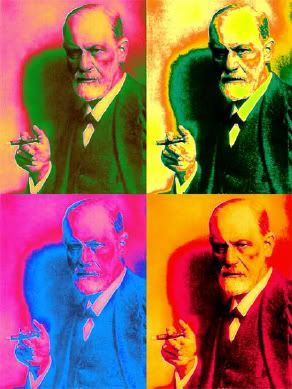
How is it that Freud is not taught in psychology departments, Marx is not taught in economics, and Hegel is hardly taught in philosophy? Instead these masters of Western thought are taught in fields far from their own. Nowadays Freud is found in literature departments, Marx in film studies, and Hegel in German. But have they migrated, or have they been expelled? Perhaps the home fields of Freud, Marx, and Hegel have turned arid. Perhaps those disciplines have come to prize a scientistic ethos that drives away unruly thinkers. Or maybe they simply progress by sloughing off the past.

A completely unscientific survey of three randomly chosen universities confirms the exodus. A search through the philosophy-course descriptions at the University of Kansas yields a single 19th-century-survey lecture that mentions Hegel. Marx receives a passing citation in an economics class on income inequality. Freud scores zero in psychology. At the University of Arizona, Hegel again pops up in a survey course on 19th-century philosophy; Marx is shut out of economics; and, as usual, Freud has disappeared. And at the University of Wisconsin at Madison, Hegel does not appear in philosophy courses, Marx does not turn up in economics, and Freud is bypassed in psychology.

The divorce between informed opinion and academic wisdom could not be more pointed. If educated individuals were asked to name leading historical thinkers in psychology, philosophy, and economics, surely Freud, Hegel, and Marx would figure high on the list. Yet they have vanished from their home disciplines. How can this be?

A single proposition can hardly explain the fate of several thinkers across several fields. However, general trends can inform separate disciplines. For starters, the ruthlessly anti- or nonhistorical orientation that informs contemporary academe encourages shelving past geniuses. This mind-set evidently affects psychology. The American Psychological Association's own task force on "learning goals" for undergraduate majors makes a nod toward teaching the history of psychology, but it relegates the subject to an optional subfield, equivalent to "group dynamics." "We are not advocating that separate courses in the history of psychology or group dynamics must be included in the undergraduate curriculum," the savants counsel, "but leave it to the ingenuity of departments to determine contexts in which students can learn those relevant skills and perspectives." The ingenious departments apparently have dumped Freud as antiquated. A study by the American Psychoanalytic Association of "teaching about psychoanalytic ideas in the undergraduate curricula of 150 highly ranked colleges and universities" concludes that Freudian ideas thrive outside of psychology departments.

The same antihistorical imperatives operate effectively, if with less force, in economics and philosophy. Again, generalizations can be made only with qualifications, but economics departments, like psychology departments, tend to be fiercely present-minded. Their basic fare consists of principles of economics, macroeconomics, microeconomics, finance, game theory, and statistics. To be sure, often the departments offer lecture classes on the history of economic thought, which survey economic thinking from the Greeks to the present. But in this sprint through the past, Marx shows up as little more than a blur. At the University of California at Los Angeles, for instance, students devote less than a week to Marx in a course on the history of economic theories. One scholar of Marx estimates that in more than 2,000 economics departments in the United States, only four offer even one class on the German revolutionary. In 1936, Wassily Leontief, who later won a Nobel in economic science, gave a seminar on Marx in Harvard's economics department. No such seminar is given now.

Compared with economics, philosophy prizes the study of its past and generally offers courses on Greek, medieval, and modern thinkers. Frequently, however, those classes close with Kant, in the 18th century, and do not pick up again until the 20th century. The troubling 19th century, featuring Hegel (and Kierkegaard and Nietzsche), is omitted or glossed over. General catalogs sometimes list a Hegel course in philosophy, but it is rarely offered. Very few philosophy departments at major universities teach Hegel or Hegelian thought.

Philosophy stands at the opposite pole from psychology in at least one respect. In most colleges and universities, it is one of the smaller majors, while psychology is one of the largest. Yet, much like psychology, philosophy has proved unwelcoming for thinkers paddling against the mainstream. Not only did sharp critics like Richard Rorty, frustrated by its narrowness, quit philosophy for comparative literature, but a whole series of professors have departed for other fields, leaving philosophy itself intellectually parched.

That is the argument of John McCumber, a scholar of Hegel and Heidegger who himself decamped from philosophy to German. His book Time in the Ditch: American Philosophy and the McCarthy Era (Northwestern University Press, 2001) savages the contemporary American philosophical profession and its flight from history. He notes, for instance, that 10 years after the 1987 "breakthrough anthology" Feminism as Critique, not one of its contributors, from Seyla Benhabib to Iris Marion Young, still taught in a philosophy department. The pressures that force — or tempt — big names such as Rorty and Martha Nussbaum to quit philosophy, McCumber observes, exert equal force on those outside the public eye. He charges, for instance, that senior editors dispense with peer review and run the major philosophy journals like private fiefdoms, and that a few established professors select papers for the discipline's annual conferences. The authoritarianism and cronyism drive out mavericks.

Psychology without Freud, economics without Marx, philosophy without Hegel: For disciplinary cheerleaders, this confirms intellectual progress. The cloudy old thinkers have made way for new scientific researchers. But at what cost? The past innovators shared a fealty to history. "We are what we are through history," stated Hegel; and Freud, for all his biological determinism, believed that one must master the past to master the present. Yet today we lack the patience to dig too far, or perhaps we lack the patience to unravel the implications of discoveries into the past. We want to find the exact pill or the exact gene that provides an instant solution. Psychology transmutes into biology. To the degree that a chemical imbalance results in depression, or a gene gives rise to obesity, the effort to restore health by drugs or surgery cannot be faulted. Yet an individual's own history may play a decisive role in those disharmonies. We triumphantly treat the effect as the cause. As a practical measure, that approach can be justified, but it avoids a deeper search.