Showing posts with label primates. Show all posts

Saturday, October 25, 2014

Kat McGowan - Cooperation Is What Makes Us Human

http://ecx.images-amazon.com/images/I/31YEfyHQ-2L.jpg

This is a re-post of an older article from Nautilus, but it's worth the (re)read even if you saew it originally. Michael Tomasello is the primary expert here, and his book is listed below, along with a few others that are related and interesting reads.

Michael Tomasello, Why We Cooperate (2009)
Samuel Bowles, A Cooperative Species: Human Reciprocity and Its Evolution (2013)
Robert Axelrod, The Evolution of Cooperation: Revised Edition (2006)
Martin Nowak and Roger Highfield, SuperCooperators: Altruism, Evolution, and Why We Need Each Other to Succeed (2012)

Cooperation Is What Makes Us Human

Where we part ways with our ape cousins 

http://static.nautil.us/82_9778d5d219c5080b9a6a17bef029331c.jpg


TALES about the origins of our species always start off like this: A small band of hunter-gatherers roams the savannah, loving, warring, and struggling for survival under the African sun. They do not start like this: A fat guy falls off a New York City subway platform onto the tracks. 
But what happens next is a quintessential story of who we are as human beings.

On Feb. 17, 2013, around 2:30 a.m., Garrett O’Hanlon, a U.S. Air Force Academy cadet third class, was out celebrating his 22nd birthday in New York City. He and his sister were in the subway waiting for a train when a sudden silence came over the platform, followed by a shriek. People pointed down to the tracks.

O’Hanlon turned and saw a man sprawled facedown on the tracks. “The next thing that happened, I was on the tracks, running toward him,” he says. “I honestly didn’t have a thought process.”

O’Hanlon grabbed the unconscious man by the shoulders, lifting his upper body off the tracks, but struggled to move him. He was deadweight. According to the station clock, the train would arrive in less than two minutes. From the platform, O’Hanlon’s sister was screaming at him to save himself.
Suddenly other arms were there: Personal trainer Dennis Codrington Jr. and his friend Matt Foley had also jumped down to help. “We grabbed him, one by the legs, one by the shoulders, one by the chest,” O’Hanlon says. They got the man to the edge of the platform, where a dozen or more people muscled him up and over. More hands seized the rescuers’ arms and shoulders, helping them up to safety as well.

In the aftermath of the rescue, O’Hanlon says he has been surprised that so many people have asked him why he did it. “I get stunned by the question,” he says. In his view, anybody else would’ve done the same thing. “I feel like it’s a normal reaction,” he says. “To me that’s just what people do.”
More precisely, it is something only people do, according to developmental psychologist Michael Tomasello, codirector of the Max Planck Institute for Evolutionary Anthropology.

For decades Tomasello has explored what makes humans distinctive. His conclusion? We cooperate. Many species, from ants to orcas to our primate cousins, cooperate in the wild. But Tomasello has identified a special form of cooperation. In his view, humans alone are capable of shared intentionality—they intuitively grasp what another person is thinking and act toward a common goal, as the subway rescuers did. This supremely human cognitive ability, Tomasello says, launched our species on its extraordinary trajectory. It forged language, tools, and cultures—stepping-stones to our colonization of every corner of the planet.

In his most recent research, Tomasello has begun to look at the dark side of cooperation. “We are primates, and primates compete with one another,” Tomasello says. He explains cooperation evolved on top of a deep-seated competitive drive. “In many ways, this is the human dilemma,” he says.

In conversation, Tomasello, 63, is both passionate and circumspect. Even as he overturns entrenched views in primatology and anthropology he treads carefully, backing up his theories by citing his experiments in human and primate behavior. He is aware of criticism from primatologists such as Frans de Waal, director of Living Links, a division of the Yerkes National Primate Research Center at Emory University in Atlanta, who has said Tomasello underestimates the minds of chimps and overestimates the uniqueness of human cooperation.

Nonetheless, Tomasello’s fellow scientists credit him with brave experiments and ingenious insights. Carol Dweck, a professor of psychology at Stanford University, who has done seminal research in child psychology and intelligence, has called Tomasello “a pioneer.” Herbert Gintis, an economist and behavioral scientist at the Santa Fe Institute, an interdisciplinary science research institution, agrees. “His work is fabulous,” Gintis says. “It has made clear certain things about what it means to be human.”

Every Chimp for Himself

Tomasello calls his theory of cooperation the Vygotskian Intelligence Hypothesis. It is named for Russian psychologist Lev Vygotsky, who argued in the 1920s that children’s minds do not automatically acquire skills, but develop full human intelligence only through cooperative teaching and social interactions. Tomasello applies this idea to the evolution of our species. He proposes that as many as 2 million years ago, as climate swings altered the availability and competition for food, our ancestors were forced to put their heads together to survive.

Tomasello began his research career at Emory University, working with apes at the Yerkes primate center. He acknowledges that chimpanzees, like humans, manage complex social lives, solve problems flexibly, and create and deploy tools. Nonetheless, “I take it as given that something is different,” he says. “Humans are doing something on a different level.”

As Tomasello began to study the cognition of chimpanzees and other great apes, he was influenced by pioneering child psychologist Jean Piaget, who recognized that children see the world differently. “He looked at children as if they were another species,” Tomasello says. “That’s the guiding image I started with.”

At the Yerkes primate center, Tomasello adopted an experimental method that he would develop throughout his career: systematically comparing the cognition of great apes and young children in head-to-head tests. Since the use of language is an obvious difference between humans and chimps, he began by looking at the precursors of speech. Great apes often communicate with gestures. Babies point before they talk. Presumably our hominid ancestors also gesticulated before they developed language. So Tomasello focused on pointing, devising dozens of studies to explore how and when chimps and children point.

He found a major difference between the two species. By the time a baby begins to point, at about nine months of age, she has already made several sophisticated cognitive leaps. When she points at a puppy and looks at you, she knows that her perspective may be different from yours (you haven’t noticed the pup), and she wants to share her information—doggie!—with you.

“We naturally inform people of things that are interesting or useful to them,” Tomasello says. “That’s unusual. Other animals don’t do that.” Pointing is an attempt to change your mental state. It is also a request for a joint experience: She wants you to look at the dog with her.

Chimps, by contrast, do not point things out to each other. Captive chimps will point for humans, but it’s to make a demand rather than to share information: I want that! Open the door! They do not understand informational human pointing, because they do not expect anyone to share information with them. In one of Tomasello’s experiments, food is hidden in one of two buckets. Even if the experimenter points to where it is, the chimp still chooses randomly. “It’s absolutely surprising,” Tomasello says. “They just don’t seem to get it."

In parallel experiments, children as young as 12 months have no trouble understanding an adult pointing a finger at a hidden reward. To understand pointing, Tomasello posits, you must form a “we intention,” a shared goal that both of you will pay attention to the same thing. Chimps don’t point because they don’t think in terms of “we.” They think in terms of “me.” “Cooperatively informing them of the location of food does not compute,” he says. The chimpanzee world is egocentric: Every chimp for himself.

The idea that chimps don’t work together appeared at first to contradict what some biologists had observed in the wild. Chimps take turns grooming one another, for example. They also form group hunting parties to encircle and kill red colobus monkeys, a favorite food. But these behaviors don’t require the kind of we intention that Tomasello was finding in even the youngest humans. Grooming is a tit-for-tat activity that merely requires two animals to alternate: Literally, I scratch your back, you scratch mine. There’s no need to jointly focus attention.

Chimps can also hunt together without deliberately coordinating, Tomasello reasons. If, during the chase, each chimp simply maximizes his own chances of catching the prey, each will position himself where he thinks the monkey will try to break out of the circle of predators. “This kind of hunting event is clearly a group activity of some complexity,” Tomasello writes in his book Why We Cooperate. “But wolves and lions do something very similar, and most researchers do not attribute to them any kind of joint goals or plans. The apes are engaged in a group activity in ‘I’ mode, not in ‘we’ mode.”


Michael TomaselloPhoto: Jacobs Foundation

Alone Together

Still, it was hard to tell exactly what was going on from watching wild animals. Lab experiments, where multiple animals can be tested in controlled situations and their responses measured and quantified, could clarify whether chimps even have a collaborative mode. Since collaboration requires that you understand what someone else wants and thinks, Tomasello explored whether chimps have what psychologists call “theory of mind,” or insight into what another individual might be thinking.

The consensus was that apes did not have this mental ability, but Tomasello and his team, including then undergraduate student Brian Hare, began devising ape-centric experiments to test whether that was truly the case. Rather than using psychology tests developed for human beings, as many ape researchers did, they invented new tests that were more relevant to the chimpanzee world.

Chimps are hierarchical with an alpha chimp getting priority in feeding. One experiment set a high-ranking chimp against a low-ranking one to compete for food. The researchers hid snacks in such a way that only the subordinate animal could see all the hiding places. When both animals were freed to go after the food, the subordinate dove for the snacks that had been hidden out of the high-ranking chimp’s line of sight. (Control experiments showed that if both animals saw where the food was hidden, the subordinate animal didn’t bother to approach the food.) The reasonable explanation was that the low-ranking chimp modeled his rival’s thought process in order to exploit his blind spots. He had a concept of what the other chimp saw and believed—the basic definition of theory of mind.

This study and others like it in 2000 and 2001 led the group to conclude that chimps do actually have insight into other individuals’ thoughts. But they don’t use this ability to cooperate, as humans often do. They use it to win.

“If you try to do something cooperative with a chimp—point out something, show them where some food is—their attention wanders all over the place,” says Tomasello. “But if you compete with them over food, they are zeroed in like a laser. All their cognitive skills are on.” (If chimps had a self-help bestseller, it would be titled, How to Outwit Rivals and Get More Fruit.)

It’s not that chimpanzees are incapable of helping. De Waal describes one instance in which chimps boosted an arthritic elderly troupe mate up to a joint perch and used their own mouths to carry water to her so that she could drink. De Waal says this is one of many examples of animal cooperation. He predicts the claim that humans are unique because they collaborate to solve problems “will drop by the wayside.”

Tomasello agrees that chimps sometimes assist each other and help each other get food, under specific conditions that eliminate all possibility of competition. In one of his experiments, conducted with wild-born chimps in a Ugandan sanctuary, two chimps entered separate cages, with fruit placed in a third. The first chimp knew from previous experience that he could not open his own cage door to get to the food, but he could help the other animal by pulling a chain that opened the door of the other cage. Here, with nothing to gain and nothing to lose, eight out of nine animals pulled the chain so that the other animal could get the fruit.

“It was a huge surprise to me,” Tomasello says. “My initial reaction was: Damn. That doesn’t fit very well.” But the more he thought about it, the more he realized that chimps, again, are acting individually, not in cooperation with each other. “To help, you just need to know what the goal is, and then if you’re motivated, you can help,” he says. “It’s not cognitively very complicated.” Human cooperation, meanwhile, requires two or more people to have insight into each other’s intentions, formulate a joint goal, assume specific roles, and then coordinate their efforts. It demands cognitive capacities that even the most helpful chimpanzees don’t possess.

In this case, the term “helpful” may be a little generous. Alicia Melis, a former postdoc in Tomasello’s lab, explains that chimps work together only grudgingly when it comes to obtaining food. In one of her experiments, a board laden with food is placed beyond the reach of two chimps; they can get the food only if each grabs one end of a rope attached to the board and they jointly pull it. In her experiment, the animals worked together only if the food was already evenly divided so that they did not have to compete over the spoils. It also helped if they already got along.

“The motivation does not seem to be, ‘Let’s do this together,’ ” says Melis, now an assistant professor of behavioral science at Warwick Business School in the U.K. “It’s, ‘Let me try to do this alone, and if I can’t, we’ll do it together.’ ”

Tomasello has discovered that young children, by contrast, find that working together can be a reward all its own. When adults deliberately drop objects in his experiments, babies of 14 months will crawl over to pick them up and hand them back. Toddlers open doors for experimenters whose hands are full. They do it without being asked and without being rewarded. Once they get the idea that they are partnering, they commit to joint intentionality. If a partner is having trouble, they stop and help. They share the spoils equally. “They really understand that we’re doing this together, and we have to divide it together,” Tomasello says.

Evolution of Collaboration

There are no fossils of ancient hominid brains or other physical evidence that might tell us when and how our ancestors first put their minds together to collaborate. Without such clues, the question of why we alone became a collaborative species is difficult to answer, says Hare, who is now a professor at the Center for Cognitive Neuroscience at Duke University. “Figuring out what makes us unique is hard as hell,” he says. “But it’s much easier than the next question, which is the real issue, the Higgs boson of evolutionary anthropology: How did we get that way?”

In the absence of physical evidence, Tomasello proposes one possible scenario. During the Pleistocene, about 1.5 million years ago, the climate became very bumpy, with frequent temperature swings that forced our ancestors to work together to access new sources of food. Perhaps we became scavengers, joining forces to ward off bigger, tougher meat-eating competitors. Under these circumstances, any genetic variation that made it easier to collaborate—maybe by more accurately reading someone else’s intentions, seeing the whites of their eyes, or simply being more relaxed about sharing food—presumably would have helped those individuals survive, and would have spread through the population.

Hints as to how this might have happened emerge from a surprising place: a fox-breeding farm in Siberia. In the 1950s the Russian biologist Dmitri Belyaev was interested in how dogs might first have been domesticated. He paired the most docile, friendly foxes he could find, then chose the gentlest from each litter and bred them. In a mere 10 generations, the young foxes acted like puppy dogs. The first time they met a human, they wagged their tails and tried to leap into people’s arms to lick their faces.

The descendants of those foxes still live in a facility in Siberia, where Hare, Tomasello’s former student, traveled in 2003 to test their cognition. He found that fox kits that had spent less than 20 minutes total around a person already understood human gestures, such as following a pointing finger to find food. They did not have to be taught. “That blew me away,” Hare says. His experiments suggested that as the foxes lost their fear of humans, they became able to repurpose their cognitive abilities to a new human-focused agenda: relating to us.

The foxes’ ability to read human social cues was now under strong artificial evolutionary pressure, since only the friendliest animals got the chance to breed. With Belyaev calling the shots, the foxes were competing against each other to be more socially perceptive. The outcome, a few dozen generations later, is a fox that understands human pointing. The small change in temperament permitted a big advance in social intelligence.

Hare and Tomasello suspect our ancestors went through a similar process. Basically, we domesticated ourselves. When collaborating to find food became essential because of changes in the climate or changes in the competition, we became less aggressive and more willing to share. Aggressive individuals, unwilling to cooperate, would starve and die out. Now that our temperaments allowed us to put our minds together, we were able to develop communal inventions like language and culture, and sustain these innovations by teaching and imitating one another. The ability to crystallize knowledge in inventions and traditions, Tomasello says, is what turned the ordinary primate mind into an extraordinary human one.

“Through our collaborative efforts, we have built our cultural worlds, and we are constantly adapting to them,” he writes in Why We Cooperate.

Us and Them

Today Tomasello is also looking through the prism of collaboration and beginning to explain some of the uniquely dark and nasty things that humans do. Maintaining a collaborative social structure encourages us to shun outsiders and discipline nonconformists. It fosters groupthink—the urge to stifle dissenting opinions in the interest of harmony and loyalty. Here, his research connects with that of anthropologists and economists who study social norms and other psychological underpinnings of group behavior.

Game theory models, which forecast how people behave when their interests are in conflict, suggest that cooperation can only be sustained in large groups if members punish anybody who freeloads or behaves selfishly. This prediction was borne out in 2005 by an anthropological study of 15 societies, mostly traditional small-scale communities, scattered around the globe.

But our tendency to enforce standards goes beyond simply ensuring justice. The impulse to formulate social rules and punish rule breakers applies to all kinds of situations, from whom we marry to how we dress. One possible benefit of these social norms is that they help us quickly identify who is part of our in-group and who is not; they also make it easier to collaborate more effectively. (If you hunt the same way I do, it’s going to be easier for us to work together, and it’s also a sign that you are a member of my group, someone I can presumably rely upon.)

The downside is that we also tend to blindly adopt arbitrary social conventions. Unlike other great apes, we are fundamentally conformists, Tomasello says. We form groups in which everybody dresses and talks the same way, “and anybody who intentionally doesn’t conform, we wonder: What’s wrong with them—do they not want to be one of us?” From this perspective, laws, morals, and religious rules are simply larger and more institutional versions of the impulse to police social norms, he says: “Human societies are just one layer of cooperation, or incentives for cooperation, on top of another.”

The open question is whether being natural-born collaborators also condemns us to be small-minded conformists who fear and distrust outsiders. Tomasello is now exploring how children understand group membership, testing how they act while wearing uniforms or being asked to work together. Kids absorb social norms quickly, he has found, and they enforce them enthusiastically. They can be little martinets. In one recent experiment, 3-year-olds are shown a game of pretend in which a pen is supposed to be used as an imaginary toothbrush. A puppet held by a researcher then asks to join the game, but draws with the pen instead. One child is outraged, barking, No! You must brush the teeth! The child’s reaction demonstrates the basic urge to impose social rules even when they are meaningless.

Ultimately, Tomasello’s research on human nature arrives at a paradox: our minds are the product of competitive intelligence and cooperative wisdom, our behavior a blend of brotherly love and hostility toward out-groups. Confronted by this paradox, the ugly side—the fact that humans compete, fight, and kill each other in wars—dismays most people, Tomasello says. And he agrees that our tendency to distrust outsiders—lending itself to prejudice, violence, and hate—should not be discounted or underestimated. But he says he is optimistic. In the end, what stands out more is our exceptional capacity for generosity and mutual trust, those moments in which we act like no species that has ever come before us.

Kat McGowan is a contributing editor at Discover magazine and independent journalist based in Berkeley, Calif., and New York City. She writes about neuroscience, genetics, and other science that affects how we understand ourselves.

This article was originally published in our “What Makes You So Special” issue in April, 2013.

Wednesday, September 10, 2014

Frans de Waal - Do Animals Have Morals?

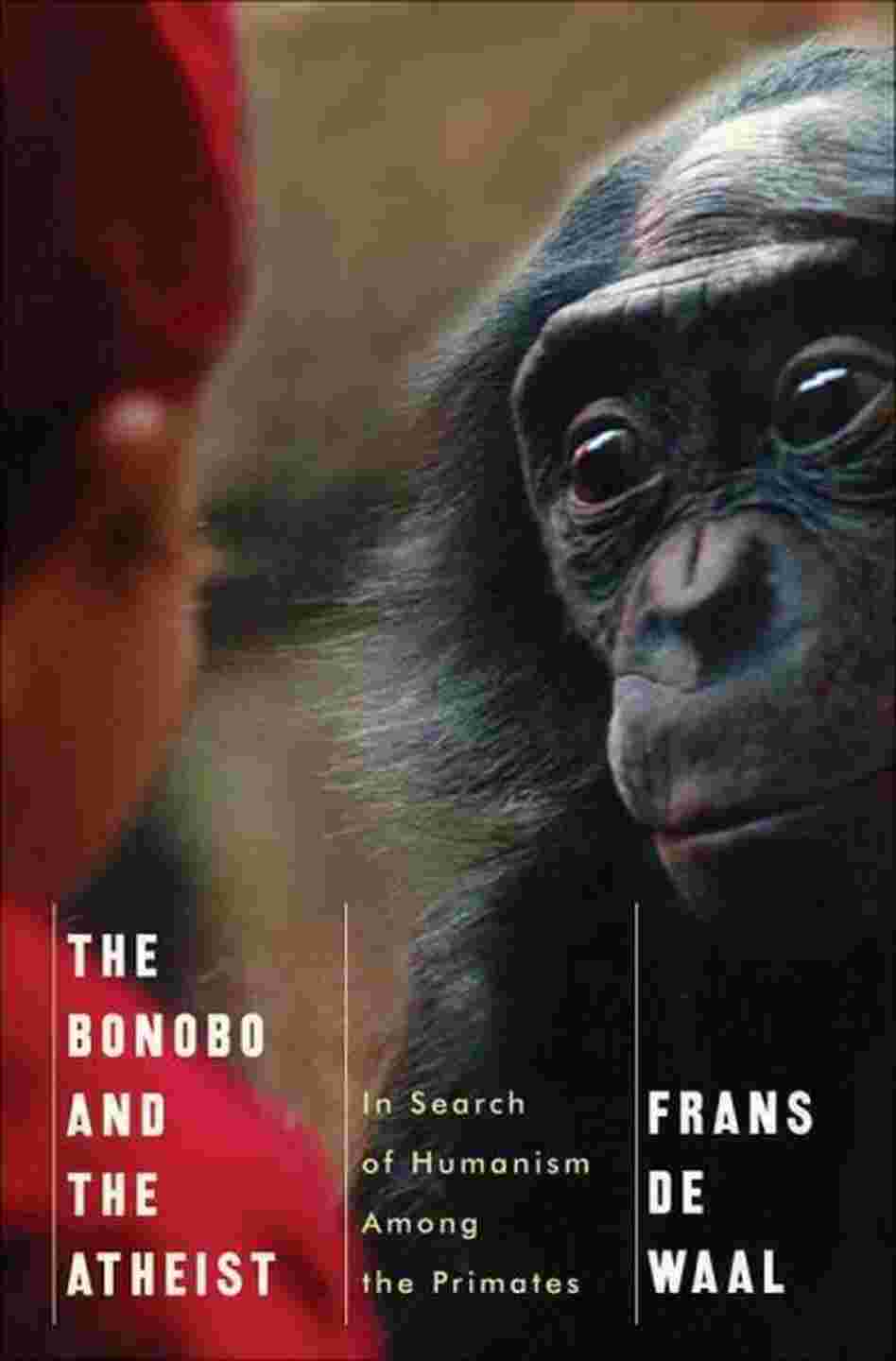
Frans de Waal is one of the foremost researchers in primate emotions, especially prosocial behaviors. He is the author of several books, including Primates and Philosophers: How Morality Evolved (2006), The Age of Empathy: Nature's Lessons for a Kinder Society (2010), and The Bonobo and the Atheist: In Search of Humanism Among the Primates (2014).

In this TED Talk he discusses the morality of animals.


Do Animals Have Morals?


by NPR/TED Staff
September 05, 2014
Frans de Waal explains his work regarding morality and animals. LeahAndMark.com

About Frans de Waal's TED Talk

Empathy, cooperation and fairness seem like distinctly human traits. But biologist Frans de Waal explains why other animals might share those same qualities.

About Frans de Waal

Dr. Frans de Waal is a biologist and primatologist known for his work on the behavior and social intelligence of primates. His first book, Chimpanzee Politics, compared the schmoozing and scheming of chimps to that of human politicians. He is a professor of psychology at Emory University and director of the Living Links Center at the Yerkes National Primate Center.

Tuesday, October 01, 2013

Being Human 2013 - The Biology and Psychology of Ethical Behavior


The Biology and Psychology of Ethical Behavior from Being Human on FORA.tv

The Biology and Psychology of Ethical Behavior


Is morality culturally determined and relative, an evolved social contract that is absolute, or something else? In this session, we examine the biology of caring behavior and social interactions, as well as the dynamics of cooperation, competition, and power.


Session led by: Robert Sapolsky, Ph.D., Neuroscientist; Professor of Biological Sciences, Neurology, Neurological Sciences, and Neurosurgery, Stanford University
Susan Fiske, Ph.D., Professor of Psychology, Princeton University
Josh Greene, Ph.D., Associate Professor of Psychology, Harvard University

Susan Fiske

Susan Fiske is a psychologist known for her work in the field of social cognition. Her research has shown how prejudice, stereotyping, and discrimination are influenced by social relationships, and also how dynamics of cooperation, competition, and power can affect how people view other groups. This research has led her to the conclusion that prejudices are an inevitable part of the human condition, but that they are also quite malleable and subject to change. Fiske notes that "when people are on our side, we take the trouble to know them. This conclusion fits decades of research about how to get people from mutual outgroups—black/white, gay/straight, old/young, disabled/not, immigrant/host—to treat each other as individual human beings. When people come together across ingroup/outgroup boundaries, they get to know each other as individuals mainly when they need each other in the service of shared goals." In recent years, her work has focused on finding the neural correlates to prejudices using the tools of social neuroscience.

Joshua Greene

Joshua Greene is a philosopher, experimental psychologist, and neuroscientist who studies the neurological underpinnings of moral judgment. His work seeks to understand how our moral judgments are shaped by automatic processes (e.g. emotional gut reactions) and controlled cognitive processes (e.g. reasoning). He is perhaps best known for his application of neuroscience to the infamous "trolley problem," revealing the different parts of the brain that are involved in making difficult moral choices. He feels that common sense solutions often hurt more than help, saying, "[serious social] problems are a product of well-intentioned people abiding by their respective common senses and that the only long-run solution to these problems is for people to develop a healthy distrust of moral common sense. This is largely because our social instincts were not designed for the modern world. Nor, for that matter, were they designed to promote peace and happiness in the world for which they were designed, the world of our hunter-gatherer ancestors." He is the director of the acclaimed Moral Cognition Lab at Harvard.

Dr. Robert Sapolsky

Robert Sapolsky (author of Why Zebras Don't Get Ulcers, Third Edition and A Primate's Memoir: A Neuroscientist's Unconventional Life Among the Baboons, among other titles) is one of the world's leading neuroscientists, and has been called "one of the finest natural history writers around" by The New York Times. In studying wild baboon populations, Sapolsky examined how prolonged stress can cause physical and mental afflictions. His lab was among the first to document that stress can damage the neurons of the hippocampus. Sapolsky has shown, in both human and baboon societies, that low social status is a major contributor to stress and stress-related illness. He boils down the contemporary human's relationship with stress as follows: "We are not getting our ulcers being chased by Saber-tooth tigers, we're inventing our social stressors—and if some baboons are good at dealing with this, we should be able to as well. Insofar as we're smart enough to have invented this stuff and stupid enough to fall for it, we have the potential to be wise enough to keep [these stressors] in perspective." Sapolsky's study of stress in non-human primates has offered fascinating insight into how human beings relate to this universal pressure.

Monday, September 30, 2013

Virginia Morell - Mournful Creatures (Animals and Grief)


From the current issue of Lapham's Quarterly, Virgina Morell has written an excellent, captivating, and extensive article on the experience of grief among animals, human and (mostly) otherwise. Brilliant writing and content that reminds me we are simply one animal among many, and little about our experience of life is unique.

Morell mentions two recent books in this section of the article: How Animals Grieve, by anthropologist Barbara J. King, and The Bonobo and the Atheist: In Search of Humanism Among the Primates, by primatologist Frans de Waal. Of the two, de Waal is the author I would most trust to get this topic correct.

~ Virginia Morell, a contributor to National Geographic, Science, and Smithsonian, is the author of the books Ancestral Passions: The Leakey Family and the Quest for Humankind's Beginnings (1996) and Blue Nile: Ethiopia's River of Magic and Mystery (2002). Her most recent book is Animal Wise: The Thoughts and Emotions of Our Fellow Creatures (2013). She blogs at Animal Wise at Psychology Today.

Mournful Creatures


Virginia Morell | Lapham's Quarterly


Animals have a great advantage over man: they never hear the clock strike, however intelligent they may be; they die without any idea of death; they have no theologians to instruct them…Their last moments are not disturbed by unwelcome and often objectionable ceremonies; it costs them nothing to be buried; no one starts lawsuits over their wills. — Voltaire

Who can say what cows feel, when they surround and stare intently on a dying or dead companion? — Charles Darwin

It is often said that our understanding and knowledge of death separates the human animal from all other animals. We alone know that we will die—that one day, suddenly or slowly, our life, our loves, our dreams will end. Surely this awareness sets us apart from the rest of the animal kingdom, we say, pointing to some of our greatest art, music, and literature—all inspired by what we know: that death awaits every living being. And yet, how very odd it is that we should be the only animal to know what life ultimately has in store for us. We share biological histories and physiologies DNA, eyes, muscles, nerves, neurons, hormones—with other animals, and these may lead to similar behaviors, thought processes, and emotions—even about death.

Take the case of Thomas, a nine-year-old chimpanzee who died in 2010 at the Chimfunshi Wildlife Orphanage Trust in Zambia, home to more than one hundred chimps. Research scientists filmed the reactions of one community of forty-three chimpanzees to Thomas’ corpse; thirty-eight of them gathered around and stayed by his side for almost twenty minutes. During that time, some of the chimps gently touched his body, smelled and studied him closely. One of those visitors was Masya, a mother carrying her dead infant (at the time, there was an outbreak of a respiratory illness among the chimps). A few days earlier, Masya had been seen placing her dead child in a grassy, sunlit patch and retreating to the shade, where she sat watching, her eyes rarely straying from her infant. Every few minutes, she strode back to the clearing to inspect her baby’s body. At times she did so hurriedly, jumping up and rushing forward as if she thought she’d detected a stirring. She studied her child’s face intently, peered into her gaping mouth and wide eyes, and brushed away the flies. Finally, she placed her knuckles softly against her infant’s neck—hoping, it seems, for any sign of life.

The chimpanzees gathered at Thomas’ side also appeared to be trying to come to grips with what had happened. One female smacked his body, hard—while the others paid close attention, looking, perhaps, for a reaction. Their faces were serious, their manner subdued. One adult male appeared even more distraught than the others; the researchers say this chimp had cared for Thomas for over four years and “had a very strong social relationship” with the dead chimp. He left and returned several times to view the body, as if unable to believe what he was seeing. Finally, he stepped between the others to get as close as possible. He scrutinized the body and erupted in frantic screams while walking rapidly over the cadaver.

Was this a chimpanzee wail of grief? Had the male friend and other chimpanzees come together to mourn Thomas? The scientists who recorded these events prefer not to use such words. Yet the chimpanzees’ behaviors—which mirror many of our own when we lose a loved one—suggest that, like us, they have trouble accepting death when it comes to one of their own. As with most emotions in animals, we do not yet understand their reactions with total clarity—but, as Charles Darwin wisely observed, they may very well have meaning. Perhaps we are the only animals with foreknowledge of death, but when it comes to grieving, we are not so unique.

The study of animal grief is a young field, largely because studies of any animal behaviors that one might think of as “human” were ignored for much of the twentieth century. It was commonly held that nonhuman animals were only reactive beings, lacking thoughts and emotions, and responding to stimuli as unthinking, unfeeling robots. Scientists were cautioned about being anthropomorphic, that is, regarding animals as they are often depicted in naive films and storybooks—as if they were people dressed up in fur or feathers. Researchers who thought they detected animal emotions—especially those that we think of as uniquely human, such as love, joy, or grief—were considered to be sentimentalists. And their reports (such as Darwin’s about the grieving cows) were dismissed as anecdotal.

In the last few decades, though, wildlife biologists have amassed so many firsthand accounts of animals caring for and mourning their dead that the idea of animal grief is no longer as suspect as it once was. Two recent books, both published in March of this year, explore the subject. How Animals Grieve, by anthropologist Barbara J. King, collects anecdotal and scientific data on grief in many kinds of animals, even some that most researchers ignore, such as rabbits, goats, and turtles. In The Bonobo and the Atheist: In Search of Humanism Among the Primates, primatologist Frans de Waal examines the biological roots of religion and morality. Since our awareness of death is often cited as the reason we developed religion, de Waal investigates whether other animals have a similar sense of their ultimate end. While King doubts that even our close chimpanzee relatives are “aware that death is coming,” de Waal suggests that older apes or elephants may have experienced enough of life to comprehend that they, too, will die. “When an old ape notices that trees are harder and harder to get into or an elephant has ever more trouble keeping up with the herd, might these individuals not apply what they have learned about life and death to their own bodies?” de Waal asks. “It’s hard to know, yet impossible to rule out.”

Scientists grappling with animal grief must find some way of framing their questions into hypotheses they can test. So far, none of them have figured out how to set up an experiment to address de Waal’s question. But they are getting closer to answering what once seemed an equally daunting problem: why do animals grieve? As King points out in her book, there are enough examples of grief in species as varied as goats, baboons, and gorillas that the emotion may be an experience shared by many species. If so, then it must have an evolutionary history and confer some benefit—that is, it must be advantageous in some way, enabling the mourner to survive long enough to reproduce and pass his or her genes to the next generation. Otherwise, natural selection would have weeded out grief long ago.

From a study of twenty-two wild-baboon females who had lost either an infant or other close relative to a predator, scientists know that the animals’ stress hormones flare for four weeks after the attack. They typically act in a “bereaved” manner, too, the researchers say, sitting apart from other baboons and not seeking out grooming (a behavior that has both social and hygienic benefits). In time, the baboons’ stress hormones subside, and they again spend time with their fellows. At first glance, it would seem that grieving would leave baboons—or other mourning animals—at great risk of either falling ill or being taken by a predator themselves. But another study, by neuroscientists Karen Wager-Smith and Athina Markou, which King discusses at length, suggests that the mourning period is actually a neurobiological necessity, particularly for any animal that forms close bonds with another individual. The researchers note that stress can inflict “microdamage” in key areas of the brain, such as the hippocampus and prefrontal cortex, both of which are concerned with memory, emotions, personality, and planning. But the brain is not a static organ; it responds dynamically to life’s events by pruning away neurons that are no longer needed and sprouting new ones. Rewiring takes time and energy, and so a period of mourning—of sleeping longer, minimizing social contact, eating less—can ultimately prove beneficial. And, indeed, all of the baboons eventually recovered from their grief, made new friends, or gave birth to new children. Grief for them can have an “adaptive value,” as evolutionary biologists are fond of saying; it enables an animal to recover from what is essentially minor brain trauma and carry on with the purpose of life—reproducing.

But discerning whatever adaptive value or evolutionary benefit grief might confer doesn’t answer another important question: how do animals experience grief? Is it at all like the sorrow we feel when a loved one dies? Can it be so all-consuming that one never recovers?

Apparently so. How else to explain the behavior of Flint, a male chimpanzee whom Jane Goodall observed at Gombe Stream National Park in Tanzania for the eight and a half years of his short life. Flint could not express in words what he felt about his mother’s death, but no one could misinterpret his actions. Flint’s mother, Flo, was in her early forties when she gave birth to her son. That’s close to old age for chimpanzees, and it may explain why Flo wasn’t the strict mother she’d been to her younger children. For whatever reason, she let Flint do whatever he pleased, nursing at her breast long past the age (four or so) when he should have been weaned, and riding on his old mother’s back until he was eight, an age when he should have been walking everywhere on his own. The pair was inseparable, and then Flo died.

“It seemed,” Goodall wrote in Through a Window, a memoir of her thirty years of chimpanzee research at Gombe, “that [Flint] had no will to survive without her Never shall I forget watching as, three days after Flo’s death, Flint climbed slowly into a tall tree near the stream [where she had died]. He walked along one of the branches, then stopped and stood motionless, staring down at an empty nest. After about two minutes he turned away and, with the movements of an old man, climbed down, walked a few steps, then lay, wide eyes staring ahead. The nest was one which he and Flo had shared a short while before Flo died.”

Flint never recovered from his loss. He grew lethargic, refused food that the researchers set out for him, and fell sick. The last time Goodall saw him alive, he was “hollow-eyed, gaunt, and utterly depressed, huddled in the vegetation close to where Flo had died…The last short journey he made, pausing to rest every few feet, was to the very place where Flo’s body had lain. There he stayed for several hours, sometimes staring and staring into the water. He struggled on a little farther, then curled up—and never moved again.”

Flint’s response was entirely maladaptive. It did not help one whit in terms of fitness; he never reproduced, his genes were not passed to the next generation. So profound was Flint’s love for his mother and his sorrow at her death that he simply gave up the will to live.
Read the whole captivating and lengthy article.

Thursday, June 27, 2013

Bob Holmes - Tracing the Roots of Human Morality in Animals

Over at New Scientist, Bob Holmes recently (well, okay, in May) reviewed new books from Frans de Waal and Barbara King on morality in animals and on how animals grieve. While Holmes enjoyed de Waal's scientific approach to understanding how morality develops in animals (especially primates), he much less keen on King's anecdotal account of greiving in animals.

The books under review are The Bonobo and the Atheist: In search of humanism among the primates by Frans de Waal and How Animals Grieve by Barbara J. King.

Tracing the roots of human morality in animals

21 May 2013 by Bob Holmes
Magazine issue 2917

The Bonobo and the Atheist and How Animals Grieve show that we must be careful when studying animals to learn about the origins of human traits and behaviours

Bonobos are more likely than chimps to have concern for each other 
(Image: ZSSD/Minden Pictures/FLPA)

Book information

The Bonobo and the Atheist: In search of humanism among the primates by Frans de WaalPublished by: NortonPrice: $27.95  ($20.15 at Amazon)
How Animals Grieve by Barbara J. KingPublished by: University of Chicago PressPrice: $25.00 ($18.14 at Amazon)

WHERE does morality come from? Throughout the history of Western civilisation, thinkers have usually answered either that it comes from God, or else through the application of reason.

But in The Bonobo and the Atheist, primatologist Frans de Waal argues that there's another answer that fits the data better: morality comes from our evolutionary past as a social primate. Like our closest relatives the apes, humans evolved in small, tightly knit, cooperative groups. As a result, again like the apes, we are exquisitely sensitive to one another's moods, needs and intentions.

This well-developed empathy provided the trellis on which morality later flowered. De Waal, who is based at Emory University in Atlanta, Georgia, has been making this case eloquently for many years and over several books, notably in Good Natured back in 1997, and in Primates and Philosophers, 12 years later.

In his new work, he bolsters the argument by drawing on a lot of new research, carefully footnoted for those who want to dig deeper. De Waal distinguishes two degrees of morality. The first he calls "one-on-one morality", which governs how an individual can expect to be treated, and the second "community concern", a larger, more abstract concept that extends to the harmony of the group as a whole.

Chimps and bonobos certainly have the former – they respect ownership, for example, and expect to be treated according to their place in the hierarchy. But de Waal presents several examples – such as a chimp stepping in to stop a fight between two others – that suggest that they also have a rudimentary form of the latter.

The book's title, incidentally, draws on bonobos because they are more likely than chimps to behave morally, to have concern for each other, to value harmony and so on. This, imagines, de Waal, is something morally inclined atheists would want to emulate.

If humans inherited morality from our ancestors, though, what are we to make of religion? Here de Waal moves into territory he has not explored before. Clearly, religion must do something important, since every human culture has it. But instead of religion giving us morality, de Waal turns the tables. Morality, he argues, probably gave us religion as a way of reinforcing the pre-existing community concern.

If he's right, then there may be no absolute code of right and wrong out there to be discovered. Instead, each individual's evolved sense of empathy and concern for the group may help shape the group's consensus on what kind of behaviour is appropriate. In short, says de Waal, morality may be something we all have to work out together. It's a persuasive argument, and de Waal's cautious and evidence-based approach is one that many New Scientist readers are sure to find congenial.

That careful approach is less evident in another book covering some of the same ground. In How Animals Grieve, anthropologist Barbara King sets out to explore the question of whether non-human animals grieve for their dead. It's an intriguing question, but unfortunately King's book is largely a succession of anecdotes: the cat who roams the house, crying, in search of its dead litter mate; the dog who waits daily at the train station for its dead master; a dolphin trying to keep her dead calf afloat for days.

Some of these stories make a persuasive case for some animals – especially apes, elephants and cetaceans – sometimes grieving. No surprises there: I suspect most readers would have conceded that ground right from the start.

But King makes little effort to dig any deeper by exploring, for example, the neural machinery and cognitive skills an animal needs in order to be capable of grief. After all, solitary species such as cats have less need for empathy – and its corollary, grief – than social animals, and small-brained creatures such as turtles may simply lack the brainpower or not form lasting pair bonds.

To his credit, de Waal takes full note of such distinctions; King, not so much.

This article appeared in print under the headline "The making of morality"

Sunday, March 31, 2013

Frans de Waal's Bottom-Up Morality: We're Not Good Because Of God

I recently posted an excerpt from Frans de Waal's new book, The Bonobo and the Atheist: In Search of Humanism Among the Primates, and what follows is a review of the book by Barbara King at NPR's 13.7 Cosmos and Culture blog. I look forward to reading this - it's been getting good reviews.

Frans de Waal's Bottom-Up Morality: We're Not Good Because Of God

by BARBARA J. KING
March 21, 2013

Bonobos at the Lola ya Bonobo sanctuary near Kinshasa in the Democratic Republic of Congo in 2006. Issouf Sanogo/AFP/Getty Images

In a book coming out next week called The Bonobo and the Atheist, primatologist Frans de Waal argues that morality is built into our species. Rather than coming to us top-down from God, or any other external source, morality for de Waal springs bottom-up from our emotions and our day-to-day social interactions, which themselves evolved from foundations in animal societies.

For 30 years, de Waal has authored books about apes and monkey that open our eyes to the bottom-up origins of our human behaviors, ranging from politics to empathy. In this, his 10th volume, he extends that perspective by writing, "It wasn't God who introduced us to morality; rather, it was the other way around. God was put into place to help us live the way we felt we ought to."


"The way we felt we ought to" has a long evolutionary history, so that de Waal's thesis depends crucially on numerous and convincing examples from our closest living relatives.

Azalea, a trisomic rhesus macaque (trisomic = born with three copies of a certain chromosome), had abnormal motor and social skills, in ways somewhat akin to humans with Down syndrome. Instead of punishing her "incomprehensible blunders," such as threatening the alpha male, the other macaques were accepting and forgiving of her until Azalea's death at age three. Female chimpanzees may confront and shut down an overly aggressive male, sometimes even pulling two adversaries close together for reconciliation, or prying rocks from an aroused males' hands.

In cases like these, animals are feeling empathy, then acting on that feeling with displays of kindness or help, behavior that de Waal calls sympathy. The empathy is purely embodied — literally felt in the body — and part of our evolved biology. "Our brains have been designed to blur the line between self and other," he writes. "It is an ancient neural circuitry that marks every mammal, from mouse to elephant."

Despite the sweeping nature of this last statement, what's great about the book are de Waal's careful distinctions. He's never naïve about animal goodness, as if it were hard-wired: how could he be when he has worked so closely for decades with chimpanzees, a species known for outbursts of brutal violence? De Waal sees the bonobo (of the book's title) as more empathetic than the chimpanzee. Bonobos share food, and even across different groups, enjoy sexy, peaceful and playful relationships. But nowhere is it a gentle natural world that he describes. His focus instead is the utter wrongness of Veneer Theory, the historically popular idea that our morality is "a thin veneer over a cauldron of nasty tendencies."

Further, de Waal doesn't go so far as to equate animal goodness with morality. "I am reluctant to call a chimpanzee a 'moral being'," he writes. "There is little evidence that other animals judge the appropriateness of actions that do not directly affect themselves."

What sets human morality apart, he believes, depends on our greater powers of abstraction, and involves "a move toward universal standards combined with an elaborate system of justification, monitoring, and punishment. At this point, religion comes in."

A scientist and non-believer, de Waal isn't saying here that religion is required for human morality, only that the two have been entwined throughout human history. Since I have wearied of the Richard Dawkins school of religion-bashing, in which belief is equated with dim-wittedness, I can only applaud de Waal's approach, as when he writes, "The enemy of science is not religion. Religion comes in endless shapes and forms ... . The true enemy is the substitution of thought, reflection, and curiosity with dogma."

Do I agree with every word de Waal writes about bottom-up morality? Of course not (I'd be bored if I did). He becomes unnecessarily acerbic about atheism at times, asking as part of his frustration with neo-atheists like Dawkins, "What does atheism have to offer that's worth fighting for?" But surely fighting for the right to be seen as, and treated fairly as, a person who lives morally outside of any religious system is a worthy endeavor.

And when de Waal claims that we humans, like other mammals, "are totally preprogrammed in body and mind" for child-rearing, so that "we barely notice the daily efforts on behalf of our progeny," I want to assign him some primatology homework: Observe human parents for a while, specifically a single mom or single dad with a job and kids, or really any parent with multiple small children at home. (Even raising a single child and with an active helpful partner, believe me, I noticed my efforts on more than one day!) Isn't our helping behavior towards others more impressive when it's effortful rather than easy?

But the heart of de Waal's argument is spot on, both because he puts emotions front and center in his account of human morality and because he explains how that morality emerges out of animal roots.

Shall I conclude by offering some uplifting sentence about how de Waal's outlook gives us all hope for the future? In good conscience, I really can't. As de Waal knows, claims of evolved goodness are no more a blueprint for human behavior going forward than are opposing claims of evolved cruelty and violence.


~ You can keep up with more of what Barbara is thinking on Twitter.

Friday, March 29, 2013

Frans de Waal - The Brains of the Animal Kingdom


Esteemed primatologist Frans de Waal's latest book is The Bonobo and the Atheist: In Search of Humanism Among the Primates, published by Norton on Monday. In this new book, which clarifies and expands his ground-breaking research with bonobos, de Waal argues that morality is generated by God(s), nor is it the strict realm of religion. Rather, morality is something that comes from within our primate history, developed and refined through evolution.

Here is the publisher's synopsis of the book:
Book Description
Publication Date: March 25, 2013 | ISBN-10: 0393073777 | 12 Illustrations | Edition: 1st

In this lively and illuminating discussion of his landmark research, esteemed primatologist Frans de Waal argues that human morality is not imposed from above but instead comes from within. Moral behavior does not begin and end with religion but is in fact a product of evolution. For many years, de Waal has observed chimpanzees soothe distressed neighbors and bonobos share their food. Now he delivers fascinating fresh evidence for the seeds of ethical behavior in primate societies that further cements the case for the biological origins of human fairness. Interweaving vivid tales from the animal kingdom with thoughtful philosophical analysis, de Waal seeks a bottom-up explanation of morality that emphasizes our connection with animals. In doing so, de Waal explores for the first time the implications of his work for our understanding of modern religion. Whatever the role of religious moral imperatives, he sees it as a “Johnny-come-lately” role that emerged only as an addition to our natural instincts for cooperation and empathy.

But unlike the dogmatic neo-atheist of his book’s title, de Waal does not scorn religion per se. Instead, he draws on the long tradition of humanism exemplified by the painter Hieronymus Bosch and asks reflective readers to consider these issues from a positive perspective: What role, if any, does religion play for a well-functioning society today? And where can believers and nonbelievers alike find the inspiration to lead a good life?

Rich with cultural references and anecdotes of primate behavior, The Bonobo and the Atheist engagingly builds a unique argument grounded in evolutionary biology and moral philosophy. Ever a pioneering thinker, de Waal delivers a heartening and inclusive new perspective on human nature and our struggle to find purpose in our lives.
What follows below is an adapted excerpt from the book that was published in the weekend edition of the Wall Street Journal last Saturday. The book has received a LOT of good reviews already, including Scientific American, Publisher's Weekly, and The New Prospect (although they ding him for being too gentle on religion).

The Brains of the Animal Kingdom

By FRANS DE WAAL

THE SATURDAY ESSAY
March 22, 2013

New research shows that we have grossly underestimated both the scope and the scale of animal intelligence. Primatologist Frans de Waal on memory-champ chimps, tool-using elephants and rats capable of empathy.

Associated Press


A herd of African elephants drink water at a dam inside the Addo Elephant National Park near Port Elizabeth, South Africa.

Who is smarter: a person or an ape? Well, it depends on the task. Consider Ayumu, a young male chimpanzee at Kyoto University who, in a 2007 study, put human memory to shame. Trained on a touch screen, Ayumu could recall a random series of nine numbers, from 1 to 9, and tap them in the right order, even though the numbers had been displayed for just a fraction of a second and then replaced with white squares.

I tried the task myself and could not keep track of more than five numbers—and I was given much more time than the brainy ape. In the study, Ayumu outperformed a group of university students by a wide margin. The next year, he took on the British memory champion Ben Pridmore and emerged the "chimpion."

How do you give a chimp—or an elephant or an octopus or a horse—an IQ test? It may sound like the setup to a joke, but it is actually one of the thorniest questions facing science today. Over the past decade, researchers on animal cognition have come up with some ingenious solutions to the testing problem. Their findings have started to upend a view of humankind's unique place in the universe that dates back at least to ancient Greece.

Aristotle's idea of the scala naturae, the ladder of nature, put all life-forms in rank order, from low to high, with humans closest to the angels. During the Enlightenment, the French philosopher René Descartes, a founder of modern science, declared that animals were soulless automatons. In the 20th century, the American psychologist B.F. Skinner and his followers took up the same theme, painting animals as little more than stimulus-response machines. Animals might be capable of learning, they argued, but surely not of thinking and feeling. The term"animal cognition" remained an oxymoron.

A growing body of evidence shows, however, that we have grossly underestimated both the scope and the scale of animal intelligence. Can an octopus use tools? Do chimpanzees have a sense of fairness? Can birds guess what others know? Do rats feel empathy for their friends? Just a few decades ago we would have answered "no" to all such questions. Now we're not so sure.

Experiments with animals have long been handicapped by our anthropocentric attitude: We often test them in ways that work fine with humans but not so well with other species. Scientists are now finally meeting animals on their own terms instead of treating them like furry (or feathery) humans, and this shift is fundamentally reshaping our understanding.

Elephants are a perfect example. For years, scientists believed them incapable of using tools. At most, an elephant might pick up a stick to scratch its itchy behind. In earlier studies, the pachyderms were offered a long stick while food was placed outside their reach to see if they would use the stick to retrieve it. This setup worked well with primates, but elephants left the stick alone. From this, researchers concluded that the elephants didn't understand the problem. It occurred to no one that perhaps we, the investigators, didn't understand the elephants.

Think about the test from the animal's perspective. Unlike the primate hand, the elephant's grasping organ is also its nose. Elephants use their trunks not only to reach food but also to sniff and touch it. With their unparalleled sense of smell, the animals know exactly what they are going for. Vision is secondary.

But as soon as an elephant picks up a stick, its nasal passages are blocked. Even when the stick is close to the food, it impedes feeling and smelling. It is like sending a blindfolded child on an Easter egg hunt.

What sort of experiment, then, would do justice to the animal's special anatomy and abilities?

On a recent visit to the National Zoo in Washington, I met with Preston Foerder and Diana Reiss of Hunter College, who showed me what Kandula, a young elephant bull, can do if the problem is presented differently. The scientists hung fruit high up above the enclosure, just out of Kandula's reach. The elephant was given several sticks and a sturdy square box.

Kandula ignored the sticks but, after a while, began kicking the box with his foot. He kicked it many times in a straight line until it was right underneath the branch. He then stood on the box with his front legs, which enabled him to reach the food with his trunk. An elephant, it turns out, can use tools—if they are the right ones.

While Kandula munched his reward, the investigators explained how they had varied the setup, making life more difficult for the elephant. They had put the box in a different section of the yard, out of view, so that when Kandula looked up at the tempting food he would need to recall the solution and walk away from his goal to fetch the tool. Apart from a few large-brained species, such as humans, apes and dolphins, not many animals will do this, but Kandula did it without hesitation, fetching the box from great distances.

Another failed experiment with elephants involved the mirror test—a classic evaluation of whether an animal recognizes its own reflection. In the early going, scientists placed a mirror on the ground outside the elephant's cage, but the mirror was (unsurprisingly) much smaller than the largest of land animals. All that the elephant could possibly see was four legs behind two layers of bars (since the mirror doubled them). When the animal received a mark on its body visible only with the assistance of the mirror, it failed to notice or touch the mark. The verdict was that the species lacked self-awareness.

But Joshua Plotnik of the Think Elephant International Foundation modified the test. He gave the elephants access to an 8-by-8-foot mirror and allowed them to feel it, smell it and look behind it. With this larger mirror, they fared much better. One Asian elephant recognized herself. Standing in front of the mirror, she repeatedly rubbed a white cross on her forehead, an action that she could only have performed by connecting her reflected image with her own body.

A similar experimental problem was behind the mistaken belief, prevalent until two decades ago, that our species has a unique system of facial recognition, since we are so much better at identifying faces than any other primate. Other primates had been tested, but they had been tested on human faces—based on the assumption that ours are the easiest to tell apart.

When Lisa Parr, one of my co-workers at Emory University, tested chimpanzees on portraits of their own species, they excelled at it. Selecting portraits on a computer screen, they could even tell which juveniles were born to which females. Having been trained to detect similarities among images, the apes were shown a female's portrait and then given a choice between two other faces, one of which showed her offspring. They preferred the latter based purely on family resemblance since they did not know any of the depicted apes.

We also may need to rethink the physiology of intelligence. Take the octopus. In captivity, these animals recognize their caretakers and learn to open pill bottles protected by childproof caps—a task with which many humans struggle. Their brains are indeed the largest among invertebrates, but the explanation for their extraordinary skills may lie elsewhere. It seems that these animals think, literally, outside the box of the brain.

Octopuses have hundreds of suckers, each one equipped with its own ganglion with thousands of neurons. These "mini-brains" are interconnected, making for a widely distributed nervous system. That is why a severed octopus arm may crawl on its own and even pick up food.

Similarly, when an octopus changes skin color in self-defense, such as by mimicking a poisonous sea snake, the decision may come not from central command but from the skin itself. A 2010 study found gene sequences in the skin of cuttlefish similar to those in the eye's retina. Could it be: an organism with a seeing skin and eight thinking arms?

A note of caution, however: At times we also have overestimated the capacities of animals. About a century ago, a German horse named "Kluger Hans" (Clever Hans) was thought to be capable of addition and subtraction. His owner would ask him the product of multiplying four by three, and Hans would happily tap his hoof 12 times. People were flabbergasted, and Hans became an international sensation.

That is, until Oskar Pfungst, a psychologist, investigated the horse's abilities. Pfungst found that Hans was only successful if his owner knew the answer to the question and was visible to the horse. Apparently, the owner subtly shifted his position or straightened his back when Hans reached the correct number of taps. (The owner did so unknowingly, so there was no fraud involved.)

Some look at this historic revelation as a downgrading of Hans's intelligence, but I would argue that the horse was in fact very smart. His abilities at arithmetic may have been flawed, but his understanding of human body language was remarkable. And isn't that the skill a horse needs most?

Awareness of the "Clever Hans Effect," as it is now known, has greatly improved animal experimentation. Unfortunately, it is often ignored in comparable research with humans. Whereas every dog lab now tests the cognition of its animals while their human owners are blindfolded or asked to face away, young children are still presented with cognitive tasks while sitting on their mothers' laps. The assumption is that mothers are like furniture, but every mother wants her child to succeed, and nothing guarantees that her sighs, head turns and subtle changes in position don't serve as cues for the child.

This is especially relevant when we try to establish how smart apes are relative to children. To see how their cognitive skills compare, scientists present both species with identical problems, treating them exactly the same. At least this is the idea. But the children are held by their parents and talked to ("Watch this!" "Where is the bunny?"), and they are dealing with members of their own kind. The apes, by contrast, sit behind bars, don't benefit from language or a nearby parent who knows the answers, and are facing members of a different species. The odds are massively stacked against the apes, but if they fail to perform like the children, the invariable conclusion is that they lack the mental capacities under investigation.

A recent study, tracking the pupil movements of chimpanzees, found that they followed the gaze of members of their own species far better than that of humans. This simple finding has huge implications for tests in which chimpanzees need to pay attention to human experimenters. The species barrier they face may fully explain the difference in performance compared with children.

Underlying many of our mistaken beliefs about animal intelligence is the problem of negative evidence. If I walk through a forest in Georgia, where I live, and fail to see or hear the pileated woodpecker, am I permitted to conclude that the bird is absent? Of course not. We know how easily these splendid woodpeckers hop around tree trunks to stay out of sight. All I can say is that I lack evidence.

It is quite puzzling, therefore, why the field of animal cognition has such a long history of claims about the absence of capacities based on just a few strolls through the forest. Such conclusions contradict the famous dictum of experimental psychology according to which "absence of evidence is not evidence of absence."

Take the question of whether we are the only species to care about the well-being of others. It is well known that apes in the wild offer spontaneous assistance to each other, defending against leopards, say, or consoling distressed companions with tender embraces. But for decades, these observations were ignored, and more attention was paid to experiments according to which the apes were entirely selfish. They had been tested with an apparatus to see if one chimpanzee was willing to push food toward another. But perhaps the apes failed to understand the apparatus. When we instead used a simple choice between tokens they could exchange for food—one kind of token rewarded only the chooser, the other kind rewarded both apes—lo and behold, they preferred outcomes that rewarded both of them.

Such generosity, moreover, may not be restricted to apes. In a recent study, rats freed a trapped companion even when a container with chocolate had been put right next to it. Many rats first liberated the other, after which both rodents happily shared the treat.

The one historical constant in my field is that each time a claim of human uniqueness bites the dust, other claims quickly take its place. Meanwhile, science keeps chipping away at the wall that separates us from the other animals. We have moved from viewing animals as instinct-driven stimulus-response machines to seeing them as sophisticated decision makers.

Aristotle's ladder of nature is not just being flattened; it is being transformed into a bush with many branches. This is no insult to human superiority. It is long-overdue recognition that intelligent life is not something for us to seek in the outer reaches of space but is abundant right here on earth, under our noses. 
—Mr. de Waal is C.H. Candler Professor at Emory University and director of the Living Links Center at the Yerkes National Primate Research Center, both in Atlanta. His latest book, "The Bonobo and the Atheist: In Search of Humanism among the Primates," will be published by Norton on Monday.

~ A version of this article appeared March 23, 2013, on page C1 in the U.S. edition of The Wall Street Journal, with the headline: The Brains of Animal Kingdom.

Tuesday, March 12, 2013

The Riddle of the Human Species - Bookforum Omnivore

From Bookforum's Omnivore blog, a collection of links on human beings, our evolution from primates, the evolution of consciousness, and how we will end. Plus a whole lot more.

The riddle of the human species

FEB 27 2013
12:00PM

Sunday, February 10, 2013

Stephen T Asma - Rethinking the Emotional Life of Mammals

This cool article on how we tend to anthropomorphize the emotional states of animals, and the reality that animals, especially mammals (lower mammals all have a limbic system, which is the brain center for processing emotions), do have complex emotional lives.

The article gets into the work of neuroscientist Jaak Panksepp, one of the founders of affective neuroscience - the study of how emotions are constructed by the brain. His work is Nobel worthy - see The Archaeology of Mind: Neuroevolutionary Origins of Human Emotions.

An example is given below of Panksepp administering an electric shock directly into the hypothalamus of a cat. The cat responded by lunging at his head, "a hissing spitting tangle of fangs and claws." When the shock was turned off, the cat was its normal, peaceful self. Panksepp labels that response rage - and when human brains are stimulated in the same area, the word they use is rage.

However, it is in this last sentence that the question arises: How much do animals understand about their affective states? When a human is tested, s/he can offer their subjective experience of what was felt - a person has self-awareness or introspection. Does the cat know that it just experienced rage? Or does it simply react to internal cues without any self-awareness?

Perhaps it requires a cerebral cortex (the primate brain) for awareness of affective states to develop. Research in this realm over the next couple of decades should be very interesting.

Asma is the author of seven books, including Against Fairness: In Favor of Favoritism (2012), On Monsters: An Unnatural History of Our Worst Fears (2008), Stuffed Animals and Pickled Heads: The Culture and Evolution of Natural History Museums (2003), The Gods Drink Whiskey: Stumbling Toward Enlightenment in the Land of the Tattered Buddha (2006), Why I Am a Buddhist: No-Nonsense Buddhism with Red Meat and Whiskey (2011), and the best selling Buddha A Beginners Guide (1996, reissued in 2008).

Animal spirits


The more we learn about the emotions shared by all mammals, the more we must rethink our own human intelligence


by Stephen T Asma

Close cousins: a gorilla family in Rwanda. Photo by Charles L Harris/Gallery Stock

~ Stephen T Asma is professor of philosophy and distinguished scholar at Columbia College Chicago. His latest book is Against Fairness: In Favor of Favoritism.


‘If he grabs you, just go limp and let him throw you around. If you tense up, he’ll take it as a dominance challenge.’

‘Um. Okay.’

My brothers and I looked at each other. This was last-minute advice. We were clinging at a 45-degree angle to the Mount Bisoke volcano, having hacked and crawled for three hours through stinging nettles. We started out in Rwanda; now we were in the Congo. Of course we weren’t supposed to be there, but mountain gorillas don’t respect national borders. With our machete-wielding guides, we had found the gorilla group called ‘Amahoro’, Kinyarwanda for ‘peace’. I just hoped they were in a peaceful mood today.

Before coming to Africa, I had just finished writing a review of America’s two new mother-ship museum exhibits: the Koch Hall of Human Origins at the Smithsonian in Washington DC, and the Spitzer Hall of Human Origins at the American Museum of Natural History in New York. Like every other presentation of our prehistory, these otherwise excellent exhibits focused on the evolution of our big neo-cortical brains — the adaptive significance of tool use, linguistic ability, increasing cultural sophistication. I guess it seems natural to celebrate the development of our unique cognitive abilities, since these distinguish us from our mammal relations.

Out in the bush, however, I began to appreciate how biased this cognitive picture really is. We owe a debt to our big neo-cortices, but our survival owes much more to the emotional skills that were under construction in mammals long before the Homo sapiens cortex explosion. We share a rich emotional life with our animal brethren because emotions helped us all survive in a hostile world. Indeed, the more we understand what mammals have in common, the more we have to rethink everything about even our specifically human intelligence.

On the side of the volcano, my brothers and I caught our breaths. ‘Okay,’ said our guide with a smile. ‘Let’s go see our cousins.’

Outside my tent in the Serengeti, a week before our gorilla trek, I looked up at the Milky Way. It was clearly visible — downright sublime — unlike the starless Chicago sky back home. It is the same awe-inspiring canopy that our ancestors, Homo sapiens, peered up at 200,000 years ago. My brothers and I were camping in the cradle of hominin evolution. Hyenas laughed in the distance.

For days we had been riffing on Stanley Kubrick’s film 2001: A Space Odyssey, which putatively takes place somewhere in this Rift Valley. I kept picturing a mysterious alien monolith in the distance and singing bad versions of the film’s opening fanfare, Thus Spake Zarathustra by Richard Strauss. My brothers countered with a barrage of sci-fi references such as The Land Before Time, Quest for Fire, 10,000 BC, and the classic hominid regression of William Hurt in Altered States. In our own puerile way, we were trying to process the emotional climate of our primordial landscape.

The fear is palpable. That part is not abstract or philosophical — it permeates almost every moment on the Serengeti. If I get out of the truck, these lions will eat me. If I try to cross this little river, the crocs will shred me in minutes. Even the comic, bulbous-bodied hippo is menacing in person. They kill more humans than any other animal in Africa. I watched a hippo fight explode in front of us, and it seemed to shake the ground itself.

One thing you gradually begin to understand in this ancestral environment is the inevitability of death. The carnage is so predictable that a good tracker can judge the trajectories of prey and predators, and then park the safari truck in a prime spot to watch. This is no scam. Crocs have to eat. Wildebeest have to drink. Add those facts together and bloody spectacle inexorably follows.

One morning we broke camp early, climbed into our safari truck and raced off-road through the scrub to a rapidly shrinking creek. Our tracker Mohammed had received a walkie-talkie tip from another tracker that a herd of wildebeest was preparing to cross. Mohammed knew that crocs would be sunning themselves nearby, and that drama might ensue. For a guy who had been tracking these animals for the past 15 years, he seemed as excited as we were. Parked on a riverbank, we watched in silence as wildebeest sniffed at the water’s edge. They moaned and paced anxiously while reptile eyes began to multiply above the water line.

Wildebeest, it turns out, are really dumb. Mohammed explained that if zebras start to cross a waterway and lose just one of their number, they usually cancel the mission, back up the herd and look for alternative passage. Wildebeest, by contrast, will continue to throw themselves into the croc-filled water. Once they’ve committed to crossing, through some tipping-point of group emotion, they seem incapable of modifying or adapting to the new situation. Panic sets in and the wildebeest leap into the fray, snapping their own legs, breaking their backs, drowning each other.

As we were watching, a woman in our party began to scream. She’d seen a lone wildebeest venture too far — only a metre off the shallows — and then a croc leapt up. The herd started to run; pandemonium ensued. Only when the other animals had disappeared into the distance did the crying of the luckless victim go quiet. In preternatural silence, it pulled itself toward the shore, revealing a giant crocodile fastened onto its hindquarters. A back leg was already down the reptile’s throat, the rump locked by razor-sharp front teeth.

‘This is now a waiting contest,’ Mohammed explained. ‘The croc will never let go.’ The wildebeest was stronger than I expected, but it couldn’t overcome the croc. Other crocodiles were starting to make their way toward it. Then something surprising happened, something that shocked even the seasoned Mohammed. After about five minutes, the predator tried to adjust its grip. In that fraction of a second, the straining wildebeest shot free and found itself — as startled as any of us — teetering on the shoreline. The woman who had first spotted it cried out in relief. We all felt an exhilarating rush of triumph for the underdog. A happy ending.

Mohammed took the wind out of our sails. ‘He was a breakfast for crocs this morning, but now he is a walking dinner for hyenas tonight.’ True enough, the wildebeest’s leg was now a mangled ribbon hanging loosely off its hindquarters. An easy target. Our city-slicker buoyancy was premature. Nature is not merciful.

* * *

Time on the Serengeti makes you think a lot about the inner life of animals. While the wildebeest is screaming, is it feeling fear like we do? Is it relieved when it’s suddenly free? Is the croc filled with regret? It might seem self-evident to the sentimental pet owner that our fellow creatures have emotions, but science has long been loath to admit it. Yet Jaak Panksepp, professor of veterinary anatomy at Washington State University College, says this is one area where our anthropomorphic tendencies are probably in the right: animals do have complex emotional lives.

Panksepp is the founder of the new field of affective neuroscience. What makes his work especially compelling is that he has learned how to turn the major emotional systems on and off in his animal subjects. The squeamish won’t like some of his experiments — they include removing brain parts of living rodents and sewing two rats together — but the data are important. Using electrical stimulation, he has demonstrated that mammals have emotional/behavioral responses built into the subcortical and limbic parts of the brain.

Panksepp stuck an electrode into the medial hypothalamus of a cat. At first, the animal was perfectly peaceful. When Panksepp administered an electrical charge, it leaped viciously at his head, a hissing spitting tangle of fangs and claws. As soon as he turned off the stimulation, the cat relaxed into a peaceful state and could be petted with no sign of danger. Humans who have had electrical stimulation in the corresponding brain locations also reported intense rage, which lends credence to the idea of animal subjectivity.

Old-school behaviorists, resistant to the idea of animal emotions, might describe what the cat underwent as ‘sham rage’, but Panksepp is biting the bullet and calling it what it looks like — rage. And ethologists who study animal behaviour increasingly accept the idea that fear keeps animals away from predators, lust draws them toward each other, panic motivates their social solidarity and care glues their parent-offspring bonds. Just like us, they have an inner life because it helps them navigate their outer life.
Read the whole article.