Frans de Waal's Bottom-Up Morality: We're Not Good Because Of God
by BARBARA J. KING
March 21, 2013
Bonobos at the Lola ya Bonobo sanctuary near Kinshasa in the Democratic Republic of Congo in 2006. Issouf Sanogo/AFP/Getty Images
In a book coming out next week called The Bonobo and the Atheist, primatologist Frans de Waal argues that morality is built into our species. Rather than coming to us top-down from God, or any other external source, morality for de Waal springs bottom-up from our emotions and our day-to-day social interactions, which themselves evolved from foundations in animal societies.
For 30 years, de Waal has authored books about apes and monkey that open our eyes to the bottom-up origins of our human behaviors, ranging from politics to empathy. In this, his 10th volume, he extends that perspective by writing, "It wasn't God who introduced us to morality; rather, it was the other way around. God was put into place to help us live the way we felt we ought to."
"The way we felt we ought to" has a long evolutionary history, so that de Waal's thesis depends crucially on numerous and convincing examples from our closest living relatives.
Azalea, a trisomic rhesus macaque (trisomic = born with three copies of a certain chromosome), had abnormal motor and social skills, in ways somewhat akin to humans with Down syndrome. Instead of punishing her "incomprehensible blunders," such as threatening the alpha male, the other macaques were accepting and forgiving of her until Azalea's death at age three. Female chimpanzees may confront and shut down an overly aggressive male, sometimes even pulling two adversaries close together for reconciliation, or prying rocks from an aroused males' hands.
In cases like these, animals are feeling empathy, then acting on that feeling with displays of kindness or help, behavior that de Waal calls sympathy. The empathy is purely embodied — literally felt in the body — and part of our evolved biology. "Our brains have been designed to blur the line between self and other," he writes. "It is an ancient neural circuitry that marks every mammal, from mouse to elephant."
Despite the sweeping nature of this last statement, what's great about the book are de Waal's careful distinctions. He's never naïve about animal goodness, as if it were hard-wired: how could he be when he has worked so closely for decades with chimpanzees, a species known for outbursts of brutal violence? De Waal sees the bonobo (of the book's title) as more empathetic than the chimpanzee. Bonobos share food, and even across different groups, enjoy sexy, peaceful and playful relationships. But nowhere is it a gentle natural world that he describes. His focus instead is the utter wrongness of Veneer Theory, the historically popular idea that our morality is "a thin veneer over a cauldron of nasty tendencies."
Further, de Waal doesn't go so far as to equate animal goodness with morality. "I am reluctant to call a chimpanzee a 'moral being'," he writes. "There is little evidence that other animals judge the appropriateness of actions that do not directly affect themselves."
What sets human morality apart, he believes, depends on our greater powers of abstraction, and involves "a move toward universal standards combined with an elaborate system of justification, monitoring, and punishment. At this point, religion comes in."
A scientist and non-believer, de Waal isn't saying here that religion is required for human morality, only that the two have been entwined throughout human history. Since I have wearied of the Richard Dawkins school of religion-bashing, in which belief is equated with dim-wittedness, I can only applaud de Waal's approach, as when he writes, "The enemy of science is not religion. Religion comes in endless shapes and forms ... . The true enemy is the substitution of thought, reflection, and curiosity with dogma."
Do I agree with every word de Waal writes about bottom-up morality? Of course not (I'd be bored if I did). He becomes unnecessarily acerbic about atheism at times, asking as part of his frustration with neo-atheists like Dawkins, "What does atheism have to offer that's worth fighting for?" But surely fighting for the right to be seen as, and treated fairly as, a person who lives morally outside of any religious system is a worthy endeavor.
And when de Waal claims that we humans, like other mammals, "are totally preprogrammed in body and mind" for child-rearing, so that "we barely notice the daily efforts on behalf of our progeny," I want to assign him some primatology homework: Observe human parents for a while, specifically a single mom or single dad with a job and kids, or really any parent with multiple small children at home. (Even raising a single child and with an active helpful partner, believe me, I noticed my efforts on more than one day!) Isn't our helping behavior towards others more impressive when it's effortful rather than easy?
But the heart of de Waal's argument is spot on, both because he puts emotions front and center in his account of human morality and because he explains how that morality emerges out of animal roots.
Shall I conclude by offering some uplifting sentence about how de Waal's outlook gives us all hope for the future? In good conscience, I really can't. As de Waal knows, claims of evolved goodness are no more a blueprint for human behavior going forward than are opposing claims of evolved cruelty and violence.
~ You can keep up with more of what Barbara is thinking on Twitter.
Showing posts with label bonobos. Show all posts
Showing posts with label bonobos. Show all posts
Sunday, March 31, 2013
Frans de Waal's Bottom-Up Morality: We're Not Good Because Of God
I recently posted an excerpt from Frans de Waal's new book, The Bonobo and the Atheist: In Search of Humanism Among the Primates, and what follows is a review of the book by Barbara King at NPR's 13.7 Cosmos and Culture blog. I look forward to reading this - it's been getting good reviews.


Friday, March 29, 2013
Frans de Waal - The Brains of the Animal Kingdom
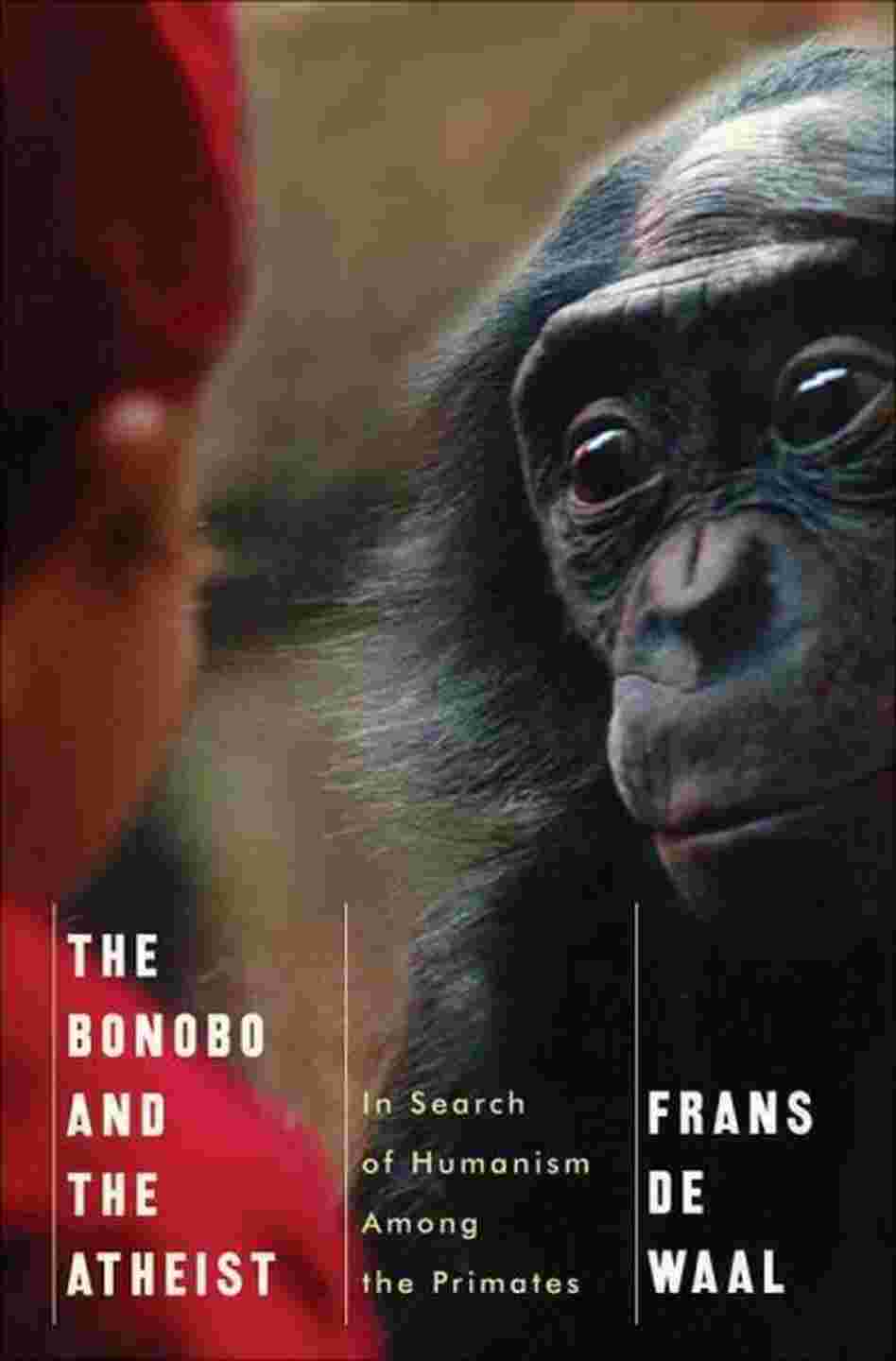
Esteemed primatologist Frans de Waal's latest book is The Bonobo and the Atheist: In Search of Humanism Among the Primates, published by Norton on Monday. In this new book, which clarifies and expands his ground-breaking research with bonobos, de Waal argues that morality is generated by God(s), nor is it the strict realm of religion. Rather, morality is something that comes from within our primate history, developed and refined through evolution.
Here is the publisher's synopsis of the book:
Book DescriptionWhat follows below is an adapted excerpt from the book that was published in the weekend edition of the Wall Street Journal last Saturday. The book has received a LOT of good reviews already, including Scientific American, Publisher's Weekly, and The New Prospect (although they ding him for being too gentle on religion).
Publication Date: March 25, 2013 | ISBN-10: 0393073777 | 12 Illustrations | Edition: 1st
In this lively and illuminating discussion of his landmark research, esteemed primatologist Frans de Waal argues that human morality is not imposed from above but instead comes from within. Moral behavior does not begin and end with religion but is in fact a product of evolution. For many years, de Waal has observed chimpanzees soothe distressed neighbors and bonobos share their food. Now he delivers fascinating fresh evidence for the seeds of ethical behavior in primate societies that further cements the case for the biological origins of human fairness. Interweaving vivid tales from the animal kingdom with thoughtful philosophical analysis, de Waal seeks a bottom-up explanation of morality that emphasizes our connection with animals. In doing so, de Waal explores for the first time the implications of his work for our understanding of modern religion. Whatever the role of religious moral imperatives, he sees it as a “Johnny-come-lately” role that emerged only as an addition to our natural instincts for cooperation and empathy.
But unlike the dogmatic neo-atheist of his book’s title, de Waal does not scorn religion per se. Instead, he draws on the long tradition of humanism exemplified by the painter Hieronymus Bosch and asks reflective readers to consider these issues from a positive perspective: What role, if any, does religion play for a well-functioning society today? And where can believers and nonbelievers alike find the inspiration to lead a good life?
Rich with cultural references and anecdotes of primate behavior, The Bonobo and the Atheist engagingly builds a unique argument grounded in evolutionary biology and moral philosophy. Ever a pioneering thinker, de Waal delivers a heartening and inclusive new perspective on human nature and our struggle to find purpose in our lives.
The Brains of the Animal Kingdom
By FRANS DE WAAL
THE SATURDAY ESSAY
March 22, 2013
New research shows that we have grossly underestimated both the scope and the scale of animal intelligence. Primatologist Frans de Waal on memory-champ chimps, tool-using elephants and rats capable of empathy.
Associated Press
A herd of African elephants drink water at a dam inside the Addo Elephant National Park near Port Elizabeth, South Africa.
Who is smarter: a person or an ape? Well, it depends on the task. Consider Ayumu, a young male chimpanzee at Kyoto University who, in a 2007 study, put human memory to shame. Trained on a touch screen, Ayumu could recall a random series of nine numbers, from 1 to 9, and tap them in the right order, even though the numbers had been displayed for just a fraction of a second and then replaced with white squares.
I tried the task myself and could not keep track of more than five numbers—and I was given much more time than the brainy ape. In the study, Ayumu outperformed a group of university students by a wide margin. The next year, he took on the British memory champion Ben Pridmore and emerged the "chimpion."
How do you give a chimp—or an elephant or an octopus or a horse—an IQ test? It may sound like the setup to a joke, but it is actually one of the thorniest questions facing science today. Over the past decade, researchers on animal cognition have come up with some ingenious solutions to the testing problem. Their findings have started to upend a view of humankind's unique place in the universe that dates back at least to ancient Greece.
Aristotle's idea of the scala naturae, the ladder of nature, put all life-forms in rank order, from low to high, with humans closest to the angels. During the Enlightenment, the French philosopher René Descartes, a founder of modern science, declared that animals were soulless automatons. In the 20th century, the American psychologist B.F. Skinner and his followers took up the same theme, painting animals as little more than stimulus-response machines. Animals might be capable of learning, they argued, but surely not of thinking and feeling. The term"animal cognition" remained an oxymoron.
A growing body of evidence shows, however, that we have grossly underestimated both the scope and the scale of animal intelligence. Can an octopus use tools? Do chimpanzees have a sense of fairness? Can birds guess what others know? Do rats feel empathy for their friends? Just a few decades ago we would have answered "no" to all such questions. Now we're not so sure.
Experiments with animals have long been handicapped by our anthropocentric attitude: We often test them in ways that work fine with humans but not so well with other species. Scientists are now finally meeting animals on their own terms instead of treating them like furry (or feathery) humans, and this shift is fundamentally reshaping our understanding.
Elephants are a perfect example. For years, scientists believed them incapable of using tools. At most, an elephant might pick up a stick to scratch its itchy behind. In earlier studies, the pachyderms were offered a long stick while food was placed outside their reach to see if they would use the stick to retrieve it. This setup worked well with primates, but elephants left the stick alone. From this, researchers concluded that the elephants didn't understand the problem. It occurred to no one that perhaps we, the investigators, didn't understand the elephants.
Think about the test from the animal's perspective. Unlike the primate hand, the elephant's grasping organ is also its nose. Elephants use their trunks not only to reach food but also to sniff and touch it. With their unparalleled sense of smell, the animals know exactly what they are going for. Vision is secondary.
But as soon as an elephant picks up a stick, its nasal passages are blocked. Even when the stick is close to the food, it impedes feeling and smelling. It is like sending a blindfolded child on an Easter egg hunt.
What sort of experiment, then, would do justice to the animal's special anatomy and abilities?
On a recent visit to the National Zoo in Washington, I met with Preston Foerder and Diana Reiss of Hunter College, who showed me what Kandula, a young elephant bull, can do if the problem is presented differently. The scientists hung fruit high up above the enclosure, just out of Kandula's reach. The elephant was given several sticks and a sturdy square box.
Kandula ignored the sticks but, after a while, began kicking the box with his foot. He kicked it many times in a straight line until it was right underneath the branch. He then stood on the box with his front legs, which enabled him to reach the food with his trunk. An elephant, it turns out, can use tools—if they are the right ones.
While Kandula munched his reward, the investigators explained how they had varied the setup, making life more difficult for the elephant. They had put the box in a different section of the yard, out of view, so that when Kandula looked up at the tempting food he would need to recall the solution and walk away from his goal to fetch the tool. Apart from a few large-brained species, such as humans, apes and dolphins, not many animals will do this, but Kandula did it without hesitation, fetching the box from great distances.
Another failed experiment with elephants involved the mirror test—a classic evaluation of whether an animal recognizes its own reflection. In the early going, scientists placed a mirror on the ground outside the elephant's cage, but the mirror was (unsurprisingly) much smaller than the largest of land animals. All that the elephant could possibly see was four legs behind two layers of bars (since the mirror doubled them). When the animal received a mark on its body visible only with the assistance of the mirror, it failed to notice or touch the mark. The verdict was that the species lacked self-awareness.
But Joshua Plotnik of the Think Elephant International Foundation modified the test. He gave the elephants access to an 8-by-8-foot mirror and allowed them to feel it, smell it and look behind it. With this larger mirror, they fared much better. One Asian elephant recognized herself. Standing in front of the mirror, she repeatedly rubbed a white cross on her forehead, an action that she could only have performed by connecting her reflected image with her own body.
A similar experimental problem was behind the mistaken belief, prevalent until two decades ago, that our species has a unique system of facial recognition, since we are so much better at identifying faces than any other primate. Other primates had been tested, but they had been tested on human faces—based on the assumption that ours are the easiest to tell apart.
When Lisa Parr, one of my co-workers at Emory University, tested chimpanzees on portraits of their own species, they excelled at it. Selecting portraits on a computer screen, they could even tell which juveniles were born to which females. Having been trained to detect similarities among images, the apes were shown a female's portrait and then given a choice between two other faces, one of which showed her offspring. They preferred the latter based purely on family resemblance since they did not know any of the depicted apes.
We also may need to rethink the physiology of intelligence. Take the octopus. In captivity, these animals recognize their caretakers and learn to open pill bottles protected by childproof caps—a task with which many humans struggle. Their brains are indeed the largest among invertebrates, but the explanation for their extraordinary skills may lie elsewhere. It seems that these animals think, literally, outside the box of the brain.
Octopuses have hundreds of suckers, each one equipped with its own ganglion with thousands of neurons. These "mini-brains" are interconnected, making for a widely distributed nervous system. That is why a severed octopus arm may crawl on its own and even pick up food.
Similarly, when an octopus changes skin color in self-defense, such as by mimicking a poisonous sea snake, the decision may come not from central command but from the skin itself. A 2010 study found gene sequences in the skin of cuttlefish similar to those in the eye's retina. Could it be: an organism with a seeing skin and eight thinking arms?
A note of caution, however: At times we also have overestimated the capacities of animals. About a century ago, a German horse named "Kluger Hans" (Clever Hans) was thought to be capable of addition and subtraction. His owner would ask him the product of multiplying four by three, and Hans would happily tap his hoof 12 times. People were flabbergasted, and Hans became an international sensation.
That is, until Oskar Pfungst, a psychologist, investigated the horse's abilities. Pfungst found that Hans was only successful if his owner knew the answer to the question and was visible to the horse. Apparently, the owner subtly shifted his position or straightened his back when Hans reached the correct number of taps. (The owner did so unknowingly, so there was no fraud involved.)
Some look at this historic revelation as a downgrading of Hans's intelligence, but I would argue that the horse was in fact very smart. His abilities at arithmetic may have been flawed, but his understanding of human body language was remarkable. And isn't that the skill a horse needs most?
Awareness of the "Clever Hans Effect," as it is now known, has greatly improved animal experimentation. Unfortunately, it is often ignored in comparable research with humans. Whereas every dog lab now tests the cognition of its animals while their human owners are blindfolded or asked to face away, young children are still presented with cognitive tasks while sitting on their mothers' laps. The assumption is that mothers are like furniture, but every mother wants her child to succeed, and nothing guarantees that her sighs, head turns and subtle changes in position don't serve as cues for the child.
This is especially relevant when we try to establish how smart apes are relative to children. To see how their cognitive skills compare, scientists present both species with identical problems, treating them exactly the same. At least this is the idea. But the children are held by their parents and talked to ("Watch this!" "Where is the bunny?"), and they are dealing with members of their own kind. The apes, by contrast, sit behind bars, don't benefit from language or a nearby parent who knows the answers, and are facing members of a different species. The odds are massively stacked against the apes, but if they fail to perform like the children, the invariable conclusion is that they lack the mental capacities under investigation.
A recent study, tracking the pupil movements of chimpanzees, found that they followed the gaze of members of their own species far better than that of humans. This simple finding has huge implications for tests in which chimpanzees need to pay attention to human experimenters. The species barrier they face may fully explain the difference in performance compared with children.
Underlying many of our mistaken beliefs about animal intelligence is the problem of negative evidence. If I walk through a forest in Georgia, where I live, and fail to see or hear the pileated woodpecker, am I permitted to conclude that the bird is absent? Of course not. We know how easily these splendid woodpeckers hop around tree trunks to stay out of sight. All I can say is that I lack evidence.
It is quite puzzling, therefore, why the field of animal cognition has such a long history of claims about the absence of capacities based on just a few strolls through the forest. Such conclusions contradict the famous dictum of experimental psychology according to which "absence of evidence is not evidence of absence."
Take the question of whether we are the only species to care about the well-being of others. It is well known that apes in the wild offer spontaneous assistance to each other, defending against leopards, say, or consoling distressed companions with tender embraces. But for decades, these observations were ignored, and more attention was paid to experiments according to which the apes were entirely selfish. They had been tested with an apparatus to see if one chimpanzee was willing to push food toward another. But perhaps the apes failed to understand the apparatus. When we instead used a simple choice between tokens they could exchange for food—one kind of token rewarded only the chooser, the other kind rewarded both apes—lo and behold, they preferred outcomes that rewarded both of them.
Such generosity, moreover, may not be restricted to apes. In a recent study, rats freed a trapped companion even when a container with chocolate had been put right next to it. Many rats first liberated the other, after which both rodents happily shared the treat.
The one historical constant in my field is that each time a claim of human uniqueness bites the dust, other claims quickly take its place. Meanwhile, science keeps chipping away at the wall that separates us from the other animals. We have moved from viewing animals as instinct-driven stimulus-response machines to seeing them as sophisticated decision makers.
Aristotle's ladder of nature is not just being flattened; it is being transformed into a bush with many branches. This is no insult to human superiority. It is long-overdue recognition that intelligent life is not something for us to seek in the outer reaches of space but is abundant right here on earth, under our noses.

—Mr. de Waal is C.H. Candler Professor at Emory University and director of the Living Links Center at the Yerkes National Primate Research Center, both in Atlanta. His latest book, "The Bonobo and the Atheist: In Search of Humanism among the Primates," will be published by Norton on Monday.
~ A version of this article appeared March 23, 2013, on page C1 in the U.S. edition of The Wall Street Journal, with the headline: The Brains of Animal Kingdom.
Tuesday, January 15, 2013
Milk of Human Kindness Also Found in Bonobos (New York Times)
From the New York Times, this is a cool article on one of our primate cousins, one the more social and generous of the primate species (perhaps we can learn a bit from them). The findings are interesting - bonobos will gladly share food with strangers, but only if the stranger provides social interaction. That does not seem too far removed from the days when a traveler could a hot meal and a blanket in exchange for a song or two, or some stories.
The article is open access from the PLoS ONE system, link with abstract and introduction is below.

Here is the abstract and introduction from the whole article. The whole text is available by following the link below.
The article is open access from the PLoS ONE system, link with abstract and introduction is below.
Milk of Human Kindness Also Found in Bonobos
Jingzhi Tan - Two bonobos shared food and affection at the Lola ya Bonobo sanctuary.
By SINDYA N. BHANOO
Published: January 7, 2013
Bonobos will happily share their food with a stranger, and even give up their own meal — but only if the stranger offers them social interaction, evolutionary anthropologists at Duke University report in the journal PLoS One. The researchers, Jingzhi Tan and Brian Hare, say their findings may shed light on the origins of altruism in humans.
Along with chimpanzees, bonobos are among the closest primates to humans. Chimpanzees, however, do not display similar behavior toward strangers.
“If you only studied chimps you would think that humans evolved this trait of sharing with strangers later,” Mr. Tan said. “But now, given that bonobos do this, one scenario is that the common ancestor of chimps, humans and bonobos had this trait.”
The subjects were all orphaned bonobos at the Lola ya Bonobo sanctuary in the Democratic Republic of Congo. In one phase of the study, bonobos were given a pile of food, then given the opportunity to release a stranger or a group mate (or both) from other rooms.
The bonobos chose to release strangers and share their food. Not only that, but the just-released bonobo would then release the third.
“This was shocking to us because chimpanzees are so xenophobic,” Mr. Tan said. “They won’t approach a stranger unless they outnumber them.”
The apes did have a limit — they would not share their own food when no social interaction was involved.
They were, however, willing to help a stranger get food even without social interaction. Mr. Tan compared this to certain human acts of kindness.
“It’s like when you donate money and you don’t tell people,” he said, “so there’s no way for you to get any benefit.”
A version of this article appeared in print on January 8, 2013, on page D3 of the New York edition with the headline: Milk of Human Kindness Also Found in Bonobos.

.jpg/582px-Bonobos_adoring_baby_(4531338876).jpg)
Bonobo parents with infant
Here is the abstract and introduction from the whole article. The whole text is available by following the link below.
Bonobos Share with Strangers
Jingzhi Tan1,* and Brian Hare1,2
Abstract
Humans are thought to possess a unique proclivity to share with others – including strangers. This puzzling phenomenon has led many to suggest that sharing with strangers originates from human-unique language, social norms, warfare and/or cooperative breeding. However, bonobos, our closest living relative, are highly tolerant and, in the wild, are capable of having affiliative interactions with strangers. In four experiments, we therefore examined whether bonobos will voluntarily donate food to strangers. We show that bonobos will forego their own food for the benefit of interacting with a stranger. Their prosociality is in part driven by unselfish motivation, because bonobos will even help strangers acquire out-of-reach food when no desirable social interaction is possible. However, this prosociality has its limitations because bonobos will not donate food in their possession when a social interaction is not possible. These results indicate that other-regarding preferences toward strangers are not uniquely human. Moreover, language, social norms, warfare and cooperative breeding are unnecessary for the evolution of xenophilic sharing. Instead, we propose that prosociality toward strangers initially evolves due to selection for social tolerance, allowing the expansion of individual social networks. Human social norms and language may subsequently extend this ape-like social preference to the most costly contexts.
Introduction
One of the most puzzling human behaviors from an evolutionary perspective is our species' propensity to share with non-relatives and even strangers [1], [2]. Across numerous cultures and early in development, humans engage in spontaneous helping and costly sharing with strangers [3], [4]. Some have suggested this human form of sharing is inconsistent with the predictions of kinship theory and reciprocal altruism (see [1], but see [5]) while others have proposed our species has evolved unique motivation and cognition for sharing [6]–[9].
Nonhuman primates are known to help and voluntarily share food with other groupmates (e.g.[10]–[16]). This prosociality, or voluntary behavior that benefits others [17]–[21], can be driven by selfish or other-regarding motivations [17], [22]. Therefore, while a primate can be prosocial even if pursuing selfish goals, they only demonstrate other-regarding forms of prosociality if their actions do not result in immediate selfish benefit (see SI for disambiguation of prosocial, other-regarding and altruistic behaviors). A number of experiments have now shown that a variety of primates will even help another individual obtain food when there is no immediate, tangible reward for their help (chimpanzees: [4], [23]–[27]; old world monkeys: [28]; new world monkeys: [29]–[31]). This type of prosociality suggests in some contexts primates also have other-regarding motivations (but see critique of this interpretation by [9]). However, there remains little evidence that nonhuman primates show any form of prosociality toward non-group members [7], [9], [13], [31], [32]. Primates typically compete against non-group members, resulting in agonistic intergroup relations [33]. This hostility goes to the extreme in chimpanzees that opportunistically kill neighbors [34], [35] and sometimes even immigrants[36]–[38]. Therefore, it is unlikely that most primates have tolerance levels that would allow for prosocial or other-regarding tendencies toward strangers. Moreover, designing such an experiment for most primate species would be extremely difficult given the high potential for stress, injury and aggression.
Bonobos are known for relatively high-levels of tolerance within and between groups when compared to chimpanzees [34], [39]–[43]. In the wild, bonobos have even been observed to have affiliative intergroup interactions. For example, females from neighboring communities have been seen traveling together for days, feeding in the same trees and even participating in socio-sexual behavior ([39], [40], also see [44]). In a preliminary experiment seven bonobos were given the opportunity to voluntarily share with another bonobo [12]. All three bonobos paired with a non-groupmate voluntarily shared their food while only one of the four bonobos paired with an in-group shared. No aggression of any form was ever observed. This suggests that with the relative tolerance of bonobos they can afford such prosociality with strangers. In turn, sharing with a stranger might aid them in extending their social network and in forming new “friendships” [5], [45]. However, it remains unclear whether the observed prosociality represents a preference to share with strangers over groupmates. In addition, it is unclear if the voluntary sharing observed only represents a selfish tactic to obtain a novel social interaction or whether bonobos will also share with strangers if there is no immediate, tangible reward. Therefore, we conducted four experiments with 15 wild-born bonobos that are orphans of the bushmeat trade living at Lola Ya Bonobo Sanctuary in Kinshasa, Democratic Republic of Congo [46]. We designed these experiments based on the relative costs and benefits of the prosocial behavior to the actor and this serial design allowed us to identify whether the prosocial motivation is selfish or other-regarding (Table 1). In experiment 1 and 2 we presented bonobos with a task in which they could choose whether to share food and physically interact with either a groupmate or stranger. In experiment 3 and 4 we presented bonobos with a second task in which they could either ignore or help another bonobo in obtaining out-of-reach food. In this second task helping allowed no immediate benefit to the actor (e.g. physical interactions) and the cost of helping was altered between experiment 3 and 4 (see Table 1).
Subscribe to:
Posts (Atom)