Showing posts with label skepticism. Show all posts

Saturday, September 20, 2014

Donald Prothero - “Proof of Heaven”? (2 Years Later)

http://3.bp.blogspot.com/-_Xc-5JYl9XM/UPbOOy71i3I/AAAAAAAAAXI/62mMV4p92rg/s1600/led20zeppelin20stairway20to20heaven.jpg

Two years after "Dr." Eben Alexander's book claimed that he had died (he was actually in a coma - death is a little more permanent) and gone to heaven, he is boasting about a new book called Map of Heaven. Seems lime a good time to re-debunk the first book.

Donald Prothero, writing at Skeptic, offers up the high points (or is that low points) of Alexander's fable as exposed by Esquire in 2013 (it will cost you $2.99 to read it).

“Proof of Heaven”?

Posted on Sep. 19, 2014 by  
proof-of-heaven 

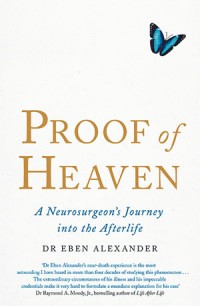
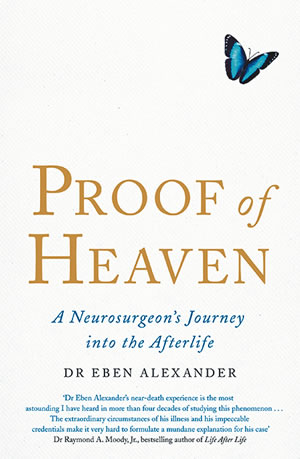
It has been two years now since the best-seller lists in the “Non-Fiction” category were dominated by books claiming that the writer visited heaven, and then returned to write a book about it. The most famous was Dr. Eben Alexander’s tale, Proof of Heaven: A Neurosurgeon’s Journey into the Afterlife, which was released in October 2012, featured on Dr. Oz, on Larry King Live, on Oprah and on the cover of Newsweek. It  sold over two million copies and had been on the best-seller list for 35 weeks as of July 2013; more recent sales figures are not available, but it is no longer near the top of the best-seller list. But almost two years since the book came out, a lot of interesting facts have emerged that make the book seem less like a non-fictional account of heaven, and more like a convenient fiction to get a doctor in trouble out of his predicament and at the same time, make him filthy rich and immune to the criticism of the scientific and medical community. Now he has a website to suck in more readers, and is bragging about his next book to come out soon, called Map of Heaven.

The basic story is that Alexander, a neurosurgeon, was infected by a virulent strain of bacterial meningitis and was put in intensive care for seven days in 2008. Doctors also used drugs to induce a coma, which shuts down part of the brain. After his infection had subsided, he awoke from his coma, sure that he had experiences of heaven. He gave an elaborate account of it which takes up most of the book, complete with descriptions of millions of butterflies, and seeing his late sister in a peasant dress and having a conversation with her. He asserts that he was medically dead during this time, that his cerebral cortex was shut down, and that he miraculously came back to life with a memory of a pleasant short trip to celestial paradise.


But soon after his book came out, investigations into his past were conducted. In a 2013 article called “The Prophet” (paywall), Esquire contributing editor Luke Dittrich dug up a lot of facts which suggest it may all have been a fable concocted to cash in on the widespread religious belief in heaven—a fable made all the more persuasive coming from the mouth of a neurosurgeon.
Here are some of the key points established by Dittrich (given here roughly as summarized by Jerry Coyne in his useful discussion of Dittrich’s piece):
  • After repeated lawsuits, Alexander temporarily or permanently lost his surgical privileges at two different hospitals. For example, as Dittrich wrote, “In August 2003, UMass Memorial suspended Alexander’s surgical privileges ‘on the basis or allegation of improper performance of surgery.'”
  • Alexander has been repeatedly accused of falsifying evidence related to his surgeries—a “court-documented history of revising facts,” in Dittrich’s description.
  • One of the key stories which begins Alexander’s book is a near-collision with another parachutist—supposedly Alexander’s first near-death experience, and his first “proof of heaven.”  As Alexander claimed in his book,
    I had reacted in microseconds… How had I done it? … I realize now that…as marvelous a mechanism as the brain is, it was not my brain that saved my life that day at all. What sprang into action the second Chuck’s chute started to open was another, much deeper part of me. A part that could move so fast because it was not stuck in time at all the way the brain and body are.
    But rather than revealing a profound cosmic truth, this event may not have happened at all. When Dittrich dug into the story, he found that Chuck, named in the book as the other parachutist involved, had no recollection of this aerial brush with death. Confronted with this discovery, Alexander claimed that he changed the other parachutist’s name to “Chuck,” supposedly for legal reasons.
  • Some elements of the book appear to be artistic embellishments, such as the “perfect rainbow” that greeted Alexander upon his return to full consciousness. This flourish seems to be ruled out by weather records.
  • Although Alexander claimed his coma was caused by bacterial meningitis, emergency room doctor Laura Potter told Dittrich that she induced Alexander’s coma medically to stabilize his condition. Contrary to Alexander’s claims, his brain was not inactive during the coma. As Dittrich notes, “a key point of his argument for the reality of the realms he claims to have visited is that his memories could not have been hallucinations, since he didn’t possess a brain capable of creating even a hallucinatory conscious experience.
” However, Dr. Potter told Dittrich that Alexander was actually “Conscious but delirious” during his days under sedation.
  • One of the crucial moments in Alexander’s tale is his claim that he clearly cried to God just before going under. According to Dittrich, Dr. Potter
    … has no recollection of this incident, or of that shouted plea. What she does remember is that she had intubated Alexander more than an hour prior to his departure from the emergency room, snaking a plastic tube down his throat, through his vocal cords, and into his trachea. Could she imagine her intubated patient being able to speak at all, let alone in a crystal-clear way?
    “No,” she says.
Dittrich’s research paints an incredibly damning picture. As Coyne sums up, “the story looks like a sham, confected by a once-brilliant but now failed neurosurgeon who reclaims his time in the spotlight by pretending that he saw heaven. ”

An even more scathing commentary was provided by Sam Harris, who has done research in neurophysiology and brain function. Harris first eviscerates Newsweek magazine for running the story uncritically and providing no skeptical or scientific second opinions. In his words:
Whether you read it online or hold the physical object in your hands, this issue of Newsweek is best viewed as an archaeological artifact that is certain to embarrass us in the eyes of future generations. Its existence surely says more about our time than the editors at the magazine meant to say—for the cover alone reveals the abasement and desperation of our journalism, the intellectual bankruptcy and resultant tenacity of faith-based religion, and our ubiquitous confusion about the nature of scientific authority. The article is the modern equivalent of a 14th-century woodcut depicting the work of alchemists, inquisitors, Crusaders, and fortune-tellers. I hope our descendants understand that at least some of us were blushing.
Harris then goes on to carefully dissect Alexander’s claims, especially the assertion that his cerebral cortex was “shut down” or “inactivated.” His claim is not based on an fMRI or EEG or PET scan or any test that would tell if his cerebral cortex was inactive, but only CT scans, which tell you nothing about the activity within the cerebral cortex. If Alexander is such a great neurosurgeon, why doesn’t he know this?

Harris consulted Dr. Mark Cohen, a neurophysiologist at UCLA Medical Center, who pointed out the obvious problems with Alexander’s account:
As you correctly point out, coma does not equate to “inactivation of the cerebral cortex” or “higher-order brain functions totally offline” or “neurons of [my] cortex stunned into complete inactivity”. These describe brain death, a one hundred percent lethal condition. …
We are not privy to his EEG records, but high alpha activity is common in coma. Also common is “flat” EEG. The EEG can appear flat even in the presence of high activity, when that activity is not synchronous. For example, the EEG flattens in regions involved in direct task processing. This phenomenon is known as event-related desynchronization (hundreds of references).
As is obvious to you, this is truth by authority. Neurosurgeons, however, are rarely well-trained in brain function. Dr. Alexander cuts brains; he does not appear to study them. “There is no scientific explanation for the fact that while my body lay in coma, my mind—my conscious, inner self—was alive and well. While the neurons of my cortex were stunned to complete inactivity by the bacteria that had attacked them, my brain-free consciousness …” True, science cannot explain brain-free consciousness. Of course, science cannot explain consciousness anyway. In this case, however, it would be parsimonious to reject the whole idea of consciousness in the absence of brain activity. Either his brain was active when he had these dreams, or they are a confabulation of whatever took place in his state of minimally conscious coma.
There are many reports of people remembering dream-like states while in medical coma. They lack consistency, of course, but there is nothing particularly unique in Dr. Alexander’s unfortunate episode.
So, if we add all this up, we have a neurosurgeon who makes fundamental mistakes about how the brain works, because he is not a neuroscientist or neurophysiologist—and that is a BIG difference. On top of this, he has a history of falsifying records and was in trouble with numerous malpractice suits, so his medical career was effectively over. And when Dittrich checked with other people, many important details in the book turned out clearly false.

This does not seem to trouble Alexander or any of his followers who want to believe him. They, like so many others, are willing to be duped out of their money for the book and make him rich, all while he tells them fairy stories to confirm their beliefs and make them feel good. It wouldn’t be the first time some religious figure separated people from their money—but perhaps the first time it was done by a neurosurgeon in a white lab coat.

Dr. Donald Prothero taught college geology and paleontology for 35 years, at Caltech, Columbia, and Occidental, Knox, Vassar, Glendale, Mt. San Antonio, and Pierce Colleges. He earned his B.A. in geology and biology (highest honors, Phi Beta Kappa, College Award) from University of California Riverside in 1976, and his M.A. (1978), M.Phil. (1979), and Ph.D. (1982) in geological sciences from Columbia University. He is the author of over 35 books.

Sunday, March 17, 2013

SPECT Brain Scans Are Neurobollocks


Daniel Amen has made a career out of performing SPECT scans (Single-Photon Emission Computed Tomography) for everything from diagnosing "ADHD, anxiety, depression, addiction, autism, ‘marital conflict’(?!), and for generally healthy people who want to lose weight, or just ‘optimise’ their brain." In addition to his 6 ‘Amen Clinics‘ he al;so offers SPECT scans for many in-patient mental health treatment facilities, including Sierra Tucson here in town.

The NeuroBollocks blog offers a very critical view of Dr. Amen - Utterly shameless diagnostic brain imaging neurobollocks. Here is an excerpt from the longer article:
A common theme in neuroimaging research is attempting to identify differences in the brains between different groups of people. Male/female, musicians/non-musicians, schizophrenics/non-schizophrenics, whatever. This is all very interesting and worthwhile – if we can identify a common brain pattern or structure that is different in say, schizophrenia then we may be able to devise better treatments that target it. Voxel-based morphometry is one common method of looking at differences and assesses the relative size/shape of different brain structures, but there are lots of other methods that either look at anatomical or functional differences. The important point here is that you always need a group of people of each type that you want to compare. People’s brains vary pretty widely in the size and shape of the sulci and gyri, and in the amount/location of functional activity that you see in a given task. What is being sought in these studies is a reliable difference that is consistent across the group, and remains as a statistical effect, once all the (random) individual variation has been taken into account. Many people’s brains are a bit funny-looking, but 99 times out of 100 it’s just normal individual variation.

What this means is that developing imaging-based biomarkers that reliably indicate particular states or conditions in an individual is fraught with difficulty.Some progress is apparently being made in this endeavour, but a lot of people are still very sceptical about the idea, and rightly so.

However, Dr Amen, (of the eponymous ‘Amen Clinics‘) is certainly not one of those people. He’s been using diagnostic SPECT imaging for years, and has clinics in six major US cities. Dr Amen uses SPECT imaging to diagnose ADHD, anxiety, depression, addiction, autism, ‘marital conflict’(?!), and for generally healthy people who want to lose weight, or just ‘optimise’ their brain. How does taking a SPECT image of their brain help with this? It’s not really clear, but unsurprisingly, Dr Amen has a slick-looking brain-training-like program (‘The Amen Solution’) that promises all the usual bollocks, and an online store filled with his (many!) books, DVDs, etc. plus (of course) his own brand of dietary supplements. So, basically, I’m guessing that the results of the SPECT scans in his clinics typically indicate that the patient needs to complete a course of his brain-training, or supplements, or both.

Just to be clear – there’s absolutely no way that a SPECT scan of an individual can show up anything useful in diagnosing these disorders. Dr Amen is charging people thousands of dollars, and injecting them with radioactive substances, for absolutely no sound medical reason.
Read the whole article.

Wednesday, March 13, 2013

Leon Wieseltier - In Defense of Thomas Nagel: A Darwinist Mob Goes After a Serious Philosopher


I am reading Thomas Nagel's Mind and Cosmos: Why the Materialist Neo-Darwinian Conception of Nature Is Almost Certainly Falseand I find it well-written and well-reasoned. Importantly, Nagel is not claiming he has the answers to how to solve the materialist, reductionist perspective in the current scientific worldview. However, he is pointing out some of the weaknesses in the current system.

Here is a description of the book from Amazon:
The modern materialist approach to life has conspicuously failed to explain such central mind-related features of our world as consciousness, intentionality, meaning, and value. This failure to account for something so integral to nature as mind, argues philosopher Thomas Nagel, is a major problem, threatening to unravel the entire naturalistic world picture, extending to biology, evolutionary theory, and cosmology.

Since minds are features of biological systems that have developed through evolution, the standard materialist version of evolutionary biology is fundamentally incomplete. And the cosmological history that led to the origin of life and the coming into existence of the conditions for evolution cannot be a merely materialist history, either. An adequate conception of nature would have to explain the appearance in the universe of materially irreducible conscious minds, as such.

Nagel's skepticism is not based on religious belief or on a belief in any definite alternative. In Mind and Cosmos, he does suggest that if the materialist account is wrong, then principles of a different kind may also be at work in the history of nature, principles of the growth of order that are in their logical form teleological rather than mechanistic.

In spite of the great achievements of the physical sciences, reductive materialism is a world view ripe for displacement. Nagel shows that to recognize its limits is the first step in looking for alternatives, or at least in being open to their possibility.
With that description of the book, here is an article in defense of Nagel, who has been savaged by the scientific community. Both Brian Leiter and Michael Weisberg have given harshly negative reviews, as has Steven Pinker, who tweeted, “What has gotten into Thomas Nagel? Two philosophers expose the shoddy reasoning of a once-great thinker.” And The Guardian named “Mind and Cosmos” the "most despised science book of 2012."

A Darwinist Mob Goes After a Serious Philosopher


BY LEON WIESELTIER
MARCH 8, 2013


Is there a greater gesture of intellectual contempt than the notion that a tweet constitutes an adequate intervention in a serious discussion? But when Thomas Nagel’s formidable book Mind and Cosmos recently appeared, in which he has the impudence to suggest that “the materialist neo-Darwinian conception of nature is almost certainly false,” and to offer thoughtful reasons to believe that the non-material dimensions of life—consciousness, reason, moral value, subjective experience—cannot be reduced to, or explained as having evolved tidily from, its material dimensions, Steven Pinker took to Twitter and haughtily ruled that it was “the shoddy reasoning of a once-great thinker.” Fuck him, he explained.

Here was a signal to the Darwinist dittoheads that a mob needed to be formed. In an earlier book Nagel had dared to complain of “Darwinist imperialism,” though in his scrupulous way he added that “there is really no reason to assume that the only alternative to an evolutionary explanation of everything is a religious one.” He is not, God forbid, a theist. But he went on to warn that “this may not be comforting enough” for the materialist establishment, which may find it impossible to tolerate also “any cosmic order of which mind is an irreducible and non-accidental part.” For the bargain-basement atheism of our day, it is not enough that there be no God: there must be only matter. Now Nagel’s new book fulfills his old warning. A mob is indeed forming, a mob of materialists, of free-thinking inquisitors. “In the present climate of a dominant scientific naturalism, heavily dependent on speculative Darwinian explanations of practically everything, and armed to the teeth against religion,” Nagel calmly writes, “... I would like to extend the boundaries of what is not regarded as unthinkable, in light of how little we really understand about the world.” This cannot be allowed! And so the Sacred Congregation for the Doctrine of the Secular Faith sprang into action. “If there were a philosophical Vatican,” Simon Blackburn declared in the New Statesman, “the book would be a good candidate for going on to the Index.” I hope that one day he regrets that sentence. It is not what Bruno, Galileo, Bacon, Descartes, Voltaire, Hume, Locke, Kant, and the other victims of the anti-philosophical Vatican had in mind.

I understand that nobody is going to burn Nagel’s book or ban it. These inquisitors are just more professors. But he is being denounced not merely for being wrong. He is being denounced also for being heretical. I thought heresy was heroic. I guess it is heroic only when it dissents from a doctrine with which I disagree. Actually, the defense of heresy has nothing to do with its content and everything to do with its right. Tolerance is not a refutation of heresy, but a retirement of the concept. I am not suggesting that there is anything outrageous about the criticism of Nagel’s theory of the explanatory limitations of Darwinism. He aimed to provoke and he provoked. His troublemaking book has sparked the most exciting disputation in many years, because no question is more primary than the question of whether materialism (which Nagel defines as “the view that only the physical world is irreducibly real”) is true or false.

And so scientists are busily animadverting on Nagel’s account of science. They like to note condescendingly that he calls himself a “layman.” Yet too many of Nagel’s interlocutors have been scientists, because Mind and Cosmos is not a work of science. It is a work of philosophy; and it is entirely typical of the scientistic tyranny in American intellectual life that scientists have been invited to do the work of philosophers. The problem of the limits of science is not a scientific problem. It is also pertinent to note that the history of science is a history of mistakes, and so the dogmatism of scientists is especially rich. A few of Nagel’s scientific critics have been respectful: in The New York Review of Books, H. Allen Orr has the decency to concede that it is not at all obvious how consciousness could have originated out of matter. But he then proceeds to an almost comic evasion. Finally, he says, we must suffice with “the mysteriousness of consciousness.” A Darwinii mysterium tremendum! He then cites Colin McGinn’s entirely unironic suggestion that our “cognitive limitations” may prevent us from grasping the evolution of mind from matter: “even if matter does give rise to mind, we might not be able to understand how.” Students of religion will recognize the dodge—it used to be called fideism, and atheists gleefully ridiculed it; and the expedient suspension of rational argument; and the double standard. What once vitiated godfulness now vindicates godlessness.

The most shabby aspect of the attack on Nagel’s heterodoxy has been its political motive. His book will be “an instrument of mischief,” it will “lend comfort (and sell a lot of copies) to the religious enemies of Darwinism,” and so on. It is bad for the left’s own culture war. Whose side is he on, anyway? Almost taunting the materialist left, which teaches skepticism but not self-skepticism, Nagel, who does not subscribe to intelligent design, describes some of its proponents as “iconoclasts” who “do not deserve the scorn with which they are commonly met.” I find this delicious, because it defies the prevailing regimentation of opinion and exemplifies a rebellious willingness to go wherever the reasoning mind leads. Cui bono? is not the first question that an intellectual should ask. The provenance of an idea reveals nothing about its veracity. “Accept the truth from whoever utters it,” said the rabbis, those poor benighted souls who had the misfortune to have lived so many centuries before Dennett and Dawkins. I like Nagel’s mind and I like Nagel’s cosmos. He thinks strictly but not imperiously, and in grateful view of the full tremendousness of existence; and he denies matter nothing except the subjection of mind; and he speaks, by example, for the soulfulness of reason.

Tuesday, March 12, 2013

Michael Hanlon: Beyond Belief - Why Does Quackery Survive When Science Is Making Life Better?

Another good article from Michael Hanlon at Aeon Magazine. In this piece he looks at the many ways primitive thinking is blocking the progress that science allows. These two sentences offer a brief statement of his thesis here:
As the ideals and technological spin-offs of the Enlightenment make our world ever more unified, unreason continues to flourish. This is something that many thinkers find to be as puzzling as it is distasteful.
And this:
Scientists are distrusted in a way they were not 100 years ago. The whole scientific enterprise looks to many like some sort of sinister conspiracy, created by the industrial establishment to make money at the expense of our health and our planet. ‘Science’ (rather than greed, incompetence, laziness or simple expediency) gets blamed for the degradation of our environment, pollution and threats to species.
But there is good reason for some of this distrust - we are consistently lied to and essentially poisoned by Big Pharma and their blind search for the magic pill to cure every illness. This is not the fault of the science, but it is often the fault of scientists who are paid by the drug companies to research their new wonder drugs - and the poor results are buried while the good results (often more statistical than real) are published and reported on as though this is the magic pill we all have been waiting for.

There is much to agree with here, but there is also a sense that he is simply promoting the scientisim agenda.

Michael Hanlon is a science journalist and a Templeton Journalism Fellow. His latest book is Eternity: Our Next Billion Years (2009). He lives in London.

Beyond belief

Unreason, like the poor, will always be with us. But why does quackery survive when science is making life better?

by Michael Hanlon
Published on 11 March 2013 | 2,300 words


Corn follies: a protest in front of the European Union headquarters in Brussels over genetically modified maize crops. Photo by Thierry Roge/Reuters

We live, we like to think, in a reasoning age, if not always a reasonable one. Over the past century we have seen spectacular advances in our understanding of the universe. We now have a fairly coherent, if incomplete, picture of how our planet came into being, its age and place in the cosmos, and how the physical world works. We, clever monkeys that we are, understand the processes that lead to earthquakes and volcanic eruptions, and the factors that influence climate and weather. We have seen the rise of molecular biology and major improvements in public health and medicine, giving billions of people longer, healthier lives.

Indeed, life expectancy is on the rise nearly everywhere. Infant mortality continues to plummet. Humanity has actually managed to eradicate one of the greatest scourges of its existence — smallpox — and we are well on the way to destroying another — polio. It is astonishing, this triumph of reason. As a species, we should be proud.

But of course it is not that simple. As the ideals and technological spin-offs of the Enlightenment make our world ever more unified, unreason continues to flourish. This is something that many thinkers find to be as puzzling as it is distasteful.

In December 2011, the Academia Europaea (a European academy of humanities, letters and sciences) organised a conference at Cambridge University to examine the nature and causes, and possible cures, on ‘Reason and Unreason in 21st-century Science’. I took part in the talks and edited the subsequent transcript, which will be published later this spring. The experience gave me a fascinating insight into the exasperation that many scientists feel at the primitivism that is holding us back.

Let me give one example. The brilliant biotechnologist Ingo Potrykus, emeritus professor at the Federal Institute of Technology in Zurich, and his colleague Peter Beyer, professor of cell biology at the University of Freiburg in Germany, have developed a modified form of rice in which Vitamin A is present in the kernel, or the bit you eat (it is normally present in the leaves, but of course we throw those away). Vitamin A deficiency is not a problem in the West. In the Third World, however, where people depend on rice as a staple and often eat little else, it affects something like 400 million people, irreversibly blinding around half a million children a year.

Their ‘Golden Rice’ would solve this problem at a stroke. This GM variety is no more expensive to grow or cultivate than normal strains, and it will require no special chemicals or tie-ins with big biotech firms to cultivate. In fact, Potrykus told the conference it would be free for poor and subsistence farmers. It tastes the same as normal rice. And it has been available since 2000. In a sane world, it would have earned Potrykus and Beyer a Nobel Prize. Yet not a single child in Bangladesh, India, the Philippines or Cambodia has benefitted from this new crop.

The reason is simple: relentless and well-funded campaigns against transgenic technology by (mostly European) NGOs and Green campaigners. Their efforts have led to bans on Golden Rice in the very countries where it could save millions of lives. These warriors against ‘Frankenfoods’ are, even if inadvertently, to blame for the blindness of maybe 3 million children. As Potrykus said at the conference: ‘If our society will not be able to “de-demonise” transgenic technology soon, history will hold it responsible for death and suffering of millions: people in the poor world, not in overfed and privileged Europe, the home of the anti-GMO hysteria.’

What lies at the root of this panic, and others like it? One factor that is often ignored by champions of reason is that science is hard, and getting harder. In the mid-19th century, the ideas of British naturalists such as Charles Darwin and Alfred Russel Wallace took hold in part because they were so simple and intuitive (and in part because Darwin was such a clear writer). In those days, it was just about possible for an educated layman to get a grip on the cutting edges of science, medicine and technology. The same feat would be laughably impossible today. The intellectual giants of the 19th century were probably the last humans alive able to know just about everything important that could be known. Today, it is a challenge to know everything about even a tiny subset of knowledge. There are professional scientists who know nothing more than laypeople (and often rather less) about the world outside their own narrow disciplines. It is hard to become a molecular biologist, or a doctor, or an engineer. Yet it is relatively easy to grasp the ‘precautionary principle’ — the belief that, in the absence of scientific proof that something is harmless, we must assume that it is harmful. But, as Lewis Wolpert, professor of cell and developmental biology at University College London, has pointed out, this addled creed would have led early humanity to ban both fire and the wheel.

So perhaps we shouldn’t be surprised at the proliferation of courses in alternative medicine that erupted like boils throughout Britain’s universities in the early 1990s. It might have less to do with human credulity than with the fact that squirting coffee up people’s bottoms or dangling crystals over their bosoms is easy, whereas acquiring the biochemistry and anatomy needed to be a proper doctor is very difficult.

That inestimable scourge of quackery, David Colquhoun, honorary fellow in pharmacology at University College London, has been waging a 10-year war against ‘magic medicine’ with some success. Most of the wackier courses, such as Spiritual Healing — which Colquhoun described in the Financial Times in 2009 as ‘tea and sympathy, accompanied by arm waving’ — and Angelic Reiki — which he said was ‘excellent for advanced fantasists’ — have now disappeared. Increasingly, it is only the more respectable backwaters of alternative medicine, such as acupuncture, that are still replenished by tuition fees and state funding. A collective embarrassment seems to have taken hold in the chancelleries of the new universities.
Read the whole article.

Friday, September 07, 2012

Secular Buddhist Podcast Episode 128 :: Gert de Boer, Brennen McKenzie, Doug Smith: Scientific Skepticism and Buddhism

This episode was posted a while back, but I just got around to listening to it. And now I am sharing it with you. Enjoy.

Episode 128 :: Gert de Boer, Brennen McKenzie, Doug Smith :: Scientific Skepticism and Buddhism


July 29, 2012

Gert de Boer, Brennen McKenzie, and Doug Smith join us to talk about scientific skepticism and Buddhism.

We’ve found that there is a wonderful alignment between scientific naturalism, and secular Buddhism. Attitudes about Gotama’s presence as a human and the constraints of that embodiment, the veracity of first person experiences, and how we value the mutual support of community are rich areas for mutual exploration between these two disciplines. To serve as an introduction to some of these ideas, we’re going to have a round table discussion with three active free thinkers and meditation practitioners.


Gert de Boer

Gert de Boer studied philosophy with physics and mathematics as subsidiary subjects at the State University of Utrecht in the Netherlands. He moved to Switzerland where he is working as a database programmer. Since 2000 he is a regular participant of Buddhist meditation retreats, mainly with Reb Anderson. He is engaging, (sometimes fanatically) in the discussion fora of CFI, pleading for tolerance and correct understanding of science, religion and values, trying to put them on the right place in the human universe.


Brennen McKenzie

Brennen McKenzie is a small animal veterinarian in California and an advocate for a skeptical, science-based approach to medicine. He is the author of the SkeptVet Blog, a contributor to the Science-Based Medicine blog, and president of the Evidence-Based Veterinary Medicine Association. Dr. McKenzie has also found Buddhist meditation practice personally helpful and enriching, and he has an interest in the pragmatic, naturalistic approach of Secular Buddhism. He has been known to play the mandolin and the Irish pennywhistle and to wear the kilt, though he does not claim to do any of these well.


Doug Smith

Doug Smith had his first real exposure to Buddhism in an intro course at Princeton University, where he practiced Zen meditation while getting his bachelor’s degree in philosophy. He continued on to a PhD in philosophy at the University of Wisconsin-Madison, undertaking a minor in South Asian studies, which included classes from a Tibetan Geshe and several semesters of Sanskrit. An inveterate skeptic and secularist, in 2006 Doug got involved in volunteering for the Center for Inquiry, an organization created “to foster a secular society based on science, reason, freedom of inquiry, and humanist values”. He was made lead administrator of their web forum in 2007, where he still hangs out, chatting about philosophy, religion, skepticism and helping stem the unending tide of spammers.

So, sit back, relax, and have a nice Lapsang Souchong, with thanks to our wonderful guests for the suggestion.


:: Discuss this episode ::

Tuesday, August 07, 2012

Bookforum Omnivore - Philosophical Inquiry and the Popularity of Philosophy

Here are three different collections of links on philosophy and philosophy-related topics courtesy of Bookforum's Omnivore blog. There are some interesting articles and reviews of some books that look enticing. Enjoy.


  • A new issue of Philosophy in Review is out.
  • Kevin Tobia, Wesley Buckwalter and Stephen Stich (Rutgers): Moral Intuitions: Are Philosophers Experts?
  • J. David Velleman (NYU): Foundations for Moral Relativism.
  • From NDPR, a review of The Ethical Project by Philip Kitcher; a review of The Ethics of Need: Agency, Dignity, and Obligation by Sarah Clark Miller; a review of Moralism: A Study of a Vice by Craig Taylor; and a review of Against Moral Responsibility by Bruce N. Waller.
  • From The Utopian, an interview with T. M. Scanlon.
  • The new leveller: An interview with Elizabeth Anderson.
  • A review of Philosophers Past and Present: Selected Essays by Barry Stroud.
  • Is philosophy literature? Analytic philosophy is reputed to be overly dry and technical, but a host of 20th century works are lyrical, engaging and a delight to read.
  • Addicts, mythmakers and philosophers: Alan Brody explains Plato’s/Socrates’ understanding of habitually bad behavior.
  • Public forums for the discussion of ideas are flourishing everywhere, from festivals to pubs, but will the popularity of philosophy groups have any lasting impact?


  • Ali Rizvi (UBD): A Critique of Modern Philosophy
  • James Mensch (Charles): Violence and Existence: An Examination of Schmitt's Political Philosophy. 
  • From Marx & Philosophy Review of Books, a review essay on Jurgen Habermas
  • You are all proletariats: A review of Towards a New Manifesto by Theodor Adorno and Max Horkheimer (translated by Rodney Livingstone; Verso 2011). 
  • A review of Adorno for Revolutionaries by Ben Watson. 
  • A riposte to the Habermases, Rawls and Bidets of the world: A review of Proletarian Nights: Workers’ Dream in Nineteenth Century France by Jacques Ranciere and 1839: The Chartist Insurrection by David Black and Chris Ford. 
  • A review of Critical Ecologies: The Frankfurt School and Contemporary Environmental Crises
  • Rasmus Fleischer on Robert Kurz and the collapse of modernity: A quarter of a century ago, the Nurnberg school of Wertkritik (value-critical theory) emerged as a project to develop a third critical theory, pertinent to the third industrial revolution. 
  • Paul Mason and/or Karl Marx: Paul Le Blanc on occupations, insurgencies and human nature.